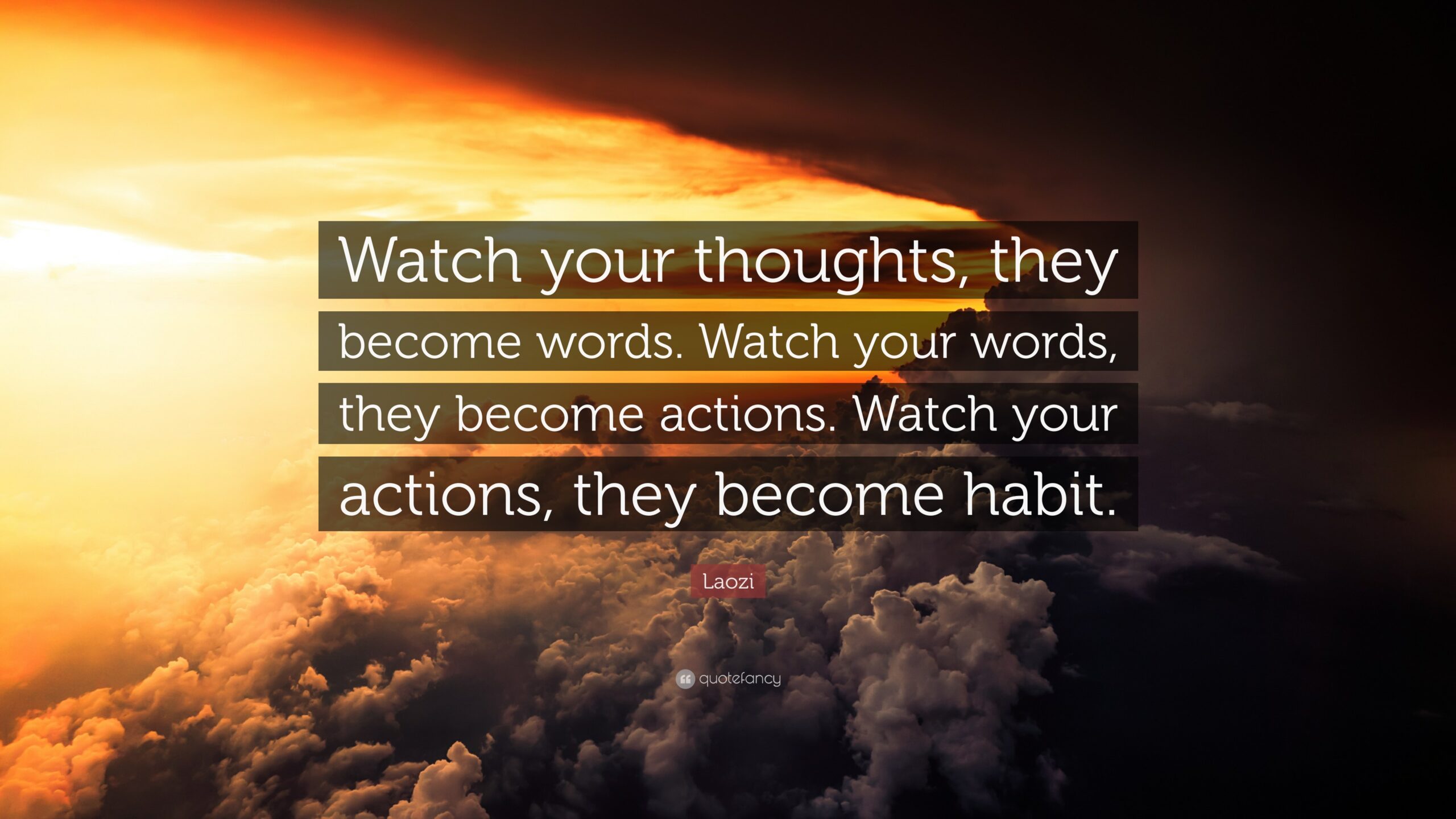
What we think and then speak about ourselves (and others) can, with repetition, become hard-wired in our brains. This function, of which you may be familiar, is neuroplasticity. It’s super helpful with new work tasks, habit formation, and learning to play an instrument, for instance. The tricky thing about neuroplasticity is that it also is engaged when we repeat things that aren’t necessarily true about how we see ourselves or the world around us.
I follow Erika, a Christian neuroscience coach, on Instagram and Facebook. She recently posted a clear and practical guide to how we can consciously rewire our brain, especially when we’ve allowed negative (essentially untruthful) thoughts and comments take us to a dark place.
She should write a blog or Substack, but I haven’t found one yet. So below please find her well-studied take on “mind over matter (brain)”.
Erika writes: “Neuroscience shows us that: thought + emotion + repetition strengthens a neural pathway.”
She writes for Christians, but honestly, her 8 practices for rewiring our brains are noteworthy for anyone desiring to clear their thinking:
Notice the thought. Think about what you’re thinking about. At times we say things that if checked and sorted we know aren’t true; they are just how we feel at the moment. Not facts but feelings.
Identify the lie. Because of repetition, you may have thoughts that have taken up residence in your brain for so long (neuroplasticity), they seem true. You may need help, through prayer or with a trusted friend, to assess whether you have held onto a lie – about yourself or others.
Take the thought captive. One of my favorite Bible verses is 2 Corinthians 10:5 – “We destroy arguments and every lofty opinion raised against the knowledge of God, and take every thought captive to obey Christ.” Even if a thought or opinion has long been lodged in our minds, we don’t have to preserve it. With help from God or a friend, we can acknowledge a thought that is simply not true and begin the work of isolating it and ridding it from our minds. Rewiring our brain and altering a neural pathway.
Replace the lie with God’s truth. What an amazing guide for life is the Word of God! Wisdom for all of us. If you aren’t a believer, sort out what is really true vs. what has taken up squatter’s rights in your brain – hurting you rather than healing you. For Christians, we look for what is true in the Bible and replace the lie with the truth. It will require its own repetition to rewire our thinking. So worth it. “Is not my word like fire, declares the LORD, and like a hammer that breaks the rock in pieces?” – Jeremiah 23:29
Preach the truth to yourself. When a lie sets up residence in our brains, we have to use repetition to unseat it. Speaking what is true over the lie will put neuroplasticity in a higher gear. I love what Erika says here: “Your mouth reinforces what your mind believes”.
Keep renewing your mind. The old cortisol-filled thoughts aren’t going to go away easily. When they rise up, remember to speak/think what is actually true. The negative thoughts will fade. The Bible talks about “renewing the mind” (Romans 12:2) It is an ongoing practice.
Stay consistent when nothing seems to change. Again, those negative thoughts, those lies, may have embedded over years. The neural pathways are strong. Don’t be discouraged that change takes time. “Don’t mistake slow progress for no progress.” I’m a visual learner. Sometimes for me, it takes written cues on my keyboard, in my journal, on my kitchen counter, in my car. [OK, I can be a slow learner, too.] So thankful for truth that sets my captive brain free!
Build a Godly fortress in your mind. If you have dark days or you struggle with thoughts that overwhelm you, if you can’t resist speaking out contempt for yourself or others, you need to build fortification against such thoughts which turn into words. When we allow our brains to be wired with negative, hateful thoughts, we can rid ourselves of those thoughts. However, we also have to replace them with what is true (Matthew 12:43-45). Building a fortress takes work, but, over time, it is that amazing rewiring of our neural pathways and setting in motion a very different neuroplasticity. So worth the work!
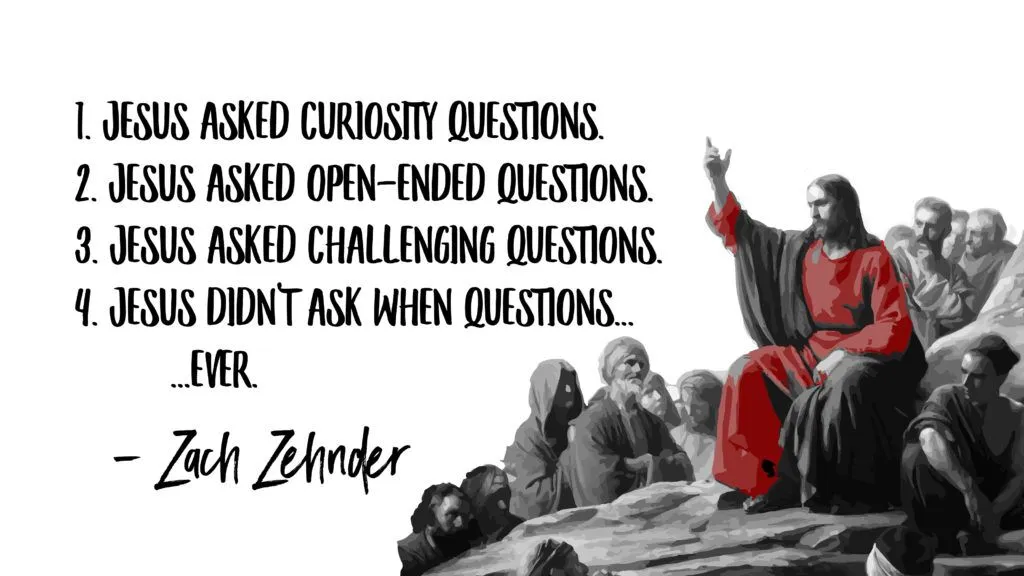
We are in a culture that has lost much of its curiosity. Asking questions seems intrusive and not honoring what might be considered private. What a shame, really! It moves us to give the appearance we don’t really want to know the person in front of us. Settling for the few word answer to questions like “How’s your week been?”
When we do ask questions, we can move past small talk by being curious, even with strangers. Asking questions (beyond “How’s your week been?”) opens the door to the person in front of us to experience being seen…and valued. Just yesterday, I was with a friend younger than me by a lot, a mom of a toddler and newborn. This amazing young woman seems to have the gift of asking great questions. It always recharges my own curiosity because of her genuine interest in people – which clearly included me yesterday morning. I felt seen and better known. And valued.
Pastor Cliff’s sermon this week focused on asking better questions. He drew on John 4 – Jesus speaking to the woman at the well. Depending on the translation, he didn’t ask many questions in this conversation, but he did draw her out and invited reflection. He lingered in conversation with a woman who had known the terrible judgment of others, but she experienced welcome from him. At the end of their talk that day, she ran back to the village, a women who felt known and not judged, influencing many others to experience what she had.
The woman left her water jar, went back into the town, and said to the people, “Come, see a man who told me everything I ever did. Could this be the Christ?” So they left the town and made their way toward Jesus.
[This clip from The Chosen, Season 1, Episode 8 is a depiction of the conversation Jesus had with the Samaritan woman – not all from Scripture but reflective of His character and His impact on her life.]
Chuck Olson compiled the following quotes from Briggs’ book. We are called to care for those on the fringes. To help them know they are seen and known and loved by God, through us as His people:
“We live in a world that has conditioned us toward answers. We’ve been taught to give the right answers, yet little attention has been given to teaching us how to ask the right questions. We don’t have a shortage of information; we have a shortage of wisdom, curiosity, and wonder. Asking good questions is a lost art.”
“In our world, which elevates accomplishing tasks over deepening relationships, it makes sense that questions aren’t held in high esteem. We value pragmatism, individualism, and efficiency. Certainly, there are times we need to tell to be helpful. But if we’re honest with ourselves, sometimes we just want to win an argument or gain control of a situation, conversation, or person. Other times we want to portray our intelligence. Telling is often much more efficient, and our brains like certainty.“
“[Asking questions] is perceived as inefficient and unhelpful. Questions are often seen as unproductive. In our fast-paced, efficient, productivity-oriented world, it feels as though someone has slammed on the brakes of progress when they ask a question. We favor task accomplishment over relational depth. Leaders often feel the need to act decisively and quickly and can become anxious about the perceived inefficiencies that questions might bring.”
“What, then, is required of us if we want to ask great questions? There are four core essentials: curiosity, wisdom, humility, and courage.”
“I’m convinced: there has never been a time in modern history when genuine, thoughtful, caring questions are needed more. In a world saturated not only by ever-increasing loneliness but also by division, polarization, and fragmentation, genuine question-asking can provide healing and connection like almost nothing else.”
“French social activist Simone Weil wrote, “Attention is the rarest and purest form of generosity.””
“Trust is built on thick bonds of relationship, and great questions build trust. I live by the strong conviction that leaders should be the most curious people on the planet. If we want information, we can Google it. But if what we’re after is clarity and connection, we need questions. Our world isn’t in need of more leaders who are smarter, more eloquent, and more efficient; instead, we need more leaders who are wiser, humbler, and more curious…The late leadership and organizational expert Peter Drucker said, “The leader of the past may have been the person who knew how to tell, but certainly the leader of the future will be the person who knows how to ask.””
“Dallas Willard was fond of saying that one of the most revelatory questions regarding the state of our souls is to ask, What’s bothering me? When I’m agitated or angsty or impatient or irritable or downright angry, which happens much more often than I’d like to admit, I’ve learned to take a step back and ask, What’s going on here? Why am I bothered right now? What do I need to pay attention to currently?”
“If you want to ask better questions, you have to begin with genuine interest in others. Curiosity is fundamentally at the center of questions. If we don’t possess genuine curiosity, these practices won’t matter all that much in the long run. But even a genuine interest in others is still not enough. We need specific and intentional practices rooted in our everyday lives. Call them what you want—practices, habits, exercises, spiritual disciplines, action steps—but we grow when we live out specific actions in an embodied form, because training takes us further than just trying.”
As you pause with me on Worship Wednesday, we can praise the Lord who knows everything there is to know about us and loves us still. We can also learn from Him that asking questions leads to our knowing others better and their reflecting on answers maybe unknown to themselves, until asked. Asked by another who shows genuine interest and care…like Jesus.
Could I be complaining about complaining? Not at all. Having already written about it twice before (and not counting my pieces on negative thinking), why revisit it?
Here’s why.
Complaining is bad for us. It actually rewires the brain into thinking our complaints are current reality. Whatever has riled us up in the recent (or not so recent) past stirs up cortisol excretion (a stress hormone). Then as we process our complaint with a sympathetic listener, we actually then get a hit of dopamine. This positive effect of complaining is the pathway to habit. In fact, the brain will default to complaining in the future, rather than positive problem-solving or exercising gratitude for the good over the bad.
If, however, our processing a complicated or stressful situation helps us to get to a positive solution, the brain responds accordingly. This should be much more satisfying than habitual complaining which is personally depressing as well as depressing to others. There are rewards in complaining if it engenders sympathy maybe or gets us out of responsibilities, but those “rewards” turn into negatives when complaining becomes habitual and drives people away. This is not to say complaining should be silenced. We need to process hard things. The problem with complaining is when it becomes the end-goal.
It is quite sobering actually to consider all that’s written these days (see below) about the neurological changes that can come from repetitive behaviors, such as complaining. Fortunately, reversing this is possible.
High Focus Centers are treatment programs across multiple US states. Their focus is out-patient care for substance abuse and psychiatric disorders/issues. The following is a substantive excerpt from their article on the addictive nature of complaining, its physiological and relational harm, and the benefit of shifting complaining to a healthier mindset in 5 steps. 5 steps! Worth the read and your consideration, if you struggle with complaining or love someone who does.
“The purpose of the complaint often isn’t to fix anything…It’s about drawing attention—maybe to feel seen, validated or pitied. Over time, this loop of discomfort → complaint → attention can become addictive, providing a false sense of control, significance or identity…Victim mentality is a pattern of thinking where a person sees themselves as perpetually wronged by others or by life itself. They may believe they are ‘good’ or ‘right,’ and that any problem in their life is caused by other people who are ‘bad’ or ‘wrong.’..At its core, victim mentality keeps someone trapped in blame. It externalizes every challenge and prevents personal growth, because it shifts responsibility away from the self.”
“Just like substance use or compulsive behaviors, complaining can offer short-term relief. It may feel good to vent, to be validated or to be the center of concern. But over time, this habitual negativity can actually rewire the brain, reinforcing pessimism, resentment and passivity.
Dopamine hits: When someone receives sympathy or attention after complaining, it can activate the brain’s reward system.
Identity reinforcement: Constantly viewing oneself as the victim can create a strong sense of self—though unhealthy, it’s familiar and consistent.
Avoidance of responsibility: Complaining and blaming protect someone from having to make changes, take risks or face uncomfortable truths.
Social bonding: In some circles, shared complaining becomes a social glue—even though it reinforces negativity.
Unfortunately, these perceived ‘benefits’ come at a high cost: chronic stress, broken relationships, low self-esteem and an inability to build lasting inner peace.”
“Escaping the cycle of complaining and victimhood begins with awareness. If you find yourself constantly focused on what’s wrong—without seeking solutions—it may be time to ask: What am I hoping to gain from this?
Here are some strategies to begin shifting your mindset:
Notice the Pattern
Start by tracking your complaints. What triggers them? Are you seeking connection, pity or a sense of righteousness?
Ask: “Can I fix this?”
If the answer is yes, take action. If the answer is no, explore acceptance. Complaining about things you can’t or won’t change is a drain on your energy.
Reframe, Don’t Deny
You don’t have to pretend everything is fine. But try reframing: instead of “I hate this heat,” say, “This heat is uncomfortable—maybe I’ll get a fan or find some shade.”
Practice Gratitude
Gratitude is the antidote to victimhood. Regularly recognizing what’s going well helps train your brain to seek out the positive.
Get Support
If complaining and blame feel like your default mode, it may be time to explore why. Often, these patterns are rooted in trauma, insecurity or learned helplessness. Working with a therapist can help uncover those roots and replace them with healthier coping tools.“
Bottom line: Complaining is bad for you and can become habitual. It can become relational second-hand smoke, harming you and those around you. Ironically, this habit can be transformed, like any other, with great positive impact on your brain. Let’s get after it!
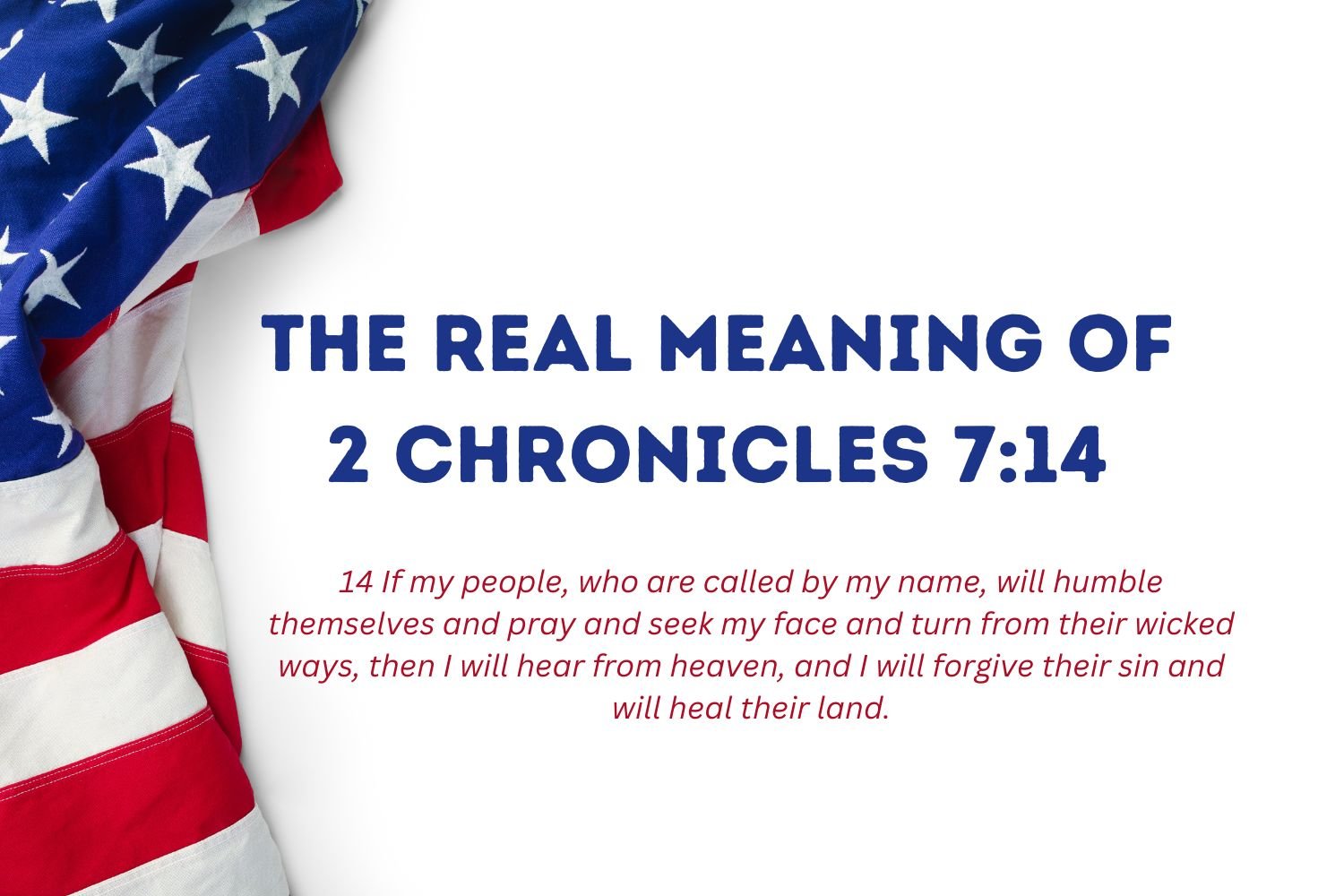
“If My people who are called by My name humble themselves, and pray and seek My face and turn from their wicked ways, then I will hear from heaven and will forgive their sin and heal their land.” – 2 Chronicles 7:14
On May 7, U. S. churches and Christian organizations (even some in our government and among other religions) will set aside time to observe the National Day of Prayer. We are called to put our political and ethnic differences aside and to seek God’s healing of our country.
The verse above from 2 Chronicles is often quoted. It’s a beautiful promise, conditioned on the response of the people of Israel in ancient times. Does it apply today to believers in America?
Below find commentary by two theologians answering this question. Their answers surprised me a bit, the fact being I am NOT a theologian. However, as you read their answers, remember that God speaks to all of us through all of His Word. As He led His people then, He leads His people now. He calls us to humble ourselves, to pray, to seek Him, and to repent from our evil doing. We can’t rest on our political leanings; we can’t trust in human guardians of our nation’s well-being (over the Sovereign keeping of God Himself); we can’t carry hatred or pride in our hearts without thought of the consequences. We who follow Christ aim to submit to His ways and His word on all things…with His help.
“In context, 2 Chronicles 7:14 is a promise to ancient Israel (and perhaps even modern-day Israel) that, if they will repent and return to the Lord, He will rescue them. However, many Christians in the United States have taken this verse as a rallying cry for America. (Perhaps Christians in other countries have done so as well.) In this interpretation, Christians are the people who are called by God’s name. If Christians will humble themselves, pray, seek God’s face, and repent, then God will heal their land—often a moral and political healing is in view as well as economic healing. The question is whether or not this is a proper interpretation/application.
The United States does not have the same covenant relationship with God that ancient Israel enjoyed. The covenant with Israel was unique and exclusive. The terms that applied to Israel simply did not apply to any other nation, and it is improper for these terms to be co-opted and applied to a different nation. When 2 Chronicles 7:14 is applied to Christians in the U.S. or any other modern nation, it is usually with the understanding that the Christians in that nation—the true believers in Jesus Christ who have been born again by the Spirit of God—will comprise the righteous remnant. God never promised that if a righteous remnant repents and prays for their nation, that the nation will be saved. Perhaps if national repentance occurred, then God would spare a modern nation as He spared Nineveh at the preaching of Jonah (see Jonah 3)—but that is a different issue.
Having said that, it is never wrong to confess our sins and pray—in fact, it is our duty as believers to continuously confess and forsake our sins so that they will not hinder us (Hebrews 12:1) and to pray for our nation and those in authority (1 Timothy 2:1–2). It may be that God in His grace will bless our nation as a result—but there is no guarantee of national deliverance. Even if God did use our efforts to bring about national repentance and revival, there is no guarantee that the nation would be politically or economically saved. As believers, we are guaranteed personal salvation in Christ (Romans 8:1), and we are also guaranteed that God will use us to accomplish His purposes, whatever they may be. It is our duty as believers to live holy lives, seek God, pray, and share the gospel knowing that all who believe will be saved, but the Bible does not guarantee the political, cultural, or economic salvation of our nation.” – Got Questions
Worship with me. We have God’s Word and His wisdom leading us into repentance, for our good and His glory. If God chooses, He may heal our land, but most importantly, for us, is our joyful and hopeful submission to His rule and reign in our lives. Still…this beautiful Imperials rendition of 2 Chronicles 7:14 is a call to prayer and repentance for us Christ followers, no matter the outcome. [I’ve loved this song for many years and still get goosebumps, singing along with the Imperials. Enjoy.]
If My people Which are called by My name Shall humble themselves Shall humble themselves and pray If My people Which are called by My name Shall seek My face And turn from their wicked ways
Then will I hear from heaven Then will I hear from heaven Then will I hear and will forgive Forgive their sin
If My people Which are called by My name Shall humble themselves Shall humble themselves and pray I will forgive their sin I will forgive their sin I will forgive their sin And heal their land
If My people Which are called by My name Shall humble themselves Shall humble themselves Shall humble themselves and pray*
“If there was ever anyone who had humbled themselves, prayed, sought the Lord, and turned from their wicked ways, it was the disciples and the early church. But did they receive healing for their land? No, they received persecution. They were threatened, and some were even thrown in jail for their faith. Eventually most were even scattered from their land (Acts 8:1-3).
But despite all these terrible situations and circumstances in their lives, they were blessed with every spiritual blessing (Ephesians 1:3). They had the peace and abundant life of Christ. And this is the promise for all who believe. We don’t have to find economic and political healing in our land to enjoy God’s blessings. Our blessings are found in a Person.
Does that mean we shouldn’t pray for our country and hope things get better?
Absolutely not! We can love our country and be thankful we get to live here. We can be grateful for the men and women who sacrificed their lives to protect our freedom. We can pray for our country and hope things get better. But as we pray for our country, our ultimate hope is not that our lives get more comfortable through prosperity but that more people come to know Jesus and the abundant life that can only be found in Him.” – Jason White
Now on the first day of the week Mary Magdalene came to the tomb early, while it was still dark, and saw that the stone had been taken away from the tomb. – John 20:1
Mary Magdalene came, announcing to the disciples, “I have seen the Lord”. – John 20:18
On this Sunday, this most glorious day in all of history, death gave way to life. The grave could not hold Jesus. In the early morning, a small group of women who had loved and followed this Jesus, came to the tomb, guarded and sealed, and found it empty. Then ones, twos, small groups, and a crowd of 500 saw him alive. Jesus himself, bearing the wounds of the cross, walking with them, eating with them, teaching them again…as he promised.
He is alive! This man from Nazareth, the Messiah of Israel, the Lord of the world.
With the breath of creation, He speaks of peace, faith, and mission.
With lungs full of air, He breathes on His disciples and grants His Spirit. My Jesus – alive!
The eyes that saw the darkness of death now drink in the sunlight of Easter. My Jesus – alive!* – Trevin Wax
Oh the joy…the indescribable joy of that reality. He died and yet he lives. We were dead in our sins, and because of him, we have life.
Take the time to read this amazing story yourself. The Gospel writers all have given detailed accounts of the risen Christ ( Matthew 28:1-13, Mark 16:1-14, Luke 24:1-49, and John 20:1-29). The Apostle Paul also wrote about Jesus’ resurrection in his letter to the Corinthian church (1 Corinthians 15).
Christ has been raised from the dead, the firstfruits of those who have fallen asleep. For as by a man came death, by a man has come also the resurrection of the dead. For as in Adam all die, so also in Christ shall all be made alive…
“Death is swallowed up in victory.” “O death, where is your victory? O death, where is your sting?”
The sting of death is sin, and the power of sin is the law. But thanks be to God, who gives us the victory through our Lord Jesus Christ. – 1 Cor. 15:20-22, 55-57
Sadly, there are those who think the resurrection of Jesus a myth, or a fairy tale. Even his life is treated casually. Yet, for sure, anyone who does a careful examination of the life and teachings of Jesus would be radically changed. This certainly was my experience. I know too well how wicked my heart can be…my thoughts and actions. God draws us to Himself, and in the drawing we recognize our desperate need for a savior, a strong arm to pull us out of the muck and mire of our own making. Jesus did that for me.
I know Jesus is alive from the historical accounts and the writing of eye witnesses, and because of his own word. I also know he is alive because of how he has transformed lives through the ages. He has changed my life, and he continues to do so.
For the past 20+ years, during Lent, I have read Adrian Plass’ book The Unlocking. I would like to close with a portion out of his Easter reading.
On the evening of that day, the first day of the week, the doors being locked where the disciples were for fear of the Jews, Jesus came and stood among them and said to them, “Peace be with you.” – John 20:19
“On that dark Sunday morning, Mary could never have guessed the cosmic significance of the empty tomb. When Jesus rose from the dead the ancient engines of order were fired once more and, in his body on earth, chaos was defeated. And what a wonderful moment for Jesus and his disciples. Neither locks nor fears could withstand the peace and security that the risen Saviour brought, and still brings to his people. It is the peace of knowing that, however rough the road may need to be (and it often is), we shall indeed, in the most real sense, live happily ever after.” – Adrian Plass**
Christ is risen! — He is risen indeed!
[Many of the links below are praise songs of various genres – as this year’s Holy Week closes, I hope you will take some time before the day ends to worship the Lord in the quiet of this great day. Hallelujah!]
This is the morning of exhausted grief. Jesus, the Messiah, God’s Sent One; His Only Son lay dead in a tomb. Dead. How is this possible?
The disciples, his family, those followers whose lives were completely transformed must have been numb with the stark reality that he was not with them…not on that Saturday. What would they do without him? What would happen to them? What? What?…Why?
There is only one scriptural reference to this day and it related to the threat of Jesus’ power and influence, even in death:
The next day, that is, after the day of Preparation, the chief priests and the Pharisees gathered before Pilate and said, “Sir, we remember how that impostor said, while he was still alive, ‘After three days I will rise.’ Therefore order the tomb to be made secure until the third day, lest his disciples go and steal him away and tell the people, ‘He has risen from the dead,’ and the last fraud will be worse than the first.” Pilate said to them, “You have a guard of soldiers. Go, make it as secure as you can.” So they went and made the tomb secure by sealing the stone and setting a guard. – Matthew 27:62-66
For the Jews, days begin and end at sundown. Most probably this visit with Pilate occurred Friday night. At his command, guards were placed. The tomb was sealed. Jesus would be no more trouble…or so they thought, in their ignorance.
He is dead: this man from Nazareth, the Messiah of Israel, the Lord of the world.
With His dying breaths, He spoke words of forgiveness, finality, and faith.
But now the breathing has ceased, and the lungs that exhaled forgiveness are deflated. My Jesus – dead.* – Trevin Wax
[Inserting here a talk done on Good Friday by a friend of ours – her topic was “What does the cross change?” – fitting for today – then after her talk, I will close on Black Saturday.]
“What does the cross change?
“Everything” is perhaps our knee jerk reaction. The cross changes everything. But that can’t be right when we worship an unchanging God. God did not change at the cross. He was perfectly just before the cross and remains perfectly just today and will be perfectly just forever. He was perfectly loving before the cross, he remains perfectly loving, and he will be perfectly loving forever. He was sovereign, is sovereign, and will be sovereign forever. God did not change at the cross.
I think to see what changed we have to go back much earlier than Jesus’ lifetime. We have to go back to Eden. God created a perfect garden with a man and a woman and plants and animals. It was an oasis, idyllic, peaceful. And by peaceful I don’t mean free from worry or stress. I mean the hearts of Adam and Eve were at peace with God. It’s hard to imagine that. Hard to imagine no shame, fear, uncertainty. Hard to imagine walking and talking with God, completely vulnerable, knowing you were free from any sort of culpability. Adam and Eve were at peace with God, each other, and themselves.
Then they went to war with God. And each of us makes that same decision, to go to war with God, to sin against him and against our nature as image-bearers. We do not choose peace or freedom, we choose war and shame, darkness and loneliness. When I say war I mean we declare that there must be bloodshed. There must be death. Sin is a declaration that we will not live as God intended. God intended perfect peace. He intended that we all walk with Him, unashamed, in the light. We sin and we disrupt that plan. We may not desire the outcome of that sin, which is death, but the outcome is unavoidable.
So Adam and Eve sinned and that perfect peace was shattered and the cross became inevitable. As we read through the Old Testament, the cross feels like it’s in every story. We see God using men and women to foreshadow what is to come, the perfect prophet, priest, judge, shepherd, and king. We read the Old Testament and we see all the plans God set in motion to reach the cross. What we see also is imperfection. Imperfect prophets, judges, shepherds, and kings. Imperfect sacrifices leading to imperfect relationships. God is with His people but they cannot be at peace with him like they were in the Garden.
So, does the cross take us backward, to Eden? No. There’s no going back to Eden. That’s not the plan.
The cross is the culmination of the battle that started in Eden. We declared war in the garden and Jesus Christ declared victory at the cross. Oh death, where is your sting? We can ask that because the battle is over. Jesus Christ conquered death and we who believe have the promise of eternal life, starting today.
It’s strange though. It doesn’t feel over. I don’t feel at peace. Not with God, or others, or myself. It feels like the battle is very much ongoing and it often feels like I’m losing. So, what has the cross really changed?
I’m reminded of my favorite passage in the Bible, which is where Jesus is walking on water and Peter calls out to Him and Jesus says come. It’s an amazing story in so many ways but I’m always struck by the fact that Peter sinks and, it seems, is going to drown. Even with Jesus standing right there, standing on water exhibiting power over nature, declaring he is God, Peter is sinking under the waves. Jesus saves him, of course. But I imagine Peter, while grateful, was a bit unnerved by the sinking part. I’m reminded of this story because the reality of this Earth is that, while God is sovereign and He has won the battle over death, we do not live in Eden. We do not live in the new heaven and new Earth. We are waiting for Jesus Christ to return and while we wait, we will struggle. We’ll perhaps almost drown as we try to walk with God. But because of the cross, we will walk as freely as Adam and Eve walked with God. Death no longer has a hold on us.
So, we have victory over death because of the cross, which is our hope for the future. But what do we cling to in this daily battle? What else does the cross give us today?
I’d like to talk about just one thing.
When God looked at His Son, He was pleased. It’s such an amazing thought. That God looked from heaven at a man and was pleased. Picture it. Jesus is a man on Earth and God looks at him and addresses him and says He is pleased with him. That’s what the cross changes for us. When God looks at you who believe, He does not see your sin, He sees Christ’s holiness. He sees you, an individual He created in your mother’s womb whom He has loved from the beginning of time. But instead of your sin, He sees Christ’s holiness. And He says, this is my daughter, in whom I am well pleased. This is my son, in whom I am well pleased. Imagine it. The sight of you pleases God. The cross means that we no longer have a broken and distorted relationship with God because we, unlike any person living before the cross, are holy in God’s eyes. No matter how putrid our sin is, no matter how many times we have declared war with God. For those who believe and repent, we can walk in the light, free from the burden of our sin. Like Adam and Eve, we walk with God in peace. Like Jesus, God looks at us and is pleased. I pray you can feel that today. Feel that God knows you, knows your name and your face and sees you and is as pleased to see you as He is to see His own Son. Not because you’re obedient or you are bursting with the fruit of the spirit. To believe that your good deeds can make up for putting Jesus Christ on the cross with your sin is folly. Our sin led to the death of God’s one and only begotten Son. We cannot make up for that with our good behavior. To try and do so is to deny Christ’s sacrifice.
The cross takes that burden away and replaces it with freedom. We are free to walk in peace with God and to know and feel that God is pleased with us because of the cross.
So what does the cross change? Us.” – Amanda, Good Friday reading, Sideris Church
We have the great knowledge of the risen Christ, but his followers, on that Saturday, only had dim recollection of his words of promise. Shrouded in grief, they found themselves quite “in between” – in between the death of their Savior and the life of his glorious promises.
Another dear friend of ours, Beth, shared this message by John Ortberg from a conference where he spoke on Black Saturday, well, “Saturdays” in general. He describes so well this day in between.
“Saturday – the day between the crucifixion and the resurrection. What do you think the disciples were doing on Saturday? Here they have seen their friend and their Master killed the day before but also have this vague promise, which probably seemed ludicrous at the time that he would rise again. Most of life is Saturday…It`s waiting in faith and hanging onto the promise that God is going to come through for us in spite of how bad things look. Most of life is Saturday. — I don`t know where you are this Holy Week. Maybe you`re in a Palm Sunday kind of mood wanting God to get on board with an agenda and maybe he will, but if he doesn’t, know that his plans are always good…Maundy Thursday means that God loves us no matter how dirty our uniform gets from the game of life. Maybe you`re in a Saturday kind of place – between a hard time and a promise you only half believe. Know this for sure that God`s Easter irony is still at work, and he can use even the worst tragedies for good, and he always has at least one more move left. No matter how bleak and dark Saturday gets, Sunday`s coming, and it`s coming sooner than you think. “ – John Ortberg
Saturday is the “in between day”. Did those who loved Jesus most remember this? Was their grief so consuming, so deafening to His promises, so numbing there was no room for hope? We have the great experience of knowing, for sure, that Sunday is coming!
Today is the waiting day.
We wait like schoolchildren for the final bell.
We wait with tapping foot, huffing breath, rolling eyes.
We wait like a mother for the gushing of birth water.
We wait like branches holding pink petaled secrets.
We wait with tears of frustration or eyes filled with anger.
We wait with tears of joy or eyes wide with wonder.
In the waiting rooms of life, our hope is mixed, our longings more so. But still, we wait. Forgive us for our impatience, Lord. We believe, help our unbelief.
We carry the sorrow of loss even as we hold on to hope of gain. We watch and we wait for your resurrection life. Even though we may not see the evidence, we wait with hope.
For years we lived in countries where Christianity was a minority religion. While the few of us, in those days, passed this week in reflection and wonder, it was, of course, just another week for most of our friends and neighbors. Easter had its name – Eid Al-Qiyama (“Feast of Resurrection”) – but, for so many, Good Friday was shrouded in the ordinary. However, for Jesus, and all who have experienced life through his teaching and example, this day was and is wholly extraordinary.
Good Friday – good for us, hard for Jesus. The events of his trial, crucifixion, death, and burial are all recorded with great detail in the four Gospels. They are riveting accounts of this terrible and triumphant day – Matthew 26:57-27:61, Mark 15, Luke 22:66-23:56, John 18:28-19:42.
Jesus had no opportunity to sleep in the hours of night before this dawn. From the garden where he prayed, he was forcibly taken into the custody of the high priests. Through the early morning hours, he was bounced brutally between the Sanhedrin, the high court of Israel, and the Roman authorities (Pilate and Herod Antipas). While in their custody, Jesus endured hostile interrogation, false accusations, trumped-up charges, relentless attempts at public humiliation, and repeated beatings. Yet, he somehow retained his full faculties, responding to the authorities, when necessary, with great wisdom and understanding of both the proceedings and the people.
In the midst of all this trauma, he even made eye contact with one of his dearest friends and followers, Peter, hiding himself nearby…in his own painful moment.
The outcome of all the wrangling between the Jewish and Roman officials was an unwarranted, undeserved death sentence. Execution by crucifixion. Pilate even washed his hands of the matter, literally, declaring Jesus innocent but still consenting to the death sentence. He didn’t know then but the “blood” he tried to wash of his hands was truly innocent. Still, it wasn’t Pilate who put Jesus on that cross, nor was it Caiaphas, head of the Sanhedrin. Not a Roman, nor a Jew.
Jesus’ death, that day, was an outworking of a divine plan. We cannot begin to understand the holiness of the Father, the sinless resolve of the Son, or the steadfastness of the Spirit. This three-in-one God orchestrated a path forward for us, His fallen and broken people, to be restored to Him.
That we, though wrecked by sin, can be whole again and one in Him, in that unity of Father, Son, Holy Spirit (John 17:21) is a miracle of grace.
Jesus gave his life for us that day. It was not taken from him. He laid it down. For us. Though completely undeserving, we are ransomed and redeemed. At such a great cost. This Jesus. This life. This cross.
Jesus spoke seven times during the three hours he hung on that cross. Each time he spoke, as in all the other times his words are recorded, there was something for all of us. If you don’t know what he said, in those seven brief cries from the cross, read them and discover more about him…and about us.
Just before he died, he cried out, “It. Is. Finished.” What? What was finished? His life…oh no…not at all…that story comes later. His work? Not completely…for he continues interceding for us (Romans 8:34). What was finished? The perfect sacrifice – the lamb without spot or blemish – his life for ours. “The Lamb of God who takes away the sin of the world” (John 1:29). Hallelujah!
There is so much more to say about this day and the people present.Pilate’s wife who warned Pilate about ruling against this innocent man. Judas Iscariot, Jesus’ betrayer, who tried to return the money and killed himself in remorse that same day. Simon of Cyrene, a pilgrim, who was drawn into the dreadful drama of that day to carry Jesus’ cross when he could not. Barabbas, a notorious criminal, who gained his freedom, through a strange twist of the day. The nameless thief on the cross who cried out in repentance to Jesus. The Roman centurion who in his witness of Jesus all those hours professed faith in him. John, Jesus’ closest disciple, and Jesus’ mother Mary to whom Jesus gave each other. The women, lives changed by their faith in Jesus, who stayed at the foot of the cross through all the horror of his crucifixion. Nicodemus, a Pharisee and a Christ-follower, who tried to appeal for Jesus with the Sanhedrin. Joseph of Arimathea, another believing Pharisee, who went to Pilate to receive Jesus’ body for burial, to place in his own tomb.
So many stories of lives changed. Good Friday. This marked the day of Jesus’ trial, his death, and his burial, but it does not mark the end of the story. It’s Friday…but Sunday’s coming.*
“A new commandment I give to you, that you love one another, even as I have loved you, that you also love one another. By this all men will know that you are My disciples, if you have love for one another.” – John 13:34-35
The Thursday before Jesus’ trial and crucifixion was the awaited celebration of Passover. In this day, we have a picture of Jesus, in all his humanity, and in all his deity. All four of the Gospels written about Jesus’ life have an account of this day’s events (Matthew 26:17-75; Mark 14; Luke 22:7-65; John 13:1-18:27).
After sunset, the Jewish people would take the Passover meal together – as families usually. They would share the Seder meal and remember how God protected them during the days of their slavery in Egypt.
This particular Thursday is known as Maundy Thursday. Maundy means “commanded” and also can refer to the ceremonial washing of feet. Jesus took upon himself to wash the dusty feet of his disciples, modeling for them his command to love one another (John 13:34-35).
After Jesus and his disciples finished their meal together, he would then enter the garden Gethsemane to pray. As He prayed, He wrestled with his heavenly Father over the need for him to die. “O my Father, if it is possible, let this cup [of suffering and death] pass from me.” Then, settled in his obedience, he reiterated: “O my Father, if this cup cannot pass away from me unless I drink it, Your will be done.” [Matthew 26:39; Matthew 26:42]
Sometime during that dark night of the soul, he turned his attention toward his disciples and all the rest of us, across the ages, who would follow him. His prayer to the Father, recorded in John 17, is exquisitely beautiful, especially in the context of this difficult night. [Take time to read it in full, but I’ve included a part of it below.]
“Holy Father, keep them in Your name, the name which You have given Me, that they may be one even as We are. I have given them Your word; and the world has hated them, because they are not of the world, even as I am not of the world. I do not ask You to take them out of the world, but to keep them from the evil one. Sanctify them in the truth; Your word is truth. As You sent Me into the world, I also have sent them into the world. I do not ask on behalf of these alone, but for those also who believe in Me through their word; that they may all be one; even as You, Father, are in Me and I in You, that they also may be in Us, so that the world may believe that You sent Me.”
Then out of the darkness, Jesus’ disciple Judas Iscariot came to betray him. He was leading a group of the religious leaders, along with a huge company of soldiers. Although Jesus’ loyal disciples wanted to resist his arrest, Jesus refused their intervening and surrendered himself…not to the mob but to the will of the Father.
The betrayal was complete. His disciples fled (although those closest to him would soon seek out where he was being held). Jesus would spend the rest of the night in the tormenting custody of his enemies. The countdown to the cross had begun in earnest. A countdown that actually began at the Fall of humanity, and, under the careful watch of God, our Father…a countdown toward restoring us back to Himself.
After these things I looked, and behold, a great multitude which no one could count, from every nation and all tribes and peoples and tongues, standing before the throne and before the Lamb, clothed in white robes, and palm branches were in their hands; and they cry out with a loud voice, saying, “Salvation to our God who sits on the throne, and to the Lamb.” And all the angels…fell on their faces before the throne and worshiped God. – Revelation 7:9-11
“Worthy is the Lamb that was slain to receive power and riches and wisdom and might and honor and glory and blessing.” – Revelation 5:12
There appears to be nothing recorded in Scripture of events surrounding Jesus on the Wednesday before his crucifixion. Nothing. After two difficult days dealing with his enemies and accusers, it is quite possible that he took a rest. A Sabbath rest. Given the terrible nature of what was ahead of him, starting just the next day, he could surely use a day to rest and reflect. To remember how the Father had sustained him through all the strains of his public life. To refresh himself in prayer and in the company of those on earth who loved him most – his disciples, his friends, possibly his family. We know no details of that day.
Silent Wednesday.
Since we also know what is coming for Jesus…and all for our sakes…we pause today, as well, to worship. He is the perfect lamb, without blemish, perfectly fit to be offered as a sacrifice for our sins. God provided a ram for Abraham to take his son’s place in that strange and amazing sacrifice on Mt. Moriah (Genesis 22:1-14). This was a foreshadowing of our own need for a Savior. We also can be saved by the blood of “the Lamb, who takes away the sin of the world” (John 1:29).
Jesus’ life was not taken from him on that Friday, two days hence. His life was not taken. Not by the Jewish or Roman authorities. He gave his life…for us…there are no words adequate to respond…worship is all we have.
Worthy is the Lamb who was slain Holy, Holy, is He Sing a new song to Him who sits on Heaven’s Mercy Seat [Repeat 2x]
(Chorus) Holy, Holy, Holy Is the Lord God Almighty Who was, and is, and is to come With all creation I sing: Praise to the King of Kings! You are my everything, And I will adore You…! Yeah!
Clothed in rainbows, of living color Flashes of lightning, rolls of thunder Blessing and honor, strength and Glory and power be To You the Only Wise King, Yeah
(Chorus)
Filled with wonder, Awestruck wonder At the mention of Your Name Jesus, Your Name is Power Breath, and Living Water Such a marvelous mystery Yeah…
(Chorus)
Holy, Holy, Holy Is the Lord God Almighty Who was, and is, and is to come, With all creation I sing: Praise to the King of Kings! You are my everything, And – I – will – adore YOU…
(Chorus)
(Repeat a cappella)
Come up lift up His Name To the King of Kings… We will adore YOU Lord… King of heaven and earth King Jesus, King Jesus Aleluya, aleluya, aleluya! Majesty, awestruck Honor And Power and Strength and Dominion To You Lord, To the King, to King To the King of Glory
When He [Jesus] entered the temple, the chief priests and the elders of the people came to Him while He was teaching, and said, “By what authority are You doing these things, and who gave You this authority?” – Matthew 21:23
On this long day, Jesus would demonstrate in one situation after another that he spoke and acted with the authority of God Himself. The barren fig tree cursed by Jesus the day before had indeed withered and died. The disciples saw it themselves that morning as they walked again from Bethany to Jerusalem. Jesus spoke to them of faith, which they would need all the more in the days ahead (Matthew 21:21-22).
Again and again…in Jerusalem, in the Temple, and on the busy streets during Passover, Jesus was confronted by the religious leaders.
It’s amazing that he even gained entry to the Temple after overturning the market there just the day before. Again, another sign of his authority. He was untouchable, until he gave himself over to his own death on the cross…for us.
The religious leaders were determined to trap him in some sort of blasphemous teaching or interpretation of the law. It would not happen, yet they were set on his destruction one way or another.
In an attempt to test Jesus’ understanding of the law, a legal advisor to the Pharisees asked Jesus what was the greatest commandment in the law. The Pharisees cautioned strict adherence to the laws of the Torah, all 613 of them! They were not prepared for Jesus’ response:
Jesus answered, “The foremost is, ‘Hear, O Israel! The Lord our God is One Lord; and you shall love the Lord your God with all your heart, and with all your soul, and with all your mind, and with all your strength.’ The second is this, ‘You shall love your neighbor as yourself.’ There is no other commandment greater than these.” – Mark 12:29-31
Two commands: 1) Love God with your whole being; 2) Love your neighbor as yourself. Some might say that a third is presumed in that you must love yourself in a right and wholesome way in order to truly love others.
Jesus’ love for the Father and his love for all people were in perfect unity. Loving God, with all we are, gives us perspective and capacity to love those around us, whomever they are, as we have experienced love ourselves, from the God who loves us perfectly and completely.
The Pharisees, Sadducees, and other Jewish leaders grew more angry at Jesus and were vexed as to how to destroy his popularity and influence with the masses of Jews loyal to him. All their trickery failed this time. Jesus was not intimidated by them, and, in fact, spoke some of his strongest words against them while teaching that day.
His 8 “woe to you” pronouncements against the Pharisees are listed at the bottom of this page. When I read them, the song from the original Godspell film comes to mind as the Jesus character stands against the religious “machine” of his day – those “hypocrites”, those “blind guides” of the people.
Finally, leaving Jerusalem that day, Jesus stopped on the Mount of Olives (Olivet) to speak about the future. He talked at length, to his disciples and all those who followed, about the end times. He warned them about false teachers and the evil that would rise up in those last days. What it must have been to listen to Jesus, the Messiah, on that Tuesday – filled with a mixture of faith in him and fear of what could lie ahead for them, and the generations to come.
When Jesus and his disciples returned for the evening to Bethany, Judas Iscariot, one of the twelve, stole away and met with Jesus’ enemies. [Matthew 26:14-16] In the dark of night, he would betray Jesus to them. He acted as a coward, away from the crowds who would have strongly objected…
For 30 pieces of silver, Judas would seemingly take history into his own hands, but the clock was already ticking, and Jesus would finish what he came to earth to do.
Postscript:
8 “Woe’s” Spoken by Jesus Against the Pharisees (Matthew 23:13-30)
1- Woe to you, scribes and Pharisees, hypocrites! for you shut up the kingdom of Heaven against men.
2- Woe to you, scribes and Pharisees, hypocrites! for you devour widows’ houses, and pray at length as a pretense.
3– Woe to you, scribes and Pharisees, hypocrites! for you travel land and sea to win one proselyte, and when he is won, you make him twice as much a son of hell as yourselves.
4- Woe to you, blind guides, who say, “Whoever swears by the temple, it is nothing; but whoever swears by the gold of the temple, he is obliged to perform it.”
5- Woe to you, scribes and Pharisees, hypocrites! for you pay tithe of mint and anise and cumin, and have neglected the weightier matters of the law: justice and mercy and faith.
6- Woe to you, scribes and Pharisees, hypocrites! for you cleanse the outside of the cup and dish, but inside they are full of extortion and self-indulgence.
7- Woe to you, scribes and Pharisees, hypocrites! for you are like whitewashed tombs which indeed appear beautiful outwardly, but inside are full of dead men’s bones and all uncleanness.
8- Woe to you, scribes and Pharisees, hypocrites! Because you build the tombs of the prophets and adorn the monuments of the righteous, and say, “If we had lived in the days of our fathers, we would not have been partakers with them in the blood of the prophets.”*