
Category Archives: Monday Morning

Monday Morning Moment – Stockholm Syndrome and Our Rescue – a Biblical Example

Photo Credit: Bible Study Tools

Monday reflecting on yesterday’s thought-provoking sermon.

Pastor Cliff, at Movement Church, preached on our exile life this side of Heaven. He began with the origin story of what we now know to be Stockholm Syndrome. Psychologists identify this as a bonding between hostage and captor – either as a survival technique or an emotional tether in a highly tense and stressful situation.

Stockholm Syndrome: The True Story of Hostages Loyal to Their Captor – Christopher Klein

Pastor Cliff then took us through Exodus and how the children of Israel, though rescued from Egyptian slavery, began to long for the days from which they were rescued. They seemed to forget the hardship and desired what they remembered. The goodness of their God and the nearness of the Promised Land faded as they looked back and away from their Deliverer.

Because of what Jesus did for us on the cross, we are free from the past. However, we are tempted to return to the captivity of our sins and struggles. They are familiar to us. In tense and stressful times, we are prone to return to what put us into bondage in the first place. Sadly.

Old habits can infiltrate the freedom we have in Christ and draw us back to a captivity that no longer fits who we are now. We are deceived into thinking we have no choice…it’s just the way we are/always were. We burden ourselves with the old life – the “yoke of slavery” – rather than believe and live out the reality of Christ’s deliverance.

Does Jesus understand our frame? Absolutely. The big difference is that He was tempted in all the ways we are tempted, and yet without sin. In His time on earth, He was fully human and fully God. We can learn much from Jesus’ wilderness experience before His public ministry began.

Eric, a writer for the website Seeker of Christ, summarizes the 3 temptations of Christ (and all of us) below:

They represent the three main ways humans are tempted:

  • Lust of the flesh – Craving pleasure (turning stones into bread).
  • Pride of life – Seeking validation (jumping off the temple).
  • Lust of the eyes – Chasing power and success (bowing to Satan).

This same pattern goes all the way back to Eve in the Garden of Eden:

  • She saw the fruit was good for food (lust of the flesh).
  • She thought it would make her wise (pride of life).
  • She saw that it was pleasing to the eye (lust of the eyes).

But where Adam and Eve failed, Jesus overcame. – Eric, Seeker of Christ

When I think of those three areas of temptation, I’m reminded of my own struggle of seeking comfort in counterfeit ways which only lead to a place of shame, regret, and disappointment in myself.

Lust of the flesh – Alcoholism and disordered eating are generations-deep struggles in my family. Fortunately, I just don’t drink, so alcohol isn’t something that has become an idol in my life. However, food has been a sad refuge for me instead of seeking it in the Lord. For others, this area of temptation could be sexual (either outside of marriage or with porn). Seeking physical satisfaction in whatever form when only the Lord can truly fill that emptiness.

Pride of life – This is that old habit of “me first”. Pride in self. I was only 9 years old when the evidence of Jesus’ sacrifice for me became deeply personal. My parents divorced when I was 5, and my desire was to be good for my mom because of how hard her life was. It was a futile endeavor even for a young child. When we started attending church, I learned that only God is good and would replace my failure with His faithfulness, as I trusted Jesus as my Savior and Lord. It was the best news ever. The temptation to be performative is still with me, and there are times I chase after that self-focus and fulfillment. Thankfully, the Lord calls me back to Him where I find rest for my soul. He is better.

Lust of the eyes – When we meet a stranger or newcomer, inevitably the question comes up, “So what do you do?” Not who are you or what matters to you, but what do you do. Why do we care? Just something to hang a label of success, or power, or authority on that person? I honestly still don’t know why. Maybe we are just curious. Still, we can find ourselves striving for position and power in life. A level of significance. We lose sight of how God loves us fully. Period. Full stop. We don’t do anything to merit His love. It is who He is. Through His son, we are redeemed. We can lay down the work-weariness of climbing to the top… of whatever mountain used to hold us captive.

Photo Credit: Bible Study Tools

Because of Jesus and the freedom we have in Him, we don’t have to return to bondage. In times of struggle, we are tempted to seek out that old familiar yoke. We forget how heavy it was. Maybe we think we deserve to live that way. We couldn’t possibly be free to love without wanting anything in return, serve without expecting to be served, or to simply enjoy the presence of God or the company of others just because we belong…nothing else required. Couldn’t be? Yet we are…free.

That’s the freedom we have in Christ. That’s where He wants us to live. Without shame. In His love and protection. Remembering that His yoke is easy and His burden is light (Matthew 11:28-30).
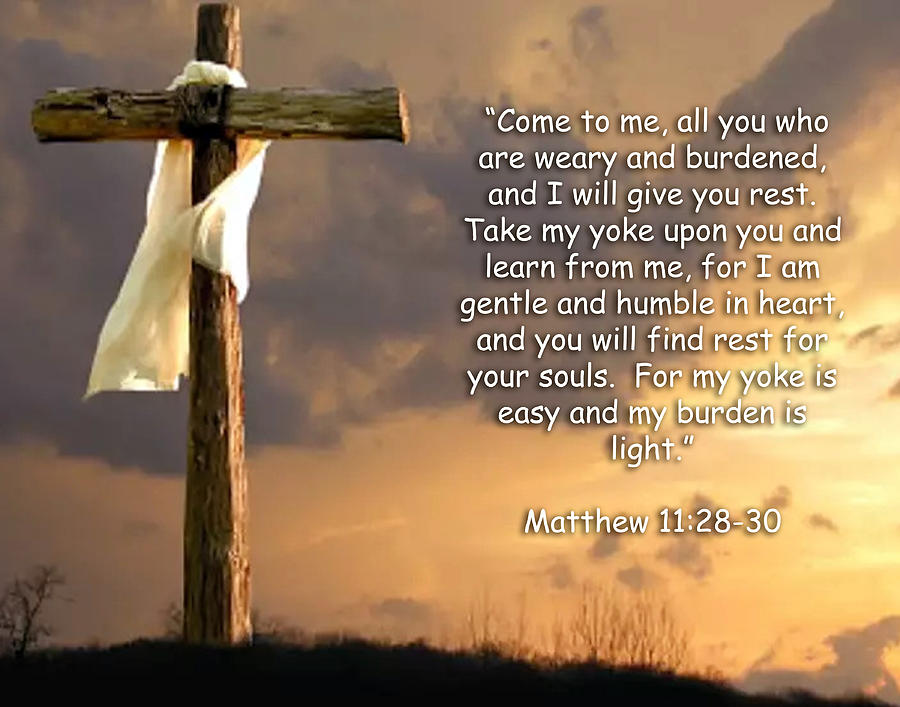
Photo Credit: Samuel Epperly, Pixels

Monday Morning Moment – Celebrating the Life of Deborah Kay Mitchell

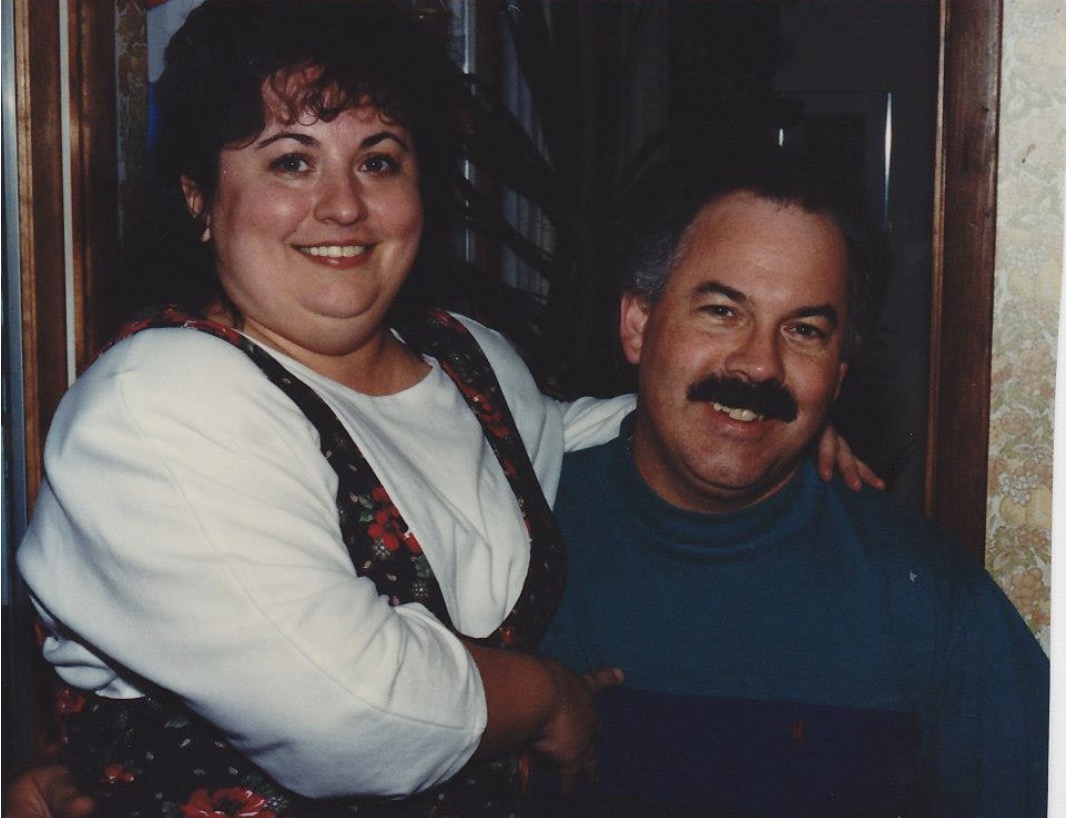
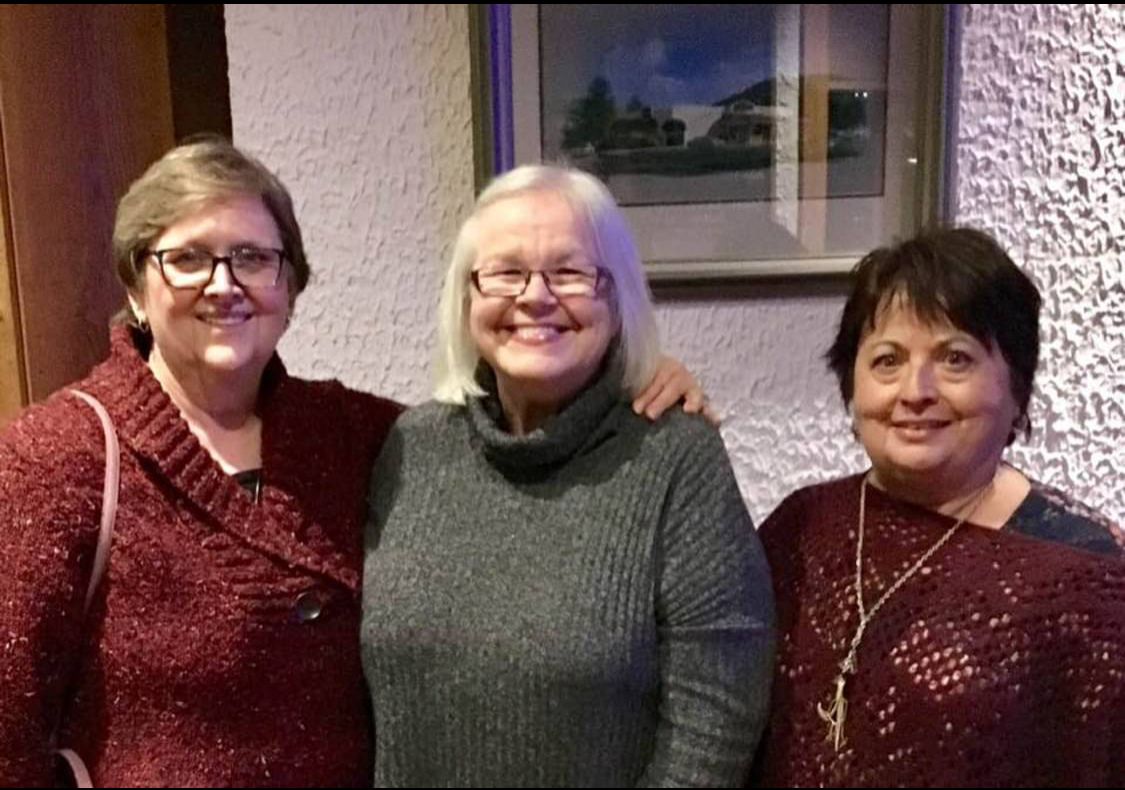
[L) to R) – Kathy Visneski, me, Kay Mitchell]

“Blessed be the God and Father of our Lord Jesus Christ, the Father of mercies and God of all comfort, who comforts us in all our affliction, so that we may be able to comfort those who are in any affliction, with the comfort with which we ourselves are comforted by God. For as we share abundantly in Christ’s sufferings, so through Christ we share abundantly in comfort too. If we are afflicted, it is for your comfort and salvation; and if we are comforted, it is for your comfort, which you experience when you patiently endure the same sufferings that we suffer. Our hope for you is unshaken, for we know that as you share in our sufferings, you will also share in our comfort.“ 2 Corinthians 1:1-7

Comfort in suffering. I’ll come back to this.

Deborah Kay Mitchell – June 7, 1951 – September 19, 2026

Although Kay and I share the same first name, I only really knew her by her middle name. We have been friends for 40 years, most of that not in the same town. All of it as wives, mothers, nurses, Christians, and Southern women.

She has been deeply on my heart over the last several days because, as you can tell by the dates above, she is no longer with us…and yet she is. You see Kay was a force of nature. She was not one easily cast aside. In fact, never. She was an impassioned, stubborn, formidable, brilliant, funny, no-nonsense, Godly woman. This world, upon her exit, is a little dimmer, but immeasurably better because of her very existence in it.

Deborah Kay Mitchell – Obituary

I met Kay early in 1986. Right out of grad school, my husband Dave had taken a research chemist job in Kingsport, Tn. I applied also for a job as clinical nursing specialist job in the cancer center at Holston Valley Hospital. Getting the job, I remember the first day with Mrs. Ketron, the director of nursing, touring me around the hospital. She walked me onto the oncology unit, and one of the first nurses I met was Kay. A petite woman, dark hair and dark eyes, completely unimpressed with me. As she should have been.

We were in our 30s, Kay and I, same age, but I was always 6 months older (which she would use against me as it suited). I was brand-new in a very different culture. As young as she was, she carried a posture of unfazed authority. She would take her time sizing me up…but not too long, fortunately.

I was so thankful that we, sooner than later, became friends and fellows-in-arms, caring for patients, families, and staff.

Not long after I became part of the cancer center staff, Kay took the role of nurse manager. Kathy Visneski soon joined our ranks as a nurse researcher/educator. We three worked closely together in those years – dreaming, planning, and executing strategy, support, and training for some of the best nurses we would ever know. As nurse manager, Kay would both work our proposals through the chains of command and weave them into our culture.

Kay was an operational wizard. She didn’t need the spot-light ever. Her goal always seemed to be bringing out the best in others. She was what author Joyce Landorf Heatherley called “Balcony People” – encouragers who stand and cheer us on. Kay had a knack for coming alongside and encouraging folks to be the person for the job, or to do what’s needed whatever it is…to grow into a person of greater capacity.

Kay encouraged me (us) in ways that didn’t pamper or coddle. She was a true leader – instilling support and confidence. She wasn’t shy to say, in love, what someone needed to hear and, spot-on, when they needed to hear it. Not from a distance either. She was right there in the proverbial muck with us.

When we were new in our relationship as both friends and colleagues, she was instrumental in helping me win the confidence of the cancer nursing staff. I leaned on Kay for counsel and kindness. She taught me a whole new understanding of the phrase, “Get over it!” and “Get over yourself!”

It may seem counter-intuitive to be encouraged by such attitude, but underneath was a tough and total love. Not just something I experienced from her but everyone who allowed her to come close to them. Kay wasn’t smarmy or overly sentimental, but she truly and deeply cared about people.

We were nurses together, Christians together, and moms together. Her two kiddos were maybe middle and high school age as I began having our three children. That “get over yourself” advice was so helpful as I questioned my parenting skill. I needed to hear the wisdom that came after, but to hear it, Kay knew I had to get out of my own head. She was so wise and managed to meet the challenges of parenting, as with cancer nursing, with wit and humor.

Our oldest child remembers Kay. When our Christie was just 4 y/o, she went for several days with an undiagnosed ruptured appendix. It wasn’t for lack of trying for a diagnosis. We were in the pediatrician’s office daily until on the 5th day, they finally determined that our stoic little girl had a belly full of infection. Kay (and friend Kathy) were right there with us through the two weeks of hospitalization post-appendectomy. In fact, Christie still has a pillowcase Kay gave her while in-hospital. It was a Sandra Boynton cartoon image entitled “Keep Smiling”.

So Kay.

She always treated little people like big people. How blessed her own three grandchildren are to have such a grandmother.

At some later date, our little Christie even got a celebratory ride in Kay’s convertible.

Christie with driver Kay

[Kay even made it to Christie’s wedding many years later]

[Kay, Ann, Jennifer, & me]

In 1994, just 8 years after becoming friends, our family moved away and then overseas. The majority of our years as friends were from a distance. It didn’t matter. Every visit. Every phone call. Completely life-giving and full of laughter. We shared the sadnesses as well. Deaths, illnesses and hardships of people we loved…changes. In recent years, after some mini-strokes, Kay developed dementia. In our phone calls, she would always start, “You know I have dementia now.” It did not at all dampen her indomitable spirit. Most of our shared memories were of years past and she was still able to recall those. Nor did the dementia dim her faith. We both loved Jesus and our families and the lives God had given us…with all the bumps in the road.

A couple of years ago, Kay and I had one of our catch-up phone calls. She told me a story. A few months earlier she had a knee replacement surgery. Years of nursing, like with many professions, are hard on our knees. As she was “ambulated” – being walked in the hall shortly after surgery, she was in the company of nursing friends who’d come to see her. Friends from the era we shared. Like Kay, they had gotten older (it is odd how we get older but still, with each other, feel the full vigor of life shared in the workplace). It must have been a sight, this nurse “patient” and her friends filling the hall, walking slowly together, in conversation and encouragement. A physical therapist observing them captured the scene with the word, “Hall-of-Famers”. These women who were known and, as it should be, revered.

Kay was at the core of that hall of fame.

[A W-3 Cancer Nursing Huddle – many years ago]

[Kay & Rhonda – close nursing friends for many many years]

How many nurses’ lives she influenced. How many patients rallied and families took heart in her care. How many moms and their children in her church benefited from Kay’s love and pointing them ever to Jesus. You knew you had been seen and known when Kay was in the room.

So how do people become “hall-of-famers”? Remembered with tremendous fondness and honor. I know one thing about Kay – she was a servant leader. She never asked of anyone else what she wasn’t willing to do herself…and more than not, right there with you doing whatever it was.

A leader like Kay, as described by Collins and Collins, is “‘compelled by an unshakeable desire to serve’. Servants generally don’t have a choice, but a servant leader, through humility, chooses to put others first…When we see someone step up in a difficult situation and commit themselves wholly because it is the right thing to do, we are more likely to join with them for the long journey. The unconditional nature of serving may be the most defining quality”. These authors could have been writing about Kay.

Steadfast. Hard-working. Funny. Resilient. Intelligent. Caring. Persevering. Ever hopeful. Constant in faith. Full of life and love.

[Kay & Joe – husband and friend – 55 years married]
[and…Kay & Joe, still]

Less than two weeks ago, Kay got very ill. Within hours, she was in ICU and with all the best treatment, she would not improve. As in her amazing life, she made the call – she seemed to know it was time and she expressed as much. She left this world quietly to enter Eternity – whole and mentally healed – her full self – even more beautiful than she was here.

Comfort in suffering. Kay never shied away from the hard. She faced things head-on and gave courage to all of us around her to do the same. She trusted a good God. I saw Jesus in her…always.

She shouldered her own suffering because she knew she wasn’t alone. God was present. Those who loved her were there for her. She was comforted…and she passed that comfort onto others. Always.

She would probably hate all this attention…that’s why it took me some days to put it out here. She’s now in a better place, and it’s up to us to live as she lived – to do what we can to make this a better place, to extend ourselves to others, to see the humor and irony in this life, and to watch God cut through the silly smallness in life to display the grandness just there in the distance…we can see it if we take our eyes off ourselves…and look. It’s closer than we think.

Thank you, Kay. Thank God for you.

“…in Him it is always Yes. For all the promises of God find their Yes in him. That is why it is through him that we utter our Amen to God for his glory. And it is God who establishes us with you in Christ, and has anointed us, and who has also put his seal on us and given us his Spirit in our hearts as a guarantee.” – 2 Corinthians 1:19c-22

Monday Morning Moment – Hall-of-Famers and What Makes Them So – Deb Mills

Balcony People – The Encouragers in Our Lives – You Know Who You Are – and We’re Grateful – Deb Mills

Monday Morning Moment – Rewiring Our Brain – from Lies to Truth

Photo Credit: David N. Johnson

What we think and then speak about ourselves (and others) can, with repetition, become hard-wired in our brains. This function, of which you may be familiar, is neuroplasticity. It’s super helpful with new work tasks, habit formation, and learning to play an instrument, for instance. The tricky thing about neuroplasticity is that it also is engaged when we repeat things that aren’t necessarily true about how we see ourselves or the world around us.

I follow Erika, a Christian neuroscience coach, on Instagram and Facebook. She recently posted a clear and practical guide to how we can consciously rewire our brain, especially when we’ve allowed negative (essentially untruthful) thoughts and comments take us to a dark place.

She should write a blog or Substack, but I haven’t found one yet. So below please find her well-studied take on “mind over matter (brain)”.

Erika writes: “Neuroscience shows us that: thought + emotion + repetition strengthens a neural pathway.”

She writes for Christians, but honestly, her 8 practices for rewiring our brains are noteworthy for anyone desiring to clear their thinking:

  1. Notice the thought. Think about what you’re thinking about. At times we say things that if checked and sorted we know aren’t true; they are just how we feel at the moment. Not facts but feelings.
  2. Identify the lie. Because of repetition, you may have thoughts that have taken up residence in your brain for so long (neuroplasticity), they seem true. You may need help, through prayer or with a trusted friend, to assess whether you have held onto a lie – about yourself or others.
  3. Take the thought captive. One of my favorite Bible verses is 2 Corinthians 10:5 – “We destroy arguments and every lofty opinion raised against the knowledge of God, and take every thought captive to obey Christ.” Even if a thought or opinion has long been lodged in our minds, we don’t have to preserve it. With help from God or a friend, we can acknowledge a thought that is simply not true and begin the work of isolating it and ridding it from our minds. Rewiring our brain and altering a neural pathway.
  4. Replace the lie with God’s truth. What an amazing guide for life is the Word of God! Wisdom for all of us. If you aren’t a believer, sort out what is really true vs. what has taken up squatter’s rights in your brain – hurting you rather than healing you. For Christians, we look for what is true in the Bible and replace the lie with the truth. It will require its own repetition to rewire our thinking. So worth it. “Is not my word like fire, declares the LORD, and like a hammer that breaks the rock in pieces?” – Jeremiah 23:29
  5. Preach the truth to yourself. When a lie sets up residence in our brains, we have to use repetition to unseat it. Speaking what is true over the lie will put neuroplasticity in a higher gear. I love what Erika says here: “Your mouth reinforces what your mind believes”.
  6. Keep renewing your mind. The old cortisol-filled thoughts aren’t going to go away easily. When they rise up, remember to speak/think what is actually true. The negative thoughts will fade. The Bible talks about “renewing the mind” (Romans 12:2) It is an ongoing practice.
  7. Stay consistent when nothing seems to change. Again, those negative thoughts, those lies, may have embedded over years. The neural pathways are strong. Don’t be discouraged that change takes time. “Don’t mistake slow progress for no progress.” I’m a visual learner. Sometimes for me, it takes written cues on my keyboard, in my journal, on my kitchen counter, in my car. [OK, I can be a slow learner, too.] So thankful for truth that sets my captive brain free!
  8. Build a Godly fortress in your mind. If you have dark days or you struggle with thoughts that overwhelm you, if you can’t resist speaking out contempt for yourself or others, you need to build fortification against such thoughts which turn into words. When we allow our brains to be wired with negative, hateful thoughts, we can rid ourselves of those thoughts. However, we also have to replace them with what is true (Matthew 12:43-45). Building a fortress takes work, but, over time, it is that amazing rewiring of our neural pathways and setting in motion a very different neuroplasticity. So worth the work!

Erika at Nourished and Rooted on Instagram

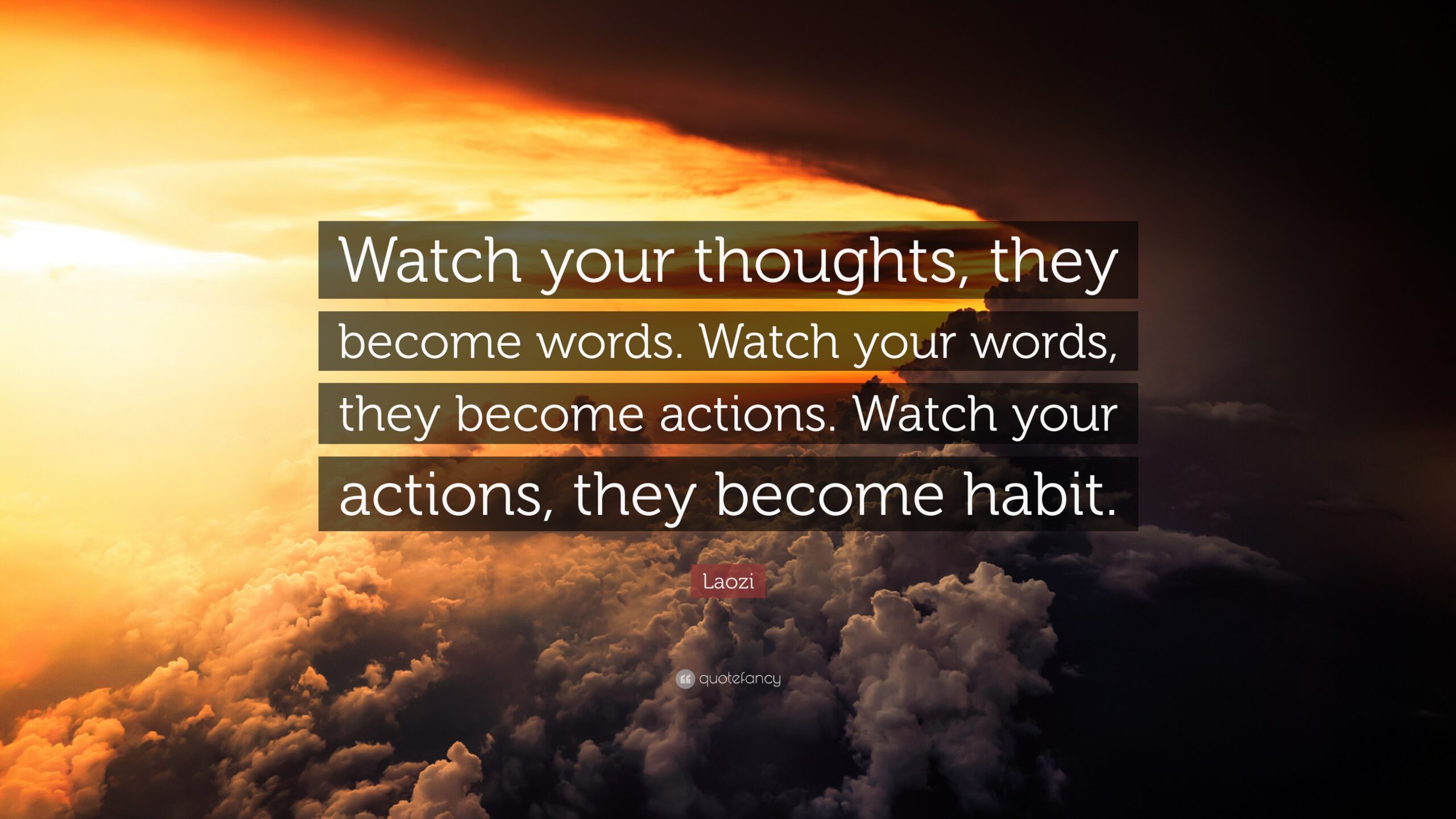
Photo Credit: QuoteFancy, Laozi

You Become Your Thoughts – Erika – Nourished and Rooted – Instagram

You Become Your Thoughts – Erika – Nourished & Rooted – Facebook

Dr. Lee Warren Podcast – excellent resource – on all things mind/brain – Christian neurosurgeon – brilliant and and easy to engage

The Life-changing Art of Self-Brain Surgery – Dr. W. Lee Warren, MD

Brainwork: The Power of Neuroplasticity

Neuroplasticity and Cognitive Restructuring – Sydney Ceruto Ph.D.

Monday Morning Moment – The Addictive Nature of Complaining and Breaking the Cycle

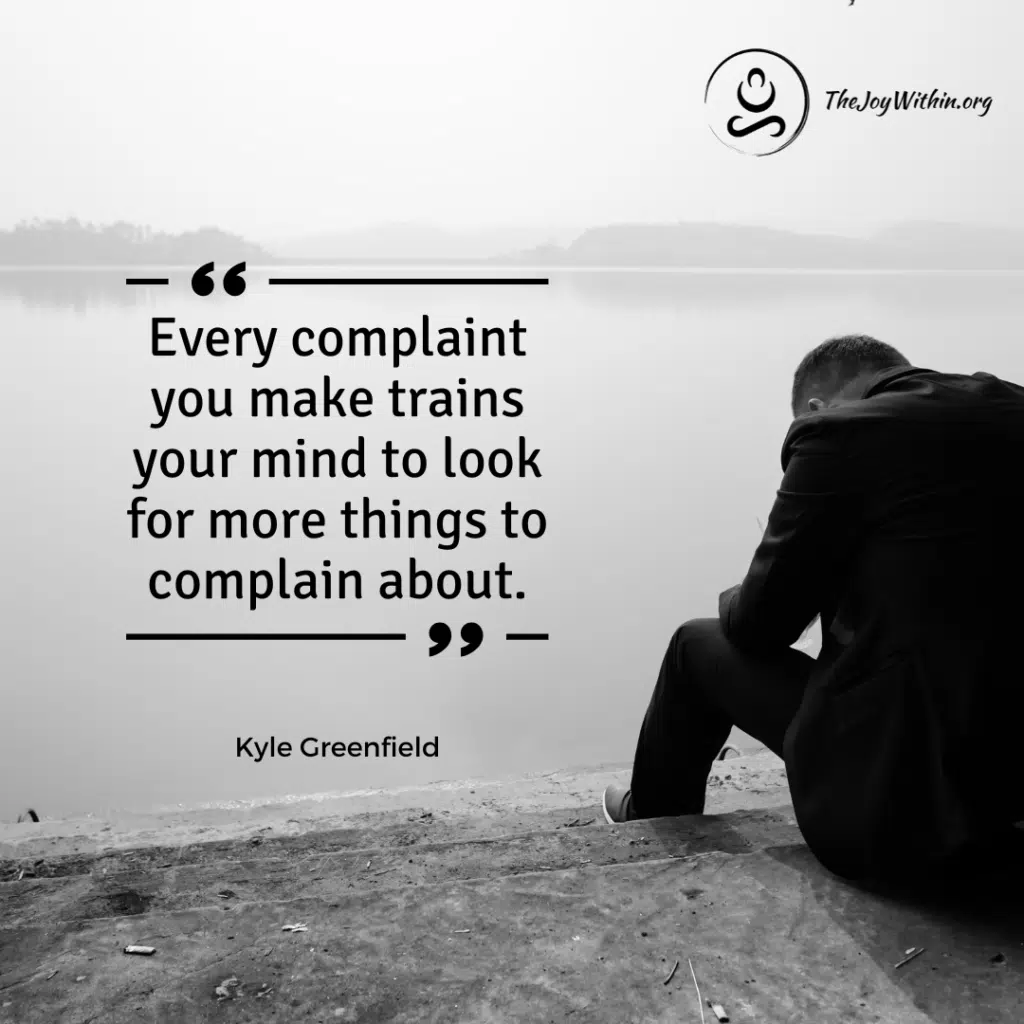
Photo Credit: The Joy Within, Kyle Greenfield

Could I be complaining about complaining? Not at all. Having already written about it twice before (and not counting my pieces on negative thinking), why revisit it?

Here’s why.

Complaining is bad for us. It actually rewires the brain into thinking our complaints are current reality. Whatever has riled us up in the recent (or not so recent) past stirs up cortisol excretion (a stress hormone). Then as we process our complaint with a sympathetic listener, we actually then get a hit of dopamine. This positive effect of complaining is the pathway to habit. In fact, the brain will default to complaining in the future, rather than positive problem-solving or exercising gratitude for the good over the bad.

If, however, our processing a complicated or stressful situation helps us to get to a positive solution, the brain responds accordingly. This should be much more satisfying than habitual complaining which is personally depressing as well as depressing to others. There are rewards in complaining if it engenders sympathy maybe or gets us out of responsibilities, but those “rewards” turn into negatives when complaining becomes habitual and drives people away. This is not to say complaining should be silenced. We need to process hard things. The problem with complaining is when it becomes the end-goal.

The Psychological Harm of Complaining – Bence Nanay Ph.D.

It is quite sobering actually to consider all that’s written these days (see below) about the neurological changes that can come from repetitive behaviors, such as complaining. Fortunately, reversing this is possible.

High Focus Centers are treatment programs across multiple US states. Their focus is out-patient care for substance abuse and psychiatric disorders/issues. The following is a substantive excerpt from their article on the addictive nature of complaining, its physiological and relational harm, and the benefit of shifting complaining to a healthier mindset in 5 steps. 5 steps! Worth the read and your consideration, if you struggle with complaining or love someone who does.

“The purpose of the complaint often isn’t to fix anything…It’s about drawing attention—maybe to feel seen, validated or pitied. Over time, this loop of discomfort → complaint → attention can become addictive, providing a false sense of control, significance or identity…Victim mentality is a pattern of thinking where a person sees themselves as perpetually wronged by others or by life itself. They may believe they are ‘good’ or ‘right,’ and that any problem in their life is caused by other people who are ‘bad’ or ‘wrong.’..At its core, victim mentality keeps someone trapped in blame. It externalizes every challenge and prevents personal growth, because it shifts responsibility away from the self.”

“Just like substance use or compulsive behaviors, complaining can offer short-term relief. It may feel good to vent, to be validated or to be the center of concern. But over time, this habitual negativity can actually rewire the brain, reinforcing pessimism, resentment and passivity.

Photo Credit: ThinkLink

Here’s why complaining can feel addictive:

  • Dopamine hits: When someone receives sympathy or attention after complaining, it can activate the brain’s reward system.
  • Identity reinforcement: Constantly viewing oneself as the victim can create a strong sense of self—though unhealthy, it’s familiar and consistent.
  • Avoidance of responsibility: Complaining and blaming protect someone from having to make changes, take risks or face uncomfortable truths.
  • Social bonding: In some circles, shared complaining becomes a social glue—even though it reinforces negativity.

Unfortunately, these perceived ‘benefits’ come at a high cost: chronic stress, broken relationships, low self-esteem and an inability to build lasting inner peace.”

Is Complaining an Addiction? Understanding the Trap of Victim Mentality – High Focus Treatment Centers

Shifting from Complaining to Empowerment

“Escaping the cycle of complaining and victimhood begins with awareness. If you find yourself constantly focused on what’s wrong—without seeking solutions—it may be time to ask: What am I hoping to gain from this?

Here are some strategies to begin shifting your mindset:

  1. Notice the Pattern

Start by tracking your complaints. What triggers them? Are you seeking connection, pity or a sense of righteousness?

  1. Ask: “Can I fix this?”

If the answer is yes, take action. If the answer is no, explore acceptance. Complaining about things you can’t or won’t change is a drain on your energy.

  1. Reframe, Don’t Deny

You don’t have to pretend everything is fine. But try reframing: instead of “I hate this heat,” say, “This heat is uncomfortable—maybe I’ll get a fan or find some shade.”

  1. Practice Gratitude

Gratitude is the antidote to victimhood. Regularly recognizing what’s going well helps train your brain to seek out the positive.

  1. Get Support

If complaining and blame feel like your default mode, it may be time to explore why. Often, these patterns are rooted in trauma, insecurity or learned helplessness. Working with a therapist can help uncover those roots and replace them with healthier coping tools.“

Is Complaining an Addiction? Understanding the Trap of Victim Mentality – High Focus Treatment Centers

Bottom line: Complaining is bad for you and can become habitual. It can become relational second-hand smoke, harming you and those around you. Ironically, this habit can be transformed, like any other, with great positive impact on your brain. Let’s get after it!

Monday Morning Moment – Don’t Let Complaining Rewire Your Brain – Deb Mills

Monday Morning Moment – Complaining Rewires Your Brain – How to Curb (Maybe Not Stop) Complaining – Deb Mills

How Complaining Rewires Your Brain Toward Negativity – ThinkLink – Super quick read and super helpful as well!

How Complaining Rewires Your Brain – Brain Performance

Chronic Complaining: Examining Its Relationship to Mental Health

The Truth About Complaining – Kyle Greenfield

Is Complaining Good for You? Therapists Explain [The Answer Is Surprising] – Brina Patel

Complaining and Your Brain: 4 Surprising Effects

Why Complaining is Addictive – Dr. Gloria Lee

How Negative Thinking Destroys Your Relationship – Dr. Gloria Lee

Is Complaining an Addiction? Find Out! Take the One-Day “Abstain from Complain” Challenge – Dr. Michael Ceely

Why Do I Complain So Much? Understanding the Psychology of Negativity

The Pros and Cons of Complaining – Barbara Frazier

Photo Credit: QuoteFancy

Jesus and Holy Week – Day 2 – Monday – Jesus Curses a Fig Tree and Turns Over Tables

Photo Credit: Fig Tree by Bob Orchard

[Adapted from the Archives]

On the next day, when they had left Bethany, He became hungry. Seeing at a distance a fig tree in leaf, He went to see if perhaps He would find anything on it; and when He came to it, He found nothing but leaves, for it was not the season for figs. He said to it, “May no one ever eat fruit from you again!” – Mark 11:12-14

When Jesus woke on Monday morning, after that glorious Sunday entering Jerusalem…I wonder what he thought. Did he know that, in just four days, he would be crucified? Whew…

Back to Monday:

During that week in Jerusalem, Jesus and his disciples spent the nights with friends in Bethany, two miles outside of the city. Each morning, they would walk into Jerusalem. On that Monday morning, just four days prior to his crucifixion, Jesus became hungry on the walk in. Seeing a leafy fig tree, he looked for fruit. With fig trees, where there are leaves, there should be figs. Since green figs are edible, and it wasn’t yet harvest season, there should still be some fruit on the tree.

When he found no figs, Jesus cursed the tree. This seems out of character for Jesus, until his action is put in the context of his culture and community. Throughout his public ministry, especially as he became more known and revered, the Jewish religious leaders held him in contempt.

Jesus’ teaching of our dependence on God’s righteousness and not our own flew in the face of the Pharisaical teaching of the day – that of strict adherence to Jewish law as the only hope of finding favor with God. For Jesus, the leafy barren fig tree must have been a picture of religious Jews of that day, all flash and finery but no fruit of faith.

“Christ’s single miracle of Destruction, the withering of the fig-tree, has proved troublesome to some people, but I think its significance is plain enough. The miracle is an acted parable, a symbol of God’s sentence on all that is ‘fruitless’ and specially, no doubt, on the official Judaism of that age. That is its moral significance.” – C. S. Lewis

Jesus was left still physically hungry. He remained spiritually hungry  as well – for this people of the Book to receive the good news that the Messiah had come.

Finally, arriving back in Jerusalem, Jesus was deeply troubled by what he found inside the Temple. The crowds of Passover pilgrims did not disturb him, but temple grounds turned marketplace did. In this sanctified place, meant only for worship, there were money-changers and sellers of animals for sacrifice, right in the Court of the Gentiles – in the only place where non-Jewish God-believers could worship.

Photo Credit: ScreenRant, from the TV show The Chosen

Jesus entered the temple and drove out all those who were buying and selling in the temple, and overturned the tables of the money changers and the seats of those who were selling doves. And He said to them, “It is written, ‘MY HOUSE SHALL BE CALLED A HOUSE OF PRAYER’; but you are making it a ROBBERS’ DEN.” – Matthew 21:12-13

Photo Credit: “Expulsion of the Moneychangers from the Temple” by Luca Giordano

Often in film depictions of Jesus cleansing the temple, he appears a crazed individual, flailing about, throwing tables and flinging pigeons into the air. I can’t even imagine him that way. We can’t know how it happened except that in Jesus’ anger, he did not sin. He would not sin. I know the Jesus Film is just another director’s film rendering, but in this scene, Jesus showed considerable restraint. Disturbed at the buying and selling that actually kept believing Gentiles from worshiping, he moved to correct the situation. He was unafraid of the temple officials, burning with zeal for his Father to be truly worshiped in that place.

Zeal for Your house has consumed me, And the reproaches of those who reproach You have fallen on me. – Psalm 69:9

Later in the week, he himself would be the one for sale –  sold for 30 pieces of silver, betrayed by one of his own disciples, to satisfy the wrath of the religious leaders. That story is for another day.

This Holy Monday, we are drawn again to this Messiah who teaches us that the way we live our lives matters but not more than the way we relate to God. He makes space for us…room for all of us to receive Him. He is holy, and in His righteousness, we stand…on solid ground.

The Final Days of Jesus – Andreas J. Kostenberger & Justin Taylor

YouTube Video with Lyrics of In Christ Alone by Stuart Townend & Keith Getty

Reasoning Why Jesus Cursed the Fig Tree

Monday of Holy Week

Why Did Jesus Get Angry in the Temple – Understanding Righteous Indignation

Cleansing the Court of the Gentiles

Jesus Film Media – website & app to watch videos

Monday Moment Morning – How Can We Keep From Hating?

Photo Credit: Heartlight

This weekend, we in the State of Virginia had our governor’s inauguration. It was another occasion of either relief and elation or concern and consternation. Our state and nation remains polarized in so many ways.

Can we disagree politically, philosophically, or ideologically…without hating each other?

We are in a season of hating or aligning with whole people groups. Maybe, in all of history, we have such seasons. A season where, if we aren’t careful, we hate a whole group of people or we love that same group, thereby putting us in grave opposition to the “haters”. At least, the news and social media platforms are telling us this is the case.

Whole people groups – be they Somalis, Afghans, Republicans, Democrats, Jews, Evangelical Christians. Whole people groups.

How can we keep from hating?

Maybe an even more core question: do we even want to keep from hating? What do we think is gained by hating another or a group of others?

Oddly, hating people can feel good. We feel justified in hating. Even morally superior. The dilemma here is that hating begets hating. Neuroplasticity is the process in our brain where negative thoughts, and resulting actions, become hard-wired, having a negative impact on our physical and mental health over time.

The Neuroscience of Hate: Why It Feels Good to Be Angry

The Power of Hate and Its Consequences – Andrew Mathews

I don’t want to simplify or downplay the reasons one might have to hate, but the devastating effects of it in our culture, community, families (and in our own brains) are worth taking a step back and considering.

Briefly, here are some actions to consider:

  1. Call to mind the possibility that I hate someone/some peoples. “Check your heart” is a common refrain in my life. If I’m honest, are there persons/people whose actions, or personalities, offend me? Do my speech and attitude betray my hatred? Does this hatred feel justified? If so, do I give myself a pass for feeling such a strong negative emotion?
  2. Consider what is below the surface of my hatred. Do I consider what I feel to be righteous anger? Is it righteous if it moves me toward hatred? In defending the rights of one group of people against another, am I committing the same injustice toward “the offending group” as I see being directed to the one I care more about? Or is fear what stirs me to hate? Or unfairness? We can have any number of reasons to hate. Addressing those reasons (with help, if necessary), brings our hatred more into the light. It doesn’t mean that we don’t seek change in the culture, but with greater care, compassion, and even empathy.
  3. Seek understanding by leaning in to persons whose groups we are tempted to hate. Real, flesh-and-blood, face-to-face conversations can soften our tendency to hate. Asking questions, listening with care, resisting the temptation to argue, leaving the door open for understanding. This is a huge step toward stopping the hate. For those who pray, beginning to pray for that person can grease the tracks for you to love them – pray for her/his needs to be met, for protection and peace, for paths forward that don’t further divide us.

Photo Credit: QuoteFancy, Margaret Walker

8 Ideas for Managing Hatred – Michael Karson, Ph.D., J.D. – Psychology Today

4. Recognize that hating what is evil is different than hating people. Hatred dehumanizes people. Remember the persons with whom we disagree have children, parents, jobs, their own hopes, fears and strivings – just like us. They may even have a faith similar to ours…but the issue has overcome us/them and has pushed itself into paramount position. Extinguishing civility. We may actually agree on a wrong, if we acknowledge that we’re all trying to sort out the right path forward.

Photo Credit: Heartlight

5. For those of us who are believers, we have no leave to hate. For Christians, we are called by Christ Jesus to love even our enemies (Matthew 5:44). When hating becomes a habit, especially of a particular people group, we lose our way. Thinking it is almost our duty to hate. We have to guard against self-deceit.

Photo Credit: Heartlight

Peter D. Kaufman, brilliant and highly successful businessman, gives wise counsel in this for all of us: “Go positive and go first, and be constant in doing it.” Determine to love, resist hating, don’t wait for the other person, and in every conversation and encounter, be constant in this effort.

The Multi-disciplinary Approach to Thinking – Peter Kaufman

Young businessman, world-changer Mitchell Wilson recalls Kaufman’s use of the phrase mirrored reciprocation. How this applies is when we engage others with love, listening as we seek understanding, being gentle where we disagree, we often get the same responses in return.

Wilson writes: “Peter doesn’t go into this in his speech [above], but I can’t help but think of Jesus’s core teachings that relate to the principle of mirrored reciprocation:

  • Love your neighbor as yourself
  • Do unto others as you would have them do unto you
  • Forgive those who trespass against you
  • Blessed are the merciful, for they shall receive mercy
  • Turn the other cheek”

Mirrored Reciprocation: Peter Kaufman’s Profoundly Simple Insight That Helps You Achieve An Enjoyable Life | Blog

6. Don’t give up on developing the habit of loving instead of hating. This is definitely a spiritual disciple and a habit worthy of pursuing. Peter Kaufman also has counsel, from his talk above The most powerful force that could be potentially harnessed is dogged incremental constant progress over a very long time frame. We are going to have to fight against hating, especially if we have allowed it to take up real estate in our minds. However, as with anything worth mastering, the work needed to keep from hating will yield its fruit…if we don’t give up.

Photo Credit: Heartlight

[This blog was inspired by recent, terrible events in our country and also by the sermon at Movement Church yesterday. Our pastor Cliff unpacked Matthew 5:38-42 (YouTube video linked; image below) about showing radical love by resisting retaliation. Can’t wait for his sermon next week on “Love your Enemies” which may end up inspiring a Part 2 on this topic. Hope you stay with me for that one.]

Photo Credit: Heartlight

Monday Morning Moment – Offense Revisited

[Adapted from the Archives – Monday Morning Moment – Offense, Being Offended, and Taking Up Offense]

Processing thoughts on the difficult subject of offending and being offended, a song drifts into my hearing from Dave’s office. He is riding his bike (on a trainer) to a playlist that matches his ride (slow/fast/slow). This particular song pounding into my head is rock band The Eagles‘ Get Over It. [Dave will also pull that song up on the occasion he recognizes he’s having a pity party.]

I’ve had some great friends in my life who have spoken reason to me in times when something said or done to me (or to someone I cared about) offended. “Get over it!” was actually a helpful “slap” into reality for me. Reminds me of that old commercial, “Thanks! I needed that.”

The motivation for this piece is walking alongside people I love who have been deeply offended and don’t see a way to get past it. Offenses are hard, especially if they seem intentional.

We still have a choice. We can choose not to be offended…whether it felt the seeming offense was directed toward us or we are tempted to take up offense for another.

Author Desirée M. Mondesir writes a “slap to the face” piece on our culture’s move to looking for and taking up offense. It’s especially fascinating to me because she refers to a student revolt at Yale University. Having taught there years ago, I can see this gradual evolution from reason to riot. It’s a stunning change in society and we are none immune to it.

A Sign of the Last Days – Offense – Desirée M. Mondesir

Mondesir refers to this cultural shift as being a sign of end times.

“And then many will be offended, will betray one another, and will hate one another. Then many false prophets will rise up and deceive many. And because lawlessness will abound, the love of many will grow cold. But he who endures to the end shall be saved.” – Jesus – Matthew 24:10-13

Sure sounds like today’s culture, in the US anyway.

Writer and counselor John Bevere has written a fascinating book on offense entitled The Bait of Satan: Living Free From the Deadly Trap of Offense. The title put me off at first but in reading it, the whole issue of offense is highlighted as something that turns us inward and keeps us from healthy relationships with one another and with God. When you think about it, Eve, in the first pages of the Torah/Old Testament [Genesis 3:2-7], was the first of humankind to act in offense. In her conversation with the Serpent tempter, she reacted to the Serpent’s suggestion, questioning the instruction (and the goodness) of God. To me, it demonstrates her taking offense that she would be drawn into Satan’s ruse. Even acting in rebellion, presuming God didn’t mean good toward her. She decided for herself to eat from the tree (the one tree God had forbidden), and the consequences of her choosing continue to today.

What could Eve have done differently? She could have trusted God’s heart toward her. If she fell into doubt (through Satan’s cunning argument), she could have sought out the Creator first before she acted on a lie.

When Eve acted in this way, and took the bait, we can see how we, too, can be drawn in – becoming disoriented by someone’s words or deeds, and forgetting what is really the truth of the matter. Our emotions fly away with us, and we bind ourselves in the chains of offense.

Joe Levi puts it this way:

“Someone else cannot “offend” you – however, you can choose whether or not to take offense at something someone says or does.

Someone else cannot make you mad, happy, sad, or offended – you, and you alone can control how you react to the world around you.

Learn and apply that one relatively simple lesson, and you’ll be much happier in life.”

We may not be able to choose our immediate emotion over a word or action perceived as against us, but we can develop a habit or discipline to determine NOT to take offense.

Currently, the news media is having a hey-day with sound-bytes and interviews hand-picked to incite offense.

We can choose not to take the bait.

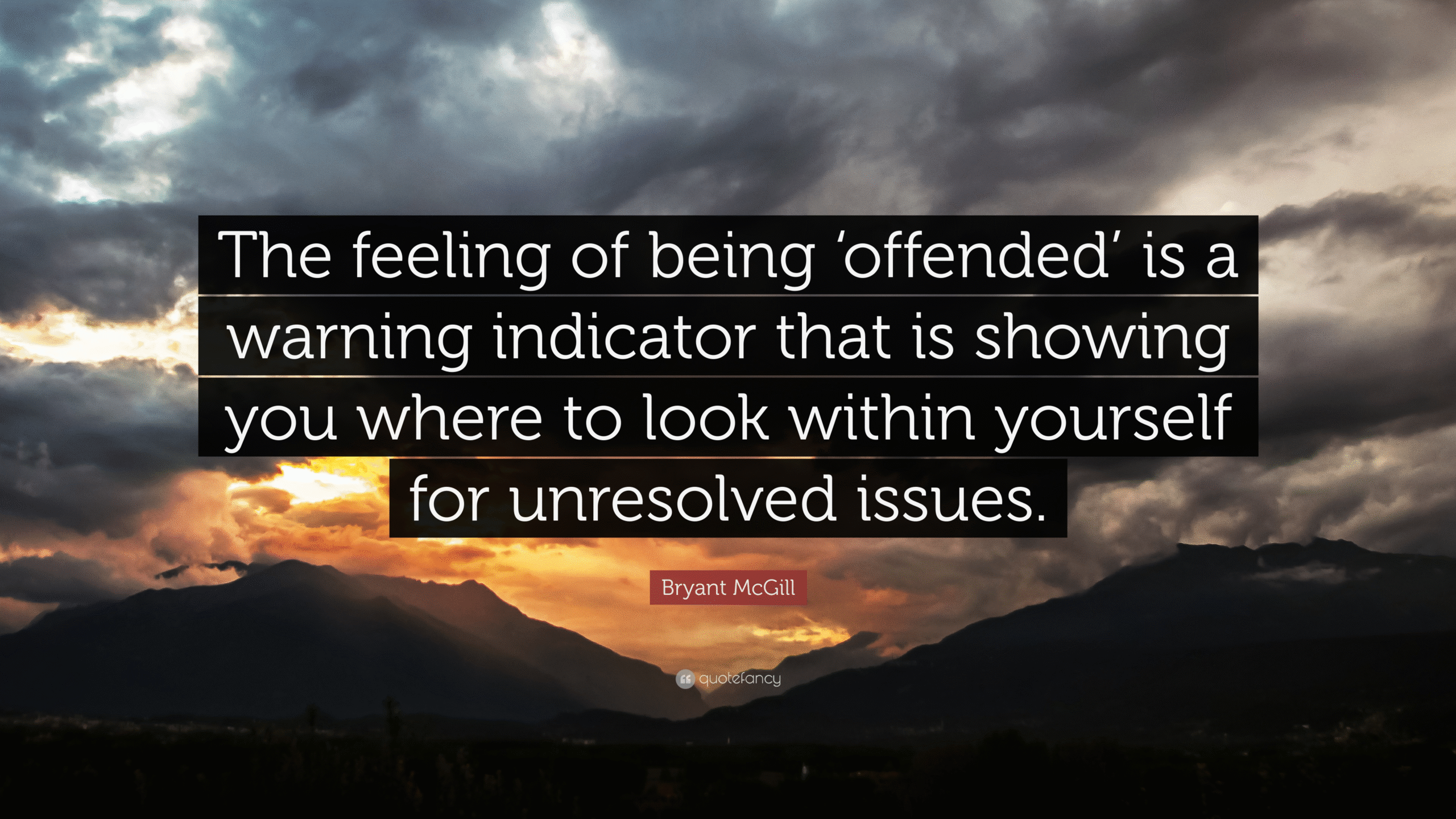
Photo Credit: Quote Fancy, Bryant Mcgill

As for personal situations, people who offend do not always mean to offend. [I don’t say this lightly. Of course, there are those who do. I also am not talking about abuse here. That is a whole other topic, but the principles still apply.] No one knows truly what’s inside us that gives us struggle, not even ourselves. Like the Mcgill quote states, it’s only in our response that we discover that which is still unresolved. Reacting in self-defense or in counter-attack mode brings more hurt. “Hurt people hurt people.” With practice, I can determine not to carry hurt away from a conversation or interaction.

In situations between two people, we can choose not to be offended, but how do we deal with the offense?

Advisor Charles H. Green describes the offender and the offended. He gives excellent counsel in his article Being Offensive vs. Being Offended – and Trust:

  • The offender communicates disrespect. A social violation occurs. Two people are involved and the resolution of that interaction requires input from both of them. When the one offended determines to engage in good faith, trying to seek understanding and rebuild trust, s/he may actually discover the intent of the offending person. A misunderstanding or an action following a perceived threat on the part of the offender may be the issue rather than an intent to hurt.
  • On the side of the one offended, this is not a social situation. It is deeply personal. Only the one offended knows the extent of the offending words/actions. For this reason, the offended person can refuse to think ill of the offender…and not take offense. Then take steps toward reconciliation or, if that’s not possible, make a personal decision not to be hurt by that person. This is not easy…especially at first in training one’s responses.
  • “The answer is a little paradoxical: We should strive not to offend or disrespect others. At the same time, we should also strive to not feel offended, or disrespected, for long. In other words, we should strive to be kind socially, and to feel free psychologically.”
  • Forgiveness opens the door wide to reconciliation. Forgiveness can defuse the hurt. Boundaries may come into play, but if the boundaries are built out of fear, dread, anger, or hatred, we are still not free from offense.

My biological father abandoned us long before my mom left him (before my sixth birthday). I saw him only twice after that. For years, I wrote him letters with no response, and then I stopped. My love for him grew cold. If he had any sense of needing forgiveness or asking for forgiveness, I don’t know. He died before I told him I forgave him. Every time this comes to mind, forgiving him is revisited. That’s a regret for me. However, I know the beautiful experience of forgiving a long-played offense from my older brother. Robert, who had deep pain of his own, struck out at others. My response for years was being offended at him or taking up an offense for other family members. It wasn’t pretty. Then, thanks to the wisdom and honesty of friends, I came to my senses on his offenses and my reactions. No more taking up an offense when Robert attacked…and the attacks died. He and I became closer than we had ever been over our lives. In fact, he gentled in his relationship with our siblings also. Those brief years (which could have been more if I had understood sooner) were great blessings (hopefully to both of us). When he died suddenly in his 60s, I carried no regrets. #Unoffendable #Forgiveness – I forgave him and he forgave me…without the words but walking out forgiveness with each other. So much grace in that.

Photo Credit: Unoffendable, Brant Hansen

Thoughts?

Being Offensive vs. Being Offended – and Trust – Charles H. Green

Unoffendable: How Just One Change Can Make All of Life Better – Brant Hansen

What Is the Difference of Being Offended and Harmed? – Robert Enright

Stop Being Offended Today: 3 Cures for Everything That Irritates You – Bill Apablasa

Forgiving in Two Dimensions – Peace Pursuit

Mel Robbins on the “The Let Them Theory” – Sarah Fielding

Photo Credit: Brant Hansen, Unoffendable, Pinterest

Monday Morning Moment – Word for the New Year – Focus

Photo Credit: Heartlight, James Houston quote

[Adapted from the Archives]

I have set the LORD always before me; because he is at my right hand, I [we] will not be shaken. – Psalm 16:8

You, [Lord], will keep him in perfect peace, whose mind is stayed on You, because he trusts in You. – Isaiah 26:3

For I know the plans I have for you, declares the LORD, plans to prosper you and not to harm you, to give you a future and a hope. Then you will call upon Me and come and pray to Me, and I will listen to you. You will seek Me and find Me when you search for Me with all your heart. – Jeremiah 19:11-13

Not that I have already obtained all this, or have already been made perfect, but I press on to take hold of that for which Christ Jesus took hold of me. Brothers, I do not consider myself yet to have taken hold of it. But one thing I do: Forgetting what is behind and straining toward what is ahead, I press on toward the goal to win the prize of God’s heavenly calling in Christ Jesus. – Philippians 3:12-14

Now we have this treasure in jars of clay to show that this surpassingly great power is from God and not from us. We are hard pressed on all sides, but not crushed; perplexed, but not in despair; persecuted, but not forsaken; struck down, but not destroyed…knowing that the One who raised the Lord Jesus will also raise us with Jesus and present us with you in His presence… Therefore we do not lose heart. Though our outer self is wasting away, yet our inner self is being renewed day by day…For our light and momentary affliction is producing for us an eternal weight of glory that is far beyond comparison. So we fix our eyes not on what is seen, but on what is unseen. For what is seen is temporary, but what is unseen is eternal. – 2 Corinthians 4:7-18

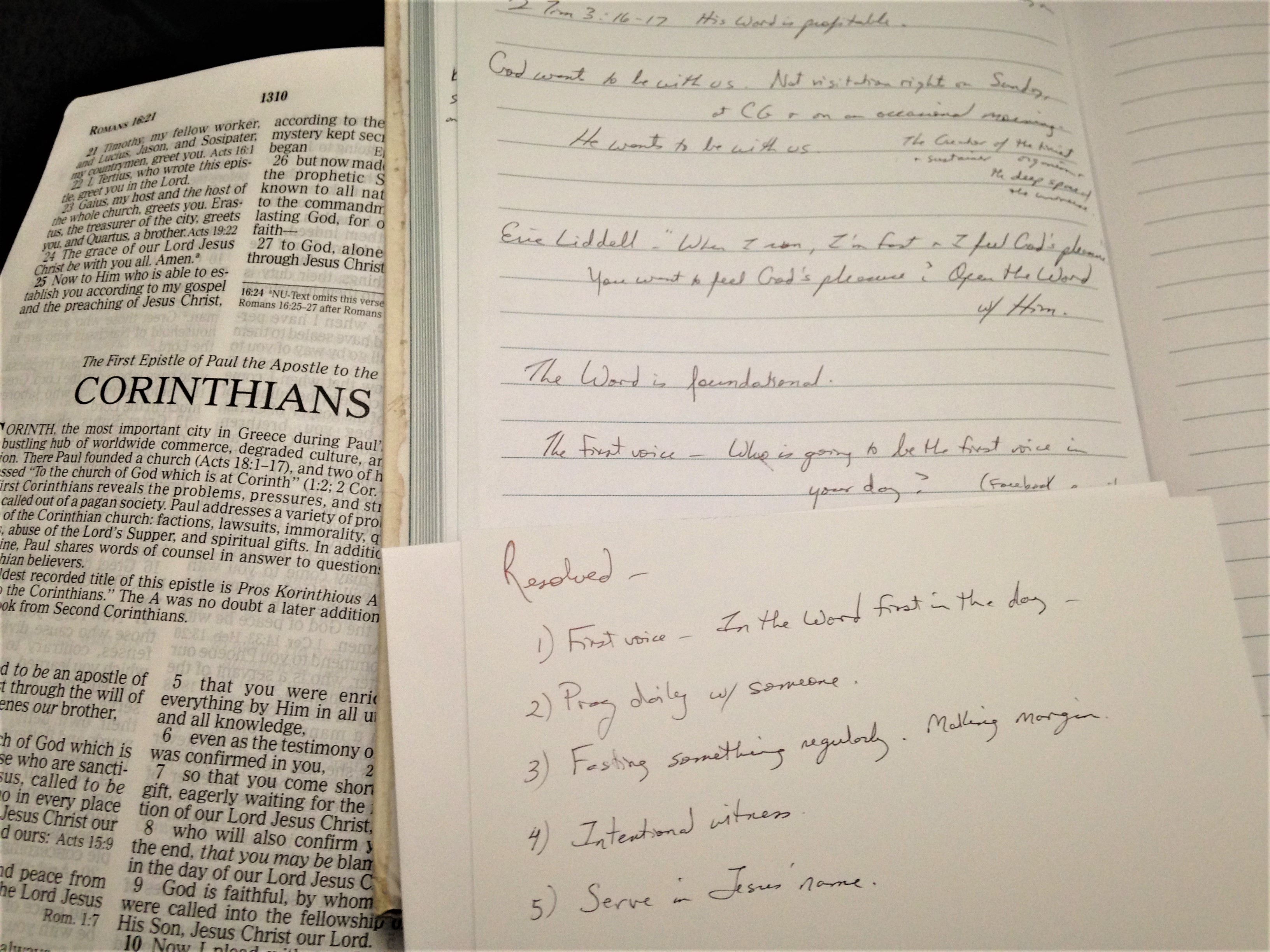
New Year’s Resolutions have been a long-time habit for me. I actually find them very helpful in steering my life into the next year. More intentional, more thoughtful. It doesn’t matter to me if those resolutions don’t get me to whatever goal I set…they have always gotten me a bit closer, a bit farther down the road. In 2017, pastor Cliff at Movement Church challenged us to commit to some resolutions to the Lord…together [podcast of 12/31/2017 here]. That was such a pivotal exercise that I have kept those same resolutions, made that day, in a visible place, to be reminded of those Godly habits, and the struggle to walk in them… Still in view…eight years out. Still relevant to now.

Then in 2020, I read Debbie Macomber‘s book One Perfect Word. It is not the same practice as setting resolutions in motion, but it is a discipline of seeking one word to set the tone for the coming year.

In 2021, my word was “compassion”. In 2022, it was “joy”. “Wonder” in 2023. “Strong” in 2024, when feeling weak was the norm that year. This past year, in a season of medical challenges, my word was “trust”.

Choosing a word for the year gives a sense of direction like I’ve not experienced in the past. It’s a target toward which I take aim or correct my aim. Each year, the Lord seems to direct me (can’t be certain, but it feels like Him) to a word to set in my heart and mind. A marker in my walk with God. In recent weeks, the word that has come to mind for 2026 has been focus. In fact, I’ve seen it repeatedly communicated in Scripture during my quiet time (see verses above) and in every day conversations and sightings (like the cap below in a thrift store).

My whole adult life, I’ve dealt with distractedness. To the point of thinking it could be ADD (attention deficit disorder). Starting strong and then dwindling in my interest and resolve. Distracted by the needs around me (which isn’t a bad thing). Struggling to stay on task. As I approach my 75th birthday (crazy, right?!), the Lord has reminded me that He doesn’t see my distractability as a weakness. It is just part of who I am, and He can mold it into something beautiful and useful to the Kingdom, when I stay focused on Him…and His nature.

Photo Credit: Heartlight

This will be my challenge and delight in 2026. To start with Him each day, to focus (and refocus) on Him through the day, and to finish the day, not in defeat because of any failures or unfinished tasks, but resting in His presence and peace. Eyes on Him, not on me.

Here we go, 2026. As the Scripture above prompts. The LORD always before me. My mind stayed on Him. Seeking Him with my whole heart. Pressing on to take hold of that for which Christ Jesus took hold of me. Fixing my eyes on what is unseen. Running the race marked out for me.

Postscript:

Twentieth-century Quaker Thomas Kelly wrote, “Over the margins of life comes a whisper, a faint call, a premonition of richer living which we know we are passing by. We have hints that there is a way of life vastly richer and deeper than all this hurried existence, a life of unhurried serenity and peace and power. If only we could slip over into that Center! If only we could find the Silence which is the source of sound!”

Lord, withYour coming, our lives have a greater demand placed upon them. Help us learn the art of active, consistent service while maintaining enough silent spaces to hear Your call. Amen. commonprayer.net.

Photo Credit: Heartlight

Photo Credit: Heartlight

Monday Morning Moment – Word for the New Year – Trust – the Object of Our Trust Matters – Deb Mills – [quick review of how a Word of the Year became a habit in my life]

The Focused Christian – Craig Meeker – practical primer to the focused life

Monday Morning Moment – Anger, Contempt, & Forgiveness

Photo Credit: Heartlight

[Turns out I’ve written about contempt several times – if you can set aside some time – you can reference these as well.]

I have a dear friend who differs with me on much of our country’s current politics and policies. However, we continue to be close. Some intentionality in both of us must be at work. No matter who won the elections last week or who’s responsible for the latest government shut-down, whatever our thoughts are on these subjects, our friendship stands. Though our solutions to the ailments of our nation may not align, our hearts resonate with each other. Neither of us holds the other in contempt over these external issues. In fact, conversations with her always increase my understanding of these stressful situations and lead to great compassion for those in the midst of those situations.

This is not always the case in family and friendships.

Some of the postings on my social media in recent days have been riddled with anger “at the other side”, whatever that entails. These are friends in real life. Decent, caring people. However, there seems to be an imperative these days to point out the bad behaviors of others, those considered political enemies. Not just behavior but character. One side devaluing the other. Anger, maybe even righteous anger in the beginning, too often progresses to disgust, or worse contempt.

Photo Credit: Heartlight

Anger is a negative emotion that confronts an action/behavior of another (peer or peer group). Contempt takes anger to a lower, darker place. Contempt demonstrates superiority as it simultaneously dismisses and devalues the other person or group, seeing her/them as inferior. It dehumanizes.

“Anger and contempt are the twin scourges of the earth, these bitter emotions form the poisonous brew in which human existence stands suspended. Few people ever get free of them in this life, and for most of us even old age does not bring relief. To cut off the root of anger is to wither the tree of human evil.” – Dallas Willard, The Divine Conspiracy p. 151

Photo Credit: Psychology Spot

It’s slow going, but I am learning not to allow contempt to gain space in my mind and heart. Like other negative emotions, contempt doesn’t only poison relationships but it poisons the mind of the one who entertains contempt.

John Murdock writes on this subject:

“Willard argued that in the Sermon on the Mount, Jesus was not just pulling marbles from a bag, presenting individual gems of wisdom that could be considered independently. Instead, the order of the presentation mattered greatly. “It is the elimination of anger and contempt,” he asserted, “that [Jesus] presents as the first and fundamental step toward the rightness of the kingdom heart.”

Conversely, today it is the systematic elevation of anger and contempt that is often rewarded across the political spectrum.”

Then, yesterday, we had this incredible teaching on anger and forgiveness at Movement Church. Pastor Cliff powerfully preached on Matthew 5:21-24:

“You have heard that it was said to those of old, ‘You shall not murder; and whoever murders will be liable to judgment.’ But I say to you that everyone who is angry with his brother will be liable to judgment; whoever insults his brother will be liable to the council; and whoever says, ‘You fool!’ will be liable to the hell of fire. So if you are offering your gift at the altar and there remember that your brother has something against you, leave your gift there before the altar and go. First, be reconciled to your brother, and then come and offer your gift.”

Cliff talked about how God’s law has affected morality across the world – most of us get through life without murdering anyone. However, Jesus revealed how, if unchecked, our thoughts and words (be they face-to-face or written in social media) can have murderous impact.

We may think we’re doing the world a good service by pointing out the wrong thinking and actions of others. However, if we lack care for them, if we lack compassion or love, our words draw deep lines dividing us. Tall, thick impenetrable walls between us. And, God forbid, we don’t even care? I’m asking.

Jesus pointed to anger and contempt as deterrents to worship. If we care about being right with God, then we have to confront our part in being wrong with people. We may feel offended and then justified in our reaction to another person/group’s behavior, but acting in anger or contempt hurts everyone involved. Everyone.

One day, maybe our culture will shift to being more kind and long-suffering with each other. Being curious, seeking to understand, leaning in rather than being repelled. Until that day, or if that day never comes, what kind of person do I want to be? What do I want to practice in front of my family…my friends, my neighbors…even my enemies?

What is Contempt? An Intense Feeling Under a Mask of Coldness – Psychology Spot – an extremely helpful resource

Monday Morning Moment – Contempt Revisited – Deb Mills

What Is Contempt – Paul Ekman

Moving Beyond Chronic Resentment and Anger in Relationships – Steven Stosny, Ph.D.

Is Contempt a Form of Anger?

Monday Morning Moment – the Culture of Contempt and How to Change It…or At Least Yourself Within It – Deb Mills

Monday Morning Moment – Contempt is Cancer in the Workplace…and Any Other Place – Deb Mills

Disdain, Dallas Willard, and Donald Trump – John Murdock

Photo Credit: Heartlight

Monday Morning Moment – Finishing Strong – On the 23rd Anniversary of Mom’s Glorious Homegoing

Mom and me, Tennessee Christmas

[Adapted from the Archives]

We have this treasure in earthen vessels, that the excellence of the power may be of God and not of us. We are hard-pressed on every side, yet not crushed; we are perplexed, but not in despair; persecuted, but not forsaken; struck down, but not destroyed – always carrying about in the body the dying of the Lord Jesus, that the life of Jesus also may be manifested in our body. – 2 Corinthians 4:7-10

My Mom was a young 72 when she was diagnosed with cancer. We were overseas at the time, and I wanted so to be home with her. She was diagnosed with non-Hodgkin’s lymphoma – at the time, supposedly “the best kind of cancer you can have”. Highly treatable. Long remissions. Often cured. Mom would die after 3 years of intensive, and sometimes experimental, chemotherapy. She never caught a break. Yet, she didn’t look at it that way.

Her journey with God in those days was other-worldly. The Mom I knew loved to serve people, and cancer would not stop that. She had grown up poor and with a dad who could be mean when he drank. She dreamed of college but it was never meant to be. Instead she became a student of life, and she never tired of that. She was a beautiful blend of Mary and Martha – wholly satisfied whether “sitting at the feet of Jesus” or serving the needs of those around her. I love that she was my Mom.

She taught me how to live…and she taught me how to die. We were home in the States when Mom’s cancer finished its course in her. She stubbornly guarded her time at home and had the will and the support (of my Dad, family and friends) to endure from home…and there was God, holding her tight against the storm.

Fuji002 152a

Mom never prayed for healing, but we did. Mom prayed that this cancer, the illness and all that was part of it (including a devastating Shingles-related neuralgia), would bring glory to God. Her prayer was answered, and ours, ultimately, in Heaven.

Her dying took three days. If you had known my Mom, you knew a person that was all about life – helping and encouraging others, pointing them to God, determined, in faith, to make sense of what seemed utter nonsense. She continued to be about that until she went into a coma the last day. While she was awake that final weekend, I asked her (over and again) how she was. One time, I remember, she nodded a bit, and whispered, “I’m O.K.” It was her face that spoke volumes. Forehead lifted, blue eyes bright, an almost sunny expression. That “I’m O.K.” was accompanied by an almost delighted look of marvel…of wonder. Like, “Wow! I really am O.K.!” God was meeting her at the point of her greatest need.

Mom and I have always had amazing talks about the deep things of God and life. She told me one time that she envied us our certainty of His call to a life overseas. “I don’t think I’ve ever heard God speak so clearly to me,” she lamented. In the last days of her life, it came to me to ask her if she heard God speak to her lately. She answered right away, with that same look of wonder, “All the time!” If cancer had to be the instrument of such grace, then it became a gift to her.

Mom entered Eternity during the reading of 2 Corinthians 4:7-10 (see above). Her young pastor and his wife came unexpectedly that evening, rushing in, wide-eyed, as if on a mission. We brought them back to her room, and they sat with us, around her bed. She had been unresponsive all day. Her pastor opened his Bible and began reading. Mom had this sweet habit of knitting her forehead and shaking her head, in response to something that touched her heart. As he read, after being quiet and still all day, she knit her forehead and breathed her last. We all felt transfigured in that moment.

Tomorrow marks 23 years since Mom went to be with the Lord, and I miss her today and every day. She was so spent when she left us, yet gloriously whole at the same time. A bit of prose from Henry Van Dyke always comes to mind in thinking of her Homegoing.

Gone From My Sight by Henry Van Dyke

Photo Credit: Curt Ellis

I am standing upon the seashore. A ship, at my side, spreads her white sails to the moving breeze and starts for the blue ocean. She is an object of beauty and strength. I stand and watch her until, at length, she hangs like a speck of white cloud just where the sea and sky come to mingle with each other.

Then, someone at my side says, “There, she is gone.”

Gone where?

Gone from my sight. That is all. She is just as large in mast,
hull and spar as she was when she left my side.
And, she is just as able to bear her load of living freight to her destined port.

Her diminished size is in me — not in her.

And, just at the moment when someone says, “There, she is gone,”
there are other eyes watching her coming, and other voices
ready to take up the glad shout, “Here she comes!”

Mom taught us how to live…and she taught us how to die. She “fought the good fight…finished the race…and kept the faith.” (2 Timothy 4:7). For us, there is still a race to be run.

Thanks, Mom, for showing us how it’s done. See you at the Finish Line.

Mom pictures for website 014a

When it’s all been said and done
There is just one thing that matters:
Did I do my best to live for truth, did I live my life for You?
When it’s all been said and done
All my treasures will mean nothing
Only what I’ve done for love’s reward
Will stand the test of time.

Lord, Your mercy is so great
That You look beyond our weakness
And find purest gold in miry clay
Making sinners into saints

I will always sing Your praise
Here on earth and ever after
For You’ve shown me Heaven’s my true home
When it’s all been said and done
You’re my life when life is gone.

Lord I’ll live my life for You.

– Lyrics & Music by Jim Cowan © 1999 Integrity’s Hosanna! Music

Mom’s Irises

YouTube Video – When It’s All Been Said and Done

Monday Morning Moment – Mom – a Lifetime Full of Love Notes – Her Birthday Just Ahead of Valentine’s Day – Deb Mills

Mother’s Day – On Mothering and Grandmothering – a Life of Love, Launching, and Lifting to God – Deb Mills

Her Children Arise and Call Her Blessed – Charles Spurgeon’s reflections on a Godly mother