Tag Archives: Contrarian

Monday Morning Moment – Don’t Let Complaining Rewire Your Brain

Photo Credit: Stream

Yesterday, I was taking a break and scrolled through Instagram until it stopped me in my tracks on how complaining can have a chronic negative impact on our health, and, in particular, on our brain. That didn’t surprise me, but I wanted to look further to test out what this influencer was reporting. You can look, too. Do an internet search on “complaining, cortisol, and the brain”. It is startling, but, again, not surprising.

Complaining is extraordinarily detrimental to brain health. In a way, it is also like “second-hand smoke” to those with whom you share it. When we complain, our brain responds by releasing cortisol. We need cortisol, the “stress” hormone, to alert us to possible danger and to stimulate an appropriate (hopefully) response to that danger. The problem with complaining is that it puts stress on a loud speaker when there was no need. Similar to how trauma rewires our brain to expect more trauma.

Why Complaining Is Bad For Your Health – Cindy Tsai, MD

Venting feels good at the moment. It releases the internal pressure that is mentally building up from negative thinking. The dilemma with venting is two-fold – 1) it cements the wiring in the brain in the direction of negative, hopeless thinking, and 2) it activates/re-activates the same process in the caring hearer. Mind you, there is a positive, healthy venting that can take place if it is focused toward hopeful problem-solving and change. This can be life-giving to both persons.

[Side note: We need each other. We were made for community. Talking something out with people who love us is hugely important. There is a difference in lament and grumbling, or complaining and and acknowledging a hard thing, seeking help for forward movement.]

Complaining Won’t Change the World, But Your Actions Can – Susanna Wu-Pong Calvert Ph.D., MAPP, RPh

As one who is getting older and feeling the memory not as sharp and the tendency toward that “cup half empty”, curmudgeonly take on things…I wonder: when and how did it start?

When does analytical become contrarian? When does hopeful turn into doubtful? When does grateful turn into grumbly?

Do we just allow ourselves to turn into different people? Or do we take steps to stay (or become) joyful, engaged, unstoppable humans? People who others love to work with, serve with, spend time with.

A little over a year ago I wrote a blog on how complaining rewires our brains. If you know complaining is a struggle, please take the time to read this one piece (linked below). We may try to eat healthy, exercise, and rest aplenty – maybe there is one more thing we should consider:

Monday Morning Moment – Complaining Rewires Your Brain – How to Curb (Maybe Not Stop) Complaining – Deb Mills

Bottom line: Practice gratitude. Pause your thought process. Resist the urge to complain, rather reframing the complaint into positive action. Surround yourself with people who don’t complain, and, even make you laugh sometimes.

______________________________________________________________________________

When you have more time or you want to consider steps toward positive brain health and a kinder, gentler handling of your life and circumstances, I have excerpted these from my other blogs on complaining and negative thinking:

  1. Complaining Exposed – [From the Archives] When it comes to complaining, we all think of someone else who does it…not us. It is an irritating habit, and it only gets worse if unchecked. Poet writer Anne Peterson talks about complaining and how it flows out of 6 heart attitudes. Complaining reveals that:
  • We feel entitled.
  • We are impatient.
  • We hold on to resentment.
  • We compare ourselves to others.
  • We don’t think life is fair.
  • We are conformed to this world/culture.

Read her article for the particulars. Be prepared to rip the Bandaid (excuses) off your complaining.

What Your Complaints Actually Reveal About Your Heart Anne Peterson

Photo Credit: Gary Vaynerchuk

Entrepreneur Gary Vaynerchuk writes about how his mom and wife seem to be incapable of complaining and it’s one of the things he loves about them: “Complaining has zero value. Looking at the negative, seeing the glass as half empty, and complaining are some of the biggest wastes of time a human being can engage in. Instead, tackle the problem head on. Assess it, see what you can do about it, and then do just that. ‘Woe is me’ is truly one of the biggest things that can stand in the way of success both professionally and personally.”

Gary Vaynerchuk

One of the Few Things I Complain About: Complaining – Gary Vaynerchuk

2. Beyond Grumpiness –[From the Archives] A friend of mine pointed this blog to me today and it bumped its way to the top of my Faves. English professor Alan Jacobs mused about the grumpiness of old people. I don’t know when it happens and why exactly it happens, but it is something that has happened to me of late…and I don’t think I’m old enough yet for it to happen.

Here’s a bit of what Dr. Jacobs says about grumpiness, but you should read his whole piece, especially if you’re finding yourself becoming grumpy (whatever age you are).

“I think the explanation for such widespread grumpiness is fairly simple…It’s not the big foul acts or horribly cruel words that do you in, it’s the slow drip drip drip of little annoyances that become over time a vast sea of frustration. Surely you’ve been there? You become exasperated by someone’s passing comment and when they are genuinely puzzled by your anger over so trivial a matter, you try to explain (apologetically, penitently, I hope) that it wouldn’t be a problem if this thing had happened once but it has happened a thousand times. It’s the repetition that kills you.” [Dr. Jacobs goes on to talk about the divisions on which we’ve taken sides give the sense of being new and revolutionary…and yet they are old divisions revisited.] “You can’t learn from the past if you don’t know what happened in it. So yeah, I’m gradually turning into a grumpy old man. Because nobody learns anything…” [About these things that divide us: We seem to care too much, or too little, or just plain not at all. Dr. Jacobs challenges us that only being truly loving people gives us the right to voice an opinion, and definitely not a shaming one.] “It’s a hard path to walk, this Way of avoiding both indifference and ‘the conscious impotence of rage at human folly.’ But the hard path is the only real Way. (All the others circle back on themselves.) So I try every day to follow it. I don’t think I could manage even that if I did not have an Advocate to accompany me, to encourage me, and to guide me.” – Alan Jacobs, Beyond Grumpiness

Against Stupidity – Alan Jacobs

The Destructive Power of Grumbling and Complaining – Michael Brown

3. Without Grumbling – [From the Archives] Which comes first – anger or grumbling? Or is it a more subtle but growing discontent? When does occasional complaining settle into a set habit of grumbling? What does grumbling communicate to our own minds and to others within hearing?

I’ve written plenty on complaining, grumbling, and negative thinking (see links below). It can absolutely change the wiring in our brains. In my younger years, I always looked for the good and the beautiful in a person/situation…and I found it. Now, as an older person, my temptation is more toward darker thinking. This is NOT where I want to stay.

Photo Credit: QuoteFancy

Below is a beautiful bit of writer Trevin Wax‘s post on grumbling and joy (it is geared toward Christians but there is wisdom for all of life here).

In Philippians 2:6–11, Paul commands the church to adopt the same mind of our risen Lord.  And his first command is, “Don’t grumble.”

“Do all things without grumbling or disputing, that you may be blameless and innocent, children of God without blemish in the midst of a crooked and twisted generation, among whom you shine as lights in the world.” (Philippians 2:14–15)

Why start with grumbling? We might expect an exhortation to spiritual disciplines, or strategies for thriving as pure and faultless people in a sinful world. And yes, Paul does speak about blamelessness and purity and holding firm to the word of life (Philippians 2:16). But this purity in action is somehow connected to the first command to do everything without grumbling. Somehow, grumbling will keep us from faithfulness.

Why start here? Because Paul knows the story of Israel.

Remember the children of Israel? They chose grumbling over gratitude. Grumbling stalled their journey and led to actions that were anything but “blameless and innocent.”

Whether we are given suffering, chains, imprisonment, or worse (Hebrews 11:36–38), or whether we conquer kingdoms, stop the mouths of lions, escape the sword, and put armies to flight (Hebrews 11:33–34), we must know that only joy in and gratitude to Jesus will win the war for our culture…Yes, we may face obstacles, setbacks, and tough days ahead. But in it all, and under it all, we are also joyful. And this cheerful courage comes not from ignoring darkness or looking only for the bright side, but from believing that the Light will overcome the dark.

Do you want to shine like stars? Then do everything without grumbling.” –

Trevin Wax, Facebook, March 27, 2022

Monday Morning Moment – Life & Politics – What If We Refused to Get Angry? – Deb Mills

Monday Morning Moment – Rewiring Your Brain Toward Thinking in the Positive – Deb Mills

Monday Morning Moment – Grumpy Begets Grumpy – Understanding It, Not Reacting, and Turning It Around – Deb Mills

Monday Morning Moment – Them and Us, How Can That Be? Could Them and Us Become a We? – Deb Mills

How Changing This One Bad Habit Changed Our Home for Good – Complaining

4. Breaking Out of Negative Thinking – [From the Archives] I first wrote about negative thinking six years ago (that blog linked below). Since then we have come through COVID 2020, great racial unrest and social upheaval, contentious election cycles, ongoing wars, and a downturn in our economy. Lots to think negatively about with good reason, but if we’re not careful we will begin gearing our thinking in that direction to the detriment of our mental and relational health.

Monday Morning Moment – Rewiring Your Brain Toward Thinking in the Positive – Deb Mills

Photo Credit: Daily Health Post

The team at Daily Health Post focused on complaining as a culprit that can actually cause our brains to default to anxiety and depression. From experience, I know this is true.

They prescribe the following to flip the damaging habit of complaining:

Be grateful: Find something to be grateful for everyday. If you keep a journal, write down 3 things you are grateful for every morning and every night.

If you start to feel anxious or pessimistic, pause a minute and write them down again. If it’s too hard, write down 5 or even 10 new things you’re grateful for. By the end of the exercise, you’ll feel much happier and fulfilled.

Catch yourself: Don’t wait for your friends or family to tell you you’re complaining, pay attention to your thoughts and words.

If you’re complaining, quickly shift your energy to find solutions and lessons to be learned. Afterwards, treat yourself will a nice cup of tea for the effort!

Change your mood: If you feel overwhelmed and negative, remove yourself from whatever you’re doing and shift your state of mind. If you’re home, sit down with your favorite book and cook up a tasty treat. If you’re at work, go to the washroom or break room for a few minutes and listen your favorite song.

Breathe deeply and close your eyes, paying attention to every word. Hold onto that relaxing feeling and carry it with you throughout the day.

Practice wise effort: Wise effort is the practice of letting go of anything that doesn’t serve you. If your worry won’t improve your situation or teach you a lesson, simply let it go and move on.

This is much easier said then done, of course, but if you write it out, ask friends for advice, and take some time to think it through constructively, it really can be done.

Check out the full article below:

How Complaining Physically Rewires Your Brain to Be Anxious and Depressed

Photo Credit: Frank Sonnenberg Online

Why Your Brain is Wired for Pessimism—and What You Can Do to Fix It – Clay Skipper

There should be support groups…or maybe we start some. Peace.

Gratefully yours, Deb

Monday Morning Moment – Choosing Hope, Choosing Joy…Living in the “Perhaps”

Photo Credit: Heartlight, Ben Patterson

Do you ever find yourself having to push down that sense of panic, doom, or dread? It pops up not just in our thoughts but wherever we bodily lodge our stress – in our throat, gut, back, wherever.

We in the US are several months away from our every-four-year presidential election, and yet we are forced to think about it, and puzzle over what a bloodbath it will be (not literally but experientially with one side driven to shred the character of the other).

How are good decisions made in such a government and culture? I actually ponder this way too often.

My own preference is to bring everyone possible to the table (for sure a sampling of those affected by the decision) and reason together (ancient wisdom, right?). My personal sensibilities cry out, “Why can’t we all get along?!”

Monday Morning Moment – Spend a Minute with Pollyanna and the Contrarian – There’s a Place for Each of Us – Deb Mills Writer

One issue always before us as a nation and as neighbors is what to do with and how to serve marginalized, displaced people? I’m not really addressing this today, but don’t you feel for Texas? I’m part of a refugee resettlement team (with my church), and it is a stretch for us to serve well one family (sometimes others peripherally). Then there is the occasional person in need who finds us online and asks for help. Just this week, it was a mom with three small children who separated herself from an abusive partner and now she is faced with the dire circumstances of inadequate resources to care for her family.

This is just a microcosm of what is going on in our nation serving the needy in a sustainable way.

So how do I choose hope?

Just this morning, I was reminded of a historical account in the Bible (Torah). It tells of a time when Jews were essentially captives in Persia. During this time, a young Jewish woman named Esther actually became the queen of King Ahasuerus. An evil aide to the king plotted to rid the kingdom of the Jews and tricked the king into a decision that would lead to their destruction. Esther’s cousin and guardian, Mordecai, counseled with her to appeal to the king, for the sake of the Jews.

“If you keep silent at this time, relief and deliverance will come to the Jewish people from another place, but you and your father’s family will be destroyed. Who knows, perhaps you have come to your royal position for such a time as this.”Esther 4:14

Mordecai’s words ring out with hope, even in the midst of danger. If Esther decided not to speak to the king (which could lead to her own death sooner than later), Mordecai trusted God to deliver His people another way. However, “for such a time as this”, Esther did risk everything, and the result was salvation for her people. That was a great “perhaps” that Jewish people, to this day, celebrate with joy.

When we choose hope, we choose to trust a power greater than ourselves. Sure, we can hope in the general goodness of humankind, or a particular political party, or some sort of karma, or a mystical future where everything somehow works out for good.

Hope and trust go together. I choose to hope in God and, with a long view, take joy in His goodness and power to redeem. To some, this may seem as silly as any other singular source of hope – our trust in any of the above to pull us from the brink. However, throughout history and in my own day-to-day, I find God infinitely trustworthy.

The God who made the world and everything in it is the Lord of heaven and earth and does not live in temples made by human hands. Nor is He served by human hands, as if He needed anything, because He Himself gives everyone life and breath and everything else. From one man He made every nation of men, that they should inhabit the whole earth; and He determined their appointed times and the boundaries of their lands. God intended that they would seek Him and perhaps reach out for Him and find Him, though He is not far from each one of us. ‘For in Him we live and move, and have our being.’ As some of your own poets have said, ‘We are His offspring.’Acts 17:24 -28

Perhaps is becoming a favorite word of mine. We can’t presume to know how elections will turn out. Or what are the best processes for caring for marginalized and displaced peoples. Nor can we presume on God to bless our partisan preferences just because we feel more comfortable with a certain status quo.

However, we can seek to be wise and loving, and hope in the sovereign movement of God through the ages. We can take our place in history to act justly, love mercy and walk humbly with God and one another. Refusing to be silent, or isolated among those like us, or mired in doom and gloom should our culture continues to shift…which it will, one way or another.

We can hope and wonder at the “perhaps” we can’t see but imagine and act accordingly.

Photo Credit: Heartlight, John R. W. Stott

Then comes joy. Full-on. Trusting-a-good-God joy. Untainted by present circumstances. Deeper than happiness. Trusting in God and acting on what we know to be right and true…right now.

Postscript: Should you decide to take this course of action, choosing hope and joy, be prepared. It is counter-cultural. You will come under attack. Maybe you already know this experience. Not many minutes after posting this, I had a gut-punch of fear and anger. Ours is to recognize those attacks when they come at us and respond in ways that nurture hope and joy – guarding our hearts and minds, living quiet and productive lives, serving others, and fixing our eyes on the One who brings perfect peace.

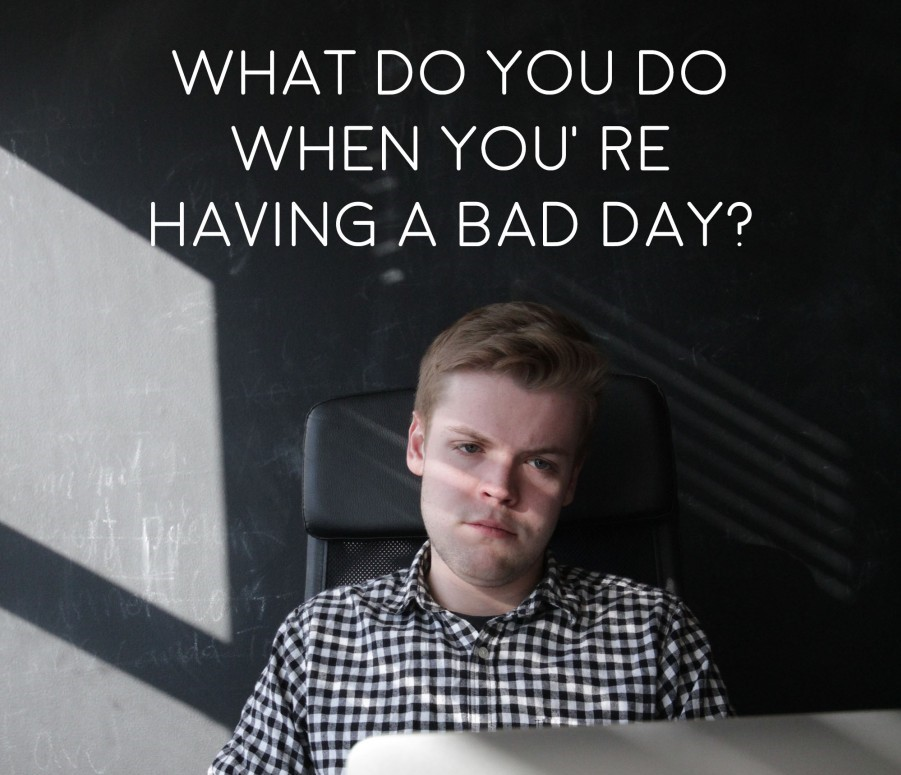
Monday Morning Moment – When You’re Expecting to Have a Bad Day

Photo Credit: Strategy Lab

Early this morning, the idea gathered like a storm cloud – the idea of “having a bad day” today. Here’s how it started and then here’s how it went.

As a postscript to Holy Week and Resurrection Sunday, I read today’s post-Lent reading: The Lent Project: I Have Seen the Lord – by Carmen Joy Imes. Biola University posts beautiful Lent devotionals every year (incorporating music, art, poetry, and short reading). Today’s topic was on Mary Magdalene’s lingering at the empty tomb after Jesus arose from the dead.

Mary stood outside the tomb, crying…she turned around and saw Jesus standing there, but she did not know it was Jesus. “Woman,” Jesus said to her, “why are you crying? Who is it that you’re seeking?”

Supposing he was the gardener, she replied, “Sir, if you’ve carried him away, tell me where you’ve put him, and I will take him away.”

Jesus said to her, “Mary.”

Turning around, she said to him in Aramaic, “Rabboni!”—which means “Teacher.”John 20:11-18

Exhausted from grief and bleary-eyed from crying, she was expecting to have a bad day. When she found the tomb empty, and not remembering what Jesus had said before (about his own resurrection that would come)…she grew even more inconsolable.

At first, still consumed by her “bad day”, she hadn’t recognized him. This One who had restored her mind and redeemed her life. This One who knew her perfectly and loved her completely. She thought him a gardener.

He spoke to her but she turned away, in grief, thoughts clouded, blinding her awareness.

Until…He called her by name.

Then, she knew! She came back to her senses. The expectation of a bad day vanished as she refocused on the living Lord rather than the dead one.

We all struggle when a day looms full of dark possibilities, dread, or even deepening disappointment. Some of us have a bent toward being pessimistic, contrarian, or a diminisher. These bring a realism that has its own usefulness at times (well, not the diminisher…no, not ever useful in any positive way), but we don’t have to set up camp there.

Is There Such a Thing as a Bad Day? – Jen Kim

Monday Morning Moment – Negativism – Its Cost and Cure – Deb Mills

Having a Bad Day? Here are 21 Things You Can Do to Turn It Around – Henrik Edberg

A dear friend reminded me of Fred Rogers having said, in dealing with hard situations, to “look for the helpers”. Here’s a brief video of him describing this.

If a day is beginning with a downward spiral (even if it’s only in our minds), we can (as my husband sometimes reminds me) “pull up”. Our perspective, our focus, is totally within our control. The same friend above also told a story about recently taking back her Saturday, so to speak. A bad storm had passed through and left trees leaning and branches littering her woodland yard. As she sat on her deck, looking at all the devastation, she was troubled at what it would take to restore order. It wasn’t going to happen that morning and no amount of thinking about it was going to make it better. So what did she do? She turned her chair…such that a different, more lovely view was in front of her.

[Thanks, Kathy, for that good word.]

Sometimes, we have to turn our chair…or as Mary Magdalene did, turn back around to the one speaking to her. What we think should be but may not be could just be in our perspective…how we’re looking at things. It also could be remembering that we are never truly alone in the prospect of a bad day. Look for helpers…it’s good advice.

That bad day we were anticipating may just turn out to be a bad few minutes in an otherwise good day. We can make it happen…by tuning into a familiar voice or turning our chair…for a clearing the head moment.

Photo Credit: Pinterest, TobyMac, SpeakLife

Monday Morning Moment – Spend a Minute with Pollyanna and the Contrarian – There’s a Place for Each of Us

A friend recently gave me the card above and it set me thinking about how far we get from who we are sometimes. She gets me. She knows my heart, even when it feels a tad dried up.

What would you say to the idea that we are all on some spectrum of Pollyanna to Contrarian (Curmudgeon even)?

Is that a bad thing? I say no.

Since my teens, friends (and not so friendlies) have used the word “Pollyanna” to define my responses and outlook. That person is defined as one who “looks for the good in everyone and everything – and she finds it!” For some odd reason, it wasn’t to be considered a compliment. Even one of my sons has said, “You can’t trust Mom’s take on people” – the reason being I see beauty in everyone, and all sorts of redeeming qualities. Well…I used to anyway.

Now, in recent years, reluctant contrarian is more what I’ve become. [After writing this piece, I came across someone who writes under the title of reluctant contrarian. Funny.] It certainly wasn’t my ambition to become curmudgeonly…but life happens. We see the things that, if tweaked, could make a difference in a person, product, or process…and wonder aloud why not? Then, if we persist in our opinion, we become like a dripping faucet or clanging cymbal. Sigh…

When my friend gave me the card (image above), it set in motion a resolve in me. To rediscover that Pollyanna inside. To look for the good. To extend grace. To brighten the day. To play Pollyanna’s Glad Game…until it becomes a habit again.

Photo Credit: The Glad Game, Pollyanna, Pinterest

The Glad Game – Lost in the Magic – Shez C.

What’s Wrong with Being a Pollyanna? – Christin Ditchfield

Pollyanna Principle: The Psychology of Positivity Bias – Courtney E. Ackerman

The Perils and Possibilities of Pollyanna – Dr. Judith Rich

Pollyanna vs. Curmudgeon: The Case for Realistic Optimism – Peggy Haslar

This contrarian/curmudgeon thing that happened to me in the last few years probably relates to some process of entropy – how life in this broken world drifts toward disorder or randomness…unless we constantly intervene.  This idea breaks down with those who start as contrarians. They don’t move toward being more Pollyanna’ish over time, BUT…it could be they move to being curmudeongly. What do you think?

[Sidebar: I asked my husband – who naturally bends more in the direction of contrarian: “Which would you say you are: Contrarian or Curmudgeon?” He answered quickly: “Are those my only two choices?!” We got a good chuckle out of that…and then decided he was serious more than contrarian, analytical more than curmudgeonly.]

What’s the contrast between these extremes? Night and day.

Photo Credit: Thesaurus

How to Become a Curmudgeon – Wikihow

Curmudgeon’s Day – Word List – Facebook

Walter – Analyst Contrarian – Corsairs – Some language but fascinating workplace observations

Finding My Inner Curmudgeon – Chuck Bloom

I do think there is a healthy place in the world for us to co-exist. The Pollyannas and the Contrarians. In fact, The article above – Walter – Analyst Contrarian – Corsairs – speaks to this somewhat in the workplace. I see the wisdom of cooperating “adversarial pairs” in any setting. Here’s a bit of what the article poses:

“There are two sides to most things. Honestly, most things are wickedly multi-dimensional but most humans are only good at comparing two things…two distinct points of view…Forcing alternate perspective is a great technique for combating cognitive bias…It doesn’t prevent it. It simply makes it more apparent…Minimally, take the contrarian side of every issue…Always test the opposite hypothesis…By forcing a counter view, you expose both sides of the argument…Taking the opposite position artificially, occasionally exposes that your initial inclinations were actually dead wrong. Two perspectives create intellectual leverage…use it.” – Walter – Analyst Contrarian – Corsairs 

For life in the world beyond business, I have had the great pleasure of being on advisory boards and ministry teams, both having very different sorts of people as members. Some more task-oriented, some more people-oriented. Some more thinkers, some more feelers. This is reminiscent of Roger Martin’s The Opposable Mind – regarding integrative thinking – where you are able to seriously consider different points of view – like how we grab hold (with our hands) and understand assessments not our own.

Beware, if you’re looking at yourself [people who think just like you] all around the board or conference room table. We gain from both the Contrarian and the Pollyanna… and all those in between.

Finally, brothers and sisters, whatever is true, whatever is honorable, whatever is right, whatever is pure, whatever is lovely, whatever is commendable, if there is any excellence and if anything worthy of praise, think about these things. – Philippians 4:8

Monday Morning Moment – Workplace Wisdom – From the Shallows Back Out Into the Rapids – 5 Resources

Photo Credit: Wikimedia Commons

The river of work is often a fast current – the movers and shakers are in the rushing waters. If you find yourself in the shallows how did that happen? Illness (yours or someone in your family), underemployment, qualifications issue, somehow just not the “flavor of the month”? Any or all of these situations could have prompted a detour out of the faster waters of your work.

Some of us thrive in the shallows. I want to learn how, now that I’m semi-retired. Still, the rapids call me  back…for many reasons.

If you, like me, are in the shallows and you are bewildered rather than refreshed by them, think why that might be.

The rushing waters are where the action is. They’re here and gone, but they carry along whatever is happening in the river.

Occasionally something interesting and important will pop out for you from the current – and you tackle it with excitement – and when you finish it, then it’s gone. Taken back up by the river as if it never visited the shallows, as if you never touched it.

The shallows are a lovely place to visit…especially when you’re exhausted from the rapids. Especially when you need a new vantage point…a new view of your work. The shallows provide that. Being long in the shallows is a strange experience…if you’re used to the rapids.

How does one push back out into the current?

OK…enough metaphor. Here are 5 super useful resources to help us push back into the running river of work…if that’s where we want to be. Choose which fits the most right now, and dig into the article:

1) Achieving Stadium Status – Why not have a colossal goal, right? Leadership consultant Skip Prichard posted a piece recently on How to Achieve Stadium Status. Photo Credit: Wikimedia Commons

He gives a hardy review of John Brubaker‘s book Stadium Status: Taking Your Business to the Big Time. From the book, Prichard covers such topics as how to use affirmations, dealing with critics, rising above the noise, leaving our comfort zones, avoiding comparing, and not repeating others’ mistakes. Until you can read the book, catch Prichard’s article to get started toward the main stage.

Stadium Status: Taking Your Business to the Big Time – John Brubaker

2) Bouncing Forward After a Big Fail – One of my favorite writers on leadership and the workplace is  Adam Grant . He takes a very different view of failure at work in his article When You Get Fired Or Fail Big, This Is How You Bounce Forward. Photo Credit: Pexels

Quoting Grant here:

“Most of the time, when someone fails, it’s not because there’s a bad apple spoiling the barrel. It’s because the barrel is a bad relationship.

In other words: It’s not me. It’s not you. It’s us.

That doesn’t mean shirking responsibility or failing to hold others accountable. It means realizing that in many of our struggles, the biggest problem lies not in individuals but in relationships.

It helps to remember that in most failures, relationships are a major factor. We just have to make sure we don’t pull the wool over our own eyes.” – Adam Grant

Option B: Facing Adversity, Building Resilience, and Finding Joy – Sheryl Sandberg & Adam Grant

3) Addressing Team Alignment – Leadership trainer Jesse Lyn Stoner looked at how team alignment influences team performance. In her piece, Team Alignment is for the Birds, she had this to say:


Team alignment is often “leader dependent. Followers depend on the leader to make decisions on direction and tell them what to do.

Team members [in this scenario]. . .

. . . should not act independently.

. . . have little need to communicate with each other.

. . . are following the leader, with no idea where they are going.

We need teams composed of individuals who are able to make quick decisions on how to respond to what comes their way, who are able to use their good judgment to solve problems, who coordinate their efforts with each other, and who come up with fresh new ideas.

A compelling vision (that includes common purpose and shared values) is a more powerful way of unifying your team than trying to align them through structure, policies and procedures.

When a team is organized around a unifying vision, the vision becomes the glue that holds your team together.” – Jesse Lyn Stoner

6 Benchmarks of High Performance Teams – Jesse Lyn Stoner

4) Excellence in Execution – Strategy thinker Robin Speculand writes on what it takes to effectively implement change. In his blog (guest post on Skip Prichard’s website), Speculand talks about the role of the leader in driving strategy forward. To effectively execute change, leaders must demonstrate their own commitment to the strategy. How visible they are to the rest of the company’s employees attests to how valuable the execution of that change is to them personally. Speculand talks about how to carve out time and energy from a busy schedule in order to be fully available to those most impacted by the strategy change. Photo Credit: All Hands

Intriguing ideas, especially for any of you in the shallows. To be a person who executes well is a valuable employee. Don’t lose sight of that.

A Leader’s Role in Achieving Excellence in Execution – Robin Speculand

Excellence in Execution: How to Implement Your Strategy – Robin Speculand

Robin Speculand Presentations – Slideshares

5) Becoming More Likable – Work is not a popularity contest. However, likable people are just a whole lot more fun to work with than folks who insist on being controlling or contrarian. Marcel Schwantes lays out 6 qualities of folks we would all like on our teams…

  • Be curious and ask interesting questions.
  • Describe other people in the positive.
  • Make an immediate good first impression with your face.
  • Listen. Really listen.
  • Choose every opportunity to experience joy.
  • Don’t pass judgment.Photo Credit: Flickr

6 Qualities of Extremely Likable People, According to Science – Marcel Schwantes

Bonus: a Critical People Skill with Kate Nasser

A Critical People Skills Moment to Handle With Ease – Kate Nasser

When others ask you to change a behavior that rubs them the wrong way, what is your response? They will remember how you reply to this critical people skills moment.

Do you …

  1. Give a list of reasons why you do it?
  2. Ask them to explain why it bothers them?
  3. Suggest that they are being demanding, irrational, unprofessional, or childish for asking?
  4. Take offense and avoid these people whenever possible?
  5. Stop doing it?

Check out Kate Nasser‘s lightning fast read on looking seriously at the 5th response above. We want our preferences…we want things done our way. We want “me” to win, not “we” to win. Something to think about.

Let’s push out into the fast water of our workplace…we’ve had enough time in the shallows.