I’ve been writing this in my head for over a month. Here goes.
For some time now, I’ve been seeing a cardiologist. Mostly about a couple of heart valves that aren’t functioning as well as they should. Then over the last several months, fatigue has been a strange companion for my usual high-energy self. I am told some of the fatigue relates to medications required for my cardiac situation, but lately a new issue arose that also apparently causes me to be tired. Premature ventricular contractions (PVCs). Sorry for all the medical stuff…just trying to give context.
After several other cardiologist visits and recommendations, it was decided a cardiac ablation would be the best course of action. Potentially highly effective with the outcome pushing out into the future my need for a valve replacement (open heart surgery). Highly effective with minimal complications.
The cardiac ablation doesn’t require general anesthesia nor a big incision. Essentially access to the heart is through a catheter threaded to a large vein, and the procedure doesn’t even require an over-night hospital stay usually. Still, in the days before coming in, I finally completed my advance life directive (just in case).
After leaving Dave in the waiting area, I was taken into the prep room and hooked up to monitors. The nurses started an IV and shortly after the sedation. I was surrounded by lovely hospital staff – all was well.
Complications – When I woke in recovery, it didn’t seem so well. Lots of action. Someone was putting lots of pressure where the IV catheter must have been inserted (I had already been sedated for that part). A blood transfusion was being ordered. I wasn’t going home.
The cardiologist who performed the ablation was up-beat as he described what happened. In preparation for the procedure, I was given blood thinners. At some point during the ablation, I had some bleeding (which was one of the listed possible complications). The blood loss was considerable enough to require transfusions. The cardiologist wanted me to be monitored overnight so I was admitted to the cardiac step-down unit.
At some point that evening, I needed to go to the restroom. Dave helped me, walking me from bed to toilet. Unfortunately, it turns out my blood pressure was low enough, because of the blood loss, that I got faint and ended up passing out. Fortunately, Dave broke my fall, and with his and the nurse’s help I got back to the bed without incident.
Why all these details? It has made me think more deeply on the toll of waiting and watching on the person at the bedside. He would tell me later about watching the monitors and seeing my blood pressure and pulse registering lower than seemed safe. Once my pulse got down to 35, he related later.
Still…all was relatively well, thankfully.
The next day, my blood counts hadn’t recovered well enough so more fluids and another transfusion. Otherwise, it was a quiet day. Two of my grandchildren were being baptized in a couple of days, and I was not going to miss that, if at all possible.
Several blood sticks and nursing IV lines along left me with impressive bruises, but by the next morning, they discharged me, with all the precautions and appointments for follow-up. Praise the Lord!
Comfort – It is very difficult, almost impossible, for me to ask for help. Even with the fatigue of the past several months, I just chose to do less rather than to engage helpers. It is a character weakness, I know. Beautiful offers to help abounded, and I was grateful. The offers themselves were a comfort. As were all the prayers, texts, phone calls, visits, notes/cards, flowers, and food. There was also a quietness in my heart that I recognized as the nearness of God Himself to a child not quite herself. Such unexpected and generous comfort… all of it.
Caregivers – Having been a cancer nurse for many years, I can’t say enough about caregivers. Those who put their own lives on hold for the sake of a loved one. Those who care professionally even for strangers. Hats off! Giving care is reflective of a loving God. It is part of who we are bearing His image.
In this season of heart issues, I have had much comfort and much care. It is a season I want to remember (thus this writing about it), especially as my strength is coming back and the fatigue is less (thanks to the ablation). My unseen Helper has been God, and the one I can reach out and touch has been Dave. His gentleness and servant heart aren’t a surprise, because he has shown up for many over the years – especially members of his family, those in need in our church community, and folks on his work teams. He is quiet and doesn’t draw attention to himself. For this moment, in the aftermath of this health issue, I just want to say thanks…thanks to all of you who have been such a comfort to me…and to God for bringing me through…and to Dave. Thank you, Sweet Friend and Husband.
P.S. All this heart stuff the last few years has been a struggle for me. It has tempted me to fear. Thanks to the ablation, the other heart surgeries that were in front of me have been pushed down the road. Who knows, I may not ever need them. If they do become inevitable, or some other health (or relational) crisis becomes an issue, I have (what Jackie Hill Perry talks about below) “history with God”. He will get us through whatever comes. Hallelujah!
The real deal is defined as “A person or thingwho is genuinelysuperior or impressive in someregardand is thereforeworthy of appreciation or respect. A genuine and high-quality example of something. “
A blogger named Sarah Christine recently posted a captivating piece on determining whether something (or, in particular, someone) is or is NOT the real deal.
Why does this matter? We live in a culture that has become more and more cynical…and, superficial. Character seems no longer part of what it takes to win an election, or score a promotion, or get “to the top” of whatever the field is. If everyone lies, we just hope they don’t lie to us. Fake news and pseudo-science have prompted us to be passive in our examination of world events. Do we suspect the real deal just doesn’t exist anymore? Sooner or later, a rock will be turned over, and, even in the best of us, icky, creepy things will be exposed.
Take heart. The real deal still exists, and, in fact, maybe it’s us.
Sarah Christine points out “a three-step process…helpful for assessing whether something is the capital R-Real deal or not in [her] life, and I gotta say, it’s done a good job of rooting out the counterfeits…”
Ask – “when it comes to figuring out whether something is the real deal or a counterfeit, asking people with more experience/expertise who have ‘been there done that,’ so to speak, can be remarkably helpful in discerning whether or not to pursue, sign onto, or invest in something.” Still…this isn’t 100% foolproof: “while the reviews and opinions of others can give you some helpful direction when it comes to discerning something real from a counterfeit, you can’t always just take people’s word for it. Some things require or at least invite more up-close and personal investigation.”
Seek – “A really good way of assessing whether something is real or not is what happens when it gets tested. Because as much of an asset as our own eyes/experiences can be, the human mind has a tremendous capacity for self-deceit. We are… not always the most objective. Thus…when it comes to figuring out whether something is the Real Deal and not a counterfeit does not rely on the opinions/experiences of anyone else or even what we perceive ourselves. It comes down to testing the thing itself.”
Knock – When you’re face-to-face with someone and a strong opinion has been voiced, you can assess whether that person truly believes it at his/her core or if it’s just something believed as true because of cultural influence. Sarah Christine advises: “All I’d have to do was ask,‘Why do you think that?’ And see, asking someone “why?” they said what they said, is the equivalent of a gentle poke if you ask me. It’s a soft knock. A nudge. A loving tap. But if something is the Real Deal–i.e. ironclad–you can more than give it a tentative push-back. You can full on hit it with a baseball bat. Because here’s the thing: Real Deals can take a beating.A solid argument can withstand even the most hostile inquisition. Someone who really loves you won’t cut out even when you act like a total– If you’re struggling to see whether or not something is the Real Deal, and you’ve asked and sought and still aren’t sure whether it is or not, my suggestion is you give it a good, solid hit and see what happens. Because Real things–True things–can take a beating and come back swinging.” – Sarah Christine
Thanks, Sarah Christine. I loved this so much. One challenge about this is how passive we’ve become in this post-COVID, anti-other (almost said anti-Christian, but it’s really anti-other). We struggle with a lethargy of a sort, a dullness in our critical thinking. Do we have it in us to go after the real deal? Or BE the real deal?
It’s. Just. Too. Hard.
We’ve got to WAKE UP! Look around. Start asking questions and testing out where we align and with whom. Not to become more tribal but to truly find what we believe is worth fighting for…living for. And then going after it. Going after them. Determining not to miss the Real Deals out there – the people who we can learn from and the causes that matter.
I don’t know Jackie Hill Perry personally, but she is the real deal. Karen Swallow Prior is another one. We don’t agree on everything, but they have done the work to know what they believe and they aren’t wavering…and hopefully never will. My mom was (all the years I had her with me) and my mom-in-law continues to be the real deal…with no celebrity but quiet resolve to live a faithful life.
In a conversation last night with a much younger friend, we puzzled over how people can ever walk away from Jesus once they know him. The church, maybe. The Christian life, possible. But Jesus? The only answer is that people who walk away never truly knew him. As for those whose religions or non-religions take no consideration of him, I would invite you to consider digging in and knowing Him. Ask. Seek. Knock.
He’s the real deal.
A never ending test for you will be loving someone that’s failed you. The easy thing is to retreat. To put up a guard. To cuss em out and carry on with your day. Yet God says “love them anyway”. As hard as it is, love is the only way you will truly look like Jesus.– Jackie Hill Perry
Life without forgiveness sounds truly awful. We imprison ourselves to the past and drag it into our present day and future with treasured grudges. Grudges we feel we can’t afford to lay down. They become part of our identity and how people relate to us – either protecting, justifying, or, at times, “returning evil for evil”.
We have the power to release ourselves and all these entrapped with us…through forgiveness. We need God to help us, for sure. We however must make the decision to forgive. Pretending to do so while hatred gains strength in our hearts is a delusion. God help us.
Here’s a bit of what Dave Burchett says in his article (read the whole here):
“There is no way I have found to release grudges without the healing power of forgiveness. Author Will Davis wrote this powerful insight.
‘Once you decide to forgive, you initiate the healing process. Forgiveness gives your soul permission to move on to the higher and healthier ground of emotional recovery. Forgiveness is to your soul what antibiotics are to infection. It is the curative agent that will help to fully restore your soul. It doesn’t immediately remove the pain of offense but it does start you on the road to recovery.’
I really like that perspective. The decision to forgive initiates but does not complete our healing. You will, in time, heal. I am asking you to pray that you can begin the healing process of forgiveness knowing that only time and God’s mercy can fully heal. That will start you down that road to forgiveness and empowerment to let go of the grudges that are weighing you down. You won’t get there today or tomorrow. But you will never get there without taking the first step of faith.” – Dave Burchett
2) The Power of Words – Words mean things. In fact, they are more powerful than we can imagine. Author, speaker Jackie Hill Perry has referred to a poem which says “Words make worlds”. Now I haven’t been able to find that poem, BUT I have read Genesis 1-3 with the account of God speaking the world into existence.
Perry spoke on the power of words at a women’s conference. She used the text of the Apostle James’ epistle. James 3. This passage focuses on the influence of the tongue. She elaborated on three points:
The tongue is accountable. [We are responsible for our use of words. When we have torn down instead of building up, we will experience consequences. It does not go unheeded.]
The tongue is powerful. [We must control our tongues…what we say. Self-control has a wide reach, especially starting with “restraining our speech”. Words can hurt, but they can also heal.]
The tongue is inconsistent. [We say one thing to one person and turn around and say another thing to someone else. We may bless God and then curse a neighbor, made in the image of God. Perry talks about the huge disconnect when we speak with reverence of God but with contempt or disdain toward another human being. Words can be a “restless evil”. Pay attention. Are others’ names and personhoods safe on our lips?]
Listen to this fascinating and charged talk by Jackie Hill Perry.
3) The CALM Superpower – Author, leadership trainer Carey Nieuwhof recently interviewed psychologist Jennifer Kolari on his podcast. She spoke on dealing with irrational people, and, in fact, any situation of conflict. I learned so much.
[I’ve written about the brain, decision-making, and dealing with crisis many times. Such fascinating issues!]
Dr. Kolari introduced her CALM technique of dealing with conflict (including helping children in conflict with you or others). In brief, “the CALM method is a way of deep listening using language, compassion and empathy literally as medicine. It will soothe and calm AND bring both participants in the conversation into brain-heart coherence.”
Here’s a brief outline of the framework:
C – CONNECT – connect before correcting; deeply listen; give the sense that you are “for them”.
A – AFFECT – match the affect of the person in front of you; don’t say how the other person SHOULD feel; show understanding.
L – LISTEN – deeply; take that affect above into what you’re hearing; wonder at it; choose your responses based on what is being said to you, including the emotion. Respond not react.
M – MIRROR – allow what’s going on with the person to “hit you right in the heart”. Be in the moment with them/him/her. We do this with babies intuitively. Communicate with your face and body even more than with words.
Listen to the podcast. Check out the resources below. We too often go to correction, with other adults and definitely with children, when they need connection first…and maybe only.
4) COVID Close to Home – I’m not saying much here, but COVID has hit very close to home this week. I have friends and family with COVID. Check your thoughts if you’re going straight to “oh…not vaccinated”. Not so in every situation. People who did everything “right” – vaccination, mitigation, all the preventions – can still get COVID. The graphic below is updated often and is super helpful.
The most important points in this conversation are these:
COVID is real and we will have to deal with it for some time (not at a pandemic level forever but definitely as endemic).
Everyone has to make personal decisions on how to prevent and treat it. To not make a decision is to make a dangerous decision. I’m not saying what to do (enough people are telling us what to do), BUT I am saying to think through our risks and that of those around us, and make informed decisions.
Be prepared. You don’t want to start searching out what to do to lessen the impact of COVID when you are already sick.
Test early. Even if it might be something else. Testing early helps you and all those who may come in contact with you (if it turns out you test positive.
The pieces below are actually not in support of one methodology or another. In fact, they expose the hard decision-making needed in determining how to act with the threat of COVID. We can depend on (or react against) mandates from government, or we can make the best possible decision we can, given the information we receive.
By the way, my friends and family members are all on the mend… except for one. On a ventilator, with family called in. We are praying still. This is why we can’t be cavalier with our decisions.
5) 20th Anniversary of 9/11 – Part of why Friday Faves is coming out on Monday is because I’ve spent an enormous amount of time this week watching, reading, and listening to stories about 9/11. It’s the 20th anniversary of the bombings.
In the twenty years that have passed since 2001, our country has changed so much. We are divided in really unhealthy ways. On that day…for awhile, we came together. We may have had very conflicted views on what happened after (Iraqi War, immigration issues, and the long engagement in Afghanistan). Whatever our opinions are on these, the stories of that day are so worthy of our time and attention.
One of the most beautiful pieces I read this past week was by writer Jennifer Senior for the Atlantic. It was really long, but she did justice to the loss and grief of just this one family. 27 y/o Bobby McIlvaine died that day at the bottom of the World Trade Center. Son, brother, friend, fiancé. His was just one of thousands of stories that day…it matters and it also reflects the many other stories that we don’t know.
The two videos below speak to the day after September 11, 2001 and to the day 20 years later. Take the time…
“Before you know kindness as the deepest thing inside, you must know sorrow as the other deepest thing. You must wake up with sorrow. You must speak to it till your voice catches the thread of all sorrows and you see the size of the cloth. Then it is only kindness that makes sense anymore, only kindness that ties your shoes and sends you out into the day to gaze at bread, only kindness that raises its head from the crowd of the world to say It is I you have been looking for, and then goes with you everywhere like a shadow or a friend.” – Naomi Shihab Nye
Community – “Every arrow needs a bow: William Wilberforce” — the power of community. If Wilberforce was the arrow that pierced the heart of the slave trade, the Clapham Fellowship was the bow that propelled him. As Pollock writes, “Wilberforce proves that one man can change his times, but he cannot do it alone.” The Clapham fellowship lived by Wesley’s maxim: “In essentials, unity; in non-essentials, liberty; in all things, charity.” And this was no mere slogan: tensions developed in their relationship that would have splintered most associations, even Christian associations, had they not been so radically centered on Christ.” — “Every Arrow Needs a Bow,” by John Hart, CHRISTIANITY TODAY, July 1998 [This was a quote in my folder of quotes; I can’t find the source online today, but it rings even more true now.]
“If we major in criticism, we become polemicists, rather than agents of redemption. Often polemicists excuse their loveless rough edges by the demands of truth. But they lose more than they realize. In fact, when love and the growth of positive truth are lost, truth is also lost. Biblical truth loses its scope, balance, depth, applicability, savor, and growing edge [in this disordered priority]. … Words that are not constructive, timely, and grace-giving are rotten and non-nutritive, whatever their formal likeness to Christian content (Eph 4:29). To lose charity, tenderheartedness, sympathy, and generosity is always to simultaneously pervert the redemptive nature of biblical revelation. Narrowed “truth” may bristle enough to defend one city wall, but it is not good enough to conquer the world.” – David Powlison’s “Cure of Souls” (2007)
After one-and-a-half years in COVID, we all have grappled with a need for social distancing and isolation. What happens then when the diligent pursuit of physical safety causes a loss of community?
None of us want to get COVID or its latest variant. However, we also desperately need community. It is on each of us to make creative and persistent decisions toward going after community. Especially the most vulnerable of us, or we will suffer more than the health impact of COVID [see links below].
The dilemma with isolation is somehow it has brought a social lethargy with it. We are becoming more solitary and our community has shrunk to the lowest and tightest we can manage.
Not necessarily out of fear of COVID, but out of a growing incapacity for community. Real community. “Iron sharpening iron” relationships.
I know I am not alone in the need for such community. We have probably all thought of how altered our relationships have become over the last several months. Not the closest maybe, but especially those that spurred us toward a higher accountability, responsibility or integrity. Those relationships where we are helped to make better decisions or extend kindnesses (especially toward those outside our inner circles).
[Whether introvert or extrovert, we can easily sink down into a solitary life of less. And less is not always more. This less can breed a sort of self-serving life where we gauge our relationships by our own gains and extend ourselves by our own comfort levels. Been there, done that. Ugh! ]
COVID or not, we still need other people, and they need us. Whether on a work project better served with team problem-solving or a family crisis that could use “all hands on deck”. Death and divorce are still happening, but life celebrations are also still with us – all calling for the touch of our community.
In the novel, Victor Frankenstein is a brilliant scientist. He is overwhelmed by a series of losses and the grief, as well as his increasingly unhinged genius, drive him into isolation. He decides to make a human-like creature who would be like a son to him.
It did not turn out well. The creature, because of the rejection and isolation he himself felt, was determined to be a monster.
Both Victor and the creature Frankenstein, throughout the story, are plagued with isolation and a terrible lack of caring community.Photo Credit: Pixabay
“The theme of isolation in Frankenstein raises many questions about the role of community and its importance. Many characters in the novel find themselves in isolated positions, and a few suffer grave consequences because of it. Characters suffer from both physical and emotional isolation, although, as in the case of the monster, the isolation is not always self-inflicted. Victor Frankenstein, on the other hand, chooses to isolate himself from his family, his peers, and even the monster he created.
In Frankenstein, horrible things happen when a character is isolated from the others. When Victor’s knowledge and ambition are unchecked by his peers, a monster is created…the destructive power lies not in the monster or his creator, but in solitude. Shelley uses this theme and its manifestation in her characters to pose questions about community, knowledge, and its role in society. Is unbridled knowledge always dangerous, or is there a middle ground? Should one abandon his or her pursuits if they are driving him or her away from a community?
Shelley makes it clear that there are two different types of isolation: self-inflicted and societal. We see self-inflicted isolation manifested in Victor; he detaches from his world and the people he loves and as a result, everyone suffers tremendously. Rejection from society is demonstrated in the monster’s life. Again and again, he is turned away from love and companionship, which what he has longed for since he was first brought to life.” – Wiki-Fandom Analysis of Frankenstein – Mary Shelley, an Academic Wiki
Of course, this is a novel, but incredibly insightful as a tale of human nature. We need community…we are made for community.
Somehow we must rally during this protracted social experience of COVID. What is your mindset on this and what are your intentional actions toward community and away from isolation? The kind of isolation that eventually diminishes us and our relationships. Please comment below.
In closing, I do want to affirm an Isolation in Community. We may have to deal with social distancing for sometime still. Especially those most vulnerable to severe illness from COVID. For some isolation can’t be avoided, but there is an isolation in community. Where we take steps toward and lean in to deeper community. Even if it isn’t always in person. This takes a different sort of effort, but we know it is possible. Fortunately. For me, it’s actually using the phone for conversations (including Facetime). It’s not stepping out of responsibilities (work or community service) because of a need for social distancing, but figuring out alternate ways to serve, or get a job done. I have also experienced the fruit of it, thanks to your efforts. Our mail is less junk mail and more actual real connections through cards/letters. Thanks for that. Again, please comment below what your experience has been here.
Then God said, “Let Us make man in Our image, after Our likeness, to rule over the fish of the sea and the birds of the air, over the livestock, and over all the earth itself and every creature that crawls upon it.” So God created man in His own image; in the image of God He created him; male and female He created them. God blessed them and said to them, “Be fruitful and multiply, and fill the earth and subdue it…” – Genesis 1:26-28
Jesus explained, “My food is to do the will of Him who sent Me and to finish His work.” –John 4:34
Jesus said, “Father, forgive them, because they do not know what they are doing.” – Luke 23:34
We are needy people…by design.
Years ago, husband Dave and I led a Singles Sunday School class. These young people were top of the heap – well-educated, gifted, socially astute, emotionally intelligent, independent, and committed Christians. Yet, no matter the Scripture being studied that day, Dave always managed to insert two concepts:
I was like (on the first point) “Dude! What about we are fearfully and wonderfully made“?! [Psalm 139:14] [Years down the road, “dude” and “worm” would remind me of this exclamation as “worm” in Arabic is “dooda”. Sorry for the rabbit trail.]
As for the second point – the “O” word…no right or reasonable objection there. Period. Full stop.
Yesterday I came across an Instagram story with Jackie Hill Perry talking about our inadequacy and deep need for God. If you know Instagram stories, they seem to last a minute. I wanted to hear it again, but couldn’t. So I’ve been thinking about it and praying since about it. We all have head knowledge about our dependence on God, our need for Him…it just doesn’t always settle into our hearts.
We (ok…is it just me?) go through too much of life with Paul’s affirmation that we have everything we need for “life and godliness” without remembering the context – dependence on His power and through knowing Him, in His glory and because of His goodness. [See verse below.]
His divine power has given us everything required for life and godliness through the knowledge of him who called us by his own glory and goodness.– 2 Peter 1:3
Wow! That right there.
Our days are busy and fraught with care (different depending on each of our situations, but its there…and draws our focus). God does expect us to show up for work, for our families, for the church, for our communities…That is necessary…but not sufficient.
“Necessary but not sufficient”
“What we do is necessary but not sufficient. We are fearfully and wonderfully made and have substantial creative capacity and we can do a lot of neat things. God expects us to use our abilities, giftings, and capacities, and to work at it as hard as we can. However, all those things fall flat apart from our dependence on God – if He doesn’t breathe His life into our efforts and make them accomplish His purposes. Our work is necessary but not sufficient. He is sufficient.” – Dave Mills
We go to God each day for those things outside our power (cancer, COVID, conflict), but we forge ahead on what we think we can accomplish on our own (including growing our own character and that of our children). What then do we miss, in treating prayer and time in His Word as a sprinkling on our day? A seasoning rather than the meat. [See again John 4:34 above.] We miss God.
We miss God in working out our budgets, in counseling with a friend in crisis, in trips to the grocery store or playground, in studying for an exam. We miss His infusion of His own character, His own wisdom, His own wonder. We wear ourselves out walking in the flesh with just a touch of Him, even though we are indwelt by the very Spirit of God.
Whose image do we take into the public square? His or our own frail self? Preaching to the choir of one here (unless you are singing along with me).
Jesus taught us by His example that He revered the Word of God, and lived in obedience to It, and basked in the Father’s presence, and understood how being human can distract from the greatest reality in our lives – a holy yet approachable God. Even from the Cross, in His greatest need, He prayed for those who participated in the unspeakable. They didn’t know, He said (Luke 23:34).
We know.
“My grace is sufficient for you, for power is made perfect in weakness.” So I will boast all the more gladly of my weaknesses [of my imperfections], so that the power of Christ may dwell in me. For when I am weak, then I am strong.” – 2 Corinthians 12:9-10
“You see, our power as Christians is not in our strength, our own performance, or our own striving towards perfection. Our power comes when we can admit our vulnerability, our weakness, our neediness, and our dependence on the Lord. It was when Paul accepted his weaknesses and his imperfections that he discovered how strong he was in God.
It’s when we are at our wits end that we discover that His ways are higher than our ways. It’s when we can’t do something that we discover He can. It’s when we realize the power is not in us that we find our strength in Him. Our imperfection is the pathway to the grace of God. It’s in that connection that we find His grace is indeed sufficient, even in spite of our weaknesses.“ – Delman Coates
God chose what is foolish in the world to shame the wise; God chose what is weak in the world to shame the strong; God chose what is low and despised in the world, even things that are not, to bring to nothing things that are, so that no human being might boast in the presence of God. – 1 Corinthians 1:27–29
“If you feel your neediness on a regular basis, know that you are in good company. All of us are needy, all of the time—we’re just too busy being “independent” to realize it. We easily forget that neediness is inherent. Take a high-level view of the concept by starting with our neediness in the sight of God. Think back to the garden of Eden and all that Adam required from the Lord to live. Everything Adam had, he was given. Everything he possessed—even his very body and breath—came from God (Genesis 2:7). This truth hasn’t changed since the fall.
Think about it: what do you have at this moment that God did not give to you? …There’s no kidding ourselves: we are utterly dependent upon Someone else for all the things, all the time.
Man’s reliance upon God is a healthy relational construct, not an annoying character flaw. Our neediness is forged out of God’s good design (Genesis 1:31) and is meant to foster fellowship, faithfulness, and fruitfulness. In that sense, dependence upon God and interdependence upon each other is a blessed design meant for our good and God’s glory.“ – Christine M. Chappell
Be encouraged as I am (after hearing Jackie Hill Perry’s brief story). How different our lives are when we see God as He truly is and see ourselves in proper relationship to Him and each other (my definition of humility, actually). Our lives are small really, no matter how cool, independent or self-sufficient we think we are. How much more beautiful to receive that smallness as a gift in our lives as we walk in the fullness as His increase (in our decrease) (John 3:29-30).
Praying without ceasing (1 Thessalonians 5:16-18) is cause for rejoicing and gratefulness. I want more of this…more of Him. AND our children and grandchildren need to know they don’t have to grow up so grand and gifted…they can grow up knowing Him in all His power and glory and goodness!
Worship with me to this wonderful old hymn by Annie Hawks. OR if your heart would prefer a newer version then sing with Matt Maher’s Lord, I Need You.
I need Thee every hour, most gracious Lord;
No tender voice like Thine can peace afford.
Refrain:
I need Thee, oh, I need Thee;
Every hour I need Thee;
Oh, bless me now, my Savior,
I come to Thee.
I need Thee every hour, stay Thou nearby;
Temptations lose their pow’r when Thou art nigh.
I need Thee every hour, in joy or pain;
Come quickly and abide, or life is vain.
Oh, bless me now, my Savior,
I come to Thee.
[If you prefer the newer pink and blue background, live version of Lord, I Need You, with lyrics, here it is.]
1) Loki Theme on Classical Guitar – Twice a month a video. Nathan Mills (Beyond the Guitar) drops two classical guitar arrangements every month. Twice a month. It’s a happy time when that happens. Here’s his arrangement of the main theme from Marvel Studio’s Loki. Enjoy.
2) Farm to Table – Summer in this part of the world is a feast of flavors and colors as farm harvests come in. Markets abound and we reap all the good.
3) The Color of Law – Much of my adult life, I’ve lived in cities – Atlanta, New Haven, Cairo, Tunis, Casablanca, and now, Richmond, Virginia. Cities are where our children grew up. Amazing experiences for us all. Now we, who own homes, live in the suburbs. Last week I had the great privilege of hearing educator Sara Kennedy talk about the history of Richmond, Virginia. Particularly the history of the last 150 years or so. In just over an hour, she talked through the many laws, ordinances, and covenants put in place to seemingly protect the growth of the white middle class. Also to stifle or curtail the socioeconomic flourishing of African Americans in our country. In particular home ownership. How in the world? Through federal, state, and local laws. Kennedy explored all of this without shaming or judging those in the room…just talked about the laws, the impact on urban quality of life, and…”the color of law”.
Last year, I watched the 13th documentary about the abolition of slavery. It was hard to watch because, over and over, I had to take a breath, shake my head, and acknowledged to myself, “I didn’t know.”
“The core argument of this book is that African Americans were unconstitutionally denied the means and the right to integration in middle-class neighborhoods, and because this denial was state-sponsored, the nation is obligated to remedy it.”
“If government had declined to build racially separate public housing in cities where segregation hadn’t previously taken root, and instead had scattered integrated developments throughout the community, those cities might have developed in a less racially toxic fashion, with fewer desperate ghettos and more diverse suburbs. If the federal government had not urged suburbs to adopt exclusionary zoning laws, white flight would have been minimized because there would have been fewer racially exclusive suburbs to which frightened homeowners could flee.”
“We have created a caste system in this country, with African Americans kept exploited and geographically separate by racially explicit government policies. Although most of these policies are now off the books, they have never been remedied and their effects endure.”
Read the book. Until you are able to do so, start, as I did, with Goodreads quotes of The Color of Law. Mind-blowing.
I’m learning. Not taking responsibility for the wrong of previous generations, but taking in the why’s that such division (in our city, in particular) still exists. Change is difficult but not impossible.
“Heard”– PBS Documentary – “HEARD captures the inspiring stories of five people who grew up in ‘the projects’ (Richmond, Va.), surviving and thriving in spite of, and often because of, the challenges they’ve had to overcome. Now they’re giving back to their home communities, trying to make a better life for those who come behind.”
“Speak up, speak out, get in the way. Get in good trouble, necessary trouble, and help redeem the soul of America.”
If there was ever a person who turned our world upside down with something that could be termed “good trouble”, it was Jesus of Nazareth. In fact, the recent multi-season TV series The Chosen on the life of Christ has as its theme song “Trouble”.
Happy weekend! Here are my five faves of this week – rapid-fire.
1) Beyond the Guitar’s “Take On Me” – Nathan Mills does it again. He takes Norwegian band A-Ha‘s 1985 hit “Take On Me” to a whole new level on classical guitar. So beautiful that lyrics aren’t needed; the nostalgia is already there. This song is featured in the video game The Last of Us Part II. Whether you loved it or hated it in the soundtrack of that game (or not a gamer)…its melody is “all the feels” under the deft fingers of Beyond the Guitar. Enjoy!
2) To The Woman Slowly Fading – I didn’t know the work of Scottish poet Donna Ashworth until my great-niece posted the poem below on her social media. She (my great-niece) is mum to three little ones; in fact, three under the age of three at the time.
She is tired and pulled. Yet in the tired, she is full of joy.
I’m grateful she shared this poem because it told me something about her and it also illuminated something I had been feeling from a very different place. My niece is nearer the beginning of her life’s journey, and I am closer to the ending. Nothing sad here; just what is.
At our latest family dinner, I had that strange thought of fading. A moment of poignancy taking in the lovely scene of adult children and wee ones around the table. Ashworth describes this sense of fading so well. Read for yourself the lines below.
To the woman who has lost her spark.
To the woman whose get up and go, has well and truly gone.
This is for you.
This is to remind you whose daughter you are.
This is to remind you, that you don’t have to be everything to everyone, every day.
You didn’t sign up for that.
Remember when you used to laugh? Sing? Throw caution to the wind?
Remember when you used to forgive yourself more quickly for not always being perfect.
You can get that back again.
You really can.
And that doesn’t have to mean letting people down or walking away.
It just means being kinder to you, feeling brave enough to say no sometimes.
Being brave enough to stop sometimes.
And rest.
It starts the moment you realise that you’re not quite who you used to be. Some of that is good, some of that is not.
There are parts of you that need to be brought back.
And if anyone in your life is not okay with that… they are not your people. Your people will be glad to see that spark starting to light up again.
So, if you have been slowly fading away my friend, this is the time to start saying yes to things that bring you joy and no to things that don’t.
I do take exception to the one line: “Saying yes to things that bring you joy and no to things that don’t.” Fortunately for my young niece’s children, she is not going to ignore their cries in the middle of the night, or their tears after a fall, or their fears of the unknown. These things do not bring her joy, but they are part of the journey.
Difficult family members, friends in crisis, health issues, mounting drama in the world’s press…we can’t always say no, but we can measure ourselves out in wise and thoughtful ways. There is sacrifice in life, and, with it, joy.
So if we are fading…may it be for good reasons. Squeezing all we can out of life and relationships…even the hard ones. Not leaving anything left on the field when the clock runs out (was that phrase from Vince Lombardi?). No slow fade. Intentional. Deliberate. Owning it.
For believers of Jesus, there is a call reflective of this: On the return of the Messiah one day, we are reminded of the joy of that great day when “He must increase, and I must decrease”. (John 3:30) As on a wedding day, we take in that glorious arrival of the bridegroom for his bride.
Fading may be how we feel, but the reality is we all have various seasons in our life’s journey. Each with its own glory, joy, and exhaustion.
Life…taking it all in.
“You may begin to notice that you’re invisible. Especially if you’re short and gray-haired. But I say to whom? And so what?” – Grace Paley on the Art of Growing Older
3) Mama’s Table – Our youngest child, Dan, has been affectionately referred to as a food snob. He loves all kinds of food but can be hyper-critical of what he considers bland food or just the wrong mix of flavors or textures. Fortunately he is a good cook and he has been since middle school. On bake sale days back then, he would take his cupcakes into school and brought empty platters back home. His yeast rolls, from a favorite teacher’s recipe, were amazing. He and a small cadre of high school friends who loved to cook (well, to eat, for sure) even started a cooking club.
They had a great time together, and we enjoyed their feasts with them. Nothing like a kitchen full of friends and all good things – loud laughter, strong opinions, and the yummiest blend of fragrances.
Food has its own culture and anthropology. In fact, Dan has moved on from just cookbooks focused on recipes to thick volumes covering not just the food of Persia, Malaysia, or Russia but the culture that goes along with the food.
McArdle tells the story of how decisions were made in homes across America from the 1890s right through present-day. The quote below resonates deeply with the food experience I knew growing up.
“The great blessing of my life is that my mother did not let me become a food snob. She was from a small town in middle America, and she did not view this as any great handicap. Nor did she look down on the culinary tradition she inherited from her mother, a “good plain cook” of the miracle-whip-and-white-bread Midwestern persuasion whose pie crust was infallible. We did not mess around with limp chicken breasts and cans of Campbell’s Soup, but I have eaten plenty of Jell-O salad, and liked it. (On summer days, I still occasionally crave shredded carrots and crushed pineapple embedded in orange jello made with ginger ale. Don’t sneer; it is delightful and refreshing.) Apples, bananas and raisins, dripping with Miracle Whip, were served as a salad in my house, and one of my favorite dishes from my grandmother was ground meat and pasta shells in Ragu. I still bake out of the Betty Crocker 1950 cookbook, and have never found a better guide to the classic American layer cake.”
We got a Betty Crocker cookbook as a wedding present and I still use it. I remember growing up with Campbell soup and Jello salads. Money was always tight so Mom would use pork brains (??) from a can to add to eggs to make them stretch far enough for us four kids. My first pizza was from a Chef Boyardee box. We never ate out at a restaurant, but I remember when a McDonald’s opened up near us (the first one in our area), and Mom took us for burgers and fries as a reward for behaving ourselves at the grocery store. That was a big deal. Church suppers were a big deal as we sampled what our friends enjoyed at their homes. Food was (and is) much more than just nourishment.
How about you? What is your food culture? Or rather the culture you knew as a child. For many of us these days, our food cultures are diverse and delicious…but we still remember the culture of Mama’s table.
4) Relationship Hacks – Just a few finds on how we treat each other, and sometimes ourselves.
5 favorite finds of the week. Enjoy and thanks for stopping by!
1) Music and the Soul – We all know the soothing touch of music on our souls. It lifts us and takes us to nostalgic places. Photo Credit: Quote Fancy, J. S. Bach
Nathan at Beyond the Guitar is like an online music therapist. Sweet guitar melodies that cause us to travel to a film, TV show, or video game that brought us fun, but more often, joy in the experience.
Nathan’s latest posted arrangement for classical guitar is linked below. Sweet piece.
Occasionally he plays a song just for his patrons. This week he performed Leo Brouwer‘s Cancion de Cuna. Such a romantic classical guitar piece. I wish I could bring you that video, but unless you’re already a patron, you will miss that one. Here’s him playing it in 2009 (thanks to his filmmaker roommate Duy Nguyen. He was a youngster then, but the soul knows. Enjoy the loveliness.
I love his music and how it elevates our souls. Words can often do the same for us, especially us extroverts. Below are links about how many see the impact of music on our hearts and health…here, words are used.
2) Asking Good Questions – Several years ago, we were in charge of a cross-cultural post-grad experience for groups of 20-somethings (millennials). One time, a mom came out to visit her son, and she gave us some good advice (although at the time it wasn’t something I wanted to hear). I’ll get back to that advice shortly.
In this cross-cultural context, these young people had many hurdles to quickly master – language, culture, worldview, physical and emotional challenges. Having lived well for many years in this particular culture, we could very easily fall into just “telling” them what to do and how to succeed, and often we did just that.
This mom told us, “Young adults want to discover their own way through difficulty. Ask them good questions and they will find the answers for themselves.”
Sigh…OK. I get it. It may take longer and require more work on the part of the teacher, mentor, supervisor…but it is excellent advice.
Asking the right questions is an art. Too often, we just default to giving the answer rather than asking the question. Four excellent articles on this are linked below. Asking questions (the right way with the right intent) can build trust and transparency. We also find out what we need to know rather than making suppositions that could be way wrong.
3) Hygiene Theater – We have dear friends who are still terrified by COVID-19. Even after so many of us are vaccinated. Lives have been severely altered by the safeguards put in place with the advisement of the CDC and other government agencies as we “follow the science”. That sacred science changes weekly because we are gaining new understanding of the virus with increasing data helping us to open up our lives more.
Thus the flurry of articles and videos now on the topic “hygiene theater”. Remember early on when we were told to sanitize our surfaces, wash our vegetables/fruits, and vigorously clean all public places on a daily basis.
What have we learned? How have we changed in our mediation of COVID impact? Now that I’m fully vaccinated and so many in my life have been, I look forward to welcoming people back into my home and visiting others as well. Shopping, though still often online or curbside pickup, has been happily opened up. Still, it seems we live in a world that is strangely toxic. All of us wearing masks and wiping down surfaces wherever we go. In this seemingly apocalyptic space.
When is the fear of COVID, of dying, so paramount that it squeezes all the joy and quality out of our lives? How can we move forward?
Now, I won’t play down the danger of COVID. We have lost friends and colleagues to it over this year. Not many, praise God, but some. The fact that there is still such a fear of it, over a year in, seems inordinate. Given the numbers. For sure in the US. Especially when COVID-related deaths reported appears suspect.
Maybe I am unwisely cynical. However, the deep cleaning still being advised (in our schools, for one huge example) seems unnecessary. Given all the findings. Given what we know about the transmission of COVID (through air and not surfaces). Follow the science, right?
I’m grateful for every turn in the COVID pandemic that restores life processes for our good. Kids in school. Friends visiting in each other’s homes. Work forces back in full. Weddings, births, graduations, funerals, hospital stays with our people in attendance, fully supporting us.
Enough with over-sanitizing. Now, on to masking. When is it truly protective and when is it theater?
4) Life-transforming Poetry – OK, maybe not everyone loves poetry. Yet. The poetry of artists like Preston and Jackie Hill Perry, Ezekiel Azonwu, and Janette…ikz have such a way with words. They lay down truth with their poetry. It is unique and powerful. God and person honoring. Check it out below:
Sell yourself on your goals. [Motivate and incentivize yourself toward meeting your goals.]
Get better friends. [Not about getting rid of friends, but if some are particularly needy, then set boundaries, if necessary, and make time for the friends who energize and encourage you as well.]
Read better books.
Align your life. [What are your priorities? Are some necessary parts of your life taking too much from other parts (work, family, health, hobbies)? Work out the conflicts.
Hope you’ve had some of your own favorite finds. Please share in the Comments below. It means a lot you came for a read.
Bonuses:
Fave Quote This Week:“We are sometimes faced with circumstances that seem as if they must mark the final act. We sometimes encounter providences that make us believe the book has been closed and all has been lost. Yet when we are pressed, we must not think we have been crushed, but believe that God can still bring about a great redemption. When we are struck down, we must not think we have been destroyed, but rather have confidence that we are being prepared for some great blessing. When we are persecuted we must not determine we have been abandoned, but know that we are being made ready for some great usefulness to God’s plans and purposes. We must wait, we must withhold judgment, we must read to the end! For no story, least of all our own, makes sense until we have read all the way to the final page. It is only then, in light of the whole, that we see the skill, the ability, the genius of the Author.” – Tim Challies, Always Read the Story to the End
[A girl’s diary from 1929 – borrowed from a friend. The first owner of the diary is not written anywhere in it. Amazing for me to read her words about daily life almost a hundred years ago.]
“Which commandment is the most important of all?” Jesus answered, “The most important is, ‘Hear, O Israel: The Lord our God, the Lord is one. And you shall love the Lord your God with all your heart and with all your soul and with all your mind and with all your strength.’ The second is this: ‘You shall love your neighbor as yourself.’ There is no other commandment greater than these.” – Mark 12:28b-31
“A new commandment I give you: Love one another. As I have loved you, so you also must love one another. By this everyone will know that you are My disciples, if you love one another.” – Jesus – John 13:34-35
“I pray not only for these [Jesus’ disciples], but also for those who believe in me through their word.May they all be one,as you, Father, are in me and I am in you.May they also bein us, so that the world may believe you sent me.I have given them the gloryyou have given me, so that they may be one as we are one.I am in them and you are in me,so that they may be made completely one, that the world may know you have sent me and have lovedthem as you have loved me.” – Jesus – John 17:20-23
“Therefore I, the prisoner in the Lord, urge you to walk worthy of the calling you have received, with all humility and gentleness, with patience, bearing with one another in love, making every effort to keep the unity of the Spirit through the bond of peace. There is one body and one Spirit—just as you were called to one hope at your calling—one Lord, one faith, one baptism, one God and Father of all, who is above all and through all and in all.” – the Apostle Paul, Ephesians 4:1-6
Unity in diversity. Not uniform but unified.
When the Lord speaks in Scripture, or when one of His faithful followers speaks in Scripture, we are meant to pay close attention.
Also when Jesus prays – speaking to the Father, borne up by the Spirit of God – we know He prays in the will of God. He will answer.
John 17 is the prayer of benediction over Jesus’ disciples and for all of us who would become His followers through the ages. They had finished their last supper together, and just hours later Jesus would be taken to be crucified the next day. This prayer speaks to the very heart of God for both His glory and for His people.
How do we glorify God in our lives? In our love for and obedience to Him in both word and deed.
Today’s social media can be both a platform for a witness of our experience of God or a public square for an exposé of others who violate our Christian sensibilities. Both Twitter and Facebook can be brutal in the treatment of both believers and unbelievers.
I’m so thankful for some of the great lights that penetrate the dark side of social media. Michael Catt and Jackie Hill Perry are just two. Here are three tweets from them this week that encouraged me (even in the harder one by Perry – it points to Truth and reminds us how to live).
I’m a follower of Jesus, as you know. And Baptist by doctrine. And Southern Baptist by church affiliation. The Southern Baptist Convention (SBC) has come under fire of late for its origins prior to the American Civil War and subsequent race issues, its supposed political leanings, and the moral failures of some of its pastors. The SBC is the largest Protestant denomination in the US. It has a voice, not always positive, and when notable members criticize it or even more dissociate from it, there is a public ripple effect.
I’ve never felt the need to leave Southern Baptists because I love that we love God and His Word (imperfectly but its foundational to belonging to these churches). I love that we try to be unified in purpose and mission. Again, not always peacefully but resolutely.
No Christian church or organization will be as it should be this side of Heaven because it is made up of saved sinners, still grappling with sin, and personal preferences and sensibilities. My husband sometimes quotes his childhood pastor, Richard Bailey who quoted Charles Spurgeon, when he says,
“The day we find the perfect church, it becomes imperfect the moment we join it.”
Today’s blog is not a defense of an organization…or a particular church. It is also not meant to be a dig at anyone else’s struggle to align with such an organization.
Today I just want to point to a God who loves us and who calls us to a unity, a unity in diversity. A unity that requires us to love across all sorts of philosophical and political lines. A unity that must be fought for in such a time as this – as Jackie Hill Perry’s tweet implores quoting from Paul’s letter to Timothy.
God, help us not to always be looking for the wrongs of others rather than Your rightness. Help us not to be so easily offended thus enabling ourselves to forget our own offenses. God, help us to see others as You see us all. In love. Forgiven through the substitutional death of Christ on the cross. Help us to rise to a newness of life that empowers love, gentleness, honor, long-suffering, and forgiveness. You, O Lord, are doing a great work in Your church. Thank You, Father, for not giving up on us. Help us never to give up on each other. For Your glory and for the sake of each other, and for those who don’t yet know. In Jesus’ precious name. Amen.
Jesus prayed for us to be united. Why? So that the world would believe that Jesus was sent by God, and so that the world would know that God loves us. Isn’t it amazing that Jesus believed the unity of His church would communicate all of this to the world? – Francis Chan, Multiply, p. 69
I’d like to just close with Maverick City Music‘s “Hymn Medley”, featuring Chandler Moore. The medley includes “Great Is Thy Faithfulness“, “‘Tis So Sweet To Trust In Jesus“, and “It Is Well“. Just spend this 16 minutes (sometime today) basking in the love of God who calls us to Himself and to be one with Him and with each other.
2) Asking Forgiveness vs. a Poor Apology – These days, when a person says “I’m sorry”, we often get the reply, “It’s not your fault”. Or, “it’s all good”. That, of course, is only when it really isn’t your fault…and it probably isn’t really all good. Sometimes I say, “I’m sorry” just as a condolence of sorts. “I’m sorry you weren’t able to have that night away.” “I’m sorry you’re sad.” “I’m sorry you didn’t get the job.” I didn’t cause the pain but feel sorry because you have pain.
Because the sentiment “I’m sorry” has become altered in its meaning, a real apology requires different vocabulary. Asking forgiveness is not the same as an apology. If I was harsh with you, I might say, “I was wrong to be harsh. Would you please forgive me?” A true apology asks a response. If the offended person can forgive then healing between the two can hopefully begin.
Just saying “I’m sorry” may very well be something the other person can agree with: “Yep, you are sorry for saying/doing that!” A sorry individual! Anyway, I don’t mean to make this about semantics, but word choice and resulting dialogue matters.
Author Frank Sonnenberg has written a short wisdom piece on apologies. He offers 11 common mistakes people make when they apologize.
His counsel is something to consider as we teach little children how to put things right in their tustles with others. “Say you’re sorry”, mommy coaches the child…she/he is probably not sorry but often has to oblige the parent to kickstart play again. How could this coaching be done differently? Any thoughts on apology?
He might be considered conservative or even right-wing to the casual observer. What I appreciate about him is his clarity – how clear his thinking is and how articulate he is when talking about the issues of today. He wants to unite people rather than divide them. He is pragmatic, honest, and calls out behavior that can be harmful.
“Don’t let politics take away your humanity. Don’t let the fact that you agree or disagree with someone on various issues, don’t let that stop you from having sympathy for them, compassion…In general, people need to stop trying to dunk on people, insult people, dunking on people when they are…sick, going through dark times. It’s just despicable behavior. This is not me virtue-signaling. This is just me trying to encourage you to be a decent human being. Humanity over politics always!” – Zuby
4) Pornography Examined – Pornography is playing with fire. In fact, it will not only burn you but it will burn down your house and everyone in it. I remember (showing my age with this one) the first time I found pornographic magazines hidden in my childhood home. Not saying whose they were, but page after page of women in provocative poses burned images in my mind – my little girl mind that was never meant to have them. “Be careful little eyes what you see” was a song I learned as a child and taught our children as well (in English and then in Arabic, when we lived in North Africa). Pornography feeds the mind with what will not satisfy and will never be enough.
Spoken word artist Preston Perry and author, teacher Jackie Hill Perry attack the issue of pornography openly and honestly for us. They are Christian and deal with pornography as the sin it is, not as casual observers but as two people who have both struggled with it. Whether you are Christian or not, what they have to say can help.
Their Thirty Minutes With the Perrys podcast on pornography is linked here. Also carve out time to watch their more in-depth examination of pornography – what it does to us, what the battle is, and how we can deal with its destruction and move, with God’s help, toward healing. It is fire…and too prevalent not to take seriously.
5) #SeeAllThePeople – A rhyme I also learned as a child was “Here’s the church; here’s the steeple; open the doors; and see all the people.” It had hand motions like those in the image below.
Then we lived for many years in places where the church was less the building and more the people. “Here’s the church”. Hands opened straightaway and the intertwined fingers fanned upward. I loved that change-up because it describes more the truth of what the church was/is meant to be in the world.
This week I “was introduced to” Reverend Junius B. Dotson. He is the general secretary of the United Methodist Church’s Discipleship Ministries. He is responsible for a program and movement of intentional discipleship. #SeeAllthePeople
That’s it for this week. Hope you have a relaxing weekend with those you love. Snow is in the forecast here. Be safe out there. Thanks for stopping by here. It means a lot to me.


 Photo Credit: Spark People




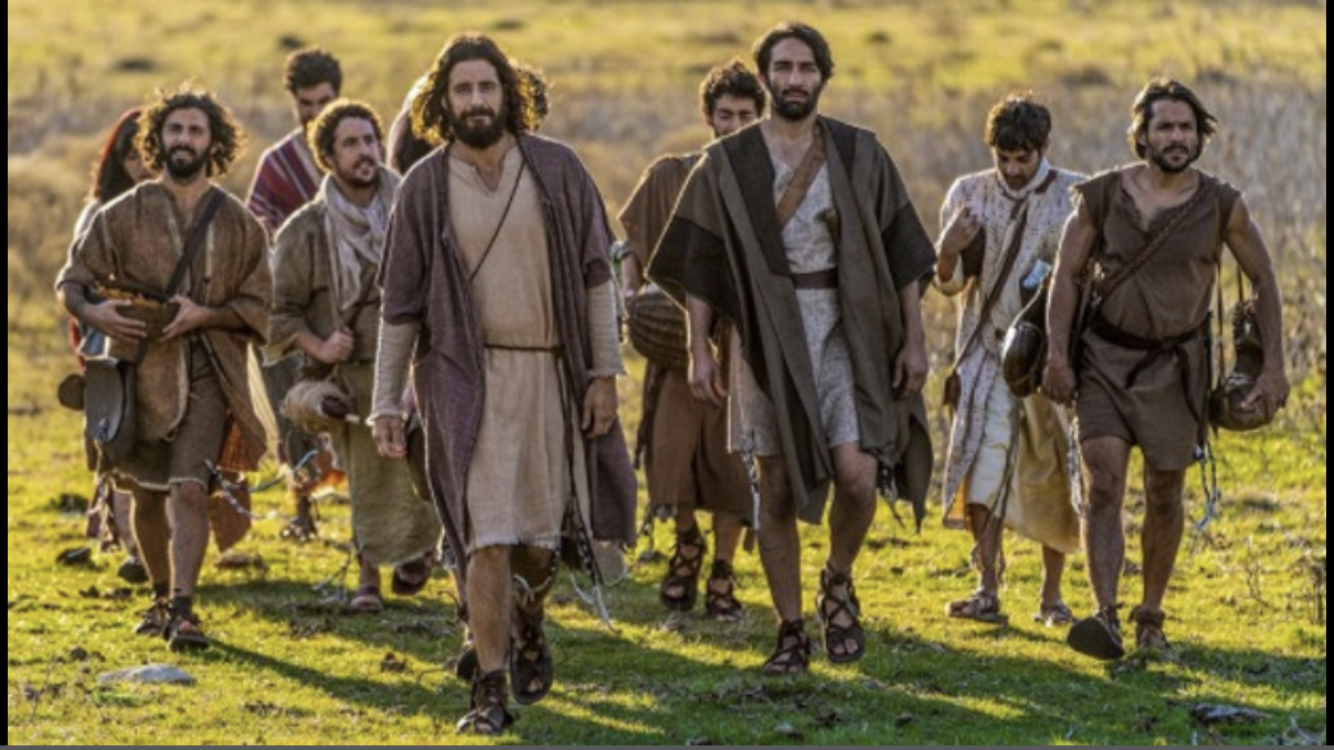


 Photo Credit:
  Photo Credit:


 Photo Credit:


