
Jesus teaching: “Then the King will say to those on His right, ‘Come, you who are blessed of My Father, inherit the kingdom prepared for you from the foundation of the world. For I was hungry, and you gave Me something to eat; I was thirsty, and you gave Me something to drink; I was a stranger, and you invited Me in; naked, and you clothed Me; I was sick, and you visited Me; I was in prison, and you came to Me.’” – Matthew 25:34-36
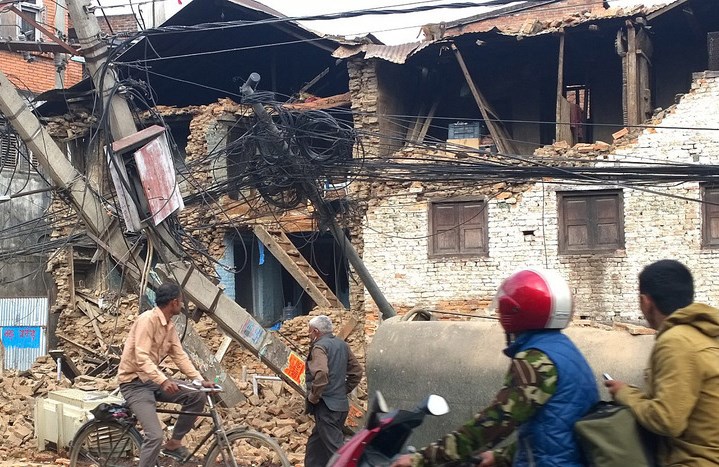
The news this weekend of Nepal’s devastating earthquake was heartbreaking. Thousands dead; tens of thousands losing family and friends, many injured, without shelter. Nearly a million children affected. Just hearing the news and seeing the images, in the aftermath, we are compelled to pray for the Nepali people and to give toward care of the survivors. Many will even travel internationally to add hands to the on-the-ground efforts.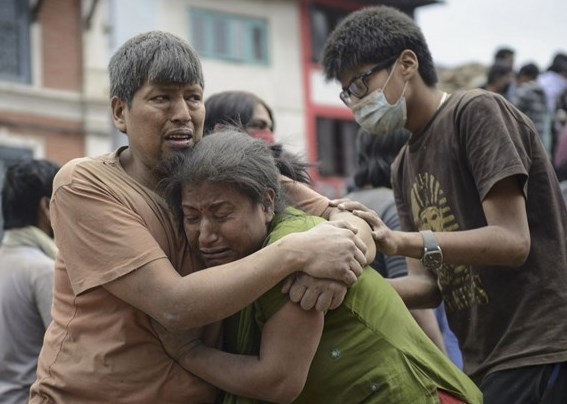
In the face of tremendous need, I am thankful for the resilience of the Nepali people as they respond to the needs of their neighbors so woefully impacted by this natural disaster. It is also gratifying to see all the governments and non-governmental organizations (NGOs) cooperating together for the sake of these people reeling from their losses. They are the ones that matter right now. These survivors.
This is why I was dumbfounded by the venomous attacks on faith-based organizations that started shortly after the earthquake. Twitter and other social media were peppered with angry charges against relief agencies whose motives were questioned by these individuals. I won’t mention the hash-tagged slur not wanting to fuel this fire any further. After such a catastrophic event, any who really care for the Nepali people would want help coming from any source possible.
We were living in Morocco when a 6.4 magnitude earthquake shook the northern coast on February 24, 2004. It was my first close-up experience of such a disaster. We didn’t live close but we had friends with families in that area. There were over 600 killed, over 1000 injured, 2500+ families were displaced when their homes were destroyed, and over 10,000 more homes in the area were damaged. Although not as severe in terms of the losses Nepal has experienced thus far, for a rural area of Morocco, this was overwhelming.
We watched the rapid responses of international agencies coupled with local government and charities. The school our children attended became very involved, as families and faculty traveled to the area to help in whatever way we could (assessing damage, delivering goods, translation). We were encouraged to see how others showed their care for these Moroccans, so unknown to the world at large until hit by this earthquake. When you are trying to get tents, blankets, food and water to families left with nothing, you don’t deem one helping agency more preferable than other. The need is too great for such concerns.
When I wade through the hash-tagged outcries against faith-based organizations helping the Nepali survivors, I marvel at such insensitivity. On many levels. First, we must, all of us who believe in a God who loves humanity, respond to such agonizing human need. We must respond. Second, to imagine a government or people accepting aid from one group over another in such a crisis is incomprehensible. Wisdom is to cooperate and mobilize resources as much as possible early on, because the recovery period will be a long one. Third, to encourage rejecting aid from faith-based organizations for fear of conversions is such a disservice to those hurting – 1) it takes away their voice in accepting what help they need for their own families, and 2) it presumes they would trade their beliefs for aid. Such madness – to think this way about people.
We do support both faith-based organizations and other humanitarian aid organizations. Our preferred disaster relief agency is Baptist Global Response (because of their judicious use of funds, their cooperation with local agencies, and their faith foundation of wise compassion-driven aid and education) . BGR is not just there when disaster strikes. In fact, a BGR training for local agencies was held just weeks ago in Kathmandu, Nepal for just such a time as this. Hopefully the fruit of that training will mean a more collaborative response acutely and, in the long-term, a more stable recovery for the Nepali people.
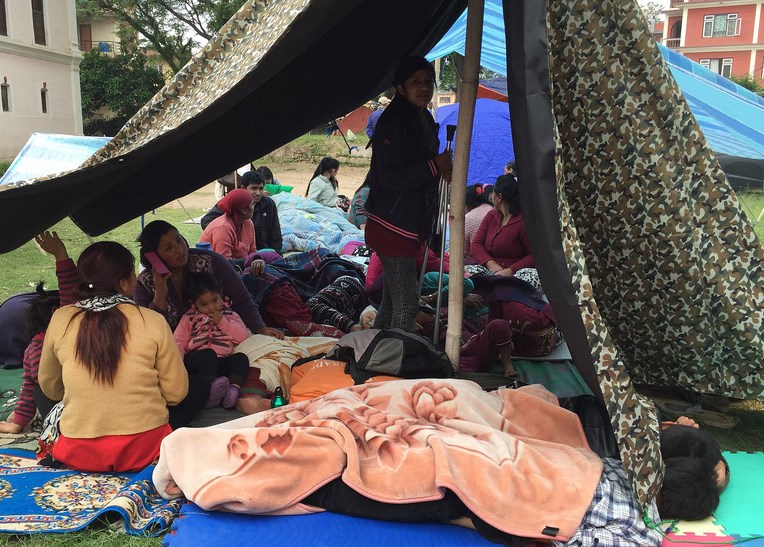 I pray we can take the boxing gloves off and put the work gloves on – serving together to alleviate the suffering of these people whom God loves. It is a mandate from Jesus Himself for those of us who are His followers.
Jesus said, “A new commandment I give to you, that you love one another, even as I have loved you, that you also love one another. ” – John 13:34
By this we know love, that He laid down His life for us, and we ought to lay down our lives for the brothers. But if anyone has the world’s goods and sees his brother in need, yet closes his heart against him, how does God’s love abide in him? Little children, let us not love in word or talk but in deed and in truth. – 1 John 3:16-18
Donate: Nepal Earthquake & Baptist Global Response
Amid the Destruction of the Nepal Earthquake, Grace and Hope are Found
2004 Al Hoceima Earthquake in the Rif Mountains, Morocco
In Pictures – Morocco Quake Aftermath
Losses in the 2004 Earthquake, Al Hoceima, Morocco
Photo Credits: Baptist Global Response and IMB Resources
