Category Archives: America

Worship Wednesday – National Day of Prayer – “If My People”

Photo Credit: The Grace Blog, Jason White

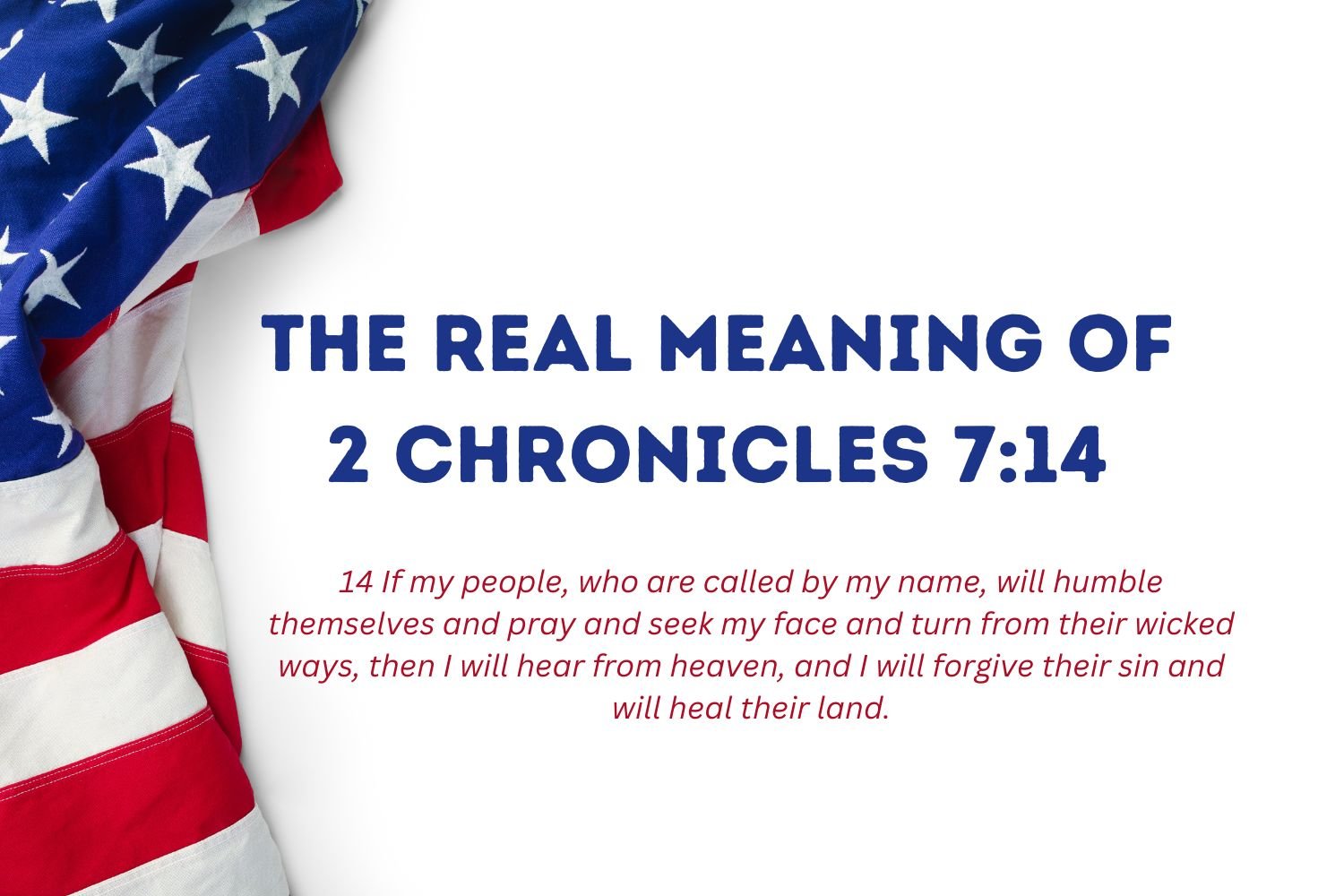
“If My people who are called by My name humble themselves, and pray and seek My face and turn from their wicked ways, then I will hear from heaven and will forgive their sin and heal their land.”2 Chronicles 7:14

On May 7, U. S. churches and Christian organizations (even some in our government and among other religions) will set aside time to observe the National Day of Prayer. We are called to put our political and ethnic differences aside and to seek God’s healing of our country.

National Day of Prayer – Prayer Guide (pdf) – The Shepherd’s Church

The verse above from 2 Chronicles is often quoted. It’s a beautiful promise, conditioned on the response of the people of Israel in ancient times. Does it apply today to believers in America?

Below find commentary by two theologians answering this question. Their answers surprised me a bit, the fact being I am NOT a theologian. However, as you read their answers, remember that God speaks to all of us through all of His Word. As He led His people then, He leads His people now. He calls us to humble ourselves, to pray, to seek Him, and to repent from our evil doing. We can’t rest on our political leanings; we can’t trust in human guardians of our nation’s well-being (over the Sovereign keeping of God Himself); we can’t carry hatred or pride in our hearts without thought of the consequences. We who follow Christ aim to submit to His ways and His word on all things…with His help.

“In context, 2 Chronicles 7:14 is a promise to ancient Israel (and perhaps even modern-day Israel) that, if they will repent and return to the Lord, He will rescue them. However, many Christians in the United States have taken this verse as a rallying cry for America. (Perhaps Christians in other countries have done so as well.) In this interpretation, Christians are the people who are called by God’s name. If Christians will humble themselves, pray, seek God’s face, and repent, then God will heal their land—often a moral and political healing is in view as well as economic healing. The question is whether or not this is a proper interpretation/application.

The United States does not have the same covenant relationship with God that ancient Israel enjoyed. The covenant with Israel was unique and exclusive. The terms that applied to Israel simply did not apply to any other nation, and it is improper for these terms to be co-opted and applied to a different nation. When 2 Chronicles 7:14 is applied to Christians in the U.S. or any other modern nation, it is usually with the understanding that the Christians in that nation—the true believers in Jesus Christ who have been born again by the Spirit of God—will comprise the righteous remnant. God never promised that if a righteous remnant repents and prays for their nation, that the nation will be saved. Perhaps if national repentance occurred, then God would spare a modern nation as He spared Nineveh at the preaching of Jonah (see Jonah 3)—but that is a different issue.

Having said that, it is never wrong to confess our sins and pray—in fact, it is our duty as believers to continuously confess and forsake our sins so that they will not hinder us (Hebrews 12:1) and to pray for our nation and those in authority (1 Timothy 2:1–2). It may be that God in His grace will bless our nation as a result—but there is no guarantee of national deliverance. Even if God did use our efforts to bring about national repentance and revival, there is no guarantee that the nation would be politically or economically saved. As believers, we are guaranteed personal salvation in Christ (Romans 8:1), and we are also guaranteed that God will use us to accomplish His purposes, whatever they may be. It is our duty as believers to live holy lives, seek God, pray, and share the gospel knowing that all who believe will be saved, but the Bible does not guarantee the political, cultural, or economic salvation of our nation.” – Got Questions

Worship with me. We have God’s Word and His wisdom leading us into repentance, for our good and His glory. If God chooses, He may heal our land, but most importantly, for us, is our joyful and hopeful submission to His rule and reign in our lives. Still…this beautiful Imperials rendition of 2 Chronicles 7:14 is a call to prayer and repentance for us Christ followers, no matter the outcome. [I’ve loved this song for many years and still get goosebumps, singing along with the Imperials. Enjoy.]

If My people
Which are called by My name
Shall humble themselves
Shall humble themselves and pray
If My people
Which are called by My name
Shall seek My face
And turn from their wicked ways

Then will I hear from heaven
Then will I hear and will forgive
Forgive their sin

If My people
Which are called by My name
Shall humble themselves
Shall humble themselves and pray
I will forgive their sin
And heal their land

If My people
Which are called by My name
Shall humble themselves
Shall humble themselves and pray*

“If there was ever anyone who had humbled themselves, prayed, sought the Lord, and turned from their wicked ways, it was the disciples and the early church.  But did they receive healing for their land? No, they received persecution.  They were threatened, and some were even thrown in jail for their faith.  Eventually most were even scattered from their land (Acts 8:1-3).

But despite all these terrible situations and circumstances in their lives, they were blessed with every spiritual blessing (Ephesians 1:3).  They had the peace and abundant life of Christ. And this is the promise for all who believe.  We don’t have to find economic and political healing in our land to enjoy God’s blessings.  Our blessings are found in a Person.

Does that mean we shouldn’t pray for our country and hope things get better?

Absolutely not!  We can love our country and be thankful we get to live here.  We can be grateful for the men and women who sacrificed their lives to protect our freedom.  We can pray for our country and hope things get better. But as we pray for our country, our ultimate hope is not that our lives get more comfortable through prosperity but that more people come to know Jesus and the abundant life that can only be found in Him.” – Jason White

*Lyrics to “If My People” – Songwriter: Jimmy Owens, as sung by The Imperials

What Is the Meaning of 2 Chronicles 7:14? – Got Questions

Worship Wednesday – Loving Well, Hating Well

Photo Credit: Destiny City, Don Vess

But to those of you who will listen, I say: Love your enemies, do good to those who hate you, bless those who curse you, pray for those who mistreat you.Luke 6:27-28

Get rid of all bitterness, rage and anger, outcry and slander, along with every form of malice. Be kind and tenderhearted to one another, forgiving each other just as in Christ God forgave you.Ephesians 4:31-32

There are six things that the Lord hates, seven that are an abomination to him: haughty eyes, a lying tongue, and hands that shed innocent blood, a heart that devises wicked plans, feet that make haste to run to evil, a false witness who breathes out lies, and one who sows discord among brothers. Proverbs 6:16-19

Do not repay anyone evil for evil. Carefully consider what is right in the eyes of everybody. If it is possible on your part, live at peace with everyone. Do not avenge yourselves, beloved, but leave room for God’s wrath. For it is written: “Vengeance is Mine; I will repay, says the Lord.”Romans 12:17-19

Finally, all of you, be like-minded and sympathetic, love as brothers, be tenderhearted and humble. Do not repay evil with evil or insult with insult, but with blessing, because to this you were called so that you may inherit a blessing.1 Peter 3:8-9

The beginning of this year in the US has been marked with violence in the streets and clashes with federal agents. Social and news media posts are daily filled with critiques of one group of people vs. another one. Whole people groups. Division is high. Fingers pointed. Disdain fueled by distancing. Even Christians against Christians…sadly.

Writer, theologian Trevin Wax posted a blog this past week on something I’d never heard of before – censoriousness. It is defined as “the state of being censorious, which means having a tendency to blame, criticize, or condemn others. It often involves a habit of finding fault and reproaching others for their actions or opinions.”

How to Deal with a Censorious Spirit – Trevin Wax (really excellent read)

In John Bevere‘s book The Bait of Satan, he teaches on how to respond when we are treated unfairly. Our temptation is to react when someone berates or condemns us. We don’t feel understood. The same applies to those toward whom we express contempt. There is always more to the story. The saying “Two things can be true” is applied. Issues brewing in our country are not so simple as one side against another. The causes are multi-layered and complex. Oh for the simple to reign…and in God’s Word, He breaks down the complex. We are to pray for those in opposition to us (and vice versa). We are to be curious and seek understanding. We are not to allow the world and its evil to divide us. We are to remember that God is in control, and it is His prerogative to judge and make things right.

Photo Credit: Charles Brent, Heartlight

Clinical psychologist, leadership expert Dr. Henry Cloud’s describes how to hate well in his small and fascinating book 9 Things a Leader Must Do. He is wise and succinct on all the topics of this book but especially on hating well, and I quote him here:

“Hate is one of the most crucial ingredients of a good person’s character. What we hate says a lot about who we are, what we value, what we care about…Basically, we are defined in part by what we love and what we hate. You can tell a lot about people by what they love…[and] by what they hate…You can depend on people who…hate arrogance, lying, innocent people being hurt, harmful schemes, evil practices, telling lies about others, and things that stir up dissension among people. [the things that God hates – Proverbs 6:16-19]…The first thing that hate does for us is to help us move against certain traits and issues, thus becoming different from them…The second way hate benefits us is that it causes us to protect what we value…The third way that hate is a good thing is the flip side of protection. Hate moves us to destroy bad things, which are often the things that threaten the good. [However] Unsuccessful leaders hate in ways that solve problems as opposed to creating problems…The difference between leaders who hate well and those who hate destructively lies in the difference between two kinds of hate: subjective and objective. Subjective anger [hate] blasts other people, causes overreactions, dissensions, inability to resolve conflict, broken relationships…Make the subjective hatred objective. Transform it to the kind of hate that solves problems, protects things that you value, and stands against the things that you do not want in your life and work…[he/she] shows up with integrated character. When he brings hate, he brings love as well…and respect, kindness, and forgiveness [taking] a hard stand on a touch issue but remaining loving and kind in the process.” – Dr. Henry Cloud, 9 Things a Leader Must Do – pp. 73-83

In hating well, the focus is on unrighteous acts not on the offenders. It’s not personal. Hating well treats all people as God’s image-bearers. He says repeatedly in His Word that He will avenge, He will make right, He will repay. Because He is without sin, He alone knows just how far to go for the sake of redemption. Our own “righteous anger” moves to sin so quickly because the subjective nature of the offense catapults us to hatred, and not in a good way.

Using the name of Jesus to justify mistreatment of image bearers – Instagram post – Kendra Leeanne Kuntz

I was reminded on a zoom call earlier this week that we are one body with many members – some of us are gifted by the Holy Spirit to speak out against evil, others of us are more the encouragers and mercy-givers, still others serve both the church and those experiencing hardship in the world, and still others point us to the Scripture to make sure we believe what God says and not just what we want to believe He says…

For by the grace given me I say to every one of you: Do not think of yourself more highly than you ought, but think of yourself with sober judgment, according to the measure of faith God has give you. Just as each of us has one body with many members, and not all members have the same function, so in Christ we who are many are one body, and each member belongs to one another. Romans 12:3-5

God calls us to love well (following the example of the Godhead) and to hate well…the same. Only He is the One without sin. He alone can move our hearts to love as He loves and hate as He hates.

Photo Credit: John Stott, Heartlight

Monday Moment Morning – How Can We Keep From Hating? – Deb Mills

Monday Moment Morning – How Can We Keep From Hating?

Photo Credit: Heartlight

This weekend, we in the State of Virginia had our governor’s inauguration. It was another occasion of either relief and elation or concern and consternation. Our state and nation remains polarized in so many ways.

Can we disagree politically, philosophically, or ideologically…without hating each other?

We are in a season of hating or aligning with whole people groups. Maybe, in all of history, we have such seasons. A season where, if we aren’t careful, we hate a whole group of people or we love that same group, thereby putting us in grave opposition to the “haters”. At least, the news and social media platforms are telling us this is the case.

Whole people groups – be they Somalis, Afghans, Republicans, Democrats, Jews, Evangelical Christians. Whole people groups.

How can we keep from hating?

Maybe an even more core question: do we even want to keep from hating? What do we think is gained by hating another or a group of others?

Oddly, hating people can feel good. We feel justified in hating. Even morally superior. The dilemma here is that hating begets hating. Neuroplasticity is the process in our brain where negative thoughts, and resulting actions, become hard-wired, having a negative impact on our physical and mental health over time.

The Neuroscience of Hate: Why It Feels Good to Be Angry

The Power of Hate and Its Consequences – Andrew Mathews

I don’t want to simplify or downplay the reasons one might have to hate, but the devastating effects of it in our culture, community, families (and in our own brains) are worth taking a step back and considering.

Briefly, here are some actions to consider:

  1. Call to mind the possibility that I hate someone/some peoples. “Check your heart” is a common refrain in my life. If I’m honest, are there persons/people whose actions, or personalities, offend me? Do my speech and attitude betray my hatred? Does this hatred feel justified? If so, do I give myself a pass for feeling such a strong negative emotion?
  2. Consider what is below the surface of my hatred. Do I consider what I feel to be righteous anger? Is it righteous if it moves me toward hatred? In defending the rights of one group of people against another, am I committing the same injustice toward “the offending group” as I see being directed to the one I care more about? Or is fear what stirs me to hate? Or unfairness? We can have any number of reasons to hate. Addressing those reasons (with help, if necessary), brings our hatred more into the light. It doesn’t mean that we don’t seek change in the culture, but with greater care, compassion, and even empathy.
  3. Seek understanding by leaning in to persons whose groups we are tempted to hate. Real, flesh-and-blood, face-to-face conversations can soften our tendency to hate. Asking questions, listening with care, resisting the temptation to argue, leaving the door open for understanding. This is a huge step toward stopping the hate. For those who pray, beginning to pray for that person can grease the tracks for you to love them – pray for her/his needs to be met, for protection and peace, for paths forward that don’t further divide us.

Photo Credit: QuoteFancy, Margaret Walker

8 Ideas for Managing Hatred – Michael Karson, Ph.D., J.D. – Psychology Today

4. Recognize that hating what is evil is different than hating people. Hatred dehumanizes people. Remember the persons with whom we disagree have children, parents, jobs, their own hopes, fears and strivings – just like us. They may even have a faith similar to ours…but the issue has overcome us/them and has pushed itself into paramount position. Extinguishing civility. We may actually agree on a wrong, if we acknowledge that we’re all trying to sort out the right path forward.

Photo Credit: Heartlight

5. For those of us who are believers, we have no leave to hate. For Christians, we are called by Christ Jesus to love even our enemies (Matthew 5:44). When hating becomes a habit, especially of a particular people group, we lose our way. Thinking it is almost our duty to hate. We have to guard against self-deceit.

Photo Credit: Heartlight

Peter D. Kaufman, brilliant and highly successful businessman, gives wise counsel in this for all of us: “Go positive and go first, and be constant in doing it.” Determine to love, resist hating, don’t wait for the other person, and in every conversation and encounter, be constant in this effort.

The Multi-disciplinary Approach to Thinking – Peter Kaufman

Young businessman, world-changer Mitchell Wilson recalls Kaufman’s use of the phrase mirrored reciprocation. How this applies is when we engage others with love, listening as we seek understanding, being gentle where we disagree, we often get the same responses in return.

Wilson writes: “Peter doesn’t go into this in his speech [above], but I can’t help but think of Jesus’s core teachings that relate to the principle of mirrored reciprocation:

  • Love your neighbor as yourself
  • Do unto others as you would have them do unto you
  • Forgive those who trespass against you
  • Blessed are the merciful, for they shall receive mercy
  • Turn the other cheek”

Mirrored Reciprocation: Peter Kaufman’s Profoundly Simple Insight That Helps You Achieve An Enjoyable Life | Blog

6. Don’t give up on developing the habit of loving instead of hating. This is definitely a spiritual disciple and a habit worthy of pursuing. Peter Kaufman also has counsel, from his talk above The most powerful force that could be potentially harnessed is dogged incremental constant progress over a very long time frame. We are going to have to fight against hating, especially if we have allowed it to take up real estate in our minds. However, as with anything worth mastering, the work needed to keep from hating will yield its fruit…if we don’t give up.

Photo Credit: Heartlight

[This blog was inspired by recent, terrible events in our country and also by the sermon at Movement Church yesterday. Our pastor Cliff unpacked Matthew 5:38-42 (YouTube video linked; image below) about showing radical love by resisting retaliation. Can’t wait for his sermon next week on “Love your Enemies” which may end up inspiring a Part 2 on this topic. Hope you stay with me for that one.]

Photo Credit: Heartlight

Worship Wednesday – Homecoming – Bethel Music

Photo Credit: Heartlight

Finally he came to his senses and said, ‘How many of my father’s hired servants have plenty of food? But here I am, starving to death!‘ — Luke 15:17

And he arose and came to his father. But while he was still a long way off, his father saw him and felt compassion, and ran and embraced him and kissed him. And the son said to him, ‘Father, I have sinned against heaven and before you. I am no longer worthy to be called your son.’ But the father said to his servants, ‘Bring quickly the best robe, and put it on him, and put a ring on his hand, and shoes on his feet.  And bring the fattened calf and kill it, and let us eat and celebrate.  For this my son was dead, and is alive again; he was lost, and is found.’ And they began to celebrate.Luke 15:20-24

After this I looked and saw a multitude too large to count, from every nation and tribe and people and tongue, standing before the throne and before the Lamb. They were wearing white robes and holding palm branches in their hands. And they cried out in a loud voice: “Salvation to our God, who sits on the throne, and to the Lamb!”Revelation 7:9-10

Coming home. Whatever our situation might be, hopefully that phrase has a comforting ring. In my youth and early adulthood, “coming home” felt very much like the prodigal son’s experience in the Scripture above. My parents were always welcoming and delighted in my arrival. I knew unconditional love from them which helped me understand how much the Lord loves us. Some of us don’t have that experience with our earthly parents. So painful and wrong. Generations of families where performance was demanded to receive love. Not at all what we experience in God’s Kingdom.

As we near the holidays in America, our sense of home is stirred up – in positive and sometimes negative ways. I’ve written about the sweetness of Thanksgivings past. They weren’t perfect given our own imperfections, but they gave a glimpse of the One Day when our homecoming will be something altogether other-worldly.

The first time I heard Bethel Music‘s song “Homecoming” was this past Sunday during worship at Movement Church. Unlike the video below with a huge worship band and a packed house, we were led by a 5-member praise team who still brought the house down in my heart. Not in any kind of performative sense, but in the lyrics and beauty of melody and harmony – telling the story of our welcome Home to Heaven.

None of us deserve such a homecoming. Sin has darkened our way Home. Yet, because of what Jesus did for us on the cross, He has given us the way, and we are confident in Him. Just like with the prodigal, we know our way Home, and we are headed there – a little closer each day.

What an amazing thought – to be rejoined with our dearest family who have gone before us. To be greeted by the saints of old. To look, finally, into the very eyes of Jesus – the One who gave His all so that we might become sons and daughters of the Father. Whew! Hallelujah!

We live in the present with our eyes on the future, and yet, we also plant ourselves in this season of homecoming – to show the Father’s love in both easy and complicated situations. To experience His “welcome Home” in those quiet moments of reveling in Him alone. When boundaries are required to get through the holidays, take hope that the day will come when they will no longer be necessary.

Worship with me.

Lord, I confess
That I’ve been a criminal
I’ve stolen Your breath
And sang my own song

And Lord, I confess
That I’m far from innocent
These shackles I wear
Oh, I bought on my own

These scarlet sins had a crimson cost
You nailed my debt to that old rugged cross
An empty slate, at the empty grave
Thank God that stone was rolled away

Lord, I confess
I’ve been a prodigal
Made for Your house
But I walked my own roads
Then Jesus came
He tore down my prison walls
Death came to life
When He called me by name

Scarlet sins had a crimson cost
You nailed my debt to that old rugged cross
An empty slate, at the empty grave
Thank God that stone was rolled
Scarlet sins had a crimson cost
You nailed my debt to that old rugged cross
An empty slate, at the empty grave
Thank God that stone was rolled away

And I can see it now
Smiling in Heaven, You and I, You and I

And I see bright, crimson robes draped over the ashes
A wide, open tomb where there should be a casket
The children are singing, and dancing, and laughing
The Father is welcoming
This is our homecoming
Roses in bloom pushed up from the embers
Our rivers of tears flow from good times remembered
Families are singing, and dancing, and laughing
The Father is welcoming
This is our homecoming
Heaven joins in with a glorious sound
And the great cloud of witnesses all gather ’round
‘Cause the ones that were lost are finally found
The Father is welcoming
This is our homecoming

Scarlet sins had a crimson cost
You nailed my debt to that old rugged cross
An empty slate, at the empty grave
Thank God that stone was rolled

Oh-oh, oh-oh, oh-oh-oh-oh
The Father is welcoming
This is our homecoming
Oh-oh, oh-oh, oh-oh-oh-oh
The Father is welcoming
This is our homecoming

Can you see it now?
Standing on the shores of Heaven
You and I, and our families
Singing, and dancing, and laughing
There’s truly no place like home
Yeah
Jesus, You’re so beautiful
Haha, see Him face to face

Can we sing that bridge together one last time?
“I see bright, crimson robes”

I see bright, crimson robes draped over the ashes
A wide, open tomb where there should be a casket
The children are singing, and dancing, and laughing
The Father is welcoming
This is our homecoming
Roses in bloom, they pushed up from the embers
Our rivers of tears flow from good times remembered
Families are singing, and dancing, and laughing (Let’s go)
The Father is welcoming (Come on)
This is our homecoming

And Heaven joins in with a glorious sound
And the great cloud of witnesses all gather ’round
‘Cause the ones that were lost are finally found
The Father is welcoming
This is our homecoming


Scarlet sins had a crimson cost
You nailed my debt to that old rugged cross
An empty slate, at the empty grave
Thank God that stone was rolled

Oh-oh, oh-oh, oh-oh-oh-oh
The Father is welcoming
This is our homecoming*

Photo Credit: Air1

*Lyrics to Homecoming – Songwriters: Cory Asbury, Gable Price, Brian Johnson, and Christian Ostrom

Is ‘Homecoming’ Biblical? – the Berean Test (10/10) – Vince Wright

Photo Credit: Heartlight

Monday Morning Moment – Anger, Contempt, & Forgiveness

Photo Credit: Heartlight

[Turns out I’ve written about contempt several times – if you can set aside some time – you can reference these as well.]

I have a dear friend who differs with me on much of our country’s current politics and policies. However, we continue to be close. Some intentionality in both of us must be at work. No matter who won the elections last week or who’s responsible for the latest government shut-down, whatever our thoughts are on these subjects, our friendship stands. Though our solutions to the ailments of our nation may not align, our hearts resonate with each other. Neither of us holds the other in contempt over these external issues. In fact, conversations with her always increase my understanding of these stressful situations and lead to great compassion for those in the midst of those situations.

This is not always the case in family and friendships.

Some of the postings on my social media in recent days have been riddled with anger “at the other side”, whatever that entails. These are friends in real life. Decent, caring people. However, there seems to be an imperative these days to point out the bad behaviors of others, those considered political enemies. Not just behavior but character. One side devaluing the other. Anger, maybe even righteous anger in the beginning, too often progresses to disgust, or worse contempt.

Photo Credit: Heartlight

Anger is a negative emotion that confronts an action/behavior of another (peer or peer group). Contempt takes anger to a lower, darker place. Contempt demonstrates superiority as it simultaneously dismisses and devalues the other person or group, seeing her/them as inferior. It dehumanizes.

“Anger and contempt are the twin scourges of the earth, these bitter emotions form the poisonous brew in which human existence stands suspended. Few people ever get free of them in this life, and for most of us even old age does not bring relief. To cut off the root of anger is to wither the tree of human evil.” – Dallas Willard, The Divine Conspiracy p. 151

Photo Credit: Psychology Spot

It’s slow going, but I am learning not to allow contempt to gain space in my mind and heart. Like other negative emotions, contempt doesn’t only poison relationships but it poisons the mind of the one who entertains contempt.

John Murdock writes on this subject:

“Willard argued that in the Sermon on the Mount, Jesus was not just pulling marbles from a bag, presenting individual gems of wisdom that could be considered independently. Instead, the order of the presentation mattered greatly. “It is the elimination of anger and contempt,” he asserted, “that [Jesus] presents as the first and fundamental step toward the rightness of the kingdom heart.”

Conversely, today it is the systematic elevation of anger and contempt that is often rewarded across the political spectrum.”

Then, yesterday, we had this incredible teaching on anger and forgiveness at Movement Church. Pastor Cliff powerfully preached on Matthew 5:21-24:

“You have heard that it was said to those of old, ‘You shall not murder; and whoever murders will be liable to judgment.’ But I say to you that everyone who is angry with his brother will be liable to judgment; whoever insults his brother will be liable to the council; and whoever says, ‘You fool!’ will be liable to the hell of fire. So if you are offering your gift at the altar and there remember that your brother has something against you, leave your gift there before the altar and go. First, be reconciled to your brother, and then come and offer your gift.”

Cliff talked about how God’s law has affected morality across the world – most of us get through life without murdering anyone. However, Jesus revealed how, if unchecked, our thoughts and words (be they face-to-face or written in social media) can have murderous impact.

We may think we’re doing the world a good service by pointing out the wrong thinking and actions of others. However, if we lack care for them, if we lack compassion or love, our words draw deep lines dividing us. Tall, thick impenetrable walls between us. And, God forbid, we don’t even care? I’m asking.

Jesus pointed to anger and contempt as deterrents to worship. If we care about being right with God, then we have to confront our part in being wrong with people. We may feel offended and then justified in our reaction to another person/group’s behavior, but acting in anger or contempt hurts everyone involved. Everyone.

One day, maybe our culture will shift to being more kind and long-suffering with each other. Being curious, seeking to understand, leaning in rather than being repelled. Until that day, or if that day never comes, what kind of person do I want to be? What do I want to practice in front of my family…my friends, my neighbors…even my enemies?

What is Contempt? An Intense Feeling Under a Mask of Coldness – Psychology Spot – an extremely helpful resource

Monday Morning Moment – Contempt Revisited – Deb Mills

What Is Contempt – Paul Ekman

Moving Beyond Chronic Resentment and Anger in Relationships – Steven Stosny, Ph.D.

Is Contempt a Form of Anger?

Monday Morning Moment – the Culture of Contempt and How to Change It…or At Least Yourself Within It – Deb Mills

Monday Morning Moment – Contempt is Cancer in the Workplace…and Any Other Place – Deb Mills

Disdain, Dallas Willard, and Donald Trump – John Murdock

Photo Credit: Heartlight

Worship Wednesday – Is Peace Possible? – I Heard the Bells – Casting Crowns

Photo Credit: Roseville Lutheran Church

“Glory to God in the highest, and on earth peace, goodwill toward men!” – Luke 2:14

For unto us a child is born, unto us a son is given, and the government will be upon His shoulders. And He will be called Wonderful Counselor, Mighty God, Everlasting Father, Prince of Peace. Of the increase of His government and peace there will be no end. He will reign on the throne of David and over his kingdom, to establish and sustain it with justice and righteousness from that time and forevermore. The zeal of the LORD of Hosts will accomplish this.Isaiah 9:6-7

Be angry, and do not sin; ponder in your own hearts on your beds, and be silent. Selah. Offer right sacrifices, and put your trust in the Lord. In peace I will both lie down and sleep; for you alone, O Lord, make me dwell in safety.Psalm 4:4-5, 8

I will instruct you and teach you in the way you should go; I will counsel you with my eye upon you. Be not like a horse or a mule, without understanding, which must be curbed with bit and bridle, or it will not stay near you. Many are the sorrows of the wicked, but steadfast love surrounds the one who trusts in the Lord. Be glad in the Lord, and rejoice, O righteous, and shout for joy, all you upright in heart!Psalm 32:8-11

Repay no one evil for evil, but give thought to do what is honorable in the sight of all. If possible, so far as it depends on you, live peaceably with all. Beloved, never avenge yourselves, but leave it to the wrath of God, for it is written, “Vengeance is mine, I will repay, says the Lord.”Romans 12:17-19

[From the Archives: One week ago this morning, I woke to the results of the 2024 US presidential election. Before going to bed in the early hours of today, I prayed, wanting to trust the outcome to Him. Wanting to believe Him for whatever direction our country would go. Affirming that the Scripture validates that He is sovereign, and we are in His care.]

October is near, and in our home, it begins the season of Christmas music. So many beautiful anthems to the glory of God – the month of December is not enough to listen, sing, and meditate on the message of these words written by inspired authors and composers.

As this week has unfolded around our nation, social media and news outlets are filled with a range of both shock and jubilation. Of fear and relief. We continue a nation divided…for now. May the church not be a vessel of division…but an instrument of God’s peace.

In December, 1863, American poet and scholar Henry W. Longfellow received his wounded son home from battle. It was Christmas time, and the U.S. Civil War raged on. Having already lost his wife years earlier, Longfellow nursed his son, Charley, back to health. His own thoughts, in turmoil over all that was happening around him, he poured out in the poem “Christmas Bells”.

“I Heard the Bells” – 2022 film on Longfellow’s life and circumstance of writing this poem

Longfellow clearly took comfort from God as he wrote, ending the poem with this stanza:

“God is not dead, nor doth He sleep;
        The Wrong shall fail,
        The Right prevail,
    With peace on earth, good-will to men.”
*

I Heard the Bells is a Christmas carol, not a worship anthem. Yet, given the continuing wars of our day, and the politics surrounding them, we must tend the fires of our hope. God is the “lifter of our heads” (Psalm 3:3). He is the One who gives strength to our “weak hands and shaking knees” (Isaiah 35:3). He will do as He’s promised. He is faithful. When you hear the bells ring where you are in the wake of this past week, and as Christmas looms in weeks ahead, take heart in that. We must continue to pray for His peace on earth. We can be vessels of His good-will toward our neighbors, both near and far away.

Photo Credit: Ullie Kaye Poetry, Facebook

Leaning into “the right [to] prevail” is where we stand, as Christ-followers. Straight and resolute in our understanding of God’s intentions and His movement in our world. We can resist and refuse to add to the noise of hopelessness and cynicism in this world. We bend our hearts to hear the voice of God speak through the chaos…speaking the peace that only He can bring…through our Savior and Lord, Jesus Christ. We can speak that peace to our neighbor – the truth wrapped in His love.

Worship with me…

I heard the bells on Christmas day
Their old familiar carols play
And mild and sweet their songs repeat
Of peace on earth good will to men

And the bells are ringing (Peace on Earth)
Like a choir they’re singing (Peace on Earth)
In my heart I hear them
Peace on earth, good will to men

And in despair I bowed my head
There is no peace on earth I said
For hate is strong and mocks the song
Of peace on earth, good will to men

But the bells are ringing (Peace on Earth)
Like a choir singing (Peace on Earth)
Does anybody hear them?
Peace on earth, good will to men

Then rang the bells more loud and deep
God is not dead, nor doth He sleep (Peace on Earth, peace on Earth)
The wrong shall fail, the right prevail
With peace on earth, good will to men

Then ringing singing on its way

The world revolved from night to day
A voice, a chime, a chant sublime
Of peace on earth, good will to men

And the bells they’re ringing (Peace on Earth)
Like a choir they’re singing (Peace on Earth)
And with our hearts we’ll hear them
Peace on earth, good will to men

Do you hear the bells they’re ringing? (Peace on Earth)
The life the angels singing (Peace on Earth)
Open up your heart and hear them (Peace on Earth)
Peace on earth, good will to men

Peace on earth, Peace on earth
Peace on earth, Good will to men*

Photo Credit: Dr. Rex; Jill Jackson Miller

* Lyrics to “I Heard the Bells” – Casting Crowns

YouTube Video – Casting Crowns performing I Heard the Bells on Christmas Day

Christmas Carol Soldier – Story of Charley Appleton Longfellow & the occasion for H. W. Longfellow’s writing of the poem/lyric

The Story Behind I Heard the Bells On Christmas Day – Tom Stewart

*Longfellow’s poem Christmas Bells

YouTube Video – Let There Be Peace on Earth – Jakarta Philharmonic Children’s Choir

YouTube Video – Let There Be Peace on Earth – Vince Gill, Amy Grant, Chet Akins, & Michael McDonald 1993

Worship Wednesday – Remembering a Girl and Her God – I Long for the Day – Dennis Jernigan

Genessa (l) and April, Cairo, Egypt

[From the Archives – “Remember 9/11 – and the Day Before – a Story of God and a Girl”]

[As we in the US prepare to observe a sad and shocking day in our country’s history, those of us who knew Genessa observe the day she entered Glory 24 years ago. A bit of her story, especially as it relates to her love for Jesus, always comes to mind today. And other days. We have so much to look forward to – in this life and the Next.]

Today marks the eve of the 24th anniversary of the 9/11 bombings in the US. We all have our stories of where we were when we heard that terrible news. I heard the news as an elevator door opened in a hospital emergency room in Cairo, Egypt. The surgeon watching for us to deliver the patient, actually walked into the elevator. His face strained (me thinking it related to the patient with me). Then he said, “I am so, so sorry.” I thought he was referring to the precious one on the stretcher beside me, so small and injured from a terrible bus accident the day before. It turns out he was talking about the news that had traveled instantly from the States about the 9/11 bombings. I’d like to go back to the day before. For us, it would help to go there, before I can ever process the grief of this day that we all share.

It was like any other Monday, that bright, warm September 10th in Cairo, Egypt…until the phone call. Janna was on the other end of the call, telling me that Genessa and April, had been in a bus accident on the Sinai. April had called her and relayed their location, at a hospital in Sharm el-Sheikh. These were girls in our Middle Eastern Studies Program, and they were finishing their time with us, taking a vacation together. They would re-trace some of their experiences in Bedouin villages across the Sinai, visiting local friends once more, and then enjoy a few days on the Red Sea. They were to return that Monday of 9/10, traveling in on one of the over-night buses across the desert.

Details will have to wait for another time, but with this information, my husband, Dave, left immediately with Janna and a local Egyptian friend who was also one of our language coaches. He took these two women because of their relationship with each other and with all of us. He also understood that there were two injured friends hours away in a hospital who would need women to minister to their needs. I would be praying and on the phone the rest of the day with families, other friends, US Embassy people, and our other young people in the program. I can’t begin to describe the emotional nature of that day…not knowing, hoping, praying.

When Dave and our friends arrived at the hospital, he was directed to April. She had painful, serious injuries, but none life-threatening, praise God. Then he was escorted into the critical care area to see Genessa. To his horror, it wasn’t Genessa. It was another young woman, unconscious – an Italian tourist, who rode in the same ambulance with April. April, lucid and still able to communicate, had tried to comfort her on that long dark ride to the hospital. Personal belongings were all scrambled at the wreck site, and the authorities made the mistakened decision that because April was speaking to her, she was Genessa.

Then Dave went on the search for our dear one…somewhere else in the Sinai. He back-tracked toward the site of the accident, checking other hospitals where other injured were taken. At this point, he was also talking to US Embassy staff, as he drove through the desert. Just shortly before he arrived at the hospital where he would find Genessa, the staff person told him they confirmed her identification from a credit card she had in her pocket…in the morgue of that small village hospital.

Dave, our Egyptian friend, and Janna, that friend who received the first phone call, stood beside this precious girl’s body, to make the formal identification…to know for sure that this was Genessa. And it was…and yet not. She, the luminous, laughing, loving girl we knew, was gone. It was more than any of us who loved her could take in on that Monday evening in Cairo, Egypt…the day before 9/11.

http://debmillswriter.com/wp-content/uploads/2014/09/Genessa-with-team1.jpg

As they left the hospital to return to April, two more friends joined them from Cairo to help. For any of you who have been completely spent in every way by such a day, you can understand what it was for them to look up and see other American friends, Matt and Richard, getting out of a car. God, in His great goodness, alerted them, stirred their hearts to drive all those hours…and then to arrive…just when they were most needed. So many arrangements had to be made…and most importantly, at that moment, to get April back safely and quickly to Cairo for surgery.

She came into Cairo on a plane near the middle of the day of 9/11. By the time we got her from the airport in an ambulance to the specialty hospital to get the further care she needed, a series of horrific events had begun taking place in the US. We would hear of them from this caring Egyptian surgeon…who had no idea how numb we were from losing Genessa and how concerned we were that April got what she needed as soon as possible. We were already so drenched by grief, this unfathomable news about the bombings washed over us without understanding the scope of it…the pain of it…for all the rest of America.

Later in that day, with April receiving the best care possible, and me watching by her side, I could take in some of the loss coming at us on the small t.v. mounted in the hospital room. Egyptians were telling us how so, so sorry they were for us (as Americans). If they only knew, they were our mourners for our loss of Genessa, too. In the din of world-changing news, and a country brought together in grief…we grieved, too, a continent away…for the losses of 9/11 and the day before.

That was 24 years ago…April healed from her injuries (only she and God know what all that took on the inside), the other young people in our program have gone on to careers and families across the US and around the world. We have also gone on…back to the US and to other work.

Two things have not changed…a beautiful girl, who fell asleep by the window of a bus in the Sinai night and woke up in Heaven… and the God who welcomed her Home. There is so much, much, more to this story, but I have to close with this. As her family back in the US were pulling the pieces of their lives back together, and going through Genessa’s things, they found a little cassette player on her bed…there left by her, two years before, as she left for Cairo. In it was a cassette where she’d made a tape of her singing one of her favorite songs, I Long for the Day, by singer/songwriter Dennis Jernigan. Toward the end of the song you can hear Genessa’s tears in her voice, singing to the Lord. We would sometimes have the opportunity of being in the room when Genessa led worship in those days. She couldn’t hold the tears back…tears of joy, longing, gratitude. So in a space just God and her.

If we look at Genessa’s life through the lens of some American dream, then we would think how tragic to die so young, so full of promise. Look through the lens of how much she loved God, and knowing Him was what mattered most to her…and all who knew her knew His love through her.

This God…and this girl. 

I Long for the Day by Dennis Jernigan

I long for the day when the Lord comes and takes me away!

Whether by death or if You come for me on a horse so white

And anyway You come will be alright with me

I long to just hear You said, “Now is the time. Won’t you come away?”

And I’ll take Your hand, surrendering completely to You that day!

And no, I can’t contain the joy that day will bring!

Chorus:

When I get to see You face to face

When I can finally put sight to the Voice I’ve embraced

It will be worth all the waiting for that one moment I’ll be celebrating You!

When I get to feel Your hand in mine

When I can finally be free from this prison called time

When You say, “Child, I’ve been waiting for this one moment of celebrating, too!

For this one moment of celebrating you!”

O Lord, while I wait, I will cling to each word that You say.

So speak to my heart; Your voice is life to me, be it night or day.

And anything You say will be alright with me.

You see my heart’s greatest need

You and me, walking intimately.

You’re my only love, and I am waiting patiently for Your call.

When You call me to Your side eternally.

(Chorus Repeat)

Lord, I celebrate You!

Forever with You! No crying there.

Forever with You! No burden; no more worldly cares.

My heart is anticipating eternally with you celebrating You!

Forever with You I long to be;

Forever worshiping, knowing You intimately!

When You say, “Child, no more waiting” [No more waiting, children]

I’ll spend forever just celebrating You.

I’ll see all my loved ones gone before

I’ll get to be with them, laugh with them, hold them once more

There’ll be no more separating! [No separating]

Together we will be celebrating You!

Together we’ll worship You and sing.

Forever praising Lord Jesus, our Savior and King.

When You say, “Child, no more waiting” [No more waiting, children]

Enter your rest, and start celebrating, too.

Forever Lord, I’ll be celebrating You.

Chorus Repeat:

When I get to see You face to face

When I can finally put sight to the Voice I’ve embraced

It will be worth all the waiting for that one moment of celebrating You!

When I get to feel Your hand in mine

When I can finally be free from this prison called time

When You say, “Child, I’ve been waiting for this one moment of celebrating, too!

For this one moment of celebrating you!”

Dennis Jernigan, from the album I Belong to Jesus (Volume 2)

Monday Morning Moment – Not Us and Them, But We – Benching Divisiveness

Photo Credit: His Place

Too much of life and culture these days is polarizing. It may have always been so. Good guys and bad guys. Heroes and villains. Liberals and conservatives. Secular and religious. The list goes on forever.

When I woke this morning, many of these ideas and conflicts were bouncing around in my brain. Then the idea came to mind: “Not Us and Them, but We.” What can grow our capacity for civil discourse? How can we nurture curiosity in our thinking, especially in communication with those who have very different ideas than we might have? What moves us toward understanding rather than acting on the motivation to move “them” to think like “us”?

Often in the last several weeks, in particular, conversations either center on politics, or it’s “the elephant in the room”. Fortunately I have friends who differ from me in some of our political views but they seek to understand, which gives me the same potential for my understanding their views.

Organizational psychologist and author, Adam Grant, often points to the distractions that keep us divided or on edge with each other. He gives wise counsel.

Photo Credit: Screenshot, Adam Grant, X

I also have friends who have pretty much ghosted me over the same views. Conversation is just too emotionally charged. Too anxiety-provoking. I respect that, but I also miss the possibility of learning from them and dialoging together such that both of us can see things from a higher vantage point.

Writer, leadership coach Scott Sauls posted an article just this weekend that resonates with this very current issue. Without really focusing on politics, he expands the idea of differences to incorporate our stances on all of life…and on people with whom we have conflict. In fact, he points to three identities we may have for ourselves and others, and how those identities keep us divided against each other. Below are quotes from this article – click on the link to read all the wisdom found there. Still a quick read.

“Family, work, team, tribe, church, community, and nation—every sphere of life has its culture, and in each one, we assign roles. We naturally place people or groups into the categories of victim, villain, or hero to suit our own biases. Sometimes, one person or group is cast in all three roles, as we seek to simplify complex situations and deflect blame away from ourselves.”

In almost every conflict, we instinctively conclude that someone is hurt, someone is to blame, and someone must intervene to make things right. These roles are common in the stories we read, the movies we watch, the news we consume, and the communities we are part of. But victim, villain, and hero are also the roles we quietly assign to ourselves and others as we navigate difficult relationships and painful experiences.”

The Peril of Playing the Victim – When we assume the role of victim as our primary identity, we risk trapping ourselves in a story of bitterness and self-pity. We replay the wrongs done to us over and over, feeding a narrative that makes the presumed offender larger than life and ourselves perpetually powerless. Over time, the victim mindset tempts us to believe that others are responsible for our misery and that our healing depends almost entirely on their repentance or punishment.”

The Peril of Casting Others as Villains – If playing the victim is one danger, the second is casting others as villains. When someone wrongs us, it is easy to reduce them to their very worst moment or season, and to nothing more than the sum of their sins. They are no longer a whole person with complexities, struggles, and good qualities—they are simply “the one who hurt me.” We judge them harshly, as though their worst moment defines their entire character, while conveniently minimizing our own flaws…The labels we assign—especially when shaped by our pain—often obscure the truth.”

The Peril of Seeing Ourselves or Others as Heroes – Another dangerous role to assume is that of the hero. Heroes see life in black and white—good versus bad, victims versus villains—and position themselves as the ones who can fix it all. Sometimes, this looks like trying to rescue others from pain, taking on burdens that aren’t ours. Other times, it looks like moral superiority: we believe we’re the righteous ones who would never behave like “those people,” and our role is to rescue others from “them.” Still other times, people want to step in as heroes to protect themselves from the wrath of “victims” who are known for punishing and persecuting those who refuse to rescue them from their “villains.””

Sauls ends his post with the Gospel of Jesus Christ being the better story:

The gospel dismantles the victim, villain, and hero roles by telling a different story—one where Jesus is the only one who can truly make things right. It teaches us that:

  • If we are in fact victims, we are seen, loved, and cared for by a God who is near to the brokenhearted (Psalm 34:18). But our healing is not dependent on human justice; it is rooted in the grace of God, who works all things together for good (Romans 8:28).
  • As those who have been wronged, we must forgive as we have been forgiven (Ephesians 4:32). Forgiveness does not deny the reality of harm, and it does not grant trust where trust has not been reestablished through repentance, reconciliation, and sincere efforts to repair, but it releases us from the burden of bitterness and entrusts justice to God.
  • As those tempted to self-righteousness and pride, we are reminded that we, too, have sinned and that our salvation is a gift, not a reward (Romans 3:24). Paul’s rhetorical question and subsequent answer—“Are we any better? Absolutely not” (Romans 6:15)!—become relevant for us, as well.

When we let go of the victim, villain, and hero mindsets, we step into a life shaped by humility, grace, and reconciliation. Humility reminds us that we are all broken and in need of mercy. Grace empowers us to forgive others as we have been forgiven. And reconciliation—where possible—invites us to repair what is broken and pursue peace.” – Scott Sauls

Overcoming the Victim, Villain, and Hero Trap – How the Gospel Frees Us From Denying, Blaming, and Deflecting – Scott Sauls

Where do you see yourself in these scenarios? Do we view ourselves as the hero, fighting for others? Or are we the victim and see another (person or party) as the villain?

Photo Credit: Adam Grant, X

Thoughtful disagreement doesn’t start with “You’re wrong!” It begins with “I’d love to understand your thinking better.” Attacking conclusions closes minds. Asking about reasoning opens them. Good debates don’t have winners or losers. They leave everyone more informed. Adam Grant, X

My husband often puts one of his favorite adages – “We are better than me.” – in work conversations, especially those related to drifting into silo thinking. So much better than where we often find ourselves, if we’re not intentional, which is an “us and them” mentalities. Unfortunately, the “us” is too often deemed better than “them”. Whenever we can, let’s work toward getting “the us’s” to talk to “the them’s” with the goal of becoming “a we”. I know this might seem less complicated in a work situation when an employer mandates this sort of action. However, it is also possible in families, friend groups, and communities which have become fractured because of a rift or rupture. We can be hopeful if we’re willing to be humble, forgiving, curious, and full of grace. God will definitely grease the tracks in that direction.

In It Together – Emma Scrivener

How Estrangement Has Become an Epidemic in America – Joshua Coleman and Will Johnson

What Estranged Families Can Teach Us About the Political Divide – Joshua Coleman

“Seeing every interaction as win-lose isn’t smart. It’s shortsighted. Evidence: People who view others’ gains as their loss see potential allies as hostile and miss out on productive collaborations. In the long run, the best path to success and happiness is striving for win-win.”Adam Grant, X

Saturday Short – Gratitude and the Brain – and a Musical Assist by Benjamin William Hastings

Photo Credit: Twitter

Adapted from the Archives

Have you noticed the increased expressions of gratitude on your social media? At least in the US, we are winding down from Thanksgiving Day festivities. Some of us take this occasion as an opportunity, through the month of November, to daily and publicly express our gratitude. Based on what we know from research, this could make this time of the year one of our happiest and least stressful of the year.

Below you’ll find quotes from some of these authors, reporting on both clinical research and anecdotal data that support how the practice of gratitude can actually alter our habits of thinking and our sense of well-being. It’s all good for us and those around us.

“Our brain is always on alert to threat and is more predisposed to look at the negative side of life [stress response]. There are many things that happen to us everyday that are positive but we don’t notice them because we are always looking for the next threat to us. Now these actions are below our level of awareness. It takes some concerted effort to get our brain to move to the positive side of life. And that is where paying attention and expressing gratitude plays a role in establishing that positive mindset. When we start to place attention on the positive events in our life our brain responds by producing the neurotransmitter dopamine…We do feel better when dopamine is flowing but that also makes are brain want more – so it becomes the motivating neurotransmitter also…In addition, the brain loves confirmation bias: it looks for things that prove what it already believes to be true. Dopamine then strengthens that action. So if you start seeing things in your life that you are grateful for, your brain will start looking for more things to be grateful for.Patricia Faust, How Gratitude Affects the Brain

Photo Credit: UsefulGen

Six Habits of Highly Grateful People:

  1. Once in awhile, they think about death and loss. – As we think of past losses and future losses (say of those we love), we remember and reflect on the good we’ve known in those situations or relationships. Of future losses, we then take action to savor and bless those persons while we have them near.
  2. They take time to smell the roses. – Whether our current situation feels difficult or just mundane, we look for the beauty.
  3. They take the good things as gifts, not birthrights. – We see entitlement for the life-diminishing thing it is.
  4. They’re grateful to people, not just things. – We can be thankful for great food, for blue skies, for warm clothing, but we go beyond that to the one(s) who provided the good we have.
  5. They mention the pancakes. Being grateful for the specific little things disciplines us to enlarge our gratitude for the greater things in our lives. Those things that can cause stress if we don’t remember the value and significance in them.
  6. They thank outside the box. Even in adversity or hard times, we can find things for which to be grateful. Gratefulness doesn’t minimize the difficulty; it actually strengthens us to endure.

Six Habits of Highly Grateful People – Jeremy Adam Smith

Photo Credit: Animalia-Life

“Given its magnetic appeal, it is a wonder that gratitude might be rejected. Yet it is. If we fail to choose it, by default we choose ingratitude. Millions make this choice every day.

Why? Provision, whether supernatural or natural, becomes so commonplace that it is easily accepted for granted.  We believe the universe owes us a living. We do not want to be beholden. Losing sight of protection, favors, benefits and blessings renders a person spiritually and morally bankrupt.  It’d be hard to improve upon the words of our 16th President in 1863:

‘We have grown in numbers, wealth and power as no other nation ever has grown; but we have forgotten God! We have forgotten the gracious Hand which preserved us in peace, and multiplied and enriched and strengthened us; and we have vainly imagined, in the deceitfulness of our hearts, that all these blessings were produced by some superior wisdom and virtue of our own.’” – What Gets in the Way of Gratitude? – Robert Emmons

Photo Credit: HPRC

8 Ways to Express Your Gratitude

  1. Keep a gratitude journal.
  2. Write a gratitude letter to a past mentor or teacher.
  3. Count how many things you can find to be grateful for in each room of your home.
  4. Listen to a guided gratitude meditation [my suggestion if you don’t prefer guided meditation: spend some time in the Psalms].
  5. Start business meetings with a “what went well” one-sentence reflection.
  6. Savor receiving thanks.
  7. Take a daily photo of something you are grateful for and post to Instagram or Facebook, tagging it with #365project.
  8. Try a gratitude jar or tree.  – Tamara Lechner, The Neuroscience Behind Gratitude: How Does Cultivating Appreciation Affect Your Brain?

So…what are you grateful for at this moment?

And for me? More than I can count…including these two songs:

How Gratitude Changes You and Your Brain – Joshua Brown, Joel Wong

How Gratitude Can Help You Through Hard Times – Robert Emmons

Choosing Gratitude: Your Journey to Joy – Nancy Leigh DeMoss

The Science of Gratitude – a White Paper – UC Berkeley

Photo Credit: Robert Emmons, Greater Good, Daily Good
Photo Credit: Marilyn Comrie – Facebook

Worship Wednesday – Peace & Goodwill – I Heard the Bells – Casting Crowns

Photo Credit: Roseville Lutheran Church

Then the angel said to them, “Do not be afraid, for behold, I bring you good tidings of great joy which will be to all people. For there is born to you this day in the city of David a Savior, who is Christ the Lord…And suddenly there was with the angel a multitude of the heavenly host praising God and saying:

“Glory to God in the highest, and on earth peace, goodwill toward men!” – Luke 2:10-11, 13-14

For unto us a child is born, unto us a son is given, and the government will be upon His shoulders. And He will be called Wonderful Counselor, Mighty God, Everlasting Father, Prince of Peace. Of the increase of His government and peace there will be no end. He will reign on the throne of David and over his kingdom, to establish and sustain it with justice and righteousness from that time and forevermore. The zeal of the LORD of Hosts will accomplish this.Isaiah 9:6-7

One week ago this morning, I woke to the results of the 2024 US presidential election. Before going to bed in the early hours of today, I prayed, wanting to trust the outcome to Him. Wanting to believe Him for whatever direction our country would go. Affirming that the Scripture validates that He is sovereign, and we are in His care.

As the week has unfolded around our nation, social media and news outlets are filled with a range of both shock and jubilation. Of fear and relief. We continue a nation divided…for now. May the church not be a vessel of division…but an instrument of God’s peace.

In December, 1863, American poet and scholar Henry W. Longfellow received his wounded son home from battle. It was Christmas time, and the U.S. Civil War raged on. Having already lost his wife years earlier, Longfellow nursed his son, Charley, back to health. His own thoughts, in turmoil over all that was happening around him, he poured out in the poem “Christmas Bells”.

Longfellow clearly took comfort from God as he wrote, ending the poem with this stanza:

“God is not dead, nor doth He sleep;
        The Wrong shall fail,
        The Right prevail,
    With peace on earth, good-will to men.”
*

I Heard the Bells is a Christmas carol, not a worship anthem. Yet, given the continuing wars of our day, and the politics surrounding them, we must tend the fires of our hope. God is the “lifter of our heads” (Psalm 3:3). He is the One who gives strength to our “weak hands and shaking knees” (Isaiah 35:3). He will do as He’s promised. He is faithful. When you hear the bells ring where you are in the wake of this election and as the Christmas season dawns, take heart in that. We must continue to pray for His peace on earth. We can be vessels of His good-will toward our neighbors, both near and far away.

Listening for “the right [to] prevail” is where we stand, as Christ-followers. Straight and resolute in our understanding of God’s intentions and His movement in our world. We can resist and refuse to add to the noise of hopelessness and cynicism in this world. We bend our hearts to hear the voice of God speak through the chaos…speaking the peace that only He can bring…through our Savior and Lord, Jesus Christ.

Worship with me…

I Heard the Bells on Christmas Day (Lyric video)

I heard the bells on Christmas day
Their old familiar carols play
And mild and sweet their songs repeat
Of peace on earth good will to men

And the bells are ringing (Peace on Earth)
Like a choir they’re singing (Peace on Earth)
In my heart I hear them
Peace on earth, good will to men

And in despair I bowed my head
There is no peace on earth I said
For hate is strong and mocks the song
Of peace on earth, good will to men

But the bells are ringing (Peace on Earth)
Like a choir singing (Peace on Earth)
Does anybody hear them?
Peace on earth, good will to men

Then rang the bells more loud and deep
God is not dead, nor doth He sleep (Peace on Earth, peace on Earth)
The wrong shall fail, the right prevail
With peace on earth, good will to men

Then ringing singing on its way

The world revolved from night to day
A voice, a chime, a chant sublime
Of peace on earth, good will to men

And the bells they’re ringing (Peace on Earth)
Like a choir they’re singing (Peace on Earth)
And with our hearts we’ll hear them
Peace on earth, good will to men

Do you hear the bells they’re ringing? (Peace on Earth)
The life the angels singing (Peace on Earth)
Open up your heart and hear them (Peace on Earth)
Peace on earth, good will to men

Peace on earth, Peace on earth
Peace on earth, Good will to men*

Photo Credit: Dr. Rex; Jill Jackson Miller

* Lyrics to “I Heard the Bells” – Casting Crowns

YouTube Video – Casting Crowns performing I Heard the Bells on Christmas Day

Christmas Carol Soldier – Story of Charley Appleton Longfellow & the occasion for H. W. Longfellow’s writing of the poem/lyric

The Story Behind I Heard the Bells On Christmas Day – Tom Stewart

*Longfellow’s poem Christmas Bells

YouTube Video – Let There Be Peace on Earth – Jakarta Philharmonic Children’s Choir

YouTube Video – Let There Be Peace on Earth – Vince Gill, Amy Grant, Chet Akins, & Michael McDonald 1993