“A new commandment I give to you, that you love one another, even as I have loved you, that you also love one another. By this all men will know that you are My disciples, if you have love for one another.” – John 13:34-35
The Thursday before Jesus’ trial and crucifixion was the awaited celebration of Passover. In this day, we have a picture of Jesus, in all his humanity, and in all his deity. All four of the Gospels written about Jesus’ life have an account of this day’s events (Matthew 26:17-75; Mark 14; Luke 22:7-65; John 13:1-18:27).
After sunset, the Jewish people would take the Passover meal together – as families usually. They would share the Seder meal and remember how God protected them during the days of their slavery in Egypt.
This particular Thursday is known as Maundy Thursday. Maundy means “commanded” and also can refer to the ceremonial washing of feet. Jesus took upon himself to wash the dusty feet of his disciples, modeling for them his command to love one another (John 13:34-35).
After Jesus and his disciples finished their meal together, he would then enter the garden Gethsemane to pray. As He prayed, He wrestled with his heavenly Father over the need for him to die. “O my Father, if it is possible, let this cup [of suffering and death] pass from me.” Then, settled in his obedience, he reiterated: “O my Father, if this cup cannot pass away from me unless I drink it, Your will be done.” [Matthew 26:39; Matthew 26:42]
Sometime during that dark night of the soul, he turned his attention toward his disciples and all the rest of us, across the ages, who would follow him. His prayer to the Father, recorded in John 17, is exquisitely beautiful, especially in the context of this difficult night. [Take time to read it in full, but I’ve included a part of it below.]
“Holy Father, keep them in Your name, the name which You have given Me, that they may be one even as We are. I have given them Your word; and the world has hated them, because they are not of the world, even as I am not of the world. I do not ask You to take them out of the world, but to keep them from the evil one. Sanctify them in the truth; Your word is truth. As You sent Me into the world, I also have sent them into the world. I do not ask on behalf of these alone, but for those also who believe in Me through their word; that they may all be one; even as You, Father, are in Me and I in You, that they also may be in Us, so that the world may believe that You sent Me.”
Then out of the darkness, Jesus’ disciple Judas Iscariot came to betray him. He was leading a group of the religious leaders, along with a huge company of soldiers. Although Jesus’ loyal disciples wanted to resist his arrest, Jesus refused their intervening and surrendered himself…not to the mob but to the will of the Father.
The betrayal was complete. His disciples fled (although those closest to him would soon seek out where he was being held). Jesus would spend the rest of the night in the tormenting custody of his enemies. The countdown to the cross had begun in earnest. A countdown that actually began at the Fall of humanity, and, under the careful watch of God, our Father…a countdown toward restoring us back to Himself.
Jesus answered, “I am the way and the truth and the life. No one comes to the Father except through Me.” – John 14:6
“For My thoughts are not your thoughts, neither are your ways My ways,” declares the Lord. “As the heavens are higher than the earth, so are My ways higher than your ways and My thoughts than your thoughts.” – Isaiah 55:8-9
Let this mind be in you which was also in Christ Jesus: Who, existing in the form of God, did not consider equality with God something to be grasped, but emptied Himself, taking the form of a servant, being made in human likeness. And being found in appearance as a man, He humbled Himself and became obedient to death—even death on a cross. – Philippians 2:5-8
“But the fruit of the Spirit is love, joy, peace, forbearance, kindness, goodness, faithfulness, gentleness and self-control. Against such things there is no law.” – Galatians 5:22-23
I will always be grateful for Bernie Cantrell. She loved me enough to tell me the truth.
In my 20s, I had fallen in love with a fellow college student, and we dated into his medical school years. Much of it long-distance and all of it out of God’s will for my life. I had allowed myself to be deceived that him being Jewish and me being Christian melded together two of God’s chosen people. Great spiritualizing, right? His mother wouldn’t think so nor did mine. Not sure about his mom, but mine prayed.
Late in our relationship, I remember vividly a night at my women’s discipleship group, all of us sitting on the floor with our Bibles open, in Bernie Cantrell’s living room. They knew about my relationship with this young man. They knew also that my heart was sincere toward the Lord as well. This is what deception can do…you can be fixed on the way of the Jesus but your eyes can blur from misplaced desires, and, before you know it, you find yourself in a ditch.
I don’t remember if we were in John 14 that night, or if it became a kairos moment when Bernie felt the time was right to talk openly and directly to me about my relationship with this young man. She pointed me to the verse:
Jesus answered, “I am the way and the truth and the life. No one comes to the Father except through Me.” – John 14:6
That night, as she discipled me (all of us) on Jesus being the Way and only in walking in His way will we find Home, the Holy Spirit grabbed my heart. Shortly after that, both this boy and I mutually severed our relationship. Done deal. Full stop. No looking back.
Now there have been other times in life, when I was tempted to choose my way instead of God’s way for me. Seasons when life was hard and I even questioned my salvation (that season was the one of parenting small children – physically exhausting and emotionally overwhelming at times). There were hard seasons when entitlement raised his ugly head and when offenses made me blind with hurt and anger that God’s Word seemed too far out of reach…or beyond my sense of fairness. Misplaced desires.
These days (in our country and occasionally seeping into our church life), we are bombarded by the push and pull of political ideology, cultural swagger, family estrangement, and the sense that God is far away.
Truth: God is NOT far away. We have been drawn off course, but He is as near as a Shepherd’s voice. He is just ahead. His way can be ours again.
I am so thankful for the truth of Scripture. So thankful for friends and family who point me back to Christ when I get distracted or discouraged. So thankful for opportunities when the Lord allows for me to point sweet ones to the way of Jesus.
God tells us that His way is different (higher) than the one we, in our sinful bent, would naturally take. However, when we surrender our lives to Jesus as Lord and Savior, we don’t have to be bound to another way anymore. Through the power of the Holy Spirit, we can walk in His way. We bear the fruits of the Spirit in this world…on this path. What an amazing life we have, reflecting the humility, mercy, and love that Jesus displayed. How much it profits those around us! How much it pleases God the Father! Sometimes it’s me as “the least of these”…staying on the way of Jesus benefits me the most. No more twisted in the wind of Satan’s lies about me and about others.
The King will answer them, “Truly, I say to you, as you did it to one of the least of these my brothers or sisters, you did it to me.” – Matthew 25:40
This song has replayed in my mind all week. Jesus’ way is not the way of this world. It is so beautiful and so worth our lives to point in this direction. To walk in His way daily “tapping into a reservoir that is not of this world but for this world” (from Cliff’s message). For our sakes, our neighbors, our children and grandchildren, and our enemies.
[Verse 1] If you curse me, then I will bless you If you hurt me, I will forgive And if you hate me, then I will love you I choose the Jesus way Oh, ooh-ooh-ooh-ooh
[Verse 2] If you’re helpless, I will defend you (Ooh-ooh-ooh-ooh) If you’re burdened, I’ll share the weight (Ooh-ooh-ooh-ooh) And if you’re hopeless, then let me show you (Ooh-ooh-ooh-ooh) There’s hope in the Jesus way
[Chorus] I follow Jesus, I follow Jesus He wore my sin, I’ll gladly wear His name He is the treasure, He is the answer Oh, I choose the Jesus way
[Verse 3] If you strike me, I will embrace you And if you chain me, I’ll sing His praise And if you kill me, my home is Heaven For I choose the Jesus way
[Chorus] I follow Jesus, I follow Jesus He wore my sin, I’ll gladly wear His name He is the treasure, He is the answer Oh, I choose the Jesus way
[Bridge] And I choose surrender, I choose to love Oh God, my Savior, You’ll always be enough I choose forgiveness, I choose grace I choose to worship, no matter what I face I choose the Jesus way, I choose the Jesus way I choose the Jesus way, I choose the Jesus way
[Chorus] I follow Jesus, I follow Jesus He wore my sin, I’ll gladly wear His name He is the treasure, He is the answer Oh, I choose the Jesus way I follow Jesus, I follow Jesus He wore my sin, I’ll gladly wear His name He is the treasure, He is the answer Oh, I choose the Jesus way Oh, I choose the Jesus way
[Outro] Ooh-ooh-ooh-ooh*
“Now to Him who is able to do immeasurably more than all we ask or imagine, according to His power that is at work within us, to Him be the glory in the church and in Christ Jesus throughout all generations, forever and ever. Amen.” – Ephesians 3:20-21
But to those of you who will listen, I say: Love your enemies, do good to those who hate you, bless those who curse you, pray for those who mistreat you. – Luke 6:27-28
Get rid of all bitterness, rage and anger, outcry and slander, along with every form of malice. Be kind and tenderhearted to one another, forgiving each other just as in Christ God forgave you. – Ephesians 4:31-32
There are six things that the Lord hates,seven that are an abomination to him: haughty eyes, a lying tongue, and hands that shed innocent blood, a heart that devises wicked plans, feet that make haste to run to evil, a false witness who breathes out lies, and one who sows discord among brothers. – Proverbs 6:16-19
Do not repay anyone evil for evil. Carefully consider what is right in the eyes of everybody. If it is possible on your part, live at peace with everyone. Do not avenge yourselves, beloved, but leave room for God’s wrath. For it is written: “Vengeance is Mine; I will repay, says the Lord.” – Romans 12:17-19
Finally, all of you, be like-minded and sympathetic, love as brothers, be tenderhearted and humble. Do not repay evil with evil or insult with insult, but with blessing, because to this you were called so that you may inherit a blessing. – 1 Peter 3:8-9
The beginning of this year in the US has been marked with violence in the streets and clashes with federal agents. Social and news media posts are daily filled with critiques of one group of people vs. another one. Whole people groups. Division is high. Fingers pointed. Disdain fueled by distancing. Even Christians against Christians…sadly.
Writer, theologian Trevin Wax posted a blog this past week on something I’d never heard of before – censoriousness. It is defined as “the state of being censorious, which means having a tendency to blame, criticize, or condemn others. It often involves a habit of finding fault and reproaching others for their actions or opinions.”
In John Bevere‘s book The Bait of Satan, he teaches on how to respond when we are treated unfairly. Our temptation is to react when someone berates or condemns us. We don’t feel understood. The same applies to those toward whom we express contempt. There is always more to the story. The saying “Two things can be true” is applied. Issues brewing in our country are not so simple as one side against another. The causes are multi-layered and complex. Oh for the simple to reign…and in God’s Word, He breaks down the complex. We are to pray for those in opposition to us (and vice versa). We are to be curious and seek understanding. We are not to allow the world and its evil to divide us. We are to remember that God is in control, and it is His prerogative to judge and make things right.
Clinical psychologist, leadership expert Dr. Henry Cloud’s describes how to hate well in his small and fascinating book9 Things a Leader Must Do. He is wise and succinct on all the topics of this book but especially on hating well, and I quote him here:
“Hate is one of the most crucial ingredients of a good person’s character. What we hate says a lot about who we are, what we value, what we care about…Basically, we are defined in part by what we love and what we hate. You can tell a lot about people by what they love…[and] by what they hate…You can depend on people who…hate arrogance, lying, innocent people being hurt, harmful schemes, evil practices, telling lies about others, and things that stir up dissension among people. [the things that God hates – Proverbs 6:16-19]…The first thing that hate does for us is to help us move against certain traits and issues, thus becoming different from them…The second way hate benefits us is that it causes us to protect what we value…The third way that hate is a good thing is the flip side of protection. Hate moves us to destroy bad things, which are often the things that threaten the good. [However] Unsuccessful leaders hate in ways that solve problems as opposed to creating problems…The difference between leaders who hate well and those who hate destructively lies in the difference between two kinds of hate: subjective and objective. Subjective anger [hate] blasts other people, causes overreactions, dissensions, inability to resolve conflict, broken relationships…Make the subjective hatred objective. Transform it to the kind of hate that solves problems, protects things that you value, and stands against the things that you do not want in your life and work…[he/she] shows up with integrated character. When he brings hate, he brings love as well…and respect, kindness, and forgiveness [taking] a hard stand on a touch issue but remaining loving and kind in the process.” – Dr. Henry Cloud, 9 Things a Leader Must Do – pp. 73-83
In hating well, the focus is on unrighteous acts not on the offenders. It’s not personal. Hating well treats all people as God’s image-bearers. He says repeatedly in His Word that He will avenge, He will make right, He will repay. Because He is without sin, He alone knows just how far to go for the sake of redemption. Our own “righteous anger” moves to sin so quickly because the subjective nature of the offense catapults us to hatred, and not in a good way.
I was reminded on a zoom call earlier this week that we are one body with many members – some of us are gifted by the Holy Spirit to speak out against evil, others of us are more the encouragers and mercy-givers, still others serve both the church and those experiencing hardship in the world, and still others point us to the Scripture to make sure we believe what God says and not just what we want to believe He says…
For by the grace given me I say to every one of you: Do not think of yourself more highly than you ought, but think of yourself with sober judgment, according to the measure of faith God has give you. Just as each of us has one body with many members, and not all members have the same function, so in Christ we who are many are one body, and each member belongs to one another. – Romans 12:3-5
God calls us to love well (following the example of the Godhead) and to hate well…the same. Only He is the One without sin. He alone can move our hearts to love as He loves and hate as He hates.
Earlier today a miracle happened. The last Israeli hostages were released from Gaza. Twenty of them. Released! Israel also released almost 2000 Palestinian prisoners. Released! Hopefully the cease-fire on both sides will continue, and the Middle East can settle into a much-needed peace.
The Ten Boom’s were a devoutly Christian family in Holland, and much of the story takes place around the events of World War II. Nazi Germany was making its move to gain power across Europe and was particularly targeting Jews, their own and other nationalities, and Jewish sympathizers. The Ten Boom’s began hiding Jews and developed an effective but dangerous underground to secret them away to safer places. The family’s activities were eventually found out and they were imprisoned. Corrie’s brother Willem and sister Nollie only briefly, but Corrie’s father and sister Betsie were held. Their father would die after a brief time of incarceration. Betsie was Corrie’s older sister. They never married and poured their lives into caring for others.
The notorious German concentration camp, Ravensbrück, would be their “home” for too long. Over 130,000 women would be held there, and over 60,000 died (some in the gas chambers). The conditions were horrific. Corrie and Betsie, by God’s grace, managed to hold onto a Bible during their prison time. When they weren’t laboring long hours, they prayed and encouraged the other women in their barracks. Betsie had enormous faith and a tender heart, even toward their tormentors. She prayed for both prisoners and guards. Corrie struggled more in her faith, angry with their treatment, especially because Betsie was physically weak from a long-term illness. Corrie would learn greater forgiveness and love during their unfathomable time together in the camp.
Finally, Betsie would die in captivity. Corrie would continue on, taking more responsibility in caring for the women around her. Early on in their time at Ravensbrück, Betsie reminded Corrie that God called them to be thankful in all circumstances, not just in lovely ones. Corrie couldn’t thank God for the fleas which infested their quarters. Later, Betsie observed that the guards rarely entered their barracks BECAUSE of the fleas, so they were free to have times of prayer and study. This was not wasted on Corrie as she began to see God at work in all their circumstances…and she gave thanks.
I’m going to leave the rest of the story for you to discover in reading about her life…or watching the movie (movies – others have been made since the first one).
Obviously, Corrie survived her captivity and was released toward the end of 1944 (12 days after Betsie died). Her life continued for almost 40 years, and she was able to see the fruit of Betsie’s visions for the future. It is an incredible story – loss turned to glory.
In rejoicing over the long-awaited release of the Israeli hostages and concurrent release of Palestinian prisoners (also celebrated by their families), we are struck by the enormous experience of being “released”.
For Corrie, and for all of us, the release of bitterness as we forgive and God’s work in our hearts to even love our enemies (Matthew 5:43).
Jesus returned to the Mount of Olives,but early the next morning he was back again at the Temple. A crowd soon gathered, and he sat down and taught them.As he was speaking, the teachers of religious law and the Pharisees brought a woman who had been caught in the act of adultery. They put her in front of the crowd.
“Teacher,” they said to Jesus, “this woman was caught in the act of adultery.The law of Moses says to stone her. What do you say?”
They were trying to trap him into saying something they could use against him, but Jesus stooped down and wrote in the dust with his finger.They kept demanding an answer, so he stood up again and said, “All right, but let the one who has never sinned throw the first stone!”Then he stooped down again and wrote in the dust.
When the accusers heard this, they slipped away one by one, beginning with the oldest, until only Jesus was left in the middle of the crowd with the woman.Then Jesus stood up again and said to the woman, “Where are your accusers? Didn’t even one of them condemn you?”
“No, Lord,” she said.
And Jesus said, “Neither do I. Go and sin no more.”– John 8:1-11
Two others, who were criminals, were led away to be put to death with [Jesus].And when they came to the place that is called The Skull, there they crucified him, and the criminals, one on his right and one on his left.And Jesus said, “Father, forgive them, for they know not what they do.”
One of the criminals who were hanged railed at him, saying, “Are you not the Christ? Save yourself and us!”But the other rebuked him, saying, “Do you not fear God, since you are under the same sentence of condemnation?And we indeed justly, for we are receiving the due reward of our deeds; but this man has done nothing wrong.”And he said, “Jesus, remember me when you come into your kingdom.”And he said to him, “Truly, I say to you, today you will be with me in paradise.” – Luke 23:32-34, 39-43
The Bible is filled with accounts of people in desperate situations. Too many alone in circumstances they can’t seem to escape. Maybe some of us have known that kind of isolation, self-hatred, hopelessness. Singer, songwriter Matthew West brings these people, these lost and wounded ones, into the light. Into the light of God’s love…and ours, if we don’t turn away. “Mended” is West’s speaking forth the Gospel of Christ over brokenness…as if Jesus is speaking to the wounded one, through the lyrics of the song.
[Chorus] When you see broken beyond repair I see healing beyond belief When you see too far gone I see one step away from home When you see nothing but damaged goods I see something good in the making I’m not finished yet When you see wounded, I see mended
[Verse 1] How many times can one heart break? It was never supposed to be this way Look in the mirror, but you find someone You never thought you’d be Oh, but I can still recognize The one I love in your tear stained eyes I know you might not see him now So lift your eyes to me
[Chorus] When you see broken beyond repair I see healing beyond belief When you see too far gone I see one step away from home When you see nothing but damaged goods I see something good in the making I’m not finished yet When you see wounded, I see mended
[Verse 2] You see your worst mistake But I see the price I paid And there’s nothing you could ever do To lose what grace has won So hold on, it’s not the end No, this is where love’s work begins I’m making all things new And I will make a miracle of you
[Chorus] When you see broken beyond repair I see healing beyond belief When you see too far gone I see one step away from home When you see nothing but damaged goods I see something good in the making I’m not finished yet When you see wounded, I see mended
[Bridge] I see my child, my beloved The new creation you’re becoming You see the scars from when you fell But I see the stories they will tell You see worthless, but I see priceless You see pain, but I see a purpose You see unworthy, undeserving But I see you through eyes of mercy
[Chorus] When you see broken beyond repair I see healing beyond belief You’re not too far gone You’re one step away from home When you see nothing but damaged goods I see something good in the making I’m not finished yet, no When you see wounded, I see mended
[Outro] Oh, I see mended Woah, oh I see mended I’m not finished yet When you see wounded, I see mended*
In closing, I’d like to shine a light on a young Christian man who is shining light on persons broken by addiction in the Kensington area of Philadelphia, Pennsylvania. Mal Love is a filmmaker and he is capturing stories of these people, on the streets, prisoners of their addictions. He brings a Godly dignity to them and shows genuine care for them. Talking to them, filming their stories, asking what they need and doing what he can to provide (food, beverages, pillows, recovery helps). He has even administered Narcan when encountering someone who’d overdosed. You can see and hear these stories every day as he goes out onto the streets – on Instagram, Facebook, or his YouTube channel. Mal gives us the opportunity to look into faces of people Jesus loves and pray for them. Whew!
“A new commandment I give to you, that you love one another, even as I have loved you, that you also love one another. By this all men will know that you are My disciples, if you have love for one another.” – John 13:34-35
The Thursday before Jesus’ trial and crucifixion was the awaited celebration of Passover. In this day, we have a picture of Jesus, in all his humanity, and in all his deity. All four of the Gospels written about Jesus’ life have an account of this day’s events (Matthew 26:17-75; Mark 14; Luke 22:7-65; John 13:1-18:27).
After sunset, the Jewish people would take the Passover meal together – as families usually. They would share the Seder and remember how God protected them during the days of their slavery in Egypt.
This particular Thursday is known as Maundy Thursday. Maundy means “commanded” and also can refer to the ceremonial washing of feet. Jesus took upon himself to wash the dusty feet of his disciples, modeling for them his command to love one another (John 13:34-35).
After Jesus and his disciples finished their meal together, he would then enter the garden Gethsemane to pray. As He prayed, He wrestled with his heavenly Father over the need for him to die. “O my Father, if it is possible, let this cup [of suffering and death] pass from me.” Then, settled in his obedience, “O my Father, if this cup cannot pass away from me unless I drink it, Your will be done.” [Matthew 26:39; Matthew 26:42]
Sometime during that dark night of the soul, he turned his attention toward his disciples and all the rest of us, across the ages, who would follow him. His prayer to the Father, recorded in John 17, is exquisitely beautiful, especially in the context of this difficult night. [Take time to read it in full, but I’ve included a part of it below.]
“Holy Father, keep them in Your name, the name which You have given Me, that they may be one even as We are. I have given them Your word; and the world has hated them, because they are not of the world, even as I am not of the world. I do not ask You to take them out of the world, but to keep them from the evil one. Sanctify them in the truth; Your word is truth. As You sent Me into the world, I also have sent them into the world. “I do not ask on behalf of these alone, but for those also who believe in Me through their word; that they may all be one; even as You, Father, are in Me and I in You, that they also may be in Us, so that the world may believe that You sent Me.”
Then out of the darkness, Jesus’ disciple Judas Iscariot came to betray him. He was leading a group of the religious leaders, along with a huge company of soldiers. Although Jesus’ loyal disciples wanted to resist his arrest, Jesus refused their intervening and surrendered himself…not to the mob but to the will of the Father.
The betrayal was complete. His disciples fled (although those closest to him would soon seek out where he was being held). Jesus would spend the rest of the night in the tormenting custody of his enemies. The countdown to the cross had begun in earnest. A countdown that actually began at the Fall of humanity, and, under the careful watch of God, our Father…a countdown toward restoring us back to Himself.
After these things I looked, and behold, a great multitude which no one could count, from every nation and all tribes and peoples and tongues, standing before the throne and before the Lamb, clothed in white robes, and palm branches were in their hands; and they cry out with a loud voice, saying, “Salvation to our God who sits on the throne, and to the Lamb.” And all the angels…fell on their faces before the throne and worshiped God. – Revelation 7:9-11
“Worthy is the Lamb that was slain to receive power and riches and wisdom and might and honor and glory and blessing.” – Revelation 5:12
There appears to be nothing recorded in Scripture of events surrounding Jesus on the Wednesday before his crucifixion. Nothing. After two difficult days dealing with his enemies and accusers, it is quite possible that he took a rest. A Sabbath rest. Given the terrible nature of what was ahead of him, starting just the next day, he could surely use a day to rest and reflect. To remember how the Father had sustained him through all the strains of his public life. To refresh himself in prayer and in the company of those on earth who loved him most – his disciples, his friends, possibly his family. We know no details of that day.
Silent Wednesday.
Since we also know what is coming for Jesus…and all for our sakes…we pause today, as well, to worship. He is the perfect lamb, without blemish, perfectly fit to be offered as a sacrifice for our sins. God provided a ram for Abraham to take his son’s place in that strange and amazing sacrifice on Mt. Moriah (Genesis 22:1-14). This was a foreshadowing of our own need for a Savior. We also can be saved by the blood of “the Lamb, who takes away the sin of the world” (John 1:29).
Jesus’ life was not taken from him on that Friday, two days hence. His life was not taken. Not by the Jewish or Roman authorities. He gave his life…for us…there are no words adequate to respond…worship is all we have.
Worthy is the Lamb who was slain Holy, Holy, is He Sing a new song to Him who sits on Heaven’s Mercy Seat [Repeat 2x]
(Chorus) Holy, Holy, Holy Is the Lord God Almighty Who was, and is, and is to come With all creation I sing: Praise to the King of Kings! You are my everything, And I will adore You…! Yeah!
Clothed in rainbows, of living color Flashes of lightning, rolls of thunder Blessing and honor, strength and Glory and power be To You the Only Wise King, Yeah
(Chorus)
Filled with wonder, Awestruck wonder At the mention of Your Name Jesus, Your Name is Power Breath, and Living Water Such a marvelous mystery Yeah…
(Chorus)
Holy, Holy, Holy Is the Lord God Almighty Who was, and is, and is to come, With all creation I sing: Praise to the King of Kings! You are my everything, And – I – will – adore YOU…
(Chorus)
(Repeat a cappella)
Come up lift up His Name To the King of Kings… We will adore YOU Lord… King of heaven and earth King Jesus, King Jesus Aleluya, aleluya, aleluya! Majesty, awestruck Honor And Power and Strength and Dominion To You Lord, To the King, to King To the King of Glory
When He [Jesus] entered the temple, the chief priests and the elders of the people came to Him while He was teaching, and said, “By what authority are You doing these things, and who gave You this authority?” – Matthew 21:23
On this long day, Jesus would demonstrate in one situation after another that he spoke and acted with the authority of God Himself. The barren fig tree cursed by Jesus the day before had indeed withered and died. The disciples saw it themselves that morning as they walked again from Bethany to Jerusalem. Jesus spoke to them of faith, which they would need all the more in the days ahead (Matthew 21:21-22).
Again and again…in Jerusalem, in the Temple, and on the busy streets during Passover, Jesus was confronted by the religious leaders.
It’s amazing that he even gained entry to the Temple after overturning the market there just the day before. Again, another sign of his authority. He was untouchable, until he gave himself over to his own death on the cross…for us.
The religious leaders were determined to trap him in some sort of blasphemous teaching or interpretation of the law. It would not happen, yet they were set on his destruction one way or another.
In an attempt to test Jesus’ understanding of the law, a legal advisor to the Pharisees asked Jesus what was the greatest commandment in the law. The Pharisees emphasized strict adherence to the laws of the Torah, all 613 of them! They were not prepared for Jesus’ response:
Jesus answered, “The foremost is, ‘Hear, O Israel! The Lord our God is One Lord; and you shall love the Lord your God with all your heart, and with all your soul, and with all your mind, and with all your strength.’ The second is this, ‘You shall love your neighbor as yourself.’ There is no other commandment greater than these.” – Mark 12:29-31
Two commands: 1) Love God with your whole being; 2) Love your neighbor as yourself. Some might say that a third is presumed in that you must love yourself in a right and wholesome way in order to truly love others.
Jesus’ love for the Father and his love for all people were in perfect unity. Loving God, with all we are, gives us perspective and capacity to love those around us, whomever they are, as we have experienced love ourselves, from the God who loves us perfectly and completely.
The Pharisees, Sadducees, and other Jewish leaders grew more angry at Jesus and were vexed as to how to destroy his popularity and influence with the masses of Jews loyal to him. All their trickery failed this time. Jesus was not intimidated by them, and in fact, spoke some of his strongest words against them while teaching that day.
His 8 “woe to you” pronouncements against the Pharisees are listed at bottom of this page. When I read them, the song from the original Godspell film comes to mind as the Jesus character stands against the religious “machine” of his day – those “hypocrites”, those “blind guides” of the people.
Finally, leaving Jerusalem that day, Jesus stopped on the Mount of Olives (Olivet) to speak about the future. He talked at length, to his disciples and all those who followed, about the end times. He cautioned them about false teachers and the evil that would rise up in those last days. What it must have been to listen to Jesus, the Messiah, on that Tuesday – filled with a mixture of faith in him and fear of what could lie ahead for them, and the generations to come.
When Jesus and his disciples returned for the evening to Bethany, Judas Iscariot, one of the twelve, stole away and met with Jesus’ enemies. [Matthew 26:14-16] In the dark of night, he would betray Jesus to them. He acted as a coward, away from the crowds who would have strongly objected…
For 30 pieces of silver, Judas would seemingly take history into his own hands, but the clock was already ticking, and Jesus would finish what he came to earth to do.
Postscript:
8 “Woe’s” Spoken by Jesus Against the Pharisees (Matthew 23:13-30)
1- Woe to you, scribes and Pharisees, hypocrites! for you shut up the kingdom of Heaven against men.
2- Woe to you, scribes and Pharisees, hypocrites! for you devour widows’ houses, and pray at length as a pretense.
3– Woe to you, scribes and Pharisees, hypocrites! for you travel land and sea to win one proselyte, and when he is won, you make him twice as much a son of hell as yourselves.
4- Woe to you, blind guides, who say, “Whoever swears by the temple, it is nothing; but whoever swears by the gold of the temple, he is obliged to perform it.”
5- Woe to you, scribes and Pharisees, hypocrites! for you pay tithe of mint and anise and cumin, and have neglected the weightier matters of the law: justice and mercy and faith.
6- Woe to you, scribes and Pharisees, hypocrites! for you cleanse the outside of the cup and dish, but inside they are full of extortion and self-indulgence.
7- Woe to you, scribes and Pharisees, hypocrites! for you are like whitewashed tombs which indeed appear beautiful outwardly, but inside are full of dead men’s bones and all uncleanness.
8- Woe to you, scribes and Pharisees, hypocrites! Because you build the tombs of the prophets and adorn the monuments of the righteous, and say, “If we had lived in the days of our fathers, we would not have been partakers with them in the blood of the prophets.”*
Put on the full armor of God, so that you can take your stand against the devil’s schemes. For our struggle is not against flesh and blood, but against the rulers, against the authorities, against the powers of this dark world and against the spiritual forces of evil in the heavenly realms. Therefore put on the full armor of God, so that when the day of evil comes, you may be able to stand your ground, and after you have done everything, to stand. Stand firm then, with the belt of truth buckled around your waist, with the breastplate of righteousness in place, and with your feet fitted with the readiness that comes from the gospel of peace. In addition to all this, take up the shield of faith, with which you can extinguish all the flaming arrows of the evil one...praying at all times. – Ephesians 6:11-16, 18
He who dwells in the secret place of the Most High shall abide under the shadow of the Almighty. I will say of the Lord, “He is my refuge and my fortress; My God, in Him I will trust.” …His truth shall be your shield and buckler…Because you have made the Lord, who is my refuge, even the Most High, your dwelling place, no evil shall befall you…for He shall give His angels charge over you, to keep you in all your ways. “Because he has set his love upon Me, therefore I will deliver him; I will set him on high, because he has known My name. He shall call upon Me, and I will answer him; I will be with him in trouble; I will deliver him and honor him.” – Psalm 91:1-2, 4b, 9-11, 14-15
From the Creation story to present day, we are confronted by lies. Through the world’s influence, in our own fallen flesh, and from Satan and his emissaries. Maybe we don’t think much about it, because lies just become part of our worldview if we aren’t on guard. Weighing truth against what seems true or what might be true. Just yesterday, my son told me about his 8 y/o’s troubling thought that he didn’t really love God. What I know of the Holy Spirit, that thought did not come from Him. Satan is the father of lies and the accuser of believers. My son was able to comfort our grandson with the truth, both about God and how this precious child’s thoughts can wrongly condemn him. The talk about our enemy, the Devil, will come later.
Much is written about spiritual warfare, and too often, it is as if it’s us, rather me, against Satan. God is our victor. The battle is truly His, and Satan is no match for the Creator. The Scripture is full of encouragements for us to be strong and courageous, to stand against our enemies, and to trust the Lord. The battle does not depend on our winning, it is God’s to win. However, God calls us to plant our feet on the truth of who He is, who we are, and what He intends for our lives (John Mark Comer, Live No Lies).
In recent days, I’ve been digging into John Mark Comer‘s and Henri Nouwen‘s writings. “Beloved” is a small volume calling us to recognize our identity in Christ and to draw near to Him in prayer, away from what we think is the busyness of a significant life. Comer’s book’s Live No Lies is a substantial and serious read on recognizing and resisting the same temptations Jesus endured in the wilderness, at the beginning of His public ministry. Both authors refer to this experience as common to all of us.
“Jesus had three temptations in the desert [Matthew 4:1-11]: to be relevant – turning stones into bread; to be popular – jumping from the tower and have angels catch Him; to have power to possess all the land. Jesus refused all that because He didn’t have to prove to anybody that He was loveable. He was already the beloved. That’s precisely what the Spirit revealed to Him after He was baptised in the Jordan. The voice came and said, ‘You are My beloved son, on You My favour rests’. That’s who you are; you are the beloved, so you don’t have to be busy proving it. You don’t have to run around. Immediately, that same Spirit who revealed to Him that He was the beloved sent Him into the desert to be tested….Solitude is listening to the voice who calls you the beloved. It is being alone with the One who says, ‘You are My beloved, I want to be with you’...Solitude is the place where we go in order to hear the truth about ourselves. – Henri Nouwen, “Beloved”
“The devil’s goal is to first isolate us, then implant in our minds deceitful ideas that play to our disordered desires, which we feel comfortable with because they are normalized by the status quo of our society. Specifically, he lies about who God is, who we are, and what the good life is, with an aim to undermine our trust in God’s love and wisdom. His intent is to get us to seize autonomy from God and redefine good and evil for ourselves, thereby leading to the ruin of our souls and society.” – John Mark Comer, Live No Lies: Recognize and Resist the Three Enemies That Sabotage Your Peace
We are probably all familiar with Jesus’ 40 days in the wilderness and Satan’s tempting Him. The Evil One has not changed his ways of beguiling since the beginning, when he similarly tempted Eve to distrust God. Ours is to follow and practice the way Jesus dealt with lies and with the accuser. With quiet prayer (in solitude), with seeking the truth (Scripture), with fasting. And in community. Satan attacks most when we are isolated from God and one another.
With the Spirit of God ruling in our hearts and lives, we need never fear. The battle is real, but God is present with us. We stand in His strength. Although our enemies are real and the world seems hostile to us, we have a greater Overcomer.
Singer/songwriter David Crowder tells this story in his rocking anthem Unstoppable. It puts in perspective that our God is invincible, and because we are in Him, we have the confidence and privilege of tasting His victory. Hallelujah!
Devil’s playing fiddle Demons coming like a missile To my left, to my right But I ain’t be dancing with ’em I got angels watching over me Fighting all my enemies Wear ’em out, knock ’em down ‘Bout to taste that victory
Hey, hey They can try to slow me Thinking that they own me They be thinking crazy Hey Welcome to the showdown They about to find out
When I got You, I am unstoppable When I got You, nothing’s impossible No way I lose, I am unbeatable, powerful Stronger than invincible I feel bulletproof when I got You When I got You
See these arrows in my quiver Winner, winner, chicken dinner If I’m bitten by the serpent He’ll be sucking out the venom I got someone watching over me Fighting all my enemies See that smile on my face ‘Bout to taste that victory
Hey, hey They can try to slow me Thinking that they own me They be thinking crazy Hey Welcome to the showdown They about to find out A-a-amen
When I got You, I am unstoppable When I got You, nothing’s impossible No way I lose, I am unbeatable, powerful Stronger than invincible I feel bulletproof when I got You When I got You
When I got You When I got You
That’s my dad, I’m His son He’s gonna make that Devil run That’s my dad, that’s my dad That’s my dad, I’m His son Watch him make that Devil run That’s my dad, that’s my dad
That’s my dad, and I’m His son He’s gonna make that Devil run That’s my dad, that’s my dad That’s my dad, I’m His son He’s gonna make that Devil run That’s my dad, yeah, that’s my dad
When I got You, I am unstoppable When I got You When I got You, nothing’s impossible When I got You No way I lose, I am unbeatable, powerful No way I lose Stronger than invincible I feel bulletproof when I got You When I got You
Centering Prayer calls us away from all our distractions, our plans, our worries, our over-thinking, our busyness…and calls us into a time of rest and focus on God whose presence we are never without.
Last week, I was checking out of our local free clinic with my Afghan grandmother friend. It’s always a stretching experience with trying to understand (even with an interpreter) what her health complaints are. Finally, we were finished with the doctor. As I stepped up to the counter to receive the forms for her bloodwork, specialist referral, and next appointment, I saw the sign (in the image above).
God is always with us. Period. Full-stop. That verse is one that brings to rest everything whirring around in our minds, remembering that God’s got this. Being present with a ever-present God transforms everything.
Another passage that reminds us to be still and stop fighting battles He means to fight Himself…for us…is Psalm 46. Below is the entire psalm. It is so worthy your stopping and reading along (or hear it read for you).
46 God is our refuge and strength, A very present help in trouble. 2 Therefore we will not fear, Even though the earth be removed, And though the mountains be carried into the midst of the sea; 3 Though its waters roar and be troubled, Though the mountains shake with its swelling. Selah
4 There is a river whose streams shall make glad the city of God, The holy place of the tabernacle of the Most High. 5 God is in the midst of her, she shall not be moved; God shall help her, just at the break of dawn. 6 The nations raged, the kingdoms were moved; He uttered His voice, the earth melted.
7The Lord of hosts is with us; The God of Jacob is our refuge. Selah
8 Come, behold the works of the Lord, Who has made desolations in the earth. 9 He makes wars cease to the end of the earth; He breaks the bow and cuts the spear in two; He burns the chariot in the fire.
10 Be still, and know that I am God; I will be exalted among the nations, I will be exalted in the earth!
11 The Lord of hosts is with us; The God of Jacob is our refuge. Selah
Psalm 46 is a glorious and victorious psalm to encourage and embolden a people beleaguered by hardship (we don’t have details but given the context it was war, or some sort of calamity or terror). The psalmist was reminding the people that God is with them (with us) and will pierce through the noise of battle, with His powerful and persevering presence. He is here today just as much as He was with His people in the psalmist’s day.
Our part, like theirs, is to turn our ears, and our hearts, our bodies to Him.
Psalm 46 begins, not with a lament or cry for help, but an anthem of praise. “God is our refuge and strength, a very present help in trouble. Therefore we will not fear”. Then he goes on to talk about super fearful things…yet from a place of awe and certainty. Even as the psalmist speaks with great confidence about God’s presence and provision in times of catastrophe, the Lord Himself enters the psalm with the command “Be still!”
Not just “Be quiet” but “Be still”. Stop!
Stop. Come away (from the battle). Quieten yourself. Cease striving.
God calls both His people and our enemies to essentially “put down your weapons!”
Especially to His own people, He urges them (and us today) to ‘snap out of it,’ ‘wake up,’ ‘stop fearing’—acknowledge who God is—be in awe! For us to take His “Be still” and treat it as “be quiet” is not incorrect, it’s just not enough to describe what God is truly saying.
God is about His business in fighting for us and those we love. Fighting also those who would see to do us harm. We don’t know how it will go in the moments ahead of us (whether this battle will “seem” lost or won to us) but we do know His promises that hold us fast, even in battle, for now and forever.
It’s for us to “be where our feet are”. To quieten our hearts and slow our steps. To put down the phone. To find His beauty to focus our eyes on. To “breathe the life around me” and “listen as my heart beats. Right. On. Time.”
Centering prayer prompts us to lay down our burden and determine to stop worrying. Not just as a mindfulness exercise but with the God who loves us in full view. To see the anxiety for what it is – a tool used against us to take our peace away. To recognize that the depression we experience can be lightened if we open ourselves to Him and to His people praying with and for us. To remember that all the things that distract us dull our senses to the most real relationship we have in this life and the next.
“Centering Prayer,” written by Brian Eichelberger, Nicholas Chambers and Kate Bluett — and featuring Andrew Peterson and Leslie Jordan — invites the listener to a sense of groundedness with its calm melody. The lyrics give language to a clinically recommended practice of grounding that invites practitioners to reconnect with themselves in the present. The song, with lyrics asking for God’s help to “be where my feet are,” is itself a tool for calming anxieties and opening a more accessible prayer experience. – Kathy Powell

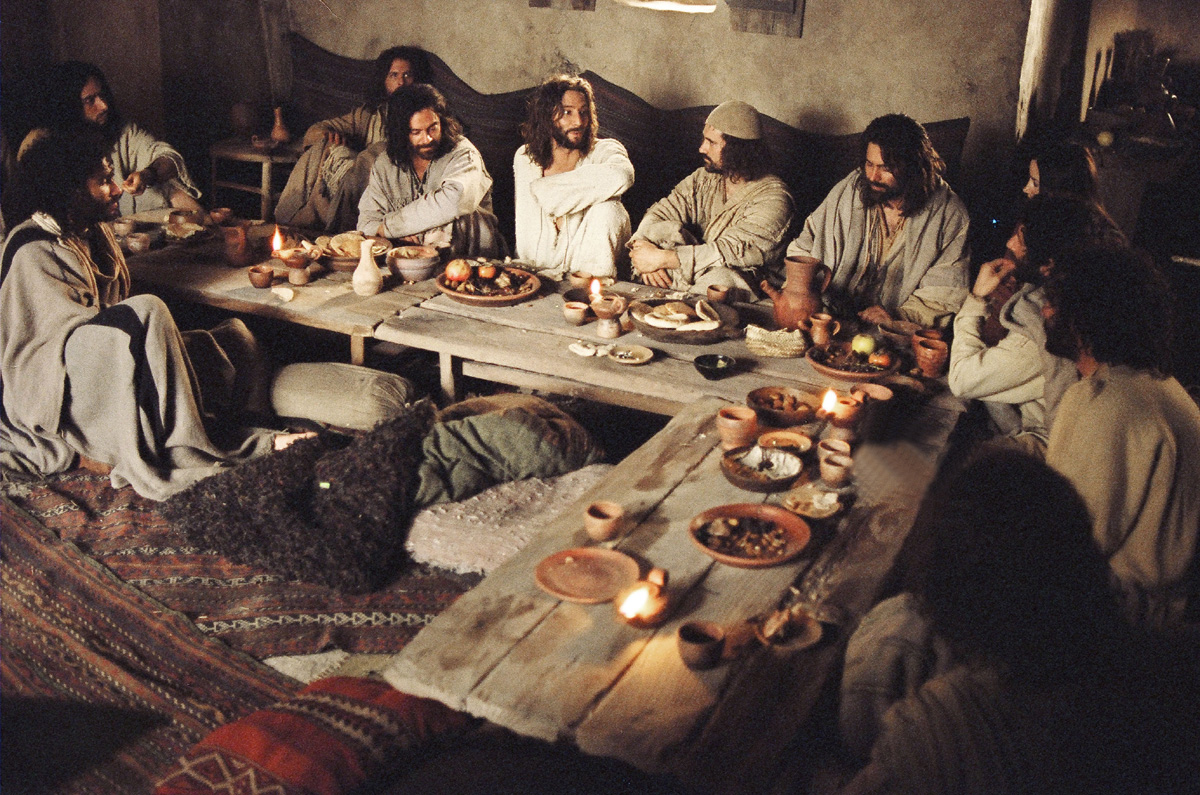

 Photo Credit: Wikimedia


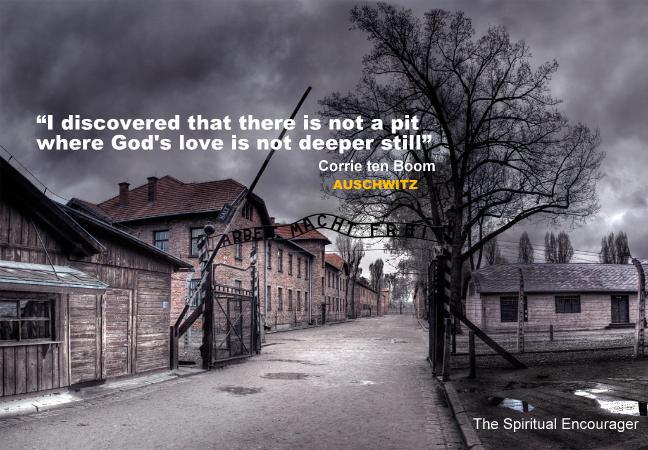

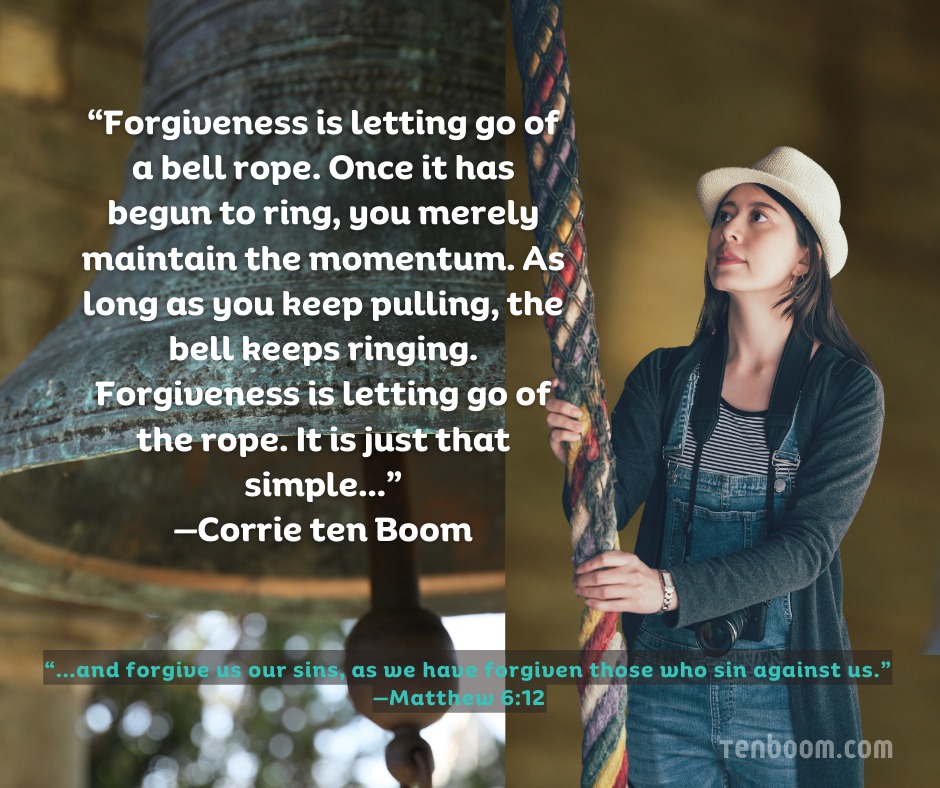
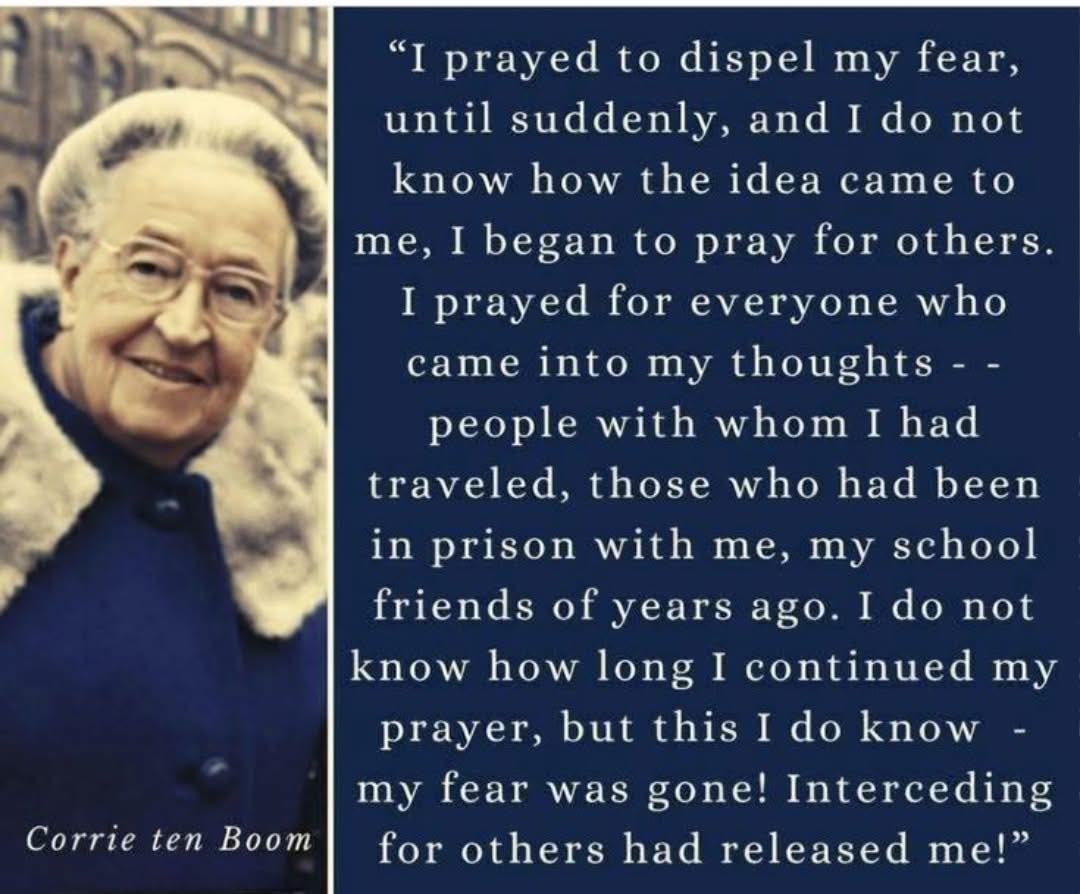


 Photo Credit –
  Photo Credit –
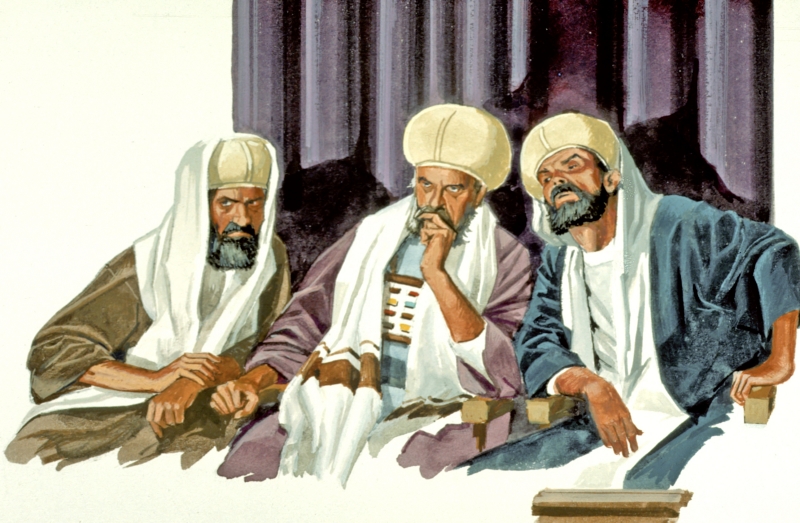 Photo Credit:


