
Category Archives: Church

Worship Wednesday – Ash Wednesday – Lenten Practices

Blog - Lent - Ash Wednesday - from article by Jim DenisonPhoto Credit – Ash Wednesday – Jennifer Balaska via en.wikipedia.org

“An evil spirit of this kind is only driven out by prayer and fasting.” – Matthew 17:21

It wasn’t until I was six years old that church became any sort of meaningful in my life. My mom worked all the time in those days, and finally, after a last-resort divorce, she settled us into a better life of meager means and lavish love. It was then that we responded to an invitation of neighbors, and a weary single mom and four eager children met the welcome care of a loving church. Our experience was small town Bible-Belt Baptist, and that set the foundation for my understanding of God. In fact, when I signed up for a World Religions course as a college freshman, I thought it would only be about Christianity.

My first experience with Lent was seeing my best friend on a Wednesday long ago, after she had disappeared from our usual routine. We met for lunch and she had this mysterious, ashen cross smudged on her forehead. I resisted the urge of just lovingly wiping it off for her, thinking she was unaware of it. Pointing it out instead, she taught me my first lessons on Lent – on repentance, fasting (sacrifice), the Cross and the Resurrection of Christ. All of that was gloriously real for me already, except for setting aside 40 days of resolve prior to the celebration of Easter.

For years, I still didn’t take Lent very seriously and still don’t know quite how to incorporate it into my life…except that my thinking is changing. In this world gone mad, I am more convinced than ever that we as the Church need to stand together for the sake of the nations and for the glory of God. If in Lent, I can find elements that help me see God and my own need for Him more clearly, then I want to integrate Lenten practice into my life.

Corporate month-long fasting has never been a draw for me, as I was always completely sure it would be a fail for me. While we lived in North Africa, and especially in Egypt, fasting was very much a part of my Muslim and Christian neighbors’ lives. Even those Christians who were evangelical (from Coptic backgrounds) saw the importance of fasting. Their awareness of the evil of sin in the world and the need for drastic measures lined up solidly with Jesus’ own life and teaching on this.

For the past several years, during Lent, I read Adrian Plass’ book The Unlocking – God’s Escape Plan for Frightened People. It was also a gift from a good friend. There’s a lot in this world that’s frightening these days. Yet God is still God and is at work in the midst of so much crazy. I believe Him at His word. Full stop. We have a role in dealing with what we see in the world. As Jesus told His disciples (Matthew 17:21), there is evil that we can only battle, from our side, with prayer and fasting. This is a strength in a true observance of Lent.Blog - Lent - Easter (3)

As we grieve so much death around us in these days, and as we look to Easter, I would like to close with a prayer from Adrian Plass’ book:

“Loving heavenly Father, I want to try to tackle this business of loving enemies. First of all I’m going to sit quietly here and go through a mental list of the folk who I would call my enemies. Help me to be really honest…I don’t want to leave anyone out….I’ve done it, Lord. There are rather a lot, and some of them I really hate. But You made it quite clear that You can’t forgive me if I don’t forgive them, so I’ll start the process, even if it takes a long time to mean it. Love them for me, Lord, and please accept my prayers for their welfare and safety. Soften my hard heart as the days go by, until I begin to see them through Your eyes. Thank You for forgiving me. Amen.”

For these forty-plus days before Easter, I will be reading Transformed; referring back to the book-marked portions of The Unlocking; reflecting on God and the goodness and wisdom He displays through Jesus’ life and teachingresisting (fasting from) those money- and time-stealers that distract me from larger issues; repenting of the sins of neglect and indifference; and remembering to pray and reach out to God and those around me as His vessel for His purposes among the nations.

Why is Lent Relevant for Evangelicals? by Jim Denison

Evangelicals Embracing (and Rejecting) Lent by Trevin Wax

Lenten Observances – Eastern & Western Traditions

The Coptic Church and Worship

A Catholic Homily for this Ash Wednesday in memory of the Coptic Christians killed last week [Beautiful blog – I do not believe in praying to anyone except God; still I appreciate the call to all of us to remember others caught in the cross-fire of evil in this world. Praying for their families and for those who are unfortunately enemies of the church.]
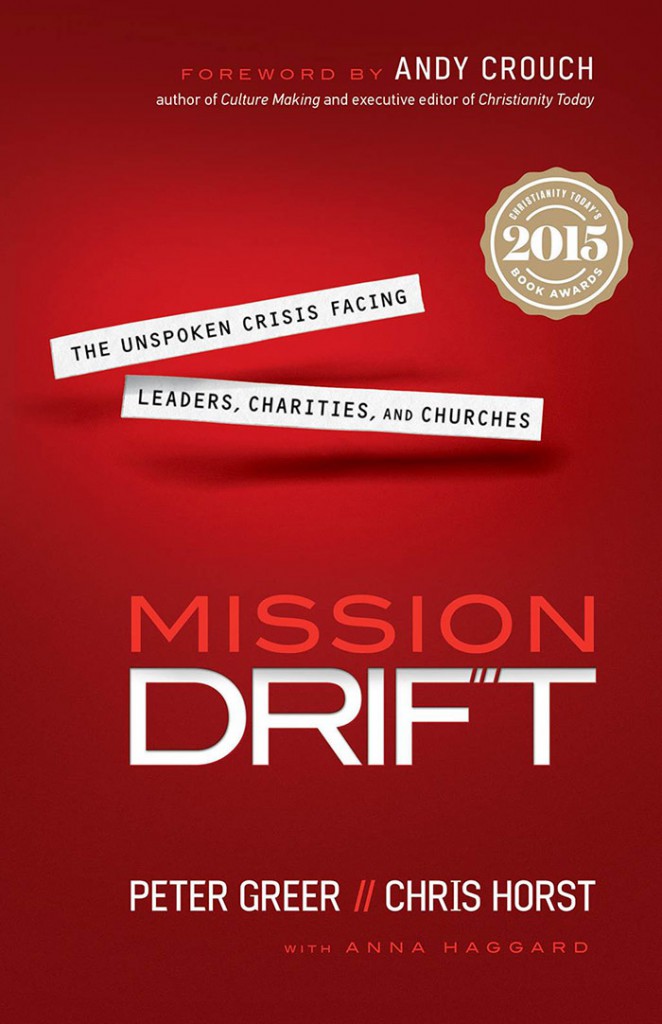

Mission Drift – 12 Quotes from a Phenomenal Book on Being True to Our Mission

Blog - Mission DriftPhoto Credit: Peter K. Greer, President & CEO of Hope International

“You are the salt of the earth; but if the salt loses its flavor, how shall it be seasoned? It is then good for nothing but to be thrown out and trampled underfoot by men. You are the light of the world. A city that is set on a hill cannot be hidden. Let your light so shine before men, that they may see your good works and glorify your Father in heaven.” – Matthew 5:13-14, 16

The first book of my 2015 reading will be one I review regularly from now on. In fact, my husband and I are sharing a copy of it which has been a challenge. We’ve both read it through, but it’s not done with us, if you know what I mean…so we keep reading and reflecting.

Peter Greer and Chris Horst (with Anna Haggard) have written an incredible little book entitled Mission Drift. The book’s byline is “The Unspoken Crisis Facing Leaders, Charities, and Churches”. I enthusiastically recommend this book to anyone who has invested their lives in a faith-based organization, or Christ-centered business, or Christian charity. In fact, if you haven’t already read it, and you’re a Christ-follower, please make it a priority.

Mission drift is the slow and insidious shift away from the original mission, purpose, and identity of an organization. Greer and Horst have done extensive research on organizations who have either remained “mission true” or have fallen sadly away from their mission. The stories are fascinating and compelling. They lay a foundation that can help all of us prevent mission drift in our own lives and in our spheres of influence.

I have captured below 12 quotes from the book. These are just to whet your appetite. Mission Drift is an easy read and the truths resonate with our desire to be faithful and true stewards.

“Mission Drift…is pervasive and affects faith-based organizations of all varieties – nonprofits, churches, denominations, businesses, foundations, and schools. ..be optimistic…that drift is not inevitable.” (pp. 19, 22)

“Mission True organizations know why they exist and protect their core at all costs. They remain faithful to what they believe God has entrusted them to do. They define what is immutable: their values and purposes, their DNA, their heart and soul…To remain Mission True is to adapt and grow, so long as that adaptation and growth does not alter the core identity.” (p. 27)

“Mission True organizations know who they are and actively safeguard, reinforce, and celebrate their DNA. Leaders constantly push toward higher le2vels of clarity about their mission and even more intentionality about protecting it.” (p. 51)

“Leaders often first ask what, then move to how, and finally transition to why. ..Great innovators…start with why. The ordering really matters. Everything flows from why. Not only does it motivate others to join you, it also guides what you do – and often more important – what you don’t do.” (pp. 71-72)

“The gravitational pull of secularism is felt perhaps most acutely in hiring…Mission True leaders hire carefully, intentionally, and prayerfully. They approach each hiring decision seriously, recognizing that each staff member represents the mission of the organization. ” (pp. 103, 107)

“Mission True organizations recruit and engage Mission True donors.” (p. 115)

“You are what you measure…Our highest goal is to remain faithful to our Christ-centered identity and mission. Because of our identity, we must pursue excellence. Metrics can be self-serving. We need to be clear why we pursue them. Seeing God for who He is clarifies our role: We are stewards. Metrics help us to remain accountable for the work that God has placed in our hands.”  (pp. 131, 133, 136)

“Slapping an ichthus (the Christian fish symbol of the early church) on product packaging does not mean it honors God. Christian shoddy is still shoddy. In Mission True organizations, quality must be nonnegotiable.” (p. 139)

“‘Culture eats strategy for breakfast.’  Mission True organizations get this. They focus on the little things. They understand how important practices and norms are to the living and breathing cultures of their organizations. The small decision each and every day may seem inconsequential, perhaps even trivial, but these little things protect against Mission Drift…Beyond policies, Mission True organizations recognize that culture is composed of all the ‘little things’.” (pp. 148-149, 155)

“Clear language reinforces identity and also leads to accountability. Being clear with your plans and identity enables people to keep you on mission. If you regularly talk about who you are, you invite scrutiny and accountability. Publicly proclaiming who you are strengthens your identity and empowers people to point out inconsistencies.” (p. 163)

“Also I say to you, whoever confesses Me before men, him the Son of Man also will confess before the angels of God. But he who denies Me before men will be denied before the angels of God.” – Luke 12:8-9

“For organizations who desire to protect against Mission Drift, one of the most powerful anchors is the local church…Wisdom lies in anchoring ourselves to the church as the church is anchored to Christ. Across time and culture and trends, the church remains.” (pp. 167, 173)

“Courageous Mission True leaders…have stood unwaveringly upon the Truth of the Gospel. In all areas, they have demonstrated intentionality and clarity in retaining Christian distinctiveness. They are committed to Christ, first and foremost.” (pp. 180-181)

********************************************************************

One organization very dear to me keeps its mission before its personnel and donors in regular, consistent, creative and winsome ways. We know what we are about. There is never a doubt what we’re to be about. What safeguards does that beloved faith-based organization of yours have in place to hold back mission drift?

Peter K. Greer Blog & How to Order Mission Drift

Chris Horst Blog

The Subtle Danger of Mission Drift

4 Elements of Uncommon Loyalty in the Life of Jonathan

2014 BLog Pics 001

If you were hanging off a cliff at the end of a rope, you would want someone like Jonathan on the other end. He’s not going to let you fall. This is the kind of loyalty we hope to have in friends, family members, even colleagues, if we were honest. In fact, someone like Jonathan would have intervened before you went over the edge.

We don’t use the term loyalty so often these days. As a character trait, its meaning has been maligned over the years. Being loyal has been perverted to mean something more weak than strong – something puppyish, short-sighted, or weak-willed. Occasionally, loyalty can bring to mind allegiances that serve our own purposes. It’s who you know, right, in advancing in the work force, for example.

Yet, when we look at Jonathan, in the Bible, loyalty is the character quality that comes to mind immediately. Deep, unwavering, costly loyalty. To his friend, David, yes, but also to his flawed king and father, Saul, and most importantly to the Lord Himself.

Jonathan’s story is found in 1 Samuel (beginning in 1 Samuel 13:2), as his father, King Saul, falters and then eventually falls as king of Israel. It’s a fast read to the end of this book and worth your time, if you want to see this picture of Jonathan’s true and steadfast loyalty.

I’ve read this passage many times, but this time, God opened my eyes to the “so much more” that lies at the heart of Biblical loyalty. Read the full account (1 Samuel 13-31) for the mesmerizing details, but here, in brief, is how Jonathan’s life has affected my own today.

The Loyalty of Jonathan

1) He acted on his loyalty – courageously and without hesitation. Jonathan was Saul’s oldest son and heir to the throne as next King of Israel. He was often in battle and led his troops valiantly, even at great risk to his own life (1 Samuel 14). He was loyal to the purposes of God and the direction of his father, King Saul. When his father did not lead well, or at all, Jonathan stayed true to the purposes of God. He found favor among the people (v. 45).

2) He was inclusive, as much as was possible for him to be. Jonathan met David after David killed the giant Goliath. When they met, their souls were knit together (1 Samuel 18:1). A deep love and loyalty grew between these two friends. Jonathan however still obeyed his father as much as he could. He would not follow the king’s orders if they went against God, but when he could obey, he did. [I love this about Jonathan that he didn’t cast off his relationship with his father with the advent of his relationship with David.] Jonathan’s loyalty extended to his God (and God’s purposes for Israel), his father, and his friend.

3) He was selfless in his loyalty, for the sake of those he loved. In reading, the account of Jonathan’s life in 1 Samuel, it became clear pretty early that he would not be heir of Israel’s kingdom after all. He would never be king. What bitterness that could birth in a lesser man! Jonathan must have had a profound trust in God. It seemed the throne was of little consequence to him in comparison to righting the relationships between his father and David. He did everything he could to reconcile the two, even with the knowledge that he would gain nothing more than he had already. That is the purest, truest kind of loyalty. A God-glorifying, unconditional love and loyalty.

4) He did not waver in his loyalty even at great cost. I hope you read the accounts in 1 Samuel that tell Jonathan’s story. From a human standpoint, it doesn’t lead to a happy ending. He dies in battle at his father’s side. David is elsewhere, fighting his own battles, and staying clear of the king who wanted him dead.

Jonathan dies, fighting the enemies of Israel, in obedience to God and his father…faithful, loyal, courageous to the end.  Earlier in his story (1 Samuel 23:17), Jonathan pledged to David, “Do not fear, for the hand of Saul my father shall not find you. You shall be king over Israel, and I shall be next to you. Even my father Saul knows that.” David did become king, but Jonathan would not be at his side. Still, the king that David became was forever altered by how God used Jonathan in his life.

And Jonathan? What of Jonathan? Generations of us who have read his story have squared our shoulders, fixed our gaze, and resolved, with God’s help, to love like Jonathan did…to be truly loyal as he was. This is a greater legacy than being any king…

How would our churches, workplaces, families and friendships be different today if we determined to be wholly and intentionally loyal in our relationships? How would our relationships be with the Lord?

Do not let loyalty and faithfulness forsake you; bind them around your neck, write them on the tablet of your heart. So you will find favor and good repute in the sight of God and of people. – Proverbs 3:3-4 NRV

Short Bible Study on Loyalty

What Does the Bible Say About Loyalty

The Character of Loyalty