Tag Archives: downsizing

Looking for a Job…or the Next Job? – 4 Ideas to Consider

Blog - Do Over #2

When you need a job, or a new job, you are in a tender place. I will treat that place with honor. You have gifts, experience, and workplace wisdom that are needed somewhere…so please don’t despair. Any bitterness that could be taking root in your heart will only get in your way. You have choices, more than you think. You have probably had more advice than you can even follow, so I don’t want to burden you with another load of it. Just 4 ideas.

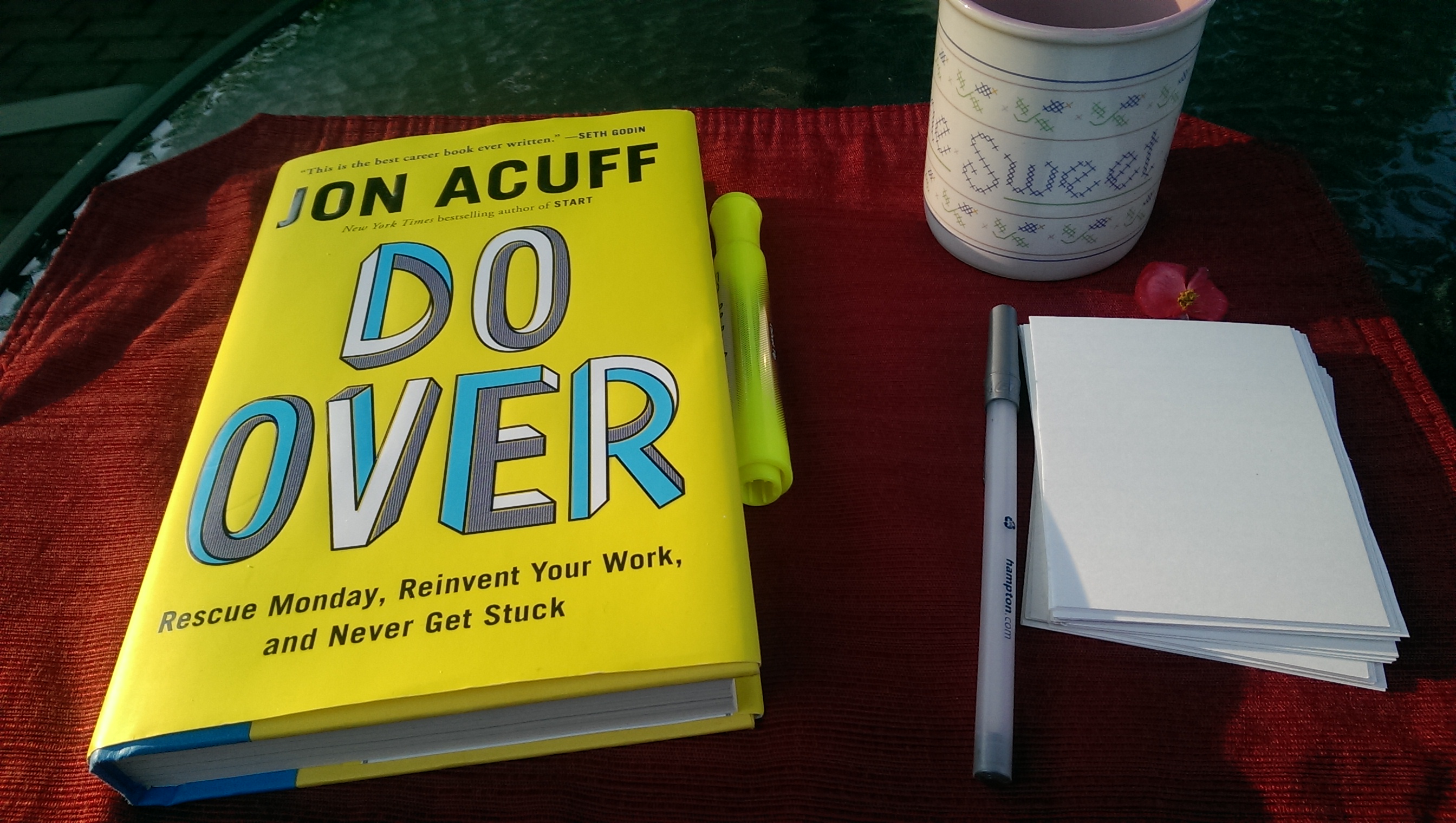
  1. Read an encouraging and practical book.  For me, that book is Jon Acuff’s Do Over. Acuff gives sound counsel, mixed with fun stories, about how to get on with your life in the marketplace. In fact, I wrote 5 blogs on his book (see links below). I leave out the stories, but his “next steps” are extremely helpful and sometimes surprisingly counter-intuitive. He boosts the reader’s confidence in a genuine way and  doing the exercises in his book can make a huge difference in job hunting. So much affirmation…real affirmation.
  2. Network with lots of people. It’s not just about “who you know”. It’s also about “who knows you”. Sometimes we don’t even recognize our own strengths (OR weaknesses). Trusted friends or even respected acquaintances can give you much-needed food for thought and action. Maybe you don’t even know what to do, job-wise – your future is wide open but looks (to you) very dark. Input from others who care about you or who are caring, in general, can help you focus. You may not have even considered what they may be telling you – either about your own hireability or the job market itself. Listen and learn. P.S. Don’t go to them for a job; go to them for wisdom about getting a job.
  3. Try something completely new. The film The Intern with Robert De Niro and Anne Hathaway speaks to this something new. A 70-year-old takes an internship in a cool successful company. Funny and winsome and could be one of us, right? Then I have also been hearing a lot lately about advanced manufacturing and the need for apprentices in this field. You may have a “white collar” education that could be more finely tuned with some “blue collar” experience. Those terms may be antiquated with the blurring of boundaries in our more technology-rich manufacturing companies. You could be that intern or apprentice.

4. Consider working with a head-hunter or job placement agency. In a conference recently, I heard Michael Thompson, founder and CEO of Turas Group, speak to a group of job-seekers. His approach was warm and positive. In that half-hour session, he gave strong individualized counsel to each person, based on what information they had already sent them. Counsel that helped everyone in the room really, but also individualized to each person’s needs. He also asks really good questions which is incredibly helpful for clarification – when you really don’t know what to do next.

One thing Thompson expressed was the importance of doing lots of interviews. His counsel included: a) prepare and do research to know your interviewers; b) arrive early; c) have your 60 second pitch down; d) – smile a lot, have energy, be excited and maintain eye contact; e) answer directly and concisely; and finally f) if you don’t know the answer to a question, share that, but then offer what you would do (especially if you’ve never done that something needed). Thompson also encouraged the participants to join LinkedIn (a global online professional network).Blog - Friday Faves - Turas Group

Whether you’re just out of college or you find yourself in the throes of a company downsizing, you know something of what you offer any employer. Allow these 4 ideas to fill in some of the holes you can’t see that would make job hunting a less painful and more productive endeavor.

As to dealing with the disappointment of not finding a job right out of school, or the loss of satisfying work you loved, please don’t let that define you. You have choices…maybe very different that you first imagined, but you have them. Make those lists of strengths and people of influence in your life as Jon Acuff advises; talk (well, listen more) to friends and advocates; and stay open to a real positive turn in your career. Finally, I personally would add “Pray” to all this. Prayer will help you to not panic or grow bitter when your emotional energy would better serve your pursuit of that job – the one you can’t imagine right now. Remember who you are and Whose you are.

Any comments on what has helped you or what is sustaining you in your job hunt? Please share below.

Do Over – Rescue Monday, Reinvent Your Work, and Never Get Stuck – by Jon Acuff – Notes (Part 1)

Do Over – Jon Acuff on Work Relationships – Notes (Part 2 of Do Over Series)

10 Quotes by Jon Acuff on Developing New Skills & Sharpening Old Ones – Part 3 of Do Over Series

Jon Acuff on Character at Work – 9 Quotes & a Challenge – Part 4 of the Do Over Series

Jon Acuff on the Role of Hustle in Taking Hold of Career Opportunities – Notes & Quotes – Part 5 of Do Over Series

Turas Group – Michael Thompson, CEO – Michael@turasgroup.com – or connect via LinkedIn

Tips for a Successful Job Search – Tulane University

Organizational Culture – 5 Questions – Notes on a Podcast with Barnabas Piper, Todd Adkins, and Eric Geiger

Blog - 5 Leadership Questions - Organizational CultureMy latest favorite podcast (one of my 5 Friday Faves last week) was this conversation between Barnabas Piper (co-host), Eric Geiger, and Todd Adkins (co-host). On Lifeway’s 5 Leadership Questions, they tackled the topic of creating a healthy organizational culture.

Image processed by CodeCarvings Piczard ### FREE Community Edition ### on 2015-05-18 23:11:32Z | http://piczard.com | http://codecarvings.comBlog - eric Geiger - 5 Leadership QuestionsBlog - Todd Adkins - 5 Leadership Questions

In the podcast, they ask and answer 5 questions about organizational culture. I took notes. Listen to the if you can, but if you don’t, read on. These guys have captured something we all need to consider in thinking about our workplaces and have our values speak to how healthy we are…or are not.

1) What is an organizational culture? – Culture is defined as those values or beliefs that undergird who we are and what we’re about in our organization. Culture is “everything beneath the surface that drives behavior”. Whether we are in tune to our work culture or not, we share values as a group and those values drive our behavior. There are two types of values within a culture – aspirational and actual. Aspirational values – what’s on the wall. Actual values – what takes place in the hall. Values are so embedded in culture that we take them for granted. They include philosophies and strategies and can be both good and bad for the health of our organization. What is the personality of your organization?  Psychologist Alfred Adler wrote, in 1920s, that to be healthy, three things need to be in alignment: 1) how you perceive yourself, 2) how others perceive you, and 3) how you want to be perceived. Apply that to your organization: does who you say you are match with who you actually are? This will give you a diagnosis of how healthy your organization is…if you’re willing to take a hard, honest look. How did you get the culture you have?Piper, Adkins, and Geiger then talked about how the leader of an organization will shape culture. Leaders shape culture and after three years, it will be the culture they have shaped.  If leaders don’t intentionally shape the culture, it will evolve on its own [somewhat in reaction to that leader – my take on that].

2) What are the consequences if you don’t build and shape a culture (if you let it passively happen)? “If you don’t actively cultivate the culture, whoever has the loudest voice or the clearest vision wins.” There is formal and informal authority as well as formal and informal influence with impact on an organization’s culture.  The informal influence/authority of a long-time trusted employee is important and should be respected. Culture, healthy or unhealthy, can “trump” a new leader’s ideas or strategy. “A healthy culture won’t tolerate an unwise move or won’t tolerate someone being treated inappropriately. A healthy staff culture will call people out – “We don’t talk to people that way here/we don’t treat people that way here. That’s sacred for us here.” Wise leaders will give the culture its voice as new, healthier culture is built.

3) What is the starting point for a leader to create culture? 1) Assess the culture of your organization. “It’s a mistake to say everything is broken, ruined, messed-up in this culture and we need to rebuild a whole new culture. You’re wrong. There are things that are affirmable in that culture.” [Eric Geiger on not loathing the culture you lead]  2) Find what is affirmable in your culture and affirm them. 3) Then deal with what is not present that needs to be. “For every 2 actual values, you can have one aspirational value.” If you are a new leader of an organization, resist the temptation to shake it down entirely and rebuild the culture reflecting your values. “Actual values are the foundation upon which you build culture. Affirm over and over. Then work to implement [that other value that’s only present in aspiration form].”

Blog - Organizational CUlture - Lencioni book Silos, Politics & Turf Wars

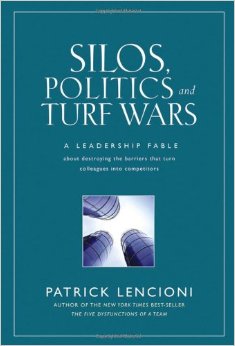
Everybody needs to read Lencioni’s Politics, Silos, Turf Wars. “What is Bucket 1? – core DNA – values we do not change. Don’t even ask. Bucket 2? – Maybe. Wasn’t our Core DNA but goes against what we want. Bucket 3? – Do whatever you want.” The core values of a culture are those that are bedrock for your organization to continue. “Ask what of your culture is not going to change. When those things come up, address them immediately. What is counter-culture? Kill them. [Examine] what we pay attention to; how we react to crisis; the role models that we raise up; the stories we tell; the heroes we create.” Plato once said: “What is celebrated is cultivated.”  You are able to influence culture by telling new stories. What does your culture celebrate? What do you see that kills culture?

4) What are culture-killers in an organization that need to be abolished? What are signs of culture that needs to be celebrated? What are the culture killers not to be tolerated?A culture-killer would be the continued allowance of violative behavior of those values. If among a staff team the cultural value is we treat each other with respect; we’re a family; we do ministry together – and you have a lone ranger who gets promoted?…that’s a culture-killer.” Anything that violates the organization’s culture is a no-go. Disrespect. Passive-Aggressive behavior. Lying. You can’t tolerate such things. Then what in culture should be celebrated? As team members exhibit organizational values in their work and demeanor, you hold them up for everyone to celebrate. “Point out and celebrate when your culture’s values are fleshed out. Give a story; mention the value; celebrate a specific value of the organization lived out; from each campus/department. Remind each other that all these things are going on in different places/departments and the impact we’re having together.”

5) What does it look like to hire and fire strategically to create the kind of culture an organization needs. People create culture.  1) Hire on the values. Look for displayed commitment to the values before the person is on the team. You ask questions. Look for history. You see if they have to sacrifice something to be on your team. Do they have to become someone they’re not to be a part of the team? 2) Removing people – a strong culture is going to make it very uncomfortable for someone to stay who doesn’t have the same values. They will self-select out of a culture not like them. They’re saying, “This isn’t really me.” The organization says, “Here’s who we are.” “If they’re not going to help the culture stay healthy, you don’t want them on that team. You want them to be a fish out of water if this isn’t the culture for them. It’s about fit not worth. There is a culture for them somewhere that matches their values.”

I love these guys – Barnabas Piper, Todd Adkins, and Eric Geiger. This podcast was very timely in my own cultural experience. I am watching an organization dear to me go through a painful downsizing – through a voluntary retirement incentive to start. This organization (both aspirationally and actually) values longevity, experience, perseverance, and history. You can imagine the struggle within of how to come to grips with this direction – necessary but heart-wrenching for them as an organization. Organizational culture is important to understand. It is how we help our culture through a crisis to get back to a healthy place. Culture cannot be disregarded.

Don’t Loathe the Culture You Lead by Eric Geiger

How Not to Loathe the Culture You Are Leading – Eric Geiger

Silos, Politics and Turf Wars: A Leadership Fable About Destroying the Barriers That Turn Colleagues Into Competitors by Patrick Lencioni

Silos, Politics and Turf Wars – PDF – Executive Book Summaries

SlideShare – Organization Culture and Climate

Organizational Structure and Culture – Principles of Management – New Charter University

Mission Drift: The Unspoken Crisis Facing Leaders, Charities, and Churches by Peter Greer and Chris Horst

Photo Credits: 5 Leadership Questions Header. Barnabas Piper, Eric Geiger, and Todd Adkins