
Tag Archives: Suicide

5 Friday Faves – Writer Jeff Goins, Refugees, Community, Situational Awareness, and a Memorial

Happy Friday. Summer’s coming on hard here with temps into the 90s for the next week. Hope you get to play hard and rest hard over the weekend. Here are my favorite finds for this week. Enjoy!

1) Writer Jeff Goins – I am so excited about Jeff Goins‘ latest book. This is his 5th book – Real Artists Don’t Starve: Timeless Strategies for Thriving in the New Creative Age. It arrived 2 days ago, and I’m already deep into it.

Pre-ordering this book was an excellent plan, because the Barnes & Noble store near us is having to re-order already just 3 days into the launch. These books are flying off the shelves.

Why? Goins has already proven himself as a fascinating story-teller and wise counselor regarding creative work and turning dreams into reality. This book is a thrilling culmination of all that for those of us who want to put our work out there and make a living at the same time.

In Real Artists Don’t Starve, Goins gives 12 principles of how to actually be effective and successful as a creator (whether it’s music, writing, painting, or any other creative work). Reading his principles and the stories of artists and crafters through history give not only hope but tools through which we can make a living with our craft.

I’m so glad I bought this book early. Reading it is like having a successful and kind mentor guiding me through the next steps of my career. Whatever your passions, you will glean so much from Jeff Goin’s own journey and wisdom.

Real Artists Don’t Starve: Timeless Strategies for Thriving in the New Creative Age – Jeff Goins

28 Lessons From Great Writers, Artists, and Creators on Mastering Your Craft – Ryan Holiday

2) Refugees –  We never want to lose sight of the plight of displaced peoples – of refugees. Photographer Steve Evans and writer Zee Jenkins put together a beautiful and riveting photo essay – Trail of Tears – Refugees in Greece. Take a look and remember this is happening every day.Photo Credit: Steve Evans, Life Force Magazine

3) Community – We need each other. Community is something we experience when we reach out to those around us to help in whatever way we can. Community is also receiving that help when we are the one in need.Photo Credit: Army

How do we teach and model community to our children? How do we raise them to be situationally aware and compassionate to those around them? Please share your experiences (in the Comments below) of what you’re doing to raise up children to be adults who are socially responsible…who genuinely care about those around them.

This little video went viral and you’ll understand why. Beautiful!

4) Situational Awareness – This is a life skill that fascinates me. In fact, I wrote about it in detail here . Situational awareness is a discipline of being tuned into your surroundings in such a way that you can be alert to a threat or crisis before it actually happens. It came to mind this week when I saw this fascinating video below about things we can easily miss if we’re not alert to our surroundings. Watch Evan below.

Hopefully it didn’t just make you uncomfortable. Hopefully it made you think how we might not just be aware of a threat or a crisis, but that we might intervene early enough to change the situation. To get avert the crisis and to get help for that person in trouble.

A friend of mine lost a brother to suicide. His was a terrible impulsive final act and his family will grieve for a long time. What about those who show signs of depression or deep sadness? Maybe we can help there as well. It’s tragic when the family has to fight alone for the life of a loved one. I don’t have answers here, but we all have community agencies who can help us.

5) A Memorial – The news cycle is fast and fickle. We hear news (usually bad news) and then while we’re still coping with the fallout, media moves on. We forget too soon, even when that’s not our desire. Today is my older brother’s 71st birthday. Robert died suddenly 10 years ago. His online memorial is here. Today, I remember him. Also today, I want to remember 17y/o Sarah Harmening.Photo Credit: 11 Alive News

I did not know her at all until a bus accident in Georgia sent many to the hospital, and her life was gone. Still, the little I know of her made me want to pause and remember her with you. Below you will note her journal entry, written on that bus sometime before that accident. As she herself wrote, I believe with her that, in her life and in her passing, “God is going to do incredible things”.

Photo Credit: Facebook – The Alabama Baptist Newspaper

Breaking News: Multiple Huntsville Church Passengers Injured in a Bus Accident Outside of Atlanta

Another terrible incident that was short-lived in the news cycle was the slaughter of 28 Egyptian Coptic Christians last week. Again, in this moment, I want to memorialize them and…remember them.

Gunmen in Egypt Force Coptic Christian Pilgrims Off the Bus and Kill 28 – Declan Walsh and Nour Youssef

Don’t Look Now, But… – this is a hard read about the ambush and killing of these Egyptian Christians. This article found me and I’m glad I read it although it was disturbing. I don’t know if all the details are true, but this is true: 28 lives were taken and bear remembering.

This Friday Faves was not as light-hearted as most are. Still it’s what continues to resonate in my head and heart going into the weekend. Be safe out there, pray for one another, and let’s be kind to those around us…we never know what a difference that can make.

Bonuses

The Ultimate Character Test Any Great Leader Passes – Carey Nieuwhof

Mom: Let’s Stop Drinking the KoolAid – OK…this is a rant on our focus on nutrition for our children – which is a good thing until it becomes an all-consuming thing. Good article wherever you stand on this.

YouTube Video – Real Life Trick Shots – Dude Perfect

Love Your Neighbor – the Resilience Movie and Adverse Childhood Experiences (ACEs)

Earlier this week, I had the privilege to attend a screening of the film Resilience. This documentary introduces the health issue of Adverse Childhood Experiences* (ACEs) and how, if unchecked, lead to adulthood diseases and dysfunction. This was both alarming and eye-opening for me. A closely related issue had already captured my interest – Trauma Healing – involving intervention with children and adults displaced and wounded by wars, famine, and other calamities.

The long-term impact of Adverse Childhood Experiences was first identified in a huge and significant study done in the 90’s by Dr. Vincent Felitti and Dr. Robert Anda. You can read more of the study, but the main take-away for me is that children who experienced trauma, and do not experience informed intervention, will have compounded health issues through their adult life.

Dr. Robert Block, former president of the American Academy of Pediatrics, had this observation: “Adverse childhood experiences are the single greatest unaddressed public health threat facing our nation today.”

Drs. Felitti and Anda developed a short 10-question questionnaire which can be used by any one of us to identify risks in our children or self-identify high risk. After watching the film, I came home and decided to take the ACE quiz to see what my numbers were. My numbers were low.

Take the ACE Quiz and Learn What It Does and Doesn’t Mean.

[PDF of 10-question ACE Quiz]

However, looking longer at the quiz, I thought of my mom (whose childhood – growing up in poverty with an alcoholic and abusive father – was very different from mine). Even though my childhood had some adversity, Mom buffered our lives from some stresses we would have experienced. I also thought of others in my family and among our friends who have had to endure much tougher childhoods. They are all adults now, so I wondered what their options were to reverse some of the trauma and build resilience. This research and the trauma-informed care that has developed out of it give tremendous hope.

There are so many resources now available to us to heal and help others heal. One of the young pioneers in this field is Dr. Nadine Burke Harris. Here is a bit of her take on the issue of ACEs and their impact on adult health:

As San Francisco pediatrician Nadine Burke Harris recently explained to host Ira Glass on the radio program, “This American Life”, if you’re in a forest and see a bear, a very efficient fight or flight system instantly floods your body with adrenaline and cortisol and shuts off the thinking portion of your brain that would stop to consider other options. This is very helpful if you’re in a forest and you need to run from a bear. “The problem is when that bear comes home from the bar every night,” she said.

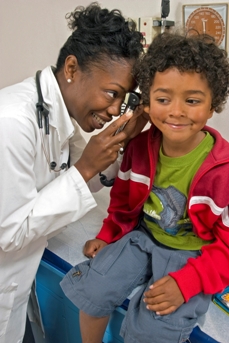
Dr. Nadine Burke Harris and faux patient (for the photo)

If a bear threatens a child every single day, his emergency response system is activated over and over and over again. He’s always ready to fight or flee from the bear, but the part of his brain – the prefrontal cortex – that’s called upon to diagram a sentence or do math becomes stunted, because, in our brains, emergencies – such as fleeing bears – take precedence over doing math.

For Harris’ patients who had four or more categories of adverse childhood experiences “their odds of having learning or behavior problems in school were 32 times as high as kids who had no adverse childhood experiences,” she told Glass. – Jane Ellen Stevens, Aces Too High

[TED Talk – How Childhood Trauma Affects Health Across a Lifetime – Dr. Nadine Burke Harris]

If you are like me, you will want to learn more and be a part of trauma-informed care, you can search for local agencies to help. In our city, we have a cooperative called Greater Richmond Trauma-Informed Community Network. I am looking forward to taking advantage of training and volunteering through this agency.

This may be very new knowledge for you. It was for me. Huge “light-bulb” experience. There are children out there put on medication for ADHD when (after further evaluation) are struggling to attend in the classroom because they are chronically on edge (as Dr. Harris defined with the constant threat of an attacking bear).  What a difference could be made in these children’s lives if their stressors are properly confirmed and then counseling for them and education for their parents/other support adults are initiated.

To think about how children who have been traumatized will still bear that trauma through their adult lives and bodies is unthinkable. Now that we know better.

Have a look at the ACEs Quiz. Pour over the infographics.  Learn from the links below.  Think about your own situation and that of those you love or serve (in a classroom, community/medical setting, faith-based institution). Then act…it could mean longer and higher quality of life. Resilience and healing can come out of this.

In closing, I would love to hear something of your take on all this. What did you discover in taking the ACEs quiz? What was your score?

Photo Credit: Donna Jackson Nakazawa

Photo Credit: Donna Jackson Nakazawa

The Adverse Childhood Experiences Study — the largest, most important public health study you never heard of — began in an obesity clinic

*Adverse Childhood Experiences and the Life-long Consequences of Trauma – The American Academy of Pediatrics

Resilience the Film

TED Talk – How Childhood Trauma Affects Health Across a Lifetime – Dr. Nadine Burke Harris

Childhood Disrupted by Donna Jackson Nagazawa

The Adverse Childhood Experiences Study – the Largest Public Health Study You Never Heard of, Part 3 – Jane Ellen Stevens

Adverse Childhood Experiences (ACEs) – CDC

Infographic – Road to Resilience – 10 Ways to Build Resilience – Mercy Family Counseling

Photo Credit: Pinterest