Tag Archives: Curious

Monday Morning Moment – Staying Curious & Leading Children to Be So

Photo Credit: UVA Today

We were born curious. Little children asking “Why?” over and over again. Wanting to know, to understand, to shine light on this great big world of ours.

“Curiosity is the very basis of education and if you tell me that curiosity killed the cat, I say only the cat died nobly.”Arnold Edinborough

As we get older, we get comfortable with what we know. Our sense of wonder too often flattens into the daily routine. We have occasional forays into a trending pursuit, or we hunker down for a time to develop a new skill. Can we call those activities and intentionalities curiosity?

Curiosity comes out of a desire to understand those around us and the world we share.

“Listen with curiosity. Speak with honesty. Act with integrity. The greatest problem with communication is we don’t listen to understand. We listen to reply. When we listen with curiosity, we don’t listen with the intent to reply. We listen for what’s behind the words.”Roy T. Bennett, Compassionate Curiosity – Asking Good Questions

Curiosity communicates caring. As we fix our gaze on another person and ask the questions needed to actually get to know them, we show genuine interest. That interest draws the other person into a space of belonging…of belonging with us. Curiosity about the world, beyond the person, fills us with wonder.

“The important thing is not to stop questioning. Curiosity has its own reason for existence. One cannot help but be in awe when he contemplates the mysteries of eternity, of life, of the marvelous structure of reality. It is enough if one tries merely to comprehend a little of this mystery each day.”Albert Einstein, —”Old Man’s Advice to Youth: ‘Never Lose a Holy Curiosity.'” LIFE Magazine (2 May 1955) p. 64”

What happens to us as we grow up? Do children lose their sense of curiosity and can it be regained? Yes and yes. Be curious yourself about the children around you. Have they already shrunk their worlds into a small group of friends and a few preferred activities? Do they find people intriguing and nature wholly fascinating? Are they open to being a part of a larger community…one that is multi-generational and multi-cultural?

Recently I came across an Instagram post by Ian Simkins. As you swipe left, across several screens, Simkins talks about the curiosity of children and what happens as we get older. Before I can really impress upon my grandchildren to be more curious, I have to practice it myself.

Jeffrey Davis, a researcher and business consultant, gives us a compelling look at curiosity as a key to belonging:

Curiosity is the proactive facet of wonder that spurs us to question the way things are and our desire to learn or know. Curiosity propels us to become more engaged in new experiences, seek novel perspectives, and—especially important—connect with other human beings in more enriching and meaningful ways.

As much as we’re wired to crave belonging, we’re also wired for bias...which is why we naturally gravitate toward people who look like us, share similar views, or come from similar backgrounds. It’s also why we pursue things that are comfortable, familiar, and reinforce our existing beliefs.

In short, our brain unconsciously sizes people up as friends or foes to keep us safe, inadvertently closing us off from the connections we so desperately need. But when we allow wonder and curiosity to take the wheel, we can break out of our bias boxes, and often, we’re much happier for it.

  • Strike up a conversation with a stranger.
  • Lead with questions out of genuine curiosity.
  • Share experiences of wonder.

By leveraging wonder and igniting your curiosity, you can build more authentic connections, deepen your relationships, and improve your mental and physical well-being.

Photo Credit: Walt Whitman, QuoteFancy

I want to challenge us to stay curious. To show genuine care for others. To practice life-long learning about our world and the people who populate it.

Then, we can model curiosity and care to our children…coaxing them into the wonder that surrounds us. Taking it all in with gratitude…because we don’t necessarily deserve the goodness in our lives, but we have it just the same…curiously. Wonder at that for a bit!

Curiosity: Why It Matters, Why We Love It and How to Get It Back – Christy Geiger – Excellent resource and fast read. Don’t miss this one!!!

Six Surprising Benefits of Curiosity – Emily Campbell

Curiosity and Compassion: Your Super Powers for Emotional and Mental Well-Being – Kelly Hine

Curious About Curiosity? Professor Studies How Children Learn – Anna Katherine Clay, UVA Today

Why Curious People Have Better Relationships – Jill Suttie

Be Curious, Not Judgmental – a Leadership Lesson From Ted Lasso – Connie Whittaker Dunlop

Curiosity as a Moral Virtue – Elias Baumgarten

Why We Should Be Curious About Each Other – Lisa Bortolotti and Kathleen Murphy-Hollies

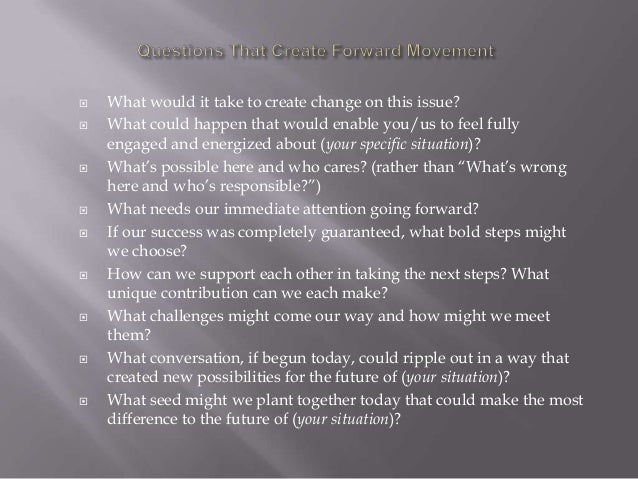
Photo Credit: Slideshare, The Art of Powerful Questions

Monday Morning Moment – “Be Curious, Not Judgmental.” – Leading With Questions

Photo Credit: Quotefancy

“Be curious, not judgmental”. This brilliant and pithy statement is attributed to the American poet Walt Whitman. I’d never heard it before today, and yet it speaks volumes to any human relationship – whether personal or professional.

There comes a time in knowing people that we think we have them figured out. Or we know enough…for better or worse. We stop asking questions. Whether in marriage or in the workplace. We think we know all we need to know about a person… ironically, just when we are feeling the less fond of them. When conflict bubbles up. When a critical decision is being made. When a door closes in our face…or on our way out.

This is humorously and poignantly illustrated in a scene from the TV show Ted Lasso. [Full disclosure: I have never seen the show itself. Also my understanding is the language is fairly unfiltered, so this isn’t exactly a recommendation…but this scene is perfect.]

Be Curious, Not Judgmental: A Leadership Lesson From Ted Lasso – Connie Whittaker Dunlop – super helpful article using the video above to introduce a great leadership lesson.

“Be Curious, Not Judgmental” – Something Walt Whitman Used to Say – Steve M. Nash – read this! You’ll be glad you did.

Questions are the main ingredient in curiosity. And curiosity is itself an important component of the communication patterns that generate psychological safety, quality in interpersonal relations, and collective intelligence. In other words: all the different elements that impact on the quality of our collaboration, decisions, and actions, and which ultimately become a determining factor for the results and value we create for our customers and the wider world.

We can ask questions in many different ways, and all are not equally constructive. For example, there is a great difference between a leader asking his employees: Why didn’t you do something about the problem? and asking: What do you see as possible solutions to the problem we are facing? The first question reflects the leader’s view that the employees ought to have responded and taken responsibility earlier. It creates a focus on blame. The second question expresses the view that there is a problem that everyone involved needs to address and come to a solution together. It invites employees to commit and involve themselves in finding solutions in a forward-looking movement. Being aware of our way of asking questions has a big impact on the way we relate to each other – and also on our ability to contribute, do, and achieve things together. As such, good questions can’t really be put in a template. The quality and effect of the questions always depend on the context they are asked in.” – Henry Kleive, Thomas Johansen and Thomas Specht, “Leadership for Sustainability Powered by Questions”

What if we went into conversations or meetings with an open mind and questions aimed at honoring and understanding the person across the table? What if we wanted to reconcile our relationship as much as we wanted to prove ourselves right about the project, or problem, or predicament?

Learning to ask powerful questions and being willing to use them can make a huge difference in our relationships.  Asking questions well can demonstrate care for that person. Sometimes questions actually help both the one who asks and the one who answers with what they really think about a situation…questions draw us out…often in positive and fruitful ways.

https://image.slidesharecdn.com/questions-130807203819-phpapp02/95/the-art-of-powerful-questions-7-638.jpg?cb=1424648128Photo Credit: Slideshare, Mark Gillow, The Art of Powerful Questions

So whether or not we think we’re right about a person – their motives, intentions, abilities, or intellect – we won’t do justice to the relationship if we stop asking questions.

Get to know him or her again…use the questions offered in the resources above and below. Find common ground, through good questions. See if you can turn the (relation)ship around…not just for the sake of the team, organization, or family…but because of the benefit to each of you.

“Lead From Within: A leader is as good as their questions. When you ask questions, you will change what you know. When you change what you know, you will have a new understanding. When you have a new understanding, you change your actions—and, ultimately, your leadership.” – Lolly Daskal

The Art of Asking Powerful Questions and 51 Powerful Questions to Ask in Different Situations – Sumit Gupta

The Art of Powerful Questions – Catalyzing Innovation, Insight, and Action – Eric E. Vogt, Juanita Brown, and David Isaacs – PDF

The Art of Powerful Questions – Slideshare – Mark Gillow (concise slideshare on book above)

The Art of Powerful Questions – Slideshare – Peter Bricknell (refers to the interviewing style from Mahan Khalsa’s bookLet’s Get Real or Let’s Not Play‘ 

“Leading With Questions” – Michael Marquardt – Notes by Dave Kraft

YouTube Video – Top 10 Most Heartwarming Ted Lasso Moments