Tag Archives: Asking Questions

Worship Wednesday – “How Was Your Week?” – Asking Better Questions

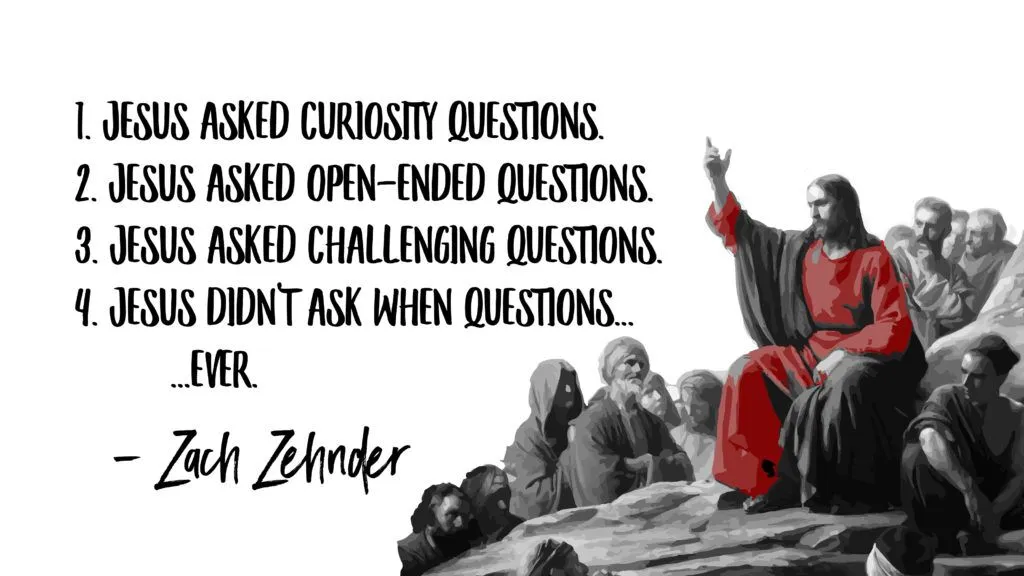
Photo Credit: Red Letter Challenge

We are in a culture that has lost much of its curiosity. Asking questions seems intrusive and not honoring what might be considered private. What a shame, really! It moves us to give the appearance we don’t really want to know the person in front of us. Settling for the few word answer to questions like “How’s your week been?”

Photo Credit: Pinterest

When we do ask questions, we can move past small talk by being curious, even with strangers. Asking questions (beyond “How’s your week been?”) opens the door to the person in front of us to experience being seen…and valued. Just yesterday, I was with a friend younger than me by a lot, a mom of a toddler and newborn. This amazing young woman seems to have the gift of asking great questions. It always recharges my own curiosity because of her genuine interest in people – which clearly included me yesterday morning. I felt seen and better known. And valued.

Pastor Cliff’s sermon this week focused on asking better questions. He drew on John 4 – Jesus speaking to the woman at the well. Depending on the translation, he didn’t ask many questions in this conversation, but he did draw her out and invited reflection. He lingered in conversation with a woman who had known the terrible judgment of others, but she experienced welcome from him. At the end of their talk that day, she ran back to the village, a women who felt known and not judged, influencing many others to experience what she had.

The woman left her water jar, went back into the town, and said to the people, “Come, see a man who told me everything I ever did. Could this be the Christ?” So they left the town and made their way toward Jesus.

[This clip from The Chosen, Season 1, Episode 8 is a depiction of the conversation Jesus had with the Samaritan woman – not all from Scripture but reflective of His character and His impact on her life.]

12 Critical Questions Jesus Asked – Lisa Loraine Baker

Top 10 Questions from Jesus in the Bible – I. Gordon

Jesus and the Samaritan Woman: A Transformative Encounter at the Well

The 305 Questions Jesus Asked with One Shocking Discovery – Zach Zehnder

The Art of Asking Better Questions – Pursuing Stronger Relationships, Healthier leadership, and Deeper Faith – J. R. Briggs – an excerpt

Chuck Olson compiled the following quotes from Briggs’ book. We are called to care for those on the fringes. To help them know they are seen and known and loved by God, through us as His people:

“We live in a world that has conditioned us toward answers. We’ve been taught to give the right answers, yet little attention has been given to teaching us how to ask the right questions. We don’t have a shortage of information; we have a shortage of wisdom, curiosity, and wonder. Asking good questions is a lost art.”

In our world, which elevates accomplishing tasks over deepening relationships, it makes sense that questions aren’t held in high esteem. We value pragmatism, individualism, and efficiency. Certainly, there are times we need to tell to be helpful. But if we’re honest with ourselves, sometimes we just want to win an argument or gain control of a situation, conversation, or person. Other times we want to portray our intelligence. Telling is often much more efficient, and our brains like certainty.

“[Asking questions] is perceived as inefficient and unhelpful. Questions are often seen as unproductive. In our fast-paced, efficient, productivity-oriented world, it feels as though someone has slammed on the brakes of progress when they ask a question. We favor task accomplishment over relational depth. Leaders often feel the need to act decisively and quickly and can become anxious about the perceived inefficiencies that questions might bring.”

“What, then, is required of us if we want to ask great questions? There are four core essentials: curiosity, wisdom, humility, and courage.”

“I’m convinced: there has never been a time in modern history when genuine, thoughtful, caring questions are needed more. In a world saturated not only by ever-increasing loneliness but also by division, polarization, and fragmentation, genuine question-asking can provide healing and connection like almost nothing else.”

“French social activist Simone Weil wrote, “Attention is the rarest and purest form of generosity.””

“Trust is built on thick bonds of relationship, and great questions build trust. I live by the strong conviction that leaders should be the most curious people on the planet. If we want information, we can Google it. But if what we’re after is clarity and connection, we need questions. Our world isn’t in need of more leaders who are smarter, more eloquent, and more efficient; instead, we need more leaders who are wiser, humbler, and more curious…The late leadership and organizational expert Peter Drucker said, “The leader of the past may have been the person who knew how to tell, but certainly the leader of the future will be the person who knows how to ask.””

“Dallas Willard was fond of saying that one of the most revelatory questions regarding the state of our souls is to ask, What’s bothering me? When I’m agitated or angsty or impatient or irritable or downright angry, which happens much more often than I’d like to admit, I’ve learned to take a step back and ask, What’s going on here? Why am I bothered right now? What do I need to pay attention to currently?”

If you want to ask better questions, you have to begin with genuine interest in others. Curiosity is fundamentally at the center of questions. If we don’t possess genuine curiosity, these practices won’t matter all that much in the long run. But even a genuine interest in others is still not enough. We need specific and intentional practices rooted in our everyday lives. Call them what you want—practices, habits, exercises, spiritual disciplines, action steps—but we grow when we live out specific actions in an embodied form, because training takes us further than just trying.”

________________________________________________________________________________

As you pause with me on Worship Wednesday, we can praise the Lord who knows everything there is to know about us and loves us still. We can also learn from Him that asking questions leads to our knowing others better and their reflecting on answers maybe unknown to themselves, until asked. Asked by another who shows genuine interest and care…like Jesus.
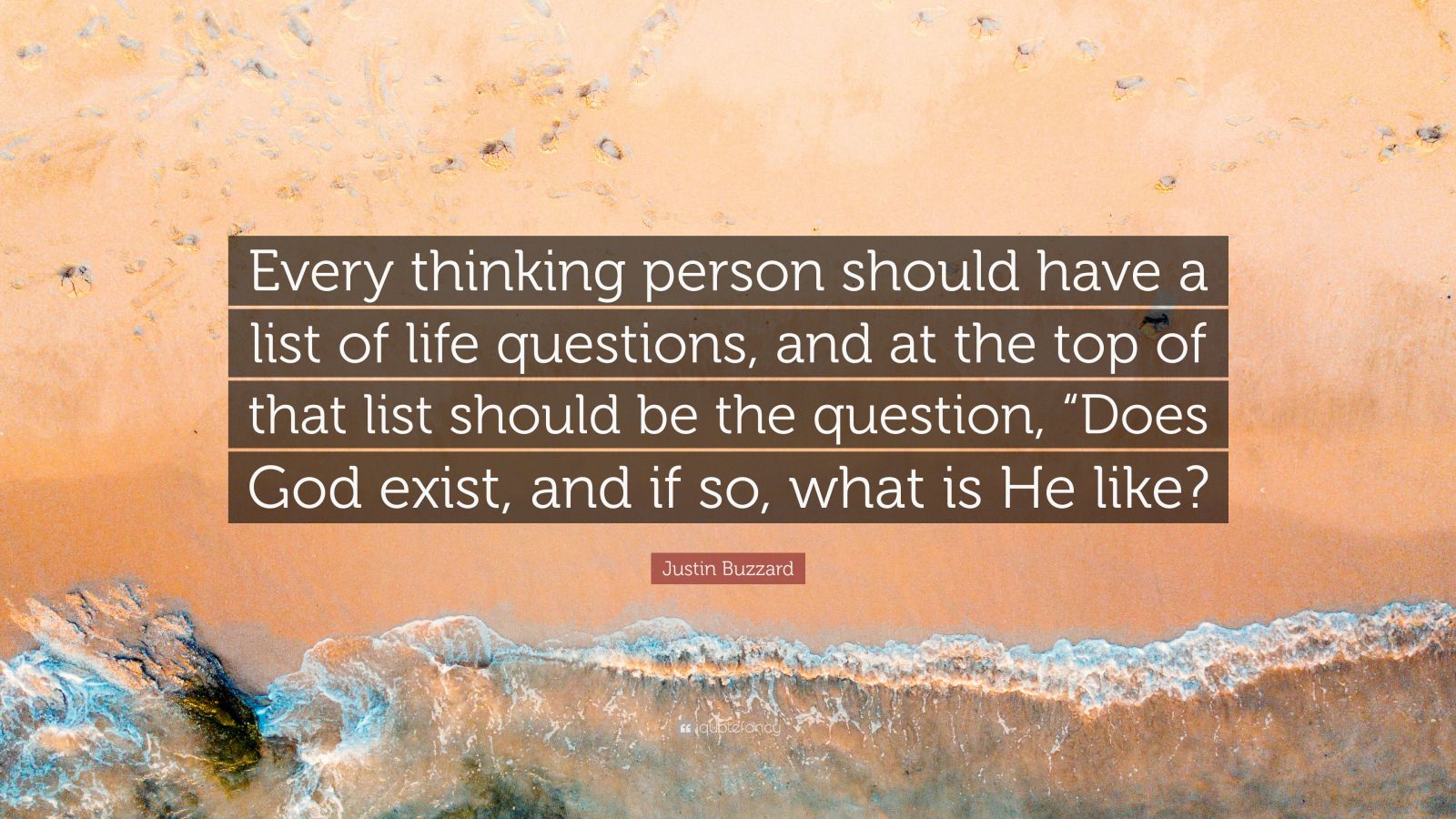
Photo Credit: Justin Buzzard, QuoteFancy

100 Questions Jesus Asked – Josh Hunt

Can You Hear Me Now? – Dallas & Nancy Demmitt

25 Questions Jesus Asked (That Most Christians Never Do) – Mark Goering

30 Questions That Build Stronger Bonds Than ‘How Are You?’ – Wendy Rose Gould

This clip just for fun:

Monday Morning Moment – “Be Curious, Not Judgmental.” – Leading With Questions

Photo Credit: Quotefancy

“Be curious, not judgmental”. This brilliant and pithy statement is attributed to the American poet Walt Whitman. I’d never heard it before today, and yet it speaks volumes to any human relationship – whether personal or professional.

There comes a time in knowing people that we think we have them figured out. Or we know enough…for better or worse. We stop asking questions. Whether in marriage or in the workplace. We think we know all we need to know about a person… ironically, just when we are feeling the less fond of them. When conflict bubbles up. When a critical decision is being made. When a door closes in our face…or on our way out.

This is humorously and poignantly illustrated in a scene from the TV show Ted Lasso. [Full disclosure: I have never seen the show itself. Also my understanding is the language is fairly unfiltered, so this isn’t exactly a recommendation…but this scene is perfect.]

Be Curious, Not Judgmental: A Leadership Lesson From Ted Lasso – Connie Whittaker Dunlop – super helpful article using the video above to introduce a great leadership lesson.

“Be Curious, Not Judgmental” – Something Walt Whitman Used to Say – Steve M. Nash – read this! You’ll be glad you did.

Questions are the main ingredient in curiosity. And curiosity is itself an important component of the communication patterns that generate psychological safety, quality in interpersonal relations, and collective intelligence. In other words: all the different elements that impact on the quality of our collaboration, decisions, and actions, and which ultimately become a determining factor for the results and value we create for our customers and the wider world.

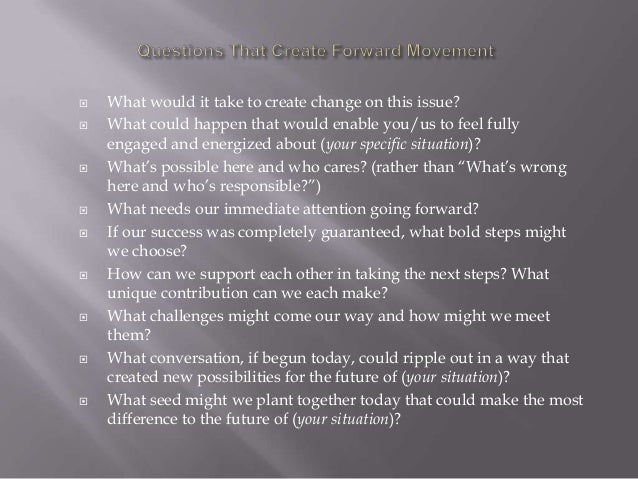
We can ask questions in many different ways, and all are not equally constructive. For example, there is a great difference between a leader asking his employees: Why didn’t you do something about the problem? and asking: What do you see as possible solutions to the problem we are facing? The first question reflects the leader’s view that the employees ought to have responded and taken responsibility earlier. It creates a focus on blame. The second question expresses the view that there is a problem that everyone involved needs to address and come to a solution together. It invites employees to commit and involve themselves in finding solutions in a forward-looking movement. Being aware of our way of asking questions has a big impact on the way we relate to each other – and also on our ability to contribute, do, and achieve things together. As such, good questions can’t really be put in a template. The quality and effect of the questions always depend on the context they are asked in.” – Henry Kleive, Thomas Johansen and Thomas Specht, “Leadership for Sustainability Powered by Questions”

What if we went into conversations or meetings with an open mind and questions aimed at honoring and understanding the person across the table? What if we wanted to reconcile our relationship as much as we wanted to prove ourselves right about the project, or problem, or predicament?

Learning to ask powerful questions and being willing to use them can make a huge difference in our relationships.  Asking questions well can demonstrate care for that person. Sometimes questions actually help both the one who asks and the one who answers with what they really think about a situation…questions draw us out…often in positive and fruitful ways.

https://image.slidesharecdn.com/questions-130807203819-phpapp02/95/the-art-of-powerful-questions-7-638.jpg?cb=1424648128Photo Credit: Slideshare, Mark Gillow, The Art of Powerful Questions

So whether or not we think we’re right about a person – their motives, intentions, abilities, or intellect – we won’t do justice to the relationship if we stop asking questions.

Get to know him or her again…use the questions offered in the resources above and below. Find common ground, through good questions. See if you can turn the (relation)ship around…not just for the sake of the team, organization, or family…but because of the benefit to each of you.

“Lead From Within: A leader is as good as their questions. When you ask questions, you will change what you know. When you change what you know, you will have a new understanding. When you have a new understanding, you change your actions—and, ultimately, your leadership.” – Lolly Daskal

The Art of Asking Powerful Questions and 51 Powerful Questions to Ask in Different Situations – Sumit Gupta

The Art of Powerful Questions – Catalyzing Innovation, Insight, and Action – Eric E. Vogt, Juanita Brown, and David Isaacs – PDF

The Art of Powerful Questions – Slideshare – Mark Gillow (concise slideshare on book above)

The Art of Powerful Questions – Slideshare – Peter Bricknell (refers to the interviewing style from Mahan Khalsa’s bookLet’s Get Real or Let’s Not Play‘ 

“Leading With Questions” – Michael Marquardt – Notes by Dave Kraft

YouTube Video – Top 10 Most Heartwarming Ted Lasso Moments

5 Friday Faves – Reversing Diabetes, Circle of Gratitude, Love Songs, Asking Good Questions, and the Ideal Team Player

1) Reversing Diabetes – Maybe you don’t think about diabetes. I do.
So far I have held it off. Not because I’ve mastered a healthy diet or an active lifestyle. Just teetering probably on the brink. Diabetes is one of those diseases that, if we live long enough, will probably hit one out of three of us. 1 in 3. So when I come across a great article about reversing it (which is rare), I jump on it. Lou Schuler has written a powerful piece for Mens’ Health on How to Reverse Diabetes. He writes in a non-shaming, matter-of-fact way with lots of pragmatic counsel and success stories. Our problem is we don’t think we can reverse it…we figure it is inevitable if we continue with reckless eating and holding our couches down so they don’t get away. I was encouraged by Schuler’s article.

Photo Credit: Pixabay

We can reverse diabetes with three specific interventions – lose the weight (or don’t gain the weight over our lifetime); especially control our belly fat; and exercise (even just walking after we eat can make a big difference). I have loved ones who are diabetic or pre-diabetic. I hope they are encouraged by this….I am. Resolved not to be 1 in 3.

Photo Credit: Flickr

2) Circle of Gratitude -Gratitude is a terrific gift all by itself. What’s really fun is when our expression of gratitude actually triggers gratitude in the person for whom we’re thankful. Justin Kanoya describes this as a circle of gratitude. You have been the recipient of some great service or other good thing (fill in the blank) and you want to thank them well for what they did for you. You don’t just send an effusive text or Facebook message. Nor do you pick up a one-card-fits-all-purposes to send them. You want it to be reflective of what they did themselves. Kanoya carefully picked out some hand-made cards from local artisans. He then wrote specific detailed thanks for each person’s generosity toward him. Lastly, he slipped in gift-cards for spa treatments.Photo Credit: Flickr

Kanoya describes how satisfying that was, but the circle of gratitude closed for him when he received back all manner of thanks for his thanks, from those who received his cards. Sweet. Have you had this experience – when someone’s gratitude felt even more generous than what you did for him/her? That’s a circle of gratitude.

3) Love Songs – Do you have a favorite or meaningful love song? For Dave and me, it was the oldies song playing on the radio when we first kissed. I Only Have Eyes For You. He tells me he actually waited for just the right song because we would remember it always (not like “Hotel California”). That was a long time ago. It was such a moment that, after we married, we even asked a local artist to do a painting for us as a reminder of that sweet song and sweet moment. Photo Credit: Artist – Betty Skaggs

Facebook has become a bit redundant for me lately – not just the political parlay but all the videos. Still there was one this week that touched my heart. It was a homemade video at a church Valentine banquet. A couple was standing at the mic and the husband was singing a karaoke version of Lionel Richie’s Truly to his wife. So funny and deliciously dear.

Do you have a favorite love song and moment? Please share with us in Comments below.

4) Asking Good Questions – There was a season in my professional life when my husband and I directed a study abroad program with young adults right out of college. They would return to the US to attend graduate school but wanted a deeper understanding of the Middle East, through an immersion experience. During those sessions, we would often have visits from their parents. One mom gave me surprising and difficult advice. She said her son (along with these other 20=somethings) prefer coming up with their own answers (solutions to their own problems). The key for us in supervision and mentoring was to ask them the kind of questions that would get them to those answers. I wanted the easy way out; I wanted to just tell them what they needed to know. Saves a lot of pain for all of us, but didn’t help them become better problem-solvers. Ever since, I’ve been trying to figure out how to ask good questions.

Photo Credit: Pixabay

When leadership coach and blogger Paul Sohn interviewed talk radio host and author Ken Coleman, they talked about this very thing. Asking good questions.  about asking questions.  – What’s the greatest question a person can ask/answer? “Why am I here?”

[When you read Sohn’s interview, don’t miss the Comments. Really fascinating.]

One Question: Life-Changing Answers From Today’s Leading Voices – Ken Coleman

5) Ideal Team Player – Pat Lencioni’s book The Ideal Team Player is one of our favorite books lately, and I’ve already written about it here. It’s a fave again this week because I discovered some helps for discovering just how humble, hungry, and people smart we are. On Lencioni’s website, he offers several free resources and tools. Photo Credit: Pexels

One tool was a free self-assessment of these three virtues of an ideal team player.  It was very helpful, especially in pointing out areas where I tend to hold myself back. Check it out. Seriously.

Photo Credit: Table Group

Monday Morning Moment – True Humility in Leadership – So Not Cliché

Those are my five faves for this week. Below you will find a bonus from one of my favorite documentary makers – Andrew Morgan. He’s directing a series of short films on Untold America. This past month, he focused on the many sides of democracy in America. Next, I believe, he is covering immigration stories. Follow him and Untold America on Facebook or Twitter. You don’t want to miss any of these films and the people whose stories they capture.

Have a safe and refreshing weekend, Friends.

Bonus: Untold America’s Documentary Series on Democracy

Untold America – Facebook Page