Category Archives: Reconciliation/Forgiveness

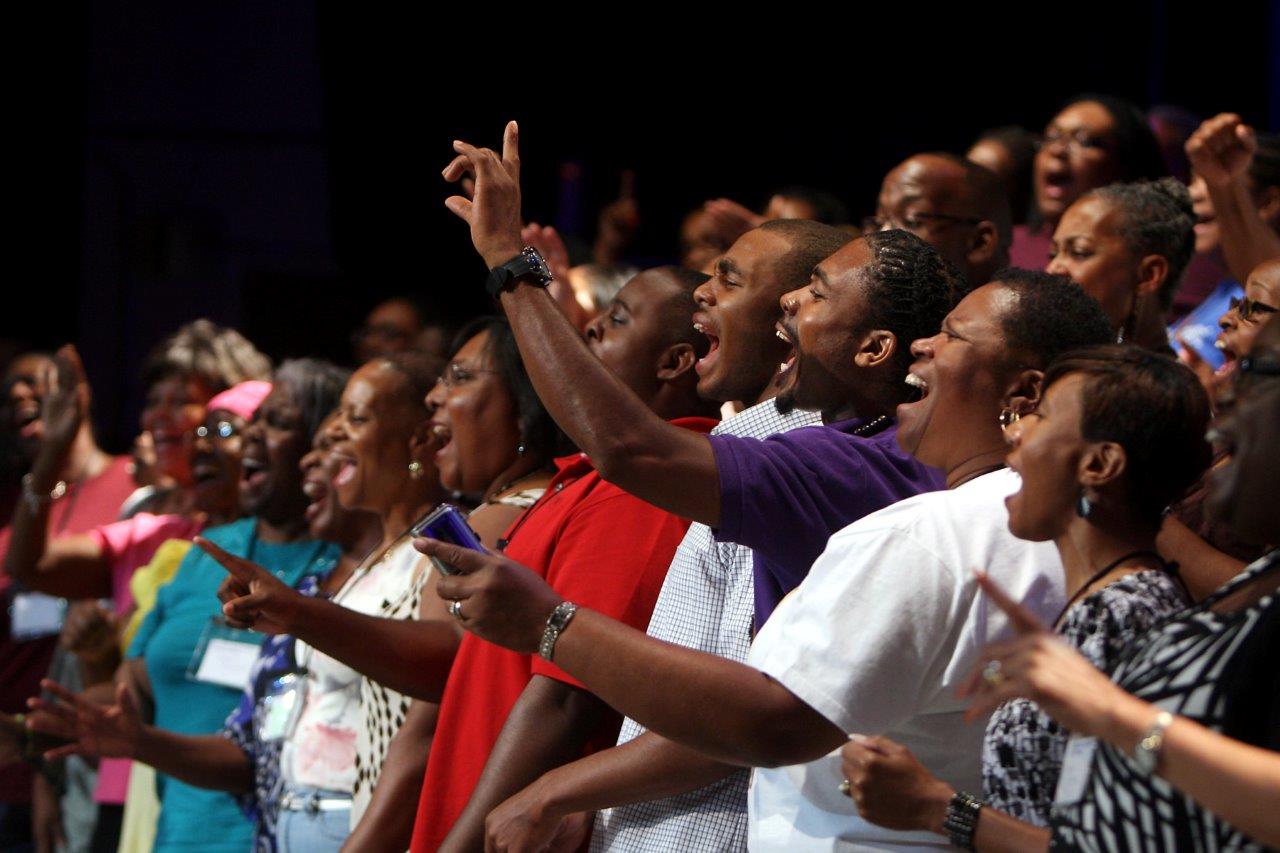
Worship Wednesday – On Heaven – You Hold Me Now – Hillsong United

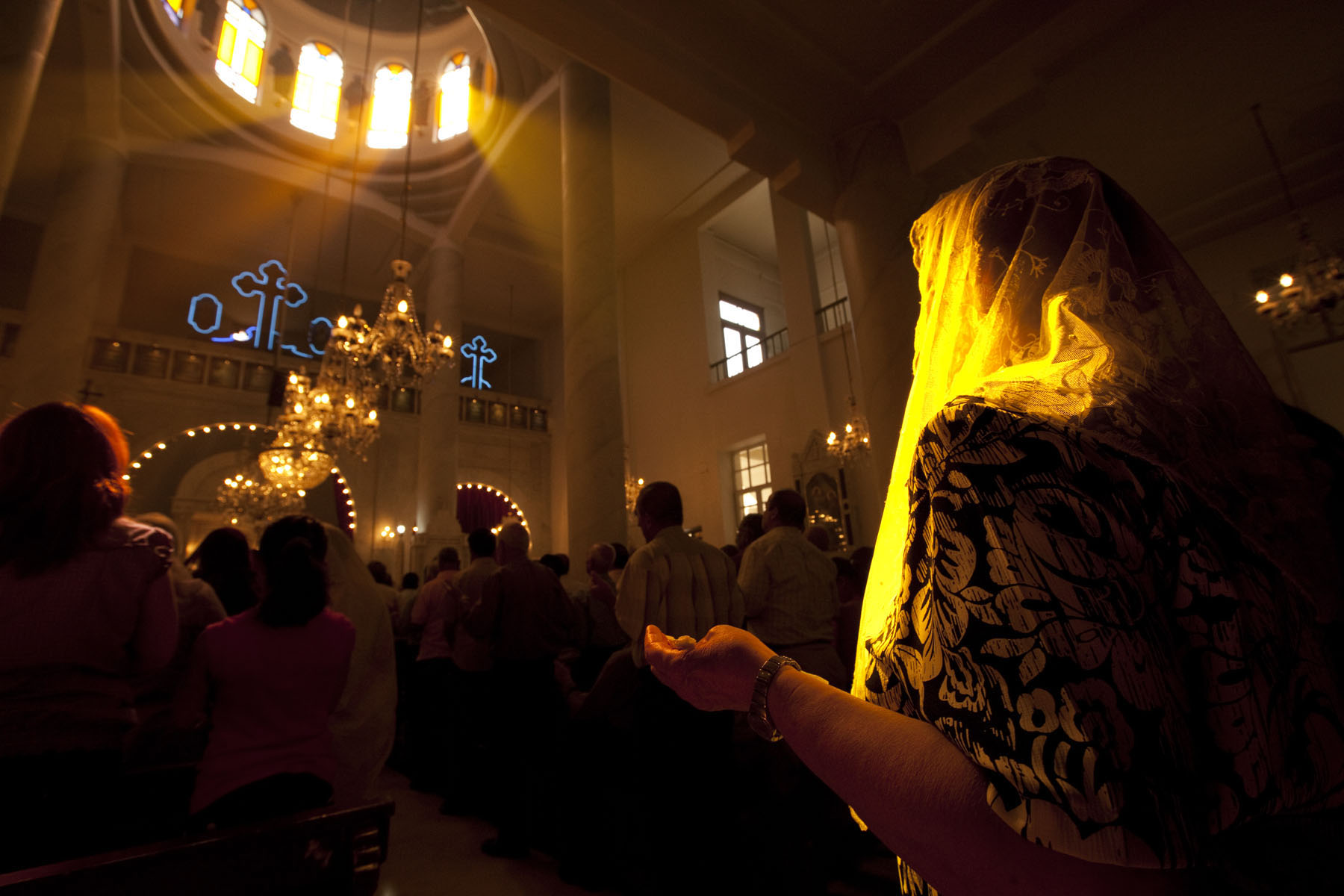
Morocco sunset by Ingrid Pullar

Jesus answered them, “I give eternal life to them, and they will never perish; and no one will snatch them out of My hand. My Father, who has given them to Me, is greater than all; and no one is able to snatch them out of the Father’s hand. I and the Father are one.” – John 10:28-30

He will wipe away every tear from their eyes, and death shall be no more, neither shall there be mourning, nor crying, nor pain anymore, for the former things have passed away.” – Revelation 21:4

The older I get, the sweeter Heaven becomes. Part of that is all the people I love who are there now – my mom, my older brother, a dear nephew, a life-long friend… Part of that is the violence, struggle, and disorder of this world which too often gets blamed on God – cheap blame that avoids looking into the mirror of our own neglect and disregard of the needs of others. More even than those reasons, when I see glimpses of Heaven now, I am filled with hope of what lies ahead.

While living in Casablanca, Morocco, years ago, I was asked to teach a class on world religions. It was for one semester. The students were high schoolers from influential families – all Muslim except for one Hindu student. I knew all the students through their team sports and performing arts. It was a joy to teach them. At the end of the semester, one of their assignments was to choose a religion on which they would do a critical analysis and give an oral report.

As each student team give their reports, they talked about the religions’ beliefs about the afterlife. [It’s a fascinating study, if you’ve never considered it.] The beliefs ranged from reincarnation, to a hoped-for state of nirvana, to a state of nothingness or non-existence, or, finally, to either a Paradise or Hell. For Christianity, the students reporting said, cryptically, “When Christians die, they hope to be with God.”

That is it exactly. That is Heaven for me. That is Paradise.

Too great a thing to hope for? Too fantastic a thing to even believe? If I believe what Jesus says, then I believe what he says about Heaven: “In My Father’s house are many dwelling places; if it were not so, I would have told you; for I go to prepare a place for you. If I go and prepare a place for you, I will come again and receive you to Myself, that where I am, there you may be also. And you know the way where I am going.” [John 14:2-4]

“Where I am, there you may be also…You know the way.”

Those great students of mine did their homework. Their understanding of what Heaven is for Christians was spot on. I do look forward to the day my faith becomes sight. The glimpses of Heaven we have here…and there are many…will one day be His followers’ full eternal experience. Not because we deserve Heaven, for we don’t. Not because we worked hard enough or well enough for Heaven, because that’s not possible…but because of what God has done for us and because of His word to us…as we witness and believe Him here…for There.

Heaven…with Him…Hallelujah!

Worship with me:

On the day when I see
All that You have for me
When I see You face to face
There surrounded by Your grace

All my fears swept away
In the light of Your embrace
Where Your love is all I need
and forever I am free

Where the streets are made of gold
In Your presence healed and whole
Let the songs of heaven rise to You alone

No weeping
No hurt or pain
No suffering
You hold me now, You hold me now
No darkness
No sick or lame
No hiding
You hold me now, You hold me now

In this life I would stand
through my joy and my pain
Knowing there’s a greater day
There’s a hope that never fades

Where Your name is lifted high
and forever praises rise
For the glory of Your name
I’m believing for the day

Where the wars and violence cease
All creation lives in peace
Let the songs of heaven rise to You alone

For eternity
All my heart will give
All the glory to Your Name [x4]*

*Lyrics to You Hold Me Now

YouTube Lyric Video – You Hold Me Now – Hillsong United

What Did Jesus Say About Heaven?

Matt Chandler’s Gospel Presentation – Like You have Never Seen It!

The Gospel in 6 Minutes – John Piper

Coming Home 2015 New Heaven & New Earth TCG National Conference

YouTube Video – I Can Only Imagine (with lyrics) – MercyMe

Randy Alcorn Interview – Looking Forward to a Heaven We Can Imagine

Randy Alcorn on a Biblical View of Heaven – Will We Play Sports? What Age Will We Be?

The Big Religion Comparison Chart (See Afterlife)

Photo Credit: Ingrid Pullar Photography

Worship Wednesday – You Love Me Anyway – with Sidewalk Prophets

Blog - You Love Me AnywayBut God demonstrates His own love toward us, in that while we were yet sinners, Christ died for us. – Romans 5:8

“…and you will know the truth, and the truth will make you free.” – John 8:32

Not knowing what is ahead can be a very uncomfortable place to be. Sometimes, it could be better than knowing, but the uncertainty of not knowing sits like a rock in the pit of our stomachs. Will I have a job after this company reorganization? Will I pass this exam? Will our church survive this downturn? Will my struggling friend find her hope again? Will we ever know that we did enough…that we were truly faithful in loving God and our neighbor?

What a morning! As I was wrestling with God through these actual right now situations, and looking up the song I had planned to use for today’s Worship Wednesday…You Love Me Anyway came up in the search list.

“You love me anyway.”

David Frey and Ben McDonald of the Christian band Sidewalk Prophets wrote this song about how our sin, that of every single one of us, was borne by Jesus on the cross. Such love! He loved us knowing us completely –  every impure thought; every selfish act. He loves us anyway.

As I listened to that song, it wasn’t condemnation that brought tears to my eyes; it was the amazing truth of His love…a love that sets us free…in Him. Though we struggle with situations facing us that seem more than we can bear, what He bore for us should give us enormous confidence…and peace.

The not-knowing about jobs, exams, church, relationships is still in front of us, but peace has returned to my heart right now. The puzzle of have I done enough or will I do enough isn’t meant for me to solve. The answer to the question I didn’t ask is that “He’s done enough.” He loved us always and He loves us still…no matter what. It is the love of God through Christ that lifts our heads (Psalm 3:3).

Now…in this moment, with perspective restored, “I count it all joy” (James 1:2), and “we do not lose heart” (2 Corinthians 4:16) Beyond the cloud of these days of uncertainty shines an every-present Light – the glorious Person of God who speaks the truth of His love into every dark place of our lives. Hallelujah!

Worship with me:

You Love Me Anyway*

The question was raised
As my conscience fell
A silly, little lie
It didn’t mean much
But it lingers still
In the corners of my mind

Still you call me to walk
On the edge of this world
To spread my dreams and fly
But the future’s so far
My heart is so frail
I think I’d rather stay inside

(Chorus)
But You love me anyway
It’s like nothing in life that I’ve ever known
You love me anyway
Oh Lord, how You love me
How You love me

It took more than my strength
To simply be still
To seek but never find
All the reasons we change
The reasons I doubt
And why do loved ones have to die?

Chorus

I am the thorn in Your crown
But You love me anyway
I am the sweat from Your brow
But You love me anyway
I am the nail in Your wrist
But You love me anyway
I am Judas’ kiss
But You love me anyway

See now, I am the man that called out from the crowd
For Your blood to be spilled on this earth shaking ground
Yes then, I turned away with this smile on my face
With this sin in my heart tried to bury Your grace
And then alone in the night, I still called out for You
So ashamed of my life, my life, my life

Chorus

You love me, You love me
How You love me
How You love me
How You love me

YouTube Lyric Video – You Love Me Anyway

YouTube Video – You Love Me Anyway – Sidewalk Prophets

*Lyrics to You Love Me Anyway – Writers: David Frey & Ben McDonald

Story Behind the Song – You Love Me Anyway

Sidewalk Prophets Website

YouTube Video – Brooklyn Tabernacle Choir – Thou, O Lord

Photo Credit: maxresdefault.jpg for YouTube Lyric Video

Blog - Sidewalk Prophets

Worship Wednesday – I Heard the Bells – Casting Crowns

Blog - I Heard the Bells - Worship Wednesday

 Then the angel said to them, “Do not be afraid, for behold, I bring you good tidings of great joy which will be to all people. For there is born to you this day in the city of David a Savior, who is Christ the Lord… And suddenly there was with the angel a multitude of the heavenly host praising God and saying:

“Glory to God in the highest, and on earth peace, goodwill toward men!” – Luke 2:10-11, 13-14

In December, 1863, American poet and scholar Henry W. Longfellow received his wounded son home from battle. It was Christmas time, and the U.S. Civil War raged on. Having already lost his wife years earlier, Longfellow nursed his son, Charley, back to health. His own thoughts, in turmoil over all that was happening around him, he poured out in the poem “Christmas Bells”.

Longfellow clearly took comfort from God as he wrote, ending the poem with this stanza:

“God is not dead, nor doth He sleep;
        The Wrong shall fail,
        The Right prevail,
    With peace on earth, good-will to men.”*

I Heard the Bells is a Christmas carol, not a worship anthem. Yet, given the continuing wars of our day, we must tend the fires of our hope. God is the “lifter of our heads” (Psalm 3:3). He is the One who gives strength to our “weak hands and shaking knees” (Isaiah 35:3). He will do as He’s promised. He is faithful. When you hear the bells ring where you are this Christmas season, take heart in that. We must continue to pray for His peace on earth. We can be vessels of His good-will toward our neighbors, both near and far away.

Worship with me…

I Heard the Bells on Christmas Day (Lyric video)

I heard the bells on Christmas day
Their old familiar carols play
And mild and sweet their songs repeat
Of peace on earth good will to men

And the bells are ringing (Peace on Earth)
Like a choir they’re singing (Peace on Earth)
In my heart I hear them
Peace on earth, good will to men

And in despair I bowed my head
There is no peace on earth I said
For hate is strong and mocks the song
Of peace on earth, good will to men

But the bells are ringing (Peace on Earth)
Like a choir singing (Peace on Earth)
Does anybody hear them?
Peace on earth, good will to men

Then rang the bells more loud and deep
God is not dead, nor doth He sleep (Peace on Earth, peace on Earth)
The wrong shall fail, the right prevail
With peace on earth, good will to men

Then ringing singing on its way

The world revolved from night to day
A voice, a chime, a chant sublime
Of peace on earth, good will to men

And the bells they’re ringing (Peace on Earth)
Like a choir they’re singing (Peace on Earth)
And with our hearts we’ll hear them
Peace on earth, good will to men

Do you hear the bells they’re ringing? (Peace on Earth)
The life the angels singing (Peace on Earth)
Open up your heart and hear them (Peace on Earth)
Peace on earth, good will to men

Peace on earth, Peace on earth
Peace on earth, Good will to men

YouTube Video – Casting Crowns performing I Heard the Bells on Christmas Day

Casting Crowns’ Mark Hall On Christmas (Teaching Vignettes)

Christmas Carol Soldier – Story of Charley Appleton Longfellow & the occasion for H. W. Longfellow’s writing of the poem/lyric

The Story Behind I Heard the Bells On Christmas Day – Tom Stewart

*Longfellow’s poem Christmas Bells

Photo Credit: CastingCrowns.com

Family, Fights, & Friendship

2007 SepOct 046

My older brother taught me how to fight. He won most of our battles and yet I would keep on coming. He was a formidable foe. Then…well into adulthood, I learned not to take the bait, and we became friends. None too soon, because short years later, he died, too young. Today I want to talk about him, and what I learned about fighting…and friendship…from him.

First, some background on how he stayed on my mind all day today, though he’s been gone seven years now. This morning, I found a fascinating article online from the Wall Street Journal. It is a timely piece entitled Family Meltdowns: When Everyone is Arguing and No One is Listening by Elizabeth Bernstein.

Bernstein reported on how holiday gatherings tend to push buttons with family members who already have issues with each other. Fights ensue and the day becomes another chalked-up disappointment. In these family fights, is there always a single culprit or do we each have a part to own in these conflicts?

If you are in such a family, Bernstein’s description of how the family gets embroiled in such a fight is all too familiar. She lists seven different roles in family conflicts. Take note if you see yourself in this mix.

The Trigger – the person who starts the uproar by getting offended by what another has said or done. [I actually think there may be co-triggers in a family argument. We know after years of growing up together what buttons to press with each other. We know sometimes exactly what it takes to get a reaction out of a sibling or parent, and when the time is just right, we strike. So like the bullied child who gets in trouble while the one who started the commotion looks wide-eyed innocent at the teacher, a family disturbance can proceed in the same way.

The Prosecutor – this is the family member who reacts, either in defense of the offended one or the one who did the offense. He is the accuser and is ready to call out the “trigger” for his own offending behavior.

The Defender or Peacemaker – she is the one who will try to calm down the two above. She may try to get each to see the other’s side, or she herself may side with one and try to convince the other. Finally, she may actually attack both the “trigger” and the “prosecutor” for spoiling the day for the family.

The Enablers – sometimes the parents try to stop the conflict without offering any real solution for those fighting with each other. Often the mom just wants it to stop, trying to salvage the holiday for the family, rather than dealing with the issues underneath the fight. The dad at times is more a passive enabler, disappearing in the noise of the battle.

The Deserter – lastly, there are the family members who feel most removed from this family history repeating itself. These are the usually (but not always) the in-laws who will actually remove themselves from the situation, taking the children with them.

The article is a quick read and fascinating in its familiarity with family dynamics – especially those that surface when faced with holiday pressures to have fun together. Bernstein gives counsel on how to prevent such family trauma on special days, or at least how to minimalize it.

My brother and I had no such helps during our years of fighting with each other. He was often a trigger in our family rows, and I was the tireless prosecutor. I feel, however, that we were all sometimes co-triggers because we just “waited” for him to start a ruckus. We didn’t have to wait long, and then we all did the usual.

I finally got a clue after years of this thanks to the wise words of two friends. They were often a part of our gatherings and they loved us all. It helps sometimes to have that extra set of eyes looking in onto family communication…especially eyes attached to a person who loves all involved.

One friend counseled me not to “take the bait”. When my brother took offense at something one of us said or did, a fight would begin and continue to escalate until someone left the room, or the house altogether. My role always was to react, but when I checked myself and didn’t, a strange and wonderful transformation happened (over time). He softened and didn’t pursue the offense or offender. He let it go.

The other friend reminded me of an old adage “Hurt people hurt people.” We’ve all heard this but when we feel attacked we also want to return the attack. My brother, over the course of his life, had experienced enormous losses – marriage, jobs, his health, the death of a child, his own helplessness, it seemed, to have close relationships with the rest of his family. These losses bent his heart, and dulled his thinking, and he struck out at the very people he loved most in the world.

Once my own thinking cleared, I stepped out of the “prosecutor” role, and began to just love my brother. Don’t get me wrong, I did not become a doormat for his abuses at all. If there was ever a time in life, I gave a person grace, it was in those (what would be the) last years of his life. We became friends. We learned to laugh together and share news instead of barbs. We both worked at understanding each other and actually looked forward to our visits together.

I thank God for this brother of mine. I was not the hero here…he was. He took a chance with me, and my sense is we both won. I know I did. Before he died, he rejoiced at time spent happily with our other two brothers. In the last moments of his life, he even began to reach out to his daughter, the one he loved the most and the one he most hurt…if there had only been more time.

One day there will be. My brother died on an operating room table, but he opened his eyes in Heaven. We will see him again, and all the pain of being part of frail, all-too-human families will be behind us. Every day will be like the Thanksgiving or Christmas we wanted. For now, we don’t give up…even though it’s tempting. For in not giving up on family, we may win a friend.

2007 SepOct 092

Whoever is slow to anger has great understanding, but he who has a hasty temper exalts folly. – Proverbs 14:29


4 Elements of Uncommon Loyalty in the Life of Jonathan

2014 BLog Pics 001

If you were hanging off a cliff at the end of a rope, you would want someone like Jonathan on the other end. He’s not going to let you fall. This is the kind of loyalty we hope to have in friends, family members, even colleagues, if we were honest. In fact, someone like Jonathan would have intervened before you went over the edge.

We don’t use the term loyalty so often these days. As a character trait, its meaning has been maligned over the years. Being loyal has been perverted to mean something more weak than strong – something puppyish, short-sighted, or weak-willed. Occasionally, loyalty can bring to mind allegiances that serve our own purposes. It’s who you know, right, in advancing in the work force, for example.

Yet, when we look at Jonathan, in the Bible, loyalty is the character quality that comes to mind immediately. Deep, unwavering, costly loyalty. To his friend, David, yes, but also to his flawed king and father, Saul, and most importantly to the Lord Himself.

Jonathan’s story is found in 1 Samuel (beginning in 1 Samuel 13:2), as his father, King Saul, falters and then eventually falls as king of Israel. It’s a fast read to the end of this book and worth your time, if you want to see this picture of Jonathan’s true and steadfast loyalty.

I’ve read this passage many times, but this time, God opened my eyes to the “so much more” that lies at the heart of Biblical loyalty. Read the full account (1 Samuel 13-31) for the mesmerizing details, but here, in brief, is how Jonathan’s life has affected my own today.

The Loyalty of Jonathan

1) He acted on his loyalty – courageously and without hesitation. Jonathan was Saul’s oldest son and heir to the throne as next King of Israel. He was often in battle and led his troops valiantly, even at great risk to his own life (1 Samuel 14). He was loyal to the purposes of God and the direction of his father, King Saul. When his father did not lead well, or at all, Jonathan stayed true to the purposes of God. He found favor among the people (v. 45).

2) He was inclusive, as much as was possible for him to be. Jonathan met David after David killed the giant Goliath. When they met, their souls were knit together (1 Samuel 18:1). A deep love and loyalty grew between these two friends. Jonathan however still obeyed his father as much as he could. He would not follow the king’s orders if they went against God, but when he could obey, he did. [I love this about Jonathan that he didn’t cast off his relationship with his father with the advent of his relationship with David.] Jonathan’s loyalty extended to his God (and God’s purposes for Israel), his father, and his friend.

3) He was selfless in his loyalty, for the sake of those he loved. In reading, the account of Jonathan’s life in 1 Samuel, it became clear pretty early that he would not be heir of Israel’s kingdom after all. He would never be king. What bitterness that could birth in a lesser man! Jonathan must have had a profound trust in God. It seemed the throne was of little consequence to him in comparison to righting the relationships between his father and David. He did everything he could to reconcile the two, even with the knowledge that he would gain nothing more than he had already. That is the purest, truest kind of loyalty. A God-glorifying, unconditional love and loyalty.

4) He did not waver in his loyalty even at great cost. I hope you read the accounts in 1 Samuel that tell Jonathan’s story. From a human standpoint, it doesn’t lead to a happy ending. He dies in battle at his father’s side. David is elsewhere, fighting his own battles, and staying clear of the king who wanted him dead.

Jonathan dies, fighting the enemies of Israel, in obedience to God and his father…faithful, loyal, courageous to the end.  Earlier in his story (1 Samuel 23:17), Jonathan pledged to David, “Do not fear, for the hand of Saul my father shall not find you. You shall be king over Israel, and I shall be next to you. Even my father Saul knows that.” David did become king, but Jonathan would not be at his side. Still, the king that David became was forever altered by how God used Jonathan in his life.

And Jonathan? What of Jonathan? Generations of us who have read his story have squared our shoulders, fixed our gaze, and resolved, with God’s help, to love like Jonathan did…to be truly loyal as he was. This is a greater legacy than being any king…

How would our churches, workplaces, families and friendships be different today if we determined to be wholly and intentionally loyal in our relationships? How would our relationships be with the Lord?

Do not let loyalty and faithfulness forsake you; bind them around your neck, write them on the tablet of your heart. So you will find favor and good repute in the sight of God and of people. – Proverbs 3:3-4 NRV

Short Bible Study on Loyalty

What Does the Bible Say About Loyalty

The Character of Loyalty

The Bond of Brothers – Gospel Transformation & Reconciliation

Ocracoke Jun 03 099

“I thank my God always when I remember you in my prayers…For I have derived much joy and comfort from your love, my brother, because the hearts of the saints have been refreshed through you.” – Philemon 4, 7

Brothers. That word can vary greatly in its meaning, depending on the relationships it represents. For the apostle Paul, being “brothers” meant having Christ in common and loving each other as He intended. Also inferred is to follow Christ together, in obedience to His Word and through the grace of the Holy Spirit.

While imprisoned in Rome, Paul wrote to Philemon, a brother in the faith, to ask a favor, or rather to ask his favor.  In this brief, carefully worded letter, Paul commended Philemon for his walk with the Lord and his Godly influence on the Colossian church that met in his home. Philemon had come to faith under Paul’s teaching, and his faithfulness was an encouragement to Paul.

In his letter to Philemon, Paul makes the surprising announcement that he is well-acquainted with a man who had severely wronged Philemon. The man, Onesimus, was a slave, or bond-servant, in Philemon’s household. Some time earlier, he had fled (stealing provisions) and made his way to Rome, where he met Paul. Under Paul’s teaching, he also came to faith in Christ. Two men, once in the same household, and then estranged, are now brothers. Could they be reconciled?

Philemon’s Dilemma – As a Godly believer, Philemon was most probably a benevolent master. When Onesimus ran away, Philemon could have easily felt betrayed and bitter at his loss, not just the loss of a servant or property, but the damage to his reputation or witness as a believer and leader in the church. Why would Onesimus leave unless he was mistreated, or so people would think. This rift between these two men would be what Paul addresses in his letter. Given the news that Onesimus had become a believer, could Philemon forgive him and receive him back, both as a slave and a brother?

[Paul doesn’t speak to the issue of slavery which was a common practice in the Greco-Roman world. This letter was not about the rightness or wrongness of Christ-followers having slaves in their households. Paul wrote to Philemon about relationship and Gospel transformation.]

Onesimus’ Dilemma – Onesimus’ costly decision to leave Philemon’s household would put him in a precarious situation with the authorities. He sought to hide himself in the bustling city of Rome, but he, in fact, was found by the Lord Himself. He thought he could save himself, but discovered the only Savior who could truly make him free. As Onesimus grew in his faith and in knowledge of Christ, he became a trusted friend and helper to Paul. The day came, however, that he and Paul must have agreed that an unresolved matter had to be made right. Onesimus must try to reconcile with Philemon.

Paul’s Dilemma – Paul was spiritual father to both of these men. In discipling Onesimus in being obedient to Christ, Paul must have been very clear about the need for confession of sin, God’s forgiveness, and then reconciliation – of the offense and with the offended. By the tone of Paul’s letter, Onesimus was ready and willing to return to Philemon. Paul could have been forthright in compelling Philemon to take Onesimus back. However, Paul wanted Philemon to desire it, not because Paul asked him, but because Onesimus was now his brother. “Receive him as you would receive me….Refresh my heart in Christ.” (Philemon 17, 20)

Do you think Philemon received Onesimus back…as a brother? We do not know from Scripture, but we can imagine, as we read this letter.

Often, if not daily, we encounter one or the other of the dilemmas these three brothers faced. We are the one who offends. We are the one offended. We are the brother who could intervene or intercede for the two others.

2013 Mar Church, Friends, Family 032

There was a time when I gravely hurt a Christian friend of mine who finally confronted me with my wrong-doing. Shocked at my own insensitivity, I was immediately repentant and asked for forgiveness. The wound was still so raw, my friend momentarily refused to forgive me. I appealed with, “But you HAVE to forgive me.” As believers in Christ, we are obliged to forgive each other, if not out of obedience, then in gratitude to Him for our own forgiveness. I think if there had been a brother Paul in our lives, I would have seen my sin earlier and sought reconciliation more quickly, lessening the pain for that friend, who did, by the way, forgive me.

Take a moment with me to examine our lives. Is there a brother (or sister) whom we’ve wronged and we alone must take steps toward righting that wrong? Or are we in position to forgive another and to take the steps publicly to receive that one back into our lives? Or, lastly, and most counter-culture in today’s world, are there those with whom we have influence who need help reconciling. Do we love them enough to extend ourselves to them? Do we love God enough – to put ourselves on the line – for an Onesimus and a Philemon?

This bond of brothers – Philemon, Onesimus, and Paul – is one of life’s great lessons on how the Gospel transforms us. Reconciliation follows as we see each other as Christ sees us, and act accordingly – obeying Him in word and deed and lovingly encourage each other to do the same.

2012 June Friends & Family 097