

Tag Archives: Paul

Give Church Another Try – 7 Things to Consider in a Community Where You Can Thrive

Blog - ChurchBlog - Church People

And let us consider how we may spur one another on toward love and good deeds, not giving up meeting together, as some are in the habit of doing, but encouraging one another—and all the more as you see the Day approaching. Hebrews 10:24-25

When I was a child, we learned this little fingerplay about church. “Here’s the church; here’s the steeple; open the doors, and see all the people.” As an adult, church has become less about a place, or steeple, and more about people. So the fingerplay I teach children now about church says only “Here’s the church” – with the two hands, palms up, with intertwined fingers. That’s church. There are three things I see in that visual that are good to remember: 1) Palms up – we need God. Church is about God. 2) Fingers – we are all people (stay with me). 3) Intertwined – we get close, which means we know each other very well, too well sometimes (unless grace is always applied). With people, church can get messy. We are all those people.

There are people I love who have walked away from church, citing, “They’re all a bunch of hypocrites.” Seriously? Aren’t they right where they need to be? An old saying goes, “Church is a hospital for sinners.” Maybe it’s also a rehab program for hypocrites… Either way, if I’ve given up on church, then at some level, I’m giving up on God. He loves His church, and we, as followers of Christ, are a part of that church He loves. To leave it, because of the hypocrites, the legalists, the gossips, the other sinners…just. like. us…is not the answer.

We left a church ourselves. The details won’t help this narrative. Suffice it to say, I wouldn’t wish the down side of that experience on my worst enemy. It wasn’t just our down side, or that of others who left…it was the pain and confusion of those whom we left as well.  We would have had that go very differently, if we had had the freedom to do so… That sort of leaving doesn’t heal easily, and the wounds break open as easily as a social media post reminding us that we are not in each other’s lives anymore.

That’s just so wrong. Jesus let nothing or no one keep him from his Father’s House. The Temple, in those days. My desire is to always follow His lead in life. We’ve learned a lot, some of it painfully, about church in recent years. There are writers on this subject far more wise and eloquent than I (just a few of whom wrote the pieces linked below). However, I would be so grateful if God allowed me to help someone be restored to His church. Also, for anyone who has never really been in a church community, maybe it would help to know what to consider.

Here’s my Quick List of 7 Things to Consider in Searching Out a Church Community. As you peruse a church website, or listen to a pastor/teaching elder’s podcast, or visit a worship service or community group, think about this:

1) Love for God – His Word is taught in ways you are meant to apply both inside and outside church. Worship is really about Him, not just a stage show. Humility, not arrogance, is apparent in handling God’s Word and His church. Prayer, not just for stuff, but to purely enjoy His presence is a sign of a God-centered church.

2) Love for people – The church operates out of a clear desire to creatively express God’s love to people in the church and community, neighbors to nations. It’s not just about that church’s presence or preeminence (superiority) in a town or city, but the goal is to be about Kingdom work – God’s Kingdom, not that church’s. Look to see if the church cooperates with other believers, other churches, other organizations to serve its city and the world. Partnerships tell you a lot about a church. Prayer opportunities, too.

3) Decision-making in the church – Who gives input for strategy or direction? Is the polity (or church governing) the pastor or elder rule? Or is there a clear flow between church leaders and the congregation? Is servant leadership development of all a part of the vision of the church? Can you get a sense of “the priesthood of the believers” (1 Peter 2:9) – where there is “safety in a multitude of counselors” (Proverbs 11:14)? Elder ruled vs. elder led churches both have Biblical support. A lot has to do with accountability and the leaders themselves.

4) Discipleship Throughout Ages and Stages – What happens on Sundays is vital, but it is just a part of church life as a whole. What opportunities does the church promote for growing in the Lord and serving Him both locally and globally? Pre-discipleship can start with young children, and discipleship continues through all life stages (we are grateful to know people in their 80s still serving actively in church). Young moms desperately need discipleship, too. Churches that make that happen must really please God.

5) Finances and Stewardship – What happens with the money that is given through the church? Who decides how it’s used? These answers may not be easily discovered. Is the budget presented by or published to the congregation? Or are the financial decisions made wholly by the elders? Is missions giving encouraged? Is sacrificial giving a pattern in the church? Not just for paying salaries or managing the operation of the church, but for critical needs beyond the church.

5) Church Membership – What are the steps to becoming a member of the church? Maybe you’re thinking you aren’t interested in church membership. Still this is something to consider. What are requirements of the members? Do they have to sign anything (a church covenant, a giving pledge, etc.)? [Signing your agreement/commitment can be a good thing, but realize things can change in the church such that what you signed can mean something different as part of that change. So just be aware…] What are the privileges of membership (teaching, children’s ministry, etc.)? What are the responsibilities of membership? These speak to the priorities of the church. They also speak to leadership/authority. Are members held with open hands, recognizing we belong to God first and then the Body?

6) Church Discipline – You may think that churches don’t all have a church discipline protocol. That may be true. I am thinking that church discipline is part of most churches, whether spoken/written or not. How does one even look for how the church does discipline? The sermons can give some sense of what is “tolerated” or not. That’s a sad thing to have to say, but we all know the expression “bully pulpit” which can happen in churches as well as in politics. Shunning is prescribed rarely in Scripture (Romans 16:17, 1 Corinthians 5:11, Titus 3:9-11). Honestly, if a church uses shunning as a discipline, I would run. It would require the church to have such humility and such wisdom. Who is able, over months or years, to do it with a pure heart? Jesus taught on discipline in the church in Matthew 18:15-20. It’s so like Him to place that teaching between the parable of the lost sheep and the parable of the unforgiving servant. Think about it.

7) Style and Substance – Be careful you don’t make a decision about a church based on some element of style rather than substance. Just say, you don’t care for the style of worship. Or the preaching goes a little long. Or…fill in the blank. No church is going to be “perfect” because the church is made up of people, like you and me. Just don’t miss the church God has for you over something that matters so little. What does matter is that you get yourself in a situation where you can grow in knowing God, where you can serve Him and those around you as part of the church, and where you can heal…from whatever got you out of church. Don’t let that experience define your life. Please.

Just, please, give church another try. Do you know the story (Acts 15:36-40) about the Apostle Paul and his ministry partner, Barnabas and how they had a huge disagreement about another young partner, John Mark? Sometimes, disagreements happen – so strong, in fact, that maybe they can’t do ministry together for a season. Does that mean either of them are “the bad guys”? Paul even came to a place, near the time of his death, that he asked for John Mark to come to him (2 Timothy 4:11).  The Scripture doesn’t tell us whether either Paul or Barnabas was right or wrong. Yet, we are left with a huge door of reconciliation open to us in their story.

May it always be so with us – to the glory of God and for the sake of His Kingdom.

Jesus, you were once broken apart. You know how it feels to be so shattered by the good-byes of life. Help me to believe that I will one day experience wholeness again, that I will not have this terrible feeling of being torn into many pieces. Keep reminding me often that the Father raised you to new life, to a powerful wholeness that you had not known before. Encourage me to believe that, in time, I will no longer have this deep pain and hurt in my heart. I want to believe. Help my unbelief! Amen. – Joyce Rupp, Prayer for Wholeness in Praying Our Goodbyes

Healthy Church vs. Toxic Church – Bart’s Barometer (Bart Breen)

9 Marks of an Abusive Church – The Wartburg Watch

9 Traits of Mean Churches – Thom Rainer

9 Traits of Church Bullies – Thom Rainer

9 Ways to Deal with Church Bullies – Thom Rainer

14 Symptoms of Toxic Church Leaders – Thom Rainer

10 Traits of Pastors Who Have Healthy Long-Term Tenure

9 Reasons It’s Hard to Attend a Church Once You’ve Been Involved in Leading One – Carey Nieuwhof [Applies to all of us really, not just church leaders]

Satisfaction & Contentment – a Journey and a Destination

IMG_0022

You open your hand; You satisfy the desire of every living thing.
 The Lord is near to all who call on Him, to all who call on him in truth.
 He fulfills the desire of those who fear Him; He also hears their cry and saves them. – Psalm 145:16, 18-19

Godliness with Contentment Is Great Gain – 1 Timothy 6:6

A summer day in a good book can change the course of your life…at least, your mind’s course in life. That morning, I was sleeping in a bit while our two-year-old slept on in her bed upstairs. Mine was a fitful sleep sorting through the conversation Dave and I had had the night before. Weeks away from having our second child, the CEO of our medical center had given me the opportunity of a lifetime. He offered me the directorship of the cancer center of our hospital. My husband and I had already made the decision together months before that I would stay home with our children. Having continued to work for the first two years of my daughter’s life, I was excited to dig into this new season of life. Then…the offer of an altogether different job…

Our conversation that night didn’t go well. How could I argue for a job that would take me away from our children not just during the day but into the night with other responsibilities pulling at my attention? The children are grown now, and I was with them growing up, but in those days, cancer nursing was my professional world with all that went with that. Purpose, capability, accomplishment…it was deeply rewarding and gratifying work. Mothering was still so foreign to me. Being a stay-at-home mom was a whole other life and I was afraid of it, really.

That morning, I came wide-awake, when Dave touched my arm. He was dressed and ready to leave, but he had a book in his hand. He asked me to read the chapter he marked in it, then he kissed me bye for the day, and was out the door.

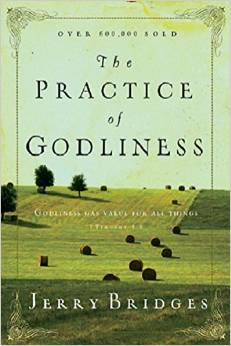
It was Jerry Bridges’ book The Practice of Godliness. The place marked was a chapter on contentment. Bulls-eye! Right on the strained condition of my heart. On that sunny summer day, reading that chapter, the Lord helped me wrestle through the struggle of discontent and the idols that separated me from peace with God.

[Sidebar: This has nothing to do with whether a woman should work or stay-at-home with children. My circumstances allowed me a choice in that. We as a couple, he and I together, decided that this is what we wanted and could make happen for our family. It is possible I could have become the director, hired a nanny and a good administrative assistant, and still be on a Godly course in life…but I knew deep down that the struggle was a heart issue and a faith issue.]

Discontent was my problem and it would become my family’s, if I didn’t deal with it. Jerry Bridges wrote, “In all of the areas in which we are called upon to be content – whether possession, position, or the providence of God – the grace of God is the ultimate solution for our discontent.

I didn’t take that position, but stayed with the job of stay-at-home Mom. It was one of the most challenging, glorious undertakings of my life.  I am glad that Dave had the love and the courage to speak truth to me through that book that day. Cancer nursing is still a great love of mine, and my colleagues of those days are still heroes of mine. Still, having had these years with my children growing up, me with them, has been so much more valuable to me than the “what would have been.” I learned to be content in that and still have all kinds of impulses through life to remind me that content is where I want to stay.IMG_0068

Contentment is a destination. It applies to whatever situation we find ourselves. Satisfaction, as an experience somewhat different than contentment, is a journey. Beth Moore, in Living Free, talks about a soul hunger in all of us, created by God. She says, “The most obvious symptom of a soul in need of God’s satisfaction is a sense of inner emptiness. The awareness of a hollow place somewhere deep inside – the inability to be satisfied – ought to be a flashing caution light to every believer.”

We are meant to find our satisfaction not in possessions or position or even the providence of God*, but in God Himself. When we try to satisfy our longings in anything but Him, the emptiness continues to gnaw at us. The search for something, besides Him, to fill that void is never satisfied. A friend of mine shared with me just today how satisfaction is to contentment as joy is to happiness. It’s mining the deep riches of the Person of God. The more we know Him, the more we want to know Him. He fills us completely. He satisfies our souls. We don’t have to “chase after the wind” or try to “feed on ashes“. In times of spiritual hunger or thirst, it is God Himself who satisfies. Nothing else is ever enough.

Not that I speak from want, for I have learned to be content in whatever circumstances I am. I know how to get along with humble means, and I also know how to live in prosperity; in any and every circumstance I have learned the secret of being filled and going hungry, both of having abundance and suffering need. I can do all things through Him who strengthens me. – Philippians 4:11-13

Blog - Satisfaction - Beth MooreBlog - COntentment

Living Free by Beth Moore

The Practice of Godliness: Godliness Has Value for All Things by Jerry Bridges 

*Notes on Contentment from Jerry Bridges’ The Practice of Godliness

Satisfaction Versus Contentment from Watchman Nee’s book The Normal Christian Faith

Contentment Vs. Satisfaction from Seriously? No, SERIOUSLY blog by a young mom named Kas

The Bond of Brothers – Gospel Transformation & Reconciliation

Ocracoke Jun 03 099

“I thank my God always when I remember you in my prayers…For I have derived much joy and comfort from your love, my brother, because the hearts of the saints have been refreshed through you.” – Philemon 4, 7

Brothers. That word can vary greatly in its meaning, depending on the relationships it represents. For the apostle Paul, being “brothers” meant having Christ in common and loving each other as He intended. Also inferred is to follow Christ together, in obedience to His Word and through the grace of the Holy Spirit.

While imprisoned in Rome, Paul wrote to Philemon, a brother in the faith, to ask a favor, or rather to ask his favor.  In this brief, carefully worded letter, Paul commended Philemon for his walk with the Lord and his Godly influence on the Colossian church that met in his home. Philemon had come to faith under Paul’s teaching, and his faithfulness was an encouragement to Paul.

In his letter to Philemon, Paul makes the surprising announcement that he is well-acquainted with a man who had severely wronged Philemon. The man, Onesimus, was a slave, or bond-servant, in Philemon’s household. Some time earlier, he had fled (stealing provisions) and made his way to Rome, where he met Paul. Under Paul’s teaching, he also came to faith in Christ. Two men, once in the same household, and then estranged, are now brothers. Could they be reconciled?

Philemon’s Dilemma – As a Godly believer, Philemon was most probably a benevolent master. When Onesimus ran away, Philemon could have easily felt betrayed and bitter at his loss, not just the loss of a servant or property, but the damage to his reputation or witness as a believer and leader in the church. Why would Onesimus leave unless he was mistreated, or so people would think. This rift between these two men would be what Paul addresses in his letter. Given the news that Onesimus had become a believer, could Philemon forgive him and receive him back, both as a slave and a brother?

[Paul doesn’t speak to the issue of slavery which was a common practice in the Greco-Roman world. This letter was not about the rightness or wrongness of Christ-followers having slaves in their households. Paul wrote to Philemon about relationship and Gospel transformation.]

Onesimus’ Dilemma – Onesimus’ costly decision to leave Philemon’s household would put him in a precarious situation with the authorities. He sought to hide himself in the bustling city of Rome, but he, in fact, was found by the Lord Himself. He thought he could save himself, but discovered the only Savior who could truly make him free. As Onesimus grew in his faith and in knowledge of Christ, he became a trusted friend and helper to Paul. The day came, however, that he and Paul must have agreed that an unresolved matter had to be made right. Onesimus must try to reconcile with Philemon.

Paul’s Dilemma – Paul was spiritual father to both of these men. In discipling Onesimus in being obedient to Christ, Paul must have been very clear about the need for confession of sin, God’s forgiveness, and then reconciliation – of the offense and with the offended. By the tone of Paul’s letter, Onesimus was ready and willing to return to Philemon. Paul could have been forthright in compelling Philemon to take Onesimus back. However, Paul wanted Philemon to desire it, not because Paul asked him, but because Onesimus was now his brother. “Receive him as you would receive me….Refresh my heart in Christ.” (Philemon 17, 20)

Do you think Philemon received Onesimus back…as a brother? We do not know from Scripture, but we can imagine, as we read this letter.

Often, if not daily, we encounter one or the other of the dilemmas these three brothers faced. We are the one who offends. We are the one offended. We are the brother who could intervene or intercede for the two others.

2013 Mar Church, Friends, Family 032

There was a time when I gravely hurt a Christian friend of mine who finally confronted me with my wrong-doing. Shocked at my own insensitivity, I was immediately repentant and asked for forgiveness. The wound was still so raw, my friend momentarily refused to forgive me. I appealed with, “But you HAVE to forgive me.” As believers in Christ, we are obliged to forgive each other, if not out of obedience, then in gratitude to Him for our own forgiveness. I think if there had been a brother Paul in our lives, I would have seen my sin earlier and sought reconciliation more quickly, lessening the pain for that friend, who did, by the way, forgive me.

Take a moment with me to examine our lives. Is there a brother (or sister) whom we’ve wronged and we alone must take steps toward righting that wrong? Or are we in position to forgive another and to take the steps publicly to receive that one back into our lives? Or, lastly, and most counter-culture in today’s world, are there those with whom we have influence who need help reconciling. Do we love them enough to extend ourselves to them? Do we love God enough – to put ourselves on the line – for an Onesimus and a Philemon?

This bond of brothers – Philemon, Onesimus, and Paul – is one of life’s great lessons on how the Gospel transforms us. Reconciliation follows as we see each other as Christ sees us, and act accordingly – obeying Him in word and deed and lovingly encourage each other to do the same.

2012 June Friends & Family 097


What if Romans 8 was the only Scripture Portion You Had

2014 July Bits 001

The Apostle Paul’s letters to the churches must have been a great treasure to those believers, as they continue to be to us centuries later. His letter to the Romans, written in A.D. 57, is rich instruction and encouragement in the things of God. For those who want to know God in the fullness of His glory and to faithfully follow Christ, the book of Romans is invaluable. How grateful I am that God has preserved this letter over the ages, as He has done with all His Word, for our sakes.

Paul’s letter to the Romans is worth examination, no matter what your religious (or non-religious) affiliations.  Sometimes when I read the Bible, the thought of “What if” comes to mind. What if I only had this portion of Scripture? How would it change my life? It’s dangerous for any of us to pull out bits of Scripture to order our lives without considering the whole counsel of God. Yet, in some parts of the world, the Bible is not available to everyone. There may come a day, when it might be censored where you live, if it isn’t already. It’s already precious, so to think we might not have it all, I read sometimes as if what I am reading is all I have of the instruction and character of God. Romans 8 was my focus this morning.

“There is therefore now no condemnation for those who are in Christ Jesus. For the law of the Spirit of life has set you free in Christ Jesus from the law of sin and death.” (verses 1-2, Romans 8) You have to look back to Romans 7 to see what the “therefore” is there for…but in case, we only hypothetically have Romans 8 in our hands, let’s focus on what remains in the passage. No condemnation for those who are in Christ Jesus. No condemnation! What a glorious word for us who live under perceived condemnation (by self, Satan, or the world) every day. And with no condemnation comes the freedom we have in Christ. He has set us free. Amazing truth given our condition from birth apart from Him.

On a side note: Paul’s letter to the Roman believers also often refers to the perfect unity of God (in God the Father, God the Spirit, and God the Son). Watch for references to the Three-in-One – magnificent “Unity in Trinity”.

“But if Christ is in you, although the body is dead because of sin, the Spirit is life because of righteousness. If the Spirit of him who raised Jesus from the dead dwells in you, he who raised Christ Jesus from the dead will also give life to your mortal bodies through his Spirit who dwells in you.” (verses 10-11) No matter how deep our theological understanding is about life, we know that we wrestle daily with our flesh (body, sinful nature)…even as Christ-followers (not even…maybe more so). This struggle is with us until we leave this life. However, we are not alone in this. The Spirit of life (God), because Christ is in us, gives us life. Life here to choose to live according to God’s teaching and in His power…and life forever with Him. Let that wash over you this morning, Dear One.

“For you did not receive the spirit of slavery to fall back into fear, but you have received the Spirit of adoption as sons, by whom we cry, ‘Abba! Father!’  The Spirit himself bears witness with our spirit that we are children of God,  and if children, then heirs—heirs of God and fellow heirs with Christ, provided we suffer with him in order that we may also be glorified with him.” (verses 15-17) Here we see the witness of the unity of God in three persons as Paul further explains our position and inheritance in the Kingdom of God. We are adopted into His family. We are His heirs, fellow heirs with Christ! We share in the inheritance of Jesus which is His by divine right. Yet God the Father includes us…adopts us as His children. A casual read of this will not do. It is a mind-blowing gift from God!

On a side note: I’m sure the bit about suffering registered. Suffering is inevitable for all of us. It just is, and God tries to prepare us for it through His Word (including these great letter-writers). Yet, with the suffering comes glory. We share in the glory of Christ!

“And we know that for those who love God all things work together for good, for those who are called according to His purpose.” (verse 28) This is such a familiar verse, often-quoted and sometimes misquoted in difficult circumstances of life. Still the truth of it resonates so well with us who follow Christ.  God works good out of all things…no matter what…for those who love Him and for His purposes. We can take great comfort in this promise…great comfort in the One who makes this promise.

What then shall we say to these things? If God is for us, who can be  against us?” (verse 31) Enough said. Hallelujah!

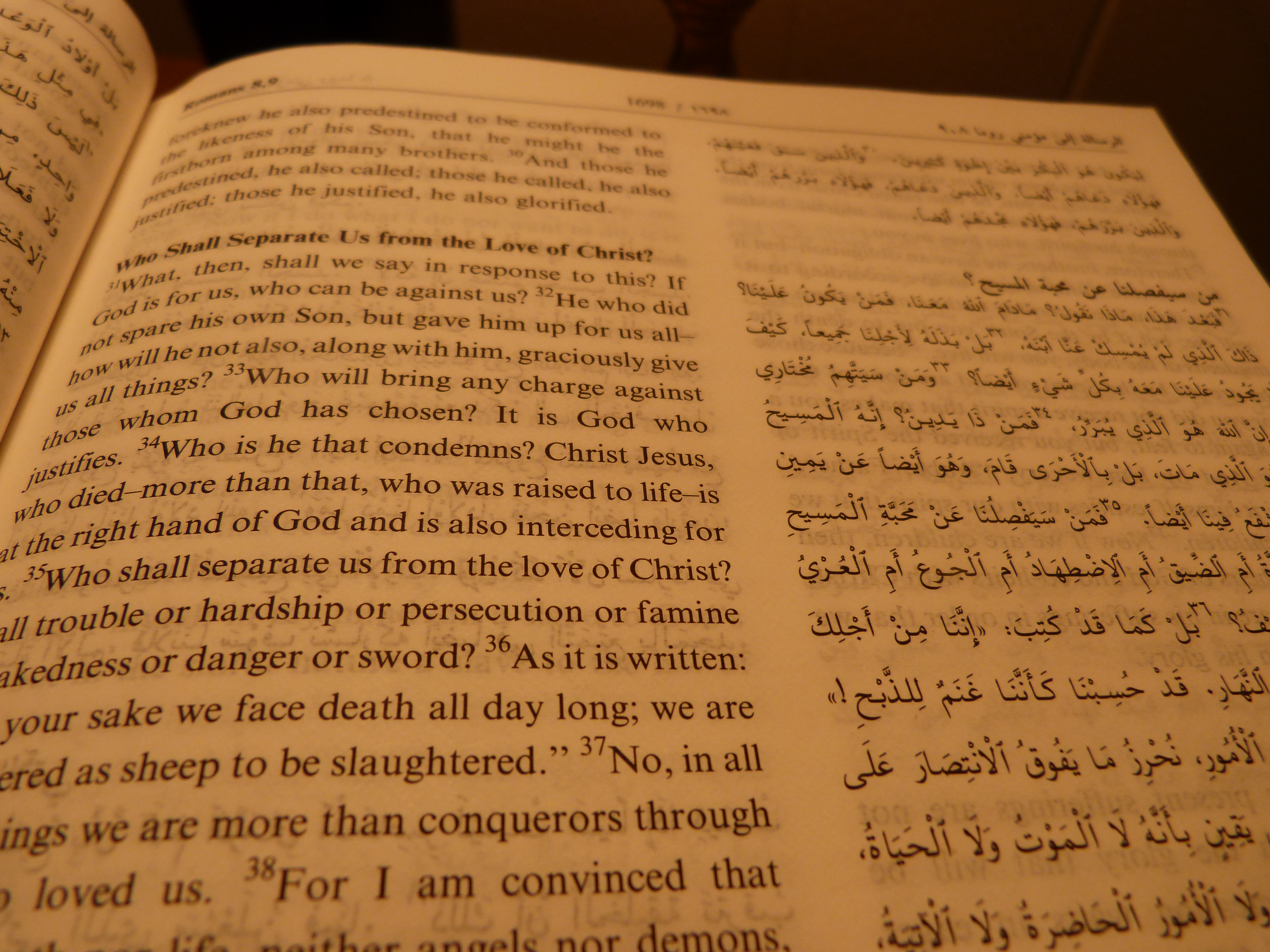
“Who shall separate us from the love of Christ? Shall tribulation, or distress, or persecution, or famine, or nakedness, or danger, or sword? … No, in all these things we are more than conquerors through him who loved us.  For I am sure that neither death nor life, nor angels nor rulers, nor things present nor things to come, nor powers, nor height nor depth, nor anything else in all creation, will be able to separate us from the love of God in Christ Jesus our Lord.” (verses 35, 37-39) No matter how evil the times are in which we find ourselves. No matter what the course of our lives. Nothing will separate us from the love of God in Christ Jesus. Nothing. Nada. No matter the press of confusing circumstances or the prosecutorial arguments of the world or the evil whispers of Satan himself lying in our ears…God tells us that we are more than conquerors through Him and that absolutely nothing will separate us from His love.  That is the message Paul delivered to the Roman believers in this letter. They understood and clung to this message during a horrific time in history, and, one day, we will join them, worshipping the God of these great words.

This was my word from God this early morning…still resonating all these years after it was written. My life is steadied and course set on a foundation that is not shaken…thanks to a God who preserved His word for us to the present, and for as long as this world continues…as He purposes and in His love.

Romans 8 (and the rest of God’s Word) in Many Languages

Called According to His Purpose

The Preservation of the Bible

How We Got the Bible