Tag Archives: Global Leadership Summit

World-Class Customer Service – The Key Is Caring – Horst Schulze on a Culture of Service

Blog - Horst SchulzePhoto Credit: Arnezzy.tumblr.com

Just the expression “5-Star Hotels” summons delicious images of ocean views and chic, comfortable rooms and all those tiny touches to insure your return. Though never a guest in such a hotel, I have enjoyed 4-star treatment, and I have been a customer of Chick-fil-A  and Southwest Airlines. All through our days, we are administering and receiving some sort of customer service.

A couple of weeks ago, I had the privilege of learning about customer service from Horst Schulze, a world-renowned leader in the field of luxury hotels. He gained his wisdom and expertise, up through the ranks, and his counsel is applicable to any peopled workplace or organization. Schulze puts caring at the foundation for world class excellence – not just caring about the customer or client (albeit extremely important) but caring for all people (the employees and all who interface with each other in his industry).

Mr. Schulze talks about the service process as three parts: delivering an excellent product (without defect), in a timely manner, with genuine caring. Genuine caring. Not silly over-friendliness, or with casual sloppiness. Genuinely caring for the customer’s personage, time, and purpose for that interaction.

Since his presentation, I have intentionally looked at service very differently. Whether we’re talking about a small business or a large franchise, a school or university, or even such a thing as a church connection team. We can enhance customer satisfaction and loyalty by intentionally and comprehensively setting our culture.

Mr. Schulze is people-oriented – with his employees, vendors, and customers. He manages this in his hiring and training practices and through a vigilant daily (industry-wide) practice of his canon of customer service standards* (definitely worth a read- click on the link below to read the 24 standards). As I listened to him speak, his whole demeanor was that of one who joyfully delights in excellence and bringing it to bear in improving the lives of those around him.

No matter how well we think we’re doing in providing services or responding to the needs of our clients/customers, we would do well to look at the practices of such businesses as the Capella Hotel Group, Chick-fil-A, and Southwest Airlines. You will see this common thread of caring in their philosophies, culture, and standards.

“I dreamed of hotels where every employee comes to work not just to work but to create excellence, where every employee is committed, and where it’s not about creating rules but about every customer being taken care of the way they want to be taken care of.” – Horst Schulze**

“Focus on creating an organization of excellence and have processes where you can transfer excellence. That starts by finding out what is excellent in the eyes of the customer – what the guest really wants from us – based not just on what they said they wanted but what they were really thinking.” – Horst Schulze**

“It’s my responsibility to set standards. I have no right to accept mediocrity or limitation. If you don’t point out flaws, mediocrity will set in. It’s my business to do what is right and not make excuses for mediocrity. I agonize when I make a decision that it is good for all concerned; if it’s not, I don’t do it.” – Horst Schulze**

[Leading by Culture] “Southwest was the first to create a position entitled “Vice President of Customers.” For many years Colleen Barrett held the position. She understood that Customers always come first, and that in order to have a Customer service mindset you cannot separate the importance of the internal Customer (Employees) from the external Customers (passengers). If the internal Customer is happy, it will naturally flow to the external Customer in the form of good service.” – Lessons in Loyalty, Ian BrooksBlog - Southwest Airlines - Customer Service Culture - leapq.orgPhoto Credit: leapQ.org

 “Every life has a story, and often our customers and our employees, need a little grace and a little space when you deal with them because they are either experiencing a problem, just finished having a problem, or are about to have one. The word ‘restaurant’ means place of restoration. We think of Chick-fil-A as an oasis where people can be restored.  We’re all people with a lot of emotional things going on that don’t necessarily show on the surface, so we try to offer amenities and kindness that minister to the heart.” – Dan Cathy, President, Chick-fil-A***

Blog - Customer Service - Chick-fil-APhoto Credit: jyontheroad.blogspot.com

“Forty years ago, exceptional was a glass elevator in the lobby; then it became real paintings and fine marble and so on. Now it’s coming back to doing what the individual guest really wants: personalized and individualized service geared not to the market, but to the individual. True luxury today is about responding to each individual guest.” – Horst Schulze**

*Capella Hotel Group’s Canon service standards conceived by chairman and founder Horst Schulze

**Defining Luxury – LEADERS Interview with Horst Schulze

YouTube Video – Horst Schulze- Presentation on Customer Service

Global Leadership Summit – 6 Take-Aways from Day 2 of #GLS15

Summaries on All Speakers of Global Leadership Summit 2015 by David M. Arnold

Notes from the GLS15 – Creating World Cass Service – Horst Schulze

****A Lesson in Customer Service from Chick-fil-A President Dan Cathy

The Chick-fil-A Difference: Why Customer Lingo Matters

Thank you. My pleasure.

What You Can Learn from Southwest Airlines’ Culture

***Lessons in Loyalty: How Southwest Airlines Does It – An Insider’s Point of View

Southwest Airlines – the Airlines with Heart – and One Heart I Know Well
Global Leadership Summit – 6 Take-Aways from Day 2 of #GLS15

Blog - Global Leadership Summit - thecrossingchurchnj.orgPhoto Credit: thecrossingchurchnj.org

Below are my take-aways from Day 2 of the Global Leadership Summit. Register now for 2016. Life-transforming.

Horst Schulze (Chairman/CEO, Capella Hotel Group; Founding President & Former COO, The Ritz-Carlton Group):

Mr. Schulze gave the Summit audience a primer on how to create and lead in world class service.  Foundational to his philosophy is that people matter – ” we are to care about people (our employees and our customers) and we work with excellence”.

He has a canon and  24 Standards of service* that all the Capella Hotel Group employees are expected to execute.  Not just as part of the function of their job, but because they matter – the people and the service.

In terms of service, we want 3 things:

  • No defect – You want the product to be defect-free (subconscious expectation).
  • Timeliness – You want timeliness. [In old days, check-in was 4 minutes to be good; today it’s 20 seconds.]
  • Caring – You want the people who give you the product to be nice to you (that’s why we call it service).

“The #1 driver of service and therefore customer loyalty is being nice.”

Service starts at the first contact.

Welcome

Comply with caring [give the customer what he wants]

Farewell

You can move a customer very quickly from satisfaction to loyalty.Blog - Global Leadership Summit -2 - Horst Schulze - liberty.eduPhoto Credit: liberty.edu

Sheila Heen (Founder, Triad Consulting Group; Faculty, Harvard Law School; Co-Author with Douglas Stone of Thanks for the Feedback: The Science & Art of Receiving Feedback Well):

Ms. Heen talked about feedback and the skill of receiving feedback well. A Harvard Law School professor, she also speaks/consults internationally on negotiation and conflict resolution. With this background, she gave the Summit audience helps on how important feedback is and not to miss it, even in the tension of a difficult or unfair situation.Blog - Global Leadership Summit - Sheila Heen

Photo Credit: triadconsultinggroup.com

“Feedback is my relationship with the world and the world’s relationship with me. Part of the problem with feedback is that it sits at the junction of two core human needs. On the one hand, we do want to learn to grow. On the other hand, we need to feel accepted, respected and loved the way we are now.”

“3 Different Kinds of Feedback with Very Different Purposes (we need all three kinds to learn and grow).

Evaluation – rates or ranks you against a set of criteria or against your peers. Defining the relationship. Cholesterol. Performance review.

Coaching – Anything that helps you get better or learn. Mentoring. Advice. Suggestions. Correction.

Appreciation – says ‘I see you.’ ‘I get you.’ ‘You matter around here.’”

“The [feedback] model for us is Jesus Christ. He accepts us just the way we are right now, in all our brokenness, and at the same time, he challenges us to learn and grow.”

Brian Houston (Founder & Global Senior Pastor, Hillsong Church; Author of Live, Love, Lead: Your Best Is Yet to Come):

Pastor Houston was my biggest surprise of the day. As a mega-church pastor with campuses not just all across Australia but all across the world, I thought he would be a polished, fine-tuned speaking machine. [Forgive me that, Brother Brian.] There was a gentleness and humility in him birthed out of hard times, struggle, and loss…filled in by God’s matchless grace. He shared some of his life story through a Q & A with Bill Hybels. It was a beautiful tribute to the love and power of God reflected in a life fully surrendered to Him. We will be buying his book Live, Love, Lead.

“I love what I do. I love the Lord and I love the church. I love people ultimately. That motivation has never left me. Even on the darkest days. In the biggest challenges. If you keep showing up, even when you get knocked down, God will be with you. Longevity is the greatest thing you can have for the glory of the Lord.

Sam Adeyemi (Founder & Senior Pastor, Daystar Christian Centre in Nigeria):

Pastor Adeyemi talked about growing up in a culture of leaders and followers where a hierarchical (or power) distance was common. Then He spoke of Jesus’ leadership and how God means for us to lead, including closing the gap between people.

“You will not find the definition of success for your ministry or organization until you help the people [God] sent to you to succeed. The object of leadership for many leaders is their own success, but the object of Christ’s leadership was the success of His followers.”

“Following you, [as a leader], should hold the promise of life change for those who follow you.”

“God calls us to create new power structures where power is used appropriately. Jesus gave his disciples authority and power. He gave power away.”BLog - Global Leadership Summit - Sam AdeyemiPhoto Credit: preachit.com.ng

Liz Wiseman (President, The Wiseman Group; Author of Rookie Smarts: Why Learning Beats Knowing in the New Game of Work):

Liz talked about the upside of being a rookie in the workplace.

“As Rookies – We operate in simple, small, gritty and powerful ways.

With experience comes knowledge, responsibility. Once we have knowledge, we tend to make assumptions, and we can make bad assumptions. Our minds sometimes fill in what is not actually there.”

“Leaders who master the art of pivot – as leader and learner (regaining your rookie smarts). Experiment – Throw away your notes. Ask the Questions (shift from knowing and operate from a place of inquiry). Operate from a mode of curiosity. Admit what you don’t know. Let someone else lead. Disqualify yourself (put yourself at the bottom of a new learning curve). Lead your team into the unknown. Set the stretch. As you grow as a leader, don’t forget to be a learner.”

Craig Groeschel (Founder & Senior Pastor, LifeChurch.tv):

Late on a Friday afternoon, full of words from all these other great leaders, Craig Groeschel powerfully and graciously took the stage. He encouraged us on how to build capacity. [This is actually a recent favorite topic of mine with the Lord and those I love.] Taking his text from Ephesians 3:20-21, Pastor Groeschel spoke from experience of how God will work in lives available to Him in ways we can’t even imagine. With that introduction, he dug into some exquisitely practical counsel on how to increase our leadership capacity.

5 Different C’s to Expand Your Leadership Capacity – Choose one to work on.

  1. Build your confidence.
  2. Expand your connections.
  3. Improve your competence.
  4. Strengthen your character.
  5. Increase your commitment.

Groeschel gave plenty of examples from his own life of what these might look like, and honestly, his teaching was so clear, we knew right away which one’s we would be working on, in the days ahead.

The Global Leadership Summit was also punctuated with videos of “Grander Vision” stories – people from all over the world who took seriously what they’d learned at previous Summits and went out and changed their worlds. We also enjoyed stirring worship moments, including a song set that Bill Hybels introduced as music soothing to our leader souls. Sometimes when nothing else seems to help, Hybels said, music can remind us of the nearness of God. Blog - Global Leadership Summit - SongSetListPhoto Credit: Twitter.com/wcagls

All this….and Michael Jr.

Thank you, Bill Hybels, and the Willow Creek Association, and all those leaders – who help make the many host sites possible and who demonstrate how possibilities can become realities when we lead well.

Blog - Global Leadership Summit - Carl & Bill HybelsPhoto Credit: twitter.com/michaeljrcomedy

*Capella Hotel Group’s Canon & 24 Service Standards – established by the founder and chairman Horst Schulze

Slideshare – How to Give and Receive Feedback – The Triad Consulting Group – Sheila Heen & Douglas Stone (authors of Thanks for the Feedback)

Global Leadership Summit – Register for 2016

Grander Vision Stories & Videos – Follow the GLS – Willow Creek Association

Twitter Account for Willow Creek Association – for #GLS15 comments and quotes and links to videos, articles, resources

Global Leadership Summit – 7 Take-Aways from Day One of #GLS15

Blog - Global Leadership Summit - thecrossingchurchnj.orgPhoto Credit: thecrossingchurchnj.org

Today I participated in the Global Leadership Summit at a satellite site near Richmond, Virginia. It was my first time, but I hope not to miss another. It is best described on the website- “a world-class experience designed to help you get better and embrace your grander vision—the reason God called you to lead. Broadcast LIVE in HD from Willow’s campus near Chicago to over 375 Premier Host Sites in North America and later around the world, you are invited to join an expected 260,000 leaders in 2015.”

7 great leaders spoke today, and 6 others will speak tomorrow. The experience was so meaningful and beneficial to me where I am currently in life, but I would recommend it to anyone whatever your situations.

Following are the briefest of 7 take-aways that are still buzzing around in my head. So much to process. Here’s a start.

Bill Hybels (founder/senior pastor of Willow Creek Community Church; chairman of the Willow Creek Association which launched the Global Leadership Summit in 1995):

“Leadership is [simply] moving people from here to there.”

“Armed with enough humility we can learn from anyone.” 

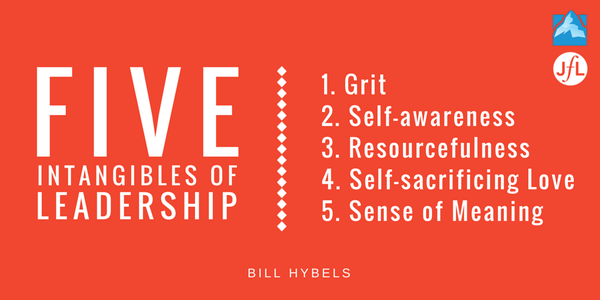
Hybels reflected on Richard Davis’ book The Intangibles of Leadership – and developed his own list of 5 intangibles for leaders:Blog - Global Leadership Summit - 5 Intangibles of LeadershipPhoto Credit: jobsforlife.org

He challenged us to discover the “white-hot why” of our lives – the why of what we do – what really matters for us. For Hybels, it’s “transforming lives”. He is a living example of being faithful to that “why”.

Jim Collins (best-selling author of Good to Great):

Jim Collins talked about what he learned as the recent Chair (2012-2013) for the Study of Leadership at the United States Military Academy at West Point. He reported that: creating a culture out of which great leaders are developed must include

  1. Serving a cause we can be passionate about and for which we would be willing to suffer;
  2. Growing through difficulty; and
  3. Succeeding by helping those around us.

“We succeed at our very best only when we help others succeed. We respond to our own difficulties by reaching out and saying ‘Let me help you.’ To communicate to others: ‘You are never alone.'”

“The greatest leaders find a way to make a contribution, a distinctive impact, on people, on real-live flesh and blood people.”

Ed Catmull (Co-Founder of Pixar Animation Studios; President of Walt Disney Animation Studios; Author of Creativity, Inc.):

Catmull wanted to be an animator from the time he was a child but couldn’t see a path to follow that dream. He ended up studying physics in college.Blog - GLobal Leadership Summit - Ed Catmull by brainpickings.orgPhoto Credit: brainpickings.org

“Science and art are not incongruous. Art isn’t about drawing; it’s about learning to see. Which business or professions do you not want to have enhanced ability to see?”

He talked further about 3 processes in film-making, all relating to accountability:

  1. Teams working together (using a Brain Trust – a group of colleagues all acting as peers, with vested interest, giving feedback;
  2. When failures happen in production – embracing [failure] but at the same time dealing with it with both total candor and kindness; and
  3. Operating within constraints (a budget) – actually pushes creativity higher and delivers better outcomes.

“Stories influence the world. We want to use story-telling for good.”

Adam Grant (Professor, Wharton School of Business; Author of Give and Take: A Revolutionary Approach to Success)

Grant talked about the three kinds of persons you find in the workplace…well, anywhere really:  1) Givers, 2) Takers, and 3) Matchers. After defining each of these and how they interact with each other in the workplace (buy the book), he prescribed ways to build a work culture. A work culture of generosity – the work culture that especially develops the givers, which brings the others along as well.

His three challenges were:

  1. Keep the wrong people off the bus. Get rid of the takers.
  2. Redefine giving. [He talked about the 5-minute favor and the 100 hours of volunteering across a year – these micro-lessons of generosity.]
  3.  Encourage help-seekers. – Developing the givers will nurture a culture of “How can I be the rising tide that lifts all boats?” – a Reciprocity Ring.

Dr. Brené Brown (Research Professor, University of Houston Graduate College of Social Work; Author of Rising Strong):

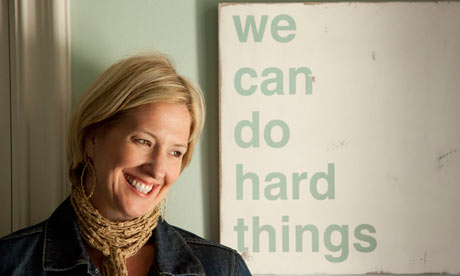
“Our brain is neuro-biologically hard-wired in the instant of a [hard time; difficult conversation] to make up a story as to what happened. If we can give our brain a story when something hard happens, we are rewarded by our brain (dopamine). Our brain rewards us whether the story is accurate or not. Our worthiness as people lives inside these stories. When we pretend or deny the story, it owns us. When we own the story, we get to write the ending.”

Brene BrownPhoto Credit: TheGuardian.com

Transformational leaders: 1. Do discomfort.  2.They have absolute emotional awareness about their own life, and about the people around them.

“We can’t ignore emotion. We are emotional people who sometimes think. Emotion dictates behavior. If you speak to the way they think or their behaviors, without speaking to their emotions, they will not change. Speak to their emotions. Curiosity and lines of inquiry are the greatest tools of leaders. ‘Help me understand’. “

Sallie Krawcheck (Chair of Ellevate Network; Former President, Bank of America’s Global Wealth & Investment Management):

“The retirement savings crisis is a women’s crisis – we retire with 2/3 the retirement income as men and live 6-8 years longer than men. I love men. I’m married to a man. But you guys are going to die, and we as women will be living with this crisis.”

“My “‘white-hot why’ is advancing women, elevating women. “

“I work every day as though my children are watching me.”

Albert Tate (Founder/Senior Pastor of Fellowship Monrovia, Southern California):

Pastor Tate preached (and I mean preached) on the miracle of Jesus’ feeding of the 5000 (John 6:1-13), using the five loaves of bread and two fish brought to Him from a boy in the crowd.

Tate renounced the leadership lie of “leaving it all on the field”.

“One of the most key things we can do as leaders as to bring what we have, give it to Jesus, and then get out of the way.”

Leaders, you don’t have to go home on empty. You don’t have to leave it all on the field. Christ left it all on the Cross. Bring what you have. Whatever you have, give it back to Him. Then get out of the way, and watch in awe and wonder at what He does.”

These are just 7 take-aways of the 20 pages of notes I took during today’s Summit. Such great teaching – inspiring, empowering, mystifying, really.

Download the Global Leadership Summit app. Read what you can (in these authors’ books and via all the online resources – articles, blogs, video). Take down the dates for the Global Leadership Summit of 2016 and plan to register early.

Being the leader we hope to be is within our reach.

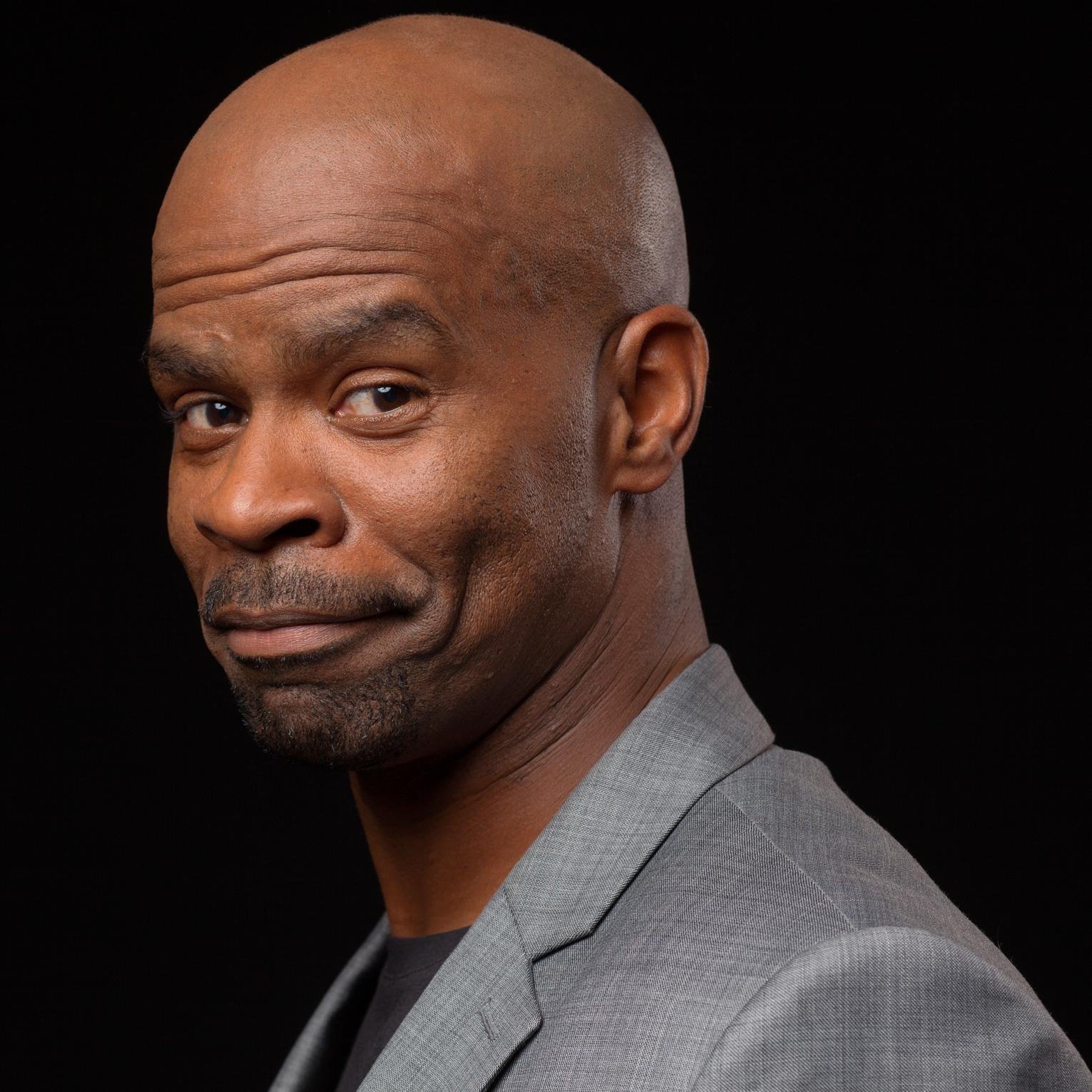
Post-Script: Michael Jr. was on and off stage to make us laugh and to look at life from just a bit of a different angle. Love him!

Blog - Global Leadership Summit - Michael Jr

Photo Credit: MichaelJrComedy

Global Leadership Summit – Willow Creek Association

Global Leadership Summit App