Tag Archives: Monday morning

Monday Morning Moment – Screen Time – Give It a Rest

Blog - Screentime - smart3508Photo Credit: SafeSmartSocial

Walked away from the computer at 8:00 last night…best night of sleep I’ve had in a long while.

Alex Cavoulacos, productivity expert and founder of The Muse, wrote a Fast Company piece on establishing the habit of turning off screens at 11:00pm each night. A night owl, Cavoulacos discovered, in forming this habit that she: 1) could actually do it, 2) prioritized her work better, 3) finally found time to read, and 4) slept better. “Turns out that I inadvertently stumbled upon a trigger habit: I was reading more, sleeping more, and spending more quality time with my husband. All of this led to me feeling less stressed and better prepared to start each day. All in all, a huge positive change in my life, all thanks to a single new habit.” Check out her whole article and fascinating video here.

Tanya Lewis, a science journalist, went even farther than Cavoulacos in restricting her screen time. She writes, for Business Insider, that, for one week, she avoided screen time from the time she got off work until she went to bed. That means no TV or Netflix, no checking her phone for directions or searches of other kinds, or just out of boredom, and no tablet time for any of the above. What she discovered was how hard it was and how dependent to screen time she had become. She did start reading books again during that week. She also found that when she avoided screens, getting to sleep was easier. The most fascinating thing she noted was how much more social she became without the distraction of screens.

Night time connection

Anybody remember the old days, before wi-fi and smart phones? And the cable went out because of a storm? We would actually light candles and snuggle together on the couch, play games together, be silly, and talk. Special times worth re-creating with a screen fast.

How about our health? Is there any evidence that all this screen time, especially at night, affects our health, over our lifespan? For sure. Read Power Down for Better Sleep by Heather Hatfield on WebMD. She quotes fatigue specialist, Dr. Mark Rosekind, “One of the most simple but important reasons technology affects our sleep is cognitive stimulation.” What we are watching on screens late at night revs up our brains and stirs us up physically. This stress (positive or negative) can create a flight/flight response, resulting in our body’s release of cortisol – bringing on a state of vigilance rather than the restfulness needed for sleep. Add to our body’s “high alert” status the blue light of electronics. Hatfield reports how this light passes “through the retina into a part of the hypothalamus (the area of the brain that controls several sleep activities) and delays the release of the sleep-inducing hormone, melatonin.” To my sleepless, techie friends and family: it makes sense, right? Put it (screen time) to rest.

[Damon Beres in a Huffington Post piece, writes how “reading on a screen before bed might actually be killing you”. He points out the health problems that can result partly from inadequate rest (obesity, diabetes, cardiovascular disease). He also points to blue light filters that can help if we can’t imagine avoiding screen time at night.]

What about the impact of screen time on the brain over time? Debbie Hampton wrote a fascinating, sobering piece How Staring at a Screen Changes Your Brain (For the Worse). Hampton refers the reader to the findings of Dr. Michael Merzenich, author of Soft-Wired: How the New Science of Brain Plasticity Can Change Your Life.

“Visual activities, like staring at a screen or even driving, continually narrow our field of view to a smaller box-like zone right in front of our eyes. Our brains learn to categorize everything outside of this box as a distraction not worthy of attention and get good at filtering out anything not right in front of us. By developing sustained attention in the central view, our peripheral vision suffers, and our view of the world slowly contracts. The field of view in humans decreases as we age. Over time, a person becomes immune to noticing life’s visual surprises, and their eyes move less often. As a result of these self-induced neurological changes, our brains and bodies get conditioned not to pay attention and not to react to the unexpected.”

What does that mean for us? You have probably already seen this in action. Our attention is drawn in, fairly fixed, on our screens. We miss what is happening around us. One day I’m going to write about situational awareness – as a personal safety issue as well as a sharpening discipline to appreciate life around us. This whole addiction to screens that is prevalent today will take the rest of the world out of our view, so to speak, if we’re not careful.

For our sake (at work and home) and for our family’s sake, consider: No screen time before bed.Blog - Screentime - mugmagPhoto Credit: MugMag

Speaking of the family…our children – I will just post these quick reads about little ones (and teens) and how so much screen time affects them physically, socially, and developmentally. We fall into these habits with our children, but we can also pull ourselves, and them, out of the same.

What’s your takeaway from this? I personally want to strategically narrow the screen use in my life. Writing makes screen time an occupational hazard but I love those screens way too much outside of blogging. Thanks to Chris Bailey’s A Life of Productivity and his book about his productivity project, I have already made some changes. No Facebook on my phone, as one change. Still have a long way to go.

Bottom line: I don’t want to miss the people I love, in the flesh, and I don’t want to miss the real world…and lastly, I don’t want to miss truly experiencing God…because of this surreal, burgeoning habit of screen time. So…I will leave you for now. Well-rested, hopefully. Sweet dreams.

Monday Morning Moment – Stewardship – Stewarding My Part Well in Today’s Workplace

Blog - Stewardship - work.chronPhoto Credit: Work.Chron

All of life is stewardship. Doesn’t it make sense? Our jobs, our relationships, our personalities, and our future have multiple layers. When we think of stewardship, rather than ownership, or entitlement, or giftings, or personal rights, we take on a much broader, healthier view or life. Writing about it previously here, I wanted to focus more, this time, on our workplace.

In 1993, Peter Block wrote a revolutionary book entitled Stewardship: Choosing Service Over Self-Interest. He updated and expanded it twenty years later (in 2013). Block defines stewardship as “the willingness to be accountable for the well-being of the larger organization by operating in service, rather than in control, of those around us. Stated simply, it is accountability without control or compliance”.

Words mean things.  When we use the word “steward”, we loosen our grip on ownership – of our job, title, product, and work relationships. However, we do not loosen our commitment on personal responsibility. This is the gem of stewardship – a gem in the workplace that can be mined by each one of us.

Years ago, in nursing school, we used Virginia Henderson’s definition of nursing which focused more on facilitating the patient’s return to caring for him/herself than on the “giving care” component we often think of with nurses. Nursing as stewardship. When our children came along, we as parents would need to decide whether to home school or put our children into a private or public school.  Another parent gave us wise counsel: Whatever your decision, you are responsible for your children’s education, some of which you may contract out to other teachers or institutions. We, as parents, were stewards of our children’s education.

In the workplace, we have heard the word steward used in the service industry: union shop stewards, ship stewards, stewards on airlines, stewards of estates. However, the stewardship that Block describes can proliferate at all levels, especially if our leaders set this value and mindset. What if an organization determined to have an inclusive model of accountability where all employees operated by serving, rather than controlling, those in their influence (colleagues, customers, vendors)?  What if we chose to apply ourselves to the work before us, with deep personal care and commitment, rather than under a boss’s control or need for our compliance?

Stewardship as a concept and value is both time-tested and trendy. Check out REI‘s commitment to customers in delivering quality outdoor gear…and also to its employees. Stewardship.Blog - Stewardship - slideplayerPhoto Credit: Slideplayer

My first encounter with this word, stewardship, was as a child hearing the parable of a master preparing to leave on a journey. He entrusted the three servants with some measure of his wealth (talents). Their master had given each varying amounts of money, according to each servant’s ability. The master would be away for some period of time and meant for his servants to “steward” the money. Two servants invested his money in such a way that each doubled the amount entrusted them. The third servant, fearing the master (and possibly lacking confidence in his own ability), hid the money entrusted to him. He only had what he’d received in the beginning to give back to the master. The first two servants were rewarded for their faithfulness, care, and initiative, but the last cautious, fearful servant suffered the consequences of his inaction.

There is much to learn about stewardship from this old story. Stewardship is taking personal responsibility and interest in quality of service or product and depth of relationship. Like in the story, it could mean taking risks ourselves or with each other (especially leaders entrusting other team members with decision-making and design). It means empowering others in discussions and details that we might prefer keeping for ourselves (except that we are stewarding toward a larger outcome). It means making investments in others and in the over-all organization. Stewardship is the embodiment of employee engagement…all-in, whatever it takes, for that greater good. Lastly, the story spoke to rewards for those diligently stewarding what was placed in their care, and the consequences of those who refuse to be engaged…which leads to a place nobody really wants to go.quotes of bill gatesPhoto Credit: Quotesgram

Leaders and managers who are willing to give up control and who genuinely care about their employees and customers become true stewards themselves. They set the standard for stewarding across a company. Whether leaders are on board or not, any of us can still have ownership of a new-old way of thinking and practice. We can steward well what is our responsibility or under our influence. Again, this type of “ownership” is not about owning the job, the product, or the relationship. Stewardship is the owning of our personal responsibility – our piece of what could be excellent, and our piece of what’s not going well, and applying our experience, knowledge, giftings, and heart to benefit all touched by our service. Our stewardship.

BLog - Stewardship - 2 - whatcomlandtrustPhoto Credit: Whatcomlandtrust

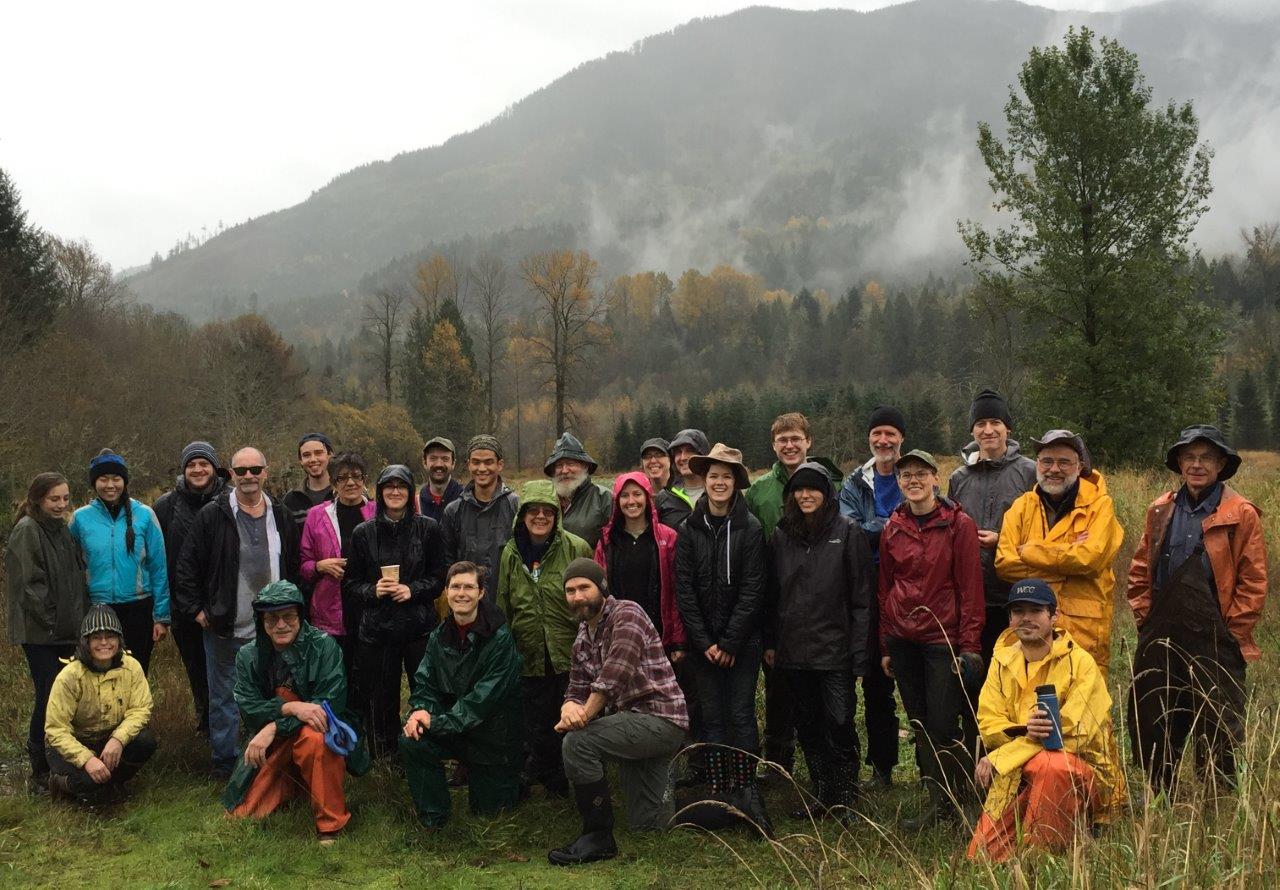
What are your stories? Do you see the impact of your stewardship? Of the stewardship of others? Could you see how this might color the culture at your workplace? Is your company one where top-down, bottom-up, people care about each other and what they’re doing? It shows…if you are, or if you’re not. Stewardship.

Blog - Stewardship - John Wesley - QuotesgramPhoto Credit: Quotesgram

Monday Morning Moment – All of Life Is Stewardship

Stewardship: Choosing Service Over Self-Interest (2nd Ed.) – Peter Block

Five Lessons for Our Lives From the Parable of the Talents – Hugh Whelchel

Monday Morning Success – How Biblical Stewardship Transforms Your Work – Hugh Whelchel

Blog - Stewardship - Winston Churchill quote - ololmke

Photo Credit: OLOLmke

Monday Morning Moment – Creativity in Community – the Skill of the Future

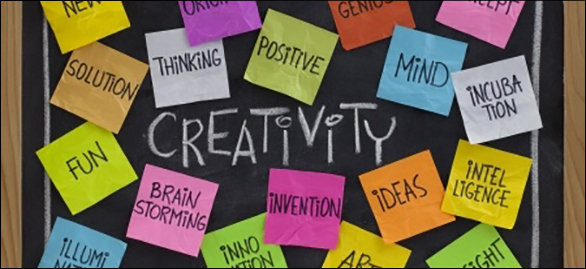
Blog - Creativity - creativeskillsforlifePhoto Credit: Creative Skills for Life

When you hear the word “creatives”, you might immediately think of 20- or 30-somethings. They are classed as young “color-outside-the-lines” right-brain “think-outside-the-box” sorts of folks…who sometimes make the rest of us nuts. You might think of the artists, writers, and musicians out there. However, in truth, creatives include all those people who solves problems, including the ones who set up problems and then solve them. They are the inventors, the entrepreneurs, the designers, the planners who have the capacity to make our lives better…to even make the world better.

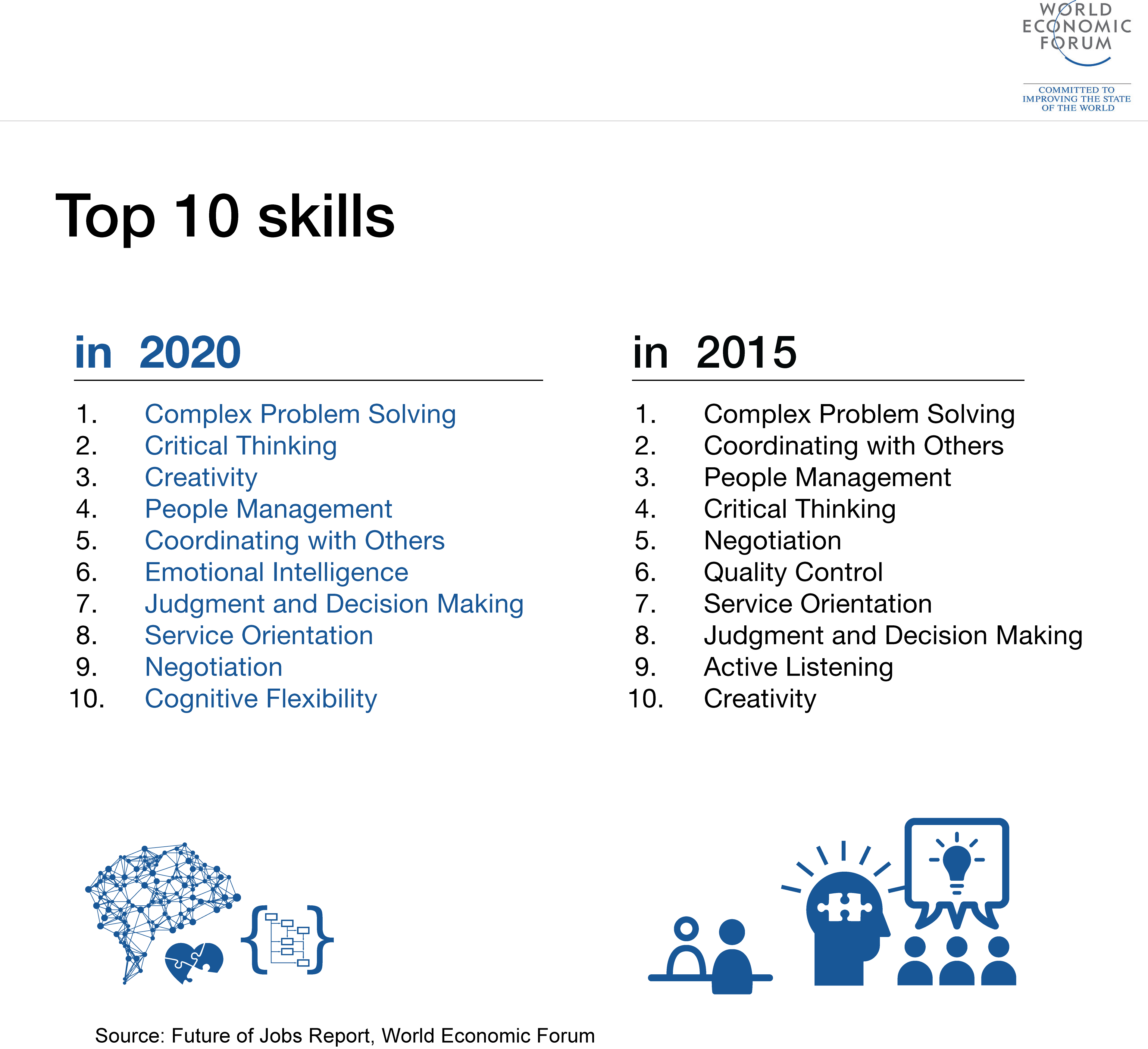
Hanneke Siebelink (of LeadershipWatch) just wrote a piece on the top skills of the future. She pointed to a graphic from the World Economic Forum which showed, over the course of 5 years, how creativity will jump from #10 to #3 in a Top 10 Skills List.Blog - Creativity - weforumPhoto Credit: WEForum.org

What does that sort of creativity entail? Is creativity alone enough?

Richard Florida wrote extensively on this in his book The Rise of the Creative Class. He defines the Creative Class as “people in science and engineering, architecture and design, education, arts, music and entertainment whose economic function is to create new ideas, new technology, and new creative content.”Business Insider

Writer Jeff Goins also defines “creatives”:

A creative is an artist. Not just a painter or musician or writer. She is someone who sees the world a little differently than others.

A creative is an individual. He is unique, someone who doesn’t quite fit into any box. Some think of creatives as iconoclasts; others see them as rebels. Both are quite apt.

A creative is a thought leader. He influences people not necessarily through personality but through his innate gifts and talents.

As fascinating as Florida’s writing is, I disagree with his premise that creatives are their own class of people, because I believe it’s within any of us to develop our capacity for creativity. Those of us who might be suspect of Florida’s promotion of the Creative Class would do well to read the critiques of his thinking (this and also this are excellent).

When people in our communities or workplaces class themselves as distinctively creative, they tend to operate in a tribal fashion. These tribes may even be quite diverse, but too often, I believe, they operate to satisfy their own needs and desires rather than that of the larger workplace or community. Thus in the workplace, decision-making is made by the few like-minded thinkers, that tribe of influential creatives. And communities? Where such a population of creative, expansive thinkers could enhance the appeal and value of a neighborhood, too often, , and communities can steer in the direction of gentrification, becoming less inclusive, making housing less accessible even for those who were there before.

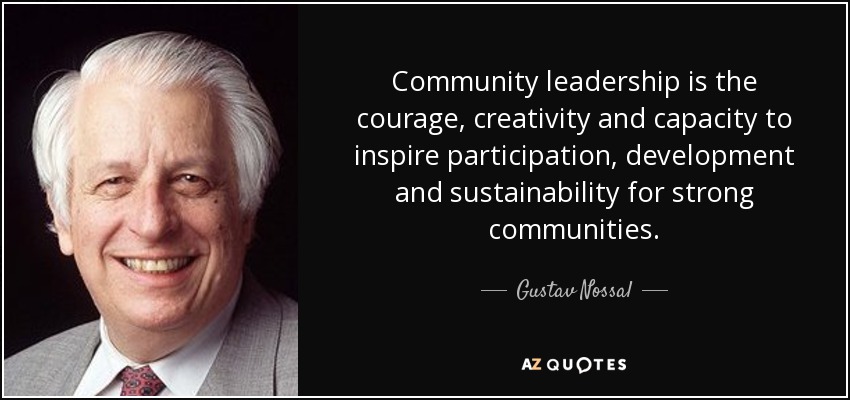
Blog - Creativity & Community Leadership - azquotesPhoto Credit: AZQuotes

My bias in how creatives work best is in community – not just a tribe of creatives, but in a community of folks with other giftings,  other strengths,and other history.

However, all that being said, I do love the increasing view that creatives add value to any enterprise. My husband, for many years, was a research chemist who developed new products and was awarded several patents for his company. Even today, outside the chemical industry, he continues to be creative in thinking through new pathways toward solving problems, getting to goal, and developing personnel.

Even Florida in his revised and updated book recommends a compact dealing with creatives. His first (of 6 principles) is: Invest in Developing the Full Human Potential and Creative Capabilities of Every Single Human Being. It’s somewhat grandiose but it’s a worthy goal. Having this principle in play would promote a workforce where employees are encouraged to always be thinking and engaged in both today’s work and what changes must be made for the future.

Along these same lines, I love Howard Gardner’s Five Minds for the Future:Blog - Creativity - slidesharePhoto Credit: Slideshare

As creatives are sought after more and more in our workplaces (om both private and public sectors), I hope we also encourage them to build strengths in other areas of their thinking (or mindfulness). For those colleagues of ours who might not consider themselves creative, we need to communicate across organizations as to their value as well. This would include our creatives to gain from what other bring to the table.

I would like to think that I’m a creative…in ways, maybe, born out of time. Early on in my career, I had the privilege of working as a team with other colleagues in developing and implementing cancer care in a small town in the Southeast. It was thrilling for me to be part of such an innovative and comprehensive system of care where we could actually plan and dream for the future.

Three of us, in particular, worked as creatives in community. I was a content specialist and idea person. Kay was the nurse manager who brought vision and authority to the task. Kathy was a clinician with steely resolve and the determination to take the ideas to completion. We were a force to be reckoned with…just saying.

We all have different giftings and strengths. My influence was helpful but Kay’s authority settled matters. My ideas were large and lofty (sometimes), and Kathy’s keenness for how to make those ideas work were what brought them into reality.

That’s how creatives work in community. I think of top skills for the future that “in community” piece would be essential for creatives who want to make a lasting difference…not just for their own purposes at work but for the benefit of the larger community.

A hugely successful example of this is the work culture and philosophy of Pixar & Disney Animation which I wrote about here.

Daan Roosegaarde in Siebelink’s article talks about creativity in community: There are two ways to turn an idea into reality. You can play bowling, or you can play ping pong. The old way, at least that is what I think, is bowling. You have that ball in your hand and it’s so big, it is so heavy, it shines so beautifully. Then you throw that bowling ball and pray it will hit target.

I no longer believe this is a good way to create and innovate. I believe in playing ping pong: you take a tiny little ball, not expensive, and there you go: poek poek poek poek … and you create something together. And THAT is nice, this is how I create, this is how I learn.”

Bring on these kinds of creatives any day!

Skills of the Future: The Best Expert Advice on Creativity

The Rise of the Creative Class — Revisited (Revised and Expanded) by Richard Florida

The Creative Compact – Richard Florida – Huffington Post

Creativity – the Unique Soft Skill – Slideshare

6 Ways to Make Your Leadership and Workplace Fun Again

Creativity, Inc. – Overcoming the Unseen Forces that Stand in the Way of True Inspiration by Ed Catmull

untitled

Monday Morning Moment – Kindness Over Cleverness – Work Culture Where Employee Satisfaction Impacts Marketing

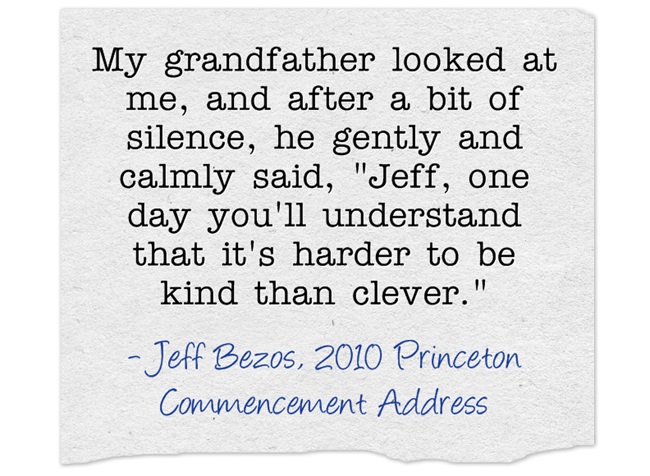
Blog - Kind over Clever - Jeff Bezos - scoopnestPhoto Credit: Scoopnest

Quite remarkably, I recently came across several articles on kindness, of all things, in the Harvard Business Review. It was thrilling for me to see it commended as a business process in such a prestigious journal. I have loved the idea of kindness since early childhood. It seemed such a reasonable choice in dealing with others, much more pleasing than cleverness. [Now, if I were more clever, then it might have proved a harder choice.]

Although we were not in church as young children, my mom taught us the Disney form of kindness: “If you can’t say something nice, don’t say nothing at all.” – from the film Bambi.

When we, later in my childhood, became involved in a church community, I discovered the great teachings of God about kindness, which further stoked my resolve. Whenever possible, acting in kindness was the right choice…in personal relationships and in the workplace.

These days, in tight-knit tribal leadership and competitive companies, kindness is too often sacrificed for the bottom-line. You can imagine how refreshing it is for me to see that business thinkers and strategists are taking note of the profitability of kindness as a process – both internally (organizational human relations) and externally (marketing). A work culture of strategic, intentional kindness – just think of that!

If you go to Harvard Business Review’s website and search the word kindness, all sorts of articles pop up. I was most intrigued by Bill Taylor’s pieces on “kindness over cleverness”. He is the founder of Fast Company magazine and author of Practically Radical. He tells stories of companies who have been successful in practicing kindness strategically. He is inspired by Jeff Bezos’ experience growing up with a wise grandfather who taught him to choose kindness over cleverness. That story is told by Bezos himself in the TED Talk (linked below).Blog - Kind Over Clever - Jeff Bezzos - nepc.colorado.eduPhoto Credit: National Education Policy Center

Ted Talk Video – Jeff Bezos, Founder of Amazon – Princeton Commencement Address on What Matters More Than Talents – Gifts vs. Choices

If we wanted to take individual (and corporate) kindness up several notches in our workplace and workforce, what would those processes be? What would we have to give up  in order to raise employee satisfaction to such a level that it extends to product excellence and customer service? For leadership, it might be giving up some control and extending a kinder and wiser empowerment, For employees, it might be giving up a timid fatalism and risking a kinder boldness (less of “the great Oz” scenario). I would love to hear what business processes you have in place that celebrate kindness over cleverness. What kind of work culture does your leadership model and cultivate? What can you do yourself, whatever your leadership culture is? See Matt Monge’s article on leading without a title.  [Please share in Comments section below.]

We have a choice, after all.

I hope to write more about this because it is intriguing to me how our own delight in our work and product can pour over into our profitability and success.

For today, I close with some of my favorite quotes from these Harvard Business Review articles:Blog - What Can I Do Right Now - Heres-the-question-Id-q57pgs - larry ferlazzoPhoto Credit: Larry Ferlazzo

“Kindness has a strategic role to play, especially when it comes to winning over customers in an intensely competitive and slowly recovering economy.”Jeffrey F. Rayport

Success today is about so much more than just price, quality, reliability – pure economic value. It is about passion, emotion, identity – sharing your values.”Bill Taylor

Success is not just about marketing differently from other companies…It is also, and perhaps more important, about caring more than other companies — about customers, about colleagues, about how the organization conducts itself in a world with endless opportunities to cut corners and compromise on values…You can’t be special, distinctive, and compelling in the marketplace unless you create something special, distinctive, and compelling in the workplace. How does your brand shape your culture? How does your culture bring your brand to life? – Bill Taylor

What is it about business that makes it so hard to be kind?” I asked at the time. And what kind of businesspeople have we become when small acts of kindness feel so rare? …By all means, encourage your people to embrace technology, get great at business analytics, and otherwise ramp up the efficiency of everything they do. But just make sure all their efficiency doesn’t come at the expense of their humanity. Small gestures can send big signals about who we are, what we care about, and why people should want to affiliate with us. It’s harder (and more important) to be kind than clever.”Bill Taylor

Compassion is a great equalizer. When you approach others with genuine concern for their well-being, your standing in the organizational hierarchy is less of a barrier to a productive conversation…Kindness, in other words, is rarely inappropriate.Allison Rimm

Is Kindness a Strategy? – Jeffrey F. Rayport

Brand Is Culture, Culture is Brand – William C. Taylor

It’s More Important to Be Kind Than Clever – William C. Taylor

Why Is It So Hard to Be Kind? – William C. Taylor

10 Ways You Can Show Leadership Without a Title – Matt Monge – The Mojo Company

To Guide Difficult Conversations, Try Using Compassion – Allison Rimm

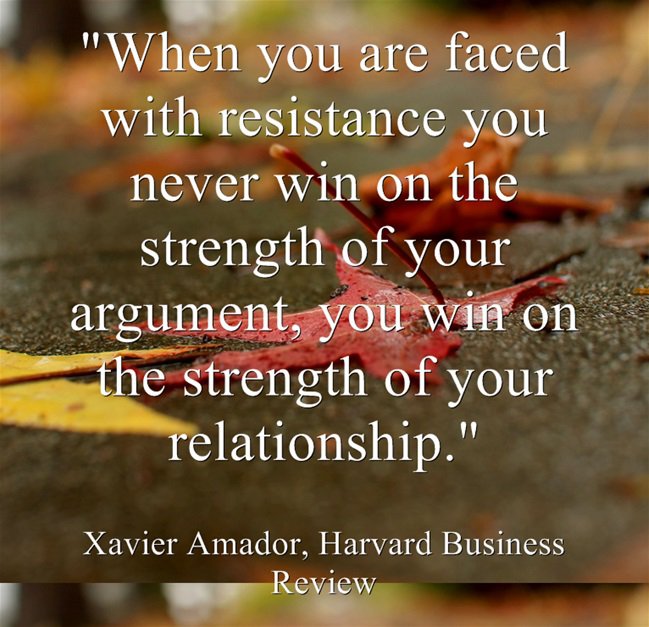
Blog - Relationships vs. Resistance - Leadership - Larry FerlazzoPhoto Credit: Larry Ferlazzo

The Other Side of Organizational Downsizing – What Survivors and Their Managers Can Do Going Forward

Blog - Downsizing strategies - slideshare.netPhoto Credit: Slideshare.net

Recently, a young friend of mine told me about an abrupt change in his company. He went in one morning to the usual – team meeting, work routine, cubicle life. Then in the early afternoon, without any prior notice or indication, the head of the company walked around the building with envelopes. By the end of the day, in this small tech support company, one-third of the employees had packed up and left the building.

Surprise lay-offs are the hardest to bear, but any kind of downsizing, no matter how necessary, is stressful and disorienting. When crisis precipitating a downsizing occurs, organizational leaders are wise to put together a transition team right away.

For those who were laid-off or who took the separation package in a carefully orchestrated downsizing, there is colossal adjustment. Hopefully, they will get the support they need to get that next job or to thrive in retirement.

For those who remain with the company, their adjustment can be great as well. Do an internet search for “surviving downsizing” and you will find hundreds of articles, and even several books on the subject.

Employees who survive the downsizing (whether because of their age, capabilities, or department) will still go through a period of post-traumatic stress. On that Monday, for instance, after their colleagues leave, they must re-orient to a new normal.

Blog - Downsizing threat or opportunity - slideshare.netPhoto Credit: Slideshare.net

Michael Sanders, author of 7 Critical Mistakes Employees Make in a Downsizing, wrote an empowering Linkedin article on how to take charge of one’s own survivors’ syndrome and move forward. First Sanders defines the elements of “sickness”; elements which include guilt, mistrust, sadness, anxiety, and disagreeability. Then he moves right to ten “power moves” that employees can make for a healthier, more substantive work situation. I list these, but don’t miss, in the article, what he says further on each.

  1. Practice instant alignment re-centering.
  2. Play by the new rules.
  3. Speed up.
  4. Practice intensive task management.
  5. Fall in love with your work, again.
  6. Take on new assignments.
  7. Expand your business affiliations.
  8. Continue your education.
  9. Become your own hero.
  10. Keep in touch with laid-off [or “downsized”] work friends.

Some of Sanders’ action items may seem more than you can handle as you adjust yourself to a work life very different than the previous one. His bottom line is  to refuse to be a victim. Whether your organization is proactive in retaining and retraining you, you can champion your own professional needs and career. It will benefit you and either your current employer or your next one.

Stress specialist Morton C. Orman, M.D. also wrote a prescriptive piece entitled 18 Ways to Survive Your Company’s Reorganization, Takeover, Downsizing, or Other Major Change. Below are 8 of the points I believe are most helpful (again refer to his article for the rest of his wisdom).

  1. Be prepared for [more] change.
  2. Watch out for unrealistic expectations.
  3. Get creative.
  4. Expand your value to the company.
  5. Celebrate your accomplishments.
  6. Seek appropriate compensation or “risk share” arrangements.
  7. Improve lines of communication.
  8. Become more efficient.

Again, these may seem obvious, on one hand, and annoyingly intrusive as well. You’re grieving the beloved colleague who was laid-off or that great boss who retired. In the process of that grief which may be with you for some time, you still have that job to do…with probably more responsibility added. Sadness and anxiety tend to affect our performance negatively. That’s why it’s imperative to set in place processes you may not have needed before but need now to recover and embrace what’s ahead.

Hopefully you have leaders and managers who are already astutely moving the company forward…with you in mind, as well as the  product/services. If not, you can’t risk waiting. Do your reading, evaluate your course of action, build your new work community, and demonstrate to yourself and those around you…you are a survivor! In the best sense of the word.

The Downsizing Jungle: 10 Power Moves by Mike Sanders

The Effects of Downsizing on Survivors: a Meta-analysis – Dissertation of Dr. Gladys West; Virginia Polytechnic Institute and State University, 2000 – an excellent presentation of the issues of organizational commitment, job satisfaction, turnover intention, role conflict, job involvement, supervisor support, procedural and distributive fairness. [scholarly piece but worth wading through.]

Slideshare – Downsizing Best Practices – Survivors are Key – Don’t Neglect Them – Carol Beatty

Survivor Employees: What You Need to Know – description of 6 common profiles of employees dealing with “layoff survivor syndrome”

After Layoffs, Help Survivors Be More Effective – excellent article on what’s at stake for survivors of layoff and how, from a management standpoint, to turn things around.

18 Ways To Survive Your Company’s Reorganization, Takeover, Downsizing, or Other Major Change

Blog - Downsizing - slideshare.netPhoto Credit: Slideshare.net

Monday Morning Moment – A Fresh Start – 5 Verses to Get You Out of Bed & Going

Blog - Monday Morning

Monday morning. It’s one of my favorite times of the week. Crazy, maybe…but I love fresh starts and new beginnings. When I woke this morning, this quirky little song was bouncing around in my head. It’s a Beautiful Morning – that oldie by The Rascals (1968, I know, really old). That got me going, but what keeps me going on a Monday morning (o.k. along with coffee) are the promises of God.

Here are 5 verses that are a quick read to help you get out of bed and get going. Remember, He’s got this.

In the early morning, while it was still dark, Jesus got up, left the house, and went away to a secluded place, and was praying there. – Mark 1:35

Let me hear in the morning of your steadfast love, for in You I trust. Make me know the way I should go, for to You I lift up my soul. – Psalm 143:8

The steadfast love of the Lord never ceases; His mercies never come to an end; they are new every morning; great is Your faithfulness.  – Lamentations 3:22-23Blog - Monday Morning 2

Sing praise to the LORD, you His godly ones, And give thanks to His holy name. For His anger is but for a moment, His favor is for a lifetime; Weeping may last for the night, But a shout of joy comes in the morning.Psalm 30:4-5

Satisfy us in the morning with Your steadfast love, that we may rejoice and be glad all our days. Psalm90:14

Whether you are a morning person or it’s a resounding snooze alarm and no more vacation days that drag you out of bed this morning, remember you have a God who loves you and is with you all the way.Blog - Monday Morning 4

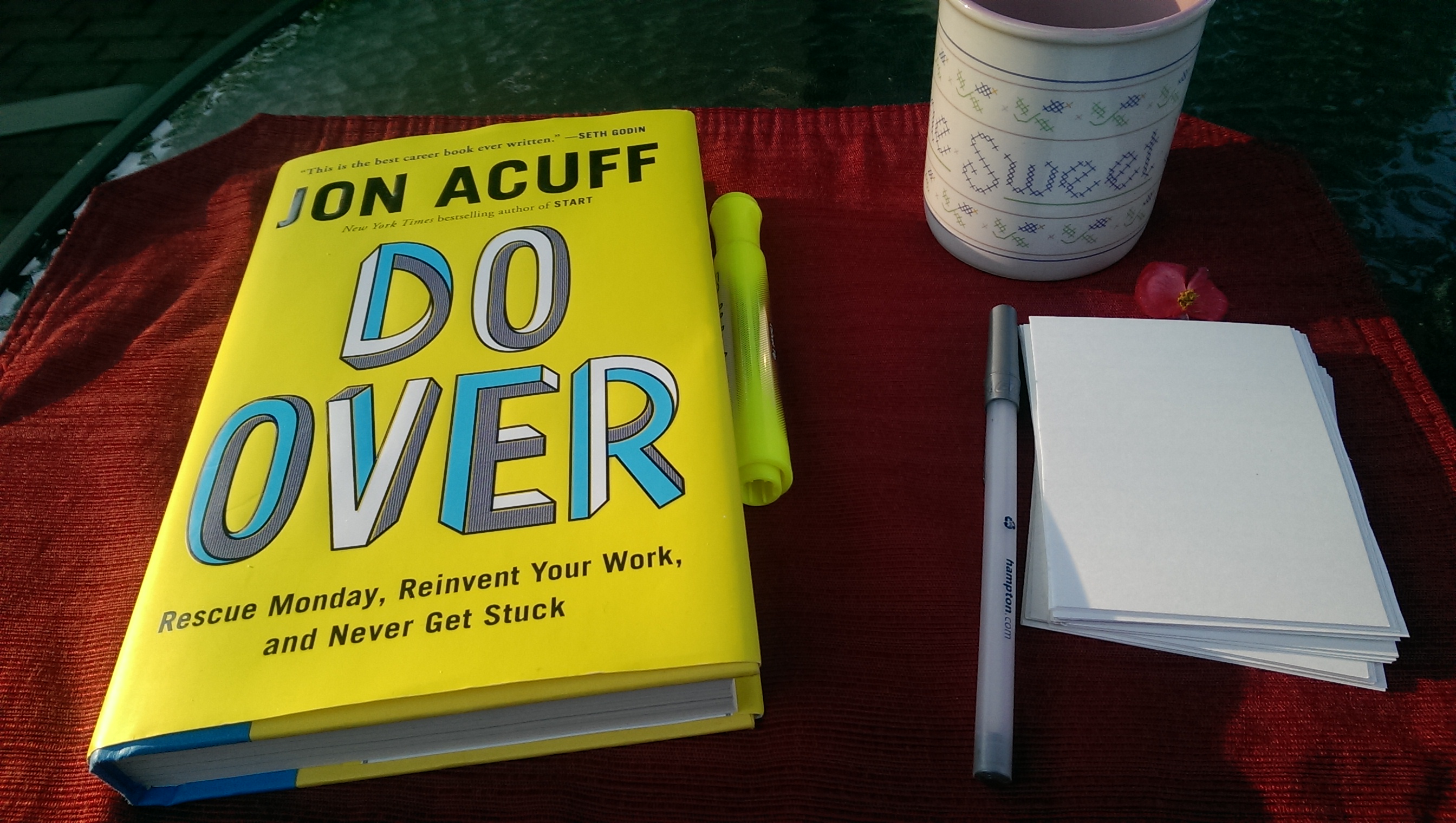
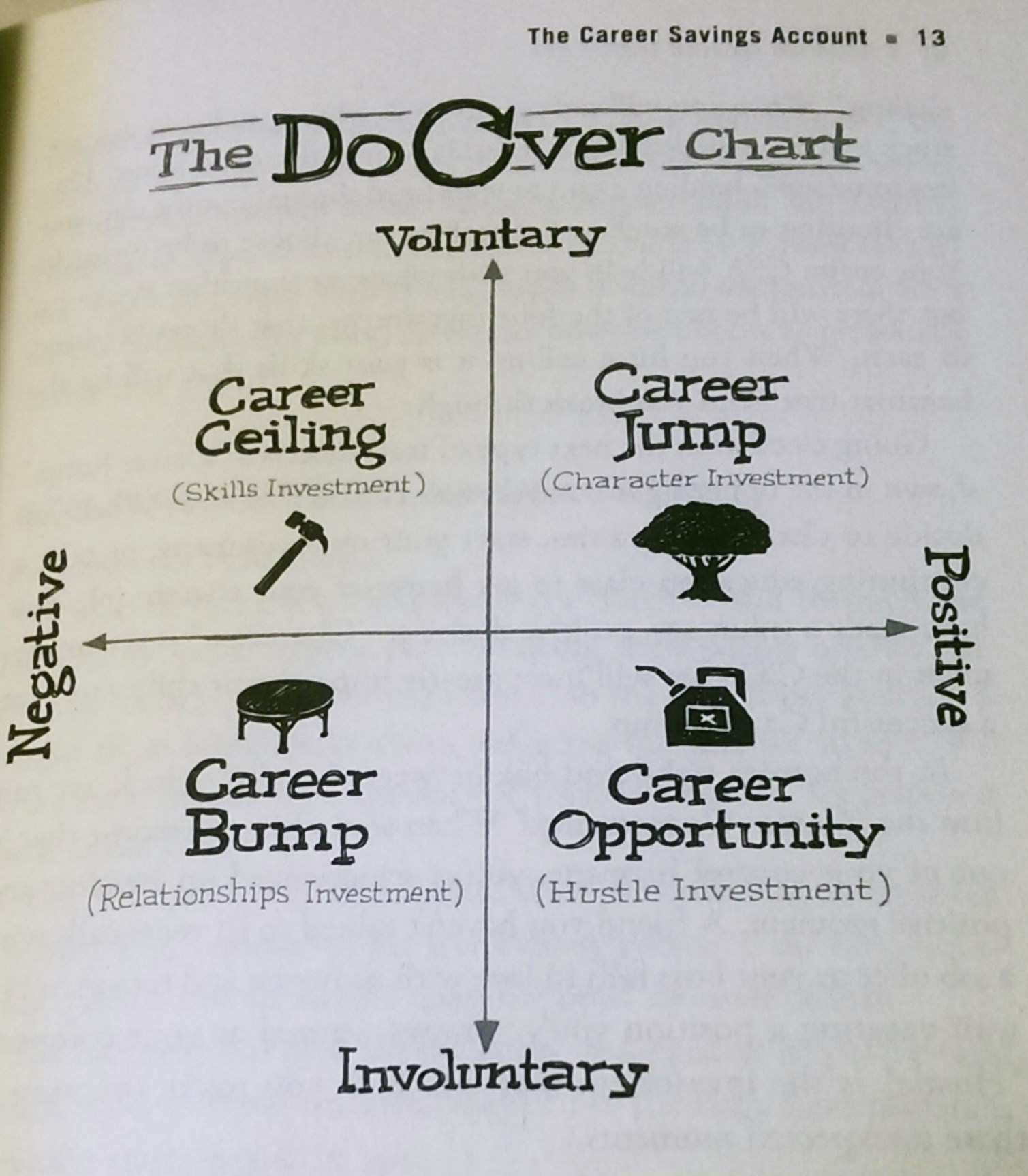
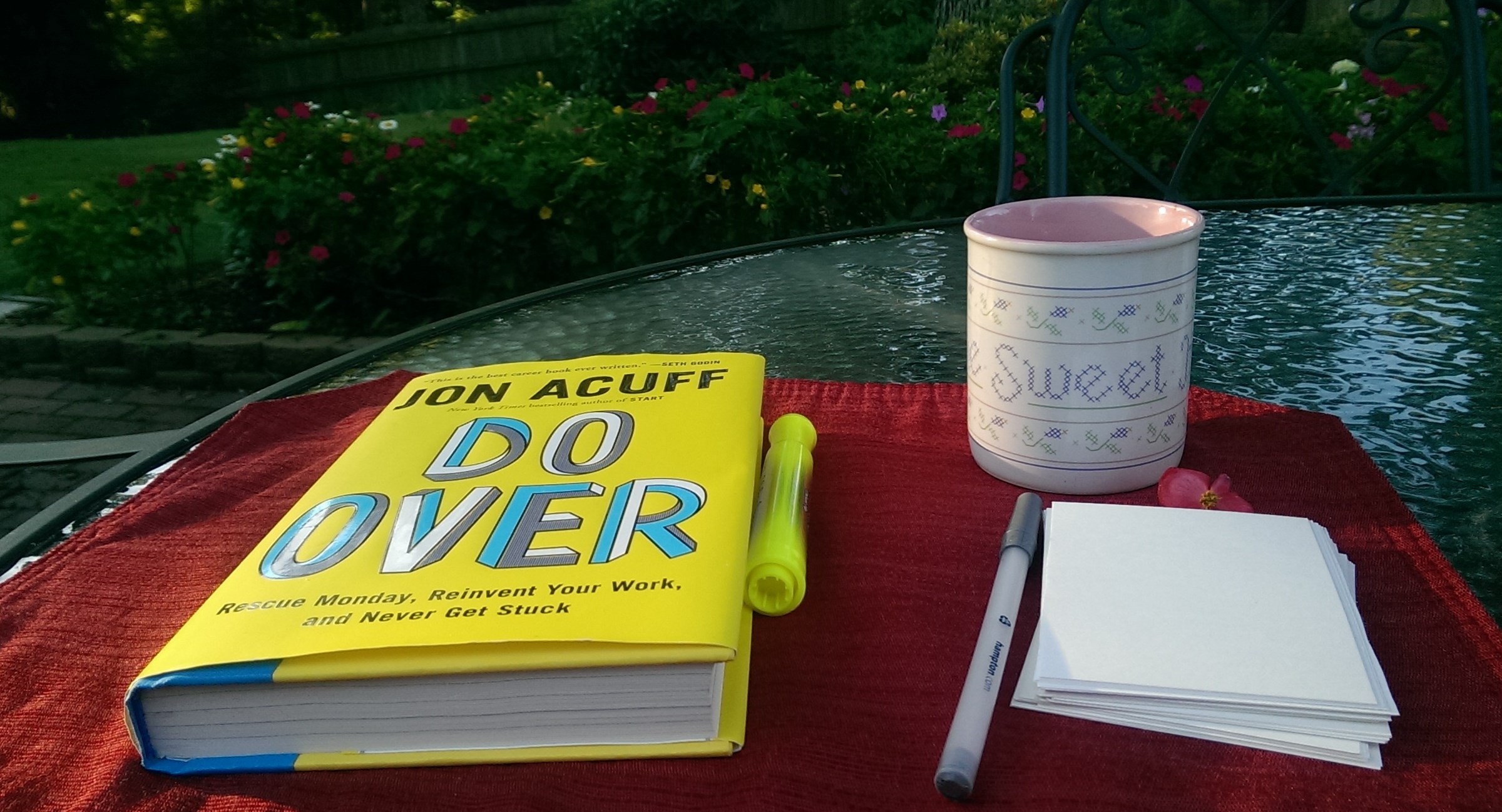
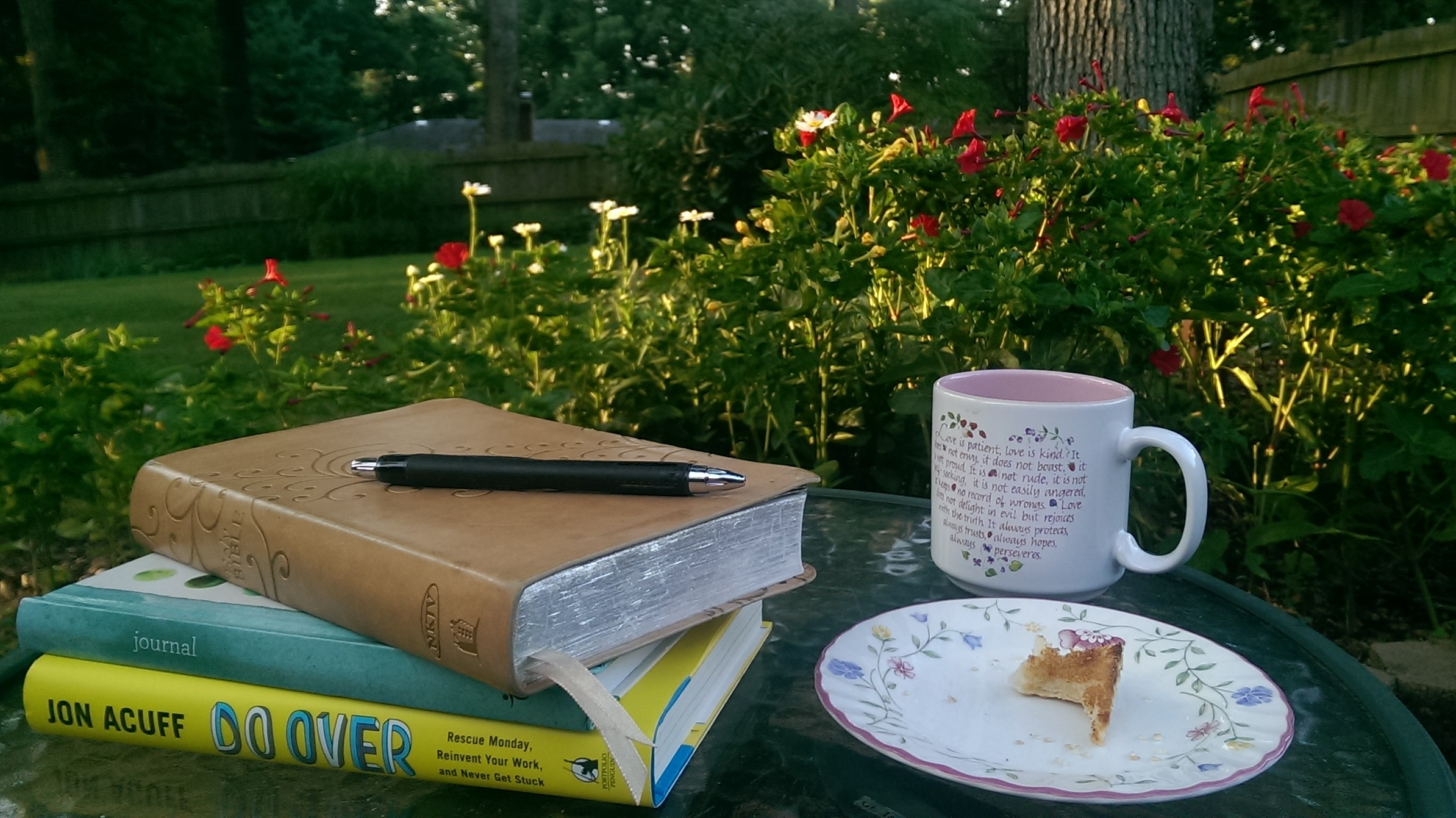
Do Over by Jon Acuff – my current read; will tell you about it when I’m done.

How to Fall in Love with Mondays – Reignite your Love for your Work with these Five Strategies – Fast Company article by Lisa Evans, referencing Do Over by Jon Acuff