Category Archives: Transformational

Jesus and Holy Week – Thursday, Day 5 – Passover Celebration & His Last Supper Before the Cross

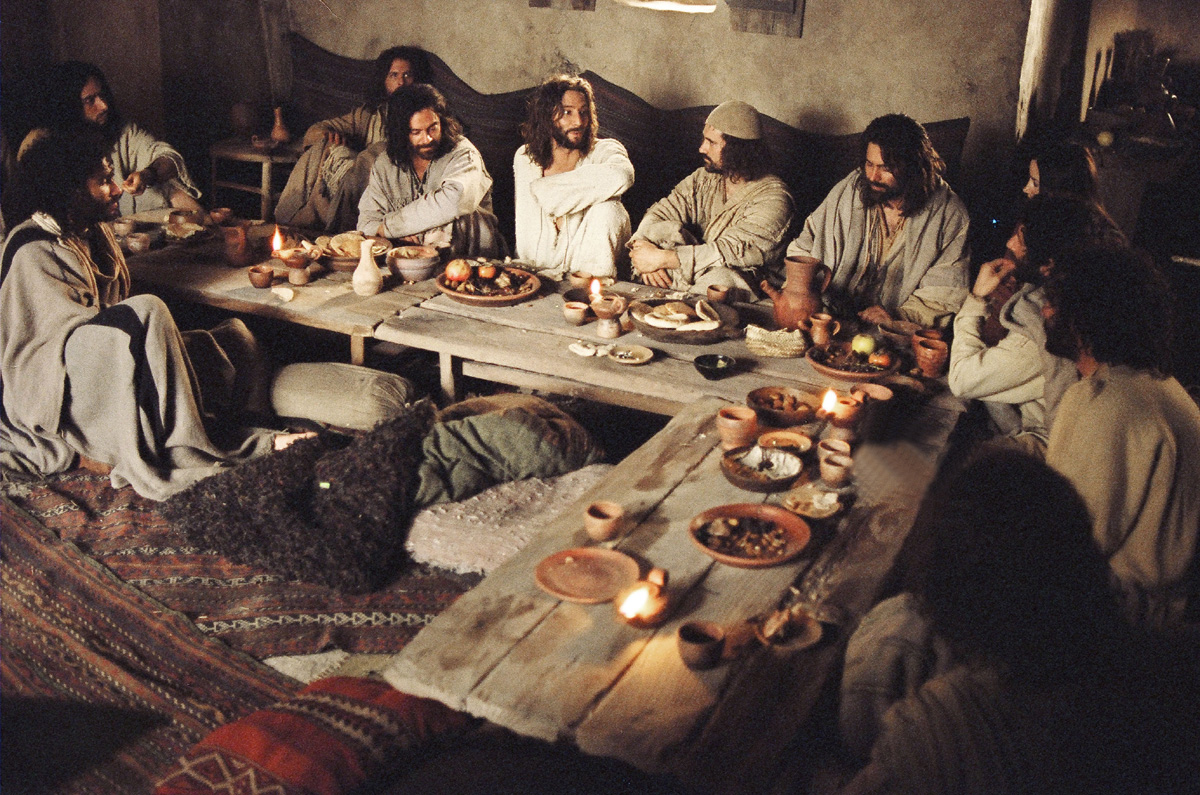
http://debmillswriter.com/wp-content/uploads/2015/04/Blog-Holy-Week-Last-Supper.jpgPhoto Credit – Baptist Press – Courtesy of DeMoss News Pond

[Adapted from the Archives]

“A new commandment I give to you, that you love one another, even as I have loved you, that you also love one another. By this all men will know that you are My disciples, if you have love for one another.” – John 13:34-35

The Thursday before Jesus’ trial and crucifixion was the awaited celebration of Passover. In this day, we have a picture of Jesus, in all his humanity, and in all his deity. All four of the Gospels written about Jesus’ life have an account of this day’s events (Matthew 26:17-75; Mark 14; Luke 22:7-65; John 13:1-18:27).

After sunset, the Jewish people would take the Passover meal together – as families usually. They would share the Seder and remember how God protected them during the days of their slavery in Egypt. Photo Credit: Seder Meal, Robert Couse-Baker, Flickr

When Jesus and his disciples gathered around this meal, there was not just looking back, but also a looking forward. The disciples still may not have understood that Jesus was hours away from dying. However, I’m sure they listened carefully to his teaching in those sacred moments together.

This particular Thursday is known as Maundy Thursday. Maundy means “commanded” and also can refers to the ceremonial washing of feet.  Jesus took upon himself to wash the dusty feet of his disciples, modeling for them his command to love one another (John 13:34-35).

After Jesus and his disciples finished their meal together, he would then enter the garden Gethsemane to pray. They were all with him, except Judas Iscariot, who stole away during the meal. He bring Jesus’ enemies to trap him there in the garden. Jesus prayed long into the night. He wrestled with his heavenly Father over the need for him to die. “Oh my Father, if it is possible, let this cup [of suffering and death] pass from me.” Then, settled in his obedience, “O my Father, if this cup cannot pass away from me unless I drink it, Your will be done.” [Matthew 26:39; Matthew 26:42]

https://upload.wikimedia.org/wikipedia/commons/8/80/Giorgio_Vasari_-_The_Garden_of_Gethsemane_-_Google_Art_Project.jpgPhoto Credit: Wikimedia

Sometime during that dark night of the soul, he turned his attention toward his disciples and all the rest of us, across the ages, who would follow him. His prayer to the Father, recorded in John 17, is exquisitely beautiful, especially in the context of this difficult night. [Take time to read it in full, but I’ve included a part of it below.]

“Holy Father, keep them in Your name, the name which You have given Me, that they may be one even as We are.  I have given them Your word; and the world has hated them, because they are not of the world, even as I am not of the world.  I do not ask You to take them out of the world, but to keep them from the evil one.  Sanctify them in the truth; Your word is truth.  As You sent Me into the world, I also have sent them into the world.  “I do not ask on behalf of these alone, but for those also who believe in Me through their word; that they may all be one; even as You, Father, are in Me and I in You, that they also may be in Us, so that the world may believe that You sent Me.”

Then out of the darkness, Judas came to betray Jesus. He was leading a group of the religious leaders, along with a huge company of soldiers. Although Jesus’ disciples wanted to resist his arrest, Jesus refused their intervening and surrendered himself…not to the mob but to the will of the Father.

The betrayal was complete. His disciples fled (although those closest to him would soon follow). He would spend the rest of the night in the tormenting custody of his enemies. The countdown to the cross has begun in earnest. A countdown that actually began at the Fall of humanity, and, under the careful watch of God, our Father…a countdown toward restoring us back to Himself.

One more day…

Image may contain: textPhoto Credit: Speak Life UK

YouTube video – Behold the Lamb (Communion Hymn) by Keith & Kristyn Getty

Holy Week – Day 5: Thursday’s Passover, Last Supper – Mary Fairchild

What Is Maundy Thursday?

Maundy Thursday 2015: The History Behind The Holy Thursday Before Easter – Also enjoy the beautiful Lent Meditations Slideshow at end of article.
Jesus Pray for His Disciples…and For Us – Ralph F. Wilson

Worship Wednesday – Jesus & Holy Week – Day 4 – A Day of Quiet Before the Storm – & We Worship

Photo Credit: Baptist Press

[Adapted from the Archives]

After these things I looked, and behold, a great multitude which no one could count, from every nation and all tribes and peoples and tongues, standing before the throne and before the Lamb, clothed in white robes, and palm branches were in their hands; and they cry out with a loud voice, saying, “Salvation to our God who sits on the throne, and to the Lamb.” And all the angels…fell on their faces before the throne and worshiped God.Revelation 7:9-11

Worthy is the Lamb that was slain to receive power and riches and wisdom and might and honor and glory and blessing.”  – Revelation 5:12

There appears to be nothing recorded in Scripture of events surrounding Jesus on the Wednesday before his crucifixion. Nothing. After two difficult days dealing with his enemies and accusers, it is quite possible that he took a rest. A Sabbath rest. Given the terrible nature of what was ahead of him, starting just the next day, he could surely use a day to rest and reflect. To remember how the Father had sustained him through all the strains of his public life. To refresh himself in prayer and in the company of those on earth who loved him most – his disciples, his friends, possibly his family. We know no details of that day.

Since we also know what is coming for Jesus…and all for our sakes…we pause today, as well, to worship. He is the perfect lamb, without blemish, perfectly fit to be offered as a sacrifice for our sins. God provided a ram for Abraham to take his son’s place in that strange and amazing sacrifice on Mt. Moriah (Genesis 22:1-14). This was a foreshadowing of our own need for a Savior. We also can be saved by the blood of “the Lamb, who takes away the sin of the world” (John 1:29).

Jesus was not killed on that Friday, two days hence. His life was not taken. Not by the Jewish or Roman authorities. He gave his life…for us…there are no words adequate to respond…worship is all we have.Hispanic celebration at Central High SchoolPhoto Credit – Baptist Press

Worship with me:

Worthy is the Lamb who was slain
Holy, Holy, is He
Sing a new song to Him who sits on
Heaven’s Mercy Seat
[Repeat 2x]

(Chorus)
Holy, Holy, Holy
Is the Lord God Almighty
Who was, and is, and is to come
With all creation I sing:
Praise to the King of Kings!
You are my everything,
And I will adore You…!
Yeah!

Clothed in rainbows, of living color
Flashes of lightning, rolls of thunder
Blessing and honor, strength and
Glory and power be
To You the Only Wise King,
Yeah

(Chorus)

Filled with wonder,
Awestruck wonder
At the mention of Your Name
Jesus, Your Name is Power
Breath, and Living Water
Such a marvelous mystery
Yeah…

(Chorus)

Holy, Holy, Holy
Is the Lord God Almighty
Who was, and is, and is to come,
With all creation I sing:
Praise to the King of Kings!
You are my everything,
And – I – will – adore YOU…

(Chorus)

(Repeat a cappella)

Come up lift up His Name
To the King of Kings…
We will adore YOU Lord…
King of heaven and earth
King Jesus, King Jesus
Aleluya, aleluya, aleluya!
Majesty, awestruck Honor
And Power and Strength and Dominion
To You Lord,
To the King, to King
To the King of Glory

Chorus (Repeats)*Blog - Holy Week Wednesday 9Photo Credit – Baptist Press

*Lyrics to Revelation Song written by Jennie Lee Riddle

Story Behind Revelation Song – Jennie Lee Riddle’s vision of the Church wholly united in worship of God – here as we will be one day in Heaven

YouTube Lyric Video – Revelation Song – Kari Jobe – Passion 2013

Holy Week – Day 4: Silent Wednesday – Mary Fairchild

How is Jesus the Lamb of God?

Podcast – Easter and Hymns with Keith Getty – Rainer on Leadership

Holy Week Timeline Graphic

FREEDOM TO WORSHIPCHINA RELIGIONBlog - Holy Week Wednesday 4Blog - Holy Week Wednesday 2BLog - Holy Week Wednesday 3Photo Credits – Baptist Press

Jesus and Holy Week – Monday, Day 2 – Jesus Curses a Fig Tree and Restores the Temple to a House of Prayer

[Adapted from the Archives]

On the next day, when they had left Bethany, He became hungry. Seeing at a distance a fig tree in leaf, He went to see if perhaps He would find anything on it; and when He came to it, He found nothing but leaves, for it was not the season for figs. He said to it, “May no one ever eat fruit from you again!”Mark 11:12-14

When Jesus woke on Monday morning, after that glorious Sunday entering Jerusalem…I wonder what he thought. Did he know that, in just four days, he would be crucified? Whew…

Back to Monday:

During that week in Jerusalem, Jesus and his disciples spent the nights with friends in Bethany, two miles outside of the city. Each morning, they would walk into Jerusalem. On that Monday morning, just four days prior to his crucifixion, Jesus became hungry on the walk in. Seeing a leafy fig tree, he looked for fruit. With fig trees, where there are leaves, there should be figs. Since green figs are edible, and it wasn’t yet harvest season, there should still be some fruit on the tree.

When he found no figs, Jesus cursed the tree. This seems out of character for Jesus, until his action is put in the context of his culture and community. Throughout his public ministry, especially as he became more known and revered, the Jewish religious leaders held him in contempt. Jesus’ teaching of our dependence on God’s righteousness and not our own flew in the face of the Pharisaical teaching of the day – that of strict adherence to Jewish law as the only hope of finding favor with God. For Jesus, the leafy barren fig tree must have been a picture of religious Jews of that day, all flash and finery but no fruit of faith.

“Christ’s single miracle of Destruction, the withering of the fig-tree, has proved troublesome to some people, but I think its significance is plain enough. The miracle is an acted parable, a symbol of God’s sentence on all that is ‘fruitless’ and specially, no doubt, on the official Judaism of that age. That is its moral significance.”C. S. Lewis

Jesus was left still physically hungry. He remained spiritually hungry  as well – for this people of the Book to receive the good news that the Messiah had come.

Finally, arriving back in Jerusalem, Jesus was deeply troubled by what he found inside the Temple. The crowds of Passover pilgrims did not disturb him, but temple grounds turned marketplace did. In this sanctified place, meant only for worship, there were money-changers and sellers of animals for sacrifice, right in the Court of the Gentiles – in the only place where non-Jewish God-believers could worship. Photo Credit: Bible Universe

And Jesus entered the temple and drove out all those who were buying and selling in the temple, and overturned the tables of the money changers and the seats of those who were selling doves. And He said to them, “It is written, ‘MY HOUSE SHALL BE CALLED A HOUSE OF PRAYER’; but you are making it a ROBBERS’ DEN.”Matthew 21:12-13

Often in film depictions of Jesus cleansing the temple, he appears a crazed individual, flailing about, throwing tables and flinging pigeons into the air. I can’t even imagine him that way. We can’t know how it happened except that in Jesus’ anger, he did not sin. He would not sin. I know the Jesus Film is just another director’s film rendering, but in this scene, Jesus showed great restraint. Disturbed at the buying and selling that actually kept believing Gentiles from worshiping, he moved to correct the situation. He was unafraid of the temple officials, burning with zeal for his Father to be truly worshiped in that place.

Zeal for Your house has consumed me, And the reproaches of those who reproach You have fallen on me.Psalm 69:9

Later in the week, he himself would be the one for sale – sold for 30 pieces of silver, betrayed by one of his own disciples, to satisfy the wrath of the religious leaders. That story is for another day.

This Holy Monday, we are drawn again to this Messiah who teaches us that the way we live our lives matters but not more than the way we relate to God. He makes space for us…room for all of us to receive Him. He is holy, and in His righteousness, we stand…on solid ground.

Holy Week – Day 2: Monday Jesus Clears the Temple – Mary Fairchild

YouTube Video with Lyrics of In Christ Alone by Stuart Townend & Keith Getty

Reasoning Why Jesus Cursed the Fig Tree – Sam Shamoun

Monday of Holy Week

How Can We Be Angry and Not Sin? – Jon Bloom

Cleansing the Court of the Gentiles – Fr. Patrick Henry Reardon

Jesus Film Media – website & app to watch videos

Preparing for Easter: Fifty Devotional Readings From C. S. Lewis – C. S. Lewis

Palm Sunday – Day 1 of Holy Week – Jesus’ Triumphant Entry into Jerusalem on the Way to the Cross

[Adapted from the Archives]

For anyone who considers herself a critical thinker, this week in the life of Jesus of Nazareth is one worthy of analysis. No matter our religion or non-religion, this Jesus, in these days, warrants examination, related to anything we may think of God. The core beliefs of a Christ-follower, not just a person known as Christian, are illuminated here. In the study of Jesus’ life and his followers, in just this one week, we can see a deep distinction between “the religious” and “the redeemed”.

[Sidebar: I taught a World Religions course some time ago in a Moroccan high school. In that course, we studied all the major religions. The students were challenged to think critically of each religion. I encouraged them to study each one, 1) trying to put themselves in the perspective of one who believes (i.e., a true follower, using eye witness/historical accounts and Scriptures when available), and then 2) to break down each belief/tenet of faith critically. We all benefit thinking through Holy Week this way; none will not come away the same by examining the life of Jesus.]

Photo Credit: Wikimedia

Palm Sunday is celebrated as the “triumphal entry” of Jesus into Jerusalem, just days before he would endure a mock trial and then be crucified. He and his closest followers (disciples) came to Jerusalem for the celebration of Passover. Passover was an annual remembrance of God’s protection and deliverance of Israel during a time of slavery (Exodus 12:26-28). Jesus would celebrate Passover on Thursday of that coming week, but he did not come to Jerusalem for that reason alone.

Jesus knew from his Father God why he came to Jerusalem, and he tried to prepare his disciples for what was coming.

From that time Jesus began to show His disciples that He must go to Jerusalem, and suffer many things from the elders and chief priests and scribes, and be killed, and be raised up on the third day.Matthew 16:21

And while they were gathering together in Galilee, Jesus said to them, “The Son of Man is going to be delivered into the hands of men; and they will kill Him, and He will be raised on the third day.” And they were deeply grieved. – Matthew 17:22-23

As Jesus was about to go up to Jerusalem, He took the twelve disciples aside by themselves, and on the way He said to them, “Behold, we are going up to Jerusalem; and the Son of Man will be delivered to the chief priests and scribes, and they will condemn Him to death,  and will hand Him over to the Gentiles to mock and scourge and crucify Him, and on the third day He will be raised up.”Matthew 20:17-19

I can’t even imagine what those disciples must have felt as Jesus predicted his own death. They loved him and all pledged their lives to him, even to death. They believed him to be the conquering king, sent by God, to deliver the Jews from Roman rule and to restore the nation of Israel. Although they had soaked up three years of his teaching, this “end of the story” was more than they could bear. Just a week later, they would gloriously understand that it would not be the end of the story of Jesus’ life…but the emotions of this Sunday, this week, must have been disorienting.

On this Sunday, before the Passover, Jesus would enter the great city of Jerusalem, teeming with crowds there to celebrate. He entered, riding a donkey*, as was foretold by the Jewish prophet Zechariah:

Rejoice greatly, O daughter of Zion! Shout in triumph, O daughter of Jerusalem! Behold, your king is coming to you; He is just and endowed with salvation, Humble, and mounted on a donkey, Even on a colt, the foal of a donkey. Zechariah 9:9

Imagine the scene as Jesus entered Jerusalem. Some in the crowds did recognize him, and then the word spread of the arrival of this great teacher, this healer, this man whose teaching was like none before him. Palm branches were pulled to wave in tribute to him, as others flung their cloaks on the dust before him welcoming him:

Most of the crowd spread their coats in the road, and others were cutting branches from the trees and spreading them in the road. The crowds going ahead of Him, and those who followed, were shouting, “Hosanna** to the Son of David; BLESSED IS HE WHO COMES IN THE NAME OF THE LORD; Hosanna in the highest!” When He had entered Jerusalem, all the city was stirred, saying, “Who is this?”Matthew 21:8-10

“Who is this?” For those who did not know him, the wild welcome for him must have been confusing and captivating. For the religious authorities in Jerusalem, who knew him and were unwilling to welcome this “king of the Jews”, his popularity was infuriating.

The clock began ticking as they plotted against this man Jesus.

Over that bright hopeful day of palms hung the shadow of the Cross – the Cross that would bring even greater hope to all people. The “Hosanna” of Palm Sunday would change to cries to “Crucify!” just five days later. Jesus had no ambition to please the crowds; he was resolutely on task to redeem those who could not redeem themselves – the whole world.

[Each day in this week, the posts will mark the journey of Jesus of Nazareth through the last week of his earthly life. Join me please.]

*Matthew 21:1-11 & Commentary

**”Hosanna” means “God saves”.  YouTube lyric video of Hosanna – Hillsong

Holy Week Timeline: Walk the Week of Passion with Jesus – Mary Fairchild

Look, the World Has Gone After Him: Prelude to Palm Sunday – Jon Bloom

The Significance of Palm Sunday in Relation to Passover

Kings Riding on Donkeys? What?

Photo Gallery: Egypt’s Coptic Christians Celebrate Palm Sunday – When our children were young, we lived in Cairo, and bought palm fronds to make some of these crafts along with our Egyptian friends.

Worship Wednesday – Up and to the Right with Andy Crouch

Photo Credit: Strong and Weak, Andy Crouch w/ Jonathan Storment

I want a Tshirt with this graphic on it. I also want to learn how to live “up and to the right”.

This graphic comes from Andy Crouch‘s book, Strong and Weak, which is still my favorite of 2018 so far. It sets out Crouch’s premise that flourishing is how God means for us to live. How we get to “flourishing”, individually and in community, is with high authority coupled with high vulnerability.

Authority is defined as “capacity for meaningful action”.  Vulnerability is “exposure to meaningful risks”. These are the truest definitions. We have bent both of them to mean something else in today’s culture – either power with potential to be corrupted or a smarmy sensitivity that needs protecting.

Both authority and vulnerability when aligned with the will and nature of God are so much more…and work together to make us true image bearers of our Creator and Redeemer. As community (church), we can actually move toward a flourishing that includes the most vulnerable and the seemingly least empowered.

This Worship Wednesday blog is not about singing praise but about thinking and meditating on God’s Word and His intent for our lives.

“I urge you therefore, brethren, by the mercies of God to present your bodies a living and holy sacrifice, acceptable to God which is your spiritual service of worship. And do not be conformed to this world but be transformed by the renewing of your mind that you may prove what the will of God is, that which is good and acceptable, or well pleasing and perfect.” Romans 12:1-2

“He has showed you, O man, what is good; and what does the LORD require of you, but to do justly, and to love mercy, and to walk humbly with your God?”  Micah 6:8

Thus says the LORD, “Do justice and righteousness, and deliver the one who has been robbed from the power of his oppressor. Also do not mistreat or do violence to the stranger, the orphan, or the widow; and do not shed innocent blood in this place.”  Jeremiah  22:3

“Is not this the fast that I choose: to loose the bonds of wickedness,
to undo the straps of the yoke, to let the oppressed go free, and to break every yoke? Is it not to share your bread with the hungry and bring the homeless poor into your house; when you see the naked, to cover him, and not to hide yourself from your own flesh? Then shall your light break forth like the dawn, and your healing shall spring up speedily; your righteousness shall go before you; the glory of the Lord shall be your rear guard. Then you shall call, and the Lord will answer; you shall cry, and he will say, ‘Here I am.’”Isaiah 58:6-9

Strong and Weak: Embracing a Life of Love, Risk, and True Flourishing – Andy Crouch

This past weekend, I had the opportunity to be a part of a Common Good RVA event. Andy Crouch was the keynote speaker. He spoke practically about how we could apply ourselves to the good of all, especially through the vocations God has given us.

As educated and affluent, our temptation is to avoid vulnerability placing us on the left side of the graph. In our flesh, we prefer withdrawing to safety or exercising control at all costs.

God calls us to a different life…a surrendered life for the common good.

A writer pastor, Jonathan Storment, wrote a series of blogs, taking the reader through a thought-provoking review of Crouch’s wonderful book. Below are quotes from his review and from the book Strong and Weak. When you read the take-aways below, you’ll want to read the book…then you will be compelled to act, with authority and vulnerability.

This paradox of both God-given authority and also the vulnerability that we all face in the world is where true Jesus-like leadership occurs. This is what it has always meant to be humans made in God’s image.Jonathan Storment

Power that is transfigured by love is an entirely different kind of power. It’s the kind of power that leads people to lay down their lives for the good of others. It’s why the New Testament can use the word Dunamis (the word for power, where we get the word dynamite) so often in positive ways. Because Jesus redefined what it meant to wield power.Jonathan Storment

Think back over the people who have made a difference in your life. Chances are they had roles as teachers/parents/mentors/friends. If they helped you flourish in your life, it was because they were acting in some kind of authority, and exposing themselves to some type of vulnerability. They had authority because they had the capacity to make a meaningful difference in your life, and they had vulnerability because they were opening themselves up to someone (you) who could potentially hurt them…Crouch is talking about what the word vulnerability really means…woundable.Jonathan Storment

Idols always promise to give you everything and cost you nothing, but given enough time, they take everything and give you nothing. So Crouch says: “The first things any idol takes from its worshippers are their relationships. Idols know and care nothing for the exchange of authority and vulnerability that happens in the context of love.”Jonathan Storment

[Sidenote: We don’t usually think about idols…probably because we have already been deceived by their control of our lives – alcohol, drugs, pornography, position, wealth.]

Nothing is sadder than a leader who has refused to bear vulnerability. Whenever someone in authority refuses to bear vulnerability someone else is forced to bear it. But it’s not just the people who are oppressed, it’s also the oppressor. They lose something of what it means to be made in the image of God. They slowly create a Hell for themselves and then are forced to live in it.Jonathan Storment

“This is the definition of Hell. To know the power you have and not have the ability to realize that potential.” Hell is like a cruise that never ends. But the real danger for us today is not that we book ourselves a lifetime filled with cruises. It’s that we do the same thing in different ways. Here’s how Crouch says it: “The real temptation for most of us in not complete apathy but activities that simulate meaningful action and meaningful risk without actually asking much of us or transforming much in us. So if you really want to see what withdrawing looks like in affluent, technological America, you don’t have to visit a port of call. You just have to turn on the PlayStation in your living room.”Jonathan Storment

[Sidebar: This is not about bashing ocean cruise aficionados or gamers. I know both who are incredibly engaged as image bearers in their communities. This is about not being deceived. Recreation or needed downtime are not the same as a life’s pursuit of avoiding risks and settling for idols.]

The way of Jesus is up and to the right, authority and vulnerability in the world, bearing in the world’s suffering while being a part of the God’s redemption  process.

I don’t think Christians are the only ones tempted to escape, and in our secular age, it’s no longer Heaven that people are escaping to. It’s much easier to stare at your iPhone than to have a conversation, slowly spend your life watching t.v. every night instead of going that group or civic effort.

[God help me here.]

Vulnerability and Authority – called to make a difference and remain open to the suffering of the world. Because we follow a God who did anything but withdraw, we are called to do the same. Now Up and to the Right. Jonathan Storment

Now the challenge for us is to take the wisdom of these words and apply them to our lives and our community. Thoughts?

Strong and Weak: Embracing a Life of Love, Risk, and True Flourishing – Andy Crouch

Strong and Weak: The Hidden Vulnerability of Leadership – Jonathan Storment

Strong and Weak: Flesh and Bones – Jonathan Storment

Strong and Weak: Crown of Thorns – Jonathan Storment

Strong and Weak: Numb to the World – Jonathan Storment

Strong and Weak: Drunk on Power – Jonathan Storment

Strong and Weak: Up and to the Right – Jonathan Storment

What Is True Worship? – Got Questions

Worship That Pleases God – Isaiah 58:1-14 – Brian Sandifer

Characteristics of Acceptable Worship – Gregory Brown

Saturday Short – Can I Get a Witness? – Luke 22 – the Trial of Jesus

Photo Credit: Destiny Christian Center

Just this past week I had the privilege of being in a gathering where pastors Brion Hamlett and Cliff Jordan called us to pray. The focus was racial reconciliation and bringing together our city in a unity only God could accomplish. Once, while Brion was speaking, he said to us, “Can I get a witness?!”

Can I get a witness…

That came to mind again this morning while reading from the Gospel of Luke (the 22nd chapter).

For those of us who have closely searched out and studied the life of Christ, this is the account of his last meal with his disciples and what followed. Jesus was trying to prepare these beloved friends and followers of what was ahead. Peter, one of his closest disciples said he would follow him to prison, or even to death.

Then Jesus said to Peter, in a prophetic word, that he would actually deny even knowing him three times before the rooster crowed the next morning.

The many details that play out after this can be found in Luke 22. For now, if you don’t already know, later that night, Jesus was taken into custody by the religious leaders. He was put through a sham of a trial, and was cruelly beaten and mocked. During all that, Peter stayed close but without any words…except those he would use to deny knowing Jesus…the One he called Lord but a few hours before.

Where would Jesus’ witness come from if not from those closest to him?

They [the chief priests] led him [Jesus] away to their council, and they said, “If you are the Christ, tell us.” But he said to them, “If I tell you, you will not believe, and if I ask you, you will not answer. But from now on the Son of Man shall be seated at the right hand of the power of God.” So they all said, “Are you the Son of God, then?” And he said to them, “You say that I am.” Then they said, “What further testimony do we need? We have heard it ourselves from his own lips.”Luke 22:66c-71

Jesus took the words of the unbelieving religious leaders and turned them into a witness to Himself…to His being the Son of God…in fact, the “I AM”…the one true God.

Within this last week of his earthly life, Jesus would experience great adulation by the crowds in Jerusalem and great isolation with only those who hated him in attendance. Earlier in that week, with these same men possibly, Jesus had this conversation:

As He approached the descent from the Mount of Olives, the whole multitude of disciples began to praise God joyfully in a loud voice for all the miracles they had seen: “Blessed is the King who comes in the name of the Lord!” “Peace in heaven and glory in the highest!” But some of the Pharisees in the crowd said to Him, “Teacher, rebuke Your disciples!” “I tell you,” He answered, “if they remain silent, the very stones will cry out.” – Luke 19:37-40

The day the rooster crowed, Jesus’ friend Peter would be silent. No witness. Jesus would die. Not for lack of a true witness or because of a false one. He would die because He came to do so. To close the chasm between sinful humanity and the one holy and true God.

His life, death, and resurrection are the foundation of our faith as Christians. We are witnesses…to the historical Jesus and to the redemptive work He has done and continues to do in our lives.

Peter would repent with deep sorrow his denial of Christ. He would then become the Spirit-filled rock upon which the church would be built. I dare say, he was never silent again.

Where do we go from here? As I read Luke 22 this morning, my own heart was deeply convicted of the silence in my own testimony of who Jesus is and what He has done for me and for all humanity.

God, help me to be faithful to the truth of who You are…before rocks are stirred to cry out in my place.

I would leave the house this morning…turning over and over in my mind both this Scripture passage and the phrase “Can I get a witness?”

As happens with God and me, this too timid, well-loved daughter of His, there was a glorious postscript to the morning’s revelation. A song on the radio: Jordan Feliz‘s Witness.

Slain!

Can I get a witness?

5 Friday Faves – Perspective, Academy Awards, Malcolm Gladwell & Success, Relationships, and Changes in the Weather

31 years ago yesterday, I woke well before dawn and knew right away why. It wasn’t the wild wind of Spring, bringing in the month of March “like a lion”. What woke me was the beginning of labor that would last all day. As we drove to the hospital, the wind gusts pushed against our little pickup truck and added to the deep memories of that morning. Many hours later, our firstborn arrived.

This morning was very much like that morning long ago. I was, however, wakened this time by those March winds, blowing hard outside. No going back to sleep, I settled in front of the fireplace with coffee and reading…reflecting on all the good of this week.

Here are my five favorite finds:

1) Perspective – Two authors this week caused me to think deeply about how we make decisions and choose directions. Writer pastor Scott Sauls (author of a favorite book Befriend) wrote a series of “What ifs” in his blog this week. Here are a few:

What if, in the spirit of Paul intelligently and winsomely engaging Greek academics with the truth of the gospel, Christians became known for engaging in thoughtful, enriching, challenging, and honoring discourse about God, humanity, and life (Acts 17:22-34; Colossians 4:6; 1 Peter 3:15)?

What if, in the spirit of how care was given to vulnerable children and women in the early church, women experiencing the trauma and fear of an unplanned pregnancy began to think first of local churches, not local clinics, as a comprehensively life-giving place of comfort, counsel, and care (James 1:27)?

What if, in the spirit of Scripture’s vision for the integration of faith and work, Christians became known as the bosses everyone wants to work for, the colleagues everyone wants to work alongside, and the employees everyone wants to hire (Ephesians 6:5-9)?

[Read the rest here.]

Photo Credit: Flickr

Also innovator Steven King wrote of making a decision NOT to become a professor in North Korea. Unlike professor Tony Kim and others who now languish imprisoned there without benefit of a trial or any contact with family or other representative. Remember the #USA3.

Photo Credit: Facebook

Could I Have Been the Professor Being Held in North Korea? – Steven King

2) The Academy Awards – The 2018 Oscars ceremony is coming up this weekend. Among the nominees is The Greatest Showman‘s “This Is Me”, the original song by Benj Pasek and Justin Paul. The song celebrates the beautiful humanity in all of us, no matter our differences or peculiarities.

Photo Credit: Wikimedia Commons

If you have not heard this song yet, I have links below. They are in a particular order, and you definitely should take your lunch or coffee break to watch all of them.

  1. The Greatest Showman – This Is Me [Official Lyric Video]

2. The Greatest Showman – “This Is Me” with Keala Settle (The Making Of)

3. Beyond the Guitar’s arrangement of a Greatest Showman medley (including This Is Me)

4. This Is Me (from The Greatest Showman Soundtrack) – Official Fan Video – Nathan of Beyond the Guitar is included at minute 1:26 and 2:05

[Sidebar – There are 4 other original songs in the Best Song category of this year’s Academy Awards. One of them is Remember Me from the film Coco. Here is the Beyond the Guitar‘s arrangement of this lovely lullaby.]

3) Malcolm Gladwell & Success – Author Malcolm Gladwell is a tireless student of human nature and culture. My husband brought my attention to him through his books The Tipping Point and Outliers.

Gladwell is scheduled this year to teach writing in the online Master Class. In the promo (below), he tells a story about the Goliath’s in our lives.Photo Credit: Guillaime Courtois, Wikimedia Commons

“Why do giants lose? Because they can’t see….they’re so big and strong and powerful they lose the ability to kind of properly appreciate the world around them. It’s not just a story about David’s courage and greatness…it’s a story about Goliath’s blindness.”

In a video montage (archived on YouTube), Gladwell gives clarity to how we can be successful in life (even with Goliath’s):

Gladwell’s 10 Rules for Success

  1. Have the courage to pursue your idea.
  2. Try a new approach.
  3. #Believe in meaningful work.
  4. Constantly revise your conclusions.
  5. Distinguish yourself from others.
  6. Practice.
  7. Explore.
  8. Be patient.
  9. Understand the rules of business.
  10. Outwork others.

YouTube Video – TED Talk – The Unheard Story of David and Goliath – Malcolm Gladwell

4) Relationships – They are the heart of life. Relationships. Friendships. As we get older, too often we allow friendships and family relationships to go untended, unnurtured. To our own peril.Photo Credit: Flickr

Writer Anna Goldfarb gives wise counsel in her piece How to Maintain Friendships. In brief here’s what she advises:

  • Communicate expectations.
  • Nix “I’m too busy”.
  • …Then examine your busyness.
  • Personal, small gestures are the way to go.
  • Cultivate routines.
  • Come through when it counts.
  • Acknowledge efforts made.

Read her whole article for detail and context. Wisdom.

How to Maintain FriendshipsAnna Goldfarb

This week, I also discovered this young and dynamic pastor, Michael Todd. His sermon series on relationships is like having coffee with a trusted friend who knows stuff and is funny to boot. The first sermon is Before the Person: Relationship Goals. [You can start 20 minutes in.]

He presents how God provided for Adam in the Garden with Eve, but not before He set other things in place first.

Before the Person:

(Genesis 2:15-18)

  1. Place
  2. Purpose
  3. Provision
  4. Identity
  5. Parameters

Good teaching, for sure.

5) Changes in the Weather – I love this changeable weather. This week was such a mix – short sleeves one day, cap and jacket the next. As I say earlier, this morning was so windy, it woke me up before 4:00am. It’s still blowing hard hours later. Our wind chimes are ringing like church bells on a wedding day. Crazy wonderful weather.

[My garden flag flew away and I grabbed my jacket and I walked, still in pjs and slippers, until I found it.]

The beauty of this time of year in Virginia also changes with each passing day…more and more blooms heralding the coming of Spring.

So there you have it. What were some of your favorite finds this week? Please comment below. Also, take care out there in this weather. Enjoy the sun when it comes, and take the rain as a gift to wind down a bit from your week. With much love.

Bonuses:

Rising Tide Startups – Podcast with Glenn Hirchfield, Entrepreneur & Angel Investor

Did you catch the ice skating gala performance on NBC the night before the 2018 Winter Olympics closed? The finale was amazing, as all the medalists performed to the Oscar nominee song “This Is Me” (yes…again). I thought it would be easy to find the professional videotape of this event but all I could find were fan videos. Still, they are fun to watch…especially capturing the joy of Japanese skater Yuzuru Hanyu. Enjoy:

The rehearsal:

The final performance:

Quote:

Photo Credit: Facebook, Dementia Awareness Every Day

Worship Wednesday – No Longer Slaves – Voices of Lee

Photo Credit: A Christian Pilgrim

In the dark and confusing times of my life, I have clung to these words in 2 Timothy 1:7 and taken comfort. The Apostle Paul wrote them to his young friend and son in the faith Timothy. Paul had experienced all the persecution of that day and was in what he knew would be his last imprisonment before being executed. His words to Timothy were deeply personal and rang with faith and hope…even in the face of suffering.

We are but frail humanity…very like this one, Paul. He was chained and isolated in his imprisonment, yet his spirit was free because of what he knew to be true. He was no longer a slave to a religion or a political entity. His current situation was brought on by tenacious obedience to the call of Christ. Therefore, he took confidence in the unseen – the presence of God Himself in that darkness, the work of God in his life, and the continued Gospel influence he had, even from prison. His identity was in Christ…he was a secured child of God.

That truth helped him endure the cold dungeon, the isolation from those closest to him, and the storm of his own thoughts.

Whatever our situation today, we have the same provision of God as did Paul years before us. As did the children of Israel, when they stepped onto the dry bed of the Red Sea, parted by almighty God.

Fear presses in on us and speaks lies. Fear tells us our situation is hopeless. Fear mocks the work of God in our lives. Fear takes what is seen and magnifies it over the magnificent work going on in the unseen of our lives.

The very good news is that fear will not prevail. It does not displace truth. It does not cancel faith. It may waylay us for a time, or sideline us for a moment, but God in His great goodness draws us to Himself and speaks love to our wearied hearts and minds.

[Sidebar: I find women more than men talk of the struggle with fear. My husband concurred that men think about fear as having to do with physical danger…If physical danger isn’t a present cause for fear, then men wrestle more with their private battles…alone. God knows our hearts…that fear of failure, or fear of being stuck somehow…the mental struggle that takes away our joy. He wants to restore that joy…and the peace that comes in remembering His love and provision.]

The songwriters of Bethel Music have given us a great anthem to God’s truth as demonstrated in His deliverance from fear. We are His children, and He is a father like no other.

“The LORD is on my side; I will not fear. What can man do to me?” – Psalm 118:6

Worship with me (link to lyric video) to No Longer Slaves, performed by the Voices of Lee. [A HD version of the song is here, with lyrics below.]

[Verse 1]
You unravel me with a melody
You surround me with a song
Of deliverance from my enemies
‘Til all my fears are gone

[Chorus]
I’m no longer a slave to fear
I am a child of God
I’m no longer a slave to fear
I am a child of God

[Verse 2]
From my mother’s womb, You have chosen me
Your love has called my name
I’ve been born again into Your family
Your blood flows through my veins

[Chorus]
I’m no longer a slave to fear
I am a child of God
I’m no longer a slave to fear
I am a child of God

[Bridge]
You split the sea so I could walk right through it
My fears were drowned in perfect love
You rescued me so I can stand and sing
I am a child of God
There’s power in the name of Jesus
(You split the sea so I could walk right through it)
There’s power in the name of Jesus
(My fears were drowned in perfect love)
There’s power in the name of Jesus
(You rescued me so I can stand and sing)
To break every chain, to break every chain
To break every chain
(I am a child of God)
To break every chain, to break every chain
To break every chain
He breaks every chain, He breaks every chain
He breaks every chain
We’re no longer slaves, we’re no longer slaves
We’re no longer slaves
He broke every chain
We’re no longer slaves
We’re children of God

[Chorus]
You split the sea so I could walk right through it
My fears were drowned in perfect love (perfect love)
You rescued me so I can stand and sing
I am a child of God (hallelujah, hallelujah, hallelujah, hallelujah)
I am a child of God (hallelu-hallelu-hallelujah)
(We’re no longer slaves!)
I am a child of God*

In the official lyric video**, the song plays against a visual background of a well-trodden path on the edge of a mountain. To the right, as the viewer moves along the path, there is a sharp decline which seems to fall down to the deep valley. For someone with a fear of heights, my eyes are drawn away from the path down that steep cliff. This is the struggle for those of us who fear. That’s why God calls us to keep our eyes on Him, and on the path He has provided for us…and to remember the truth. “Stay on target!” is an adage (from Star Wars) that our family uses to remind ourselves. Stay on target!

*Lyrics to No Longer Slaves as Performed by Voices of Lee – written by Brian Johnson, Jonathan David Helser, Joel Case (Bethel Music)

YouTube Video – No Longer Slaves – Voices of Lee – Lyrics

**YouTube Video – No Longer Slaves –  Official Lyric Video – Jonathan David & Melissa Helser – We Will Not Be Shaken

YouTube Video – No Longer Slaves (Song Story) – Jonathan & Melissa Helser – We Will Not Be Shaken

Worship Wednesday – Anxiety, Holding On, & Reclaiming Perspective – Deb Mills Writer

Monday Morning Moment – Blind Spots…Gulp. What Are Yours?

Photo Credit: Dan Rockwell, Leadership Freak

What do our faces and body language communicate? A friend and I were talking recently about how, as we’ve aged, our faces apparently have a resting pose of anger or disapproval. What?! When we were clued in on this, we both took action to keep a bit of a smile on, as a practice to avoid being misunderstood.

Not really a blind spot or is it? Blind spots are features of our personality (and physicality) that communicate something (usually negative) to others yet we are unaware of it ourselves. Blind spots are not necessarily intentional and if we were made aware of them we might be highly motivated to change or reckon with them.

Do we have blind spots in our posture and our behavior? In our decision-making or execution? Yes…and yes.

This isn’t a case for navel-gazing or over-thinking. We actually can’t discover our own blind spots without the help of others. However, sorting out our blind spots can, in fact, makes for healthier and happier relationships. As we realize how these not-easy-to-see patterns can have impact on work and life.

Following are four takes on blind spots by four business leaders. You seriously might want to jot down any of the blind spots that could be at work in you. Then check out these authors’ take on how to wrestle with these blind spots. Read the full articles by clicking on the links.

Thought leader, and CEO of her own management consulting firm, Davia Teman on 10 Leadership Blind Spots That Can Trigger Business Crises in 2017

Photo Credit: Davia Teman, Forbes

[Teman goes into these 10 surprising “don’ts” in her article here with excellent  counsel on how to get started dealing with these blind spots. Her expertise in crisis management in companies and careers gives weight to the idea of steering clear of over-trust and leaning into tested verification. Fascinating.]

The Top 10 Leadership Blind Spots, and 5 Ways to Turn Them Into StrengthsMarissa Levin – Entrepreneur and CEO of Successful Culture

  1. Going it alone
  2. Being insensitive of your behavior on others
  3. Having an “I know” attitude
  4. Avoiding the difficult conversations
  5. Blaming others or circumstances
  6. Treating commitments casually
  7. Conspiring against others
  8. Withholding emotional commitment
  9. Not taking a stand
  10. Tolerating “good enough”

Levin’s consulting firm provides help with leadership and strategy development, as well as culture-building. I am amazed sometimes what kind of assistance we can get online for such things. You can read more on her 10 leadership blind spots and especially her 5 compelling prescriptions for them here.

Leadership coach, consultant, and blogger Dan Rockwell‘s piece on Sudden Breakthroughs in Subtle Blind Spots

  1. Over-estimating your strengths. You think you’re a great communicator. They think you’re boring.
  2. Over-estimating your approachability. You see yourself as welcoming and open. Teammates nickname you, “Pitbull.”
  3. Over-estimating your listening skills. You think you’re exploring options. In reality, you’re killing ideas, cutting people off, and talking too much.
  4. Over-confidence in your solutions. You call it problem solving. They call it defending your viewpoint and devaluing theirs.
  5. Over-confidence in your ability to understand how others think and feel. You call it insight. They call it out of touch.

Rockwell gives 10 gut-punch but empowering rapid-read prescriptions on how to take blind spots to breakthroughs. Read them here, if you’re ready to deal with those 5 blind spots or others.

7 Leadership Blind Spots That Drive Your Team Crazy – Carey Nieuwhof, Pastor, Leadership Consultant, and Podcaster

  1. Underestimating How Much Work It Takes
  2. Impulsive, Emotion-based Decision Making
  3. Being Indecisive
  4. Being Too Decisive and Not Valuing Input
  5. Creating an Unsustainable Pace
  6. Working Too Few Hours
  7. Expecting Others to Put in More Than You’re Willing to Put In

[Read Nieuwhof’s succinct and helpful commentary on each of these here.]

Months ago, I also wrote about blind spots (here). The following is an excerpt:

Life coach and writer Martha Beck prescribes a way to discover our blind spots.

“I know how valuable honest feedback can be, how much precious time it can save in my struggle to awaken. I still have to force myself to go looking for it, but when I do I almost always benefit.

Try this: For a week, ask for blind-spot feedback from one person a day, never asking the same person twice. Just say it: “Is there anything about me that I don’t seem to see but is obvious to you?” You’ll probably want to start with your nearest and dearest, but don’t stop there. Surprisingly, a group of relative strangers is often the best mirror you can find. I’ve worked with many groups of people who, just minutes after meeting, could offer one another powerful insights. Like the emperor in his new clothes, we often believe that our illusions are confirmed by the silence of people who are simply too polite to mention the obvious. Breaking the courtesy barrier by asking for the truth can change your life faster than anything else I’ve ever experienced.”Martha BeckPhoto Credit: Vimeo

As hard as negative feedback is to stomach, it is a great help to avoid continued odd responses from people or the distancing that can happen when our blind spots get in the way of intimacy and care in relationships.

Now blind spots and “buttons” are different and yet connected. Buttons – those things people do that make us crazy – actually point to some of our blind spots in the way we respond to people pushing those buttons.

For instance, one of my buttons is when someone treats me like I’m stupid, or gullible. Like when a person tries to help me understand a decision he/she has made as if it’s a good thing when I know, and he/she knows, it’s not necessarily a good thing for me. This sort of thing makes me really burn (standing in the need of prayer here). OK…that’s a button, but my response can reveal a blind spot. My blind spot is that if I take a stand in some area then it means that I am “totally right” in that stand. Sort of the same as the button but from a different direction, you know what I’m saying? My blind spot response in that situation leaves little room for figuring out what the other person’s own “stand” truly meant.  It’s helpful to know our blind spots and our buttons so we can work out ways of being more honest and honoring in our communications with colleagues…well, with everyone.

What do you think?

Seeing Your Emotional Blind Spots – Martha Beck

What’s Your Blind Spot – Jane Taylor

6 Career Derailing Blind Spots and How to Overcome Them

How Successful People Cure Their Blind Spots – Kevin Kruse

How to Watch Out for Blind Spots in Your Leadership – Lolly Daskal

Monday Morning Moment – the Components of Truly Multiethnic Organizations – Color, Culture, Compromise, and Community

Photo Credit: ProExcell, Eclassified

Is being multiethnic part of your organization’s DNA or core values?

Whether a part of a Fortune 500 company or a megachurch, or whether just beginning a small business or a new church plant, our values are soon exposed. First, by our goals and then by our makeup.

“Like begets like”. For better or worse.

So…what if we see the value of multiethnicity in our organization, is it apparent in our makeup?

A quick assessment can come out of the 80/20 rule: when one racial group accounts for 80 percent or more of the membership (or organization).* In the US, if our company has 100 employees, and 79 or fewer are white, we are moving in the direction of being multiethnic in our makeup. Easier than counting through employees, just look at the makeup of the leadership team. That readily speaks to the direction of the organization.

I’m not talking quotas here, at all. Racial diversity is probably not the ultimate goal. It can, however, be a part of the goal.

If we are part of a mono-cultural (a racial majority) organization, there is benefit in asking these questions: Should we look more like the rest of the world? What do we communicate when we don’t? What problems do we make for ourselves in keeping the status quo? What positive impact can we have on the present and future, if we do act, moving toward multiethnicity, with intentionality?

For starters, let’s examine the components of a multiethnic organization – color, culture, compromise, and community.

Color and Culture Pastor and writer Bryan Loritts gives perspective in his book Right Color, Wrong Culture: The Type of Leader Your Organization Needs to Become Multiethnic (A Leadership Fable). Written in the style of the great Patrick Lencioni leadership books, it’s a fast and fascinating read, with much to mull over afterward.Photo Credit: Cedarville University

In his book, Loritts paints a clear picture of color and culture as he defines 3 types of cultural expression.

C1 – Persons within a certain ethnic group who have assimilated into another ethnic group. Loritts uses one such example from our TV pop culture of a few years ago: Carlton Banks of The Fresh Prince of Bel Air -and the It’s Not Unusual dance. On the surface, these persons would seem to easily blend into an emerging multiethnic organization. They bring racial diversity without rocking the institutional boat. Will just considering skin color get us to goal?

C3 – At the other end of the spectrum, the persons within an ethnic group who absolutely refuse to assimilate within other ethnic groups or cultures. Again, from the same 90s TV show, Loritts uses a different character as a light-hearted example: Fresh Prince Will Smith Dancing. C3s do not blend into the majority ethnic group and have no intention of doing so. What they bring to an organization is ethnic definition.

Hang in there with me. Especially if you’re thinking this has nothing to do with competence or corporate excellence. There’s more.

C2 Those persons who have the unique ability to go from one culture to another, without compromising or losing who they are in the process.

Who did Loritts give as a person we can all recognize as a probable C2? Denzel Washington. When you look down the 30-years-plus of Washington’s films, he chose to portray a wide range of characters at which we watched and wondered. C1s, C3s, and, of course, C2s. Washington is a black man with the wisdom and understanding of one who will bring his best to any situation, without losing himself.

This breakdown of cultural expressions made me take a long, hard look at my own life – if not my preferences, definitely my default. I’m a C2 wannabe in a C3 life AND organization. In earnest, I do want to be a C2, but too many actualities in my life point to the fact that I’m not there yet…but “there” is my goal.

We need C2s to grow into truly multiethnic organizations.

Compromise – To move our organizations toward a goal of multiethnicity, compromise, in the best sense of the word, will be required. As we look at our makeup and our market, we must ask hard questions of ourselves. What are we really willing to invest to get to a multiethnic leadership and true organizational partnership across cultures?

If leaders are interested in exploring and reaching beyond their particular demographic, they must understand that a lot of it has to do with …leadership. This is something that has to be flowing out of the leader. This intentionality and staffing will always prove to be a major catalyst for change. DeYmaz also issues a call for intentionality when it comes to developing diverse leadership teams…Bryan Loritts says the ideal candidate for a leadership role is what he refers to as a C2 leader. “A C2 is a person who is culturally flexible and adaptable without becoming ethnically ambiguous or hostile.” As an example of a C2 individual he points to actor Denzel Washington,as someone with the unique ability to play a variety of culturally-different roles while remaining true to himself in the process.* – Jeff Fehn

A Training Curriculum Model of Multiethnic Ministry Best Practices Designed for Harmony Vineyard Church – Jeffrey A. Fehn

Community – With intentionality and the willingness to give space to other ethnicities and cultures, our organizations can look like and identify with the world we serve. Our products and identity can  communicate both excellence, relevance, and highest humanity as we become more multiethnic. In fact, while we may strive toward diversity or multiethnicity… really the goal needs to be multiculturalism…enriching and empowering each other personally and organizationally.

While cultures are defined by their distinctiveness, community and interaction rely upon commonalities to establish unity. In order to have intercultural relationships, some accommodation must be made on one or both sides of the cultural divide. But the act of accommodation represents, to some degree, a compromise and loss of cultural values.Mark Naylor

Photo Credit: Together for Adoption
A truly multiethnic organization will be multicultural.
What is gained in formulating goals that bring together ethnicities and cultures with processes that encourage positive compromise and rich community? I’d say…the world.
Thoughts?

Where will these kids work, serve, and do community one day?Photo Credit: Flickr

[Postscript: Pat Lencioni’s most recent post popped up in my email this morning, a day after my weekly post went up. He adds one other “C”: Conflict – check out his read on Diversity’s Missing Ingredient.]

Right Color Wrong Culture: The Type of Leader Your Organization Needs to Become Multiethnic (A Leadership Fable) – Book Review by Chis Pappalardo and J. D. Greear

Right Color, Wrong Culture: The Type of Leader Your Organization Needs to Become Multiethnic (A Leadership Fable) – Bryan Loritts

*A Training Curriculum Model of Multiethnic Ministry Best Practices Designed for Harmony Vineyard Church – Jeffrey A. Fehn