Earlier today a miracle happened. The last Israeli hostages were released from Gaza. Twenty of them. Released! Israel also released almost 2000 Palestinian prisoners. Released! Hopefully the cease-fire on both sides will continue, and the Middle East can settle into a much-needed peace.
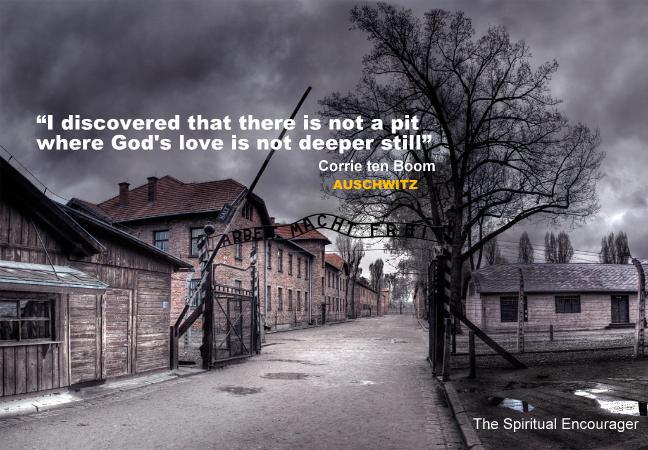
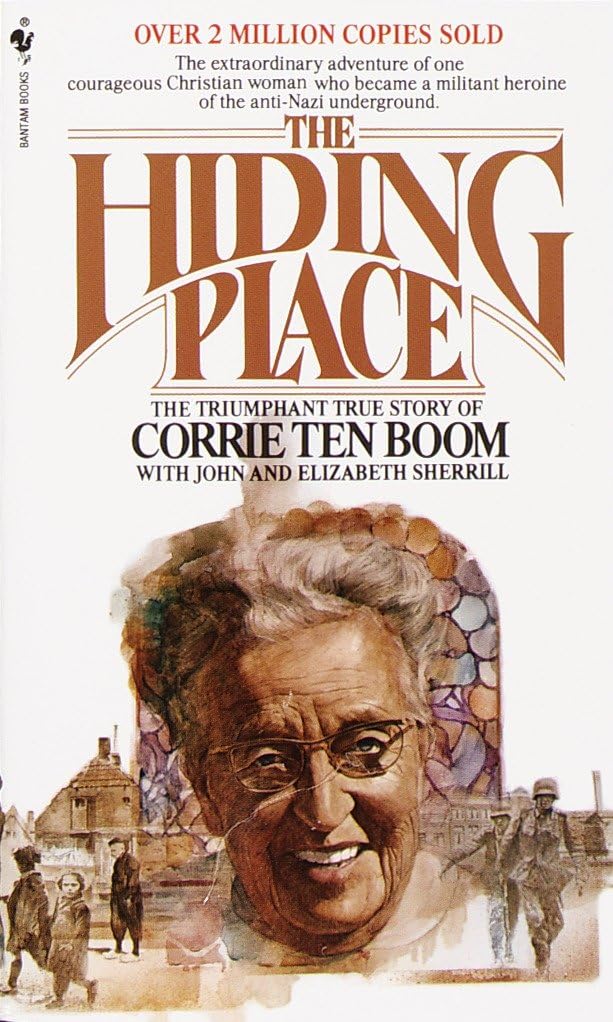
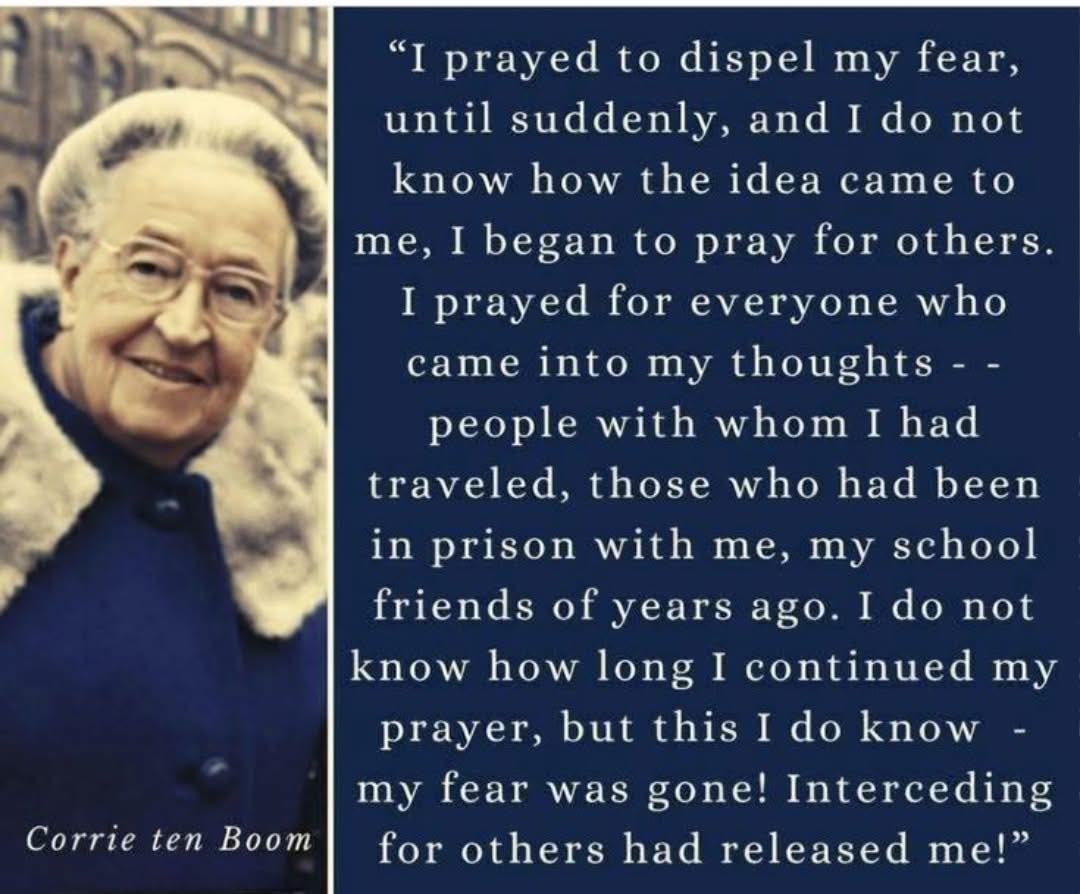
The Ten Boom’s were a devoutly Christian family in Holland, and much of the story takes place around the events of World War II. Nazi Germany was making its move to gain power across Europe and was particularly targeting Jews, their own and other nationalities, and Jewish sympathizers. The Ten Boom’s began hiding Jews and developed an effective but dangerous underground to secret them away to safer places. The family’s activities were eventually found out and they were imprisoned. Corrie’s brother Willem and sister Nollie only briefly, but Corrie’s father and sister Betsie were held. Their father would die after a brief time of incarceration. Betsie was Corrie’s older sister. They never married and poured their lives into caring for others.
The notorious German concentration camp, Ravensbrück, would be their “home” for too long. Over 130,000 women would be held there, and over 60,000 died (some in the gas chambers). The conditions were horrific. Corrie and Betsie, by God’s grace, managed to hold onto a Bible during their prison time. When they weren’t laboring long hours, they prayed and encouraged the other women in their barracks. Betsie had enormous faith and a tender heart, even toward their tormentors. She prayed for both prisoners and guards. Corrie struggled more in her faith, angry with their treatment, especially because Betsie was physically weak from a long-term illness. Corrie would learn greater forgiveness and love during their unfathomable time together in the camp.
Finally, Betsie would die in captivity. Corrie would continue on, taking more responsibility in caring for the women around her. Early on in their time at Ravensbrück, Betsie reminded Corrie that God called them to be thankful in all circumstances, not just in lovely ones. Corrie couldn’t thank God for the fleas which infested their quarters. Later, Betsie observed that the guards rarely entered their barracks BECAUSE of the fleas, so they were free to have times of prayer and study. This was not wasted on Corrie as she began to see God at work in all their circumstances…and she gave thanks.
I’m going to leave the rest of the story for you to discover in reading about her life…or watching the movie (movies – others have been made since the first one).
Obviously, Corrie survived her captivity and was released toward the end of 1944 (12 days after Betsie died). Her life continued for almost 40 years, and she was able to see the fruit of Betsie’s visions for the future. It is an incredible story – loss turned to glory.
In rejoicing over the long-awaited release of the Israeli hostages and concurrent release of Palestinian prisoners (also celebrated by their families), we are struck by the enormous experience of being “released”.
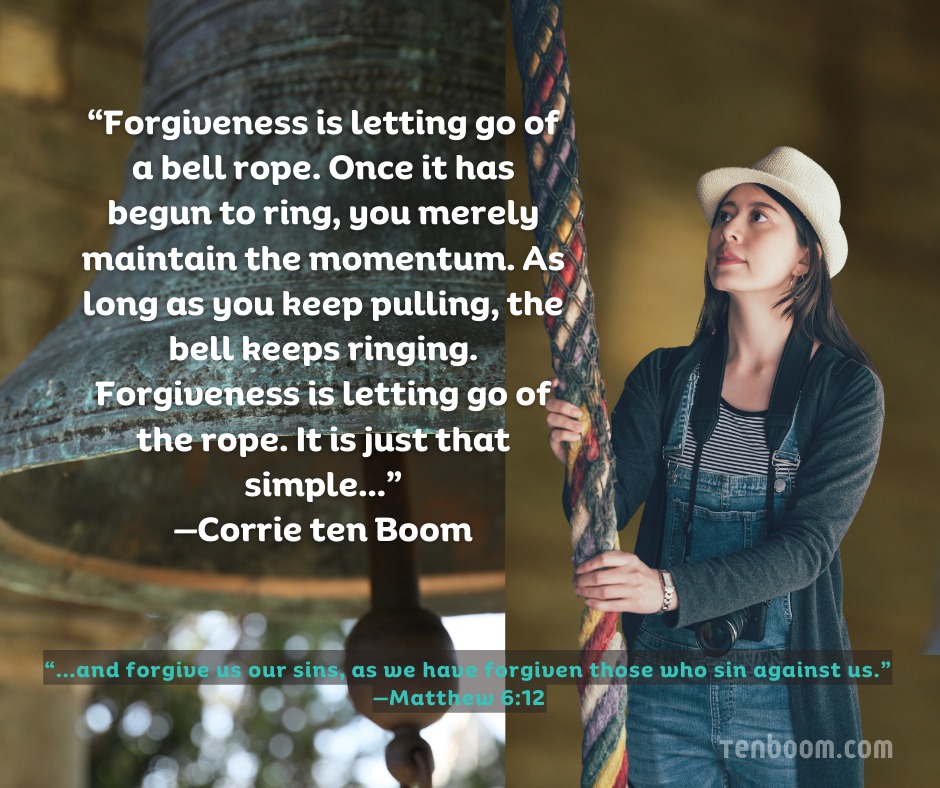
For Corrie, and for all of us, the release of bitterness as we forgive and God’s work in our hearts to even love our enemies (Matthew 5:43).
“Glory to God in the highest, and on earth peace, goodwill toward men!” – Luke 2:14
For unto us a child is born, unto us a son is given, and the government will be upon His shoulders. And He will be called Wonderful Counselor, Mighty God, Everlasting Father, Prince of Peace. Of the increase of His government and peace there will be no end. He will reign on the throne of David and over his kingdom, to establish and sustain it with justice and righteousness from that time and forevermore. The zeal of the LORD of Hosts will accomplish this. – Isaiah 9:6-7
Be angry, and do not sin; ponder in your own hearts on your beds, and be silent. Selah. Offer right sacrifices, and put your trust in the Lord. In peace I will both lie down and sleep; for you alone, O Lord, make me dwell in safety. – Psalm 4:4-5, 8
I will instruct you and teach you in the way you should go; I will counsel you with my eye upon you. Be not like a horse or a mule, without understanding, which must be curbed with bit and bridle, or it will not stay near you. Many are the sorrows of the wicked, but steadfast love surrounds the one who trusts in the Lord. Be glad in the Lord, and rejoice, O righteous, and shout for joy, all you upright in heart! – Psalm 32:8-11
Repay no one evil for evil, but give thought to do what is honorable in the sight of all.If possible, so far as it depends on you, live peaceably with all. Beloved, never avenge yourselves, but leave it to the wrath of God, for it is written, “Vengeance is mine, I will repay, says the Lord.” – Romans 12:17-19
[From the Archives: One week ago this morning, I woke to the results of the 2024 US presidential election. Before going to bed in the early hours of today, I prayed, wanting to trust the outcome to Him. Wanting to believe Him for whatever direction our country would go. Affirming that the Scripture validates that He is sovereign, and we are in His care.]
October is near, and in our home, it begins the season of Christmas music. So many beautiful anthems to the glory of God – the month of December is not enough to listen, sing, and meditate on the message of these words written by inspired authors and composers.
As this week has unfolded around our nation, social media and news outlets are filled with a range of both shock and jubilation. Of fear and relief. We continue a nation divided…for now. May the church not be a vessel of division…but an instrument of God’s peace.
In December, 1863, American poet and scholar Henry W. Longfellow received his wounded son home from battle. It was Christmas time, and the U.S. Civil War raged on. Having already lost his wife years earlier, Longfellow nursed his son, Charley, back to health. His own thoughts, in turmoil over all that was happening around him, he poured out in the poem “Christmas Bells”.
Longfellow clearly took comfort from God as he wrote, ending the poem with this stanza:
“God is not dead, nor doth He sleep; The Wrong shall fail, The Right prevail, With peace on earth, good-will to men.”*
I Heard the Bells is a Christmas carol, not a worship anthem. Yet, given the continuing wars of our day, and the politics surrounding them, we must tend the fires of our hope. God is the “lifter of our heads” (Psalm 3:3). He is the One who gives strength to our “weak hands and shaking knees” (Isaiah 35:3). He will do as He’s promised. He is faithful. When you hear the bells ring where you are in the wake of this past week, and as Christmas looms in weeks ahead, take heart in that. We must continue to pray for His peace on earth. We can be vessels of His good-will toward our neighbors, both near and far away.
Leaning into “the right [to] prevail” is where we stand, as Christ-followers. Straight and resolute in our understanding of God’s intentions and His movement in our world. We can resist and refuse to add to the noise of hopelessness and cynicism in this world. We bend our hearts to hear the voice of God speak through the chaos…speaking the peace that only He can bring…through our Savior and Lord, Jesus Christ. We can speak that peace to our neighbor – the truth wrapped in His love.
I heard the bells on Christmas day Their old familiar carols play And mild and sweet their songs repeat Of peace on earth good will to men
And the bells are ringing (Peace on Earth) Like a choir they’re singing (Peace on Earth) In my heart I hear them Peace on earth, good will to men
And in despair I bowed my head There is no peace on earth I said For hate is strong and mocks the song Of peace on earth, good will to men
But the bells are ringing (Peace on Earth) Like a choir singing (Peace on Earth) Does anybody hear them? Peace on earth, good will to men
Then rang the bells more loud and deep God is not dead, nor doth He sleep (Peace on Earth, peace on Earth) The wrong shall fail, the right prevail With peace on earth, good will to men
Then ringing singing on its way
The world revolved from night to day A voice, a chime, a chant sublime Of peace on earth, good will to men
And the bells they’re ringing (Peace on Earth) Like a choir they’re singing (Peace on Earth) And with our hearts we’ll hear them Peace on earth, good will to men
Do you hear the bells they’re ringing? (Peace on Earth) The life the angels singing (Peace on Earth) Open up your heart and hear them (Peace on Earth) Peace on earth, good will to men
Peace on earth, Peace on earth Peace on earth, Good will to men*
[From the Archives – “Remember 9/11 – and the Day Before – a Story of God and a Girl”]
[As we in the US prepare to observe a sad and shocking day in our country’s history, those of us who knew Genessa observe the day she entered Glory 24 years ago. A bit of her story, especially as it relates to her love for Jesus, always comes to mind today. And other days. We have so much to look forward to – in this life and the Next.]
Today marks the eve of the 24th anniversary of the 9/11 bombings in the US. We all have our stories of where we were when we heard that terrible news. I heard the news as an elevator door opened in a hospital emergency room in Cairo, Egypt. The surgeon watching for us to deliver the patient, actually walked into the elevator. His face strained (me thinking it related to the patient with me). Then he said, “I am so, so sorry.” I thought he was referring to the precious one on the stretcher beside me, so small and injured from a terrible bus accident the day before. It turns out he was talking about the news that had traveled instantly from the States about the 9/11 bombings. I’d like to go back to the day before. For us, it would help to go there, before I can ever process the grief of this day that we all share.
It was like any other Monday, that bright, warm September 10th in Cairo, Egypt…until the phone call. Janna was on the other end of the call, telling me that Genessa and April, had been in a bus accident on the Sinai. April had called her and relayed their location, at a hospital in Sharm el-Sheikh. These were girls in our Middle Eastern Studies Program, and they were finishing their time with us, taking a vacation together. They would re-trace some of their experiences in Bedouin villages across the Sinai, visiting local friends once more, and then enjoy a few days on the Red Sea. They were to return that Monday of 9/10, traveling in on one of the over-night buses across the desert.
Details will have to wait for another time, but with this information, my husband, Dave, left immediately with Janna and a local Egyptian friend who was also one of our language coaches. He took these two women because of their relationship with each other and with all of us. He also understood that there were two injured friends hours away in a hospital who would need women to minister to their needs. I would be praying and on the phone the rest of the day with families, other friends, US Embassy people, and our other young people in the program. I can’t begin to describe the emotional nature of that day…not knowing, hoping, praying.
When Dave and our friends arrived at the hospital, he was directed to April. She had painful, serious injuries, but none life-threatening, praise God. Then he was escorted into the critical care area to see Genessa. To his horror, it wasn’t Genessa. It was another young woman, unconscious – an Italian tourist, who rode in the same ambulance with April. April, lucid and still able to communicate, had tried to comfort her on that long dark ride to the hospital. Personal belongings were all scrambled at the wreck site, and the authorities made the mistakened decision that because April was speaking to her, she was Genessa.
Then Dave went on the search for our dear one…somewhere else in the Sinai. He back-tracked toward the site of the accident, checking other hospitals where other injured were taken. At this point, he was also talking to US Embassy staff, as he drove through the desert. Just shortly before he arrived at the hospital where he would find Genessa, the staff person told him they confirmed her identification from a credit card she had in her pocket…in the morgue of that small village hospital.
Dave, our Egyptian friend, and Janna, that friend who received the first phone call, stood beside this precious girl’s body, to make the formal identification…to know for sure that this was Genessa. And it was…and yet not. She, the luminous, laughing, loving girl we knew, was gone. It was more than any of us who loved her could take in on that Monday evening in Cairo, Egypt…the day before 9/11.
As they left the hospital to return to April, two more friends joined them from Cairo to help. For any of you who have been completely spent in every way by such a day, you can understand what it was for them to look up and see other American friends, Matt and Richard, getting out of a car. God, in His great goodness, alerted them, stirred their hearts to drive all those hours…and then to arrive…just when they were most needed. So many arrangements had to be made…and most importantly, at that moment, to get April back safely and quickly to Cairo for surgery.
She came into Cairo on a plane near the middle of the day of 9/11. By the time we got her from the airport in an ambulance to the specialty hospital to get the further care she needed, a series of horrific events had begun taking place in the US. We would hear of them from this caring Egyptian surgeon…who had no idea how numb we were from losing Genessa and how concerned we were that April got what she needed as soon as possible. We were already so drenched by grief, this unfathomable news about the bombings washed over us without understanding the scope of it…the pain of it…for all the rest of America.
Later in that day, with April receiving the best care possible, and me watching by her side, I could take in some of the loss coming at us on the small t.v. mounted in the hospital room. Egyptians were telling us how so, so sorry they were for us (as Americans). If they only knew, they were our mourners for our loss of Genessa, too. In the din of world-changing news, and a country brought together in grief…we grieved, too, a continent away…for the losses of 9/11 and the day before.
That was 24 years ago…April healed from her injuries (only she and God know what all that took on the inside), the other young people in our program have gone on to careers and families across the US and around the world. We have also gone on…back to the US and to other work.
Two things have not changed…a beautiful girl, who fell asleep by the window of a bus in the Sinai night and woke up in Heaven… and the God who welcomed her Home. There is so much, much, more to this story, but I have to close with this. As her family back in the US were pulling the pieces of their lives back together, and going through Genessa’s things, they found a little cassette player on her bed…there left by her, two years before, as she left for Cairo. In it was a cassette where she’d made a tape of her singing one of her favorite songs, I Long for the Day, by singer/songwriter Dennis Jernigan. Toward the end of the song you can hear Genessa’s tears in her voice, singing to the Lord. We would sometimes have the opportunity of being in the room when Genessa led worship in those days. She couldn’t hold the tears back…tears of joy, longing, gratitude. So in a space just God and her.
If we look at Genessa’s life through the lens of some American dream, then we would think how tragic to die so young, so full of promise. Look through the lens of how much she loved God, and knowing Him was what mattered most to her…and all who knew her knew His love through her.
Let’s think about friends for a few minutes. What a gift they are!! Sometimes for a season and sometimes for a lifetime. Yesterday, Pastor Cliff, continuing in a series from the Proverbs, preached on friends. It scratched a months-long itch for me, as time with friends has been a challenge.
In other seasons of life, I’ve enjoyed friendships with so many amazing people – mostly women but a few great men as well. I married one of those men and we continue to be the best of friends after over 40 years of marriage.
Sometimes friendship happens serendipitously, out of a single conversation or “chance” encounter. That spark requires some effort still to stir it into a flame…but maybe less effort than we think.
British author C. S. Lewis had many deep friendships over his lifetime, beginning with a friendship with his brother, Warnie. He wrote about friendship in his book in The Four Loves.
Lewis enjoyed the company of a group of writer friends who were known as The Inklings. There were four at the core of this friend group, including J. R. R. Tolkien. Others would come and go. Their focus was on writing and all that went into their writing – the very stuff of their lives. Just think how this group of friends impacted each other and so many of us who read their published works!
Being myself older now, and in this season of retirement, I spend more time alone than maybe I should. Even before Pastor Cliff preached this sermon, a conviction was stirring in my heart about friends and the tending of those relationships.
How often we say “Let’s get together” or “We need to get coffee soon”? And another week passes. Thank God for sturdy friends who keep our relationships deepening through the years. I want to be that friend, too.
Loneliness and social isolation have become huge problems in our culture. We, too often, turn to counterfeits of deep friendship. Busyness, screens, entertainment, even sports and gym time sans relationship.
I will never forget, early in my career, a colleague responding (reacting) in a peer group team building session: “You all are just my co-workers.” Some of my dearest friends through the years were in my workplace. It’s part of what I miss in this season of life.
There is only so much time in a day…only so much mental energy…but we are wise to commit some of that to our friends. Some of those friends can also be family which is a double blessing.
I am resolved anew to redeem some of that time and energy in nurturing friendships…in being intentional, when someone comes to mind, to act on it. More than just thinking we should have coffee…some day. For you, especially older ones, but also busy young moms and dads, who have figured this out…bravo. True friends are a sweet comfort and a constant presence on good days and bad. They show up and give us the impetus to show up for them as well.
Below you will find a few treasures – in poetry and prose – that especially inspire me, in thinking about deep friendships.
I cannot tell why there should come to me a thought of someone miles and years away,
In swift insistence on the memory, unless there is a need that I should pray.
We are too busy to spare thought for days together of some friends away;
Perhaps God does it for us — and we ought to read His signal as a sign to pray.
Perhaps just then my friend has fiercer fight, a more appalling weakness, a decay
Of courage, darkness, some lost sense of right; and so, in case he needs my prayers — I pray. – Rosiland Goforth (Source Unknown)
A man was sleeping at night in his cabin when suddenly his room filled with light and the Savior appeared. The Lord told the man he had work for him to do, and showed him a large rock in front of his cabin. The Lord explained that the man was to push against the rock with all his might.
This the man did, day after day. For many years he toiled from sun up to sun down, his shoulders set squarely against the cold, massive surface of the unmoving rock, pushing it with all his might. Each night the man returned to his cabin sore, and worn out, feeling that his whole day had been spent in vain.
Noticing that the man was showing signs of discouragement, the adversary decided to enter the picture by placing thoughts into the man’s weary mind. “You have been pushing against this rock for a long time, and it hasn’t budged. Why kill yourself over this? You are never going to move it.” Thus giving the man the impression that the task was impossible and that he was a failure. These troubling thoughts discouraged and disheartened the man. “Why kill myself over this?” I’ll just put in my time, giving just the minimum effort and that will be good enough.
And that is what he planned to do until one day he decided to make it a matter of prayer and take his thoughts to the Lord. “Lord” he said, “I have labored long and hard in your service, putting all my strength to do that which you have asked. Yet, after all this time, I have not even been able to budge that rock. What is wrong? Why am I failing?”
The Lord responded compassionately, “My friend, When I asked you to serve me and you accepted, I told you that your task was to push against the rock with all your strength, which you have done. Never once did I mention to you that I expected you to move it. Your task was to push. And now you come to me with your strength spent, thinking that you have failed. But, is that really so?”
“Look at yourself. Your arms are strong and muscled, your back sinewy and brown, your hands are callused from constant pressure, and your legs have become massive and hard. Through opposition you have grown much and your abilities now surpass that which you used to have. Yet you haven’t moved the rock. But your calling was to be obedient and to push and to exercise your faith and trust in my wisdom. This you have done. I, my friend, will now move the rock.” – Author Unknown
Every word of God proves true; he is a shield to those who take refuge in him. – Proverbs 30:5
God is not a man, that He should lie, or a son of man, that He should change His mind. Does He speak and not act? Does He promise and not fulfill? – Numbers 23:19
“My word that proceeds from My mouth will not return to Me empty, but it will accomplish what I please, and it will prosper where I send it.” – Isaiah 55:11
Magnify the LORD with me; let us exalt His name together. I sought the LORD, and He answered me: He delivered me from all my fears. Those who look to Him are radiant with joy; their faces shall never be ashamed. – Psalm 34:3-5
“I sought Him and He answered me.” God speaks to us. I can’t even imagine a world without His Word…without His Word made Flesh dwelling among us (John 1:14)…without His Spirit comforting and convicting us and connecting us to Him and each other.
My life verses are Jeremiah 29:11-13.
For I know the thoughts that I think toward you, says the Lord, thoughts of peace and not of evil, to give you a future and a hope. Then you will call upon Me and go and pray to Me, and I will listen to you. And you will seek Me and find Me, when you search for Me with all your heart. – Jeremiah 29:11-13
In those times when we don’t experience God speaking to us, I know for me it’s because I have turned my eyes away from Him and on to myself. God speaks to us in so many ways: through His Word; through His Spirit; through nature, our circumstances, the church, other believers. God has not stepped away. He leans in to us, desiring to be close to His people.
In C. S. Lewis’ classic book Screwtape Letters, we receive insight on how we are tempted away from intimacy with God, not through great sins, but through small, serial distractions. Here is part of the Evil One’s genius:
“….anything or nothing is sufficient to attract his wandering attention. You no longer need a good book, which he really likes, to keep him from his prayers or his work or his sleep; a column of advertisements in yesterday’s paper will do. You can make him waste his time not only in conversation he enjoys with people whom he likes, but in conversations with those he cares nothing about on subjects that bore him. You can make him do nothing at all for long periods.
You will say that these are very small sins; and doubtless, like all young tempters, you are anxious to be able to report spectacular wickedness. But do remember, the only thing that matters is the extent to which you separate the man from the Enemy [GOD]. It does not matter how small the sins are provided that their cumulative effect is to edge the man away from the Light and out into the Nothing. Murder is no better than cards if cards can do the trick. Indeed the safest road to Hell is the gradual one—the gentle slope, soft underfoot, without sudden turnings, without milestones, without signposts,
Williams wrote this book using the word Revering as an acronym describing God as 1)Reliable, 2) Enjoyable, 3) Victorious, 4) Eternally loving, 5) Redemptive, and 6) Expressive.
In the first chapter, Williams makes the case that God is always speaking to us. Can you even imagine this life without God speaking to us? He does not leave us to our own devices. He guides us always. In those moments when we feel adrift, or we feel He is silent, we have a way Home. Through His Word. By believing prayer. Obeying what He has already told us. Taking in the beauty He’s created for us. In the company of His people.
“The great enemy of the Christian is the sin of unbelief—the sin of refusing to accept what God says and the sin of refusing to do what God says. The great friend of the Christian is the joy of belief and the joy of obedience. Where is God asking you to simply take him at his word?” – Tim Challies
“Be glad in the Lord, and rejoice, O righteous, and shout for joy, all you upright in heart!” – Psalm 32:11
“Shout for joy to God, all the earth; sing the glory of his name; give to him glorious praise!” – Psalm 66:1-2
Clap your hands, all you peoples! Shout to God with the voice of triumph! – Psalm 47:1
Come, let us sing for joy to the LORD; let us shout to the Rock of our salvation! Let us enter His presence with thanksgiving; let us make a joyful noise to Him in song. – Psalm 95:1-2
Make a joyful noise to the LORD, all the earth; break forth—let your cry ring out, and sing praises! Sing praises to the LORD with the lyre, in melodious song with the harp. With trumpets and the blast of the ram’s horn shout for joy before the LORD, the King. – Psalm 98:4-6
In the Fall of 1998, we returned to the US from living overseas for three years. It was a bit of a sabbatical where we had a few weeks to reconnect with friends and family. For that period of time, we traveled around the US, visiting folks. On Sundays, we would go to their churches.
Oddly, every Sunday (or the majority of them), the same song was on that church’s worship list. A song released in 1994 in Australia by composer, worship leader Darlene Zschech. This song would put the then 10-year-old Hillsong Church on the global worship map.
Our kids were still youngsters in 1998 but remember well how we stood gathered with other believers and sang that glorious anthem to the Lord – week after week. Amused at times, we puzzled over how many times we ended up singing it. That song and those worship experiences would bring me (at least) to tears in those moments. In awe of Jesus…and His provision for His beloved.
We don’t sing this song much anymore, now over 30 years since its release. However, its call to worship is still real and relevant. Yesterday, I found Australian pastor/teacher Robert Griffith‘s piece on shouting to the Lord. He writes that there are 135 references in Scripture referring to our shouting to the Lord. His observations are powerful and transformative, some quoted below.
Now, all of us shout. If we have voices, we have all shouted many times, and for numerous reasons. We’ve shouted in the overflow of great joy. We’ve shouted in the exultation of victory. We’ve shouted in the tension of competition. We’ve shouted in the chaos of battle. We’ve shouted in the tumult of controversy and argument. We’ve shouted in moments of great danger. We’ve shouted in the explosion of hot anger.
But we rarely shout alone. Have you noticed that? Similar to laughing, and to some extent singing, shouting seems to be designed primarily as a corporate expression of strong emotion, something we find most enjoyable or helpful or needful when we do it with other people.
There’s something profound and mysterious about a group of people sharing a common excitement and joy. Often, joy is heightened when we experience it together with others – and certain joys are only properly expressed in shouting. To not shout together in the stadium as your team crosses the line to score, would emotionally mute the whole experience.
Most of the scriptural instructions to shout are addressed to the gathered saints – the Psalms were mainly meant to be sung (and sometimes shouted) together with others.
What about when our Church gathers together to worship (and it’s not a funeral)? What does our Church culture encourage? Are there occasionally moments of exuberance in song where all the saints “shout for joy to God” (Psalm 66:1)? Or does that always feel out of place, or only done by one or two courageous (and odd) people?
Do we ever feel the realities of the mercies of God, our redemption, the spiritual conflict we’re engaged in, the promise of our resurrection, and Christ’s ultimate triumph strongly enough to inspire a shout? I ask this question for a couple of reasons. One, it might reveal a personal deficiency in our souls that we need to address with the Lord – that we’re not connecting deeply enough with the realities of what God has done for us, and what God has promised us. And, of course, that’s all of us to a greater or lesser degree. What we may need is to repent of giving excessive attention to lesser things and spend more extended time meditating on “the surpassing worth of knowing Christ Jesus” (Philippians 3:8) in order to stoke the embers of our deep passion for Him. Without passion, nobody is going to shout.
But a second reason is that, to some degree, an affectional deficit might be due to the fact that we don’t shout together. I often feel certain great truths of God, or at least dimensions of them, more deeply and intensely when I share and shout over them with others.
Shouting is commended and commanded in the Bible, like singing, because there are dimensions of joy in God that are only experienced when we express ourselves in this way – particularly when we express ourselves this way together as the people of God.
Because of the clear biblical exhortations to shout, I commend these thoughts to you for your prayerful consideration – especially pastors and leaders who craft worship times for gathered saints. What we all want is for the saints to experience as much blessing of delighting in God as possible.” – Shout to the Lord – Robert Griffith
Let’s make some noise! Our church when gathered is definitely Spirit-filled but, at the same time, somewhat reserved. I do sense a movement stirring…may we voice our delight in the Lord in ways that honor Him.
My Jesus, my Savior Lord, there is none like You All of my days I want to praise The wonders of Your mighty love
My comfort, my shelter Tower of refuge and strength Let every breath, all that I am Never cease to worship You
Shout to the Lord, all the earth, let us sing Power and majesty, praise to the King Mountains bow down and the seas will roar At the sound of Your name
I sing for joy at the work of Your hands Forever I’ll love You, forever I’ll stand Nothing compares to the promise I have in You
(My Jesus) To my Savior (my Savior) Oh, Lord there is nothing like You All of my days I want to praise The wonders of Your mighty love
You’re my comfort (my comfort), and my shelter, yes (my shelter) You’re my tower of refuge and strength Let every breath, and all that I am Never cease to worship You
Shout to the Lord, all the earth, let us sing Power and majesty, praise to the King Mountains bow down and the seas will roar At the sound of Your name
I sing for joy at the work of Your hands Forever I’ll love You, forever I’ll stand Nothing compares to the promise I have in…
Shout to the Lord, all the earth, let us sing, yeah Power and majesty, praise to the King Mountains bow down (mountains bow down and the seas will roar) At the sound of Your name
I sing for joy at the work of Your hands Forever I’ll love You, forever I’ll stand Nothing compares to the promise I have in You (Nothing compares to the promise I have in You…) Oh, nothing compares to the promise I have in You*
[Just a bit over a year ago, I wrote a blog entitled “Contempt – the Cold Killer of Hearts and Humanity”. It is such a prevalent emotion/thought process these days, I wanted to update that piece and re-post.]
Ah…contempt. It is defined as a strong negative emotion that joins disgust and disrespect. If we are honest, we have all experienced contempt, either for someone else, or a group of someones…or we’ve experienced the contempt of another towards us.
Contempt is a harsh response…a cold killer of hearts and relationships.
When we express contempt, it is usually in conversation with those who agree with us…about someone else. Rarely do we have the person(s) toward which we feel contempt in front of us. We don’t engage them as much as we complain about them. We hold some in contempt because of their beliefs or actions, and our temptation is to have nothing to do with them. We may view this as a strength, but (as I’ve heard said), “an unguarded strength is a double weakness.”
In a quick summary on contempt (in case you don’t want to read more in depth below), we would never think of ourselves as having contempt of another (or a group of people), but the signs are in our speech and attitudes. No matter how much we think we cover it, others can tell we lack love and respect (even exhibiting hatred). Contempt not only separates us from others but also makes it hard to reconcile. The dark thoughts of condemnation, suspicion, and mistrust are present under the surface. To remove the force of contempt, we must check our hearts. Acknowledge that any compassion we may have is conditional…we withhold love based on the other’s behavior. It is a lose-lose situation. How we can move toward actual reconciliation, or at least stepping toward a more healthy relationship is to be humble. We have a part in any contemptuous relationship. We each have a part. When we lean in, without expectation of the other person, and show curiosity as to how they are, we give grace. We make space for that person to lean in, as well. Refusing to think ill of another person, no matter what happened in the past, opens the door to genuine caring. It can be the start of healing.
What follows comes from my blog of a year ago. It speaks volumes on how to avoid contempt in two main areas: politics and marriage. However, the counsel given could be applied broadly to families, neighbors, coworkers, etc. There is wisdom here…in any situation where we feel the cold, hate-birthing emotion of contempt…which does harm to our relationships and our own heart.
“Knowing our weakness, dividing leaders on both the left and right seek power and fame by setting American against American, brother against brother, compatriot against compatriot. These leaders assert that we must choose sides, then argue that the other side is wicked—not worthy of any consideration—rather than challenging them to listen to others with kindness and respect. They foster a culture of contempt.” – Arthur C. Brooks, Love Your Enemies: How Decent People Can Save Our Country From the Culture of Contempt
Contempt is something I’d like to annihilate in my own thinking, and thankfully there are helps. Below you will find two thought leaders who have worked to expose contempt for what it truly is and does to us, and who have given us counsel on how to recognize it and rid ourselves of it. Author and academician Arthur Brooks and clinical psychologist John Gottman.
How do we confront contempt?
Arthur Brooks’5 Rules to Counter Contempt
1. Refuse to be used by the powerful. – “The accurate image of a powerful manipulator is someone on your side of the debate: a media figure who always affirms your views, a politician who always says what you think, or a professor who never challenges your biases. They declare the other side is terrible, irredeemable, unintelligent or anything else that expresses contempt — and they say you should think these things as well.” Brooks encourages us to tune out that person “on our side” who seeks to manipulate us, whatever the reason. Then (this is the harder part), we are to call out contemptuous behavior among those with whom we agree (our friends and maybe family). Contempt tears us down, and we don’t want that for ourselves or those we love.
2. Escape your bubble. – “The culture of contempt is sustained by polarization and separation. It is easy to express contempt for those with whom we disagree when we view them as “them” or never see them at all. Contempt is much harder to express when we see one another as fellow human beings, as “us.”” We do well to make opportunities to share space and conversation with people not like us. Seek to understand and look for ways we are alike.
3. Treat others with love and respect, even when it’s difficult. – “Never treat others with contempt, even if you believe they deserve it. First, your contempt makes persuasion impossible, because no one has ever been insulted into agreement. Second, you may be wrong to assume that certain people are beyond reason. There are many examples of people forming unlikely bonds precisely because they didn’t treat each other with contempt.” Sometimes we are the ones toward which contempt is aimed. If we have offended, then we can apologize. Raising an issue higher than the value of the person doesn’t take us anywhere positive.
4. Be part of a healthy competition of ideas. – “I believe disagreement is good because competition is good. As in politics and economics, competition — bounded by rule of law and morality — brings excellence. In the world of ideas, competition is called “disagreement.” Disagreement helps us innovate, improve, correct and find the truth. Of course, disagreement — like free markets and free elections — requires proper behavior to function.”The goal is not to disagree less but to disagree better, notes Brooks.
5. Disconnect from unproductive debates. – “Get rid of curated social media feeds. Unfollow public figures who foment contempt. Want to get really radical? Stop talking and thinking about politics for a little while. Do a politics cleanse. For two weeks — maybe during your next vacation — resolve not to read, watch or listen to anything about politics. Don’t discuss politics with anyone. This will be hard to do but not impossible.” This exercise will reveal how much of your life and mental energy is wasted, allowing you to refocus on people you truly love and work/play that matter more than those things you probably won’t be able to change. – Arthur Brooks, Sick of the Culture of Contempt? Here are 5 Ways You Can Subvert It
Another exceptional thinker and clinician is Dr. John Gottman, psychologist and professor. His focus is primarily on marriages and individual mental health within relationships. The Four Horsemen is a metaphor pointing toward end-times. Dr. Gottman uses the same metaphor in describing four elements of communication, any one of which can predict the demise of a marriage (or any other relationship). These elements are criticism, contempt, defensiveness, and stonewalling. Each has an antidote.
Contempt is much more mean-spirited than criticism. It communicates a measure of cold superiority over the one being criticized. Gottman isn’t talking about a political stand or a point of contention over culture or morality. He is concentrating on the relationship between two people, usually being a married couple.
“Contempt, simply put, says, “I’m better than you. And you are lesser than me.” [It] is fueled by long-simmering negative thoughts about one’s partner, and it arises in the form of an attack on someone’s sense of self. Inevitably, contempt leads to more conflict—particularly dangerous and destructive forms of conflict—rather than to reconciliation. It’s virtually impossible to resolve a problem when your partner is getting the message that you’re disgusted with them and that you’re condescending and acting as their superior.”
Gottman prescribes two antidotes for contempt in the marriage relationship – one short-term and the other more long-term:
First, the person feeling contempt toward the other would do well to name the emotions that rise to the top during a conflict. Express these emotions to your spouse without blaming, and appeal for help with a solution. “I am sad that we don’t have friends over. Could we talk about a way forward on this?” Or “I get worried when the bills pile up. Can we talk about what we can do to stay within budget?”
Second, Gottman suggests establishing (or re-building) a home culture of fondness and admiration for each other. This is a discipline that may take some strong determination, but it is doable. In fact, I have go-to Bible verses (Revelation 2:4-5) that help me immensely during those dry times in my own marriage. It speaks about what to do when we have lost our first love (for God and each other). Essentially, the instruction is to remember how it was in the beginning, repent/return, and repeat the actions/emotions/intentions that came naturally when the relationship was new. We don’t have to feel the fondness or admiration at first, but as we practice them, they can be restored. Among many tools, Dr. Gottman uses the instrument below to kick-start the process as the spouse chooses three descriptors and then gives examples of those to the other person.
Contempt is deceptive. It feels so good to think we are right, and yet in the practice of contempt, we become more isolated and less engaged in real community. Only preferring people who think like we do. At some point, our competencies will be impacted because our problem-solving shrinks down to just judging others and determining they aren’t worth our time. We miss learning from them, and we miss the possibility of genuinely understanding them, even loving them.
Having faced contempt myself, It has brought me to a “come to Jesus” moment. I don’t want to hold contempt for anyone, no matter how different they are, no matter what wrongs they have done. I want to figure out how to stay engaged with people…such that “if [I] can’t move mountains, [maybe I can] move a stone”.*
Jesus returned to the Mount of Olives,but early the next morning he was back again at the Temple. A crowd soon gathered, and he sat down and taught them.As he was speaking, the teachers of religious law and the Pharisees brought a woman who had been caught in the act of adultery. They put her in front of the crowd.
“Teacher,” they said to Jesus, “this woman was caught in the act of adultery.The law of Moses says to stone her. What do you say?”
They were trying to trap him into saying something they could use against him, but Jesus stooped down and wrote in the dust with his finger.They kept demanding an answer, so he stood up again and said, “All right, but let the one who has never sinned throw the first stone!”Then he stooped down again and wrote in the dust.
When the accusers heard this, they slipped away one by one, beginning with the oldest, until only Jesus was left in the middle of the crowd with the woman.Then Jesus stood up again and said to the woman, “Where are your accusers? Didn’t even one of them condemn you?”
“No, Lord,” she said.
And Jesus said, “Neither do I. Go and sin no more.”– John 8:1-11
Two others, who were criminals, were led away to be put to death with [Jesus].And when they came to the place that is called The Skull, there they crucified him, and the criminals, one on his right and one on his left.And Jesus said, “Father, forgive them, for they know not what they do.”
One of the criminals who were hanged railed at him, saying, “Are you not the Christ? Save yourself and us!”But the other rebuked him, saying, “Do you not fear God, since you are under the same sentence of condemnation?And we indeed justly, for we are receiving the due reward of our deeds; but this man has done nothing wrong.”And he said, “Jesus, remember me when you come into your kingdom.”And he said to him, “Truly, I say to you, today you will be with me in paradise.” – Luke 23:32-34, 39-43
The Bible is filled with accounts of people in desperate situations. Too many alone in circumstances they can’t seem to escape. Maybe some of us have known that kind of isolation, self-hatred, hopelessness. Singer, songwriter Matthew West brings these people, these lost and wounded ones, into the light. Into the light of God’s love…and ours, if we don’t turn away. “Mended” is West’s speaking forth the Gospel of Christ over brokenness…as if Jesus is speaking to the wounded one, through the lyrics of the song.
[Chorus] When you see broken beyond repair I see healing beyond belief When you see too far gone I see one step away from home When you see nothing but damaged goods I see something good in the making I’m not finished yet When you see wounded, I see mended
[Verse 1] How many times can one heart break? It was never supposed to be this way Look in the mirror, but you find someone You never thought you’d be Oh, but I can still recognize The one I love in your tear stained eyes I know you might not see him now So lift your eyes to me
[Chorus] When you see broken beyond repair I see healing beyond belief When you see too far gone I see one step away from home When you see nothing but damaged goods I see something good in the making I’m not finished yet When you see wounded, I see mended
[Verse 2] You see your worst mistake But I see the price I paid And there’s nothing you could ever do To lose what grace has won So hold on, it’s not the end No, this is where love’s work begins I’m making all things new And I will make a miracle of you
[Chorus] When you see broken beyond repair I see healing beyond belief When you see too far gone I see one step away from home When you see nothing but damaged goods I see something good in the making I’m not finished yet When you see wounded, I see mended
[Bridge] I see my child, my beloved The new creation you’re becoming You see the scars from when you fell But I see the stories they will tell You see worthless, but I see priceless You see pain, but I see a purpose You see unworthy, undeserving But I see you through eyes of mercy
[Chorus] When you see broken beyond repair I see healing beyond belief You’re not too far gone You’re one step away from home When you see nothing but damaged goods I see something good in the making I’m not finished yet, no When you see wounded, I see mended
[Outro] Oh, I see mended Woah, oh I see mended I’m not finished yet When you see wounded, I see mended*
In closing, I’d like to shine a light on a young Christian man who is shining light on persons broken by addiction in the Kensington area of Philadelphia, Pennsylvania. Mal Love is a filmmaker and he is capturing stories of these people, on the streets, prisoners of their addictions. He brings a Godly dignity to them and shows genuine care for them. Talking to them, filming their stories, asking what they need and doing what he can to provide (food, beverages, pillows, recovery helps). He has even administered Narcan when encountering someone who’d overdosed. You can see and hear these stories every day as he goes out onto the streets – on Instagram, Facebook, or his YouTube channel. Mal gives us the opportunity to look into faces of people Jesus loves and pray for them. Whew!
1) Beyond the Guitar’s “Superman” – John Murphy composed the stunning soundtrack for the 2025 big-screen edition of “Superman”. His treatment of the iconic theme (originally composed by John Williams) is absolutely gorgeous. Listen to his version of “Raising the Flag”here.
Then…sit back and listen to Nathan Mills at Beyond the Guitar perform his arrangement of this incredible theme on classical guitar. One instrument. Played with the heart and skill of a musician who does beautiful justice to a magnificent orchestral piece of work. So good!
2) Rachel Haack on Hope in Family Estrangement – Whether we are in the midst of a family estrangement or we know someone estranged from family members, it’s safe to say that none of us are untouched by family estrangement. It seems a part, an accepted part of our culture today. I just saw the Instagram reel below on therapist Rachel Haack’s page. It gave me hope – hearing sanity in what feels like a crazy hard relational world.
[Rachel Haack and her family – 5 girls and her husband – Facebook]
Instagram – Reel describing Rachel Haack’s bold prescription to replace the family member descriptors of “emotionally immature, boomer, toxic, dehumanizaion” with the actions/goals of “respect, compassion, understanding, and collaboration”.
Setting boundaries in painful relationships may feel like a necessary safety maneuver, but too often those boundaries become deadends. No way forward really and the years go by. I so appreciate Haack’s measured and gentle approach to reconciliation in difficult family situations. Below are excellent resources, including one podcast with Joshua Coleman, author of Rules of Estrangement: Why Adult Children Cut Ties and How to Heal the Conflict.
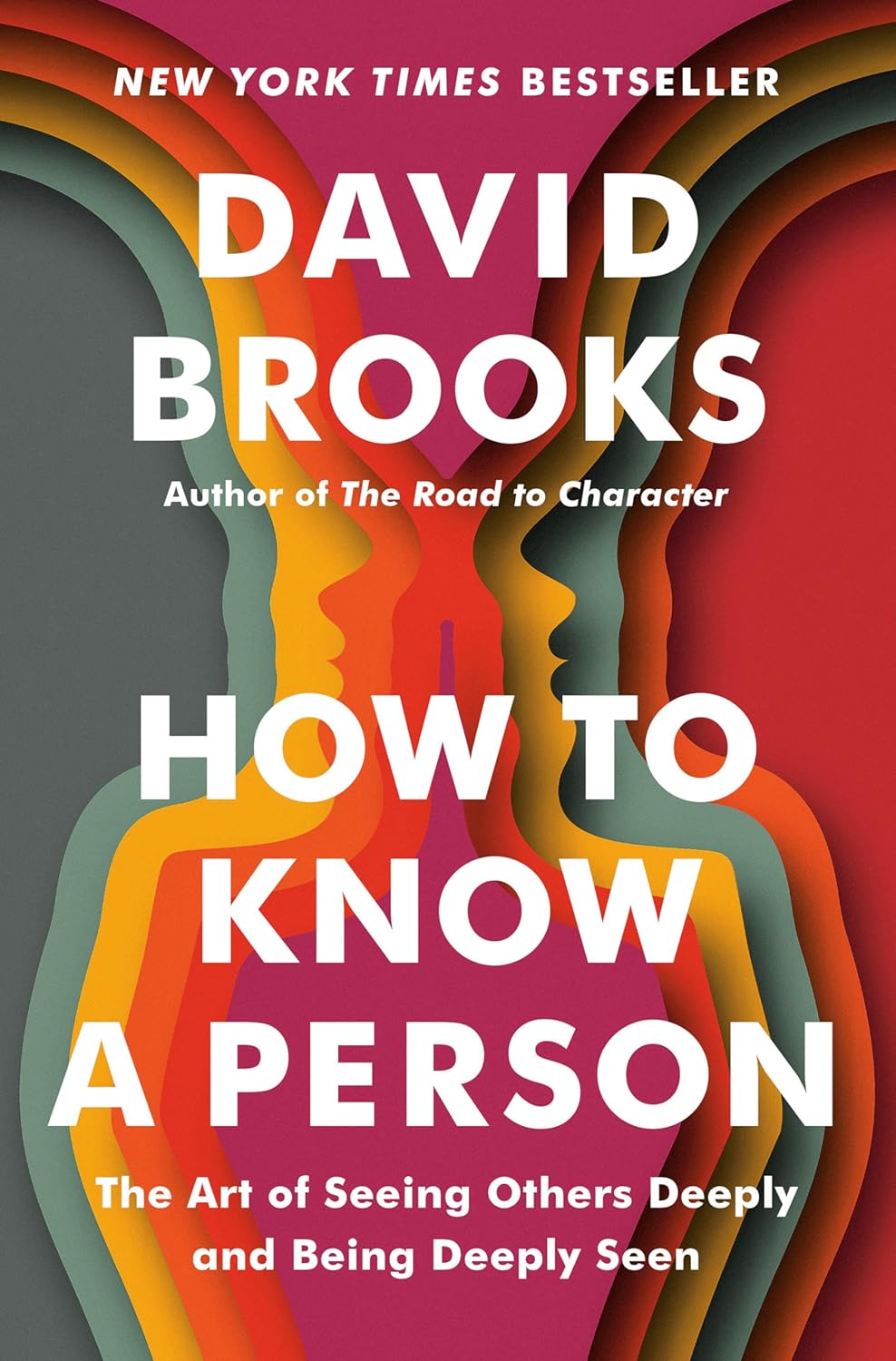
3) lluminators – How to Know a Person – I bought this book “How to Know a Person” after reading author David Brooks‘ guest blog on Ann Voskamp‘s website (linked below).
I’m not sure if it was after the 9/11 attacks or exactly when the cultural phenomenon began, but people seem not to look in people’s faces so much. There’s a disinterest, or lack of curiosity, or maybe even guarding. We feel it might be intrusive to ask questions, and for sure there are unhelpful questions. However, to be truly curious about someone, to want to know someone deeply, is a beautiful and honoring thing.
Below you will find two quotes from Brooks’ book. In the blog above and the book as well, he talks about being illuminators. Shining a light on someone. Not in an negative, exposing way but in a way that draws out who they really are and how amazing they are.
“When you’re practicing Illuminationism, you’re offering a gaze that says, “I want to get to know you and be known by you.” It’s a gaze that positively answers the question everybody is unconsciously asking themselves when they meet you: “Am I a person to you? Do you care about me? Am I a priority for you?” The answers to those questions are conveyed in your gaze before they are conveyed by your words. It’s a gaze that radiates respect. It’s a gaze that says that every person I meet is unique, unrepeatable, and, yes, superior to me in some way. Every person I meet is fascinating on some topic. If I approach you in this respectful way, I’ll know that you are not a puzzle that can be solved but a mystery that can never be gotten to the bottom of. I’ll do you the honor of suspending judgment and letting you be as you are.” – How To Know a Person – The Art of Seeing Others Deeply and Being Deeply Seen – David Brooks
“The real act of, say, building a friendship or creating a community involves performing a series of small, concrete social actions well: disagreeing without poisoning the relationship; revealing vulnerability at the appropriate pace; being a good listener; knowing how to end a conversation gracefully; knowing how to ask for and offer forgiveness; knowing how to let someone down without breaking their heart; knowing how to sit with someone who is suffering; knowing how to host a gathering where everyone feels embraced; knowing how to see things from another’s point of view.” – How To Know a Person – The Art of Seeing Others Deeply and Being Deeply Seen – David Brooks
Brooks talks about being a witness, about giving attention. I love that!
He reminds me of psychiatrist Curt Thompson MD who writes and often talks about compassion and curiosity. I’ve written lots about Curt and his wisdom on mental and relational health. He, like David Brooks, encourages us to give our attention to those around us. It’s part of the beauty of life.
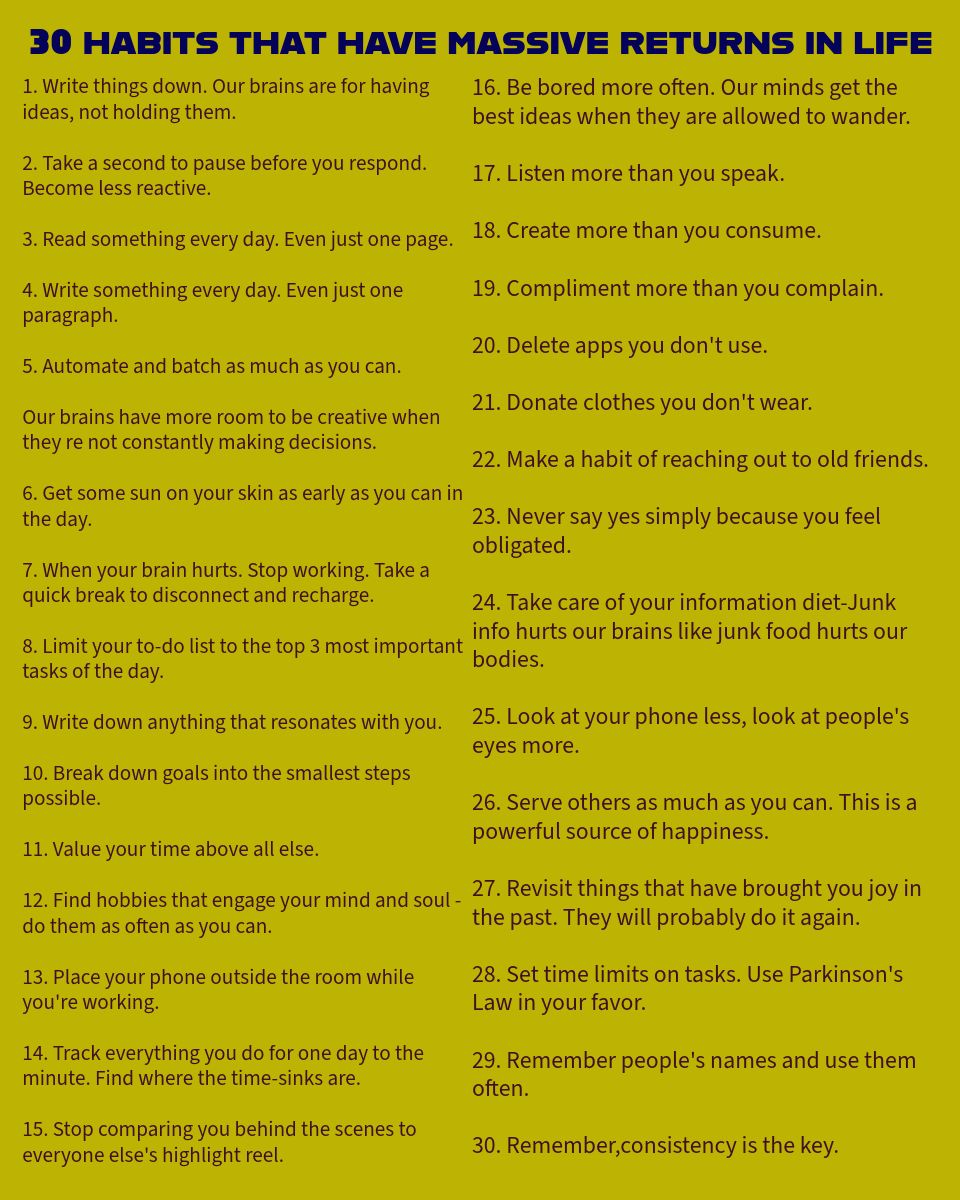
4) 30 Habits with Massive Returns in Life – I’m all about habit formation. Not saying I’m great at developing healthy habits, but I love the science of habits including New Year’s resolutions. Author Justin Whitmel Earley has written two excellent books on habit formation and a third for children (on sibling relationships) entitled TheBig Mess. Earley’s websites (The Common Rule and Habits of the Household) have great free resources as well on habit formation. For today’s Friday Fave, I’m just posting this little graphic on 30 habits with big returns…how many have you already formed? It’s not a race though…choose a habit and begin there.
5) 45 Life Lessons – Here is another list, not of habits but life lessons. They are written by author and cancer survivor Regina Brett of the Plain Dealer, Cleveland, Ohio, and have been widely reprinted.
“To celebrate growing older, I once wrote the 45 lessons life taught me. It is the most requested column I’ve ever written.
Here is the column once more:
1. Life isn’t fair, but it’s still good.
2. When in doubt, just take the next small step.
3. Life is too short – enjoy it.
4. Your job won’t take care of you when you are sick. Your friends and family will.
5. Pay off your credit cards every month.
6. You don’t have to win every argument. Stay true to yourself.
7. Cry with someone. It’s more healing than crying alone.
8. It’s OK to get angry with God. He can take it.
9. Save for retirement starting with your first paycheck.
10. When it comes to chocolate, resistance is futile.
11. Make peace with your past so it won’t screw up the present.
12. It’s OK to let your children see you cry.
13. Don’t compare your life to others. You have no idea what their journey is all about.
14. If a relationship has to be a secret, you shouldn’t be in it.
15. Everything can change in the blink of an eye, but don’t worry, God never blinks.
16.. Take a deep breath. It calms the mind.
17. Get rid of anything that isn’t useful. Clutter weighs you down in many ways.
18. Whatever doesn’t kill you really does make you stronger.
19.. It’s never too late to be happy. But it’s all up to you and no one else.
20. When it comes to going after what you love in life, don’t take no for an answer.
21. Burn the candles, use the nice sheets, wear the fancy lingerie. Don’t save it for a special occasion. Today is special.
22. Over prepare, then go with the flow.
23. Be eccentric now. Don’t wait for old age to wear purple.
24. The most important sex organ is the brain.
25. No one is in charge of your happiness but you.
26. Frame every so-called disaster with these words ‘In five years, will this matter?’
27. Always choose life.
28. Forgive.
29. What other people think of you is none of your business.
30. Time heals almost everything. Give time time.
31. However good or bad a situation is, it will change.
32. Don’t take yourself so seriously. No one else does.
33. Believe in miracles.
34. God loves you because of who God is, not because of anything you did or didn’t do.
35. Don’t audit life. Show up and make the most of it now.
36. Growing old beats the alternative of dying young.
37. Your children get only one childhood.
38. All that truly matters in the end is that you loved.
39. Get outside every day. Miracles are waiting everywhere.
40. If we all threw our problems in a pile and saw everyone else’s, we’d grab ours back.
41. Envy is a waste of time. Accept what you already have, not what you need.
42. The best is yet to come…
43. No matter how you feel, get up, dress up and show up.
44. Yield.
45. Life isn’t tied with a bow, but it’s still a gift.” – Facebook
Post in Comments any lessons that you particularly appreciate.
Instagram – Reel – Jonathan Haidt on slow Dopamine – holding off social media – see his caption screenshot below. [Also below is the full podcast on this topic – Dr. Haidt starts at 8:14.]
Celebrities acting like average Joes, a wholesome thread 🧵
1. The fact that a random couple ran into Keanu Reeves in a hotel lobby, invited him to their wedding, and he put on a suit and joined is proof he really is The One. pic.twitter.com/a3DGRDiC70
I’ve been writing this in my head for over a month. Here goes.
For some time now, I’ve been seeing a cardiologist. Mostly about a couple of heart valves that aren’t functioning as well as they should. Then over the last several months, fatigue has been a strange companion for my usual high-energy self. I am told some of the fatigue relates to medications required for my cardiac situation, but lately a new issue arose that also apparently causes me to be tired. Premature ventricular contractions (PVCs). Sorry for all the medical stuff…just trying to give context.
After several other cardiologist visits and recommendations, it was decided a cardiac ablation would be the best course of action. Potentially highly effective with the outcome pushing out into the future my need for a valve replacement (open heart surgery). Highly effective with minimal complications.
The cardiac ablation doesn’t require general anesthesia nor a big incision. Essentially access to the heart is through a catheter threaded to a large vein, and the procedure doesn’t even require an over-night hospital stay usually. Still, in the days before coming in, I finally completed my advance life directive (just in case).
After leaving Dave in the waiting area, I was taken into the prep room and hooked up to monitors. The nurses started an IV and shortly after the sedation. I was surrounded by lovely hospital staff – all was well.
Complications – When I woke in recovery, it didn’t seem so well. Lots of action. Someone was putting lots of pressure where the IV catheter must have been inserted (I had already been sedated for that part). A blood transfusion was being ordered. I wasn’t going home.
The cardiologist who performed the ablation was up-beat as he described what happened. In preparation for the procedure, I was given blood thinners. At some point during the ablation, I had some bleeding (which was one of the listed possible complications). The blood loss was considerable enough to require transfusions. The cardiologist wanted me to be monitored overnight so I was admitted to the cardiac step-down unit.
At some point that evening, I needed to go to the restroom. Dave helped me, walking me from bed to toilet. Unfortunately, it turns out my blood pressure was low enough, because of the blood loss, that I got faint and ended up passing out. Fortunately, Dave broke my fall, and with his and the nurse’s help I got back to the bed without incident.
Why all these details? It has made me think more deeply on the toll of waiting and watching on the person at the bedside. He would tell me later about watching the monitors and seeing my blood pressure and pulse registering lower than seemed safe. Once my pulse got down to 35, he related later.
Still…all was relatively well, thankfully.
The next day, my blood counts hadn’t recovered well enough so more fluids and another transfusion. Otherwise, it was a quiet day. Two of my grandchildren were being baptized in a couple of days, and I was not going to miss that, if at all possible.
Several blood sticks and nursing IV lines along left me with impressive bruises, but by the next morning, they discharged me, with all the precautions and appointments for follow-up. Praise the Lord!
Comfort – It is very difficult, almost impossible, for me to ask for help. Even with the fatigue of the past several months, I just chose to do less rather than to engage helpers. It is a character weakness, I know. Beautiful offers to help abounded, and I was grateful. The offers themselves were a comfort. As were all the prayers, texts, phone calls, visits, notes/cards, flowers, and food. There was also a quietness in my heart that I recognized as the nearness of God Himself to a child not quite herself. Such unexpected and generous comfort… all of it.
Caregivers – Having been a cancer nurse for many years, I can’t say enough about caregivers. Those who put their own lives on hold for the sake of a loved one. Those who care professionally even for strangers. Hats off! Giving care is reflective of a loving God. It is part of who we are bearing His image.
In this season of heart issues, I have had much comfort and much care. It is a season I want to remember (thus this writing about it), especially as my strength is coming back and the fatigue is less (thanks to the ablation). My unseen Helper has been God, and the one I can reach out and touch has been Dave. His gentleness and servant heart aren’t a surprise, because he has shown up for many over the years – especially members of his family, those in need in our church community, and folks on his work teams. He is quiet and doesn’t draw attention to himself. For this moment, in the aftermath of this health issue, I just want to say thanks…thanks to all of you who have been such a comfort to me…and to God for bringing me through…and to Dave. Thank you, Sweet Friend and Husband.
P.S. All this heart stuff the last few years has been a struggle for me. It has tempted me to fear. Thanks to the ablation, the other heart surgeries that were in front of me have been pushed down the road. Who knows, I may not ever need them. If they do become inevitable, or some other health (or relational) crisis becomes an issue, I have (what Jackie Hill Perry talks about below) “history with God”. He will get us through whatever comes. Hallelujah!