While writing earlier this morning, I clicked on my search engine, and the article below by Darius Foroux popped up as recommended reading. It had been collected by Pocket, this great website that “houses” all sorts of fascinating articles by authors one might not know to search for. Unfortunately (sidebar), Pocket is shutting down later this summer (for reasons not fully revealed), and I will miss it. Anyway, back to 10 Practical Answers to 10 Powerful Questions.
Darius Foroux, author and entrepreneur, takes the time and thought to answer 10 questions submitted by a reader named Mary. They are great questions. I’m going to list the questions and his answers in brief. Go to his website to read the whole of his answers.
1. What’s the one quality that everyone must have?
Persistence, perseverance, determination, grit—call it whatever you want.
When you give up without a good reason, you’ll never know how your life could end up.
2. What’s the one book you suggest everyone to read?
It’s a book about thinking…[it] goes so deep that you can’t help but get touched by Dostoyevsky’s writing.
3. What’s one powerful piece of advice for living a fulfilling life?
Get clear on what you want.
Decide what you want. And be firm with your execution. Don’t deviate from the path.
4. What’s one piece of important financial advice?
Don’t try to make money.
When you try hard to make money, you’ll become unethical and focus on the wrong things. When you focus on providing genuine value, you will be rewarded for your help.
5. What’s one skill that everyone must have?
Writing.
Writing is thinking…when you become a better writer, you’ll also become a better thinker.
6. What’s one thing that you regret starting late or wished you started earlier?
Investing.
I’m talking about adopting the mindset of an investor. I never thought of everything you do in life as investing. Working out, reading, taking classes, spending time with people who matter to you—it’s all investing because these activities have a return.
7. What’s one thing you learned the hard way?
Doing something is different than reading about it.
8. What’s one thing that should never be forgotten?
You’re never alone.
Life gets hard sometimes. And for some of us, our natural instinct is to solve everything by ourselves.
Seek out people who share the same values as you. Become friends. They will help you when the time is right. And vice versa.
9. What’s one thing we must not think twice on spending?
This is obvious, but my answer is “books”.
A few years ago, I acted like a cheapskate when it came to books.
That’s it. I want to think about these questions more, maybe to come back and answer them myself. Today, I just wanted to introduce you to Darius Foroux, if you didn’t know him. He writes about many things – including stoicism, productivity, health, and generating wealth. He is Dutch, born to Iranian immigrant parents. Faith is a huge part of my life, and I can’t discern from his writing what part it plays in his. However, intelligence, even wisdom, is clearly evident in his writing. I spent part of the day on the rabbit trail of learning from him. Time well-spent.
P.S. Any thoughts on these questions or his answers? How would you answer? Please share in Comments below.
Happy Weekend! With so many of us either working remotely or with otherwise altered work situations, some rhythms are shifted. One for me is writing. I miss it. Please bear with me…and stay with me…as I carve out time and temperament to write something worth the read. You give me courage.
1) Growing Up with Pixar – Classical guitarist Nathan Mills (of Beyond the Guitar) knows exactly how to take any film song he chooses and draw out every bit of emotion possible. Related to Pixar, he did that previously with medleys of both the happy theme songs and the sad ones. This week, Nathan arranged and performed the heart-wrenching Randy Newman song “When She Loved Me”. You will recognize this song from the film Toy Story 2. It’s the poignant story of Emily and her cowgirl toy Jessie. At first, little girl Emily adores her toy and Jessie feels so loved, through their tireless play. Then…Emily grows up. Jessie ends up in a cardboard box donated to a charity. Many of our children have grown up with Pixar and have had lessons on life reinforced – love, loyalty, friendship, and determination – through these films. Nathan’s sweet rendition of this song will take you back.
2) Pursuing Unity – We live in a world torn by division. Whatever our political ideology or religious fervor, we don’t have to just sit by and watch it burn. I am reminded of one who prayed for unity for us. One who died the next day in a world divided.
“May they all be one,as you, Father, are in me and I am in you.May they also bein us, so that the world may believe you sent me.I have given them the gloryyou have given me, so that they may be one as we are one.I am in them and you are in me,so that they may be made completely one, that the world may know you have sent me and have lovedthem as you have loved me.” – Jesus, John 17:21-23
I want to align myself with those who choose unity…those who keep reasoning together, and refuse to hate, and who are determined to forgive and to find answers and to love no matter what.
A veteran officer of the United States Marine Corps and a teaching pastor, Grant Castleberry, wrote exquisitely about pursuing unity. Here’s a bit of his article:
“The New Testament emphasis, over and over again, is that true Christian unity is only built on a right understanding of the gospel. No matter our national allegiance, economic background, political party, or ethnicity, the gospel unites believers in one faith, one ‘body’ (1 Cor 12:12, 17)…The family of God outstrips all our other allegiances and affiliations. This includes our allegiance to a political party or ethnicity. Identity, and therefore unity, in the New Testament is almost always linked to the fact that we have been united to Christ in faith through the gospel…we should be defined by a spirit of love and forgiveness…In our divided culture, unity in the Church will be only nurtured and maintained, using the methods and principles that Jesus and the Apostles have outlined for us in the New Testament…These bodies of believers, from diverse backgrounds and idealogies, will serve as beacons of unity in a divided world.” – Grant Castleberry
3) Bringing Hope – What kinds of things have brought you hope in these days? I have experienced and observed so many acts of kindness – simple ones and costly ones. People being creative and hopeful themselves and lavishing it generously on others.
Actor writer John Krasinski is one of those persons. He created this little YouTube channel with the focus on Some Good News (in the face of all the bad). Only eight episodes in total but he celebrated so much in those eight weeks – health care and other essential workers, our beloved sports teams, and the big Spring events that have been disrupted (graduations, proms, weddings, etc) secondary to COVID-19.
I guess John Krasinski has some projects coming up because he ended his broadcasts after the eighth episode. Or maybe with the opening up of our countries, we will be making even more good news. Like visits with beloved grandparents after three months of “social distancing”. Now that’s some good news!!!Photo Credit: Facebook, Eryn Cobb
Finally, the most hope-bringing message: “Jesus loves me/you; this I know!”
4) Agility in Today’s Realities – We often think of agility in terms of sports – that ability to change directions quickly, but it’s that and so much more. What does agility mean in life and work?Photo Credit: Gunther Verheyen, Scrum
We hear a lot these days about a “new normal” after we come out of the COVID-19 crisis. Maybe we are better off thinking not new but real – what is real now and how could it change or be changed?
Wisdom is taking what we are learning about this virus and maximize prevention and sound treatment while, at the same time, figure out how to still do life…work…all that matters to us.
Try things. Experiment. Think in teams. Acknowledge the fails. Try something different. Strengthen the successes. Broaden them.
I’m talking very simplistically here, but we have a lot of smart and innovative people out there. Let’s figure out how to be agile in our decision-making.Photo Credit: Facebook, TobyMac
5) Making Music Happen – I had an opportunity years ago to direct a Christmas program in a tiny church in New Haven, Ct. It was a magical experience – for me for sure. Then years later, I had another opportunity to produce a fine arts program in a school in Casablanca, Morocco. Again, to bring singers and musicians together to make something beautiful was an incredible experience. Below are two videos of music that we might not have had except for COVID-19.
Also the following are now-famous songs from the film musical The Greatest Showman. They are “in the making” versions and bring us close to what it’s like for the singers to create something musical and joyful for us all. In the middle you’ll find another “virtual ensemble” bringing to life one of those great songs during the social distancing of today.
“And people stayed at home
And read books
And listened
And they rested
And did exercises
And made art and played
And learned new ways of being
And stopped and listened
More deeply
Someone meditated, someone prayed
Someone met their shadow
And people began to think differently
And people healed.
And in the absence of people who
Lived in ignorant ways
Dangerous, meaningless and heartless,
The earth also began to heal
And when the danger ended and
People found themselves
They grieved for the dead
And made new choices
And dreamed of new visions
And created new ways of living
And completely healed the earth
Just as they were healed.”
[Forgive my simple artwork. I figure if Darius Foroux can do it, I can follow his lead.]
Do you find it hard to turn your brain off? Not just at night, but during the day? Our brain, like the rest of our body, needs rest.
Some of us struggle with overthinking. We just can’t get our brains to stop thinking. Probably because we have set habits deep in our thinking lives. Not just ruminating on the past or worrying about the future. We could also be in jobs that require us to always be “on” – problem-solving, strategizing, managing crises.
To be the best we can be in sorting out solutions for work problems or setting course for a new direction, we need to somehow turn off our thinking, even for a few minutes each day.
Foroux presents the idea that both negative and positive thoughts can “clog” our brains. It’s our over-thinking along any line of thought that over time wears us out, such that we actually under-perform. Overthinking ironically leads to poor performance. Something to think about…besides its impact on our mental and physical health.
I’m an overthinker and in very good company with others. Overthinking doesn’t make us smarter. It’s just something we are prone to. Not just worrying or obsessing but that bent toward thinking we have to make something happen (fill in the blink of what that might be). It could be a control thing or just a coping mechanism.
Reading Doroux’s article on overthinking gave me pause. He recommends short-circuiting our overthinking by 1) being more self-aware, 2) examining our thoughts and thinking habits, 3) managing our thinking, and then 4) just taking joy in the moment.
Just think how managing our thinking overload could improve the quality of our lives and the outcomes of our work.
An example that came straight to mind was visits with my grandchildren. Everything doesn’t have to be a teachable moment, or a lesson on character, or even a meaningful communication. Sometimes it can just be down on the floor doing whatever they want to do…just being with them…in the moment.Photo Credit: Pikrepo
What do you think? In truth, I’m not sure I’m willing to give up all overthinking, given the other treasured overthinkers in my life. However, I sure don’t want to miss the joy of what’s right in front of me. How about you?
Foroux hands his readers a mirror and asks these pointed questions and others – regarding habits. Our junk food diet, our propensity for complaining, our couch-potato screen habits, our spending beyond what we make. Pretty much in-your-face. However, he also provides free helps to get us off the couch or office chair and on to the kinds of habits that move us to that future self we hope to be. His free ebook How to Get From Procrastinate Hero to Procrastinate Zero is valuable, worth hopping onto his email list for me.
3) Wisdom of Great Leaders – Mark Crowley, leadership sage himself, posted a piece recently entitled 10 of the World’s Great Sages Share Their Most Important Leadership Advice. He’s taken these quotes from his own interviews with these leaders on his insightful Lead From the Heart podcast. Below are four of my favorite quotes from Crowley’s article. Check out the interviews in full – great stuff! “When a human being feels as though they are being cared for and nurtured, their physiology works at its best…Leaders who affect the hearts in people get the best results, and your companies will become far more successful once you embrace this.” – Dr. James Doty
“A ‘multiplier’ leader is someone who uses their own intelligence, capabilities, and talents in a way that amplifies the talents and intelligence of others. They’re leaders who we’re best around.” – Liz Wiseman
“There’s a pathological disconnect between the attributes that seduce us when hiring managers and those that are actually needed to be an effective leader. We can see the effects of hyper-masculine leadership; what we need today are managers who are more self-effacing, empathetic and altruistic – other-focused people who are good coaches and mentors.” – Tomas Chamorro-Premuzic
“It’s not the big decisions that differentiate high-performing CEOs, it’s the volume and speed of their decisions. It’s about the speed rather than the precision on the hundreds of decisions they need to make.” – Kim Powell
The Oscar Wilde satirical quote below is NOT among Crowley’s #LeadFromtheHeart counsel above. It does speak to the problem of our leaders being knowers and non-learners. Learners are the best kind of knowers. Excellent leaders never stop learning.
4) Father’s Day – Celebrating Father’s Day this weekend!
We all have fathers – whether very present or long-time absent. Some of you may be fathers. Some of you may have wanted to be fathers but are not able to be…for whatever reasons. This day of commemoration usually means a good meal and some sort of gifting or pampering for you dads. For all of you, with or without children, you can be influencers…and we need you. My biological father was absent long before my parents divorced. Thankfully I have had a rich heritage of good fathers through the rest of my life – my step-dad, brothers, uncles, husband, father-in-law, son/son-in-law, and loving, empowering male friends and colleagues. Most of these good fathers in my life were spiritual fathers…but fathers nonetheless.
5) Southern Baptists – My family didn’t start out in church or Christian. Mom was a believer but through a difficult marriage and trying to feed and clothe four children, she left church before I was born. After her divorce, neighbors invited us to church and it was a huge discovery for us…people who loved us even though we came with a lot of baggage as a family…and a God who loved us just as we were. It was a small Southern Baptist church in Georgia, and I’ve been Southern Baptist ever since.
In June every year church representatives of this large denomination meet somewhere in the US to worship together, reflect on the past year and plan for the future, and invariably, deal with some issue that could divide them.
After the fun of catching up with old friends and colleagues from years past, two of the highlights of this convention for me were:
the Scripture translation project (we could buy verses of the New Testament for $5 each – for a New Testament to be translated for a people group who don’t have it in their language). By the end of the convention, it was funded!
This year two of the dividing issues were the continuing need for racial reconciliation and responding with care to those victimized by clergy in the Southern Baptist Convention. We aren’t where we need to be eventually, but we made progress, thankfully.Photo Credit: Religion News
The piece below is where I am after listening to the panel above:
Slowly and surely I began to realize that my problem was not that I was a person of privilege. Jesus was the most privileged being to ever walk this earth. My problem was what I did with my privilege. Would I use it (consciously or unconsciously) for my own gain, or could I let go of my grasp and use it to serve others. Jesus showed me how, “Who did not consider equality with God something to be grasped, but made himself nothing”.
How Jesus lived and died would serve as an example for me, and would ultimately allow me to live and die like him. He has taken my shame so that I no longer have to respond defensively about my privilege. I can embrace it, now no longer for myself, but for those for whom Christ died and rose again. Not in a white savior way, He’s the Messiah, I am not. But in an incarnational, self-emptying, for-the-sake-of-others way.
The gospel for the privileged is that Christ took our state of mis-being so that we can live for others. Hallelujah. – Missioeric
A blog on overthinking has been on my radar for weeks now, but I keep overthinking it!
How about a definition to start? Overthinking: “Something is on your mind and you continuously think about it, the thought gets deeper and you start thinking about circumstances, events and possibilities that could be…” I like this definition because it feels normal rather than obsessive, anxiety-provoking, or neurotic…with the resultant analysis paralysis.
My husband is a deep thinker but he is not an overthinker. He is adept at compartmentalizing and seems to know what each issue requires in terms of his own decision-making and personal responsibility.
For me, thinking through things is much more fuzzy-boundaried. I can be crystal clear about solutions – what needs to be done to take us (whomever “us” might be) to the next level of operation or relationship. Where I get muddled up is when a decision or a direction doesn’t make sense. Overthinking the why’s and “what happened?” goes into overdrive.
Being an overthinker is a new revelation for me. The “aha” moment came recently during a conversation with a brilliant young woman, a friend of mine who considers herself an incorrigible overthinker. We have deep conversations on just about everything. Total ease and transparency. No judging. It dawned on me as we talked that evening that we agreed on how much of life required some measure of overthinking. It’s just not that simple…life.
As I have processed this whole overthinking thing, it seemed a good solution might be to have a support group…along the lines of overthinkers anonymous. After a quick online search, a plethora of such blogs, websites, and Facebook pages popped up – with the goal of helping those of us who overthink.Photo Credit: Breadbin, Ken Breadner, Will Farrell
If you have a bent toward overthinking but you find it uncomfortable, then you have all sorts of resources to recognize it and turn it around. Below are just a few of those postings. [Scroll past them if you don’t want to be “fixed” for some happier news.]
What if…let’s just say…overthinking is a positive thing? What if we overthinkers bring certain strengths to the table that could prove valuable to a work team or family/friend group? What if overthinking, when disciplined and matured, could be like a regular superpower?!Photo Credit: Pinterest
The links below are all about overthinking is a positive (or potentially positive) character trait. The authors list out several strengths found in overthinkers. They include creativity, tact, self-awareness, eye for detail, memory/recall, intuition, life-long learning, empathy, compassion, careful decision-making, and a commitment to doing what’s right.
Overthinking has to be trained and tooled toward positive outcomes. Since beginning to see my own bent toward overthinking, I no longer view it as a weakness. Others might, but hopefully not forever.
Overthinkers are sometimes criticized for “beating a dead horse“. It is very hard for us to give up on something that we feel strongly about. Here’s what might help, those of you who have us on your team or in your organization…to harness our problem-solving and decision-making capabilities:
Just trust that we mean “good and not evil“. Reason with us rather than just diagnosing us as bothersome. If we feel like something seems murky, if not downright wrong, consider the possibility. Entrust us with a meaningful project or body of work…we will apply ourselves probably more than is necessary, but you will reap the good of it, if you can endure the discomfort of our overthinking. We get that it is just easier to make that decision without a lot of extra input, but it’s possible the overthinker has thought of something you haven’t.
Just sayin’.
[I’d love to hear your thoughts on overthinking – in the Comments below. This overthinker has just scratched the surface of this topic and would love a chance to dialogue about all the positives and negatives.]



 Photo Credit:


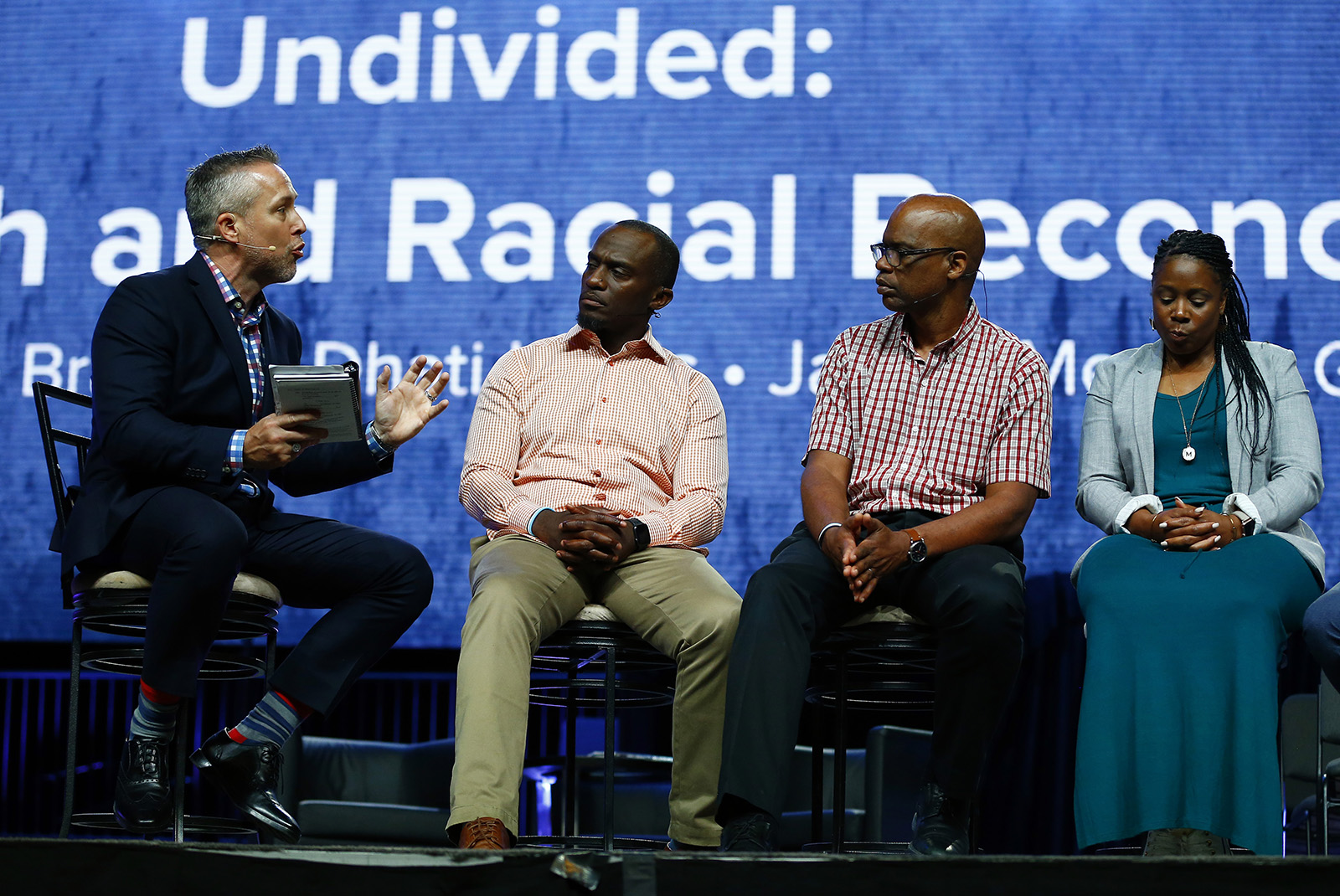 Photo Credit:


