Category Archives: Love Your Neighbor

Worship Wednesday – Remembering a Girl and Her God – I Long for the Day – Dennis Jernigan

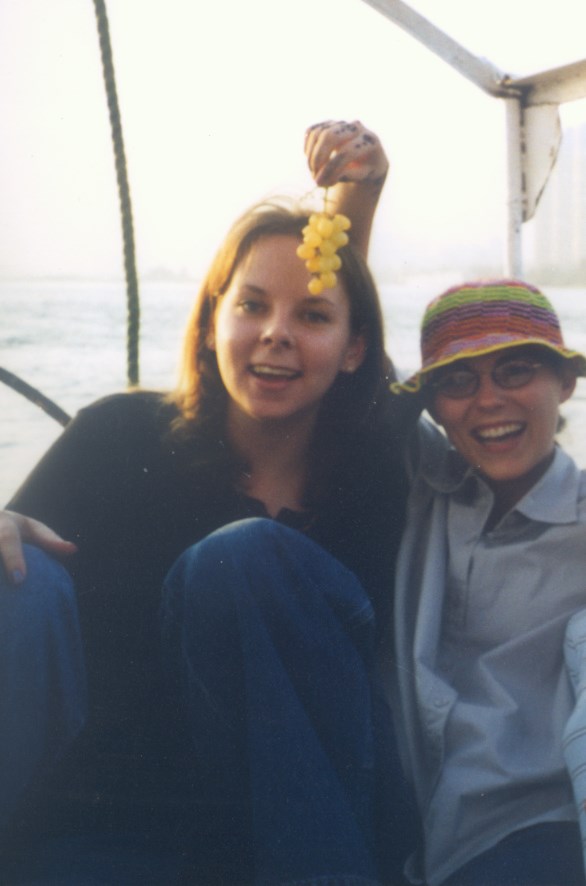
Genessa (l) and April, Cairo, Egypt

[From the Archives – “Remember 9/11 – and the Day Before – a Story of God and a Girl”]

[As we in the US prepare to observe a sad and shocking day in our country’s history, those of us who knew Genessa observe the day she entered Glory 24 years ago. A bit of her story, especially as it relates to her love for Jesus, always comes to mind today. And other days. We have so much to look forward to – in this life and the Next.]

Today marks the eve of the 24th anniversary of the 9/11 bombings in the US. We all have our stories of where we were when we heard that terrible news. I heard the news as an elevator door opened in a hospital emergency room in Cairo, Egypt. The surgeon watching for us to deliver the patient, actually walked into the elevator. His face strained (me thinking it related to the patient with me). Then he said, “I am so, so sorry.” I thought he was referring to the precious one on the stretcher beside me, so small and injured from a terrible bus accident the day before. It turns out he was talking about the news that had traveled instantly from the States about the 9/11 bombings. I’d like to go back to the day before. For us, it would help to go there, before I can ever process the grief of this day that we all share.

It was like any other Monday, that bright, warm September 10th in Cairo, Egypt…until the phone call. Janna was on the other end of the call, telling me that Genessa and April, had been in a bus accident on the Sinai. April had called her and relayed their location, at a hospital in Sharm el-Sheikh. These were girls in our Middle Eastern Studies Program, and they were finishing their time with us, taking a vacation together. They would re-trace some of their experiences in Bedouin villages across the Sinai, visiting local friends once more, and then enjoy a few days on the Red Sea. They were to return that Monday of 9/10, traveling in on one of the over-night buses across the desert.

Details will have to wait for another time, but with this information, my husband, Dave, left immediately with Janna and a local Egyptian friend who was also one of our language coaches. He took these two women because of their relationship with each other and with all of us. He also understood that there were two injured friends hours away in a hospital who would need women to minister to their needs. I would be praying and on the phone the rest of the day with families, other friends, US Embassy people, and our other young people in the program. I can’t begin to describe the emotional nature of that day…not knowing, hoping, praying.

When Dave and our friends arrived at the hospital, he was directed to April. She had painful, serious injuries, but none life-threatening, praise God. Then he was escorted into the critical care area to see Genessa. To his horror, it wasn’t Genessa. It was another young woman, unconscious – an Italian tourist, who rode in the same ambulance with April. April, lucid and still able to communicate, had tried to comfort her on that long dark ride to the hospital. Personal belongings were all scrambled at the wreck site, and the authorities made the mistakened decision that because April was speaking to her, she was Genessa.

Then Dave went on the search for our dear one…somewhere else in the Sinai. He back-tracked toward the site of the accident, checking other hospitals where other injured were taken. At this point, he was also talking to US Embassy staff, as he drove through the desert. Just shortly before he arrived at the hospital where he would find Genessa, the staff person told him they confirmed her identification from a credit card she had in her pocket…in the morgue of that small village hospital.

Dave, our Egyptian friend, and Janna, that friend who received the first phone call, stood beside this precious girl’s body, to make the formal identification…to know for sure that this was Genessa. And it was…and yet not. She, the luminous, laughing, loving girl we knew, was gone. It was more than any of us who loved her could take in on that Monday evening in Cairo, Egypt…the day before 9/11.

http://debmillswriter.com/wp-content/uploads/2014/09/Genessa-with-team1.jpg

As they left the hospital to return to April, two more friends joined them from Cairo to help. For any of you who have been completely spent in every way by such a day, you can understand what it was for them to look up and see other American friends, Matt and Richard, getting out of a car. God, in His great goodness, alerted them, stirred their hearts to drive all those hours…and then to arrive…just when they were most needed. So many arrangements had to be made…and most importantly, at that moment, to get April back safely and quickly to Cairo for surgery.

She came into Cairo on a plane near the middle of the day of 9/11. By the time we got her from the airport in an ambulance to the specialty hospital to get the further care she needed, a series of horrific events had begun taking place in the US. We would hear of them from this caring Egyptian surgeon…who had no idea how numb we were from losing Genessa and how concerned we were that April got what she needed as soon as possible. We were already so drenched by grief, this unfathomable news about the bombings washed over us without understanding the scope of it…the pain of it…for all the rest of America.

Later in that day, with April receiving the best care possible, and me watching by her side, I could take in some of the loss coming at us on the small t.v. mounted in the hospital room. Egyptians were telling us how so, so sorry they were for us (as Americans). If they only knew, they were our mourners for our loss of Genessa, too. In the din of world-changing news, and a country brought together in grief…we grieved, too, a continent away…for the losses of 9/11 and the day before.

That was 24 years ago…April healed from her injuries (only she and God know what all that took on the inside), the other young people in our program have gone on to careers and families across the US and around the world. We have also gone on…back to the US and to other work.

Two things have not changed…a beautiful girl, who fell asleep by the window of a bus in the Sinai night and woke up in Heaven… and the God who welcomed her Home. There is so much, much, more to this story, but I have to close with this. As her family back in the US were pulling the pieces of their lives back together, and going through Genessa’s things, they found a little cassette player on her bed…there left by her, two years before, as she left for Cairo. In it was a cassette where she’d made a tape of her singing one of her favorite songs, I Long for the Day, by singer/songwriter Dennis Jernigan. Toward the end of the song you can hear Genessa’s tears in her voice, singing to the Lord. We would sometimes have the opportunity of being in the room when Genessa led worship in those days. She couldn’t hold the tears back…tears of joy, longing, gratitude. So in a space just God and her.

If we look at Genessa’s life through the lens of some American dream, then we would think how tragic to die so young, so full of promise. Look through the lens of how much she loved God, and knowing Him was what mattered most to her…and all who knew her knew His love through her.

This God…and this girl. 

I Long for the Day by Dennis Jernigan

I long for the day when the Lord comes and takes me away!

Whether by death or if You come for me on a horse so white

And anyway You come will be alright with me

I long to just hear You said, “Now is the time. Won’t you come away?”

And I’ll take Your hand, surrendering completely to You that day!

And no, I can’t contain the joy that day will bring!

Chorus:

When I get to see You face to face

When I can finally put sight to the Voice I’ve embraced

It will be worth all the waiting for that one moment I’ll be celebrating You!

When I get to feel Your hand in mine

When I can finally be free from this prison called time

When You say, “Child, I’ve been waiting for this one moment of celebrating, too!

For this one moment of celebrating you!”

O Lord, while I wait, I will cling to each word that You say.

So speak to my heart; Your voice is life to me, be it night or day.

And anything You say will be alright with me.

You see my heart’s greatest need

You and me, walking intimately.

You’re my only love, and I am waiting patiently for Your call.

When You call me to Your side eternally.

(Chorus Repeat)

Lord, I celebrate You!

Forever with You! No crying there.

Forever with You! No burden; no more worldly cares.

My heart is anticipating eternally with you celebrating You!

Forever with You I long to be;

Forever worshiping, knowing You intimately!

When You say, “Child, no more waiting” [No more waiting, children]

I’ll spend forever just celebrating You.

I’ll see all my loved ones gone before

I’ll get to be with them, laugh with them, hold them once more

There’ll be no more separating! [No separating]

Together we will be celebrating You!

Together we’ll worship You and sing.

Forever praising Lord Jesus, our Savior and King.

When You say, “Child, no more waiting” [No more waiting, children]

Enter your rest, and start celebrating, too.

Forever Lord, I’ll be celebrating You.

Chorus Repeat:

When I get to see You face to face

When I can finally put sight to the Voice I’ve embraced

It will be worth all the waiting for that one moment of celebrating You!

When I get to feel Your hand in mine

When I can finally be free from this prison called time

When You say, “Child, I’ve been waiting for this one moment of celebrating, too!

For this one moment of celebrating you!”

Dennis Jernigan, from the album I Belong to Jesus (Volume 2)

Monday Morning Moment – On Deep Friendships

Photo Credit: Sandjest

Let’s think about friends for a few minutes. What a gift they are!! Sometimes for a season and sometimes for a lifetime. Yesterday, Pastor Cliff, continuing in a series from the Proverbs, preached on friends. It scratched a months-long itch for me, as time with friends has been a challenge.

In other seasons of life, I’ve enjoyed friendships with so many amazing people – mostly women but a few great men as well. I married one of those men and we continue to be the best of friends after over 40 years of marriage.

Sometimes friendship happens serendipitously, out of a single conversation or “chance” encounter. That spark requires some effort still to stir it into a flame…but maybe less effort than we think.

Photo Credit: C. S. Lewis, Pray with Confidence

British author C. S. Lewis had many deep friendships over his lifetime, beginning with a friendship with his brother, Warnie. He wrote about friendship in his book in The Four Loves.

The Four Loves Quotes – C. S. Lewis – Goodreads

Lewis enjoyed the company of a group of writer friends who were known as The Inklings. There were four at the core of this friend group, including J. R. R. Tolkien. Others would come and go. Their focus was on writing and all that went into their writing – the very stuff of their lives. Just think how this group of friends impacted each other and so many of us who read their published works!

Photo Credit: Wit & Wisdom of C. S. Lewis

Being myself older now, and in this season of retirement, I spend more time alone than maybe I should. Even before Pastor Cliff preached this sermon, a conviction was stirring in my heart about friends and the tending of those relationships.

How often we say “Let’s get together” or “We need to get coffee soon”? And another week passes. Thank God for sturdy friends who keep our relationships deepening through the years. I want to be that friend, too.

Loneliness and social isolation have become huge problems in our culture. We, too often, turn to counterfeits of deep friendship. Busyness, screens, entertainment, even sports and gym time sans relationship.

I will never forget, early in my career, a colleague responding (reacting) in a peer group team building session: “You all are just my co-workers.” Some of my dearest friends through the years were in my workplace. It’s part of what I miss in this season of life.

There is only so much time in a day…only so much mental energy…but we are wise to commit some of that to our friends. Some of those friends can also be family which is a double blessing.

I am resolved anew to redeem some of that time and energy in nurturing friendships…in being intentional, when someone comes to mind, to act on it. More than just thinking we should have coffee…some day. For you, especially older ones, but also busy young moms and dads, who have figured this out…bravo. True friends are a sweet comfort and a constant presence on good days and bad. They show up and give us the impetus to show up for them as well.

Below you will find a few treasures – in poetry and prose – that especially inspire me, in thinking about deep friendships.

I cannot tell why there should come to me a thought of someone miles and years away,

In swift insistence on the memory, unless there is a need that I should pray.

We are too busy to spare thought for days together of some friends away;

Perhaps God does it for us — and we ought to read His signal as a sign to pray.

Perhaps just then my friend has fiercer fight, a more appalling weakness, a decay

Of courage, darkness, some lost sense of right; and so, in case he needs my prayers — I pray.       Rosiland Goforth (Source Unknown)

Photo Credit: Sandjest

Barely the day started and… it’s already six in the evening.

Barely arrived on Monday and it’s already Friday.

… and the month is already over… and the year is almost over.

… and already 40, 50 or 60 years of our lives have passed.

… and we realize that we lost our parents, friends…and we realize it’s too late to go back…

So… Let’s try, despite everything, to enjoy the remaining time…

Let’s keep looking for activities that we like…

Let’s put some color in our grey…

Let’s smile at the little things in life that put balm in our hearts.

And despite everything, we must continue to enjoy with serenity this time we have left. Let’s try to eliminate the afters…

I’m doing it after… I’ll say after… I’ll think about it after…

We leave everything for later like ′′ after ′′ is ours.

Because what we don’t understand is that:

Afterwards, the coffee gets cold… afterwards, priorities change…

Afterwards, the charm is broken… afterwards, health passes…

Afterwards, the kids grow up… afterwards parents get old…

Afterwards, promises are forgotten… afterwards, the day becomes the night… afterwards life ends…

And then it’s often too late….So… Let’s leave nothing for later…

Because still waiting to see you later, we can lose the best moments,

the best experiences, best friends, the best family…

The day is today… The moment is now… Caitriona Loughrey

“If equal affection cannot be, let the more loving one be me.”

W. H. Auden, “The More Loving One”

PUSH

A man was sleeping at night in his cabin when suddenly his room filled with light and the Savior appeared. The Lord told the man he had work for him to do, and showed him a large rock in front of his cabin. The Lord explained that the man was to push against the rock with all his might.

This the man did, day after day. For many years he toiled from sun up to sun down, his shoulders set squarely against the cold, massive surface of the unmoving rock, pushing it with all his might. Each night the man returned to his cabin sore, and worn out, feeling that his whole day had been spent in vain.

Noticing that the man was showing signs of discouragement, the adversary decided to enter the picture by placing thoughts into the man’s weary mind. “You have been pushing against this rock for a long time, and it hasn’t budged. Why kill yourself over this? You are never going to move it.” Thus giving the man the impression that the task was impossible and that he was a failure. These troubling thoughts discouraged and disheartened the man. “Why kill myself over this?” I’ll just put in my time, giving just the minimum effort and that will be good enough.

And that is what he planned to do until one day he decided to make it a matter of prayer and take his thoughts to the Lord. “Lord” he said, “I have labored long and hard in your service, putting all my strength to do that which you have asked. Yet, after all this time, I have not even been able to budge that rock. What is wrong? Why am I failing?”

The Lord responded compassionately, “My friend, When I asked you to serve me and you accepted, I told you that your task was to push against the rock with all your strength, which you have done. Never once did I mention to you that I expected you to move it. Your task was to push. And now you come to me with your strength spent, thinking that you have failed. But, is that really so?”

“Look at yourself. Your arms are strong and muscled, your back sinewy and brown, your hands are callused from constant pressure, and your legs have become massive and hard. Through opposition you have grown much and your abilities now surpass that which you used to have. Yet you haven’t moved the rock. But your calling was to be obedient and to push and to exercise your faith and trust in my wisdom. This you have done. I, my friend, will now move the rock.” – Author Unknown

17 Christian Friendship Quotes [And 7 Steps To Be a Life-Long Friend] – Ava James

Monday Morning Moment – Reflecting on Family

[Dave’s Mom, Our Adult Kids, Dave & Me – Not all the grands are on social media – but they begin the next generation of our family.]

I want to write about family…well, this family right here. In fact, I want to write a letter to them. Feel free to read along.

Dear Family,

Yesterday was a sweet time celebrating our September birthday guys – Dave & Nathan. Father & First Son. You both are so dear to all of us.

To you siblings and siblings-in-law, I love you so much. In the early years, I had this wild idea about how, while we live in the same city, we would get together weekly – like for Sunday dinner – like in the TV show Blue Bloods.

[Blue Bloods – read the short piece on how their weekly family gatherings shaped the show and character relationships.]

We don’t get together weekly, and that’s ok. When we do get together, it can be loud and opinionated, just like that TV family. However, it’s always rich – food for thought as well as body. Hope you leave each time, not just with a full tummy but, with the refreshed understanding of how much you are loved. Not just by Dad and me but by your siblings.

[I’m a faithful documenter of people and special events. Always working on their patience. It means a lot when everyone cues up and smiles, but occasionally someone doesn’t feel like it…and that’s ok.]

To our youngest: I know being the baby of the family can get old, especially when you find yourself in your mid-30s. Hopefully you know that your opinions matter to your family. We want to know what you think… always. It made me sad that you were suffering from a headache through most of the meal yesterday. Please take heart that although we all don’t always agree on everything, we are grounded in love for each other. That’s priority and it will never change. Ever. I want to thank you for loving your family, too. You don’t have to show up and yet you do. There is a measure of hard in your life, different from ours, which would be easy for you to stay focused on. It gives us immeasurable joy when you are able to shake off the hard and laugh about “the old days”, tease your siblings and absorb their ribbing, and love on your nieces and nephews. It’s also no small thing how you serve us (me) – baking and straightening.

[Lots of Sibling Love Right Here]

To the married siblings and their spouses: You have incredibly busy lives, and yet for those hours when we are together for the odd special occasion, time slows. You are present. You are engaged. You are yourselves. The flow of conversation is easy and animated. You roll with the skirmishes between little cousins and you parent them all so well. I hope you know how much you are loved. As your Dad (Dad-in-law) and I get older, we are so grateful for how you hang in there with us and each other. Family estrangement is so prevalent in our world today, but so far, we have weathered the storms. Your commitment to our family is something we do NOT take for granted.

[The Guys]

[The Big Sister & the Little Brother]

To any who are reading: all families are different. Within each family, there are tremendous differences in temperaments, preferences, and even worldview. Ruptures can happen and repair is hard to come by. Our Sunday birthday dinner reminded me of things learned over the last few years:

  • We can make a place of safety and security for those we live.
  • When we are only around people who agree with us, we experience an echo chamber of affirmation. When we experience dissonant voices from those who love us, we learn how to better love those different from us.
  • In a rowdy family discussion, we still probably agree more than we disagree. Take an inventory on that from time to time. How do we affirm each other even when we don’t agree?
  • Lead with curiosity and empathy. If contempt is stirred up, recognize it for the destroyer of relationships it is, and take steps against it (see here).
  • Remember life is messy. Family is messy. We may prefer our lives (and families) to “look” a certain way, but it’s healthier for us to be real and honest with each other. “The human mind doesn’t have the capacity to live a life so curated” (convo with friend/counselor Taryn Blocker).
  • Flexibility is a character quality we all need to navigate relationships when people are crossing our boundaries. Flexibility, humility, and forgiveness. It’s going to happen, especially in family. Respecting boundaries goes both ways and takes both self-care and other-care. Or relationships break down.
  • What else? What would you add to those list? Please share in comments.

[The original three & me]

I am very thankful for this family. With all our warts. Not unlike any other family out there. So thankful for the relationships these siblings have with each other, and for the littles with their sibling and cousin relationships. Check out these beautiful reels from Instagram on the topic.

Instagram – Siblings Are One of the Most Important Relationships You Will Ever Have

Instagram – “Who do we call when you’re not around?”…”Each other.”

Finally, I’d like to just mention psychiatrist Dr. Gabor Maté‘s opinion on how all children grow up in different families with different parents. He justifies that thinking about how we, as parents, change and evolve in our thinking on parenting, with each child, and our children are all different from each other. We may even use the same practices but our children react differently to them. The old adage” of “caught or taught” would bring meaning to this as well.

Siblings may grow up in the same house, but that doesn’t mean their childhoods were the same. Not even close.

Same parents? Nope.
Same family? Nope.
Same childhood? Absolutely not.

Parents show up differently for each child depending on the season of their life, their relationship, and even their financial situation.

It’s not about who is loved more.
It’s about how that love is expressed — and how each child experiences it.

If you’ve ever wondered why you and your siblings remember childhood so differently — this is why. – Clip from The Mel Robbins Podcast, Conversation with Dr. Gabor Maté – “Why You Feel Lost in Life: Dr. Gabor Maté on Trauma & How to Heal”

How Today’s Parents Say their Approach to Parenting Does – or Doesn’t – Match Their Own Upbringing – Pew Research – Kiley Hurst, Dana Braga, Shannon Greenwood, Chris Baronavski, & Michael Keegan

Dr. Gabor Maté Explains His ‘No Two Children HaveThe Same Parents’ Philosophy – Annie Reneau

Then, to those amazing adult children, add spouses, careers, and varied life experiences to the equation, and we continue to have the wonder of family – familiar and yet also new and changing. It makes for a fascinating Sunday dinner experience…and a lifetime of tilling the soil of a safe, secure, and hopefully sacred love for each other.

Monday Morning Moment – Don’t Let Complaining Rewire Your Brain

Photo Credit: Stream

Yesterday, I was taking a break and scrolled through Instagram until it stopped me in my tracks on how complaining can have a chronic negative impact on our health, and, in particular, on our brain. That didn’t surprise me, but I wanted to look further to test out what this influencer was reporting. You can look, too. Do an internet search on “complaining, cortisol, and the brain”. It is startling, but, again, not surprising.

Complaining is extraordinarily detrimental to brain health. In a way, it is also like “second-hand smoke” to those with whom you share it. When we complain, our brain responds by releasing cortisol. We need cortisol, the “stress” hormone, to alert us to possible danger and to stimulate an appropriate (hopefully) response to that danger. The problem with complaining is that it puts stress on a loud speaker when there was no need. Similar to how trauma rewires our brain to expect more trauma.

Why Complaining Is Bad For Your Health – Cindy Tsai, MD

Venting feels good at the moment. It releases the internal pressure that is mentally building up from negative thinking. The dilemma with venting is two-fold – 1) it cements the wiring in the brain in the direction of negative, hopeless thinking, and 2) it activates/re-activates the same process in the caring hearer. Mind you, there is a positive, healthy venting that can take place if it is focused toward hopeful problem-solving and change. This can be life-giving to both persons.

[Side note: We need each other. We were made for community. Talking something out with people who love us is hugely important. There is a difference in lament and grumbling, or complaining and and acknowledging a hard thing, seeking help for forward movement.]

Complaining Won’t Change the World, But Your Actions Can – Susanna Wu-Pong Calvert Ph.D., MAPP, RPh

As one who is getting older and feeling the memory not as sharp and the tendency toward that “cup half empty”, curmudgeonly take on things…I wonder: when and how did it start?

When does analytical become contrarian? When does hopeful turn into doubtful? When does grateful turn into grumbly?

Do we just allow ourselves to turn into different people? Or do we take steps to stay (or become) joyful, engaged, unstoppable humans? People who others love to work with, serve with, spend time with.

A little over a year ago I wrote a blog on how complaining rewires our brains. If you know complaining is a struggle, please take the time to read this one piece (linked below). We may try to eat healthy, exercise, and rest aplenty – maybe there is one more thing we should consider:

Monday Morning Moment – Complaining Rewires Your Brain – How to Curb (Maybe Not Stop) Complaining – Deb Mills

Bottom line: Practice gratitude. Pause your thought process. Resist the urge to complain, rather reframing the complaint into positive action. Surround yourself with people who don’t complain, and, even make you laugh sometimes.

______________________________________________________________________________

When you have more time or you want to consider steps toward positive brain health and a kinder, gentler handling of your life and circumstances, I have excerpted these from my other blogs on complaining and negative thinking:

  1. Complaining Exposed – [From the Archives] When it comes to complaining, we all think of someone else who does it…not us. It is an irritating habit, and it only gets worse if unchecked. Poet writer Anne Peterson talks about complaining and how it flows out of 6 heart attitudes. Complaining reveals that:
  • We feel entitled.
  • We are impatient.
  • We hold on to resentment.
  • We compare ourselves to others.
  • We don’t think life is fair.
  • We are conformed to this world/culture.

Read her article for the particulars. Be prepared to rip the Bandaid (excuses) off your complaining.

What Your Complaints Actually Reveal About Your Heart Anne Peterson

Photo Credit: Gary Vaynerchuk

Entrepreneur Gary Vaynerchuk writes about how his mom and wife seem to be incapable of complaining and it’s one of the things he loves about them: “Complaining has zero value. Looking at the negative, seeing the glass as half empty, and complaining are some of the biggest wastes of time a human being can engage in. Instead, tackle the problem head on. Assess it, see what you can do about it, and then do just that. ‘Woe is me’ is truly one of the biggest things that can stand in the way of success both professionally and personally.”

Gary Vaynerchuk

One of the Few Things I Complain About: Complaining – Gary Vaynerchuk

2. Beyond Grumpiness –[From the Archives] A friend of mine pointed this blog to me today and it bumped its way to the top of my Faves. English professor Alan Jacobs mused about the grumpiness of old people. I don’t know when it happens and why exactly it happens, but it is something that has happened to me of late…and I don’t think I’m old enough yet for it to happen.

Here’s a bit of what Dr. Jacobs says about grumpiness, but you should read his whole piece, especially if you’re finding yourself becoming grumpy (whatever age you are).

“I think the explanation for such widespread grumpiness is fairly simple…It’s not the big foul acts or horribly cruel words that do you in, it’s the slow drip drip drip of little annoyances that become over time a vast sea of frustration. Surely you’ve been there? You become exasperated by someone’s passing comment and when they are genuinely puzzled by your anger over so trivial a matter, you try to explain (apologetically, penitently, I hope) that it wouldn’t be a problem if this thing had happened once but it has happened a thousand times. It’s the repetition that kills you.” [Dr. Jacobs goes on to talk about the divisions on which we’ve taken sides give the sense of being new and revolutionary…and yet they are old divisions revisited.] “You can’t learn from the past if you don’t know what happened in it. So yeah, I’m gradually turning into a grumpy old man. Because nobody learns anything…” [About these things that divide us: We seem to care too much, or too little, or just plain not at all. Dr. Jacobs challenges us that only being truly loving people gives us the right to voice an opinion, and definitely not a shaming one.] “It’s a hard path to walk, this Way of avoiding both indifference and ‘the conscious impotence of rage at human folly.’ But the hard path is the only real Way. (All the others circle back on themselves.) So I try every day to follow it. I don’t think I could manage even that if I did not have an Advocate to accompany me, to encourage me, and to guide me.” – Alan Jacobs, Beyond Grumpiness

Against Stupidity – Alan Jacobs

The Destructive Power of Grumbling and Complaining – Michael Brown

3. Without Grumbling – [From the Archives] Which comes first – anger or grumbling? Or is it a more subtle but growing discontent? When does occasional complaining settle into a set habit of grumbling? What does grumbling communicate to our own minds and to others within hearing?

I’ve written plenty on complaining, grumbling, and negative thinking (see links below). It can absolutely change the wiring in our brains. In my younger years, I always looked for the good and the beautiful in a person/situation…and I found it. Now, as an older person, my temptation is more toward darker thinking. This is NOT where I want to stay.

Photo Credit: QuoteFancy

Below is a beautiful bit of writer Trevin Wax‘s post on grumbling and joy (it is geared toward Christians but there is wisdom for all of life here).

In Philippians 2:6–11, Paul commands the church to adopt the same mind of our risen Lord.  And his first command is, “Don’t grumble.”

“Do all things without grumbling or disputing, that you may be blameless and innocent, children of God without blemish in the midst of a crooked and twisted generation, among whom you shine as lights in the world.” (Philippians 2:14–15)

Why start with grumbling? We might expect an exhortation to spiritual disciplines, or strategies for thriving as pure and faultless people in a sinful world. And yes, Paul does speak about blamelessness and purity and holding firm to the word of life (Philippians 2:16). But this purity in action is somehow connected to the first command to do everything without grumbling. Somehow, grumbling will keep us from faithfulness.

Why start here? Because Paul knows the story of Israel.

Remember the children of Israel? They chose grumbling over gratitude. Grumbling stalled their journey and led to actions that were anything but “blameless and innocent.”

Whether we are given suffering, chains, imprisonment, or worse (Hebrews 11:36–38), or whether we conquer kingdoms, stop the mouths of lions, escape the sword, and put armies to flight (Hebrews 11:33–34), we must know that only joy in and gratitude to Jesus will win the war for our culture…Yes, we may face obstacles, setbacks, and tough days ahead. But in it all, and under it all, we are also joyful. And this cheerful courage comes not from ignoring darkness or looking only for the bright side, but from believing that the Light will overcome the dark.

Do you want to shine like stars? Then do everything without grumbling.” –

Trevin Wax, Facebook, March 27, 2022

Monday Morning Moment – Life & Politics – What If We Refused to Get Angry? – Deb Mills

Monday Morning Moment – Rewiring Your Brain Toward Thinking in the Positive – Deb Mills

Monday Morning Moment – Grumpy Begets Grumpy – Understanding It, Not Reacting, and Turning It Around – Deb Mills

Monday Morning Moment – Them and Us, How Can That Be? Could Them and Us Become a We? – Deb Mills

How Changing This One Bad Habit Changed Our Home for Good – Complaining

4. Breaking Out of Negative Thinking – [From the Archives] I first wrote about negative thinking six years ago (that blog linked below). Since then we have come through COVID 2020, great racial unrest and social upheaval, contentious election cycles, ongoing wars, and a downturn in our economy. Lots to think negatively about with good reason, but if we’re not careful we will begin gearing our thinking in that direction to the detriment of our mental and relational health.

Monday Morning Moment – Rewiring Your Brain Toward Thinking in the Positive – Deb Mills

Photo Credit: Daily Health Post

The team at Daily Health Post focused on complaining as a culprit that can actually cause our brains to default to anxiety and depression. From experience, I know this is true.

They prescribe the following to flip the damaging habit of complaining:

Be grateful: Find something to be grateful for everyday. If you keep a journal, write down 3 things you are grateful for every morning and every night.

If you start to feel anxious or pessimistic, pause a minute and write them down again. If it’s too hard, write down 5 or even 10 new things you’re grateful for. By the end of the exercise, you’ll feel much happier and fulfilled.

Catch yourself: Don’t wait for your friends or family to tell you you’re complaining, pay attention to your thoughts and words.

If you’re complaining, quickly shift your energy to find solutions and lessons to be learned. Afterwards, treat yourself will a nice cup of tea for the effort!

Change your mood: If you feel overwhelmed and negative, remove yourself from whatever you’re doing and shift your state of mind. If you’re home, sit down with your favorite book and cook up a tasty treat. If you’re at work, go to the washroom or break room for a few minutes and listen your favorite song.

Breathe deeply and close your eyes, paying attention to every word. Hold onto that relaxing feeling and carry it with you throughout the day.

Practice wise effort: Wise effort is the practice of letting go of anything that doesn’t serve you. If your worry won’t improve your situation or teach you a lesson, simply let it go and move on.

This is much easier said then done, of course, but if you write it out, ask friends for advice, and take some time to think it through constructively, it really can be done.

Check out the full article below:

How Complaining Physically Rewires Your Brain to Be Anxious and Depressed

Photo Credit: Frank Sonnenberg Online

Why Your Brain is Wired for Pessimism—and What You Can Do to Fix It – Clay Skipper

There should be support groups…or maybe we start some. Peace.

Gratefully yours, Deb

Monday Morning Moment – Contempt – Revisited

Photo Credit: Armstrong Economics

Adapted from the Archives

[Just a bit over a year ago, I wrote a blog entitled “Contempt – the Cold Killer of Hearts and Humanity”. It is such a prevalent emotion/thought process these days, I wanted to update that piece and re-post.]

Ah…contempt. It is defined as a strong negative emotion that joins disgust and disrespect. If we are honest, we have all experienced contempt, either for someone else, or a group of someones…or we’ve experienced the contempt of another towards us.

Contempt is a harsh response…a cold killer of hearts and relationships.

When we express contempt, it is usually in conversation with those who agree with us…about someone else. Rarely do we have the person(s) toward which we feel contempt in front of us. We don’t engage them as much as we complain about them. We hold some in contempt because of their beliefs or actions, and our temptation is to have nothing to do with them. We may view this as a strength, but (as I’ve heard said), “an unguarded strength is a double weakness.”

In a quick summary on contempt (in case you don’t want to read more in depth below), we would never think of ourselves as having contempt of another (or a group of people), but the signs are in our speech and attitudes. No matter how much we think we cover it, others can tell we lack love and respect (even exhibiting hatred). Contempt not only separates us from others but also makes it hard to reconcile. The dark thoughts of condemnation, suspicion, and mistrust are present under the surface. To remove the force of contempt, we must check our hearts. Acknowledge that any compassion we may have is conditional…we withhold love based on the other’s behavior. It is a lose-lose situation. How we can move toward actual reconciliation, or at least stepping toward a more healthy relationship is to be humble. We have a part in any contemptuous relationship. We each have a part. When we lean in, without expectation of the other person, and show curiosity as to how they are, we give grace. We make space for that person to lean in, as well. Refusing to think ill of another person, no matter what happened in the past, opens the door to genuine caring. It can be the start of healing.

Guarding Against Contempt – Bible Hub

What Does the Bible Say About Contempt?

What follows comes from my blog of a year ago. It speaks volumes on how to avoid contempt in two main areas: politics and marriage. However, the counsel given could be applied broadly to families, neighbors, coworkers, etc. There is wisdom here…in any situation where we feel the cold, hate-birthing emotion of contempt…which does harm to our relationships and our own heart.

“Knowing our weakness, dividing leaders on both the left and right seek power and fame by setting American against American, brother against brother, compatriot against compatriot. These leaders assert that we must choose sides, then argue that the other side is wicked—not worthy of any consideration—rather than challenging them to listen to others with kindness and respect. They foster a culture of contempt.” Arthur C. Brooks, Love Your Enemies: How Decent People Can Save Our Country From the Culture of Contempt

Contempt is something I’d like to annihilate in my own thinking, and thankfully there are helps. Below you will find two thought leaders who have worked to expose contempt for what it truly is and does to us, and who have given us counsel on how to recognize it and rid ourselves of it. Author and academician Arthur Brooks and clinical psychologist John Gottman.

How do we confront contempt?

Arthur Brooks’ 5 Rules to Counter Contempt

1. Refuse to be used by the powerful.“The accurate image of a powerful manipulator is someone on your side of the debate: a media figure who always affirms your views, a politician who always says what you think, or a professor who never challenges your biases. They declare the other side is terrible, irredeemable, unintelligent or anything else that expresses contempt — and they say you should think these things as well.” Brooks encourages us to tune out that person “on our side” who seeks to manipulate us, whatever the reason. Then (this is the harder part), we are to call out contemptuous behavior among those with whom we agree (our friends and maybe family). Contempt tears us down, and we don’t want that for ourselves or those we love.

2. Escape your bubble.“The culture of contempt is sustained by polarization and separation. It is easy to express contempt for those with whom we disagree when we view them as “them” or never see them at all. Contempt is much harder to express when we see one another as fellow human beings, as “us.”” We do well to make opportunities to share space and conversation with people not like us. Seek to understand and look for ways we are alike.

3. Treat others with love and respect, even when it’s difficult.“Never treat others with contempt, even if you believe they deserve it. First, your contempt makes persuasion impossible, because no one has ever been insulted into agreement. Second, you may be wrong to assume that certain people are beyond reason. There are many examples of people forming unlikely bonds precisely because they didn’t treat each other with contempt.” Sometimes we are the ones toward which contempt is aimed. If we have offended, then we can apologize. Raising an issue higher than the value of the person doesn’t take us anywhere positive.

4. Be part of a healthy competition of ideas.“I believe disagreement is good because competition is good. As in politics and economics, competition — bounded by rule of law and morality — brings excellence. In the world of ideas, competition is called “disagreement.” Disagreement helps us innovate, improve, correct and find the truth. Of course, disagreement — like free markets and free elections — requires proper behavior to function.” The goal is not to disagree less but to disagree better, notes Brooks.

5. Disconnect from unproductive debates.“Get rid of curated social media feeds. Unfollow public figures who foment contempt. Want to get really radical? Stop talking and thinking about politics for a little while. Do a politics cleanse. For two weeks — maybe during your next vacation — resolve not to read, watch or listen to anything about politics. Don’t discuss politics with anyone. This will be hard to do but not impossible.” This exercise will reveal how much of your life and mental energy is wasted, allowing you to refocus on people you truly love and work/play that matter more than those things you probably won’t be able to change. – Arthur Brooks, Sick of the Culture of Contempt? Here are 5 Ways You Can Subvert It

One last quote from Albert Brooks: “We should be careful to note that love and agreement are not the same thing. There are ideas and actions that are worthy of our contempt. But while some ideas and actions are worthy of contempt, we should always remember that no person is.Defusing a Culture of Contempt: Arthur Brooks on How to ‘Disagree Better’ – Joan Frawley Desmond

Another exceptional thinker and clinician is Dr. John Gottman, psychologist and professor. His focus is primarily on marriages and individual mental health within relationships. The Four Horsemen is a metaphor pointing toward end-times. Dr. Gottman uses the same metaphor in describing four elements of communication, any one of which can predict the demise of a marriage (or any other relationship). These elements are criticism, contempt, defensiveness, and stonewalling. Each has an antidote.

Photo Credit: John Gottman, Gottman Institute, Instagram

The Four Horsemen: Criticism, Contempt, Defensiveness, and Stonewalling – Ellie Lisitsa

Contempt is much more mean-spirited than criticism. It communicates a measure of cold superiority over the one being criticized. Gottman isn’t talking about a political stand or a point of contention over culture or morality. He is concentrating on the relationship between two people, usually being a married couple.

“Contempt, simply put, says, “I’m better than you. And you are lesser than me.” [It] is fueled by long-simmering negative thoughts about one’s partner, and it arises in the form of an attack on someone’s sense of self. Inevitably, contempt leads to more conflict—particularly dangerous and destructive forms of conflict—rather than to reconciliation. It’s virtually impossible to resolve a problem when your partner is getting the message that you’re disgusted with them and that you’re condescending and acting as their superior.”

Gottman prescribes two antidotes for contempt in the marriage relationship – one short-term and the other more long-term:

  • First, the person feeling contempt toward the other would do well to name the emotions that rise to the top during a conflict. Express these emotions to your spouse without blaming, and appeal for help with a solution. “I am sad that we don’t have friends over. Could we talk about a way forward on this?” Or “I get worried when the bills pile up. Can we talk about what we can do to stay within budget?”
  • Second, Gottman suggests establishing (or re-building) a home culture of fondness and admiration for each other. This is a discipline that may take some strong determination, but it is doable. In fact, I have go-to Bible verses (Revelation 2:4-5) that help me immensely during those dry times in my own marriage. It speaks about what to do when we have lost our first love (for God and each other). Essentially, the instruction is to remember how it was in the beginning, repent/return, and repeat the actions/emotions/intentions that came naturally when the relationship was new. We don’t have to feel the fondness or admiration at first, but as we practice them, they can be restored. Among many tools, Dr. Gottman uses the instrument below to kick-start the process as the spouse chooses three descriptors and then gives examples of those to the other person.
Photo Credit: John Gottman, The Gottman Institute

Contempt is deceptive. It feels so good to think we are right, and yet in the practice of contempt, we become more isolated and less engaged in real community. Only preferring people who think like we do. At some point, our competencies will be impacted because our problem-solving shrinks down to just judging others and determining they aren’t worth our time. We miss learning from them, and we miss the possibility of genuinely understanding them, even loving them.

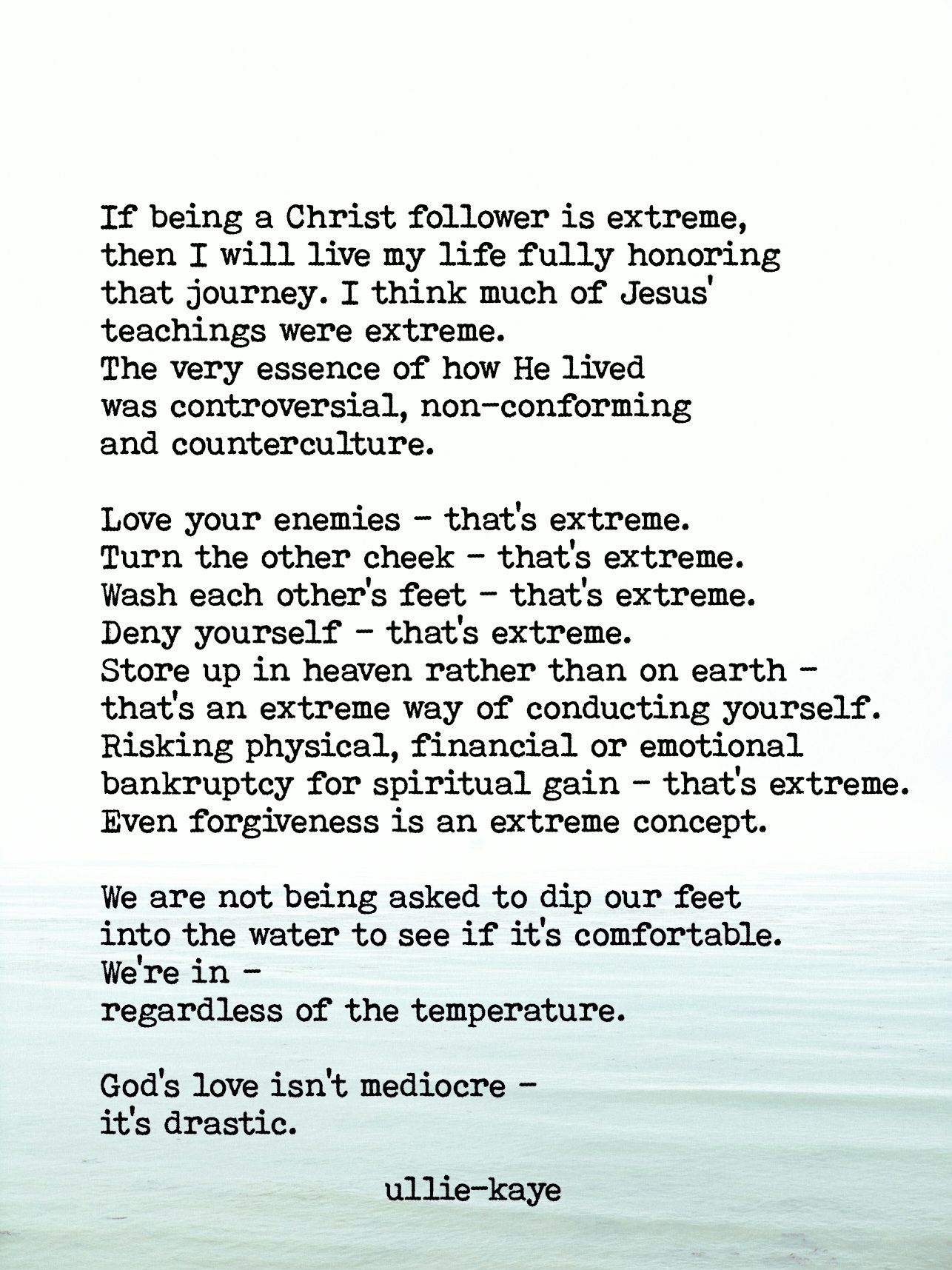
Having faced contempt myself, It has brought me to a “come to Jesus” moment. I don’t want to hold contempt for anyone, no matter how different they are, no matter what wrongs they have done. I want to figure out how to stay engaged with people…such that “if [I] can’t move mountains, [maybe I can] move a stone”.*

Photo Credit: Instagram, Ullie Kaye Poetry*

Worship Wednesday – When You See Wounded, I See Mended – Matthew West

Photo Credit: Catholic Outlook

Jesus returned to the Mount of Olives, but early the next morning he was back again at the Temple. A crowd soon gathered, and he sat down and taught them. As he was speaking, the teachers of religious law and the Pharisees brought a woman who had been caught in the act of adultery. They put her in front of the crowd.

“Teacher,” they said to Jesus, “this woman was caught in the act of adultery. The law of Moses says to stone her. What do you say?”

They were trying to trap him into saying something they could use against him, but Jesus stooped down and wrote in the dust with his finger. They kept demanding an answer, so he stood up again and said, “All right, but let the one who has never sinned throw the first stone!” Then he stooped down again and wrote in the dust.

When the accusers heard this, they slipped away one by one, beginning with the oldest, until only Jesus was left in the middle of the crowd with the woman. Then Jesus stood up again and said to the woman, “Where are your accusers? Didn’t even one of them condemn you?”

“No, Lord,” she said.

And Jesus said, “Neither do I. Go and sin no more.” – John 8:1-11

Two others, who were criminals, were led away to be put to death with [Jesus]. And when they came to the place that is called The Skull, there they crucified him, and the criminals, one on his right and one on his left. And Jesus said, “Father, forgive them, for they know not what they do.”

One of the criminals who were hanged railed at him, saying, “Are you not the Christ? Save yourself and us!” But the other rebuked him, saying, “Do you not fear God, since you are under the same sentence of condemnation?  And we indeed justly, for we are receiving the due reward of our deeds; but this man has done nothing wrong.”  And he said, “Jesus, remember me when you come into your kingdom.”  And he said to him, “Truly, I say to you, today you will be with me in paradise.” – Luke 23:32-34, 39-43

The Bible is filled with accounts of people in desperate situations. Too many alone in circumstances they can’t seem to escape. Maybe some of us have known that kind of isolation, self-hatred, hopelessness. Singer, songwriter Matthew West brings these people, these lost and wounded ones, into the light. Into the light of God’s love…and ours, if we don’t turn away. “Mended” is West’s speaking forth the Gospel of Christ over brokenness…as if Jesus is speaking to the wounded one, through the lyrics of the song.

Worship with me.

[Chorus]
When you see broken beyond repair
I see healing beyond belief
When you see too far gone
I see one step away from home
When you see nothing but damaged goods
I see something good in the making
I’m not finished yet
When you see wounded, I see mended

[Verse 1]
How many times can one heart break?
It was never supposed to be this way
Look in the mirror, but you find someone
You never thought you’d be
Oh, but I can still recognize
The one I love in your tear stained eyes
I know you might not see him now
So lift your eyes to me

[Chorus]
When you see broken beyond repair
I see healing beyond belief
When you see too far gone
I see one step away from home
When you see nothing but damaged goods
I see something good in the making
I’m not finished yet
When you see wounded, I see mended

[Verse 2]
You see your worst mistake
But I see the price I paid
And there’s nothing you could ever do
To lose what grace has won
So hold on, it’s not the end
No, this is where love’s work begins
I’m making all things new
And I will make a miracle of you
[Chorus]
When you see broken beyond repair
I see healing beyond belief
When you see too far gone
I see one step away from home
When you see nothing but damaged goods
I see something good in the making
I’m not finished yet
When you see wounded, I see mended

[Bridge]
I see my child, my beloved
The new creation you’re becoming
You see the scars from when you fell
But I see the stories they will tell
You see worthless, but I see priceless
You see pain, but I see a purpose
You see unworthy, undeserving
But I see you through eyes of mercy

[Chorus]
When you see broken beyond repair
I see healing beyond belief
You’re not too far gone
You’re one step away from home
When you see nothing but damaged goods
I see something good in the making
I’m not finished yet, no
When you see wounded, I see mended
 
[Outro]
Oh, I see mended
Woah, oh I see mended
I’m not finished yet
When you see wounded, I see mended*
 
 
In closing, I’d like to shine a light on a young Christian man who is shining light on persons broken by addiction in the Kensington area of Philadelphia, Pennsylvania. Mal Love is a filmmaker and he is capturing stories of these people, on the streets, prisoners of their addictions. He brings a Godly dignity to them and shows genuine care for them. Talking to them, filming their stories, asking what they need and doing what he can to provide (food, beverages, pillows, recovery helps). He has even administered Narcan when encountering someone who’d overdosed. You can see and hear these stories every day as he goes out onto the streets – on Instagram, Facebook, or his YouTube channel. Mal gives us the opportunity to look into faces of people Jesus loves and pray for them. Whew!
 

YouTube Video – Matthew West – Story Behind Mended

AML Films Patreon Page

Monday Morning Moment – What Is It About the Quality of Kindness? It’s Extraordinary.

Photo Credit: Small Joys

OK…so I’ve written loads on kindness. What is it about this quality of kindness? Maybe it doesn’t seem extraordinary, and, well, it shouldn’t be. I still marvel any time I’m on the receiving end…or see someone exhibit kindness to others, not expecting a thing in return.

Kindness has a “tip of the iceberg” character about it. What’s underneath can be any number of other winsome qualities: humility, compassion, love, understanding, empathy. We’re talking about the kindness that has no underlying selfish motivations – only to lighten the load of another or to lift the heart. To show up, be present, draw near. We should never take kindness for granted. It is no small thing. We can also do the work of maturing it in our own lives. Kindness takes effort. Like the iceberg, much that drives kindness is out of our view, and reflecting on that reminds us of its great value. Kindness is way beyond just being nice. It’s extraordinary.

For example, about ten days ago a friend of ours from church had a big heart surgery. A few days after his surgery, I posted my blog on my own cardiac journey (which at this point is way small compared to his). His wife saw my blog and told him about it. He called me straightaway to ask how I was doing and to encourage me!!! That’s extraordinary kindness. Then yesterday, less than two weeks after his surgery, he was in the parking lot of our church, helping young families park and head safely into church. He could have easily stood or sat in the church lobby and everyone would have been thrilled just to see him back at church. It is his nature to serve and show kindness. I’m pretty sure, some of the folks he helped didn’t even know he’d had surgery.

Kindness does have its own rewards – physically, spiritually, mentally, and socially.

Photo Credit: MIBlueDaily, Jake Newby

What makes it the most precious is that genuine kindness has no ulterior motive. It flows out of a pure heart. As Christians, we are taught to do good, to show kindness, to others, not for any show of our own virtue but to point to the goodness of God.

This:

“You are the salt of the earth…You are the light of the world. A city set on a hill cannot be hidden. Nor do people light a lamp and put it under a basket, but on a stand, and it gives light to all in the house. In the same way, let your light shine before others, so that they may see your good works and give glory to your Father who is in heaven.”Jesus, Matthew 5:13-16

Not this:

 “Be careful not to practice your righteousness in front of others to be seen by them.Jesus – Matthew 6:1a

Seeing our friend yesterday, serving with delight after major surgery, caused me to reflect on times I’ve seen other beautiful displays of kindness. Like when our neighbor came to sit with Dave while I was having surgery. She just showed up for him so he wouldn’t be waiting alone. That meant a lot. Or another neighbor who always remembers the birthdays of the children in our neighborhood, and even those not in our neighborhood, like my grandkids. Or the card sent for no other reason except the sender was just being kind. Or the phone call from one of the kids – just checking on us.

In the Christian faith, kindness is a fruit of the Spirit. What that means is we can actually build capacity for kindness by walking with God. He empowers us to be kind.

Photo Credit: Pastor Chris Mullis

Whether one is a Christ-follower or not, kindness is still a character trait we can build, and we can teach it to our children. It is worth the effort.

Photo Credit: SelPowerPack, Facebook

Even Mayo Clinic prescribes a kindness kickstart program as part of their wellness health plan. Below you will find the checklist.

Photo Credit: Mayo Clinic, Kickstart Kindness Checklist

Mayo Clinic Kickstart Kindness Program

We hear much about being kind today. We have it in us to take steps in this direction every day. Even with those we don’t think deserve it. Maybe we didn’t deserve it when people chose to be kind to us. I certainly haven’t deserved all the kindness shown to me. Something to think about and intentionally lean into.

“Let no one ever come to you without leaving better and happier.
Be the living expression of God’s kindness.
Kindness in your face. Kindness in your eyes. Kindness in your smile.”
Mother Teresa

The Fruit of the Holy Spirit – What Is Kindness? – Got Questions

Fruit of the Spirit: Kindness – Eddie Foster

Fruits of the Spirit: Kindness – Sarah Brown

A Deeper Study of the Fruit of the Spirit: Kindness – Emma Danzey

Photo Credit: The Hobbit, Reddit

5 Friday Faves – Beyond the Guitar’s “Superman”, Rachel Haack on Hope in Family Estrangement, Illuminators – How to Know a Person, 30 Habits with Massive Returns on Life, 45 Life Lessons

1) Beyond the Guitar’s “Superman” – John Murphy composed the stunning soundtrack for the 2025 big-screen edition of “Superman”. His treatment of the iconic theme (originally composed by John Williams) is absolutely gorgeous. Listen to his version of “Raising the Flag” here.

Photo Credit: YouTube

Then…sit back and listen to Nathan Mills at Beyond the Guitar perform his arrangement of this incredible theme on classical guitar. One instrument. Played with the heart and skill of a musician who does beautiful justice to a magnificent orchestral piece of work. So good!

    2) Rachel Haack on Hope in Family Estrangement – Whether we are in the midst of a family estrangement or we know someone estranged from family members, it’s safe to say that none of us are untouched by family estrangement. It seems a part, an accepted part of our culture today. I just saw the Instagram reel below on therapist Rachel Haack’s page. It gave me hope – hearing sanity in what feels like a crazy hard relational world.

    [Rachel Haack and her family – 5 girls and her husband – Facebook]

    Instagram – Reel describing Rachel Haack’s bold prescription to replace the family member descriptors of “emotionally immature, boomer, toxic, dehumanizaion” with the actions/goals of “respect, compassion, understanding, and collaboration”.

    Setting boundaries in painful relationships may feel like a necessary safety maneuver, but too often those boundaries become deadends. No way forward really and the years go by. I so appreciate Haack’s measured and gentle approach to reconciliation in difficult family situations. Below are excellent resources, including one podcast with Joshua Coleman, author of Rules of Estrangement: Why Adult Children Cut Ties and How to Heal the Conflict.

    We’ve Been Subverted and It’s Showing Up in Our Families – Rachel Haack

    When Grandparents Get Cancelled and What to Do About It – YouTube

    Building Healthy Relationships with Adult Children – with Rachel Haack (Audio file)

    Rachel Haack on Facebook

    What’s Behind the Rise of Parent-Child Estrangement? – Podcast With Joshua Coleman

    3) lluminators – How to Know a Person – I bought this book “How to Know a Person” after reading author David Brooks‘ guest blog on Ann Voskamp‘s website (linked below).

    How to Know a Person – and See Them with Jesus’s Eyes – Ann Voskamp – Guest Contributor: David Brooks

    I’m not sure if it was after the 9/11 attacks or exactly when the cultural phenomenon began, but people seem not to look in people’s faces so much. There’s a disinterest, or lack of curiosity, or maybe even guarding. We feel it might be intrusive to ask questions, and for sure there are unhelpful questions. However, to be truly curious about someone, to want to know someone deeply, is a beautiful and honoring thing.

    Below you will find two quotes from Brooks’ book. In the blog above and the book as well, he talks about being illuminators. Shining a light on someone. Not in an negative, exposing way but in a way that draws out who they really are and how amazing they are.

    “When you’re practicing Illuminationism, you’re offering a gaze that says, “I want to get to know you and be known by you.” It’s a gaze that positively answers the question everybody is unconsciously asking themselves when they meet you: “Am I a person to you? Do you care about me? Am I a priority for you?” The answers to those questions are conveyed in your gaze before they are conveyed by your words. It’s a gaze that radiates respect. It’s a gaze that says that every person I meet is unique, unrepeatable, and, yes, superior to me in some way. Every person I meet is fascinating on some topic. If I approach you in this respectful way, I’ll know that you are not a puzzle that can be solved but a mystery that can never be gotten to the bottom of. I’ll do you the honor of suspending judgment and letting you be as you are.”How To Know a Person – The Art of Seeing Others Deeply and Being Deeply Seen – David Brooks

    “The real act of, say, building a friendship or creating a community involves performing a series of small, concrete social actions well: disagreeing without poisoning the relationship; revealing vulnerability at the appropriate pace; being a good listener; knowing how to end a conversation gracefully; knowing how to ask for and offer forgiveness; knowing how to let someone down without breaking their heart; knowing how to sit with someone who is suffering; knowing how to host a gathering where everyone feels embraced; knowing how to see things from another’s point of view.”How To Know a Person – The Art of Seeing Others Deeply and Being Deeply Seen – David Brooks

    Brooks talks about being a witness, about giving attention. I love that!

    He reminds me of psychiatrist Curt Thompson MD who writes and often talks about compassion and curiosity. I’ve written lots about Curt and his wisdom on mental and relational health. He, like David Brooks, encourages us to give our attention to those around us. It’s part of the beauty of life.

    How to Know a Person Quotes – David Brooks – Goodreads

    4) 30 Habits with Massive Returns in Life – I’m all about habit formation. Not saying I’m great at developing healthy habits, but I love the science of habits including New Year’s resolutions. Author Justin Whitmel Earley has written two excellent books on habit formation and a third for children (on sibling relationships) entitled The Big Mess. Earley’s websites (The Common Rule and Habits of the Household) have great free resources as well on habit formation. For today’s Friday Fave, I’m just posting this little graphic on 30 habits with big returns…how many have you already formed? It’s not a race though…choose a habit and begin there.

    Photo Credit: Nikz Bennie, Facebook

    5) 45 Life Lessons – Here is another list, not of habits but life lessons. They are written by author and cancer survivor Regina Brett of the Plain Dealer, Cleveland, Ohio, and have been widely reprinted.

    “To celebrate growing older, I once wrote the 45 lessons life taught me. It is the most requested column I’ve ever written.

    Here is the column once more:

    1. Life isn’t fair, but it’s still good.

    2. When in doubt, just take the next small step.

    3. Life is too short – enjoy it.

    4. Your job won’t take care of you when you are sick. Your friends and family will.

    5. Pay off your credit cards every month.

    6. You don’t have to win every argument. Stay true to yourself.

    7. Cry with someone. It’s more healing than crying alone.

    8. It’s OK to get angry with God. He can take it.

    9. Save for retirement starting with your first paycheck.

    10. When it comes to chocolate, resistance is futile.

    11. Make peace with your past so it won’t screw up the present.

    12. It’s OK to let your children see you cry.

    13. Don’t compare your life to others. You have no idea what their journey is all about.

    14. If a relationship has to be a secret, you shouldn’t be in it.

    15. Everything can change in the blink of an eye, but don’t worry, God never blinks.

    16.. Take a deep breath. It calms the mind.

    17. Get rid of anything that isn’t useful. Clutter weighs you down in many ways.

    18. Whatever doesn’t kill you really does make you stronger.

    19.. It’s never too late to be happy. But it’s all up to you and no one else.

    20. When it comes to going after what you love in life, don’t take no for an answer.

    21. Burn the candles, use the nice sheets, wear the fancy lingerie. Don’t save it for a special occasion. Today is special.

    22. Over prepare, then go with the flow.

    23. Be eccentric now. Don’t wait for old age to wear purple.

    24. The most important sex organ is the brain.

    25. No one is in charge of your happiness but you.

    26. Frame every so-called disaster with these words ‘In five years, will this matter?’

    27. Always choose life.

    28. Forgive.

    29. What other people think of you is none of your business.

    30. Time heals almost everything. Give time time.

    31. However good or bad a situation is, it will change.

    32. Don’t take yourself so seriously. No one else does.

    33. Believe in miracles.

    34. God loves you because of who God is, not because of anything you did or didn’t do.

    35. Don’t audit life. Show up and make the most of it now.

    36. Growing old beats the alternative of dying young.

    37. Your children get only one childhood.

    38. All that truly matters in the end is that you loved.

    39. Get outside every day. Miracles are waiting everywhere.

    40. If we all threw our problems in a pile and saw everyone else’s, we’d grab ours back.

    41. Envy is a waste of time. Accept what you already have, not what you need.

    42. The best is yet to come…

    43. No matter how you feel, get up, dress up and show up.

    44. Yield.

    45. Life isn’t tied with a bow, but it’s still a gift.” – Facebook

    Post in Comments any lessons that you particularly appreciate.

    45 Life Lessons Written by a ’90-year-old” Woman That’ll Put Everything Into Perspective – Stephanie Wong

    Pinterest Variations on These Life Lessons

    Bonuses:

    Instagram – Reel – Jonathan Haidt on slow Dopamine – holding off social media – see his caption screenshot below. [Also below is the full podcast on this topic – Dr. Haidt starts at 8:14.]

    Instagram – 3 Days Off Smartphones and How Our Brains Are Affected – Doc Amen

    Monday Morning Moment – On Complications, Comfort, and Caregivers

    I’ve been writing this in my head for over a month. Here goes.

    For some time now, I’ve been seeing a cardiologist. Mostly about a couple of heart valves that aren’t functioning as well as they should. Then over the last several months, fatigue has been a strange companion for my usual high-energy self. I am told some of the fatigue relates to medications required for my cardiac situation, but lately a new issue arose that also apparently causes me to be tired. Premature ventricular contractions (PVCs). Sorry for all the medical stuff…just trying to give context.

    After several other cardiologist visits and recommendations, it was decided a cardiac ablation would be the best course of action. Potentially highly effective with the outcome pushing out into the future my need for a valve replacement (open heart surgery). Highly effective with minimal complications.

    The cardiac ablation doesn’t require general anesthesia nor a big incision. Essentially access to the heart is through a catheter threaded to a large vein, and the procedure doesn’t even require an over-night hospital stay usually. Still, in the days before coming in, I finally completed my advance life directive (just in case).

    After leaving Dave in the waiting area, I was taken into the prep room and hooked up to monitors. The nurses started an IV and shortly after the sedation. I was surrounded by lovely hospital staff – all was well.

    Complications – When I woke in recovery, it didn’t seem so well. Lots of action. Someone was putting lots of pressure where the IV catheter must have been inserted (I had already been sedated for that part). A blood transfusion was being ordered. I wasn’t going home.

    The cardiologist who performed the ablation was up-beat as he described what happened. In preparation for the procedure, I was given blood thinners. At some point during the ablation, I had some bleeding (which was one of the listed possible complications). The blood loss was considerable enough to require transfusions. The cardiologist wanted me to be monitored overnight so I was admitted to the cardiac step-down unit.

    At some point that evening, I needed to go to the restroom. Dave helped me, walking me from bed to toilet. Unfortunately, it turns out my blood pressure was low enough, because of the blood loss, that I got faint and ended up passing out. Fortunately, Dave broke my fall, and with his and the nurse’s help I got back to the bed without incident.

    Why all these details? It has made me think more deeply on the toll of waiting and watching on the person at the bedside. He would tell me later about watching the monitors and seeing my blood pressure and pulse registering lower than seemed safe. Once my pulse got down to 35, he related later.

    Still…all was relatively well, thankfully.

    The next day, my blood counts hadn’t recovered well enough so more fluids and another transfusion. Otherwise, it was a quiet day. Two of my grandchildren were being baptized in a couple of days, and I was not going to miss that, if at all possible.

    Several blood sticks and nursing IV lines along left me with impressive bruises, but by the next morning, they discharged me, with all the precautions and appointments for follow-up. Praise the Lord!

    Comfort – It is very difficult, almost impossible, for me to ask for help. Even with the fatigue of the past several months, I just chose to do less rather than to engage helpers. It is a character weakness, I know. Beautiful offers to help abounded, and I was grateful. The offers themselves were a comfort. As were all the prayers, texts, phone calls, visits, notes/cards, flowers, and food. There was also a quietness in my heart that I recognized as the nearness of God Himself to a child not quite herself. Such unexpected and generous comfort… all of it.

    Caregivers – Having been a cancer nurse for many years, I can’t say enough about caregivers. Those who put their own lives on hold for the sake of a loved one. Those who care professionally even for strangers. Hats off! Giving care is reflective of a loving God. It is part of who we are bearing His image.

    In this season of heart issues, I have had much comfort and much care. It is a season I want to remember (thus this writing about it), especially as my strength is coming back and the fatigue is less (thanks to the ablation). My unseen Helper has been God, and the one I can reach out and touch has been Dave. His gentleness and servant heart aren’t a surprise, because he has shown up for many over the years – especially members of his family, those in need in our church community, and folks on his work teams. He is quiet and doesn’t draw attention to himself. For this moment, in the aftermath of this health issue, I just want to say thanks…thanks to all of you who have been such a comfort to me…and to God for bringing me through…and to Dave. Thank you, Sweet Friend and Husband.

    P.S. All this heart stuff the last few years has been a struggle for me. It has tempted me to fear. Thanks to the ablation, the other heart surgeries that were in front of me have been pushed down the road. Who knows, I may not ever need them. If they do become inevitable, or some other health (or relational) crisis becomes an issue, I have (what Jackie Hill Perry talks about below) “history with God”. He will get us through whatever comes. Hallelujah!

    Monday Morning Moment – Remembering My Brother, Robert

    [My older brother, Robert]

    [Adapted from the Archives]

    Brothers – I have three. Never had had sisters and always wanted one. Fortunately, I do have two sisters-in-law married to two of those brothers who have given me that sweet experience of sisters for life. [Another amazing sister-in-law thanks to my husband’s brother].

    Now, back to my brothers.

    [L to R; Dwane, Wade, and Robert]

    One died too young, and we miss him. Our older brother, Robert, died of a “shredded aorta”. The surgeon who operated for hours to save his life told our family they were able to repair the aorta but couldn’t get him off bypass. He was just too tired.

    Today is his birthday. He would have been 79 but died at 61.

    Life was hard for my brother, Robert, twice divorced and struggling with health issues that diminished him. He coped not well by blaming the hard on others. His siblings took some of the brunt of it…his children and parents also. However, we learned especially from our mom’s example that loving him mattered. Two friends of mine, in separate conversations, gave me excellent advice: “Hurt people hurt people… deflect the attacks and lean in anyway.” I learned what the buttons were that Robert pushed for me and “deactivated” them. I wanted our relationship to survive. Somehow, when I didn’t react to his put-downs or temper outbursts, he just stopped trying to engage in that way. What if I had walked away and given up on him, on us. Thankfully, we had time…not as much as we would have liked, but time…to be close, to laugh over memories, to share the daily small victories, to long together for better days, to make plans for those days. I learned so much from him on dealing with challenge and not giving up.

    One day I will tell him.

    My two “little brothers”, Dwane and Wade, have benefited from what we learned from our older brother. We three have always had strong opinions like our big brother, but less argumentative and more gentle. Now that our parents are gone, we hold together, somewhat imperfectly. Not any of us living in the same state has made closeness more challenging. However, I can’t imagine any disagreement ever separating us from each other. We are family and I am so thankful for them.

    How about you?

    Sometimes we lose a parent (or both) through divorce or death. We are with our siblings for most all of our lives. They help shape us for life. They know us differently than any one else in the world.

    My extended family lives far from me. Every trip to gather, every phone call and text message mean the world.

    Let’s celebrate our families while we have them. None are perfect. Some are exceptionally difficult. We have much to learn – from our original families – to live well in our own next families…and to love well, even through the hard.

    Remembering Robert today. His passion, his joy in the simple things, his longing for family closeness, his persevering in the hard. He had a temper, too, but it calmed as he got older and nearer to death (although he didn’t know it was coming). So thankful for the life we shared and the time we had. I will never forget. So grateful that his faith in God was restored in the end and we will see each other in Heaven. Until then…

    [Robert and his tiny granddaughter]
    [Robert & his little niece Christie, all grown-up now]
    [Robert with his daughter Stephanie and grandchildren Stephen and Erica]
    [Robert with our good friend, Heba, who saw his heart and helped us not to miss it]

    Monday Morning Moment – a Wave of Nostalgia and 3 Lessons Taken – Deb Mills