On Sunday, before launching into a great teaching on Revelation 2, our pastor settled into a wee rant. On “the blond-haired, blue-eyed Malibu Jesus” represented too often in the images of our Bible Belt childhoods in America. I was taken aback by his passion, and then wondered if I had a blindspot in this area.
Does my own Scottish heritage make me comfortable with this view of Jesus? Being fair-skinned, with brownish-green eyes and brown-hair-turned gray, was my view biased?
Exiting the auditorium after an excellent sermon, I checked out our own stained-glass images of Christ. They seemed true enough to the Middle Eastern Jewish heritage of Jesus. Brown eyes, darker complexion, curly hair (albeit lighter than appropriate?). Stained glass windows have been a favorite art form for me. These did not disappoint, but are they adequate for all who are part of our church? Or offensive to some?
[This window is actually in the women’s handicapped bathroom – after an expansion of facilities required incorporating one of the outside windows into the design. The men of our church miss this one.]
On the way home, I was still distracted by my pastor’s statement: How We View Jesus Matters. Wondering at my own lack of appreciation of how Jesus’ appearance might affect the rest of the world’s humanity.
Finally, it dawned on me what mattered more than our view of Jesus…His view of himself.
The Bible says very little about Jesus’ appearance. He sounded an average sort of man. Nothing that drew attention to him as far as physical characteristics. “Hidden in plain sight”.
I will say that my favorite interpretation of his physical appearance, personality, and character is found in the TV show The Chosen. Gentle, loving, fearless, funny, serious, welcoming, truth-filled, good.
“Recently, I saw an image of a lion and a lamb lying together in the clouds and was reminded of the cosmic truth of history that in Jesus Christ, God’s love and justice meet, His mercy and His authority come together.
J.R.R. Tolkein speaks of the incarnation of Christ as the “euchatastrophe* of Man’s history.” About the incarnation, and especially its climax in the resurrection, he says, “There is no tale ever told that men would rather find was true.” The greatest fantasy is in fact history.” – The Lion and the Lamb – Darrow Miller
Throughout His public ministry, Jesus made two explicit claims concerning Himself: He claimed to be the Messiah of Israel (the Christ), and He claimed to be God come in the flesh (Matthew 16:16; John 11:27; Mark 14:61). This two-fold claim is the essence of the message which Jesus challenged men to believe concerning Himself (John 20:31). – Hidden in Plain Sight, Doug Bookman
Our view of Jesus matters…especially as it relates to his view of himself, in relation to God the Father and to us.
[As I write, it is the day before Independence Day in the US. The 4th of July. Parades, barbecues, gatherings of friends and family, and fireworks gloriously finishing off the day. Our fridge is filled with summer-sweet watermelon, cantaloupe, strawberries, and chicken ready for the grill. Today is quiet and full of introspection. Here’s what’s on my mind.]
I wasn’t born into a Christian family. We weren’t in church until I was 7 or 8. My mom had a church experience as a child and was saved and baptized but had stopped attending church years before I was born. She would say she stopped seeking God somewhere along the way in a difficult marriage. Not sure at all whether my biological father had any sort of faith. To this day, I’m thankful for Christian neighbors who loved us and invited us into their church family.
When I was 9, during a summer Bible school week, the message of God’s love and His deliverance from our self-serving, sinful hearts was immensely beautiful to me. Even as a little girl, I had unsuccessfully tried my hardest to be good for my mama. She worked so hard to keep food on the table for us (with no help from anyone), and I didn’t want to add to her burden. Still, like I said, being good wasn’t always my path forward. Then hearing that God was not put off by that, and, in fact, had made a way for me to be covered by His own righteousness through Jesus…well, it was the most amazing thing I had ever heard.
This wasn’t just a tickling-the-ears sort of experience. Not just a relief-generating tale for troubled child. It resonated with my heart and mind. It sounded truer than anything I had known before. Understanding, even as a child, that God had made a way for me to be free of the burden of my sin was really good news.
My pursuit of God actually followed His pursuit of me. He has never let go of me…even in seasons of my rebellion as a young adult. The shiny things of the world can be mesmerizing – popularity, higher education, professional favor, the stuff and experiences that work affords us.
In my 20s, I had a divided mind and allegiance. To some, it may not have seemed so, but I knew my own heart, and it was, for a time, lured back to old ways – a heart that could be both deceived and deceitful. However, by God’s grace, I did NOT stay in that place forever. He drew me back to Himself.
Reminded of the passage late in Jesus’ public ministry, when some of His followers fell away, He asked the apostle Peter if he would leave, too. Peter answered Him with the question that always brings me back to the reality of life: “Lord, to whom shall we go? You have the words of eternal life.” There is simply no one else…nowhere else to go. Period. Full-stop.
Well…that’s a bit of my story. Your story may look very different from mine. Since my 30s, as winding as the path may be, or as imperfectly as I follow it…there is no going back.
As we celebrate our freedoms as a nation, freedoms hard-won by those who sacrificed their lives for our sake, I also celebrate the freedom won by Christ whose own ultimate sacrifice won us back to Himself. Hallelujah!
Today is Juneteenth – a huge day in American history that I never learned about until the last few years. Our Daily Bread Voices has provided an incredible documentary on Juneteenth – beautiful and redeeming.
This morning, rolling out of bed, I have so many thoughts pinging around my mind…thoughts and accompanying emotions. Missing fathers from our lives. A young woman with three small children facing eviction because of a father who abused and then deserted them. Afghan refugees and friends sorting through their own losses and fighting to build their lives here. Taking in the intensity of Juneteenth and the experience of freedom for all of us.
As happens sometimes, a simple song, and the not-so-simple question in its title, settles in my brain.
“How Can You Mend a Broken Heart?”
Whether the Bee Gee’s epic original or Al Green’s amazing cover. Here’s a more recent Bee Gee’s performance (2001):
Even when our hearts are not presently under attack, we share space with those we love whose hearts are breaking. A dear friend whose husband wants another future. A friend who spent his Father’s Day without his children (because his ex-wife chose a different future). Friends who lost their fathers before this Father’s Day…or parents who lost their children (whether to death or to an estranged life). Friends heartbroken over the what-ifs or what-may-never-be’s. Fill in the blank with your own. #BrokenHearts.
[Too heavy for a Monday morning? It does get better.]
Maybe you aren’t so aware of broken hearts. Maybe you haven’t had the experience of sitting on the phone of a friend scream-weeping at the hard reality of her life right now. Maybe you haven’t worked beside a friend whose stone face and deep quiet haven’t touched your awareness of what is going on under the surface of his silence…his pain.
Broken hearts can take us on spirals that lead to self-protective withdrawal, confused anger, terrifying isolation, or hard bitterness.
I also found some helps in a somewhat odd place: Kristin Weber‘s Adulting for Jesus. Whatever you currently think about Jesus, this book on adulting is refreshing, funny sometimes, and so real. Midway of the book she talks about developing something she calls Godly grit.
“Adulting requires learning how to fall and get back up again, and again, and again.” – Adulting for Jesus, p. 89
Weber presents 10 ways to shift perspective on the struggle (our heartbreak) and develop that grit:
Expect hardship. – “Western comforts have lulled us into the false assumption that life is meant to be easy and the hard moments few. In reality, much of life is hard, and the easy moments are the exceptions.” We can learn to live in such a way that difficult situations/relationships don’t catch us off guard.
Depend on God. – “…when a relationship [ends] abruptly, failure hurts – often deeply. We can be honest about our hurt and struggles while still trusting God.” We don’t ignore the pain of our broken heart, but we recognize that God hasn’t gone anywhere. He sees; He hears; He will work on our behalf.
Ask “What’s Next?” – “Rather than ask ‘Why me?’…ask a different question about life: ‘What’s next?’ Obstacles, especially a long string of them, can make us short-sighted. By asking ‘What’s next?’ we recognize this failure or hardship isn’t the end of our story…Hardships will undoubtably change you, but keeping a long-term perspective will prevent them from destroying you.”
Look at Adversity through Eternal Lenses. – “As a child of God your trials, both big and small, have an expiration date.” When our hearts are broken, we are consumed and exhausted by our loss. We can’t see down the road but so far. “Do the next thing”. Eternity comes but until then we grieve the loss, but we also train ourselves to stay in the moment and hope for a better future…a different future. We have that confidence in God’s care.
Appreciate the Bottom. – “A lot can be learned on the bottom step of the ladder”. Our broken hearts can bring us low…but that is not where we stay. That is not where we belong.
Develop Thick Skin and a Tender Heart. – “Try to be slow in getting offended and quick in extending grace. If someone causes you to have a knee-jerk reaction, that person controls you. That person has all the power…Choosing a calm response and keeping a level head, you remain free to live your life.”
Be Teachable. – “Though we don’t need to let the opinions and critiques of everyone we encounter control our lives, we do need people who can lovingly speak truth into our lives…Our natural instinct is to make excuses or get defensive when someone corrects us, but adopting an attitude of teachability puts us on the track to growth and maturity. We need to take ownership of our actions and be humble enough to receive input about where we can improve.”
Do Something. – “Big changes happen through tiny actions, and tiny actions require doing something.” Every day…step by step. #MakeYourBed.
Laugh. – “Once I learned to laugh at myself and find humor in situations that didn’t tip in my favor, I became less stressed and anxious about every little thing. I didn’t dread life or failure as much…Our hope isn’t ultimately in everything going our way, and humor keeps the weight of our circumstances from crushing us.”
Count Your Blessings. – “Instead of focusing constantly on everything that’s going wrong, take time each day to remember what’s going right. We might find our ‘gratitude attitude’ changes our entire outlook on life.”
Thanks, Kristin. I can tell you’ve known heartbreak and have learned to come out whole on the other side.
Closing out this Monday Morning Moment, for those of us who are sharing space with one or many dealing with broken hearts, we need to remember its pain, and have patience and compassion…be present, listen, and, when we can, speak the truth in love.
P.S. The Scripture verses are strong anchors and the links below are super helpful. None of us are in these broken spaces alone.
The Lord is near to the brokenhearted and saves the crushed in spirit. – Psalm 34:18
My flesh and my heart may fail, but God is the strength of my heart and my portion forever. – Psalm 73:26
He heals the brokenhearted and binds up their wounds. – Psalm 147:3
“I have chosen you and haven’t rejected you. Do not fear, for I am with you; do not be afraid, for I am your God. I will strengthen you, I will help you, I will uphold you with my righteous right hand. – Isaiah 41:9b-10
“Come to me, all who labor and are heavy laden, and I will give you rest. Take my yoke upon you, and learn from me, for I am gentle and lowly in heart, and you will find rest for your souls. For my yoke is easy, and my burden is light.” – Jesus – Matthew 11:28-30
Fathering…it’s an intriguing topic for me, and I’ve written a lot on it [see here].
My biological father was fairly absent from my life. Even before he and my mom divorced. Our father’s own abandonment of us had an impact on us kids developmentally (even possibly affecting how we parent today).
[My brothers and me when we were younger]
Fortunately I had a kind and loving step-father. Sadly missed by his first family as he poured himself into my siblings and me. He tried to love them well, too…but…
My mom’s dad was an alcoholic who dealt poorly with the Great Depression and his inability to provide well for his family… isolating himself from his children. I remember as a child following him around the woods when we visited. Wish I could have known him better.
The father of my own children was and is a present, loving dad to our bunch. I hope they feel how much he loves them…still and always.
[These four, Morocco]
You have your own fathering stories.
Fathering matters.
“Fathering, like mothering, is not an easy job. So much dying to self. So much responsibility. What a delight for us when the men in our lives take fathering on their shoulders as they might a sleeping child. Surrendering themselves to the serving of those younger than them. I thank God for men who humble themselves in prayer for their children and who go to work every day to support their families. Working, studying, and life-long learning passed on to their children and others.
These dads are too-often taken for granted in the shadow of fathering that falls short. The absent, neglectful and downright abusive fathers cut wounds so deep that decent fathers are sometimes judged by the same measure. We watch for “the sins of the fathers to be revisited on their children” (Numbers 14:18).
Today, let’s reflect on the good fathers. Those who were present at our births, or those who came later in life to us, or those who father us out of their own great hearts. Imperfect, sure. All of us are. Yet, there are those men who go many more than second miles for us, and we are grateful.” – Deb Mills
In thinking about fathers, with the approach of Father’s Day here in the US, I pulled all the books on fathering from my bookshelves. There weren’t many (more on parenting, but just these few on fathering itself). Maybe we miss the crucial nature of this role in children’s lives, such that we don’t feel training is needed. I don’t know.
Adaptability means you handle stress and what is coming at you as a dad in healthy and effective ways. It also means you have the mental flexibility to help your child feel understood and noticed by you.
Respect brings you fully present to your family. Through respect, you model looking inward and managing yourself well so you can listen, see, effectively respond to, and love all image bearers of Christ that surround you each day.
Intentionality helps you create goals and focus on what you’re building in your children’s lives. Intentional affection, instruction, conversations, mealtimes, playtimes, and encouraging words can all have life-giving impacts on your family.
Steadfast love allows you to love deeply and give your family the strength that stems from a father’s unconditional love.
Boundaries allow you to model and teach healthy ways to engage with opportunities, relationships, and interests.
Grace and forgiveness present the ministry of reconciliation that Jesus began through his death and resurrection. A dad can truly make his home debt-free and spiritually strengthened by modeling grace and forgiveness.
Gratitude provides a father with a loving and humble perspective that helps him lead his family well.
Photo Credit: Calvin & Hobbs from the blog of Kenneth Reeds
Parenting is challenging for sure. Through all the seasons and stages of life. From the birth of our children through when they are grown…really until we are gone. Challenging, but also a beautiful work of the heart and mind, as we seek to win the challenge. For our children’s sake, and for our own. If we weren’t fathered well, we can determine to take the steps for it not to continue in our own parenting. The resources we have available to parent well today are plentiful.
We can be grateful for good fathers and hopeful for those overwhelmed by (or unfortunately unaware of) the challenge of parenting well.
“…Let’s live in hope that those fathers who struggle to be present or loving may one day gather themselves together, awaken to what was left behind, and reach out to the treasures they missed along the way…and may they find us within reach.” – Deb Mills
“As to my children, you are now to be left fatherless, which I hope will be an inducement to you all to seek a Father who will never fail you.” – Rev. Jonathan Edwards, his last words to his children, as he lay dying.
The Audacity of Calling God “Father” If I call God “God” I speak truthfully. If I call God “Lord” I speak submissively. If I call God “King” I speak servilely.
But if I dare to call God “my Father,” I speak with a brassy audacity, chutzpah, that is shockingly familiar and intimate. So it seems anyway.
You dare to call the Master of the Universe “Father”? You dare to call the One who controls heaven and hell “Father”? You call the Omnipotent one “Father”?
Who do you think you are? It is difficult to imagine a more audacious act than to stand before the Creator of the world and to name him “Father.” And mean it. And not only to mean it, but to act and speak as a child acts and speaks before a loving and doting Dad.
It’s shocking. It’s exhilarating. And it’s beautiful beyond words.
But here’s a secret: it’s not really chutzpah. It’s not some brassy boldness that we work ourselves into, nor it is gained by swallowing a bottle of liquid spiritual courage, as it were.
To call God “Father” is simply to live in the space which Jesus created. To move from residing far from God as his enemy; or on the other side of town from him as a stranger; or down the street as an acquaintance; or in an adjoining house as a servant; and to move into our own bedroom as a child in his family. To wake up in the morning and see our Father sipping a cup of coffee and saying, “Good morning, my child,” as we respond, “Good morning, Father.”
You see, when we live in this house, when we move into the room built by Jesus, we inhabit the home not merely of a Master or Lord or King, but the one who’s given us his name and made us his own, now and forever.
“Our Father”: two of the most amazing words ever uttered. – Chad Bird
The Audacity of Calling God “Father”
If I call God “God” I speak truthfully. If I call God “Lord” I speak submissively. If I call God “King” I speak servilely.
But if I dare to call God “my Father,” I speak with a brassy audacity, chutzpah, that is shockingly familiar and…
How do we deal with individuals, organizations, or even a larger culture where either we personally or our values are attacked or diminished?
Do we take the approach of the old adage, “Fool me once, shame on you; fool me twice shame on me”? We build boundaries substantial enough that keep us from experiencing that discomfort again. Or do they really? Is that diminishing still being mulled over in our thoughts and body, such that we are bound to it, linked to it by our own vigilance?
How we respond to threats to ourselves or others has its origins in our personalities, family of origin, and life training as students and through adulthood. Ultimately, we choose how we respond to negatives. Proactively or reactively.
My preference is to stay…in the relationship, in the job or organization. I want to make things work…improve things from the inside out. Be tenacious. Figure it out. Give grace. Push in for a place at the table and make room for others there.
We live in a reactive space in history. Or maybe it’s always been that way, but now, the reactions are broadcast multiple ways through various media, both sympathetic and unsympathetic to our side or that of the other.
It is exhausting.
In a Slideserve on classroom management, the familiar elements of reactive response are outlined. When trouble is brewing, we do what we can to 1) expose and remove the perpetrator, 2) remove ourselves, 3) change up the environment to relieve discomfort, and/or 4) assign blame outside ourselves.
To move from being reactive to become more proactive, we must stay in the conversation. We determine how best to go forward. We listen with a desire for understanding and not just the goal of being right.
While downsizing our extensive book library this weekend, I rediscovered this little treasure of a book
and found this quote apropos to today’s topic:
Abraham Lincoln was one who listened to the Different Drummer, and not to the vindictive voices of his advisers.
Stephens, Phillips and Beecher were among Lincoln’s contemporaries who were echoing the cry, “Crush the South…Stamp out the whole slave-holding aristocracy…Make them pay to the last acre of land, the last vestige of power, the last drop of blood.”
But the great man upon whose furrowed brow the responsibility rested heard a Different Drummer… “With malice toward none, with charity for all, let us strive on to finish the work we are in, to bind up the nation’s wounds…to do all which may achieve and cherish a just and lasting peace among ourselves and with all nations.” – From the late US Senate chaplain and Scotsman Peter Marshall‘s His Hand On Your Shoulder
The paragraph above shows the contrast between the reactive, vengeful response and the more proactive, hopeful and potentially healing response.
The Southern Baptist Convention has its annual meeting later this month. Now for many of you, this is inconsequential. However, in anticipation of this meeting, and throughout the proceedings, Twitter and other social media platforms are and will be abuzz with the reactors. Those who would not wish these folk well. Those who may have been hurt in the past by this enormous cooperative of churches. Those who love a good wrangle especially when it potentially brings down Christians or sullies the name of Jesus.
Just last night, an out-of-state friend and I had a deep conversation on this topic (ok…via texts…so much meaning in short bursts). Her longing was to see Southern Baptists keep focused on the essentials of the church’s mission and not to allow the non-essentials divide us and cancel what matters most.
Whatever our challenge is this morning – whether a troubled work situation, a broken relationship, or an affiliation with an imperfect organization – we can choose a better way forward.
We can choose not to lash out or quit. We can choose to seek change from within. We can operate out of humility, hope, faith, or even love. We can resist a reactive response.
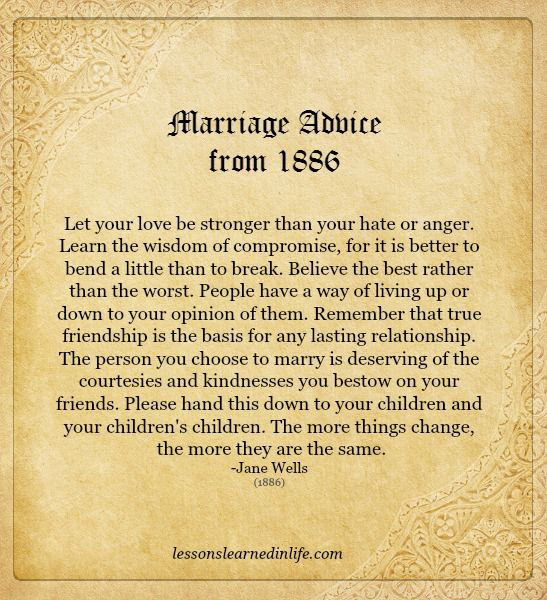
Marriage…whew! Earlier in my adult life, I always cringed at the observation that marriage is work. It didn’t look like work, and having the opportunity to share life with your special person seemed more joy than labor.
Then I got married.
It is joy and it is work…not in the dull, redundant sort of work we may have from time to time…but as in the challenging, invigorating, problem-solving, “in it to win it” kind of work.
Many of us have benefited from good marriage advice through the years and seasons.
My favorite marriage advice actually comes out of Bible verses not usually considered for this purpose:
“You have left your first love. Remember therefore from where you have fallen; repent [return] and do [repeat] the first works.” – Revelation 2:4b-5a
These words were actually spoken by the risen and reigning Messiah, Jesus, in a vision given to the Apostle John. The words were actually spoken in rebuke and, maybe, compassion for the relatively young church at Ephesus. The believers had become complacent, almost mechanical in their worship and allegiance to God, standing by in a city where idolatry was flourishing.
In Jesus’ rebuke was a recipe for restoration. He, through John’s vision and writing, was calling the church back to a refreshed relationship with Himself. His counsel rings wise and true for any of us…if we have lost our first love in the Lord, or our first love with a spouse.
If you’re in a season when your marriage just feels flat, like you’re a couple of roommates, like the love you have seems faded, like you’re even considering a way out and not forward…then:
Remember what it was like in the beginning. What were you like? [Focus there NOT on what your spouse was like.]
Repent or return/turn around.
Repeat what you did/were like in the beginning.
I was a lot funnier then…and tender toward him. More positioned for him to protect me (which was what he is wired to do and it’s lovely when he is freed to do so). More spontaneously affectionate. More generous with praise and encouragement. More understanding of the loads he carries for our marriage (and later for our family). When I remember, return and repeat (in action and attitude), something sweet happens. Worth giving it a try…
In fact, our marriage has gotten sweeter in these later years (as marriages often do when we don’t give up on them). Following Jesus’ counsel drawing us back to Himself…and each other.
[Coming up on 39 years with this guy. Thankful.]
Is this always the case for everyone? Well…it helps when both are engaged in growing a marriage. One of the most freeing parts of the advice given is we are called to singular acts of will. If I decide to work on my marriage, I can make a unilateral decision. Remember how it once was, return to that beginning, and repeat those thoughts, emotions, actions. Our emotions will catch up, but as we act in restorative ways, our brains bring our emotions along as we change our current habits (neuroplasticity – amazing stuff!).]
Marriage does take a lot of work, and it can prove fruitful. Fun as well. A piece of advice was given to our son and soon-to-be daughter-in-law before they married over 12 years ago. It came from an older couple who had been in the audience of one of his concerts. They came up to meet him afterwards, and discovered he was soon to be married. Smiling at each other, this was their sage advice:
“Make love often. Always pull from the same end of the rope.”
Do you ever find yourself having to push down that sense of panic, doom, or dread? It pops up not just in our thoughts but wherever we bodily lodge our stress – in our throat, gut, back, wherever.
We in the US are several months away from our every-four-year presidential election, and yet we are forced to think about it, and puzzle over what a bloodbath it will be (not literally but experientially with one side driven to shred the character of the other).
How are good decisions made in such a government and culture? I actually ponder this way too often.
My own preference is to bring everyone possible to the table (for sure a sampling of those affected by the decision) and reason together (ancient wisdom, right?). My personal sensibilities cry out, “Why can’t we all get along?!”
One issue always before us as a nation and as neighbors is what to do with and how to serve marginalized, displaced people? I’m not really addressing this today, but don’t you feel for Texas? I’m part of a refugee resettlement team (with my church), and it is a stretch for us to serve well one family (sometimes others peripherally). Then there is the occasional person in need who finds us online and asks for help. Just this week, it was a mom with three small children who separated herself from an abusive partner and now she is faced with the dire circumstances of inadequate resources to care for her family.
This is just a microcosm of what is going on in our nation serving the needy in a sustainable way.
So how do I choose hope?
Just this morning, I was reminded of a historical account in the Bible (Torah). It tells of a time when Jews were essentially captives in Persia. During this time, a young Jewish woman named Esther actually became the queen of King Ahasuerus. An evil aide to the king plotted to rid the kingdom of the Jews and tricked the king into a decision that would lead to their destruction. Esther’s cousin and guardian, Mordecai, counseled with her to appeal to the king, for the sake of the Jews.
“If you keep silent at this time, relief and deliverance will come to the Jewish people from another place, but you and your father’s family will be destroyed. Who knows, perhaps you have come to your royal position for such a time as this.” – Esther 4:14
Mordecai’s words ring out with hope, even in the midst of danger. If Esther decided not to speak to the king (which could lead to her own death sooner than later), Mordecai trusted God to deliver His people another way. However, “for such a time as this”, Esther did risk everything, and the result was salvation for her people. That was a great “perhaps” that Jewish people, to this day, celebrate with joy.
When we choose hope, we choose to trust a power greater than ourselves. Sure, we can hope in the general goodness of humankind, or a particular political party, or some sort of karma, or a mystical future where everything somehow works out for good.
Hope and trust go together. I choose to hope in God and, with a long view, take joy in His goodness and power to redeem. To some, this may seem as silly as any other singular source of hope – our trust in any of the above to pull us from the brink. However, throughout history and in my own day-to-day, I find God infinitely trustworthy.
The God who made the world and everything in it is the Lord of heaven and earth and does not live in temples made by human hands. Nor is He served by human hands, as if He needed anything, because He Himself gives everyone life and breath and everything else. From one man He made every nation of men, that they should inhabit the whole earth; and He determined their appointed times and the boundaries of their lands. God intended that they would seek Him and perhaps reach out for Him and find Him, though He is not far from each one of us. ‘For in Him we live and move, and have our being.’ As some of your own poets have said, ‘We are His offspring.’ – Acts 17:24 -28
Perhaps is becoming a favorite word of mine. We can’t presume to know how elections will turn out. Or what are the best processes for caring for marginalized and displaced peoples. Nor can we presume on God to bless our partisan preferences just because we feel more comfortable with a certain status quo.
However, we can seek to be wise and loving, and hope in the sovereign movement of God through the ages. We can take our place in history to act justly, love mercy and walk humbly with God and one another. Refusing to be silent, or isolated among those like us, or mired in doom and gloom should our culture continues to shift…which it will, one way or another.
We can hope and wonder at the “perhaps” we can’t see but imagine and act accordingly.
Then comes joy. Full-on. Trusting-a-good-God joy. Untainted by present circumstances. Deeper than happiness. Trusting in God and acting on what we know to be right and true…right now.
Mary stood outside the tomb, crying…she turned around and saw Jesus standing there, but she did not know it was Jesus. “Woman,” Jesus said to her, “why are you crying? Who is it that you’re seeking?”
Supposing he was the gardener, she replied, “Sir, if you’ve carried him away, tell me where you’ve put him, and I will take him away.”
Jesus said to her, “Mary.”
Turning around, she said to him in Aramaic, “Rabboni!”—which means “Teacher.” – John 20:11-18
Exhausted from grief and bleary-eyed from crying, she was expecting to have a bad day. When she found the tomb empty, and not remembering what Jesus had said before (about his own resurrection that would come)…she grew even more inconsolable.
At first, still consumed by her “bad day”, she hadn’t recognized him. This One who had restored her mind and redeemed her life. This One who knew her perfectly and loved her completely. She thought him a gardener.
He spoke to her but she turned away, in grief, thoughts clouded, blinding her awareness.
Until…He called her by name.
Then, she knew! She came back to her senses. The expectation of a bad day vanished as she refocused on the living Lord rather than the dead one.
We all struggle when a day looms full of dark possibilities, dread, or even deepening disappointment. Some of us have a bent toward being pessimistic,contrarian, or a diminisher. These bring a realism that has its own usefulness at times (well, not the diminisher…no, not ever useful in any positive way), but we don’t have to set up camp there.
If a day is beginning with a downward spiral (even if it’s only in our minds), we can (as my husband sometimes reminds me) “pull up”. Our perspective, our focus, is totally within our control. The same friend above also told a story about recently taking back her Saturday, so to speak. A bad storm had passed through and left trees leaning and branches littering her woodland yard. As she sat on her deck, looking at all the devastation, she was troubled at what it would take to restore order. It wasn’t going to happen that morning and no amount of thinking about it was going to make it better. So what did she do? She turned her chair…such that a different, more lovely view was in front of her.
[Thanks, Kathy, for that good word.]
Sometimes, we have to turn our chair…or as Mary Magdalene did, turn back around to the one speaking to her. What we think should be but may not be could just be in our perspective…how we’re looking at things. It also could be remembering that we are never truly alone in the prospect of a bad day. Look for helpers…it’s good advice.
That bad day we were anticipating may just turn out to be a bad few minutes in an otherwise good day. We can make it happen…by tuning into a familiar voice or turning our chair…for a clearing the head moment.
What if?! English poet and Anglican priest Malcolm Guite wrote a grand poem with this question posed (poem posted below). “What if every word we say never ends or fades away?” We have all heard and probably rejected the singsong “Sticks and stones may break our bones, but words shall never hurt us.” Forgiving the words (or asking forgiveness for hurtful words spoken) may right some of the wrong, but the forgetting is the challenge.
I started thinking about this topic when scrolling through Instagram and seeing the post below by @MomsofBigs.
What would a hashtag be for things I regularly said (and still say) to my children?
#IllLoveYouForever
#GodLovesYouMore
#AudienceofOne
#BeCareful
#KeepShortAccounts
#TextMeWhenYouGetHome
So regular affirming things are cool to remember, but we also have to contend with those things we have said in anger or disappointment. Worth mulling over in hopes that we can remove some of that injury.
Words form the thread on which we string our experiences – Aldous Huxley
Fortunately the things we speak to those we love, those we work with, or strangers we meet (or even in processing our experience of these with someone else) – these things we speak aren’t inscribed on our skin. What if the experience of those words though never fade away?
We have an endless supply of words and how we choose to use them. I say we choose wisely the words we use – in our thoughts as well as in our speech – choosing life-affirming words vs. person-diminishing words. Using words we would have no problem having tattooed on our skin forever.
Closing with this gorgeous poem of Guite’s. Read it aloud. Add a beat. Definitely a spoken word piece.
What if every word we say Never ends or fades away, Gathers volume gathers weigh, Drums and dins us with dismay Surges on some dreadful day When we cannot get away Whelms us till we drown?
What if not a word is lost, What if every word we cast Cruel, cunning, cold, accurst, Every word we cut and paste Echoes to us from the past Fares and finds us first and last Haunts and hunts us down?
What if every murmuration, Every otiose oration Every oath and imprecation, Insidious insinuation, Every blogger’s aberration, Every facebook fabrication Every twittered titivation, Unexamined asservation Idiotic iteration, Every facile explanation, Drags us to the ground?
What if each polite evasion Every word of defamation, Insults made by implication, Querulous prevarication, Compromise in convocation, Propaganda for the nation False or flattering peruasion, Blackmail and manipulation Simulated desparation Grows to such reverberation That it shakes our own foundation, Shakes and brings us down?
Better that some words be lost, Better that they should not last, Tongues of fire and violence. O Word through whom the world is blessed, Word in whom all words are graced, Do not bring us to the test, Give our clamant voices rest, And the rest is silence. – What If– by Malcolm Guite
We can use our words wisely. Right? What if…we did?
[I have often written about words. Here. They matter and don’t really go away.]
Sit with me (or walk with me, as you like). Just for a few minutes. Hoping this 2-week old chick has drawn you in. She must be taking in so much new in her few days of life, with 5 other little ones (belonging to my daughter who raises chickens now, as well as children).
This is a brief lament about a squandered day. Mondays are usually full days and happy, hopeful days, filled with all the possibilities of a new week. This Monday…today, I allowed to lay dormant. Unmoved by the chores at home, the beloved people in my life, or those in the world who could use a friend.
Unmoved. Do you ever have days like that?
I finally got out of my own way to go thrifting midday with a writer friend of mine. She was also struggling with getting words on a page, so to speak. Nothing to say that hasn’t already been said, right? Writer’s block is hard for a writer. We are energized by that type of creativity. My energy was low. It was good to see her anyway; we found some bargains, and we would pray for each other in this doldrum.
Then late afternoon came and I sat at my computer hoping for inspiration. That was when I rediscovered the poem below…and a switch flipped the light on.
I walked on the sidewalk in front of the cathedral.
I looked up at the giant ornate doors.
I stepped backwards and tried to see the full length of the tallest decorative spire.
I noticed the cell phone antennae.
What motivates the design and building of a cathedral?
What sort of awe quickens the heart and brightens the imagination?
Am I going through life without the Big Deal?
Have I missed my chance to be truly inspired, truly overcome by awe?
Where are my fellow worshipers, who can join me in designing our cathedral?
When do we come together to fall on our knees and chant, “Holy! Holy! Holy!”
Yahweh passes in front of us.
We avoid stepping on the old chewing gum on the sidewalk.
We check our cell phone.
Here’s what came out of this cautionary tale for me. We can move from the dullest of mundane days into something quite momentous, as we shake off what seems to be and reengage in the what is.
I was reminded of a recent trip to an urgent care center with an Afghan mom, her little son, and another Afghan friend who translates for me. The little son probably had an ear infection that had kept him awake and crying during the night before. He needed antibiotics. As we were providing information to the admissions clerk (concentrating on unfamiliar spelling of names common in another world), my friends had plenty of time to look around the waiting area. My translator buddy (all of 13y/o who has been in the US over a year now) asked me, “Debbie, why are there these little green trees on all the walls?”
It’s a small thing, but St. Patrick’s Day was completely out of her cultural experience. Why it is such a big deal in the US is actually hard to explain as well. A cause for celebration, I’m thinking.
Every single day of our lives is a cause for celebration.
With that reminder (and the Spalding poem), thanks to answered prayer, I’m sure, my day was delivered from being completely barren. Perspective was restored along with the drive that comes with it. I spent the rest of the day left to me in life-giving activity.
Reading a chapter of Tyler Staton’s Praying Like Monks, Living Like Fools (highly recommended). Making supper for my husband (who has a very long week ahead), and celebrating his light, joking mood (glad I didn’t miss that under my earlier black cloud). Two deep phone conversations with friends who share common goals in life. Praying myself to sleep.
Perspective – what a gift! I had beaten myself up fairly completely over a wasted day, and before it was too late to redeem, God helped me clear the mechanism. Joy.
So thanks for staying with me. Your company inspires me, and I know it costs you time and thought. Praying for you right now…God knows who you are…praying for you to be moved to engage in this amazing life we have in this messy world. Praying life-giving perspective. Look up.
And if you love baseball (or not so much), this scene from For the Love of the Game will thrill your hearts with its fight and determination on the last pitch: