Whatever your faith base is or even if you have none to speak of, the parables of Jesus are magnificent stories that call us to deep thinking about life…and the choices we make.
The parable reflected in Rembrandt’s extraordinary painting above is one such story. In brief, you see a father and his older son (both in red robes) and a younger prodigal son, returning home, repentant.
“The Parable of the Lost Son” is found in only one of the Gospels – Luke 15:11-32 (the whole of his story is found in the link, within the larger context of Luke 15 – read that here). Jesus was responding to the questioning and contempt of the religious leaders of his day. Their problem with Jesus was the two opposing facts that he was a religious authority himself and yet he took company with sinners.
In Jesus’ response to them, he spoke of loss and our reaction. We go after what is lost, and we rejoice when it is found.
His story tells how a younger son wants his freedom and asks his father for his inheritance. He wanted something that would not normally come to him until his father’s death, but he demanded it still. The father then divided his estate between his two sons. The one left home to spend his wealth on folly, and the other, the older son, stayed, out of duty or love (we don’t really know).
The younger son’s foolishness quickly leads to a wasted, impoverished life. He longs for the life he once knew in his father’s house. He finally “came to his senses”, remembering his good father and how well even the hired workers in his household lived. He determined to return home and ask his father’s forgiveness – not to be restored as his son but in hopes of becoming one of those workers.
Jesus’ story goes on to show the father’s deep and loving character – seeing the son approaching from a distance, he ran to him. Receiving him back to himself, in joyous celebration.
This was part 1 of Jesus’ parable of the lost sons. Part 2 begins here with the older brother. He had been working out in the fields as always, and, returning at day’s end, he hears the noise of a party. When he asked a servant what was going on, he was told the younger brother had returned home and their father had ordered a celebration. Here, we find the other lost son’s response…
…he became angry and didn’t want to go in. So his father came out and pleaded with him.
But he replied to his father, ‘Look, I have been slaving many years for you, and I have never disobeyed your orders, yet you never gave me a young goat so I could celebrate with my friends.
But when this son of yours came, who has devoured your assets with prostitutes, you slaughtered the fattened calf for him.’
” ‘Son,’ [the father] said to him, ‘you are always with me, and everything I have is yours. But we had to celebrate and rejoice, because this brother of yours was dead and is alive again; he was lost and is found.’ ” – Luke 15:28-32
Again, we capture the beauty of the father’s character. He loved both sons. He was generous with them both, and he invited both into his merciful love.
Jesus shared this story (as well as the story of the lost coin and lost sheep) with religious leaders who questioned his care for sinners. In a way, these religious ones were much like the older son.
Do you identify with one of these sons? One is reckless and searching – allowing his self-indulgent longings to take him far from home. The other is dutiful and obedient. Accepting the responsibilities of life to shape his character…and his subsequent lack of care for both his father and brother.
[My husband preached a sermon on this story years ago and I am often reminded of his reflection on it – how the elder brother must have thought he was pleasing his father because he stayed at the plow. What if that older brother would have come to the father and said, “Hey, Dad, would it be all right if I go and look for my brother?” If he truly knew the heart of his father, he would have left home, at some point, to search for that lost brother and bring him back to their dad.]
The father in this story is reflective of God. He is home. Whether that is your belief or not, we are place-oriented as humans. What (or who) we regard as home has a huge impact on how we do life.
I take heart in both of these brothers…my life has taken me far from home in both these ways. Wanting popularity and the stuff of this world as well as longing to do what is right and the influence that comes with that. Neither extreme brings us the joy we can have in being known and loved for who we are…and loving others the same.
Here are a few of Nouwen’s observations on Jesus’ story:
“Anger, resentment, jealousy, desire for revenge, lust, greed, antagonisms, and rivalries are the obvious signs that I have left home.”
“I am the prodigal son every time I search for unconditional love where it cannot be found.”
“…the question is not “How am I to love God?” but “How am I to let myself be loved by God?” God is looking into the distance for me, trying to find me, and longing to bring me home.”
“There are many elder sons and elder daughters who are lost while still at home.”
“The more I reflect on the elder son in me, the more I realize how deeply rooted this form of lostness really is and how hard it is to return home from there. Returning home from a lustful escapade seems so much easier than returning home from a cold anger that has rooted itself in the deepest corners of my being. ..Isn’t it good to be obedient, dutiful, law-abiding, hardworking, and self-sacrificing? And still it seems that my resentments and complaints are mysteriously tied to such praiseworthy attitudes… It seems that wherever my virtuous self is, there also is the resentful complainer.”
“In all three of the parables which Jesus tells to explain why he eats with sinners, God rejoices and invites others to rejoice with him. “Rejoice with me,” the shepherd says, “I have found my sheep that was lost.” “Rejoice with me,” the woman says, “I have found the drachma I lost.” “Rejoice with me,” the father says, “this son of mine was lost and is found.” All these voices are the voices of God.”
In closing, I would love to hear your thoughts in the Comment section of this blog. What struggle do you have in coming home? Or thinking of yourself as never having left, do you still feel alienated even at home? The best part of this story is that whether we feel more like the older brother or the younger brother, Jesus communicated that we can come home. A loving father is watching for us.
[Below are two sermons that got me thinking again about this great story – one of many Jesus told to those with “ears to hear”.]
It’s Back to School days around here. Whether we teach our children at home or contract and cooperate with other teachers, this time of year is both exciting and sobering.
I married late in life, and the children came even later. Parenting wasn’t an instinctual process for me. Fortunately, mentors came along at pivotal times, as did parents whom I did not want to be like. Between the two, I found my way.
Feeding, clothing, and protecting children are all crucial…but what do we teach them? What are the essential lessons of life?
Two old songs come to mind when I think of the serious nature of teaching our children what they must learn for life. The old folk/rock group Crosby, Stills, and Nash & Young wrote and performed Teach Your Children. Graham Nash wrote the lyrics out of his painful relationship with an absent, sometimes imprisoned, father. Nash’s message is that we have to teach our children to make a better life…if not a better world.
You’ve Got to Be Carefully Taught is the other deeply emotional song out of the musical South Pacific. This song points to racial prejudice and cultural bias, and how hatred must be taught to children when they are young. Mandy Patinkin‘s version of this song communicates its meaning powerfully.
Although hatred or bias can be taught, even from an early age, such dreadful things can also be caught over time in culture. Things like entitlement, dishonesty, greed, and irresponsibility. We as parents (teachers and employers also) have a huge role in guiding children and young people to mature into caring and responsible adults…even in a culture that may cut across the grain of our own values.
I’d like to explore what we must teach our children. Intentionally, with meaningful purpose. Catching those teachable moments and seasons. Some things are more “caught than taught”, as the saying goes. Kids will catch some values living in close proximity to us and others. That makes the case, as well, for how we choose to live and what companions we seek for ourselves and our children.
When our children were young, we taught them a set of rules which we honored in our home. The 21 Rules of This House by Gregg and Joshua Harris. These rules were, in ways, simplistic but also comprehensive enough to help us create a safe, orderly, and loving home, where children AND parents had the same expectations. Photo Credit: Choosing HomeSchool Curriculum
Our children are grown now, out on their own. Two of them are already in the season of small ones, establishing their own essentials for teaching their children.
This is a reminder to them of their own family values…I hope it’s also a help to you. These are 12 essential lessons of life. They are not comprehensive. I would love to hear what you think should have been there as well, in the Comments section below. Thanks.
1) Love God – “You shall love the Lord your God with all your heart and with all your soul and with all your mind.This is the great and first commandment.” – Jesus – Matthew 22:37-38 If you are reading this and don’t share a faith in one God, then this won’t have meaning for you. Jesus was asked what was the greatest commandments of the law (in that day, they were burdened by the weight of over 600 laws). His answer? Love God with everything in your being. Clearly it’s good for us to do and something parents can model and teach from the time children are tiny.
2) Love others –“You shall love your neighbor as yourself.” – Jesus – Matthew 22:39 Jesus didn’t stop at the greatest commandment. He added this one as just second to the most important. Love others. Not just your buddies. Not just those like you…but whomever neighbor is…the nobody, the every man. Jesus was clear in his instruction in “as yourself”. However it is we would serve ourselves, we give of ourselves to those around us. Wow! Great wisdom to teach our children.
3) Be obedient (honoring) – Children, obey your parents in the Lord, for this is right. “Honor your father and mother” (this is the first commandment with a promise), “that it may go well with you and that you may live long in the land.” – Ephesians 6:1-3 What a struggle it is for us to teach our children to obey! What a developmental milestone when they get it! Not after we count to 3, or 10…or whatever other enticement to obey we use in desperation. Immediate obedience – in attitude and action. That is a lesson they will take all the way through adulthood.
Raising our children in huge cities made it crucial for them to obey the instant they heard us speak to them, especially over the noise of the city. One thing we did was a bird call (a whistle sounding “bob, bobwhite”). When they heard that, they looked up and started heading in our direction immediately. I still marvel when even today, that still gets their big grown-up attention.
4) Be grateful. – Give thanks in everything, for this is God’s will for you in Christ Jesus. – 1 Thessalonians 5:18 God’s Word is filled with examples and encouragements toward being grateful (here are just a few). Jesus’ life was a testament of thankfulness to God the Father, and He taught us to pray with thanksgiving. Our kids grew up with The Thankful Song (from the Veggie Tales Madame Blueberry video) – “A thankful heart is a happy heart; that’s why we say thanks everyday.”
5) Speak the truth. – Lying lips are an abomination to the Lord, but those who act faithfully are his delight. – Proverbs 12:22 The worst offense in our home was lying. Jesus spoke of Satan as being the father of lies (John 8:44). Telling the truth is something we model and something, I hope, our children value highly in their adult lives. No spin, no deception…straight-up truth. Truth in love (Ephesians 4:15).
6) Work with diligence and excellence. –Whatever you do, work heartily, as for the Lord and not for men. – Colossians 3:23 In grasping this lesson, children learn perseverance, patience, and an understanding of the value of work. Our youngest struggled with academics and he would say, about homework, “I just want to get it done!” As he matured, he moved his lament to more of a charge of “get it done and done well”. Watching him grow in that continues to make us so proud of him.
7) Seek joy. –Be joyful in hope, patient in affliction, persistent in prayer. – (Romans 12:12) Grumbling, discontent, and whining are such a part of human nature. When we count our situation with joy, whatever it is, everyone wins. Other verses here.
8) Seek peace. – “Blessed are the peacemakers, for they will be called children of God.” – Jesus (Matthew 5:9) Sometimes we crave peace, and we’ll do anything to get it. Our children don’t need to learn how to be peace-keepers but to be peace-makers. It’s not about giving way to the one causing trouble, for instance. It’s developing relational skills to bring peace to a situation, resolving the conflict. More verses here on peace.
9) Be forgiving. – Bear with each other and forgive any complaint you may have against one another. Forgive as the Lord forgave you. – Colossians 3:13Holding grudges and distancing ourselves from others in unforgiveness is no way to live. Forgiving because we are forgiven carries with it a deep, loving perspective. Helping our children understand how to forgive, especially little ones who have been gravely hurt by others, is huge. More on forgiveness.
10) See beauty; create beauty. –He has made everything beautiful in its time. Also, He has put eternity into man’s heart, yet so that he cannot find out what God has done from the beginning to the end. –Ecclesiastes 3:11My children tease me sometimes because they say I think everyone out there is handsome/pretty. God has given me eyes to see, maybe as He sees. He creates beauty and He means for us to see and appreciate it…and create beautiful things ourselves.Photo Credit: Public Domain Pictures
Our children are all musicians (one professionally) or writers . They create beauty as we all can…in some way or another.
11) Be kind. – Be kind to one another, tenderhearted, forgiving one another, as God in Christ forgave you. – (Ephesians 4:32) Again, years ago, when our kids were very young, they participated in a Vacation Bible School and learned a little song on kindness. “K-I-N-D, Love Is Kind”. I couldn’t find it anywhere for today’s blog, but the message stuck in all our heads. One of the simplest ways to show love is to be kind – to be generous and caring in our consideration of others. The Scripture points often to kindness in loving each other.
12) Serve others. – Do not neglect to do good and to share what you have, for such sacrifices are pleasing to God. – Hebrews 13:16 This lesson of serving others is one I actually struggled to teach well. I fell into the excuse (like many parents do) that they had so much homework, so many assignments to complete, that they should just have fun when they had the time. Serving could have totally been a “fun” way of life. I hope our children do better with teaching serving than I did. More on serving here.Photo Credit: Niagara
In closing, I’ve left off many things. Critical thinking is one. Purity another. In fact, do you remember that little song, “Be Careful Little Eyes What You See.” Our kids knew that in English and Arabic.
Still probably the greatest lesson across the years of childhood (which goes along with the two greatest commandments Jesus taught) is the one Bob Pierce, founder of World Vision, taught us.
Let (your) heart be broken with the things that break the heart of God.
We want to teach our children to do right, for the sake of others and for themselves, and to stand up for what is right.
Train up a child in the way he should go: and when he is old, he will not depart from it. – Proverbs 22:6
I married late in life, and the children came even later. Parenting wasn’t an instinctual process for me. Fortunately, mentors came along at pivotal times, as did parents whom, unfortunately, I did not want to be like. Between the two, I found my way.
Feeding, clothing, and protecting children are all crucial…but what do we teach them? What are the essential lessons of life?
Two old songs come to mind when I think of the sober nature of teaching our children what they must learn for life. The old folk/rock group Crosby, Stills, Nash & Young wrote and performed Teach Your Children. Graham Nash wrote the lyrics out of his painful relationship with an absent, sometimes imprisoned, father. Nash’s message is that we have to teach our children to make a better life…if not better world.
You’ve Got to Be Carefully Taught is the other deeply emotional song out of the musical South Pacific. This song points to racial prejudice and cultural bias, and how hatred must be taught to children when they are young. Mandy Patinkin‘s version of this song communicates its meaning powerfully.
Although hatred or bias can be taught, even from an early age, such dreadful things can also be caught over time in culture. Things like entitlement, dishonesty, greed, and irresponsibility. We as parents (teachers and employers also) have a huge role in guiding children and young people to mature into caring and responsible adults…even in a culture that may cut across the grain of our own values.
I’d like to explore what we must teach our children.Intentionally, with purpose and meaning. Watching for those teachable moments and seasons. Some things are more “caught than taught”, as the saying goes. Kids will catch some values living in close proximity to us and others. That makes the case, as well, for how we choose to live and what companions we seek for ourselves and our children.
When our children were young, we taught them a set of rules which we honored in our home. The 21 Rules of This House by Gregg and Joshua Harris. These rules were, in ways, simplistic but also comprehensive enough to help us create a safe, orderly, and loving home, where children AND parents had the same expectations. Photo Credit: Choosing HomeSchool Curriculum
Our children are grown now, out on their own. Two of them are already in the season of small ones and are establishing their own essentials for teaching their children.
This is a reminder to our adult children of their family values, growing up…I hope it’s also a help to you.
Below are 12 essential lessons of life. Some of them we inherited gladly from Christ-follower parents. As adults, we chose them for our own family. They are not comprehensive. I would love to hear what you think should have been there as well, (post in the Comments section below). Thanks.
[Also I want to revisit these relational commandments with my husband and adult children to see what they think now AND to consider, if I were parenting again, what would be different.]
1) Love God – “You shall love the Lord your God with all your heart and with all your soul and with all your mind.This is the great and first commandment.” – Jesus – Matthew 22:37-38 If you are reading this and don’t share a faith in one God, then this won’t have meaning for you. Jesus was asked what was the greatest commandments of the law (in that day, they were burdened by the weight of over 600 laws. His answer? Love God with everything in your being. Clearly it’s good for us to do and something parents can model and teach from the time children are tiny.
2) Love others –“You shall love your neighbor as yourself.” – Jesus – Matthew 22:39 Jesus didn’t stop at the greatest commandment. He added this one as just second to the most important. Love others. Not just your buddies. Not just those like you…but whomever neighbor is…the stranger, the alien, the “less preferred”, the every man. Jesus was clear in his instruction in “as yourself”. How ever it is that we would serve ourselves, we give of ourselves to those around us. Wow! Great wisdom to teach our children.
3) Be obedient (honoring) – Children, obey your parents in the Lord, for this is right. “Honor your father and mother” (this is the first commandment with a promise), “that it may go well with you and that you may live long in the land.” – Ephesians 6:1-3 What a struggle it is for us to teach our children to obey! What developmental milestones when they get it! Not after we count to 3, or 10…or whatever other enticement to obey comes to mind. Immediate obedience – in attitude and action.
Raising our children in huge cities made it crucial for them to obey the instant they heard us speak to them, especially over the noise of the city. One thing we did was a bird call (a whistle sounding “bob, bobwhite”. When they heard that sound, they looked up and started heading in our direction immediately. I still marvel when even today, that still gets their big grown-up attention.
4) Be grateful. – Give thanks in everything, for this is God’s will for you in Christ Jesus. – 1 Thessalonians 5:18 God’s Word is filled with examples and encouragements toward being grateful (here are just a few). Jesus’ life was a testament of thankfulness to God the Father, and He taught us to pray with thanksgiving. Our kids grew up with The Thankful Song (from the Veggie Tales Madame Blueberry video) – “A grateful heart is a happy heart; that’s why we say thanks everyday.”
5) Speak the truth. – Lying lips are an abomination to the Lord, but those who act faithfully are his delight. – Proverbs 12:22 The worst offense in our home was lying. Jesus spoke of Satan as being the father of lies (John 8:44). Telling the truth is something we model and something, I hope, our children value highly in their adult lives. No spin, no deception…straight-up truth. Truth in love (Ephesians 4:15).
6) Work with diligence and excellence. –Whatever you do, work heartily, as for the Lord and not for men. – Colossians 3:23 In grasping this lesson, children learn perseverance, patience, and an understanding of the value of work. Our youngest struggled with academics and he would say, about homework, “I just want to get it done!” As he matured, he moved his lament to more of a charge of “get it done and done right”. Watching him grow in that continues to make us so proud of him.
7) Seek joy. –Be joyful in hope, patient in affliction, persistent in prayer. – (Romans 12:12) Grumbling, discontent, and whining are such a part of human nature. When we count our situation joy, whatever it is, everyone wins. Other verses here.
8) Seek peace. – “Blessed are the peacemakers, for they will be called children of God.” – Jesus (Matthew 5:9) Sometimes we crave peace, and we’ll do anything to get it. Our children don’t need to learn how to be peace-keepers but to be peace-makers. It’s not about giving way to the one causing trouble, for instance. It’s developing relational skills to bring peace to a situation, resolving the conflict. More verses here on peace.
9) Be forgiving. – Bear with each other and forgive any complaint you may have against one another. Forgive as the Lord forgave you. – Colossians 3:13Holding grudges and distancing ourselves from others in unforgiveness is no way to live. Forgiving because we are forgiven carries with it a deep loving perspective. Helping our children understand how to forgive, especially little ones who have been gravely hurt by others, is huge. More on forgiveness.
10) See beauty; create beauty. –He has made everything beautiful in its time. Also, He has put eternity into man’s heart, yet so that he cannot find out what God has done from the beginning to the end. –Ecclesiastes 3:11My children tease me sometimes because they say I think everyone out there is handsome/pretty. God has given me eyes to see, maybe as He sees. He creates beauty and He means for us to see and appreciate it…and create beautiful things ourselves.Photo Credit: Public Domain Pictures
Our children are all musicians (one professionally) or writers . They create beauty as we all can…in some way or another.
11) Be kind. – Be kind to one another, tenderhearted, forgiving one another, as God in Christ forgave you. – (Ephesians 4:32) Again, years ago, when our kids were very young, they participated in a Vacation Bible School and learned a little song on kindness. “K-I-N-D, Love Is Kind”. I couldn’t find it anywhere for today’s blog, but the message stuck in all our heads. One of the simplest ways to show love is to be kind – to be generous and caring in our consideration of others. The Scripture points often to kindness in loving each other.
12) Serve others. – Do not neglect to do good and to share what you have, for such sacrifices are pleasing to God. – Hebrews 13:16 This lesson of serving others is one I actually struggled to teach well. I fell into the excuse (like many in America do) that they had so much homework, so many assignments to complete, that they should just have fun when they had the time. Serving could have totally been a “fun” way of life. I hope our children do better than we did with teaching serving. More on serving here.Photo Credit: Niagara
In closing, I’ve left off many things. Critical thinking is one. Physical purity another. In fact, do you remember that little song, “Be Careful Little Eyes What You See.” Our kids knew that in English and Arabic.
Still probably the greatest lesson across the years of childhood (which goes along with the two greatest commandments Jesus taught) is the one Bob Pierce, founder of World Vision, taught us.
Let (your) heart be broken with the things that break the heart of God.
We want to teach our children to do right, for for the sake of others and for themselves, and to stand up for what is right.
Train up a child in the way he should go: and when he is old, he will not depart from it. – Proverbs 22:6
[Sidebar: Right now I am studying Dr. Henry Cloud‘s Changes that Heal. He prescribes for his clients to write out the ten relational commandments of their families. As I mentioned above, I hope to revisit this again soon.]
If anyone is in Christ, he is a new creation; the old has passed away, and see, the new has come! Everything is from God, who has reconciled us to himself through Christ and has given us the ministry of reconciliation. That is, in Christ, God was reconciling the world to himself, not counting their trespasses against them, and he has committed the message of reconciliation to us. Therefore, we are ambassadors for Christ, since God is making his appeal through us. We plead on Christ’s behalf, “Be reconciled to God.” He made the one who did not know sin to be sin for us, so that in him we might become the righteousness of God.– 2 Corinthians 5:17-21
“Forgive us our debts, as we forgive our debtors.” – Matthew 6:12
Early in Jesus’ earthly ministry, he preached out on a hillside to a great throng of people. This Sermon on the Mount set in motion the public teaching of Christ. In it, he focused on the hearts of men and women rather than on the religious law.
Toward the end of this sermon, he taught those in hearing how to pray. Within this beautiful prayer is the verse above:
“Forgive us our debts, as we forgive our debtors.”
In this short verse, we hear both our need for God’s forgiveness as well as our need to forgive others.
To know the life-giving and eternity-saving forgiveness of Christ, we need to reckon with our own sinfulness. Yet, we are blinded to our need for Him by our disposition toward holding others’ sins against them. We can’t see our own need for forgiveness because our eyes, minds, and hearts are full of contempt for those we think need ours.
What a terrible and terrifying cost – to miss Jesus because we can’t forgive someone else. God have mercy!
This side of Heaven, we reckon with the presence of sin in our hearts and in that of others. It is a part of life in this fallen world. Just as we seek God’s face daily in confession and repentance, rejoicing in forgiveness, we have His grace and power to do the same for those around us.
Forgiveness…such a lovely experience, for sure. We LOVE being forgiven. Forgiving others is the tricky part.Photo Credit: C. S. Lewis, Twitter
All my life, I have heard how essential it is to forgive:
“Keep short accounts.” – my mama
“To forgive is to set a prisoner free and discover that the prisoner was you.” – Lewis B. Smedes
“Don’t retry people in the court of your emotions.” – Tom Elliff
“As long as you don’t forgive, who and whatever it is will occupy a rent-free space in your mind.” – Isabelle Holland
Christ Jesus, in the Lord’s Prayer calls us to ask God’s forgiveness for the debt of sin we owe and are unable to pay (thus needing Jesus as Savior). We ask God’s forgiveness as we forgive others – even if we are determined they owe us something (thus the word debts/debtors).
Seeking forgiveness for ourselves and forgiving others are high priority to God. They both relate to keeping our hearts pure before the Lord, keeping us from having a seared conscience, and acting for the sake of our brother/sister, restoring our fellowship with him/her (unity).
It is urgent that we ask for forgiveness and take action to forgive. Right away.
If we have sinned against another, leave our gift and go ask forgiveness. – Matthew 5:23-24, also Mark 11:25
As soon as we sense, or hear, or are made aware that we have sinned against someone, we need to move to make it right. Quickly. There is much at stake: our right relationship with that person, and guarding our own hearts from apathy, self-justification, or blame shifting. In other words, sin heaped upon sin. When we remember how much God has forgiven us, we are tuned into the destructive nature of sin on ourselves and others.
Then, on the flip side, if someone has sinned against us, go to him and seek peace…be reconciled. – from Matthew 18:15-17
Forgiveness is not a work by which we earn God’s forgiveness. It flows from a heart satisfied with the mercy of God and rejoicing in the cancellation of our own ten million dollar debt (Matthew 18:24). With man it is impossible, but not with God. – John Piper
It is not easy to forgive always. Some wounds are deep and reopened often. God makes a way. We cling to Him and to the amazing grace we have because of His forgiveness. Our emotions may lag behind and may take time, but we can forgive in an instant. Mark it down and remember it to God, ourselves, and (when necessary) the Evil One who accuses. We can forgive in an instant, and healing begins.
Two songs come to mind in thinking about our hearts toward forgiveness. David Crowder’s Forgiven and Matthew West’s Forgiveness. They both take us to the very teaching of Christ – how much our sin separated us from God – and how we who are forgiven from our burden of sin will never want to hold onto the sin of unforgiveness. The forgiven forgive.
Worship with me with the help of these two songs pointing us to a heart of forgiveness, a heart bent toward God. A heart He tenders toward those who need forgiveness, too.
“The Christian is to proclaim and initiate an irreconcilable war against his choice sins.” – William Gurnall
Heavenly Father, thank You for this pattern of prayer that Jesus taught. Give me a gentle spirit and help me to be quick to forgive all those who have hurt or abused me… knowing that for Christ’s sake I have been forgiven of so much. I pray that I may maintain close fellowship with You, and be swift to forgive those who sin against me – in Jesus name, AMEN.” – Daily Verse
Quick take on favorites of mine over the last couple of weeks:
1) Beyond the Guitar’s Latest – Enjoy!
2) Parenting Pearls – So thankful for wisdom of others…especially in parenting and raising children to be mentally healthy and resilient. How other cultures parent is also intriguing. Below are some of both.
Mom blogger Becky Mansfield wrote a great piece on things we don’t want our kiddos to forget. Please share in the Comments what you hope your children don’t forget.
The situation with my mom (cancer and heart) and my dad’s (Parkinson’s and dementia) health has been making me so sad. I wish I could be with them right now. 😥 So my sister sent a video of them together tonight, dancing to Neil Young. 💙 Take a moment to love your loved ones. pic.twitter.com/y2fBu26NlP
4) Words – As much as I love words this quote from Jesus’ teaching gives pause: “But I say unto you, that every idle word that men shall speak, they shall give account thereof in the day of judgment. For by your words you shall be justified, and by your words you shall be condemned.” – Matthew 12:36-37
Words matter. Words mean things. We should be generous with life-giving words and sparing with words that destroy. Silence and restraint have their place.
Then, on a lighter note: there’s this sweet game that is all the rage right now. Wordle created by Josh Wardle (launched in October 2021). I love it because it is not time-consuming. You get one word puzzle a day that is challenging but doable. So fun.
5) War – We have all read and watched about the current invasion of Ukraine by Russia. How to respond? Who to respond? I won’t pose an opinion here because we have so many, and they don’t help really. Praying is the most important thing we can do. Below are some links I found interesting this week (well, links that weren’t behind a paywall). Praying…
“Think Little. Nearly every one of us, nearly every day of his life, is contributing directly to the ruin of this planet.” Berry went on to say that he was “ashamed and deeply distressed that American government should have become the chief cause of disillusionment with American principles.”
In a Jefferson Lecture in 2012, he quoted Stegner’s description of Americans as one of two basic types, “boomers” and “stickers.” Boomers are “those who pillage and run,” who “make a killing and end up on Easy Street.” Stickers are “those who settle, and love the life they have made and the place they have made it in.” They are “placed people,” in Berry’s term—forever attached to the look of the sky, the smell of native plants, and the vernacular of home.
He told the crowd that, as a member of the human race, he was “in the worst possible company: communists, fascists and totalitarians of all sorts, militarists and tyrants, exploiters, vandals, gluttons, ignoramuses, murderers.” But, he insisted, he was given hope by people “who through all the sad destructive centuries of our history have kept alive the vision of peace and kindness and generosity and humility and freedom.”
“A properly educated conservative, who has neither approved of abortion nor supported a tax or a regulation, can destroy a mountain or poison a river and sleep like a baby,” he writes. “A well-instructed liberal, who has behaved with the prescribed delicacy toward women and people of color, can consent to the plunder of the land and people of rural America and sleep like a conservative.”
“If two neighbors know that they may seriously disagree, but that either of them, given even a small change of circumstances, may desperately need the other, should they not keep between them a sort of pre-paid forgiveness? They ought to keep it ready to hand, like a fire extinguisher.”
“Jesus said, ‘Take no thought for the morrow,’ which I take to mean that if we do the right things today, we’ll have done all we really can for tomorrow. OK. So I hope to do the right things today.”
Let the wicked forsake his way, and the unrighteous man his thoughts: and let him return unto the Lord, and he will have mercy upon him; and to our God, for he will abundantly pardon. – Isaiah 55:7
If we confess our sins, he is faithful and just to forgive us our sins and to cleanse us from all unrighteousness. – 1 John 1:9
For by grace you have been saved through faith. And this is not your own doing; it is the gift of God. – Ephesians 2:8
What then? Should we sin because we are not under the law but under grace? Absolutely not! – Romans 6:15
To be forgiven for wrong-doing is amazing! We know we sin against God and against people, and to experience forgiveness is the most beautiful thing we can ever receive. It’s cause for joyful noise, a humble heart, and great celebration.
We can play down our sin. We can even wrongly feel justification for our actions…our unforgiveness…at times. However, if we have truly received Christ as Savior and Lord, we see sin differently. We want victory over sin. We want to live out His grace and display His glory.
I love We the Kingdom‘s song Holy Water. It’s a raspy, raw confession of grateful joy at being forgiven. It’s also a call to faith for those who don’t yet know Him.
There is nowhere to go except the Lord God for such forgiveness!
If we lose our joy…if we forget the deadening effect of sin…we can turn it around. In fact, God gives us repentance. It is a gift to each of us…by His power, He will grease the path for us to turn around to return to Him. His grace…always His grace draws us back to Him.
“Repentance is neither a suggestion nor an option. It is mandated by the Lord Almighty. Therefore, we should always be ready to repent and quick to do so. When we sin against God and man, we should be the first one to cast the stone against ourselves. We should find ourselves apologizing to our spouses, friends, and co-workers before they even have a chance to charge us with an offense. In that sense, we should be the greatest critics of ourselves, repenting of our sins not only to those whom we have offended but to all who knew of the offense. In doing so, we will not give our adversary any advantage to divide the body of Christ, for we are not ignorant of his devices (2 Corinthians 2:11). Can we possibly imagine what might happen if we took God’s command to repent seriously? All of our works are seen by the watching world, and even when our light does not shine so brightly before men and when our works do not cause men to glorify God as they should, in our repentance and forgiveness of one another let us demonstrate to the world that we are followers of Christ by our love.“ – from The Gift of Repentance – Burk Parsons
Would you worship with me right now, if you can? [Lyrics/music in this link.]
God, I’m on my knees again
God, I’m begging please again
I need You
Oh, I need You
Walking down these desert roads
Water for my thirsty soul
I need You
Oh, I need You
Your forgiveness
Is like sweet, sweet honey on my lips
Like the sound of a symphony to my ears
Like holy water on my skin, hey!
Dead man walking, slave to sin
I wanna know about being born again
I need You
Oh, God, I need You
So, take me to the riverside
Take me under, baptize
I need You
Oh, God, I need You, oh-oh
Your forgiveness
Is like sweet, sweet honey on my lips
Like the sound of a symphony to my ears
Like holy water on my skin
On my skin
I don’t wanna abuse Your grace
God, I need it every day
It’s the only thing that ever really
Makes me wanna change
I don’t wanna abuse Your grace
God, I need it every day
It’s the only thing that ever really
Makes me wanna change
I don’t wanna abuse Your grace
God, I need it every day
It’s the only thing that ever really
Makes me wanna change, oh-oh-oh
I don’t wanna abuse Your grace
God, I need it every day
It’s the only thing that ever really
Makes me wanna change
Your forgiveness
Is like sweet, sweet honey on my lips
Like the sound of a symphony to my ears
It’s like holy water
Your forgiveness
Oh, is like sweet, sweet honey on my lips
Like the sound of a symphony to my ears
Oh, it’s like holy water on my skin
Yeah, it’s like holy water on my skin
Oh, it’s like holy water*
The heart is deceitful above all things, And desperately wicked; Who can know it? – Jeremiah 17:9
If You, O LORD, kept track of iniquities, then who, O Lord, could stand? But with You there is forgiveness, so that You may be feared. I wait for the LORD; my soul does wait, and in His word I put my hope. – Psalm 130:3-5
For I am conscious of nothing against myself, yet I have not been justified by this; but the One judging me is the Lord. – 1 Corinthians 4:4
Let’s spend a few minutes looking back. Thinking about regret. We aren’t going to stay there, because God saved us for this present moment, and, beyond this, our glorious future. However, looking back (with righteous intention) can empower us for our lives in the present. Looking back can also grow gratitude for the God who has graciously forgiven us.
Maybe regret isn’t something that plagues you. That is a grace, Dear One. Pastor John Piper says: “A life without regrets is built on a mirage. We have all sinned.” I have never thought much about regret until recent years. Getting older seems to grease the tracks for that.
I have regrets…and it turns out, so do we all. In pondering it this week, I’ve asked several in my life about their regrets. Surprisingly, these conversations revealed things I didn’t know about people I know well…regret exposed tender memories and heartbreak.
Some things we can’t change…but the things we can, then… hallelujah!
Let’s pull our regret out of the dark recesses of our memory, put it on the table, and examine it with the help of the Holy Spirit…and a trusted friend. If we don’t deal with our regret, it is still affecting the freedom we have in Christ and our sense of ourselves and each other.
Let’s do what we need to do with that regret…and get truly free.
Researcher and clinical psychologist Dr. J. Kim Penberthy posted a fascinating and empowering piece on overcoming regret.
“Regret is a very real reaction to a disappointing event in your life, a choice you made that can’t be changed, something you said that you can’t take back. It’s one of those feelings you can’t seem to shake, a heavy and intrusive negative emotion that can last for minutes, days, years or even a lifetime.”
Regret mentally references something we did or that we didn’t do (in the spiritual realm: sins of commission and sins of omission).
Penberthy offers a cognitive model for overcoming regret. It involves the acronym “REACH“:
Recall the hurt (face it)
Empathize (be kind and compassionate)
Altruistically offer forgiveness (to oneself)
Commit publicly (share it) and
Hold on to that forgiveness and stay true to the decision.
Our tendency is to either bury our regret or burrow into our regret. Either way robs us of 1) what we can learn from it, 2) what we can do to correct or overcome it, and 3) what freedom we can experience, living fully in the present (beyond the conscious/unconscious burden of regret).
Christian psychiatrist Curt Thompson writes about overcoming regret:
“The process of repair requires us to confront the reality of the wound that has taken place. This includes naming the offense (what someone did or failed to do), acknowledging that it has caused pain to the one offended, and pledging to work to never repeat the behavior. In the language of faith we describe this maneuver of repair as confession and repentance – the act of turning around and going in the opposite direction, not merely feeling regret for having done something wrong.” – Curt Thompson, The Anatomy of the Soul
John Piper answers the question “How Should I Handle My Regrets?” in a 10 minute podcast. He reminds us of the Savior we have and the salvation we’ve received…recalling the thief on the cross, being executed because of a regrettable life, and yet, in a moment, repenting and receiving assurance of Paradise with the Lord. Wow!
Piper warns us that our memories are faulty causing us to be either too hard on ourselves…or too easy. Then he calls us both to remember and to forget:
Remember that you were at that time separated from Christ, alienated from the commonwealth of Israel and strangers to the covenants of promise, having no hope and without God in the world. But now in Christ Jesus you who once were far away have been brought near through the blood of Christ.– Ephesians 2:12-13
Brothers, I do not consider that I have made it my own. But one thing I do: forgetting what lies behind and straining forward to what lies ahead, I press on toward the goal for the prize of the upward call of God in Christ Jesus. – Philippians 3:13-14
“Wherever remembering our failures will help us fly to Christ, love Christ, rest in Christ, cherish grace, sing of mercy, serve with zeal, then let’s get on with remembering and regretting…
but…
Wherever remembering begins to paralyze us with the weight of failure and remorse so that we don’t love Christ more or cherish grace more or serve with greater energy, then let us forget and press on by the power of grace for the little time we have left…Press on in faith for the goal for the prize of the upward call of God in Christ.” – John Piper, Desiring God
Let’s close out as Pastor John calls us to “sing of mercy” with the song below: Mercy.
God put me in the middle of boys with a mom who loved us completely and a father of whom I have little memory. His relationship with us was not one of outright abuse but neglect and eventual abandonment. When I was five, my exhausted mom divorced this never-working man. She would later explain that action as simply “just one less mouth to feed”. She soon after came back to faith in Christ and brought us with her (unchurched until then). Our dad had long since disappeared from our lives.
Fast forward to the present: married to a man who deeply loves the Lord and loves us well also. We have three adult children and two added by marriage, and now four precious grandchildren.
All our parents (including a beloved step-dad) are gone except for Dave’s exquisite praying mom.
Sandwiched between adult kids and older parents is where we are, and I’m grateful. In fact, I think about our kids and their littles (and some of you) now in this same season, just a different generation.
The room is delightfully crowded (not without challenge) with multiple generations – each bringing extended families of their own. So many faces and so many voices.
Every family member (and each of us in that family) has great value to God. His desire for us is to bear the fruit of His love (Galatians 5:22-23) – making it beautifully tangible to others. He is with us in this.
What if our parents made life hard for us either by trauma or, as adults, by intrusion or neglect? Or what if we find ourselves in awkward places in our adult children’s lives? These “what if’s” make us want to pull ourselves out of obedience to God, as we feel justified by our pain to distance ourselves from some in our family. The ripple effect of pulling away is wide-reaching in a family. Wider than we can imagine.
Even when relationships are healthy, the heavy responsibility of parenting young children puts its strain on our precious adult children. We feel the pull – torn between kiddos and our olders or others (sibling families, too). We also model for next generations what family looks like. How we handle the hard is quite probably how they will handle the hard.
We all choose, consciously or not, from among four ways to engage with or disengage from our families.
Embrace. We can trust God with the families He has given us. We can love them well. We forgive and seek forgiveness. We spend time with each other and attune to how God sees them. We who share adult space try to find the balance of loving each other well without our own preferences getting in the way. The older ones will only be with us for a moment. They have stories and history and lives that matter. Our younger ones also grow up and have their own families and life pressures. We extend ourselves in both directions – up and down.
Debase/Disgrace. Sometimes members of our family wrong us or another beloved family member. We “triangle” talking about them with others, without them being present. Their behavior may warrant our disdain. We are tempted to debase them privately or disgrace them publicly. However, God is not finished with them or they wouldn’t still be here. Wisdom is to take our sorrows to God and appeal for Him to help us love these hard-to-love ones. He is able. It helps to remember we may also be the ones not so easy to love. [I forget that sometimes.]
Replace. We are tempted to completely replace hard family members with friends. Adult friendships are such a gift from God. They fill in empty places in our hearts. They can actually help empower us to love and live like Jesus with these family members. Or they can usurp their place in our lives. Friends, help bolster our resolve, as we choose to “stay in the room” with family members. Let’s be that one who is not going anywhere – that picture of Christ for these.
Give Grace. This is similar to “Embrace” but with God-guided boundaries in place. The Word is full of instruction, like Colossians 3:12-14. Living between olders and youngers, I want to be that one who gives grace both ways. Speaking love often and always. Not judging or applying pressure. We can choose to honor one another, which, in turn, honors God. Giving grace includes giving grace to ourselves.
[One last pic – my mom, our youngest son, and me sandwiched between them & behind the camera – wishing I could roll back the years to when she was still here. Embrace & give grace. The years rush by.]
Life without forgiveness sounds truly awful. We imprison ourselves to the past and drag it into our present day and future with treasured grudges. Grudges we feel we can’t afford to lay down. They become part of our identity and how people relate to us – either protecting, justifying, or, at times, “returning evil for evil”.
We have the power to release ourselves and all these entrapped with us…through forgiveness. We need God to help us, for sure. We however must make the decision to forgive. Pretending to do so while hatred gains strength in our hearts is a delusion. God help us.
Here’s a bit of what Dave Burchett says in his article (read the whole here):
“There is no way I have found to release grudges without the healing power of forgiveness. Author Will Davis wrote this powerful insight.
‘Once you decide to forgive, you initiate the healing process. Forgiveness gives your soul permission to move on to the higher and healthier ground of emotional recovery. Forgiveness is to your soul what antibiotics are to infection. It is the curative agent that will help to fully restore your soul. It doesn’t immediately remove the pain of offense but it does start you on the road to recovery.’
I really like that perspective. The decision to forgive initiates but does not complete our healing. You will, in time, heal. I am asking you to pray that you can begin the healing process of forgiveness knowing that only time and God’s mercy can fully heal. That will start you down that road to forgiveness and empowerment to let go of the grudges that are weighing you down. You won’t get there today or tomorrow. But you will never get there without taking the first step of faith.” – Dave Burchett
2) The Power of Words – Words mean things. In fact, they are more powerful than we can imagine. Author, speaker Jackie Hill Perry has referred to a poem which says “Words make worlds”. Now I haven’t been able to find that poem, BUT I have read Genesis 1-3 with the account of God speaking the world into existence.
Perry spoke on the power of words at a women’s conference. She used the text of the Apostle James’ epistle. James 3. This passage focuses on the influence of the tongue. She elaborated on three points:
The tongue is accountable. [We are responsible for our use of words. When we have torn down instead of building up, we will experience consequences. It does not go unheeded.]
The tongue is powerful. [We must control our tongues…what we say. Self-control has a wide reach, especially starting with “restraining our speech”. Words can hurt, but they can also heal.]
The tongue is inconsistent. [We say one thing to one person and turn around and say another thing to someone else. We may bless God and then curse a neighbor, made in the image of God. Perry talks about the huge disconnect when we speak with reverence of God but with contempt or disdain toward another human being. Words can be a “restless evil”. Pay attention. Are others’ names and personhoods safe on our lips?]
Listen to this fascinating and charged talk by Jackie Hill Perry.
3) The CALM Superpower – Author, leadership trainer Carey Nieuwhof recently interviewed psychologist Jennifer Kolari on his podcast. She spoke on dealing with irrational people, and, in fact, any situation of conflict. I learned so much.
[I’ve written about the brain, decision-making, and dealing with crisis many times. Such fascinating issues!]
Dr. Kolari introduced her CALM technique of dealing with conflict (including helping children in conflict with you or others). In brief, “the CALM method is a way of deep listening using language, compassion and empathy literally as medicine. It will soothe and calm AND bring both participants in the conversation into brain-heart coherence.”
Here’s a brief outline of the framework:
C – CONNECT – connect before correcting; deeply listen; give the sense that you are “for them”.
A – AFFECT – match the affect of the person in front of you; don’t say how the other person SHOULD feel; show understanding.
L – LISTEN – deeply; take that affect above into what you’re hearing; wonder at it; choose your responses based on what is being said to you, including the emotion. Respond not react.
M – MIRROR – allow what’s going on with the person to “hit you right in the heart”. Be in the moment with them/him/her. We do this with babies intuitively. Communicate with your face and body even more than with words.
Listen to the podcast. Check out the resources below. We too often go to correction, with other adults and definitely with children, when they need connection first…and maybe only.
4) COVID Close to Home – I’m not saying much here, but COVID has hit very close to home this week. I have friends and family with COVID. Check your thoughts if you’re going straight to “oh…not vaccinated”. Not so in every situation. People who did everything “right” – vaccination, mitigation, all the preventions – can still get COVID. The graphic below is updated often and is super helpful.
The most important points in this conversation are these:
COVID is real and we will have to deal with it for some time (not at a pandemic level forever but definitely as endemic).
Everyone has to make personal decisions on how to prevent and treat it. To not make a decision is to make a dangerous decision. I’m not saying what to do (enough people are telling us what to do), BUT I am saying to think through our risks and that of those around us, and make informed decisions.
Be prepared. You don’t want to start searching out what to do to lessen the impact of COVID when you are already sick.
Test early. Even if it might be something else. Testing early helps you and all those who may come in contact with you (if it turns out you test positive.
The pieces below are actually not in support of one methodology or another. In fact, they expose the hard decision-making needed in determining how to act with the threat of COVID. We can depend on (or react against) mandates from government, or we can make the best possible decision we can, given the information we receive.
By the way, my friends and family members are all on the mend… except for one. On a ventilator, with family called in. We are praying still. This is why we can’t be cavalier with our decisions.
5) 20th Anniversary of 9/11 – Part of why Friday Faves is coming out on Monday is because I’ve spent an enormous amount of time this week watching, reading, and listening to stories about 9/11. It’s the 20th anniversary of the bombings.
In the twenty years that have passed since 2001, our country has changed so much. We are divided in really unhealthy ways. On that day…for awhile, we came together. We may have had very conflicted views on what happened after (Iraqi War, immigration issues, and the long engagement in Afghanistan). Whatever our opinions are on these, the stories of that day are so worthy of our time and attention.
One of the most beautiful pieces I read this past week was by writer Jennifer Senior for the Atlantic. It was really long, but she did justice to the loss and grief of just this one family. 27 y/o Bobby McIlvaine died that day at the bottom of the World Trade Center. Son, brother, friend, fiancé. His was just one of thousands of stories that day…it matters and it also reflects the many other stories that we don’t know.
The two videos below speak to the day after September 11, 2001 and to the day 20 years later. Take the time…
“Before you know kindness as the deepest thing inside, you must know sorrow as the other deepest thing. You must wake up with sorrow. You must speak to it till your voice catches the thread of all sorrows and you see the size of the cloth. Then it is only kindness that makes sense anymore, only kindness that ties your shoes and sends you out into the day to gaze at bread, only kindness that raises its head from the crowd of the world to say It is I you have been looking for, and then goes with you everywhere like a shadow or a friend.” – Naomi Shihab Nye
Community – “Every arrow needs a bow: William Wilberforce” — the power of community. If Wilberforce was the arrow that pierced the heart of the slave trade, the Clapham Fellowship was the bow that propelled him. As Pollock writes, “Wilberforce proves that one man can change his times, but he cannot do it alone.” The Clapham fellowship lived by Wesley’s maxim: “In essentials, unity; in non-essentials, liberty; in all things, charity.” And this was no mere slogan: tensions developed in their relationship that would have splintered most associations, even Christian associations, had they not been so radically centered on Christ.” — “Every Arrow Needs a Bow,” by John Hart, CHRISTIANITY TODAY, July 1998 [This was a quote in my folder of quotes; I can’t find the source online today, but it rings even more true now.]
“If we major in criticism, we become polemicists, rather than agents of redemption. Often polemicists excuse their loveless rough edges by the demands of truth. But they lose more than they realize. In fact, when love and the growth of positive truth are lost, truth is also lost. Biblical truth loses its scope, balance, depth, applicability, savor, and growing edge [in this disordered priority]. … Words that are not constructive, timely, and grace-giving are rotten and non-nutritive, whatever their formal likeness to Christian content (Eph 4:29). To lose charity, tenderheartedness, sympathy, and generosity is always to simultaneously pervert the redemptive nature of biblical revelation. Narrowed “truth” may bristle enough to defend one city wall, but it is not good enough to conquer the world.” – David Powlison’s “Cure of Souls” (2007)
“A new commandment I give you: Love one another. As I have loved you, so you also must love one another. By this everyone will know that you are My disciples, if you love one another.” – Jesus – John 13:34-35
Just recently, I have been immersed in two Bible studies – one on forgiveness and the other on unity. You can read what I’ve already written on these here and here.
Studying both of these Biblical concepts together has been a gut-punch and a wake-up call. We can NOT think we are walking with God if we hold onto offense and unforgiveness, nor if we allow our own personal preferences divide us from other believers.
Writer, Bible teacher Francis Chan hammers on the deep importance of living our lives with truth, holiness, and unity all in focus. That is only possible by the indwelling power of the Holy Spirit. Forgiveness and unity are also only possible with proximity.
We can’t say, “I will forgive but that doesn’t mean I have to have that person in my life”. Now, there may be times when our own physical safety or that of another is in jeopardy, so proximity is difficult, even dangerous. Also emotional trauma may require the coming alongside of family and friends. Most of the time, however, we just don’t want to have to deal with the other person in our lives…our forgiveness extends just to the limits of our own comfort.
Praise God He does not keep us at arm’s length from Him because of all our offenses. He forgives…and He chooses not to remember. He is God, and we are not. I get that…but. Our unity with one another says that we may not prefer each other, or we may not trust each other, or we may think the other is downright wrong. Still, in His strength and by His grace, we can be one as He prayed for us to be…one as Jesus and the Father are one. Wow!
God calls us to prayer…to come boldly to Him with whatever is on our hearts. Chan talks (in the video below) about us coming to God, not with our own mess all the time, but actually in “silent, reverent awe”. Instead of just bringing our list to Him, but also asking Him, “What do You want, God?” Oh, Father help us.
As we humble ourselves before the most magnificent, perfectly loving, all-sufficient heavenly Father, our hearts are changed. That proximity…that coming into His presence…just to be with Him…can change our hearts, our preferences, our willingness. To forgive. To seek forgiveness of another. To live in unity with all the rest of the Family of God.
Proximity to Him…and to each other. Hallelujah! The world needs to see this unity in us. We need to be this unity. His will be done…on earth! As it is in Heaven.
Oh Lord, reigning on high Dwelling in unapproachable light Who can stand before Your glory and Your might Oh Lord, You reign on high
Chorus: And every time I think of who You are and all You’ve done I’m captivated by the thought that You desire us. How can my heart keep from bursting at the truth of this:
Emmanuel, our God wants to be with us
Jesus, incarnate deity – The spotless lamb robed in humility. He chose to die and with His blood to buy us peace. Jesus, it’s my joy to call You King.
(Repeat Chorus)
This mystery never stops confounding me. My God wants perfect unity. I’m undone – what beautiful insanity That my God is so in love with me.
My God abounds in love for me – What beautiful insanity!
And every time I think of who You are and all You’ve done I’m captivated by the thought that You desire us How can my heart keep from bursting at the truth of this
Emmanuel, our God wants to be with us. I stand in awe, that God you want to be with us*

 Photo Credit: Rembrandt, Wikipedia


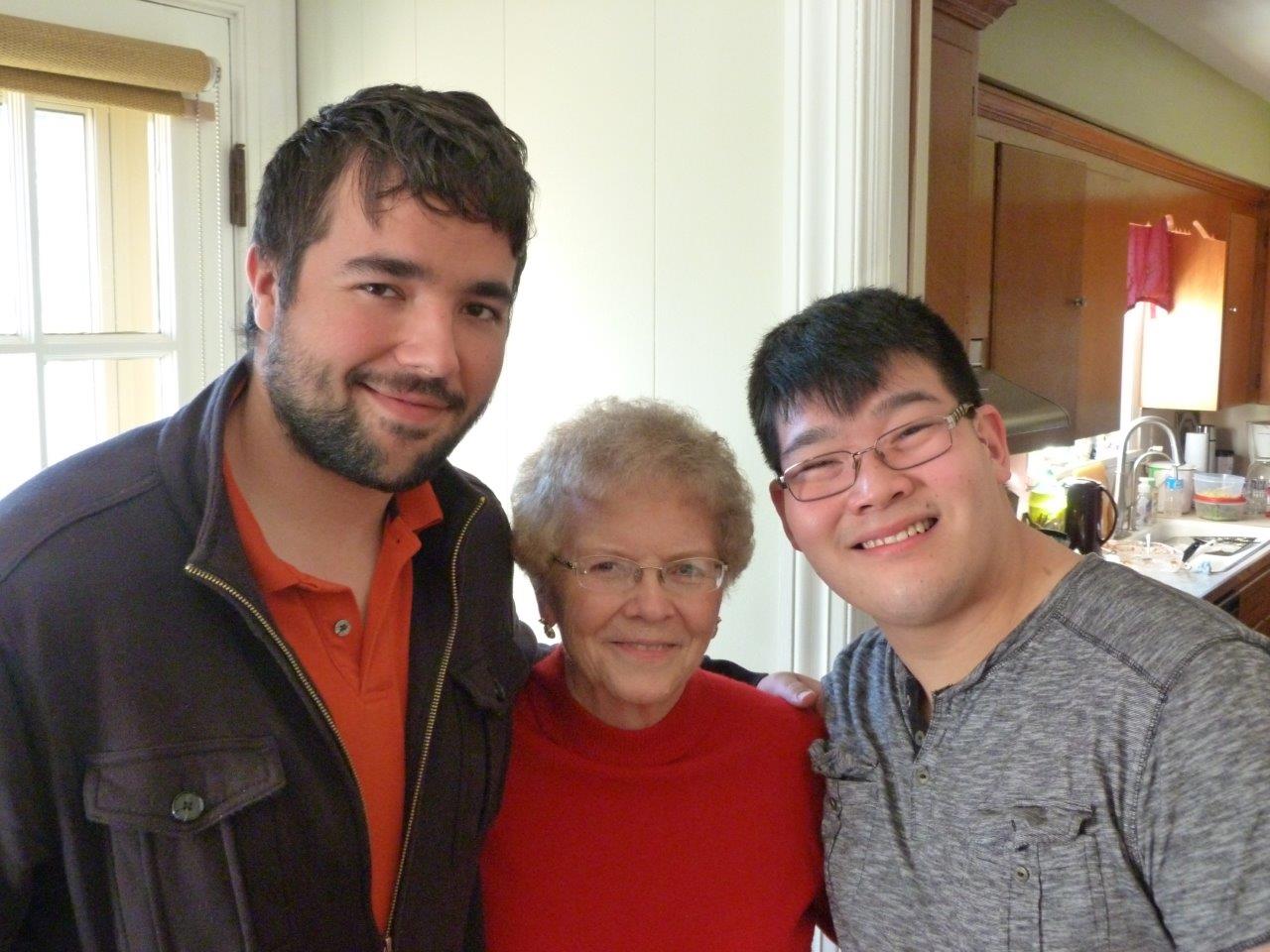




 Photo Credit: Spark People


