Quick take on favorites of mine over the last couple of weeks:
1) Beyond the Guitar’s Latest – Enjoy!
2) Parenting Pearls – So thankful for wisdom of others…especially in parenting and raising children to be mentally healthy and resilient. How other cultures parent is also intriguing. Below are some of both.
Mom blogger Becky Mansfield wrote a great piece on things we don’t want our kiddos to forget. Please share in the Comments what you hope your children don’t forget.
The situation with my mom (cancer and heart) and my dad’s (Parkinson’s and dementia) health has been making me so sad. I wish I could be with them right now. 😥 So my sister sent a video of them together tonight, dancing to Neil Young. 💙 Take a moment to love your loved ones. pic.twitter.com/y2fBu26NlP
4) Words – As much as I love words this quote from Jesus’ teaching gives pause: “But I say unto you, that every idle word that men shall speak, they shall give account thereof in the day of judgment. For by your words you shall be justified, and by your words you shall be condemned.” – Matthew 12:36-37
Words matter. Words mean things. We should be generous with life-giving words and sparing with words that destroy. Silence and restraint have their place.
Then, on a lighter note: there’s this sweet game that is all the rage right now. Wordle created by Josh Wardle (launched in October 2021). I love it because it is not time-consuming. You get one word puzzle a day that is challenging but doable. So fun.
5) War – We have all read and watched about the current invasion of Ukraine by Russia. How to respond? Who to respond? I won’t pose an opinion here because we have so many, and they don’t help really. Praying is the most important thing we can do. Below are some links I found interesting this week (well, links that weren’t behind a paywall). Praying…
“Think Little. Nearly every one of us, nearly every day of his life, is contributing directly to the ruin of this planet.” Berry went on to say that he was “ashamed and deeply distressed that American government should have become the chief cause of disillusionment with American principles.”
In a Jefferson Lecture in 2012, he quoted Stegner’s description of Americans as one of two basic types, “boomers” and “stickers.” Boomers are “those who pillage and run,” who “make a killing and end up on Easy Street.” Stickers are “those who settle, and love the life they have made and the place they have made it in.” They are “placed people,” in Berry’s term—forever attached to the look of the sky, the smell of native plants, and the vernacular of home.
He told the crowd that, as a member of the human race, he was “in the worst possible company: communists, fascists and totalitarians of all sorts, militarists and tyrants, exploiters, vandals, gluttons, ignoramuses, murderers.” But, he insisted, he was given hope by people “who through all the sad destructive centuries of our history have kept alive the vision of peace and kindness and generosity and humility and freedom.”
“A properly educated conservative, who has neither approved of abortion nor supported a tax or a regulation, can destroy a mountain or poison a river and sleep like a baby,” he writes. “A well-instructed liberal, who has behaved with the prescribed delicacy toward women and people of color, can consent to the plunder of the land and people of rural America and sleep like a conservative.”
“If two neighbors know that they may seriously disagree, but that either of them, given even a small change of circumstances, may desperately need the other, should they not keep between them a sort of pre-paid forgiveness? They ought to keep it ready to hand, like a fire extinguisher.”
“Jesus said, ‘Take no thought for the morrow,’ which I take to mean that if we do the right things today, we’ll have done all we really can for tomorrow. OK. So I hope to do the right things today.”
But my life is worth nothing to me unless I use it for finishing the work assigned me by the Lord Jesus–the work of telling others the Good News about the wonderful grace of God. – the Apostle Paul, Acts 20:24
Entering year three of COVID, who would have thought?
I wonder how much time each day we spend talking about, reading about, and altering our lives to prevent COVID. So. Much. Time. On a phone call with a friend yesterday, she observed that we seem to all place ourselves somewhere on a continuum of tired or terrified. Which is it for you?
Then I come across a tweet that snaps me into a new consciousness.
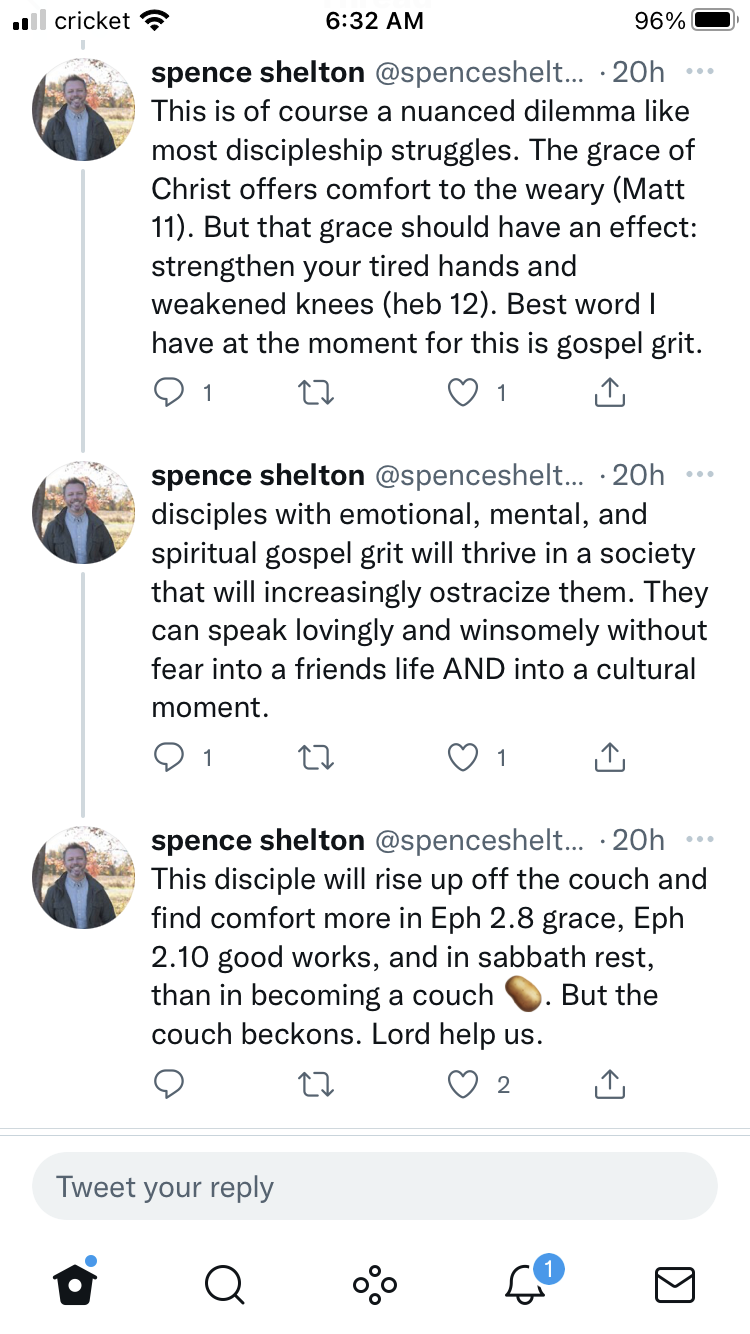
“Secluded comfort” has lulled us into a false sense of safety from COVID. Also a spiritual dullness which (as Spence Shelton states) downplays “gospel urgency and gospel sacrifice”. Whoa! I certainly have experienced some of this.
My mom was tireless in serving God and others right to the moment she lost consciousness in her last hours on earth. She always amazed me. Never too busy to be interrupted. Never too tired to respond to a need. Just never. She amazed me.
Toward the end of her battle with cancer, I asked her (you’ve heard this story before) if she heard God speak to her. In years past, she struggled with whether God was guiding her or she was on her own. It was something she fretted over at times. In the hard days of cancer, I was hoping maybe that had changed… Again, when I asked if she heard God when she prayed, and she trained those clear blue eyes on me. With a smile that comforts me still, she said, “All the time.”
A different generation? A time before COVID? Did fighting cancer sharpen her sense of the presence and purposes of God? Is it possible COVID is meant to do the same? What can we draw from “such a time as this”…this right now?
On Sunday, at Movement Church, we sang The Cause of Christby Kari Jobe. In the setting of church gathered, the Holy Spirit moved my heart deeply with the purpose of this life. This song reminded me of God’s will for us, not matter the externals in our lives, to persevere and refuse to keep silent.
My heart’s best desire is to be wholly about God’s purposes and to radiate, in word and deed, the love and person of Jesus Christ. Seasons come (as with COVID) when this desire is dampened by fears, distractions, and cultural cloyings that disguise lies for truth. I have not always lived for the God who saved me…definitely have not been always faithful to speak the glorious truth of who God is and what He has done for us.
Oh…the awful silence of choosing my own comfort over the cause of Christ.
What joy in those occasions when we enter into the cause of Christ and share the truth of God, in word and deed. He takes our feeble attempts and, through His Holy Spirit, gives us the opportunity to point to love and life in Him.
For by grace you have been saved through faith. And this is not your own doing; it is the gift of God. – Ephesians 2:8
For God so loved the world that He gave His one and only Son, that everyone who believes in Him shall not perish but have eternal life. For God did not send His Son into the world to condemn the world, but to save the world through Him. – John 3:16-17
How can we keep silent?
It is not fame that I desire Nor stature in my brother’s eye I pray it’s said about my life That I lived more to build Your Name than mine*
Before we worship together with the singing and meditating on Kari Jobe’s The Cause of Christ, I’d like to post and pray (with you) pastorJohn Piper‘s prayer, from his book Coronavirus and Christ.
“Father, at our best moments, by Your grace, we are not sleeping in Gethsemane, we are awake and listening to Your Son’s prayer. He knows deep down that He must suffer but in His perfect humanity, He cries out, “If it is possible, let this cup pass.” In the same way, we sense deep down that this pandemic is appointed in Your wisdom for good and necessary purposes. We, too, must suffer. Your Son was innocent. We are not. Yet, with Him, in our less than perfect humanity, we too cry out, “If it is possible, let this cup pass.”
Do quickly, oh Lord, the painful, just, and merciful work You have resolved to do. Do not linger in judgment, do not delay Your compassion. Remember the poor, oh Lord, according to Your mercy. Do not forget the cry of the afflicted. Grant recovery. Grant a cure. Deliver us, Your people, helpless creatures, from these sorrows, we pray. But do not waste our misery and grief, oh Lord. Purify Your people from powerless preoccupation with barren materialism and Christless entertainment. Put our mouths out of taste with the bait of Satan.
Cut from us the roots and remnant of pride and hate and unjust ways. Grant us capacities of outrage at our own belittling of Your glory. Open the eyes of our hearts to see and savor the beauty of Christ. Incline our hearts to Your word, Your Son, Your way. Fill us with compassionate courage and make a name for Yourself in the way Your people serve. Stretch forth Your hand in great awakening.
For the sake of this perishing world, let the terrible words of Revelation not be spoken over this generation, ‘yet still they did not repent’. As You have stricken bodies, strike now the slumbering souls. Forbid that they would remain asleep in the darkness of pride and unbelief. In Your great mercy, say to these bones, live and bring the hearts and lives of millions into alignment with the infinite worth of Jesus. In Jesus’ name I pray, Amen.” – John Piper, Coronavirus and Christ
Worship with me for the cause of Christ (music in the link):
The only thing I want in life
Is to be known for loving Christ
To build His church, to love His bride
And make His name known far and wide
For this cause, I live
For this cause, I’d die
I surrender all
For the cause of Christ
All I once held dear
I will leave behind
For my joy is this
Oh the cause of Christ
He is all my soul will prize
Regardless of the joy or trial
When agonizing questions rise
In Jesus, all my hope abides
For this cause, I live
For this cause, I’d die
I surrender all
For the cause of Christ
All I once held dear
I will leave behind
For my joy is this
Oh the cause of Christ
Jesus, my Jesus
For Your glory, for Your name
Jesus, my Jesus
I will only sing Your praise
For this cause I live
For this cause I’d die
I surrender all
For the cause of Christ
All I once held dear
I will leave behind
For my joy is this
Oh the cause of Christ
It is not fame that I desire Nor stature in my brother’s eye I pray it’s said about my life That I lived more to build Your Name than mine*
Happy New Year! Whew! May 2022 be a reprieve from the struggle of 2020 and 2021. May we see the fruit of new wisdom and sound actions taken toward a healthier future and a closer community across our world. Thank You, God, for this new year and getting us through the last. Here are my favorite finds from this first week of 2022.
1) One Small Step – A couple of years ago, Dave and I had the privilege of listening toDave Isay, the founder and president of Storycorps. He is a strong advocate of the power of telling our stories (to each other, face-to-face). [See his TED Talk on this here.] Given what we’ve been through the last couple of years (with our country divided over politics and trying to keep our balance with COVID), his One Small Step Initiative has been incredibly timely. Isay has a vision of bringing our country together (and maybe yours as well if you live elsewhere) through the experience of face-to-face dialog. We may have some sharp disagreements and consider ourselves enemies, but we can find common ground and common values…if we keep (or start) talking to each other. StoryCorps has made a platform where strangers can engage. Strangers who would not usually, given their differences, talk together. This One Small Step Initiative is actually being highlighted on this week’s CBS TV show 60 Minutes. Don’t miss it (or catch it later).
P.S. Two phrases that speak to the above…and positive, healing communication, in general, are contingent communication and contact hypothesis. They are both worth taking note of and considering:
Contingent communication – Face-to-face conversation with a determination of deep listening, strong affirmation, and the mutual sense of “feeling felt”. Dr. Curt Thompson describes it as “communication, in which two individuals, through both their spoken dialogue and non-verbal cues, each affirm the other as they interact”. (Anatomy of the Soul, p. 139)
Contact hypothesis – “suggests that prejudice and conflict between groups can be reduced if members of the groups interact with each other”. In this article, Dr. Elizabeth Hopper goes on to say that “One especially promising possibility is that contact between groups might encourage more powerful majority group members to work as allies”. Instead of talking around each other, we come together. One conversation at a time.
2) A Father’s Good Gifts – This week I discovered an article by Jon Bloom entitled A Father’s Good Pleasure. Bloom talks about the joy we as parents have when we participate in generating joy in our children’s life.
One example of this for me is how my sweet step-dad continued to travel overseas to see us after Mom died. This was not a thing on his bucket list He came because he loved us and he came because he knew the joy it would bring to us.
“Which one of you, if his son asks him for bread, will give him a stone? Or if he asks for a fish, will give him a serpent? If you then, who are evil, know how to give good gifts to your children, how much more will your Father who is in heaven give good things to those who ask him!” – Jesus (Matthew 7:9–11)
“Give them [your children] good things — things they value as good and really want. And really, authentically enjoy doing it. It has God’s endorsement, since he too takes great pleasure in giving good gifts to his children…Become, through your joyful, affectionate generosity, an opportunity for your children to experience [and you with them…what C. S. Lewis calls] transposition — to see and savor the higher, richer pleasure of God in the natural pleasure of their father giving good gifts to them.
Become a student of what gives them joy.” – Jon Bloom
I love that Jon posted this piece the first week of January – when we are reeling with all the “stuff of Christmas”, including the credit card bills coming in this month. It is a joy to give our kids what they want when we can (and that is carved deeply in our western Christmas culture). It is also a joy to give our kids joy in deeper ways.
Our youngest son eats lunch with us on some Sundays. Often it is just him and us; his older siblings and families joining us occasionally. When Dave and I are most attuned to him, we just take the opportunity to affirm him and take joy in him. He feels that joy.
[Sidebar: The piece above talks about the gifts that we have and how our abilities and capabilities (the strength to operate out of our abilities) go hand in hand. Don’t want to bury my gifts because of a lack of gumption.]
3) Gossip – What we may consider processing (with a friend or spouse) could be just plain old gossip. Pastor, writer Scott Sauls calls it in a recent tweet.
Such a wake-up call about gossip helps us think about the damaging impact of it on relationships. Gossip (which we too often call processing or ranting) makes us think we’re doing something about the dysfunctional relationship we have, when really we’re causing it further harm. What we’re doing is something called triangling. When we have a problem with one person but complain about that person to another. It is passive-aggressive and if we aren’t coached to go to the person missing from the conversation, then it just remains complaining. The relationship continues to be dysfunctional.
We aren’t to just bury a struggle, but we can deal with an offense with care and respect…even if it feels undeserved. This is the beginning of a healthy connection in the place of dishonoring and dismissing complaining.Photo Credit: Heartlight
4) Blended Families – Step-families, or blended families, can provide safe and loving refuges for children of divorce. As an adult child of divorce, I remember well the shame of being a child whose dad just seemed to forget his children over time. When Mom remarried a man also divorced (with children of his own), we experienced the positive (and negative) of being in a step-family.
As older adults, both children sets have issues of parental neglect mixed in with loving relationships. Every step-family is different, of course. Many are healthy. For those who struggle, there is always help and hope…if we reach for it.
[Just some of my large blended family…including some friends who are family…for which I’m so thankful.]
A podcast I would recommend for step-families who have had broken or painful relationships is therapist Ron Deal‘s Family Life Blended. The podcast (and other resources) is a help for any family but especially for blended families. The link below is an excellent example.
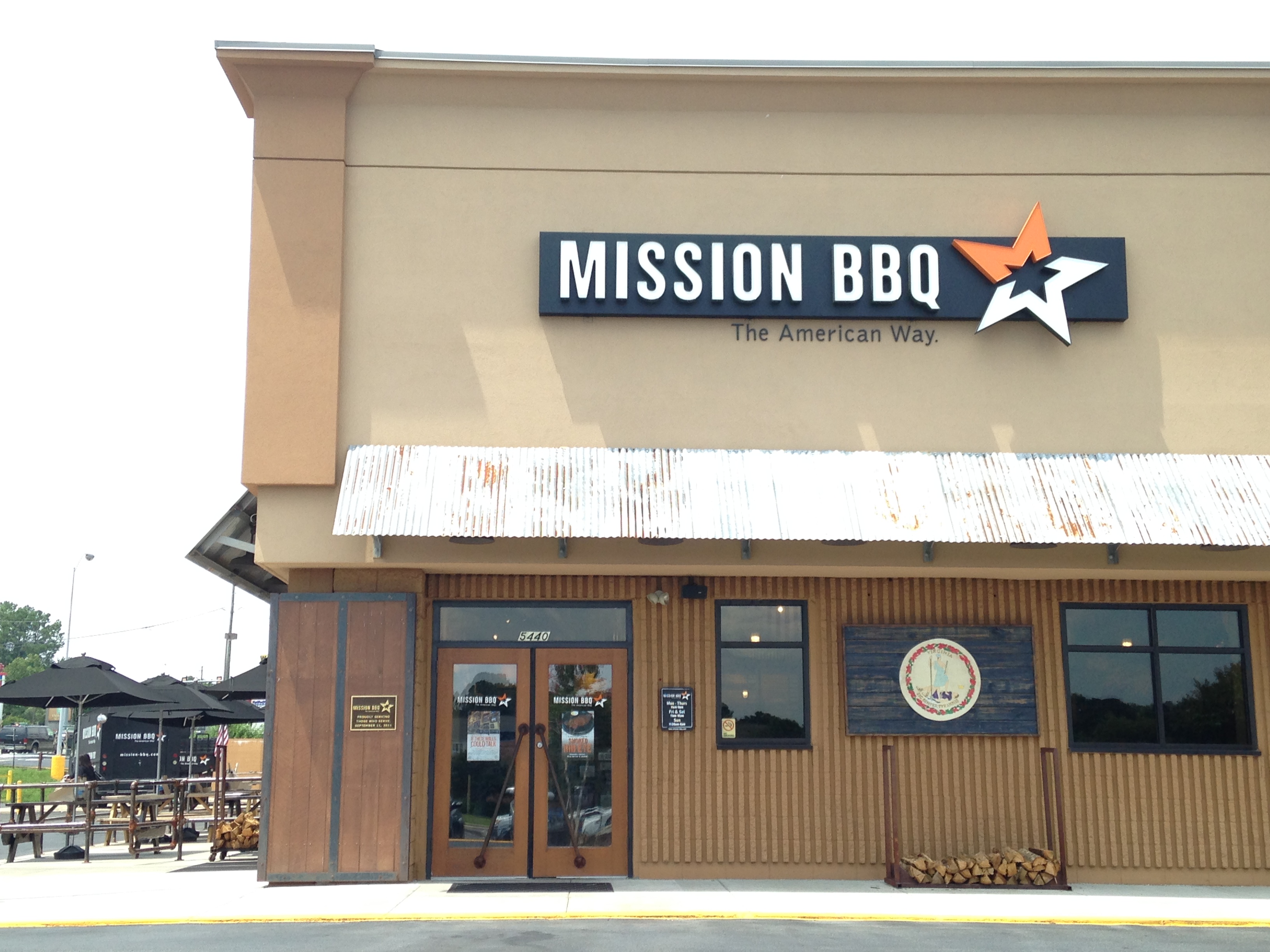
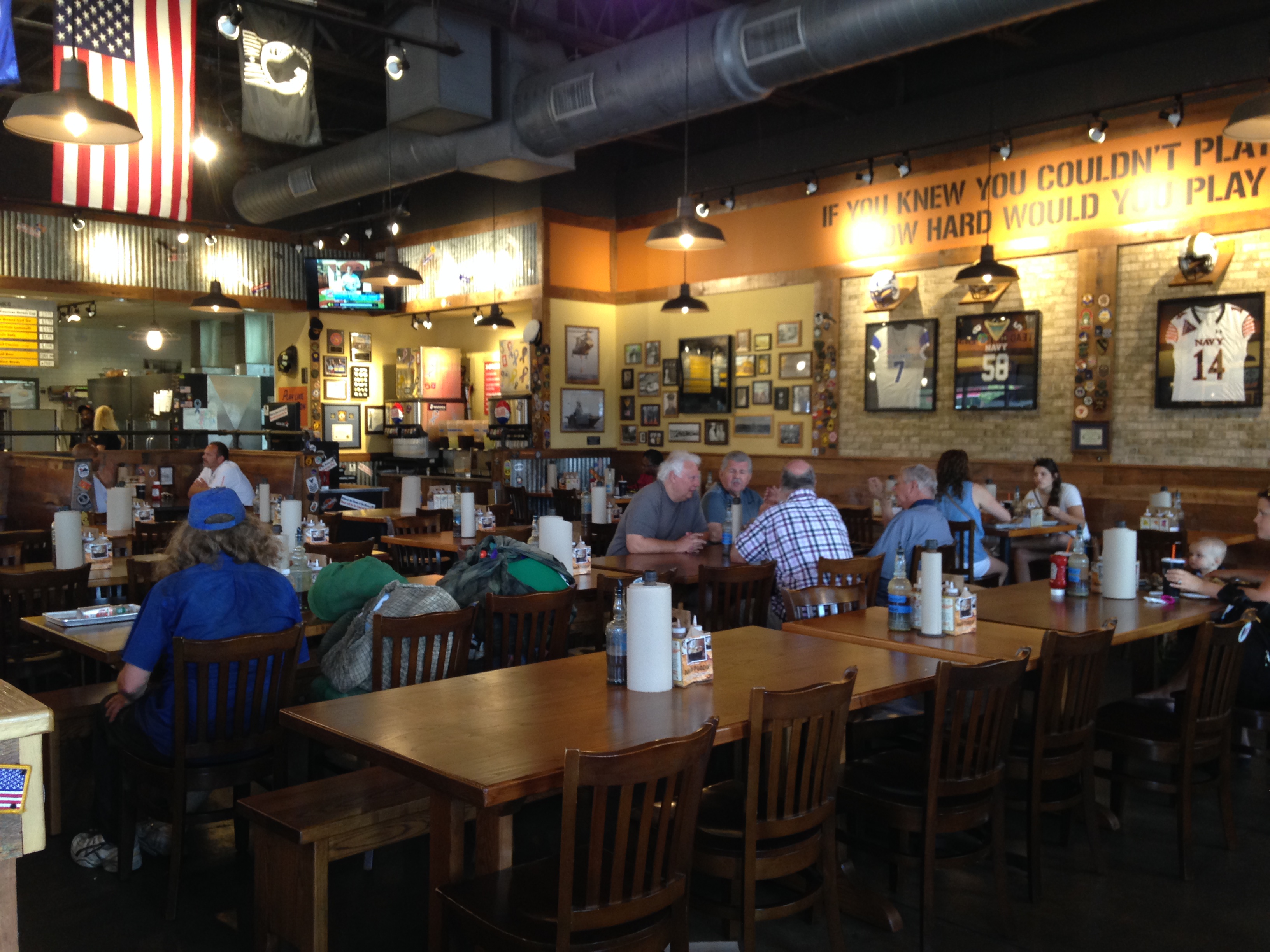
5) Mission BBQ on a Mission – Mission BBQ is one of our favorite restaurants in Richmond. Their generous customer service (even in this era of COVID) and consistently delicious food are super special.
We are members of their birthday club and receive a free barbecue sandwich when our special day rolls around each year. Besides that, we will get an email occasionally inviting us in for another free sandwich. Today we redeemed our “Merry Christmas” freebies.
The food is great, but it’s also an uplifting in-restaurant experience. Mission BBQ sets the bar high in honoring first responders and members (and families) of the military. In fact…they make all their customers feel honored. Sweet. And very unique.
In fact, if you’re in the Richmond area (or have a Mission BarBQ in your area, and are thinking about heading over on Monday, they will be closed. It’s their National Day of Service when they feed homeless veterans around the city.
One big mistake people repeatedly make is focusing on proving themselves right, instead of focusing on achieving the best outcome. This is the wrong side of right. — The Wrong Side of Right
“I make my bed every morning because it’s a gift that I get to open at the end of every day. A gift that not everyone has. So while I’m wrapping my bed in the morning and I’m unwrapping it at night I’m reminded of what a great blessing my bed really is in my life. When we stop viewing what we have as little, insignificant or not enough then we get to see what we do have as gifts we get to enjoy, great blessings in our lives and provision for our needs.” – Theresa Nicely McCoy, Facebook
“Haven’t I commanded you: be strong and courageous? Do not be afraid or discouraged, for the LORD your God is with you wherever you go.” – Joshua 1:9
Is the world today a cause for fear for you? Or timidity? Or maybe, with COVID as a continuing threat, it doesn’t seem like fear but rather sound caution.
Social distancing has become a way of life. We have stepped back from so much of life…
At this time in the Biblical account of the Israelites entering their Promised Land, the great leader Moses had died. God then gave Joshua the responsibility of leading them in the conquest.
Three times the Lord told Joshua to be strong and courageous. Then even the people of God a fourth time urges Joshua in the same way.
Why was Joshua needing enCOURAGEment? He was being charged with a huge and costly undertaking. Transporting all those tribes into a land where they weren’t just aliens but enemies.
In preparation, Joshua counseled with the Lord, and in obedience, he gathered his warriors. 40,000 strong. Seems plenty, right? But wait…
Joshua told the people, “Consecrate (sanctify) yourselves, because the LORD will do wonders among you tomorrow.” – Joshua 3:5
God showed Himself mighty on behalf of Joshua and all the people. He held back the rain-swollen Jordan River for them to walk across on dry ground. You can imagine the fear this struck in the hearts kings of the lands on hearing this great miracle.
As Joshua continued to prepare the people to take possession of the land God had already given them, he decided to, one more time, spy out Jericho.
When Joshua was near Jericho, he looked up and saw a man standing in front of him with a drawn sword in his hand. Joshua approached him and asked, “Are you for us or for our enemies?” “Neither,” He replied. “I have now come as Commander of the LORD’s army.” Then Joshua fell face down in reverence and asked Him, “What does my Lord have to say to His servant?” The Commander of the LORD’s army replied, “Take off your sandals, for the place where you are standing is holy.” And Joshua did so.– Joshua 5:13-15
Joshua had the great privilege of seeing a Christophany – a manifestation of Christ. This was no angel. This was the Lord Himself. The brief conversation between the two speaks volumes to us.
Joshua was on his way to Jericho because he felt the battle was his to win and he wanted to be as prepared as he possibly could be. On seeing the Lord, sword drawn and discovering who He was, Jericho was reminded whose battle it really was.
Have you heard that expression “I’m not here to take sides, I’m here to take over”? That was part of what God was communicating to Joshua. His call for him to be strong and courageous was to prepare him for his part of the battle, but also to ready him for what God would do.
When we are afraid about what’s going on in the world around us (COVID, the economy, violence in our cities, [fill in the blank]), our temptation is to circle the wagons or close ranks. But…
We don’t have a need to be strong or courageous if we stay distanced from one another, hunkered down in as small a world as we can make for ourselves. What if, however, God has something larger for us?
He won’t leave us without His presence or His provision. Now there will be those who still contract COVID, and those who lose jobs or have financial reversals. There will be those of us in hard situations… but…
A battle belonging to God…for us…is being waged in the unseen by the Commander of the Lord’s Army. I’m reminded of Daniel 10:13, where Daniel had prayed and had to wait for three weeks for the answer. Spiritual warfare is very real, but even that does not have to frighten us, because we know who battles for us.
“You, O LORD, are a shield about me, my glory, and the lifter of my head. I cried aloud to the LORD, and He answered me from His holy hill. Selah. I lay down and slept; I woke again, for the LORD sustained me. I will not be afraid of many thousands of people who have set themselves against me all around…Salvation belongs to the LORD; Your blessing be on Your people! Selah.” – Psalm 3:3-6
The LORD is my light and my salvation; whom [or what] shall I fear? the LORD is the strength of my life; of whom [or what] shall I be afraid? – Psalm 27:1,2
May we have the warrior heart of Joshua, dressed and ready for whatever battle is before us, and may we have the heart of one submitted to the mightiest Commander this world will know.
Whatever our circumstances, we can be strong and courageous. He means for us to show up for the battle…but it belongs to Him. Thankfully.
After one-and-a-half years in COVID, we all have grappled with a need for social distancing and isolation. What happens then when the diligent pursuit of physical safety causes a loss of community?
None of us want to get COVID or its latest variant. However, we also desperately need community. It is on each of us to make creative and persistent decisions toward going after community. Especially the most vulnerable of us, or we will suffer more than the health impact of COVID [see links below].
The dilemma with isolation is somehow it has brought a social lethargy with it. We are becoming more solitary and our community has shrunk to the lowest and tightest we can manage.
Not necessarily out of fear of COVID, but out of a growing incapacity for community. Real community. “Iron sharpening iron” relationships.
I know I am not alone in the need for such community. We have probably all thought of how altered our relationships have become over the last several months. Not the closest maybe, but especially those that spurred us toward a higher accountability, responsibility or integrity. Those relationships where we are helped to make better decisions or extend kindnesses (especially toward those outside our inner circles).
[Whether introvert or extrovert, we can easily sink down into a solitary life of less. And less is not always more. This less can breed a sort of self-serving life where we gauge our relationships by our own gains and extend ourselves by our own comfort levels. Been there, done that. Ugh! ]
COVID or not, we still need other people, and they need us. Whether on a work project better served with team problem-solving or a family crisis that could use “all hands on deck”. Death and divorce are still happening, but life celebrations are also still with us – all calling for the touch of our community.
In the novel, Victor Frankenstein is a brilliant scientist. He is overwhelmed by a series of losses and the grief, as well as his increasingly unhinged genius, drive him into isolation. He decides to make a human-like creature who would be like a son to him.
It did not turn out well. The creature, because of the rejection and isolation he himself felt, was determined to be a monster.
Both Victor and the creature Frankenstein, throughout the story, are plagued with isolation and a terrible lack of caring community.Photo Credit: Pixabay
“The theme of isolation in Frankenstein raises many questions about the role of community and its importance. Many characters in the novel find themselves in isolated positions, and a few suffer grave consequences because of it. Characters suffer from both physical and emotional isolation, although, as in the case of the monster, the isolation is not always self-inflicted. Victor Frankenstein, on the other hand, chooses to isolate himself from his family, his peers, and even the monster he created.
In Frankenstein, horrible things happen when a character is isolated from the others. When Victor’s knowledge and ambition are unchecked by his peers, a monster is created…the destructive power lies not in the monster or his creator, but in solitude. Shelley uses this theme and its manifestation in her characters to pose questions about community, knowledge, and its role in society. Is unbridled knowledge always dangerous, or is there a middle ground? Should one abandon his or her pursuits if they are driving him or her away from a community?
Shelley makes it clear that there are two different types of isolation: self-inflicted and societal. We see self-inflicted isolation manifested in Victor; he detaches from his world and the people he loves and as a result, everyone suffers tremendously. Rejection from society is demonstrated in the monster’s life. Again and again, he is turned away from love and companionship, which what he has longed for since he was first brought to life.” – Wiki-Fandom Analysis of Frankenstein – Mary Shelley, an Academic Wiki
Of course, this is a novel, but incredibly insightful as a tale of human nature. We need community…we are made for community.
Somehow we must rally during this protracted social experience of COVID. What is your mindset on this and what are your intentional actions toward community and away from isolation? The kind of isolation that eventually diminishes us and our relationships. Please comment below.
In closing, I do want to affirm an Isolation in Community. We may have to deal with social distancing for sometime still. Especially those most vulnerable to severe illness from COVID. For some isolation can’t be avoided, but there is an isolation in community. Where we take steps toward and lean in to deeper community. Even if it isn’t always in person. This takes a different sort of effort, but we know it is possible. Fortunately. For me, it’s actually using the phone for conversations (including Facetime). It’s not stepping out of responsibilities (work or community service) because of a need for social distancing, but figuring out alternate ways to serve, or get a job done. I have also experienced the fruit of it, thanks to your efforts. Our mail is less junk mail and more actual real connections through cards/letters. Thanks for that. Again, please comment below what your experience has been here.
Taliban having its way again. More genocide in Myanmar. Decimating earthquake in Haiti. Covid resurgence dividing communities and messing up the equilibrium.
Now is a time for tears. And redemptive anger. And pleading prayer.
The blaming takes us nowhere. The hating definitely diminishes all.
Some think of prayer as a soft and impotent action. Not so! The God who hears our prayers is mighty to save. His purposes are not thwarted. He calls us to prayer and we, and those of the this broken world, are best served when we obey.
Do we do other things? Like sending our resources and opening our communities to those no longer with a home. Absolutely. However… if we don’t pray, we neglect the greatest salvation…and the greatest Savior in these seemingly hopeless situations.
The blaming and hating change nothing and care for no one. It is a dreadful waste and dishonors both God and humankind.
1) Beyond the Guitar – Beauty to the Ears & Mind – We think of beauty more in what we experience visually, but there is a powerful connection between music and the mind. Beautiful music soothes the soul and lifts our hearts. Moves us. Often it is because of nostalgia attached to the music, but even without that emotional connection, music can bring our minds to a better place.
Nathan Mills, of Beyond the Guitar, has that way about his craft. Moving our hearts with the beauty of his arrangements and performance. I don’t know any of the pieces in his medley of 4 Underrated (but Beautiful) Video Game Themes, but something happens when I listen. Shoulders drop; breathing slows; wonder sets in. Beauty has its way with our ears and our minds.
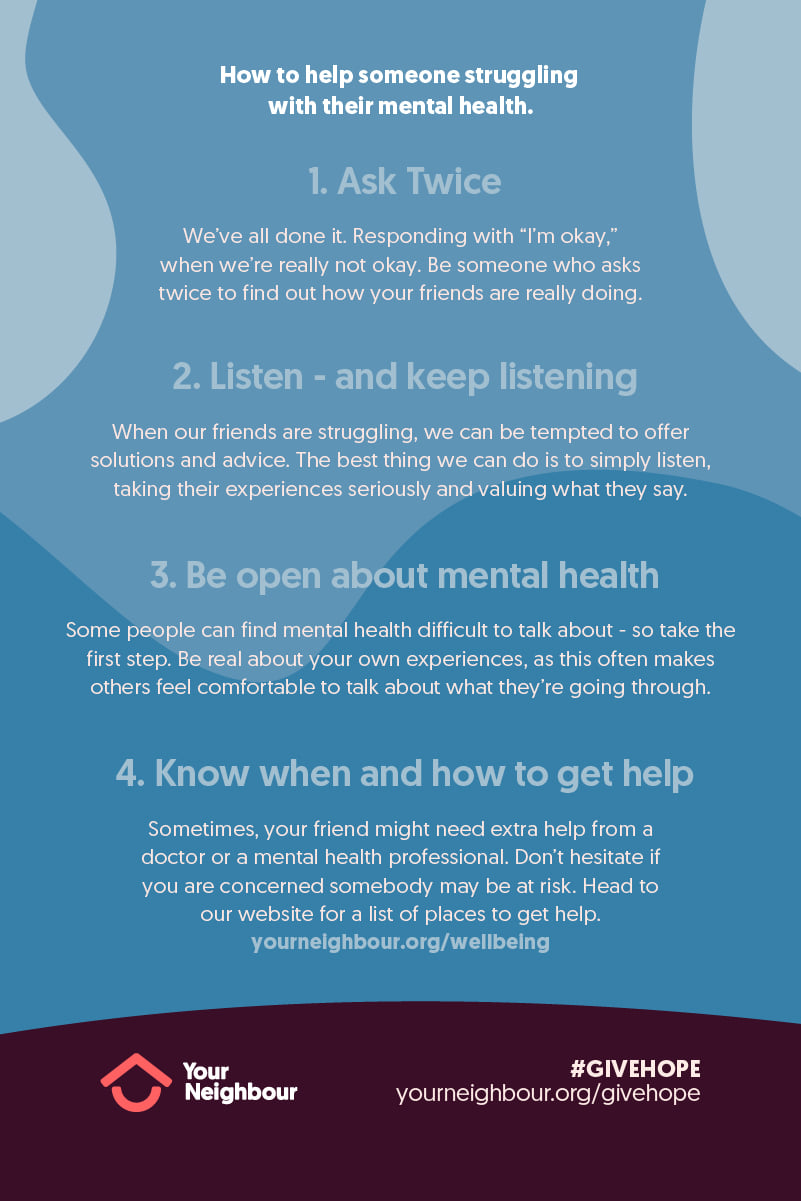
2) Mental Health Awareness – May is Mental Health Awareness Month. The theme message for 2021 is “You Are Not Alone”. Our need for connection is bigger than ever, having gone through so much COVID isolation. Whether mental health issues are our own personal struggle or we are family, friends, caregivers of those who struggle, helps abound. We just must be aware and utilize them.
Suicide and death by drug overdose have increased during COVID. They are shocking for us and real losses, either for us or for friends. We can’t keep isolating ourselves from each other. Finding ways to help is imperative.
3) Antidote for Self-Deceit – Self-deceit (or self-deception) is “a process of denying or rationalizing away the relevance, significance, or importance of opposing evidence and logical argument. Self-deception involves convincing oneself of a truth (or lack of truth) so that one does not reveal any self-knowledge of the deception”.
I’ve allowed myself to be deceived (either with the help of outside influences or from sheer will and desire, wanting something to be so, or not be so). It’s not pretty. One of my strongest memories was sitting in a circle of friends who essentially did an loving intervention with me. I was in a self-destructive (but non-abusive) relationship, and they had the courage to point me to the changes in my life and thinking. I will never forget it. The life I have now is much impacted by their willingness to go to that place with me. Forever grateful.
Regarding deceit, it is way too easy to get into our own heads and assess life with a self-tuned receiver. I wrote about this before (the practice of noticing). A somewhat dated video (with a still fresh message) speaks to this so well.
During the particular season of self-deception (described above), I got to the place that lying in my bed at night, when I would usually pray, it got impossible to pray. That was terrifying. It’s like all the desires and my rationalizations for them had crowded out any space for God. Especially for a holy God. Like I said, terrifying. No matter how loving God is, I couldn’t justify praying when my own desires trumped His for me.
As the video illuminates, as we get out of our own heads, and start seeing other people around us, we find the antidote. Caring more for others than ourselves, we can actually clear our heads some. Self-deception causes us to “circle the wagons” and keep others at a distance. As we determine to get close to people again, especially to genuinely listen and serve, our own deceit can be more readily understood/recognized. Of course, our neglected relationship with God will take its own time and action on our part. He is ready, when we are.
4) Showing Up…or Not – Showing up is a good thing. For all of us. Keeping commitments. Being present. Choosing to lean in. Listening.
So much is said about listening and its positive impact. To listen requires proximity.
On the East Coast, this week, we had a gas shortage (or a perceived gas shortage…not sure which is more accurate). Everyone was making decisions about filling their tanks and sorting out needful car trips vs. those that can be jettisoned for another time.
I was a part of a couple of meetings where some folks didn’t show up. Without a phone call, text, or email message. Was it the gas shortage? Or did it display something else? Honestly, I also wondered how often I’ve done this same thing myself.
We are in a culture right now when a RSVP yes can turn to no without a word. I’m showing my age…but does this matter?
Below you’ll find quotes from three different authors on this and what it can mean. The showing up…or not. After you read their observations, I’d love to hear what you have to say in the Comments.
“Standing someone up is a personal attack. You are saying that you have no respect at all for this person’s time, energy or feelings. This person set aside time from his or her day to hang out with YOU.
And maybe he or she didn’t feel like showing up. But no, this person had enough respect for you to feel as though he or she couldn’t bail on you. Then how did you repay the favor? You didn’t show up. With no warning.
And don’t even get me started on the fact that if this person cared about you enough to make and honor plans with you, odds are that he or she would probably be WORRIED about you when you don’t send a message. Because falling off the face of the Earth is a little alarming….You get the picture here.” – Candice Jalili
“There are commitments you are not going to keep no matter how hard you try, but even if you fail to keep them, you can still honor them. How do you do this?
“The difference between “keeping” and “honoring” is key: keeping a promise is about the letter of the promise, while honoring a promise is about the spirit. It is even possible to keep a promise while not honoring it. People will forgive an honored but un-kept promise, but it takes a real saint to let go of an un-honored promise—kept or not.
So what are the practical aspects of honoring a commitment? They are:
respect
communication
productive effort
It’s uncomfortable to take responsibility (for a failed commitment), but discomfort is a lot easier to shoulder than disrespect or disappointment. Even if you failed to honor a commitment up until now, it is not too late: disrespect and disappointment can be rolled back or even erased in the face of genuine honor.” – Kenneth Vogt
[The two writers above have very different tones to their pieces. Both worthy of note. I especially appreciated Vogt’s distinction of honoring a commitment (whether you’re able to keep it or not). Honoring the person by communicating your inability to keep the commitment…as well as the honoring that goes on by making the effort to keep the commitment whether easy or not. We don’t really know what goes on for another who does the work of keeping a commitment or the one who just can’t. What we do know is what it is like for us to keep or not keep a commitment; to honor or dishonor a person in the commitment. So much more understanding and care come out of the smallest communications. Something to think about.]
Below Rachel Macy Stafford posted an image and (in the link) a Facebook story about sitting in a line for gas this week, and an elderly man, just ahead of her, deliberately nodding her way (as he chose not to completely fill his tank, doing what he could to “leave” some for her). No RSVP’ed commitment. No relationship. But a deeply kind gesture to her that she was seen. We all need that…that being seen.
It’s…“a deliberate decision to look out for the person behind (you)…It’s not about us. Even though it’s hard not to think only of our own needs, there is someone behind us…and someone behind that person…with their own set of struggles. If you can…will you look out for them? A wave will do, just so they know they are seen…it’s the kind of gesture that takes people farther than a full tank of gas.” – Rachel Macy Stafford
5) Unmasking – Get ready for another new culture shock thanks to the Coronavirus: unmasking!!! I am so excited myself.Photo Credit: Pexels, Gustavo Fring
Based on this week’s CDC recommendations, fully vaccinated people don’t have to wear masks or physically distance anymore (except in rare defined situations). This, of course, is still only a recommendation and each state must give direction at a local level. Our governor just announced that we will align with the CDC recommendations.
Now, no one is going to know who is vaccinated and who isn’t. If we have learned anything from COVID-19, it is to be wise in dealing with the viral world. Those not vaccinated will probably forego masks as well. The freedom feels intoxicating, honestly, but possibly fearful to some, even some who are fully vaccinated.
I hope we can leave fear behind us. COVID is still rampant in some parts of the world and that is tragic. As we in the US and other countries get past our own experiences with this virus, hopefully we can be a help to those still battling the disease.
The culture shock part is real. I will have my mask with me, and see what the signs say on the doors of each business, store, school, or community space.
For anyone who considers herself a critical thinker, this week in the life of Jesus of Nazareth is one worthy of analysis. No matter our religion or non-religion, this Jesus, in these days, warrants examination, related to anything we may think of God. The core beliefs of a Christ-follower, not just a person known as Christian, are illuminated here. In the study of Jesus’ life and his followers, in just this one week, we can see a deep distinction between “the religious” and “the redeemed”.
[Sidebar: I taught a World Religions course some time ago in a Moroccan high school. In that course, we studied all the major religions. The students were challenged to think critically of each religion. They were to study each one in this way:
putting themselves in the perspective of one who believes (i.e., a true follower, using eye witness/historical accounts and Scriptures/holy writings when available), and then
analyzing each belief/tenet of faith critically and its impact on their lives/culture.
Any of us can benefit thinking through Holy Week this way; none will come away the same by examining the life of Jesus.]
Palm Sunday is celebrated as the “triumphal entry” of Jesus into Jerusalem, just days before he would endure a mock trial and then be crucified. He and his closest followers, disciples, came to Jerusalem for the celebration of Passover. Passover was an annual remembrance of God’s protection and deliverance of Israel during a time of slavery (Exodus 12:26-28). Jesus would celebrate Passover on Thursday of that coming week, but he did not come to Jerusalem for that reason alone.
Jesus knew from his Father God why he came to Jerusalem, and he tried to prepare his disciples for what was coming.
From that time Jesus began to show His disciples that He must go to Jerusalem, and suffer many things from the elders and chief priests and scribes, and be killed, and be raised up on the third day. – Matthew 16:21
As Jesus was about to go up to Jerusalem, He took the twelve disciples aside by themselves, and on the way He said to them, “Behold, we are going up to Jerusalem; and the Son of Man will be delivered to the chief priests and scribes, and they will condemn Him to death,and will hand Him over to the Gentiles to mock and scourge and crucify Him, and on the third day He will be raised up.” – Matthew 20:17-19
I can’t even imagine what those disciples must have felt, being so close to Jesus, as he predicted his own death. They loved him and had pledged their lives to him, even to death. They believed him to be the conquering king, sent by God, to deliver the Jews from Roman rule and to restore the nation of Israel. Although they had soaked up three years of his teaching, this “end of the story” was more than they could bear. Just a week later, they would gloriously understand that it would not be the end of the story of Jesus’ life…but the emotions of this Sunday, this week, must have been disorienting and overwhelming.
On this Sunday, before the Passover, Jesus would enter the great city of Jerusalem, teeming with crowds there to celebrate. He entered, riding a donkey*, as was foretold by the Hebrew prophet Zechariah:
Rejoice greatly, O daughter of Zion! Shout in triumph, O daughter of Jerusalem! Behold, your king is coming to you; He is just and endowed with salvation, Humble, and mounted on a donkey, Even on a colt, the foal of a donkey.– Zechariah 9:9
Imagine the scene as Jesus entered Jerusalem. Some in the crowds did recognize him, and then the word spread of the arrival of this great teacher, this healer, this man whose teaching was like none before him. Palm branches were pulled to wave in tribute to him, as others flung their cloaks on the dusty road before him, welcoming him:
Most of the crowd spread their coats in the road, and others were cutting branches from the trees and spreading them in the road. The crowds going ahead of Him, and those who followed, were shouting, “Hosanna** to the Son of David; BLESSED IS HE WHO COMES IN THE NAME OF THE LORD; Hosanna in the highest!” When He had entered Jerusalem, all the city was stirred, saying, “Who is this?” – Matthew 21:8-10
“Who is this?” For those who did not know him, the wild welcome for him must have been confusing and captivating. For the religious authorities in Jerusalem, who did know him and were unwilling to welcome this “king of the Jews”, his popularity was infuriating.
The clock began ticking as they plotted against this man Jesus.
Over that bright hopeful day of palms hung the shadow of the Cross – the Cross that would bring even greater hope to all people. The “Hosanna” of Palm Sunday would change to cries to “Crucify!” just five days later. Jesus had no ambition to please the crowds; he was resolutely on task to redeem those who could not redeem themselves – the whole world.
[Each day in this week, the posts will mark the journey of Jesus of Nazareth through the last week of his earthly life. Join me please. Because of the need for continued physical distancing, the remembrance of this week may look differently. Some churches are doing drive-by giving of palms for the children. This is actually the first Sunday since the start of COVID in the US that we will attend the Sunday service at church. Vaccinations onboard.]
How do we get everything done in our day? We can’t. Well, consider that maybe we aren’t supposed to…then we choose a path…driven by external forces (the tyranny of the urgent, the job as defined by the manager, the should’s and ought-to’s)…or internal. What are our internal forces? What kind of life do we hope to live, and the product we hope to leave as foundational for those we care most about?
A favorite old proverb of ours goes like this: “Where no oxen are, the crib is clean: but much increase is by the strength of the ox.” (Proverbs 14:4). Canadian writer Tim Challies presents this proverb as a parable on productivity. That “much increase” can be enhanced by having the right tools (oxen, for instance). However, given the right tools, productivity can still be very messy. Hard to perfectly control, thus, cycling back, needing the best tools for the job. Sometimes those tools are people in our lives and workplace, and sometimes they are lists, schedules, apps, or right equipment – even a vacuum cleaner (my highly organized, hard working daughter-in-law had a new vacuum on the top of her Christmas list this year).
Several years ago, Challies wrote an incredibly practical blog series on How to Get Things Done. He has become a master at “learning how to simplify life and how to maximize productivity”. Now in the era of COVID, his counsel on productivity is even more timely as we slog through this pandemic.
[Now for those of you who are essential workers and you lay down exhausted every night, it may seem this isn’t for you. However, with the restrictions of life with COVID, you probably struggle with redeeming time with family and deciding how to maximize your time off the job. Tim Challies has wisdom for you as well. Thanks, also for how you serve us all, out there every day.]
Too often, we measure the purpose of our lives by “how much” we can get done. What if we flipped that? What if we first sort out what the mission (or purpose) of our lives is? …Given our gifts, our education, our experiences, our opportunities, the people in our circle of influence, and the season in which we live at the moment. COVID informs that as well…informs but doesn’t define.
We do the work of sorting out our purpose, and then we order our days with that as foundation. We can’t do everything, therefore, we set our days on “doing more good…better”. Does that mean my house is always clean or my inbox is always manageable? No…but it is a shift away from shame/guilt and toward intentionality and joyful making of new habits. Sometimes we will have to say no, but the “yes’s” that are then ours to speak can be so freeing.
For me, this kind of restructuring my routines and thinking toward productivity require some prayer and reflection. Then, old-fashioned worksheets help. Challies also suggests other more techy tools, but I prefer starting with pen and paper.
Challies writes: “To be productive, you need a system. You need to build it, use it, perfect it, and rely on it. Your system needs to gain your confidence so that you can trust it to remember what needs to be remembered, to alert you to what is urgent, to direct you to what is important, and to divert you away from what is distracting…When you ought to be working on your computer, you are only ever one or two clicks away from checking out your friends on Facebook or welcoming a few minutes of mindless entertainment on YouTube. Text messages provide a welcome distraction from deep thinking, and binge watching the latest series on Netflix can set you back a week. You are surrounded by temptations to laziness and may succumb far more often than you think.”
COVID has not affected my health, for which I’m very thankful. However, the physical distancing has reeked havoc with daily life, work, routines of a few months ago, and even relationships. We have to work harder…smarter to keep high engagement in life and with our people. Tim Challies’ blog series, productivity tools, and book are a great starting place…for that good night’s sleep. Sweetly exhausted from “doing more good…better”.
Sometimes rolling out of bed is an act of faith. I’d been awake for an hour already. Trying to clear the dark thoughts out of my head. Praying. Remembering what is true and distinguishing what is only speculation. This time it had to do with a family concern…what could we do to help? What could I do? Only God could do anything at this point. So I prayed.
Prayer can clear the mechanism, for sure. Going to God when we are distracted beyond good sense, disoriented by the noise in our heads, worried that nothing good is coming down the pike. By concentrating our thoughts into a cry to God, we gain clarity. Maybe on how to deal with an issue ourselves, or finding no clear answer, on the goodness of a holy and wise God.
So I rolled out of bed, had coffee, spent a bit of time in Scripture, got my clothes on, and headed out the door.
What a sky! Past the vivid colors of sunrise, but still with the hint of pink, streaking the clouds. It was beautiful! In a split second, taking in the largeness of the sky and the clean slate of a Monday morning, I head out…with hope…and peace in my heart.
Just like the sky changes through the day, so do our thoughts. Is the family concern still real and present? Yes. As far as I know. Do I have a clear path to help? No. However, it’s a new day. Anything could happen.
Dark clouds are rolling in, and just a hint of blue remains before the rain starts.
Today is Martin Luther King, Jr. Day. No big celebrations this time because the 2021 US Presidential Inauguration is in two days. This year our United States capital as well as state capitals, are under high alert for armed protests. Parades are just not happening.
Even since last year, when I wrote here on Martin Luther King Jr., our country seems changed. Divided, blaming, hostile, cautious. Remembering Dr. King is a good thing. He did much to bring us together, even as divided we were across racial and ideological lines.
Perfect for reflecting on the action by which God had rescued me from my own thoughts. Giving me the will and determination to take on a new day.
The songwriters created this song from the Biblical text below.
God is our refuge and strength, a very present help in trouble. Therefore we will not fear though the earth gives way, though the mountains be moved into the heart of the sea, though its waters roar and foam, though the mountains tremble at its swelling. Selah “Be still, and know that I am God. I will be exalted among the nations, I will be exalted in the earth!” The Lord of hosts is with us; the God of Jacob is our fortress. Selah – Psalm 46: 1-3, 10-11
The song above, “It’s Gonna Be OK”, was born out of dark times for the songwriter couple, through which God brought them into light. A song just right for us going through COVID and this year of 2020.
We may not have any idea what “OK” is going to look like…but we can grab hold of it, and take each new day as both promise and possibility.


 Photo Credit: Facebook, Becky Mansfield, Your Modern Family
 Photo Credit: John & Julie Gottman, Yes! Magazine
 Photo Credit: Facebook