Tag Archives: communication

Efficiency, Effectiveness, and Adaptability – The Very Human Side of These Business Processes

Blog - Effectiveness vs. Efficiency

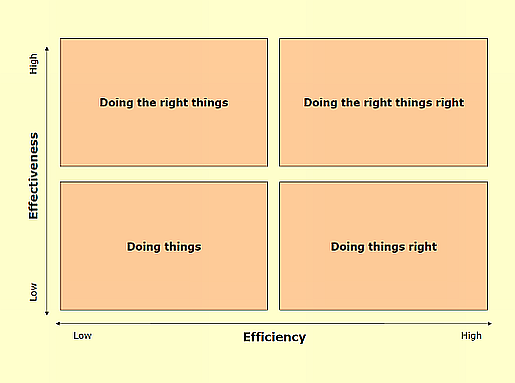
Photo Credit: digital-knowledge.nl.dikn/en

I will never forget when an elder statesman in an organization (both dear to me) was “let go”, so to speak, because of a need for more “bang for the buck”. The expression was so toxic then and still carries a deep pain. It speaks to the tension between efficiency and effectiveness, and the pressing need for adaptability as our world rapidly changes. At the same time, we have to remember, in almost all situations, it’s people in the mix of these business processes.

Efficiency is a good thing. However, it must be secondary to effectiveness. Effectiveness is primary always. How best to assure both is to build an organizational culture of adaptability.

Tom Coyne has defined effectiveness, efficiency, and adaptability brilliantly in a published 2-page pdf*. Here they are:

“Effectiveness measures the extent to which the results you have achieved match your goals.” Strategy leaders set those goals, and the goals determine who does the work, when, where, and how.

“Efficiency measures the amount of scarce resources used to obtain the results achieved.” His use of the term “scarce resources” is thought-provoking. When we focus on efficiency – getting the most benefit from the least resources – we can lose our objective. Resources are precious. Full-stop. Whether they are people, time, or finances. We must consider how we spend resources always, and especially when they are scarce.  However, if we miss the mark on our objective because we misspent our resources or allocated them unwisely, then we paid for efficiency with effectiveness. A poor transaction.

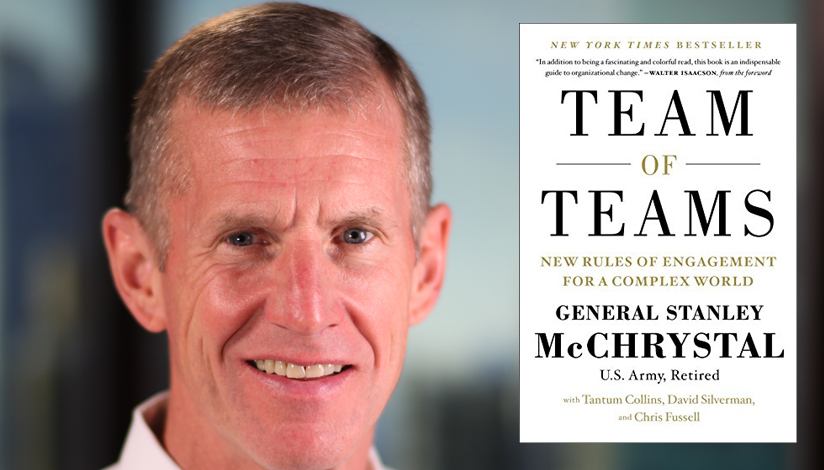
Gen. McChrystal, speaks to this, in his book Team of Teams (more about this book follows). He puts a captivating twist on it in his challenge: “If I told you that you weren’t going home until we win—what would you do differently?” We can’t focus primarily on efficiency when effectiveness is the outcome we desire. Adaptability is really what will get us to where we want to go.

Adaptability measures the change in Effectiveness and Efficiency for a given level of change in the agent or organization’s environment…One of our great failings as human beings is our reluctance to acknowledge the full implications of living in a world of complex adaptive systems. The causes of yesterday’s success are impossible to fully understand, and unlikely to be replicable to the same extent in the futureWe naturally try to succeed again in the future, using the approach that worked in the past, with frequently disappointing and occasionally fatal results.”

Coyne goes on to write about how to work these processes out toward business and employee/team success in a changing world.

Good stuff to know and implement.

Early on in my career, one of the mantras I heard repeatedly was this:

“The three most important things to learn in your work is flexibility…flexibility…flexibility.”

That later changed, in company vernacular, to “fluidity” x 3. The only problem was the temptation to decide for myself what was fluidity/flexibility and what was not. This is where silos and self-interest evolve when we’re not even aware, until we find ourselves not being successful (effective/efficient). In the very work we’ve immersed ourselves in for years…working hard, but not working as smart as we could have. [I know, that hurts – and it will take more than efficiency gurus to bring us out of such a predicament healthy.]

It is possible to turn the ship around…and it takes a whole crew.

Decentralized, empowered teams. Trust. Transparency and collaboration in decision-making. Broad information-sharing. Ownership in real time not just in philosophy. Bringing down silos and working together to nurture an organizational culture where we expect change and thrive in it.

What focus yields a win-win in our workplace? Both from the human side and the business side of performance and organizational culture. What can we do to enhance our business processes – whether we are in management or on the frontlines of our organization?

The following quotes should help to stir thinking. They are out of the book Team of Teams by retired U.S. Army General Stanley McChrystal, currently with The McChrystal Group.

“In complex environments, resilience often spells success, while even the most brilliantly engineered fixed solutions are often insufficient or counterproductive.”  – Gen. Stanley McChrystal, Team of Teams

“In place of maps, whiteboards began to appear in our headquarters. Soon they were everywhere. Standing around them, markers in hand, we thought out loud, diagramming what we knew, what we suspected, and what we did not know. We covered the bright white surfaces with multicolored words and drawings, erased, and then covered again. We did not draw static geographic features; we drew mutable relationships—the connections between things rather than the things themselves.” – Gen. McChrystal, Team of Teams

[Sidebar: I had the great pleasure of writing for such a team over the last 3 years. It was a privilege to see that level of creativity and collaboration, in a team of equals, birthing a workplace initiative in sync with a changing world. Amazing experience.]

“Specifically, we restructured our force from the ground up on principles of extremely transparent information sharing (what we call “shared consciousness”) and decentralized decision-making authority (“empowered execution”).” – Gen. McChrystal, Team of Teams

“In a resilience paradigm, managers accept the reality that they will inevitably confront unpredicted threats; rather than erecting strong, specialized defenses, they create systems that aim to roll with the punches, or even benefit from them. Resilient systems are those that can encounter unforeseen threats and, when necessary, put themselves back together again.”  – Gen. McChrystal, Team of Teams

View your leadership as being less about giving top-down orders and more about cultivating those who follow you, empowering them to make the right decisions. Many leaders are tempted to lead like a chess master, striving to control every move, when they should be leading like gardeners, creating and maintaining a viable ecosystem in which the organization operates.This is especially applicable to private sector leaders; the world is moving too quickly for those at the top to master every detail and make every decision. Empowering, cultivating, and ultimately serving those who follow you will unlock massive potential within your organization, allowing you to solve for problems in real time.” – Gen. McChrystal, Forbes.com

*Effectiveness, Efficiency, and Adaptability – The Three Keys to Performance Measurement

Effectiveness Before Efficiency

Efficiency vs. Effectiveness

The Power of Business Process Improvement: 10 Simple Steps to Increase Effectiveness, Efficiency, and Adaptability by Susan Page

GoodReads Team of Teams Quotes

Stanley McChrystal: What The Army Can Teach You About Leadership

Gen. Stanley McChrystal: Adapt to Win in the 21st Century

Team of Teams: New Rules of Engagement for a Complex World by General Stanley McChrystal
Blog - Efficiency and Adaptability - General McChrystalPhoto Credit: Forbes.com

Collaborative Conversations – Quotes to Stir Your Thinking on Leadership and Language in Workplace Decision-making

Blog - Collaborative ConversationsPhoto Credit: AJCarlisle.files.wordpress.com

Change is normal, and resisting change is normal as well. You may be part of an organization or company where sweeping changes are being implemented, even this week. Or maybe you are not on the inside loop of these decisions, so you are not privy to the change coming. Whether you are part of that process or not, consider how you might have a role in making change work, in your sphere of influence, among your colleagues.

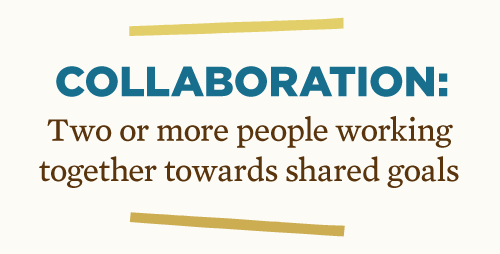
You may already have read and profited from the book Crucial Conversations. Now consider collaborative conversations. Collaboration, simply defined, is “working together towards shared goals”. Collaborative conversations bring a collective intelligence to bear on the problem to be solved, vision to be defined, or direction to be changed.Blog - Collaborative ConversationsPhoto Credit: ThoughtFarmer.com

David Perkins, a Harvard professor, wrote about collaborative conversations in the workplace, using the metaphor of King Arthur’s round table. He described the beneficial nature of bringing several principal players (or stakeholders) to the table and treating each one with an equal or autonomous voice.

“A round table makes it a little easier to pool mental effort. A round table makes a group a little more intelligent…For a group to display intelligence in a sustained way, the members have to value their exchanges and stick together to keep making them. This depends on positive symbolic conduct [side messages sent by our words and behavior]…and collaboration… It’s not ideas, but people with ideas that make things happen.” – David Perkins

“One of the simplest ways to immunize a culture against broken trust, corruption, and animosity is to build a common vision.” – David Perkins

Perkins’ book King Arthur’s Round Table: How Collaborative Conversations Create Smart Organizations is a tremendous resource in developing this kind of decision-making work environment. An Executive Book Summary* can help you get started.

I personally thrive in such a setting and intuitively understand the value-adding nature of collaborative conversations. In researching this workplace topic, and choosing the links below, I came across a fascinating paper** by Heather Davis, a professor of RMIT University Australia.

Davis presented her paper at the 14th International Conference on Thinking (2009, Malaysia). She discussed how workplace leaders often choose “languages of war” in making and communicating decisions and creating change. Her paper is heady stuff but if you read her thoughts below you will want to read the whole paper. It gives huge support to the role of collaborative conversations.

“In [leadership’s] ‘language of zealous allegiance’, there are expectations of allegiance [in the workplace] that lay a path for uncritical acceptance and passivity. This manifests in an expectation that followers be conscripted wholly to the cause. There is little room for questioning. [Davis quotes Hage]: “Conscription means one important thing: there is no questioning of orders, one only executes them; ‘either you’re with us or you’re against us’. “ (Hage, 2004, p. 3).””

“Rhetoric plays out in the workplace too and can be tested by how well leaders:

  • hear and acknowledge the ‘other’ point of view,
  • see the ‘other’ as people rather than pawns or simply abstractions,
  • manage the distance, materially and metaphorically, between themselves and the people and sites affected by their decisions.”

“In the corporate world there are many examples of executives living and working in gated communities or otherwise removed by dint of corporate hierarchy or geography from the people and conditions affected by their decisions. Often, these leaders are also surrounded by people who can only agree, leading to little opportunity for double loop learning or deeply reasoned decision making processes. Whether our leaders live in gated communities is their business, but if they think, work and take refuge within a ‘gated’ mindset then we all need to be concerned. These conditions lead to hubris and have been the undoing of many leaders and corporations.”

“[Leadership’s] language of regrettable necessity translates directly to the “There Is No Alternative”. [This strategy] is used to always move the focus of discussion away from any big picture ‘why’ questions. This is done by shifting the focus to discussions only about the budget pie or, more particularly, the piece of the budget pie that is contestable. People find themselves fighting for a slice of the budget pie and energies focus only on the ‘pie’ and getting the biggest piece of it. This shifts the focus from larger issues such as whether the budget is set correctly, what has been included and what has been excluded. Thinking about alternatives is never an option.”

The role of the organisation is ‘to know its purpose and not be diverted from it’ (Drucker, 1993). This is a timely reminder here – easier said than done in times of flux, complexity and discontinuous change.”

“Language is the visible tip of the cultural iceberg that largely remains hidden.”

“Perkins (2007) used two metaphors in his presentation and so far I have only privileged the five languages of war metaphor in this discussion. The other metaphor used was the “five languages of peace”. The main difference between Perkins’ languages of war and peace are that the war metaphor is founded on exclusivity and a preference for limiting discourse to its [leadership’s] own narrowly defined boundaries. Perkins’s peace metaphor is founded on inclusivity and opening up the space for conversations and conflicting views [i.e., collaborative conversations].”

“Oppositional language and the pitting of one deeply held worldview against another will not lead to resolving the underlying problems of the workplace. Rather, space for conversations to surface underlying assumptions is required. Perkins’ language of peace metaphor confirms that that there are always other lenses to view the world through, not just the one that [leadership] prefers.”

Provocative reading from this Australian educator. Bottom line: Those of us in leadership carry a great burden of responsibility. We at times must make difficult and sometimes painful decisions. Adding voices to that decision-making can generate even more challenging processes to negotiate. Still, we will make more sustainable decisions for “better futures” if we bring those most affected (or most experienced or insightful) to the table. Whenever possible. That’s the gain of collaborative conversations – working together toward shared vision and shared ownership.

Stay engaged in your workplace. You can make a difference.

*King Arthur’s Round TableHow Collaborative Conversations Create Smart Organizations by David Perkins – an Executive Book Summary

Leadership Lessons from King Arthur – a Review of Harvard Professor David Perkins’ book King Arthur’s Round Table

How to Lead When Change is the New Normal

The Art of Collaboration (Collaborative Behaviors) – by Steve Dale (includes a SlideShare)

Collaboration: What Does It Really Mean?

**Troubling Invisible Barriers to Better Futures: Surfacing the “Five Languages of War” in the Workplace – a scholarly paper by Heather Davis, presented at the 14th International Conference on Thinking

The Five Literacies of Global Leadership – What Authentic Leaders Know and You Need to Find Out – by David Hames – Business Book Summary

What Is a Coaching Conversation? from Opening the Door to Coaching Conversations by Linda Gross Cheliotes and Marceta Fleming Reilly 

The Perils of Indifference – a Speech by Elie Wiesel

Cutting Through the Hype – What “Collaboration” Really Means – ThoughtFarmer.com

Making the Workforce Work! The Collaborative Workforce Initiative