Tag Archives: Monday morning

Monday Morning Moment – Choosing Hope, Choosing Joy…Living in the “Perhaps”

Photo Credit: Heartlight, Ben Patterson

Do you ever find yourself having to push down that sense of panic, doom, or dread? It pops up not just in our thoughts but wherever we bodily lodge our stress – in our throat, gut, back, wherever.

We in the US are several months away from our every-four-year presidential election, and yet we are forced to think about it, and puzzle over what a bloodbath it will be (not literally but experientially with one side driven to shred the character of the other).

How are good decisions made in such a government and culture? I actually ponder this way too often.

My own preference is to bring everyone possible to the table (for sure a sampling of those affected by the decision) and reason together (ancient wisdom, right?). My personal sensibilities cry out, “Why can’t we all get along?!”

Monday Morning Moment – Spend a Minute with Pollyanna and the Contrarian – There’s a Place for Each of Us – Deb Mills Writer

One issue always before us as a nation and as neighbors is what to do with and how to serve marginalized, displaced people? I’m not really addressing this today, but don’t you feel for Texas? I’m part of a refugee resettlement team (with my church), and it is a stretch for us to serve well one family (sometimes others peripherally). Then there is the occasional person in need who finds us online and asks for help. Just this week, it was a mom with three small children who separated herself from an abusive partner and now she is faced with the dire circumstances of inadequate resources to care for her family.

This is just a microcosm of what is going on in our nation serving the needy in a sustainable way.

So how do I choose hope?

Just this morning, I was reminded of a historical account in the Bible (Torah). It tells of a time when Jews were essentially captives in Persia. During this time, a young Jewish woman named Esther actually became the queen of King Ahasuerus. An evil aide to the king plotted to rid the kingdom of the Jews and tricked the king into a decision that would lead to their destruction. Esther’s cousin and guardian, Mordecai, counseled with her to appeal to the king, for the sake of the Jews.

“If you keep silent at this time, relief and deliverance will come to the Jewish people from another place, but you and your father’s family will be destroyed. Who knows, perhaps you have come to your royal position for such a time as this.”Esther 4:14

Mordecai’s words ring out with hope, even in the midst of danger. If Esther decided not to speak to the king (which could lead to her own death sooner than later), Mordecai trusted God to deliver His people another way. However, “for such a time as this”, Esther did risk everything, and the result was salvation for her people. That was a great “perhaps” that Jewish people, to this day, celebrate with joy.

When we choose hope, we choose to trust a power greater than ourselves. Sure, we can hope in the general goodness of humankind, or a particular political party, or some sort of karma, or a mystical future where everything somehow works out for good.

Hope and trust go together. I choose to hope in God and, with a long view, take joy in His goodness and power to redeem. To some, this may seem as silly as any other singular source of hope – our trust in any of the above to pull us from the brink. However, throughout history and in my own day-to-day, I find God infinitely trustworthy.

The God who made the world and everything in it is the Lord of heaven and earth and does not live in temples made by human hands. Nor is He served by human hands, as if He needed anything, because He Himself gives everyone life and breath and everything else. From one man He made every nation of men, that they should inhabit the whole earth; and He determined their appointed times and the boundaries of their lands. God intended that they would seek Him and perhaps reach out for Him and find Him, though He is not far from each one of us. ‘For in Him we live and move, and have our being.’ As some of your own poets have said, ‘We are His offspring.’Acts 17:24 -28

Perhaps is becoming a favorite word of mine. We can’t presume to know how elections will turn out. Or what are the best processes for caring for marginalized and displaced peoples. Nor can we presume on God to bless our partisan preferences just because we feel more comfortable with a certain status quo.

However, we can seek to be wise and loving, and hope in the sovereign movement of God through the ages. We can take our place in history to act justly, love mercy and walk humbly with God and one another. Refusing to be silent, or isolated among those like us, or mired in doom and gloom should our culture continues to shift…which it will, one way or another.

We can hope and wonder at the “perhaps” we can’t see but imagine and act accordingly.

Photo Credit: Heartlight, John R. W. Stott

Then comes joy. Full-on. Trusting-a-good-God joy. Untainted by present circumstances. Deeper than happiness. Trusting in God and acting on what we know to be right and true…right now.

Postscript: Should you decide to take this course of action, choosing hope and joy, be prepared. It is counter-cultural. You will come under attack. Maybe you already know this experience. Not many minutes after posting this, I had a gut-punch of fear and anger. Ours is to recognize those attacks when they come at us and respond in ways that nurture hope and joy – guarding our hearts and minds, living quiet and productive lives, serving others, and fixing our eyes on the One who brings perfect peace.

Monday Morning Moment – When You’re Expecting to Have a Bad Day

Photo Credit: Strategy Lab

Early this morning, the idea gathered like a storm cloud – the idea of “having a bad day” today. Here’s how it started and then here’s how it went.

As a postscript to Holy Week and Resurrection Sunday, I read today’s post-Lent reading: The Lent Project: I Have Seen the Lord – by Carmen Joy Imes. Biola University posts beautiful Lent devotionals every year (incorporating music, art, poetry, and short reading). Today’s topic was on Mary Magdalene’s lingering at the empty tomb after Jesus arose from the dead.

Mary stood outside the tomb, crying…she turned around and saw Jesus standing there, but she did not know it was Jesus. “Woman,” Jesus said to her, “why are you crying? Who is it that you’re seeking?”

Supposing he was the gardener, she replied, “Sir, if you’ve carried him away, tell me where you’ve put him, and I will take him away.”

Jesus said to her, “Mary.”

Turning around, she said to him in Aramaic, “Rabboni!”—which means “Teacher.”John 20:11-18

Exhausted from grief and bleary-eyed from crying, she was expecting to have a bad day. When she found the tomb empty, and not remembering what Jesus had said before (about his own resurrection that would come)…she grew even more inconsolable.

At first, still consumed by her “bad day”, she hadn’t recognized him. This One who had restored her mind and redeemed her life. This One who knew her perfectly and loved her completely. She thought him a gardener.

He spoke to her but she turned away, in grief, thoughts clouded, blinding her awareness.

Until…He called her by name.

Then, she knew! She came back to her senses. The expectation of a bad day vanished as she refocused on the living Lord rather than the dead one.

We all struggle when a day looms full of dark possibilities, dread, or even deepening disappointment. Some of us have a bent toward being pessimistic, contrarian, or a diminisher. These bring a realism that has its own usefulness at times (well, not the diminisher…no, not ever useful in any positive way), but we don’t have to set up camp there.

Is There Such a Thing as a Bad Day? – Jen Kim

Monday Morning Moment – Negativism – Its Cost and Cure – Deb Mills

Having a Bad Day? Here are 21 Things You Can Do to Turn It Around – Henrik Edberg

A dear friend reminded me of Fred Rogers having said, in dealing with hard situations, to “look for the helpers”. Here’s a brief video of him describing this.

If a day is beginning with a downward spiral (even if it’s only in our minds), we can (as my husband sometimes reminds me) “pull up”. Our perspective, our focus, is totally within our control. The same friend above also told a story about recently taking back her Saturday, so to speak. A bad storm had passed through and left trees leaning and branches littering her woodland yard. As she sat on her deck, looking at all the devastation, she was troubled at what it would take to restore order. It wasn’t going to happen that morning and no amount of thinking about it was going to make it better. So what did she do? She turned her chair…such that a different, more lovely view was in front of her.

[Thanks, Kathy, for that good word.]

Sometimes, we have to turn our chair…or as Mary Magdalene did, turn back around to the one speaking to her. What we think should be but may not be could just be in our perspective…how we’re looking at things. It also could be remembering that we are never truly alone in the prospect of a bad day. Look for helpers…it’s good advice.

That bad day we were anticipating may just turn out to be a bad few minutes in an otherwise good day. We can make it happen…by tuning into a familiar voice or turning our chair…for a clearing the head moment.

Photo Credit: Pinterest, TobyMac, SpeakLife

Monday Morning Moment – What If Every Word We Say Never Ends or Fades Away – Malcolm Guite

Photo Credit: Schools Week

What if?! English poet and Anglican priest Malcolm Guite wrote a grand poem with this question posed (poem posted below). “What if every word we say never ends or fades away?” We have all heard and probably rejected the singsong “Sticks and stones may break our bones, but words shall never hurt us.” Forgiving the words (or asking forgiveness for hurtful words spoken) may right some of the wrong, but the forgetting is the challenge.

I started thinking about this topic when scrolling through Instagram and seeing the post below by @MomsofBigs.

Photo Credit: Instagram, Moms of Bigs/Teens and 20s

What would a hashtag be for things I regularly said (and still say) to my children?

  • #IllLoveYouForever
  • #GodLovesYouMore
  • #AudienceofOne
  • #BeCareful
  • #KeepShortAccounts
  • #TextMeWhenYouGetHome

So regular affirming things are cool to remember, but we also have to contend with those things we have said in anger or disappointment. Worth mulling over in hopes that we can remove some of that injury.

Words form the thread on which we string our experiences – Aldous Huxley

Photo Credit: Pinterest

Fortunately the things we speak to those we love, those we work with, or strangers we meet (or even in processing our experience of these with someone else) – these things we speak aren’t inscribed on our skin. What if the experience of those words though never fade away?

Photo Credit: The Power of Words, Stephen Gallup

Power of Words – Jan Terkelsen

We have an endless supply of words and how we choose to use them. I say we choose wisely the words we use – in our thoughts as well as in our speech – choosing life-affirming words vs. person-diminishing words. Using words we would have no problem having tattooed on our skin forever.

Closing with this gorgeous poem of Guite’s. Read it aloud. Add a beat. Definitely a spoken word piece.

What If– A poem by Malcolm Guite

What if every word we say
Never ends or fades away,
Gathers volume gathers weigh,
Drums and dins us with dismay
Surges on some dreadful day
When we cannot get away
Whelms us till we drown?

What if not a word is lost,
What if every word we cast
Cruel, cunning, cold, accurst,
Every word we cut and paste
Echoes to us from the past
Fares and finds us first and last
Haunts and hunts us down?

What if every murmuration,
Every otiose oration
Every oath and imprecation,
Insidious insinuation,
Every blogger’s aberration,
Every facebook fabrication
Every twittered titivation,
Unexamined asservation
Idiotic iteration,
Every facile explanation,
Drags us to the ground?

What if each polite evasion
Every word of defamation,
Insults made by implication,
Querulous prevarication,
Compromise in convocation,
Propaganda for the nation
False or flattering peruasion,
Blackmail and manipulation
Simulated desparation
Grows to such reverberation
That it shakes our own foundation,
Shakes and brings us down?

Better that some words be lost,
Better that they should not last,
Tongues of fire and violence.
O Word through whom the world is blessed,
Word in whom all words are graced,
Do not bring us to the test,
Give our clamant voices rest,
And the rest is silence. – What If– by Malcolm Guite

We can use our words wisely. Right? What if…we did?

[I have often written about words. Here. They matter and don’t really go away.]

The Eternal Significance of a Single Little Word – Tim Challies

A Family Lexicon – Words that Grow Up with Us – Deb Mills

YouTube Video – 10 Things All Moms Say

Monday Morning Moment – From Unmoved to Reengaged – Perspective

Sit with me (or walk with me, as you like). Just for a few minutes. Hoping this 2-week old chick has drawn you in. She must be taking in so much new in her few days of life, with 5 other little ones (belonging to my daughter who raises chickens now, as well as children).

This is a brief lament about a squandered day. Mondays are usually full days and happy, hopeful days, filled with all the possibilities of a new week. This Monday…today, I allowed to lay dormant. Unmoved by the chores at home, the beloved people in my life, or those in the world who could use a friend.

Unmoved. Do you ever have days like that?

I finally got out of my own way to go thrifting midday with a writer friend of mine. She was also struggling with getting words on a page, so to speak. Nothing to say that hasn’t already been said, right? Writer’s block is hard for a writer. We are energized by that type of creativity. My energy was low. It was good to see her anyway; we found some bargains, and we would pray for each other in this doldrum.

Then late afternoon came and I sat at my computer hoping for inspiration. That was when I rediscovered the poem below…and a switch flipped the light on.

Aweless by Albert D. Spalding, Jr.

The king passes in front of the soldiers.

They stand strong and silent.

The people strain to see.

Power excites and enthralls and enchants.

I walked on the sidewalk in front of the cathedral.

I looked up at the giant ornate doors.

I stepped backwards and tried to see the full length of the tallest decorative spire.

I noticed the cell phone antennae.

What motivates the design and building of a cathedral?

What sort of awe quickens the heart and brightens the imagination?

Am I going through life without the Big Deal?

Have I missed my chance to be truly inspired, truly overcome by awe?

Where are my fellow worshipers, who can join me in designing our cathedral?

When do we come together to fall on our knees and chant, “Holy! Holy! Holy!”

Yahweh passes in front of us.

We avoid stepping on the old chewing gum on the sidewalk.

We check our cell phone.

Here’s what came out of this cautionary tale for me. We can move from the dullest of mundane days into something quite momentous, as we shake off what seems to be and reengage in the what is.

I was reminded of a recent trip to an urgent care center with an Afghan mom, her little son, and another Afghan friend who translates for me. The little son probably had an ear infection that had kept him awake and crying during the night before. He needed antibiotics. As we were providing information to the admissions clerk (concentrating on unfamiliar spelling of names common in another world), my friends had plenty of time to look around the waiting area. My translator buddy (all of 13y/o who has been in the US over a year now) asked me, “Debbie, why are there these little green trees on all the walls?”

It’s a small thing, but St. Patrick’s Day was completely out of her cultural experience. Why it is such a big deal in the US is actually hard to explain as well. A cause for celebration, I’m thinking.

Every single day of our lives is a cause for celebration.

With that reminder (and the Spalding poem), thanks to answered prayer, I’m sure, my day was delivered from being completely barren. Perspective was restored along with the drive that comes with it. I spent the rest of the day left to me in life-giving activity.

Reading a chapter of Tyler Staton’s Praying Like Monks, Living Like Fools (highly recommended). Making supper for my husband (who has a very long week ahead), and celebrating his light, joking mood (glad I didn’t miss that under my earlier black cloud). Two deep phone conversations with friends who share common goals in life. Praying myself to sleep.

Perspective – what a gift! I had beaten myself up fairly completely over a wasted day, and before it was too late to redeem, God helped me clear the mechanism. Joy.

So thanks for staying with me. Your company inspires me, and I know it costs you time and thought. Praying for you right now…God knows who you are…praying for you to be moved to engage in this amazing life we have in this messy world. Praying life-giving perspective. Look up.

Worship Wednesday – Anxiety, Holding On, & Reclaiming Perspective – Deb Mills

And if you love baseball (or not so much), this scene from For the Love of the Game will thrill your hearts with its fight and determination on the last pitch:

Monday Morning Moment – Reject Passivity

Photo Credit: Libquotes

When a father dies he leaves a legacy. Yesterday, the three sons of our friend Mike Pineda, stood on the platform, at his funeral, and spoke beautifully about their hero of a dad.

[Their tributes for their dad can be found here. Worth your time.]

Mike Pineda had faithfully walked alongside his sons all their lives. Teaching, mentoring, and modeling. One of the lessons their dad had taught them (by word and action) was to reject passivity.

That stuck with me. What is it to resist, in fact, reject passivity? Where does the temptation to be passive come from?

We can go all the way back to the first man who lived – Adam. When the Evil One tempted him and Eve to question the goodness of God, and even though Eve seemed to take lead in sinning against God (Genesis 3:6), Adam was physically present, right there with her. [This isn’t to cast greater judgment on Adam, or Eve, for that matter. It is a declarative statement of what can result from passivity.]

Men have been living in Adam’s shadow ever since. Rather than being strong dads, men often just stand there. Rather than being loving husbands, men often just stand there. Why is it that so many men are so decisive, focused, and effective in areas of life that don’t really matter, but tentative, uninspiring, and passive in some of the areas that matter most? It’s as if passivity is in our DNA. And that if we don’t actively fight it, we’ll default to being passive.

Where does passivity reign in your life? Is it at home? Or with your finances? Or in your career? Or with your wife or girlfriend? Where are you doing nothing when you should be doing something? Where are you being silent when you should be speaking up? Authentic men reject passivity. They refuse to live in the shadow of Adam and instead choose to fight for what truly matters most. They find their strength in the grace of Jesus and follow His example of rejecting passivity—ultimately by coming to earth to rescue us.Authentic Manhood

Now, please don’t get me wrong here. I’m not trying to bash men for being passive. No way! Maybe like Eve, we as women, hold some measure of complicity in this whole issue of passivity. Do we make it difficult for the men in our lives to act decisively? Do we act in ways that prove to be passive-aggressive and pose for men a lose-lose outcome…that either way, they will pay for “manning up”?

Even as I write, it’s a little uncomfortable having grown up in the era of women’s liberation, ERA, and feminism. Hard battles have been fought for and by women to fare well in the workplace. In the home as well. Yet, is it possible that one of the fruits of this movement has been men just stepping aside and letting us have our way? Even when that’s not the case, what could it have been with both men and women working better together?

Of course, we know this whole issue of passivity didn’t start a few decades ago (go back to Adam and Eve). So what do we do about it?

I’m going to talk to my sons right now…all the way to the end of this piece [You’re welcome to read along].

“It’s so easy…too easy…to let others make the decisions. When others make the decision, you may think you don’t have to accept the consequences of those decisions. You can, in many cases, let those others live with the outcomes. You can elect to go along with the decisions, or (if not required) you can step back, and let the chips fall where they may. Now if it’s work, and you’re held to a standard requiring you to go along with the decision once made, you have little recourse. You didn’t speak into it, therefore you must to some extent abide by the decision. How much better if you had entered into the decision-making yourself?

What about the larger community? Your circles of potential influence outside your work. Are you willing to sit silently…to offer nothing of your giftings, your intellect, your experience to those conversations?

What about your family? Your wife, your children? Are you willing to let others speak into their lives and you take a quieter, more disengaged space? You will find the years will go by…and the voice in their ears and hearts…is not yours. Is that really what you want?

Passivity is like a weak link in a chain…compromising the strength of that chain. In relationships, passivity is something we can correct, if we’re willing to take the perceived risk to do so.

Photo Credit: Life Going Through Some Day
Photo Credit: AllAuthor

In Lay Aside the Weight of Passivity by Jon Bloom, we are reminded of how our expectations and resultant emotions shape our engagement with struggle:

What we expect shapes how we respond. If we expect peace, we will resent having to fight. If we expect rest, we will resent having to endure. If we expect leisure, we will resent having to work hard.

This is why it’s so important for us to prepare our minds for action.

We lose perspective and forget that in this age war, not peace, is the norm; vigilant self-control, not indulgent rest, is the norm; difficult cultivation, not easy picking, is the norm.

Our emotions typically tell us what our mind-sets are; our responses reveal our expectations. So, when weariness, disappointment, disillusionment, and resentment set in, we need to examine what’s fueling those feelings.

Our emotions springing from misplaced expectations of peace, rest, and leisure ask to be coddled. Jon Bloom

Passivity is sometimes born out of exhaustion from battling for too long a season. Or a lack of hope when looking at the opposition. As Bloom states in his article: as we choose to stay in the battle, with a mindset to act, we resist passivity and the false sense of safety it projects.

In thinking back to our friend Mike’s funeral, his sons talked about both his rejection of passivity and his pursuit of a quiet life. He aspired “to live quietly, and to mind [his] own affairs, and to work with [his] hands (1 Thess. 4:11). This is not passive living. It takes focus, prioritizing, and hard work…out of which is the great harvest of those in your sphere of influence learning the tools of fruitful and faithful lives. By your example.

So my loves, I’ll let you get back to your lives. I see you resisting passivity. Keep nurturing that habit of life.

Stand with or stand against, but don’t allow yourselves to stand aside.

Fatherhood.gov

Fathering Practices in Twenty-six Intact Families and the Implications for Child Contact – Jane Lewis & Elaine Welsh

YouTube Video – Purging Passivity – an interesting video on a martial arts training approach with children (Christian perspective – fascinating – whether you agree or not)

Reject Passivity (1 of 5) – Stephen T. Messenger

YouTube Video – Passivity Is Not an Option! – Dave Ramsey – EntreLeadership

YouTube Video – The Problem Of Passivity | Paul Tripp’s 1 Peter Study (Episode 012)

Monday Morning Moment – Use Your Words

Photo Credit: Writing Quotes, C. S. Lewis

What does the mommy say to the little one, screaming, angry tears, head flung back, and arms swinging?

“Use your words.”

Great counsel for all ages.

Words are not always easy to come by. In fact, they can become all jumbled in response to the large emotions that demand an answer. This is the right brain/left brain challenge. Our emotions come just ahead of our determination of what they mean…and our “putting into words” that meaning.

Reason and emotion: A Note on Plato, Darwin, and Damasio – Joachim I Krueger Ph.D.

As adults, we have also used silence in place of words, either intentionally to punish or unintentionally because we just did not know what to say.

Using our words is a healthy habit in relationships because it forces us to think through our emotions and process how they apply to any action we take in dealing with them. For example, someone significant to me says I hurt them or didn’t value their effort. I can respond in so many ways. Yet, what if I decided to “take the criticism” as a gift (this is graduate level relationship stuff) and use it to enhance my understanding of that significant other? What if I determined then to hear their pain or disappointment as true? It was definitely true for them.

Is it possible for me to humble myself and first respond to their hurt? Maybe seeking more clarification as to just what happened? Even if it means I sort out my part in that breach between us, confess my part, and offer an apology. Possibly even some sort of restitution. Would that open a path forward? It may very well be that we didn’t intend to hurt but a sincere acknowledgement of their pain (even an apology) is exactly what is needed for the moment.

Whew! A lot to process. If you’re still with me…

Use your words. What matters more than being right? Being in relationship…in community.

Author, pastor Scott Sauls wrote a beautiful endorsement of the book Humility: The Joy of Self-Forgetfulness by Gavin Ortlund.

““Saint Augustine once counseled that the top three virtues of Christianity are ‘Humility, humility, and humility.’ One suspects he said this because when humility is intact, all other fruit of the Spirit fall into place. What Gavin Ortlund has given us in this wonderful book is not only a description of humility but also a pathway that makes the reader desire more of it, for the smaller we become in our own eyes, the bigger Christ becomes to us. I can’t recommend this book highly enough.” – Scott Sauls

Below are 10 practices that Dr. Ortlund presents as means to both grow and express humility in our relationships. In his book, you’ll find commentary on how to work these out in our lives – helping us to use our words well]:

  1. Work at listening.
  2. Practice gratitude.
  3. Learn from criticism.
  4. Cultivate the enjoyment of life.
  5. Embrace weakness.
  6. Laugh at yourself.
  7. Visit a cemetery.
  8. Study the universe.
  9. Meditate on heavenly worship.
  10. Bathe everything else in humility. – Gavin Ortlund, Humility: The Joy of Self-Forgetfulness

These 10 practices are far from a trite handling of relationship woes. This is the foundation of using our words well.

Words can injure or heal. We all know this. If we want some sort of vindication or revenge, maybe using our words needs schooling. Silence isn’t the answer…it can last far too long. Too long.

Photo Image: Heartlight, John Greenleaf Whittier

If we truly want to restore a relationship or mend a fence with another, taking steps toward that person with true humility and a sincere desire to understand is where we start.

Coming to terms with our own story helps us use our words for healing. Perspective can lessen the sting from painful encounters. When we do the work of sorting out our own emotions related to conflict, then we can hear the other without triggering our own emotions from the past.

In Tyler Staton‘s book, Praying Like Monks, Living Like Fools, he talks about the role of confession in relationship building and rebuilding. Taking responsibility for our part in the conflict, saying it out loud, and asking forgiveness. When we keep silent or we don’t use our words in positive ways, we hide ourselves from the very exposure and vulnerability that confession frees us from. Again, this requires enormous humility…or, at the very least, a willingness to humble ourselves.

Confession is “to excavate down into the layers of your own life, uncovering not just what’s obvious on the surface but the layers of personal history underneath that continue to inform your present.”Tyler Staton, Praying Like Monks, Living Like Fools

None of this is for the frail of heart…we can keep hiding behind pride, entitlement, hurt, and offense. Our various screens (social media, computers, phones, TVs) have taken our voice. We have, too often, become spectators of relationships, rather than deep in the beauty of being known by and truly knowing the people across the room from us.

Put your phone down, and use your words. Or…pick up that phone, and make the call…begin the process of reconnecting…which could lead to healing.

What are you waiting for?

Photo Credit: 3-Word Wisdom

Monday Morning Moment – I See You…or Refuse to – a Pet Peeve

Photo Credit: Pexels, Cottonbro Studio

[Pet peeves are not anything we want to cultivate or nurture…I get to a more positive place at the end so hang in there with me.]

US culture has changed – especially related to encounters with strangers or those we consider insignificant or irrelevant – as shown by turned down or away faces, looking beyond people, or not engaging with those we don’t know or don’t care to know.

People passing in hallways as if a living human being isn’t within their visual field. Charting a course from Point A to Point B, maneuvering around people without words. Stepping aside, disengaging, when someone else enters the space and greets one of the two in conversation. Disinterested.

I don’t understand this lack of desire in connection. This avoidance of engagement.

Avoiding Eye Contact in Body Language (10 Reasons) – Hanan Parvez

Where does it start? I occasionally teach elementary school-aged children, and even at this early age, there are kiddos who seem to easily engage across groups and with authority figures, others who are shy to engage or are awkward in social interactions, and, finally, those who only engage with their buddies (unless pressed to engage with others). Is it a personality thing? A social anxiety? Is there an environment (classroom or home) that sets a pattern for the children who see and engage with those around them and the ones who refuse to see beyond their friend group? It’s probably complicated, right?

We have grandchildren that look, gaze, see others…and refuse not to be seen. I hope it never changes as they grow older. How did they get where they are as children? I need to ask this question of their parents.

Eye contact as a behavior of connection can occur on a spectrum. No one wants the gift of creepy, penetrating stare-downs. A more subtle or passing gaze could communicate a desire for engagement but accompanied by a further desire not to intrude. Or at the opposing end of the spectrum, the total lack of eye contact as if there is no one there…or the hope, with social anxiety, that if I don’t look, you don’t see me. However, somewhere in the middle of all this, is the one who makes steady and engaging eye contact. That one that says with their eyes and facial expressions, “I see you”. Conversation may or may not follow…but to be seen and acknowledged is a small and precious gift we can present to another.

Photo Credit: Pexels, Cottonbro Studio

A life habit easily developed is to determine to see those around us. To make meaningful eye contact. To honor those in front of us (whether a store clerk, fellow employee, or guy in the gym). Lock eyes, a head nod, a smile, a greeting – communicating “I see you”.

This comes to play in all sorts of situations. It is a humanizing practice. A situational awareness that goes beyond keeping ourselves and others safe. It communicates that we matter in the spaces we share.

In our city, as one for instance, we see people with signs at many of the intersections. Beggars. Homeless. Not really sure. The very least we can give them is our eyes…acknowledging them whether we give money or not.

Remember, I spoke earlier of a pet peeve not being something I want to indulge, right? So…

A pet peeve is a button pushed. Long ago, I made it an aim to get rid of the buttons in my life. They divide us and there’s enough division out there already.

This is one I’m still wrestling with…and not to my credit. It becomes easy for me to intentionally ignore, or see past those who see past me…or those who “refuse to see” ones who matter to me. Yet…am I not doing the same thing then? By faulting those in my small opinion are “refusing to see”? When we fault people, without understanding them, we don’t really see them either.

May it not continue so in me. How about you?

The Power of Being Known – Holly Korbey (Video above details some of this article – so good!)

How to Overcome Eye Contact Anxiety – Arlin Cuncic

What a Lack of Eye Contact Says About You, According to Science (and How to Fix It) – Wanda Thibodeaux

Monday Morning Moment – Word for the Year 2023 – Wonder

In the early days of a new year, we give pause to possibilities of what’s ahead. Besides gym memberships, weight loss programs, and aspirations to spend more time with family, we could use a word of encouragement to move us forward. Debbie Macomber‘s One Perfect Word gives a strong case for choosing one word for the whole year. A word to dissect, and meditate on, and to make real in both our thoughts and walks of life. One Perfect Word. For the year.

For the last several days, I’ve been thinking about what word for 2023. Two years ago, I chose “compassion”. This past year, it was joy. Both of those words did inspire both thoughts and actions that elevated my life…and hopefully that of others.

This year, after praying and meditating, I chose the word “wonder”. The definition of this word is to be awe-inspired, to marvel, and to be surprised, even astonished. My little grandchildren have taught me great lessons on wonder as so much around them seems miraculous…and it truly is, when you think about it.

Instead of filling my thoughts and speech on the brokenness of this world, I will choose to wonder at the beauty around us, even in the hard. Wonder won’t be at the expense of responding to those in need, but I will study on how to see the wonder. For example, the wonder of a God who is both merciful and just. The wonder that we can actually come alongside someone and be a help…that we can forgive an offense…that we can give hope in a seemingly hopeless situation.

How does one decide on a word to cover a whole year? It might be an intentional decision or completely serendipitous? For me, it was through thinking of what might be lacking in my life and asking God to confirm. I thought the word would be perseverance, but in prayer and a series of rapid-fire circumstances, the word “wonder” came into focus. It seemed I would hear or see the word everywhere.

In the next few days, a friend and I will be studying Tyler Staton‘s book Praying Like Monks, Living Like Fools: An Invitation to the Wonder and Mystery of Prayer. Another example is how during this Christmas season, the song I Wonder as I Wander stayed with me for days.

Christmas itself saturates us with wonder as we look deeply into what happened with the birth of Christ. What it must have been like for Mary when she realized the full weight of the Angel’s message to her of bearing the Messiah! For the lowly shepherds being the first to receive the good news of his birth. For us having the incredible invitation to be restored to an eternal relationship with the Lord! Whew!

In “O Little Town of Bethlehem” we sing, “O holy child of Bethlehem, descend to us, we pray; cast out our sin, and enter in, be born in us today.” It’s a bold image, but quite right. Every Christian is like Mary. Everyone who puts faith in Christ receives, by the Holy Spirit, “Christ in you, the hope of glory” (Colossians 1:27, emphasis mine). We should be just as shocked that God would give us—with all our smallness and flaws—such a mighty gift. And so no Christian should ever be far from this astonishment that “I, I of all people, should be loved and embraced by his grace!” I would go so far as to say that this perennial note of surprise is a mark of anyone who understands the essence of the Gospel. What is Christianity? If you think Christianity is mainly going to church, believing a certain creed, and living a certain kind of life, then there will be no note of wonder and surprise about the fact that you are a believer. If someone asks you, “Are you a Christian?” you will say, “Of course I am! It’s hard work but I’m doing it. Why do you ask?” Christianity is, in this view, something done by you—and so there’s no astonishment about being a Christian. However, if Christianity is something done for you, and to you, and in you, then there is a constant note of surprise and wonder. John Newton wrote the following hymn: Let us love and sing and wonder, Let us praise the Savior’s name. He has hushed the law’s loud thunder, He has quenched Mount Sinai’s flame. He has washed us with his blood He has brought us nigh to God. See where the love and wonder comes from—because he has done all this and brought us to himself. He has done it. So if someone asks you if you are a Christian, you should not say, “Of course!” There should be no “of course-ness” about it. It would be more appropriate to say, “Yes, I am, and that’s a miracle. Me! A Christian! Who would have ever thought it? Yet he did it, and I’m his.” Tim Keller, Hidden Christmas: the Surprising Truth Behind the Birth of Christ

I’m thinking God is preparing me for a year full of wonder…with eyes fixed on Him.

How about you? Is there a word…one perfect word you would desire as a focus in 2023?

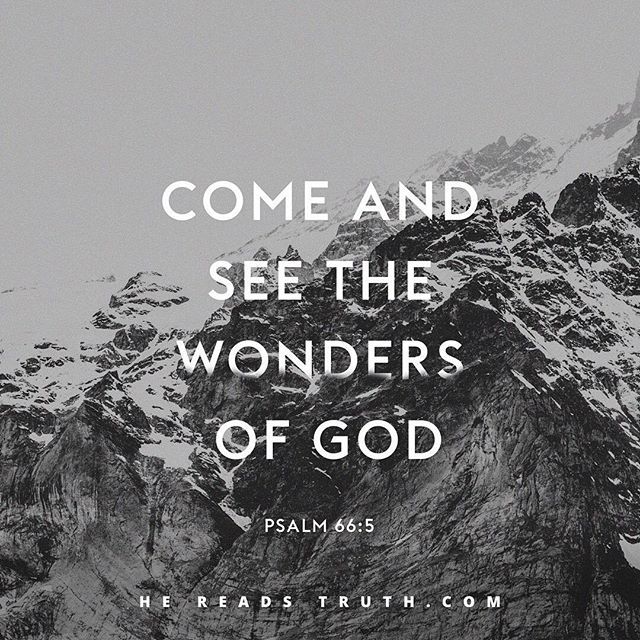
This image has an empty alt attribute; its file name is Blog-Come-and-see-the-wonders-of-God-He-Reads-Truth.jpg

Photo Credit: He Reads Truth

Photo Credit: Heartlight
Photo Credit: Godly Ladies

Monday Morning Moment – When Distress Messes with the Joy of Christmas

Is it writer’s block? Words have always been a friend to me, but they are hard-won in writing these days.

Christmas is a time of tremendous joy for me…deeper than happiness. Much deeper. For in the joy are such things as longing, grief, disappointment, anxiety. Most of the time, I can shake those off so as not to miss Christmas. Most of the time.

Here’s a tiny example. You may think it frivolous but it is reminiscent of something more. Our children grew up doing the nativity story as part of our Christmas traditions.

(Mills Christmas, December ’94)

It was fun and chaotic – never sure how it would turn out, but for several years, the kids just acquiesced to the direction of the grownups in their lives. Some of it, I’m pretty sure they even enjoyed. Fast forward to them now being adults who bring their children – our grandchildren – into the picture.

For a year or two, our grands have also been caught up in the wonder of the Baby, donning costumes, and waiting patiently (sorta kinda) for the narration to move them to the next point of action. Not all of them wanted to participate but they were close at hand to add to the drama of the moment. It was sweet.

This year…it didn’t happen. In an attempt to do the play earlier (taking some stress out of a Christmas time together), we experienced a great divide – two eager and willing older grandchildren dressed in Middle Eastern garb, and, at the same time, being brilliantly silly with their parts. So…looking the part but definitely not in character. The other two younger grands…just not interested; not even present in the room. Now, Christmas weekend is still a few days away with another family occasion planned, but I have no inclination to revisit this tradition. Maybe next year.

After giving up on the play, and rejoining the rest of the family, I asked the kids to pray for me. Somehow longings and expectations had clouded my mind, and joy was left trembling at the edges of my heart. Such a small thing (right?)…it revealed more than just a family tradition in transition. It revealed an idol of some sort – so small but effective, distorting the reality of this beautiful time of the year.

This morning, in front of the fire, I had the last Christmas cookie (there will probably be more, but I savored it as if it was my last), while reading Scott Sauls‘ great book Beautiful People Don’t Just Happen.

In the chapter “Honest Songs”, Sauls proposed the ordinariness of distressed feelings. He wrote how some of the Scripture writers laid out these “negative” emotions, along with their praises, before a God who understands and loves us through them, not in spite of them.

In referencing Ecclesiastes, Sauls writes: “Like a skilled songwriter or poet, Solomon made sure that was was genuinely inside of him also came out of him. [Herman] Melville likened Solomon to Jesus, whom the Bible also describes as a man of sorrows, acquainted with grief…The Suffering Servant [Jesus] fully embraces, and is careful not to diminish, dystopian stories as well as the happily-ever-after ones…He refuses to whitewash the darker parts of our history.”Scott Sauls, Beautiful People Don’t Just Happen

He goes on: “The Suffering Servant invites us, in our pain, to wipe disingenuous smiles off our faces and start living honestly concerning how damaged and hurt we feel…Jesus loves humans, and when the humans you love become injured or threatened, the natural and godlike response is to get angry and feel the swell of energy directed toward righting a wrong…There is a solidarity to suffering that we are meant to embrace, so that no one might suffer alone. Sharing in one another’s suffering binds us together in the deepest form of fellowship.”Scott Sauls, Beautiful People Don’t Just Happen

So what’s the connection between a situation of no Christmas play this year and the suffering of a grander scale? You probably already know. The play is not the point. It wasn’t about our darling grands meeting any expectations I might have…it was the larger story. How the play reminded me of sweet memories, and sad ones. Of parents no longer with us who I miss terribly. Of grown up children I want to pull in and keep close (they are close…but a mother’s heart seems never full…again a larger story). Of the account of Christ’s birth that is so magnificent and miraculous…and how He laid down his life, just a few years later, through death on a cross…for us. How do we communicate such grandeur to our little ones?

Our kids will figure it out…and we will support them.

So…how about you? My example probably seems so mundane. I could have shared heartache over a painful family rift. Or about a friend in a terribly troubled marriage, or one who lost both parents within weeks of each other, or another struggling with mental illness, or another praying her heart out for a grandson white-knuckling through early sobriety.

Distress messes with our joy. Let’s not let it isolate us…drawing us away from each other to suffer alone. Being real with people is complicated. “Real is unsettling, scary, even traumatic. Take the risk anyway and lean in. Leaning into lament is a necessary skill in the art of rejoicing…Almost every person is insecure and underencouraged. Almost no person wants to admit it…There is no shortcut past Good Friday to get to Easter. There is no joy without a sorrow, no rejoicing without mourning, no comfort without distress, no rest without weariness, no gain without loss, no songs of joy without songs of lament, no rejoicing from Philippians without the vapor from Ecclesiastes.” [Scott Sauls, Beautiful People Don’t Just Happen]

That day this weekend, when the Christmas play didn’t come together, my kids prayed for me. I don’t even think it seemed silly to them. [Dave was grilling our supper or he would have been right there in all that struggle with me.] Distress happens, and when it does, call on those who care for you to come alongside…for comfort and for joy.

Monday Morning Moment – Waiting – a Waste or a Way to Wisdom

Photo Credit: Henri Nouwen, Quote Fancy

Have you ever found yourself in a season of waiting that seemed as if it would never end? Maybe you’re there right now.

The more pivotal thing about waiting is what we do with it…can we stay on top of the entitlement and all its turbulent emotions when they are unsatisfied? That is a goal worthy of pursuing. Treating the waiting not as a waste but as a way to wisdom.

Just this morning, I was waiting with a friend for a promised outcome. She is an old grandmother, resettled here from another country, with few resources.

She had the hope this morning of receiving some much-needed dental work ( in process for several months now). Today was to be the day for her to receive the last treatment – the fitting of a partial denture which would allow her to enjoy eating again.

It did not happen.

For whatever reasons it was delayed and more appointments would be made. Apologies and explanations were made, and the grandmother pulled herself up out of the dental chair one more time. We weren’t entitled to a different outcome. She is receiving free care through a local university and foundation. So why did this make me so angry and sad at the same time?

I was sad for this sweet grandmother who has already been through so much this year. Sad for myself, as her driver, for another series of appointments ahead of us. Even a little sad for the dental student breaking the news to us. And close-to-tears angry that either we misunderstood or someone somewhere dropped the (proverbial) ball.

As I collected myself and came back to my senses, I was reminded (in the conversation going on in my head) that this was a small thing. What if I was waiting on a big thing?! What would my response be to that?!

In years past, cancer nursing was my profession. Talking to a friend about this whole waiting thing, she recalled what so many cancer patients go through in waiting – for biopsy results, for treatment decisions, for blood counts to come back, for reevaluations of their cancer, for…for…for. We wait. To conceive that much-longed-for baby. To meet that person we will spend our lives with. To hear the outcome of elections or military coups. To determine if we prepared well enough for landfall of hurricanes.

Big things and small things all require waiting in life. We either wait in wasteful, blaming, soul-diminishing ways or we wait in wisdom.

Maybe it’s in the wait that we find what matters more.

In the minutes that tick by, we re-order our thoughts toward life and hope and possibility. Photo Credit: Heartlight

By the time my grandmother friend and I left the dental clinic this morning, we were better. No blaming. No feeling mad or bad. We accepted that today wasn’t the day we would say our goodbyes to this long waiting. It was just another day situated in between more to come. I didn’t resign myself to the disappointment, but rather determined it would not rob me of the joy of the day. We would be back, and, one day, she would get what we originally came for, months prior.

Photo Credit: Heartlight

Don’t get me wrong about waiting. I have, at times, pushed back against it. Not just for myself but because it was a disservice to someone else. There does seem to be a pecking order in waiting…the poor and marginalized are required to wait the most, it seems.

When waiting generates a disturbance in our hearts that takes us nowhere good, then we must check it, and check our reaction to it. In that space, we can choose to change direction and keep our heads and hearts at peace. We can choose a way to wisdom, rather than an explosive, diminishing waste of the waiting.Photo Credit: Elisabeth Elliot, AZ Quotes

Waiting can be exasperating…and any engineering to decrease it is a beautiful thing…so there’s that for which to be thankful. Also, what is the object of our waiting. If we look to people to always deliver (in a timely fashion), they (we) will disappoint. If we can take our eyes of people and on to God, waiting becomes a very different experience.

Two of my favorite verses from the Old Testament speak of this:

I waited patiently for the Lord; he inclined to me and heard my cry.
He drew me up from the pit of destruction, out of the miry bog,
and set my feet upon a rock, making my steps secure.Psalm 40:1-2

Those who wait on the LORD Shall renew their strength; They shall mount up with wings like eagles, They shall run and not be weary, They shall walk and not faint.Isaiah 40:31

Even Jesus on his last day of life on earth waited…until all of the prophecies were fulfilled. While hanging in pain on the cross, He waited until just the moment all were fulfilled, and then he gave his last breath. Wow!

Photo Credit: Philip Yancey, Heartlight

May we learn to wait as the Messiah did with loving perseverance and hope of a greater future.

“While we are waiting for these things to happen, make every effort to be found living peaceful lives, pure and blameless in His sight. Consider the patience of the Lord as salvation.”2 Peter 3:14-15