Tag Archives: Workplace Culture

Monday Morning Moment – True Humility in Leadership – So Not Cliché

Photo Credit: LinkedIn

There is just so much cliché out there these days. From what’s hip in men’s facial hair, to cool shoes or right purses, to shirts in or out, jeans skinny and cuffed…and the lingo. Oh the lingo!Photo Credit: Contently

Vu Le writes this hilarious article: 21 Irritating Jargon Phrases, and New Clichés You Should Replace Them With. He doesn’t just list out some of those phrases we hear (and say?) at work…ad nauseam. He also suggests alternative language. Just read the piece. Your endorphin level will rise…unless they are your fave phrases…oops!Photo Credit: Disquscdn

I’m weary of having to search for just the right phrase to communicate that what I have to say has merit (see…I shied away from the word “value”). Oh…for a culture where plain speak isn’t judged or suspect or treated as just too uncool.

Where jargon becomes cliché, our definitions can as well. What it takes to be good leaders has had a gargantuan amount written about it…and being a servant or humble leader can also fall into the category of cliché – just another fancy of today’s business culture.

Not so with true humility. Here’s my take on humility in the workplace. There is this seeming humility that masks something else – whether arrogance or insecurity, I couldn’t say. Then there is true humility – this is what makes a leader so easy to follow.

Writer Pat Lencioni has written a book on humility as one of three essential virtues of team players. In his book,  The Ideal Team Player – How to Recognize and Cultivate the three Essential Virtues, he tells a story about humility, hunger, and smarts.

Photo Credit: Amazon

“There are three required virtues that make someone an ideal team player. Those virtues are humble, hunger and smarts. The most important of those virtues is humility. The ultimate foundation of being a team player is a person being willing and able to put the team’s interests above his or her own. Only a truly humble person can do this effectively. The second virtue required is hunger, the desire to work hard, make a difference and get things done. The third and final virtue of an ideal team player is something I call smarts. It has nothing to do with intelligence, however, but is all about social awareness and interpersonal common sense. Ideal team players, in addition to being humble and hungry, demonstrate smarts with their ability to understand their colleagues and work with them effectively.”Patrick Lencioni, Author Q & A, TableGroup
This ideal team player is the kind of person we hope to always have leading our team…and our organizations.
I asked my husband recently what was the mark of a truly humble person. This was his response:
“Humble people pay attention to the people around them, whether they’re big or little.”
As wise as my husband is, he got that idea from Patrick Lencioni after reading his book.
Lencioni had much to say about humility, including:

“So many people there are so concerned about being socially conscious and environmentally aware, but they don’t give a second thought to how they treat the guy washing their car or cutting their grass.” Pat Lencioni

[I write about the power of noticing people here.]

Humility is cliché if it’s just coming at you from the front of the room or the head of the conference table. True humility communicates a right, or proper, understanding of relationship between colleagues, clients, and customers. No lone rangers or rock stars in this equation.  Photo Credit: AZQuotes

Great team players lack excessive ego or concerns about status. They are quick to point out the contributions of others and slow to seek attention for their own. They share credit, emphasize team over self, and define success collectively rather than individually. It is no great surprise, then, that humility is the single greatest and most indispensable attribute of being a team player.Pat Lencioni

True humility in leadership is so not cliché. It can be observed, modeled, and developed. What’s cool today can become cliché tomorrow. True humility?…never.

“Throw the passes when no one is watching. Write the pages no one sees. Work through the business plans people don’t believe in yet. Hustle long before the spotlight finds you. You don’t need the whole world on your side to create something that changes the world.”Marcus Mariota

6 Ways Humility Can Make You a Better Leader – Fast Company – Gwen Moran

Your Picks for the Worst Nonprofit Jargon by Cody Switzer

Infographic: 50 Terrible Work Phrases You Need to Stop Using by Nicole Dieker

Monday Morning Moment – Them and Us, How Can That Be? Could Them and Us Become a We?

Blog - Work Culture - delta7Photo Credit: Delta 7

From the archives:

Recently, I was in an odd conversation with a friend from work. The more we talked, the more we sounded like a Dr. Seuss book. It went something like this:

“I don’t know how to be us with them. To be with them is to just be them. We must lose us; us no more will be. There’s no us in them; it’s so strange to me. How can they be them, with no us, you see? To give up us is too hard for me. So I can’t see a way to get to we.”

[Seriously, the conversation went like that…but better.]

Battling the us-them assignation is an ongoing workplace discipline. Even in the happiest, coolest companies, there is still an intentionality to keep work life positive for every employee. That inclusiveness is a hallmark for high morale and low walls (read: no silos).

BLog - Us vs Them - Work Culture - Silos - prolearn academy

Photo Credit: Prolearn-Academy

In a work culture where silos still exist, an us/them mentality can grow as each team or department draws in on itself and ignores or suspects the actions/values of others. It’s not a healthy situation for any of us…whether it’s the executive team insulated from others or the [fill in the blank] team hunkered down in its own mode of trying to survive. The first can be as unaware as the subject of the story “The Emperor’s New Clothes“, the second, well, is just miserable, and growing more so by the pay period.

So much has been written on this problem in the workplace – about that culture where us/them thinking and operations color productivity and morale. I have included several links below describing various recommendations and protocols to restore health to such organizations.

Blog - Work Culture 2Photo Credit: My Turnstone

I’ve always been that person who says, “Why can’t we just all get along?” In reality, we don’t have that situation always, but we can grease the tracks in that direction. Here are my own workplace rules regarding moving us and them to we:

  1. Make a practice of assuming the best of your bosses and colleagues. “Refuse to think ill of others” is my goal…and my accuracy in hitting that goal comes with practice and determination…and grace.
  2. Lean in to those with whom you struggle the most – the “thems” in your worklife. Especially the most powerful ones. Study them. Learn their language. Know them as well as you can. NOT for self-serving reasons, but for the benefit of the work itself. Any motive that only serves your personal situation will only make matters worse… ‘Nuff said.
  3. Refuse to get caught up in us/them complaining. Don’t make a big deal about it, but do your best to turn the conversation toward a positive end, change the subject altogether, or bow out if all else fails. Those negative conversations just bring you and your colleagues down and don’t accomplish anything. A short-lived “misery loves company” satisfaction isn’t worth the fall-out of such conversations.
  4. Bring down the silos, one brick at a time, if necessary. Maybe you aren’t experiencing any us/them anguish, but you know it exists. What can you do, individually and as a work team, to move to “we”? We have lots of work models out there for this. In fact, silos in the workplace are “so 80’s” (whatever that means…I hear it a lot, so I’m using it here). Use some of that meeting time, or talks over coffee, to be creative in how you can work better across teams…how you can learn more from each other…how you can defuse territoriality? If the “them” is management, you initiate dialog on setting work culture values that maximizes product excellence and employee engagement.
  5. Put processes in place – through your culture – to keep silos down. I would love to hear what your situation is and how you are making positive steps to grow/keep a healthy culture. Please comment below.

Sure…there are times we need to process a difficult situation at work with a trusted friend. Yes, us/them scenarios are painful…and wrong, honestly…especially in the workplace where we are meant to have shared goals, working toward the same outcomes. Maybe, the us/them relationships in a company are too distracting and we can’t see any solution (back to the Dr. Seuss-like conversation above). In that case, it’s possible we look outside our company for another situation. However, you take with you a piece of the us/them dilemma. You take you along to the next job. Better to develop muscle memory on how to “be we”, whenever possible, right where we are.

[Sidebar: I’ve written a lot about work culture – too many to mention – but you can search work culture under Blog – Deb Mills and learn as I have about what is possible if we stay engaged in our workplace.]

Blog - Work Place Culture - open.bufferPhoto Credit: Buffer

Overcoming Us vs. Them Challenges

Breaking the “Us and Them” Culture

How to Avoid Us vs. Them – Huffington Post

The 10 Buffer Values and How We Act on Them Every Day

The 4 Elements That Make Great Company Culture

How to Save a Broken Work Culture

From Us and Them to We Participative Organizational Culture

Them and us – How to use Trust as a Competitive Advantage

How CEOs Can End an Us Them Mentality

Us vs. Them – a Simple Recipe to Prevent Strong Society from Forming

5 Friday Faves – Skyrim Guitar Cover, Workplace Wisdom, Repair Cafes, Belonging, and Movie Previews

Blog - Friday Faves 006 (2)

Just jumping in today with my favorite finds of the week:

1) Skyrim Guitar CoverNathan Mills of Beyond the Guitar posted a new arrangement on Youtube this week – Skyrim – Dragonborn Main Theme. You video gamers probably know this song.  I’ve no experience with this personally, but this song seems to generate sweet emotions for gaming folks. This young man amazes me with his skills, yes, but especially his heart. It comes out in his music. On another note: He has over 1 million views of his Harry Potter medley on the Facebook group Harry Potter and the Deathly Hallows. Exciting.blog-nathan-mills-guitar-youtubePhoto Credit: YouTube

2) Workplace Wisdom – Finally…on millennials. I know, I know…there is so much written and spoken about millennials. I usually just pass over it…but Simon Sinek’s observations on millennials in the workplace are fascinating and telling. I appreciated that what he sees applies to both millennials and the rest of us. blog-simon-sinek-leadership-and-millennials-why-millennials-matterPhoto Credit: Why Millennials Matter

It is wisdom. Sinek came on my radar this week through a talk he did on IQ with Tom BIlyeu. In his talk, he focused on four components that millennials bring with them into the workplace that affect their professional maturing. These are 1) parenting, 2) technology, 3) impatience, and 4) environment. His take on “failed parenting strategies” may apply to some cultures, but many parents of millennials saw early on the fallacy of communicating how “special” our children are…no matter what they bring to the table. Sinek does communicate a victim mentality here and that’s the weakest of his 4 components. The other three were applicable to the workplace, in general, and to millennials, in particular.

Technology can be a crutch and squelch our creativity more than fuel it. Technology has a negative impact on the depth and breadth of our relationships…we have to pay attention to this. Impatience – for purpose, impact, advancement – is a big issue in the workplace. We need colleagues willing to hang in there through the doldrums. Environment at work is changing at a rapid pace…as much as it appears, on the surface, that it is bending toward the millennial, what is needed is a workplace where millennials can actually grow their skillsets. Sinek speaks to this.

4 Damaging Mentalities Millennials Must Break – Jeremy Chandler (a millennial)

3) Repair Cafes – Wouldn’t you love to have a place within an easy drive where you could take your aging laptop, or blinking lamp, or burned out leafblower for a repair? Is it possible to ever reasonably repair instead of replace? There is a phenomenon around the world where this is happening…not just in rural “third world” settings but in cities. Repair cafes are on the rise. If you want to find one, or start one, go here. This isn’t just about being frugal; this is a craft – this learning how to repair your own broken stuff with the help of a skilled professional – someone’s mom or dad who has learned how to fix things. The closest repair café to us is in Charlottesville, Virginia – do you have one near you?blog-repair-cafe-nytimesPhoto Credit: New York Times

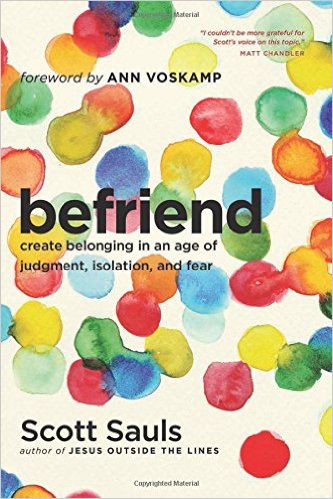
4) Belonging Scott Sauls‘s book Befriend: Create Belonging in in an Age of Judgment, Isolation, and Fear is next on my reading list. Belonging is a core need for all of us, and Sauls takes the reader deeply into the realm of true friendship and solid relationships. Whether between peers, family members, colleagues, or even strangers at first encounter. I long to get past superficial and to know and be genuinely known by at least a few people. My desire is to be open to the possibilities of befriending and being “friended” with true authenticity. This book seems a good place to reboot.blog-befriend-scott-sauls-amazon

Photo Credit: Amazon

I discovered this book from a tweet about Matt Smethurst’s article 20 Quotes from Scott Sauls’s New Book on Friendship. I ordered the book based on those 20 quotes. Here are three:

“Compelled by the love of Christ, we must not withhold kindness or friendship from any person or people group, and we must not engage in any sort of us-against-them posturing. This in itself is countercultural in modern society. Compelled by the truth of Christ, we must honor and obey the Creator’s design—even when his design is countercultural and, at times, counterintuitive to us. His ways and his thoughts are higher than ours.” (75–76)

“This is what you call reversing the flow of the umbilical cord: parents demanding that their children function as their source of life; their emotional nourishment; their identity; their Jesus. This always ends in sorrow and alienation and loss. Just as in marriage, we must not place a burden on our children to provide for us the things that only God can supply.” (87–88)

“The best way to measure your desire to serve is to look at how you respond when someone treats you like a servant.” (98)

5) Movie Previews – Call them teasers and then trailers. Whenever we go to the theater, we have to be in place with a family-sized popcorn before the previews start. That is just how it is. I love these glimpses into coming feature films. Two I’ve seen recently follow: On the darker side – Jackie. On the lighter side – Table 19 . Whether I ever see these movies in the theater, watching the trailers was satisfying and wholly entertaining!

blog-friday-faves-table-19-cdn-colliderPhoto Credit: Collider – Table 19

Have a safe and peaceful weekend. Tacky Lights Tour is on our schedule…let the festivities begin.

Also:

Life On My Knees – Chocolate Raspberry Cream Pie – Angela

blog-aletheia-praise-band-nathan-angelas-blogPhoto Credit: Chocolate Raspberry Cream Pie

YouTube Video – Big Crosby & David Bowie – “The Little Drummer Boy” (Peace On Earth)

Macy’s Christmas Adv 2016 Video – #OldFriends – [Sorry about the Poo-pourri ad at the beginning of the video.]


Monday Morning Moment – Turning Around a Work Culture – From “Not Good Enough” to “Job Well Done”

blog-demanding-bosses-linkedin-dave-kerpenPhoto Credit: LinkedIn – Dave Kerpen

Aha moments can occur in all sorts of settings. My latest happened during our pastor’s sermon this week. Toward the end of a deep and fascinating exposition of Colossians 2, Pastor Cliff reminded us that we are not meant to earn God’s approval. He gives it unconditionally. Then Cliff talked about how we get caught in the trap of “It’s never enough!” when thinking of our efforts or accomplishments. Then “It’s never enough” or “Not good enough” too easily turns into “You’re not good enough.” This is the place where what we do intersects with who we are…

Switch from the Sunday Bible lesson to the Monday workplace application. I’m not talking the unconditional love of God here, but what happens to us in continuous feedback loops. Stay with me…This made me think uncomfortably about the way I once operated in the area of idea generation and innovation.

I am “an editor”…it gives me great satisfaction to take a document or process and make it better. Recently a friend asked me to edit his manuscript. It’s going to be such a great read…can’t wait for it to be published. Still, there will be lots of edits. For me, being an early reader, I just took care of some grammar and flow issues. There will be more qualified editors down the road. It’s enough for me to do quick, elementary edits and wildly praise the author and his riveting storyline, cheering him on to the next steps of publishing.

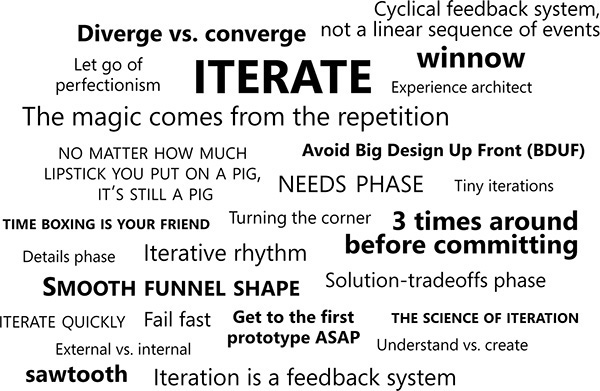
The tweaking that I used to do regularly in my earlier professional life was more intense in those days…and less forgiving. I wanted it (whatever it was) to be right, and it was my immodest opinion that I could get it to right. Especially when evaluating someone else’s work (ironically, I was less hard on my own work – figuring it was perfect already, right? Sigh…). The tweaking of another era has come round to a newish process called iteration.

One definition of iteration is the “process of learning and development that involves cyclical inquiry, enabling multiple opportunities for people to revisit ideas and critically reflect on their implication”. These feedback loops are meant to be fast-paced with the finish in view.

ScenarioPhoto Credit: SafariBooksOnline

Where iteration (or tweaking) breaks down (if I might be so bold) is when it’s taken well past rapid feedback loops into a realm of fine-tuning that has the team guessing “will it ever be good enough?” Product design and process development are vital to any company, but what we must also consider is the team or personnel involved.

If the feedback loops relate to the launch of a new product or a new business process, excitement and brainstorming are part of the momentum. Continuing to tweak over months instead of weeks before the launch can take a negative toll on the team. No one wants to forfeit excellence, but we don’t want to lose excellent personnel either.

blog-demanding-bosses-lifehackerPhoto Credit: Lifehacker

Trusting the judgment of our best thinkers is worth the risk of possibly releasing a product or service when we may not all be sure it’s “perfect”. That is what beta-testing is all about…the feedback that then comes to us from the consumer or user.

I’m really talking out of my element here (not being a designer or innovator so much as a lifelong learner). My leap from the sermon to the workplace relates to my own past struggle with wanting something with my name on it to be perfect while exhausting my teammates  with “what if we do this?” or “What if we say it this way?”

What a gift for us to take a well-thought-out proposal and, instead of putting it through the “just not good enough” wringer, we read it and pass it back to that colleague and say, “Good job”…empowering them to execute the proposal. How often does that happen these days?

Please share stories [in the Comments] of work situations where you experienced genuine affirmation for a job well-done.

Recently when water started backing up into the kitchen sink, I was afraid that it was something I had done. Too liberal using the disposal, for instance. Dave was out of town and nothing I could do would remedy the situation. Finally, on a Sunday afternoon, in desperation, I called our plumber (Richmonders, if you need a good plumber, email me, and I will give you his contact info). He came and fixed the problem, and best of all, it wasn’t my fault, after all. This young man literally LOVES his job and was kind to take the time, after he was off the clock, to give me the breakdown of what the problem was. What he charged me? Worth every penny…especially the part where it wasn’t something I had done wrong.

Why I bring this up is that being a fairly capable and creative person doesn’t prevent me from faltering at the likelihood that I messed-up.  See the Imposter Syndrome. My mental wiring is such that I get discouraged when my contribution to a situation actually causes more work for someone else, adds expense, or slows down progress. I’ve learned over the years that all that tweaking I may not have taken the product from good to great, and most assuredly caused some amount of frustration to hard-working, quality colleagues. Lesson learned.

There are times and seasons when tweaking is appropriate in developing a product and changing a business process. What we want to take into account is the cost of that tweaking, or iteration, on the people who make things happen in our workplaces. Free them from the “not good enough’s” to enjoy the fruit of “jobs well done”.blog-demanding-bosses-the-musePhoto Credit: The Muse

10 Tips for Dealing With an Overly Demanding Boss – Jacquelyn Smith

How to Get Over the Feeling that You’re Not Good Enough for Your Job – Michele Hoos

10 Things You Can Do to Get Out of Your Boss’s Doghouse – Brian Dodd

Why Incentive Plans Cannot Work – Alfie Kohn – Harvard Business Review

Good Is Not Good Enough: The Culture of Low Expectations and the Leader’s Challenge – Karlene M. Kerfoot

Innovation and Iteration: Friends Not Foes – Scott Anthony – Harvard Business Review

Holding a Team Retrospective – Morale

Workplace Bullying: Protecting Yourself at Work – Slideplayer

Friday Faves – Summer Olympics, Global Leadership Summit, Life after Being Locked-In, Walking Her Home, and KevOnStage

  1. Blog - Friday Faves

Happy Friday! School is starting around the country, but not here yet. It’s still sunny summer with long days and beach trips and abundant locally grown fruits and vegetables. Tomato sandwiches and juicy perfect peaches. Mmmmm. Below are my five favorite finds of the week.

1) Summer Olympics – Watching the Olympics has been a joyful experience this week. I’m trying to keep up with the Refugee Team, and this BBC article is a helpful update. As for the Gold medals, several are being won, as you already know, to these two favorites of mine – Simone Biles and Michael Phelps. USA! USA! USA!Blog - Simone Biles - Olympics - the guardianPhoto Credit: The GuardianBlog - Michael Phelps - Olympics - livenewschatPhoto Credit: Live News Chat

2) Global Leadership Summit – This is an incredible leadership conference…the best I’ve ever attended. It’s simulcast from Chicago to sites all over the world. You’ll be hearing much more about the content in the days to come. I’m halfway through it as I post this. Brian Dodd does a live blog on it where you can gather quotes from each speaker, and on Twitter and Facebook, watch for the trending hashtag #gls16. Great content!

Blog - Global Leadership Summit - 2016 - TwitterPhoto Credit: Twitter

3) Life After Being Locked-In – Vegetative states and the locked-in syndrome have always been fascinating to me, as a nurse. An unforgettable moment for me in teaching nursing at Yale University years ago was walking into a patient’s room to meet him. He was in a wheelchair and when I entered he was looking in my direction. I said hello and he just continued to look at me…expression-less. This beautiful young man…seemingly not there at all…in some sort of vegetative state from a brain injury.

When I was a child, I watched a rerun of Alfred Hitchcock Presents episode “Breakdown” from the very first season in 1955. It was a psychological thriller about a man who survived a car accident but was paralyzed, completely unable to move or communicate. It was terrifying.

Martin Pistorius, a South African man living today in the UK, had his own terrifying journey, in real time, through being locked-in. At the age of 12, he developed some sort of illness where he quickly lost his abilities until he went into a full-blown coma. He stayed in this condition until he was 16…when he began waking up. Unfortunately, he looked no different and wasn’t able to communicate.Blog - Ghost Boy Martin Pistorius - youtubePhoto Credit: YouTube

He continued “invisible” for almost another 10 years, until one of his therapists became aware that he was actually responsive. His story is amazing. Once it was discovered that he was actually conscious, he began the incredible journey of treatment and rehabilitation. He went on to learn to communicate with an adaptive device, graduated university, became a web designer, and wrote a book about his experience (Ghost Boy). During his locked-in experience, he found God his only companion and became a follower of Christ. Now, he has also found the love of his life in Joanna whom he married.Blog - Martin Pistorius - locked-in syndrome - nbcnewsPhoto Credit: NBC News

He communicates his own journey so well in this TEDx talk. The kindness and understanding in his demeanor speak volumes as well. Watch his TEDx talk below or at least read the transcript (in link above). I’m so glad to have discovered this young man and know his story.

He closed his talk with these words:

We are told that actions speak louder than words. But I wonder, do they? Our words, however we communicate them, are just as powerful. Whether we speak the words with our own voices, type them with our eyes, or communicate them non-verbally to someone who speaks them for us, words are among our most powerful tools. I have come to you through a terrible darkness, pulled from it by caring souls and by language itself. The act of you listening to me today brings me farther into the light. We are shining here together. If there is one most difficult obstacle to my way of communicating, it is that sometimes I want to shout and other times simply to whisper a word of love or gratitude. It all sounds the same. But if you will, please imagine these next two words as warmly as you can: Thank you.

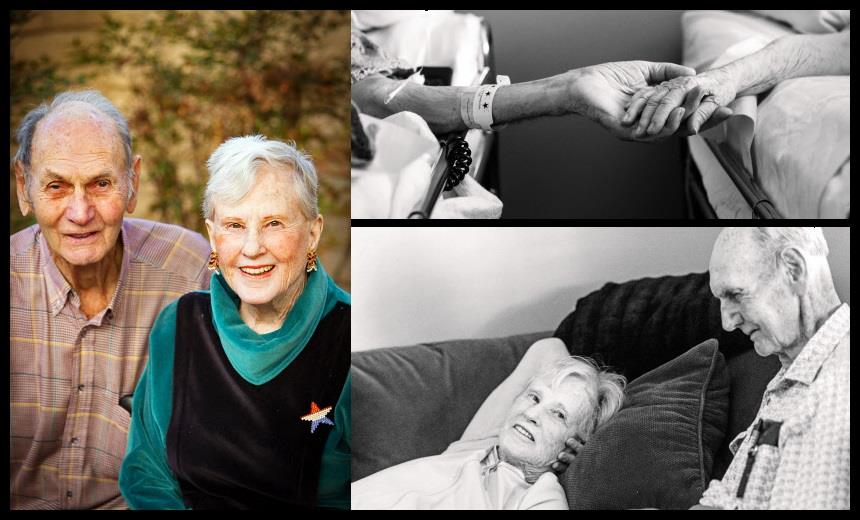
4) Walking Her HomeMark Schultz wrote this sweet song Walking Her Home after he was inspired by this older couple in his neighborhood. The husband was so tender with his wife and he told Mark that he’d promised her dad he’d walk her straight home after their first date and never leave her. He was still keeping that promise. We have all been touched by stories of an elderly spouse dying and the other dying shortly after. This CNN news report tells an especially sweet such story…Blog - walking Her Home - bellevisionPhoto Credit: Bellevision

…and here’s the song (with video from The Notebook, from the novel by Nicholas Sparks).

5) KevOnStage – Kevin Fredericks is a very funny guy. I just discovered his videos this week. Here’s a hilarious sample:

Here’s to a relaxing weekend. Hope you recover some of your sleep missed by late night Olympics watching…if you’re like me. Be safe and savor this life…and the people we have in it. God keep you.

Monday Morning Moment – Our Work Ethic Pushes Us On When Our Passion Wanes – How’s Your Work Ethic?

Blog - Work Ethic & Passion - twitterPhoto Credit: Twitter

Can our work ethic sustain us when our passion wanes?

Eric Chester has been studying and writing about today’s emerging workforce since the 1980’s, when Generation Y was in its infancy. Millennials have been examined and critiqued so much, but Chester has done his homework in how to help them be successful in the workplace. He also challenges employers to equip these young adults with what they may not have upon entering the workforce – that being a strong work ethic.

In his article in The MHEDA Journal, Chester defines work ethic as simply “knowing what to do and doing it“. Through his research, Chester created a list of seven indisputable, non-negotiable core values that he strongly believes every employer should demand: positivity (positive attitude), reliability, professionalism, initiative, honesty, respect, and gratitude (cheerful service).

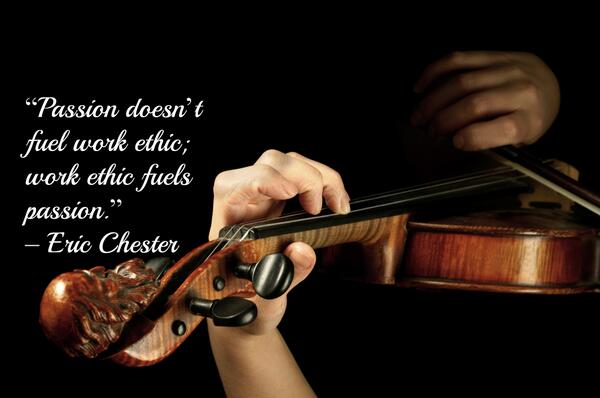
This is not just so for millennials but for all of us in the workforce. What do we need to be successful or effective across a career? Is it passion or work ethic? Passion (strong or powerful emotion, deep desire, intense conviction) is a big buzzword right now in hiring, but what we really need is work ethic. As Chester states, in his book Reviving Work Ethic, “passion doesn’t fuel work ethic; work ethic fuels passion.”

A strong work ethic will carry us through seasons in our career when we’re “just not feeling it”.  I appreciate the distinction Chester makes about how our work ethic actually fuels our passion and not the other way around. We may not all have passion in measures that enhance our success, but we can apply ourselves with diligence and intentionality such that we can push through to the finish, whatever it is. When passion wanes, this is a great encouragement to me.

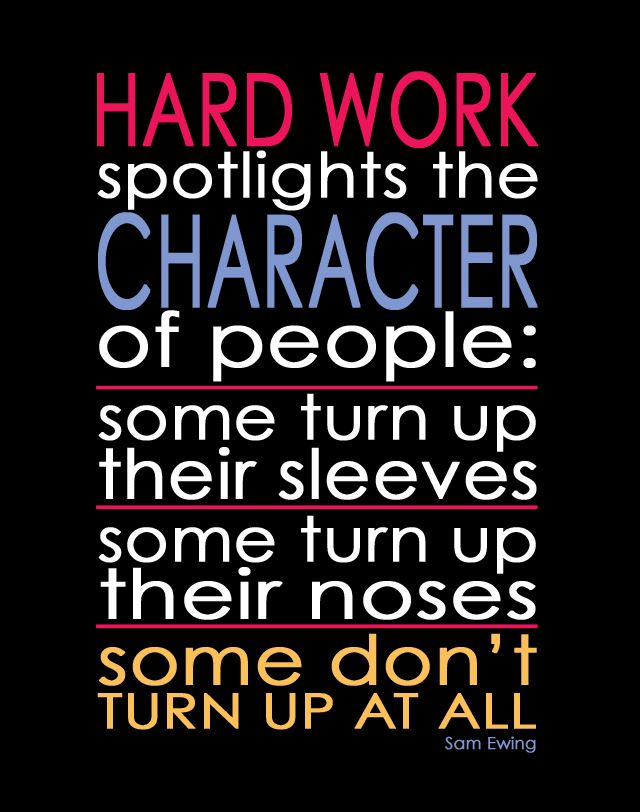
Blog - Work Ethic 1 - pinterestBlog - Work Ethic 2Photo Credit: Pinterest, Pinterest

Arlene Hirsch quotes Mark Cuban’s thinking on passion and work ethic:

“’Follow Your Passion’ is easily the worst advice you could ever give or get.

1.  When you work hard at something you become good at it.

2.   When you become good at doing something, you will enjoy it more.

3.   When you enjoy doing something, there is a very good chance you will become passionate or more passionate about it.

4.   When you are good at something, passionate and work even harder to excel and be the best at it, good things happen.

Don’t follow your passion, follow your effort. It will lead you to your passions and to success, however you define it.”

Chester uses the analogy of building a fire in a fireplace. You have to set the logs in place before you start the fire. Passion will heat up a conversation or spark a vision, but it won’t get the job done, whatever it is. This is where our work ethic when applied will get us to goal, to mastery, to the finish. That in turn gives rise to passion as we see what is possible when we put forth the best effort that is each of ours to bring.

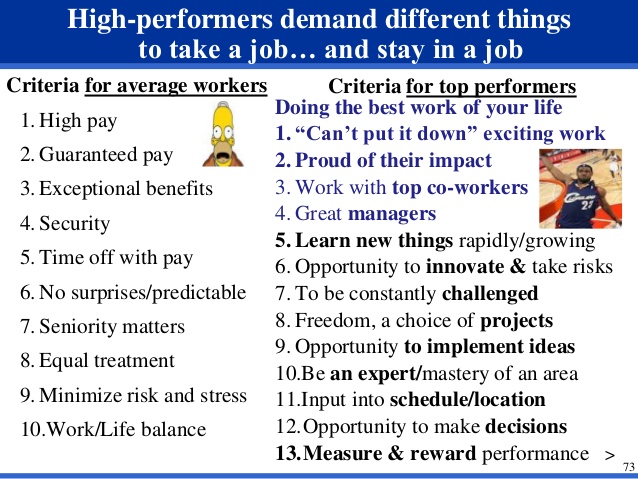
Blog - Work Ethic and Passion - slidesharePhoto Credit: SlideShare

Whether you are newly employed in the workforce or a seasoned veteran, it’s wise to consider the bottom line of what we ought to bring to our jobs. This will vary across organizations and companies, especially as our workforce itself changes in the years to come. Chester’s summation is noteworthy for all of us:

“Employers are searching for positive, enthusiastic people who show up for work on time, who are dressed and prepared properly, who go out of their way to add value and do more than what’s required of them, who are honest, who will play by the rules, and who will give cheerful, friendly service regardless of the situation.”

How’s your work ethic?…

Whatever our passion might be today, our work ethic can be rock solid…something we count on in each other at work in the every day.

Reviving Work Ethic: A Leader’s Guide to Ending Entitlement and Restoring Pride in the Emerging Workforce by Eric Chester

On Fire at Work: How Great Companies Ignite Passion in Their People Without Burning Them Out by Eric Chester

Employers Must Pick Up the Slack, Instill Work Ethic in the Emerging Workforce – article by Eric Chester

Follow Your Energy, Not Your Passion – article by Arlene Hirsch

What’s Wrong with Work Ethic in America? – article by Patricia Fripp

SlideShare – Metric Driven Talent Management – 21st Century Talent Management Conference – Tanzania

YouTube Video – Book Trailer for Reviving Work Ethic by Eric Chester

YouTube Video – Book Trailer for On Fire at Work by Eric Chester

Work Ethic Quotes – Pinterest

Blog - Work Ethic over Passion - starecatPhoto Credit: Starecat

5 Friday Faves – a Mama’s Lament, Primary Physicians, Life in a Refugee Camp, a Deeper Happiness, and Community – and a Bonus

Blog - Friday Faves

Hello, Friday. We’ve had rain for days here, but it’s forecasted to be gone for the weekend. What are you up to? I’ve culled down my many happy finds of this week to these. Please share what enlarged your life this week (in comments)…and Happy Mother’s Day!

1) A Mama’s Lament“Slow Down”“I don’t know of a more uttered or whispered phrase from a mother of any age, about her child of any age, than ‘It’s going by too fast.’ I feel like I spend my life trying to slow time. Trying to celebrate the growth and the milestones of my children, and then secretly day dreaming about building a time machine in my garage, so I can return to rocking my babies at midnight. If you’ve ever looked at your child running across a field, or striding across a graduation stage, or walking down the middle aisle of a church clutching a bouquet, you’ll know why this song is special to me. Please enjoy the video below, remembering the moments we wish we could slow down, and sharing them with those we love most.”Nichole Nordeman

2) Primary Physicians – Without a lot of detail, I’ve been undergoing a series of medical tests (with their various new doctors attached) for a finding that is either nothing…or not. As frustrating as all this can be (with scheduling and preps and the waiting…the waiting!), I am grateful for specialists who continue to sharpen the focus of whatever this is that’s going on. Mostly, I am grateful for my primary physician who knows me and my history best. He occasionally checks in himself, as different reports come to him during this journey. What a blessing to know he’s putting the pieces of this puzzle together as each specialist adds his bit. Thankful.Doctor Talking with PatientPhoto Credit: UPMC

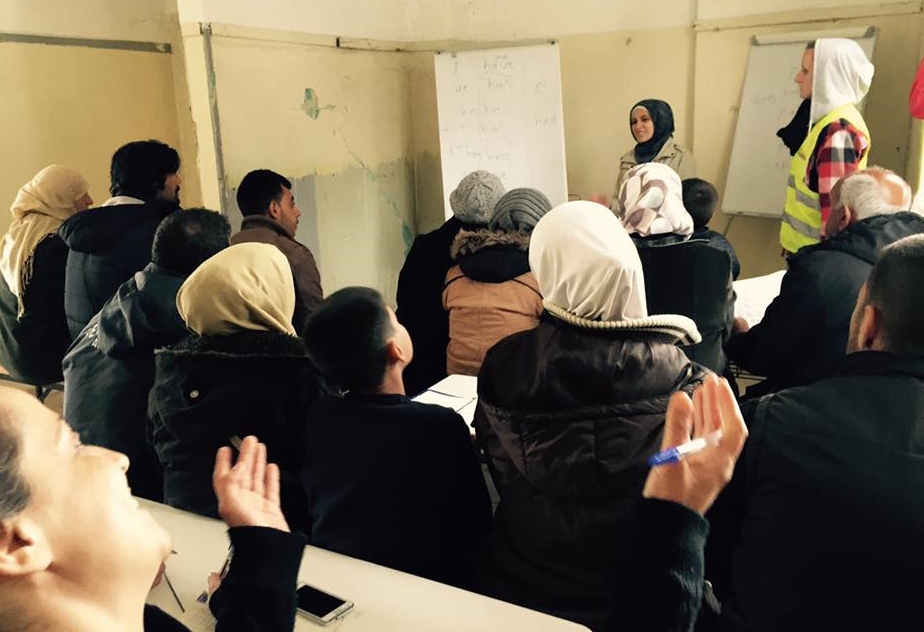
3) Life in a Refugee Camp– Our friend, Beth, is spending a couple of months in Greece, working in a Syrian refugee camp. She has been a great help there, I’m sure, and has given us a window into the lives of these displaced peoples. It’s hard to imagine living in a tent city, and yet, how wonderful that there is shelter for them in this place in-between. Homeless, and yet, for now, they have a place at least…where the kids play, the parents take English classes, and all the rest of their new normal life unfolds – cooking, cleaning, and preparing for an unknown but hopeful future.13001245_10156875941260061_7654249932579596614_n12985495_10156885038265061_4952602545456677851_n13055578_10156925512190061_3805858236358775882_n13082658_10156925508410061_1380861859098516687_n12993627_10156889362110061_8126408917090936937_nPhoto Credit: Facebook

4) A Deeper Happiness – You know, if you read this blog, that I love Kara Tippetts. She is with the Lord now. Still, her life and wisdom continue to impact my own. Her husband, Jason, wrote about a lunchtime together as she was nearing the day of leaving.

“The other day Mickey brought a grilled cheese to Kara for lunch. I didn’t have anything, so I just watched her eat. She offered me half of her sandwich. I said, Don’t you want it?

She replied, I do, but I want to share more.Blog - Mundane faithfulness - Grilled Cheese SandwichPhoto Credit: Woman’s World

First of all, yes, I did take half of a sandwich from my dying wife. Second, it occurred to me how Kara’s simple comment stuck with me: I want to share more.

What if I found more satisfaction in sharing than taking, more in giving than consuming?

Jesus says in Matthew 20:28, Even the Son of Man came not to be served but to serve…

How beautiful that even as she fades, Kara’s selflessness reflects God’s character and ministers to our hearts.

He quotes Tim Keller: “Seek to serve one another rather than to be happy, and you will find a new and deeper happiness.”Blog - Need You Now Kara Tippetts & JasonPhoto Credit: Mundane Faithfulness

5) Community – Oh community! Sometimes you find it in the workplace or your neighborhood. Sometimes through your church (or other group of like-minded folks). Sometimes community comes through family and friends. We have experienced deep community in many forms over the course of life. I tried to find a definition for community but nothing really seemed adequate. Scott Peck has written about it with the words that resonate (I don’t agree with the whole piece but the defining words ring true) – vulnerable, honest, generous, inclusive, loving, safe. Community is where you know people genuinely care about you, warts and all…where when you’re not present, you’re missed…where help, laughter, understanding, and tears flow freely. Here’s to community – imperfect and human – more together than the individual parts. Hope you have one…otherwise, you are welcome.IMG_5754Blog - Community - English Conversation Class005IMG_4904

Bonus: A New Blog Find on the Workplace – I love to read about workplace culture and who leadership can make a difference. You’ll see that often in my Monday Morning Moment blogs. This week, I discovered an article by Ron Carucci interviewing Mark C. Crowley (wrote about it here). It intrigued me enough to seek out Ron’s website. He is part of the consulting team of Navalent, which focuses on business and leadership transformation. The blog is a huge resource for any of us in the workplace. Great stuff!

Blog - Blog on Business & Leadership - Navalent - Ron CarucciPhoto Credit: Navalent

Monday Morning Moment – Belonging and Going Deep and the Blind Presumptions that It’s Actually Happening When It Isn’t

Blog - Belonging 2 - forbesPhoto Credit: Forbes

“The culture you create or the culture you destroy will determine the success of your business.”Mark C. Crowley

As much as we might like, we can’t equate smiling and greeting folks we pass in the hallway with real community. Worse, just making a beeline to the elevator, conference room, or office  with a studied, problem-solving look on your face does not instill confidence or credibility to those colleagues in the wake of your path to organizational excellence.

Sorry.

I’m not sure how well any of us do at creating a community of going deep or giving those around us a sense of belonging. What could help is periodically wrestling with our presumptions about work culture and employee engagement (I write about this often in this blog’s Monday Morning Moment. if you’re interested, just search here). Then make the changes that would grow such a work culture.

Going deep with employees and helping them have a strong sense of belonging are too rarely on the agenda of executive leadership. I don’t understand how that is, really, given all that’s written about it in the leadership press and all we learn from the companies experiencing growth/success. It seems a wee bit short-sighted.

Here’s the heart of it: Employees know whether they are valued and whether their organization is invested in them. Occasional fun days and gift cards to Starbucks offer a bump in the workplace routine, but the outcome will have little impact on overall employee satisfaction, performance, customer service or product excellence.

A culture where executive management, department heads, and team leaders go deep with their employees is possible, once the blinders are removed . What does that mean? It means dealing first with our presumptions and marshalling our efforts away from crazy and toward a culture of transparency and inclusiveness. It may entail perks and benefits, but more than that, such a culture thrives when personnel are proud to belong to such an organization, and their leaders know their people and strive to develop and honor them.Blog - Belonging 3 - flickr Christian BourdeauPhoto Credit: Fast Company

If, as a leader or manager, you have known success in mentoring a few, a small tribe of cohorts, then you can enlarge that to an organization-wide campaign that resets values and encourages and equips employees at all levels.

It’s worth the short-term cost to you for the long-term benefit of the organization and the individuals that make up your work community.

Bottom-line:

Andrea Huspeni writes: “How leaders choose to implement culture is everything. Some may think having the occasional happy hour, yoga session or trivia night will cut it, and while these perks help, culture runs much deeper than that. It needs to ignite inspiration, motivate teams to outperform the competition and allow employers to grow and produce results for the business. A successful high-performance culture has much more to do with the not-so-exciting tactics like transparency, support and communication than with a Ping-Pong tournament.” – Entrepreneur

Blog - Belonging - slidesharePhoto Credit: Slideshare

Please don’t miss the links below. Also, writing this, I thought of how these concepts apply to organizations other than businesses – including churches and other non-profits. What a difference you can make if you leave off judging the health of an organization by assessing how those closest to you are doing…and take on the whole health of your organization. There’s a lot at stake and it’s worth the effort of checking out your presumptions…learned this the hard way.

6 Surprising Insights of Successful Employee Engagement by Mark C. Crowley

Create Pockets of Excellence at Your Workplace by Shawn Murphy

Clarity and belonging – More Ways for Developing Pockets of Excellence by Shawn Murphy

7 Practices of Leaders Who Build Healthy Workplace Cultures by Brian Dodd

By the Numbers – Here’s What It Takes to Be a Top Company Culture (Infographic) by Greg Besner

8 Companies Reveal Their Secret Sauce to a High-Performance Culture (Video) by Andrea Huspeni

5 Ways Leaders Must Build a Family Environment to Achieve Excellence by Glenn Llopis

Can’t-Miss Advice: 8 Business Leaders Share How to Cultivate a Successful High-Performance Company Culture by Kim Lachance Shandrow

15 Powerful Team-Building Quotes – SlideShare

Addicted to Distraction and the Possibility of Restoring a Longer Attention Span

Blog - Addicted to distraction - diygeniusPhoto Credit: DIY Genius

Recently I was at a training event in a remote area where I had no cell phone service and limited internet. It meant I went through stressful training and at the same time experienced a forced exile from screen time. I don’t even have to tell you which was more challenging.

Growing up in my generation was very different than now – playing outside until dark, talking for hours on the phone with friends, falling asleep to the comforting drone of Mom and Dad talking and laughing in their bedroom down the hall. If you’ve ever seen the 1999 film October Sky, it makes me think of Dave’s growing up also – playing in the woods, biking everywhere, building rockets, hunting and fishing.Blog - Playing Outside - jeffs60sPhoto Credit: Jeffs60s

We are enjoying different advantages now for sure…I wonder how our grandchildren will one day describe their childhood. Having computers and the internet have been amazing assets to our lives. The dilemma is when our screen life becomes more engaging that our real life. When “Facetime” replaces face-to-face time.

Don’t get me wrong, I love the opportunity to see people via phone. For instance, friends of ours who got married recently had a small wedding, BUT they had a friend live-stream the wedding and all the rest of us got to “be there” via Periscope. Saw the kiss and everything. 2016 March 5 - Megan & Brian Wedding Kiss

There is something to be said about all the electronic capabilities we have today. For sure.BLog - Addicted to Distraction - littleredfrenchPhoto Credit: LittleRedFrench

The problem is when objects take command of our lives. These screens (phones, TV, computers) eat up so much of our day. Also, what about when we start exchanging real time relationships with the barest minimum associations via Facebook, Instagram, or Twitter? When a friend decided to go off Facebook, I was bummed… At that time, she lived 6 minutes from me. Not like my friends in Morocco or Egypt where I depend most on Facebook to keep up with them. She lives right here in town. We can have real coffee’s and real talks on the phone. Sigh… I had pretty much relegated keeping up with her to social media. Now we’re back affiliated only in real life where I might need to call her. Imagine.

I’ve written about this before (here) and want to manage my life better in this area. Multi-tasking was always something I thought was a strength, but now, getting older, it hasn’t helped me develop much of an attention span (see Charlie Munger’s thoughts on this here). It makes sense that thinking long and hard on something would have a powerful impact on our success or decision-making. Focus. Concentration. These are the things that have suffered in my life with all the distractions.

Kyle Pearce wrote a small piece on being distracted and introduced me to the work of Nicholas Carr (who wrote The Shallows: What the Internet is Doing to Our Brains and The Glass Cage: How Our Computers Are Changing Us). The 4-minute YouTube video below describes some of what he writes about:

Besides managing the distractedness in thinking, memory, and processing information, I want to nurture a habit of deep conversation. Sherry Turkle (author of Alone Together: Why We Expect More from Technology and Less from Each Other and Reclaiming Conversation: The Power of Talk in a Digital Age) writes about this and gives me hope.

Blog - Distracted - conversations - quotesgramPhoto Credit: QuotesGram

Turkle admits she loves computers because they have helped her make tremendous strides in writing, but they are not people. She writes as if she’s reading my heart. This disconnected connection we experience with one another is so illusory.

“Networked, we are together, but so lessened are our expectations of each other that we can feel utterly alone. And there is the risk that we come to see others as objects to be accessed—and only for the parts we find useful, comforting, or amusing.” – Sherry Turkle
Here’s my hope and vision – to re-learn how to really be connected with people, including myself. To practice solitude. To quit living the excuse of being distractible. To learn how to think and work deeply, and to remember how to have deep, thoughtful conversations again.
I’m not prepared to stop using my phone for information, nor am I able to quit using the internet as a resource for work and life, but it’s entirely possible to restrict connection time.  Also, it’s exciting to think of how I might use that time I waste on the internet to actually be with friends and loved ones…to read more books…to rediscover what is right in front of me in real life…to know what it’s like to have (and enjoy) a quiet mind.

The good news is that the process of withdrawal is simple and the healing is spontaneous; because it is only the continuous high volume consumption of mass media that is keeping us sick. So, at root, the detox programme is merely a matter of Just. Say. No.” – Bruce G. Charlton

What might the next generation be like if our grandchildren are nurtured in this way? How can we help them have such mental muscle and true sociability that they could avoid being addicted to distraction?

It’s something to think about…off-line. Gone to find a real face and give that face my full attention.

Distracted? This is How the Internet is Changing Your Brain by Kyle Pearce

Multitasking – Giving the World an Advantage It Shouldn’t Have – Farnam Street Blog

Are We Addicted to Distraction? by Sophie at LittleRedFrench

The Distraction Addiction: Getting the Information You Need and the Communication You Want, Without Enraging Your Family, Annoying Your Colleagues, and Destroying Your Soul by Alex Soojung-Kim Pang

The Shallows: What the Internet is Doing to Our Brains by Nicholas Carr

The Glass Cage: How Our Computers Are Changing Us by Nicholas Carr

Alone Together: Why We Expect More from Technology and Less from Each Other by Sherry Turkle

Reclaiming Conversation: The Power of Talk in a Digital Age by Sherry Turkle

Deep Work: Rules for Focused Success in a Distracted World by Cal Newport

Amusing Ourselves to Death: Public Discourse in the Age of Show Business by Neil Postman – originally written in 1985, brilliantly prophetic of the future (updated in 2015)

Monday Morning Moment – Creativity in Community – the Skill of the Future

Blog - Creativity - creativeskillsforlifePhoto Credit: Creative Skills for Life

When you hear the word “creatives”, you might immediately think of 20- or 30-somethings. They are classed as young “color-outside-the-lines” right-brain “think-outside-the-box” sorts of folks…who sometimes make the rest of us nuts. You might think of the artists, writers, and musicians out there. However, in truth, creatives include all those people who solves problems, including the ones who set up problems and then solve them. They are the inventors, the entrepreneurs, the designers, the planners who have the capacity to make our lives better…to even make the world better.

Hanneke Siebelink (of LeadershipWatch) just wrote a piece on the top skills of the future. She pointed to a graphic from the World Economic Forum which showed, over the course of 5 years, how creativity will jump from #10 to #3 in a Top 10 Skills List.Blog - Creativity - weforumPhoto Credit: WEForum.org
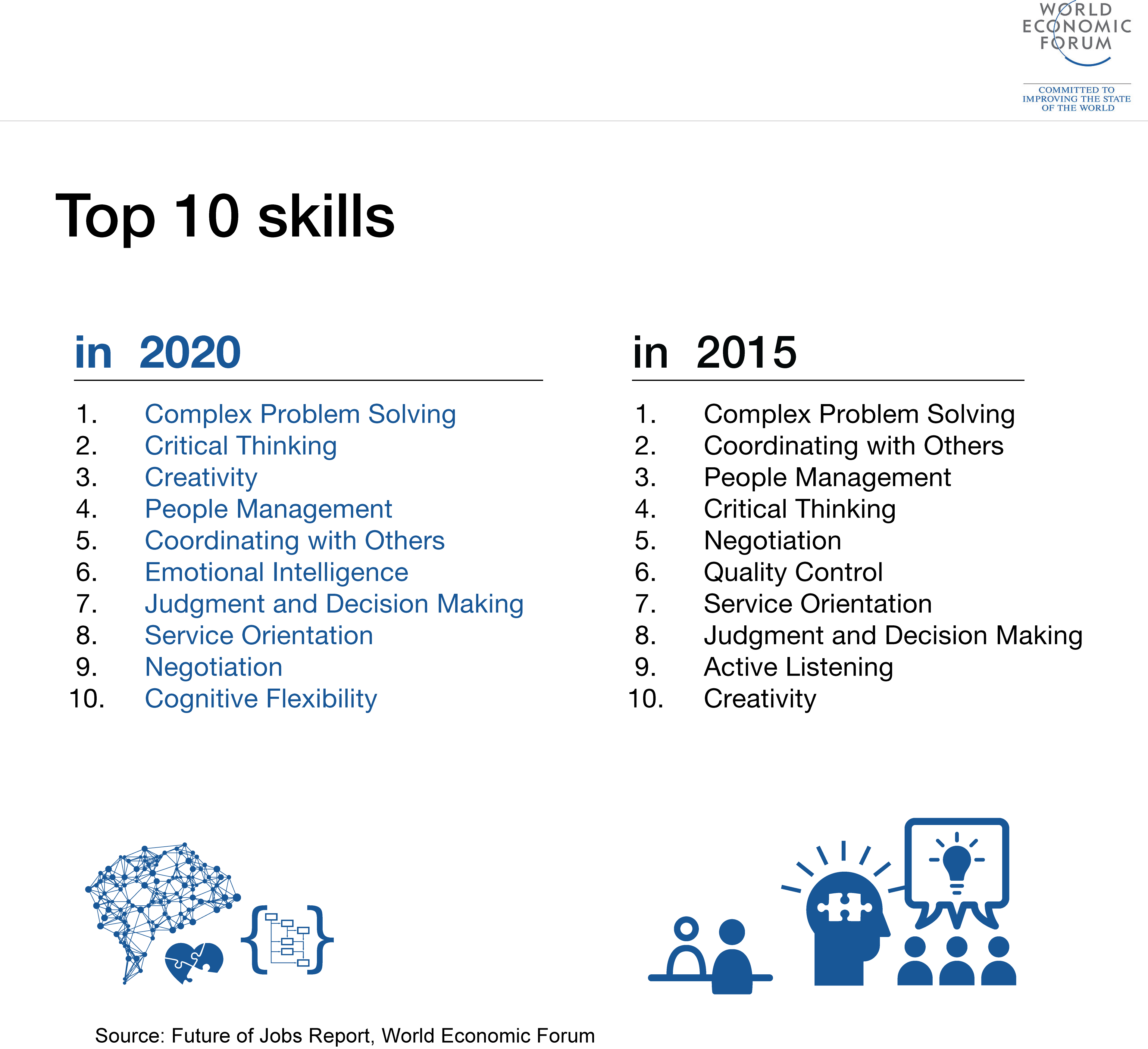
What does that sort of creativity entail? Is creativity alone enough?

Richard Florida wrote extensively on this in his book The Rise of the Creative Class. He defines the Creative Class as “people in science and engineering, architecture and design, education, arts, music and entertainment whose economic function is to create new ideas, new technology, and new creative content.”Business Insider

Writer Jeff Goins also defines “creatives”:

A creative is an artist. Not just a painter or musician or writer. She is someone who sees the world a little differently than others.

A creative is an individual. He is unique, someone who doesn’t quite fit into any box. Some think of creatives as iconoclasts; others see them as rebels. Both are quite apt.

A creative is a thought leader. He influences people not necessarily through personality but through his innate gifts and talents.

As fascinating as Florida’s writing is, I disagree with his premise that creatives are their own class of people, because I believe it’s within any of us to develop our capacity for creativity. Those of us who might be suspect of Florida’s promotion of the Creative Class would do well to read the critiques of his thinking (this and also this are excellent).

When people in our communities or workplaces class themselves as distinctively creative, they tend to operate in a tribal fashion. These tribes may even be quite diverse, but too often, I believe, they operate to satisfy their own needs and desires rather than that of the larger workplace or community. Thus in the workplace, decision-making is made by the few like-minded thinkers, that tribe of influential creatives. And communities? Where such a population of creative, expansive thinkers could enhance the appeal and value of a neighborhood, too often, , and communities can steer in the direction of gentrification, becoming less inclusive, making housing less accessible even for those who were there before.
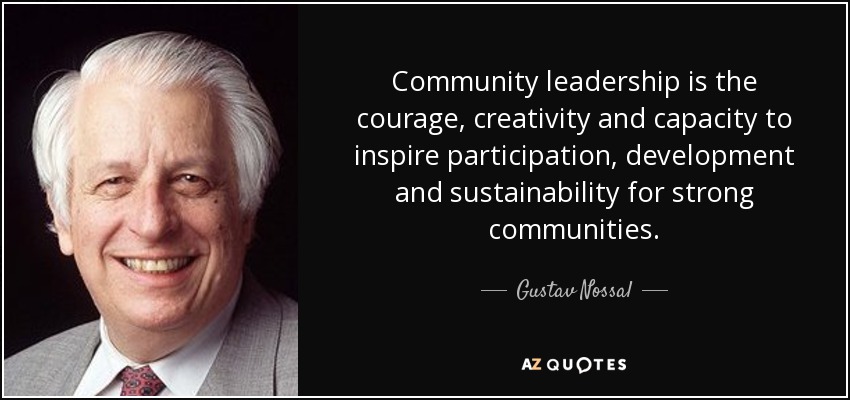
Blog - Creativity & Community Leadership - azquotesPhoto Credit: AZQuotes

My bias in how creatives work best is in community – not just a tribe of creatives, but in a community of folks with other giftings,  other strengths,and other history.

However, all that being said, I do love the increasing view that creatives add value to any enterprise. My husband, for many years, was a research chemist who developed new products and was awarded several patents for his company. Even today, outside the chemical industry, he continues to be creative in thinking through new pathways toward solving problems, getting to goal, and developing personnel.

Even Florida in his revised and updated book recommends a compact dealing with creatives. His first (of 6 principles) is: Invest in Developing the Full Human Potential and Creative Capabilities of Every Single Human Being. It’s somewhat grandiose but it’s a worthy goal. Having this principle in play would promote a workforce where employees are encouraged to always be thinking and engaged in both today’s work and what changes must be made for the future.

Along these same lines, I love Howard Gardner’s Five Minds for the Future:Blog - Creativity - slidesharePhoto Credit: Slideshare

As creatives are sought after more and more in our workplaces (om both private and public sectors), I hope we also encourage them to build strengths in other areas of their thinking (or mindfulness). For those colleagues of ours who might not consider themselves creative, we need to communicate across organizations as to their value as well. This would include our creatives to gain from what other bring to the table.

I would like to think that I’m a creative…in ways, maybe, born out of time. Early on in my career, I had the privilege of working as a team with other colleagues in developing and implementing cancer care in a small town in the Southeast. It was thrilling for me to be part of such an innovative and comprehensive system of care where we could actually plan and dream for the future.

Three of us, in particular, worked as creatives in community. I was a content specialist and idea person. Kay was the nurse manager who brought vision and authority to the task. Kathy was a clinician with steely resolve and the determination to take the ideas to completion. We were a force to be reckoned with…just saying.

We all have different giftings and strengths. My influence was helpful but Kay’s authority settled matters. My ideas were large and lofty (sometimes), and Kathy’s keenness for how to make those ideas work were what brought them into reality.

That’s how creatives work in community. I think of top skills for the future that “in community” piece would be essential for creatives who want to make a lasting difference…not just for their own purposes at work but for the benefit of the larger community.

A hugely successful example of this is the work culture and philosophy of Pixar & Disney Animation which I wrote about here.

Daan Roosegaarde in Siebelink’s article talks about creativity in community: There are two ways to turn an idea into reality. You can play bowling, or you can play ping pong. The old way, at least that is what I think, is bowling. You have that ball in your hand and it’s so big, it is so heavy, it shines so beautifully. Then you throw that bowling ball and pray it will hit target.

I no longer believe this is a good way to create and innovate. I believe in playing ping pong: you take a tiny little ball, not expensive, and there you go: poek poek poek poek … and you create something together. And THAT is nice, this is how I create, this is how I learn.”

Bring on these kinds of creatives any day!

Skills of the Future: The Best Expert Advice on Creativity

The Rise of the Creative Class — Revisited (Revised and Expanded) by Richard Florida

The Creative Compact – Richard Florida – Huffington Post

Creativity – the Unique Soft Skill – Slideshare

6 Ways to Make Your Leadership and Workplace Fun Again

Creativity, Inc. – Overcoming the Unseen Forces that Stand in the Way of True Inspiration by Ed Catmull


untitled