Tag Archives: workplace

Monday Morning Moment – Uncommon Courtesy in the Workplace

blog-courtesy-adding-value-john-maxwell-iluvquotesPhoto Credit: iluvquotes

My mom raised me to be courteous…thoughtful towards all…civil in every circumstance…extending grace. Recently, I have become aware that my behavior in the company of others has become less courteous overall. Not in an intentional way, hopefully, but in a careless neglectful way. This is disconcerting because it makes me wonder how long has this been a part of my demeanor and deportment. Not necessarily with those closest to me…but with “the others” in life – the stranger, the coworker, the customer.

blog-common-courtesy-quoteaddictsPhoto Credit: Quote Addicts

Yesterday, not at work, I interrupted the conversation of three people. Not overtly, maybe, but it was a quiet drawing away the attention of one of them. Without even thinking, I was rude.

We don’t really mean to be rude or discourteous probably…but in the neglect of practicing courtesy…we can become “those people”…rude, disingenuous, self-serving people.

What does that look like in the workplace?

John Kyle describes rudeness at work:

“It can range from subtle things like eye-rolling to outrageous things like berating a colleague in a meeting.

Here are some common examples:

  • Gossiping and talking behind someone’s back.
  • Giving colleagues the silent treatment.
  • Interrupting someone when they are speaking.
  • Leaving trash and food containers in public areas like the office kitchen.
  • The work around – excluding colleagues from projects or meetings even though they should, by role and responsibilities, be included.
  • Being late for meetings or in other ways not respecting someone else’s time.
  • Speaking to people in a condescending way.

All of these examples of rudeness are forms of disrespect. A pastor-friend of mine once said that giving someone the silent treatment is the relational equivalent of saying, ‘I don’t respect and care enough about you to talk to you.'”

John Kyle, Chief Operating Officer for The Institute of Faith, Work, and Economics, also delivers some simple advice on how we might overcome rudeness at work. One of his tips is to make a practice of greeting people…just saying hello (using their name if you know it). How simple is that?! Yet, too often, we walk quickly by, head down, lost in our brilliant and important thoughts, or hanging on every word of that one we’re accompanying. Is it so hard to smile and nod our head at those we are passing by? Those who work with us, have the same vision, hope for the same outcomes, wrestling with the same struggles at work or home.

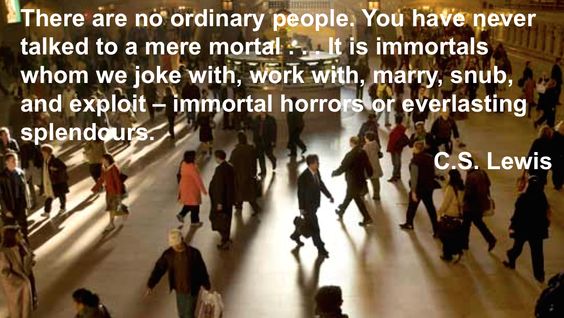
What Kyle reveals in his article on being courteous at work is that we expose our lack of regard for those around us by not taking the time for them…to say or do the small graces for each other that communicates that “there are no ordinary people”.
blog-courtesy-no-ordinary-people-c-s-lewis-pinterestPhoto Credit: Pinterest – WitandWisdomofCSLewis

His counsel echoes a book I recently read by John Maxwell – Intentional Living – Choosing a Life That Matters. Maxwell, like Kyle, talks about adding value to people…communicating that if we are not intentionally adding value to people then we show that we devalue them.

What do you think? It would be such a gift to have your comments on stories where you were treated with uncommon courtesy at work. Do you have examples of how such actions and attitudes are rewarded in your workplace? Do your bosses display this sort of worldview? Please share your stories…even the negative ones that might have given you pause about your own altered attitudes over the years.

As I described in the story earlier, this has certainly given me pause. I want to be a load-lifter at work. An encourager. A respecter of all persons…not just the ones who can help me get ahead with my career. It’s possible that I might have become a bit more curmudgeonly over time…and that’s not really the kind of coworker I want to be. My mom would be glad to see that I’m climbing out of this insufferable ditch – resolved anew to make a habit of uncommon courtesy.

Bringing Courtesy Back to the Workplace – Harvard Business Review – Ron Ashkenas

Why Is Common Courtesy Increasingly Uncommon at Work? Rudeness on the Rise – John Kyle

How do You Practice Common Courtesy at Work?

Workplace Etiquette – 4 Ways to Show Courtesy to Coworkers – Rachel Wagner

Uncommon Courtesy – Blog

Slideshare – Courtesy

How To Become a Curmudgeon – WikiHow – just for a chuckle!

Monday Morning Moment – Ultra-Productive People & What They Do Differently – 2 Infographics

blog-productivity-silicon-valley-reportPhoto Credit: Silicon Valley Report

We all have exactly the same amount of time. At least in a day. Some of us have less time than others in our lives, probably, which makes using that valuable time wisely all the more important. However, that’s the false perception of time. The idea that, because we’re young, we have all the time in the world…so chill. Enjoy. Right? Just because we’re young, how we use our time will set habits that build a foundation for our life and work. Young or old, learning how to be consummately productive is a very good plan. When we do the work of learning to be “ultra productive” part of what we gain out of that is…more time. Definitely worth the work.

I’ve written on productivity other times (in particular, about “Chris Bailey’s life of productivity”). Using time and brain power wisely is important to me because I am well aware of how easy it is to squander both. When I discovered the two infographics below, they affirmed some of the changes I’ve already made in my life and other habits worthy of establishing.

Kevin Kruse in a Forbes article gives us results of his survey of 200 ultra-productive people. He asked each their secret of productivity.  The infographic below lists out the 15 ideas gleaned from his study.blog-productive-people-do-things-differently-15-time-secretsPhoto Credit: Online Learning Tips

Anything surprise you? I was surprised at getting rid of to-do lists by scheduling everything. The “say no to everything” idea can be agonizing to execute and also infuriating when you’re on the receiving end.  Every idea in the list of 15 is doable and easy to develop as a habit. Worth a try, right?

Another infographic (from Dylan Roach and Jacquelyn Smith in Business Insider) highlights the morning habits of successful people. This also resonated with what I have discovered in the lives of influential and productive friends and colleagues. blog-productive-people-do-things-differently-16-things-at-start-of-each-day-update-or-diePhoto Credit: Business Insider

I appreciate the ideas of this infographic…especially the ones on helping others and being grateful. Soft habits maybe? Not really. When the ideas above get hard-wired in us through habit formation and intentionality, our productivity ramps up and our definition of success may widen to a more shared experience in our life and work.

Monday Morning Moment – Praying For Your Spouse [or Fill-in-the-Blank] in the Workplace

Blog - Praying for Your Spouse - the lifePhoto Credit: The Life

Sometimes really crucial opportunities pass us by…responsibilities, too, fall off our plates. We get busy…distracted. We choose the urgent without thinking. The urgent over the ultimately important.

This time, one year ago, I saw the film War Room. The plot centered on an older praying woman who mentored a younger woman, whose marriage was falling apart. She mentored, not so much about marriage, but about praying for her marriage. It had a huge impact on my heart…and my prayerlife.BLog - War Room to publish 2Photo Credit: War Room Movie

I prayed my heart out for my husband…and our children…some extended family…and close friends. I still pray for them…but in recent months, the urgency had faded. Other lesser things piled in and I allowed myself to become distracted and dull.

Until this past week…. This past week, I started a Bible study with some other friends who meet together regularly. The book study is The Armor of God by Priscilla Shirer. She is also the person, in the film War Room, playing the young woman in the troubled marriage. The study focuses on the Bible passage, Ephesians 6:10-19, and speaks about our role in spiritual warfare.

I had forgotten how important it is not just to pray generally and regularly for those we love, but to pray specifically and persistently. There is a big difference.

For several days, I have been praying for a difficult situation in my husband’s work life. It has been ongoing for some time, and he finally arrived to a point of taking action.

Yipes…I wasn’t at all sure I had prayed well enough for him. In fact, I was sure I hadn’t. There is no going back, but today, fresh in studying how best to pray for those we love, I took God at his word and have prayed differently. Trusting God to intervene as I stood, fortified, in his presence…as the Apostle Paul instructed in Ephesians 6.Blog - Praying for your spouse - true agapePhoto Credit: True Agape

The details of what happened at work are not necessary for today’s posting, but praying specifically, persistently, and according to God’s Word has made for a very encouraging turn in the situation. Honestly, I don’t think it would have played out as it has, if both my husband and I weren’t really seeking God’s solution for this.

Will it always work out to be a glorious outcome when we pray hard and in faith? I can’t say…not always praying hard nor in faith. However, when we do pray for situations at work instead of just ranting or processing over the dinner table, outcomes will decidedly be better.

Our work is such a huge chunk of our lives. To leave it to chance or charm or even competence…seems a risky business. What a privilege to pray staunchly and strategically for those we love in the workplace – our spouses, our closest friends, our children… Praying for our bosses and colleagues, as well, could improve both their lives and ours as well…not to mention the enormous ripple effect that can spread as God works in a situation.

This afternoon our joy is full. Even though my husband’s workplace may “seem” unchanged…it is wholly different because he has seen God work in a hard place. With complete assurance. I rejoice with him.

Work is a 3-song commute from home. As I was traveling in this morning, thinking about what was ahead of him and praying for the situation en route, these songs were the ones that came back-to-back on the radio as I drove in:

Pretty amazing, huh? What seems extraordinary can be our ordinary when we pray to a Father who wants to show himself mighty on our behalf. What better thing can I do for those I love than to pray hard…pray believing for them?

Monday Morning Moment – Relational Wisdom at Work and at Home

Blog - Monday Morning email

[Adapted from the Archives]

Monday morning emails can be treacherous… This morning when I woke,  my husband told me he’d just heard from a valued colleague that he had secured another job. Dave was expecting this because of previous communications they’ve had with each other. Through an organizational re-structuring, there are many whose jobs are changing. This email was good news because this person will be a tremendous addition to any team – good news and sad news. We will miss this man on our team but we celebrate a great job match.

Then another email came in. It was from the person who will be his new supervisor. It was full of respect and regard – a courtesy email that is not necessarily company culture these days but an email that shows understanding and empathy. When change comes, even good change, there is still that adjustment, that grieving of the good that was. Those two emails speak volume about emotional intelligence or relational wisdom…and that’s something we always need in the workplace…and at home.

The holidays and summer vacations have a particular call for wisdom to soften difficult expectations, disarm family conflicts, and personalize interactions to fit the needs of those nearest to us.

Blog - Monday Morning Moment - MarriagePhoto Credit: rw360.org

One very simple way we can tune into seasonal celebrations is to deal with our own stuff. Keeping our minds on the goodness of the these occasions helps.

Related to both our work and home relationships, Ken Sande, founder of Relational Wisdom 360, has given us a great gift. He has written 33 Ways to Enjoy Highly Relational Holidays. A fast-read blog a day on relational wisdom, written for Advent but which also fits nicely into a block of summer days.

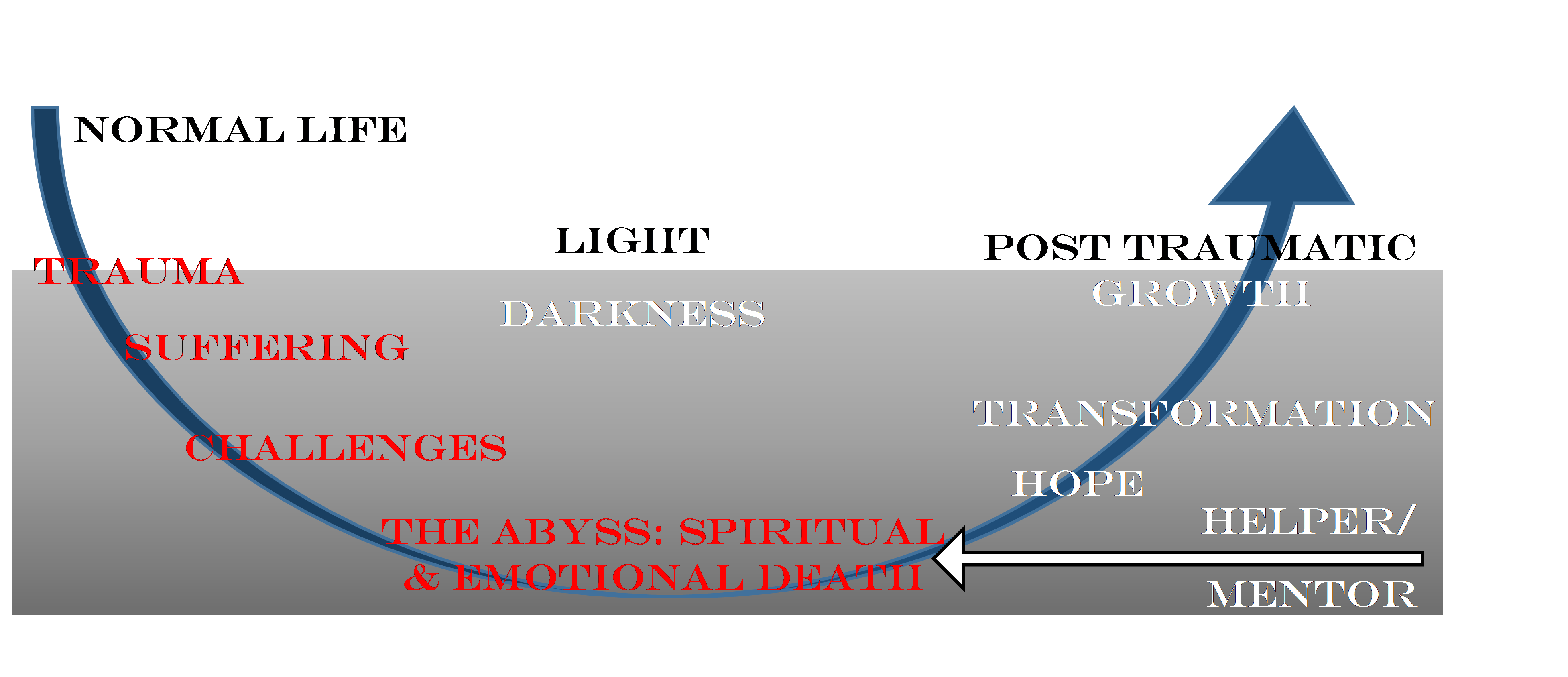
I attended Dr. Sande’s Peacemaker course years ago during a challenging work season, and what I learned then continues to be a tremendous help to me today. If your work or family situation is somewhat intimidating, don’t despair. There are those in our lives (Ken Sande is one) who will come alongside and help/mentor us, if we’re willing to take care of our own hearts and minds.Monday Morning Moment - Post traumatic growthPhoto Credit: coldspringcenter.org

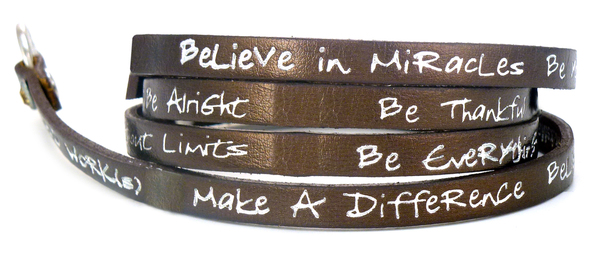
As summer hums along and return to school looms ahead, I hope you are savoring happily memorable times together with family. As far as work goes, just like with the emails above, we can do our part to make our workplace a kind and honoring experience – our part (not someone else’s) in making it the way it could be…the way it should be…Blog - Monday Morning Good Work BraceletPhoto Credit: GoodWorksBracelet.com

What helps you thrive in stressful situations at work? What has made a difference in bringing peace and joy to your summer vacations and holiday celebrations? Please comment and share with those searching for that wisdom.

5 Friday Faves – Millennials in the Workplace (ebook), Garden in Between, Productivity Tips (Infographic), Chicken Fiesta, and Old Family Film Favorites

Blog - Friday Faves

Happy Friday – Friday the 13th…and the sun finally came out. This weekend looks to be great fun – with the birthday of our youngest, the Lebanese Food Festival, a friend’s baptism in the James River, and whatever else comes along. Hope your weekend looms as quiet or as hopping as you need after this week’s work. Here are my favorites for this Friday. Any you want to share?

1) Millennials in the Workplace (ebook) – By 2025, millennials (those born between 1981-2000) are predicted to make up 75% of the workforce. This generation of young professionals has arrived and rather than being over-analyzed and criticized, we are short-sighted not to equip them to take over one day. We all know that first week of work experience – grueling mind-numbing orientation. Why do we keep doing it “like we always have” and not change it up to meet the needs of this generation? Bridge is helping companies begin to do that brilliantly: Bridge’s features are designed to empower simple, intuitive learning that’s delivered to your mobile, active employees, anywhere, anytime on any device. Bridge provides you with real data and real insights about your employees’ learning, which can lead to real progress. Start with their short and extremely insightful free ebook on millennials in the workplace. Your thinking on training and development will be changed and millennials will thank you.Business meeting at a modern company.Photo Credit: GetBridge

2) The Garden in Between – In Richmond, we’re in that period of the waning early Spring garden. I will miss the Irises especially. As flowers curl up and petals fall, the wise gardener (my husband) has prepared, seasons ago, for new blooms to appear in glorious freshness. Walking around the garden early this morning brought sweet discoveries – the first Gerber Daisy (a gift from a friend last year), the last bloom of our Irises, the first blooms on the Lamb’s Ear, green Hydrangea clusters, and, finally, my husband’s “happy flowers” coming back – hardy little Begonias blooming again this year.IMG_5928IMG_5929IMG_5931IMG_5932IMG_5933

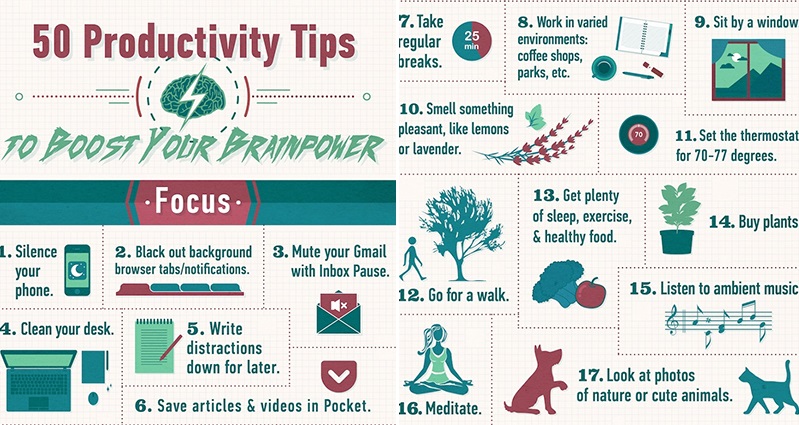
3) Productivity Tips (Infographic) – Being truly productive is hugely important to me – not just staying busy or having lots of meetings, but being genuinely productive. I’ve written about productivity before here – focusing on Chris Bailey’s A Life of Productivity. I’m a visual learning so infographs are like candy. Wrike developed a helpful one entitled 50 Productivity Tips to Boost Your Brainpower. Really excellent. Any of these especially effective in your pursuit of productivity? [There’s a link at the bottom of the infographic that supposedly spells out each tip in detail, but I couldn’t make it work. So here’s a quick read by Tim Ferriss on his productivity tricks.]

Blog - Productivity infographic - awesomeinventionsPhoto Credit: Awesome Inventions

4) Chicken Fiesta – My husband has been meeting with friends and colleagues at Chicken Fiesta for quite some time. For me, it took awhile because I’m not usually into Mexican food – hard on my tummy. However, this cool little restaurant has made me a recent convert. Great grilled meats and the sides are fresh and not overly seasoned. They have extra sauces you can add to take the flavors of the foods different directions. Straight-up satisfying lunch place for me. What’s a favorite of yours where you are? (Comment below).Blog - Chicken FiestaPhoto Credit: RVA News

2016 May - Chicken Fiesta (1)2016 May - Chicken Fiesta (2)

5) Old Family Film Favorites – We all have favorite films from our children’s childhoods. I’m actually not really sure how favorite the two below are to them…but they were favorites of mine. Fly Away Home, (1996, Columbia Pictures) has packaged so much story in a small film – family drama (not a Disney film, but the mother still dies), spectacular scenery, majestic Canadian geese (from gosling to migration), and a perfect song. Below is a sweet sample of the movie with Mary Chapin Carpenter’s 10,000 Miles as soundtrack.

Then there’s my all-time-snuggle-up-with-the-kids favorite: Disney’s The Kid. Of course, they were big kids when it was released (2000), so it made snuggle-time all the more precious and rare. Disney’s The Kid is a magical story of a man clearly successful but missing the “most important’s” of life. Then just before his 40th birthday, an 8y/o version of himself (Rusty) and a much older Russ all somehow share life in a way that brings healing and resolution of some deep childhood wounds. [It’s a Disney film – sorry, but the mother dies.] Bruce Willis plays Russ, and Spencer Breslin is Rusty. Their dialogues are sometimes hilarious/sometimes touching – always endearing. The clip below isn’t great quality but it’s all I could find to show the scene late in the movie when the elder Russ finally reveals himself to the younger Russ/Rusty. The story all comes together joyfully. Buy this or rent it – for a weekend snuggle.

2016 May - BLog, Disney's The Kid (5)2016 May - BLog, Disney's The Kid (6)2016 May - BLog, Disney's The Kid (3)2016 May - BLog, Disney's The Kid (4)

Monday Morning Moment – Stewardship – Stewarding My Part Well in Today’s Workplace

Blog - Stewardship - work.chronPhoto Credit: Work.Chron

All of life is stewardship. Doesn’t it make sense? Our jobs, our relationships, our personalities, and our future have multiple layers. When we think of stewardship, rather than ownership, or entitlement, or giftings, or personal rights, we take on a much broader, healthier view or life. Writing about it previously here, I wanted to focus more, this time, on our workplace.

In 1993, Peter Block wrote a revolutionary book entitled Stewardship: Choosing Service Over Self-Interest. He updated and expanded it twenty years later (in 2013). Block defines stewardship as “the willingness to be accountable for the well-being of the larger organization by operating in service, rather than in control, of those around us. Stated simply, it is accountability without control or compliance”.

Words mean things.  When we use the word “steward”, we loosen our grip on ownership – of our job, title, product, and work relationships. However, we do not loosen our commitment on personal responsibility. This is the gem of stewardship – a gem in the workplace that can be mined by each one of us.

Years ago, in nursing school, we used Virginia Henderson’s definition of nursing which focused more on facilitating the patient’s return to caring for him/herself than on the “giving care” component we often think of with nurses. Nursing as stewardship. When our children came along, we as parents would need to decide whether to home school or put our children into a private or public school.  Another parent gave us wise counsel: Whatever your decision, you are responsible for your children’s education, some of which you may contract out to other teachers or institutions. We, as parents, were stewards of our children’s education.

In the workplace, we have heard the word steward used in the service industry: union shop stewards, ship stewards, stewards on airlines, stewards of estates. However, the stewardship that Block describes can proliferate at all levels, especially if our leaders set this value and mindset. What if an organization determined to have an inclusive model of accountability where all employees operated by serving, rather than controlling, those in their influence (colleagues, customers, vendors)?  What if we chose to apply ourselves to the work before us, with deep personal care and commitment, rather than under a boss’s control or need for our compliance?

Stewardship as a concept and value is both time-tested and trendy. Check out REI‘s commitment to customers in delivering quality outdoor gear…and also to its employees. Stewardship.Blog - Stewardship - slideplayerPhoto Credit: Slideplayer

My first encounter with this word, stewardship, was as a child hearing the parable of a master preparing to leave on a journey. He entrusted the three servants with some measure of his wealth (talents). Their master had given each varying amounts of money, according to each servant’s ability. The master would be away for some period of time and meant for his servants to “steward” the money. Two servants invested his money in such a way that each doubled the amount entrusted them. The third servant, fearing the master (and possibly lacking confidence in his own ability), hid the money entrusted to him. He only had what he’d received in the beginning to give back to the master. The first two servants were rewarded for their faithfulness, care, and initiative, but the last cautious, fearful servant suffered the consequences of his inaction.

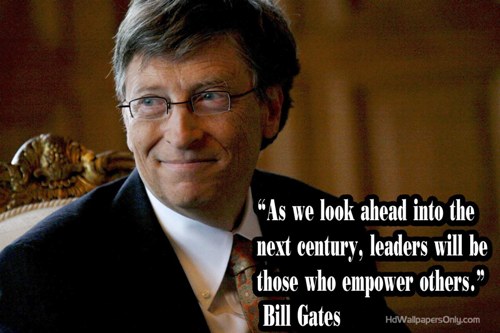
There is much to learn about stewardship from this old story. Stewardship is taking personal responsibility and interest in quality of service or product and depth of relationship. Like in the story, it could mean taking risks ourselves or with each other (especially leaders entrusting other team members with decision-making and design). It means empowering others in discussions and details that we might prefer keeping for ourselves (except that we are stewarding toward a larger outcome). It means making investments in others and in the over-all organization. Stewardship is the embodiment of employee engagement…all-in, whatever it takes, for that greater good. Lastly, the story spoke to rewards for those diligently stewarding what was placed in their care, and the consequences of those who refuse to be engaged…which leads to a place nobody really wants to go.quotes of bill gatesPhoto Credit: Quotesgram

Leaders and managers who are willing to give up control and who genuinely care about their employees and customers become true stewards themselves. They set the standard for stewarding across a company. Whether leaders are on board or not, any of us can still have ownership of a new-old way of thinking and practice. We can steward well what is our responsibility or under our influence. Again, this type of “ownership” is not about owning the job, the product, or the relationship. Stewardship is the owning of our personal responsibility – our piece of what could be excellent, and our piece of what’s not going well, and applying our experience, knowledge, giftings, and heart to benefit all touched by our service. Our stewardship.

BLog - Stewardship - 2 - whatcomlandtrustPhoto Credit: Whatcomlandtrust

What are your stories? Do you see the impact of your stewardship? Of the stewardship of others? Could you see how this might color the culture at your workplace? Is your company one where top-down, bottom-up, people care about each other and what they’re doing? It shows…if you are, or if you’re not. Stewardship.

Blog - Stewardship - John Wesley - QuotesgramPhoto Credit: Quotesgram

Monday Morning Moment – All of Life Is Stewardship

Stewardship: Choosing Service Over Self-Interest (2nd Ed.) – Peter Block

Five Lessons for Our Lives From the Parable of the Talents – Hugh Whelchel

Monday Morning Success – How Biblical Stewardship Transforms Your Work – Hugh Whelchel

Blog - Stewardship - Winston Churchill quote - ololmke

Photo Credit: OLOLmke

5 Friday Faves – a Mama’s Lament, Primary Physicians, Life in a Refugee Camp, a Deeper Happiness, and Community – and a Bonus

Blog - Friday Faves

Hello, Friday. We’ve had rain for days here, but it’s forecasted to be gone for the weekend. What are you up to? I’ve culled down my many happy finds of this week to these. Please share what enlarged your life this week (in comments)…and Happy Mother’s Day!

1) A Mama’s Lament“Slow Down”“I don’t know of a more uttered or whispered phrase from a mother of any age, about her child of any age, than ‘It’s going by too fast.’ I feel like I spend my life trying to slow time. Trying to celebrate the growth and the milestones of my children, and then secretly day dreaming about building a time machine in my garage, so I can return to rocking my babies at midnight. If you’ve ever looked at your child running across a field, or striding across a graduation stage, or walking down the middle aisle of a church clutching a bouquet, you’ll know why this song is special to me. Please enjoy the video below, remembering the moments we wish we could slow down, and sharing them with those we love most.”Nichole Nordeman

2) Primary Physicians – Without a lot of detail, I’ve been undergoing a series of medical tests (with their various new doctors attached) for a finding that is either nothing…or not. As frustrating as all this can be (with scheduling and preps and the waiting…the waiting!), I am grateful for specialists who continue to sharpen the focus of whatever this is that’s going on. Mostly, I am grateful for my primary physician who knows me and my history best. He occasionally checks in himself, as different reports come to him during this journey. What a blessing to know he’s putting the pieces of this puzzle together as each specialist adds his bit. Thankful.Doctor Talking with PatientPhoto Credit: UPMC

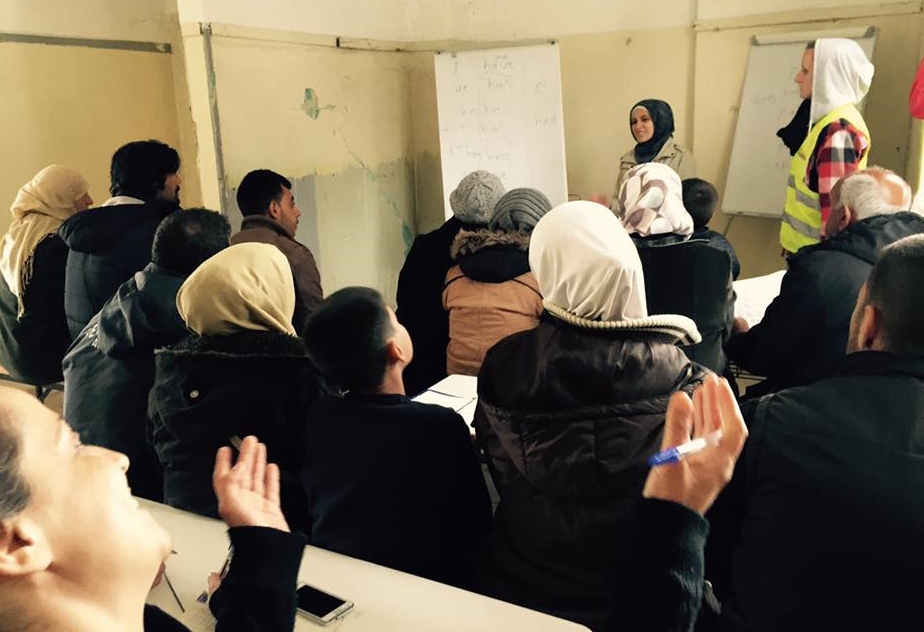
3) Life in a Refugee Camp– Our friend, Beth, is spending a couple of months in Greece, working in a Syrian refugee camp. She has been a great help there, I’m sure, and has given us a window into the lives of these displaced peoples. It’s hard to imagine living in a tent city, and yet, how wonderful that there is shelter for them in this place in-between. Homeless, and yet, for now, they have a place at least…where the kids play, the parents take English classes, and all the rest of their new normal life unfolds – cooking, cleaning, and preparing for an unknown but hopeful future.13001245_10156875941260061_7654249932579596614_n12985495_10156885038265061_4952602545456677851_n13055578_10156925512190061_3805858236358775882_n13082658_10156925508410061_1380861859098516687_n12993627_10156889362110061_8126408917090936937_nPhoto Credit: Facebook

4) A Deeper Happiness – You know, if you read this blog, that I love Kara Tippetts. She is with the Lord now. Still, her life and wisdom continue to impact my own. Her husband, Jason, wrote about a lunchtime together as she was nearing the day of leaving.

“The other day Mickey brought a grilled cheese to Kara for lunch. I didn’t have anything, so I just watched her eat. She offered me half of her sandwich. I said, Don’t you want it?

She replied, I do, but I want to share more.Blog - Mundane faithfulness - Grilled Cheese SandwichPhoto Credit: Woman’s World

First of all, yes, I did take half of a sandwich from my dying wife. Second, it occurred to me how Kara’s simple comment stuck with me: I want to share more.

What if I found more satisfaction in sharing than taking, more in giving than consuming?

Jesus says in Matthew 20:28, Even the Son of Man came not to be served but to serve…

How beautiful that even as she fades, Kara’s selflessness reflects God’s character and ministers to our hearts.

He quotes Tim Keller: “Seek to serve one another rather than to be happy, and you will find a new and deeper happiness.”Blog - Need You Now Kara Tippetts & JasonPhoto Credit: Mundane Faithfulness

5) Community – Oh community! Sometimes you find it in the workplace or your neighborhood. Sometimes through your church (or other group of like-minded folks). Sometimes community comes through family and friends. We have experienced deep community in many forms over the course of life. I tried to find a definition for community but nothing really seemed adequate. Scott Peck has written about it with the words that resonate (I don’t agree with the whole piece but the defining words ring true) – vulnerable, honest, generous, inclusive, loving, safe. Community is where you know people genuinely care about you, warts and all…where when you’re not present, you’re missed…where help, laughter, understanding, and tears flow freely. Here’s to community – imperfect and human – more together than the individual parts. Hope you have one…otherwise, you are welcome.IMG_5754Blog - Community - English Conversation Class005IMG_4904

Bonus: A New Blog Find on the Workplace – I love to read about workplace culture and who leadership can make a difference. You’ll see that often in my Monday Morning Moment blogs. This week, I discovered an article by Ron Carucci interviewing Mark C. Crowley (wrote about it here). It intrigued me enough to seek out Ron’s website. He is part of the consulting team of Navalent, which focuses on business and leadership transformation. The blog is a huge resource for any of us in the workplace. Great stuff!

Blog - Blog on Business & Leadership - Navalent - Ron CarucciPhoto Credit: Navalent

Monday Morning Moment – Contempt is Cancer in the Workplace…and Any Other Place

Blog - Contempt - ArmstrongeconomicsPhoto Credit: Armstrong Economics

In a culture that clamors for political correction, how is it that contempt can be so freely expressed? Even rewarded, at times? This is an enigma for me. Contempt at home or in the workplace divides people, often against one another. Like cancer, it can spread if left unchecked…changing people and impacting product.

Having a certain measure of confidence is positive for all of us on a team. It’s freeing to be in relationships with people who have a strong sense of what they bring to the table as well as what others bring. Confidence and humility actually partner well together. When we have an honest understanding of our strengths, we also extend humility as we defer to the strengths of our colleagues.

The problem comes for all of us when confidence shifts into arrogance. Worse yet, when arrogance darkens into contempt. Arrogance is an attitude of thinking so highly of oneself that we tend to put down the thinking and efforts of others. Contempt is similar except the emotions are stronger and more mean-spirited.

Blog - Contempt 3 - slidesharePhoto Credit: SlideShare

What makes contempt so cancerous in our relationships is that it tends to spread, both internally and externally. When we allow ourselves the luxury of contempt, we grow in our justification of it. It may have started with an unappreciative boss or demanding client, but contempt, unchecked, will inject its poison indiscriminately.  We become comfortable with our disdainful opinions of others…at work, in our families, and pretty much toward anyone who crosses or annoys us.Blog - Contempt 2 - liveforchristresourcesPhoto Credit: LiveforChristResources

Chris Johnson, CEO, Simplifilm Inc. of Portland, Oregon, wrote a piece confronting contempt as a cancer in the workplace. He offers 5 steps to preventing contempt from shattering our work and our work relationships:

1. Don’t Vindicate Yourself. A customer had an experience they didn’t like. You don’t need to prove if you are right or wrong. That’s not relevant. What’s important is making a judgement: is this worth fixing?

2. Look At The Opportunity. Some people are surly, disrespectful, ungrateful and wrong. Some of them have big jobs. Some people like that have power. Learning to work with these people — without getting drawn in — is a skill that you should have.

3. Always Err on the side of empathy. What are the consequences of being nicer to someone than they deserved? What are the consequences of being meaner? Will too nice of a response to a human ever ruin a career?

4. Cultivate Improvement Bias. When something goes wrong at Simplifilm, there are two components: what do we do with our transaction, and what do we do with our system. For the transaction, we try and fix it with empathy. We believe that we caused it. Because if we caused it we can improve our system.

5. Rethink your filter. Most people say “block out everyone, make customers prove themselves to you.” Being available can be hard. Many filters are vanity in disguise. If you knew the people that answered their personal emails…Chris Johnson

Contempt like cancer can be smoldering without our awareness. I am generally a positive and empathetic person, but, if I’m honest with myself, there are those in the workplace who don’t experience much compassion from me. It’s an uncomfortable confession to have to make.

As we practice mindfulness in our relationships at work, we hopefully will remember to respond instead of react. We can rein in contempt by refusing to think ill of others, by staying engaged, and by acknowledging none of us get it right every time (exercising humility).

On the old TV sitcom, Everybody Loves Raymond, Frank, Ray’s father would often make observations that sizzled with sarcasm. One comment remains a part of our family’s lexicon: “People are idiots!” It’s so easy for any of us to look at actions or decisions made by others and shake our heads…until we remember that we all have it in us to do the same. Contempt can be diagnosed…and treated…

…with empathy, compassion, and humility. Not necessarily the coolest or trendiest work (or relationship) processes in our culture…but… What a difference they can make in the tone of our meetings, the depth of our relationships, and the measure of our own character.

So let’s get after it!

How Contempt Breeds Business Cancer (& 5 Ways to Kill It) by Chris Johnson

Contempt or Compassion by Brian Fletcher

Detecting Deception by David Berglund – SlideShare [Slide 76ff]

Confidence vs. Arrogance – and Knowing the Difference by Michele Cushatt

10 Ways to Tell if You’re Confident or Arrogant by Carmine Gallo

How Contempt Destroys Relationships by Susan Heitler

Monday Morning Moment – Them and Us, How Can That Be? Could Them and Us Become a We?

Blog - Work Culture - delta7Photo Credit: Delta 7

Recently, I was in an odd conversation with a friend from work. The more we talked, the more we sounded like a Dr. Seuss book. It went something like this:

“I don’t know how to be us with them. To be with them is to just be them. We must lose us; us no more will be. There’s no us in them; it’s so strange to me. How can they be them, with no us, you see? To give up us is too hard for me. So I can’t see a way to get to we.”

[Seriously, the conversation went like that…but better.]

Battling the us-them assignation is an ongoing workplace discipline. Even in the happiest, coolest companies, there is still an intentionality to keep work life positive for every employee. That inclusiveness is a hallmark for high morale and low walls (read: no silos).

BLog - Us vs Them - Work Culture - Silos - prolearn academy

Photo Credit: Prolearn-Academy

In a work culture where silos still exist, an us/them mentality can grow as each team or department draws in on itself and ignores or suspects the actions/values of others. It’s not a healthy situation for any of us…whether it’s the executive team insulated from others or the [fill in the blank] team hunkered down in its own mode of trying to survive. The first can be as unaware as the subject of the story “The Emperor’s New Clothes“, the second, well, is just miserable, and growing more so by the pay period.

So much has been written on this problem in the workplace – about that culture where us/them thinking and operations color productivity and morale. I have included several links below describing various recommendations and protocols to restore health to such organizations.

Blog - Work Culture 2Photo Credit: My Turnstone

I’ve always been that person who says, “Why can’t we just all get along?” In reality, we don’t have that situation always, but we can grease the tracks in that direction. Here are my own workplace rules regarding moving us and them to we:

  1. Make a practice of assuming the best of your bosses and colleagues. “Refuse to think ill of others” is my goal…and my accuracy in hitting that goal comes with practice and determination…and grace.
  2. Lean in to those with whom you struggle the most – the “thems” in your worklife. Especially the most powerful ones. Study them. Learn their language. Know them as well as you can. NOT for self-serving reasons, but for the benefit of the work itself. Any motive that only serves your personal situation will only make matters worse… ‘Nuff said.
  3. Refuse to get caught up in us/them complaining. Don’t make a big deal about it, but do your best to turn the conversation toward a positive end, change the subject altogether, or bow out if all else fails. Those negative conversations just bring you and your colleagues down and don’t accomplish anything. A short-lived “misery loves company” satisfaction isn’t worth the fall-out of such conversations.
  4. Bring down the silos, one brick at a time, if necessary. Maybe you aren’t experiencing any us/them anguish, but you know it exists. What can you do, individually and as a work team, to move to “we”? We have lots of work models out there for this. In fact, silos in the workplace are “so 80’s” (whatever that means…I hear it a lot, so I’m using it here). Use some of that meeting time, or talks over coffee, to be creative in how you can work better across teams…how you can learn more from each other…how you can defuse territoriality? If the “them” is management, you initiate dialog on setting work culture values that maximizes product excellence and employee engagement.
  5. Put processes in place – through your culture – to keep silos down. I would love to hear what your situation is and how you are making positive steps to grow/keep a healthy culture. Please comment below.

Sure…there are times we need to process a difficult situation at work with a trusted friend. Yes, us/them scenarios are painful…and wrong, honestly…especially in the workplace where we are meant to have shared goals, working toward the same outcomes. Maybe, the us/them relationships in a company are too distracting and we can’t see any solution (back to the Dr. Seuss-like conversation above). In that case, it’s possible we look outside our company for another situation. However, you take with you a piece of the us/them dilemma. You take you along to the next job. Better to develop muscle memory on how to “be we”, whenever possible, right where we are.

[Sidebar: I’ve written a lot about work culture – too many to mention – but you can search work culture under Blog – Deb Mills and learn as I have about what is possible if we stay engaged in our workplace.]

Blog - Work Place Culture - open.bufferPhoto Credit: Buffer

Overcoming Us vs. Them Challenges

Breaking the “Us and Them” Culture

How to Avoid Us vs. Them – Huffington Post

The 10 Buffer Values and How We Act on Them Every Day

The 4 Elements That Make Great Company Culture

How to Save a Broken Work Culture

From Us and Them to We Participative Organizational Culture

Them and us – How to use Trust as a Competitive Advantage

How CEOs Can End an Us Them Mentality

Us vs. Them – a Simple Recipe to Prevent Strong Society from Forming

Monday Morning Moment – Change at Work – Moving Forward and Letting Go of the Past

IMG_3135

For two years, I had the extraordinary experience of writing for a work team put together by the president of a company to develop something really new. It was a phenomenal and humbling experience for me to observe a small and capable team taking a vision and fleshing it out for the broadest application possible.

The conference room had whiteboard walls where big ideas and wild possibilities were sketched out. Then the conversations expanded, adaptations were made, others (both inside the company and out) added ideas, and a process was born that could have tremendous impact on the company’s overall mission.IMG_3140

However…things can change. The budget tightens; the team breaks up; the company gets sold. Or maybe it just wasn’t the right time. Sometimes, a work has to be put on hold or transferred to the hands of another team or… fill in the blank.

One by one, the members of the team take other jobs, retire, or move into other assignments within the company. It happens.

The white boards go white again. The cubicles are cleaned out. The name cards are removed. The phones ring elsewhere. The mail is diverted to other places. IMG_3122IMG_3120IMG_3121IMG_3138

Is it as if this great creative thing never happened? Absolutely not!

One day, it will be the next right time, with the next adequate resources, and with the next trusted team. Never having to start at ground zero again…because of this team…and this time…and the work brilliantly accomplished together.

Moving Forward (2)

Somebody will always be the last person out, but each takes their memories with them…their experience…the wisdom gained…the relationships. Those are not left behind or placed in boxes. Those intangibles are the most real gains of our work lives.IMG_3128

In the long-running TV comedy series, The Office, Dwight Schrute watered the plant. No one noticed until he left the job, and the plant began to die. In the finale of the show’s last season, his office mates replanted it outside.IMG_3117 What a great metaphor in thinking about the varying gifts each of us brings to our jobs. At times, in our workday world, we don’t realize all that our colleagues bring to the team or company…until they are gone (re-assigned or in a job/situation elsewhere). It’s a good thing to remember and celebrate…and then…there comes a time when moving forward is the order of the day.

[Sidebar: To that precious one who did keep the plants alive for this team, all the others are still living and relatively healthy. Sorry about this one. Thanks for all the beauty you brought to this office.]

While going through this process of chronic transition, a friend has recommended a great book by William Bridges: Transitions: Making Sense of Life’s Changes. Bridges talks the reader through the three different phases of transition and gives practical strategies for dealing with these sometimes confusing and painful times.

“We resist transition not because we can’t accept the change, but because we can’t accept letting go of that piece of ourselves that we have to give up when and because the situation has changed.”   – William Bridges

I have a little desk toy that when you press it, a nasal electronic voice sounds “Moving Forward!” It is exactly what we needed to do, and we’re doing it.Moving Forward

You can only look back for so long. At some point you have to move forward. Moving forward is a good thing… Besides getting on with our life and work, it gives impetus to let go of whatever would hold us back whether good or bad. We learn from both and take both with us moving forward…hopefully in such a way that we celebrate what was good and we take heart in and wisdom from whatever the hard experience we leave behind. We move on.

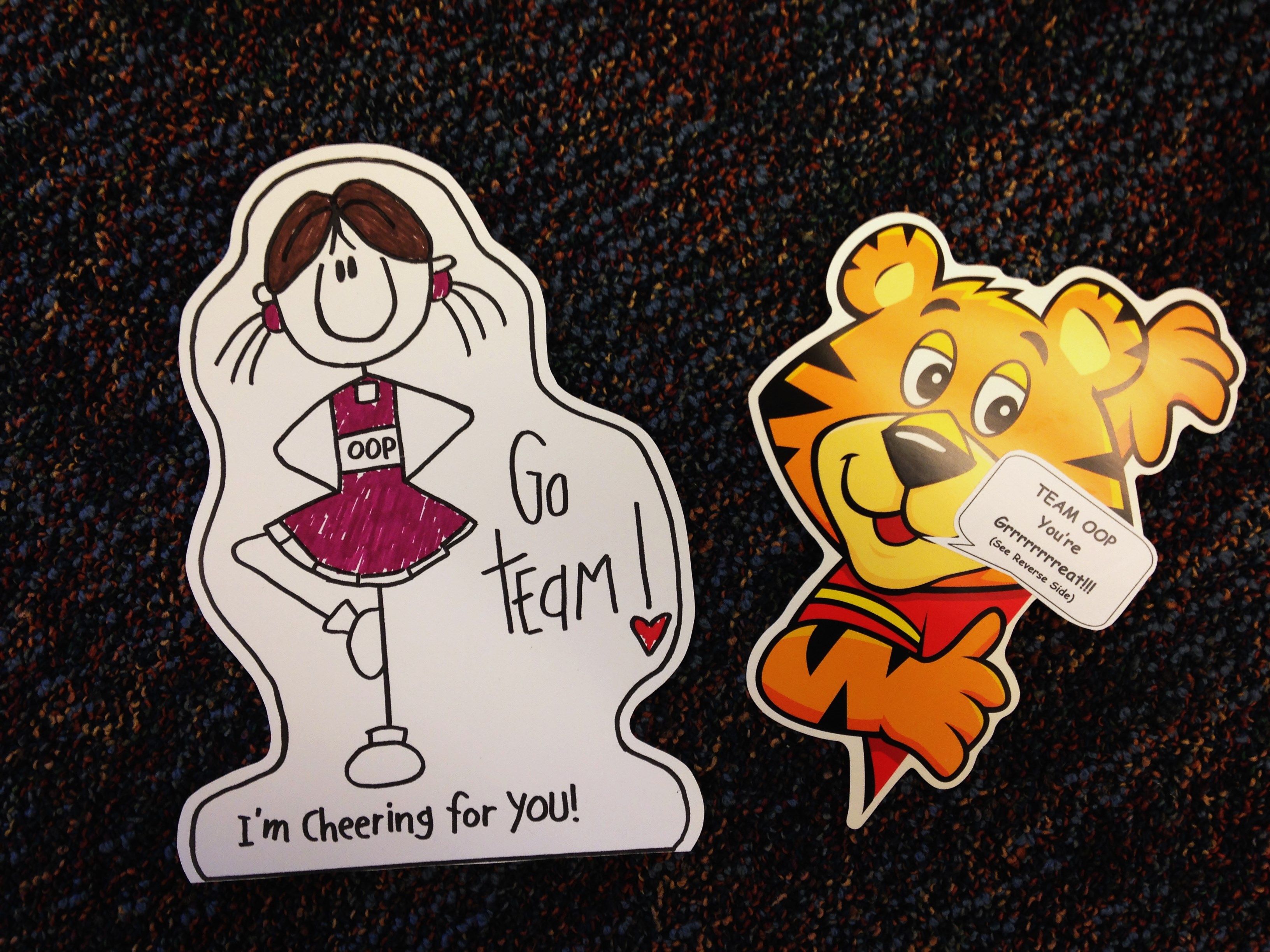
In this last day of packing up and moving out, two little team-building signs from a by-gone era surfaced in the bottom of a drawer. The irony wasn’t lost. IMG_3137For you who were on this team and any who find themselves in a similar situation, I’m cheering for you. You, indeed, are great! Of course, no team today can ever really claim to be creators of a ground zero innovation or body of work. For sure, we all stand on the shoulders of giants

I wrote a series of articles on Jon Acuff’s book Do Over – Rescue Monday, reinvent Your Work, and Never Get Stuck. [Two pieces are referenced below.] Acuff gives great counsel to anyone struggling in the process of moving forward. I’d like to close with a couple of his quotes on moving forward.

“Master the invisible skills – Go to work; add value; own your attitude. – Jon Acuff

“Is living with the chaos of a decision easy? Not really… I try to create [chaos] sometimes as a way to hide from something else I’m afraid of. When real chaos comes…don’t fight it. If anything, lean into it. ‘Easy’ and ‘adventure’ very rarely travel together.” – Jon Acuff

What has helped/is helping you to deal with a current (or past)  disappointing work situation? Please share your story in comments below.

Jon Acuff on Character at Work – 9 Quotes & a Challenge – Part 4 of the Do Over Series

Jon Acuff on the Role of Hustle in Taking Hold of Career Opportunities – Notes & Quotes – Part 5 of Do Over Series

Do Over – Rescue Monday, Reinvent Your Work, and Never Get Stuck by Jon Acuff

Transition: Making Sense of Life’s Changes by William Bridges

The Challenge of the Prolonged Neutral Zone Era – (Insight from William Bridges, Managing Transitions) – Really good synopsis on this troublesome prolonged transition

Blog - Look Back, Look forward - Nourish the dream