Tag Archives: silence

Worship Wednesday – God Speaks – Take Him at His Word – with Cody Carnes & Benjamin William Hastings

Photo Credit: Busy Blessed Women

[Adapted from the Archives]

Every word of God proves true; he is a shield to those who take refuge in him.Proverbs 30:5

God is not a man, that He should lie, or a son of man, that He should change His mind. Does He speak and not act? Does He promise and not fulfill?Numbers 23:19

“My word that proceeds from My mouth will not return to Me empty, but it will accomplish what I please, and it will prosper where I send it.” Isaiah 55:11

Magnify the LORD with me; let us exalt His name together. I sought the LORD, and He answered me: He delivered me from all my fears. Those who look to Him are radiant with joy; their faces shall never be ashamed.Psalm 34:3-5

“I sought Him and He answered me.” God speaks to us. I can’t even imagine a world without His Word…without His Word made Flesh dwelling among us (John 1:14)…without His Spirit comforting and convicting us and connecting us to Him and each other.

My life verses are Jeremiah 29:11-13.

For I know the thoughts that I think toward you, says the Lord, thoughts of peace and not of evil, to give you a future and a hope. Then you will call upon Me and go and pray to Me, and I will listen to you. And you will seek Me and find Me, when you search for Me with all your heart.Jeremiah 29:11-13

In those times when we don’t experience God speaking to us, I know for me it’s because I have turned my eyes away from Him and on to myself. God speaks to us in so many ways: through His Word; through His Spirit; through nature, our circumstances, the church, other believers. God has not stepped away. He leans in to us, desiring to be close to His people.

In C. S. Lewis’ classic book Screwtape Letters, we receive insight on how we are tempted away from intimacy with God, not through great sins, but through small, serial distractions. Here is part of the Evil One’s genius:

“….anything or nothing is sufficient to attract his wandering attention. You no longer need a good book, which he really likes, to keep him from his prayers or his work or his sleep; a column of advertisements in yesterday’s paper will do. You can make him waste his time not only in conversation he enjoys with people whom he likes, but in conversations with those he cares nothing about on subjects that bore him. You can make him do nothing at all for long periods.

You will say that these are very small sins; and doubtless, like all young tempters, you are anxious to be able to report spectacular wickedness. But do remember, the only thing that matters is the extent to which you separate the man from the Enemy [GOD]. It does not matter how small the sins are provided that their cumulative effect is to edge the man away from the Light and out into the Nothing. Murder is no better than cards if cards can do the trick. Indeed the safest road to Hell is the gradual one—the gentle slope, soft underfoot, without sudden turnings, without milestones, without signposts,

Your affectionate uncle, SCREWTAPE

How Screwtape Still Speaks to a Distracted, Digital Generation – Paul Cozby

Several days ago, I caught a Becket Cook podcast where he interviewed theology professor Thaddeus Williams about his book “Revering God – How to Marvel at Your Maker”. I ordered it immediately and have started through it. So rich and full of the wonder of God.

Williams wrote this book using the word Revering as an acronym describing God as 1)Reliable, 2) Enjoyable, 3) Victorious, 4) Eternally loving, 5) Redemptive, and 6) Expressive.

In the first chapter, Williams makes the case that God is always speaking to us. Can you even imagine this life without God speaking to us? He does not leave us to our own devices. He guides us always. In those moments when we feel adrift, or we feel He is silent, we have a way Home. Through His Word. By believing prayer. Obeying what He has already told us. Taking in the beauty He’s created for us. In the company of His people.

God Is There and He Is Not Silent – Joel Hawthorne

“The great enemy of the Christian is the sin of unbelief—the sin of refusing to accept what God says and the sin of refusing to do what God says. The great friend of the Christian is the joy of belief and the joy of obedience. Where is God asking you to simply take him at his word?”Tim Challies

We can take Him at His word.

Worship Wednesday – Take You At Your Word – Cody Carnes & Benjamin William Hastings – Deb Mills

Worship with me.

Your word is a lamp unto my feet
Your way is the only way for me

It’s a narrow road that leads to life
But I want to be on it
It’s a narrow road but the mercy’s wide
‘Cause You’re good on Your promise

Come on

I’ll take You at Your word
If You said it I’ll believe it
I’ve seen how good it works
If You start it You’ll complete it
I’ll take You at Your word

Come on

You spoke and the chaos fell in line
Well, I know ’cause I’ve seen it in my life

It’s a narrow road that leads to life
But I want to be on it
It’s a narrow road and the tide is high
‘Cause You parted the water

I’ll take You at Your word
If You said it I’ll believe it
I’ve seen how good it works
If You start it You’ll complete it
I’ll take You at Your word

I’ll take You at Your word
If You said it I’ll believe it
I’ve seen how good it works
If You start it You’ll complete it
I’ll take You at Your word

You’re good on Your promise
Yeah, I know
You’re good on Your promise

You said Your love would never give up
You said Your grace is always enough
You said Your heart would never forget or forsake me

Thank you, Lord

You said I’m saved, You call me Yours
You said my future’s full of Your hope
You’ve never failed so I know that You’ll never fail me

I say sing it again

You said Your love would never give up
You said Your grace is always enough
You said Your heart would never forget or forsake me

Hallelujah

You said I’m saved, You call me Yours
You said my future’s full of Your hope
You’ve never failed so I know that You’ll never fail me

I’ll take You at Your word
If You said it I’ll believe it
I’ve seen how good it works
If You start it You’ll complete it
I’ll take You at Your word

I’ll take You at Your word
If You said it I’ll believe it
I’ve seen how good it works
If You start it You’ll complete it
I’ll take You at Your word

‘Cause You’re good on Your promise
Oh, You’re good on Your promise

I’ll take You at Your word

Let’s go

Hallelujah*

*Lyrics to Take You At Your Word – Songwriters: Cody Carnes, Benjamin William Hastings, and Aodhan King

Thinking Biblically Podcast – Revering God with Thaddeus Williams

Take God At His Word – 21 Bible Verses About Taking God At His Word

Where Is God Asking You to Take Him at His Word? – Tim Challies

What It Looks Like to Take God at His Word – Colin Smith

Photo Credit: LivForHim, Pinterest

Worship Wednesday – Blessings Disguised – Laura Story’s Discovery of the Mercies of God – Deb Mills

YouTube Video – For God Is With Us – For King & Country

YouTube Video – Big Daddy Weave – Overwhelmed – Official Music Video

YouTube Video – Megan Woods – The Truth

YouTube Video – Trust In God (feat. Chris Brown & Isaiah Templeton) | Elevation Worship

Monday Morning Moment – Abuse – Where Does It Begin and How Do We Respond?

Photo Credit: South Mountain Works

My childhood memories have gaps. A year ago, I began exploring the possibilities that there were memories being kept hidden in my brain. Reading and working through the three books of Christian psychiatrist Curt Thompson moved me to consider the power of shame in keeping my memories silent. Dr. Thompson encourages his clients (and book readers) to write down our life stories, in long-hand. Journaling the decades. Especially working on recalling our childhood. Bringing those memories into the light.

My preschool years are still mostly devoid of memories. My mom had told me later that our rarely employed biological father neglected us such that she had to employ a babysitter daily while she worked. Even though he was home. Whether neglect is abusive or not, I have no recallable memories of my father from those years. Mom divorced him by the time I was 6.

In doing the exercise of writing out my life, one childhood memory that I was able to re-remember started out happy. It was a neighborhood “garden party”. I was maybe 7 or 8. These so-called garden parties were a gathering of family and friends to process the harvest of large vegetable gardens – for canning and freezing. Those who came enjoyed lively conversations, engaging stories, and finally a large meal together. The adults were caught up in the moment, and the children wandered in and out…and farther away.

I’m not sure who all ended up with me in a large barn some distance away from the home of our hosts. In that barn, an older boy (trigger, sorry) talked me into letting him touch me in inappropriate ways.

I had put that memory far back in my mind.

In remembering it, I also recalled telling my mom that evening and her taking action by going to talk to the parents of that boy. That’s where it ended, I believe.

Later in my childhood, I would discover my older brother’s (I suppose) hidden stash of pornographic magazines. [We didn’t have internet pornography in those days, and this sort of perusing seemed an expected coming-of-age pastime.] Page after page of naked or scantily clothed women in sexually provocative poses. Even as a pre-teen, it drew me in, even though it felt dirty and shameful. I don’t think I understood the power of taking such images into my brain. It is what pornography does and why it is so toxic.

[Could this sort of pornography be a launch-pad for girls who, seeing those images, become sexually aroused, then thinking they might be  same-sex attracted? Especially if it happened today in our current culture…I wonder.]

Being exposed to pornography as a child isn’t abuse, of course, but it forces an unhealthy peering into an adult world. I wish I hadn’t stumbled on it and hope parents take seriously the availability of porn on the internet. OK…done with that topic.

At the age of 13, my parents invited a young co-worker of my step-dad’s for a cookout. He must have been 18 or 19. He stayed long into the evening. I have no idea what my parents were thinking at the time (and they were excellent parents), but they went to bed and he was still there. This seemed to set up a green light for him, and he became very aggressive physically. My 13-year-old sensibility was at first enthralled at his interest in me and then frightened, too timid to cry out or get away. If my older brother hadn’t returned early from a date, and sent him on his way, I’m not really sure where that would have ended. So thankful for my brother that night.

Where does abuse begin? Did it start with the neglect of a father? Even with an incredibly loving and supportive mom, she couldn’t be everywhere all the time. Was I vulnerable to the attention of boys (and men) growing up because of a father who started out uncaring and became increasingly absent (don’t remember seeing him ever again after my early childhood years). Even with the love of a dear step-father, did I struggle with needing approval, wanting to feel special, absorbing the very adult messaging of pornography geared toward adult men?

[I’ll stop my story here for now.]

My extended family has known the searing pain of abuse. The abuse of power, the deceitfulness of sin (protecting the perpetrator), the isolation that comes with shame, and the complicit nature of silence.

In fact, with the statics (of sexual abuse alone), in the US, we’re talking as many as 1 in 4 girls are sexually abused by the age of 10 and 1 in 6 boys.

How do we respond to abuse? How do we even consider such atrocities? Put aside sexual abuse for a moment. It comes in many different ways.

Dr. Henry Cloud, in his book Changes That Heal, talks about the role of crossing personal boundaries in abuse…when people step over a line, a boundary, wounding another person.

“The essence of boundaries and limits is knowing what we own and what we do not own…when we do not own ourselves as separate people from the ones we are bonded to, we develop unclear boundaries, and we allow people to cross those boundaries when we should be saying no”. –  Dr. Henry Cloud, Changes That Heal

One thing we could all assess within ourselves is our own understanding of personal boundaries – where we stop and another person starts. Abuse can happen with overreach (in parenting, marriage, friendships, and the workplace) or a lack of understanding or ownership of our own personhood.

This boundary breach leading to abuse can happen with strangers, but, more often than not, it happens with people we know – parents and children, spouses, other family members, trusted teachers or clergy.

Abuse Is Never the Victim’s Fault – video – Dr. Henry Cloud

Abuse can be subtle…still with the impact of intimidation or silencing. Even something we are all familiar – the silent treatment – is its own form of abuse.

Photo Credit: AZ Quotes

I’m not going to cover what we need to do comprehensively in handling abuse. Resources abound in this area. However, my work on memories coming back to light (and processing them as an adult, not as a child) helped me understand some attitudes and behavior that affect my sense of self and relationships today.

So in brief, I would say:

  • Do a journey of self-discovery (with a counselor or trusted friend) – examining and reframing painful childhood (or early adulthood) memories.
  • If abuse is still a part of your current life – get what distance you can from it, as you develop coping skills to protect yourself but also the generations coming after you. Building forever boundaries between you and that person/those persons can be its own abuse. It is a stop-gap measure and still holds the abused in bondage to the abuser.
  • Don’t be silent. Talk to someone. Tell your story.
  • For those who suspect abuse in another, don’t be complicit in the abuse, by your silence. Prayerfully, carefully, come alongside the abused. If you have a relationship with the abuser, reason with that person, if you can.
  • Isolation is a product of shame for the abused and the abuser. It also works to keep the abused more vulnerable. Shame, isolation, and secrecy.  Don’t ignore isolation (even in these post-pandemic days when it may be harder to detect). Be vigilant in surveilling those in your circles – your family, neighborhood, workplace, and friend group.
  • Finally, be aware of “vicarious trauma” – for those helping, caring, mentoring persons – experiencing a secondary trauma because of your leaning in and coming close to the trauma of another. You may need help from another as well, choosing not to leave the room but needing support yourself.

This is just a start.

Again, there are so many resources. Curt Thompson’s books and podcasts. Dr. Diane Langberg‘s website and YouTube channel. Adam Young Counseling podcasts and videos. Counselor Matthias Barker podcasts. Just to name a few.

I’d appreciate your thoughts in Comments below. Please…don’t keep silent. There is help…and healing.

Photo Credit: Connecting Paradigms, Matthew S. Bennett

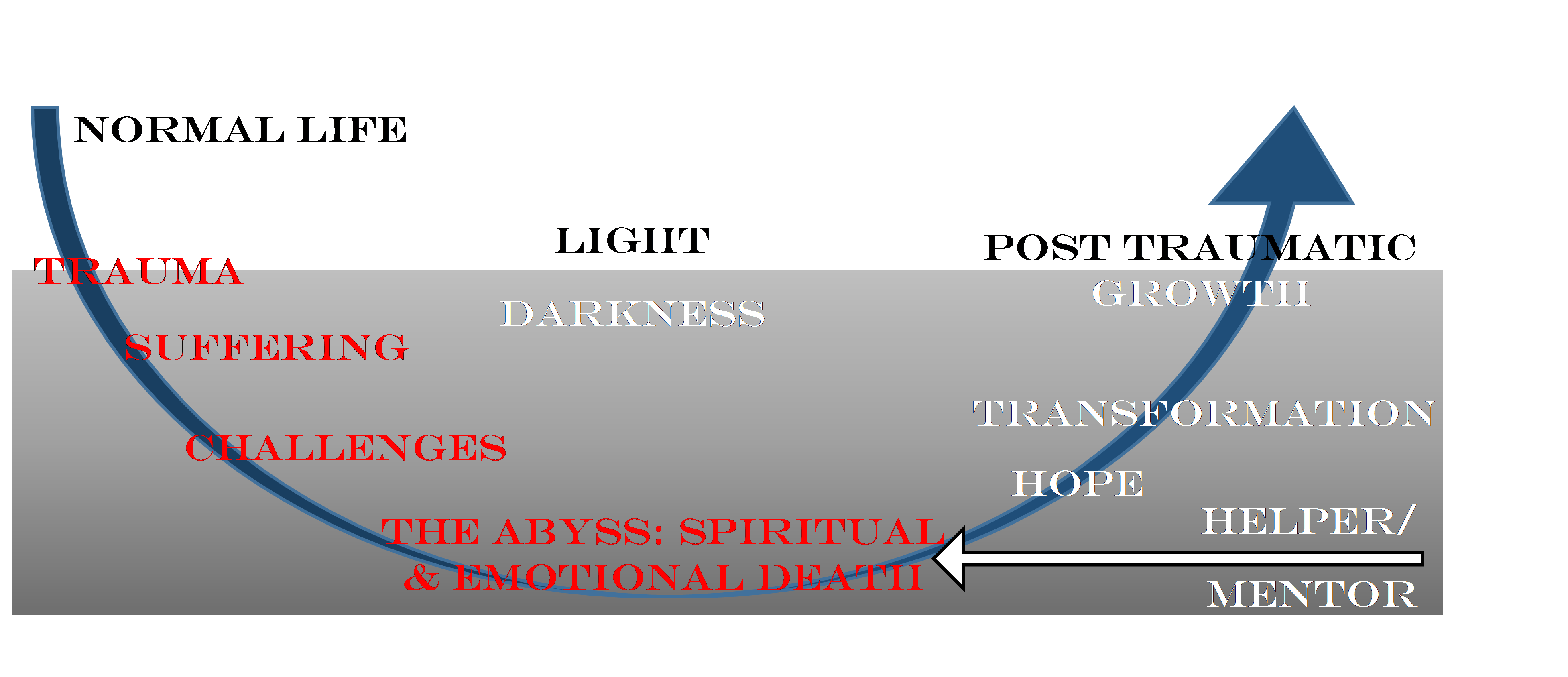
15 Trauma Therapy Techniques to Implement to Help You Heal From Trauma – Gala Gorman

Understanding Trauma – Loretta Grieve

Monday Morning Moment – Generational Sin and Trauma – Don’t Trip Over What’s Behind You – Deb Mills

Monday Morning Moment – the Not So Subtle Punishment of Silence

Photo Credit: Socrates, Status Mind

The silent treatment. Seems so juvenile, in a way, and yet it is used as a punishment in relationships, both personal and professional. We may be the ones doing it without even thinking that’s what it is. Here we go.

In the earliest years of our marriage, Dave and I would sometimes have a fight about something. At times, the conflict didn’t end well for me, anyway. Then, without really a goal to be vindictive or mean, I would just have nothing to say to him…for as many as three days. Oh, we would cover the normal conversation of life – schedules, kids, etc., but from my side, all matters of the heart were wrapped in silence. Punishing him with that silence. I don’t think he always noticed, but inside my own heart and head, it was brutal.

Fortunately for us both, I grew out of that. Now after a disagreement, it may take me a few minutes to shake off my frustration…but not days. Silent treatment in our marriage is over.

In a recent blog by Jan Riley (a dear friend of mine), she talked about the use of silence to “break a person down”. She writes below:

In his book Ostracism: The Power of Silence, psychologist Kipling Williams writes: “William James [father of American psychology] suggested that to be ‘cut dead’ and to go ‘unnoticed’ by others would be worse than the ‘most fiendish punishment.’ The silent treatment may well be the most frequently used method of cutting people dead.”

In his piece Ostracism, Dr. Williams introduced the topic with a further quote by Dr. James: “If no one turned round when we entered, answered when we spoke, or minded what we did, but if every person we met “cut us dead,” and acted as if we were non-existing things, a kind of rage and impotent despair would ere long well up in us, from which the cruelest bodily tortures would be a relief; for these would make us feel that, however bad might be our plight, we had not sunk to such a depth as to be unworthy of attention at all.( James 1890/1950, pp. 293–94)

Ostracism – Kipling D. Williams – pdf

Psychologist Karen Young talks about silent treatment as

Photo Credit: Jaeda DeWalt

Silence is a very disorienting experience because you usually can’t discern what it means.  It can put you off balance.

Anyone who has ever experienced ostracism knows what it feels like and how debilitating it can be, even for a mature thinker.

Silent treatment can be intentional and manipulative, however it can also become a habit of “communication” – neglectful communication. Excluding someone from a conversation (at work or other association), not making eye contact, not speaking in casual encounters, not answering emails/texts, leaving a group member off a group email, not acknowledging someone’s input…and so it goes.

[Of course, all the above can happen innocently for the overloaded person, without intention. The dilemma is when we, over time, just let it keep happening because we can’t figure out how to fix it..or just aren’t inclined…to fix it.]

The curious thing about silent treatment, if you confront the person you sense is doing it, that person can always deny it…whereupon you feel like you’ve read the situation wrongly, you overreacted, etc. It is like a double punch.

So what does one do in regards to silent treatment? What are the counter-measures? I would love for you to share yours in the Comments because I am still sorting out what can affect change.

In a personal relationship, in a non-conflictive moment, you may talk together about what silence conveys. It may be that neither of you have an understanding of what’s going on with the other…because of the silence. Face-to-face communication most always helps with understanding each other better.

In a work situation, or other organizational affiliation that demands working together, systems can be put in place that facilitates engagement… team meetings, weekly email updates, some sort of regular internal communication process. Like with bullying prevention, a core value that speaks to the essential of regular, empowering communication can have impact.

A work or family culture that just accepts silence as a way of coping with stress or frustration can affect everyone in that culture. Identify the issues and do what you can to move them toward health.

One-on-one, there still may be little we can do to counter or improve a situation with such a someone – one who has made silence a pattern to control their encounters with others. We can definitely mark the experience, and check the pain. Then if there seems no way to improve the relationship, the best thing we can do is put our own boundaries around the experience…but not necessarily the person.

Photo Credit: Pikord, Michael Davis Lowery

[The above graphic was a chuckle, not a true work-around.]

We don’t want to respond to passive-aggressive behavior with the same sort of behavior. We may, however, have to acknowledge that for some people, it’s a deeply ingrained habit that could even have become unconscious.

When our daughter was 3 years old, she went through a season of not speaking to people. She would bury her face in my leg, or just turn her face/body away from the person. Then I tried to “excuse” her behavior with “she’s become shy lately.” The same friend above, Jan, who was also a parenting mentor for me, said outright: “That’s not being shy; that’s being rude.” Some of you may be put off by that, but I appreciated her being straight with me. From that day on, this mama worked with that 3-year-old on what ignoring and not speaking communicated and on how to be courteous and respectful. Now the lovely woman she has become is working on the same lessons with her little one.

Whatever your take is on this, hopefully you won’t default to perpetrating the silent treatment as your own pattern of controlling situations. Don’t do it yourself. Don’t be that person.

It helps me to realize that friends, family, and coworkers who use silent treatment didn’t get there overnight. There could have been an event, an altercation, a painful experience of their own that set them up for emotionally withdrawing and using silence as coping or as punishment. For some, like in our early years of marriage, silent treatment may be very situational. For others, it is borne out of habit – a habit of feeling no compulsion toward connecting with people they don’t value or whom they feel don’t value them. It is what it is.

In this day of social media and over-sharing, to put yourself out there and then be met with silence is a strange and sometimes painful experience. Fortunately, even that does not define us. Right? Right.

The Surprising Truth About the Silent Treatment – Karen Young

When We Use Silence As Punishment

The Silent Treatment: a Deadly Killer of Friendships – Noelle Rhodes

What We Owe Beheaded Children – I Have No Words – But Lend My Voice in Support of These – Praying

Blog - WHat We Owe to Beheaded Children

[Used with Permission by Author Lori Stanley Roeleveld]

What unspeakable horror of which we must now speak.

So many headlines have bombarded my vision, my senses, my soul through my fifty plus years but this one, this one grabs my heart and tears it open like a gorilla at a bag of chips.

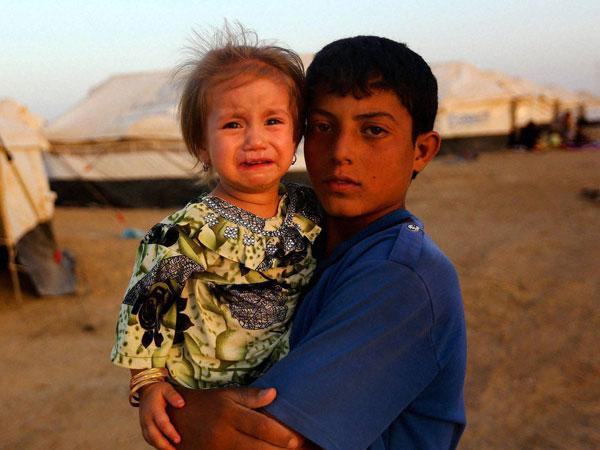
ISIS (Islamic State in Iraq and Syria) is reportedly slaughtering Christians and doing it with the intent to horrify others into converting to Islam before they find their own necks touched by a callous blade. They film their barbaric acts, televised terrorism, which includes ravaging women and beheading children.

I won’t go on. But it begs the question – what do we owe beheaded children, crucified men, and tortured women?

We can’t unknow what is being reported. We can’t jump in planes and gather the children, their parents, their broken bodies in our arms. We also cannot allow the darkness to cripple us with fear, sadness, or hatred. These are the weapons of darkness, not light, and if we yield to them, we kneel before the same idol as the terrorists. So, what do we owe those who fall?

First, we owe them to bear witness to the crimes against them. As horrible as it is to know that children are being beheaded, we dishonor them by hiding our faces in the sand. This is part of the pain of the end times, bearing witness to the horror. Still, the suffering of hearing these unpleasant truths pales in comparison to the suffering of those who must live it but this is our pain, the pain of being witnesses who refuse to turn away.

If we turn away and refuse to know, we aid the enemy in their efforts, we tell the victims they die alone, unnoticed, we say to the world we are cowed by evil. Only by the strength available in Christ can our eyes remain open but open they shall remain. We won’t blindfold ourselves.

Second, we owe them to live lives worthy of Jesus Christ. Every five-year-old who falls by the sword should be a reminder to us that God has shown us grace simply by choosing the land in which we were born. That might have been our child. It might have been us. It should magnify our gratitude. It should galvanize our desire to live life to the fullest. In the name of these babies slaughtered, we can refuse to take our own lives in Christ for granted. We can live out the freedom granted us by the eternal lives blazing within us like a thousand suns. We owe these ones who have been robbed of life to not waste a moment of ours.

Third, we can refuse to pick up the weapons of darkness – fear, hatred, bloodshed, rage, and violence – but instead, wield the weapons at our disposal in Jesus Christ. We will learn to battle on our knees, moving the forces of heaven with our prayers. We will force back the darkness by aiming our light in its direction. We will refuse to remain ignorant, blind, and silent. We will not stand idly by but neither will we engage them on the field of their choosing. We will force them to fight where they are destined to lose – in the realm of the kingdom of God. Do you know prayer warriors? Apprentice with them. Ask them to teach you to battle in prayer. Build up your endurance for the long siege to come.

Fourth and finally, we can prepare for the time to come. Those who have fallen in the name of Jesus will wake to see His face. If they could speak to us from beyond, they would say “Be ready. Strengthen your hearts, your minds, your souls in Christ Jesus for the day they paint the mark on your door, for the day they aim the sword at your throat, for the day they come to slay your children.”

Know the One in whose name you pray and for whose name they were cut down. For even as the soil of Iraq and Syria absorbs their shed blood, their spirits are entering the kingdom of Christ where pain and suffering are no more. Those who struck them down have no hope unless they repent and call on the name of Christ to be saved. Those who struck them down are already dead, but we are alive forever. Know God’s word. Rid your life of sin and fear. Listen to God and move forward in faith when He speaks.

I know that some of you, loved ones, are more sensitive and tenderhearted than others. I know this is hard. It’s painful to bear witness and awful to hear of these atrocities. Jesus Christ will make us strong. He will make us able to bear up – those who face the sword and those left to wrestle with the knowledge of their violent deaths. He is with us all.

Therefore do not throw away your confidence, which has a great reward. For you have need of endurance, so that when you have done the will of God you may receive what is promised.  For, “Yet a little while, and the coming one will come and will not delay; but my righteous one shall live by faith, and if he shrinks back, my soul has no pleasure in him.” But we are not of those who shrink back and are destroyed, but of those who have faith and preserve their souls.” Hebrews 10:35-39 (ESV)

What do we owe beheaded children? We owe them to live for the One in whose name they died.

This is a time to share our courage and strength. How else can we battle for those who have fallen? What scripture passages shall we pray? What news outlets are most reliable? Let’s share what we know here in the comments so we can act when we can, pray with wisdom, and support those who still live in the path of the blade.

We need to encourage one another, loved ones. Are you in for company along the narrow road? Click on the bar above that says “I’m in” and learn how to be a part of our little band of followers or Click Here to subscribe or contact me. Mercy and grace, Lori

**People are messaging me about sharing this post – yes, everyone has my permission to share this post, copy it and post it, send it through email, use the buttons at the bottom of the post to share through social media, etc. I’m sure you’ll all credit it back to this site but what is most important is spreading the message contained in the words. My prayer is that God uses them for His glory and for the building up of His church. Lori