
Category Archives: Critical Thinking

Jesus and Holy Week – Tuesday, Day 3 – A Long Day Teaching & Countering Religious Opposition

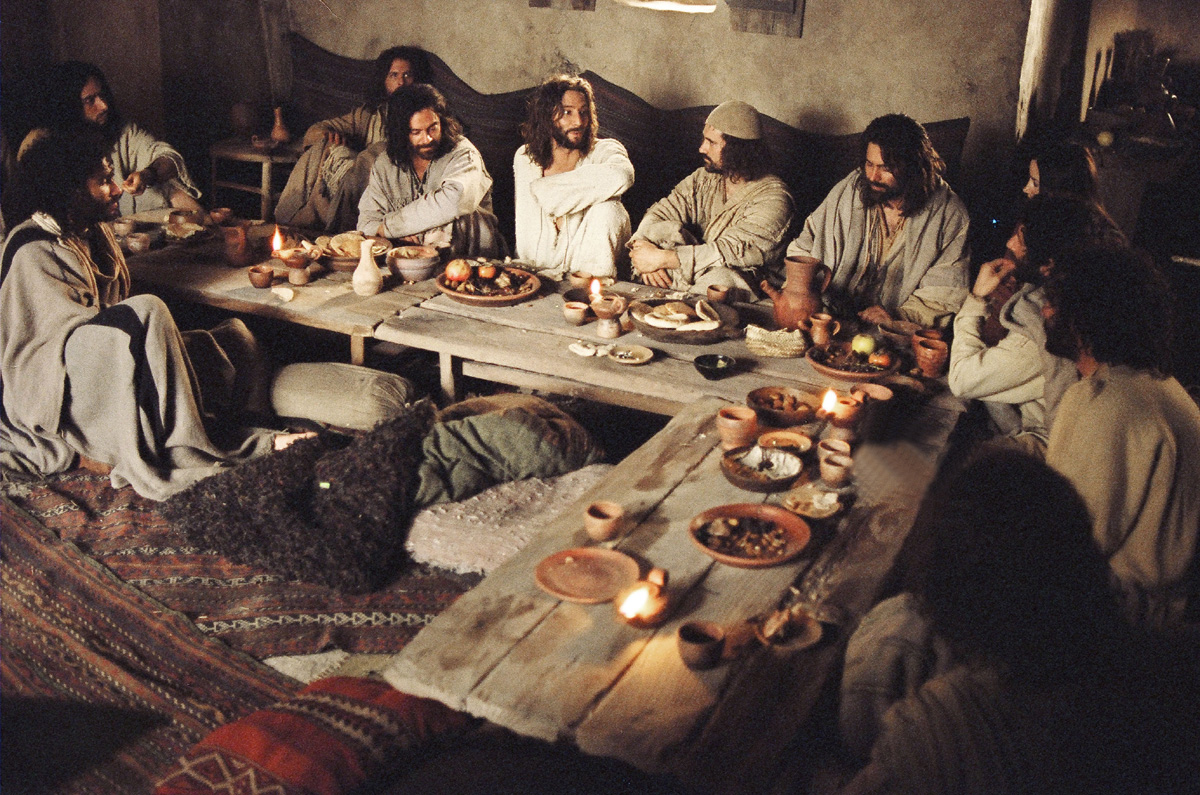
Blog - Holy Week - The Olivet DiscoursePhoto Credit – slidesharecdn.com

[Adapted from the Archives]

When He [Jesus] entered the temple, the chief priests and the elders of the people came to Him while He was teaching, and said, “By what authority are You doing these things, and who gave You this authority?”Matthew 21:23

On this long day, Jesus would demonstrate in one situation after another that he spoke and acted with the authority of God Himself. The barren fig tree cursed by Jesus the day before had indeed withered and died. The disciples saw it themselves that morning as they walked again from Bethany to Jerusalem. Jesus spoke to them of faith, which they would need all the more in the days ahead.

Again in Jerusalem, in the Temple and on the busy streets during Passover, Jesus was confronted by the religious leaders. They were determined to trap him in some sort of blasphemous teaching or interpretation of the law. It would not happen, yet they were set on his destruction one way or another.

In an attempt to test Jesus’ understanding of the law, a legal advisor to the Pharisees asked Jesus what was the greatest commandment in the law. The Pharisees emphasized strict adherence to the laws of the Torah, all 613 of them! I don’t think they were prepared for Jesus’ response:

Jesus answered, “The foremost is, ‘Hear, O Israel! The Lord our God is One Lord; and you shall love the Lord your God with all your heart, and with all your soul, and with all your mind, and with all your strength.’ The second is this, ‘You shall love your neighbor as yourself.’ There is no other commandment greater than these.” –   Mark 12:29-31

Two commands: 1) Love God with your whole being; 2) Love your neighbor as yourself. Some might say that a third is presumed in that you must love yourself in a right and wholesome way in order to truly love others. Jesus’ love for the Father and his love for all people were in perfect unity. Loving God, with all we are, gives us perspective and capacity to love those around us, whomever they are, as we have experienced love ourselves, from the God we love.

The Pharisees, Sadducees, and other Jewish leaders grew more angry at Jesus and were vexed as to how to destroy his popularity and influence with the masses of Jews loyal to him. All their trickery that day failed. Jesus was not intimidated by them, and in fact, spoke some of his strongest words against them while teaching that day. His 8 “woe to you” pronouncements against the Pharisees are listed at bottom of this page. When I read them, the song from the original Godspell film comes to mind as the Jesus character stands against the religious “machine” of his day – those “hypocrites”, those “blind guides” of the people. Blog - Holy Week PhariseesPhoto Credit –www.faithbibleministries.com

Finally, leaving Jerusalem that day, Jesus stopped on the Mount of Olives (Olivet) to speak about the future. He talked at length, to his disciples and all those who followed, about the end times, cautioning them about false teachers and the evil that would rise up in those last days. What it must have been to listen to Jesus, the Messiah, filled with a mixture of faith in him and fear of what could lie ahead for them, and the generations to come.

When Jesus and his disciples returned for the evening to Bethany, Judas Iscariot, one of the twelve, stole away and met with Jesus’ enemies. [Matthew 26:14-16] He would betray Jesus to them in the dark of night, away from the crowds who would have objected to this…in just two more days…for 30 pieces of silver…Judas would seemingly take history into his own hands, but the clock was already ticking, and Jesus would finish what he came to earth to do.

Postscript:

8 “Woe’s” Spoken by Jesus Against the Pharisees (Matthew 23:13-30)

1- Woe to you, scribes and Pharisees, hypocrites! for you shut up the kingdom of Heaven against men.

2- Woe to you, scribes and Pharisees, hypocrites! for you devour widows’ houses, and pray at length as a pretense.

3- Woe to you, scribes and Pharisees, hypocrites! for you travel land and sea to win one proselyte, and when he is won, you make him twice as much a son of hell as yourselves.

4- Woe to you, blind guides, who say, “Whoever swears by the temple, it is nothing; but whoever swears by the gold of the temple, he is obliged to perform it.”

5- Woe to you, scribes and Pharisees, hypocrites! for you pay tithe of mint and anise and cumin, and have neglected the weightier matters of the law: justice and mercy and faith.

6- Woe to you, scribes and Pharisees, hypocrites! for you cleanse the outside of the cup and dish, but inside they are full of extortion and self-indulgence.

7- Woe to you, scribes and Pharisees, hypocrites! for you are like whitewashed tombs which indeed appear beautiful outwardly, but inside are full of dead men’s bones and all uncleanness.

8- Woe to you, scribes and Pharisees, hypocrites! Because you build the tombs of the prophets and adorn the monuments of the righteous, and say, “If we had lived in the days of our fathers, we would not have been partakers with them in the blood of the prophets.”*

Holy Week – Day 3: Tuesday in Jerusalem, Mount of Olives

YouTube video Alas for You from the original film Godspell

Reasoning Why Jesus Cursed the Fig Tree

Jesus and the Pharisees

*8 Woes Upon the Pharisees

Great Texts of the Bible – The Two Commandments – commentary by James Hastings

613 Laws of the Torah

Jesus’ Olivet Discourse about Two Future Events

Jesus and Holy Week – Monday, Day 2 – Jesus Curses a Fig Tree and Cleanses the Temple

Blog - fig treePhoto Credit: Fig Tree by Bob Orchard

[Adapted from the Archives]

On the next day, when they had left Bethany, He became hungry. Seeing at a distance a fig tree in leaf, He went to see if perhaps He would find anything on it; and when He came to it, He found nothing but leaves, for it was not the season for figs. He said to it, “May no one ever eat fruit from you again!”Mark 11:12-14

During that week in Jerusalem, Jesus and his disciples spent the nights with friends in Bethany, two miles outside of the city. Each morning, they would walk into Jerusalem. On that Monday morning, just four days prior to his crucifixion, Jesus became hungry on the walk in. Seeing a leafy fig tree, he looked for fruit. With fig trees, where there are leaves, there should be figs. Since green figs are edible, and it wasn’t yet harvest season, there should still be some fruit on the tree.

When he found no figs, Jesus cursed the tree. This seems out of character for Jesus, until his action is put in the context of his culture and community. Throughout his public ministry, especially as he became more known and revered, the Jewish religious leaders held him in contempt. Jesus’ teaching of our dependence on God’s righteousness and not our own flew in the face of the Pharisaical teaching of the day – that of strict adherence to Jewish law as the only hope of finding favor with God. For Jesus, the leafy barren fig tree must have been a picture of religious Jews of that day, all flash and finery but no fruit of faith.

Jesus was left still physically hungry and then also spiritually hungry  – for this people of the Book to receive the good news that the Messiah had come.

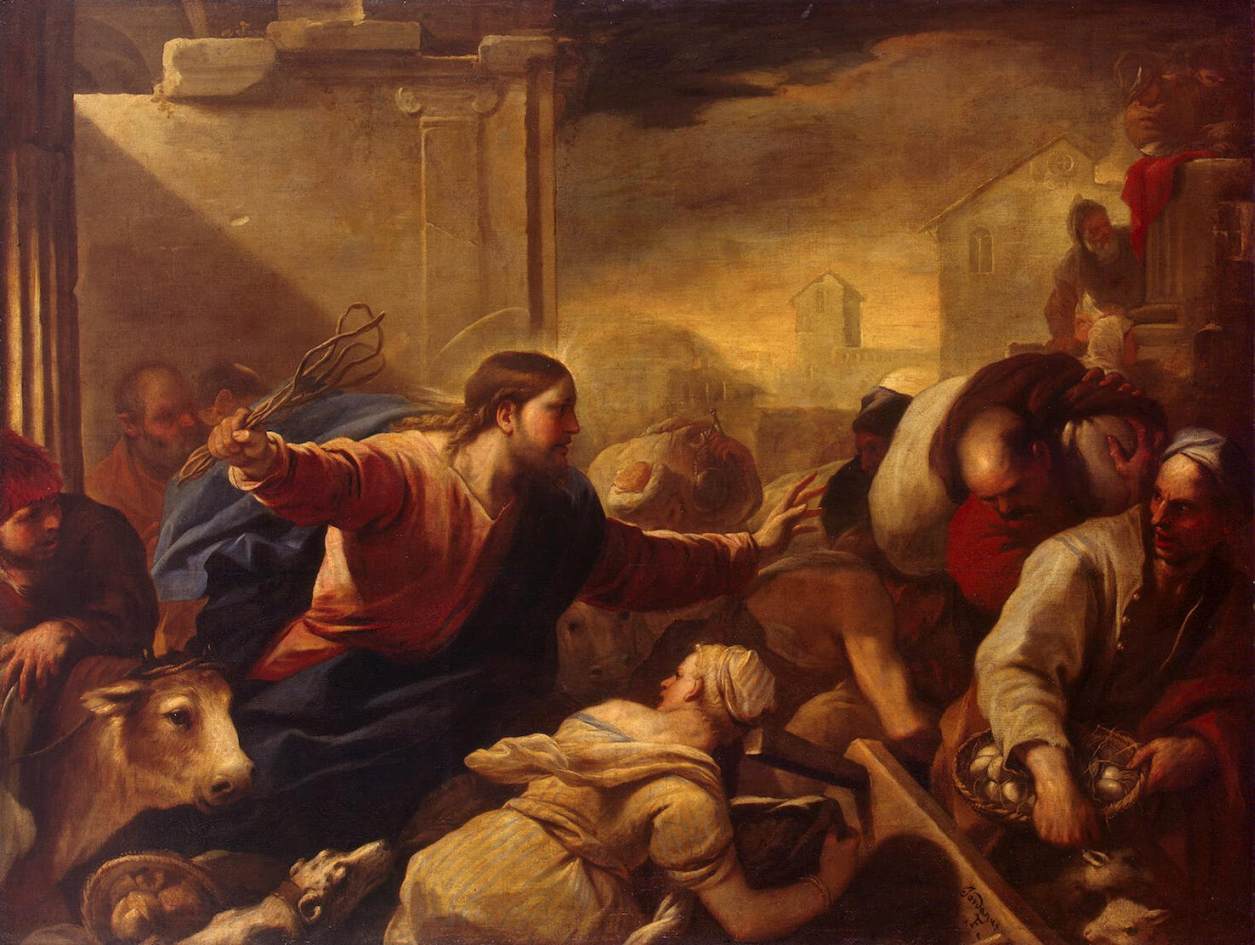
Finally, arriving back in Jerusalem, Jesus was deeply troubled by what he found inside the Temple. The crowds of Passover pilgrims did not disturb him, but temple grounds turned marketplace did. In this sanctified place, meant only for worship, there were money-changers and sellers of animals for sacrifice, right in the Court of the Gentiles – in the only place where non-Jewish God-believers could worship.Blog - Jesus Cleansing the TemplePhoto Credit:Expulsion of the Moneychangers from the Temple” by Luca Giordano

And Jesus entered the temple and drove out all those who were buying and selling in the temple, and overturned the tables of the money changers and the seats of those who were selling doves. And He said to them, “It is written, ‘MY HOUSE SHALL BE CALLED A HOUSE OF PRAYER’; but you are making it a ROBBERS’ DEN.”Matthew 21:12-13

Often in film depictions of Jesus cleansing the temple, he appears a crazed individual, flailing about, throwing tables and flinging pigeons into the air. I can’t even imagine him that way. We can’t know how it happened except that in Jesus’ anger, he did not sin. I know the Jesus Film is just another director’s film rendering, but in this scene, Jesus showed great restraint. Disturbed at the buying and selling that actually kept believing Gentiles from worshiping, he moved to correct the situation. He was unafraid of the temple officials, burning with zeal for his Father to be truly worshiped in that place.

Zeal for Your house has consumed me, And the reproaches of those who reproach You have fallen on me.Psalm 69:9

Later in the week, he himself would be the one sold –  for 30 pieces of silver, betrayed by one of his own disciples, to satisfy the wrath of the religious leaders. That story is for another day.

This Holy Monday, we are drawn again to this Messiah who teaches us that the way we live our lives matters but not more than the way we relate to God. He is holy, and in His righteousness, we stand…on solid ground.

Holy Week – Day 2: Monday Jesus Clears the Temple

YouTube Video with Lyrics of In Christ Alone by Stuart Townend & Keith Getty

Reasoning Why Jesus Cursed the Fig Tree

Monday of Holy Week

The Righteous Anger of Jesus

Cleansing the Court of the Gentiles

Jesus Film Media – website & app to watch videos

Palm Sunday – Jesus’ Triumphant Entry into Jerusalem on the Way to the Cross – Day 1 of Holy Week

Blog - Palm Sunday & CrossPhoto Credit – inexplores.com

[Adapted from the Archives]

For anyone who considers herself a critical thinker, this week in the life of Jesus of Nazareth is one worthy of analysis. No matter your religion or non-religion, this Jesus, in these days, warrants examination, related to anything you may think of God. You will better understand the core beliefs of a Christ-follower, not just a person known to you as Christian. For in the study of Jesus’ life and his followers, in just this one week, you will see a deep distinction between “the religious” and “the redeemed”.

{Sidebar: I taught a World Religions course some time ago in a Moroccan high school. In that course, we studied all the major religions. The students were challenged to think critically of each religion. I encouraged them to study each one, 1) trying to put themselves in the perspective of one who believes (i.e., a true follower, using eye witness/historical accounts and Scriptures when available), and then 2) to break down each belief/tenet of faith critically. We all benefit thinking through Holy Week this way; none will not come away the same by examining the life of Jesus.]

Photo Credit: Wikimedia

Palm Sunday is celebrated as the “triumphal entry” of Jesus into Jerusalem, just days before he would endure a mock trial and then be crucified. He and his closest followers (disciples) came to Jerusalem for the celebration of Passover. Passover was an annual remembrance of God’s protection and deliverance of Israel during a time of slavery (Exodus 12:26-28). Jesus would celebrate Passover on Thursday of that coming week, but he did not come to Jerusalem for that reason alone.

He knew from his Father God why he came to Jerusalem, and he tried to prepare his disciples for what was coming.

From that time Jesus began to show His disciples that He must go to Jerusalem, and suffer many things from the elders and chief priests and scribes, and be killed, and be raised up on the third day.Matthew 16:21

And while they were gathering together in Galilee, Jesus said to them, “The Son of Man is going to be delivered into the hands of men; and they will kill Him, and He will be raised on the third day.” And they were deeply grieved. – Matthew 17:22-23

As Jesus was about to go up to Jerusalem, He took the twelve disciples aside by themselves, and on the way He said to them, “Behold, we are going up to Jerusalem; and the Son of Man will be delivered to the chief priests and scribes, and they will condemn Him to death,  and will hand Him over to the Gentiles to mock and scourge and crucify Him, and on the third day He will be raised up.”Matthew 20:17-19

I can’t even imagine what those disciples must have felt as Jesus predicted his own death. They loved him and all pledged their lives to him, even to death. They believed him to be the conquering king, sent by God, to deliver the Jews from Roman rule and to restore the nation of Israel. Although they had soaked up three years of his teaching, this “end of the story” was more than they could bear. Just a week later, they would gloriously understand that it would not be the end of the story of Jesus’ life.

On this Sunday, before the Passover, Jesus would enter the great city of Jerusalem, teeming with crowds there to celebrate. He entered, riding a donkey*, as was foretold by the Jewish prophet Zechariah:

Rejoice greatly, O daughter of Zion! Shout in triumph, O daughter of Jerusalem! Behold, your king is coming to you; He is just and endowed with salvation, Humble, and mounted on a donkey, Even on a colt, the foal of a donkey. Zechariah 9:9

Imagine the scene as Jesus entered Jerusalem. Some in the crowds did recognize him, and then the word spread of the arrival of this great teacher, this healer, this man whose teaching was like none before him. Palm branches were pulled to wave in tribute to him, as others flung their cloaks on the dust before him welcoming him:

Most of the crowd spread their coats in the road, and others were cutting branches from the trees and spreading them in the road. The crowds going ahead of Him, and those who followed, were shouting, “Hosanna** to the Son of David; BLESSED IS HE WHO COMES IN THE NAME OF THE LORD; Hosanna in the highest!” When He had entered Jerusalem, all the city was stirred, saying, “Who is this?”Matthew 21:8-10

“Who is this?” For those who did not know him, the wild welcome for him must have been confusing and captivating. For the religious authorities in Jerusalem, who knew him and were unwilling to welcome this “king of the Jews”, his popularity was infuriating.

The clock began ticking as they plotted against this man Jesus.

Over that bright hopeful day of palms hung the shadow of the Cross – the Cross that would bring even greater hope to all people. The “Hosanna” of Palm Sunday would change to cries to “Crucify!” just five days later. Jesus had no ambition to please the crowds; he was resolutely on task to redeem those who could not redeem themselves – the whole world.

[Each day in this week, the posts will mark the journey of Jesus of Nazareth through the last week of his earthly life. Join me please.]

*Matthew 21:1-11 & Commentary

**”Hosanna” means “God saves”.  YouTube lyric video of Hosanna – Hillsong

Holy Week Timeline

Look, the World Has Gone After Him: Prelude to Palm Sunday – Jon Bloom

The Significance of Palm Sunday in Relation to Passover

Kings Riding on Donkeys? What?

Photo Gallery: Egypt’s Coptic Christians Celebrate Palm Sunday – When our children were young, we lived in Cairo, and bought palm fronds to make some of these crafts, as well as buying them ready-made.

Monday Morning Moment – When You Love Your Job – and Your Power to Make It So

Photo Credit: Maxpixel

I had trouble getting my enthusiasm up for work today. This is highly unusual, because I LOVE Mondays. Even went to bed early last night; only to have bad dreams and restless sleep.

OK…so it happens sometimes. Shake it off and embrace the day, right?

I want to write about what happens when we love our job. Remember when that was? …if it isn’t that way for you today, don’t let this season bring you down, and your work down.

A friend shared with me recently that he has come to figure his worklife into decades. He makes strategic decisions based on where he is today in his job and what he hopes to be doing in the next decade. We all know the years go by quickly…so he got me thinking.

If I don’t love my job today, I really either need to do something to correct course, or, before jumping ship, think where I hope to be over the next several years.

This morning I came across a funny and invigorating video on Facebook. It is When You Really Love Your Job. Watch below.

This little video showed a number of employees doing their jobs well and with speed and finesse. It had a poignant touch for me because I have personally watched servers in North Africa make crepes, cut up fruit, and pour tea like the workers in the video. I miss that.

If you search online for loving what you do, you find lots of helps on how that works and how to make it happen (again).

Jeff Haden posted a helpful piece entitled 15 Revealing Signs You Genuinely Love What You Do. It’s a quick read and it will either encourage you that you really DO love your job, or, if not, maybe there are some simple steps you can make to change it up. Some of the signs are : You enjoy attending meetings. You think about what to say, not how. You help without thinking. Definitely something to consider…as are the other signs.

Photo Credit: The Muse

If you love your job, that is worth celebrating and worth protecting as the job or company changes. If you don’t love your job so much, then you have to ask yourself the question, is it time to look elsewhere or do you have capacity to do what it takes to restore joy to your job, as it is?

Photo Credit: Flickr

Benjamin P. Hardy writes about this in One Behavior Separates the Successful From the Average. What is that behavior? Initiative! We determine for ourselves how we shake out our day. Sure, there are going to be obstacles and difficult people and various struggles over the years. It’s always worth it for our own sake, to take back control of how we love our jobs. Exercising initiative, as Hardy suggests, is the way out…either out of the joyless season you’re in and stay in your job, or out of the job. Just don’t take the joylessness with you.

Here’s to loving our jobs!

Do You Love Your Job? – Deborah Repplier

Discover the Work You Were Born to Do – James Gonyea

17 Inspiring Quotes About Loving Your Job – Michael D. Pollock

This Is Your Life. Do What You Love – The Holstee Manifesto Lifecycle Video

Photo Credit: Vimeo


Monday Morning Moment – Empathy – Key to Creativity and Innovation – What?!

Photo Credit: Andy Orin, Lifehacker

Empathy is no soft skill. In fact, it can be a rare commodity in today’s workplace where we are competing for jobs, customers, time with the boss…pushing for that edge which makes us stand out over the guy down the hall.

We have seen empathy in corporate culture. Amazon immediately comes to mind, as does Apple. These companies have studied the wants and needs of their customers and they have put that research into play in their service and products. Customer loyalty is a huge outcome of feeling understood and valued.

Empathy and sympathy are two very different human experiences and expressions. To sum up the differences between the most commonly used meanings of these two terms: sympathy is feeling compassion, sorrow, or pity for the hardships that another person encounters, while empathy is putting yourself in the shoes of another. [read more at Dictionary.com]

Our neighborhood is in the middle of a huge engineering project being done by our local electric company. The wires are being put underground thereby keeping our service from being interrupted by windstorms. Various technicians and contractors have come to each of our front doors to let us know, courteously and apologetically, what disruptions must happen to eventually provide this service. The sub-contractors, moving throughout the neighborhood, have worked quickly and quietly, keeping disturbance at a minimum. Their work will all be completed soon with 1) only what disruption was absolutely necessary and 2) with a high expression of empathy for their presence on our streets and in our yards.

Disruption devoid of empathy is no business process anyone wants in their workplace…no matter what the outcome or benefit. Unfortunately, when it happens (and it does), we put up with it for what comes out of it, and because we have no other choice… If we are not careful our own empathy for one another suffers. Mark that.

Photo Credit: Lifehacker

For years, the word and process of empathy had become so common, it became almost without meaning. Something just ordinary. Nothing special. Now, it’s rising in favor again…probably, seriously, because of how competitive businesses have become. Too often, we err in business with putting innovation and technology as goals and standards without considering the customer or colleague. Decision-making proceeding ahead of information-gathering and analyzing impact on those most affected is not the way up.

Marla Gottschalk says it well in her piece Disrupting Organizations With Empathy, Forward thinking organizations hold great empathy for their potential customers. They design products that not only appeal to our emotions and senses, but address the problems we wrestle with in our daily lives. In each product, process or service — there is a little of us represented.

As long as we have empathy, I believe we’ll have innovation.

The same truth applies to the developing frameworks that support our employees. With empathy, we can achieve significant advances not only the way we work, but how we ultimately feel about our work lives. Whether we are considering leadership (See how empathy affects perceived leadership here), feedback, career development or work spaces — empathy matters.

Viewing work life from another’s perspective, can reap powerful results. We need to follow behind our employees and support their journey...Measuring our workplace problems is simply not enough to encourage healthy workplaces.” – Marla Gottschalk

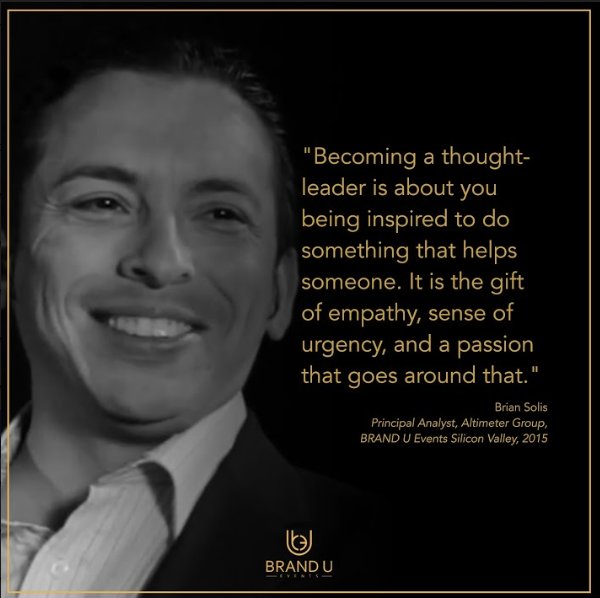
Photo Credit: Brian Solis

I watched an episode of Chase Jarvis Live where Jarvis interviews Brian Solis – author of What’s the Future of Business: Changing the Way Businesses Create Experiences and X: The Experience When Business Meets Design. Brian Solis is one incredibly smart individual, and what captivated me the most in that 45-minute interview? What he said about empathy: “What do you want somebody to feel after they’re done with you in every moment of truth?…Who am I really trying to reach? What’s a day in the life of their world? What could I do to have an impact in their world?…What does a relationship really mean? When you see the world outside [from their side], then you see the role you’re going to play…Empathy unlocks a whole new level of perspective…It’s not good enough to be good enough…or the best. You have to now understand the impact you want to have and the role you want to play in someone’s life and then who that person is and design for that. It’s so inspiring.” – Brian Solis

Marcel Schwantes lists empathy is one of the 10 leadership habits found in the world’s best leaders. Empathy is a discipline. It is hard skill that every leader and every person equipping themselves to lead must see and seek as valuable to leading well. Otherwise, the lack of empathy will eventually have a pervasive effect on the workplace and the service and product. Don’t let this happen to you or your team.

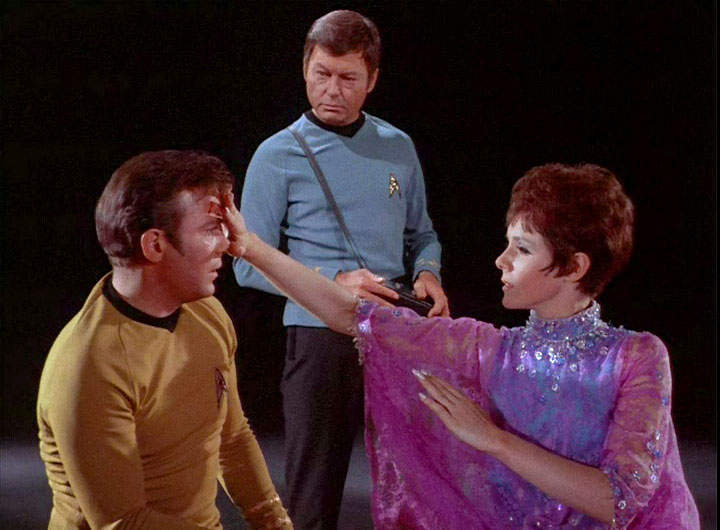
Finally, I want to close on a much-loved classic TV show episode. It is Star Trek, The Original Series. This episode is titled The Empath.Blog - EmpathyPhoto Credit: tos.trekcore.com

In the YouTube video of one of the episode’s scenes, Captain Kirk, Dr. McCoy and Spock are in captivity. The humanoid woman Gem is with them. She is unable to speak but has extraordinary empathic powers. She can feel the pain of another and take it into herself, thereby healing the other person, at a cost to herself. She is also learning from these three what genuine care and self-sacrifice are.

YouTube Video – “Empath” Episode – Star Trek – The Original Series

The Empath Episode – Plot summary, quotes, & other Trekkie details via Memory Alpha

Not the sort of topic we often toss around in our conference rooms or strategy meetings. Still…if we want to offer the best and be the best in our organizations, the lessons are clear…as are the warnings.

Empathy is Actually a Choice – Daryl Cameron, Michael Inzlicht, and William A. Cunningham

Why Genuine Empathy is Good For Business – Jeff Booth

The Importance of Empathy in Everyday Life – Video – Andy Orin

The Key to Creativity and Innovation is Empathy – Brian Solis [Video from CreativeLive – Chase Jarvis Live]

YouTube Video – Brené Brown on Empathy

These 10 Leadership Habits Have Been Found in the World’s Best Leaders – Marcel Schwantes

The Invention of Empathy: Rilke, Rodin, and the Art of “Inseeing” – Maria Popova

Worship Wednesday – On Anxiety – My Anchor – Christy Nockels

Photo Credit: Flickr

For the weapons of our warfare are not carnal, but mighty through God to the pulling down of strongholds. Casting down imaginations, and every high thing that exalts itself against the knowledge of God, and bringing into captivity every thought to the obedience of Christ. – 2 Corinthians 10:4-5

We have this hope as an anchor for the soul, firm and steadfast. It enters the inner sanctuary behind the curtain. Hebrews 6:19

In you, O Lord, do I take refuge; let me never be put to shame!
In your righteousness deliver me and rescue me; incline your ear to me, and save me! Be to me a rock of refuge, to which I may continually come; you have given the command to save me, for you are my rock and my fortress. – Psalm 71:1-3

In my late teens and 20s, my mom endured a hard and painful-to-watch season. A few of my other friends’ moms went through what then was called “a nervous breakdown”. Somehow, my mom pushed through. She felt tremendous responsibility to get her four children grown and established in our adult lives. She worked hard at her job and served well in her church and community. Mom was unshakeable in her love for God and for us.

Yet the demons were real. I will never forget sitting beside her as she lay weeping on her bed. Deep, shaking, inconsolable cries. She was never able to say what the tormentors were – regret? worry? There were times she described how it felt like something was in her throat (that proverbial “lump”) that she couldn’t get down – literally like she couldn’t swallow (or stomach) whatever was going on.

In those days, holding my mama who I loved most in the world, I promised myself I would never let that level of misery happen in my life…I would figure out how not to be taken down by fear or the threat of the future…especially such that my children would not have to see me in such pain.

It was sometime in my 20s that my own tears dried up. After watching my mom cry so much, I just didn’t have any tears…maybe I didn’t want to go to that hard place…

Praise God there is always more to the story. My mom survived those years and lived more joyfully and peacefully after that, right through the day she went Home to be with the Lord. Thanks to my mom, I did learn how to cope with the stressors of life…not always well, but I know how.

Mom and I both learned through our lives how to cast our cares on God. There may have been times in Mom’s later years that she wrestled with anxiety just between God and her. There are times, as well, that I wrestle, especially in the night hours, before sleep.

Right now, anxiety seems to be gripping the hearts and lives of some dear friends of mine. I’m not sure how to counsel but am absolutely sure how to pray.

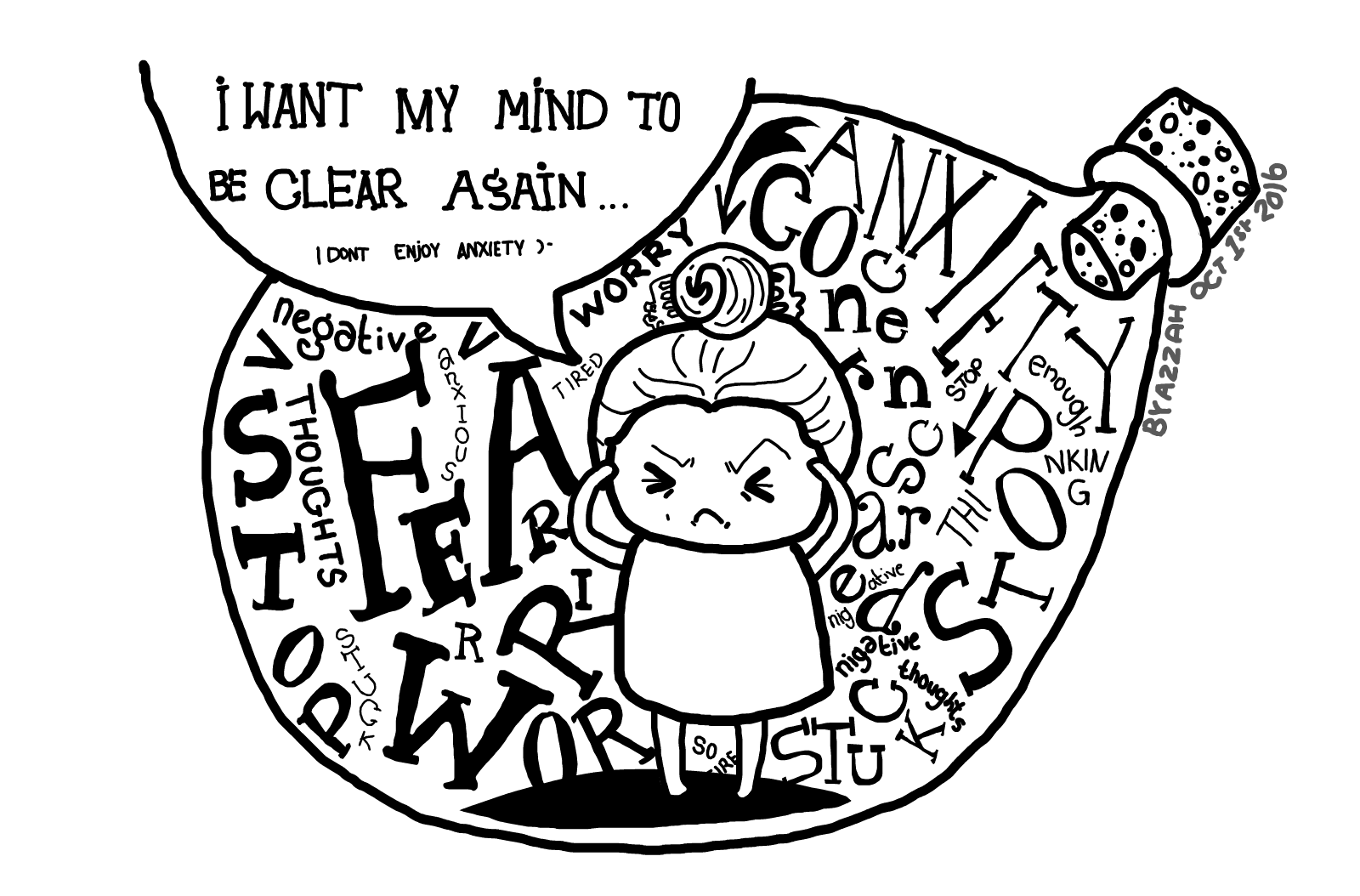
Anxiety is not the same as fear. It is an emotion characterized by an unpleasant state of inner turmoil…It is the subjectively unpleasant feelings of dread over anticipated events, such as the feeling of imminent death. Fear is a response to a real or perceived immediate threat, whereas anxiety is the expectation of future threat. It is a distinction between future and present dangers which divides anxiety and fear. Anxiety is a feeling of uneasiness and worry, usually generalized and unfocused. It is the mental state that results from a difficult challenge for which the subject has insufficient coping skills.

Photo Credit: SketchPort

God never meant for us to live in anxiety.

For clinical helps on dealing with anxiety, Debbie Hampton has written a concise and practical piece (linked below) entitled Four Steps to Take Control of Your Mind and Change Your Brain. She takes it from the book You Are Not Your Brain: The 4-Step Solution for Changing Bad Habits, Ending Unhealthy Thinking, and Taking Control of Your Life by Jeffrey M. Schwartz and Rebecca Golding. The 4 steps are written from more of a Buddhist mindfulness orientation, but they actually easily translate to Biblical wisdom.

For today, I just want to express my profound gratefulness for the God who meets us in the dark nights of the soul and reminds us of what is true and restores our joy and peace. He is faithful, and His Word never fails.

Worship with me through the song My Anchor by Christy Nockels and Jason Ingram.

You’re the Lord Almighty
Your every word is sure
And in Your love unfailing
I’m safe when oceans roar
Yes, I’m safe when oceans roar
My anchor, forever
My shelter within the storm
You’re my deliverer
You never falter
You’re the rock I stand on
Here within the struggle
And every crashing wave
You are more than able
Your hand is strong to save

Yes, I know Your hand is strong to save

My anchor, forever
My shelter within the storm
You’re my deliverer
You never falter
You’re the rock I stand on

I hold on to You
And You hold on to me
Jesus, I hold on to You
And You hold on to me*

Be anxious for nothing, but in everything, by prayer and petition, with thanksgiving, present your requests to God.  And the peace of God, which surpasses all understanding, will guard your hearts and your minds in Christ Jesus. Philippians 4:6-7

By the way, I seem to have gotten my tears back, for which I’m grateful. Also, for those of you, like me, who struggle with anxiety, it’s a battle. We must be gentle with ourselves but, at the same time, disciplined in dealing with the lies with which our mind hammers us. For you who love us “sometimes anxious ones”, thank you…especially when you don’t default to anxiety…thank you for trying to understand, and for loving, and for guiding us gently to the truth, and for praying. You are the face of Jesus to us.

*Lyrics to My Anchor – Songwriters: Christy Nockels & Jason Ingram

Story Behind the Song My Anchor by Christy Nockels – Kevin Davis

How Do I Take My Thoughts Captive? – Interview with John Piper

Worship Wednesday – I Need You Now – by Plumb

Worship Wednesday – Listening to His Voice Through the Noise

12 Christian Songs to Ease An Anxious Mind – Victoria Rondinelli

7 Christian Songs That Help With Feelings of Depression – Crystal McDowell

Four Steps to Take Control of Your Mind and Change Your Brain – Debbie Hampton

Four Steps – Dr. Jeffrey Schwartz’s Four Steps – Hope 4 OCD – Dr. Ada Gorbis

You Are Not Your Brain: The 4-Step Solution for Changing Bad Habits, Ending Unhealthy Thinking, and Taking Control of Your Life by Jeffrey M. Schwartz and Rebecca Golding

Prescriptions Without Pills – For Relief From Depression, Anger, Anxiety and More – Dr. Susan Heitler

Addition – from my friend Blythe – You Are My Peace – Housefires – YouTube Video

Monday Morning Moment – Elevating Our Work – with John Burke and Benjamin Hardy

Photo Credit: Benjamin P. Hardy (l), John Burke (r)

On the weekend, I was catching up with a bunch of friends who gather occasionally to keep relationships up-to-date. The question around the table was “So what’s new and exciting?” That usually elicits baby news, job changes, latest relationship, and emotional or situational struggles. I was completely engaged in what they were all saying…and then it was my turn.

I had nothing.

After stammering over what I could add, I pretty much just confessed to the mundane nature of my life. Vanilla was the only flavor that came to mind.

On the drive home, clarity prevailed and the largeness of the past year’s events filled my mind’s eye like watching an action film on the big screen. More “new and exciting” than I imagined could happen in a year – a grandson’s birth, a cancer diagnosis, my father’s illness and death were just some of the scenes of the last several months.

Then, right there, in the dark car, I was filled with gratitude that a merciful God filled all of that with His presence. Sometimes I forget to say out loud how incredibly good God is to be in our lives…and to never leave us alone in the hard.

Today’s “new and exciting” is that I am cancer-free right now, that darling baby is the star of his own music video, and acute grief in losing our dad is shifting to savoring memories of all our years together.

There’s more though…
Later in the weekend, I read this enlightening piece written by Benjamin P. Hardy. He interviewed composer and pianist John Burke about how he pushes himself to create.
Burke listed out four strategies that he regularly uses to “elevate” his work.

1. Always Work on Something You’ve Never Done Before

2. Map It All Out From the Beginning

3. Apply More Layers of External Pressure Immediately

4. Put Creation Time On Your Daily Schedule

Read Hardy’s piece for the particulars of Burke’s creative habits.

Photo Credit: AZ Quotes

Burke’s approach to work, in general, and creating music, in specific resonated with me for two big reasons. The first, is that I had seen his system for creating in the habits of our composer/guitarist son, Nathan Mills (Beyond the Guitar). The second reason is that I see what the “new and exciting” had done to my own creative habits.

I had settled into a sameness, a smallness, that had become a prolonged recovery time for me. Healing was imperative, but there comes a time when we gather ourselves up and get back into life. The Hebrew King David’s example came sharply to mind – after praying and fasting for his terribly ill son – 2 Samuel 12:18-20 – at the news the child died, David rose up, washed and dressed, worshiped God, and ate.

The “new and exciting” for this Monday is to take John Burke’s strategies to heart. When a person gets her life back after a cancer diagnosis, and recovery is behind her, the best medicine is to get on with life…with a renewed passion and intentionality.

Thank you, Mr. Burke, and Mr. Hardy.

My husband has described this “elevating our work” with the phrase “Shifting to the next gear”. That’s what I want for this next chapter of my work life. I’ve been driving the service roads, and now it’s time to get back out on the highway. To adjust my life to a greater difficulty and higher speed.

Elevating our work requires adjusting our thinking in that direction as well. [See links below.]

I’m ready to take the next gear.

How about you?

John Burke: 4 Strategies to Continually Elevate Your Work – Benjamin P. Hardy

Persevere – My Interview with Grammy-Nominated Pianist and Composer, John Burke – Podcast – Katy Galli

John Burke – YouTube Channel

10 Steps to Successful Thought Leadership to Elevate Your Career and Your Organization – Glenn Llopis

A Health Blog – 10 Proven Ways to Help Boost Creative Thinking

Elevate Your Leadership – Marlene Chism

To Expand Your Influence, Elevate Your Capacity to Think – John Maxwell

Critical Thinking Exercises: 9 Facts and How They Elevate Your Mind – Katrina Manning

Kids on Drugs….I Mean, Screens

Photo Credit: Flickr

I have a confession to make.

There’s a precious little girl in my life who calls me “Ga” (because she can’t yet say “Gram”). Not even 20 months old, she has learned well how to use her tiny index finger to point for us to take her wherever in the house or yard she wants to go. She demonstrates her mastery of body parts by pointing that finger to her eye, nose, mouth, etc. when we call out the word. Just recently, she holds up that singular wee finger when identifying the number “win”.

My heart melts.

Unfortunately, I am a culprit contributing to the delinquency of a minor…no, no. Not that…but I have contributed to her developing that index finger further in playing with my smart phone. She knows how to scroll through pictures and she knows how to tap the “play” icon to start up videos.

Is that so horrible? What’s the harm?

[Here’s the disclaimer. There is no judgment here whatsoever for the sleep-deprived moms out there who hand their preschooler their smart phone or tablet while nursing or dressing the baby…or trying to get dinner prepared…or (fill in the blank). I remember the years of small ones myself, so many years ago. In fact, the TV as babysitter was my go-to device to get stuff done or maintain my own supposed sanity. Not just for the little ones but for myself, just to watch something for my own relaxation. Of course, they were watching with me…so I had to consider the possible impact of that then, as I’m writing about screens now.]Photo Credit: Pexels

My confession comes from a place of discovery. The problem is not that this toddler likes looking at pictures of her family on my phone. That has to be a morally neutral (even positive) thing. Also not a problem is her fondness for her Uncle Nae’s music videos. She has her favorites and daily asks to see those (Dayman and Have Yourself a Merry Little Christmas)…among others…several others.

The problem is when she doesn’t get her way. When Mommy intervenes or when Gram comes to her senses about the amount of screen time she’s facilitating. Then this funny, sweet, curious little girl flings her head back, attempts a body-slam, and emits a piercing angry cry against those who would keep her from her screen(s).

Morally neutral or even positive goes out the window at that point. Given her reaction, when does something soothing and enriching like family photos and videos cross a line…out there in a few kiddie years…to a screen or internet addiction?

I don’t think I’m over-reaching here. There is balance absolutely, but if we don’t even consider the risk, we won’t take steps to keep screen use healthy for our children/grandchildren. I’m dealing with this in my own head right now…and in my habits.

Many parents intuitively understand that ubiquitous glowing screens are having a negative effect on kids. We see the aggressive temper tantrums when the devices are taken away and the wandering attention spans when children are not perpetually stimulated by their hyper-arousing devices. Worse, we see children who become bored, apathetic, uninteresting and uninterested when not plugged in.

But it’s even worse than we think.

We now know that those iPads, smartphones and Xboxes are a form of digital drug. Recent brain imaging research is showing that they affect the brain’s frontal cortex — which controls executive functioning, including impulse control — in exactly the same way that cocaine does. Technology is so hyper-arousing that it raises dopamine levels — the feel-good neurotransmitter most involved in the addiction dynamic — as much as sex. – Dr. Nicholas Kardaras

I was reminded of when our boys were middle schoolers. A friend of theirs came over to spend the night. They played video games for hours. When we finally told the boys to take a break, the friend actually became more and more anxious, even to the point of not being able to get his breath. We had to take him home.

Now all toddlers are not going to end up heroin…I mean, tech junkies. Again, there is a balance in how we determine what’s a healthy use of electronic devices and where limits need to be set.

It’s just something to think about. My confession here relates to the personal struggle I have with internet dependence. I was a late adopter of smart phones (my first being in 2013). At the time, my job was a communications strategist for a new work team. Managing a blog, Twitter and Facebook pages, and other office communications kept me online most of the time. Online and distracted by it. Still a struggle for me to have balance in this area.

I don’t want to have that sort of influence on this darling granddaughter, our tinier grandson, or others who will come after.

Before smartphones and Wi-Fi, I was a people-watcher and a people-engager. I read books more. Had people over all the time. Now, don’t get me wrong…those things still happen…but screens are a huge distraction for me. I would love to be one of the nurturers for our grandchildren of a different sort of life… Screen time is going to happen every day, sure…but not to the point where they don’t prefer talking face-to-face with people nor be a part of great adventures or discover the world (in real life).Photo Credit: Flickr

How are you handling your own electronic version of life? Please share in the Comments section. You will find helpful links below – articles and books. All the articles are practical and empowering. [I have not yet read the books; they are recommended by the authors of some of the articles below.]

As for our little one’s love of her uncle’s videos? She will still be watching them, just not over and over and over. Fortunately she can also enjoy the music (without benefit of the screens) because we are Patreon patrons of her uncle with his MP3s as perks). Those music files were a great help recently to this tiny girl enduring a long roadtrip. Listening to her favorites, she finally fell asleep.

Peace.

5 Friday Faves – Common Purpose, Safeguarding Your Marriage, Being Different, Hard Seasons, and Small Beginnings

Happy Friday! Here is my gift to you today – so many glorious finds I’ve tried to compress into 5 Friday Faves.

1) Common Purpose – Every year, Glassdoor, a website that assists employers and potential employees to find each other, posts a Top 50 of Best Places to Work.

Photo Credit: SAP

Glassdoors’ 2017 Best Places to Work

In his LinkedIn article, Barry Sanders talks about one of the characteristics of what makes a “best place to work”. This characteristic is “common purpose”.  He writes:

Common purpose is essential to driving organization-wide adaptability, which is key to succeeding in today’s fast-paced business world. A shared set of values and goals across the organization allows leaders and individual contributors to achieve widespread alignment, manage uncertainty, and guide decisions in times of turmoil and change.

Without establishing common purpose, companies risk a lack of motivation, lower levels of commitment, less loyalty, and decreased alignment amongst their employees—not to mention negative Glassdoor reviews.

Photo Credit: Wikipedia

He also quotes from his CEO General Stanley McChrystal’s bestseller Team of Teams which gives this summary of the importance of common purpose:

“Team members tackling complex environments must all grasp the team’s situation and overarching purpose…Individual SEALs have to monitor the entirety of their operation just as soccer players have to keep track of the entire field, not just their own patch of grass. They must be collectively responsible for the team’s success and understand everything that responsibility entails.”

When you can see the entire field, not just your patch of grass, your organization becomes more effective—and a better place to work. – Barry Sanders

I sure hope senior leaders get this message. Just communicating the purpose is not enough. That “patch of grass” must be given to that soccer player. He must own it and own his part of the entire field. Leaders who genuinely believe in and nurture common purpose cultivate a “best place to work” for their personnel.

15 Things I Learned From Truett Cathy [Founder of Chick-Fil-A]– Paul Sohn

2) Safeguarding Your Marriage – Infidelity or unfaithfulness in our marriage relationships is not just about sexual betrayal. Infidelity can happen when we allow our hearts to become more bonded to someone or something else more than to our own spouses.
Dave Willis defines infidelity as “broken trust or broken loyalty”. He has posted a tremendously helpful article entitled The 9 Forms of Infidelity in Marriage (Hint: 8 of Them Don’t Involve Sex). Willis is a pastor,counselor and founder of Stronger Marriages. Single or married, you will benefit from his article because too often we “fall” into infidelity by letting ourselves be deceived in thinking it’s nothing. Safeguard your relationships!

3) Being Different – Matt Damico has written an excellent piece for Christ-followers. It is The World Needs You to Be Different. If you are reading this and you aren’t keen on the teachings of Jesus, you may already think that Christians are a quirky lot of people. What Damico says in this article is to call us to the rhythms, the routines, the practices of the church that work a peculiarity in us that’s a good thing.

Piano scales make a pianist. Hours behind the wheel make a driver. Weightlifting reps make muscles, and lots of miles make a runner. Routine and repetition aid us in so many ways, yet a lot of us seem allergic to similar habits in our weekly church worship gatherings.

But just as these individual habits do something to us, so it is with our congregational habits: they’re making us into something. God willing, they’re making us the right kind of peculiar.

We’ll bear fruit in this life when our roots are firmly planted in the coming new earth. As C.S. Lewis said, history shows that “the Christians who did most for the present world were just those who thought most of the next.” One of the main ways this happens is through the rhythms and repetitions worked into our weekly gatherings.

So, as your church gathers for worship this weekend, appreciate anew what’s happening, how the strange rituals — the “rhythms of grace,” as Mike Cosper calls them — are making you more faithful and more fruitful. – Matt Damico

Photo Credit: Wikipedia; Wikipedia

[Cliff Jordan, teaching elder at Movement Church, in Richmond, Va. preaches on this very thing for several weeks in a series entitled Grace On Display. Seriously transformative stuff!]

4) Hard Seasons – I’m not going to wax on here about hard seasons – we all know what ours are. I just always want to keep Syrian refugees on my radar so here’s a photo piece that dramatically displays their reality…in a way that has stayed in my mind all week.

Click the Black Background and Switch on Their Reality – Politiken

Photo Credit: Flickr

Then I also wanted to share a piece by Aaron Brown. I know his family. He grew up in Chad where his father was a physician. His reflects on a very difficult time and its oddly positive impact on his life…renewing his hope after the very difficult year of 2016.

The Do-Over Year – Ruminate Magazine – Aaron Brown

5) Small Beginnings – In the Bible, the prophet Zechariah encouraged the people, “Do not despise small beginnings.” They had the huge task of rebuilding the Temple, and Scripture tells us, this great work began in the mundane but extraordinary act of Zerubbabel picking up the plumb line. Any beginning may seem small and inadequate for the grand vision that stretches in front of us. However, we never know when the small explodes into wonder.

Chip and Joanna Gaines (HGTV stars of Fixer Upper) have an incredible story of small beginnings which grew into a huge, phenomenally successful business. They started out flipping houses as a young couple and often had just the cash in their pockets. Now they have their own TV show, a real estate business, home goods store, and “The Silos” – a refurbished commercial venue in Waco, Texas.

http://people.com/home/hgtv-chip-joanna-gaines-were-broke-before-fixer-upper/

Photo Credit: Flickr; Flickr

Another example of small beginnings is pastor and author Tim Keller. Just this past week, Keller announced he was stepping down from the senior pastor position of New York City’s Redeemer Presbyterian Church. He pastored there for almost 30 years and it now is a multi-site 5000-member church.  [This is a planned succession and he will be teaching in a seminary.] A friend of mine here in Richmond “knew him when”. Years ago, before his NYC church role he was her pastor, in a small church near here – West Hopewell Presbyterian Church. Small beginnings…

My Tribute to Tim Keller – Scott Sauls

Whether you are examining a small beginning as a Christian or from a different worldview, there is excellent counsel to be had…both in Scripture and in articles (such as those linked below).

Just yesterday I was trying to encourage a young man about what he viewed as a small beginning in his career. Not sure I made sense at all. Then today, my husband emailed me this great article – about the exact same subject.

Don’t you love when you read someone else’s brilliant words that essentially describe the counsel you just gave someone?! Benjamin P. Hardy is way more studied and eloquent than I, so please don’t miss his piece titled The 2 Mental Shifts Every Highly Successful Person Makes.  He talks about:

  • the power of choice (“you stop playing the victim to external circumstances and take responsibility for your life – the private victory“) and
  • the power of context (“In everything you do, there should be collaborative and synergistic elements. Of course, there is work which is your work. However, that work should be embedded within a group of others and toward something much bigger. – the public victory”)

Hardy’s full article is excellent (even includes components of the assist we get from brain plasticity which I wrote about earlier).

6 Personal Branding Rules To Being Popular and Profitable – Patrick Allmond

8 Highly Effective Habits That Helped Make Bill Gates the Richest Man on Earth – Minda Zetlin

50 Ways Happier, Healthier, and More Successful People Live On Their Own Terms – Benjamin P. Hardy

So what are we waiting for? Let’s get up and get on with this amazing life we’ve been given…it’s never too late.

Bonuses (for your listening pleasure)

Elha from the NBC TV show Little Big Shots

How Elha Nympha Got on ‘Little Big Shots’

Monday Morning Moment – Neuroplasticity – Resetting Your Brain for Success at Work and Life

Photo Credit: Pixabay

You know that shocking experience when you are driving to a known destination and then get lost in your thoughts? At some point, you snap back to attention and wonder, “How did I get here, I wasn’t even thinking about it?!” That is neuroplasticity or brain plasticity. It is an amazing capability we all have and can be nurtured and utilized throughout our lives. Yes, “old dogs CAN learn new tricks“.

What is this phenomenon?

Mike Torres, of Refocuser, gives an excellent definition, as well as an explanation of function, in his piece Neuroplasticity: Your Brain’s Amazing Ability to Form New Habits.

Neuroplasticity refers to the brain’s ability to restructure itself after training or practice. An example of how neuroplasticity works: when you view the brains of people who frequently practice playing the violin under fMRI (functional MRI) they appear to have developed a larger area of their brain devoted to mapping their fingers.  Photo Credit: Wikipedia

This change is directly related to the quantity and the quality of the practice they’re performing – their brains are adapting in very real and tangible ways unbeknownst to them... The more practice you accumulate, the more ingrained or grooved the pathways become.  Of course the inverse happens as well: if those pathways aren’t utilized, the space will be used by other pathways needing room to grow. Use it or lose it! …Your brain can change based on repeated experience…People of any age have the ability to learn new things and form new habits. Mike Torres, Refocuser

Watching Nathan play intricate, complicated runs on his classical guitar boggles my mind. How can he think that fast? It’s lots of practice that causes the brain to connect to the hands, and those difficult pieces get “under his fingers” almost without thinking.

Years ago a friend gave us this book Never Too Late by John Holt. In his “musical life story”, Holt describes how he learned to play the cello in his 40s. We were encouraged by this during a time we moved to Egypt and learned Arabic in mid-life…when language-learning is supposed to be especially difficult.

I love neuroplasticity but it gives me hope, in getting older, of keeping skills and developing new ones, even as an aging person…unless I give in to dumbed-down practices excusing myself for the same reasons of “getting too old”.

When my older brother suffered a stroke, it was neuroplasticity and the repeated efforts of his medical and therapy team that got him back on his feet. He finally “repeatedly practiced” his way back to independence. The personality changes seemed more ingrained, however, they changed, too, as he exchanged his anger and bitterness for a hopefulness and longing for healthy, loving relationships. As he refused to give into anger and chose soft responses, his personality seriously changed over time…with conscious that eventually turned unconscious practice.

How does all this apply to us in the workplace and life, in general? We are confronted at times with a situation that confounds us – a new uncomfortable skillset, an unpredictable relationship, or an unfamiliar decision-making process. Neuroplasticity helps us to not just give up on mastering either a new work process or a complicated interpersonal situation.

Debbie Hampton has written an excellent summary piece on this that will help kick-start any new habit formation necessary for us to continue to do excellently in our work. She was influenced by Dr. Michael Merzenich’s work published in his book Soft-Wired: How the New Science of Brain Plasticity Can Change Your Life. I have listed below Merzenich’s 10 elements of how we can rewire our brain. You will find Hampton’s summary on each very instructive. [I comment briefly on each but don’t miss what she says in her article.]

10 Core Principles for Remodeling Your Brain

1. Change is mostly limited to  those situations in which the brain is in the mood for it. We have to want to learn and change. If we give up, stay resigned to the status quo, or remain fed-up, change will not happen. Want change!

2. The harder you try, the more you’re motivated, the more alert you are, and the better (or worse)  the potential outcome, the bigger the brain change. Focus and persistence or key to mastery.

3. What actually changes in the brain are the strengths of the connections of neurons that are engaged together, moment by moment, in time. Practice strengthens pathways for behavior. Whether it’s learning a new computer system or developing a different way of communicating with a boss…practice hard-wires.

4. Learning-driven changes in connections increase cell-to cell cooperation, which is crucial for increasing reliability. I see this in musicians who live-stream and can read listener chats, respond to them, and continue playing all at the same time. Crazy.

5. The brain also strengthens its connections between teams of neurons representing separate moments of successive things that reliably occur in serial time. This is definitely the mechanism that gets us to our destination when we stop thinking about where we’re going.

6. Initial changes are temporary. Habit formation takes time, and somehow the brain interprets whether the change is vital. Amazing.

7. The brain is changed by internal mental rehearsal in the same ways and involving precisely the same processes that control changes achieved through interactions with the external world. At the simplest level, this is the mechanism of how we “talk ourselves through” a situation. Or when an athlete goes through his routine in his mind before he’s back out on the track or in the pool.

8. Memory guides and controls most learning. Our brain actually helps us to remember what we did well and discards what we didn’t.

9. Every movement of learning provides a moment of opportunity for the brain to stabilize — and reduce the disruptive power of — potentially interfering backgrounds or “noise.” The more we practice, either a physical skill or a way of thinking through a problem, we actually get better at it because somehow the brain reduces the background noise (which can include insecurity, fear of failure or self-doubt).

10. Brain plasticity is a two-way street; it is just as easy to generate negative changes as it is positive ones. Dr. Merzenich warns us, as we get older that we “use it or lose it” by our own decisions to stop learning and mastering new skills and behaviors.

Photo Credit: Commons Wikimedia

How are you using neuroplasticity to help you continue to grow in your work and personal life? Trevor Blake encourages us to set the tone of the day positively and don’t defect from that. Using self-defeating language can blur our focus and mental capacity for mastery. Read more of his excellent counsel here.

As we age, or give in to “what is” at the moment (tracks greased by depression sometimes, or perceived lack of ability or opportunity), we may not realize the great positive effects of neuroplasticity. However, the good news is that we can keep learning and changing and mastering what work and life and relationships bring our way. It’s never too late.

http://www.slideshare.net/smarkbarnes/brain-science-applying-neuroplasticity-principles-to-higher-education-1340661


Neuroplasticity: Your Brain’s Amazing Ability to Form New Habits – Mike Torres

How to Rewire Your Brain for Success – Trevor Blake

Three Simple Steps: A Map to Success in Business and Life – Trevor Blake

Brain HQ Website

How Does Neuroplasticity Work – an Infographic

Never Too Late: My Musical Life Story – John Holt

Deadly: Brain on Multitasking – Bukunmi Adewumi

Toxic Thoughts – Dr. Caroline Leaf