Category Archives: Critical Thinking

Palm Sunday – Day 1 of Holy Week – Jesus’ Triumphant Entry into Jerusalem on the Way to the Cross

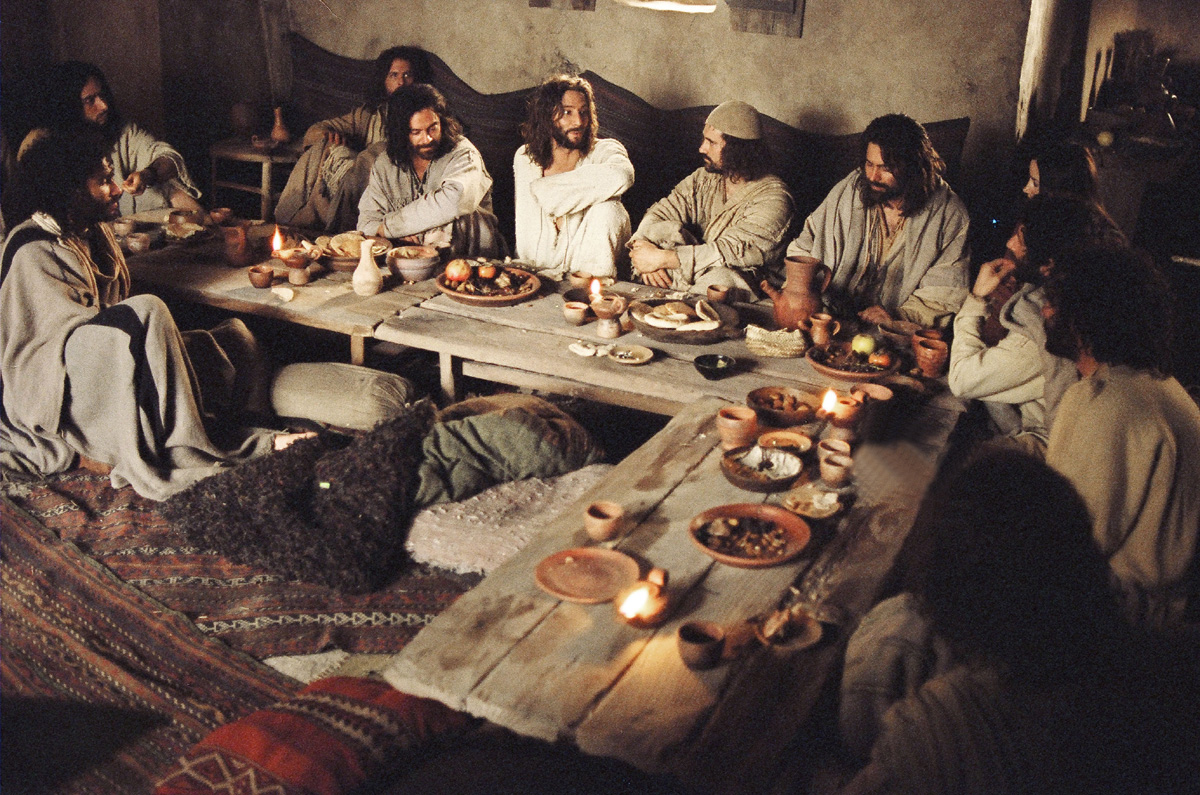
Photo Credit: Knox United Vancouver

[Adapted from the Archives]

For you critical thinkers, this week in the life of Jesus of Nazareth is one worthy of analysis. No matter your religion or non-religion, this Jesus, in these days, warrants examination, related to anything you may think of God. You will better understand the core beliefs of a Christ-follower, not just a person known to you as Christian. For in the study of Jesus’ life and his followers, in just this one week, you will see a deep distinction between “the religious” and “the redeemed”.

{Sidebar: I taught a World Religions course some time ago in a Moroccan high school. In that course, we studied all the major religions. The students were challenged to think critically of each religion. They were to study each religion in this way:

  • trying to put themselves in the perspective of one who believes (i.e., a true follower, using eye witness/historical accounts and Scriptures when available), and then
  • analyzing each belief/tenet of faith critically.

Any of us can benefit thinking through Holy Week this way; none will not come away the same by examining the life of Jesus.]

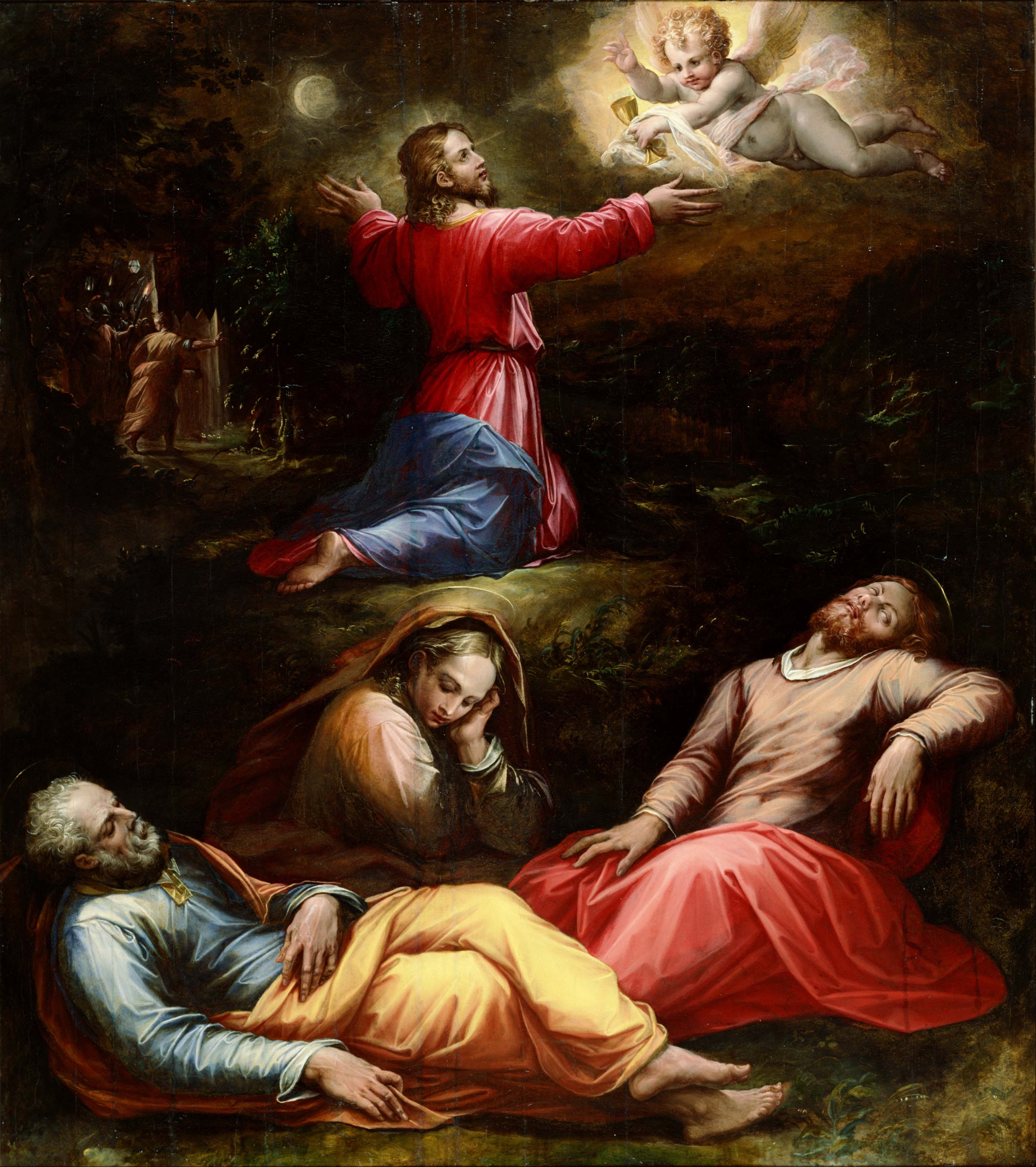
Photo Credit: Wikimedia

Palm Sunday is celebrated as the “triumphal entry” of Jesus into Jerusalem, just days before he would endure a mock trial and then be crucified. He and his closest followers (disciples) came to Jerusalem for the celebration of Passover. Passover was an annual remembrance of God’s protection and deliverance of Israel during a time of slavery (Exodus 12:26-28). Jesus would celebrate Passover on Thursday of that coming week, but he did not come to Jerusalem for that reason alone.

He knew from his Father God why he came to Jerusalem, and he tried to prepare his disciples for what was coming.

From that time Jesus began to show His disciples that He must go to Jerusalem, and suffer many things from the elders and chief priests and scribes, and be killed, and be raised up on the third day.Matthew 16:21

And while they were gathering together in Galilee, Jesus said to them, “The Son of Man is going to be delivered into the hands of men; and they will kill Him, and He will be raised on the third day.” And they were deeply grieved. – Matthew 17:22-23

As Jesus was about to go up to Jerusalem, He took the twelve disciples aside by themselves, and on the way He said to them, “Behold, we are going up to Jerusalem; and the Son of Man will be delivered to the chief priests and scribes, and they will condemn Him to death,  and will hand Him over to the Gentiles to mock and scourge and crucify Him, and on the third day He will be raised up.”Matthew 20:17-19

I can’t even imagine what those disciples must have felt as Jesus predicted his own death. They loved him and all pledged their lives to him, even to death. They believed him to be the conquering king, sent by God, to deliver the Jews from Roman rule and to restore the nation of Israel. Although they had soaked up three years of his teaching, this “end of the story” was more than they could bear. Just a week later, they would gloriously understand that it would not be the end of the story of Jesus’ life.

On this Sunday, before the Passover, Jesus would enter the great city of Jerusalem, teeming with crowds there to celebrate. He entered, riding a donkey*, as was foretold by the Jewish prophet Zechariah:

Rejoice greatly, O daughter of Zion! Shout in triumph, O daughter of Jerusalem! Behold, your king is coming to you; He is just and endowed with salvation, Humble, and mounted on a donkey, Even on a colt, the foal of a donkey. Zechariah 9:9

Imagine the scene as Jesus entered Jerusalem. Some in the crowd did recognize him, and then the word spread of the arrival of this great teacher, this healer, this man whose teaching was like none before him. Palm branches were pulled to wave in tribute to him, as others flung their cloaks on the dust before him welcoming him:

Most of the crowd spread their coats in the road, and others were cutting branches from the trees and spreading them in the road. The crowds going ahead of Him, and those who followed, were shouting, “Hosanna** to the Son of David; BLESSED IS HE WHO COMES IN THE NAME OF THE LORD; Hosanna in the highest!” When He had entered Jerusalem, all the city was stirred, saying, “Who is this?”Matthew 21:8-10

“Who is this?” For those who did not know him, the wild welcome for him must have been confusing and captivating. For the religious authorities in Jerusalem, who knew him and were unwilling to welcome this “king of the Jews”, his popularity was infuriating.

The clock began ticking as they plotted against this man Jesus.

Over that bright hopeful day of palms hung the shadow of the Cross – the Cross that would bring even greater hope to all people. The “Hosanna” of Palm Sunday would change to cries to “Crucify!” just five days later. Jesus had no ambition to please the crowds; he was resolutely on task to redeem those who could not redeem themselves – the whole world.

[Each day in this week, the posts will mark the journey of Jesus of Nazareth through the last week of his earthly life. Join me please.]

*Matthew 21:1-11 & Commentary

**”Hosanna” means “God saves”.  YouTube lyric video of Hosanna – Hillsong

Spotify Playlist – From Palm Sunday to the Resurrection – Beth Wayland

Holy Week Timeline

Look, the World Has Gone After Him: Prelude to Palm Sunday – Jon Bloom

The Significance of Palm Sunday in Relation to Passover

Kings Riding on Donkeys? What? – Christopher Mark Van Allsburg

Photo Gallery: Egypt’s Coptic Christians Celebrate Palm Sunday – When our children were young, we lived in Cairo, and bought palm fronds to make some of these crafts, as well as buying them ready-made.

Monday Morning Moment – Celebrating Those Who are the Real Deal in Our Lives

Photo Credit: Revival Centres

The real deal is defined as “A person or thing who is genuinely superior or impressive in some regard and is therefore worthy of appreciation or respect. A genuine and high-quality example of something. “

A blogger named Sarah Christine recently posted a captivating piece on determining whether something (or, in particular, someone) is or is NOT the real deal.

Something Real – Sarah Christine – Cultiv8ing Character

Why does this matter? We live in a culture that has become more and more cynical…and, superficial. Character seems no longer part of what it takes to win an election, or score a promotion, or get “to the top” of whatever the field is. If everyone lies, we just hope they don’t lie to us. Fake news and pseudo-science have prompted us to be passive in our examination of world events. Do we suspect the real deal just doesn’t exist anymore? Sooner or later, a rock will be turned over, and, even in the best of us, icky, creepy things will be exposed.

Take heart. The real deal still exists, and, in fact, maybe it’s us.

Sarah Christine points out “a three-step process…helpful for assessing whether something is the capital R-Real deal or not in [her] life, and I gotta say, it’s done a good job of rooting out the counterfeits…”

  1. Ask – “when it comes to figuring out whether something is the real deal or a counterfeit, asking people with more experience/expertise who have ‘been there done that,’ so to speak, can be remarkably helpful in discerning whether or not to pursue, sign onto, or invest in something.” Still…this isn’t 100% foolproof: “while the reviews and opinions of others can give you some helpful direction when it comes to discerning something real from a counterfeit, you can’t always just take people’s word for it. Some things require or at least invite more up-close and personal investigation.”
  2. Seek – “A really good way of assessing whether something is real or not is what happens when it gets tested. Because as much of an asset as our own eyes/experiences can be, the human mind has a tremendous capacity for self-deceit. We are… not always the most objective. Thus…when it comes to figuring out whether something is the Real Deal and not a counterfeit does not rely on the opinions/experiences of anyone else or even what we perceive ourselves. It comes down to testing the thing itself.”
  3. Knock – When you’re face-to-face with someone and a strong opinion has been voiced, you can assess whether that person truly believes it at his/her core or if it’s just something believed as true because of cultural influence. Sarah Christine advises: “All I’d have to do was ask,‘Why do you think that?’ And see, asking someone “why?” they said what they said, is the equivalent of a gentle poke if you ask me. It’s a soft knock. A nudge. A loving tap. But if something is the Real Deal–i.e. ironclad–you can more than give it a tentative push-back. You can full on hit it with a baseball bat. Because here’s the thing: Real Deals can take a beating. A solid argument can withstand even the most hostile inquisition. Someone who really loves you won’t cut out even when you act like a total– If you’re struggling to see whether or not something is the Real Deal, and you’ve asked and sought and still aren’t sure whether it is or not, my suggestion is you give it a good, solid hit and see what happens. Because Real things–True things–can take a beating and come back swinging.” – Sarah Christine

Thanks, Sarah Christine. I loved this so much. One challenge about this is how passive we’ve become in this post-COVID, anti-other (almost said anti-Christian, but it’s really anti-other). We struggle with a lethargy of a sort, a dullness in our critical thinking. Do we have it in us to go after the real deal?  Or BE the real deal?

It’s. Just. Too. Hard.

We’ve got to WAKE UP! Look around. Start asking questions and testing out where we align and with whom. Not to become more tribal but to truly find what we believe is worth fighting for…living for. And then going after it. Going after them. Determining not to miss the Real Deals out there – the people who we can learn from and the causes that matter.

I don’t know Jackie Hill Perry personally, but she is the real deal. Karen Swallow Prior is another one. We don’t agree on everything, but they have done the work to know what they believe and they aren’t wavering…and hopefully never will. My mom was (all the years I had her with me) and my mom-in-law continues to be the real deal…with no celebrity but quiet resolve to live a faithful life.

Photo Credit: Quotes in Sight

These are but a few of the many real deals I’ve had the privilege of knowing in my short life.

The most influential? Jesus, the Christ, the Creator, the Savior.

In a conversation last night with a much younger friend, we puzzled over how people can ever walk away from Jesus once they know him. The church, maybe. The Christian life, possible. But Jesus? The only answer is that people who walk away never truly knew him. As for those whose religions or non-religions take no consideration of him, I would invite you to consider digging in and knowing Him. Ask. Seek. Knock.

He’s the real deal.

A never ending test for you will be loving someone that’s failed you. The easy thing is to retreat. To put up a guard. To cuss em out and carry on with your day. Yet God says “love them anyway”. As hard as it is, love is the only way you will truly look like Jesus. Jackie Hill Perry

Monday Morning Moment – Blind Adventurer Erik Weihenmayer Talks the Struggle of Life and the Advantage of Adversity

Photo Credit: Facebook, The Richmond Forum

There was something about his eyes. Knowing already that adventurer Erik Weihenmayer is blind, I still couldn’t get over his eyes – there is searching and wonder in his whole face…which could describe the life he has carved out for himself.

Photo Credit: Facebook, The Richmond Forum

Erik became blind in his early teen’s. Yet even then, he refused to let go of whatever it was he could do, even blind. He wrestled on his high school team and welcomed the sport of rock climbing. He discovered his hands and feet could become his eyes on rock walls…and later ice cliffs.

Dave and I had the great good of hearing Erik speak this weekend at The Richmond Forum. We were fully prepared to spend the evening listening to him regale on his incredible adventurer’s life. What it has been like to be blind and yet to accomplish such feats as climb to the summit of Mt. Everest or kayak the river rapids through the Grand Canyon.

He did not disappoint on that, but deeper still was how he reflected on struggle in life, on the advantage of adversity, on the critical nature of having mentors, and the beauty of a ropes team (those holding the ropes for each other, no one just holding for him/herself alone).Photo Credit: Flickr, Didrik Johnck

Here are just some of my takeaways from his insight into life (for all of us not just those aspiring to climb tall mountains):

  • On what’s possible: He has found a way to see what’s possible while others see what’s only in the way. “What’s within you is stronger than what’s in the way.”
  • On struggle: He focused on the struggle in life and how to build mental maps to “navigate forward”. In wrestling with the struggle, in the hours of preparation and practice, you discover what barriers are more easily overcome and what still remain to be conquered. [Learn more about his organization No Barriers here.]
  • On quitters, campers, & climbers: He talked about three types of people in the world: quitters, campers, and climbers. [This is also covered in his book with Paul StoltzAdversity Advantage.] Erik believes we all start out as climbers but how we deal with the barriers in life separate us out over time. Quitters essentially just give up on the ascent (whatever that means for them). Campers work hard toward a certain level. Then they make the decision that it’s enough and put up their tent right there. Climbers are the few who keep learning, and growing, and pressing forward…committed not just to the summit but to fulfilling their life purpose. Climbers are those who can say, “I gave it my all”. He challenged the audience to ask themselves who they are and who they want to be.
  • On choosing our response: Growing up, Erik dealt with his fear of being left behind or put in a corner (because he was blind). He quoted Victor Frankl about how we deal with what we’re given in life: Between stimulus and response there is a space. In that space is our power to choose our response. In our response lies our growth and our freedom.
  • On reach: There is a reach common to all of us. What we do with it determines our outcomes. We are tempted to stop reaching when we fear failure or falling short.
  • On adversity: When we keep climbing, keep reaching, adversity follows. Rather than fall to hopelessness, we must attack the adversities – the small ones and on to the most complex ones.
  • On teams: “Ropes teams” are invaluable. No one gets to the summit alone. Erik extolled the essential ingredient of trust in a good team. Do you trust your team? Are you linked together behind one vision? Everyone doing what each needs to do for the sake of the team? In climbing, if one hiker starts falling, the climbers on each end do what is necessary to stop them one from falling, for his sake, for theirs and for the whole team, Such a good word for any of us.
  • On fear: Try to do something a little courageous. Small acts of courage lead to big ones. He struggles with fear. What he’s learned in life is that over time, as you prepare yourself for whatever is ahead, fear moves to the periphery, and you have room for awareness, focus, gratitude.
  • On parenting: His counsel to parents was brilliant. “Help your kids develop executive leadership skills. Go explore but be responsible…Don’t let love become a prison…Get kids out there doing something bigger than them. Get them socialized to real life…There are consequences to mouthing off to an older brother”.

I could have listened for hours still. Capture for yourself what Erik has learned about struggle, adversity, and the importance of purpose and people in our lives. You can find some YouTube videos, but his books, documentaries, and podcast give you a deeper dive.

I’ll close with two last quotes from him, and one by writer Ryan Holiday.

“There’s a very blurry line between the things we can’t do and the things we can.” – Erik Weihenmayer
“Adversity alone has the unique power to inspire exceptional clarity, purge any vestiges of lethargy, refocus your priorities, hone your character, and unleash your most potent forces.” – Erik Weihenmayer, The Adversity Advantage: Turning Everyday Struggles into Everyday Greatness

“It’s not just: How can I think this is not so bad? No, it is how to will yourself to see that this must be good—an opportunity to gain a new foothold, move forward, or go in a better direction. Not “be positive” but learn to be ceaselessly creative and opportunistic. Not: This is not so bad. But: I can make this good. Because it can be done. In fact, it has and is being done. Every day.” – Ryan Holiday, The Obstacle Is the Way

Monday Morning Moment – Starve a Cold, Feed a Cold? – Which Is It?

Carey Nieuwhof’s latest leadership podcast on civil conversations was brilliant. His guest, Francesca Gino, author and Harvard Business School professor, offered up great counsel on how wanting control stifles our conversations and how best to open the door to positive change in workplace relationships.

“…the great resignation probably has taken a toll on your team. And the data is telling us that 50% of people either have or will be leaving their job for another job in the next 12 months. So they’re looking for workplaces where they can be engaged and grow every day. So if you think you’re through this, you’re probably not. And you’ve also
got new hires, right? So how do you keep them? Well, Harvard Business Review, speaking of Harvard, says that 70% of the reason people leave a job is because of their relationship with their manager. So that puts a lot of the spotlight on the one-on-one meetings you have with your direct reports. Leadr believes that the one-on-one meeting is the most powerful leadership development tool a manager has.”Carey Nieuwhof, Leadership Podcast, Episode 483

This conversation was to be the focus of this week’s Monday Morning Moment, but alas…

I caught a cold.

We all know the symptoms – feeling cold or hot, achy, stuffy nose, sore throat, cloudy in our thinking. Writing went out the window this morning. All I wanted was to stay in my pajamas and socks, and sleep on the sofa under my favorite fleece throw. Sleep, watch TV, read. Nothing more.

Some people don’t feel like eating when they’re sick. My thinking is our bodies tell us what we need. I needed to eat…so I ate all day.

Do you know the adage about how best to treat a cold? Which is it? Starve a cold or feed a cold? Starve a fever, feed a fever?

“Starving is never the correct answer” says WebMD.

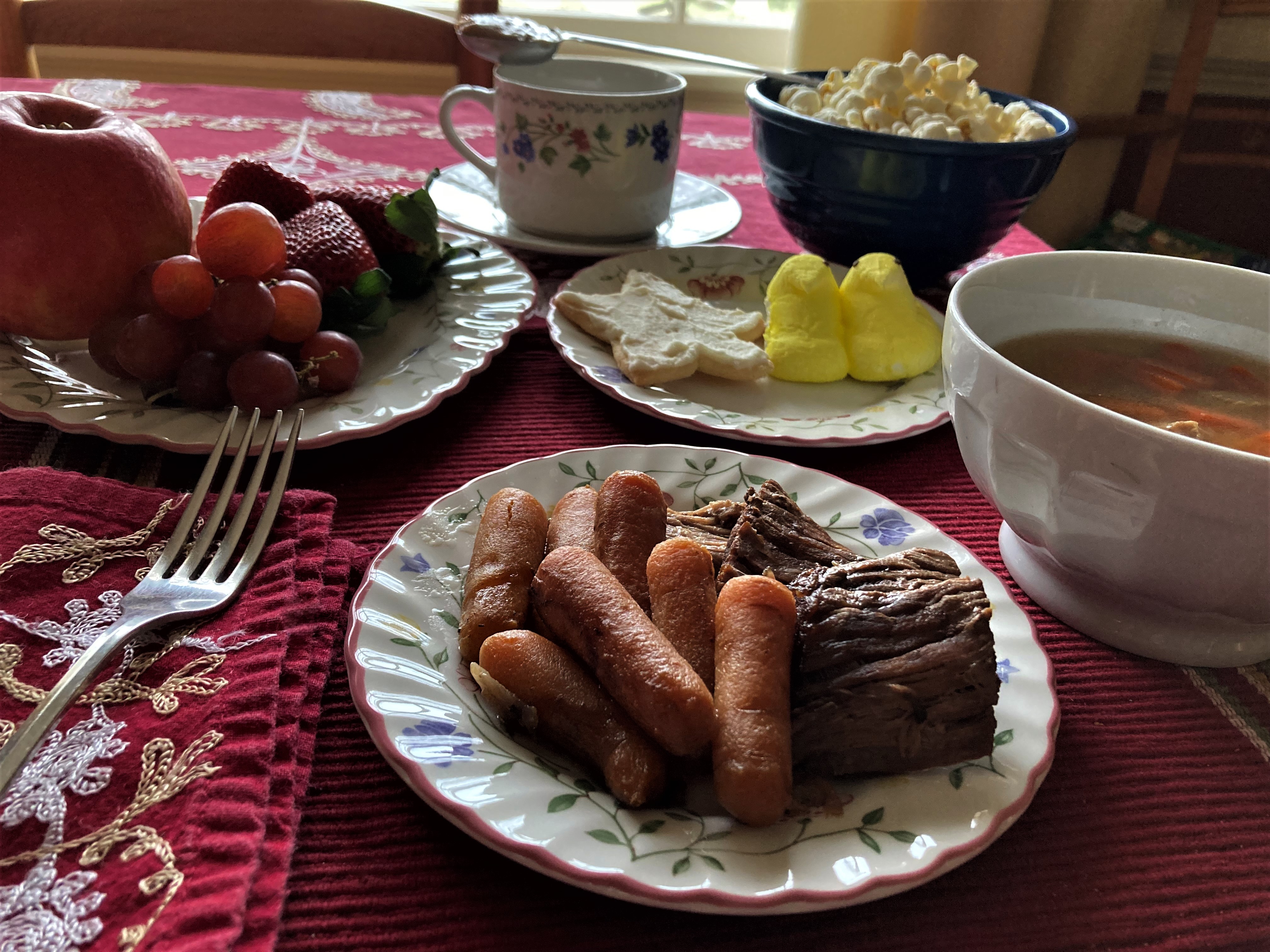
For almost a 1 1/2 years, I have started my day with a cup of coffee and spoonful of natural, crunchy peanut butter. Today was no different. Then, except for the cookie, popcorn, and Peeps, I felt hungry for and ate foods that are actually considered quite therapeutic for people fighting cold viruses. The foods in the picture above (staged afterwards for the blog) were my get-better-as-quick-as-possible choices.

Starve a Cold, Feed a Fever? Learn the Facts – WebMD

So…my day was low productivity…no writing until now (I’m feeling stronger instead of worse this evening, so that feels like a good sign).

Will revisit Cary Nieuwhof’s podcast another day. You should give it a listen, or, if you prefer, read the transcript.

Thanks for keeping me company for these minutes…at a safe distance. 

[Postscript: Take Francesca Gino’s Rebel Test – fascinating!]

5 Friday Faves – Beyond Grumpiness, the Coming of Spring, Shame as Our Personal Assistant, Vulnerability, and Great Marriage Advice

Friday Faves – Go!

1) Beyond Grumpiness –A friend of mine pointed this blog to me today and it bumped its way to the top of my Faves. English professor Alan Jacobs mused about the grumpiness of old people. I don’t know when it happens and why exactly it happens, but it is something that has happened to me of late…and I don’t think I’m old enough yet for it to happen.

Photo Credit: Stream

Here’s a bit of what Dr. Jacobs says about grumpiness, but you should read his whole piece, especially if you’re finding yourself becoming grumpy (whatever age you are).

“I think the explanation for such widespread grumpiness is fairly simple…It’s not the big foul acts or horribly cruel words that do you in, it’s the slow drip drip drip of little annoyances that become over time a vast sea of frustration. Surely you’ve been there? You become exasperated by someone’s passing comment and when they are genuinely puzzled by your anger over so trivial a matter, you try to explain (apologetically, penitently, I hope) that it wouldn’t be a problem if this thing had happened once but it has happened a thousand times. It’s the repetition that kills you.” [Dr. Jacobs goes on to talk about the divisions on which we’ve taken sides give the sense of being new and revolutionary…and yet they are old divisions revisited.] “You can’t learn from the past if you don’t know what happened in it. So yeah, I’m gradually turning into a grumpy old man. Because nobody learns anything…” [About these things that divide us: We seem to care too much, or too little, or just plain not at all. Dr. Jacobs challenges us that only being truly loving people gives us the right to voice an opinion, and definitely not a shaming one.] “It’s a hard path to walk, this Way of avoiding both indifference and ‘the conscious impotence of rage / At human folly.’ But the hard path is the only real Way. (All the others circle back on themselves.) So I try every day to follow it. I don’t think I could manage even that if I did not have an Advocate to accompany me, to encourage me, and to guide me.” – Alan Jacobs, Beyond Grumpiness

Against Stupidity – Alan Jacobs

The Destructive Power of Grumbling and Complaining – Michael Brown

2) The Coming of Spring –March weather – “In like a lion, out like a lamb”. Of course, we’re only mid-way through March, but we have no more predictions of snow. Daffodils bloomed in snow last week, but the winds of March have blown all the rough weather away for now. I’m not rushing Spring, but it is such a beautiful and refreshing time of the year. Here are some pics of our March so far.

Photo Credit: Kathryn Visneski (East Tennessee; we had this same snow but no captures of red cardinals in it.)

3) Shame as our Personal Assistant – In Dr. Curt Thompson‘s excellent book The Soul of Shame: Retelling Stories We Believe About Ourselves, we find the intriguing term shame assistant.

Imagine having a personal assistant who means us only evil. Whispers in our ear of how we’re not prepared enough, not attractive enough, not smart enough…just not enough.

It’s hard not to believe what seems to be coming out of our own reasoned thinking. Maybe…just maybe…we’re not enough.

To defend ourselves, without consciously being aware, we armor up against those thoughts…protecting ourselves from being too exposed to others. Isolating ourselves. This hiding keeps us from community which we need the most in dealing with shame.

At times, we strike out against the shame. Either by punishing ourselves or by blaming someone else for the pain we feel. Again, this further isolates us from others…leaving us alone with the shame attendant of our lives.

There’s good news, though, Friend. See #4.

Shame: Your Inner Attendant – Katelyn Entz

Toxic Shame Has Its Own Neurobiology. The Gospel Offers a Cure – Werner Mischke

4) Vulnerability – Curt Thompson spends a chapter in his book on the remedy for shame. It is vulnerability. How do we convince ourselves, all armored up against being exposed that the path to healing is dropping the armor? Here’s the thing: armor or no, we are vulnerable. Period. Full stop. We can’t keep shame at a distance. It crouches at our mind’s door, ready at a moment’s notice, to destroy our peace…and diminish our relationships.

Photo Credit: Curt Thompson MD, Instagram

“To be vulnerable is not first something we choose. It is something we are.”* We are vulnerable. It is our state of being. We spend an enormous amount of energy protecting it. We can be free of this.

*Being Known Podcast – Vulnerability – Season 1, Episode 3

You know how we teach little ones to say, “Please” and “Thank you”? These aren’t just practices of good manners. They are actually acknowledgements of our vulnerability from an early age. Little ones have to ask for what they can’t get on their own, and then they express gratitude that their need was seen and responded to.

Our willingness to be openly vulnerable within community moves us toward intimacy. “Vulnerability creates opportunity for connection.” When we don’t avail ourselves to these opportunities, we just stay in our protective armor. Opening up to a trusted friend or small group emboldens us to tell our stories and recognize that the stinging words of shame don’t belong to us. We matter. We are enough. Being able to share such things with people who will NOT leave the room gives us the courage to then be more vulnerable with others – like our boss, or professor, or estranged family member.

Dr. Thompson also talks about the other side of being vulnerable – when we are the ones others are being vulnerable with. We may want to move away from the awkwardness of that kind of disclosure. Or we may want to try to fix it which early on is more to help ourselves dealing with the discomfort than the one sharing. “What they most need from us is our empathic presence…” To lean in, to demonstrate that they are being seen, and to connect with them, and validate what they are feeling, to see them in whatever the hard is for them in being vulnerable. In the end, we may ask how we can be helpful but we don’t go right there in the immediate of their telling their story.

This is vulnerability and it moves us to healing, to community, and to joy.

5) Great Marriage Advice – Marriage…whew! Earlier in my adult life, I always cringed at the observation that marriage is work. It didn’t look like work, and having the opportunity to share life with your special person seemed more joy than labor. Then I got married.

It is joy and it is work…not in the dull, redundant sort of work we may have from time to time…but the challenging, invigorating, problem-solving, “in it to win it” kind of work.

I happened across a sweet thread on Jane Lewis’ Twitter page. She reached out to her followers for marriage wisdom. Lots of response!

Below are just some of them…the ones I especially found valuable:

“No one”……and I mean “no one” can read your mind!

Develop and maintain hobbies independent of each other AND protect the hobbies you do together.

Attack the problem, not the person.

Faith (if you are inclined that way), mutual respect, and honest, loving, open communication are the Big Three that get you through life together.

Don’t take the little things for granted.

There is a challenge to live connected but free with your spouse. I’ve read that your primary job in marriage is to protect your spouse from your control.

My advice is laugh a lot, kiss each other often, and pray for and with each other daily.

Forgive quickly and keep a short memory of the bad. Focus on the good and appreciate him immensely!

1. Communicate, communicate, communicate – not just about money, work, chores, kids or health, but also spirituality, fun, world events. 2. Each of you needs ‘me’ time. 3. Do something fun together every week. 4. Sex is great, but marriage is about more than that. 5. Communicate.

Seek to have a quiet heart each day. Thought today of Mary facing extreme excitement (Luke 1:18,19) and deep coming sorrow (Luke 1:35). The Lord is your Keeper in highs and lows.

Don’t criticize or complain about your spouse in public. Smile at the “husbands be like” jokes, but don’t contribute. Be honest & kind. Talk to each other about your problems, not to friends/family. Keep your own hobbies, bank account & bathroom if possible.

Don’t be easily offended. As John Bevere says in his book, it is “The Bate of Satan.”

Stay curious. Keep flirting. Never forget to tell him you appreciate his hard work…never forget the reasons why you fell in love with each other…never forget that you are on the same team.

Neither of you is the same person you will be in 5 years, 20 years, or 45 years. You’re each committing to the version of the person you love now, but you’re also committing to the many versions they will become.

As much as you love him and he loves you, know that you cannot completely fulfill him, nor he fulfill you…it’s unfair to put that burden on either and will only end in heartache.

Have close girlfriends. Be humble when you fight. Hold healthy boundaries. Learn how he processes. Let him be different than you. Stick. Bad times pass. Glorify God. Forgive. Remember marriage is a picture to help us understand Christ’s love for the church. Let that sink in.

Find ways to laugh together and always have compassion for one another.

Find a reason to laugh, fist bump or high five with your spouse everyday.

Mind who you talk about your marriage with and who you listen to about your marriage. There’s a lot of wisdom to be gained from others who have gone before, but there are also people who you shouldn’t let speak to your marriage.

My advice to a new bride- maintain your friendships.with your girlfriends. He does not want to chit chat, go shopping or do your hair the way your girlfriends do. Keep your girlfriends. He will be happier and so will you.

Hold to your integrity. Trust Jesus w everything. Listen deeply. Celebrate madly. Speak truth in love. Have fun! Pray together. Walk together. Hold hands. Let there be space in your togetherness. Let go & hold on.

Give dignity to your differences. Make adequate space for whatever conversation needs to happen. You’ll both still be there tomorrow, and few things are urgent. Have your own tubes of toothpaste.

An abbreviated quote by Camille Paglia: “Men have sacrificed and crippled themselves physically and emotionally to feed, house, and protect women and children. (But the world) portrays men as oppressive and callous exploiters.” Be understanding of his burden.

Talk through how you deal with money and come up with a budget you both agree on. One spouse can pay the bills but both of you should be aware of the state of your finances and financial goals.

You are the same team. In disagreements, in different skill sets and ways of communicating, you are all on the same team. Argue and forgive like teammates. Notice and applaud like teammates. Work out problems and brainstorm like teammates. We use “same team” as shorthand to stop ourselves when we disagree or misunderstand each other. Take a breath and explain what is going on. Learning to argue well, to listen well and be self-aware enough to give names to things and be heard. And give loads of grace.

@janeelisabethh, you have some wise women (and a couple of guys) in your Twitter world. People (and threads) like this are why I am still on Twitter.

Coming up on 38 years with this guy.

___________________________________________________________________________

Thanks for stopping by. It means a lot.

Bonuses:

Photo Credit: Ann Voskamp, Tim Keller

Photo Credit: Instagram, Tim Keller NYC

10 Ways to Live Life to the Fullest After 60 – Rebecca Wilson

Worship Wednesday – You Are My Hiding Place – Selah

Photo Credit: Heartlight

You are my hiding place; You shall preserve me from trouble; You shall surround me with songs of deliverance. Selah.Psalm 32:7

When I am afraid, I will trust in You.Psalm 56:3

This I know: God is for me.Psalm 56:9b

OK…so I seem to write a fair amount about fear and being afraid.

As a child, I was unfortunately a bit of a Chicken Little…with “the sky is falling! The sky is falling” response to confusing, disquieting situations.

How Many Times Is Fear Not in the Bible? – Chris L.

My move to Connecticut to take a faculty position at Yale’s School of Nursing was a huge stretch for me. Arriving there in snowy January 19, 1983. I was new to a very different city and culture. I had loosened my Southern roots, and the Bible Belt that had cinched me in was dropped behind me somewhere between Georgia and Connecticut. I took refuge in songs like Michael Ledner’s  “You Are My Hiding Place” . Published in 1981, it quickly became one of my go-to songs for comfort and assurance. Not just in hard moments alone, but definitely, pretty much in every hard moment.

Sitting down at the piano on those winter evenings, alone with God and the music, I would play and sing away the days of sharp learning curves and homesickness. Sometimes Broadway tunes, sometimes old rock standards, but often worship songs. In fact, I think I fell in love with my husband Dave, early in our relationship, playing that piano and singing side by side…in the 80s. “You Are My Hiding Place.”

These days, fear can so easily churn up from deep inside.

How anyone gets through all that’s going on in the world today, without Jesus…I just don’t know. So thankful for His Word, His presence, His comfort and redirection. #DoNotBeAfraidPhoto Credit: Flickr

Worship with me, (words and music in the link). This is Selah‘s cover. [After you worship a bit, and this song leads us to worship, go back and read the comments on the YouTube video linked above…story after story of God’s kindness and provision in hard times.]

You are my hiding place
You always fill my heart
With songs of deliverance
Whenever I am afraid
I will trust in You

I will trust in You
Let the weak say
I am strong
In the strength of the Lord

You are my hiding place
You always fill my heart
With songs of deliverance
Whenever I am afraid
I will trust in You

I will trust in You
Let the weak say I am strong
In the strength of the Lord
I will trust in You*

*Lyrics to “You Are My Hiding Place” Songwriter: Michael Ledner

Photo Credit: Heartlight

YouTube Video – El Shaddai Medley – You Are My Hiding Place – Jesus Image

YouTube Video – You Deserve the Glory – Jew & Arab Worship Together – just an extra – so beautiful.

Monday Morning Moment – the Rise and Fall of an Empire – Can We Resist the Decline, America?

Photo Credit: Ray Dalio, YouTube

How in the world are we doing as a nation?

As we watch what’s happening around the globe as well as looking inward at our country’s changing culture, how should we then live?

This week, a 43-minute video came to my attention which so fascinated me I shared it widely with friends and family…and now with you.

This YouTube video was created and narrated by Ray Dalio, founder of the hedge fund and investment firm Bridgewater Associates. It is entitled: Principles for Dealing with the Changing World Order – Ray Dalio. He takes history from the last 500 years and tracks it in a mesmerizing animation depicting the rise and fall of world empires.

What are the factors that move nations to become world powers? What also are the causes of the decline of these powers?

Photo Credit: Ray Dalio, YouTube

His video is essentially a summary of his 2021 book Principles for Dealing with the Changing World Order – Why Nations Succeed and Fail. Now if you click on the link to this book, and go to reviews, you will find not all the reviews are glowing. So take heed to the criticism.

Still, I loved this video because it was easy to understand for someone who isn’t much of a historian or, for sure, an economist. His explanation of what lies behind successes and failures of nations seems to line up well with what is happening in the U.S. for sure.

Photo Credit: Ray Dalio, YouTube

These screenshots from the video give you an idea of what you’ll find should you watch it. So good.

Dalio alludes to economic principles that we can apply to help our nation slow its decline as a world power and possibly even reserve it. He goes into these principles much more in his book, but the two he mentions in the video are quite simple:

  1. Don’t spend more than you make.
  2. Treat people well.

Ridiculously simple, but do we do them? We have had national debt since the start of the U.S. as a nation. However, in recent years our debt has wildly ballooned out of control. Also the whole “treating people well”? The last time we were able to pull together as a nation was probably the attacks of 9/11…over 20 years ago. The division in our country is so deep, it is hard to imagine our being able to come back together. It could happen…and I will keep hoping that’s the case.Photo Credit: Ray Dalio, YouTube

On the graphic above, we see the steady decline of the US and the sharp rise of China. Is this the future? Or are other factors also at play? I think there might be…one in particular, the God of this universe. However, He may choose not to save the US from its own self-induced decline. Only time will tell.

[Postscript: There is a word of wisdom here: don’t spend more than we earn and treat others well. Sound counsel all around.]

Economic Principles – Website linked to Dalio’s best-selling book Principles for Dealing with the Changing World Order – Why Nations Succeed and Failincluding bonus content not in the book

U.S. National Debt by Year Kimberly Amadeo

Worship Wednesday – The Commission – Cain the Band

Photo Credit: Daily Verses

Then Jesus came to them and said, “All authority in heaven and on earth has been given to Me. Therefore go and make disciples of all nations, baptizing them in the name of the Father, and of the Son, and of the Holy Spirit, and teaching them to obey all that I have commanded you.  And surely I am with you always, even to the end of the age.”Matthew 28:18-20

When good news shakes up and transforms our very lives, we don’t keep it to ourselves. We can’t. In fact, in his last conversation with his disciples, the Messiah Jesus speaks of this in commanding terms.

The occasion for his words in the Gospel of Matthew was a gathering of Jesus’ followers with him. They were filled with both the comfort and joy of having come through His unwarranted death on a Roman cross and then having witnessed His resurrection from the dead. Nothing could keep Jesus in the grave. Nothing.

He took our sins to the cross. He died in our place. He gave himself for our sake that we could know His abundant life on earth and be with the Lord forever in Heaven.

In his commissioning (Matthew 28:18-20), he spoke to his followers but the words ring through the centuries to all of us and to those who come after us. Only he had the authority to speak them and to send us out. His authority came from the Father, we can speak the good news of Christ through his authority and the power of the Holy Spirit. He goes with us and is with us always.

So what is our commission?

  • Go – to our children, our larger families, our friends, our neighbors, our workplace, the marketplace, the world.
  • Make disciples – not by any coercion or bait-and-switch strategy. We live Christ before others and we speak the words of Christ to those he places in our path. We are not Christian from birth (as some think about Christians). We are also not saved by manipulation or parental persuasion. We are saved by reckoning with our sinful state and need for a savior. The Lord saves; we cannot save ourselves. “Making disciples” is to lay out the truth of our own experience in received salvation from Christ and inviting others to receive the same. It is not the Lord’s desire for anyone to die without an opportunity to come to faith in him (2 Peter 3:9). He has commissioned us to bring about that opportunity.
  • Baptize – in the name of the Father, Son, and Holy Spirit. Jesus himself was baptized, (without need but as a witness for what he calls us to do). It is a public pronouncement of our faith in the sufficiency of Christ and our decision to follow him.
  • Teaching to obey. Obedience to Christ is not a peevish, demeaning thing. It is a beautiful alignment with all his promises, with all of who he is, and with all the good he brings out of our obedience – not just for ourselves but with a wide and generational ripple effect.

And that glorious promise: He is with us always. Glory!

[A note from my mom when we took a job outside the U.S. – she was a great pray-er.]

Have you received this Christ as your savior? Not an acknowledging of a form of Christ made popular across religions…but the One true God (three in one, in perfect unity). Not a “hope to get to Heaven” ticket…but through a personal relationship where God the Father sees us as we were meant to be – pure and beautiful sons and daughters, transformed by the life, death, and resurrection of Jesus.

Salvation – Explore God

For those of us who have experienced this incredible, undeserved, God-given adoption into his kingdom, we have our commission.

Worship with me (lyrics/music in the link).

See my hands and look at my feet
It’s okay if it’s hard to believe
I have faith that you will do greater things
It’s my time to go, but before I leave
Go tell the world about me
I was dead but now I live
I’ve gotta go now for a little while
But goodbye is not the end
Don’t forget the things that I taught you
I’ve conquered death and I hold the keys
Where I go you will go too someday
But there’s much to do here before you leave so
Go tell the world about me
I was dead but now I live
I’ve gotta go now for a little while
But goodbye is not the
End of the journey
The end of the road
My spirit is with you
Wherever you go
You have a purpose
And I have a plan
I’ll make you this promise
I’ll come back again
But until then
Go tell the world about me
For I was dead but now I live
Oh, I’ve gotta go now for a little while
Hey, but goodbye is not the end(Go tell the world)
Oh, go tell them about me
(Go tell the world)
I’ve gotta go
(Go tell the world)
For a little while
But goodbye is not the end*

*Lyrics to The Commission

YouTube – The Story Behind the Song The Commission by Cain

Cain the Band Website

YouTube – I Am with You Always: Matthew 28:18-20 – Desiring God – John Piper

Monday Morning Moment – Generational Sin and Trauma – Don’t Trip Over What’s Behind You

Photo Credit: Seneca, Facebook, Natural Life

My maternal grandfather was a drunk. When he wasn’t withdrawn, walking trails in the woods, he could be mean to both his wife and his five children. How he and my grandmother, a pampered and passive woman, came to be married, I didn’t think to ask. Nor did I ask them or my mom about their childhoods.

My mom was an elegant woman. Beautiful, generous, selfless. She took the brunt of her father’s rages – standing between him and her mother or him and her two younger brothers. The two older brothers left home as soon as they could lie about their ages to join the military.

How she and my biological father married was less a mystery. She thought he was her way out of a hard life at home. It turns out maybe he thought the same about her. Whatever their affection before marriage, it cooled as the years and responsibilities folded on top of each other. It would turn out that although there was not so much violence in our childhood home, there was neglect. He wasn’t a drunk but he never cared to work. When Mom finally divorced him, her heart had become so wounded and weary, it was a matter of just having one less mouth to feed.

Mom would later marry my step-dad who was a sweet daddy to me. He was harder on my brothers…and on his own kids from his first marriage. It made me sad and a little frightened, especially for my older brother. He was old enough to have seen our grandfather drunk; he knew the dismissive behavior of our biological father; he felt the anger of our step-father. My younger brothers and I missed a lot of that.

Divorce and its fallout became something I would determine to avoid…even if it meant not marrying at all.

I did marry, and a wonderful man. We are very different from each other. We have different struggles and different childhood situations. However, from the beginning, we shared the personal experience of  nurturing love of parents, faithful to God and each other. This has been a strong foundation for us to learn to love well and parent well (hopefully). It is not the whole of it though.

In all of this, there is still the puzzling over what we bring to our marriage from past generations…and what will would transmit to our children?

Looking into our pasts isn’t always inviting. Some prefer to “let sleeping dogs lie”. I’m learning that our past informs our future; in fact, our past can predict or prescribe our future. It seems wisdom then to examine what we can of our past, and that of parents and grandparents.

Not to blame. Not to lay responsibility for some present lack in ourselves. We all make mistakes as parents even when we deeply love our children. The look back is to help us to heal any harm and to guard from bringing past hurts to our children…without thinking… without intending.

When our parents experience trauma in childhood – or endure the consequence of sin from a parent – they carry that into adulthood and potentially will transmit it to their own children. Not all survivors of adverse childhood experiences will follow this cycle, but it’s rare to avoid altogether.

My mom was very intentional in showing us love after experiencing so little in her childhood home. She did bring some of her trauma forward and we experienced it…without her meaning for us to. I remember trying, from an early age, to be as good as I could be for my mom…and failing. She had tried to do the same as well, in her growing up years…but with harsher consequences than I had.

“The child speaks what their parents could not. He or she recognizes how their own experience has been authored, how one has been authorized, if unconsciously, to carry their parent’s injury into the future.”Molly Castelloe, How Trauma Is Carried Across Generations

Photo Credit: Twitter

Have you discovered areas in your own life that if left unattended will transmit to your children’s lives? Fears, self-worth issues, anger, negativity, anxiety, perfectionism, sadness…or sin/trauma of all kinds that we have harbored (and maybe witnessed in our childhood). We can change the future, with God’s help, by taking a good long look at our past. Asking questions and considering what consequences are playing out in our current lives and our children’s.

We can break the cycle of generational trauma or sin, but it requires relentless intentionality on the parents’ part. Both for our own healing and for our children’s health. I didn’t want my children to be afraid or unsure of how valued they were. I wanted them to always know the experience of being safe, seen, soothed, and secure. Was I successful…? Not always…in fact, I was unaware of how generational sin clung to me. I didn’t have words for it then like I do now.

The Adam Young Counseling podcast has been a tremendous help to me in looking at childhood trauma and generational sin. He gives practical and reasoned helps in how to heal from our own trauma as well as how to curtail the repeat of generational sin in our children’s lives.

What are your thoughts? Please add to Comments. May God help us all to be blessings (and not cursings) to our children and to theirs.

What Is Generational Trauma and Is It in the Bible? – Ashley Hooker

The Sins of the Fathers Visited Upon the Children – S. Conway

What Are “Sins of the Father”? Understanding Generational Consequences – Michael A. Milton

YouTube Video – Generational Sin + Trauma – Gospel Care Class

5 Friday Faves – Beyond the Guitar’s Spider-Man Theme Mashup, Engaging a Person Who’s Harmed You, True Community, Going Through Closets, and Spring Flowers

Friday Faves – super fast!

1) Beyond the Guitar’s Spider-man Theme Mashup on Classical GuitarNathan Mills of Beyond the Guitar arranged and performed the three big themes of the three Spider-Man franchises of the last 20 years. So much to love in these movies, in particular the ones starring Tom Holland, Andrew Garfield, and Tobey Maguire. You’ll welcome the nostalgia and the heart-filling beauty of what Nathan does with the classical guitar.

Which did you love the most? Share in Comments.

2) Engaging a Person Who Has Harmed You – Who is this person? A parent…a spouse…a child…an employer…a supposed friend? We have a way forward toward healing.

Engaging With Someone Who Has Harmed You – Part 1

I discovered Adam Young Counseling a few weeks back and have dived in to many of his podcasts. His 5-part series above on engaging with someone who’s harmed you was like sitting in a therapist’s office…a GREAT therapist’s office. We have all been harmed by someone, and we ourselves have harmed others, often without knowing or without intending. Still, to have counsel on how to take positive steps toward healing in such a scary situation is amazing. Adam Young has experienced trauma himself, and he has redeemed that trauma in so many ways, in particular his love and help for others.

In these podcasts, Adam Young distinguishes between the garden variety sinner, a wicked person*, and an evil person. I appreciated that he said we do well not to judge people as permanently in those states because God can move to transform any of us. He did however encourage those of us who have been harmed to determine if we are dealing with a wicked or evil person…and act accordingly. His helps are empowering and transformative if we have the courage to walk through them.Photo Credit: Alistair Begg, Truth For Life

*Dr. Young spends much counsel on engaging a wicked person who has harmed us. It helped me to be reminded that a person who is behaving wickedly can, on the whole, be a decent person. What causes a person to act despicably toward us could be generational sin – not to discount that person’s responsibility in harming us, but to strive for understanding and grace (which multiplies toward us, not just to the one who harmed us). Thoughts?

When we have been harmed by someone, we need safe people to counsel with in order to be wise in our engaging others with whom we don’t feel safe. Walling ourselves off from them, trying to just put the harm behind us, or claiming forgiveness when we haven’t – none of these things get us to healing. If you have been harmed by someone, spend some time in these podcasts. Seriously. It will make a difference.

Photo Credit: Adam Young Counseling, Instagram

3) True Community – We desperately need real or true community. Whatever the problem loneliness and isolation were for us before COVID has been severely compounded. We need one anther…not in a surfacy, thin-veneered way, but in a deep well of fellowship with each other. Jennie Allen has written a hopeful and provocative book about this in Find Your People.

The need for true community is neither new nor specific to our culture. It’s been written about, researched, and explored for decades. Two great thinkers and authors Jerry Bridges and M. Scott Peck (both now deceased) are quoted below.

Photo Credit: Jerry Bridges, Quote Fancy

“If we are to master the scriptural principles of true biblical community, we must master this one: True greatness in the kingdom of heaven involves serving one another. Jesus said, “Whoever wants to become great among you must be your servant” (Matthew 20:26)…Fellowship is much, much more than food and fun and even more than reading and studying the Scriptures with another believer. Fellowship at times may involve blood, sweat, and tears as we stand side by side with our persecuted brothers and sisters…It implies a responsibility to fulfill our function in the body. We usually don’t think of fellowship in terms of fulfilling a responsibility, but that is because we have lost sight of the biblical meaning of fellowship. Fellowship is not just a social privilege to enjoy; it is more basically a responsibility to assume...But this is what servant-hood within the fellowship of believers is all about: being alert to the little things that need to be done and then doing them.” – Jerry Bridges

True Community: the Biblical Practice of Koinonia – Jerry Bridges

“In genuine community there are no sides. It is not always easy, but by the time they reach community the members have learned how to give up cliques and factions. They have learned how to listen to each other and how not to reject each other. Sometimes consensus in community is reached with miraculous rapidity. But at other times it is arrived at only after lengthy struggle. Just because it is a safe place does not mean community is a place without conflict. It is, however, a place where conflict can be resolved without physical or emotional bloodshed and with wisdom as well as grace. A community is a group that can fight gracefully.”~ M. Scott Peck

Photo Credit: One Community Global

The Four Stages to Building True Community

Do you experienced true community – where you are willing to serve sacrificially and receive that kind of care as well? We need to go after it for ourselves and one another.

4) Cleaning Closets- I’m not a spring cleaning kind of person, although, these days, we are so often called on to declutter, let go, and be free in the area of stuff management. Still we have two closets (among others) where things just get randomly tossed up onto the shelf. I decided to clear them out to know exactly what is stored there. One closet now contains my journals of the last 30 years!! Whew!

Haven’t re-read any of them but lined them up by date and found this little note from my sweet mama in the front of one of them (from many years ago). A treasure…

5) Spring Flowers – The month of March is bringing Spring along here in the US. With temperatures warming, trips to the park are becoming more regular. The glory of Spring is not lost on the kiddos.

I just want to share a few flower pics of recent days. Hope Spring is coming your way (of course, I get that’s only for the Northern Hemisphere…for you Southern Hem. folks, Happy Fall! 

___________________________________________________________________________

Thanks for a quick stop-by. It means a lot to me. Hope you’re surrounded by and creating beauty wherever you are…we sure need it in this world today…really every day.