
Tag Archives: New Year’s Resolutions

Saturday Short – Eating Healthy – Elastic Is Not So Much My Friend As a Close Acquaintance

Photo Credit: Sweet Little Bluebird

Sitting at my desk, I’m sitting very straight with great posture thanks to the corseting effect of jeans that fit me better a few months back. Struggling into those button-top, zippered jeans was one of those New Year wake-up calls. Eating healthier is usually one of my top resolutions, but it didn’t make the list this time…well…yet.

I was going to write how elastic is my friend and then discovered a West Coaster named Aurea has a food blog by that name (Elastic Is My Friend). Then, given my wrestling on this pair of jeans, I’m thinking elastic is more a close acquaintance…not as close as these jeans feel right now, but much preferred over them.

A friend of mine and I talk a lot about language.  Words are a great interest of mine, and it’s fascinating how their usage changes over time. Take the word “muffin tops“. In another “once upon a time”, muffin tops (that bulge over the top of our too-tight jeans) was called “love handles”.  The latter is a much more affectionate or endearing phrase than the first. Both words are a bit of a tease, as in poking-fun-at-sort-of-thing, but Urban Dictionary gives us women, at least, a break. Its definition calls love handles cute, curvy, etc.

Photo Credit: Foodiggity

Anyway, I digress.

Eating healthier would definitely help me become friends with both elastic and these jeans, which are causing me to breathe more shallowly than is probably healthy right now.

What would help me eat more healthy? Not all the diets out there that are either trendy or costly…just not into all that focus on food.

In the not too distant past, I have turned my eating habits around and made jeans my friend using three actions.

  1. Lay off the sugar. – Everything has sugar in it. Well, almost everything. I’m not into extreme food plans, but just getting sugar out of my  diet for a few weeks or months has resulted in weight loss, a change in my appetite, and even my food preferences. Since everything has sugar in it, I’m not talking about everything, but the obvious concentrated sugar foods.
  2. No Fast Food. – When I prepare food, I tend to make healthier food than when I drive-through or pick up something on the run. Not rocket science, but for me, it has to be something I resolve. Just too easy to pull in and pick up a fast lunch or beverage.
  3. Eating Stops at 7:00pm. At some point, I have to determine to “Stop the Madness!” For me, if I exit the kitchen by 7:00pm (not carrying food) and just don’t go back in there…my habits and cravings will change. They have before…they can again.

So mid-way through January, in a pair of jeans I can still fit in…I’m resolved to begin moving in this direction. Not the strongest resolve I’ve had going into a new year, but stronger than I had this morning.

Elastic…aaaaaahhh. Looking forward to peeling out of these jeans and putting on my pajamas later…AND closing the door on the kitchen at 7:00pm.

I’m thinking there could be some sort of conspiracy in the fitness clothing industry how it’s all so stretchy and comfy, with elastic at the waist. Effective for work-outs but just as lovely lounging on the couch in front of the TV…with that enormous bowl of popcorn or dish of ice cream.Photo Credit: NYTimes, NPR, Pinterest

Sheesh!

Focus! Need to definitely keep wearing these jeans until bedtime.

How about you? Any helps in forming habits where we don’t need such close friendships with elastic? Please share in Comments.

YouTube Video – ActiveWear

YouTube Video – Fed Up – Official Trailer

Monday Morning Moment: Rocking Your New Year’s Resolutions With True Habit Change

Blog - New Year's Resolutions - davidlose.net - Calvin & HobbsPhoto Credit: DavidLose.net

[From the Archives]

New Year’s resolutions are really very energizing. Whether we meet our goals or not, there is great promise within the resolution for resetting our thinking. A keen sense of self, or self-awareness, makes a difference in understanding our habits and progressing toward true habit change.

A couple of times in my life, I resolved to go off sugar. With a resolution like that, it meant abstaining from chocolate…which is a topic all its own.

Anyway, I was successful for over a year each of those times in excluding sugar from my diet. Never having really lost the weight from my first pregnancy, I decided to remove sugar from my diet for the pregnancy of our second-born. In those days, there was a chapter of Overeaters Anonymous in our town, and that group was a great help in my dealing with pretty much a sugar addiction.

The second time I “gave up” sugar was over 3 years ago, and I stayed the course of that habit change for over 1 1/2 years. Less accountability but even more resolve. Although I am back having dessert or sugary snacks sometimes, I am still operating with more self-awareness than ever before. Self-awareness, not self-condemnation. A very different experience.

Without knowing it, I was using a practice of habit change that Ken Sande writes about on his blog, Relational Wisdom 360. He first influenced my life years ago with his work on conflict resolution through his Peacemaker Ministries. He is a gentle guide in many of the issues that complicate our lives.

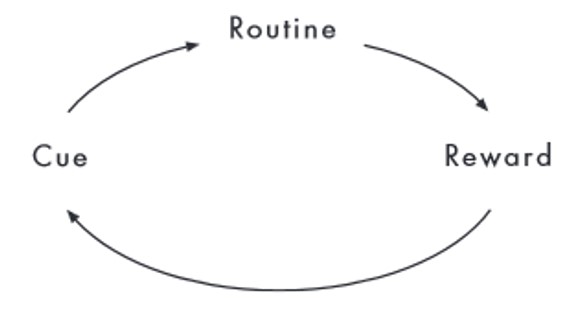
His New Year article on Seven Principles of Habit Change comes at a great time. Sande talks quite kindly about how we develop habits and what it takes to change them. His first principle of habit change gives us a look at the cycle of habits – the cue, the routine (or response), and the reward. Anyone who loves chocolate can understand this easily. For me, in eating sugar (or in overeating, in general), the cue could be a number of things – fatigue, anxiety, loneliness, presence of yummy food. It never takes much to send me to the refrigerator or pantry. The routine: feed the cue, whatever it is…with high-carb oral gratification. The reward: a brief soul satisfaction and temporary relief from whatever was the cue.

Blog - Habit Change - relational wisdom 360Photo Credit: Relational Wisdom 360

In my two seasons of not eating added sugar, I actually followed Ken Sande’s principles below (without knowing the wisdom of it).

  1. Every habit has three parts: a cue, a routine, and a reward.
  2. You can change an undesirable habit by keeping the cue and reward but learning a new routine.
  3. The best way to overcome the temptation to revert to old routines is to have a detailed action plan.
  4. Habit change builds momentum if you can change a single “keystone habit” and then continue to build on consecutive “small wins”.
  5. Will power is like a muscle: it can be strengthened and yet needs to be exerted strategically.
  6. Faith is an essential part of changing habits.
  7. Habit change is more likely to occur within a community (even if it’s just two people).Ken Sande

[If any readers want to talk further about habit change regarding sugar addiction, I would love the exchange, either through the comments or email.]

Self-awareness is a huge factor relating to habit change. I can see that more now having come through seasons of looking at my own habits.

“Self-awareness is defined as conscious knowledge of oneself; it’s a stepping stone to reinventing oneself, learning to make wiser decisions, and helps you tune into your thoughts and feelings. So often we place blame on externalities because it’s the easiest excuse, when in fact we should be thinking about our thinking, reflecting, trying on different perspectives, and learning from our mistakes.”Paul Jun

Matt Monge wrote a great piece on 13 questions we might ask ourselves to better understand why we do what we do. He is applying these questions to leadership and workplace, but they apply as well to habits. Also, in researching for this blog, I came upon this YouTube video of David Wallace Foster giving a commencement speech on awareness. Really thought-provoking as well as entertaining.

It is possible to affect true habit change if we are willing to take a studied look at ourselves – our awareness and our engagement with making choices/decisions and within relationship. I used to think that self-awareness was morally charged, i.e., it drove us to becoming more self-centered. That doesn’t have to be the case. When we take time to really examine where our minds go, through the day, we can train our thinking toward what matters most to us – related to people, resources, and life purpose.

When we are willing to do that, New Year’s resolutions can become much more life-changing than just going off sugar for a few weeks. These same habit change principles can apply to anger issues, pornography, other addictions, and pretty much any habitual process that negatively affects your work, relationships or general peace of mind.

I’d like to close with Ken Sande’s thoughts on taking self-awareness to other-awareness and God-awareness:

“The better we know and follow God (God-aware, God-engaging), the more we will know and discipline ourselves (self-aware, self-engaging), which opens the way for us to better understand, relate to, and serve our neighbors (other-aware, other-engaging).

To close the loop and spur us on developing relational wisdom, the Lord promises that the more we obey his command to love our neighbors, the closer we will draw to God himself (John 14:21-23). Thus, relational wisdom is a circle of interrelated skills that continually fuel one another.”Ken Sande

Blog - Relational Wisdom - Ken SandePhoto Credit: RelationalWisdom360

Do You Want to Change Your Habits? – Relational Wisdom – Ken Sande

Seven Principles of Habit Change – Relational Wisdom – Ken Sande

13 Questions to Increase Your Self-Awareness – The Mojo Company – Matt Monge

Why Self-Awareness Is the Secret Weapon for Habit Change – Paul Jun

This is Water – David Foster Wallace on Awareness

RW Acrostics in Action – Relational Wisdom – Ken Sande

Need Help With Your New Year’s Resolutions? – David Lose

Monday Morning Moment – A Word of Wisdom for the New Year – Holding Onto Good Employees

Photo Credit: Forbes

It’s the end of the year…anyone who is able is grabbing those vacation days and running with them. Probably few people are reading leadership posts this week, but even on end-of-year time off, I still think about the workplace. Occupational hazard (so to speak).

Thinking about the coming year always sets momentum for change for me. Not just wishful New Year’s resolutions…but actually taking strategic steps toward some change or another. When I came across Ron Carucci‘s post this week on leadership, he got me thinking about what keeps us on our jobs…and what causes us to pull away.

Thinking about work, we gravitate to what challenges us more than what satisfies us. Having interesting work, close colleagues, and a good boss would be a wonderful way to start the new year. If that’s your situation, then you should be off sipping hot cider, head in that new book, or playing games with your grandchildren.

If the challenges of your job are causing you to rethink whether to stay or look for other work, take some time to evaluate what is it that would put you on such a course of action. Having a job at all is no small thing. Go slowly in changing course and know, for sure, why you would make such a change.

There’s a cliché that surfaces in leadership articles (like the ones linked below) which speaks to the reasons why employees quit. It goes something like this: “People don’t leave jobs; they leave managers.”Photo Credit: Pinterest

Bosses have their own struggles – balancing the bottom line with keeping their employees equipped and engaged. It can be complicated to keep the customers, employees, and investors all pleased with their efforts and the product/service provided. Still…it is those in leadership that have the onus of keeping the best employees on the job.

So much has been written about this, because losing good people is hard on everyone in the workplace. Carucci talks about the three types of power that bosses wield: positional, relational, and informational. Using their power, managers can do much to assure fair treatment throughout divisions, to invest personally in individuals and teams, and to keep information pathways open and multi-directional. Read more of Carucci’s advice here…and here.

I’ve had some great bosses across my career – bosses that made me want to stay even when the work had become too hard or too same and colleagues had become too wearisome (or maybe it was me). There were times I stayed because of my relationship with that boss.

One of those bosses was Mary Florence Woody. In my first job after graduate school, she was the director of nursing of an 1100-bed inner-city teaching hospital. I interviewed with her for the oncology clinical specialist job. In my mid-20s, full of youth and confidence with little understanding of how much I didn’t know, I presented myself to this great lady. She was a giant in nursing in those days, and for all of her career actually. She asked me big questions that day and listened deeply, and somehow I got that job. It was a tremendous launch into a profession that was very kind to me.

Photo Credit: WHSC

Ms. Woody gave me some great counsel that day. She told me not to let my youth or inexperience define me. “If you determine to get to know and revere the people and their work, at all levels, then respect and regard will be returned to you.” Over the whole of my seven years working there, in the role of educator and practitioner, I did as she had advised. Mopping up spills, delivering food trays, making beds, troubleshooting equipment, rounding with physicians, nurses, dietitians, and chaplains. In whatever capacity the patients were served, I tried my hand at it. Not always well…but with persistence. That’s how I learned how valuable each person was on the team…and it helped me have perspective on the piece of care I provided as well.Photo Credit: Massey

Mary Woody helped me from that first day. Did we hang out together? Absolutely not. She had enormous responsibilities and time constraints, but she communicated what mattered.  Ms. Woody cared about her employees and it was obvious to all of us. She also let us find our own way, but not without applying her position and influence on our behalf.

Was I a “keeper”? Not sure…but I never had to guess whether Ms. Woody had confidence in me. She did…and the strength of that kept me out of the ditch for months into that new role. In fact, opportunities came my way that I could never have imagined. Thanks to Ms. Woody and other colleagues like her, I left that job to teach at Yale University…having so much more to offer than before.

All that to say what? When we look to the future as to whether we stay in a job or leave for another one, we must reckon with what matters most to us. There is no guarantee we won’t find a similar set of circumstances in the next job, so there’s that…

I hope you’ll read the Carucci, Bradberry and Myatt articles below. They all resonate with the same message, just different aspects of it. What can make a difference in keeping quality personnel on the job? Care and control are the critical components – more caring and less controlling. Something we can all consider in the new year…whatever our position…

Photo Credit: LinkedIn

Hold onto that resignation letter for a bit.  What would compel you to stay? When the right next job presents itself, take it…absolutely …but know for sure why you’re leaving this job. Then leave burning as few bridges as possible…like Jon Acuff advises, “Make sure you leave with one finger raised high: your thumb. As in, ‘Thumbs‑up guys. Thanks for letting me work here. I’m off to a different adventure, but you guys are awesome.'”

If you stay, maybe you can influence others by genuinely caring for them and by letting go of some control yourself. If your boss struggles in these areas, she could learn from you. Who knows?

Happy New Year…done with thinking about work for today… Bring on the apple cider.Photo Credit: Foodie Misadventures

Bad Mistakes That Make Good Employees Leave – Travis Bradberry

9 Things That Make Good Employees Quit – Travis Bradberry

10 Reasons Your Top Talent Will Leave You – Mike Myatt

Understanding True Habit Change & Rocking Your New Year’s Resolutions

Blog - New Year's Resolutions - davidlose.net - Calvin & HobbsPhoto Credit: DavidLose.net

New Year’s resolutions are very energizing really. Whether we meet our goals or not, there is great promise within the resolution for resetting our thinking. A keen sense of self, or self-awareness, makes a difference in understanding our habits and progressing toward true habit change.

A couple of times in my life, I resolved to go off sugar. With a resolution like that, it means abstaining from chocolate…which is a topic all its own.

Anyway, I was successful for over a year each of those times in excluding sugar from my diet. Never having really lost the weight from my first pregnancy, I decided to remove sugar from my diet for the pregnancy of our second-born. In those days, there was a chapter of Overeaters Anonymous in our town, and that group was a great help in my dealing with pretty much a sugar addiction.

The second time I “gave up” sugar was over 2 years ago, and I stayed the course of that habit change for over 1 1/2 years. Less accountability but even more resolve. Now I sometimes have dessert or sugary snacks but I am still operating with more self-awareness than ever before. Self-awareness, not self-condemnation. A very different experience.

Without knowing it, I was using a practice of habit change that Ken Sande writes about on his blog, Relational Wisdom 360. He first influenced my life years ago with his work on conflict resolution through his Peacemaker Ministries. He is a gentle guide in many of the issues that complicate our lives.

His New Year article on Seven Principles of Habit Change comes at a great time. Sande talks quite kindly about how we develop habits and what it takes to change them. His first principle of habit change gives us a look at the cycle of habits – the cue, the routine (or response), and the reward. Anyone who loves chocolate can understand this easily. For me, in eating sugar (or in overeating, in general), the cue could be a number of things – fatigue, anxiety, loneliness, presence of yummy food. It never takes much to send me to the refrigerator or pantry. The routine: feed the cue, whatever it is…with high-carb oral gratification. The reward: a brief soul satisfaction and temporary relief from whatever was the cue.

Blog - Habit Change - relational wisdom 360Photo Credit: Relational Wisdom 360

In my two seasons of not eating added sugar, I actually followed Ken Sande’s principles below (without knowing the wisdom of it).

  1. Every habit has three parts: a cue, a routine, and a reward.
  2. You can change an undesirable habit by keeping the cue and reward but learning a new routine.
  3. The best way to overcome the temptation to revert to old routines is to have a detailed action plan.
  4. Habit change builds momentum if you can change a single “keystone habit” and then continue to build on consecutive “small wins”.
  5. Will power is like a muscle: it can be strengthened and yet needs to be exerted strategically.
  6. Faith is an essential part of changing habits.
  7. Habit change is more likely to occur within a community (even if it’s just two people).Ken Sande

[If any readers want to talk further about habit change regarding sugar addiction, I would love the exchange, either through the comments or email.]

Self-awareness is a huge factor relating to habit change. I can see that more now having come through seasons of looking at my own habits.

“Self-awareness is defined as conscious knowledge of oneself; it’s a stepping stone to reinventing oneself, learning to make wiser decisions, and helps you tune into your thoughts and feelings. So often we place blame on externalities because it’s the easiest excuse, when in fact we should be thinking about our thinking, reflecting, trying on different perspectives, and learning from our mistakes.”Paul Jun

Matt Monge wrote a great piece on 13 questions we might ask ourselves to better understand why we do what we do. He is applying these questions to leadership and workplace, but they apply as well to habits. Also, in researching for this blog, I came upon this YouTube video of David Wallace Foster giving a commencement speech on awareness. Really thought-provoking as well as entertaining.

It is possible to affect true habit change if we are willing to take a studied look at ourselves – our awareness and our engagement with making choices/decisions and within relationship. I used to think that self-awareness was morally charged, i.e., it drove us to becoming more self-centered. That doesn’t have to be the case. When we take time to really examine where our minds go, through the day, we can train our thinking toward what matters most to us – related to people, resources, and life purpose.

When we are willing to do that, New Year’s resolutions can become much more life-changing than just going off sugar for a few weeks. These same habit change principles can apply to anger issues, pornography, other addictions, and pretty much any habitual process that negatively affects your work, relationships or general peace of mind.

I’d like to close with Ken Sande’s thoughts on taking self-awareness to other-awareness and God-awareness:

“The better we know and follow God (God-aware, God-engaging), the more we will know and discipline ourselves (self-aware, self-engaging), which opens the way for us to better understand, relate to, and serve our neighbors (other-aware, other-engaging).

To close the loop and spur us on developing relational wisdom, the Lord promises that the more we obey his command to love our neighbors, the closer we will draw to God himself (John 14:21-23). Thus, relational wisdom is a circle of interrelated skills that continually fuel one another.”Ken Sande

Blog - Relational Wisdom - Ken SandePhoto Credit: RelationalWisdom360

Do You Want to Change Your Habits? – Relational Wisdom – Ken Sande

Seven Principles of Habit Change – Relational Wisdom – Ken Sande

13 Questions to Increase Your Self-Awareness – The Mojo Company – Matt Monge

Why Self-Awareness Is the Secret Weapon for Habit Change – Paul Jun

This is Water – David Foster Wallace on Awareness

RW Acrostics in Action – Relational Wisdom – Ken Sande

Need Help With Your New Year’s Resolutions? – David Lose