Graduation. Moving from student to employee. It’s an exciting time, riveted with possibility and weighty decision-making.
[Yep…our kids, one by one entering their next season of life.]
As parents, we hope, first off, that our children secure jobs in their field, in this competitive and changing workforce. Given that, it would be lovely for them to be in a company or organization where they can thrive and grow.
Work-life writer Simon Sinek and organizational psychologist Adam Grant have addressed this issue – this issue of looking for employers who genuinely care about their employees and invest in them. Photo Credit: Aspen Ideas Festival
It’s definitely something to consider as our graduates are applying for jobs. This pursuit of an employee-friendly employer should continue throughout our professional lives. At the end of our careers, who we are as people and what we were able to accomplish in work will be strongly impacted by our employers. Think about it.
I came across a piece written by Kaitlyn Wang last year. She summarized a talk Sinek and Grant gave at the 2017 OZY Fest.
In their talk, Wang writes, these two workplace thought leaders talked about the out-dated leadership value of customer always trumping employee. If in bottom line thinking, employees are under-valued and under-utilized, eventually the product, service, and customer will also suffer. To me, that is just common sense…and, to hear Sinek and Grant, that workplace scenario is changing.
For the new graduate (and any one of us looking for that future employer), two ideas are offered as telling of company values and leadership philosophy:
Ask the interviewer if they LOVE their company. Not like but love. See what their response reveals.
Ask the interviewer to tell a story about something “that would only happen at that company”.
How would you adapt these two ideas?
Even before the job interview, we can learn clues on the culture through the messaging on the company’s website and social media. What matters to those in charge? What is clear or not so much about employee engagement?
When we institute change, any change, there is a ripple effect. We have impact on those absorbing the change. Making and executing a decision can be quite satisfying, but impact is a whole other thing. No matter how necessary, innovative or even brilliant we think the change is, the outcome and impact may be less than we had hoped. Part of the change must take into consideration those most affected by it…Input in anticipation of change is key to positive impact.
We don’t want to use a new invention until we understand it. That doesn’t mean we need to understand how it functions. However, we need to grasp what it can do and what it can give us.– Rachel Botsman
What happens when a new business process is introduced as a done deal? What happens when your job is to translate it to your team in such a way that there is buy-in, ownership and adoption? Hopefully, you are thrilled with the possibilities it presents. But…what if you’re not. What if you are moved t to wonder how it will alter your work team’s relationships and responsibilities…?
The “what if” questions lead middle managers or team leaders to “if only” assessments. If only our team could have spoken into this…a much better outcome and more positive impact could follow… without the disruption and chaos you know will come… unnecessarily.
We must be careful, as decision-makers to avoid the default of being task and development oriented to the point that we lose sight of the people impacted. It’s not just “get ‘er done”; it’s also “get ’em won”.
Leadership has its rewards in delivering on bottom line and fulfilling the expectations of shareholders. Where we struggle sometimes is moving too quickly in identifying a problem and developing a solution. Occasionally even publishing our solution cold to our department heads or work teams. They do not always meet our hard work and great solutions with enthusiasm…not because our teammates are ungrateful or clueless. No, in fact, they may have had their finger on the very pulse of those same problems, working out solutions together but not to the point of finished product. We, as leaders, can swoop in like the cavalry, communicating that we alone can “fix the problem”. No need for input here, right? Wrong…sadly wrong.
Before putting in motion a sweeping new initiative, we can hope for maximum impact. Maximum positive impact.
How? If we are willing to do the extra work of gleaning from teams, we can build trust and an openness to adopt change. It’s a win-win.
Kathy Caprino, a career coach and leadership developer, wrote an excellent piece on having genuinely positive impact.
9 core behaviors of people who positively impact the world:
They dedicate themselves to what gives their life meaning and purpose.
They commit to continually bettering themselves.
They engage with people in open, mutually-beneficial ways.
They invest time and energy not in what is, but what can be.
They embrace critique.
They spread what they know. [No gatekeepers or bottlenecks here.]
They uplift others as they ascend.
They view the journey as the goal.
They use their power and influence well. – Kathy Caprino
[Caprino goes into much more depth in her article. Don’t miss it.]
Just a word on disruption. It, of course, can be a good thing. The thing for us all to remember about disruption, especially in the workplace, is that it is never recreational, especially to those whose positions or purposes are being disrupted. As Rachel Botsman demonstrates in the image below…when change is initiated, we may see one of at least three reactions. When we build trust and demonstrate valuing of those most affected by the change, positive impact can be that sought-after outcome of our endeavors.Photo Credit: Wikimedia Commons
It’s worth the work – and we are better leaders for doing it.
Feedback’s a good thing, right? We all want to know how we’re doing…how we’re being received?…maybe. Let’s define the term:
“Feedback is a response from the receiver that informs the sender how the communication is being received in general”. – Bizcom_coach
Here’s a scenario: excitement is high at your company with the launch of a new product. The designers and project managers have put long hours and much brain power into getting everything just right. Colleagues and customers alike are riding the wave of enthusiasm at the magnificent capabilities of the product. You’re also caught up in the moment.
In your first test drive of the new product, you find a couple of glitches you didn’t expect. In fact, it’s a little harder to maneuver than you imagined. At first you think, “Well, it’s me. Operator error.” Then you think of how a few adjustments could potentially fix the glitches and smooth out of the bumps of its user unfriendliness.
Beware of the vast wilderness of unsolicited feedback.
It’s not like this product (or program or service) was thrown together without great forethought and brilliant design. If you noted the glitches, it is most probable that others have as well. Others, who are much closer to the product than you are…much closer to its design process than you were.
A wise position to take is: If you are not asked for feedback, your feedback is not wanted. Or, a bit less personal maybe, if you are not in the already established feedback loop, then the presumed right people are already working on it. The it being whatever you’re burning to give feedback on.
Feedback and advice can mean the same thing to the receiver, whether we consider them the same or not. In fact, we may feel it’s irresponsible or indefensible to withhold feedback when it would assuredly help both the company and the customer.
Where we think feedback is warranted, the project manager or design team may have already reached a point in the process where advice is not welcome. Affirmation? Yes…but advice (or feedback), no.
Whatever our position, expertise, or personality, we will, at times, see the need for offering feedback…even when it’s clearly unwanted.
I certainly have had that experience. One has to ask the question: Is my feedback serving my own ego or my company’s outcome? If we truly believe that what we offer to the mix will make a huge difference, then we may risk offering unsolicited feedback.
There was a time…even as recently as last week, when I thought the reward would outweigh the risk. My thinking has changed (especially in seeing that feedback could be construed as a form of negativism and therefore only clouding the issue rather than clarifying it.
I offer 10 steps toward giving unsolicited feedback. Within the 10 steps there are disciplines and delays that help fine-tune both our thinking and our actions. I would appreciate your thoughts on this…your feedback (in the Comments below).
Pretend you are the project manager, the one executing the new program, product line, or service.
Tear into it. Make as exhaustive a list as you can as to both the positive and negatives you observe.
Now…set it aside…for a few minutes, or days, or forever (this is a bit tricky because feedback should be timely…but we’re talking about unsolicited feedback).
Face the reality that your feedback wasn’t requested. Let that settle your itchy finger set to send the email.
If you still can’t rest, thinking your input has merit, then choose wisely what few points of feedback you especially think would add value and warrant the risk. No more than 3.
Don’t do anything…still.
Consider who may already be at the table giving feedback. If you are not one of those people, can you trust that your concerns are already before them?Photo Credit: Commons Wikimedia
Resist the urge to gossip your feedback if you don’t feel free to give it to those appropriate to receive it.
If you can’t rest, (even while determined to trust other decision-makers and keeping your unsolicited feedback to yourself), then choose one point, one concern. Make sure it is not just style vs. substance. Also confirm that it relates to a process not a person.
Give your feedback to the right person, at the right time, and in the right way. Succintly, positively, and friendly. If it seemed that crucial to you to share what was not requested, it is done. Hopefully, the outcomes will be positive. If not, you took a risk. You did not stay silent. It could make a difference down the road. More importantly than the result is the relationship. That matters most.Photo Credit: Ken Whytock, Flickr
Again, remember, I would appreciate your feedback.
“Sow for yourselves righteousness; reap steadfast love; breaking up your fallow ground, for it is time to seek the LORD, that He may come and rain righteousness upon you.” – Hosea 10:12
“You have plowed iniquity; you have reaped injustice; you have eaten the fruit of lies. Because you have trusted in your own way and in the multitude of your warriors.” – Hosea 10:13
“So you, by the help of your God, return, hold fast to love and justice, and wait continually for your God.” – Hosea 12:6
“You are forgiven.” What a powerful statement…and even more transforming experience! How thankful I am for that forgiveness. Forgiveness from a God who persists in loving us no matter how undeserving we are.
I just finished reading the book of Hosea in the Scripture and marvel at the lessons we have in this prophet’s life and his obedience to God. How strange that God instructed him to marry a woman known for her immorality. God would use Hosea’s love for Gomer as a picture of the Lord’s love for his own wayward people.
Hosea did love Gomer. Even as she continued a destructive and dishonoring lifestyle. Even as she bore children who were not his own. He loved her and forgave her…over and over again.
Forgiveness cost Hosea. He suffered in his love for Gomer. Forgiveness cost God his son…it continues to cost as we, His people, turn to “other lovers”, forgetting the great love we already have in Him. However, God doesn’t forget us. He draws us back to Himself.
Sometimes it is hard for us to to do the same…to forgive those who hurt us…who betray our love. Yet, because we have known God’s forgiveness, we have a way through. We have been forgiven. We can also forgive.
“God can use that forgiving love to melt hardened hearts and change callused lives quicker than anything else in this whole wide world. That is the lesson of Hosea and Gomer, the lesson of forgiveness. God’s love and forgiveness pervade Hosea’s entire prophecy. Please do not misunderstand it. God hates sin; it grieves His heart; He cannot condone it; His perfect righteousness and justice demand that He deal with it. But He still loves sinners and diligently seeks them out and offers them His loving forgiveness.” – Richard L. Strauss
“Forgiven”, a worship song written by David Crowder and Ed Cash, reminds us of our part in the crucifixion of Christ. It was for our sin that He gave His life. In the official YouTube video, we see a man and his young son crafting a guitar together. Then the scene shifts to that same man, aging in a prison cell…with pictures of this boy grown into manhood. There is a Bible on his cot. He writes to his son…but his son refuses to read his letters. You must watch the video to see the story to the end.
Maybe what we have done with our lives doesn’t merit a prison sentence. We still desperately need forgiveness. God is ready to receive us and restore us to Himself…in complete forgiveness…as we reckon with and repent of our sin.
Worship with me, please…through this song picturing the love and acceptance we have through the forgiveness of Christ.Photo Credit: PxHere
I’m the one who held the nail
It was cold between my fingertips
I’ve hidden in the garden
I’ve denied You with my very lips
God, I fall down to my knees
with a hammer in my hand
You look at me, arms open
Forgiven, Forgiven
Child, there is freedom
From all of it
Say goodbye to every sin
You are forgiven
I’ve done things I wish I hadn’t done
I’ve seen things I wish I hadn’t seen
Just the thought of Your amazing grace
And I cry, “Jesus, forgive me”
God, I fall down to my knees
With a hammer in my hand
You look at me, arms open
I could’ve been six feet under
I could’ve been lost forever
Yeah, I should be in that fire
But now there’s fire inside of me
Here I am a dead man walking
No grave gonna hold God’s people
All the weight of all our evil
Lifted away, forever free
Who could believe, who could believe?
Forgiven, Forgiven
You love me even when I don’t deserve it
Forgiven, I’m forgiven
Jesus, Your blood makes me innocent
So I will say goodbye to every sin
I am forgiven, I am forgiven*
Praise God for His forgiveness. His call to us is not unlike his call to Hosea. To live in forgiveness a life of forgiveness. If we are honest with ourselves and God, we know the wretched and wandering nature of our own hearts. To withhold forgiveness from those who have sinned against us goes completely contrary to the calling of God. Because we have been so loved and so forgiven, we can also love and forgive in like measure. Not from our own righteousness, but from His.
“Have you offered ‘redemption’ or forgiveness to those in your life who were once under your judgment? Not only does the book of Hosea provide an example of God’s love to a people who have left God behind, but it also shows us what forgiveness and restoration look like in a close relationship. The book of Hosea illustrates that no one is beyond the offer of our forgiveness because no one sits outside God’s offer of forgiveness. Certainly, God brings judgment on those who turn from Him, but Hosea’s powerful act of restoration within his own marriage set the bar high for those of us seeking godliness in our lives.” – Chuck Swindoll
Friday! Let’s jump right in…because Friday flew by this week. Here are my favorite finds:
1) Great Neighbors – Rarely does a day go by that I’m not reminded of what excellent neighbors I have. They treat you like a long-lost friend, home for a holiday, just when you show up for a walk with them on an early morning. [Hopefully that’s not just because I don’t walk enough.] They are quick to celebrate, and even quicker to lend a hand or an ear in a crisis or hard situation. Photo Credit: Jim Casey, QuoteHD
One of our neighbors daily walks another neighbor’s dog for him while he is dealing with chemotherapy. Another regularly surprises us with special treats or whimsical gifts.Photo Credit: Rainbow Symphony Store, QTM Windchimes
The day I had surgery (and cancer would be the doctor’s news), a dear neighbor came to with with Dave for the news. Like I said… great neighbors. Do you have some great neighbors? Please use the Comments below to tell some of your stories. It’s no small thing, is it?
2) Beyond the Guitar Sheet Music – It’s been a crazy week for those of us who follow Beyond the Guitar‘s Nathan Mills. Approaching 3 million views and counting on his arrangement of Fortnite Dances on Guitar. This past week, his sheet music is now being sold on Music Notes. I’m sure it will take awhile for all his arrangements to be available, but that’s where you can find it. Check out his latest piece from the video game Monster Hunter World. I still can’t get over the lovely music in the background of video games.Photo Credit: Nathan Mills, YouTube
3) For the People – I love courtroom drama and For the People is a 2018 ABC series that has exceeded every expectation. It has a great ensemble cast and terrific writing.Photo Credit: KTUL TV
This past week’s episode had to do with mandatory minimum sentencing even for non-violent crimes. When we consider how much we are willing to pay for safety, the law today can overreach to protect that safety. We don’t even seem to mind…until, maybe, we are the ones caught in that overreach. If you aren’t watching this series, just catch this episode. I would love to hear what you think.
The snippet below is a spoiler. The acting is penetrating. The message has sparked several conversations. I believe TV like this could actually have a much-needed social impact.
"I have not done my duty as a New Yorker, as a Black American, as a father, to protect people who look like me…walk the same streets as I do…from laws that are not designed to rehabilitate, but to destroy."
4) Rising Tide Startups – My favorite podcast is Kevin Prewett‘s Rising Tide Startups. This week, his guest was criminal attorney turned chocolatier Shawn Askinosie. During the podcast, he talked about his pursuit of a midlife career change. I was fascinated by his determination to go after something meaningful…and what that meant to him. Especially given his prayer for God to just give him something else to do…anything?
Have you ever been in that situation where you know, for your own sake, you need to do something else?
I was captivated by his story and plan to start reading his book this week. You can listen to this podcast here.
5) A Different View on MLK50 Conference – My Friday Faves of the previous week included the MLK50 Conference. The messages of this conference racial reconciliation and racial unity were transforming for me, as a middle-class white woman. I am very thankful for it and now follow many of the speakers on Twitter. I want to keep learning. Following #MLK50Conference, I discovered one of the participants in the conference, Darrell B. Harrison. He is an African American and a theologian. He did not agree with all the language/messaging used at the conference. I was actually caught off guard by his take on the conference.
In a related situation, two groups of people in my life cannot agree on a direction. It is heartbreaking for me to watch them go through this. They both have good reasons for their thinking. That is how Harrison’s view has affected my thinking this week. I continue to greatly value the content of the MLK50 Conference. Now, Darrell Harrison, in his writing and podcasting, has brought another argument to the table. Both sides are riveting and thought-provoking. His podcast on this topic is here. In a way, it is not easy to listen to…especially since I’m still so close to the MLK50 Conference. Just a different, studied, and thought-provoking viewpoint. So grateful to know him now, too. I still have a way to go on the journey toward racial reconciliation…and I want to get there…wherever “there” is.
I love Mondays! It’s ripe with possibility…and prospects of new beginnings. The tricky part of the start of any week is not settling into your work station and returning to the “same ol’, same ol'” – whatever that might entail. Even when we are excited, or at least hopeful for what’s next, we can default to usual rhythms and routines. They are familiar and comfortable (at least on the surface). Neuroplasticity – the brain’s ability to restructure itself after training or practice – can be both our enemy AND our friend.
If you love your work and you see how you fit integrally on your team, and you love your team, that is fantastic! Celebrate that every day! For you, I would just love if you could take a minute and comment below. What do you see at work in your situation? What do you do yourself to nurture that workplace experience?
[Even if you love your job, would you be willing to consider how you could help other teammates to have your experience and move to the top of their professional game?]
Adam (he makes it feel comfortable to refer to him by his first name) is an organizational psychologist and professor at Wharton Business School. He’s authored excellent books and is now moving into a new role as pod-caster. He has affirmed much of what I believe about workplace culture and its impact on day-to-day function, employee engagement, and outcomes/product.
Author, entrepreneur Damon Brown interviewed Adam Grant and posted recently on the traits of companies which are the most highly functional. His findings weren’t surprising to me, but I’d like to hear what you think.
These companies make a high priority of helping their employees discover both their weaknesses and strengths, together with their coworkers. The goals relate to outcomes, sure, but, as part of that, the professional development of each employee, as well as team cohesion and a “best practice” level of collaboration. How refreshing when both department heads and all stake-holders turn a mirror on themselves for the sake of both the individual and the whole. Having this core value could turn a company on its head…in a good way!Photo Credit: Pixabay
Adam Grant has discovered that many high functioning organizations have flexible hierarchies. You might walk into one of these work meetings and not be able to tell who the “big boss” is. Also, when a decision is made, it is not always top-down. Sure, the decision is given authority from the top, but the process clearly demonstrates and validates the employees closest to a decision (and the impact of the decision) to make that decision. Again, please comment below if you work in such an environment. For me, the whole idea of this is so reasonable and wise. By the way, even if your hierarchy is currently rigid, what would it look like, if you began working toward flexibility? What could be your next steps?Photo Credit: Pixabay
Highly functioning organizations use the word “family” in describing themselves. Not in a smarmy, feel good way, but in actual experience of community and belonging and care. We as colleagues can make this happen within a team, whether it is a top-down experience or not. We communicate and demonstrate, in good faith, that we have each other’s back. We show genuine care for each other and don’t allow ambition or personal preference blind us to the needs of the rest of our team. This actually can eventually have a cross-team impact…if we are patient. If you wonder how, just search on-line for Adam Grant – he has both written and spoken volumes on this.
All three of these traits, or patterns, point to a vision that is highly peopled. It is not just driven from the top. Nor is it owned by one work group over another. A shared vision, in the truest sense of its meaning, gives room for all players…with their varying strengths and weaknesses. There is space for leaders and those who prefer to follow (excellent leaders or even those not-so-much), for the persuaders and those willing to consider the persuasion, for the decision-makers and those who want to speak into the decisions. Your over-all vision might be right but engaging all employees in going after that vision makes for highest function (especially for all you efficiency folks out there). Highest function and greatest care for each employee. That is a vision all of us could share or even own.Photo Credit: Flickr
What all this says to me is that people matter. Not just the most brilliant, bombastic, or brand-worthy, but everyone in the organization. Maybe you already work in such a company. if not, you …each of us can move it in the direction of such a company.
After all…it’s Monday. Who knows what could happen by the end of the week?
What do our faces and body language communicate? A friend and I were talking recently about how, as we’ve aged, our faces apparently have a resting pose of anger or disapproval. What?! When we were clued in on this, we both took action to keep a bit of a smile on, as a practice to avoid being misunderstood.
Not really a blind spot or is it? Blind spots are features of our personality (and physicality) that communicate something (usually negative) to others yet we are unaware of it ourselves. Blind spots are not necessarily intentional and if we were made aware of them we might be highly motivated to change or reckon with them.
Do we have blind spots in our posture and our behavior? In our decision-making or execution? Yes…and yes.
This isn’t a case for navel-gazing or over-thinking. We actually can’t discover our own blind spots without the help of others. However, sorting out our blind spots can, in fact, makes for healthier and happier relationships. As we realize how these not-easy-to-see patterns can have impact on work and life.
Following are four takes on blind spots by four business leaders. You seriously might want to jot down any of the blind spots that could be at work in you. Then check out these authors’ take on how to wrestle with these blind spots. Read the full articles by clicking on the links.
[Teman goes into these 10 surprising “don’ts” in her article here with excellent counsel on how to get started dealing with these blind spots. Her expertise in crisis management in companies and careers gives weight to the idea of steering clear of over-trust and leaning into tested verification. Fascinating.]
Levin’s consulting firm provides help with leadership and strategy development, as well as culture-building. I am amazed sometimes what kind of assistance we can get online for such things. You can read more on her 10 leadership blind spots and especially her 5 compelling prescriptions for them here.
Over-estimating your strengths. You think you’re a great communicator. They think you’re boring.
Over-estimating your approachability. You see yourself as welcoming and open. Teammates nickname you, “Pitbull.”
Over-estimating your listening skills. You think you’re exploring options. In reality, you’re killing ideas, cutting people off, and talking too much.
Over-confidence in your solutions. You call it problem solving. They call it defending your viewpoint and devaluing theirs.
Over-confidence in your ability to understand how others think and feel. You call it insight. They call it out of touch.
Rockwell gives 10 gut-punch but empowering rapid-read prescriptions on how to take blind spots to breakthroughs. Read them here, if you’re ready to deal with those 5 blind spots or others.
Expecting Others to Put in More Than You’re Willing to Put In
[Read Nieuwhof’s succinct and helpful commentary on each of these here.]
Months ago, I also wrote about blind spots (here). The following is an excerpt:
Life coach and writer Martha Beck prescribes a way to discover our blind spots.
“I know how valuable honest feedback can be, how much precious time it can save in my struggle to awaken. I still have to force myself to go looking for it, but when I do I almost always benefit.
Try this: For a week, ask for blind-spot feedback from one person a day, never asking the same person twice. Just say it: “Is there anything about me that I don’t seem to see but is obvious to you?” You’ll probably want to start with your nearest and dearest, but don’t stop there. Surprisingly, a group of relative strangers is often the best mirror you can find. I’ve worked with many groups of people who, just minutes after meeting, could offer one another powerful insights. Like the emperor in his new clothes, we often believe that our illusions are confirmed by the silence of people who are simply too polite to mention the obvious. Breaking the courtesy barrier by asking for the truth can change your life faster than anything else I’ve ever experienced.” – Martha BeckPhoto Credit: Vimeo
As hard as negative feedback is to stomach, it is a great help to avoid continued odd responses from people or the distancing that can happen when our blind spots get in the way of intimacy and care in relationships.
Now blind spots and “buttons” are different and yet connected. Buttons – those things people do that make us crazy – actually point to some of our blind spots in the way we respond to people pushing those buttons.
For instance, one of my buttons is when someone treats me like I’m stupid, or gullible. Like when a person tries to help me understand a decision he/she has made as if it’s a good thing when I know, and he/she knows, it’s not necessarily a good thing for me. This sort of thing makes me really burn (standing in the need of prayer here). OK…that’s a button, but my response can reveal a blind spot. My blind spot is that if I take a stand in some area then it means that I am “totally right” in that stand. Sort of the same as the button but from a different direction, you know what I’m saying? My blind spot response in that situation leaves little room for figuring out what the other person’s own “stand” truly meant. It’s helpful to know our blind spots and our buttons so we can work out ways of being more honest and honoring in our communications with colleagues…well, with everyone.
Today’s Friday Faves blog comes to you on Saturday. It’s been that kind of week, full to busting. Along with it were fun times with friends, poignant occasions to serve people in crisis, beautiful sunrises and sunsets (plus a Blue Moon), and a few moments of quiet calm to process it all. I hope your week was memorable.
Writing helps me remember (even if it’s a few lines in a journal or on an old-school calendar)…maybe your memory is better. Here are five of my favorite discoveries for the week. Please share yours in Comments below.
1) Right Bus/Wrong Seat – Writer, seminarian Chuck Lawlessposted recently on dealing with employees who appear to be on the right bus, but in the wrong seats. He wrote about church culture but
his counsel reminded me of work situations as described by business leader and writer Jim Collins. – in his book Good to Great: Why Some Companies Make the Leap and Others Don’t. Collins focuses on the importance of having the right people “on the bus”. Then he pushes deeper in employers or leaders getting those right people into the right seats. We can find ourselves wondering at times if we’re in the right company when really the question could be that we may not be in the right job within that company. Collins’ approach puts people over product, but he knows the better product will come out of better-positioned people. Right bus/right seat.
Have 100% of the key seats on the bus filled with the right people. This doesn’t mean 100% of ALL seats have the right people, but 100% of the key seats. If you think there might be a “wrong who,” first give the person the benefit of the doubt that perhaps he or she is in the wrong seat. Whenever possible, give a person the chance to prove himself or herself in a different seat, before drawing the conclusion that he or she is a wrong person on the bus.
Spend a significant portion of time on people decisions: get the right people on the bus, get the right people in the right seats, get the wrong people off the bus, develop people into bigger seats, plan for succession, etc. Develop a disciplined, systematic process for getting the right people on the bus. With each passing year, ensure the percentage of people decisions that turn out good versus bad continues to rise. – Wendy Maynard, Jim Collins
2) Live Streaming – I am really not fond of paying the high ticket prices required these days for celebrity entertainment. What intrigues me more are the younger (or newer) artists pushing into the public’s eye through live streaming. In 2015, KrueTV was launched, and it has made a huge impact on where I go for music. A live streaming app. Where I get to watch, listen to, and chat with artists who are just beginning to hone their craft. Rough sometimes, but so fresh and very much “in the moment. Beyond the Guitar streamed on Krue from early on. Photo Credit: Screenshot, KrueTV
A community of followers was born there, many of whom support him on Patreon. KrueTV also made it possible for me to meet and enjoy the music of other artists – a young country-western singer from Ohio, an Indie artist from Canada, a sibling band with killer harmonies, a Portuguese singer who brings us all-things-Eurovision. And many others.
The bad news came this week that Krue’s creators are going a different direction. Another app will eventually come, but Krue will be shut down soon. It made all of us sad, all of us who enjoy the streams there.
Turning that sad into action, the artists continue to stream on Krue for now and commiserate with each other and their fans. Also sorting out what live streaming app to jump on next.
I was surprised to find out that there are several now. GigFM. StreetJelly. Twitch.TV. One of these apps will become my next favorite, depending on where these favorite artists land. Because it’s not just their performances, it’s also the community around them. Never would I have thought, in all my life, that this would become important to me. Online communities. Gamers understand this, but it’s new to me.
3) Words – Any of you who continue to stick with me on this blog know I love words. If you walked into our home, you would see them everywhere. Bookcases in every room. Words on the walls.
Books by my bed and beside my computer. Notes on top of my keyboard. Words that can remind, instruct, encourage.
In my resolve to read more, this year of 2018, I’m currently in the middles of a strange and fascinating book. It is The Elements of Eloquence: Secrets of the Perfect Turn of Phrase by Mark Forsyth. It’s a book about the English language and what makes us love and remember certain phrases by how they are written. I will probably write about this book later, but here are some words that have caused me to think…this week.
4) Mommy Blogs – The blogs I subscribe to are usually about leadership, the Bible, or living cross-culturally. However, lately, “mommy blogs” have come to my attention, thanks to the young women in my life who read and write them. This week, I discovered Liz B. who writes Life in a Coffee Spoon. A mom of two who also works outside the home, she posted this week on the challenges of life that literally drive her to write in order to process it all. Photo Credit: Pixabay
Her writing is like that coffee – real, strong, and just right for when you need it.
5) The Inevitabilities of Life – This has been one of those weeks when life has been full of the inevitable – sickness, hard news, death. There are also the inevitabilities, thankfully, of new babies, good news, and happy anniversaries. This has not been a week of those.
[There was a time just a bit ago that I didn’t take any meds. Then…it happened. The inevitable, I presume.]
Still in the middle of all the hard, I’m struck by the great gift of community, the strength of true friendship and family, the power of prayer. The presence in our lives of a loving God and those we can lean on – good neighbors, first responders, trusted colleagues, and those sainted strangers – all, in their time, are there for us, as we are for them. The leaning in and showing up – in the inevitabilities of life. It’s really quite beautiful…and takes so much of the sting away.
“These things I have spoken to you, so that in Me you may have peace. In the world you have tribulation [trouble; suffering], but take courage; I have overcome the world.”– Jesus – John 16:33
So there are my 5’s this week. What are some of yours? Have a safe and splendid weekend, hopefully with those you love or in your own good company.
In Which I Am Learning to Live with the Ache – Sarah Bessey
Quote: I am an historian, I am not a believer, but I must confess as a historian that this penniless preacher from Nazareth is irrevocably the very center of history. Jesus Christ is easily the most dominant figure in all history. – H.G. Wells
[I finally saw the Denzel Washington film Fences adapted from August Wilson‘s play….whew.]
“I think my plays offer (white Americans) a different way to look at black Americans,” he told The Paris Review. “For instance, in Fences they see a garbageman, a person they don’t really look at, although they see a garbageman every day. By looking at Troy’s life, white people find out that the content of this black garbageman’s life is affected by the same things – love, honor, beauty, betrayal, duty. Recognizing that these things are as much part of his life as theirs can affect how they think about and deal with black people in their lives.” – August Wilson
Friday! The snow is melting here in Virginia. Today the sky is pale blue, still a little winterish, but the sun has a punch to it like in early Spring. Lovely entry to a birthday weekend. Yep, another year done and another digit on an age that sounds old to me, but I don’t feel it. Thankful.
Here, quickly, are my favorite finds for this week. With family in town, no time for many words, but I still wanted to share these with you. With love.
1) Beyond the Guitar – This guy creates classical guitar arrangements of themes from movies, videogames, and TV shows. Every week, he creates a arrangement, memorizes it, and produces a video – posting every week. I am amazed at his work, and his work ethic. He still does private lessons. Here are his latest two arrangements. If you love them, subscribe to his YouTube channel. Or on his Facebook page, like, comment, and share. You can’t imagine how powerful this is for his music to become known. Enjoy!
3) Intriguing Film Trailers – Every season brings its new films. We have finished the Christmas release blockbusters. Now we are teased into buying tickets for the next films coming out. Three trailers this week have really caught my attention. They are listed below:
Beirut – a film about the siege of Beirut in 1982. Just watching the trailer was gripping. Check out the comment on the trailer. Impassioned!
I Can Only Imagine– Compared to the two very heavy films above, this one I will definitely see. The trailer informs us that it’s the story of how Christian singer Bart Millard (of MercyMe) wrote this incredibly popular song. A song written out of a hard childhood and then seeing God redeem and restore.Photo Credit: Urban Christian News
Any films you want to see after seeing the trailers? Comment below.
4) Moral Imagination –Thanks to the observance of Martin Luther King, Jr. Day, conversations on race have abounded this week. I have benefited (see how here). We have much conflict and much change in our culture. How do we face them all? Writer Trevin Wax posted on the most pressing, most crucial issue for Christians in 2018.
In the West, the most pressing cultural issue facing Christians in 2018 is not external but internal. We suffer from a shriveled moral imagination that has led to a shrunken understanding of the gospel and a corresponding crisis of confidence in its power.
In order to face the external cultural pressures of this age, we must find ways to cultivate a Biblically formed imagination so that Christians can resist the powerful pull of nostalgia, see through and see past stale partisan allegiances, and reclaim the importance of character in public and private life. Only a renewed moral imagination can engage stubborn divisions of race and class with something more powerful than the resentment that currently engulfs all sides in the culture wars. – Trevin Wax
5) Freebies – If you are here, reading my blog, I know that’s no small thing. There are so many blogs out there. Thanks for reading mine. This week, I found Kristen Strong‘s blog. Hers is the kind of blog/website I hope to have one day. Chasing Blue Skies – Encouragement for Every Season of Life. Kristen is an author, military wife, mom, and encourager (obviously). She also has a dozen freebies for her readers. Take a look. Photo Credit: Kristen Strong, Mariazwire
As I write I can hear my mom-in-law talk gently to my dad-in-law, as she helps him with his pills. He has Parkinson’s and it has weathered him. She continues faithful in the “for better, for worse” of their almost 62 years of marriage. I’m so glad she could drive down for this weekend to see grands and great-grands and to help me celebrate the aforementioned birthday. What a blessing to have them with us.
Hope you also have a great weekend…whether you have a birthday to celebrate or not. Be gentle with yourself…and those around you. You just never know what a difference it could make.
Frozen Fog [We’ve had a lot of snow over the last two weeks – well, a lot for us. As beautiful as the snow was, the phenomenon of frozen fog, or hoarfrost, we also saw this week, is rare and magical.Photo Credit: Pixabay
I have never felt so white as in recent years. Even all the years we lived in North Africa weren’t like now. Being white, politically conservative and evangelical, some would say, in our current political and cultural climate, that folks like me come from a camp of perceived unsavories.
That reality is might be changeable as political parties come and go in power. What I would love is to have conversation with you…if you would engage with me in the Comments below…is about the realities of those whose skin and cultural experience is black.
No matter what my heart is toward people of color or my attempts to bridge the racial gaps of this city…is it too little, too late? No. I know it’s not too late, but what can I do definitively to help?
This is what I’m asking and searching out.
When the Rodney King arrest happened and became a cultural phenomenon, we were living in the hills of East Tennessee. Far from the struggles that poverty and racial tension bring to urban America.
With violence in the US on the rise, it is easy to see how edgy police officers could get. Police brutality is never the answer. It is, however, a part of the many problems we have in our country right now.
[I couldn’t imagine someone I loved being in law enforcement and am grateful for these men and women who try to do right and try to keep us ALL safe.]
What stirred me to write today (besides it being MLK Day) was an account by a friend of mine who was pulled over recently by local police. This friend is well-educated, conservatively dressed, articulate, and kind. He lives in a part of the city that is being revitalized, doing work in a non-profit organization and he has a family. He is also black.
When we talked, he told me this was actually the fourth time he had been stopped for confusing reasons that could have put him in harm’s way, when he wasn’t guilty.
When he was in high school, he was among a group of students gathered by a police officer. The purpose of the class was to teach them “how not to get shot” if ever approached by law enforcement.
My friend has applied those lessons on these multiple “pull overs”.
When he and his wife shared the details of some of these encounters with police, it caused me to be scared for them…and for all those who experience this kind of profiling (because of their color?).
That conversation reminded me of my only experience that was anywhere close to his. [And then, it’s not even close.] Once when we lived in North Africa, a police officer pulled me over, took my papers and refused to return them to me until I paid him “a fee”. I had done nothing wrong, and I couldn’t leave without my papers. Stuck. It was the only time in all the years we lived overseas that I essentially cooperated with a bribe.
As infuriating and exasperating as that North African experience was, I still felt the benefit of white privilege. I had the money to pay him. I, an unaccompanied woman, was driving a car. I knew if I appealed (to anyone in our hearing that day), he may have probably backed off.
A big difference between my friend’s situation and mine was that I knew there was a way out. Not sure of his confidence of that…
The phrase “white privilege” feels wrong, to be honest, and I chafe in every conversation where it comes up. I wanted to be a person who has tried to be “color blind”. The problem with that “color blindness” is our black neighbors, coworkers, friends don’t have that option. I’m beginning to see and acknowledge how privileged I am in so many ways. This is what I used to call “blessed” which had no color attached. Unfortunately, when my friend shares his experiences, I want to agree with him. There is privilege attached to my life. If there is privilege, then how do I use it for the sake of others?… This friend of mine has his own privilege through education and class, BUT the color of his skin trumps all of that.
On Sunday, at the start of our church service, I saw, sitting by our pastor, a person of color, wearing the “pastor’s mic”. I’d been praying for some time that when we added to our staff, we would seek a black man or woman. When Rayshawn Graves was introduced as our speaker, I forgot for a moment that his presence was aligned with our observance of MLK Day. Initially my heart thrilled at the possibility that he was preaching “in view of a call”. Oh well (I would find out later)…he is contentedly on staff at Redemption Hill Church in Richmond.
Rayshawn preached out of Ephesians 2:11-16 on the reconciling of Jewish and Gentile believers. He also preached on Galatians 2:11-16 on how racism can creep into even the most devout believers if we aren’t careful. His message was so encouraging to me as a white believer desiring to figure how to deal with racism in America (what could I do?). My takeaways from his assuring and equipping sermon follow:
Racism is a sin which will always be present. It separates and isolates us from God and each other.
Jesus died for that sin as for all other sins.
Through Him, we can have the guilt of that sin removed. We can all be free to live in unity with God and each other.
Our identity in Christ is above every other identity we may have.
We don’t have to live out guilt (as whites) or the hurt of racism (as blacks). We belong to Christ and we are called to live that out – loving God, loving others, making every effort to keep and preserve the unity of the Spirit and the bond of peace (Ephesians 4:2-3).
We are called to bear one another’s burdens (Galatians 6:2) – within the church and with marginalized peoples especially. Unless we come close to each other, and have heart conversations, how will we know what those burdens are?
Because our identity is in Christ, and we love Him and want to be like Him, we make a habit of being proactive in pursuing reconciliation.
You can listen to Rayshawn’s sermon in entirety here. So helpful.
As we pause on Martin Luther King Day and reflect on the sobering issue of racism in our country, and world, we can be hopeful. The hope must be grounded in what has already been done for us to be unified…and what we can do, based on truth, towards racial reconciliation. Still thinking of my friend, somehow profiled by law enforcement, I am more resolved than ever before to reach out in as many directions as possible. May God open doors and bring unity.
Postscript: Below I have excerpted just a few of Martin Luther King, Jr.’s observations on what was happening in his day. He wrote these to a group of white pastors who had expressed concern about his actions. He wrote from the Birmingham jail where he was imprisoned for nonviolent demonstrations against segregation.
[Bold emphases are mine. Read his letter in its entirety here.]
Injustice anywhere is a threat to justice everywhere. We are caught in an inescapable network of mutuality, tied in a single garment of destiny. Whatever affects one directly affects all indirectly.
History is the long and tragic story of the fact that privileged groups seldom give up their privileges voluntarily. Individuals may see the moral light and voluntarily give up their unjust posture; but, as Reinhold Niebuhr has reminded us, groups are more immoral than individuals.
“Justice too long delayed is justice denied.”
I must confess that over the last few years I have been gravely disappointed with the white moderate…the white moderate who is more devoted to order than to justice; who prefers a negative peace which is the absence of tension to a positive peace which is the presence of justice…
I am coming to feel that the people of ill will have used time much more effectively than the people of good will. We will have to repent in this generation not merely for the vitriolic words and actions of the bad people but for the appalling silence of the good people.
I gradually gained a bit of satisfaction from being considered an extremist. Was not Jesus an extremist in love? — “Love your enemies, bless them that curse you, pray for them that despitefully use you.” Was not Amos an extremist for justice? — “Let justice roll down like waters and righteousness like a mighty stream.” Was not Paul an extremist for the gospel of Jesus Christ? — “I bear in my body the marks of the Lord Jesus.” Was not Martin Luther an extremist? — “Here I stand; I can do no other so help me God.” Was not John Bunyan an extremist? — “I will stay in jail to the end of my days before I make a mockery of my conscience.” Was not Abraham Lincoln an extremist? — “This nation cannot survive half slave and half free.” Was not Thomas Jefferson an extremist? — “We hold these truths to be self – evident, that all men are created equal.” So the question is not whether we will be extremist, but what kind of extremists we will be. Will we be extremists for hate, or will we be extremists for love?




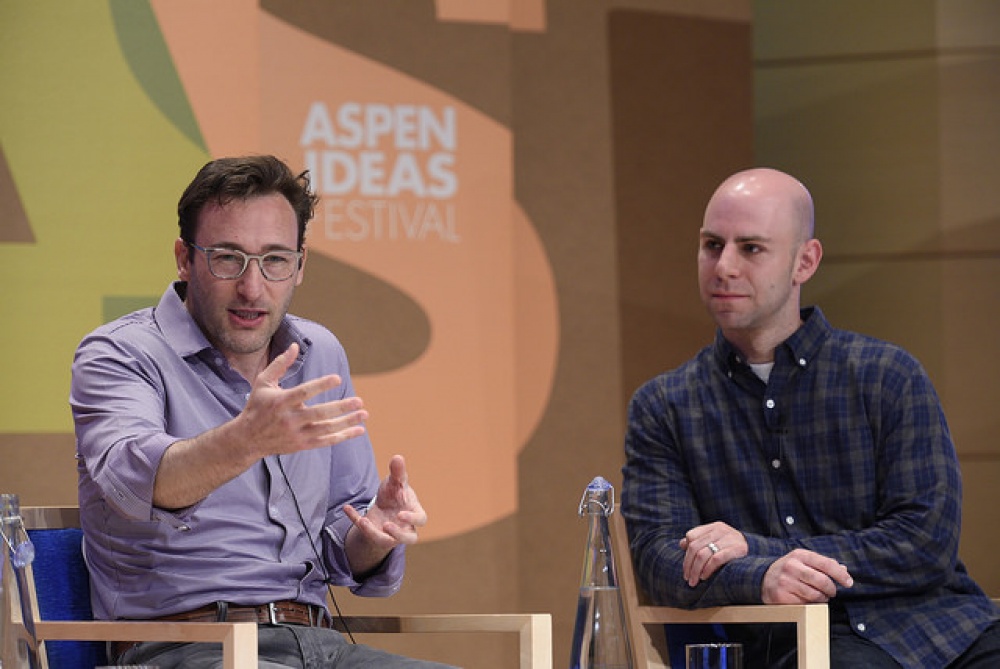 Photo Credit: Aspen Ideas Festival


 Photo Credit: Lessons Learned in Life
 Photo Credit: Urban Christian News


 Photo Credit: Pixabay


