Category Archives: Monday Morning Moment

Monday Morning Moment – Getting Outside and Taking a Real Breather From Work

blog-taking-a-break-from-work-youtubePhoto Credit: YouTube

Some weekends are meant for lots of play mixed with Fall clean-ups…this was one of those. Then Monday comes around.  You pull your tired body out of bed, try to stretch those shoulders out and loosen up your knees again. In a matter of minutes, you settle that frame in your desk chair, and expect your brain to be on task with new work-week vigor. Right?

Maybe. Whether it’s Monday or any other day, our workspaces (especially if it’s cubicle life) can, over the course of the day, do a number on our creative thinking and problem-solving. Our minds and bodies cry out for stretch breaks…and not just to hit the restroom and pour the next cup of coffee. A change in location – i.e., to the next meeting – isn’t the recipe for clearing our heads either.

Getting outside…now that’s a grand solution.

My husband works on an incredibly beautiful street in our city. He is in meetings inside, of course, much of the day. When not in meetings, he’s at his desk. Eating his apple and bag of nuts, at lunchtime…right there. At his desk.

While this is going on outside…

blog-work-break-in-fall-monument-ave-flickriverPhoto Credit: FlickRiver

I don’t take advantage of being outside myself, so no shaming here. Still, the individual worker and the work itself would certainly profit from a breather…a step away from the desk or conference room table…a few minutes on the outside.blog-work-break-foster-school-of-businessPhoto Credit: University of Washington

“Brain breaks can make a big difference in your ability to be productive, creative, and innovative. The paradox is that doing less often allows you to do more.” – Jeff Stibel

In Courtney Seiter’s article The Science of Taking Breaks at Work: How to Be More Productive by Changing the Way You Think About Downtime, she gives support to the broad benefits of taking breaks. Taking your coffee, outside, for a walk around the block are some of my favorites tips of hers.blog-break-at-work-open-bufferPhoto Credit: Open.Buffer

Walking into an office building and around the folks smoking, I think, “Hey, nice they [have to] go outside…just that alone probably counters some of the impact of smoking on their health.”

Hopefully, you didn’t use up your break reading the blog today…unless you’re reading it while you’re sitting outside in the sun.

I love Philip Terman’s poem Some Days about the replenishing affect of the quietening out-of-doors. Here’s a portion:

Some days you have to turn off the news
and listen to the bird or truck…
You have to close all the books and open
all the windows so that whatever swirls
inside can leave and whatever flutters
against the glass can enter. Some days
you have to unplug the phone and step
out to the porch and…allow the sun to tell you what to do.
– Philip Terman, Our Portion: New and Selected Poems

blog-work-break-daily-mailPhoto Credit: Daily Mail

Take that breather…clear your head…and stretch your legs. Either with someone or all alone. It’s worth the trouble…

The Science of Taking Breaks at Work: How to Be More Productive by Changing the Way You Think About Downtime – Courtney Seiter

The Writer’s Almanac with Garrison Keillor

5 Ways to Give your Brain a Break Right Now – Jeff Stibel

3 Easy Ways to Give Your Brain a Break During Your Workday– Jacquelyn Smith

Monday Morning Moment – Uncommon Courtesy in the Workplace

blog-courtesy-adding-value-john-maxwell-iluvquotesPhoto Credit: iluvquotes

My mom raised me to be courteous…thoughtful towards all…civil in every circumstance…extending grace. Recently, I have become aware that my behavior in the company of others has become less courteous overall. Not in an intentional way, hopefully, but in a careless neglectful way. This is disconcerting because it makes me wonder how long has this been a part of my demeanor and deportment. Not necessarily with those closest to me…but with “the others” in life – the stranger, the coworker, the customer.

blog-common-courtesy-quoteaddictsPhoto Credit: Quote Addicts

Yesterday, not at work, I interrupted the conversation of three people. Not overtly, maybe, but it was a quiet drawing away the attention of one of them. Without even thinking, I was rude.

We don’t really mean to be rude or discourteous probably…but in the neglect of practicing courtesy…we can become “those people”…rude, disingenuous, self-serving people.

What does that look like in the workplace?

John Kyle describes rudeness at work:

“It can range from subtle things like eye-rolling to outrageous things like berating a colleague in a meeting.

Here are some common examples:

  • Gossiping and talking behind someone’s back.
  • Giving colleagues the silent treatment.
  • Interrupting someone when they are speaking.
  • Leaving trash and food containers in public areas like the office kitchen.
  • The work around – excluding colleagues from projects or meetings even though they should, by role and responsibilities, be included.
  • Being late for meetings or in other ways not respecting someone else’s time.
  • Speaking to people in a condescending way.

All of these examples of rudeness are forms of disrespect. A pastor-friend of mine once said that giving someone the silent treatment is the relational equivalent of saying, ‘I don’t respect and care enough about you to talk to you.'”

John Kyle, Chief Operating Officer for The Institute of Faith, Work, and Economics, also delivers some simple advice on how we might overcome rudeness at work. One of his tips is to make a practice of greeting people…just saying hello (using their name if you know it). How simple is that?! Yet, too often, we walk quickly by, head down, lost in our brilliant and important thoughts, or hanging on every word of that one we’re accompanying. Is it so hard to smile and nod our head at those we are passing by? Those who work with us, have the same vision, hope for the same outcomes, wrestling with the same struggles at work or home.

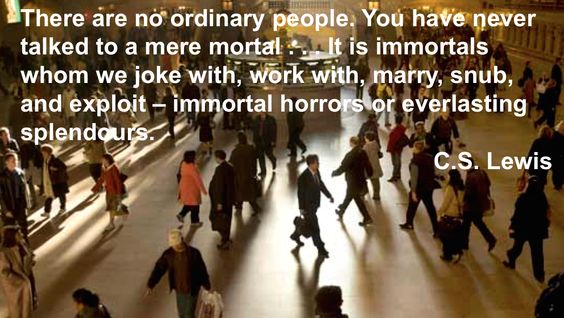
What Kyle reveals in his article on being courteous at work is that we expose our lack of regard for those around us by not taking the time for them…to say or do the small graces for each other that communicates that “there are no ordinary people”.

blog-courtesy-no-ordinary-people-c-s-lewis-pinterestPhoto Credit: Pinterest – WitandWisdomofCSLewis

His counsel echoes a book I recently read by John Maxwell – Intentional Living – Choosing a Life That Matters. Maxwell, like Kyle, talks about adding value to people…communicating that if we are not intentionally adding value to people then we show that we devalue them.

What do you think? It would be such a gift to have your comments on stories where you were treated with uncommon courtesy at work. Do you have examples of how such actions and attitudes are rewarded in your workplace? Do your bosses display this sort of worldview? Please share your stories…even the negative ones that might have given you pause about your own altered attitudes over the years.

As I described in the story earlier, this has certainly given me pause. I want to be a load-lifter at work. An encourager. A respecter of all persons…not just the ones who can help me get ahead with my career. It’s possible that I might have become a bit more curmudgeonly over time…and that’s not really the kind of coworker I want to be. My mom would be glad to see that I’m climbing out of this insufferable ditch – resolved anew to make a habit of uncommon courtesy.

Bringing Courtesy Back to the Workplace – Harvard Business Review – Ron Ashkenas

Why Is Common Courtesy Increasingly Uncommon at Work? Rudeness on the Rise – John Kyle

How do You Practice Common Courtesy at Work?

Workplace Etiquette – 4 Ways to Show Courtesy to Coworkers – Rachel Wagner

Uncommon Courtesy – Blog

Slideshare – Courtesy

How To Become a Curmudgeon – WikiHow – just for a chuckle!

Monday Morning Moment – What You Think of Others Matters – Workplace Wisdom

Blog - What You Think of People Matters - Dave 5

[From the Archives]

At first, you really liked working with this person. Then, bit by bit, he/she began wearing on you. He is always playing with his phone. Her solution to today’s problem is too labor-intensive. His email responses have become terse. She is late for your meeting. You think, maybe I was wrong about him. He is not the person I thought he was. Maybe, she’s the wrong person on the bus.

When a relationship begins to deteriorate at work (or home), you are wise to take steps to turn this around as quickly as possible. You could be in a work situation that has been difficult from the outset. It is still possible for you to make inroads in turning that relationship toward a more healthy or positive one. If not altogether, at least from your side. Consider an adage that has had a long and useful run in our family and work.

Your opinion of someone approximates their opinion of you. – Dave Mills

There are exceptions, but I have found this to be wise counsel (from my husband, no less) in both personal and professional relationships. When what was a warm, congenial relationship takes a turn toward the negative, you can actually work, from your side, to restore the relationship. Even to take it to a deeper level. It can get more uncomfortable at first, because you have to start with your own thoughts toward that person. How have they changed?

We send signals to each other – whether we speak or not.

My Mom raised us out of the era of Walt Disney’s Bambi:

“If you can’t say something nice, don’t say nothing at all.”

Good counsel except for the conversations that still go on in our heads and color our attitudes, our tone of voice, our preferences, and our decisions.

Let’s say I have an amicable relationship with a colleague, and then something happens. I may not even be aware of it – a misunderstanding, a misconstrued action, an insensitivity unaware. Then a chill develops, or a clear outright dislike. I have a window of opportunity to clear that up. Otherwise, if I don’t act, then a process can begin where I decide that person is a jerk and has woefully misjudged me…and off we go.

Remember: This can go both ways. You may have had a few off days with a colleague, and find yourself just not thinking so well of him, then stop it! It’s possible you can keep them from picking up that signal and prevent the relationship from getting more toxic as they decide you’re not so great either.

If I refuse to think ill of another person and discipline myself to be respectful, deferrent in my demeanor, and tireless in pursuing understanding, I could restore that relationship. If it doesn’t improve right away, my attitude and actions work for my own benefit and can definitely help build trust with my team members. One day…that relationship may also turn. It’s worth the effort.

Blog - What You Think of People Matters - Dave

Jon Acuff talks about the four ways we invest in our careers – through skills, character, hustle, and relationships. In an interview with LifeReimagined.com, he had this to say about difficult, or neglected, work relationships:

“Even if you have skills, character and hustle, without relationships, it’s the career version of the Emperor’s New Clothes. Why?”

“If you don’t have relationships, you eventually don’t have people in your life who can tell you the truth about the decisions you’re making. You don’t have people who can tell you no or question you honestly. What I’ve learned is that leaders who can’t be questioned end up doing questionable things.” – LifeReimagined.com interview with Jon Acuff

He identifies three types of people in our lives (work or otherwise, really): friends, foes, and advocates. Jon writes in Do Over:

“The best thing to give a foe is distance. We should ignore most foes. The problem of course is that we won’t. If your definition of foe is too loose and is essentially “anyone who kind of bothers me ever,” your job is going to be miserable. If you see people as your adversaries, it’s almost impossible to have a good working relationship with them. The first thing is to understand whether these foes are clueless or calculated. A clueless foe is that person whose behavior encourages you to fail. They are not malicious. They are not trying to make you lose, but with the power of their influence you are. “Bad habits are almost always a social disease – if those around us model and encourage them, we’ll almost always fall prey. Turn ‘accomplices’ into ‘friends’ and you can be two-thirds more likely to succeed.” – Jon Acuff, Do Over

I think what Jon says is true. Because of my own worldview and value system (and married to Dave all these years), I don’t think we can just acknowledge there are foes out there and distance yourself from them. Sometimes, that is virtually impossible and still be effective at work. Because what can happen, if we don’t act to keep our own thinking clear, is that we take on some of that “foe-dom” ourselves. Maybe you aren’t going to be bosom buddies with this person, but your own work and other relationships can suffer if you develop bad habits around this person. Better to work on the relationship.

Blog - What You Think of People Matters - Dave 6 (2)Blog - What You Think of People Matters - Dave 6

“For no matter what we achieve, if we don’t spend the vast majority of our time with people we love and respect, we cannot possibly have a great life. But if we spend the vast majority of our time with people we love and respect – people we really enjoy being on the bus with and who will never disappoint us – then we will almost certainly have a great life, no matter where the bus goes. The people we interviewed from the good-to-great companies clearly loved what they did, largely because they loved who they did it with.” – Jim Collins, Good to Great
Blog - What You Think of People Matters - Dave 3

For as he thinks within himself, so he is.  – Proverbs 23:7

Finally, brothers, whatever is true, whatever is honorable, whatever is just, whatever is pure, whatever is lovely, whatever is commendable, if there is any excellence, if there is anything worthy of praise, think about these things. – Philippians 4:8

Blog - What You Think of People Matters - Dave 2

 Do Over by Jon Acuff

Fourteen Indispensable Leadership Quotes from Jim Collins – Thom Rainer

How to Deal With Difficult Co-workers – Read keeping in mind that some days you might be the one perceived as difficult.

Blog - What You Think of People Matters - Dave 4

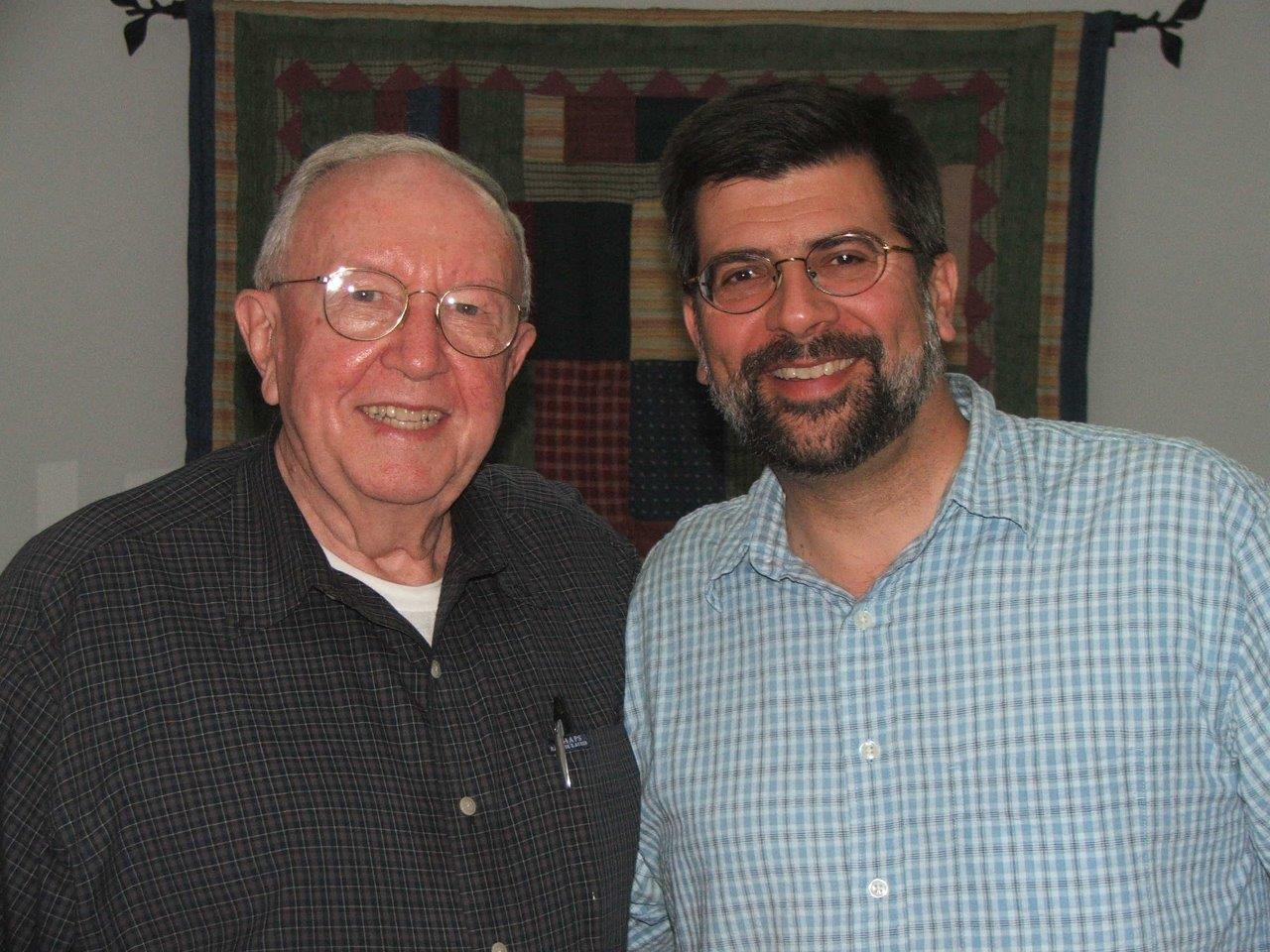
Photos: Just a few of the men in Dave’s life who required no special work on his part to love and respect…and there are many more. Grateful.


Monday Morning Moment – Men and Their Friends

blog-men-and-their-friends-bass-fishing-bassproshops-2Photo Credit: Bass Pro Shops

Recently, my husband has begun dropping the message “I wouldn’t mind having a bass boat” into our conversations. At first, I didn’t take it seriously, but the more he talked about it, the more it became obvious it was something he was somewhat seriously thinking about. In fact, he asked for a hitch for his truck for his most recent birthday. Here’s a man who has a sizable workload, a garden he loves to tend, and a deep commitment to church and community. When is he going to have time to fish?

The more we talked, in tiny but regular snippets, it has become clearer to me what may be happening. He had a bass boat once when we had preschoolers, and he fished the beautiful lake country of East Tennessee. With this buddy and that. Getting out before sunrise on a Saturday morning, spending hours together on the lake, catching or not catching fish. I’m thinking it’s “the buddy” part of fishing that is most appealing…not that he would ever say it.

My husband, like my sons and son-in-law, is an introvert. Friendships with them may not look the same as my friendships with women. Still, they are critical. They may not talk for hours, like us, but they may…un-pressured. In shared experience, that hangout time can mean everything to both physical and emotional health.

In fact, regarding talk, men’s conversation is woven into what they’re doing together – a sport, a project, an affinity moving them to action. The conversation and bond of friendship comes in the doing of things…together.blog-men-in-utilikilts-meninutilikilts-twitterPhoto Credit: Twitter (@meninutilikilts) – I love utilikilts – but my husband is not in the picture above, just to be clear.

We women can make great friends for our husbands and brothers and colleagues (occasionally). However, try as we may, we can’t deliver friendships to them through our friends. Believe me, I have tried. It doesn’t work that way, because our women staying power is at a much different energy level than that of our male counterparts. [Of course, this could be very different if the men are extroverts and the women introverts.] I still don’t believe we can make friendships happen for the men in our lives, as much as we ache for them to have those close friends to share successes and shoulder some of the stresses (and vice versa).

Men can go deep with friends who play on the same recreational teams as they do. Or in front of a TV watching or playing a game. Or around a table. Not a lot has to be said…but having a friend who knows you…and knows in a word, spoken or not spoken, where your head is right then…can help you get out of that funk and gain perspective on life. Men don’t seem to need a lot…but they need a regular touch-base with someone they may call a friend. As the women in their lives, we may can help that along…but only ever so subtly…since, we are not like them, I’m learning more as the years go by.Friends in competition playing games console.Photo Credit: weroom

Because of the nature of my husband’s work, as an example, we have had several moves in our lives. He has actually kept a running account of how many places we’ve lived. That one factor has kept him from having a close friendships over his lifetime. Granted, he (we) still have friends from all those eras, but the opportunity to just “hang together” is rare.

Besides the moves, a team of men of which he was a part in recent years was broken up during a company reorganization, and they all took different jobs, some in other cities. It was devastating in a unique way because not only did they miss working together, but clearly, they would miss the friendships established there, around a shared vision. I share that to emphasize how friendships among men are made in ways we as the women in their lives can’t predict, nor can we reinvent them for our men.

However, I do want to make space for these friendships. These rare, soul-invigorating, stress-squashing minimalist relationships between men. There is a 2015 romantic comedy titled Aloha, that came and went…you probably didn’t see it. The chemistry between the actors (Bradley Cooper, Emma Stone, Rachel McAdams, and John Krasinski) was electric and just plain fun to watch. For the purpose of today’s conversation, I wanted to find a YouTube clip of the conversations between Cooper and Krasinski – they were mostly made up of head nods, knitted eyebrows, broken sentences, and half-hugs. The film actually gave the audience sub-titles for what was going on between these two men on the screen.

Men and their friends… I want to make space for them (even if it means buying a bass boat, or blessing the video-gaming interests of sons, or saying less and praying more for these friendships to happen – up-close and in person). May such friendships among men be life-long (when positive) and as deep as it’s possible for them to go.

Why Do Millions of Men Have No Close Friends? – Phil Barker

A Fine Bromance: the 12 Rules of Male Friendship – Chris Moss

Making Guy Friends as an Adult: Male Friendship 101 – Kyle Ingham

Monday Morning Moment – Ultra-Productive People & What They Do Differently – 2 Infographics

blog-productivity-silicon-valley-reportPhoto Credit: Silicon Valley Report

We all have exactly the same amount of time. At least in a day. Some of us have less time than others in our lives, probably, which makes using that valuable time wisely all the more important. However, that’s the false perception of time. The idea that, because we’re young, we have all the time in the world…so chill. Enjoy. Right? Just because we’re young, how we use our time will set habits that build a foundation for our life and work. Young or old, learning how to be consummately productive is a very good plan. When we do the work of learning to be “ultra productive” part of what we gain out of that is…more time. Definitely worth the work.

I’ve written on productivity other times (in particular, about “Chris Bailey’s life of productivity”). Using time and brain power wisely is important to me because I am well aware of how easy it is to squander both. When I discovered the two infographics below, they affirmed some of the changes I’ve already made in my life and other habits worthy of establishing.

Kevin Kruse in a Forbes article gives us results of his survey of 200 ultra-productive people. He asked each their secret of productivity.  The infographic below lists out the 15 ideas gleaned from his study.blog-productive-people-do-things-differently-15-time-secretsPhoto Credit: Online Learning Tips

Anything surprise you? I was surprised at getting rid of to-do lists by scheduling everything. The “say no to everything” idea can be agonizing to execute and also infuriating when you’re on the receiving end.  Every idea in the list of 15 is doable and easy to develop as a habit. Worth a try, right?

Another infographic (from Dylan Roach and Jacquelyn Smith in Business Insider) highlights the morning habits of successful people. This also resonated with what I have discovered in the lives of influential and productive friends and colleagues. blog-productive-people-do-things-differently-16-things-at-start-of-each-day-update-or-diePhoto Credit: Business Insider

I appreciate the ideas of this infographic…especially the ones on helping others and being grateful. Soft habits maybe? Not really. When the ideas above get hard-wired in us through habit formation and intentionality, our productivity ramps up and our definition of success may widen to a more shared experience in our life and work.

Monday Morning Moment – Praying For Your Spouse [or Fill-in-the-Blank] in the Workplace

Blog - Praying for Your Spouse - the lifePhoto Credit: The Life

Sometimes really crucial opportunities pass us by…responsibilities, too, fall off our plates. We get busy…distracted. We choose the urgent without thinking. The urgent over the ultimately important.

This time, one year ago, I saw the film War Room. The plot centered on an older praying woman who mentored a younger woman, whose marriage was falling apart. She mentored, not so much about marriage, but about praying for her marriage. It had a huge impact on my heart…and my prayerlife.BLog - War Room to publish 2Photo Credit: War Room Movie

I prayed my heart out for my husband…and our children…some extended family…and close friends. I still pray for them…but in recent months, the urgency had faded. Other lesser things piled in and I allowed myself to become distracted and dull.

Until this past week…. This past week, I started a Bible study with some other friends who meet together regularly. The book study is The Armor of God by Priscilla Shirer. She is also the person, in the film War Room, playing the young woman in the troubled marriage. The study focuses on the Bible passage, Ephesians 6:10-19, and speaks about our role in spiritual warfare.

I had forgotten how important it is not just to pray generally and regularly for those we love, but to pray specifically and persistently. There is a big difference.

For several days, I have been praying for a difficult situation in my husband’s work life. It has been ongoing for some time, and he finally arrived to a point of taking action.

Yipes…I wasn’t at all sure I had prayed well enough for him. In fact, I was sure I hadn’t. There is no going back, but today, fresh in studying how best to pray for those we love, I took God at his word and have prayed differently. Trusting God to intervene as I stood, fortified, in his presence…as the Apostle Paul instructed in Ephesians 6.Blog - Praying for your spouse - true agapePhoto Credit: True Agape

The details of what happened at work are not necessary for today’s posting, but praying specifically, persistently, and according to God’s Word has made for a very encouraging turn in the situation. Honestly, I don’t think it would have played out as it has, if both my husband and I weren’t really seeking God’s solution for this.

Will it always work out to be a glorious outcome when we pray hard and in faith? I can’t say…not always praying hard nor in faith. However, when we do pray for situations at work instead of just ranting or processing over the dinner table, outcomes will decidedly be better.

Our work is such a huge chunk of our lives. To leave it to chance or charm or even competence…seems a risky business. What a privilege to pray staunchly and strategically for those we love in the workplace – our spouses, our closest friends, our children… Praying for our bosses and colleagues, as well, could improve both their lives and ours as well…not to mention the enormous ripple effect that can spread as God works in a situation.

This afternoon our joy is full. Even though my husband’s workplace may “seem” unchanged…it is wholly different because he has seen God work in a hard place. With complete assurance. I rejoice with him.

Work is a 3-song commute from home. As I was traveling in this morning, thinking about what was ahead of him and praying for the situation en route, these songs were the ones that came back-to-back on the radio as I drove in:

Pretty amazing, huh? What seems extraordinary can be our ordinary when we pray to a Father who wants to show himself mighty on our behalf. What better thing can I do for those I love than to pray hard…pray believing for them?

Monday Morning Moment – A Look at Power with Andy Crouch

 Blog - Andy Crouch = Playing God - thegospelcoalition
Just recently I heard a friend quote from the book Playing God – Redeeming the Gift of Power by Andy Crouch. It struck me as odd that he was reading such a book because, although he is a powerful man in his own circle, he doesn’t seem vulnerable to such a phenomenon. Wisdom is to mark such a supposition and guard against it. This friend does that. My husband has also been reading Crouch’s book, so I am persuaded to add it to my list of reads.
Here’s a taste of what you’ll find thanks to Good Reads. It is often where I start with a book given my long list of wanna-reads. Andy Crouch makes a strong case for our need to wrestle with our temptation to “play God” in our relationships, institutions, and culture. See for yourself….
On Power in Creating Good or Evil – in Work and Culture
“It is a source of refreshment, laughter, joy and life—and of more power. Remove power and you cut off life, the possibility of creating something new and better in this rich and recalcitrant world. Life is power. Power is life. And flourishing power leads to flourishing life. Of course, like life itself, power is nothing—worse than nothing—without love. But love without power is less than it was meant to be. Love without the capacity to make something of the world, without the ability to respond to and make room for the beloved’s flourishing, is frustrated love. This is why the love that is the heartbeat of the Christian story—the Father’s love for the Son and, through the Son, for the world—is not simply a sentimental feeling or a distant, ethereal theological truth, but has been signed and sealed by the most audacious act of true power in the history of the world, the resurrection of the Son from the dead. Power at its best is resurrection to full life, to full humanity. Whenever human beings become what they were meant to be, when even death cannot finally hold its prisoners, then we can truly speak of power.”
“Power at its worst is the unmaker of humanity—breeding inhumanity in the hearts of those who wield power, denying and denouncing the humanity of the ones who suffer under power…This power ultimately will put everything around it to death rather than share abundant life with another. It is also the power of feigned or forced ignorance, the power of complacency and self-satisfaction with our small fiefdoms of comfort. Power, the truest servant of love, can also be its most implacable enemy.”
“Over and over in the Gospels, Jesus interrupts his agenda for those who have nothing to offer him but need everything from him.”
On Power and Information
“I am also practicing cello to wean myself from power and accomplishment, to place myself back in the posture of a learner, cultivator, and creator. To become a bit like a child. To detoxify from the too-ready recognition and privilege that accompany even the most modest forms of success, to become available again for something surprising and new. Just as children flourish by growing into adults, so adults flourish by cultivating childlikeness, avoiding the spiritual hardening of the arteries that comes with competence and experience.”
On Poverty and Privilege
“How many times have I been put at the front of the line without even knowing there was a line? How many times have I walked through a door that opened, invisibly and silently, for me, but slammed shut for others? How many lines have I cut in a life of privilege?”
“Poverty is the absence of linkages, the absence of connections with others…”
“Benevolent god playing happens when we use the needs of the poor to make our own move from good to great—to revel in the superior power of our technology and the moral excellence of our willingness to help. Benevolent god playing makes us, not those we are serving, the heroes of the story. It happens whenever technological and financial resources are deployed in such overwhelming force, and with so little real trust building or relationship, that we maintain a safe distance between ourselves and the recipients of our largesse.”
“The poor are poor,” Jayakumar said to me, “because someone else is trying to play God in their lives.”
On Idolatry and Injustice
“All idols begin by offering great things for a very small price. All idols then fail, more and more consistently, to deliver on their original promises, while ratcheting up their demands, which initially seemed so reasonable, for worship and sacrifice. In the end they fail completely, even as they make categorical demands. In the memorable phrase of the psychiatrist Jeffrey Satinover, idols ask for more and more, while giving less and less, until eventually they demand everything and give nothing.”
“God hates injustice and idolatry because they are the same thing.”
Crouch’s book just got moved to the top of my reading list. Have a great Monday! Let’s exercise our power wisely today…

Monday Morning Moment – 6 Business Principles from One of History’s Richest Men – with Graham Cochrane

Blog - Business Principles - Graham CochranePhoto Credit: Graham Cochrane, Facebook

Mondays are meant for postings on how to make our workplace a great place…and our work life full of purpose and excellence. This post comes to you through my association with a young guitarist and entrepreneur. He is Nathan Mills at Beyond the Guitar…Nathan Mills - Beyond the Guitar - Ancient StonesPhoto Credit: Beyond the Guitar

…and he’s our son. All last week, he was posting, on Facebook, these videos from Graham Cochrane. I recognized the name because Nathan looks to him as one of his mentors, albeit mostly online. Cochrane is a musician, audio engineer, entrepreneur, and blogger.2013 Shay Cochrane

Graham Cochrane‘s 6-part video course on Facebook Live turns out to be a great study on business practices. He gives winsome, practical, and timely counsel on starting and sustaining a business. However, we can all profit from his content whatever our work situation is. His principles in brief follow and are derived from King Solomon’s Proverbs.

  1. Strive to be generous – “One gives freely but grows all the richer.” – Proverbs 11:24-25
  2. Grow slowly – “Whoever gathers little by little will increase.” – Proverbs 13:11
  3. Do great work – “A man skillful in his work will stand before kings.” – Proverbs 22:29
  4. Don’t devour your profit – “A foolish man devours all he has.” – Proverbs 21:20
  5. Avoid debt – “The borrower is slave of the lender.” – Proverbs 22:7
  6. Business is messy – “Where there is no oxen the manger is clean, but abundant crops come by the work of the ox.” – Proverbs 14:4

I hope you take the time to watch/listen to these videos. Fascinating content, whatever your work is. I am always inspired by the entrepreneurial spirit – especially when that passion and willingness to work hard at something you love has a ripple effect for good.

, , , , , , , , , , ,

The Recording Revolution – Graham Cochrane Website

YouTube – The Recording Revolution Channel

How a 32-year-old Freelance Sound Mixer Started Making $75,000 a Month From a Blog – Business Insider

The Go-Giver, Expanded Edition: A Little Story About a Powerful Business Idea – Bob Burg

The 4-Hour Workweek: Escape 9-5, Live Anywhere, and Join the New Rich – Timothy Ferriss

Monday Morning Moment – 3 Quick Reads on Leadership – to Help You Stay the Course, Not Be a Jerk, While Being Innovative

Blog - Leadership - Wisdom - centresourcePhoto Credit: Centresource

Today…I got nothing.

Late nights watching the Olympic Games (#Rio2016), friends visiting from out of town, and new moms in my life…I got nothing on leadership today…

However…

These three leaders, writers and leadership observers never disappoint – Brian Dodd, Carey Nieuwhof, and Vala Afshar.

Brian Dodd is a prolific thinker and writer on leadership themes – mainly to a Christian audience, but much of what he writes is wisdom for anyone who wants to lead well. Blog - Leadership - Brian DoddPhoto Credit: Brian Dodd on Leadership

His blog on leadership quotes by Bill Purvis, who spoke recently at the GO Conference, includes the following bits for all of us.

  • Clarify your vision.
  • You get a vision by walking around.
  • You make insiders by giving them inside information.
  • Betrayal will kill your vision.
  • Devise a strategy to create a pipeline of leaders. If you want to go a long distance, you have to have a bench.
  • If you try to do it all you will burn out.
  • We can only grow to the level that we have leaders in place to train, retain people, and release people into using their gifts.
  • I’ve never known what it’s like to be jealous. I want people to win.
  • You equip other people.
  • If you don’t train leaders, you’re limited in how far you can go.
  • Our C-Level players become A-Level players wherever they go.
  • We want Ritz-Carlton to one day come to us.

Carey Nieuwhof is my favorite Canadian. He went from law school to the pulpit. His writing and podcasts on leadership are regular feasts for thought. BLog - Leadership Carey NieuwhofPhoto Credit: Carey Nieuwhof

Here’s a recent cautionary blog on 10 Signs You’re Just a Jerk…Not a Leader. I’ll just list his points, but you want to read the whole piece.

  1. You’ve made the organization all about you.
  2. You think that people work for you.
  3. You never say thank you.
  4. You’re demanding.
  5. You keep the perks of leadership to yourself.
  6. You keep yourself front and center.
  7. You take the credit and assign the blame.
  8. You never have your team’s back.
  9. You make all the decisions.
  10. You act like a martyr.

Nieuwhof closes with asking the question, “How do I know jerk leadership so well? Because I have a jerk inside of me I need to suppress every day. My guess is you might too.

Fortunately, Jesus introduces a completely different paradigm for leadership. If you want to be a Christ-like leader, just do the opposite of these ten things. You’ll be well on your way.”

Finally, I’ve been following Vala Afshar on Twitter for a long time.Blog - Vala Afshar - youtubePhoto Credit: YouTube

His blog 20 Entrepreneurship Lessons From World’s top Business Thinkers, CEOs, and VCs is a brilliant collection. Below are just 6 of the 20 lessons.

  • Doing well, and doing good, are not mutually exclusive, but mutually reinforcing. If you are not doing well, you don’t have the money to keep doing good. Is your company doing the work for the right reasons – can it create meaning and money, purpose and profit? – Deb Mills-Scofield
  • Customers want meaning, value and purpose for them. If you don’t have your value proposition done, you don’t need to worry about the business model. This means deliver value in the context and constraints of the customer, not what you would like it to be. This means understanding your customer’s customer needs from their perspective. – Deb Mills-Scofield
  • Humble confidence is key to success. Humble companies ask for help and they give their employees the freedom to fail and try stuff. Companies that trust their employees will be more innovative. Business leaders must walk the talk and give their employees the freedom to experiment. Good leaders take all of the blame and none of the credit. Good leaders also promote and celebrate cross-collaboration across the lines-of-business. – Deb Mills-Scofield
  • When you don’t ask, the answer is no. Consider asking for help or well-deserved promotions or pay raises. Also ask for forgiveness, not permission. – Deb Mills-Scofield
  • We live in a permission economy. So how does a business lead in the permission economy. Permission is the privilege of talking to people who want to talk to you, and not because it’s important to you. It is about being missed if you don’t show up. Are you doing something worth following? If you’re not, then you’re not leading. – Seth Godin
  • The world is changing. What does it mean to live in a world that is changing? The key element to being a CIO or a CMO is to be a chief learning officer (CLO). To be an artisan – not a craftsman, because a craftsman does the something again and again – is to learn to do it different the next time, to do it better the next time. To be an artisan, you have to be willing to listen and learn. What it means to learn is to fail. – Seth Godin

    Hope your Monday is profitable and that you’re encouraged as a leader today. Not a leader? Oh, no….you are. We all are…in some fashion or another. Wisdom is to learn leadership from those closest to us…and those whom we can follow online and at the occasional conference…like Dodd, Nieuwhof, and Afshar.

Monday Morning Moment – Matt Monge on the 7 Skills of Tomorrow’s Top Leaders – Whether You’re 26, 56, or 72

Blog - Tomorrow's Leaders - Mojo companyPhoto Credit: The Mojo Company

Leaders of Tomorrow. What age group came to mind? Probably not your own. Maybe that’s one of our dilemmas in life and work. We either think we have already arrived as tomorrow’s leader today (ugh!). Or we stop thinking of how we can develop into that change agent of tomorrow because we’ve fixed our course…or settled into what we know already. It’s served us well so far, right?

Here’s my Monday morning gift to you: an introduction to the person, writing, and wisdom of Matt Monge.  Earlier in his career, he worked in finance (credit unions, in particular), and had fascinating titles like Chief Culture Officer and Vice-President of People and  Development. Currently he is is president of The Mojo Company, a leadership development consulting firm. His Facebook page bio reads: “My mission? Make the world a better place by helping people, leaders, & workplaces be more human. Depression fighter. Keynote speaker. Head of The Mojo Co.”

BLog - Matt Monge - TomorrowTodayGlobalBlog - Matt Monge - TwitterPhoto Credit: Cues, Twitter

I read everything Matt Monge writes. Even his promotional video taught me more about leadership (you’ll want to take notes).

Monge posted a blog a few weeks back and I’ve been thinking through it since… It’s his 7 Skills Tomorrow’s Top Leaders Are Developing Today. I decided to post his bullet points here and how they stirred my thoughts on skill development today. [Don’t miss reading his thinking on this and other leadership topics in links.]

  1. Being Others-Oriented – While other employee development folks have moved away from “servant leadership” language, Matt Monge continues wisely to be a strong supporter of it. I, too, am delighted by leaders who continue to seek out the greatest good for both employees and customers. The bottom line is best served here. As the years go by, or as tribes are built, our temptation is to coast in this area…making the negative assumption that someone else is serving while we’re the idea leaders. As leaders go, so go the organizations.
  2. Persuasion, Logic, & Negotiation – First, Monge sees top leaders as practicing persuasion and negotiation differently “not with power, position, coercion, or even deception; but rather through logic, reason, and with an eye toward the good of the whole.” It’s funny how unaware leaders can be in thinking that manipulation and coercion go unnoticed by employees under their authority. It’s always better to do the work of taking the high road of negotiating and persuading. When we engage in the give-and-take of healthy debate and problem-solving, it’s a win-win for everyone. It does require time, trust, homework, and humility.
  3. Reframing – This is a discipline of looking at a problem or situation from different perspectives. Monge talks about doing this in such a way that we wrestle with our own biases and blind spots. Reframing can make for a decision or problem solved that have wider success or effectiveness.
  4. Knowing How to Think about and Make Decisions – Monge makes the distinction of being decisive vs. being a good decision-maker. I love this because often we experience leaders who get the job because they are decisive. Period. Full-stop. What does it take though to be a good decision-maker? To become an effective leader is to examine how we make decisions – what are my decision-making processes, who are my guides, what are those factors that always weigh in on my decisions? [Monge names those factors as presuppositions and core values. We need to think about what those are.]
  5. The Ability to Work and Build Community with Others – This is such a core value of mine and yet after years in my career, it bears refreshing. I’m reminded, as Monge writes about this, of the Old Boys’ Network. Today, maybe it’s less-gender-defined and called other things, like C-Suite executives, or even tribe. Still, if it’s a few making decisions for the many, it’s not community. Monge’s constant message is that the strength and health of an organization is in the community. Leaders must do the work of leaning in to their colleagues (outside the executive suite) to draw on the wealth of knowledge there and to affirm the value and varied roles of those coworkers.Blog - Matt Monge - human - twitterPhoto Credit: Twitter
  6. 6. Leadership – The leaders of tomorrow are continuing to develop themselves toward that future. We can be always learning, always growing – not necessarily just like other leaders in our lives, but learning what we need to learn to remain relevant/useful. Resting on the laurels of past successes or doing “what we’ve always done” will eventually pull us to the sidelines. I’m in the painful, personal throes of dealing with this right now myself. Shaking it off and moving forward!
  7. Understanding Humanness & Emotional Intelligence – Monge defines emotional intelligence as having “four basic components: self-awareness, self-management, social awareness, and relationship management”. Foundational to emotional intelligence, in Monge’s thinking, is this whole element of humanness. As the workplaces of the future give way to more and more technology, we will be wise in tuning into the growing need for humanizing our organizations and our human employee experience. Being tech-savvy and not people-savvy misses what could be. Leaders of tomorrow, take note.

So that’s it for today. I love Mondays because it’s an opportunity to hit “the refresh” key of our work lives. We are not only motivated (like we might be on Fridays) but we’re fresh in our view of our work community…and hopeful.

Matt Monge, and others like him, gives me the encouragement I need to cast off from the safe, still shore and re-enter the fast and deep water of today’s work environment, determined to manuver well there…and maybe even coax other quality people back in from the shallows. Whatever our ages or sensibilities, we can work toward being tomorrow’s leaders of excellence.