Today is Ash Wednesday, marking the beginning of Lent. This 40-day commemoration is meant for us as Christians to look squarely at our sin before a holy God. We are to reflect on what He did, through the life, death, and resurrection of Christ to redeem us from that sin. Forgiveness is a huge theme of Lent, as we examine our hearts and deal with areas where we need forgiveness from God.
When we look at where we have done wrong, parallel to that is the reckoning with the wrong done to us by others. We ask forgiveness of God, we seek to forgive those who’ve wronged us, and we humble ourselves before those we’ve hurt, asking their forgiveness.
All this forgiveness talk! Asking for it, giving it, receiving it…and yet the key to it all for us is the tiny phrase Jesus spoke (John 16:33) “in Me”.
When we are so disturbed by the trauma we have experienced…or the trauma we have caused, our troubled thoughts stay focused on that wrong. That undoneness…that sense of hopelessness that it will ever be healed…that dark place in our minds we can’t seem to climb out. However…
He gives us a way forward through His very presence with us. Trauma isn’t easily remedied, but it can be got through, so to speak, as we tune our thoughts and turn our eyes onto Jesus.
A podcast I just listened to this week really spoke to my heart of the beauty displayed in the person of Christ. [Creating Beauty in the Bomb Shelters of Our Lives – Being Known Podcast – Season 4, Episode 1]. In the face of trauma, we too often forget His love and His presence with us. In the podcast, Christian psychiatrist Dr. Curt Thompson gives practical helps (writing our story, talking about our trauma with a person we trust, learning how we to take our trauma to God).
The biggest takeaway goes back to the phrase “in Me” – in Christ. We are truly known and loved by Jesus…our life, our being, all of who we are is settled in Him. We can have courage. We can have peace.
I’ve been thinking a lot about my older brother lately. He died at 61. When our parents divorced, he was old enough to have experienced the rupture of that relationship as well as the knowledge our dad (biological father) just didn’t care enough for us…he just didn’t care. I can only imagine how that haunted my brother growing up. What trauma my big brother would experience in life…some self-imposed… I wish I had tuned in better earlier… My peace and comfort about him and what he went through in life rest on the trust that he is now with Christ, in Heaven. The troubles of this life are forever behind him.
For today…on this Worship Wednesday…this Ash Wednesday, let’s focus on the hope we have, even in trauma…
In Him…in Jesus:
He is the blessed and only Sovereign, the King of kings, and the Lord of lords, who alone is immortal and who lives in unapproachable light, whom no one has seen or can see, to him be honor and eternal power. Amen. – 1 Timothy 6:15b-16
When we pull away from the noise of this troubled world and the dark thoughts of trauma, and draw near to the true Christ, our minds are renewed. The joy of being known and loved by such a God diminishes those things that hold us in bondage. Take heart, Dear One.
Listen below to the amazing 5 minute description the late Pastor S. M. Lockridge gives of our Lord Jesus…and take courage.
Quick take on favorites of mine over the last couple of weeks:
1) Beyond the Guitar’s Latest – Enjoy!
2) Parenting Pearls – So thankful for wisdom of others…especially in parenting and raising children to be mentally healthy and resilient. How other cultures parent is also intriguing. Below are some of both.
Mom blogger Becky Mansfield wrote a great piece on things we don’t want our kiddos to forget. Please share in the Comments what you hope your children don’t forget.
The situation with my mom (cancer and heart) and my dad’s (Parkinson’s and dementia) health has been making me so sad. I wish I could be with them right now. 😥 So my sister sent a video of them together tonight, dancing to Neil Young. 💙 Take a moment to love your loved ones. pic.twitter.com/y2fBu26NlP
4) Words – As much as I love words this quote from Jesus’ teaching gives pause: “But I say unto you, that every idle word that men shall speak, they shall give account thereof in the day of judgment. For by your words you shall be justified, and by your words you shall be condemned.” – Matthew 12:36-37
Words matter. Words mean things. We should be generous with life-giving words and sparing with words that destroy. Silence and restraint have their place.
Then, on a lighter note: there’s this sweet game that is all the rage right now. Wordle created by Josh Wardle (launched in October 2021). I love it because it is not time-consuming. You get one word puzzle a day that is challenging but doable. So fun.
5) War – We have all read and watched about the current invasion of Ukraine by Russia. How to respond? Who to respond? I won’t pose an opinion here because we have so many, and they don’t help really. Praying is the most important thing we can do. Below are some links I found interesting this week (well, links that weren’t behind a paywall). Praying…
“Think Little. Nearly every one of us, nearly every day of his life, is contributing directly to the ruin of this planet.” Berry went on to say that he was “ashamed and deeply distressed that American government should have become the chief cause of disillusionment with American principles.”
In a Jefferson Lecture in 2012, he quoted Stegner’s description of Americans as one of two basic types, “boomers” and “stickers.” Boomers are “those who pillage and run,” who “make a killing and end up on Easy Street.” Stickers are “those who settle, and love the life they have made and the place they have made it in.” They are “placed people,” in Berry’s term—forever attached to the look of the sky, the smell of native plants, and the vernacular of home.
He told the crowd that, as a member of the human race, he was “in the worst possible company: communists, fascists and totalitarians of all sorts, militarists and tyrants, exploiters, vandals, gluttons, ignoramuses, murderers.” But, he insisted, he was given hope by people “who through all the sad destructive centuries of our history have kept alive the vision of peace and kindness and generosity and humility and freedom.”
“A properly educated conservative, who has neither approved of abortion nor supported a tax or a regulation, can destroy a mountain or poison a river and sleep like a baby,” he writes. “A well-instructed liberal, who has behaved with the prescribed delicacy toward women and people of color, can consent to the plunder of the land and people of rural America and sleep like a conservative.”
“If two neighbors know that they may seriously disagree, but that either of them, given even a small change of circumstances, may desperately need the other, should they not keep between them a sort of pre-paid forgiveness? They ought to keep it ready to hand, like a fire extinguisher.”
“Jesus said, ‘Take no thought for the morrow,’ which I take to mean that if we do the right things today, we’ll have done all we really can for tomorrow. OK. So I hope to do the right things today.”
Therefore, there is now no condemnation for those who are in Christ Jesus. – Romans 8:1
For in Scripture it says: “See, I lay a stone in Zion, a chosen and precious cornerstone, and the one who trusts in him will never be put to shame.” – 1 Peter 2:6
Turns out I’ve written a lot about shame. Strange for me, in that until a few months ago, I didn’t think shame was something that bothered me. Guilt, yes. Shame…no.
I was wrong. Even studying Scripture, I must have just skipped over all the “shame” passages. We are introduced to the experience of shame very early in the Bible as Adam and Eve (before sin) were described as “naked but unashamed”. Too soon, they tasted the bitter fruit of disobedience and couldn’t stomach the shame of their nakedness. Naked and, this time, ashamed…and wanting to hide themselves from each other…and God.
What are we trying to hide? What are we working so hard to bury or cover or avoid? Quick to judge someone else before we ourselves are judged.
Christian psychiatrist Curt Thompson helps us understand shame and find a way to healing and freedom. In his book The Soul of Shame: Retelling the Stories We Believe About Ourselves, he talks about how shamed people try to shame others. We don’t want our lives to be examined too closely…our secrets might be exposed. We hide. We isolate ourselves. We turn aside rather than be truly known.
“When we experience shame, we tend to turn away from others because the prospect of being seen or known by another carries the anticipation of shame being intensified or reactivated. However, the very act of turning away, while temporarily protecting and relieving us from our feeling (and the gaze of the ‘other’), ironically simultaneously reinforces the very shame we are attempting to avoid. Notably, we do not necessarily realize this to be happening-we’re just trying to survive the moment. But indeed this dance between hiding and feeling shame itself becomes a tightening of the noose. We feel shame, and then feel shame for feeling shame. It begets itself.” – Curt Thompson, The Soul of Shame: Retelling the Stories We Believe About Ourselves
The irony here is that none of us is exempt from this experience of shame. We have all endured the pain and sorrow of it. How we deal with it is to name it and take it out of the darkness into His marvelous light… Shame is not meant to be a tormentor. God gave us this gift, really, as a signal, a marker, that something is wrong and can be righted. We are to turn our eyes away from hiding our sin and look to Jesus to heal our sin.
“To this God, whom we meet in Jesus, we must direct our attention if we are to know the healing of our shame. We must literally look to Jesus in embodied ways in order to know how being loved in community brings shame to its knees and lifts us up and into acts of goodness and beauty.”
― Curt Thompson, The Soul of Shame: Retelling the Stories We Believe About Ourselves
Sometimes we feel shame not from anything we’ve done wrong but from what others have communicated to us about us…from childhood. Our “not enough-ness”. That communication gets wired into our minds and we recall it over and over through life.
We can derail that messaging when we name it for what it is, talk about it with a person with whom we feel safe, and give it to Jesus.
Just this week, I had the responsibility of arranging housing for a refugee family. Rentals in our city are often expensive, and even at that, hard to come by. I found an apartment that would work well (praise God!), then in the process of applying for a lease, the monthly rent went up (LIKE $50). It changes daily I was told. After venting my frustration with the rental office agent, and we ended our phone conversation with me answering his question, “Yes, I still want the apartment!!!” After a few minutes, the shamed bubbled up. What if I lost us the apartment? What if my rant meant we would have to keep searching for a home for this weary, displaced family? What if? What if?! Shamed turned my focus inward and I was terrified at being found out…being found wanting…being a failure.
The Lord, in His mercy, reminded me of all I had been learning about shame, and I recognized it for what it was. Processing it, I prayed… and I called Dave. Talking through it took away much of its power. In the end, there was nothing to worry about. We agreed to the rent offered (which was still within the budget…I overreacted!), and the agent had taken no offense, it turns out. God had quieted my heart and reminded me of the truth of His love. He provided. Period. Full stop. We take deep breaths, and look to Him.
“…Keeping our eyes on Jesus, the source and perfecter of our faith, who for the joy that lay before Him endured a cross and despised the shame and has sat down at the right hand of God’s throne.” – Hebrews 12:2
“Shame’s healing encompasses the counterintuitive act of turning toward what we are most terrified of. We fear the shame that we will feel when we speak of that very shame. In some circumstances we anticipate this vulnerable exposure to be so great that it will be almost life threatening. But it is in the movement toward another, toward connection with someone who is safe, that we come to know life and freedom from this prison.” – Curt Thompson, The Soul of Shame: Retelling the Stories We Believe About Ourselves
The key here in dealing with shame is to refuse to let it isolate us. In the dark of our own silent shame, we allow our thoughts to torment and accuse…or we tamp down those thoughts by dismissing them or turning on others in judgment. When we hide, we miss the comfort God means for us through fellowship with Him and each other.
“You did it: You turned my deepest pains into joyful dancing; You stripped off my dark clothing and covered me with joyful light. You have restored my honor. My heart is ready to explode, erupt in new songs! It’s impossible to keep quiet! Eternal One, my God, my Life-Giver, I will thank You forever.” – Psalm 30:11-12
Worship with me (Passion Music‘s Glorious Day – music & lyrics in link). Let’s celebrate the blessed freedom we have in Christ…
I was buried beneath my shame
Who could carry that kind of weight
It was my tomb
Till I met You
I was breathing but not alive
All my failures I tried to hide
It was my tomb
Till I met You
You called my name
And I ran out of that grave
Out of the darkness
Into Your glorious day
You called my name
And I ran out of that grave
Out of the darkness
Into Your glorious day
Now Your mercy has saved my soul
Now Your freedom is all I know
The old made new
Jesus, when I met You
You called my name
And I ran out of that grave
Out of the darkness
Into Your glorious day
You called my name
And I ran out of that grave
Out of the darkness
Into Your glorious day
I needed rescue
My sin was heavy
But chains break at the weight of Your glory
I needed shelter
I was an orphan
Now You call me a citizen of heaven
When I was broken
You were my healing
Your love is the air that I’m breathing
I have a future
My eyes are open
You called my name
And I ran out of that grave
Out of the darkness
Into Your glorious day
You called my name
And I ran out of that grave
Out of the darkness
Into Your glorious day*
For the Scripture says, “Everyone who believes in him will not be put to shame.”– Romans 10:11
The heart is deceitful above all things, And desperately wicked; Who can know it? – Jeremiah 17:9
If You, O LORD, kept track of iniquities, then who, O Lord, could stand? But with You there is forgiveness, so that You may be feared. I wait for the LORD; my soul does wait, and in His word I put my hope. – Psalm 130:3-5
For I am conscious of nothing against myself, yet I have not been justified by this; but the One judging me is the Lord. – 1 Corinthians 4:4
Let’s spend a few minutes looking back. Thinking about regret. We aren’t going to stay there, because God saved us for this present moment, and, beyond this, our glorious future. However, looking back (with righteous intention) can empower us for our lives in the present. Looking back can also grow gratitude for the God who has graciously forgiven us.
Maybe regret isn’t something that plagues you. That is a grace, Dear One. Pastor John Piper says: “A life without regrets is built on a mirage. We have all sinned.” I have never thought much about regret until recent years. Getting older seems to grease the tracks for that.
I have regrets…and it turns out, so do we all. In pondering it this week, I’ve asked several in my life about their regrets. Surprisingly, these conversations revealed things I didn’t know about people I know well…regret exposed tender memories and heartbreak.
Some things we can’t change…but the things we can, then… hallelujah!
Let’s pull our regret out of the dark recesses of our memory, put it on the table, and examine it with the help of the Holy Spirit…and a trusted friend. If we don’t deal with our regret, it is still affecting the freedom we have in Christ and our sense of ourselves and each other.
Let’s do what we need to do with that regret…and get truly free.
Researcher and clinical psychologist Dr. J. Kim Penberthy posted a fascinating and empowering piece on overcoming regret.
“Regret is a very real reaction to a disappointing event in your life, a choice you made that can’t be changed, something you said that you can’t take back. It’s one of those feelings you can’t seem to shake, a heavy and intrusive negative emotion that can last for minutes, days, years or even a lifetime.”
Regret mentally references something we did or that we didn’t do (in the spiritual realm: sins of commission and sins of omission).
Penberthy offers a cognitive model for overcoming regret. It involves the acronym “REACH“:
Recall the hurt (face it)
Empathize (be kind and compassionate)
Altruistically offer forgiveness (to oneself)
Commit publicly (share it) and
Hold on to that forgiveness and stay true to the decision.
Our tendency is to either bury our regret or burrow into our regret. Either way robs us of 1) what we can learn from it, 2) what we can do to correct or overcome it, and 3) what freedom we can experience, living fully in the present (beyond the conscious/unconscious burden of regret).
Christian psychiatrist Curt Thompson writes about overcoming regret:
“The process of repair requires us to confront the reality of the wound that has taken place. This includes naming the offense (what someone did or failed to do), acknowledging that it has caused pain to the one offended, and pledging to work to never repeat the behavior. In the language of faith we describe this maneuver of repair as confession and repentance – the act of turning around and going in the opposite direction, not merely feeling regret for having done something wrong.” – Curt Thompson, The Anatomy of the Soul
John Piper answers the question “How Should I Handle My Regrets?” in a 10 minute podcast. He reminds us of the Savior we have and the salvation we’ve received…recalling the thief on the cross, being executed because of a regrettable life, and yet, in a moment, repenting and receiving assurance of Paradise with the Lord. Wow!
Piper warns us that our memories are faulty causing us to be either too hard on ourselves…or too easy. Then he calls us both to remember and to forget:
Remember that you were at that time separated from Christ, alienated from the commonwealth of Israel and strangers to the covenants of promise, having no hope and without God in the world. But now in Christ Jesus you who once were far away have been brought near through the blood of Christ.– Ephesians 2:12-13
Brothers, I do not consider that I have made it my own. But one thing I do: forgetting what lies behind and straining forward to what lies ahead, I press on toward the goal for the prize of the upward call of God in Christ Jesus. – Philippians 3:13-14
“Wherever remembering our failures will help us fly to Christ, love Christ, rest in Christ, cherish grace, sing of mercy, serve with zeal, then let’s get on with remembering and regretting…
but…
Wherever remembering begins to paralyze us with the weight of failure and remorse so that we don’t love Christ more or cherish grace more or serve with greater energy, then let us forget and press on by the power of grace for the little time we have left…Press on in faith for the goal for the prize of the upward call of God in Christ.” – John Piper, Desiring God
Let’s close out as Pastor John calls us to “sing of mercy” with the song below: Mercy.
We find ourselves in a cultural climate of power dictating more than it should. “Should”…well…who am I to judge, but I’m still saying it. For sustained change to happen, we are meant to wrestle together in the arena of conversations within community. This is where real and lasting influence lies.
“Moral suasion is when we convince people to do what we see as a moral good because they see that moral good as good…Moral suasion is best done working with someone to do the right thing instead of forcing that person to do what we want because of our power. Research has shown that the best way to engage in moral suasion is through relationships. In those relationships, we can build rapport, find areas of agreement, and clearly understand the other person’s perspectives. If we want people to change at the intrinsic level and not simply conform to pressure, then we should use the techniques of moral suasion instead of just overpowering that person.” – George Yancey
[Is there a difference between persuasion and suasion? In the simplest terms, they are considered the same, but I do sense a difference. Persuasion is more an action of influencing another party to come to your reasoning or way of thinking. Suasion, especially moral suasion, is more a consideration that two or more parties have a sense of rightness about an issue/subject but differ in their opinion. Moral suasion works through dialog to seek and hopefully find common ground – a way forward together to do a right thing.]
Yancey’s article appears just ahead of his latest book (March 2022) – Beyond Racial Division: A Unifying Alternative to Colorblindness and Antiracism. The publisher offers a brief summary of Dr. Yancey’s book: “an alternative approach to racial relations where all parties contribute and are mutually accountable to one another for societal well-being. He provides empirical rationale for how collaborative conversations in a mutual accountability model can reduce racial division. History and societal complexity mean that different participants may have different kinds of responsibility, but all are involved in seeking the common good for all to thrive.”
“There are times when power is necessary. But the temptation to use power to consistently solve our racial problems brings with it power struggles and the need to build up our own ability to force conformity. Different groups have contrasting ideas about what we should do. The temptation is to try to force others to accept the solutions we want to promote.But this power-driven approach is short-sighted and will not produce intrinsic changes. Those changes will not happen until we engage in moral suasion consistently rather than seeking power to force compliance.
That effort would be time-consuming. It is easier to just use power. Easier but not lasting…We must sit down with those with whom we disagree and try to understand their perspectives. We must seek out answers that meet their felt needs and show them respect. I find that few in the racial conversation want to do this. Until we are willing to have those conversations, we will continue to foster greater racial polarization in our society.”
It’s easier to just use power…but not so effectual.
Are you as tired as I am of the power plays in motion around us? …Not just regarding race relations, but in so many other areas of human experiences together. Life together.
Laws are laid out. Mandates put forward. Rules and regulations abound.
I miss conversations on the stuff of life. The stuff that matters most. That’s why I’m often one of the ones who raises their hand, offers a space, takes a corner of the table if given opportunity. Not to just say my piece but to hear yours.
Today is the day in 2022 when we commemorate Martin Luther King, Jr.’s life and legacy. Certainly Dr. King was a man who exercised the great power of influence…not elected to a public office but commanding in his pursuit of a passion he believed possible.
We know him most from his speeches and some from his sermons. I wonder what his conversations were like. My hope is they were of moral suasion. In the last couple of years, we have gone through a huge transformation as a nation…to what end? Some change has come (for better and for worse). More positive, enduring change will come if we choose to reason together…across the lines that seemingly divide us but do not have to forever.
Happy New Year! Whew! May 2022 be a reprieve from the struggle of 2020 and 2021. May we see the fruit of new wisdom and sound actions taken toward a healthier future and a closer community across our world. Thank You, God, for this new year and getting us through the last. Here are my favorite finds from this first week of 2022.
1) One Small Step – A couple of years ago, Dave and I had the privilege of listening toDave Isay, the founder and president of Storycorps. He is a strong advocate of the power of telling our stories (to each other, face-to-face). [See his TED Talk on this here.] Given what we’ve been through the last couple of years (with our country divided over politics and trying to keep our balance with COVID), his One Small Step Initiative has been incredibly timely. Isay has a vision of bringing our country together (and maybe yours as well if you live elsewhere) through the experience of face-to-face dialog. We may have some sharp disagreements and consider ourselves enemies, but we can find common ground and common values…if we keep (or start) talking to each other. StoryCorps has made a platform where strangers can engage. Strangers who would not usually, given their differences, talk together. This One Small Step Initiative is actually being highlighted on this week’s CBS TV show 60 Minutes. Don’t miss it (or catch it later).
P.S. Two phrases that speak to the above…and positive, healing communication, in general, are contingent communication and contact hypothesis. They are both worth taking note of and considering:
Contingent communication – Face-to-face conversation with a determination of deep listening, strong affirmation, and the mutual sense of “feeling felt”. Dr. Curt Thompson describes it as “communication, in which two individuals, through both their spoken dialogue and non-verbal cues, each affirm the other as they interact”. (Anatomy of the Soul, p. 139)
Contact hypothesis – “suggests that prejudice and conflict between groups can be reduced if members of the groups interact with each other”. In this article, Dr. Elizabeth Hopper goes on to say that “One especially promising possibility is that contact between groups might encourage more powerful majority group members to work as allies”. Instead of talking around each other, we come together. One conversation at a time.
2) A Father’s Good Gifts – This week I discovered an article by Jon Bloom entitled A Father’s Good Pleasure. Bloom talks about the joy we as parents have when we participate in generating joy in our children’s life.
One example of this for me is how my sweet step-dad continued to travel overseas to see us after Mom died. This was not a thing on his bucket list He came because he loved us and he came because he knew the joy it would bring to us.
“Which one of you, if his son asks him for bread, will give him a stone? Or if he asks for a fish, will give him a serpent? If you then, who are evil, know how to give good gifts to your children, how much more will your Father who is in heaven give good things to those who ask him!” – Jesus (Matthew 7:9–11)
“Give them [your children] good things — things they value as good and really want. And really, authentically enjoy doing it. It has God’s endorsement, since he too takes great pleasure in giving good gifts to his children…Become, through your joyful, affectionate generosity, an opportunity for your children to experience [and you with them…what C. S. Lewis calls] transposition — to see and savor the higher, richer pleasure of God in the natural pleasure of their father giving good gifts to them.
Become a student of what gives them joy.” – Jon Bloom
I love that Jon posted this piece the first week of January – when we are reeling with all the “stuff of Christmas”, including the credit card bills coming in this month. It is a joy to give our kids what they want when we can (and that is carved deeply in our western Christmas culture). It is also a joy to give our kids joy in deeper ways.
Our youngest son eats lunch with us on some Sundays. Often it is just him and us; his older siblings and families joining us occasionally. When Dave and I are most attuned to him, we just take the opportunity to affirm him and take joy in him. He feels that joy.
[Sidebar: The piece above talks about the gifts that we have and how our abilities and capabilities (the strength to operate out of our abilities) go hand in hand. Don’t want to bury my gifts because of a lack of gumption.]
3) Gossip – What we may consider processing (with a friend or spouse) could be just plain old gossip. Pastor, writer Scott Sauls calls it in a recent tweet.
Such a wake-up call about gossip helps us think about the damaging impact of it on relationships. Gossip (which we too often call processing or ranting) makes us think we’re doing something about the dysfunctional relationship we have, when really we’re causing it further harm. What we’re doing is something called triangling. When we have a problem with one person but complain about that person to another. It is passive-aggressive and if we aren’t coached to go to the person missing from the conversation, then it just remains complaining. The relationship continues to be dysfunctional.
We aren’t to just bury a struggle, but we can deal with an offense with care and respect…even if it feels undeserved. This is the beginning of a healthy connection in the place of dishonoring and dismissing complaining.Photo Credit: Heartlight
4) Blended Families – Step-families, or blended families, can provide safe and loving refuges for children of divorce. As an adult child of divorce, I remember well the shame of being a child whose dad just seemed to forget his children over time. When Mom remarried a man also divorced (with children of his own), we experienced the positive (and negative) of being in a step-family.
As older adults, both children sets have issues of parental neglect mixed in with loving relationships. Every step-family is different, of course. Many are healthy. For those who struggle, there is always help and hope…if we reach for it.
[Just some of my large blended family…including some friends who are family…for which I’m so thankful.]
A podcast I would recommend for step-families who have had broken or painful relationships is therapist Ron Deal‘s Family Life Blended. The podcast (and other resources) is a help for any family but especially for blended families. The link below is an excellent example.
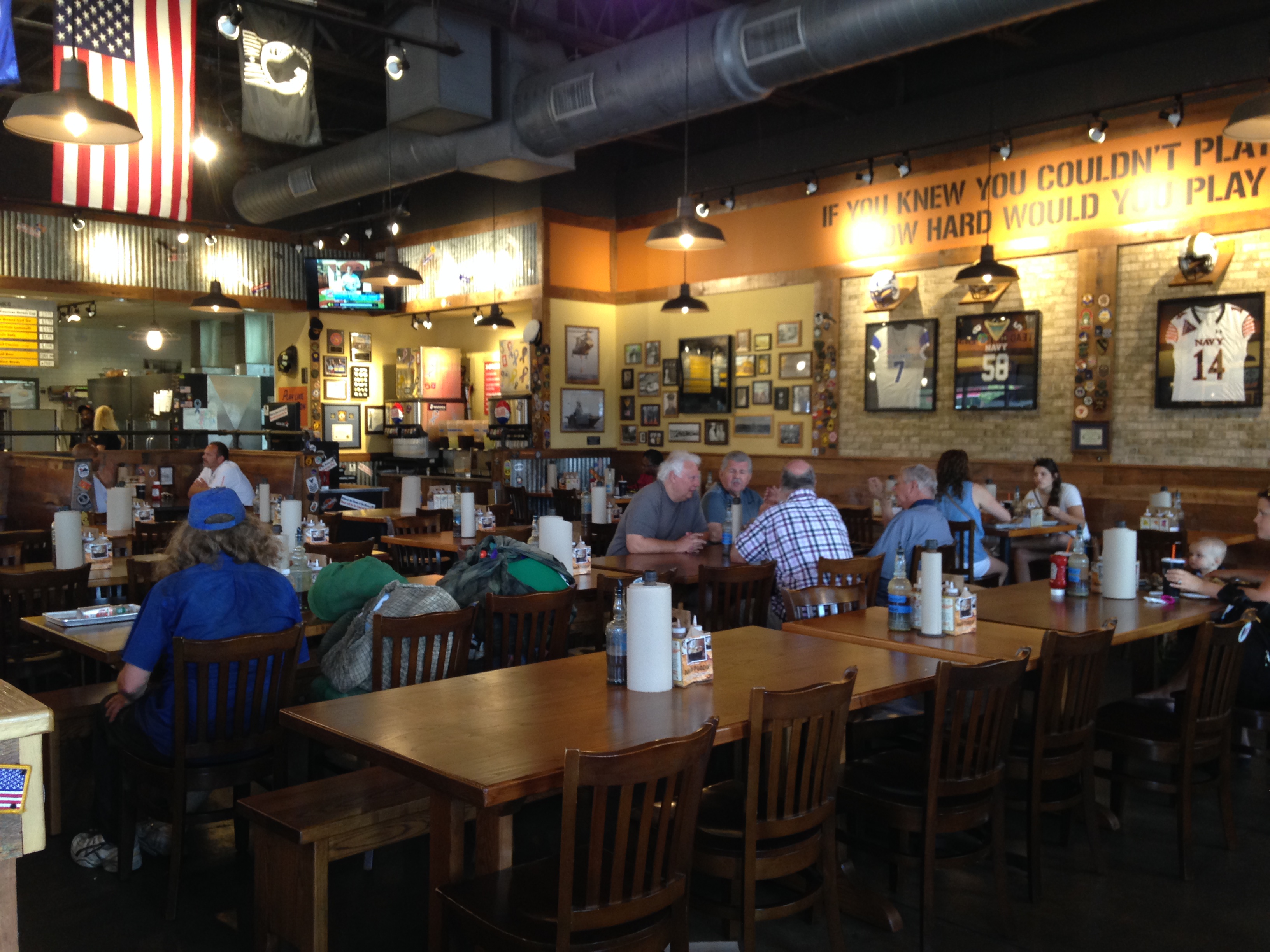
5) Mission BBQ on a Mission – Mission BBQ is one of our favorite restaurants in Richmond. Their generous customer service (even in this era of COVID) and consistently delicious food are super special.
We are members of their birthday club and receive a free barbecue sandwich when our special day rolls around each year. Besides that, we will get an email occasionally inviting us in for another free sandwich. Today we redeemed our “Merry Christmas” freebies.
The food is great, but it’s also an uplifting in-restaurant experience. Mission BBQ sets the bar high in honoring first responders and members (and families) of the military. In fact…they make all their customers feel honored. Sweet. And very unique.
In fact, if you’re in the Richmond area (or have a Mission BarBQ in your area, and are thinking about heading over on Monday, they will be closed. It’s their National Day of Service when they feed homeless veterans around the city.
One big mistake people repeatedly make is focusing on proving themselves right, instead of focusing on achieving the best outcome. This is the wrong side of right. — The Wrong Side of Right
“I make my bed every morning because it’s a gift that I get to open at the end of every day. A gift that not everyone has. So while I’m wrapping my bed in the morning and I’m unwrapping it at night I’m reminded of what a great blessing my bed really is in my life. When we stop viewing what we have as little, insignificant or not enough then we get to see what we do have as gifts we get to enjoy, great blessings in our lives and provision for our needs.” – Theresa Nicely McCoy, Facebook
“Haven’t I commanded you: be strong and courageous? Do not be afraid or discouraged, for the LORD your God is with you wherever you go.” – Joshua 1:9
Is the world today a cause for fear for you? Or timidity? Or maybe, with COVID as a continuing threat, it doesn’t seem like fear but rather sound caution.
Social distancing has become a way of life. We have stepped back from so much of life…
At this time in the Biblical account of the Israelites entering their Promised Land, the great leader Moses had died. God then gave Joshua the responsibility of leading them in the conquest.
Three times the Lord told Joshua to be strong and courageous. Then even the people of God a fourth time urges Joshua in the same way.
Why was Joshua needing enCOURAGEment? He was being charged with a huge and costly undertaking. Transporting all those tribes into a land where they weren’t just aliens but enemies.
In preparation, Joshua counseled with the Lord, and in obedience, he gathered his warriors. 40,000 strong. Seems plenty, right? But wait…
Joshua told the people, “Consecrate (sanctify) yourselves, because the LORD will do wonders among you tomorrow.” – Joshua 3:5
God showed Himself mighty on behalf of Joshua and all the people. He held back the rain-swollen Jordan River for them to walk across on dry ground. You can imagine the fear this struck in the hearts kings of the lands on hearing this great miracle.
As Joshua continued to prepare the people to take possession of the land God had already given them, he decided to, one more time, spy out Jericho.
When Joshua was near Jericho, he looked up and saw a man standing in front of him with a drawn sword in his hand. Joshua approached him and asked, “Are you for us or for our enemies?” “Neither,” He replied. “I have now come as Commander of the LORD’s army.” Then Joshua fell face down in reverence and asked Him, “What does my Lord have to say to His servant?” The Commander of the LORD’s army replied, “Take off your sandals, for the place where you are standing is holy.” And Joshua did so.– Joshua 5:13-15
Joshua had the great privilege of seeing a Christophany – a manifestation of Christ. This was no angel. This was the Lord Himself. The brief conversation between the two speaks volumes to us.
Joshua was on his way to Jericho because he felt the battle was his to win and he wanted to be as prepared as he possibly could be. On seeing the Lord, sword drawn and discovering who He was, Jericho was reminded whose battle it really was.
Have you heard that expression “I’m not here to take sides, I’m here to take over”? That was part of what God was communicating to Joshua. His call for him to be strong and courageous was to prepare him for his part of the battle, but also to ready him for what God would do.
When we are afraid about what’s going on in the world around us (COVID, the economy, violence in our cities, [fill in the blank]), our temptation is to circle the wagons or close ranks. But…
We don’t have a need to be strong or courageous if we stay distanced from one another, hunkered down in as small a world as we can make for ourselves. What if, however, God has something larger for us?
He won’t leave us without His presence or His provision. Now there will be those who still contract COVID, and those who lose jobs or have financial reversals. There will be those of us in hard situations… but…
A battle belonging to God…for us…is being waged in the unseen by the Commander of the Lord’s Army. I’m reminded of Daniel 10:13, where Daniel had prayed and had to wait for three weeks for the answer. Spiritual warfare is very real, but even that does not have to frighten us, because we know who battles for us.
“You, O LORD, are a shield about me, my glory, and the lifter of my head. I cried aloud to the LORD, and He answered me from His holy hill. Selah. I lay down and slept; I woke again, for the LORD sustained me. I will not be afraid of many thousands of people who have set themselves against me all around…Salvation belongs to the LORD; Your blessing be on Your people! Selah.” – Psalm 3:3-6
The LORD is my light and my salvation; whom [or what] shall I fear? the LORD is the strength of my life; of whom [or what] shall I be afraid? – Psalm 27:1,2
May we have the warrior heart of Joshua, dressed and ready for whatever battle is before us, and may we have the heart of one submitted to the mightiest Commander this world will know.
Whatever our circumstances, we can be strong and courageous. He means for us to show up for the battle…but it belongs to Him. Thankfully.
2021 is rapidly winding down. Whew! Here are my Friday Faves to get us ready for the new year…hopefully a joyful one!
1) New Year’s Resolutions – 2021…the end is in sight. What do we do with this new year ahead? Do we revisit those habits we thought about changing up in this tumultuous year? Maybe so. Or maybe we didn’t alter course so much for good reason. Let’s give pause a moment and consider…
I take New Year’s resolutions very seriously. They have served me well through the years in shaking up troublesome habits as well as galvanizing better ones. New (or restored) habits that nurture the body, the spirit….and, when possible, family and community.
New Year’s resolutions are not always exercises in futility. They can be excellent pathways to help us get off to a strong start into the next year. Some of my family and friends treat resolutions with disdain…they never work; they never last. Oh, but not always!
They are really very energizing. Whether we meet our goals or not, there is great promise within the resolution for resetting our thinking. A keen sense of self, or self-awareness, aids in our understanding of habits and true habit change.
Without knowing it, I have actually used a practice of habit change that Ken Sande writes about on his blog, Relational Wisdom 360. He first influenced my life years ago with his work on conflict resolution through his Peacemaker Ministries. He is a gentle guide in many of the issues that complicate our lives.
His article on Seven Principles of Habit Change came at a great time. Sande talks quite kindly about how we develop habits and what it takes to change them. His first principle of habit change gives us a look at the cycle of habits – the cue, the routine (or response), and the reward. I actually followed Ken Sande’s principles below (without knowing the wisdom of it).
Every habit has three parts: a cue, a routine, and a reward.
You can change an undesirable habit by keeping the cue and reward but learning a new routine.
The best way to overcome the temptation to revert to old routines is to have a detailed action plan.
Habit change builds momentum if you can change a single “keystone habit” and then continue to build on consecutive “small wins”.
Will power is like a muscle: it can be strengthened and yet needs to be exerted strategically.
Faith is an essential part of changing habits.
Habit change is more likely to occur within a community (even if it’s just two people). – Ken Sande
Self-awareness is a huge factor relating to habit change. I can see that more now having come through seasons of looking at my own habits.
“Self-awareness is defined as conscious knowledge of oneself; it’s a stepping stone to reinventing oneself, learning to make wiser decisions, and helps you tune into your thoughts and feelings. So often we place blame on externalities because it’s the easiest excuse, when in fact we should be thinking about our thinking, reflecting, trying on different perspectives, and learning from our mistakes.” – Paul Jun
It is possible to affect true habit change if we are willing to take a studied look at ourselves – our awareness and our engagement with making choices/decisions and within relationship. I used to think that self-awareness was morally charged, i.e., it drove us to become more self-centered. That doesn’t have to be the case. When we take time to really examine where our minds go, through the day, we can train our thinking toward what matters most – related to people, resources, and life purpose.
When we are willing to do that, New Year’s resolutions can become much more transformative than just a few weeks of good intentions. These habit change principles can apply to anger issues, pornography, other addictions, and pretty much any habitual process that negatively affects your work, relationships or general peace of mind.
Consider these questions as you think on resolutions for 2022:
What do I want to keep from the changes I made to cope with the pandemic?
What do I want to reclaim from the pre-pandemic time?
How would I “build back better” if I were in charge of the world or my neighborhood? – Katherine Arbuthnott
Four years back, our pastor Cliff at Movement Church challenged us to commit to some resolutions to the Lord…together [podcast of 12/31/2017 here]. I have kept the resolutions made that day in a visible place, to be reminded of the good change in life, and the struggle… I still have them in view…four years out. Still relevant to now. For 2022, on it again…plus prayer for wisdom how to be creative and intentional, given COVID’s continued intrusion. And also added this year: writing my life’s story (capturing the memories and maybe restoring/refining some as I write).
Jonathan Edwards, the great 18th century preacher and theologian, definitely understood the importance of praying through and writing out resolutions that would inform his daily life. Over the course of several months, he composed seventy resolutions for life. You can read them here. The five resolutions I made during church on a New Year’s Eve are weighty enough for me…can’t imagine 70! Edwards just gives an example of a man who, even as deeply devoted as he already was, did not want to miss God in a busy life of ministry. Nor did he want to miss the people God placed in his life.
Resolutions help us to keep the main thing the main thing. Sure, we may struggle to keep our bodies and houses in order. Those are temporary situations. Where we hope most to be successful is in keeping our hearts tuned to what matters most. Going deep with God and others. Even in the face of a continuing pandemic...if we are ruthless and wise, and don’t give in to another year of listlessness and waiting.
We’ve already enough of that…coming up on two years.
2) Habit Planner –Anyone who knows the writing of Justin Whitmel Earley knows his commitment to a life well-lived. He is determined to live intentionally, not leaving the substance of his life to outside powers or sloppy habits.
“Unlike resolutions, we actually become our habits. There are no changed lives outside of changed habits. And if we want to actually change, we need to take a sober look at where our habits are leading us.” – Justin Whitmel Earley
“Habits are the little things we do over and over without thinking about them. And the tiny and subconscious nature of habits makes them powerful. Why? Because they create our “normal.” Normal life is what stays with you from January through December. Normal life is what shapes your kids, your body, your schedule, and your heart.” – Justin Whitmel Earley
His two books – The Common Rule and Habits of the Household – lay out a simple path for examining our current lives and then setting strategy for habit change. So accessible and engaging whatever our preferences for methods are. If spreadsheets help, he has one for you. If you need a more fuzzy-boundaried approach (that would be me), you can glean from his wisdom, and alter course accordingly.
Below are his own examples of the habit planner. I appreciate his heart so much. He helps us all he can (in his books and free resources):
Below is Tim Ferriss’ guide for a past year review from his own blog (and podcast):
Grab a notepad and create two columns: POSITIVE and NEGATIVE.
Go through your calendar from the last year, looking at every week.
For each week, jot down on the pad any people or activities or commitments that triggered peak positive or negative emotions for that month. Put them in their respective columns.
Once you’ve gone through the past year, look at your notepad list and ask, “What 20% of each column produced the most reliable or powerful peaks?”
Based on the answers, take your “positive” leaders and schedule more of them in the new year. Get them on the calendar now! Book things with friends and prepay for activities/events/commitments that you know work. It’s not real until it’s in the calendar. That’s step one. Step two is to take your “negative” leaders, put “NOT-TO-DO LIST” at the top, and put them somewhere you can see them each morning for the first few weeks of 2022. These are the people and things you *know* make you miserable, so don’t put them on your calendar out of obligation, guilt, FOMO, or other nonsense.
We do a year-end review but not in order to plan out the next year. Mostly to celebrate the year rapidly coming to an end and to reflect on how we might reorder the course of the next year (re the negatives).
A creative friend of ours put his “year-end review” into a cool video:
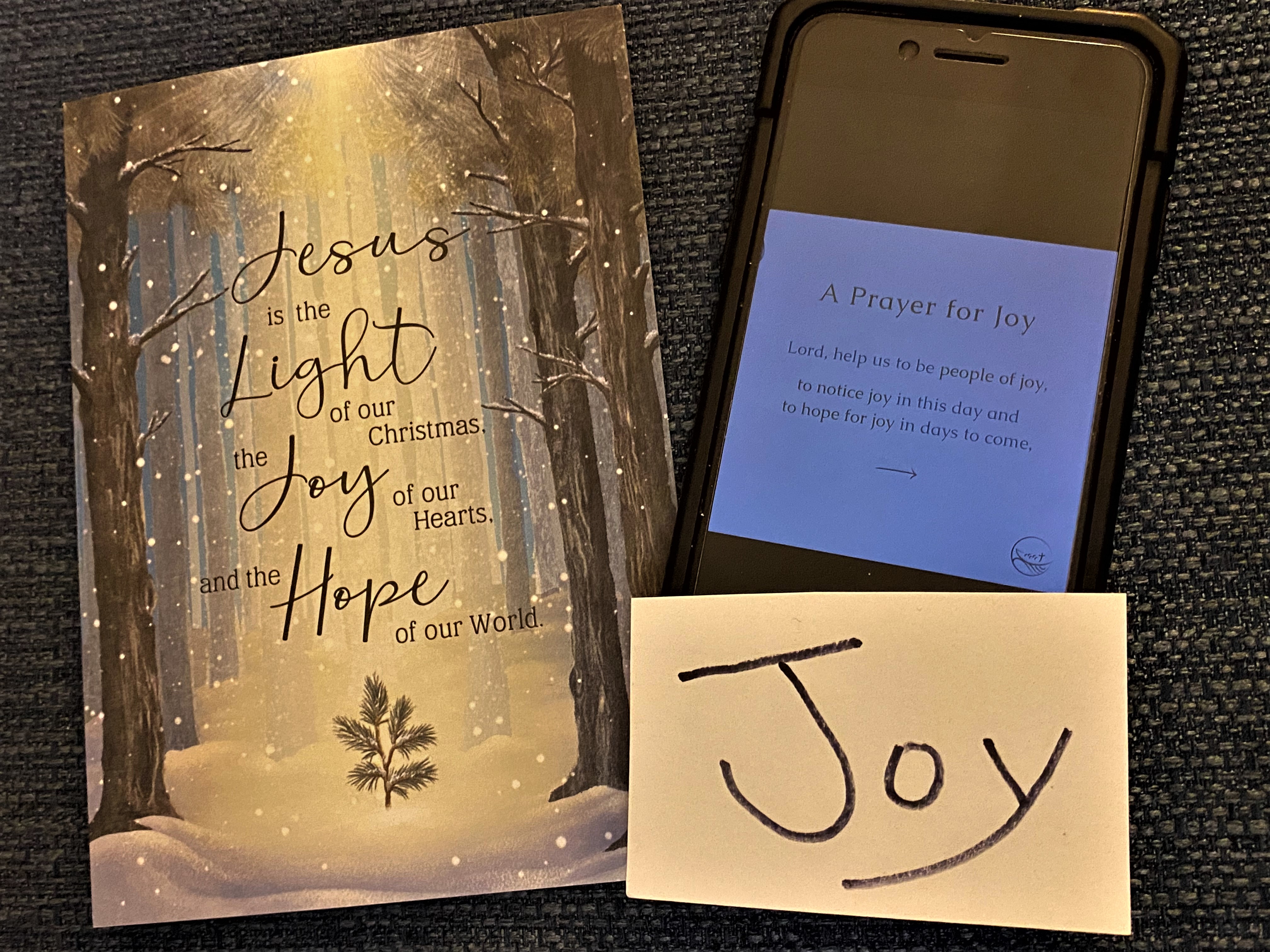
4) Word for the Year –A year ago, I read Debbie Macomber‘s book One Perfect Word. She tells fascinating stories of persons’ choosing a word to guide their year. Finishing her book and praying a bit, the word compassion became my focus. 2021 was a good year for that as we dealt with so many divisions over COVID, race, politics, etc. Compassion for all on both sides of each issue.
At first I wasn’t going to do “a word” for 2022, and then a rapid series of “coincidences” drew me to the word: joy. As this year ends, I’ve become negative and even a bit cynical. Still having faith in God but not so much in humans, including myself. Even after a year of compassion!!
5) The Last Days of 2021 – As may have been many of your experiences, we had people we know and love dealing with COVID in this last week of 2021. Still managed a sweet end-of-year. Hope yours was as well.
Now on to 2022!! Thanks for stopping by. It means a lot to me.
The countdown is done. Christmas Day looms. For those with an Eastern Christmas, there is still a week to go. We loved celebrating two Christmases when we lived in Egypt. Then there are the 12 days of Christmas still ahead until Epiphany (or Three Kings Day). So we continue to celebrate. Sweet especially for those of us dealing with COVID interruptions or other struggles (loss, holiday work,etc.). Here are my faves this week. Please share some of yours as well …and Happy Christmas!
1) Beyond the Guitar on a Lava Me 3 – Nathan Mills‘ most recent piece is an original composition entitled “Dreams”. He plays it on this amazing smart guitar – the Lava Me 3 guitar. Check it out below:
2) Christmas Poems – Christmas is the kind of holy day that inspires poetry. This week, I had the opportunity of catching the online program A Christmas Celebration: Theater, Song, & Scripture. Created and produced by the Fellowship of Performing Arts, it was a lovely mix of classic Christmas songs, poems, and monologues. Some surprisingly humorous and some deeply spiritual. Two poems, both by Scottish poet George MacDonald, were powerfully performed.
My absolute favorite Christmas poem is “Little Jesus” written by English poet Francis Thompson. It’s a bit long but such a treasure.
LITTLE JESUS
by Francis Thompson (1859 – 1907)
Little Jesus, wast Thou shy
Once, and just so small as I?
And what did it feel like to be
Out of Heaven, and just like me?
Didst Thou sometimes think of there,
And ask where all the angels were?
I should think that I would cry
For my house all made of sky;
I would look about the air,
And wonder where my angels were;
And at waking ’twould distress me–
Not an angel there to dress me!
Hadst thou ever any toys,
Like us little girls and boys?
And dist Thou play in Heaven with all
The angels that were not too tall,
With stars for marbles? Did the things
Play Can you see me? through their wings?
And did Thy Mother let Thee spoil
Thy robes, with playing on our soil?
How nice to have them always new
In Heaven, because ‘twas quite clean blue!
Thou canst not have forgotten all
That it feels like to be small:
And Thou know’st I cannot pray
To Thee in my father’s way–
When Thou was so little, say,
Couldst Thou talk Thy Father’s way?–
So, as a little child, come down
And hear a child’s tongue like Thy own;
Take me by the hand and walk,
And listen to my baby-talk.
To Thy Father show my prayer
(He will look, Thou art so fair),
And say: “O Father, I Thy Son,
Bring the prayer of a little one.”
And He will smile, that childrens’ tongue
Hast not changed since Thou was young!
3) Overcoming Anxiety – Even as lovely and magical a time as Christmas can be, we can experience anxiety. Over family gatherings, or under-performing on gift buying, or just a creeping loneliness. Whatever our anxiety, the 4-step approach for overcoming anxiety is a healthy practice. Thanks to NICABM.
4) Healing From Harm – We hope as parents that we do no major harm to our children. Unfortunately, there are relationships between parents and children that can go terribly wrong. Counselor Adam Young tackles this topic (and others) really well in his podcast . I listened to Episode 23 this week where he interviewed a woman named Autumn, on her relationship with an abusive mother. The title of this episode is “How to Engage a Parent Who Has Harmed You”. Her story gives hope. The dialog between her and Young is both instructive and prescriptive. To be able to get actual help from a podcast is a blessing. Especially in a time when counselors are hard to find (not enough of them or over-scheduled in these days of heightened mental health issues thanks to COVID).
One of Young’s free resources is “How to Write a Story”. I’m excited about this assist, because writing the story of my life since my earliest memories is actually on my list for 2022. Not that my parenting was harmful – I had a wonderful mom and step-dad, but my biological father was neglectful and then eventually just disappeared from our lives. I know the wounds of that have had impact, and actively recalling my growing-up years seems a way to take hold of anything that has harmed and can still be having impact on my family. By the way, this is not an exercise in blaming parents. We all have failings in this area. It’s an exercise to reframe memory such that it doesn’t control us.
Any resources you recommend for healing from harm? Please comment below.
5) Which Is It? Christmas or XMas? – The great thinker and writer C. S. Lewis became a Christ-follower at the age of 33 (in 1931). He did not come to this decision lightly having first rejected God altogether, as a public and punishing atheist, and then a theist, and finally a Christian…the most reluctant convert. He never looked back. His writing and teaching since then have greatly influenced generations to follow. Even the most uncertain have been riveted by his works on the beauty and reality of God, and Jesus, the Son and Savior.
Again, in watching A Christmas Celebration: Theater, Song, & Scripture, I heard, for the first time, Lewis’ essayXmas and Christmas: A Lost Chapter From Herodotus. He writes of the irony of Christmas celebrated in the two ways done in the West – the sacred and secular – and how we as Christians blend the two. It is a rich narrative, short and very much worth the read. He targets the United Kingdom but it could be about the US as well. We rush around buying, buying, buying, and then partying, partying, partying. To the point, we end up in a heap on Christmas Day with the children wondering aloud “Is there anything else?” As they are practically covered over with wrapping paper and presents. Our little grands said themselves, so wise for so small, “It’s Jesus’ birthday, but we get all the presents”.
I don’t mean this as a rant…just wanted to point to the brilliant, short piece by Lewis…and maybe to call for a pause in the rush. I’m almost past caring that I get equally amazing gifts for the grands. It’s ok for the other grandparents to shine. I’m just thankful to have them all in my life.
So…have a happy Christmas, Dear Ones. For those who get caught up in the maddening rush without the transforming experience of Christ in it, watch for the Hound of Heaven …In the flurry of activity to make Xmas happen, you might chance to notice, like C. S. Lewis did finally, that persistent wooing of God to draw us to Himself…out of His deep love for each of His created ones.
“‘Rise, clasp My hand, and come!’
Shade of His hand, outstretched caressingly,
‘Ah, fondest, blindest, weakest, I am He Whom thou seekest!” – Francis Thompson (1859–1907)
And, my favorite from Frederick Buechner, “For outlandish creatures like us, on our way to a heart, a brain, and courage, Bethlehem is not the end of our journey but only the beginning – not home but the place through which we must pass if ever we are to reach home at last.”
The most beautiful and powerful Christmas cantata I’ve ever heard: “Saviour – The Story Of God’s Passion For His People” – written by Greg Nelson and Bob Farrell – the cantata itself begins 9:45 minutes into the video.
[Product description: Saviour is a pop-classical oratorio created by Bob Farrell and Greg Nelson, in performance around the world since 1994. Recorded live at Gateway Church, this spectacular performance features full orchestra and choir with standout solo performances by Steve Green, Twila Paris, Wayne Watson, Larnelle Harris, and Keron Jackson. – Available on DVD.]
Funny pic captured by our daughter – vultures at Voter Registration – must have gotten wind of the rumored registering dead voters:
Pic below from my dear friend Marc Merlin who captures the most fascinating images at a favorite cemetery – Oakland in Atlanta:Photo Credit: Marc Merlin, Instagram
A favorite Christmas tradition – canstruction for the food bank:
All the candles lit – focused on the coming Christ:
The Christmas cactus – somehow it knows – just days ago, nothing, no buds, nothing – and then…it blooms.
Christmas week is upon us! This past week’s Friday Faves finally:
1) Epic Spanish Romance Cover– Get ready for one of the most beautiful pieces ever written for classical guitar. The composer is unknown. The arranger for this piece is Nathan Mills, at Beyond the Guitar. Enjoy.
[One of his subscribers on YouTube asked him to do for Niel Gow’s Lament what he did to the Spanish Romance. Here in his college days, Nathan plays that piece. Hope he does put his own touch to it again…all these years later. A funny sidebar to the piece below: Nathan’s sister wanted him to play this for her wedding. He said something to the effect that the whole title of the piece is “Niel Gow’s Lament For the Death of His Second Wife” so Nathan played other pieces instead. Didn’t seem a good fit for a wedding day. ]
2) Languishing– Who even knows what this is?! Well, author and organizational psychologist Adam Grant does. He defines it as:
“Languishing is a sense of stagnation and emptiness. It feels as if you’re looking at your life through a foggy windshield. And it may be the dominant emotion of 2021.
As scientists and physicians work to treat and cure the physical symptoms of long-haul COVID-19, many people are struggling with the emotional long haul of the pandemic. It hit some of us unprepared as the intense fear and grief of last year faded.
In psychology, we think about mental health on a spectrum from depression to flourishing. Flourishing is the peak of well-being: You have a strong sense of meaning, mastery and mattering to others. Depression is the valley of ill-being: You feel despondent, drained and worthless. Languishing is the neglected middle child of mental health. It’s the void between depression and flourishing — the absence of well-being. You don’t have symptoms of mental illness, but you’re not the picture of mental health either. You’re not functioning at full capacity. Languishing dulls your motivation, disrupts your ability to focus and triples the odds that you’ll cut back on work. It appears to be more common than major depression, and in some ways it may be a bigger risk factor for mental illness.
So what can we do about it? A concept called flow may be an antidote. Flow is that elusive state of absorption in a meaningful challenge or a momentary bond, where your sense of time, place and self melts away. During the early days of the pandemic, the best predictor of well-being wasn’t optimism or mindfulness. It was flow. People who became more immersed in their projects managed to avoid languishing and maintained their pre-pandemic happiness.” – Adam Grant
I’m very thankful to come across this article by Dr. Grant. He has much more to say both in the above piece and in his TED talk below. We can learn how to move from languishing back to flourishing.
The links below point to a varied and fascinating reach into languishing. Worth your time.
3) From Sad to Mad – In the midst of a sweet time of year for some of us folks, I have found my capacity for sadness stretched super far. With a background in cancer nursing where loss was always part of life, and with all the hello-goodbyes in our overseas season as a family, and finally having lost very significant people in the last few years…sad is stretched. What has surprised me of late is how fast my “sad” goes to “mad”. I get angry at the losses – deaths to COVID, marriages broken, families estranged from each other, moral failures…and more. Mad is not where I want to be. “Righteous indignation” never stays righteous. It gets mean way too quickly.
The piece above helped me immensely. Therapist Joshua Nash offers helpful steps (go there if this has become an issue for you as well). The main take-away for me is that I shift from sadness at a loss to anger at the injustice of it. What is better for my emotions, body, and relationships is to stay in the sadness. Feel it, examine its impact, mourn the cause. Sadness will subside. Moving into anger (as natural as it is in grieving a loss) mucks up the sadness. Anger is punishing (to yourself and others). As hard as staying in the sadness is, we (and our relationships) will be better for it.
4) Christmas Events – December is practically glutted with events to celebrate Christmas. In a month when meditating on the mystery of a virgin birth and the long-anticipated coming of a Savior King, quiet is hard to come by. We make room for it…alongside all the fun of this month. Below is a photo array of just some of this past week for us.
Christmas Cookie & Ornament Exchange (us women):
Old-fashioned Carol Sing (mostly in our own basement):
VCU Holiday Gala with our favorite alum and his little son:
Tacky Lights RVA:
Ethnic lunch out (#Mezeh) with our youngest:
Quiet times in front of the fire (quiet on the schedule AND with cookies & coffee):
Christmas with The Chosen:
[If the recording of Christmas With the Chosen: The Global Live Event becomes inaccessible, you can find it on The Chosen app.]
5) I.O.U.S Acronym on a Divided Heart – This morning I was struck afresh how little undivided attention is exercised in my day. Even my introverted husband will spill out all sorts of wise and wonderful words – when I am wholly there. Fixed. Not leaving the room mentally. These moments are more rare than I’d like to confess…all because of the struggle to focus.
Author theologian John Piper tackles this issue with our heart toward God. We struggle with all sorts of noise and clatter pulling us in directions that leave off the wonder of deeply knowing Him.
Piper uses an acronym that is hugely helpful in this (setting us in a positive direction for the New Year):
I.O.U.S. – [From John Piper’s Divided Heart article linked below]
“The embattled heart is typical of the Christian life. None of us has a consistently united heart in longing for God.”
“The letter I stands for incline. “Incline my heart to your testimonies,” we pray with Psalm 119:36. We ask God to take away resistance. We ask God to incline us toward God and his Word instead of away from God. And so we admit all our inclination toward God is a work of God. The psalmist would not be praying like this if the inclination was ultimately within our own power. If it were, he wouldn’t be asking God to incline his heart. We plead with God to take our hearts in his hands and to incline them, bend them, toward his Word.
Then the letter O stands for open. Psalm 119:18 says, “Open my eyes, that I may behold wondrous things out of your law.” We need God to work a miracle on the eyes of our heart so that we can see the truth, beauty, value of who he is right there in his word. If we are left to ourselves while meditating on God’s word, we will see nothing of his spiritual beauty and worth.
Then comes the third letter, U. It stands for unite. Psalm 86:11 says, “Unite my heart to fear Your name.” What an amazing prayer: “Unite my heart.” So what’s the problem that this psalmist is praying to solve? The problem is a divided heart.”
The Last Word – A one-minute video speaks volumes about our country, the media’s impact on us all, and one decision to step away. 62 y/o news commentator Brian Williams stepped away from a 28-year career with NBC/MSNBC. His last show was December 9, and he announced his resignation in this powerful short statement. We can all take something away from this, whatever our politics or nationality. There comes a time…