Category Archives: fresh start

Monday Morning Moment – Forming 5 Simple Habits that Lead to Success/Effectiveness

Blog - Habits - CGInternationalincPhoto Credit: CGInternational

Habits. Daily routine. These are things we wrestle with. Fortunately the more we wrestle and stay on them, the more successful we are, and (hurrah!), the more our lives are positively affected. Ben Slater has posted a very doable routine in his piece 5 Simple Daily Habits That Lead to Ultimate Success. They are:

  1. Wake up early. Slater is not talking waking up early enough to just get to work on time. He’s talking 5ish. To wake up that early requires going to bed early…not just napping on the couch (guilty), but habitually, getting to bed early to get up early. This is determined by how much sleep you need…whether you’re a morning person or night person, that amount of time is pretty much set. “Sleeping in” – that weekend luxury – can derive negative gains. Is it worth it? Just asking the question he raises.Blog - Wake Up Early - Monday Morning - thefemalenetworkPhoto Credit: The Female Network
  2. Exercise regularly. OK, so nothing new, right? This is not about staying in shape, physique-wise. That could be a benefit of exercise, but the goal is to sweat! We know the great benefits to regular exercise, many of which are mental. Feeling happier is one. It’s making exercise a habit that’s key here – for all its physical, mental, emotional, and even vocational benefits.Blog - Exercise - breatheryPhoto Credit: Beamery
  3. Focus, don’t multitask. I have actually prided myself for years on the ability to multitask. No more. It’s possible it wreaked havoc on my memory and probably on the quality of my work and relationships. Slater talks about the importance of a daily routine of planning, execution, review and starting a plan for the next day. “Work out the 3-5 things that you need to accomplish over the course of the day and focus on them first.” Focus is key. I’m learning.Blog - Focus vs. Multitasking - massolutionsPhoto Credit: Massolutions
  4. Learn from mistakes.  When our day doesn’t go quite how we hoped, we too often default to blaming (too many meetings, interruptions, demanding bosses, time-wasters and trust-busters). We make mistakes in our decision-making and assessments; what’s important is that we deal with them humbly and proactively. Refuse to blame others. Learn from the mistake and move on. Sidebar: If it’s someone else’s mistake or poor judgment or questionable character, then learn from their mistakes as well. Don’t get muddled up, fuming about another, when your own life is at stake. You have it in you to control that.Blog - Learn from your mistakes - ultrapreneursayingsPhoto Credit: UltrapreneurSayings
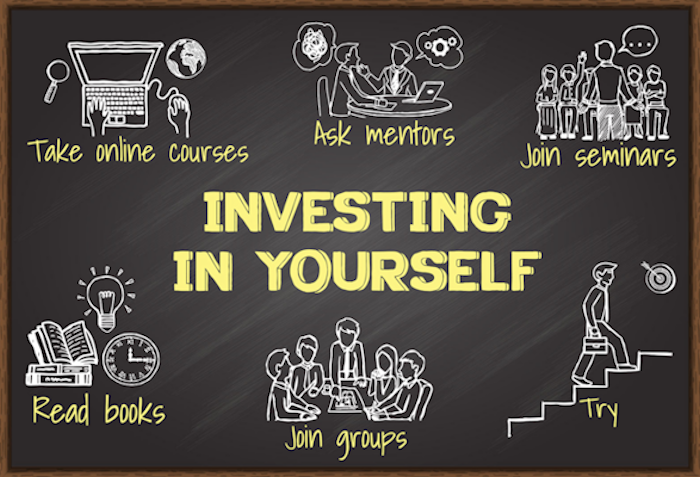
  5. Make personal investments. What habits have you put in place to continue to grow and develop? Habits, not just hopes or goals set somewhere in the distant future. Slater observes: “The world’s most successful people are always prepared to invest time and resources in their own personal development. If you stripped someone like Bill Gates of his assets and dumped him on the street I’d be willing to bet he’d be ok – he’s constantly invested in himself and built up huge reserves of human capital, major companies would be falling over themselves to offer him a job.”  This is where weekly goals come in, and maybe a mentor…someone you trust who will help you stay accountable to your goals. Don’t miss this valuable habit…I definitely need more discipline in this area.Blog - Investing in yourself - salestrainingsolutionsPhoto Credit: SalesTrainingSolutions

I’ve written a lot in Monday Morning Moments about habit formation (see links below). There are so many great resources online about this important professional life skill. Slater’s article on these 5 simple daily habits reminded me again of how possible it is to know success/effectiveness if we do the work of putting these habits into our daily routine. I’m on it…once again. [Like with New Year’s Resolutions, we may not be successful over the long-haul with every one, but we move closer to goal every time we push in that direction.]

What are habits you have seen make a difference in your personal and professional day-to-day life? What habits would you like to make part of your daily routine? Please share in Comments.

15 Critical Habits of Mentally Strong People – Travis Bradberry

Habits of Successful People Who Always Reach Their Goals – SlideShare

Creating a Lasting Early Morning Routine – The Two Most Overlooked Aspects – Joel Gascoigne

Defend Your Research: The Early Bird really Does Get the Worm – Christoph Randler

Focus on Multi-Finishing Instead of MultiTasking – Dave Mastovich

Monday Morning Moment – Notes on Chris Bailey’s Life of Productivity – DebMillsWriter

Monday Morning Moment – Make Your Bed Every Morning and Be Ready to Change the World – DebMillsWriter

Monday Morning Moment – Screen Time – Give It a Rest – DebMillsWriter
Monday Morning Moment – Understanding True Habit Change and Rocking Your New Year’s Resolutions – DebMillsWriter

Monday Morning Moment – Our Work Ethic Pushes Us On When Our Passion Wanes – How’s Your Work Ethic?

Blog - Work Ethic & Passion - twitterPhoto Credit: Twitter

Can our work ethic sustain us when our passion wanes?

Eric Chester has been studying and writing about today’s emerging workforce since the 1980’s, when Generation Y was in its infancy. Millennials have been examined and critiqued so much, but Chester has done his homework in how to help them be successful in the workplace. He also challenges employers to equip these young adults with what they may not have upon entering the workforce – that being a strong work ethic.

In his article in The MHEDA Journal, Chester defines work ethic as simply “knowing what to do and doing it“. Through his research, Chester created a list of seven indisputable, non-negotiable core values that he strongly believes every employer should demand: positivity (positive attitude), reliability, professionalism, initiative, honesty, respect, and gratitude (cheerful service).

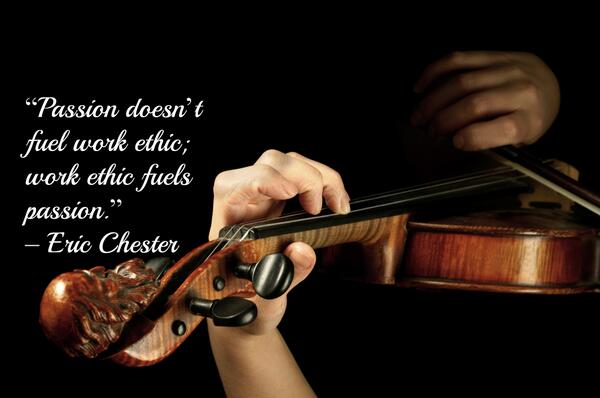
This is not just so for millennials but for all of us in the workforce. What do we need to be successful or effective across a career? Is it passion or work ethic? Passion (strong or powerful emotion, deep desire, intense conviction) is a big buzzword right now in hiring, but what we really need is work ethic. As Chester states, in his book Reviving Work Ethic, “passion doesn’t fuel work ethic; work ethic fuels passion.”

A strong work ethic will carry us through seasons in our career when we’re “just not feeling it”.  I appreciate the distinction Chester makes about how our work ethic actually fuels our passion and not the other way around. We may not all have passion in measures that enhance our success, but we can apply ourselves with diligence and intentionality such that we can push through to the finish, whatever it is. When passion wanes, this is a great encouragement to me.

Blog - Work Ethic 1 - pinterestBlog - Work Ethic 2Photo Credit: Pinterest, Pinterest

Arlene Hirsch quotes Mark Cuban’s thinking on passion and work ethic:

“’Follow Your Passion’ is easily the worst advice you could ever give or get.

1.  When you work hard at something you become good at it.

2.   When you become good at doing something, you will enjoy it more.

3.   When you enjoy doing something, there is a very good chance you will become passionate or more passionate about it.

4.   When you are good at something, passionate and work even harder to excel and be the best at it, good things happen.

Don’t follow your passion, follow your effort. It will lead you to your passions and to success, however you define it.”

Chester uses the analogy of building a fire in a fireplace. You have to set the logs in place before you start the fire. Passion will heat up a conversation or spark a vision, but it won’t get the job done, whatever it is. This is where our work ethic when applied will get us to goal, to mastery, to the finish. That in turn gives rise to passion as we see what is possible when we put forth the best effort that is each of ours to bring.

Blog - Work Ethic and Passion - slidesharePhoto Credit: SlideShare

Whether you are newly employed in the workforce or a seasoned veteran, it’s wise to consider the bottom line of what we ought to bring to our jobs. This will vary across organizations and companies, especially as our workforce itself changes in the years to come. Chester’s summation is noteworthy for all of us:

“Employers are searching for positive, enthusiastic people who show up for work on time, who are dressed and prepared properly, who go out of their way to add value and do more than what’s required of them, who are honest, who will play by the rules, and who will give cheerful, friendly service regardless of the situation.”

How’s your work ethic?…

Whatever our passion might be today, our work ethic can be rock solid…something we count on in each other at work in the every day.

Reviving Work Ethic: A Leader’s Guide to Ending Entitlement and Restoring Pride in the Emerging Workforce by Eric Chester

On Fire at Work: How Great Companies Ignite Passion in Their People Without Burning Them Out by Eric Chester

Employers Must Pick Up the Slack, Instill Work Ethic in the Emerging Workforce – article by Eric Chester

Follow Your Energy, Not Your Passion – article by Arlene Hirsch

What’s Wrong with Work Ethic in America? – article by Patricia Fripp

SlideShare – Metric Driven Talent Management – 21st Century Talent Management Conference – Tanzania

YouTube Video – Book Trailer for Reviving Work Ethic by Eric Chester

YouTube Video – Book Trailer for On Fire at Work by Eric Chester

Work Ethic Quotes – Pinterest

Blog - Work Ethic over Passion - starecatPhoto Credit: Starecat

Monday Morning Moment – Picking a Lane – It’s Never Too Late

Blog - Picking a Lane - speakerlauncherPhoto Credit: Speaker Launcher

“Pick a lane”. That phrase comes to mind literally when dealing with another driver on the highway who weaves back and forth, for whatever reasons. We get agitated at him, don’t trust her movements, and want to get as clear from them as possible.

In our careers, picking a lane is hugely important. There probably won’t be the same negative emotions (as above) about someone who is all over the place, but we are wise to set a straight course. Sometimes, especially across a lifetime, we have to re-set our course. The key is to do the work of that reset – pick a lane again. Being a generalist, a “jack-of-all-trades”, can make us quite useful to our employers, but there is no distinction in that. I’m not talking about significance here. I’m talking about what makes us the “go-to person”, that person whose passion, determination, and honed skill gives her voice in an organization…where she can make a difference. It’s something to consider…

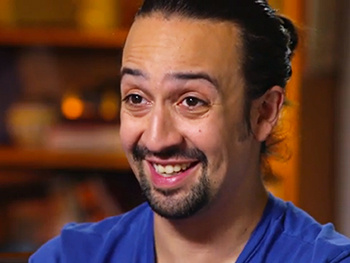
Here’s a quick story of an incredibly successful young man who “picked a lane”. I did not know the person Lin-Manuel Miranda until a funny video crossed my Facebook newsfeed just a few days ago. The video was Broadway Carpool Karaoke and Miranda was one of the performers in it. The video was produced to usher in the 2016 Tony Awards ceremony. Blog - Lin-Manuel Miranda - Pick a LanePhoto Credit: Broadway

Miranda is a playwright, composer, and actor. He already won a Tony for the musical In The Heights, and now has won several Tony awards for his current Broadway show Hamilton. Blog - Picking a Lane - Hamilton - The TennesseanPhoto Credit: Joan Marcus, The Tennessean

Hamilton was birthed while Miranda, then in his 20’s, was on vacation in Mexico and picked up Ron Chernow’s Alexander Hamilton. He was enthralled by the story of Hamilton’s life and was amazed the story wasn’t already written as a musical. [Hopefully you non-theater folks are still with me. This is such an incredible story.]

Lin-Manuel Miranda wrote/composed the musical Hamilton, and from what I’ve seen of it, it is mesmerizing. So what goes into such a young man’s pursuit of such all-encompassing excellence in his craft?

Charlie Rose of CBS’ 60 Minutes interviewed Miranda about his life and Hamilton’s. [The full transcript is here.] Lin-Manuel Miranda – this playwright, composer, lyricist, and actor – talked about how he got to where he is today.

At five, Miranda tested into Hunter College Elementary, a school for highly gifted children, where he told us sometimes, he felt like he did not belong.

Lin-Manuel Miranda: You know, I went to a school where everyone was smarter than me. And I’m not blowin’ smoke, I was surrounded by genius, genius kids. What’s interesting about growing up in a culture like that is you go, “All right, I gotta figure out what my thing is. Because I’m not smarter than these kids. I’m not funnier than half of them, so I better figure out what it is I wanna do and work really hard at that because intellectually I’m treading water to, to be here.”

Charlie Rose: So why do you think I’m sitting here talking to you and not sitting here talking to one of your classmates?

Lin-Manuel Miranda: ‘Cause I picked a lane and I started running ahead of everybody else. So I, that’s the honest answer. It was like, I was like, “All right THIS.”

“This” was theater.*

Blog - Pick a lane - liveyourlegendPhoto Credit: Live Your Legend

Miranda laid out very simply what framed his life of distinction: “I picked a lane.” We all do that across our careers, to some degree or another. Early in my professional life, I chose to carve out a niche in the care and counsel of cancer patients and their families. That was the focus and direction of my life for almost 20 years. Then, married with children, I would pick a very different lane – focusing on that little circle and those we shared life with in our community.

When we lived overseas for another almost 20 years, my lane was a merging of family, cross-cultural living, teaching English, and serving women (local and expat.) and their families. I loved those days of constant traffic in and out of our home. I miss those days. It’s quite possible, however, that those years marked a season where I was weaving in and out of traffic. You might need to ask my husband and children about that.

Now we’ve been back in the US for sometime. Picking a lane became a huge need for me as clearly my moorings of cherished overseas life were gone and I was a bit adrift. When the opportunity to came to test my skills as a communications strategist for a new and innovative work team, I jumped at it. That was a great time of learning and growing and a thrilling adventure which fueled a deep passion of mine. Alas, short-lived though. It only lasted a couple of years and that work went the way of an organizational down-sizing.

What followed has been a protracted season of being “a warm body” and “filling a hole/need” in whatever came along in life and community. Don’t hear me deny the importance of such serving, because there are times when helping in this way is exactly the right thing to do. Still, it’s not how we are meant to frame our lives over the long-haul.

A few months ago, I wrote a series of blogs on Jon Acuff’s book Do Over. He writes in such a liberating way about, essentially, picking a lane. His book is a “how-to” in getting back your life and getting on with it.

Picking a lane isn’t about just operating out of your strengths, abhorring any task or process that doesn’t show off your abilities. Picking a lane is about honing your craft, building your expertise, showing up in your giftings. It’s not about being a knower but being an insatiable life-long learner.

If the job you loved is gone or forever altered, pick another lane.

Don’t allow your current work/life situation reduce you to something other….to someone you are not and never were. Don’t let age, opportunity, personality squash your passion. We do not have to be side-lined (or defined) by getting older, being an introvert (just for instance), having a hard boss or a confusing work situation. Since this recent cancer diagnosis, I have more clarity, hope, and optimism about finishing strong… Hearing Lin-Manual Miranda’s story has heightened my resolve all the more.

Lin-Manuel Miranda: Here’s the thing about Hamilton. I think Hamilton was ready to die from the time he was 14 years old. I think what he has is what I have, which is that thing of, “Tomorrow’s not promised. I gotta get as much done as I can.”

Charlie Rose: It’s not only good acting. It’s not only good music. People are saying it’s transformative.

Lin-Manuel Miranda: It’s certainly changed my life. But I think it’s because when great people cross our path, and I’m talking about Hamilton here, it forces us to reckon with what we’re doing with our lives, you know? At my age, Hamilton was treasury secretary and creating our financial system from scratch.

Charlie Rose: And building a country?

Lin-Manuel Miranda: Yeah. I wrote two plays.*

Picking a lane…that’s what I’m doing. More to come…down the pike.

*Hamilton – Charlie Rose Interview Transcript with Lin-Manuel Miranda on CBS’ 60 Minutes

Like Hamilton, Miranda, Pick a Lane to Channel Your Strengths – Chris Steinberg, The Tennessean

Do You Want to Be More Focused and Productive? Then Pick a Lane – Reen Rose, LinkedIn

Our Most Challenging Choice: 6 Steps to Ensure You Don’t Pick the Wrong Path – Scott Dinsmore

Pick a Lane – Philip Kim

The Upstairs and Downstairs of Modern Housewifery – Mrs. Gore’s Diary – Pick a Lane

YouTube Video – “Hamilton”: A Founding Father Takes to the Stage

Monday Morning Moment – Screen Time – Give It a Rest

Blog - Screentime - smart3508Photo Credit: SafeSmartSocial

Walked away from the computer at 8:00 last night…best night of sleep I’ve had in a long while.

Alex Cavoulacos, productivity expert and founder of The Muse, wrote a Fast Company piece on establishing the habit of turning off screens at 11:00pm each night. A night owl, Cavoulacos discovered, in forming this habit that she: 1) could actually do it, 2) prioritized her work better, 3) finally found time to read, and 4) slept better. “Turns out that I inadvertently stumbled upon a trigger habit: I was reading more, sleeping more, and spending more quality time with my husband. All of this led to me feeling less stressed and better prepared to start each day. All in all, a huge positive change in my life, all thanks to a single new habit.” Check out her whole article and fascinating video here.

Tanya Lewis, a science journalist, went even farther than Cavoulacos in restricting her screen time. She writes, for Business Insider, that, for one week, she avoided screen time from the time she got off work until she went to bed. That means no TV or Netflix, no checking her phone for directions or searches of other kinds, or just out of boredom, and no tablet time for any of the above. What she discovered was how hard it was and how dependent to screen time she had become. She did start reading books again during that week. She also found that when she avoided screens, getting to sleep was easier. The most fascinating thing she noted was how much more social she became without the distraction of screens.

Night time connection

Anybody remember the old days, before wi-fi and smart phones? And the cable went out because of a storm? We would actually light candles and snuggle together on the couch, play games together, be silly, and talk. Special times worth re-creating with a screen fast.

How about our health? Is there any evidence that all this screen time, especially at night, affects our health, over our lifespan? For sure. Read Power Down for Better Sleep by Heather Hatfield on WebMD. She quotes fatigue specialist, Dr. Mark Rosekind, “One of the most simple but important reasons technology affects our sleep is cognitive stimulation.” What we are watching on screens late at night revs up our brains and stirs us up physically. This stress (positive or negative) can create a flight/flight response, resulting in our body’s release of cortisol – bringing on a state of vigilance rather than the restfulness needed for sleep. Add to our body’s “high alert” status the blue light of electronics. Hatfield reports how this light passes “through the retina into a part of the hypothalamus (the area of the brain that controls several sleep activities) and delays the release of the sleep-inducing hormone, melatonin.” To my sleepless, techie friends and family: it makes sense, right? Put it (screen time) to rest.

[Damon Beres in a Huffington Post piece, writes how “reading on a screen before bed might actually be killing you”. He points out the health problems that can result partly from inadequate rest (obesity, diabetes, cardiovascular disease). He also points to blue light filters that can help if we can’t imagine avoiding screen time at night.]

What about the impact of screen time on the brain over time? Debbie Hampton wrote a fascinating, sobering piece How Staring at a Screen Changes Your Brain (For the Worse). Hampton refers the reader to the findings of Dr. Michael Merzenich, author of Soft-Wired: How the New Science of Brain Plasticity Can Change Your Life.

“Visual activities, like staring at a screen or even driving, continually narrow our field of view to a smaller box-like zone right in front of our eyes. Our brains learn to categorize everything outside of this box as a distraction not worthy of attention and get good at filtering out anything not right in front of us. By developing sustained attention in the central view, our peripheral vision suffers, and our view of the world slowly contracts. The field of view in humans decreases as we age. Over time, a person becomes immune to noticing life’s visual surprises, and their eyes move less often. As a result of these self-induced neurological changes, our brains and bodies get conditioned not to pay attention and not to react to the unexpected.”

What does that mean for us? You have probably already seen this in action. Our attention is drawn in, fairly fixed, on our screens. We miss what is happening around us. One day I’m going to write about situational awareness – as a personal safety issue as well as a sharpening discipline to appreciate life around us. This whole addiction to screens that is prevalent today will take the rest of the world out of our view, so to speak, if we’re not careful.

For our sake (at work and home) and for our family’s sake, consider: No screen time before bed.Blog - Screentime - mugmagPhoto Credit: MugMag

Speaking of the family…our children – I will just post these quick reads about little ones (and teens) and how so much screen time affects them physically, socially, and developmentally. We fall into these habits with our children, but we can also pull ourselves, and them, out of the same.

What’s your takeaway from this? I personally want to strategically narrow the screen use in my life. Writing makes screen time an occupational hazard but I love those screens way too much outside of blogging. Thanks to Chris Bailey’s A Life of Productivity and his book about his productivity project, I have already made some changes. No Facebook on my phone, as one change. Still have a long way to go.

Bottom line: I don’t want to miss the people I love, in the flesh, and I don’t want to miss the real world…and lastly, I don’t want to miss truly experiencing God…because of this surreal, burgeoning habit of screen time. So…I will leave you for now. Well-rested, hopefully. Sweet dreams.

Monday Morning Moment – Belonging and Going Deep and the Blind Presumptions that It’s Actually Happening When It Isn’t

Blog - Belonging 2 - forbesPhoto Credit: Forbes

“The culture you create or the culture you destroy will determine the success of your business.”Mark C. Crowley

As much as we might like, we can’t equate smiling and greeting folks we pass in the hallway with real community. Worse, just making a beeline to the elevator, conference room, or office  with a studied, problem-solving look on your face does not instill confidence or credibility to those colleagues in the wake of your path to organizational excellence.

Sorry.

I’m not sure how well any of us do at creating a community of going deep or giving those around us a sense of belonging. What could help is periodically wrestling with our presumptions about work culture and employee engagement (I write about this often in this blog’s Monday Morning Moment. if you’re interested, just search here). Then make the changes that would grow such a work culture.

Going deep with employees and helping them have a strong sense of belonging are too rarely on the agenda of executive leadership. I don’t understand how that is, really, given all that’s written about it in the leadership press and all we learn from the companies experiencing growth/success. It seems a wee bit short-sighted.

Here’s the heart of it: Employees know whether they are valued and whether their organization is invested in them. Occasional fun days and gift cards to Starbucks offer a bump in the workplace routine, but the outcome will have little impact on overall employee satisfaction, performance, customer service or product excellence.

A culture where executive management, department heads, and team leaders go deep with their employees is possible, once the blinders are removed . What does that mean? It means dealing first with our presumptions and marshalling our efforts away from crazy and toward a culture of transparency and inclusiveness. It may entail perks and benefits, but more than that, such a culture thrives when personnel are proud to belong to such an organization, and their leaders know their people and strive to develop and honor them.Blog - Belonging 3 - flickr Christian BourdeauPhoto Credit: Fast Company

If, as a leader or manager, you have known success in mentoring a few, a small tribe of cohorts, then you can enlarge that to an organization-wide campaign that resets values and encourages and equips employees at all levels.

It’s worth the short-term cost to you for the long-term benefit of the organization and the individuals that make up your work community.

Bottom-line:

Andrea Huspeni writes: “How leaders choose to implement culture is everything. Some may think having the occasional happy hour, yoga session or trivia night will cut it, and while these perks help, culture runs much deeper than that. It needs to ignite inspiration, motivate teams to outperform the competition and allow employers to grow and produce results for the business. A successful high-performance culture has much more to do with the not-so-exciting tactics like transparency, support and communication than with a Ping-Pong tournament.” – Entrepreneur

Blog - Belonging - slidesharePhoto Credit: Slideshare

Please don’t miss the links below. Also, writing this, I thought of how these concepts apply to organizations other than businesses – including churches and other non-profits. What a difference you can make if you leave off judging the health of an organization by assessing how those closest to you are doing…and take on the whole health of your organization. There’s a lot at stake and it’s worth the effort of checking out your presumptions…learned this the hard way.

6 Surprising Insights of Successful Employee Engagement by Mark C. Crowley

Create Pockets of Excellence at Your Workplace by Shawn Murphy

Clarity and belonging – More Ways for Developing Pockets of Excellence by Shawn Murphy

7 Practices of Leaders Who Build Healthy Workplace Cultures by Brian Dodd

By the Numbers – Here’s What It Takes to Be a Top Company Culture (Infographic) by Greg Besner

8 Companies Reveal Their Secret Sauce to a High-Performance Culture (Video) by Andrea Huspeni

5 Ways Leaders Must Build a Family Environment to Achieve Excellence by Glenn Llopis

Can’t-Miss Advice: 8 Business Leaders Share How to Cultivate a Successful High-Performance Company Culture by Kim Lachance Shandrow

15 Powerful Team-Building Quotes – SlideShare

Monday Morning Moment – Notes on Chris Bailey’s Life of Productivity

Blog - Productivity - Chris bailey - by Lewis HowesPhoto Credit: Lewis Howes, The School of Greatness

Where does the time go? How do I get so tired before the day is done? I just can’t stay focused…too distracted, I guess. You know what I’m talking about. Then there are the reactions of those friends and family. The ones (who treat us with kindness) tell us sympathetically “You are just so busy”. Then others, more in our faces, say, “The things you want to do, you do. You just don’t want time with me enough.” I get the logic of those statements, but I’ve been perplexed as to how to improve my life choices, such that I get more accomplished…more of the important things.

Until recently…when I experienced the convergence of making New Year’s resolutions, having a big birthday, and hearing Chris Bailey talk productivity.

Blog - Chris Bailey - ProductivityPhoto Credit: Unmistakable Creative

Chris Bailey is the age of my children. Although he had job offers, he took the year after graduating university to go deep into a study of productivity.  During that year, he wrote about his experiments in his blog – A Life of Productivity. Then, he designed a roadmap of 25 tactics to greater productivity in his book The Productivity Project: Accomplishing More by Managing Your Time, Attention, and Energy .

You may be tempted to yawn at another book on productivity, but this is clearly one not like the others. I listened to a couple of podcasts on Unmistakable Creative where host Srini Rao talks with Chris Bailey. They pour over what Chris discovered about productivity during that year of experiments. [Disclaimer: I haven’t read the book yet but plan to. My takeaways are from these podcasts and the other sources linked below. Can’t wait to read his roadmap on productivity.]

As Chris talks with Srini (and we get to listen in – love these podcast opportunities), he talks about what he’s learned from others regarding productivity. His tipping point was reading David Allen’s book Getting Things Done. Srini also refers to Cal Newport’s writing on deep work (you can listen to him on Unmistakable Creative here and here). They also mentioned Charles Duhigg’s book The Power of Habit: Why We Do What We Do in Life and Business. Chris Bailey’s year of productivity experiments included studying what was already in the literature – a big help to us less-read hopefuls.

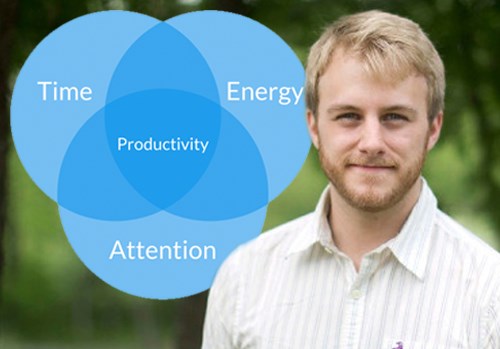
Chris defines productivity not as getting more things done but getting more accomplished. The difference is huge. It’s not just the “to-do list” but the view toward the “done list”. “Productivity is time, energy, and attention, and where the three meet in the middle is where you are in being productive. It is achieving what you intend to accomplish. It’s not about doing more things faster, but doing the right things deliberately and with intention.”

Here are the takeaways from my first-look into Chris Bailey’s “life of productivity”.

  • Take a step back from your life and ask the questions: What do I care about? What motivates me? When was I most inspired, driven, or felt the most meaning or passion for what I was doing?
  • The three commodities we all bring to the table are time, energy, and attention. It’s not just about time management, but also increasing our capacity for work (energy) and focus (attention).
  • Start every day with intentionality. Make your to-do lists to manage the minutia of life, but then do something more. Take a step back. Execute what he calls the Rule of 3. At the start of the day, mentally fast-forward to the end of the day and ask: “When the day is done, what three main things do I want to accomplish?” From this you form your intentions on what you want to accomplish.
  • Being busy, even in ticking off the things on your to-do list, doesn’t mean you’re being productive. This gives an illusion to productivity, but only when you step back do you discover whether you have accomplished what you thought you did in the busy-ness.
  • Start small in working toward productivity. Real change takes time and intentionality. “Write down everything in your job and personal life that you’re responsible for. Then ask, if I can only do one of these things every day, which adds value/meaning to my life (I would add or to that of another who matters deeply to me)? Ask again of the remaining tasks. And a third time.”
  • We all have limitations and constraints in our life. Bear those in mind as you plan and execute and evaluate. Being hard on ourselves won’t get us to greater productivity. Small, incremental steps toward change should be celebrated.
  • Work on one thing at a time. Single-tasking. Working mindfully.  “Multi-tasking holds people back from accomplishing more over the course of the day. It stimulates your mind; it’s like being busy. However, it actually makes you less productive, increases your errors, decreases your memory,  and takes longer to do everything” [in reality]. “You can only focus on one thing at one time. You then dedicate 100% of your time, energy, and attention to one thing – it will yield the highest productivity.” Counter-intuitive, I know, but I’m beginning to believe the wisdom of this.
  • Procrastination involves 7 triggers that cause your mind to resist certain tasks: when they are boring, frustrating, difficult, ambiguous, unstructured, lacking intrinsic reward or personal meaning. We put off doing those types of tasks (which often are ones we actually need to attack to be truly productive) and instead while away our time on social media or marathoning Netflix. Chris Bailey gives a way out: “Once you step back from the task, noticing you’re procrastinating, trick the triggers – reward yourself, set time limits, structure it, etc.”
  • Mindfulness is continually bringing your attention back to the work that’s in front of you. Chris Bailey uses meditation to build “attentional muscle”. Taking mental breaks (however you do) is important to make attentional space which we need for creativity. Our mind goes back and forth from “the essential executive mode (constantly thinking of something, like when on a smartphone), and the mind-wandering mode (like when you’re in the shower). You often have those brilliant ideas while in the shower.” Make space for building attention and creativity. Take breaks and disconnect a bit from the internet or Netflix (you knew that was coming, right?).

I am so encouraged by the possibilities of building capacity in my time, energy, and attention. Chris gets us started with his 100 Time, Energy, and Attention Hacks to Be More Productive. Remember, he urges us to start small. Change one thing, maybe, in each area. It’s a process but one we can master toward gaining a life of greater meaning and capacity, accomplishing what we have hoped for…not just waiting for the future self to do it. We can be more that person beginning today.

Blog - Chris Bailey - Productivity Experiment

Photo Credit: Amazon.com

Chris Bailey – A Life of Productivity – Website

The Productivity Project: Accomplishing More by Managing Your Time, Attention, and Energy by Chris Bailey

Unmistakably Creative – Podcast with Chris Bailey – Bridging the Gaps in Our Productivity

The Top 10 Lessons I Learned From a Year of Productivity by Chris Bailey

100 Time, Energy, and Attention Hacks to Be More Productive by Chris Bailey

YouTube Video – The Path to Meaningful Work: Chris Bailey at TEDxGatineau

Five Habits that Help Chris Bailey Stay Productive

From 90-hour Work Week to Rising Before Dawn, Author Experiments with Productivity – CTV News

Chris Bailey on Twitter

Understanding True Habit Change & Rocking Your New Year’s Resolutions

Blog - New Year's Resolutions - davidlose.net - Calvin & HobbsPhoto Credit: DavidLose.net

New Year’s resolutions are very energizing really. Whether we meet our goals or not, there is great promise within the resolution for resetting our thinking. A keen sense of self, or self-awareness, makes a difference in understanding our habits and progressing toward true habit change.

A couple of times in my life, I resolved to go off sugar. With a resolution like that, it means abstaining from chocolate…which is a topic all its own.

Anyway, I was successful for over a year each of those times in excluding sugar from my diet. Never having really lost the weight from my first pregnancy, I decided to remove sugar from my diet for the pregnancy of our second-born. In those days, there was a chapter of Overeaters Anonymous in our town, and that group was a great help in my dealing with pretty much a sugar addiction.

The second time I “gave up” sugar was over 2 years ago, and I stayed the course of that habit change for over 1 1/2 years. Less accountability but even more resolve. Now I sometimes have dessert or sugary snacks but I am still operating with more self-awareness than ever before. Self-awareness, not self-condemnation. A very different experience.

Without knowing it, I was using a practice of habit change that Ken Sande writes about on his blog, Relational Wisdom 360. He first influenced my life years ago with his work on conflict resolution through his Peacemaker Ministries. He is a gentle guide in many of the issues that complicate our lives.

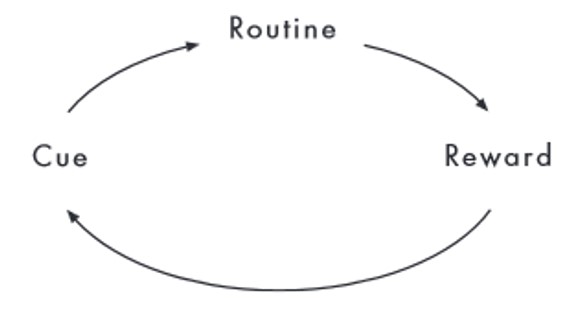
His New Year article on Seven Principles of Habit Change comes at a great time. Sande talks quite kindly about how we develop habits and what it takes to change them. His first principle of habit change gives us a look at the cycle of habits – the cue, the routine (or response), and the reward. Anyone who loves chocolate can understand this easily. For me, in eating sugar (or in overeating, in general), the cue could be a number of things – fatigue, anxiety, loneliness, presence of yummy food. It never takes much to send me to the refrigerator or pantry. The routine: feed the cue, whatever it is…with high-carb oral gratification. The reward: a brief soul satisfaction and temporary relief from whatever was the cue.

Blog - Habit Change - relational wisdom 360Photo Credit: Relational Wisdom 360

In my two seasons of not eating added sugar, I actually followed Ken Sande’s principles below (without knowing the wisdom of it).

  1. Every habit has three parts: a cue, a routine, and a reward.
  2. You can change an undesirable habit by keeping the cue and reward but learning a new routine.
  3. The best way to overcome the temptation to revert to old routines is to have a detailed action plan.
  4. Habit change builds momentum if you can change a single “keystone habit” and then continue to build on consecutive “small wins”.
  5. Will power is like a muscle: it can be strengthened and yet needs to be exerted strategically.
  6. Faith is an essential part of changing habits.
  7. Habit change is more likely to occur within a community (even if it’s just two people).Ken Sande

[If any readers want to talk further about habit change regarding sugar addiction, I would love the exchange, either through the comments or email.]

Self-awareness is a huge factor relating to habit change. I can see that more now having come through seasons of looking at my own habits.

“Self-awareness is defined as conscious knowledge of oneself; it’s a stepping stone to reinventing oneself, learning to make wiser decisions, and helps you tune into your thoughts and feelings. So often we place blame on externalities because it’s the easiest excuse, when in fact we should be thinking about our thinking, reflecting, trying on different perspectives, and learning from our mistakes.”Paul Jun

Matt Monge wrote a great piece on 13 questions we might ask ourselves to better understand why we do what we do. He is applying these questions to leadership and workplace, but they apply as well to habits. Also, in researching for this blog, I came upon this YouTube video of David Wallace Foster giving a commencement speech on awareness. Really thought-provoking as well as entertaining.

It is possible to affect true habit change if we are willing to take a studied look at ourselves – our awareness and our engagement with making choices/decisions and within relationship. I used to think that self-awareness was morally charged, i.e., it drove us to becoming more self-centered. That doesn’t have to be the case. When we take time to really examine where our minds go, through the day, we can train our thinking toward what matters most to us – related to people, resources, and life purpose.

When we are willing to do that, New Year’s resolutions can become much more life-changing than just going off sugar for a few weeks. These same habit change principles can apply to anger issues, pornography, other addictions, and pretty much any habitual process that negatively affects your work, relationships or general peace of mind.

I’d like to close with Ken Sande’s thoughts on taking self-awareness to other-awareness and God-awareness:

“The better we know and follow God (God-aware, God-engaging), the more we will know and discipline ourselves (self-aware, self-engaging), which opens the way for us to better understand, relate to, and serve our neighbors (other-aware, other-engaging).

To close the loop and spur us on developing relational wisdom, the Lord promises that the more we obey his command to love our neighbors, the closer we will draw to God himself (John 14:21-23). Thus, relational wisdom is a circle of interrelated skills that continually fuel one another.”Ken Sande

Blog - Relational Wisdom - Ken SandePhoto Credit: RelationalWisdom360

Do You Want to Change Your Habits? – Relational Wisdom – Ken Sande

Seven Principles of Habit Change – Relational Wisdom – Ken Sande

13 Questions to Increase Your Self-Awareness – The Mojo Company – Matt Monge

Why Self-Awareness Is the Secret Weapon for Habit Change – Paul Jun

This is Water – David Foster Wallace on Awareness

RW Acrostics in Action – Relational Wisdom – Ken Sande

Need Help With Your New Year’s Resolutions? – David Lose

Monday Morning Moment – Mission Drift – 12 Quotes on Being True to Our Mission

  Blog - Mission DriftPhoto Credit: Peter K. Greer, President & CEO of Hope International

[From the Archives]

“You are the salt of the earth; but if the salt loses its flavor, how shall it be seasoned? It is then good for nothing but to be thrown out and trampled underfoot by men. You are the light of the world. A city that is set on a hill cannot be hidden. Let your light so shine before men, that they may see your good works and glorify your Father in heaven.” – Matthew 5:13-14, 16

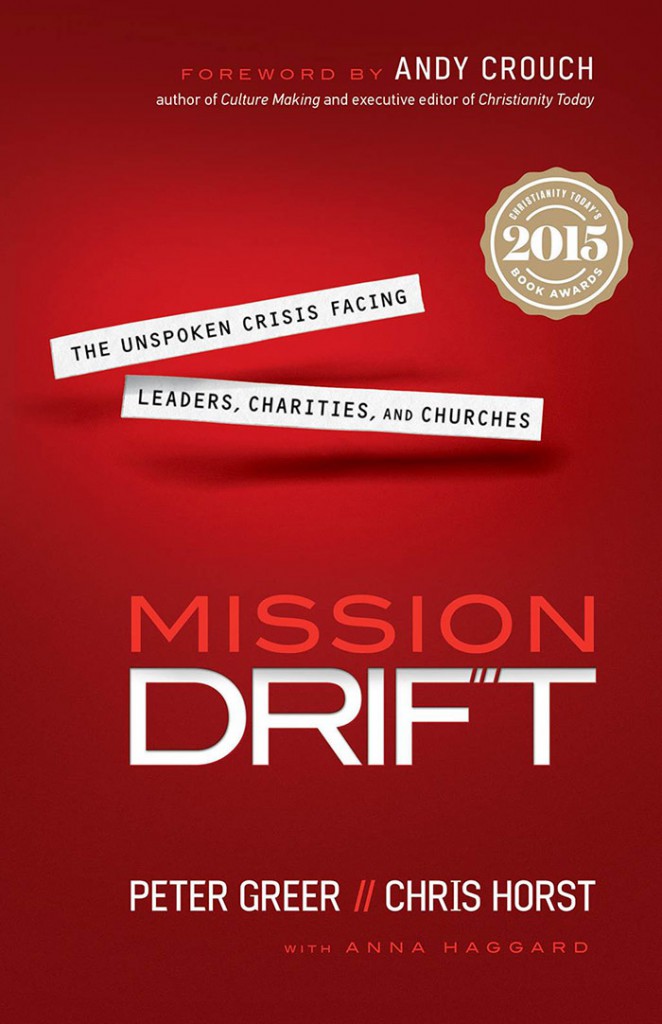
Peter Greer and Chris Horst (with Anna Haggard) wrote an incredible little book entitled Mission Drift. The book’s byline is “The Unspoken Crisis Facing Leaders, Charities, and Churches”. I enthusiastically recommend this book to anyone who has invested their lives in a faith-based organization, or Christ-centered business, or Christian charity. In fact, if you haven’t already read it, and you’re a Christ-follower, please make it a priority.

Mission drift is the slow and insidious shift away from the original mission, purpose, and identity of an organization. Greer and Horst have done extensive research on organizations who have either remained “mission true” or have fallen sadly away from their mission. The stories are fascinating and compelling. They lay a foundation that can help all of us prevent mission drift in our own lives and in our spheres of influence.

12 quotes from the book follow. These are just to whet your appetite. Mission Drift is an easy read and the truths resonate with our desire to be faithful and true stewards.

“Mission Drift…is pervasive and affects faith-based organizations of all varieties – nonprofits, churches, denominations, businesses, foundations, and schools. ..be optimistic…that drift is not inevitable.” (pp. 19, 22)

Mission True organizations know why they exist and protect their core at all costs. They remain faithful to what they believe God has entrusted them to do. They define what is immutable: their values and purposes, their DNA, their heart and soul…To remain Mission True is to adapt and grow, so long as that adaptation and growth does not alter the core identity.” (p. 27)

Mission True organizations know who they are and actively safeguard, reinforce, and celebrate their DNA. Leaders constantly push toward higher levels of clarity about their mission and even more intentionality about protecting it.” (p. 51)

Leaders often first ask what, then move to how, and finally transition to why. ..Great innovators…start with why. The ordering really matters. Everything flows from why. Not only does it motivate others to join you, it also guides what you do – and often more important – what you don’t do.” (pp. 71-72)

The gravitational pull of secularism is felt perhaps most acutely in hiring…Mission True leaders hire carefully, intentionally, and prayerfully. They approach each hiring decision seriously, recognizing that each staff member represents the mission of the organization. ” (pp. 103, 107)

“Mission True organizations recruit and engage Mission True donors.” (p. 115)

You are what you measure…Our highest goal is to remain faithful to our Christ-centered identity and mission. Because of our identity, we must pursue excellence. Metrics can be self-serving. We need to be clear why we pursue them. Seeing God for who He is clarifies our role: We are stewards. Metrics help us to remain accountable for the work that God has placed in our hands.”  (pp. 131, 133, 136)

“Slapping an ichthus (the Christian fish symbol of the early church) on product packaging does not mean it honors God. Christian shoddy is still shoddy. In Mission True organizations, quality must be nonnegotiable.” (p. 139)

“‘Culture eats strategy for breakfast.’  Mission True organizations get this. They focus on the little things. They understand how important practices and norms are to the living and breathing cultures of their organizations. The small decision each and every day may seem inconsequential, perhaps even trivial, but these little things protect against Mission Drift…Beyond policies, Mission True organizations recognize that culture is composed of all the ‘little things’.” (pp. 148-149, 155)

“Clear language reinforces identity and also leads to accountability. Being clear with your plans and identity enables people to keep you on mission. If you regularly talk about who you are, you invite scrutiny and accountability. Publicly proclaiming who you are strengthens your identity and empowers people to point out inconsistencies.” (p. 163)

“Also I say to you, whoever confesses Me before men, him the Son of Man also will confess before the angels of God. But he who denies Me before men will be denied before the angels of God.” – Luke 12:8-9

“For organizations who desire to protect against Mission Drift, one of the most powerful anchors is the local church…Wisdom lies in anchoring ourselves to the church as the church is anchored to Christ. Across time and culture and trends, the church remains.” (pp. 167, 173)

“Courageous Mission True leaders…have stood unwaveringly upon the Truth of the Gospel. In all areas, they have demonstrated intentionality and clarity in retaining Christian distinctiveness. They are committed to Christ, first and foremost.” (pp. 180-181)

********************************************************************

One organization very dear to me keeps its mission before its personnel and donors in regular, consistent, creative and winsome ways. We know what we are about. There is never a doubt what we’re to be about. What safeguards does that beloved faith-based organization of yours have in place to hold back mission drift?

Peter K. Greer Blog

Chris Horst Blog

The Subtle Danger of Mission Drift

Worship Wednesday – That Was Then, This Is Now – Josh Wilson’s Song of Jubilation

Blog - Josh Wilson - That Was Then 2Photo Credit: 95.1 SHINE FM

Therefore if anyone is in Christ, he is a new creature; the old things passed away; behold, new things have come.2 Corinthians 5:17

“Moreover, I will give you a new heart and put a new spirit within you; and I will remove the heart of stone from your flesh and give you a heart of flesh.Ezekiel 36:26

Do not call to mind the former things, Or ponder things of the past. – Isaiah 43:18

To be truly forgiven is like no other experience. To know you have wronged someone and that person doesn’t just minimize it, repress it, or sweep it under some proverbial rug…but truly forgives you. To be the recipient of such complete, grace-filled forgiveness transforms a person.

God transforms us through taking all our wrongs against Him and, through His Son and by the Holy Spirit, He makes us right. Transformed into children of the One True God. We are no longer the same persons, even, that we were then. Not now, and not anymore.Blog - Josh Wilson - That Was ThenPhoto Credit: Pinterest

Do we struggle with sin still? Yes. While we live, we struggle, but with a heart and mind changed by a loving, righteous, all-wise God. We don’t live in perfection (yet) but we live in the strength of the Lord.

Thank God we never have to go back to the way it used to be.

Josh Wilson wrote a song that describes this so well – the then and the now. Worship and celebrate with me, singing or meditating on his song. Hmmm…this is more a song of jubilation than contemplation…so sing it out, if you know that forgiveness. If not, it’s still available to you. God draws us to Himself…hear His voice.

We used to hide from the light
We made friends with the night
We were headed the wrong way on a one way track
Going nowhere fast

We got used to the dark
We thought this is who we are
And we figured that we were just too far gone
But we were wrong

‘Cause love came running like a river
And we got washed in the water
Then He said you’re forgiven
Your sins are gone

That was then, this is now
You’re bought by the blood, saved by the Son the saints all sing about
That was lost, this is found
And it’s time to say goodbye to the old you now

So go ahead, put the past in the past
Box it up like an old photograph
You don’t have to go back
‘Cause that was then and this is now

We’ve been remade by grace
We’ve all got new names
And nothing we do could ever change
What He did that day

When love came running like a river
We got washed in the water
Then He said you’re forgiven
And you belong

That was then, this is now
You’re bought by the blood, saved by the Son the saints all sing about
That was lost, this is found
And it’s time to say goodbye to the old you now

So go ahead, put the past in the past
Box it up like an old photograph
You don’t have to go back
‘Cause that was then

If we turn and confess every unrighteousness
He is faithful and just to forgive
Oh, so turn and confess every wrong and regret
And see what it means to live

That was then, this is now
You’re bought by the blood, saved by the Son the saints all sing about
That was lost, this is found
And it’s time to say goodbye to the old you now

So go ahead, put the past in the past
Box it up like an old photograph
You don’t have to go back
‘Cause that was then and this is now
‘Cause that was then and this is now*

*Lyrics to That Was Then, This Is Now by Josh Wilson

YouTube Video – Josh Wilson – That Was Then, This Is Now

YouTube Video – Story Behind That Was Then, This Is Now

Story Songs – New Release Today’s Review of album That Was Then, This Is Now

That Was Then, This Is Now – Audio CD – Josh Wilson

Josh Wilson Website

YouTube Video – This Is Now by Casting Crowns (Thrive CD) – following the story of the Apostle Peter

Monday Morning Moment – Last Monday of 2015 – Begin Again

Blog - Mondays with Garfield - Jim DavisPhoto Credit: Garfieldh8sMondays

Here we are on the last Monday of 2015. The last Monday of the year. For some of us, there’s a collective deep sigh! We made it through this year of tough Mondays. Celebrating…quietly.

Over coffee this morning, we talked about the huge build-up to Christmas, and how today, in comparison, is almost a let-down. I don’t feel that way at all. On the Monday after Christmas, I feel satisfied and hopeful. Christmas was wonderful…even with the heart hurt of not having all our children with us and my dad states away in assisted living. Hard things are always strewn across even the best of holidays.

We rejoice in what was good and hope for what can be in the year ahead.

That’s how I also feel about this last Monday of the year. We didn’t deal with a terrifying diagnosis but we have friends who did. We didn’t have to grieve the loss of a family member but we grieve still the great loss of dear friends this year. We went through extraordinary change (in work and community) but thankfully kept those relationships. We did not suffer joblessness and do not take for granted the great blessing of gratifying work.

Work this year was oddly harder than any year I can remember. Some situations in life we expect to be hard – like the adjustments we made living cross-culturally, and like the year my mom died. This year was an unexpected hard.

In a season of chronic financial leanness and a year of organizational change, including planned and necessary downsizing, we still have a job. Months of “just keep doing what you’ve been doing” may now be winding down to make way for new direction and engagement. We breathe deeply the air of new possibilities in the days ahead.

Although there is nothing innately powerful in a last Monday of the year or the coming first Monday of 2016, the idea of a fresh start energizes us with hope and anticipation. This ending and beginning do stir our hearts and minds to begin again…

In 1970, a film was released entitled Scrooge. It was a musical adaptation of Charles Dickens’ A Christmas Carol. The old curmudgeon Scrooge was very well-played by a 30-something Albert Finney. As I look to this Monday and the next, his song “Begin Again” came to mind. If you have never seen it, watch the YouTube clip:

In thinking of finishing out this year at work, and looking to 2016, I hope you also can celebrate whatever victories and mercies you experienced this year. In looking to 2016, I pray you have anticipation of what comes. If you’ve had a hard year, too, then you are even more equipped to take hold of whatever comes.

Scrooge, in his song above, thanked “the world” (1:42) that he was able to begin again. Odd line really. I thank God for another opportunity to begin again – this day and all the days given to us ahead.

“Do not call to mind the former things, Or ponder things of the past. Behold, I will do something new, Now it will spring forth; Will you not be aware of it? I will even make a roadway in the wilderness, rivers in the desert.” – Isaiah 43:18-19

“O taste and see that the LORD is good; How blessed is the man who takes refuge in Him!”Psalm 34:8

Scrooge (1970) with Albert Finney – available on Amazon.com

YouTube Video – Scrooge with Albert Finney (1970)

Monday Morning Quarterback – What a Sunday of Football!