
Category Archives: Workplace or Marketplace

Global Leadership Summit – 7 Take-Aways from Day One of #GLS15

Blog - Global Leadership Summit - thecrossingchurchnj.orgPhoto Credit: thecrossingchurchnj.org

Today I participated in the Global Leadership Summit at a satellite site near Richmond, Virginia. It was my first time, but I hope not to miss another. It is best described on the website- “a world-class experience designed to help you get better and embrace your grander vision—the reason God called you to lead. Broadcast LIVE in HD from Willow’s campus near Chicago to over 375 Premier Host Sites in North America and later around the world, you are invited to join an expected 260,000 leaders in 2015.”

7 great leaders spoke today, and 6 others will speak tomorrow. The experience was so meaningful and beneficial to me where I am currently in life, but I would recommend it to anyone whatever your situations.

Following are the briefest of 7 take-aways that are still buzzing around in my head. So much to process. Here’s a start.

Bill Hybels (founder/senior pastor of Willow Creek Community Church; chairman of the Willow Creek Association which launched the Global Leadership Summit in 1995):

“Leadership is [simply] moving people from here to there.”

“Armed with enough humility we can learn from anyone.” 

Hybels reflected on Richard Davis’ book The Intangibles of Leadership – and developed his own list of 5 intangibles for leaders:Blog - Global Leadership Summit - 5 Intangibles of LeadershipPhoto Credit: jobsforlife.org
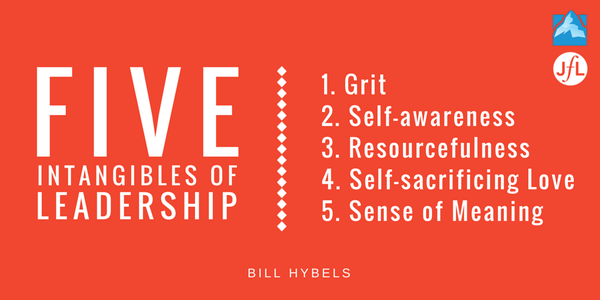
He challenged us to discover the “white-hot why” of our lives – the why of what we do – what really matters for us. For Hybels, it’s “transforming lives”. He is a living example of being faithful to that “why”.

Jim Collins (best-selling author of Good to Great):

Jim Collins talked about what he learned as the recent Chair (2012-2013) for the Study of Leadership at the United States Military Academy at West Point. He reported that: creating a culture out of which great leaders are developed must include

  1. Serving a cause we can be passionate about and for which we would be willing to suffer;
  2. Growing through difficulty; and
  3. Succeeding by helping those around us.

“We succeed at our very best only when we help others succeed. We respond to our own difficulties by reaching out and saying ‘Let me help you.’ To communicate to others: ‘You are never alone.'”

“The greatest leaders find a way to make a contribution, a distinctive impact, on people, on real-live flesh and blood people.”

Ed Catmull (Co-Founder of Pixar Animation Studios; President of Walt Disney Animation Studios; Author of Creativity, Inc.):

Catmull wanted to be an animator from the time he was a child but couldn’t see a path to follow that dream. He ended up studying physics in college.Blog - GLobal Leadership Summit - Ed Catmull by brainpickings.orgPhoto Credit: brainpickings.org

“Science and art are not incongruous. Art isn’t about drawing; it’s about learning to see. Which business or professions do you not want to have enhanced ability to see?”

He talked further about 3 processes in film-making, all relating to accountability:

  1. Teams working together (using a Brain Trust – a group of colleagues all acting as peers, with vested interest, giving feedback;
  2. When failures happen in production – embracing [failure] but at the same time dealing with it with both total candor and kindness; and
  3. Operating within constraints (a budget) – actually pushes creativity higher and delivers better outcomes.

“Stories influence the world. We want to use story-telling for good.”

Adam Grant (Professor, Wharton School of Business; Author of Give and Take: A Revolutionary Approach to Success)

Grant talked about the three kinds of persons you find in the workplace…well, anywhere really:  1) Givers, 2) Takers, and 3) Matchers. After defining each of these and how they interact with each other in the workplace (buy the book), he prescribed ways to build a work culture. A work culture of generosity – the work culture that especially develops the givers, which brings the others along as well.

His three challenges were:

  1. Keep the wrong people off the bus. Get rid of the takers.
  2. Redefine giving. [He talked about the 5-minute favor and the 100 hours of volunteering across a year – these micro-lessons of generosity.]
  3.  Encourage help-seekers. – Developing the givers will nurture a culture of “How can I be the rising tide that lifts all boats?” – a Reciprocity Ring.

Dr. Brené Brown (Research Professor, University of Houston Graduate College of Social Work; Author of Rising Strong):

“Our brain is neuro-biologically hard-wired in the instant of a [hard time; difficult conversation] to make up a story as to what happened. If we can give our brain a story when something hard happens, we are rewarded by our brain (dopamine). Our brain rewards us whether the story is accurate or not. Our worthiness as people lives inside these stories. When we pretend or deny the story, it owns us. When we own the story, we get to write the ending.”
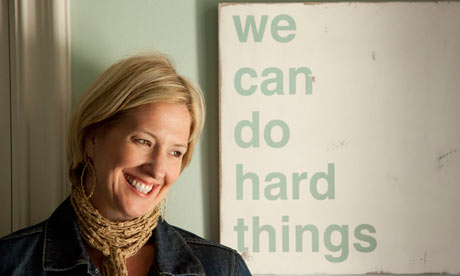
Brene BrownPhoto Credit: TheGuardian.com

Transformational leaders: 1. Do discomfort.  2.They have absolute emotional awareness about their own life, and about the people around them.

“We can’t ignore emotion. We are emotional people who sometimes think. Emotion dictates behavior. If you speak to the way they think or their behaviors, without speaking to their emotions, they will not change. Speak to their emotions. Curiosity and lines of inquiry are the greatest tools of leaders. ‘Help me understand’. “

Sallie Krawcheck (Chair of Ellevate Network; Former President, Bank of America’s Global Wealth & Investment Management):

“The retirement savings crisis is a women’s crisis – we retire with 2/3 the retirement income as men and live 6-8 years longer than men. I love men. I’m married to a man. But you guys are going to die, and we as women will be living with this crisis.”

“My “‘white-hot why’ is advancing women, elevating women. “

“I work every day as though my children are watching me.”

Albert Tate (Founder/Senior Pastor of Fellowship Monrovia, Southern California):

Pastor Tate preached (and I mean preached) on the miracle of Jesus’ feeding of the 5000 (John 6:1-13), using the five loaves of bread and two fish brought to Him from a boy in the crowd.

Tate renounced the leadership lie of “leaving it all on the field”.

“One of the most key things we can do as leaders as to bring what we have, give it to Jesus, and then get out of the way.”

Leaders, you don’t have to go home on empty. You don’t have to leave it all on the field. Christ left it all on the Cross. Bring what you have. Whatever you have, give it back to Him. Then get out of the way, and watch in awe and wonder at what He does.”

These are just 7 take-aways of the 20 pages of notes I took during today’s Summit. Such great teaching – inspiring, empowering, mystifying, really.

Download the Global Leadership Summit app. Read what you can (in these authors’ books and via all the online resources – articles, blogs, video). Take down the dates for the Global Leadership Summit of 2016 and plan to register early.

Being the leader we hope to be is within our reach.

Post-Script: Michael Jr. was on and off stage to make us laugh and to look at life from just a bit of a different angle. Love him!
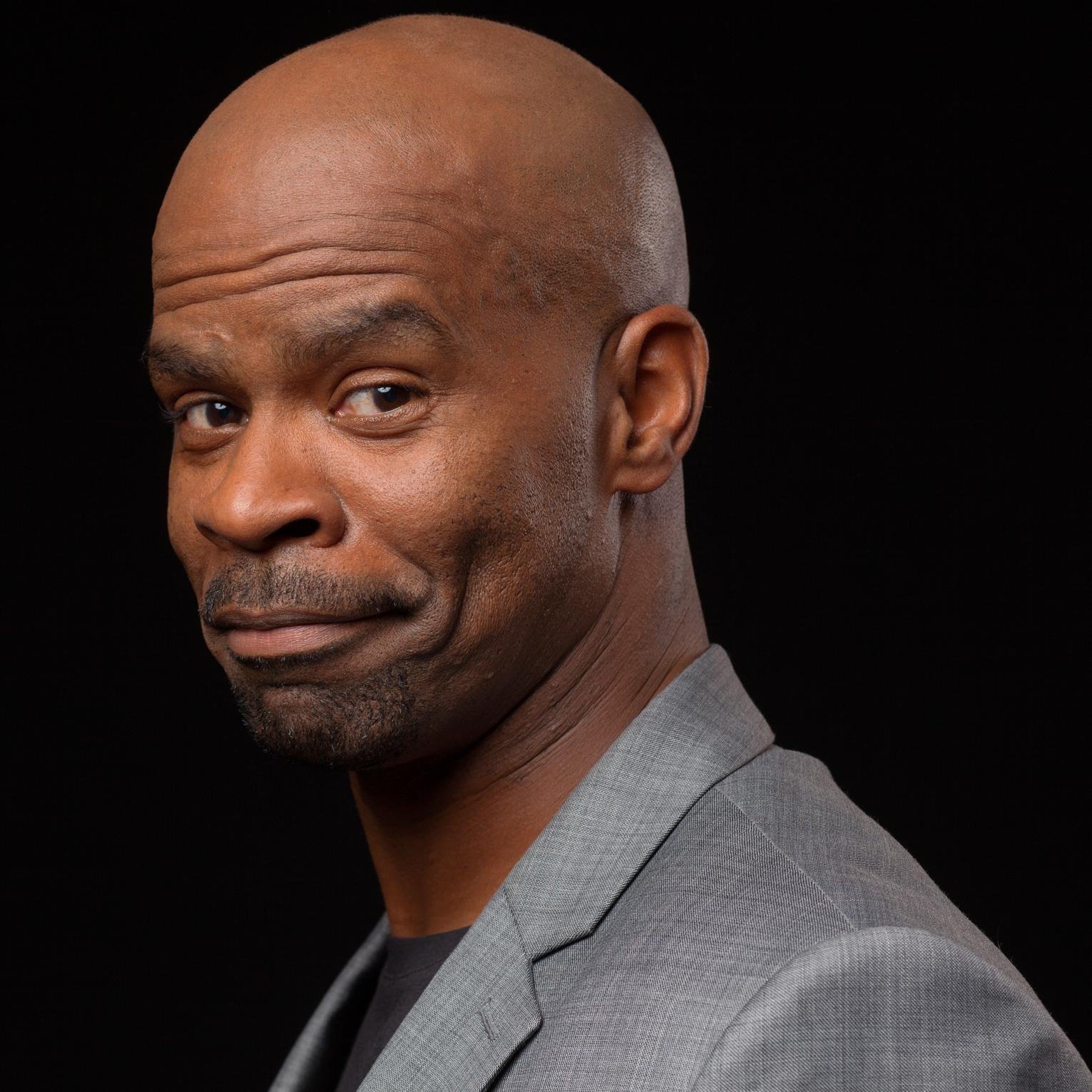
Blog - Global Leadership Summit - Michael Jr

Photo Credit: MichaelJrComedy
Global Leadership Summit – Willow Creek Association

Global Leadership Summit App

Collaborative Conversations – Quotes to Stir Your Thinking on Leadership and Language in Workplace Decision-making

Blog - Collaborative ConversationsPhoto Credit: AJCarlisle.files.wordpress.com

Change is normal, and resisting change is normal as well. You may be part of an organization or company where sweeping changes are being implemented, even this week. Or maybe you are not on the inside loop of these decisions, so you are not privy to the change coming. Whether you are part of that process or not, consider how you might have a role in making change work, in your sphere of influence, among your colleagues.

You may already have read and profited from the book Crucial Conversations. Now consider collaborative conversations. Collaboration, simply defined, is “working together towards shared goals”. Collaborative conversations bring a collective intelligence to bear on the problem to be solved, vision to be defined, or direction to be changed.Blog - Collaborative ConversationsPhoto Credit: ThoughtFarmer.com

David Perkins, a Harvard professor, wrote about collaborative conversations in the workplace, using the metaphor of King Arthur’s round table. He described the beneficial nature of bringing several principal players (or stakeholders) to the table and treating each one with an equal or autonomous voice.

“A round table makes it a little easier to pool mental effort. A round table makes a group a little more intelligent…For a group to display intelligence in a sustained way, the members have to value their exchanges and stick together to keep making them. This depends on positive symbolic conduct [side messages sent by our words and behavior]…and collaboration… It’s not ideas, but people with ideas that make things happen.” – David Perkins

“One of the simplest ways to immunize a culture against broken trust, corruption, and animosity is to build a common vision.” – David Perkins

Perkins’ book King Arthur’s Round Table: How Collaborative Conversations Create Smart Organizations is a tremendous resource in developing this kind of decision-making work environment. An Executive Book Summary* can help you get started.

I personally thrive in such a setting and intuitively understand the value-adding nature of collaborative conversations. In researching this workplace topic, and choosing the links below, I came across a fascinating paper** by Heather Davis, a professor of RMIT University Australia.

Davis presented her paper at the 14th International Conference on Thinking (2009, Malaysia). She discussed how workplace leaders often choose “languages of war” in making and communicating decisions and creating change. Her paper is heady stuff but if you read her thoughts below you will want to read the whole paper. It gives huge support to the role of collaborative conversations.

“In [leadership’s] ‘language of zealous allegiance’, there are expectations of allegiance [in the workplace] that lay a path for uncritical acceptance and passivity. This manifests in an expectation that followers be conscripted wholly to the cause. There is little room for questioning. [Davis quotes Hage]: “Conscription means one important thing: there is no questioning of orders, one only executes them; ‘either you’re with us or you’re against us’. “ (Hage, 2004, p. 3).””

“Rhetoric plays out in the workplace too and can be tested by how well leaders:

  • hear and acknowledge the ‘other’ point of view,
  • see the ‘other’ as people rather than pawns or simply abstractions,
  • manage the distance, materially and metaphorically, between themselves and the people and sites affected by their decisions.”

“In the corporate world there are many examples of executives living and working in gated communities or otherwise removed by dint of corporate hierarchy or geography from the people and conditions affected by their decisions. Often, these leaders are also surrounded by people who can only agree, leading to little opportunity for double loop learning or deeply reasoned decision making processes. Whether our leaders live in gated communities is their business, but if they think, work and take refuge within a ‘gated’ mindset then we all need to be concerned. These conditions lead to hubris and have been the undoing of many leaders and corporations.”

“[Leadership’s] language of regrettable necessity translates directly to the “There Is No Alternative”. [This strategy] is used to always move the focus of discussion away from any big picture ‘why’ questions. This is done by shifting the focus to discussions only about the budget pie or, more particularly, the piece of the budget pie that is contestable. People find themselves fighting for a slice of the budget pie and energies focus only on the ‘pie’ and getting the biggest piece of it. This shifts the focus from larger issues such as whether the budget is set correctly, what has been included and what has been excluded. Thinking about alternatives is never an option.”

The role of the organisation is ‘to know its purpose and not be diverted from it’ (Drucker, 1993). This is a timely reminder here – easier said than done in times of flux, complexity and discontinuous change.”

“Language is the visible tip of the cultural iceberg that largely remains hidden.”

“Perkins (2007) used two metaphors in his presentation and so far I have only privileged the five languages of war metaphor in this discussion. The other metaphor used was the “five languages of peace”. The main difference between Perkins’ languages of war and peace are that the war metaphor is founded on exclusivity and a preference for limiting discourse to its [leadership’s] own narrowly defined boundaries. Perkins’s peace metaphor is founded on inclusivity and opening up the space for conversations and conflicting views [i.e., collaborative conversations].”

“Oppositional language and the pitting of one deeply held worldview against another will not lead to resolving the underlying problems of the workplace. Rather, space for conversations to surface underlying assumptions is required. Perkins’ language of peace metaphor confirms that that there are always other lenses to view the world through, not just the one that [leadership] prefers.”

Provocative reading from this Australian educator. Bottom line: Those of us in leadership carry a great burden of responsibility. We at times must make difficult and sometimes painful decisions. Adding voices to that decision-making can generate even more challenging processes to negotiate. Still, we will make more sustainable decisions for “better futures” if we bring those most affected (or most experienced or insightful) to the table. Whenever possible. That’s the gain of collaborative conversations – working together toward shared vision and shared ownership.

Stay engaged in your workplace. You can make a difference.

*King Arthur’s Round TableHow Collaborative Conversations Create Smart Organizations by David Perkins – an Executive Book Summary

Leadership Lessons from King Arthur – a Review of Harvard Professor David Perkins’ book King Arthur’s Round Table

How to Lead When Change is the New Normal

The Art of Collaboration (Collaborative Behaviors) – by Steve Dale (includes a SlideShare)

Collaboration: What Does It Really Mean?

**Troubling Invisible Barriers to Better Futures: Surfacing the “Five Languages of War” in the Workplace – a scholarly paper by Heather Davis, presented at the 14th International Conference on Thinking

The Five Literacies of Global Leadership – What Authentic Leaders Know and You Need to Find Out – by David Hames – Business Book Summary

What Is a Coaching Conversation? from Opening the Door to Coaching Conversations by Linda Gross Cheliotes and Marceta Fleming Reilly 

The Perils of Indifference – a Speech by Elie Wiesel

Cutting Through the Hype – What “Collaboration” Really Means – ThoughtFarmer.com

Making the Workforce Work! The Collaborative Workforce Initiative

Jon Acuff on Character at Work – 9 Quotes & a Challenge – Part 4 of the Do Over Series

Blog - Jon Acuff & wife JennyPhoto Credit: Nancy Ray Photography

Who would have thought reading a business book would become a deeply personal experience? Encouraging. Empowering. Do Over has launched itself in my life. Jon (the writer) and Jenny (the wife) Acuff have become like good friends, in a virtual book-driven way. He’s clearly a funny, risk-taking, keen observer of people in the workplace.  She, on the other hand, seems to both hold his feet to the ground and spur him on to what’s next. I’m pretty certain that Jon’s “do over” has Jenny written all over it. Thank you, Jenny.

When he talks about character (in the section of the book I’m covering today), he compares it to planting fruit trees. Character takes time to grow. Its fruit is worth the work and the wait.

As in previous blogs in this series, Jon will do most of the talking.

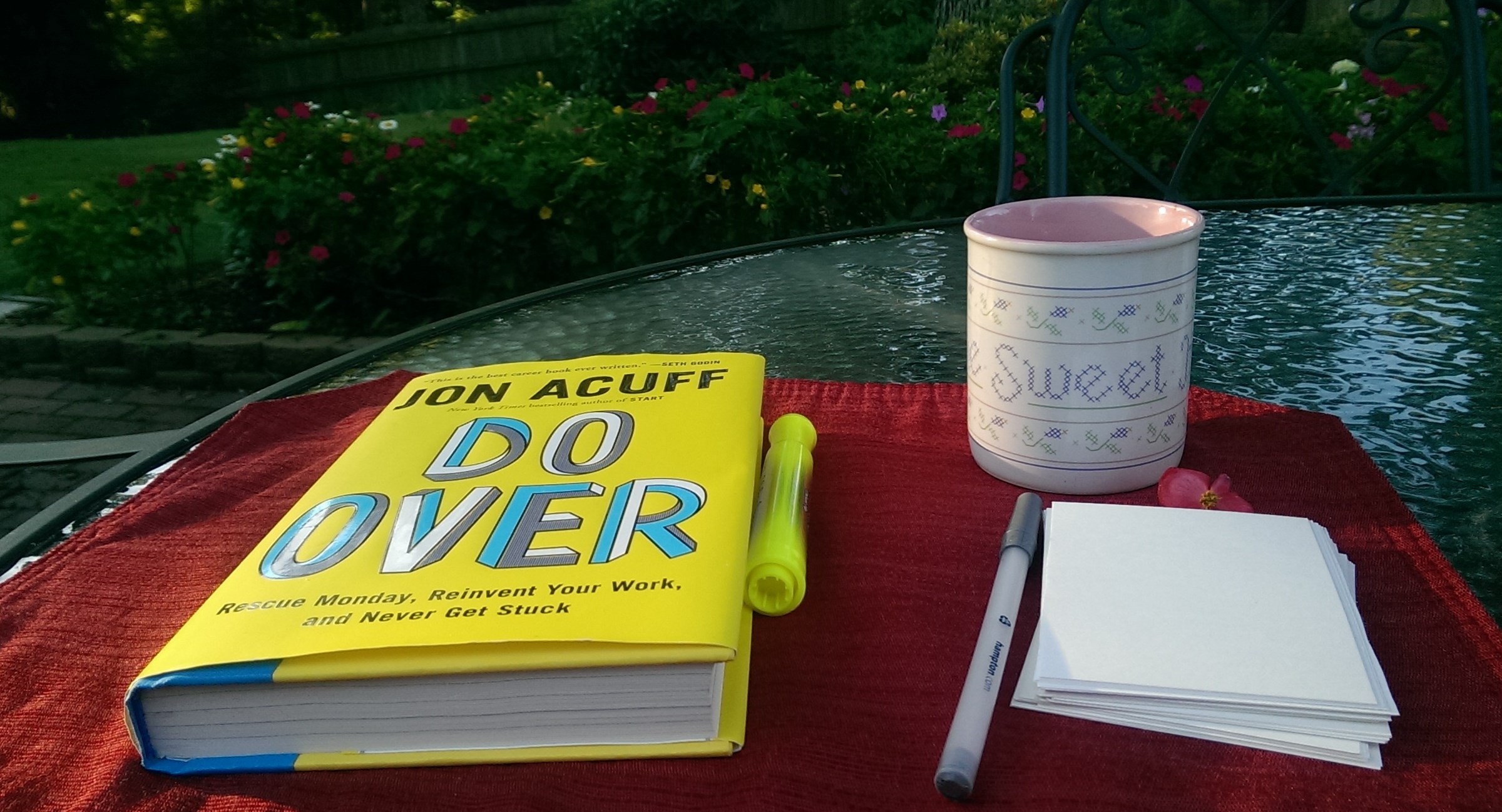
9 quotes follow. Also an exercise and a closing challenge. I hope you read the book. It is seriously, or not so much seriously, like grappling with a friend about a deep longing for career. Then receiving the best. advice. ever. Jon’s cool, and all…but his own fight for humility and honesty and his own fears and failures give him a platform. A platform to talk into my life and into the lives of those I love the most – my husband and my adult children. Thank you, Jon.

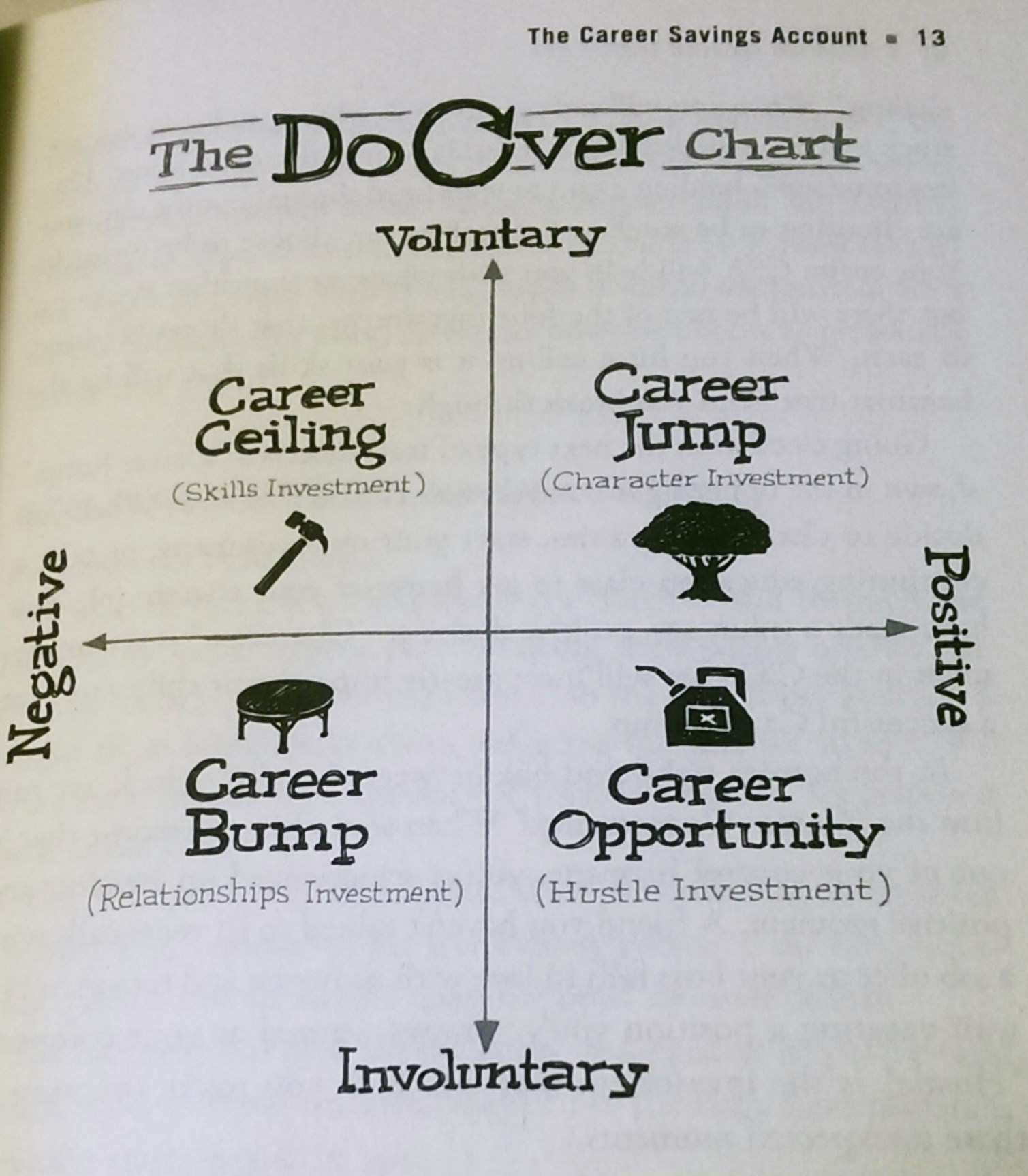
So here’s a bit of what he says about character and its impact on us in the workplace…especially in considering a Career Jump.Blog - Do Over

“Relationships get you the first gig. Skills get you the second. Character is the reason that people will still want to give you another chance if the first opportunity fails. Character is the mortar between all the other parts [relationships, skills, hustle] of the Career Savings Account. It’s what holds the other things together. “

“Character is also what you need the most when you make a positive, voluntary career transition, or what we’re calling a “Career Jump.” You need it the most then because it will be tested the most when you ‘just go for it’ or ‘chase a dream’.”

“When you make a [career] jump, you will be tempted to cut corners, to quit when the going gets tough and lose your patience when the results you expected don’t immediately happen. It is your character that will push you forward.”

Exercise: This time we don’t use note cards, but a notebook would be handy. Jon asks the question: What’s one character trait, related to your career, that you’d like to grow stronger? That’s where we start. You might still want a friend’s help in this. None of us are perfect, so it shouldn’t be too difficult. Just pick one to start.

As part of this exercise, consider those weeds in the workplace that could choke out that character trait you’re planting and nurturing. Jon lists four especially nasty (and all too common) ones:

  • Narcissism – our focus is all on ourselves. Weighing every decision and process in your workplace as it relates to you.
  • Dishonesty – Covering a mistake, embellishing our performance, gossiping, outright lying.
  • Pessimism – That negative cup-half-empty (or even broken) take on how things are going at work. It’s not just a weed in your own orchard but it can seed clouds over your coworkers’ view of work. Pessimism can rob you of the ability to brainstorm and to dream (“two activities that require the optimism of creativity”).
  • Apathy – you’ve gotten to the place you just don’t care anymore. What was once being passive now becomes deeply defiant. Partnered with pessimism, you convince yourself that you don’t have what it takes to do a Career Jump. A dry and dogged inertia can set in, crippling your ability to orchestrate a Career Jump.

Acuff focuses on 3 character traits in particular to grow in your Career Savings Account: Generosity, Empathy, & Being Present.

Generosity is a game-changer. During a Career Jump give generously as a way to beat back the weed of greed. Greed will end up costing you a lot more than you think. Make your definition of generosity bigger by being generous with your skills and time, not just your money.”

Empathy = Understanding someone else’s needs and acting on them. Generosity and empathy are closely intertwined; they go hand in hand. The stronger you get in one, the stronger you’ll get in the other.”

“The simplest thing you can do to be empathetic [is to] show up.”

“If you really want to reinvent your work and get ahead, there are three things you need to deal with – your phone, your computer and your meetings. Be present.”

[You hear this a lot these days – how distracting are our phones and other electronic devices, and how our shortened attention spans have impaired us related to deep thinking and creative, out-of-the-box dreaming and decision-making. The ones who deal with these will be the outliers – the leaders in the fields of our future. It’s laid out there – now for us to take our lives back.]

“You need character the most when you decide to chase a dream. “

“The moment you decide to make any sort of change in your career, you send other areas of your life into chaos. The bigger the change, the bigger the chaos. Wherever you jump, your character jumps with you.”

Challenge: “Is living with the chaos of a decision easy? Not really, but you do get used to it. I try to create [chaos] sometimes as a way to hide from something else I’m afraid of. I’ve discovered that’s a lightning-fast way to drain a Career Savings Account. When real chaos comes…don’t fight it. If anything, lean into it. ‘Easy’ and ‘adventure’ very rarely travel together.”

These Four Character Flaws Can Kill Your Career – Jon Acuff

Jon Acuff – Character Archives

The Awesome Career Audit – Jon Acuff

Jon Acuff Quotes by Goodreads (different from ones above)

Why I Hate Jon Acuff by Rob Shep

Do Over – Rescue Monday, Reinvent Your Work, and Never Get Stuck – by Jon Acuff – Notes (Part 1)

10 Quotes by Jon Acuff on Developing New Skills & Sharpening Old Ones – Part 3 of Do Over Series

Nathan at guitarPhoto Credit: Nathan Mills Guitar

There’s this guitarist I know. His music is a work in progress. Not his music itself, because he hones his craft daily. Still, his career in music is a study in skill development. No industry stands still. The ability to silence a room with the sound you bring out of a guitar does not a living make. Usually.

There are so many other skills called to bear in a successful career in music today. Composing, arranging, teaching, performing, collaborating, marketing, production, diversifying style or instrument. Whew!

Then there’s your day job (by necessity, or for other reasons). Wisdom is to bring the same disciplines and desire, of that skilled musician, to work every day. To be the best asset you can be for your employer or your company. Shirking entitlement and nurturing an attitude of graciousness and gratitude.

Who is this person?!

Jon Acuff talks about becoming such a person in his book Do Over. He tackles the subject of sharpening and developing skills as imperative to any career, and especially to break through a Career Ceiling.

Have you ever gotten stuck in a job? No, I’m not talking about being ungrateful or feeling entitled to a better situation. I’m talking stuck – as in getting to a place in your job where you can’t see being able to ever advance or be more creative or grow professionally?

Acuff invites us readers to take a good look at our skills to see what exactly we uniquely bring to your job. This would include skills we might have discounted or even forgotten we had.

Below are 10 bits of wisdom from Jon’s section on skills:

  • Relationships get you the first gig, skills get you the second.
  • When you hit a Career Ceiling, skills will be the hammer you use to break through.
  • Don’t let fear hide a skill you’ve always had or wanted to pursue. Just because you’re afraid of doing something doesn’t mean you shouldn’t.
  • Small skills have the tendency to add up to big careers.
  • Master the invisible skills – Go to work; add value; own your attitude.
  • When you have a bad attitude it flavors every part of your performance.
  • If you want to get better at something, it always costs time. If you don’t have any, steal some from…Facebook or any number of things that are requesting that resource without paying you anything in return.
  • I’m convinced that fear beats the “You don’t have enough time” drum because it never wants you to invest in your career. This is a lie.
  • Your willingness to discipline one part of your life creates freedom in another.
  • You will need skills most when you find yourself stuck. The ceilings are designed to filter out the lazy and uncommitted. Every skill can be a hammer. Start banging. Career Ceilings were meant to be broken.

Like with looking at our relationships, he calls for us to use note cards and list (one per card) all the skills we can think of – whether currently using them or only in the past; whether work-related or not so much. Once we’ve exhausted our ideas on skills then, he says to look for patterns.* It’s so easy to settle into a rut of doing the same thing every day. Going after new skills and sharpening old ones help us to be good at our jobs and, at the same time, love our work.

Whether you are a musician, a teacher, an I.T. guy or a caregiver, you have skills and you can build on those skills. Determining to be diligent to grow your skills and grateful for the opportunities to learn will take you farther than you know. Right through that career ceiling.

“You know who we should fire, that guy who keeps learning how to do his job even better,” said no one ever. – Jon AcuffBlog - Do Over - Jon Acuff

Photo Credit: Forbes.com

*A Simple Two-Step Exercise for Figuring Out What You’re Really Good At – Jon Acuff, Business Insider Start Your Do Over Today

Start Your Do Over Today! – Jon Acuff

Jon Acuff: Why Most People Don’t Reach Their Full Potential And How You Can

Nathan Mills on Vine

Crosstrain at Habitat for Humanity - Aug 30 2014Learning new skills on-site with Habitat for Humanity

Balcony People – The Encouragers in Our Lives – You Know Who You Are – and We’re Grateful

Blog - Balcony People - Better TogetherBetter Together, George Washington Academy, Casablanca, Morocco

Encourage one another and build up one another, just as you also are doing. – 1 Thessalonians 5:11

People who know me well know the struggle I have with insecurity and self-doubt. It doesn’t seem so but it’s true. I have been blessed with great encouragers in my life who have fanned the flame of vision and cheered me on when it was for me to do a hard thing. Those dear ones are what Joyce Landorf Heatherley calls “balcony people” – those encouragers who stand and cheer us on. We all have occasions to be so in each others’ lives. I love the opportunity myself, to be an encourager, having had it modeled so well for me.Blog - Balcony People book

I read this little (70-page) book years ago, but it still comes to mind often when people are kind enough to come alongside and encourage me to be that person for the job, or to do what’s needed whatever it is… It wasn’t because they couldn’t do it but for me to grow into a person of greater capacity. Or, just because I’m the one for the job. Imagine.

Encouragement isn’t just pat-you-on-the-back praise or superficial compliments. Jenn Arman defines it here: “Encouraging someone can mean you’re giving them support or confidence, but is also means that you’re helping to develop something in them. When the Bible talks about encouragement, it usually means that one is calling someone to their side in order to teach, comfort, strengthen or push them to act in a certain way. People who encourage others say with love what a person needs to hear, when they need to hear it–even if it isn’t what the person wants to hear.

The greatest encourager in my long life has been Jesus. He was/is the consummate encourager. Even hours before He went to His death, He could have turned the attention of His disciples on Himself. Yet, that would not be the case. He had compassion on his disciples and taught and encouraged them even in those last hours:

[Jesus speaking] “I have told you these things so that in me you may have peace. In the world you have trouble and suffering; but have courage, I have overcome the world.” – John 16:33

There have been great numbers of encouragers along the way in my life, and I couldn’t begin to mention them all here…you know who you are. Through the photos below, I will mention some. Thank you all. Thank God for you.Blog - Balcony People - Paulette BuffingtonMy life-long friend, Paulette, who stuck by me all these years and who was brave enough to say loving hard things to me when needed. She went to be with the Lord recently, and I miss her.

BLog - Balcony People - Kay Mitchell & JoeKay – my friend and colleague at a time I was a new-in-town cancer nursing specialist. Trying to win the confidence of the staff of a cancer center, I leaned on Kay for counsel and kindness. She taught me a whole new understanding of the phrase, “Get over it!”

Blog - Balcony People - KathyKathy – my student, who would years later take my place at that same cancer center. I learned more from her than she ever did from me. She makes me proud and humbles me with her enduring friendship.Blog - Balcony People - Jan McMurrayJan – who was my parenting mentor. She relentlessly spoke truth into my life, and I needed it. Our children still know (and now appreciate more) the rules of the house affected by Mrs. Jan.

Blog - Balcony People - LindaLinda – whose friendship I’ve enjoyed for over 20 years and who taught me how to pray bigger than ever before.

33Heba – a friend and daughter from another mother who makes me laugh every single time we talk. What a gift from God she is.

Kim & Blythe 2Blythe – a young friend who was a true balcony person in my life and has grown into this incredible woman, wife, mother. Kim – who was teacher and friend to our son and became a dear friend to me.

Dan & Marge 2Marge – also a teacher to this son of mine and my friend in a hard season. We walked the streets of Cairo together. I learned from her.

2006 May -- Shana & EdShana – who helped me in more ways than she knows, teaching me a lot about capacity…and joy in the simplest of things.

2006 July -- Nezha & DebbieNezha – who was my friend in a mid-life season – with such class and  generosity of heart.

2014 Phone pics July-December 119Lisa – this friend who taught me about forgiveness and perseverance – who also visited us in Africa multiple times – I see God much more clearer through her experience of Him.

Blog - Balcony People - KarenKaren – my friend and colleague – whose wise counsel has encouraged me in these days…and she actually reads my blogs. ‘Nuff said.

There are as many encouragers as there are days…but I will stop here…with these. My Mom, my mom-in-law, and my daughter – all have believed in me and leaned into my life. You know what a great thing this is in your own life. These people who want to come close – for their sake and for yours. Struggling with fear as I do, these women have brought an uncommon grace into life for me.Mom pictures for website 012

Last, and never least, there’s this guy…I can’t say enough about how his love has altered the course of my life…for the better. “He put stamps in my passport.”…and helped me be a mom. Thank you, Dave.Blog - Dave in France

Whether we care to admit it or not, we all need people who believe in us. Or believe God enough to see in us what He sees and what we can’t see ourselves. How empowering that is!!!

Therefore, since we have so great a cloud of witnesses surrounding us, let us also lay aside every encumbrance and the sin which so easily entangles us, and let us run with endurance the race that is set before us, fixing our eyes on Jesus, the author and perfecter of faith…Hebrews 12:1-2a

Balcony People by Joyce Landorf Heatherley

Where Are All Your Balcony People?

Basement People vs. Balcony People

Balcony People – a Study in Philemon by James MacDonald

What Does Encouragement Really Mean?

Having Courage and Being an Encourager – from the Bible study series: Marks of Maturity – Biblical Characteristics of a Christian Leader


Worship Wednesday – It is Well With My Soul – with Kristene DiMarco & Bethel

Christ on the Storm On the Sea of Galilee Rembrandt van Rijn, 1632On that day, when evening came, He *said to them, “Let us go over to the other side.” Leaving the crowd, they took Him along with them in the boat, just as He was; and other boats were with Him. And there arose a fierce gale of wind, and the waves were breaking over the boat so much that the boat was already filling up. Jesus Himself was in the stern, asleep on the cushion; and they woke Him and said to Him, “Teacher, do You not care that we are perishing?” And He got up and rebuked the wind and said to the sea, “Hush, be still.” And the wind died down and it became perfectly calm. And He said to them, “Why are you afraid? Do you still have no faith?” They became very much afraid and said to one another, “Who then is this, that even the wind and the sea obey Him?” – Mark 4:35-41

What in your life right now has made you doubt a good outcome or happy ending? Is it a tough marriage, a job that no longer satisfies, wayward children, a scary health situation? We are all faced with storms in life that can knock us off our feet and even shake our foundation of faith.

My husband reminds me from time to time that our faith is only as good as the object of our faith. If we put our trust in our jobs, our health, our family or friend connections, we will be disappointed, just as we disappoint sometimes. If, however, we keep our eyes on God, He will see us through any and every storm that breaks over our lives.

The Apostle Peter gave us a keen example of keeping our eyes on God when he, by faith, stepped out of his boat, into a miracle. Seeing Jesus walking through an impossible situation (atop the sea), he joined Him…such a great lesson for us:

Peter said to Him, “Lord, if it is You, command me to come to You on the water.” And He said, “Come!” And Peter got out of the boat, and walked on the water and came toward Jesus. But seeing the wind, he became frightened, and beginning to sink, he cried out, “Lord, save me!” Immediately Jesus stretched out His hand and took hold of him, and said to him, “You of little faith, why did you doubt?” When they got into the boat, the wind stopped. And those who were in the boat worshiped Him, saying, “You are certainly God’s Son!” – Matthew 14:28-33

Peter doubted, but he was not punished for that. He was rescued out of his doubt…as he clung to the One who took hold of him.

Morocco sunset by Ingrid Pullar

“My prayer for this song and what I’ve seen it do already is just to comfort people in really, really deep and hard times – the disappointments and the disillusionments, you know and just get to shake off self-pity for the rest of our lives. He really encountered me when I needed it the most. I needed rescue, salvation and I needed faithfulness and He came through for me, so now my faith is faith and it’s not just hope. We can hope that God is real all our lives, but why not know that He’s real?” – Kristene DiMarco

Lean hard on God and on those who love Him and love you.

Worship with me:

Grander earth has quaked before
Moved by the sound of His voice
Seas that are shaken and stirred
Can be calmed and broken for my regard

Through it all, through it all
My eyes are on You
Through it all, through it all
It is well

Through it all, through it all
My eyes are on You
It is well with me

Far be it from me to not believe
Even when my eyes can’t see

And this mountain that’s in front of me
Will be thrown into the midst of the sea

Through it all, through it all
My eyes are on You
Through it all, through it all
It is well

So let go my soul and trust in Him
The waves and wind still know His name [repeat last line during 3rd run]
[x3]

It is well with my soul
[repeat 3x]

It is well it is well with my soul [x3]
ahhhhhhh (softly)

Through it all, through it all
My eyes are on You Lord
Through it all, through it all
It is well with me.
[x2] *

 *Lyrics to It Is Well by Bethel

YouTube Video – It Is Well – Bethel – Lyric Video

Lyrics and Chords to It Is Well by Bethel

Story Behind the Song It Is Well by Bethel

YouTube VideoIt is Well by Kristene Dimarco & Bethel Music – You Make Me Brave

*Original Lyrics for It is Well with My Soul by Horatio Spafford, 1873

YouTube Video – It is Well with My Soul – Chris Rice

YouTube Video – It is Well with My Soul – Jeremy Riddle

Photo Credits – Christ on the Storm On the Sea of Galilee by
Rembrandt van Rijn, 1632; Moroccan Sunset by Ingrid Pullar

Monday Morning Moment – Be Kind – You Just Never Know

Blog - Another Man's MoccasinsPhoto Credit: Gelene Keever

“Never judge a man before you’ve walked two moons in his moccasins.”   – Sharon Creech, Walk Two Moons

My heart is especially tendered right now  toward some friends going through a difficult time. They come to mind often and I’m praying my heart out for them in these days.

As I did early morning errands in anticipation of a long workday, those I passed along the way put me to thinking about the proverb above. A dear friend of mine in cancer nursing quotes it often.

There are some people’s moccasins I hope, in all honesty, to never have to wear. Some have borne their lot in life well, and others with deep bitterness and relenting anger. Even the moccasins that have the appearance of being fine and fancy must bear a cost to the owner…more than the money they paid. I prefer my own old, scuffed, marred, well-traveled moccasins.  Yet, today, my heart is full, thinking of those whose roads are difficult to walk right now.

Praying hard for someone does something to us more than we anticipate. It causes us to look at others with greater compassion. We never know fully what that colleague or neighbor or beggar or family member really has on them today. An act of kindness, or a word of hope (real hope), or a decision to be deferent – might make a lighter burden for that one…next to you.

“This man beside us also has a hard fight with an unfavouring world, with strong temptations, with doubts and fears, with wounds of the past which have skinned over, but which smart when they are touched. It is a fact, however surprising. And when this occurs to us we are moved to deal kindly with him, to bid him be of good cheer, to let him understand that we are also fighting a battle; we are bound not to irritate him, nor press hardly upon him nor help his lower self.” – John Watson, The Homely Virtues by John Watson – Courtesy

You usually see quotes from God’s Word in my writing, but the proverbs of native peoples give us glimpses of the wisdom of God as well. I close with this Cherokee story, and bid you a day sweetened by a fresh look at those around you. With hearts tendered, you just never know what difference you can make…

“An old Cherokee is teaching his grandson about life: A fight is going on inside me, he said to the boy. It is a terrible fight and it is between two wolves. One is evil – he is anger, envy, sorrow, regret, greed, arrogance, self-pity, guilt, resentment, inferiority, lies, false pride, superiority, and ego. The other is good – he is joy, peace, love, hope, serenity, humility, kindness, benevolence, empathy, generosity, truth, compassion, and faith. This same fight is going on inside you – and inside every other person, too.

The grandson thought about it for a minute and then asked his grandfather, “Which wolf will win?”
The old Cherokee simply replied, “The one you feed. “”*

*American Indian Proverb Quotes

Walk a Mile…a Day…32 Hours in Someone Else’s Shoes by Gelene Keever

Walk Two Moons by Sharon Creech

War Room – A Film and a Strategy – Praying Our Hearts Out for Those We Love

Sebastian Traeger on the Value of Our Work

2015 May - Blog - The Gospel at WorkFor we are His workmanship, created in Christ Jesus for good works, which God prepared beforehand so that we would walk in them.Ephesians 2:10

I had the opportunity recently to hear Sebastian Traeger speak on work. Although the auditorium was packed, he could have been speaking to one young person sorting out his future. Or to a professional in a mid-life funk wondering if what he does really matters. What he said, and the thoughtfulness of his presentation, actually surprised me. It had less a flavor of a highly successful entrepreneur’s career advice, and more that of a friend counseling a friend.

Here are the highlights from his talk:

  • Is fulltime ministry more valuable than my job? Are some jobs more valuable to God than others? No.
  • Who we work for is more valuable that what we do. Whatever is our work, as believers, we work for God. He is our boss. We are servants of the King.
  • God deploys each of us to do what He has for us to do – and what He means for us to do is always beyond our competence. We need Him.
  • What God values is not always obvious to us (Matthew 20:1-16).
  • God deploys us. Be fully where He has you until it’s clear He has a next assignment for you. He deploys us both inside our workplace and beyond, in our communities and to the nations.
  • Desire, abilities, opportunity – these three factors work together under His guidance. You may have one or more but not all three where you are. Don’t be discouraged. Trust God and do whatever you can to be faithful in hearing and obeying God in your desire, abilities, and opportunities.
  • What assignment has God given you? Be faithful.
  • Paul’s example in his letter to Philemon about Onesimus – one can seek freedom (a change) from his (work) situation but he must strive to be faithful in the meantime.
  • There is mystery in God’s purposes. Trust Him.
  • Finally, in sorting out your work situation, remember 3 things:     1. We live in a fallen world. Take this into account in dealing with your expectations.  2. Pray for opportunity (within your work and outside your workplace).   3. Trust God.

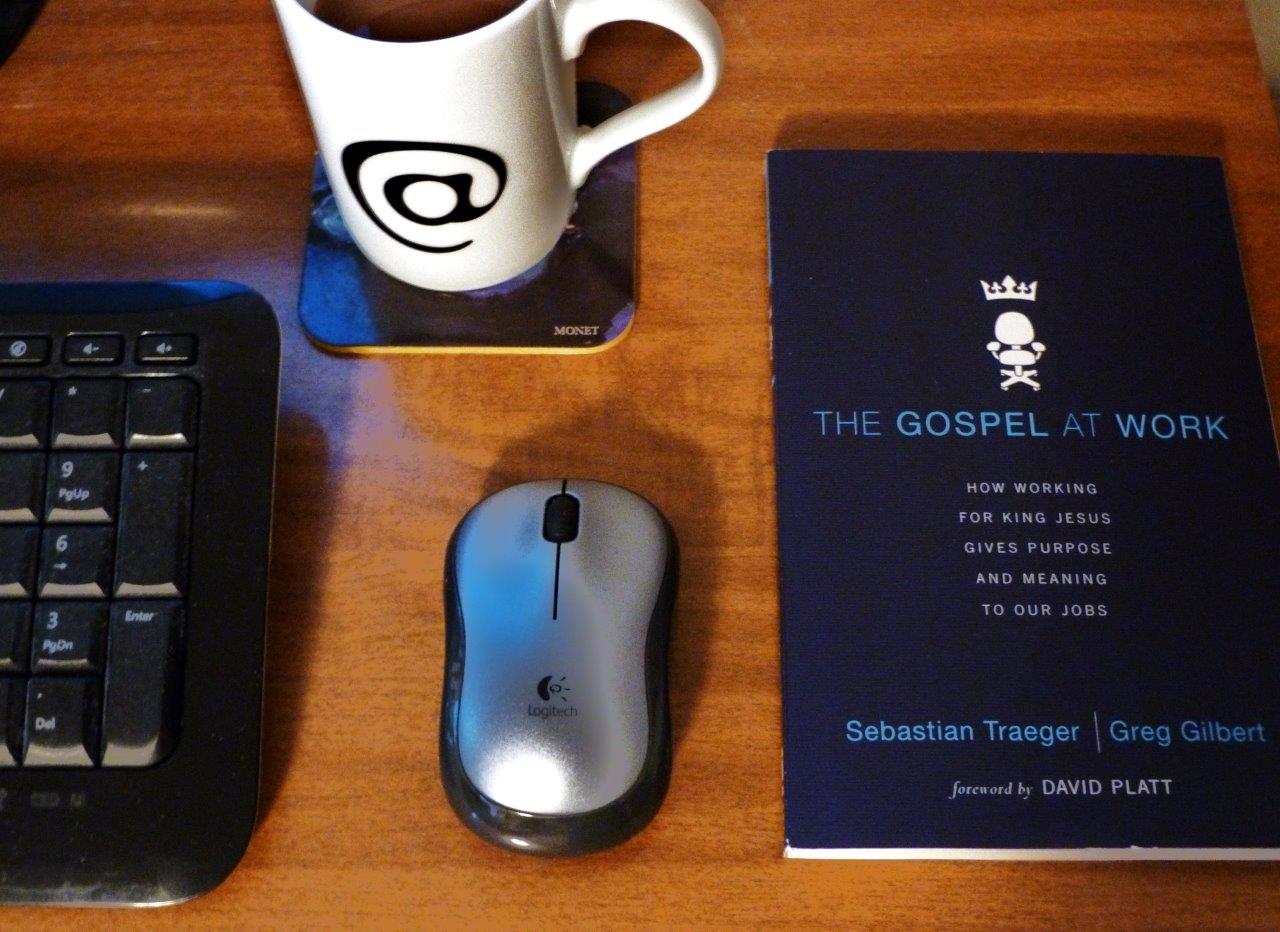
Sebastian Traeger and Greg Gilbert go deeper into these concepts in their book The Gospel at Work. They present a revelationary teaching on the issues of idleness and idolatry in our work and how to “pursue faithfulness, then fruitfulness”.

“The answer to fighting complacency is recognizing that you work for the Lord in all that you do. He’s not primarily calling you to your job; He’s calling you to belong to Him. Understanding the gospel in light of our work helps us to understand that we are to be sold-out disciples in all things.”*

Blog - Gospel at Work - Sebastian TraegerBlog - The Gospel at Work - Greg Gilbert - from cbmw.org

Sebastian Traeger and Greg Gilbert

The Gospel at Work – A Conversation with Greg Gilbert and Sebastian Traeger (ERLC)

The Gospel at Work by Sebastian Traeger & Greg Gilbert

The Gospel at Work Website

*Q&A: Sebastian Traeger on the Ministry of Work at ValuesandCapitalism.com

The Gospel at Work – A Conversation with Greg Gilbert and Sebastian Traeger (ERLC)

Skybridge Community

Photo Credits: Images of Sebastian Traeger (bpnews.net) and Greg Gilbert (cbmw.org)