Category Archives: Attitude

Monday Morning Moment – When You’re Expecting to Have a Bad Day

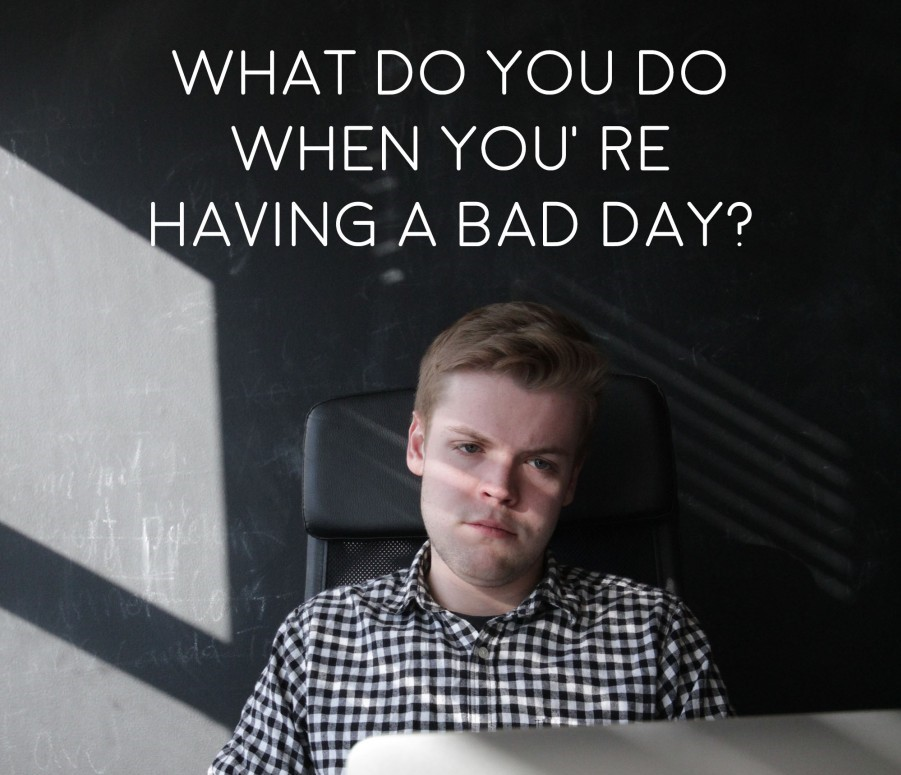
Photo Credit: Strategy Lab

Early this morning, the idea gathered like a storm cloud – the idea of “having a bad day” today. Here’s how it started and then here’s how it went.

As a postscript to Holy Week and Resurrection Sunday, I read today’s post-Lent reading: The Lent Project: I Have Seen the Lord – by Carmen Joy Imes. Biola University posts beautiful Lent devotionals every year (incorporating music, art, poetry, and short reading). Today’s topic was on Mary Magdalene’s lingering at the empty tomb after Jesus arose from the dead.

Mary stood outside the tomb, crying…she turned around and saw Jesus standing there, but she did not know it was Jesus. “Woman,” Jesus said to her, “why are you crying? Who is it that you’re seeking?”

Supposing he was the gardener, she replied, “Sir, if you’ve carried him away, tell me where you’ve put him, and I will take him away.”

Jesus said to her, “Mary.”

Turning around, she said to him in Aramaic, “Rabboni!”—which means “Teacher.”John 20:11-18

Exhausted from grief and bleary-eyed from crying, she was expecting to have a bad day. When she found the tomb empty, and not remembering what Jesus had said before (about his own resurrection that would come)…she grew even more inconsolable.

At first, still consumed by her “bad day”, she hadn’t recognized him. This One who had restored her mind and redeemed her life. This One who knew her perfectly and loved her completely. She thought him a gardener.

He spoke to her but she turned away, in grief, thoughts clouded, blinding her awareness.

Until…He called her by name.

Then, she knew! She came back to her senses. The expectation of a bad day vanished as she refocused on the living Lord rather than the dead one.

We all struggle when a day looms full of dark possibilities, dread, or even deepening disappointment. Some of us have a bent toward being pessimistic, contrarian, or a diminisher. These bring a realism that has its own usefulness at times (well, not the diminisher…no, not ever useful in any positive way), but we don’t have to set up camp there.

Is There Such a Thing as a Bad Day? – Jen Kim

Monday Morning Moment – Negativism – Its Cost and Cure – Deb Mills

Having a Bad Day? Here are 21 Things You Can Do to Turn It Around – Henrik Edberg

A dear friend reminded me of Fred Rogers having said, in dealing with hard situations, to “look for the helpers”. Here’s a brief video of him describing this.

If a day is beginning with a downward spiral (even if it’s only in our minds), we can (as my husband sometimes reminds me) “pull up”. Our perspective, our focus, is totally within our control. The same friend above also told a story about recently taking back her Saturday, so to speak. A bad storm had passed through and left trees leaning and branches littering her woodland yard. As she sat on her deck, looking at all the devastation, she was troubled at what it would take to restore order. It wasn’t going to happen that morning and no amount of thinking about it was going to make it better. So what did she do? She turned her chair…such that a different, more lovely view was in front of her.

[Thanks, Kathy, for that good word.]

Sometimes, we have to turn our chair…or as Mary Magdalene did, turn back around to the one speaking to her. What we think should be but may not be could just be in our perspective…how we’re looking at things. It also could be remembering that we are never truly alone in the prospect of a bad day. Look for helpers…it’s good advice.

That bad day we were anticipating may just turn out to be a bad few minutes in an otherwise good day. We can make it happen…by tuning into a familiar voice or turning our chair…for a clearing the head moment.

Photo Credit: Pinterest, TobyMac, SpeakLife

5 Friday Faves – Beyond the Guitar’s Latest, St. Patrick’s Day, 14-year-olds & Adulting, Soundtracks of Our Lives, and Wonder

1) Beyond the Guitar’s Latest – If you’ve been on here before, you know classical guitarist Nathan Mills (Beyond the Guitar on YouTube). With nothing more needed, here are his latest videos.

YouTube Video – The Last of Us (HBO) Main Theme – Atmospheric Guitar Cover

YouTube Video – OCTOPATH TRAVELER 2 Main Theme – Classical Guitar Cover

2) St. Patrick’s Day – Big day around here although I’m not sure our town is so very Irish. Richmond is big on craft beer so maybe that’s a thing with St. Patty’s Day. I love celebrating because of the patron saint Patrick, all the green decor against the gray of winter, and corned beef and cabbage.

Photo Credit: Flickr

Does being Scottish make a difference in how much I love this holiday?

Worship Wednesday – St. Patrick’s Day – Be Thou My Vision – Deb Mills

3) 14-year-olds & Adulting – When do we begin preparing our children for adulthood? Is it middle school or earlier? Definitely waiting until high school will keep us to often in catch-up mode. Still it is never too late hopefully. My favorite book on this topic is Escaping the Endless Adolescence by Joseph Allen and Claudia Worrell Allen.

Instead of asking: “What will keep our teens out of trouble?” “What will make them happy?” or “What will get them into college?”, we need to switch our focus to a different set of queries: “How can we introduce realistic elements of adulthood into their worlds?” What activities best provide real feedback about their effort and skill?” and “Which other adults can we recruit to help pass our values on to them?” In short, we need to switch our focus from activities that reflect living happily as a teenager to activities that let our young people actually use their energy, connect with adults, and make choices that matter in order to begin moving successfully into adulthood.Allen & Allen

In their helps for parents of teens (and younger children), the Allen’s coach how to guide kids to become contributing members of the family, how to give genuine, real-world feedback toward maturity, how to connect their kids with role model adults (including the parents themselves), and how to positively stretch their kids toward skill- and confidence-building.

Monday Morning Moment – Raising Adults – Part 1 – Responsibility Is Two Words – Deb Mills

Monday Morning Moment – Raising Adults – Part 2 – Creating a Culture of Serving – Deb Mills

This topic has really pressed in on me working with refugee families in the US. These children are in a world of change, trying to pick up language, school content, and American culture. No wonder they try to escape into their after-school screen lives. Chores exist but not much opportunity to engage with a larger community…especially where it really counts for them to show up and help.

Photo Credit: Caring For Our Generations

What do kids need to be successful heading into high school, besides the grades and understanding of school culture? Are there responsibilities (“response abilities”) which all young people need as part of their skill set?

Ellen Sturm Niz’s 12 Basic Life Skills Every Kid Should Know by High School warns against doing too much for our children, preventing them from learning how to do for themselves (AND others). She shares a list of basic life skills from How to Raise an Adult by Julie Lythcott-Haims. Any you would add?

  • Make a meal.
  • Wake themselves up on time.
  • Do laundry.
  • Pump gas.
  • Pitch in.
  • Advocate for themselves.
  • Pack their own bag.
  • Order at restaurants.
  • Talk to strangers.
  • Go grocery shopping.
  • Plan an outing.
  • Take public transportation.

14-Year-Old Child Development Milestones – Sherrie Gordon

Your Son at 14: Milestones

Stuck in Endless Adolescence – CBS Video – Interview with authors Joseph Allen and Claudia Worrell Allen, discussing a Pew Research Center study that 70 percent of people under 30 live with their parents.

4) Soundtracks of Our Lives – Our kids recently gave me the Jon Acuff book Soundtracks: The Surprising Solution to Overthinking. Such a surprising and encouraging read. One cool thing about Acuff’s writing is how he gives practical counsel from the first chapter. He doesn’t make you wait. Acuff defines soundtracks as “repetitive thoughts” – those memories and reactions that keep playing on repeat in our minds that cause us to choose a direction in life, often to avoid rather than embrace life and relationship. Overthinking too often communicates our fears back to ourselves, as if they are true and justified. Instead of ruminating on those moments of perceived rejection, felt failure, or self-doubt, we change up the soundtracks playing in the background of our lives. In moving away from broken soundtracks to new healing and helpful soundtracks, Acuff tells us to consider, “What do I want to be true?”

Photo Credit: Jon Acuff, Amazon

One of my broken soundtracks has been “I don’t finish well.” Too fuzzy-boundaried, distractible, interruptible. What if I flipped those parts of my personality? What if they became super-powers? What we tell ourselves about ourselves (and others, also) powerfully impacts the decisions we make and the directions we take. What if “finishing well” in my mind included compassion for others, curiosity, and wonder? Instead of beating myself up over what are perceived weaknesses, what if I disciplined them to be strengths?

For you, a broken soundtrack could be a hurtful memory that feels so real and ugly that you can’t imagine it could ever be healed. So you build walls around your heart to keep from thinking about it or the person who perpetrated that harm? Is it possible that your memory of that event has been made uglier by years of mulling it over and over in your mind? [Please do NOT hear me discount trauma. I do not.] What you can consider, as Acuff writes, is that memory can be re-visited such that it doesn’t determine your direction today. New possibilities are available to you, even in re-thinking the memory. Healing is possible.

4 Soundtracks to Survive the Holidays – Jon Acuff Podcast – great advice for any time of the year; any family gathering or work retreat, for instance.

5) Wonder – Wonder is my word for this year. It is defined as “a splendid or conspicuous work, a miracle, a marvel”. We are surrounded by wonderful, beautiful, tangible objects, processes, and people. And wonders beyond our reach that cause us to pause and…wonder.

Our short-sightedness at such things can be an effect of where we settle our gaze, or hearing, or thoughts. Screens can either point us to wondrous things beyond our experience or shrink our worlds to the size of a phone, tablet, or computer/TV.

Look up. Get close. Be quiet a moment and listen.

Let’s never lose the wonder of the beauty that surrounds us. The beauty we experience…even in hard places. Even in suffering.

Kara Tippetts and family. In the moment. Before she went to her heavenly Home.
My beautiful amazing Mom – Now 20 years in Heaven.
My dad’s hands. Sleeping. Peaceful. Hospice at home with family.

________________________________________________________________________________________________________________

That’s it for this week. So many faves to choose from. Any you want to share? Comment below. Until next time. Thanks for stopping by.

Bonuses:

Photo Credit: Twitter, Dr. Amy Cooper Hakim

Money Hours – Steve Keating

Photo Credit: Quote Fancy, Jon Acuff Quotes

Top 70 Jon Acuff Quotes

Monday Morning Moment – Reject Passivity

Photo Credit: Libquotes

When a father dies he leaves a legacy. Yesterday, the three sons of our friend Mike Pineda, stood on the platform, at his funeral, and spoke beautifully about their hero of a dad.

[Their tributes for their dad can be found here. Worth your time.]

Mike Pineda had faithfully walked alongside his sons all their lives. Teaching, mentoring, and modeling. One of the lessons their dad had taught them (by word and action) was to reject passivity.

That stuck with me. What is it to resist, in fact, reject passivity? Where does the temptation to be passive come from?

We can go all the way back to the first man who lived – Adam. When the Evil One tempted him and Eve to question the goodness of God, and even though Eve seemed to take lead in sinning against God (Genesis 3:6), Adam was physically present, right there with her. [This isn’t to cast greater judgment on Adam, or Eve, for that matter. It is a declarative statement of what can result from passivity.]

Men have been living in Adam’s shadow ever since. Rather than being strong dads, men often just stand there. Rather than being loving husbands, men often just stand there. Why is it that so many men are so decisive, focused, and effective in areas of life that don’t really matter, but tentative, uninspiring, and passive in some of the areas that matter most? It’s as if passivity is in our DNA. And that if we don’t actively fight it, we’ll default to being passive.

Where does passivity reign in your life? Is it at home? Or with your finances? Or in your career? Or with your wife or girlfriend? Where are you doing nothing when you should be doing something? Where are you being silent when you should be speaking up? Authentic men reject passivity. They refuse to live in the shadow of Adam and instead choose to fight for what truly matters most. They find their strength in the grace of Jesus and follow His example of rejecting passivity—ultimately by coming to earth to rescue us.Authentic Manhood

Now, please don’t get me wrong here. I’m not trying to bash men for being passive. No way! Maybe like Eve, we as women, hold some measure of complicity in this whole issue of passivity. Do we make it difficult for the men in our lives to act decisively? Do we act in ways that prove to be passive-aggressive and pose for men a lose-lose outcome…that either way, they will pay for “manning up”?

Even as I write, it’s a little uncomfortable having grown up in the era of women’s liberation, ERA, and feminism. Hard battles have been fought for and by women to fare well in the workplace. In the home as well. Yet, is it possible that one of the fruits of this movement has been men just stepping aside and letting us have our way? Even when that’s not the case, what could it have been with both men and women working better together?

Of course, we know this whole issue of passivity didn’t start a few decades ago (go back to Adam and Eve). So what do we do about it?

I’m going to talk to my sons right now…all the way to the end of this piece [You’re welcome to read along].

“It’s so easy…too easy…to let others make the decisions. When others make the decision, you may think you don’t have to accept the consequences of those decisions. You can, in many cases, let those others live with the outcomes. You can elect to go along with the decisions, or (if not required) you can step back, and let the chips fall where they may. Now if it’s work, and you’re held to a standard requiring you to go along with the decision once made, you have little recourse. You didn’t speak into it, therefore you must to some extent abide by the decision. How much better if you had entered into the decision-making yourself?

What about the larger community? Your circles of potential influence outside your work. Are you willing to sit silently…to offer nothing of your giftings, your intellect, your experience to those conversations?

What about your family? Your wife, your children? Are you willing to let others speak into their lives and you take a quieter, more disengaged space? You will find the years will go by…and the voice in their ears and hearts…is not yours. Is that really what you want?

Passivity is like a weak link in a chain…compromising the strength of that chain. In relationships, passivity is something we can correct, if we’re willing to take the perceived risk to do so.

Photo Credit: Life Going Through Some Day
Photo Credit: AllAuthor

In Lay Aside the Weight of Passivity by Jon Bloom, we are reminded of how our expectations and resultant emotions shape our engagement with struggle:

What we expect shapes how we respond. If we expect peace, we will resent having to fight. If we expect rest, we will resent having to endure. If we expect leisure, we will resent having to work hard.

This is why it’s so important for us to prepare our minds for action.

We lose perspective and forget that in this age war, not peace, is the norm; vigilant self-control, not indulgent rest, is the norm; difficult cultivation, not easy picking, is the norm.

Our emotions typically tell us what our mind-sets are; our responses reveal our expectations. So, when weariness, disappointment, disillusionment, and resentment set in, we need to examine what’s fueling those feelings.

Our emotions springing from misplaced expectations of peace, rest, and leisure ask to be coddled. Jon Bloom

Passivity is sometimes born out of exhaustion from battling for too long a season. Or a lack of hope when looking at the opposition. As Bloom states in his article: as we choose to stay in the battle, with a mindset to act, we resist passivity and the false sense of safety it projects.

In thinking back to our friend Mike’s funeral, his sons talked about both his rejection of passivity and his pursuit of a quiet life. He aspired “to live quietly, and to mind [his] own affairs, and to work with [his] hands (1 Thess. 4:11). This is not passive living. It takes focus, prioritizing, and hard work…out of which is the great harvest of those in your sphere of influence learning the tools of fruitful and faithful lives. By your example.

So my loves, I’ll let you get back to your lives. I see you resisting passivity. Keep nurturing that habit of life.

Stand with or stand against, but don’t allow yourselves to stand aside.

Fatherhood.gov

Fathering Practices in Twenty-six Intact Families and the Implications for Child Contact – Jane Lewis & Elaine Welsh

YouTube Video – Purging Passivity – an interesting video on a martial arts training approach with children (Christian perspective – fascinating – whether you agree or not)

Reject Passivity (1 of 5) – Stephen T. Messenger

YouTube Video – Passivity Is Not an Option! – Dave Ramsey – EntreLeadership

YouTube Video – The Problem Of Passivity | Paul Tripp’s 1 Peter Study (Episode 012)

Monday Morning Moment – Use Your Words

Photo Credit: Writing Quotes, C. S. Lewis

What does the mommy say to the little one, screaming, angry tears, head flung back, and arms swinging?

“Use your words.”

Great counsel for all ages.

Words are not always easy to come by. In fact, they can become all jumbled in response to the large emotions that demand an answer. This is the right brain/left brain challenge. Our emotions come just ahead of our determination of what they mean…and our “putting into words” that meaning.

Reason and emotion: A Note on Plato, Darwin, and Damasio – Joachim I Krueger Ph.D.

As adults, we have also used silence in place of words, either intentionally to punish or unintentionally because we just did not know what to say.

Using our words is a healthy habit in relationships because it forces us to think through our emotions and process how they apply to any action we take in dealing with them. For example, someone significant to me says I hurt them or didn’t value their effort. I can respond in so many ways. Yet, what if I decided to “take the criticism” as a gift (this is graduate level relationship stuff) and use it to enhance my understanding of that significant other? What if I determined then to hear their pain or disappointment as true? It was definitely true for them.

Is it possible for me to humble myself and first respond to their hurt? Maybe seeking more clarification as to just what happened? Even if it means I sort out my part in that breach between us, confess my part, and offer an apology. Possibly even some sort of restitution. Would that open a path forward? It may very well be that we didn’t intend to hurt but a sincere acknowledgement of their pain (even an apology) is exactly what is needed for the moment.

Whew! A lot to process. If you’re still with me…

Use your words. What matters more than being right? Being in relationship…in community.

Author, pastor Scott Sauls wrote a beautiful endorsement of the book Humility: The Joy of Self-Forgetfulness by Gavin Ortlund.

““Saint Augustine once counseled that the top three virtues of Christianity are ‘Humility, humility, and humility.’ One suspects he said this because when humility is intact, all other fruit of the Spirit fall into place. What Gavin Ortlund has given us in this wonderful book is not only a description of humility but also a pathway that makes the reader desire more of it, for the smaller we become in our own eyes, the bigger Christ becomes to us. I can’t recommend this book highly enough.” – Scott Sauls

Below are 10 practices that Dr. Ortlund presents as means to both grow and express humility in our relationships. In his book, you’ll find commentary on how to work these out in our lives – helping us to use our words well]:

  1. Work at listening.
  2. Practice gratitude.
  3. Learn from criticism.
  4. Cultivate the enjoyment of life.
  5. Embrace weakness.
  6. Laugh at yourself.
  7. Visit a cemetery.
  8. Study the universe.
  9. Meditate on heavenly worship.
  10. Bathe everything else in humility. – Gavin Ortlund, Humility: The Joy of Self-Forgetfulness

These 10 practices are far from a trite handling of relationship woes. This is the foundation of using our words well.

Words can injure or heal. We all know this. If we want some sort of vindication or revenge, maybe using our words needs schooling. Silence isn’t the answer…it can last far too long. Too long.

Photo Image: Heartlight, John Greenleaf Whittier

If we truly want to restore a relationship or mend a fence with another, taking steps toward that person with true humility and a sincere desire to understand is where we start.

Coming to terms with our own story helps us use our words for healing. Perspective can lessen the sting from painful encounters. When we do the work of sorting out our own emotions related to conflict, then we can hear the other without triggering our own emotions from the past.

In Tyler Staton‘s book, Praying Like Monks, Living Like Fools, he talks about the role of confession in relationship building and rebuilding. Taking responsibility for our part in the conflict, saying it out loud, and asking forgiveness. When we keep silent or we don’t use our words in positive ways, we hide ourselves from the very exposure and vulnerability that confession frees us from. Again, this requires enormous humility…or, at the very least, a willingness to humble ourselves.

Confession is “to excavate down into the layers of your own life, uncovering not just what’s obvious on the surface but the layers of personal history underneath that continue to inform your present.”Tyler Staton, Praying Like Monks, Living Like Fools

None of this is for the frail of heart…we can keep hiding behind pride, entitlement, hurt, and offense. Our various screens (social media, computers, phones, TVs) have taken our voice. We have, too often, become spectators of relationships, rather than deep in the beauty of being known by and truly knowing the people across the room from us.

Put your phone down, and use your words. Or…pick up that phone, and make the call…begin the process of reconnecting…which could lead to healing.

What are you waiting for?

Photo Credit: 3-Word Wisdom

Monday Morning Moment – I See You…or Refuse to – a Pet Peeve

Photo Credit: Pexels, Cottonbro Studio

[Pet peeves are not anything we want to cultivate or nurture…I get to a more positive place at the end so hang in there with me.]

US culture has changed – especially related to encounters with strangers or those we consider insignificant or irrelevant – as shown by turned down or away faces, looking beyond people, or not engaging with those we don’t know or don’t care to know.

People passing in hallways as if a living human being isn’t within their visual field. Charting a course from Point A to Point B, maneuvering around people without words. Stepping aside, disengaging, when someone else enters the space and greets one of the two in conversation. Disinterested.

I don’t understand this lack of desire in connection. This avoidance of engagement.

Avoiding Eye Contact in Body Language (10 Reasons) – Hanan Parvez

Where does it start? I occasionally teach elementary school-aged children, and even at this early age, there are kiddos who seem to easily engage across groups and with authority figures, others who are shy to engage or are awkward in social interactions, and, finally, those who only engage with their buddies (unless pressed to engage with others). Is it a personality thing? A social anxiety? Is there an environment (classroom or home) that sets a pattern for the children who see and engage with those around them and the ones who refuse to see beyond their friend group? It’s probably complicated, right?

We have grandchildren that look, gaze, see others…and refuse not to be seen. I hope it never changes as they grow older. How did they get where they are as children? I need to ask this question of their parents.

Eye contact as a behavior of connection can occur on a spectrum. No one wants the gift of creepy, penetrating stare-downs. A more subtle or passing gaze could communicate a desire for engagement but accompanied by a further desire not to intrude. Or at the opposing end of the spectrum, the total lack of eye contact as if there is no one there…or the hope, with social anxiety, that if I don’t look, you don’t see me. However, somewhere in the middle of all this, is the one who makes steady and engaging eye contact. That one that says with their eyes and facial expressions, “I see you”. Conversation may or may not follow…but to be seen and acknowledged is a small and precious gift we can present to another.

Photo Credit: Pexels, Cottonbro Studio

A life habit easily developed is to determine to see those around us. To make meaningful eye contact. To honor those in front of us (whether a store clerk, fellow employee, or guy in the gym). Lock eyes, a head nod, a smile, a greeting – communicating “I see you”.

This comes to play in all sorts of situations. It is a humanizing practice. A situational awareness that goes beyond keeping ourselves and others safe. It communicates that we matter in the spaces we share.

In our city, as one for instance, we see people with signs at many of the intersections. Beggars. Homeless. Not really sure. The very least we can give them is our eyes…acknowledging them whether we give money or not.

Remember, I spoke earlier of a pet peeve not being something I want to indulge, right? So…

A pet peeve is a button pushed. Long ago, I made it an aim to get rid of the buttons in my life. They divide us and there’s enough division out there already.

This is one I’m still wrestling with…and not to my credit. It becomes easy for me to intentionally ignore, or see past those who see past me…or those who “refuse to see” ones who matter to me. Yet…am I not doing the same thing then? By faulting those in my small opinion are “refusing to see”? When we fault people, without understanding them, we don’t really see them either.

May it not continue so in me. How about you?

The Power of Being Known – Holly Korbey (Video above details some of this article – so good!)

How to Overcome Eye Contact Anxiety – Arlin Cuncic

What a Lack of Eye Contact Says About You, According to Science (and How to Fix It) – Wanda Thibodeaux

Worship Wednesday – Listening – I Heard the Bells – Casting Crowns

Blog - I Heard the Bells - Worship Wednesday
Photo Credit: CastingCrowns.com

[Adapted from the Archives]

 Then the angel said to them, “Do not be afraid, for behold, I bring you good tidings of great joy which will be to all people. For there is born to you this day in the city of David a Savior, who is Christ the Lord… And suddenly there was with the angel a multitude of the heavenly host praising God and saying:

“Glory to God in the highest, and on earth peace, goodwill toward men!” – Luke 2:10-11, 13-14

In December, 1863, American poet and scholar Henry W. Longfellow received his wounded son home from battle. It was Christmas time, and the U.S. Civil War raged on. Having already lost his wife years earlier, Longfellow nursed his son, Charley, back to health. His own thoughts, in turmoil over all that was happening around him, he poured out in the poem “Christmas Bells”.

Longfellow clearly took comfort from God as he wrote, ending the poem with this stanza:

“God is not dead, nor doth He sleep;
        The Wrong shall fail,
        The Right prevail,
    With peace on earth, good-will to men.”
*

I Heard the Bells is a Christmas carol, not a worship anthem. Yet, given the continuing wars of our day, we must tend the fires of our hope. God is the “lifter of our heads” (Psalm 3:3). He is the One who gives strength to our “weak hands and shaking knees” (Isaiah 35:3). He will do as He’s promised. He is faithful. When you hear the bells ring where you are this Christmas season, take heart in that. We must continue to pray for His peace on earth. We can be vessels of His good-will toward our neighbors, both near and far away.

Listening for “the right [to] prevail” is where we stand, as Christ-followers. Straight and resolute in our understanding of God’s intentions and His movement in our world. We can resist and refuse to add to the noise of hopelessness and cynicism in this world. We bend our hearts to hear the voice of God speak through the chaos…speaking the peace that only He can bring…through our Savior and Lord, Jesus Christ.

Worship with me…

I Heard the Bells on Christmas Day (Lyric video)

I heard the bells on Christmas day
Their old familiar carols play
And mild and sweet their songs repeat
Of peace on earth good will to men

And the bells are ringing (Peace on Earth)
Like a choir they’re singing (Peace on Earth)
In my heart I hear them
Peace on earth, good will to men

And in despair I bowed my head
There is no peace on earth I said
For hate is strong and mocks the song
Of peace on earth, good will to men

But the bells are ringing (Peace on Earth)
Like a choir singing (Peace on Earth)
Does anybody hear them?
Peace on earth, good will to men

Then rang the bells more loud and deep
God is not dead, nor doth He sleep (Peace on Earth, peace on Earth)
The wrong shall fail, the right prevail
With peace on earth, good will to men

Then ringing singing on its way

The world revolved from night to day
A voice, a chime, a chant sublime
Of peace on earth, good will to men

And the bells they’re ringing (Peace on Earth)
Like a choir they’re singing (Peace on Earth)
And with our hearts we’ll hear them
Peace on earth, good will to men

Do you hear the bells they’re ringing? (Peace on Earth)
The life the angels singing (Peace on Earth)
Open up your heart and hear them (Peace on Earth)
Peace on earth, good will to men

Peace on earth, Peace on earth
Peace on earth, Good will to men

YouTube Video – Casting Crowns performing I Heard the Bells on Christmas Day

Christmas Carol Soldier – Story of Charley Appleton Longfellow & the occasion for H. W. Longfellow’s writing of the poem/lyric

The Story Behind I Heard the Bells On Christmas Day – Tom Stewart

*Longfellow’s poem Christmas Bells

Monday Morning Moment – Waiting – a Waste or a Way to Wisdom

Photo Credit: Henri Nouwen, Quote Fancy

Have you ever found yourself in a season of waiting that seemed as if it would never end? Maybe you’re there right now.

The more pivotal thing about waiting is what we do with it…can we stay on top of the entitlement and all its turbulent emotions when they are unsatisfied? That is a goal worthy of pursuing. Treating the waiting not as a waste but as a way to wisdom.

Just this morning, I was waiting with a friend for a promised outcome. She is an old grandmother, resettled here from another country, with few resources.

She had the hope this morning of receiving some much-needed dental work ( in process for several months now). Today was to be the day for her to receive the last treatment – the fitting of a partial denture which would allow her to enjoy eating again.

It did not happen.

For whatever reasons it was delayed and more appointments would be made. Apologies and explanations were made, and the grandmother pulled herself up out of the dental chair one more time. We weren’t entitled to a different outcome. She is receiving free care through a local university and foundation. So why did this make me so angry and sad at the same time?

I was sad for this sweet grandmother who has already been through so much this year. Sad for myself, as her driver, for another series of appointments ahead of us. Even a little sad for the dental student breaking the news to us. And close-to-tears angry that either we misunderstood or someone somewhere dropped the (proverbial) ball.

As I collected myself and came back to my senses, I was reminded (in the conversation going on in my head) that this was a small thing. What if I was waiting on a big thing?! What would my response be to that?!

In years past, cancer nursing was my profession. Talking to a friend about this whole waiting thing, she recalled what so many cancer patients go through in waiting – for biopsy results, for treatment decisions, for blood counts to come back, for reevaluations of their cancer, for…for…for. We wait. To conceive that much-longed-for baby. To meet that person we will spend our lives with. To hear the outcome of elections or military coups. To determine if we prepared well enough for landfall of hurricanes.

Big things and small things all require waiting in life. We either wait in wasteful, blaming, soul-diminishing ways or we wait in wisdom.

Maybe it’s in the wait that we find what matters more.

In the minutes that tick by, we re-order our thoughts toward life and hope and possibility. Photo Credit: Heartlight

By the time my grandmother friend and I left the dental clinic this morning, we were better. No blaming. No feeling mad or bad. We accepted that today wasn’t the day we would say our goodbyes to this long waiting. It was just another day situated in between more to come. I didn’t resign myself to the disappointment, but rather determined it would not rob me of the joy of the day. We would be back, and, one day, she would get what we originally came for, months prior.

Photo Credit: Heartlight

Don’t get me wrong about waiting. I have, at times, pushed back against it. Not just for myself but because it was a disservice to someone else. There does seem to be a pecking order in waiting…the poor and marginalized are required to wait the most, it seems.

When waiting generates a disturbance in our hearts that takes us nowhere good, then we must check it, and check our reaction to it. In that space, we can choose to change direction and keep our heads and hearts at peace. We can choose a way to wisdom, rather than an explosive, diminishing waste of the waiting.Photo Credit: Elisabeth Elliot, AZ Quotes

Waiting can be exasperating…and any engineering to decrease it is a beautiful thing…so there’s that for which to be thankful. Also, what is the object of our waiting. If we look to people to always deliver (in a timely fashion), they (we) will disappoint. If we can take our eyes of people and on to God, waiting becomes a very different experience.

Two of my favorite verses from the Old Testament speak of this:

I waited patiently for the Lord; he inclined to me and heard my cry.
He drew me up from the pit of destruction, out of the miry bog,
and set my feet upon a rock, making my steps secure.Psalm 40:1-2

Those who wait on the LORD Shall renew their strength; They shall mount up with wings like eagles, They shall run and not be weary, They shall walk and not faint.Isaiah 40:31

Even Jesus on his last day of life on earth waited…until all of the prophecies were fulfilled. While hanging in pain on the cross, He waited until just the moment all were fulfilled, and then he gave his last breath. Wow!

Photo Credit: Philip Yancey, Heartlight

May we learn to wait as the Messiah did with loving perseverance and hope of a greater future.

“While we are waiting for these things to happen, make every effort to be found living peaceful lives, pure and blameless in His sight. Consider the patience of the Lord as salvation.”2 Peter 3:14-15

Monday Morning Moment – Loneliness in Isolation – Fighting Against It and Occasionally Successful

Photo Credit: Heartlight

Just last night I was confronted again with one of the tolls of the COVID epidemic. That toll being a physical isolation that has grown into a lingering social isolation. A friend texted me about her sense of feeling disconnected, even unseen, in the midst of her church community, of all places. She is reaching out but has not yet found her people. I tried to encourage her to keep reaching out and she would eventually find those friends, that connection for which she is longing. This isolation, this loneliness, is something I, too, was fighting against and occasionally successful.

She told me this had to be my next blog (title) and so it is…although I don’t have answers…but will share what I’m learning from my own journey and from wise others.

“Here’s what we do: We spend hours alone in our crowded, noisy, screen-lit worlds, we invest only sporadic time with acquaintances, and then we expect close friends to somehow appear in our busy lives.”Jennie Allen, author of Find Your People: Building Deep Community in a Lonely World
Being retired from my usual work has afforded me much discretionary time…time which can be lavished on others or on disciplines like study, prayer, and writing. Too often…this time on my hands has taken me to places too quiet…where I get lost in my thoughts. That is an excellent description of this loneliness that comes from isolation.
We think too much maybe. Get lost in those thoughts and become slow to respond. Instead of going after friends, we wonder where those friends are…is it us? Is it them? We look for reasons for the unsought solitude we find ourselves in yet we can’t seem to fight off the sluggishness of too-long isolation. We text instead of call. We do electronic meetings instead of face-to-face ones. We cling to smaller rhythms instead of restoring larger lives.
OK…is that just my issue? I don’t think so. The phrase “new normal”, no longer in vogue, is a misnomer. It deludes us into a posture of waiting…rather than seizing on what’s right in front of us. Whatever is the present normal…that is what we have. This present normal.
This present that we have is fleeting, temporary…but the people  around us are not. Yet, relationships require some level of intentionality. A wise counselor once told us, during a season of multiple moves for work, to “put down your roots as deeply as you can – wherever you are”. COVID mediation has pushed us toward shallow relationships. We don’t want to miss people in the dullness of this odd season.
My beautiful friend above is already on the way to an answer to her loneliness because she is recognizing the “what’s not right” about her current situation and she’s not holding on to the status quo. That is forward motion right there. I am hopeful for her and for myself.

Writer, speaker, and mom Kari Kampakis wrote a fascinating post on Instagram and Facebook. It was titled: “What Middle School Girls Should Know About Friendship”. She wrote to girls but the lessons are redeeming for all of us, especially in this world that’s become COVID-isolated.

“What Middle School Girls Should Know About Friendship” – Kari Kampakis – Blog

“Friendships change.” Following you will find Kampakis’ 10 thoughts (abbreviated from her blog) on the struggle – written for middle school girls but applicable to any of us. Especially as we face loneliness and isolation and want to either jump-start or strengthen our friendships:

1. It’s normal for friendships to evolve and change.

2. Everything will be okay. – Be patient, pray for good friends, and pray to be a good friend.

3. Rather than focus on finding the right friends, concentrate on being the right friend. – When you treat people well, you’ll attract friends who treat you well too. By holding yourself to high standards, becoming the friend you wish to find, and choosing to be an encourager rather than a critic, you set yourself up for positive and long-lasting relationships.

4. Even when you find your “people”, always leave room at the table to invite someone new in. – Kampakis lamented: “One regret I have from high school and college is not reaching out more beyond my circle and letting God open the door to unexpected blessings.”

5. Love your friends well, but keep a loose grip. Give them space to explore new friendships and explore new friendships yourself.

6.Remember that everyone is learning and gradually maturing. Just because you don’t click with someone now doesn’t mean you won’t click later. 

7. The biggest friendship killers are jealousy, comparison, insecurity, and fear – fear of rejection, fear of being left out, and fear of being alone. Acting on these emotions can turn you into someone you’re not. – By being aware of your negative emotions yet learning the self-control to not act on them.

8. Form your own opinions about people, and don’t believe everything you hear. – Treat everyone like a friend until they give you a good reason not to, and when possible, give people the benefit of the doubt.

9. Know the difference between committed friends and casual friends. – Committed friends are the kind you carry through life. They have your back and will stand in your corner even if they’re your last friends standing. Casual friends are the kind you have for a season of life, maybe a few seasons.

10. Be kind, and keep in mind that kindness is more important than popularity.  

Photo Credit: Kari Kampakis

“What Middle School Girls Should Know About Friendship” – Kari Kampakis – Blog

Those 10 points were written for middle schoolers. It was a great reminder to me of the sweet simplicity of pursuing friendship. Both in rekindling neglected relationships and sparking new ones.

The world won’t all of a sudden become warm and welcoming…but I am ready to stretch again. It feels almost like a hungry bear coming out of a long hibernation.  It’s possible to shake off the sleep of shallow relationships. To be more present with people – not just on my terms but open to enter into their space…both heart and head.

Even if it’s one person at a time.

Photo Credit: Heartlight

Life does not stand still for us. I have friends and family that are dear to me and yet we rarely see each other. Do we think that is going to happen somewhere down the road? Magically? There’s a place for urgency in dealing with the habitual loneliness we have come to know in recent months. My friend above is taking steps as am I. Cautiously, awkwardly…but occasionally successfully.

How about you? What’s your story? [Comment below.]

[Sidebar: If you’ve read this whole piece and wondered what’s the issue because you have great friendships – current and satisfying – maybe see Kampakis’ #4 again.  “Leave room at the table for someone new.” Don’t circle the wagons. If you are basking in the experience of an inner circle, turn around – someone who may need you, or you them, may be just outside. Invite her in.. New friendships can be costly but the benefits are worth the expense and the risk. *]

*Monday Morning Moment – Real Friendship – on Friends Who Wound, Fierce Friends, Friends Who Turn Around, and Friends Who Stay – Deb Mills

Photo Credit: Heartlight

Monday Morning Moment – a Parable of Lost Sons and Their Father

Photo Credit: Rembrandt, Wikipedia

Whatever your faith base is or even if you have none to speak of, the parables of Jesus are magnificent stories that call us to deep thinking about life…and the choices we make.

The parable reflected in Rembrandt’s extraordinary painting above is one such story. In brief, you see a father and his older son (both in red robes) and a younger prodigal son, returning home, repentant.

The Return of the Prodigal Son – Rembrandt – Wikipedia [read the short and powerful article – a beautiful synopsis of the work.]

“The Parable of the Lost Son” is found in only one of the Gospels – Luke 15:11-32 (the whole of his story is found in the link, within the larger context of Luke 15 – read that here). Jesus was responding to the questioning and contempt of the religious leaders of his day. Their problem with Jesus was the two opposing facts that he was a religious authority himself and yet he took company with sinners.

In Jesus’ response to them, he spoke of loss and our reaction. We go after what is lost, and we rejoice when it is found.

His story tells how a younger son wants his freedom and asks his father for his inheritance. He wanted something that would not normally come to him until his father’s death, but he demanded it still. The father then divided his estate between his two sons. The one left home to spend his wealth on folly, and the other, the older son, stayed, out of duty or love (we don’t really know).

The younger son’s foolishness quickly leads to a wasted, impoverished life. He longs for the life he once knew in his father’s house. He finally “came to his senses”, remembering his good father and how well even the hired workers in his household lived. He determined to return home and ask his father’s forgiveness – not to be restored as his son but in hopes of becoming one of those workers.

Jesus’ story goes on to show the father’s deep and loving character – seeing the son approaching from a distance, he ran to him. Receiving him back to himself, in joyous celebration.

This was part 1 of Jesus’ parable of the lost sons. Part 2 begins here with the older brother. He had been working out in the fields as always, and, returning at day’s end, he hears the noise of a party. When he asked a servant what was going on, he was told the younger brother had returned home and their father had ordered a celebration. Here, we find the other lost son’s response…

…he became angry and didn’t want to go in. So his father came out and pleaded with him.
But he replied to his father, ‘Look, I have been slaving many years for you, and I have never disobeyed your orders, yet you never gave me a young goat so I could celebrate with my friends.
But when this son of yours came, who has devoured your assets with prostitutes, you slaughtered the fattened calf for him.’
” ‘Son,’ [the father] said to him, ‘you are always with me, and everything I have is yours. But we had to celebrate and rejoice, because this brother of yours was dead and is alive again; he was lost and is found.’ ” – Luke 15:28-32
Again, we capture the beauty of the father’s character. He loved both sons. He was generous with them both, and he invited both into his merciful love.
Jesus shared this story (as well as the story of the lost coin and lost sheep) with religious leaders who questioned his care for sinners. In a way, these religious ones were much like the older son.
Do you identify with one of these sons? One is reckless and searching – allowing his self-indulgent longings to take him far from home. The other is dutiful and obedient. Accepting the responsibilities of life to shape his character…and his subsequent lack of care for both his father and brother.
[My husband preached a sermon on this story years ago and I am often reminded of his reflection on it – how the elder brother must have thought he was pleasing his father because he stayed at the plow. What if that older brother would have come to the father and said, “Hey, Dad, would it be all right if I go and look for my brother?” If he truly knew the heart of his father, he would have left home, at some point, to search for that lost brother and bring him back to their dad.]
The father in this story is reflective of God. He is home. Whether that is your belief or not, we are place-oriented as humans. What (or who) we regard as home has a huge impact on how we do life.
I take heart in both of these brothers…my life has taken me far from home in both these ways. Wanting popularity and the stuff of this world as well as longing to do what is right and the influence that comes with that. Neither extreme brings us the joy we can have in being known and loved for who we are…and loving others the same.
Henri Nouwen‘s book The Return of the Prodigal Son is a short, winsome engaging of these three men in Jesus’ story.

Here are a few of Nouwen’s observations on Jesus’ story:

“Anger, resentment, jealousy, desire for revenge, lust, greed, antagonisms, and rivalries are the obvious signs that I have left home.”
“I am the prodigal son every time I search for unconditional love where it cannot be found.”
“…the question is not “How am I to love God?” but “How am I to let myself be loved by God?” God is looking into the distance for me, trying to find me, and longing to bring me home.”
“There are many elder sons and elder daughters who are lost while still at home.”
“The more I reflect on the elder son in me, the more I realize how deeply rooted this form of lostness really is and how hard it is to return home from there. Returning home from a lustful escapade seems so much easier than returning home from a cold anger that has rooted itself in the deepest corners of my being. ..Isn’t it good to be obedient, dutiful, law-abiding, hardworking, and self-sacrificing? And still it seems that my resentments and complaints are mysteriously tied to such praiseworthy attitudes… It seems that wherever my virtuous self is, there also is the resentful complainer.”
“In all three of the parables which Jesus tells to explain why he eats with sinners, God rejoices and invites others to rejoice with him. “Rejoice with me,” the shepherd says, “I have found my sheep that was lost.” “Rejoice with me,” the woman says, “I have found the drachma I lost.” “Rejoice with me,” the father says, “this son of mine was lost and is found.” All these voices are the voices of God.”
In closing, I would love to hear your thoughts in the Comment section of this blog. What struggle do you have in coming home? Or thinking of yourself as never having left, do you still feel alienated even at home? The best part of this story is that whether we feel more like the older brother or the younger brother, Jesus communicated that we can come home. A loving father is watching for us.
[Below are two sermons that got me thinking again about this great story – one of many Jesus told to those with “ears to hear”.]

YouTube Video – Parable of the Lost Sons – Part 1 – Sermon by Khiry Cooper – Movement Church RVA – September 18, 2022

YouTube Video – Parable of the Lost Sons – Part 2 – Sermon by Cliff Jordan – Movement Church RVA – September 25, 2022

5 Friday Faves – A Lullaby by Beyond the Guitar, the Art of Neighboring, the Beauty of Fall, Ethnic Foods, and Telling Our Stories

Friday Faves. Here we go!

1) A Lullaby by Beyond the Guitar – Nathan Mills has been on hiatus from his public YouTube channel as he worked through the summer creating course content for his other channels. Big news: he’s back!!

Photo Credit: YouTube, Beyond the Guitar

Talking through and then performing his treatment of the Game of Thrones theme (his previous arrangements of this can be found here). He takes Ramin Djawadi‘s epic piece and makes it into an ethereal lullaby. Just plain gorgeous.

2) The Art of Neighboring – Several years ago, my husband and I landed in an incredible neighborhood. With great neighbors. As happens, our neighborhood has changed significantly with elderly neighbors downsizing and moving away and new families coming in. The tight-knit feeling we had toward each other has changed…not lost but changed.

This Fall, our community group at church is studying “The Art of Neighboring”. This aligns closely with my deep dive, over the last several months, into our need for being known.

Being Known Podcast with Curt Thompson MD

Photo Credit: Art of Neighboring

There is neighboring where we might know someone by sight or even name, but little else. Then there is neighboring which leans in, where we know each other in ways that honors, enjoys, and serves.

It’s an art and it adds to our quality of lives and that of each other in immeasurable ways.Photo Credit: Grace Fellowship, The Art of Neighboring

The Art of Neighboring – Website, Book, Resources – Jay Pathak & Dave Runyon

3) The Beauty of Fall – Just a quick salute to the end of summer and beginning of Fall. Cooler weather prompting pulling out our hoodies and cozying up to fire pits. The harvest continues. The flowers, many going to seed, still have a glory that moves artists to paint. And pumpkins!

Photo Credit: Karen Burnette Garner, Facebook

4) Ethnic Foods – Our family has had the rich experience of living in several countries and enjoying the yummy “home cooking” of local friends. Some of that food is also sold by street vendors or in tiny restaurants for such a cheap price you wonder how they can afford to sell it, except for the volume of customers.

We search out those authentic food opportunities here, and various food festivals help fill the bill. Recently, we attended Armenian and Egyptian food festivals. So good! Visiting friends took us on the hunt of discovering new restaurants serving up foods so good they could have been cooked in mama’s homes.

In America, ethnic foods are not cheap. Part of that, I’m sure, is the cost of ingredients and labor. I couldn’t imagine paying the equivalent of $12 for a falafel sandwich when we lived overseas. Here, I’m just glad for the opportunity.

What Is ‘Ethnic’ Food? – Aaron Hutcherson

In the Hutcherson piece linked above, the phrase “ethnic food” may even be offensive in today’s cancel culture. Of me, it’s the best of home cooking served outside the home. America is such a cultural “melting pot” that we may come to the place where international foods become a part of the American food culture. Blended in. Beautifully.

“American food is the mixture of all food brought by our immigrants. Perhaps the recipes have been tweaked a little here, but they originate from past cultures, from identities new and old, and from our ethnic nation. Ethnic food is American food.”

This encouraging American ideal explains why Americans long to assimilate almost every food culture into their diets. It is socially encouraged to be more and more inclusive. The main way people try to find common ground is through food.

Ethnic food can best be described as a classification for types of food favored by cultural groups of people. This is different from authentic, which is a word used to describe food as something genuine or real. American cuisine may be classified as being only ethnic food because of the rich cultural diversity of its population. – DevTome

Still…I think we foodies will still look for the dining experiences that take us back to our mom’s table…or that table of friends in far-away places. Sweet memories.

Here in Virginia, we have an ethnic equivalent of food that’s hard to find anywhere but here and it’s Ukrop’s – a family-owned bakery, deli, and grocery business that’s been around since 1937. Their baked goods are very American. I say this because we have been told, by our international friends, that American sweets are “too sweet” for them. Maybe this is one American food that is uniquely American. I don’t know…but it’s good! No one does buttercream frosting like Ukrop’s. 

4) Telling Our Stories – Storytelling is in our very DNA. We appreciate the stories that draw us in – whether through books or film – or in the telling of our own lives.

Memory tends to embellish. A detail is added or emphasized beyond what really happened.

“Well, all good stories deserve embellishment.”J. R. R. Tolkien, The Hobbit

The Link Between Memory and Stories – Shawn Callahan

Embellishment entertains but what if our memory of an event or conversation stays the same even as we have grown into a person who has changed.

I think of childhood trauma or an incident that changed the course of our relationship with a person or organization. Sometimes all it takes is one circumstance.

Something may come to mind right now.

Is that a something that you want to affect your story forever?

Many of you may never have seen the 1981 British sports film Chariots of Fire. If you haven’t I highly recommend it. It gives an account of the Olympic Games of 1924. In particular, two runners, who compete against each other, are the focus. Two runners with very different stories.

Harold Abrahams and Eric Liddell.

These two athletes had two very different stories…very different motivations and goals for life. In the film, some of their story may be fictionalized, but there are lessons for us here. Check out the film clips linked below.

“10 lonely seconds [will] justify my whole existence.” – Abrahams

“When I run, I feel His pleasure.” – Eric Liddell

[An extra: In the film, Eric was pushed off the track during an Olympic race, falling to the ground. He got back on his feet and got back on the track. In the crowd, a man was asked if Eric could do (recover the time lost), and he said, “his head’s not back yet”. Eric would put his head back as he felt the pleasure of God on him. And where did the power come from? Another clip.]

YouTube Video – He Who Honors God – Chariots of Fire – don’t miss this scene.

What is your story? Whether you know it or not, you’re telling a story? Is it the one you want to be remembered for? Or is there a healing, a reconciliation, a resolve you want to leave behind as part of your legacy?

Something to consider.

___________________________________________________________________________

That’s it for this week. Hope you have a delightful weekend. Thanks for stopping by.

Bonuses:

8 Rules to Do Everything Better – Brad Stulberg

What To Do When You Feel Like You Don’t Fit in at Work – Lisa Evans

How to Say the Unsayable – 10 Ways to Approach a Sensitive Daunting Conversation – Kathryn Mannix

Photo Credit: Facebook, Marjolein Bastin