Category Archives: Monday Morning Moment

Monday Morning Moment – Contempt – Revisited

Photo Credit: Armstrong Economics

Adapted from the Archives

[Just a bit over a year ago, I wrote a blog entitled “Contempt – the Cold Killer of Hearts and Humanity”. It is such a prevalent emotion/thought process these days, I wanted to update that piece and re-post.]

Ah…contempt. It is defined as a strong negative emotion that joins disgust and disrespect. If we are honest, we have all experienced contempt, either for someone else, or a group of someones…or we’ve experienced the contempt of another towards us.

Contempt is a harsh response…a cold killer of hearts and relationships.

When we express contempt, it is usually in conversation with those who agree with us…about someone else. Rarely do we have the person(s) toward which we feel contempt in front of us. We don’t engage them as much as we complain about them. We hold some in contempt because of their beliefs or actions, and our temptation is to have nothing to do with them. We may view this as a strength, but (as I’ve heard said), “an unguarded strength is a double weakness.”

In a quick summary on contempt (in case you don’t want to read more in depth below), we would never think of ourselves as having contempt of another (or a group of people), but the signs are in our speech and attitudes. No matter how much we think we cover it, others can tell we lack love and respect (even exhibiting hatred). Contempt not only separates us from others but also makes it hard to reconcile. The dark thoughts of condemnation, suspicion, and mistrust are present under the surface. To remove the force of contempt, we must check our hearts. Acknowledge that any compassion we may have is conditional…we withhold love based on the other’s behavior. It is a lose-lose situation. How we can move toward actual reconciliation, or at least stepping toward a more healthy relationship is to be humble. We have a part in any contemptuous relationship. We each have a part. When we lean in, without expectation of the other person, and show curiosity as to how they are, we give grace. We make space for that person to lean in, as well. Refusing to think ill of another person, no matter what happened in the past, opens the door to genuine caring. It can be the start of healing.

Guarding Against Contempt – Bible Hub

What Does the Bible Say About Contempt?

What follows comes from my blog of a year ago. It speaks volumes on how to avoid contempt in two main areas: politics and marriage. However, the counsel given could be applied broadly to families, neighbors, coworkers, etc. There is wisdom here…in any situation where we feel the cold, hate-birthing emotion of contempt…which does harm to our relationships and our own heart.

“Knowing our weakness, dividing leaders on both the left and right seek power and fame by setting American against American, brother against brother, compatriot against compatriot. These leaders assert that we must choose sides, then argue that the other side is wicked—not worthy of any consideration—rather than challenging them to listen to others with kindness and respect. They foster a culture of contempt.” Arthur C. Brooks, Love Your Enemies: How Decent People Can Save Our Country From the Culture of Contempt

Contempt is something I’d like to annihilate in my own thinking, and thankfully there are helps. Below you will find two thought leaders who have worked to expose contempt for what it truly is and does to us, and who have given us counsel on how to recognize it and rid ourselves of it. Author and academician Arthur Brooks and clinical psychologist John Gottman.

How do we confront contempt?

Arthur Brooks’ 5 Rules to Counter Contempt

1. Refuse to be used by the powerful.“The accurate image of a powerful manipulator is someone on your side of the debate: a media figure who always affirms your views, a politician who always says what you think, or a professor who never challenges your biases. They declare the other side is terrible, irredeemable, unintelligent or anything else that expresses contempt — and they say you should think these things as well.” Brooks encourages us to tune out that person “on our side” who seeks to manipulate us, whatever the reason. Then (this is the harder part), we are to call out contemptuous behavior among those with whom we agree (our friends and maybe family). Contempt tears us down, and we don’t want that for ourselves or those we love.

2. Escape your bubble.“The culture of contempt is sustained by polarization and separation. It is easy to express contempt for those with whom we disagree when we view them as “them” or never see them at all. Contempt is much harder to express when we see one another as fellow human beings, as “us.”” We do well to make opportunities to share space and conversation with people not like us. Seek to understand and look for ways we are alike.

3. Treat others with love and respect, even when it’s difficult.“Never treat others with contempt, even if you believe they deserve it. First, your contempt makes persuasion impossible, because no one has ever been insulted into agreement. Second, you may be wrong to assume that certain people are beyond reason. There are many examples of people forming unlikely bonds precisely because they didn’t treat each other with contempt.” Sometimes we are the ones toward which contempt is aimed. If we have offended, then we can apologize. Raising an issue higher than the value of the person doesn’t take us anywhere positive.

4. Be part of a healthy competition of ideas.“I believe disagreement is good because competition is good. As in politics and economics, competition — bounded by rule of law and morality — brings excellence. In the world of ideas, competition is called “disagreement.” Disagreement helps us innovate, improve, correct and find the truth. Of course, disagreement — like free markets and free elections — requires proper behavior to function.” The goal is not to disagree less but to disagree better, notes Brooks.

5. Disconnect from unproductive debates.“Get rid of curated social media feeds. Unfollow public figures who foment contempt. Want to get really radical? Stop talking and thinking about politics for a little while. Do a politics cleanse. For two weeks — maybe during your next vacation — resolve not to read, watch or listen to anything about politics. Don’t discuss politics with anyone. This will be hard to do but not impossible.” This exercise will reveal how much of your life and mental energy is wasted, allowing you to refocus on people you truly love and work/play that matter more than those things you probably won’t be able to change. – Arthur Brooks, Sick of the Culture of Contempt? Here are 5 Ways You Can Subvert It

One last quote from Albert Brooks: “We should be careful to note that love and agreement are not the same thing. There are ideas and actions that are worthy of our contempt. But while some ideas and actions are worthy of contempt, we should always remember that no person is.Defusing a Culture of Contempt: Arthur Brooks on How to ‘Disagree Better’ – Joan Frawley Desmond

Another exceptional thinker and clinician is Dr. John Gottman, psychologist and professor. His focus is primarily on marriages and individual mental health within relationships. The Four Horsemen is a metaphor pointing toward end-times. Dr. Gottman uses the same metaphor in describing four elements of communication, any one of which can predict the demise of a marriage (or any other relationship). These elements are criticism, contempt, defensiveness, and stonewalling. Each has an antidote.

Photo Credit: John Gottman, Gottman Institute, Instagram

The Four Horsemen: Criticism, Contempt, Defensiveness, and Stonewalling – Ellie Lisitsa

Contempt is much more mean-spirited than criticism. It communicates a measure of cold superiority over the one being criticized. Gottman isn’t talking about a political stand or a point of contention over culture or morality. He is concentrating on the relationship between two people, usually being a married couple.

“Contempt, simply put, says, “I’m better than you. And you are lesser than me.” [It] is fueled by long-simmering negative thoughts about one’s partner, and it arises in the form of an attack on someone’s sense of self. Inevitably, contempt leads to more conflict—particularly dangerous and destructive forms of conflict—rather than to reconciliation. It’s virtually impossible to resolve a problem when your partner is getting the message that you’re disgusted with them and that you’re condescending and acting as their superior.”

Gottman prescribes two antidotes for contempt in the marriage relationship – one short-term and the other more long-term:

  • First, the person feeling contempt toward the other would do well to name the emotions that rise to the top during a conflict. Express these emotions to your spouse without blaming, and appeal for help with a solution. “I am sad that we don’t have friends over. Could we talk about a way forward on this?” Or “I get worried when the bills pile up. Can we talk about what we can do to stay within budget?”
  • Second, Gottman suggests establishing (or re-building) a home culture of fondness and admiration for each other. This is a discipline that may take some strong determination, but it is doable. In fact, I have go-to Bible verses (Revelation 2:4-5) that help me immensely during those dry times in my own marriage. It speaks about what to do when we have lost our first love (for God and each other). Essentially, the instruction is to remember how it was in the beginning, repent/return, and repeat the actions/emotions/intentions that came naturally when the relationship was new. We don’t have to feel the fondness or admiration at first, but as we practice them, they can be restored. Among many tools, Dr. Gottman uses the instrument below to kick-start the process as the spouse chooses three descriptors and then gives examples of those to the other person.
Photo Credit: John Gottman, The Gottman Institute

Contempt is deceptive. It feels so good to think we are right, and yet in the practice of contempt, we become more isolated and less engaged in real community. Only preferring people who think like we do. At some point, our competencies will be impacted because our problem-solving shrinks down to just judging others and determining they aren’t worth our time. We miss learning from them, and we miss the possibility of genuinely understanding them, even loving them.

Having faced contempt myself, It has brought me to a “come to Jesus” moment. I don’t want to hold contempt for anyone, no matter how different they are, no matter what wrongs they have done. I want to figure out how to stay engaged with people…such that “if [I] can’t move mountains, [maybe I can] move a stone”.*

Photo Credit: Instagram, Ullie Kaye Poetry*

Monday Morning Moment – On Complications, Comfort, and Caregivers

I’ve been writing this in my head for over a month. Here goes.

For some time now, I’ve been seeing a cardiologist. Mostly about a couple of heart valves that aren’t functioning as well as they should. Then over the last several months, fatigue has been a strange companion for my usual high-energy self. I am told some of the fatigue relates to medications required for my cardiac situation, but lately a new issue arose that also apparently causes me to be tired. Premature ventricular contractions (PVCs). Sorry for all the medical stuff…just trying to give context.

After several other cardiologist visits and recommendations, it was decided a cardiac ablation would be the best course of action. Potentially highly effective with the outcome pushing out into the future my need for a valve replacement (open heart surgery). Highly effective with minimal complications.

The cardiac ablation doesn’t require general anesthesia nor a big incision. Essentially access to the heart is through a catheter threaded to a large vein, and the procedure doesn’t even require an over-night hospital stay usually. Still, in the days before coming in, I finally completed my advance life directive (just in case).

After leaving Dave in the waiting area, I was taken into the prep room and hooked up to monitors. The nurses started an IV and shortly after the sedation. I was surrounded by lovely hospital staff – all was well.

Complications – When I woke in recovery, it didn’t seem so well. Lots of action. Someone was putting lots of pressure where the IV catheter must have been inserted (I had already been sedated for that part). A blood transfusion was being ordered. I wasn’t going home.

The cardiologist who performed the ablation was up-beat as he described what happened. In preparation for the procedure, I was given blood thinners. At some point during the ablation, I had some bleeding (which was one of the listed possible complications). The blood loss was considerable enough to require transfusions. The cardiologist wanted me to be monitored overnight so I was admitted to the cardiac step-down unit.

At some point that evening, I needed to go to the restroom. Dave helped me, walking me from bed to toilet. Unfortunately, it turns out my blood pressure was low enough, because of the blood loss, that I got faint and ended up passing out. Fortunately, Dave broke my fall, and with his and the nurse’s help I got back to the bed without incident.

Why all these details? It has made me think more deeply on the toll of waiting and watching on the person at the bedside. He would tell me later about watching the monitors and seeing my blood pressure and pulse registering lower than seemed safe. Once my pulse got down to 35, he related later.

Still…all was relatively well, thankfully.

The next day, my blood counts hadn’t recovered well enough so more fluids and another transfusion. Otherwise, it was a quiet day. Two of my grandchildren were being baptized in a couple of days, and I was not going to miss that, if at all possible.

Several blood sticks and nursing IV lines along left me with impressive bruises, but by the next morning, they discharged me, with all the precautions and appointments for follow-up. Praise the Lord!

Comfort – It is very difficult, almost impossible, for me to ask for help. Even with the fatigue of the past several months, I just chose to do less rather than to engage helpers. It is a character weakness, I know. Beautiful offers to help abounded, and I was grateful. The offers themselves were a comfort. As were all the prayers, texts, phone calls, visits, notes/cards, flowers, and food. There was also a quietness in my heart that I recognized as the nearness of God Himself to a child not quite herself. Such unexpected and generous comfort… all of it.

Caregivers – Having been a cancer nurse for many years, I can’t say enough about caregivers. Those who put their own lives on hold for the sake of a loved one. Those who care professionally even for strangers. Hats off! Giving care is reflective of a loving God. It is part of who we are bearing His image.

In this season of heart issues, I have had much comfort and much care. It is a season I want to remember (thus this writing about it), especially as my strength is coming back and the fatigue is less (thanks to the ablation). My unseen Helper has been God, and the one I can reach out and touch has been Dave. His gentleness and servant heart aren’t a surprise, because he has shown up for many over the years – especially members of his family, those in need in our church community, and folks on his work teams. He is quiet and doesn’t draw attention to himself. For this moment, in the aftermath of this health issue, I just want to say thanks…thanks to all of you who have been such a comfort to me…and to God for bringing me through…and to Dave. Thank you, Sweet Friend and Husband.

P.S. All this heart stuff the last few years has been a struggle for me. It has tempted me to fear. Thanks to the ablation, the other heart surgeries that were in front of me have been pushed down the road. Who knows, I may not ever need them. If they do become inevitable, or some other health (or relational) crisis becomes an issue, I have (what Jackie Hill Perry talks about below) “history with God”. He will get us through whatever comes. Hallelujah!

Monday Morning Moment – Remembering My Brother, Robert

[My older brother, Robert]

[Adapted from the Archives]

Brothers – I have three. Never had had sisters and always wanted one. Fortunately, I do have two sisters-in-law married to two of those brothers who have given me that sweet experience of sisters for life. [Another amazing sister-in-law thanks to my husband’s brother].

Now, back to my brothers.

[L to R; Dwane, Wade, and Robert]

One died too young, and we miss him. Our older brother, Robert, died of a “shredded aorta”. The surgeon who operated for hours to save his life told our family they were able to repair the aorta but couldn’t get him off bypass. He was just too tired.

Today is his birthday. He would have been 79 but died at 61.

Life was hard for my brother, Robert, twice divorced and struggling with health issues that diminished him. He coped not well by blaming the hard on others. His siblings took some of the brunt of it…his children and parents also. However, we learned especially from our mom’s example that loving him mattered. Two friends of mine, in separate conversations, gave me excellent advice: “Hurt people hurt people… deflect the attacks and lean in anyway.” I learned what the buttons were that Robert pushed for me and “deactivated” them. I wanted our relationship to survive. Somehow, when I didn’t react to his put-downs or temper outbursts, he just stopped trying to engage in that way. What if I had walked away and given up on him, on us. Thankfully, we had time…not as much as we would have liked, but time…to be close, to laugh over memories, to share the daily small victories, to long together for better days, to make plans for those days. I learned so much from him on dealing with challenge and not giving up.

One day I will tell him.

My two “little brothers”, Dwane and Wade, have benefited from what we learned from our older brother. We three have always had strong opinions like our big brother, but less argumentative and more gentle. Now that our parents are gone, we hold together, somewhat imperfectly. Not any of us living in the same state has made closeness more challenging. However, I can’t imagine any disagreement ever separating us from each other. We are family and I am so thankful for them.

How about you?

Sometimes we lose a parent (or both) through divorce or death. We are with our siblings for most all of our lives. They help shape us for life. They know us differently than any one else in the world.

My extended family lives far from me. Every trip to gather, every phone call and text message mean the world.

Let’s celebrate our families while we have them. None are perfect. Some are exceptionally difficult. We have much to learn – from our original families – to live well in our own next families…and to love well, even through the hard.

Remembering Robert today. His passion, his joy in the simple things, his longing for family closeness, his persevering in the hard. He had a temper, too, but it calmed as he got older and nearer to death (although he didn’t know it was coming). So thankful for the life we shared and the time we had. I will never forget. So grateful that his faith in God was restored in the end and we will see each other in Heaven. Until then…

[Robert and his tiny granddaughter]
[Robert & his little niece Christie, all grown-up now]
[Robert with his daughter Stephanie and grandchildren Stephen and Erica]
[Robert with our good friend, Heba, who saw his heart and helped us not to miss it]

Monday Morning Moment – a Wave of Nostalgia and 3 Lessons Taken – Deb Mills

Jesus and Holy Week – Monday, Day 2 – Jesus Curses a Fig Tree and Turns Over Tables

Photo Credit: Fig Tree by Bob Orchard

[Adapted from the Archives]

On the next day, when they had left Bethany, He became hungry. Seeing at a distance a fig tree in leaf, He went to see if perhaps He would find anything on it; and when He came to it, He found nothing but leaves, for it was not the season for figs. He said to it, “May no one ever eat fruit from you again!”Mark 11:12-14

When Jesus woke on Monday morning, after that glorious Sunday entering Jerusalem…I wonder what he thought. Did he know that, in just four days, he would be crucified? Whew…

Back to Monday:

During that week in Jerusalem, Jesus and his disciples spent the nights with friends in Bethany, two miles outside of the city. Each morning, they would walk into Jerusalem. On that Monday morning, just four days prior to his crucifixion, Jesus became hungry on the walk in. Seeing a leafy fig tree, he looked for fruit. With fig trees, where there are leaves, there should be figs. Since green figs are edible, and it wasn’t yet harvest season, there should still be some fruit on the tree.

When he found no figs, Jesus cursed the tree. This seems out of character for Jesus, until his action is put in the context of his culture and community. Throughout his public ministry, especially as he became more known and revered, the Jewish religious leaders held him in contempt. Jesus’ teaching of our dependence on God’s righteousness and not our own flew in the face of the Pharisaical teaching of the day – that of strict adherence to Jewish law as the only hope of finding favor with God. For Jesus, the leafy barren fig tree must have been a picture of religious Jews of that day, all flash and finery but no fruit of faith.

“Christ’s single miracle of Destruction, the withering of the fig-tree, has proved troublesome to some people, but I think its significance is plain enough. The miracle is an acted parable, a symbol of God’s sentence on all that is ‘fruitless’ and specially, no doubt, on the official Judaism of that age. That is its moral significance.”C. S. Lewis

Jesus was left still physically hungry. He remained spiritually hungry  as well – for this people of the Book to receive the good news that the Messiah had come.

Finally, arriving back in Jerusalem, Jesus was deeply troubled by what he found inside the Temple. The crowds of Passover pilgrims did not disturb him, but temple grounds turned marketplace did. In this sanctified place, meant only for worship, there were money-changers and sellers of animals for sacrifice, right in the Court of the Gentiles – in the only place where non-Jewish God-believers could worship.

Photo Credit: ScreenRant, from the TV show The Chosen

And Jesus entered the temple and drove out all those who were buying and selling in the temple, and overturned the tables of the money changers and the seats of those who were selling doves. And He said to them, “It is written, ‘MY HOUSE SHALL BE CALLED A HOUSE OF PRAYER’; but you are making it a ROBBERS’ DEN.”Matthew 21:12-13

Photo Credit:Expulsion of the Moneychangers from the Temple” by Luca Giordano

Often in film depictions of Jesus cleansing the temple, he appears a crazed individual, flailing about, throwing tables and flinging pigeons into the air. I can’t even imagine him that way. We can’t know how it happened except that in Jesus’ anger, he did not sin. He would not sin. I know the Jesus Film is just another director’s film rendering, but in this scene, Jesus showed considerable restraint. Disturbed at the buying and selling that actually kept believing Gentiles from worshiping, he moved to correct the situation. He was unafraid of the temple officials, burning with zeal for his Father to be truly worshiped in that place.

Zeal for Your house has consumed me, And the reproaches of those who reproach You have fallen on me.Psalm 69:9

Later in the week, he himself would be the one for sale –  sold for 30 pieces of silver, betrayed by one of his own disciples, to satisfy the wrath of the religious leaders. That story is for another day.

This Holy Monday, we are drawn again to this Messiah who teaches us that the way we live our lives matters but not more than the way we relate to God. He makes space for us…room for all of us to receive Him. He is holy, and in His righteousness, we stand…on solid ground.

Holy Week – Day 2: Monday Jesus Clears the Temple

The Final Days of Jesus – Andreas J. Kostenberger & Justin Taylor

YouTube Video with Lyrics of In Christ Alone by Stuart Townend & Keith Getty

Reasoning Why Jesus Cursed the Fig Tree

Monday of Holy Week

The Righteous Anger of Jesus

Cleansing the Court of the Gentiles

Jesus Film Media – website & app to watch videos

Monday Morning Moment – Not Us and Them, But We – Benching Divisiveness

Photo Credit: His Place

Too much of life and culture these days is polarizing. It may have always been so. Good guys and bad guys. Heroes and villains. Liberals and conservatives. Secular and religious. The list goes on forever.

When I woke this morning, many of these ideas and conflicts were bouncing around in my brain. Then the idea came to mind: “Not Us and Them, but We.” What can grow our capacity for civil discourse? How can we nurture curiosity in our thinking, especially in communication with those who have very different ideas than we might have? What moves us toward understanding rather than acting on the motivation to move “them” to think like “us”?

Often in the last several weeks, in particular, conversations either center on politics, or it’s “the elephant in the room”. Fortunately I have friends who differ from me in some of our political views but they seek to understand, which gives me the same potential for my understanding their views.

Organizational psychologist and author, Adam Grant, often points to the distractions that keep us divided or on edge with each other. He gives wise counsel.

Photo Credit: Screenshot, Adam Grant, X

I also have friends who have pretty much ghosted me over the same views. Conversation is just too emotionally charged. Too anxiety-provoking. I respect that, but I also miss the possibility of learning from them and dialoging together such that both of us can see things from a higher vantage point.

Writer, leadership coach Scott Sauls posted an article just this weekend that resonates with this very current issue. Without really focusing on politics, he expands the idea of differences to incorporate our stances on all of life…and on people with whom we have conflict. In fact, he points to three identities we may have for ourselves and others, and how those identities keep us divided against each other. Below are quotes from this article – click on the link to read all the wisdom found there. Still a quick read.

“Family, work, team, tribe, church, community, and nation—every sphere of life has its culture, and in each one, we assign roles. We naturally place people or groups into the categories of victim, villain, or hero to suit our own biases. Sometimes, one person or group is cast in all three roles, as we seek to simplify complex situations and deflect blame away from ourselves.”

In almost every conflict, we instinctively conclude that someone is hurt, someone is to blame, and someone must intervene to make things right. These roles are common in the stories we read, the movies we watch, the news we consume, and the communities we are part of. But victim, villain, and hero are also the roles we quietly assign to ourselves and others as we navigate difficult relationships and painful experiences.”

The Peril of Playing the Victim – When we assume the role of victim as our primary identity, we risk trapping ourselves in a story of bitterness and self-pity. We replay the wrongs done to us over and over, feeding a narrative that makes the presumed offender larger than life and ourselves perpetually powerless. Over time, the victim mindset tempts us to believe that others are responsible for our misery and that our healing depends almost entirely on their repentance or punishment.”

The Peril of Casting Others as Villains – If playing the victim is one danger, the second is casting others as villains. When someone wrongs us, it is easy to reduce them to their very worst moment or season, and to nothing more than the sum of their sins. They are no longer a whole person with complexities, struggles, and good qualities—they are simply “the one who hurt me.” We judge them harshly, as though their worst moment defines their entire character, while conveniently minimizing our own flaws…The labels we assign—especially when shaped by our pain—often obscure the truth.”

The Peril of Seeing Ourselves or Others as Heroes – Another dangerous role to assume is that of the hero. Heroes see life in black and white—good versus bad, victims versus villains—and position themselves as the ones who can fix it all. Sometimes, this looks like trying to rescue others from pain, taking on burdens that aren’t ours. Other times, it looks like moral superiority: we believe we’re the righteous ones who would never behave like “those people,” and our role is to rescue others from “them.” Still other times, people want to step in as heroes to protect themselves from the wrath of “victims” who are known for punishing and persecuting those who refuse to rescue them from their “villains.””

Sauls ends his post with the Gospel of Jesus Christ being the better story:

The gospel dismantles the victim, villain, and hero roles by telling a different story—one where Jesus is the only one who can truly make things right. It teaches us that:

  • If we are in fact victims, we are seen, loved, and cared for by a God who is near to the brokenhearted (Psalm 34:18). But our healing is not dependent on human justice; it is rooted in the grace of God, who works all things together for good (Romans 8:28).
  • As those who have been wronged, we must forgive as we have been forgiven (Ephesians 4:32). Forgiveness does not deny the reality of harm, and it does not grant trust where trust has not been reestablished through repentance, reconciliation, and sincere efforts to repair, but it releases us from the burden of bitterness and entrusts justice to God.
  • As those tempted to self-righteousness and pride, we are reminded that we, too, have sinned and that our salvation is a gift, not a reward (Romans 3:24). Paul’s rhetorical question and subsequent answer—“Are we any better? Absolutely not” (Romans 6:15)!—become relevant for us, as well.

When we let go of the victim, villain, and hero mindsets, we step into a life shaped by humility, grace, and reconciliation. Humility reminds us that we are all broken and in need of mercy. Grace empowers us to forgive others as we have been forgiven. And reconciliation—where possible—invites us to repair what is broken and pursue peace.” – Scott Sauls

Overcoming the Victim, Villain, and Hero Trap – How the Gospel Frees Us From Denying, Blaming, and Deflecting – Scott Sauls

Where do you see yourself in these scenarios? Do we view ourselves as the hero, fighting for others? Or are we the victim and see another (person or party) as the villain?

Photo Credit: Adam Grant, X

Thoughtful disagreement doesn’t start with “You’re wrong!” It begins with “I’d love to understand your thinking better.” Attacking conclusions closes minds. Asking about reasoning opens them. Good debates don’t have winners or losers. They leave everyone more informed. Adam Grant, X

My husband often puts one of his favorite adages – “We are better than me.” – in work conversations, especially those related to drifting into silo thinking. So much better than where we often find ourselves, if we’re not intentional, which is an “us and them” mentalities. Unfortunately, the “us” is too often deemed better than “them”. Whenever we can, let’s work toward getting “the us’s” to talk to “the them’s” with the goal of becoming “a we”. I know this might seem less complicated in a work situation when an employer mandates this sort of action. However, it is also possible in families, friend groups, and communities which have become fractured because of a rift or rupture. We can be hopeful if we’re willing to be humble, forgiving, curious, and full of grace. God will definitely grease the tracks in that direction.

In It Together – Emma Scrivener

How Estrangement Has Become an Epidemic in America – Joshua Coleman and Will Johnson

What Estranged Families Can Teach Us About the Political Divide – Joshua Coleman

“Seeing every interaction as win-lose isn’t smart. It’s shortsighted. Evidence: People who view others’ gains as their loss see potential allies as hostile and miss out on productive collaborations. In the long run, the best path to success and happiness is striving for win-win.”Adam Grant, X

Monday Morning Moment – Word for the New Year – Trust – the Object of Our Trust Matters

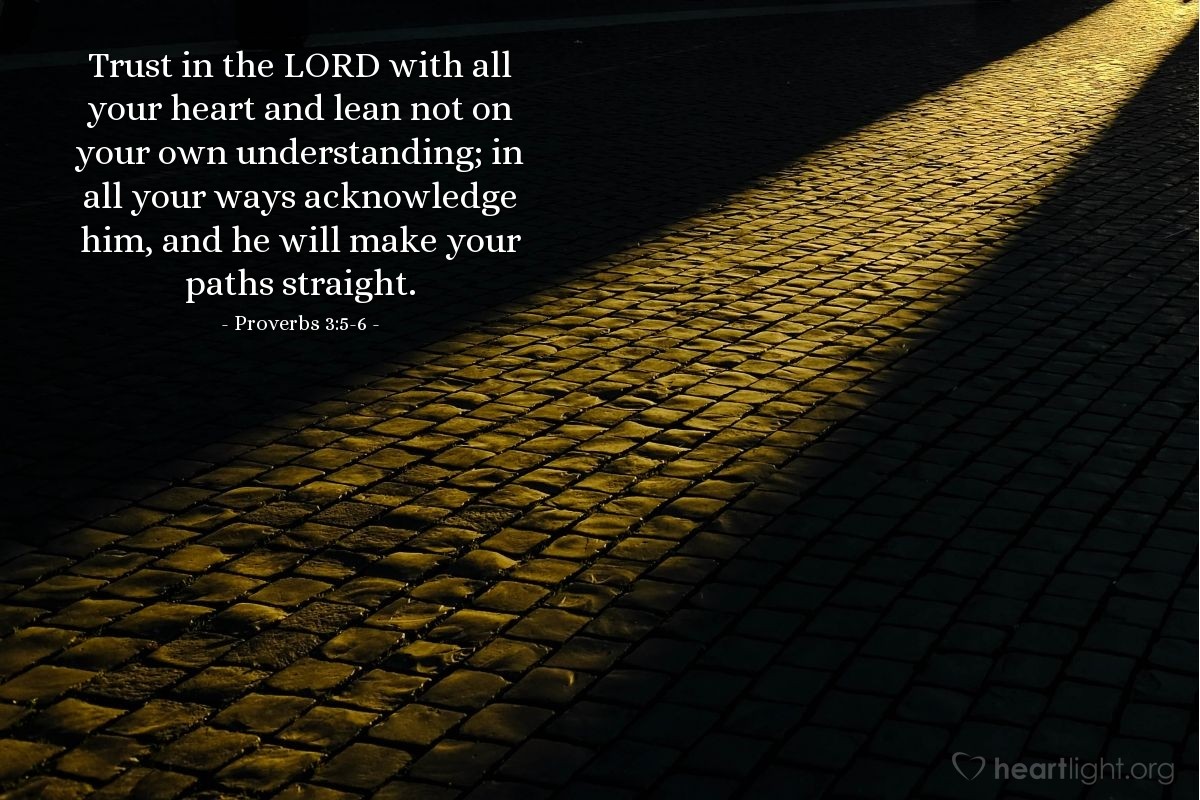
Photo Credit: Heartlight, Verse of the Day

[Adapted from the Archives]

Following is a brief history of how choosing and exploring a word for the year became a habit for me starting in 2020. If you want, just skip down to the highlighted start of 2025 that takes you to this year.

In 2020 (the year of COVID), I read Debbie Macomber‘s book One Perfect Word. She tells fascinating stories of persons’ choosing a word to guide their year. Finishing her book and praying a bit, the word compassion became my focus. 2021 was a good year for that as we dealt with so many divisions over COVID, race, politics, etc. Compassion for all on both sides of each issue.

At first I wasn’t going to do “a word” for 2022, and then a rapid series of “coincidences” drew me to the word: joy. As that year ended, I had become negative and even a bit cynical. Still having faith in God but not so much in humans, including myself. Even after a year of compassion!!

5 Friday Faves – New Year’s Resolutions, Habit Planner, Year-End Review, Joy – the Word for the Year, and the Last Days of 2021 – Deb Mills

Then 2023 followed, and I chose the word “wonder”. It was inspired by my study of Dr. Curt Thompson’s books. He encourages a pursuit of mental health and healing including staying “in the path of oncoming beauty”. This focus on wonder – in searching out beauty in the context of community and a loving God – brought me through a year tougher than I imagined it would be.

Monday Morning Moment – Word for the Year 2023 – Wonder – Deb Mills

Then at the end of 2023, I’d been lamenting being older (i.e. weaker, more frail). Having lost 2 inches in stature (just in the years of pounding on my vertebra) also made me feel small. I’ve decided to push back against the weakness and seemingly diminished nature of getting older. After all, what does that even mean?! I’m not that old. Right?

In Joshua 14, Caleb was 85 years old. He gives a beautiful and faith-filled declaration: “I am still as strong today as I was on the day Moses sent me; as my strength was then, so my strength is now, for war and for going out and coming in. Now then, give me this hill country about which the Lord spoke on that day, for you heard on that day that Anakim (giants) were there, with great fortified cities; perhaps the Lord will be with me, and I will drive them out just as the Lord has spoken.” [Joshua 14:11-12.]

Talking to Dave (that husband of mine), he commented that Caleb had that strength for which I was longing because he had “a different spirit in him” (Numbers 14:24). Whereas the 10 spies and the Israelites influenced by them were driven by a spirit of fear, Caleb was filled by the Spirit of God. In his determination to obey and follow wholeheartedly, his faith emboldened him. He demonstrated strength physically, mentally, and spiritually.

He would not be defined by age, aptitude, or ability…but by the great and gracious God he sought to serve. That’s what I have longed for in this year soon to be ending. To be strong. In all ways possible. Including strong in my love for God and others. This can only be mine if nested in being filled with the very Spirit of God.

Ironically, or not so much with the Lord, I have struggled with even more physical weakness (a painful and limiting hip pain) but not without working toward being strong again. Months ago, in choosing “strong” as the word for this year, God knew. In this season still, I am reminded of His goodness. “For when I am weak (and it will happen), then His strength is manifested perfectly and completely!” (2 Corinthians 12:10)

He keeps His promises.

Monday Morning Moment – Word for the New Year – Strong (Nested in “Filled” – There’s a Story) – Deb Mills

Now we stand at the start of 2025.

These last days of December 2024, I have pondered what word would be a fixed point for this coming year. New Year’s resolutions and habit formation are both great helps for my slightly scattered brain. This Word of the Year exercise (which will span the next year) has also been a tremendous help.

The word “trust” has come to mind, in my times in the Word, in recent conversations, and in circumstances beyond my control. “Trust” – whew! That word has always been troubling for me. I think we put too much importance on trusting people – we will all disappoint and fail each other. It happens. Will I put that same bias on God, or can I treat Him as He is and as the Trustworthy One He reveals Himself to be?

Trust – Why Trust matters – Psychology Today – Trusting others and being trustworthy matter, but human trust is flawed and has to be handled with some measure of understanding and grace.

The object of our trust can’t be on people but on God. He alone will not disappoint. He alone will always keep His promises.

Praying to trust God more seems to carry the same human-borne threat of praying for patience. Yikes! We want more patience but not the sorts of experiences that will bring it. Is God drawing me to focus on trust in 2025 because I’m going to need it more? No…refusing to think there would be any negative outcome with trusting God more. It is a beautiful thing and He is worthy.

Just yesterday Dave and I talked about trust and what it means. He defined it as having confidence that someone (including God, of course) will be who he/she says they are and will do what they say they will do. Again, as humans, we don’t always prove to be trust-worthy…and we apply grace, not unforgiveness. But God!!! We can have complete confidence in Him. Complete trust.

“The biblical definition of trust goes beyond mere belief or reliance. It involves a complete surrender and reliance on God, knowing that He is faithful and will fulfill His promises. Trust, according to biblical definition, is the means of putting aside our own understanding and leaning on God’s wisdom and guidance. It means acknowledging that God’s ways are higher than our ways and trusting that He is in control of all things. Trust requires us to have faith, to believe in the unseen and to confidently depend on God’s faithfulness. It is an unwavering assurance that God is trustworthy and will never fail us. This biblical concept of trust is not just a casual belief, but an active and intentional decision to place our confidence in God alone.”Daniel, Prayer Warrior – Bible Definition Of Trust (How The Lord Defines Trusting Him) – Read the whole article!

God Is a Way-maker – How to Trust God with the Impossible – Daniel – Prayer Warrior – DailyEffectivePrayer.org

Photo Credit: Heartlight

I am going to turn my heart toward trusting God in 2025 for small and big things – for situations only He can move toward healing and wholeness. For the prodigals in my life. For a family rift that continues unchanged since 2020. For salvation for some dear friends (and family) I love deeply (and God loves more). For direction in moment-by-moment turns in life (eyes on Him instead of my own faulty decision-making). For grace to trust He is creating beauty even in and through me. Finally, trusting God for all those previous word lessons He has begun in my life to continue to grow into maturity – compassion, joy, wonder, and strength.

Photo Credit: Oswald Chambers, image source unknown

Worship Wednesday – No Matter What I Will Trust in You – Lauren Daigle – Deb Mills

YouTube Video – Do I Trust You? – Twila Paris – my absolute favorite song on trust

Top 25 Oswald Chambers Quotes – AZ Quotes

Photo Credit: X, David J. Harris, Jr.

Monday Morning Moment – Thanksgiving Memories – All Good Gifts

2006 -- Nov -- Thanksgiving table

Every good gift and every perfect gift is from above, and comes down from the Father of lights, with whom there is no variation or shadow of turning. James 1:17

[Adapted from the Archives]

For most of 20 years, we lived in North Africa where a Thanksgiving holiday was a foreign concept. “Eid el Shukr” (“Feast of Thanks” in Arabic) was understood but not a day set aside. We, along with other expat Americans, brought Thanksgiving with us and invited our local friends into the experience. On the surface, American Thanksgiving has pretty much three constant components – food, family, and football.

Back in the States, the old traditions are changing and yet stay sweetly familiar. My Mom, who always laid out an incredible Southern-style feast on the kitchen counter at home in Georgia, is no longer with us. As with some of you, I’m sure, I miss her still every day and how she lavished love on us through these family times together. Our children are grown now and establishing their own traditions with more families and friends added into the mix. Each year, we find ourselves re-working our own traditions as well.

Thanksgiving is again, for many of us, all about food, family, and football…but there’s also another element…faith… I am grateful every day for the kindnesses of God and those he’s placed in our lives. Celebrating Thanksgiving allows us to put an exclamation point on being grateful. It’s not just about a table full of food, although food is clearly a focal point. Thanksgiving, even as a national holiday and not a religious one, focuses our sight beyond ourselves. There is an object in Thanksgiving beyond ourselves.

Over 50 years ago, a funky little Broadway musical was turned into a film – Godspell. It was an adaptation of the life of Jesus according to the Gospel of Matthew. At that time, I was in the season of life that young people pass through of searching out what exactly I believed. It wasn’t going well at that time. Praise God, He did not forget me during those days when I had all but forgotten Him. Watching the film Godspell was one of the occasions God used to wake me up. There’s a wonder and delight in the young followers of Jesus in the musical. It reminded me of what I had once with God…and what could be again.

All the songs in the musical Godspell are lovely. Composer and lyricist, Stephen Schwartz, beautifully captured some of Jesus’ teaching and the depth of love and rightness between Him, His followers, and creation, in general. All Good Gifts, adapted from an old hymn, is one such song and is a pure and proper doxology of praise for Thanksgiving.

Worship with me. 

All Good Gifts*
We plow the fields and scatter the good seed on the land..
But it is fed and watered by God’s almighty hand..
He sends us snow in winter, the warmth to swell the grain…
The breezes and the sunshine, and soft refreshing rain…

All good gifts around us
Are sent from Heaven above
Then thank the Lord, thank the Lord for all his love…

We thank thee then, O Father, for all things bright and good,
The seedtime and the harvest, our life our health our food,
No gifts have we to offer for all thy love imparts
But that which thou desirest, our humble thankful hearts!

All good gifts around us
Are sent from Heaven above..
Then thank the Lord, thank the Lord for all his love..

I really wanna thank you Lord!
All good gifts around us
Are sent from Heaven above..
Then thank the Lord, oh thank the Lord for all his love..

Food – Family Favorites in Mom’s Kitchen
Football – on T.V. or out on the street with cousins and friends
Family – Time together…savoring every minute

Happy Thanksgiving…

Oh…just in case Thanksgiving is a struggle…and it isn’t all happy family fun…I pray you take courage and rein in your heart to remember that God sees and loves you. We can be a Thanksgiving blessing to each other…if you’ve read this far…you are a blessing to me. Wish you were at our table…maybe one day you will be. You are definitely welcome at God’s table.

YouTube Video – Take Courage – Kristene DiMarco

*Lyrics and Story Behind the Song – All Good Gifts (Godspell)

YouTube Video – All Good Gifts (Godspell 1990)

YouTube Video Clip – All Good Gifts (Godspell original cast 1973)

Wikipedia article on original hymn/lyric – We Plough the Fields and Scatter (1862)

Thanksgiving with MomMom
[Thanksgiving with the kids, 2015 – and a napping first-born grandchild not in pic]

Monday Morning Moment – Finishing Strong – On the Anniversary of Mom’s Glorious Homegoing

[Adapted from the Archives]

We have this treasure in earthen vessels, that the excellence of the power may be of God and not of us. We are hard-pressed on every side, yet not crushed; we are perplexed, but not in despair;  persecuted, but not forsaken; struck down, but not destroyed – always carrying about in the body the dying of the Lord Jesus, that the life of Jesus also may be manifested in our body. 2 Corinthians 4:7-10

My Mom was a young 72 when she was diagnosed with cancer. A year younger than I am right now. We were overseas at the time, and I wanted so to be home with her. She was diagnosed with non-Hodgkin’s lymphoma – supposedly “the best kind of cancer you can have”. Highly treatable. Long remissions. Often cured. Mom would still die after 3 years of intensive, and sometimes experimental, chemotherapy. She never caught a break. Yet, she didn’t look at it that way.

Her journey with God in those days was other-worldly. The Mom I knew loved to serve people, and cancer would not stop that. She had grown up poor and with a dad who could be mean when he drank. She dreamed of college but it was never meant to be. Instead she became a student of life, and she never tired of that. She was a beautiful blend of Mary and Martha – wholly satisfied whether “sitting at the feet of Jesus” or serving the needs of those around her. I love that she was my Mom.

She taught me how to live…and she taught me how to die. We were home in the States when Mom’s cancer finished its course in her. She never spent a night in the hospital throughout those three years.  She stubbornly guarded her time at home and had the will and the support (of my Dad, family and friends) to endure from home…and there was God, holding her tight against the storm.

Fuji002 152a

Mom never prayed for healing, but we did. Mom prayed that this cancer, the illness and all that was part of it (including a devastating Shingles-related neuralgia), would bring glory to God. Her prayer was answered, and ours, ultimately, in Heaven.

Her dying took three days. If you had known my Mom, you knew a person that was all about life – helping and encouraging others, pointing them to God, determined, in faith, to make sense of what seemed utter nonsense. She continued to be about that until she went into a coma the last day. While she was awake that final weekend, I asked her (over and again) how she was. One time, I remember, she nodded a bit, and whispered, “I’m O.K.” It was her face that spoke volumes. Forehead lifted, blue eyes bright, an almost sunny expression. That “I’m O.K.” was accompanied by an almost delighted look of marvel…of wonder. Like, “Wow! I really am O.K.!” God was meeting her at the point of her greatest need.

Mom and I have always had amazing talks about the deep things of God and life. She told me one time that she envied us our certainty of His call to a life overseas. “I don’t think I’ve ever heard God speak so clearly to me,” she lamented. In the last days of her life, it came to me to ask her if she heard God speak to her lately. She answered right away, with that same look of wonder, “All the time!” If cancer had to be the instrument of such grace, then it became a gift to her.

Mom entered Eternity during the reading of 2 Corinthians 4:7-10 (see above). Her young pastor and his wife came unexpectedly that evening, rushing in, wide-eyed, as if on a mission. We brought them back to her room, and they sat with us, around her bed. She had been unresponsive all day. Her pastor opened his Bible and began reading. Mom had this sweet habit of knitting her forehead and shaking her head, in response to something that touched her heart. As he read, after being quiet and still all day, she knit her forehead and breathed her last. We all felt transfigured in that moment.

Today marks 22 years since Mom went to be with the Lord, and I miss her today and every day. She was so spent when she left us, yet gloriously whole at the same time. A bit of prose from Henry Van Dyke always comes to mind in thinking of her Homegoing.

Gone From My Sight by Henry Van Dyke

Photo Credit: Curt Ellis

I am standing upon the seashore. A ship, at my side, spreads her white sails to the moving breeze and starts for the blue ocean. She is an object of beauty and strength. I stand and watch her until, at length, she hangs like a speck of white cloud just where the sea and sky come to mingle with each other.

Then, someone at my side says, “There, she is gone.”

Gone where?

Gone from my sight. That is all. She is just as large in mast,
hull and spar as she was when she left my side.
And, she is just as able to bear her load of living freight to her destined port.

Her diminished size is in me — not in her.

And, just at the moment when someone says, “There, she is gone,”
there are other eyes watching her coming, and other voices
ready to take up the glad shout, “Here she comes!”

Mom taught us how to live…and she taught us how to die. She “fought the good fight…finished the race…and kept the faith.” (2 Timothy 4:7). For us, there is still a race to be run.

Thanks, Mom, for showing us how it’s done. See you at the Finish Line.

Mom pictures for website 014a

When it’s all been said and done
There is just one thing that matters:
Did I do my best to live for truth, did I live my life for You?
When it’s all been said and done
All my treasures will mean nothing
Only what I’ve done for love’s reward
Will stand the test of time.

Lord, Your mercy is so great
That You look beyond our weakness
And find purest gold in miry clay
Making sinners into saints

I will always sing Your praise
Here on earth and ever after
For You’ve shown me Heaven’s my true home
When it’s all been said and done
You’re my life when life is gone.

Lord I’ll live my life for You.

Lyrics & Music by Jim Cowan © 1999 Integrity’s Hosanna! Music

Mom’s Irises

YouTube Video – When It’s All Been Said and Done

Her Children Arise and Call Her Blessed – David Mathis – Charles Spurgeon’s reflections on a Godly mother

Monday Morning Moment – “They Did the Best They Could”

A quote from Curt Thompson MD’s book The Soul of Shame

“They did the best they could.” This statement usually follows a description of one’s hard childhood, lack of closeness to one or both parents, or attachment or addiction issues in adulthood. For some, this may be an attempt to pull back from blaming our parents. When we become curious about our childhood, we also find ourselves curious about our parents’ childhood…and their parents. Blaming really gets us nowhere. What we have available to us these days in terms of mental and relational health is so much more than our parents had available to them.

My parents may have done the best they could. For sure, they did what they knew to do. I think of my mom sometimes. What a difference it would have made in her own life to have access to the helps we have today! And she was a good mom. She, my absent biological father, and my beloved step-dad all made mistakes in parenting. I sure did, as well. In many ways, I wish I could go back and change some things. My kids and I have talked about this. In their graciousness, they have released me from the less-than-best parenting I did. Still, it requires me to forgive myself.

Monday Morning Moment – Family of Origin – What’s Your Story? – Deb Mills

[Sidebar: one of my children reminded me that generations of parents have had the Bible as a guidebook and it is full of wisdom. When I talk about present-day helps, I mean experts in the fields of science and medicine who have added to our application of Biblical truth. Curt Thompson, MD is one of those experts.]

Where am I going with this? Last week, I attended my first Connections conference. It is sponsored by the Center for Being Known (CBK), and Curt Thompson is the founder of CBK. Curt also chairs the podcast Being Known with Pepper Sweeney and Amy Cella. That podcast has been like a masterclass for me. So good! Curt is also an accomplished writer, and I’ve read all his books! He is easy to read and has literally changed my life…changed my thinking on so many things – how the brain was created, how we can rewire it after trauma, how we can reframe memory, how we can deal with shame in healthy ways, how we can flourish in community. So many things!

Below you will find some quotes from his books. During the conference, a powerpoint was running between sessions with these and many more quotes displayed. So rich…and delightful to be reminded of these truths. Whatever your background and wherever you are in life, his books will change your life as they have mine.

I will revisit the content from this Connections conference (“Imagination to Incarnation”) on another day. For now, I just wanted to whet your appetite for the possibility of healing, even in the face of childhood trauma, family estrangement, anxiety, depression, isolation and shame.

Whatever your situation, there is help. We can’t go back, but we can go forward. We can reframe memories. We can repair breaches in relationships. We can tell our stories to people who care about us. We can name our struggle. We can begin again.

These are not just lofty ideas. I sat in a room with 450 or so others who are doing the work of healing. Of being better, even doing better. It was a beautiful, hopeful experience.

Postscript: The speakers from this Connections conference and the promo for Connections 2025.

Photo Credit: Facebook, Curt Thompson MD

Monday Morning Moment – Healing from Sorrow and Grief – with Adam Young, Francis Weller, Curt Thompson, & Jesus – Deb Mills

Transformed By the Renewing of Your Mind – Dr. Curt Thompson

Toxic Shame Has Its Own Neurobiology. The Gospel Offers a Cure. – Werner Mischke [ a Review of Curt Thompson’s book The Soul of Shame: Retelling the Stories We Believe About Ourselves]

Good Friday, Families and Hospitality (Dr. Curt Thompson, Part Two) – Conversation with Center for Christian Civics – exploring what Good Friday has to do with hard conversations about politics in the church

Spirituality, Neuroplasticity, and Personal Growth – Dr. Curt Thompson

Monday Morning Moment – Lessons Not Regrets

Photo Credit: Debbie Hampton

Have you made any errors in judgment lately? Did your judgment lead you to attitudes or actions that you would later regret? I have, maybe not as of yet this morning, but definitely yesterday. Some folks are more accomplished at shrugging them off and moving on. I over-think them, and sometimes beat myself up for them. Not always correcting course, as in taking responsibility, apologizing, and making amends.

Ugh!

Fortunately, I have folks in my life who allow me to process these mistakes and determine the best way forward. Both inside my own head and in relationship with others. Community (i.e. caring accountability) is a wonderful thing.

The graphic above is taken from an article written by Debbie Hampton, this brilliant woman who is also a suicide survivor – talk about a person who took a dark turn in her decision-making and managed to come out the other side in a much better place.

She talks about taking the mistakes we make and dealing with them with forgiveness, kindness, and compassion. We don’t have to be bound by our regret of decisions made. We can reframe our memories and can hopefully extend grace, both to ourselves and others. As we shake off the negative and explore what we can learn, a mental shift and positive action plan are possible. Turning our regrets into lessons.

Have Lessons Not Regrets – Debbie Hampton

One discipline in decision-making is to assess how it is we are prone to find ourselves, again and again, in situations that cause hurt to ourselves and others.

Psychologist Carrie Steckl writes about three errors that can affect our decision-making:

  • Representativeness bias – our tendency to judge a situation based on our predominate experiences and beliefs about the situation.
  • Availability bias – our tendency to make decisions based on what is most familiar to us, whether it is the best choice for us or not.
  • Confirmatory bias – our tendency to make an early judgment and listen only to information that validates that judgment.

Three Errors In Judgment We Are All Too Inclined To Make – Carrie Steckl

This was really helpful for me, because I can default to negative thinking, rather than taking charge and turning a situation around. This comes out of habit, and I want to change that habit.

The Trilogy of Errors: Hidden Influences on Your Decisions: How Psychologically Blind, Deaf, and Dumb Spots Can Unexpectedly Derail Judgment – Nuala Walsh – another great read on how our decisions are affected

For the moment, still reeling from how my afternoon was derailed yesterday with mistaken decision-making, I want to focus on the importance of moving regrets into life lessons. Habit formation is key, undergirded by three elements: consistency, intensity, and community. Entrepreneur and motivational speaker Sahil Bloom gives a simple yet profound way to approach habit formation:

Photo Credit: Sahil Bloom, Twitter

This is where I am today. How about you? Any regrets? Let’s determine to turn the corner on these by making some simple, thoughtful changes in our mental maps and resultant actions.