
Category Archives: Lifelong Learning

Monday Morning Moment – Forming 5 Simple Habits that Lead to Success/Effectiveness

Blog - Habits - CGInternationalincPhoto Credit: CGInternational

Habits. Daily routine. These are things we wrestle with. Fortunately the more we wrestle and stay on them, the more successful we are, and (hurrah!), the more our lives are positively affected. Ben Slater has posted a very doable routine in his piece 5 Simple Daily Habits That Lead to Ultimate Success. They are:

  1. Wake up early. Slater is not talking waking up early enough to just get to work on time. He’s talking 5ish. To wake up that early requires going to bed early…not just napping on the couch (guilty), but habitually, getting to bed early to get up early. This is determined by how much sleep you need…whether you’re a morning person or night person, that amount of time is pretty much set. “Sleeping in” – that weekend luxury – can derive negative gains. Is it worth it? Just asking the question he raises.Blog - Wake Up Early - Monday Morning - thefemalenetworkPhoto Credit: The Female Network
  2. Exercise regularly. OK, so nothing new, right? This is not about staying in shape, physique-wise. That could be a benefit of exercise, but the goal is to sweat! We know the great benefits to regular exercise, many of which are mental. Feeling happier is one. It’s making exercise a habit that’s key here – for all its physical, mental, emotional, and even vocational benefits.Blog - Exercise - breatheryPhoto Credit: Beamery
  3. Focus, don’t multitask. I have actually prided myself for years on the ability to multitask. No more. It’s possible it wreaked havoc on my memory and probably on the quality of my work and relationships. Slater talks about the importance of a daily routine of planning, execution, review and starting a plan for the next day. “Work out the 3-5 things that you need to accomplish over the course of the day and focus on them first.” Focus is key. I’m learning.Blog - Focus vs. Multitasking - massolutionsPhoto Credit: Massolutions
  4. Learn from mistakes.  When our day doesn’t go quite how we hoped, we too often default to blaming (too many meetings, interruptions, demanding bosses, time-wasters and trust-busters). We make mistakes in our decision-making and assessments; what’s important is that we deal with them humbly and proactively. Refuse to blame others. Learn from the mistake and move on. Sidebar: If it’s someone else’s mistake or poor judgment or questionable character, then learn from their mistakes as well. Don’t get muddled up, fuming about another, when your own life is at stake. You have it in you to control that.Blog - Learn from your mistakes - ultrapreneursayingsPhoto Credit: UltrapreneurSayings
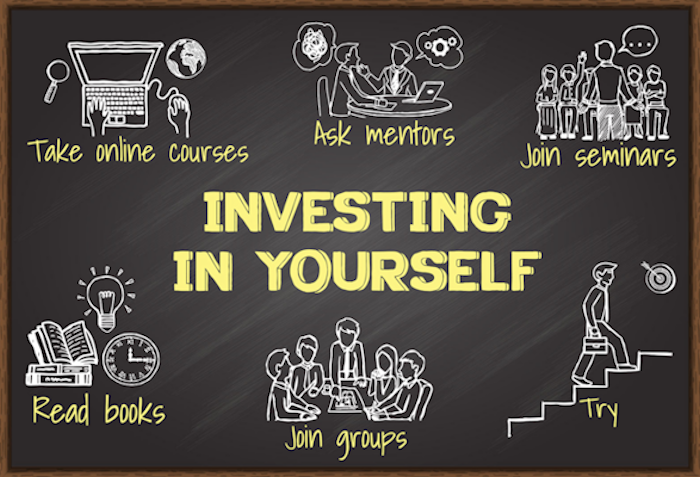
  5. Make personal investments. What habits have you put in place to continue to grow and develop? Habits, not just hopes or goals set somewhere in the distant future. Slater observes: “The world’s most successful people are always prepared to invest time and resources in their own personal development. If you stripped someone like Bill Gates of his assets and dumped him on the street I’d be willing to bet he’d be ok – he’s constantly invested in himself and built up huge reserves of human capital, major companies would be falling over themselves to offer him a job.”  This is where weekly goals come in, and maybe a mentor…someone you trust who will help you stay accountable to your goals. Don’t miss this valuable habit…I definitely need more discipline in this area.Blog - Investing in yourself - salestrainingsolutionsPhoto Credit: SalesTrainingSolutions

I’ve written a lot in Monday Morning Moments about habit formation (see links below). There are so many great resources online about this important professional life skill. Slater’s article on these 5 simple daily habits reminded me again of how possible it is to know success/effectiveness if we do the work of putting these habits into our daily routine. I’m on it…once again. [Like with New Year’s Resolutions, we may not be successful over the long-haul with every one, but we move closer to goal every time we push in that direction.]

What are habits you have seen make a difference in your personal and professional day-to-day life? What habits would you like to make part of your daily routine? Please share in Comments.

15 Critical Habits of Mentally Strong People – Travis Bradberry

Habits of Successful People Who Always Reach Their Goals – SlideShare

Creating a Lasting Early Morning Routine – The Two Most Overlooked Aspects – Joel Gascoigne

Defend Your Research: The Early Bird really Does Get the Worm – Christoph Randler

Focus on Multi-Finishing Instead of MultiTasking – Dave Mastovich

Monday Morning Moment – Notes on Chris Bailey’s Life of Productivity – DebMillsWriter

Monday Morning Moment – Make Your Bed Every Morning and Be Ready to Change the World – DebMillsWriter

Monday Morning Moment – Screen Time – Give It a Rest – DebMillsWriter

Monday Morning Moment – Understanding True Habit Change and Rocking Your New Year’s Resolutions – DebMillsWriter

Sulking and the Idolatry of Relationships

Blog - Sulking - listdosePhoto Credit: ListDose

I learned how to sulk very early in life, the only girl with three brothers. Sulking came too naturally when I didn’t get my way, especially when my brothers wanted something different than what I wanted. That habit of sulking transferred easily into marriage.

Joseph Bonifacio defines the verb sulk:

Blog - Sulk - joseph bonifacioPhoto Credit: Joseph Bonifacio

When Dave and I were first married, if he didn’t at times behave in some way that I felt he should have, I could effectively sink into a long, brooding sulk. Even though the Bible verse about “not letting the sun go down on your anger” was a serious warning against sulking, I could still go three days without talking to him…beyond the absolute essential.

Those early years of marriage are way in our past, and my sulking these days rarely goes for long, minutes usually, rarely a few hours. Still, it has to be so punishing for him. It certainly is for me.

Today I read the most fascinating description of sulking by Alain de Botton, author of On Love: A Novel and The Course of Love: A Novel

Blog - Sulking - Alain de Botton - fanpopPhoto Credit: Fanpop

At the heart of a sulk lies a confusing mixture of intense anger and an equally intense desire not to communicate what one is angry about. The sulker both desperately needs the other person to understand and yet remains utterly committed to doing nothing to help them do so. The very need to explain forms the kernel of the insult: if the partner requires an explanation, he or she is clearly not worthy of one. We should add: it is a privilege to be the recipient of a sulk; it means the other person respects and trusts us enough to think we should understand their unspoken hurt. It is one of the odder gifts of love.”Alain de Botton

Blog - Sulking - azquotesPhoto Credit: AZ Quotes

Sulking pays homage to a beautiful, dangerous ideal that can be traced back to our earliest childhoods: the promise of wordless understanding. In the womb, we never had to explain. Our every requirement was catered to. The right sort of comfort simply happened. Some of this idyll continued in our first years. We didn’t have to make our every  requirement known: large, kind people guessed for us. They saw past our tears, our inarticulacy, our confusions: they found the explanations for discomforts which we lacked the ability to verbalize. That may be why, in relationships, even the most eloquent among us may instinctively prefer not to spell things out when our partners are at risk of failing to read us properly. Only wordless and accurate mind reading can feel like a true sign that our partner is someone to be trusted: only when we don’t have to explain can we feel certain that we are genuinely understood.Alain de Botton

Sheesh.

We can make it hard on those we love the most.

In the same article, on Brain Pickings, where I read Alain de Botton’s words above, there was also the following quote:

““Why is love rich beyond all other possible human experiences and a sweet burden to those seized in its grasp? Because we become what we love and yet remain ourselves.”Martin Heidegger

It reminded me of the passage preached by our pastor this morning. Psalm 115. The psalmist was glorifying God in worship and warning against the sin and human vanity of idolatry – of fashioning a thing or relationship into something for our own pleasure. He further warned that what we fashion for ourselves can cause us to stumble in the worshiping of what was never intended for worship.

Those who make them (idols) become like them; so do all who trust in them.Psalm 115:8
Sulking is a sign that I have assigned omniscience (an “all-knowing”) to my husband (for instance). He is supposed to know what is important to me and how to respond accordingly. The selfishness I may silently stew about in him is actually reflecting the very same selfishness in my own heart. Idolatry is when “I” or my interests take center stage, and sulking is a vehicle for that self-centered universe. Ugh!
It’s something that has come to mind today, thanks to the “coincidence” of a sermon at Movement Church, an article I read this afternoon, and my very own bumping into the idolatrous nature of my heart… This kind of convergence had a great impact on me today and helped me bounce back from a slow-burn that could have ruined a sweet evening with my best friend. Humility on both our parts helped restore the joy and peace in our relationship…sooner than later. Sulking no more.
So…what are your thoughts about idolatries in relationships? Is sulking a struggle of yours, or would your partner say it’s a burden of his/hers?

A senior couple enjoying a cup of tea together

5 Friday Faves – Phone Calls, Egyptians, Parenting, Contemporary Christian Music, and David B. Hart on Politics

Blog - Friday FavesHappy Friday! I woke up this morning to the sound of a summer thunderstorm – a real downpour. Now it’s done and hopefully won’t have discouraged the neighbors I’ll be walking with in just a bit. Hope this finds you off to a peaceful and gratifying end to your work week, or just the beginning of another adventure of the day. My 5 Friday Faves coming at you:

1) Phone Calls – In this season of texting as primary communication, I love a phone call. Even though I start with a text as well most of the time, not wanting to disturb the recipient…still a phone call is so direct and satisfying. I’m not the communicator that I once was. My friends and family, who are callers, are very merciful and their calls mean the world. So grateful to you who call. With our kids, they know if I don’t hear back from a series of texts, I will call. It is incentive of a sort to answer those texts. My preference is to hear their voices and to see their faces (Facetime is the best feature of the iPhone). For you who dread phone calls, consider that some of us really love receiving them. Just consider…Blog - Friday Faves - Phone calls

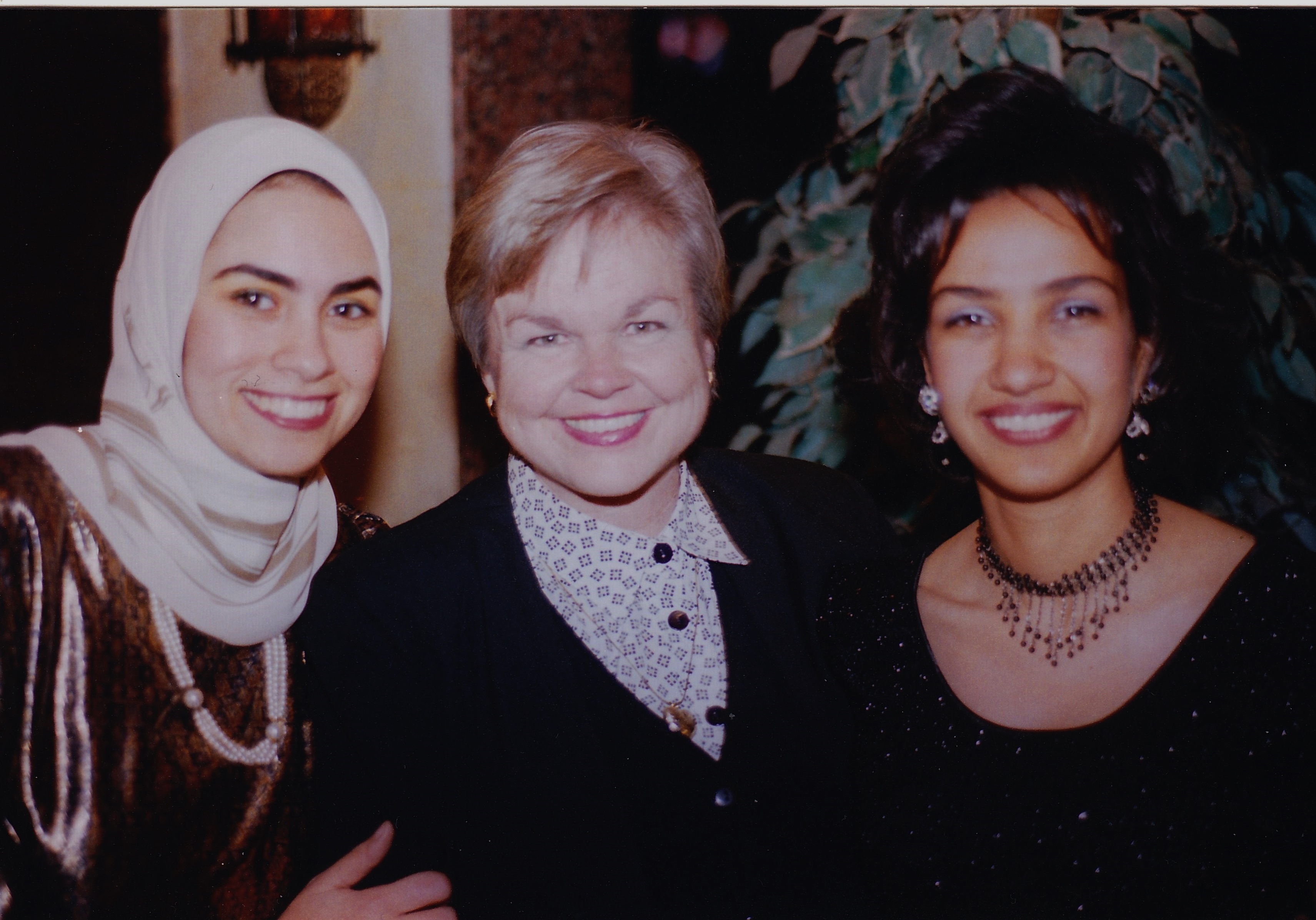
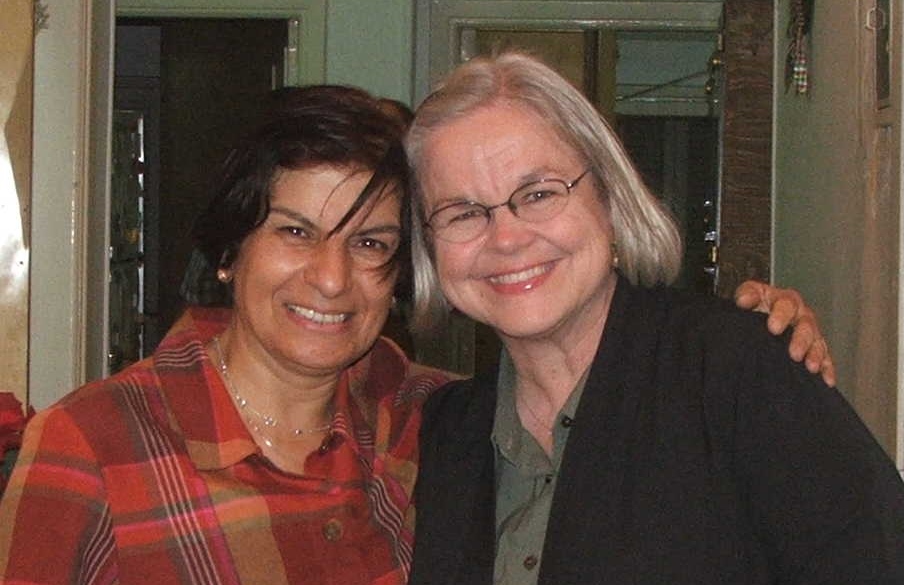
2) Egyptians – We’ve had great neighbors through the years, and especially in our current neighborhood. In our years of living outside of the US, in Egypt, Tunisia, and Morocco, we have known the best of the best of those cultures. Just yesterday, I ran into an Egyptian student I’ve come to know here because she works in a favorite store. Her welcome is always so warm and gracious, asking about my surgery (remembering that?!). So today, I want to give a shout-out to our Egyptian friends. Known for their hospitality and humor, Egyptians remind me of those most beloved in my life from the South. When we lived in Cairo, our Egyptian friends went out of their way to make us feel welcome in their lives. So generous, and funny, and unpretentious. Dave and I talk about going back some day to live there again. It is probably not going to happen, but it makes me smile just to think of it. So here’s to the people of Egypt – “Om el Donia” – “Mother of the World”.036_36 (2)Blog - Sherine, Debbie, HebaBlog - Egyptians - Debbie & FonFon (2)Blog - Egyptians - Dina and Debbie - June 2016

3) Parenting – Matt Diaz is a former professional baseball player and currently a sports commentator. He is also a dad and coaches TBall (tiny baseball players). He wrote a great blog on parenting little guys and how our parenting changes as our kids get older. Speaking with humility from his own parenting and being parented, he spotlighted two issues worth examining.

Blog - Friday Faves - Parenting - Matt E. DiazBlog - Friday Faves - Parenting - Matt E. Diaz baseballPhoto Credit: Matt E. Diaz, Wikipedia

“We are pushing our young kids too hard.  We are expecting adult like performance from them.  We are frustrating them by asking them to handle things they were not designed to handle.
We are coddling our young adults too much.  Society is accepting way too much childlike behavior from them.  We are allowing them to behave in a manner that they were never designed to behave.”
I loved his illustration of how eagles feather their nests to protect the eggs and tiny eaglets and then remove the feathers to make the nest uncomfortable for the fledgling flyer.

4) Music Critics (Critique)
– Contemporary Christian music is genre that has been inspirational and comforting to me over my adult life. It has come a long, long way from the early years of odd, repeated lines and rounds of songs of the 60’s and 70’s. Still, with some glorious exceptions, the Christian music today is still not like the hymns of yesterday. There is contemporary worship music and Christian pop – very different from each other. In researching for my Worship Wednesday blog, I came across the Faithful Stewardship Blog.

The writer identifies himself as Jorge, from my home state of Georgia. He further describes himself as writing for the sake of his wife and children. On Tuesdays, he posts his critiques of contemporary Christmas music. He pulls from Top 20 lists of this genre and gives approval/disapproval ratings for songs based on how they line up with Scriptural truth. I don’t think he means any ill will at all in his disapprovals; he is focusing on Biblical truth in the lyrics of these songs. Some of my favorites are on his disapproving list, but many are also on his approval list, including For King & Country’s Shoulders.

Blog - Friday Faves - Music Critics - CCM - Twitter

Photo Credit: Twitter

I was surprised at some of his takes on songs but actually couldn’t disagree with his analysis.

An article along the same lines is T. David Gordon’s The Imminent Decline of Contemporary Worship Music: Eight Reasons. Blog - Friday Faves - Contemporary Worship Music - secondnaturejournalPhoto Credit: Second Nature Journal

He writes about how the church is embracing contemporary worship music to the exclusion of traditional hymns. His eight reasons that he sees this as a temporary situation are provocative and thought-provoking. This is not just a treatise on preferences. Gordon weighs in heavily on the grandeur of the lyrics and hymn tunes of worship music that has stood the test of time. He is not sure at all that much of what we cherish today will stand that same test. Some will, I believe, but how could we ever let go of such great hymns as Henry Francis Lyte’s Abide With Me, written in 1847? Or Martin Luther’s A Mighty Fortress Is Our God written in 1529? Powerful.

Postscript: Whether all the songs I love in both Christian worship and Christian pop endure for centuries, it matters that they bring joy today. So, just wanted to throw that in, on the tails of this good read.

5) David B. Hart on Politics – a young Eastern Orthodox friend of mine posted a quote from Hart on his Facebook page recently. Hart is also Eastern Orthodox, and a philosopher, writer, theologian, cultural commentator. He is new to me and much too deep for me to understand on some points. His take on American politics in this election year is worth noting. So eloquent. I love when people use words like this…with such clarity, transparency, and skill. Granted (for those who will disagree with his take on this subject) it is just his opinion…but well-spoken.Blog - Friday faves - David Bentley Hart on PoliticsPhoto Credit: Patheos

“Our choices are excruciatingly circumscribed, since the whole process is dominated by two large and self-interested political conglomerates that are far better at gaining power than at exercising it wisely…Yes, I know: there are good and sincere souls who run for office, and some occasionally get in, and a few of those are then able to accomplish something with the position they assume, and some of those even remain faithful to the convictions that got them there. But, lest we forget, those are also the politicians who often create the greatest mischief…If one were to devise a political system from scratch, knowing something of history and a great deal about human nature, the sort of person that one would chiefly want, if possible, to exclude from power would be the sort of person who most desires it, and who is most willing to make a great effort to acquire it. 

Yet our system obliges us to elevate to office precisely those persons who have the ego-besotted effrontery to ask us to do so; it is rather like being compelled to cede the steering wheel to the drunkard in the back seat loudly proclaiming that he knows how to get us there in half the time. More to the point, since our perpetual electoral cycle is now largely a matter of product recognition, advertising, and marketing strategies, we must be content often to vote for persons willing to lie to us with some regularity or, if not that, at least to speak to us evasively and insincerely. In a better, purer world—the world that cannot be—ambition would be an absolute disqualification for political authority.”David B. Hart, First Things

That’s it for me, this week. Hope you have a lovely weekend ahead – longer than usual with our Independence Day celebration on Monday. Please share any of your week’s favorites in Comments below. Thanks for reading my meanderings.

Monday Morning Moment – Screen Time – Give It a Rest

Blog - Screentime - smart3508Photo Credit: SafeSmartSocial

Walked away from the computer at 8:00 last night…best night of sleep I’ve had in a long while.

Alex Cavoulacos, productivity expert and founder of The Muse, wrote a Fast Company piece on establishing the habit of turning off screens at 11:00pm each night. A night owl, Cavoulacos discovered, in forming this habit that she: 1) could actually do it, 2) prioritized her work better, 3) finally found time to read, and 4) slept better. “Turns out that I inadvertently stumbled upon a trigger habit: I was reading more, sleeping more, and spending more quality time with my husband. All of this led to me feeling less stressed and better prepared to start each day. All in all, a huge positive change in my life, all thanks to a single new habit.” Check out her whole article and fascinating video here.

Tanya Lewis, a science journalist, went even farther than Cavoulacos in restricting her screen time. She writes, for Business Insider, that, for one week, she avoided screen time from the time she got off work until she went to bed. That means no TV or Netflix, no checking her phone for directions or searches of other kinds, or just out of boredom, and no tablet time for any of the above. What she discovered was how hard it was and how dependent to screen time she had become. She did start reading books again during that week. She also found that when she avoided screens, getting to sleep was easier. The most fascinating thing she noted was how much more social she became without the distraction of screens.

Night time connection

Anybody remember the old days, before wi-fi and smart phones? And the cable went out because of a storm? We would actually light candles and snuggle together on the couch, play games together, be silly, and talk. Special times worth re-creating with a screen fast.

How about our health? Is there any evidence that all this screen time, especially at night, affects our health, over our lifespan? For sure. Read Power Down for Better Sleep by Heather Hatfield on WebMD. She quotes fatigue specialist, Dr. Mark Rosekind, “One of the most simple but important reasons technology affects our sleep is cognitive stimulation.” What we are watching on screens late at night revs up our brains and stirs us up physically. This stress (positive or negative) can create a flight/flight response, resulting in our body’s release of cortisol – bringing on a state of vigilance rather than the restfulness needed for sleep. Add to our body’s “high alert” status the blue light of electronics. Hatfield reports how this light passes “through the retina into a part of the hypothalamus (the area of the brain that controls several sleep activities) and delays the release of the sleep-inducing hormone, melatonin.” To my sleepless, techie friends and family: it makes sense, right? Put it (screen time) to rest.

[Damon Beres in a Huffington Post piece, writes how “reading on a screen before bed might actually be killing you”. He points out the health problems that can result partly from inadequate rest (obesity, diabetes, cardiovascular disease). He also points to blue light filters that can help if we can’t imagine avoiding screen time at night.]

What about the impact of screen time on the brain over time? Debbie Hampton wrote a fascinating, sobering piece How Staring at a Screen Changes Your Brain (For the Worse). Hampton refers the reader to the findings of Dr. Michael Merzenich, author of Soft-Wired: How the New Science of Brain Plasticity Can Change Your Life.

“Visual activities, like staring at a screen or even driving, continually narrow our field of view to a smaller box-like zone right in front of our eyes. Our brains learn to categorize everything outside of this box as a distraction not worthy of attention and get good at filtering out anything not right in front of us. By developing sustained attention in the central view, our peripheral vision suffers, and our view of the world slowly contracts. The field of view in humans decreases as we age. Over time, a person becomes immune to noticing life’s visual surprises, and their eyes move less often. As a result of these self-induced neurological changes, our brains and bodies get conditioned not to pay attention and not to react to the unexpected.”

What does that mean for us? You have probably already seen this in action. Our attention is drawn in, fairly fixed, on our screens. We miss what is happening around us. One day I’m going to write about situational awareness – as a personal safety issue as well as a sharpening discipline to appreciate life around us. This whole addiction to screens that is prevalent today will take the rest of the world out of our view, so to speak, if we’re not careful.

For our sake (at work and home) and for our family’s sake, consider: No screen time before bed.Blog - Screentime - mugmagPhoto Credit: MugMag

Speaking of the family…our children – I will just post these quick reads about little ones (and teens) and how so much screen time affects them physically, socially, and developmentally. We fall into these habits with our children, but we can also pull ourselves, and them, out of the same.

What’s your takeaway from this? I personally want to strategically narrow the screen use in my life. Writing makes screen time an occupational hazard but I love those screens way too much outside of blogging. Thanks to Chris Bailey’s A Life of Productivity and his book about his productivity project, I have already made some changes. No Facebook on my phone, as one change. Still have a long way to go.

Bottom line: I don’t want to miss the people I love, in the flesh, and I don’t want to miss the real world…and lastly, I don’t want to miss truly experiencing God…because of this surreal, burgeoning habit of screen time. So…I will leave you for now. Well-rested, hopefully. Sweet dreams.

Addicted to Distraction and the Possibility of Restoring a Longer Attention Span

Blog - Addicted to distraction - diygeniusPhoto Credit: DIY Genius

Recently I was at a training event in a remote area where I had no cell phone service and limited internet. It meant I went through stressful training and at the same time experienced a forced exile from screen time. I don’t even have to tell you which was more challenging.

Growing up in my generation was very different than now – playing outside until dark, talking for hours on the phone with friends, falling asleep to the comforting drone of Mom and Dad talking and laughing in their bedroom down the hall. If you’ve ever seen the 1999 film October Sky, it makes me think of Dave’s growing up also – playing in the woods, biking everywhere, building rockets, hunting and fishing.Blog - Playing Outside - jeffs60sPhoto Credit: Jeffs60s

We are enjoying different advantages now for sure…I wonder how our grandchildren will one day describe their childhood. Having computers and the internet have been amazing assets to our lives. The dilemma is when our screen life becomes more engaging that our real life. When “Facetime” replaces face-to-face time.

Don’t get me wrong, I love the opportunity to see people via phone. For instance, friends of ours who got married recently had a small wedding, BUT they had a friend live-stream the wedding and all the rest of us got to “be there” via Periscope. Saw the kiss and everything. 2016 March 5 - Megan & Brian Wedding Kiss

There is something to be said about all the electronic capabilities we have today. For sure.BLog - Addicted to Distraction - littleredfrenchPhoto Credit: LittleRedFrench

The problem is when objects take command of our lives. These screens (phones, TV, computers) eat up so much of our day. Also, what about when we start exchanging real time relationships with the barest minimum associations via Facebook, Instagram, or Twitter? When a friend decided to go off Facebook, I was bummed… At that time, she lived 6 minutes from me. Not like my friends in Morocco or Egypt where I depend most on Facebook to keep up with them. She lives right here in town. We can have real coffee’s and real talks on the phone. Sigh… I had pretty much relegated keeping up with her to social media. Now we’re back affiliated only in real life where I might need to call her. Imagine.

I’ve written about this before (here) and want to manage my life better in this area. Multi-tasking was always something I thought was a strength, but now, getting older, it hasn’t helped me develop much of an attention span (see Charlie Munger’s thoughts on this here). It makes sense that thinking long and hard on something would have a powerful impact on our success or decision-making. Focus. Concentration. These are the things that have suffered in my life with all the distractions.

Kyle Pearce wrote a small piece on being distracted and introduced me to the work of Nicholas Carr (who wrote The Shallows: What the Internet is Doing to Our Brains and The Glass Cage: How Our Computers Are Changing Us). The 4-minute YouTube video below describes some of what he writes about:

Besides managing the distractedness in thinking, memory, and processing information, I want to nurture a habit of deep conversation. Sherry Turkle (author of Alone Together: Why We Expect More from Technology and Less from Each Other and Reclaiming Conversation: The Power of Talk in a Digital Age) writes about this and gives me hope.

Blog - Distracted - conversations - quotesgramPhoto Credit: QuotesGram

Turkle admits she loves computers because they have helped her make tremendous strides in writing, but they are not people. She writes as if she’s reading my heart. This disconnected connection we experience with one another is so illusory.

“Networked, we are together, but so lessened are our expectations of each other that we can feel utterly alone. And there is the risk that we come to see others as objects to be accessed—and only for the parts we find useful, comforting, or amusing.” – Sherry Turkle
Here’s my hope and vision – to re-learn how to really be connected with people, including myself. To practice solitude. To quit living the excuse of being distractible. To learn how to think and work deeply, and to remember how to have deep, thoughtful conversations again.
I’m not prepared to stop using my phone for information, nor am I able to quit using the internet as a resource for work and life, but it’s entirely possible to restrict connection time.  Also, it’s exciting to think of how I might use that time I waste on the internet to actually be with friends and loved ones…to read more books…to rediscover what is right in front of me in real life…to know what it’s like to have (and enjoy) a quiet mind.

The good news is that the process of withdrawal is simple and the healing is spontaneous; because it is only the continuous high volume consumption of mass media that is keeping us sick. So, at root, the detox programme is merely a matter of Just. Say. No.” – Bruce G. Charlton

What might the next generation be like if our grandchildren are nurtured in this way? How can we help them have such mental muscle and true sociability that they could avoid being addicted to distraction?

It’s something to think about…off-line. Gone to find a real face and give that face my full attention.

Distracted? This is How the Internet is Changing Your Brain by Kyle Pearce

Multitasking – Giving the World an Advantage It Shouldn’t Have – Farnam Street Blog

Are We Addicted to Distraction? by Sophie at LittleRedFrench

The Distraction Addiction: Getting the Information You Need and the Communication You Want, Without Enraging Your Family, Annoying Your Colleagues, and Destroying Your Soul by Alex Soojung-Kim Pang

The Shallows: What the Internet is Doing to Our Brains by Nicholas Carr

The Glass Cage: How Our Computers Are Changing Us by Nicholas Carr

Alone Together: Why We Expect More from Technology and Less from Each Other by Sherry Turkle

Reclaiming Conversation: The Power of Talk in a Digital Age by Sherry Turkle

Deep Work: Rules for Focused Success in a Distracted World by Cal Newport

Amusing Ourselves to Death: Public Discourse in the Age of Show Business by Neil Postman – originally written in 1985, brilliantly prophetic of the future (updated in 2015)

5 Friday Faves – On Studying Your Spouse, Aging, Taking Criticism, Daily Routines, & Black History Month

Blog - Friday Faves

Hello, Friday. I don’t know about you but this has been a week of highs and lows in this world of mine. Hard news in some situations washed over by exquisite answers to prayer in other situations. As happens often with God, in the quiet of this morning, a favorite, heart-lifting passage in the Bible came up in my reading.

“You will keep him in perfect peace whose mind is stayed on You, because he trusts in You. Trust in the Lord forever, for the Lord God is an everlasting rock.”Isaiah 26:3-4

Even the Bible verses atop my facing journal pages this morning were like an anthem from God that all will be well. “Peace I leave with you; My peace I give you.”John 14:27 and “My times are in Your hands, Lord.”Psalm 31:15

With that intro to welcoming Friday this week, here are five of my favorite finds – all from the internet this week, although I did have a lot of sweetness in the real, as well.

1) Studying Your Spouse – Michael Hyatt welcomed Jackie Bledsoe as guest blogger on his website this week. Bledsoe writes very winsomely about how he learned to study his wife. He talks about how we, too often, think we know enough (relating to any field of study and work, ministry, marriage and family). Regarding his marriage, he observed: “We were both growing, just not together. My interests were changing and my wife, Stephana, didn’t always notice. Stephana’s needs were changing, but I was oblivious to them. Finally, we reached a point where we felt we didn’t really know each other. That was a scary discovery, one that you may be able to relate to. You may know the ins and outs of your business or ministry like nobody else. But maybe you don’t know the ins and outs of your spouse like nobody else. It may be time for you to enroll in the continuing education about your spouse.” Bledsoe lists 3 ways to get an advanced degree in your spouse: 1) Do new things together; 2) Take notes: and 3) Use your calendar. Read more here.Blog - Friday Faves - Marriage - DaddyshangoutPhoto Credit: Daddy’s Hangout

2) Aging – a Video – I came across a video this week that really got me thinking about how I view aging. It is entitled The Wall. It is the work of Aroha Philanthropies, an organization “devoted to the transformative power of the arts and creativity, inspiring vitality in those over 55, joy in children and youth, and humanity in adults with mental illness”. Blog - Aging - ioagingPhoto Credit: IoAging.org

The video begins with two elderly persons looking at the imposing face of a wall filled with the words that terrify most of us about getting older. Then as the video progresses, the images change to  more engaging and lovely words that depict what can be part of our experience moving from youth to mid-life to older life. Through creativity and the arts from childhood throughout our years, we might see a very different future, with growing older being our “encore years”. Something to think about for all of us…and especially for our young creatives – to see these “old ones” as valuable peers…just a bit farther down the same road.

3) Taking Criticism – Dan Cumberland, writer and photographer in Seattle, Washington, writes about responding to a scathing comment he received once on one of his blogs. Complete with foul offensive language. In his article This Guy Really Hates Me (How to Take Criticism). In his post, he lists 5 guidelines of how to handle criticism:

1) Is there truth in it?; 2) Is it affirmed by others?; 3) Is the source credible?; 4) What are the source’s motives?; and 5) What can I learn here? Then Dan talked about how he dealt with his critic.

We all receive criticism and also, if we’re honest, dole it out ourselves. Hear Dan’s counsel: “When you receive criticism and negative feedback there’s a needed balance. Don’t write it off, but also be careful not to let it bring you down too much. Work to find the truth. When you don’t understand, ask for clarification.”

When we are offered criticism, take it – as a gift. Do with it what is helpful. Don’t fall into the trap of returning harm for what you perceived as harmful. You want to be better than that.Blog - Taking Criticism - Feedback - quotesgramPhoto Credit: Quotesgram

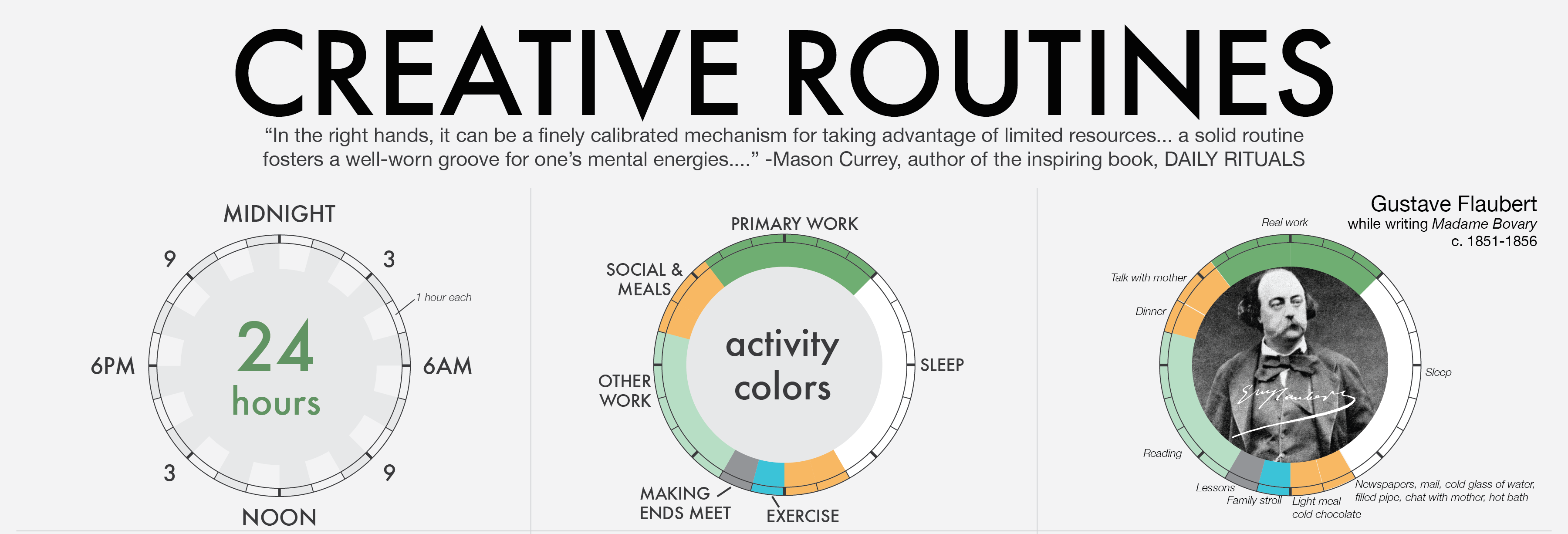
4) Daily Routines Maria Popova, of Brain Pickings, wrote a fascinating post on Mozart’s Daily Routine – How a day is composed in the hours between sleep o’clock and symphony o’clock. Routines are a great help for me to organize life and truly accomplish what I hope to accomplish. I’ve written on routines, habit change, and productivity previously. Popova’s article (and others she linked in her post) offers a glimpse into the daily life of greatness. It was inspiring and refreshing. Early in Mozart’s life, he went without employment but maintained deep discipline in his composing of music. Later, as his popularity rose, he compromised his sleep in order to continue writing. Mozart’s life was legend for unhealthy choices, and he struggled at times with deep depression. The lesson for us is in a daily routine that helped him, whether poor or privileged, to produce magnificent music that continues timeless in its beauty.

Blog - Daily Routines Photo Credit: Tito Goldstein

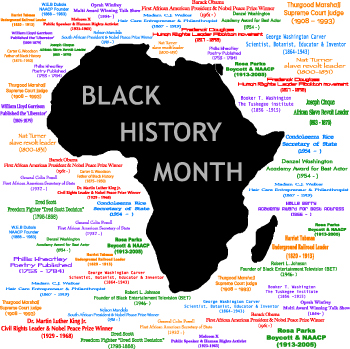
5) Black History Month – Phillip Holmes wrote a great piece, on Black History Month, for Desiring God. It is entitled More Tough Skin and Tender Hearts – How to Prepare for Conversations on Ethnic Harmony. He talks in a frank and loving manner about evangelicalism and ethnic harmony. Holmes urges us to have real conversations across races and ideologies, rather than white-with-white (or black-with-black) discussion with those already in agreement with us. If we wrestle with the struggle, across racial, religious, and political lines, we might actually come to a place of true reconciliation.

I want to have the kinds of conversations he encourages: “As we engage in complicated conversations about racism, be sober-minded rather than drunk with hatred, frustration, and annoyance. Embrace humility and love those you disagree with. But continue to pursue truth and justice as these two are defined in the Holy Scriptures. The Bible must remain the basis for why we believe what we believe and a careful study of it reveals that it has much to say about ethnicity and injustice…These conversations are complex but necessary and we need men and women who can sit down and have hard conversations considering the other more significant.”

Read his full post. I do want to quote one more vital point Holmes covered beautifully: “As a church, whether we as individuals are white, black, brown, red, or yellow, Christians have to constantly remind ourselves of our primary allegiance. If you are a child of the king, adopted into the household of faith, you are Christian first. I am one million times more Christian than I am black. My brown skin may be what you first notice about me, but by God’s grace, my Christian faith is what you will remember… I count it a privilege to be physically dressed by my creator in such a beautiful skin tone…but I will forever check others and myself when I notice our ethnicity is taking precedent over our heavenly citizenship.”

Also read Kimberly Davis’ Black History Month and the Common Language of Christ.

Vector Illustration for black history month including names, time periods and what each person did. See others in this series. Makes a great poster large print.

Photo Credit: Teach Hub

What were some of your finds or favorite things of this week? I would love to hear about them. Have a safe and joyful weekend!

Monday Morning Moment – Notes on Chris Bailey’s Life of Productivity

Blog - Productivity - Chris bailey - by Lewis HowesPhoto Credit: Lewis Howes, The School of Greatness

Where does the time go? How do I get so tired before the day is done? I just can’t stay focused…too distracted, I guess. You know what I’m talking about. Then there are the reactions of those friends and family. The ones (who treat us with kindness) tell us sympathetically “You are just so busy”. Then others, more in our faces, say, “The things you want to do, you do. You just don’t want time with me enough.” I get the logic of those statements, but I’ve been perplexed as to how to improve my life choices, such that I get more accomplished…more of the important things.

Until recently…when I experienced the convergence of making New Year’s resolutions, having a big birthday, and hearing Chris Bailey talk productivity.

Blog - Chris Bailey - ProductivityPhoto Credit: Unmistakable Creative

Chris Bailey is the age of my children. Although he had job offers, he took the year after graduating university to go deep into a study of productivity.  During that year, he wrote about his experiments in his blog – A Life of Productivity. Then, he designed a roadmap of 25 tactics to greater productivity in his book The Productivity Project: Accomplishing More by Managing Your Time, Attention, and Energy .

You may be tempted to yawn at another book on productivity, but this is clearly one not like the others. I listened to a couple of podcasts on Unmistakable Creative where host Srini Rao talks with Chris Bailey. They pour over what Chris discovered about productivity during that year of experiments. [Disclaimer: I haven’t read the book yet but plan to. My takeaways are from these podcasts and the other sources linked below. Can’t wait to read his roadmap on productivity.]

As Chris talks with Srini (and we get to listen in – love these podcast opportunities), he talks about what he’s learned from others regarding productivity. His tipping point was reading David Allen’s book Getting Things Done. Srini also refers to Cal Newport’s writing on deep work (you can listen to him on Unmistakable Creative here and here). They also mentioned Charles Duhigg’s book The Power of Habit: Why We Do What We Do in Life and Business. Chris Bailey’s year of productivity experiments included studying what was already in the literature – a big help to us less-read hopefuls.

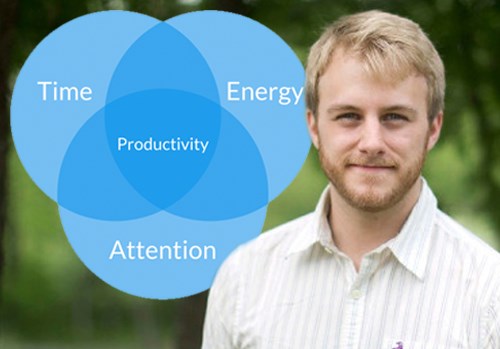
Chris defines productivity not as getting more things done but getting more accomplished. The difference is huge. It’s not just the “to-do list” but the view toward the “done list”. “Productivity is time, energy, and attention, and where the three meet in the middle is where you are in being productive. It is achieving what you intend to accomplish. It’s not about doing more things faster, but doing the right things deliberately and with intention.”

Here are the takeaways from my first-look into Chris Bailey’s “life of productivity”.

  • Take a step back from your life and ask the questions: What do I care about? What motivates me? When was I most inspired, driven, or felt the most meaning or passion for what I was doing?
  • The three commodities we all bring to the table are time, energy, and attention. It’s not just about time management, but also increasing our capacity for work (energy) and focus (attention).
  • Start every day with intentionality. Make your to-do lists to manage the minutia of life, but then do something more. Take a step back. Execute what he calls the Rule of 3. At the start of the day, mentally fast-forward to the end of the day and ask: “When the day is done, what three main things do I want to accomplish?” From this you form your intentions on what you want to accomplish.
  • Being busy, even in ticking off the things on your to-do list, doesn’t mean you’re being productive. This gives an illusion to productivity, but only when you step back do you discover whether you have accomplished what you thought you did in the busy-ness.
  • Start small in working toward productivity. Real change takes time and intentionality. “Write down everything in your job and personal life that you’re responsible for. Then ask, if I can only do one of these things every day, which adds value/meaning to my life (I would add or to that of another who matters deeply to me)? Ask again of the remaining tasks. And a third time.”
  • We all have limitations and constraints in our life. Bear those in mind as you plan and execute and evaluate. Being hard on ourselves won’t get us to greater productivity. Small, incremental steps toward change should be celebrated.
  • Work on one thing at a time. Single-tasking. Working mindfully.  “Multi-tasking holds people back from accomplishing more over the course of the day. It stimulates your mind; it’s like being busy. However, it actually makes you less productive, increases your errors, decreases your memory,  and takes longer to do everything” [in reality]. “You can only focus on one thing at one time. You then dedicate 100% of your time, energy, and attention to one thing – it will yield the highest productivity.” Counter-intuitive, I know, but I’m beginning to believe the wisdom of this.
  • Procrastination involves 7 triggers that cause your mind to resist certain tasks: when they are boring, frustrating, difficult, ambiguous, unstructured, lacking intrinsic reward or personal meaning. We put off doing those types of tasks (which often are ones we actually need to attack to be truly productive) and instead while away our time on social media or marathoning Netflix. Chris Bailey gives a way out: “Once you step back from the task, noticing you’re procrastinating, trick the triggers – reward yourself, set time limits, structure it, etc.”
  • Mindfulness is continually bringing your attention back to the work that’s in front of you. Chris Bailey uses meditation to build “attentional muscle”. Taking mental breaks (however you do) is important to make attentional space which we need for creativity. Our mind goes back and forth from “the essential executive mode (constantly thinking of something, like when on a smartphone), and the mind-wandering mode (like when you’re in the shower). You often have those brilliant ideas while in the shower.” Make space for building attention and creativity. Take breaks and disconnect a bit from the internet or Netflix (you knew that was coming, right?).
I am so encouraged by the possibilities of building capacity in my time, energy, and attention. Chris gets us started with his 100 Time, Energy, and Attention Hacks to Be More Productive. Remember, he urges us to start small. Change one thing, maybe, in each area. It’s a process but one we can master toward gaining a life of greater meaning and capacity, accomplishing what we have hoped for…not just waiting for the future self to do it. We can be more that person beginning today.

Blog - Chris Bailey - Productivity Experiment

Photo Credit: Amazon.com

Chris Bailey – A Life of Productivity – Website

The Productivity Project: Accomplishing More by Managing Your Time, Attention, and Energy by Chris Bailey

Unmistakably Creative – Podcast with Chris Bailey – Bridging the Gaps in Our Productivity

The Top 10 Lessons I Learned From a Year of Productivity by Chris Bailey

100 Time, Energy, and Attention Hacks to Be More Productive by Chris Bailey

YouTube Video – The Path to Meaningful Work: Chris Bailey at TEDxGatineau

Five Habits that Help Chris Bailey Stay Productive

From 90-hour Work Week to Rising Before Dawn, Author Experiments with Productivity – CTV News

Chris Bailey on Twitter

5 Friday Faves – New Boomer Website, Creativity Burnout, Blake Mycoski’s Why (TOMS Shoes), Epiphany, and Community

Blog - Friday Faves

It’s Friday again. How does that happen so rapidly every week? For those of you who can’t wait until Friday, I celebrate with you. For those of us who see life zooming by, taking account on Fridays of what we learned and what we savored seems to slow down time just a bit. Hope you enjoy my 5 favorites of this week. What were some of yours?

1) New Website for Us Boomers (well, everyone really)   Blog - Baby boomers (2)Photo Credit: LivingWellLivingStrong.com

Membree.com launched this week. Quoting the creators of the website, we older folks (i.e. “Baby-boomers“), as well as other generations, have 2 common desires: to serve and to share:

     1.    SERVE –a desire to live life to the full, by serving those around us;

     2.    SHARE –a desire to pass on our life experiences, wisdom and legacy to our loved ones.

“Membree answers those two major life pursuits by inspiring its members to perform random acts of kindness and by capturing life memories in both print and digital form, so these memories can be shared broadly.”Blog - MembreePhoto Credit: Membree.com

2) Creativity Burnout – In this week’s blog on BeyondtheGuitar.com, guitarist/arranger Nathan Mills tells a bit of his story about almost leaving music altogether after burning out on years of work. His re-entry seemed a bit unorthodox to me, but as I read the connection of emotion and creative work became clear. Glad that season of burnout is behind him.Nathan at guitar

3) Blake Mycoski’s Why (TOMS Shoes) – OK, so I’ve never bought a pair of TOMS shoes, and until this Harvard Business Review article I couldn’t have told you who in the world is Blake Mycoski. After reading his story and the history of his company, I’m inspired. His honesty and transparency are compelling. Take the time to read this article for the details of his journey and his rediscovering the “why” of his business. One book he mentioned was Simon Sinek’s Start With Why – How Great Leaders Inspire Everyone to Take Action. That book is now on my 2016 “to-read” list. To give you a sweet teaser about Blake Mycoski’s return to his “why”, here’s a quote from the HBR article:

People follow you, buy from you, when they believe what you believe. The more I thought about this idea, the more I realized that TOMS had veered away from its “why.” In the early days we always led with our story: We weren’t selling shoes; we were selling the promise that each purchase would directly and tangibly benefit a child who needed shoes. But our desire to sustain the company’s hypergrowth had pushed us away from that mission and into competing on the “what” and “how,” just as every other shoe company does…Our marketing increasingly felt product-focused rather than purpose-focused. And as the leader of TOMS, I was ultimately accountable for those mistakes. That was a tough pill to swallow.” – Blake Mycoski, Founder of TOMS ShoesBlog - Blake Mycoski - TOMS Shoes - tinyspark.orgPhoto Credit: tinyspark.org

4) Epiphany – This week’s marks the formal end of the Christmas season. Epiphany – January 6 – the day of celebration of God’s revelation of Christ, especially to the Gentiles (or all who are not Jews). It is also known as Three Kings’ Day. I love how it gives us twelve more days to celebrate such a God. The David Crowder Band refers to these 12 Days of Christmas in the intro to their song Carol of the Bells/Christmas Eve from the album Oh For Joy. [Crowder’s lounge piano intro is hilarious. Don’t miss it either.] Because of Epiphany and our sweet memories of many Christmases in Egypt (celebrated on January 7), I will finally ring out (or rock out, rather) the season with this amazing song:


5) Community – When you Google search the definition of the word community, this is what pops up:

com·mu·ni·ty
kəˈmyo͞onədē/
noun
1. a group of people living in the same place or having a particular characteristic in common.
2. a feeling of fellowship with others, as a result of sharing common attitudes, interests, and goals.
This week, I have been reminded all over again of the great value of community. Our neighbors are such a joy to us. So extraordinary in how they take time for each other and really seem to care for each other. We are blessed to live in this tiny part of Richmond, Virginia.

Blog - CommunityBlog - Community 3

Then there is this bunch of folks who make up our community group (so far). We are joined by living near to each other, our partnership in Movement Church, and our love for Jesus and each other. Just this week as an old friend became a new part of our group, we were reminded of the kindness of God in community. Encouraging each other, praying for each other, loving each other…right where we are in life. Works in progress. God’s magnificent works in progress. Seemingly ordinary, but oh, not so! Community.Blog - 2015 December - Community Group
Understanding True Habit Change & Rocking Your New Year’s Resolutions

Blog - New Year's Resolutions - davidlose.net - Calvin & HobbsPhoto Credit: DavidLose.net

New Year’s resolutions are very energizing really. Whether we meet our goals or not, there is great promise within the resolution for resetting our thinking. A keen sense of self, or self-awareness, makes a difference in understanding our habits and progressing toward true habit change.

A couple of times in my life, I resolved to go off sugar. With a resolution like that, it means abstaining from chocolate…which is a topic all its own.

Anyway, I was successful for over a year each of those times in excluding sugar from my diet. Never having really lost the weight from my first pregnancy, I decided to remove sugar from my diet for the pregnancy of our second-born. In those days, there was a chapter of Overeaters Anonymous in our town, and that group was a great help in my dealing with pretty much a sugar addiction.

The second time I “gave up” sugar was over 2 years ago, and I stayed the course of that habit change for over 1 1/2 years. Less accountability but even more resolve. Now I sometimes have dessert or sugary snacks but I am still operating with more self-awareness than ever before. Self-awareness, not self-condemnation. A very different experience.

Without knowing it, I was using a practice of habit change that Ken Sande writes about on his blog, Relational Wisdom 360. He first influenced my life years ago with his work on conflict resolution through his Peacemaker Ministries. He is a gentle guide in many of the issues that complicate our lives.

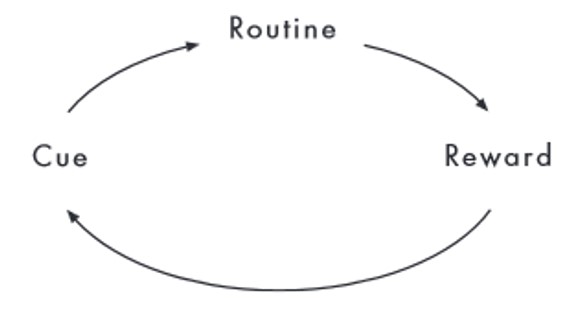
His New Year article on Seven Principles of Habit Change comes at a great time. Sande talks quite kindly about how we develop habits and what it takes to change them. His first principle of habit change gives us a look at the cycle of habits – the cue, the routine (or response), and the reward. Anyone who loves chocolate can understand this easily. For me, in eating sugar (or in overeating, in general), the cue could be a number of things – fatigue, anxiety, loneliness, presence of yummy food. It never takes much to send me to the refrigerator or pantry. The routine: feed the cue, whatever it is…with high-carb oral gratification. The reward: a brief soul satisfaction and temporary relief from whatever was the cue.

Blog - Habit Change - relational wisdom 360Photo Credit: Relational Wisdom 360

In my two seasons of not eating added sugar, I actually followed Ken Sande’s principles below (without knowing the wisdom of it).

  1. Every habit has three parts: a cue, a routine, and a reward.
  2. You can change an undesirable habit by keeping the cue and reward but learning a new routine.
  3. The best way to overcome the temptation to revert to old routines is to have a detailed action plan.
  4. Habit change builds momentum if you can change a single “keystone habit” and then continue to build on consecutive “small wins”.
  5. Will power is like a muscle: it can be strengthened and yet needs to be exerted strategically.
  6. Faith is an essential part of changing habits.
  7. Habit change is more likely to occur within a community (even if it’s just two people).Ken Sande

[If any readers want to talk further about habit change regarding sugar addiction, I would love the exchange, either through the comments or email.]

Self-awareness is a huge factor relating to habit change. I can see that more now having come through seasons of looking at my own habits.

“Self-awareness is defined as conscious knowledge of oneself; it’s a stepping stone to reinventing oneself, learning to make wiser decisions, and helps you tune into your thoughts and feelings. So often we place blame on externalities because it’s the easiest excuse, when in fact we should be thinking about our thinking, reflecting, trying on different perspectives, and learning from our mistakes.”Paul Jun

Matt Monge wrote a great piece on 13 questions we might ask ourselves to better understand why we do what we do. He is applying these questions to leadership and workplace, but they apply as well to habits. Also, in researching for this blog, I came upon this YouTube video of David Wallace Foster giving a commencement speech on awareness. Really thought-provoking as well as entertaining.

It is possible to affect true habit change if we are willing to take a studied look at ourselves – our awareness and our engagement with making choices/decisions and within relationship. I used to think that self-awareness was morally charged, i.e., it drove us to becoming more self-centered. That doesn’t have to be the case. When we take time to really examine where our minds go, through the day, we can train our thinking toward what matters most to us – related to people, resources, and life purpose.

When we are willing to do that, New Year’s resolutions can become much more life-changing than just going off sugar for a few weeks. These same habit change principles can apply to anger issues, pornography, other addictions, and pretty much any habitual process that negatively affects your work, relationships or general peace of mind.

I’d like to close with Ken Sande’s thoughts on taking self-awareness to other-awareness and God-awareness:

“The better we know and follow God (God-aware, God-engaging), the more we will know and discipline ourselves (self-aware, self-engaging), which opens the way for us to better understand, relate to, and serve our neighbors (other-aware, other-engaging).

To close the loop and spur us on developing relational wisdom, the Lord promises that the more we obey his command to love our neighbors, the closer we will draw to God himself (John 14:21-23). Thus, relational wisdom is a circle of interrelated skills that continually fuel one another.”Ken Sande

Blog - Relational Wisdom - Ken SandePhoto Credit: RelationalWisdom360

Do You Want to Change Your Habits? – Relational Wisdom – Ken Sande

Seven Principles of Habit Change – Relational Wisdom – Ken Sande

13 Questions to Increase Your Self-Awareness – The Mojo Company – Matt Monge

Why Self-Awareness Is the Secret Weapon for Habit Change – Paul Jun

This is Water – David Foster Wallace on Awareness

RW Acrostics in Action – Relational Wisdom – Ken Sande

Need Help With Your New Year’s Resolutions? – David Lose

The Peril & Blessing of Gift-Giving and that Greatest Gift

2015 December - Blog - Gift-Giving 007 (2)

Thanks be to God for His indescribable gift!2 Corinthians 9:15

I am undone by Christmas gift-giving. Once upon a time, seemingly long, long ago, giving special gifts was something I did well. Not so much any more. The whole Christmas shopping experience has become quite overwhelming for me. If you give me a definite idea or suggestion, I am empowered. It will be done! To shoot in the dark for a gift that, just knowing you, I know you would love?…not so much.

What a blessing you are who just intuitively know what will please or what will be treasured…those gifts full of meaning, or thoughtfulness, or wonder – gifts that aren’t seeming burdens or requiring a return. You are a blessing to us all. I don’t even compare myself to great gift-givers any more…resigning myself to the writing of checks or the occasional joy of tripping over “just the right gift”.

This is my tribute to the great gift-givers in my life. Here are examples of late:

  • those old friends retiring and moving away who gave all of us, at their send-off, a rose and two marbles – a “shooter” and a “keeper”. So meaningful because he collects marbles and is always a great “shooter” in real life, and she is such a “keeper”. I will miss them. The marbles go in my work desk to remember them every time I open that drawer.2015 December - Blog - Gift-Giving 002 (2)
  • that neighbor who baked Christmas cookies with her kids and sent them with their dad around the neighborhood delivering their photo Christmas card and cookies. Such a sweet visit at the door as we talked about spelling bees, and sledding, and no Christmas travel because of work. Blog - Gift-Giving - Christmas cookies
  • those friends who show up with surprises (pictured at top of blog) – the wooden ball Nativity from Bizarre Bazaar (where she fought the crowds of shoppers for those special finds); the cross inscribed with “love”, from a friend (in major transition with what time to shop?!), a silver pillow with “Peace on Earth” in red letters (from a woman in full-time ministry). All working women with little time to shop but hearts so full of love, they do what’s necessary to lavish that love on those around them.

During December each year, before falling asleep, I try to read through my stash of Christmas books. One of those is Andy Andrews’ Socks for Christmas. It’s a shortish story about his growing up in the 60’s Christmas…and the hard reality that, for some children, socks would be a gladsome gift.Blog - Gift-Giving - Socks for Christmas - Book

Sometimes even the smallest of gifts like socks meets a great need.

What about the greatest of gifts – that of the Christ child? The greatest of gifts from the greatest of Gift-givers to meet the greatest of our needs – that need for a Savior.

Ann Voskamp, is a writer and blogger, homeschool mom and farmer’s wife. As she talks about daily trips to the barn, she paints a story about gift-giving. It’s so real, I can feel the cold of the Canadian winter and the musty smell of hay and animals.

“Too often we think that Christmas is something that we can buy or create or make by hand. Ultimately Christmas isn’t a product that we can wrap up but it’s a Person that we unwrap. Christ comes to the manger, that cradle, that trough. The mire and the stench [of that barn…of our lives]. It doesn’t end there. That manger is wood and it’s nailed together. That manger takes us right to the cross. We are saved only through another tree – the tree from the garden, the tree at the manger, the tree Jesus hung on to save us…From the beginning of time, we’ve been coming to this place – the Messiah coming to redeem us…In the cross is the white-hot burn of His love.” – Ann Voskamp

For you glorious gift-givers, thank you. You reflect the joyful, creative generosity of God. For those of us who struggle, we will press our way through that part of Christmas. We will be glad for you and glad for the One who knew exactly what we needed not just for Christmas but for always…and gave us more that we could “ask or imagine”.

Now to Him who is able to do far more abundantly beyond all that we ask or think, according to the power that works within us, to Him be the glory in the church and in Christ Jesus to all generations forever and ever. Amen. – Ephesians 3:20-21

[P.S. Gift ideas that stretch across the globe to touch families in need can be found on the pages of the BGR Christmas catalog. If you can’t figure what to give to folks who have pretty much everything, here you can find plenty to give to others, in their name. ]

Jesus is the Greatest Gift – Christmas Gifts for Neighbors – Ann Voskamp

The Cross-Centered Christmas: An Interview with Ann Voskamp – Tony Reinke, DesiringGod.org

The One Thing Your Christmas Can’t Afford to Be Without – Ann Voskamp

Baptist Global Response – Christmas Catalog

One Thousand Gifts: A Dare to Live Fully Right Where You Are by Ann Voskamp

Socks for Christmas: A Child’s Discovery of the True Riches of Christmas by Andy Andrews