Category Archives: Lifelong Learning

Monday Morning Moment – Don’t Let Complaining Rewire Your Brain

Photo Credit: Stream

Yesterday, I was taking a break and scrolled through Instagram until it stopped me in my tracks on how complaining can have a chronic negative impact on our health, and, in particular, on our brain. That didn’t surprise me, but I wanted to look further to test out what this influencer was reporting. You can look, too. Do an internet search on “complaining, cortisol, and the brain”. It is startling, but, again, not surprising.

Complaining is extraordinarily detrimental to brain health. In a way, it is also like “second-hand smoke” to those with whom you share it. When we complain, our brain responds by releasing cortisol. We need cortisol, the “stress” hormone, to alert us to possible danger and to stimulate an appropriate (hopefully) response to that danger. The problem with complaining is that it puts stress on a loud speaker when there was no need. Similar to how trauma rewires our brain to expect more trauma.

Why Complaining Is Bad For Your Health – Cindy Tsai, MD

Venting feels good at the moment. It releases the internal pressure that is mentally building up from negative thinking. The dilemma with venting is two-fold – 1) it cements the wiring in the brain in the direction of negative, hopeless thinking, and 2) it activates/re-activates the same process in the caring hearer. Mind you, there is a positive, healthy venting that can take place if it is focused toward hopeful problem-solving and change. This can be life-giving to both persons.

[Side note: We need each other. We were made for community. Talking something out with people who love us is hugely important. There is a difference in lament and grumbling, or complaining and and acknowledging a hard thing, seeking help for forward movement.]

Complaining Won’t Change the World, But Your Actions Can – Susanna Wu-Pong Calvert Ph.D., MAPP, RPh

As one who is getting older and feeling the memory not as sharp and the tendency toward that “cup half empty”, curmudgeonly take on things…I wonder: when and how did it start?

When does analytical become contrarian? When does hopeful turn into doubtful? When does grateful turn into grumbly?

Do we just allow ourselves to turn into different people? Or do we take steps to stay (or become) joyful, engaged, unstoppable humans? People who others love to work with, serve with, spend time with.

A little over a year ago I wrote a blog on how complaining rewires our brains. If you know complaining is a struggle, please take the time to read this one piece (linked below). We may try to eat healthy, exercise, and rest aplenty – maybe there is one more thing we should consider:

Monday Morning Moment – Complaining Rewires Your Brain – How to Curb (Maybe Not Stop) Complaining – Deb Mills

Bottom line: Practice gratitude. Pause your thought process. Resist the urge to complain, rather reframing the complaint into positive action. Surround yourself with people who don’t complain, and, even make you laugh sometimes.

______________________________________________________________________________

When you have more time or you want to consider steps toward positive brain health and a kinder, gentler handling of your life and circumstances, I have excerpted these from my other blogs on complaining and negative thinking:

  1. Complaining Exposed – [From the Archives] When it comes to complaining, we all think of someone else who does it…not us. It is an irritating habit, and it only gets worse if unchecked. Poet writer Anne Peterson talks about complaining and how it flows out of 6 heart attitudes. Complaining reveals that:
  • We feel entitled.
  • We are impatient.
  • We hold on to resentment.
  • We compare ourselves to others.
  • We don’t think life is fair.
  • We are conformed to this world/culture.

Read her article for the particulars. Be prepared to rip the Bandaid (excuses) off your complaining.

What Your Complaints Actually Reveal About Your Heart – Anne Peterson

Photo Credit: Gary Vaynerchuk

Entrepreneur Gary Vaynerchuk writes about how his mom and wife seem to be incapable of complaining and it’s one of the things he loves about them: “Complaining has zero value. Looking at the negative, seeing the glass as half empty, and complaining are some of the biggest wastes of time a human being can engage in. Instead, tackle the problem head on. Assess it, see what you can do about it, and then do just that. ‘Woe is me’ is truly one of the biggest things that can stand in the way of success both professionally and personally.”

Gary Vaynerchuk

One of the Few Things I Complain About: Complaining – Gary Vaynerchuk

2. Beyond Grumpiness –[From the Archives] A friend of mine pointed this blog to me today and it bumped its way to the top of my Faves. English professor Alan Jacobs mused about the grumpiness of old people. I don’t know when it happens and why exactly it happens, but it is something that has happened to me of late…and I don’t think I’m old enough yet for it to happen.

Here’s a bit of what Dr. Jacobs says about grumpiness, but you should read his whole piece, especially if you’re finding yourself becoming grumpy (whatever age you are).

“I think the explanation for such widespread grumpiness is fairly simple…It’s not the big foul acts or horribly cruel words that do you in, it’s the slow drip drip drip of little annoyances that become over time a vast sea of frustration. Surely you’ve been there? You become exasperated by someone’s passing comment and when they are genuinely puzzled by your anger over so trivial a matter, you try to explain (apologetically, penitently, I hope) that it wouldn’t be a problem if this thing had happened once but it has happened a thousand times. It’s the repetition that kills you.” [Dr. Jacobs goes on to talk about the divisions on which we’ve taken sides give the sense of being new and revolutionary…and yet they are old divisions revisited.] “You can’t learn from the past if you don’t know what happened in it. So yeah, I’m gradually turning into a grumpy old man. Because nobody learns anything…” [About these things that divide us: We seem to care too much, or too little, or just plain not at all. Dr. Jacobs challenges us that only being truly loving people gives us the right to voice an opinion, and definitely not a shaming one.] “It’s a hard path to walk, this Way of avoiding both indifference and ‘the conscious impotence of rage at human folly.’ But the hard path is the only real Way. (All the others circle back on themselves.) So I try every day to follow it. I don’t think I could manage even that if I did not have an Advocate to accompany me, to encourage me, and to guide me.” – Alan Jacobs, Beyond Grumpiness

Against Stupidity – Alan Jacobs

The Destructive Power of Grumbling and Complaining – Michael Brown

3. Without Grumbling – [From the Archives] Which comes first – anger or grumbling? Or is it a more subtle but growing discontent? When does occasional complaining settle into a set habit of grumbling? What does grumbling communicate to our own minds and to others within hearing?

I’ve written plenty on complaining, grumbling, and negative thinking (see links below). It can absolutely change the wiring in our brains. In my younger years, I always looked for the good and the beautiful in a person/situation…and I found it. Now, as an older person, my temptation is more toward darker thinking. This is NOT where I want to stay.

Photo Credit: QuoteFancy

Below is a beautiful bit of writer Trevin Wax‘s post on grumbling and joy (it is geared toward Christians but there is wisdom for all of life here).

“In Philippians 2:6–11, Paul commands the church to adopt the same mind of our risen Lord.  And his first command is, “Don’t grumble.”

“Do all things without grumbling or disputing, that you may be blameless and innocent, children of God without blemish in the midst of a crooked and twisted generation, among whom you shine as lights in the world.” (Philippians 2:14–15)

Why start with grumbling? We might expect an exhortation to spiritual disciplines, or strategies for thriving as pure and faultless people in a sinful world. And yes, Paul does speak about blamelessness and purity and holding firm to the word of life (Philippians 2:16). But this purity in action is somehow connected to the first command to do everything without grumbling. Somehow, grumbling will keep us from faithfulness.

Why start here? Because Paul knows the story of Israel.

Remember the children of Israel? They chose grumbling over gratitude. Grumbling stalled their journey and led to actions that were anything but “blameless and innocent.”

Whether we are given suffering, chains, imprisonment, or worse (Hebrews 11:36–38), or whether we conquer kingdoms, stop the mouths of lions, escape the sword, and put armies to flight (Hebrews 11:33–34), we must know that only joy in and gratitude to Jesus will win the war for our culture…Yes, we may face obstacles, setbacks, and tough days ahead. But in it all, and under it all, we are also joyful. And this cheerful courage comes not from ignoring darkness or looking only for the bright side, but from believing that the Light will overcome the dark.

Do you want to shine like stars? Then do everything without grumbling.” –

Trevin Wax, Facebook, March 27, 2022

Monday Morning Moment – Life & Politics – What If We Refused to Get Angry? – Deb Mills

Monday Morning Moment – Rewiring Your Brain Toward Thinking in the Positive – Deb Mills

Monday Morning Moment – Grumpy Begets Grumpy – Understanding It, Not Reacting, and Turning It Around – Deb Mills

Monday Morning Moment – Them and Us, How Can That Be? Could Them and Us Become a We? – Deb Mills

How Changing This One Bad Habit Changed Our Home for Good – Complaining

4. Breaking Out of Negative Thinking – [From the Archives] I first wrote about negative thinking six years ago (that blog linked below). Since then we have come through COVID 2020, great racial unrest and social upheaval, contentious election cycles, ongoing wars, and a downturn in our economy. Lots to think negatively about with good reason, but if we’re not careful we will begin gearing our thinking in that direction to the detriment of our mental and relational health.

Monday Morning Moment – Rewiring Your Brain Toward Thinking in the Positive – Deb Mills

Photo Credit: Daily Health Post

The team at Daily Health Post focused on complaining as a culprit that can actually cause our brains to default to anxiety and depression. From experience, I know this is true.

They prescribe the following to flip the damaging habit of complaining:

“Be grateful: Find something to be grateful for everyday. If you keep a journal, write down 3 things you are grateful for every morning and every night.

If you start to feel anxious or pessimistic, pause a minute and write them down again. If it’s too hard, write down 5 or even 10 new things you’re grateful for. By the end of the exercise, you’ll feel much happier and fulfilled.

Catch yourself: Don’t wait for your friends or family to tell you you’re complaining, pay attention to your thoughts and words.

If you’re complaining, quickly shift your energy to find solutions and lessons to be learned. Afterwards, treat yourself will a nice cup of tea for the effort!

Change your mood: If you feel overwhelmed and negative, remove yourself from whatever you’re doing and shift your state of mind. If you’re home, sit down with your favorite book and cook up a tasty treat. If you’re at work, go to the washroom or break room for a few minutes and listen your favorite song.

Breathe deeply and close your eyes, paying attention to every word. Hold onto that relaxing feeling and carry it with you throughout the day.

Practice wise effort: Wise effort is the practice of letting go of anything that doesn’t serve you. If your worry won’t improve your situation or teach you a lesson, simply let it go and move on.

This is much easier said then done, of course, but if you write it out, ask friends for advice, and take some time to think it through constructively, it really can be done.“

Check out the full article below:

How Complaining Physically Rewires Your Brain to Be Anxious and Depressed

Photo Credit: Frank Sonnenberg Online

Why Your Brain is Wired for Pessimism—and What You Can Do to Fix It – Clay Skipper

There should be support groups…or maybe we start some. Peace.

Gratefully yours, Deb

Monday Morning Moment – Contempt – Revisited

Photo Credit: Armstrong Economics

Adapted from the Archives

[Just a bit over a year ago, I wrote a blog entitled “Contempt – the Cold Killer of Hearts and Humanity”. It is such a prevalent emotion/thought process these days, I wanted to update that piece and re-post.]

Ah…contempt. It is defined as a strong negative emotion that joins disgust and disrespect. If we are honest, we have all experienced contempt, either for someone else, or a group of someones…or we’ve experienced the contempt of another towards us.

Contempt is a harsh response…a cold killer of hearts and relationships.

When we express contempt, it is usually in conversation with those who agree with us…about someone else. Rarely do we have the person(s) toward which we feel contempt in front of us. We don’t engage them as much as we complain about them. We hold some in contempt because of their beliefs or actions, and our temptation is to have nothing to do with them. We may view this as a strength, but (as I’ve heard said), “an unguarded strength is a double weakness.”

In a quick summary on contempt (in case you don’t want to read more in depth below), we would never think of ourselves as having contempt of another (or a group of people), but the signs are in our speech and attitudes. No matter how much we think we cover it, others can tell we lack love and respect (even exhibiting hatred). Contempt not only separates us from others but also makes it hard to reconcile. The dark thoughts of condemnation, suspicion, and mistrust are present under the surface. To remove the force of contempt, we must check our hearts. Acknowledge that any compassion we may have is conditional…we withhold love based on the other’s behavior. It is a lose-lose situation. How we can move toward actual reconciliation, or at least stepping toward a more healthy relationship is to be humble. We have a part in any contemptuous relationship. We each have a part. When we lean in, without expectation of the other person, and show curiosity as to how they are, we give grace. We make space for that person to lean in, as well. Refusing to think ill of another person, no matter what happened in the past, opens the door to genuine caring. It can be the start of healing.

Guarding Against Contempt – Bible Hub

What Does the Bible Say About Contempt?

What follows comes from my blog of a year ago. It speaks volumes on how to avoid contempt in two main areas: politics and marriage. However, the counsel given could be applied broadly to families, neighbors, coworkers, etc. There is wisdom here…in any situation where we feel the cold, hate-birthing emotion of contempt…which does harm to our relationships and our own heart.

“Knowing our weakness, dividing leaders on both the left and right seek power and fame by setting American against American, brother against brother, compatriot against compatriot. These leaders assert that we must choose sides, then argue that the other side is wicked—not worthy of any consideration—rather than challenging them to listen to others with kindness and respect. They foster a culture of contempt.” – Arthur C. Brooks, Love Your Enemies: How Decent People Can Save Our Country From the Culture of Contempt

Contempt is something I’d like to annihilate in my own thinking, and thankfully there are helps. Below you will find two thought leaders who have worked to expose contempt for what it truly is and does to us, and who have given us counsel on how to recognize it and rid ourselves of it. Author and academician Arthur Brooks and clinical psychologist John Gottman.

How do we confront contempt?

Arthur Brooks’ 5 Rules to Counter Contempt

1. Refuse to be used by the powerful. – “The accurate image of a powerful manipulator is someone on your side of the debate: a media figure who always affirms your views, a politician who always says what you think, or a professor who never challenges your biases. They declare the other side is terrible, irredeemable, unintelligent or anything else that expresses contempt — and they say you should think these things as well.” Brooks encourages us to tune out that person “on our side” who seeks to manipulate us, whatever the reason. Then (this is the harder part), we are to call out contemptuous behavior among those with whom we agree (our friends and maybe family). Contempt tears us down, and we don’t want that for ourselves or those we love.

2. Escape your bubble. – “The culture of contempt is sustained by polarization and separation. It is easy to express contempt for those with whom we disagree when we view them as “them” or never see them at all. Contempt is much harder to express when we see one another as fellow human beings, as “us.”” We do well to make opportunities to share space and conversation with people not like us. Seek to understand and look for ways we are alike.

3. Treat others with love and respect, even when it’s difficult. – “Never treat others with contempt, even if you believe they deserve it. First, your contempt makes persuasion impossible, because no one has ever been insulted into agreement. Second, you may be wrong to assume that certain people are beyond reason. There are many examples of people forming unlikely bonds precisely because they didn’t treat each other with contempt.” Sometimes we are the ones toward which contempt is aimed. If we have offended, then we can apologize. Raising an issue higher than the value of the person doesn’t take us anywhere positive.

4. Be part of a healthy competition of ideas. – “I believe disagreement is good because competition is good. As in politics and economics, competition — bounded by rule of law and morality — brings excellence. In the world of ideas, competition is called “disagreement.” Disagreement helps us innovate, improve, correct and find the truth. Of course, disagreement — like free markets and free elections — requires proper behavior to function.” The goal is not to disagree less but to disagree better, notes Brooks.

5. Disconnect from unproductive debates. – “Get rid of curated social media feeds. Unfollow public figures who foment contempt. Want to get really radical? Stop talking and thinking about politics for a little while. Do a politics cleanse. For two weeks — maybe during your next vacation — resolve not to read, watch or listen to anything about politics. Don’t discuss politics with anyone. This will be hard to do but not impossible.” This exercise will reveal how much of your life and mental energy is wasted, allowing you to refocus on people you truly love and work/play that matter more than those things you probably won’t be able to change. – Arthur Brooks, Sick of the Culture of Contempt? Here are 5 Ways You Can Subvert It

One last quote from Albert Brooks: “We should be careful to note that love and agreement are not the same thing. There are ideas and actions that are worthy of our contempt. But while some ideas and actions are worthy of contempt, we should always remember that no person is.” – Defusing a Culture of Contempt: Arthur Brooks on How to ‘Disagree Better’ – Joan Frawley Desmond

Another exceptional thinker and clinician is Dr. John Gottman, psychologist and professor. His focus is primarily on marriages and individual mental health within relationships. The Four Horsemen is a metaphor pointing toward end-times. Dr. Gottman uses the same metaphor in describing four elements of communication, any one of which can predict the demise of a marriage (or any other relationship). These elements are criticism, contempt, defensiveness, and stonewalling. Each has an antidote.

Photo Credit: John Gottman, Gottman Institute, Instagram

The Four Horsemen: Criticism, Contempt, Defensiveness, and Stonewalling – Ellie Lisitsa

Contempt is much more mean-spirited than criticism. It communicates a measure of cold superiority over the one being criticized. Gottman isn’t talking about a political stand or a point of contention over culture or morality. He is concentrating on the relationship between two people, usually being a married couple.

“Contempt, simply put, says, “I’m better than you. And you are lesser than me.” [It] is fueled by long-simmering negative thoughts about one’s partner, and it arises in the form of an attack on someone’s sense of self. Inevitably, contempt leads to more conflict—particularly dangerous and destructive forms of conflict—rather than to reconciliation. It’s virtually impossible to resolve a problem when your partner is getting the message that you’re disgusted with them and that you’re condescending and acting as their superior.”

Gottman prescribes two antidotes for contempt in the marriage relationship – one short-term and the other more long-term:

  • First, the person feeling contempt toward the other would do well to name the emotions that rise to the top during a conflict. Express these emotions to your spouse without blaming, and appeal for help with a solution. “I am sad that we don’t have friends over. Could we talk about a way forward on this?” Or “I get worried when the bills pile up. Can we talk about what we can do to stay within budget?”
  • Second, Gottman suggests establishing (or re-building) a home culture of fondness and admiration for each other. This is a discipline that may take some strong determination, but it is doable. In fact, I have go-to Bible verses (Revelation 2:4-5) that help me immensely during those dry times in my own marriage. It speaks about what to do when we have lost our first love (for God and each other). Essentially, the instruction is to remember how it was in the beginning, repent/return, and repeat the actions/emotions/intentions that came naturally when the relationship was new. We don’t have to feel the fondness or admiration at first, but as we practice them, they can be restored. Among many tools, Dr. Gottman uses the instrument below to kick-start the process as the spouse chooses three descriptors and then gives examples of those to the other person.
Photo Credit: John Gottman, The Gottman Institute

Contempt is deceptive. It feels so good to think we are right, and yet in the practice of contempt, we become more isolated and less engaged in real community. Only preferring people who think like we do. At some point, our competencies will be impacted because our problem-solving shrinks down to just judging others and determining they aren’t worth our time. We miss learning from them, and we miss the possibility of genuinely understanding them, even loving them.

Having faced contempt myself, It has brought me to a “come to Jesus” moment. I don’t want to hold contempt for anyone, no matter how different they are, no matter what wrongs they have done. I want to figure out how to stay engaged with people…such that “if [I] can’t move mountains, [maybe I can] move a stone”.*

Photo Credit: Instagram, Ullie Kaye Poetry*

Monday Morning Moment – Word for the New Year – Trust – the Object of Our Trust Matters

Photo Credit: Heartlight, Verse of the Day

[Adapted from the Archives]

Following is a brief history of how choosing and exploring a word for the year became a habit for me starting in 2020. If you want, just skip down to the highlighted start of 2025 that takes you to this year.

In 2020 (the year of COVID), I read Debbie Macomber‘s book One Perfect Word. She tells fascinating stories of persons’ choosing a word to guide their year. Finishing her book and praying a bit, the word compassion became my focus. 2021 was a good year for that as we dealt with so many divisions over COVID, race, politics, etc. Compassion for all on both sides of each issue.

At first I wasn’t going to do “a word” for 2022, and then a rapid series of “coincidences” drew me to the word: joy. As that year ended, I had become negative and even a bit cynical. Still having faith in God but not so much in humans, including myself. Even after a year of compassion!!

5 Friday Faves – New Year’s Resolutions, Habit Planner, Year-End Review, Joy – the Word for the Year, and the Last Days of 2021 – Deb Mills

Then 2023 followed, and I chose the word “wonder”. It was inspired by my study of Dr. Curt Thompson’s books. He encourages a pursuit of mental health and healing including staying “in the path of oncoming beauty”. This focus on wonder – in searching out beauty in the context of community and a loving God – brought me through a year tougher than I imagined it would be.

Monday Morning Moment – Word for the Year 2023 – Wonder – Deb Mills

Then at the end of 2023, I’d been lamenting being older (i.e. weaker, more frail). Having lost 2 inches in stature (just in the years of pounding on my vertebra) also made me feel small. I’ve decided to push back against the weakness and seemingly diminished nature of getting older. After all, what does that even mean?! I’m not that old. Right?

In Joshua 14, Caleb was 85 years old. He gives a beautiful and faith-filled declaration: “I am still as strong today as I was on the day Moses sent me; as my strength was then, so my strength is now, for war and for going out and coming in. Now then, give me this hill country about which the Lord spoke on that day, for you heard on that day that Anakim (giants) were there, with great fortified cities; perhaps the Lord will be with me, and I will drive them out just as the Lord has spoken.” [Joshua 14:11-12.]

Talking to Dave (that husband of mine), he commented that Caleb had that strength for which I was longing because he had “a different spirit in him” (Numbers 14:24). Whereas the 10 spies and the Israelites influenced by them were driven by a spirit of fear, Caleb was filled by the Spirit of God. In his determination to obey and follow wholeheartedly, his faith emboldened him. He demonstrated strength physically, mentally, and spiritually.

He would not be defined by age, aptitude, or ability…but by the great and gracious God he sought to serve. That’s what I have longed for in this year soon to be ending. To be strong. In all ways possible. Including strong in my love for God and others. This can only be mine if nested in being filled with the very Spirit of God.

Ironically, or not so much with the Lord, I have struggled with even more physical weakness (a painful and limiting hip pain) but not without working toward being strong again. Months ago, in choosing “strong” as the word for this year, God knew. In this season still, I am reminded of His goodness. “For when I am weak (and it will happen), then His strength is manifested perfectly and completely!” (2 Corinthians 12:10)

He keeps His promises.

Monday Morning Moment – Word for the New Year – Strong (Nested in “Filled” – There’s a Story) – Deb Mills

Now we stand at the start of 2025.

These last days of December 2024, I have pondered what word would be a fixed point for this coming year. New Year’s resolutions and habit formation are both great helps for my slightly scattered brain. This Word of the Year exercise (which will span the next year) has also been a tremendous help.

The word “trust” has come to mind, in my times in the Word, in recent conversations, and in circumstances beyond my control. “Trust” – whew! That word has always been troubling for me. I think we put too much importance on trusting people – we will all disappoint and fail each other. It happens. Will I put that same bias on God, or can I treat Him as He is and as the Trustworthy One He reveals Himself to be?

Trust – Why Trust matters – Psychology Today – Trusting others and being trustworthy matter, but human trust is flawed and has to be handled with some measure of understanding and grace.

The object of our trust can’t be on people but on God. He alone will not disappoint. He alone will always keep His promises.

Praying to trust God more seems to carry the same human-borne threat of praying for patience. Yikes! We want more patience but not the sorts of experiences that will bring it. Is God drawing me to focus on trust in 2025 because I’m going to need it more? No…refusing to think there would be any negative outcome with trusting God more. It is a beautiful thing and He is worthy.

Just yesterday Dave and I talked about trust and what it means. He defined it as having confidence that someone (including God, of course) will be who he/she says they are and will do what they say they will do. Again, as humans, we don’t always prove to be trust-worthy…and we apply grace, not unforgiveness. But God!!! We can have complete confidence in Him. Complete trust.

“The biblical definition of trust goes beyond mere belief or reliance. It involves a complete surrender and reliance on God, knowing that He is faithful and will fulfill His promises. Trust, according to biblical definition, is the means of putting aside our own understanding and leaning on God’s wisdom and guidance. It means acknowledging that God’s ways are higher than our ways and trusting that He is in control of all things. Trust requires us to have faith, to believe in the unseen and to confidently depend on God’s faithfulness. It is an unwavering assurance that God is trustworthy and will never fail us. This biblical concept of trust is not just a casual belief, but an active and intentional decision to place our confidence in God alone.” – Daniel, Prayer Warrior – Bible Definition Of Trust (How The Lord Defines Trusting Him) – Read the whole article!

God Is a Way-maker – How to Trust God with the Impossible – Daniel – Prayer Warrior – DailyEffectivePrayer.org

Photo Credit: Heartlight

I am going to turn my heart toward trusting God in 2025 for small and big things – for situations only He can move toward healing and wholeness. For the prodigals in my life. For a family rift that continues unchanged since 2020. For salvation for some dear friends (and family) I love deeply (and God loves more). For direction in moment-by-moment turns in life (eyes on Him instead of my own faulty decision-making). For grace to trust He is creating beauty even in and through me. Finally, trusting God for all those previous word lessons He has begun in my life to continue to grow into maturity – compassion, joy, wonder, and strength.

Photo Credit: Oswald Chambers, image source unknown

Worship Wednesday – No Matter What I Will Trust in You – Lauren Daigle – Deb Mills

YouTube Video – Do I Trust You? – Twila Paris – my absolute favorite song on trust

Top 25 Oswald Chambers Quotes – AZ Quotes

Photo Credit: X, David J. Harris, Jr.

Saturday Short – Gratitude and the Brain – and a Musical Assist by Benjamin William Hastings

Photo Credit: Twitter

Adapted from the Archives

Have you noticed the increased expressions of gratitude on your social media? At least in the US, we are winding down from Thanksgiving Day festivities. Some of us take this occasion as an opportunity, through the month of November, to daily and publicly express our gratitude. Based on what we know from research, this could make this time of the year one of our happiest and least stressful of the year.

Below you’ll find quotes from some of these authors, reporting on both clinical research and anecdotal data that support how the practice of gratitude can actually alter our habits of thinking and our sense of well-being. It’s all good for us and those around us.

“Our brain is always on alert to threat and is more predisposed to look at the negative side of life [stress response]. There are many things that happen to us everyday that are positive but we don’t notice them because we are always looking for the next threat to us. Now these actions are below our level of awareness. It takes some concerted effort to get our brain to move to the positive side of life. And that is where paying attention and expressing gratitude plays a role in establishing that positive mindset. When we start to place attention on the positive events in our life our brain responds by producing the neurotransmitter dopamine…We do feel better when dopamine is flowing but that also makes are brain want more – so it becomes the motivating neurotransmitter also…In addition, the brain loves confirmation bias: it looks for things that prove what it already believes to be true. Dopamine then strengthens that action. So if you start seeing things in your life that you are grateful for, your brain will start looking for more things to be grateful for.” – Patricia Faust, How Gratitude Affects the Brain

Photo Credit: UsefulGen

Six Habits of Highly Grateful People:

  1. Once in awhile, they think about death and loss. – As we think of past losses and future losses (say of those we love), we remember and reflect on the good we’ve known in those situations or relationships. Of future losses, we then take action to savor and bless those persons while we have them near.
  2. They take time to smell the roses. – Whether our current situation feels difficult or just mundane, we look for the beauty.
  3. They take the good things as gifts, not birthrights. – We see entitlement for the life-diminishing thing it is.
  4. They’re grateful to people, not just things. – We can be thankful for great food, for blue skies, for warm clothing, but we go beyond that to the one(s) who provided the good we have.
  5. They mention the pancakes. Being grateful for the specific little things disciplines us to enlarge our gratitude for the greater things in our lives. Those things that can cause stress if we don’t remember the value and significance in them.
  6. They thank outside the box. Even in adversity or hard times, we can find things for which to be grateful. Gratefulness doesn’t minimize the difficulty; it actually strengthens us to endure.

Six Habits of Highly Grateful People – Jeremy Adam Smith

Photo Credit: Animalia-Life

“Given its magnetic appeal, it is a wonder that gratitude might be rejected. Yet it is. If we fail to choose it, by default we choose ingratitude. Millions make this choice every day.

Why? Provision, whether supernatural or natural, becomes so commonplace that it is easily accepted for granted.  We believe the universe owes us a living. We do not want to be beholden. Losing sight of protection, favors, benefits and blessings renders a person spiritually and morally bankrupt.  It’d be hard to improve upon the words of our 16th President in 1863:

‘We have grown in numbers, wealth and power as no other nation ever has grown; but we have forgotten God! We have forgotten the gracious Hand which preserved us in peace, and multiplied and enriched and strengthened us; and we have vainly imagined, in the deceitfulness of our hearts, that all these blessings were produced by some superior wisdom and virtue of our own.’” – What Gets in the Way of Gratitude? – Robert Emmons

Photo Credit: HPRC

8 Ways to Express Your Gratitude

  1. Keep a gratitude journal.
  2. Write a gratitude letter to a past mentor or teacher.
  3. Count how many things you can find to be grateful for in each room of your home.
  4. Listen to a guided gratitude meditation [my suggestion if you don’t prefer guided meditation: spend some time in the Psalms].
  5. Start business meetings with a “what went well” one-sentence reflection.
  6. Savor receiving thanks.
  7. Take a daily photo of something you are grateful for and post to Instagram or Facebook, tagging it with #365project.
  8. Try a gratitude jar or tree.  – Tamara Lechner, The Neuroscience Behind Gratitude: How Does Cultivating Appreciation Affect Your Brain?

So…what are you grateful for at this moment?

And for me? More than I can count…including these two songs:

How Gratitude Changes You and Your Brain – Joshua Brown, Joel Wong

How Gratitude Can Help You Through Hard Times – Robert Emmons

Choosing Gratitude: Your Journey to Joy – Nancy Leigh DeMoss

The Science of Gratitude – a White Paper – UC Berkeley

Photo Credit: Robert Emmons, Greater Good, Daily Good
Photo Credit: Marilyn Comrie – Facebook

Anniversary Milestone – 40 Years Married – a Walk with God and Each Other

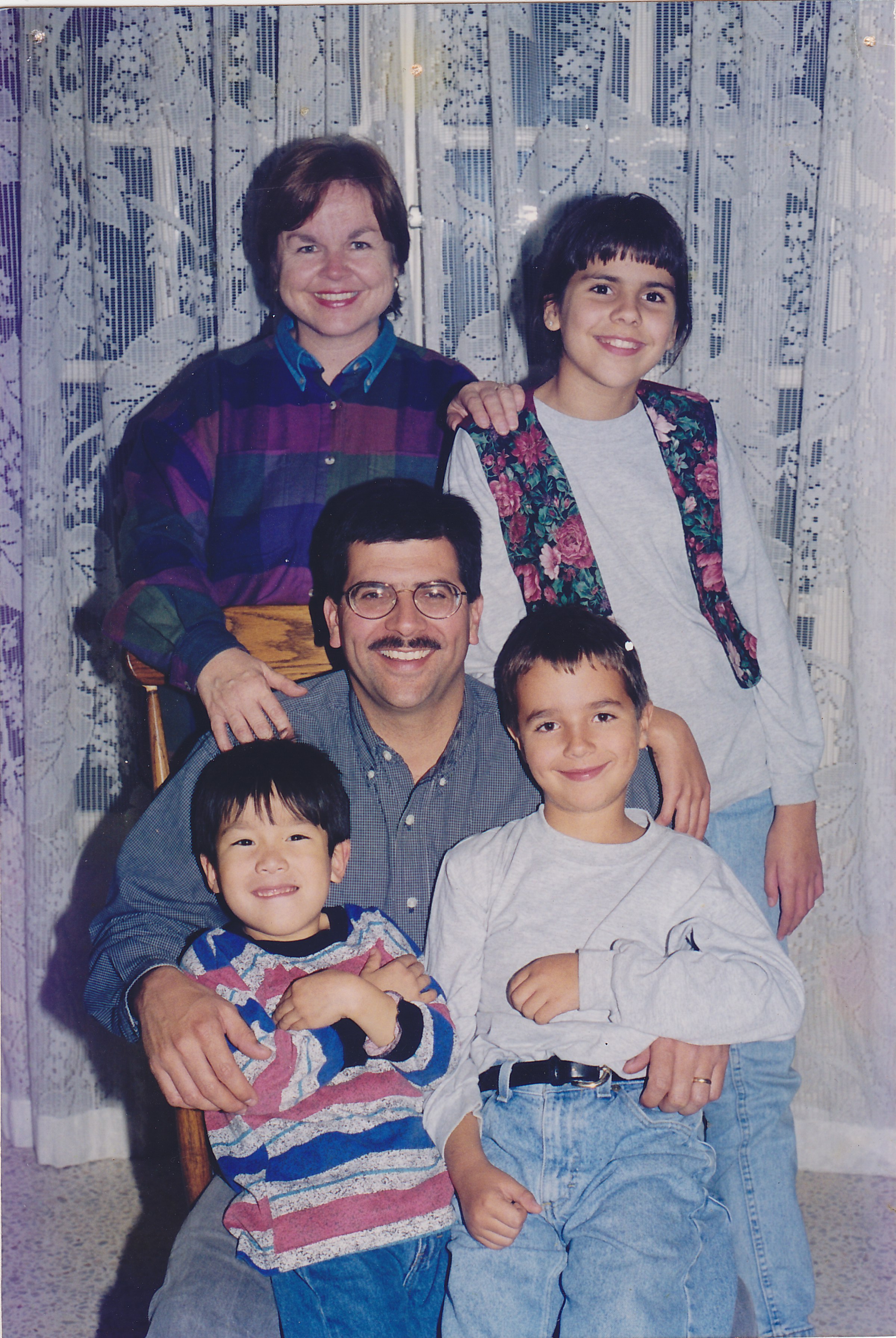
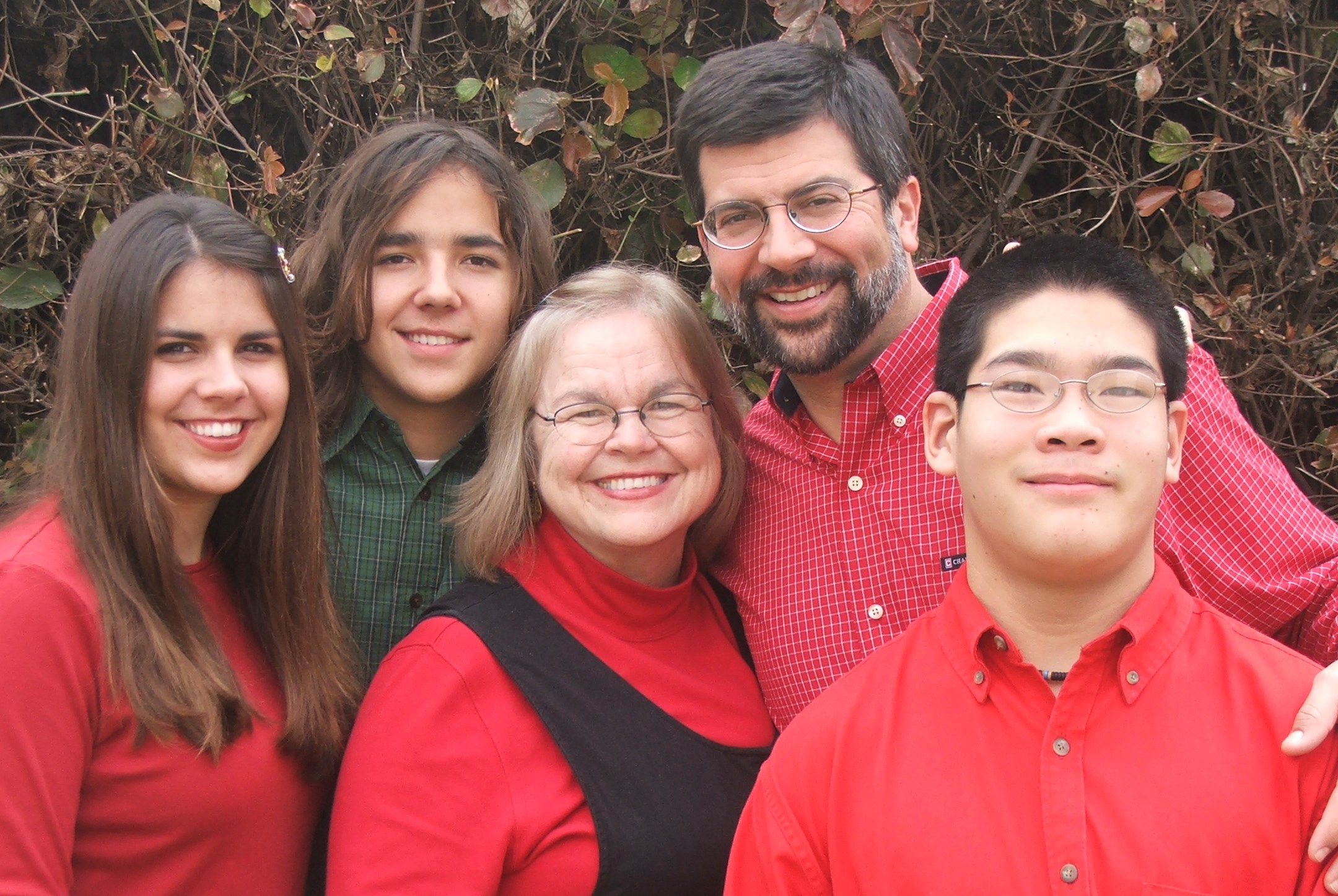
2009 April May Trip to Georgia 112 (2)

[Adapted from the Archives]

And let the peace of Christ rule in your hearts, to which indeed you were called in one body. And be thankful. Let the word of Christ dwell in you richly, teaching and admonishing one another in all wisdom, singing psalms and hymns and spiritual songs, with thankfulness in your hearts to God. And whatever you do, in word or deed, do everything in the name of the Lord Jesus, giving thanks to God the Father through him. Wives, submit to your husbands, as is fitting in the Lord. Husbands, love your wives, and do not be harsh with them.  – Colossians 3:15-20

On August 4, we will be 40 years married! Whew! Thanks be to God!

The flight of years shows in our bodies and minds, but for us, it is most apparent in the launch of adult children into their own lives, work, and marriages. Then…it comes back to just the two of us…and I am grateful for his company.

IMG_0009 (2)

Our marriage has always been of a quiet steady sort . My husband and I married best friends. We were polar opposites in most ways, except our faith and being raised in Southern families, with Godly, praying mamas. He was “read and follow directions” marrying “fly by the seat of her pants.” It was definitely a match made in Heaven because we would need the God of Heaven to keep us on course as we figured marriage out…both without and, later, with children.

In fact, those of you who know us well know the struggles we have had figuring out parenting (both young children and then adult children). Also the challenges of having very different ideas and giftings on doing life. I’ve written so much about this in my journals over the years, wrestling with God and my own heart in these areas. Should our kids read those journals one day, I trust them to handle the pages of angst about our marriage with gentleness and understanding. Hopefully they have always seen us pull together more than pull apart.

I’ve often quoted Elisabeth Elliot on love and marriage. Two thoughts come to mind. She speaks of love as being “a laid-down life.” She also talks of marriage as being good for Christians to mature in their walk with God, because [in marriage] “there’s so much scope for sinning.” My husband has taught me a lot in both of these areas, and I, him – hopefully more on the lines of laying down our lives for each other, rather than the scope for sinning part…sigh.

2005 December - Christmas with Mills & Halls 089a (2)

Whatever these nearing forty years have produced with us together, the best of it has been 3 great young people (and the 2 beautiful extra children who’ve joined our family through them, so far)…and GRANDCHILDREN! Alongside those treasures is the unalterable way the Lord has knit us together, my husband and me, with each other and with Him.

I have some idea what is ahead, given our ages and the world around us (we’ve already been through a cancer diagnosis, big job changes, losses of dear parents, and sickness in our children and grandchildren). The hard is softened by what is promised (and proven) through God’s Word. Whatever is ahead, I am so grateful for what I’ve learned through this man who married me 40 years ago.

He has given me the face of a man who does not give up, of one who never leaves the room, of one who fights for what is right, of one who is tender toward the weak, of one who loves no matter what. I have been both the recipient of this and the one by his side as he extends himself to others.

Now, we are two again…as in the beginning of our relationship.  Yet we are at a very different place. God has shown Himself to be ever-present in all these years of our lives. For many years I didn’t think marriage was to be mine…then Dave came into my life quite providentially. God gave me exactly what I needed in this husband of mine – a man as true as steel in his walk with God and with his family. We count on him; he counts on God. Whatever happens out there in front of us…I have peace, on this 40th anniversary, that God will be there for each of us, to show us how to live…as He has in all these years thus far.

Through the Years – YouTube video of Kenny Rogers Ballad

YouTube Video – Jesus and You – Matthew West

YouTube Video – You’re Still the One – Shania Twain [Twain’s “still the one” is no longer her one, but the song is beautiful. So I wanted to keep it in this list since Dave’s still my one.]

YouTube Video – Brandon Lake – NOTHING NEW (I DO) – Wedding Version ft. Brittany Lake

Sacred Marriage – What if God Designed Marriage to Make us Holy More Than to Make Us Happy – by Gary Thomas – Such a great book!

An example of Elisabeth Elliot’s counsel to one marrying – Always forgive.

Elisabeth Elliot Quotes

5 Friday Faves – Beyond the Guitar, Walking Her Home, Post-Traumatic Growth, Breaking Out of Negative Thinking, and Spring

1) Beyond the Guitar – It’s been awhile since I’ve posted Friday Faves, but rest assured #1 of my weekly round-down hasn’t changed. Nathan at Beyond the Guitar continues to make beautiful music. He also teaches through his arranging academy, practice club, etc.

YouTube Video – This fingerstyle Riff is What Sunshine Sounds Like – Beyond the Guitar

Below you’ll find a couple of his most recent videos as he showcases two different guitars. Beautiful!

His short videos (with film and video game clips attached) are so much fun and emotionally satisfying (why go to TikTok when you can just hang on his channel? Just scroll down his YouTube channel to Shorts).

Something about Nathan you might not know if you don’t follow him on Instagram is that he has also become a personal trainer in the field of health/fitness, mental/spiritual disciplines, and all the stuff of being a guy out there (family, work, habits, and disciplines). For his music, you know where to go. For this sort of inspiration, head over to his Instagram account.

Photo Credit: Nathan Mills, Instagram

2) Walking Her Home – This has been a super sentimental week for me. Some health issues, family stuff, and friends going through hard times. When I came across the UNC Clef Hangers video (seen many times before), it has hung in the air for me.

The song Walking Her Home recounts the story of a 60-year relationship. From first date until the elderly wife was dying. Whew! So beautiful.

Dave and I have our 40th wedding anniversary later this year, and this sweet lyric brings back such memories of our own life together. All the beautiful not dimmed by the hard. In fact, only made more beautiful by staying and waiting out (praying out) the hard together. Not everyone gets that opportunity, sadly. Just let me share this song…may it encourage you about your own relationships whatever they are.

Photo Credit: Conexus Counseling, Mark Schultz

Taking that song and its life message further, we all have the opportunity to truly see each other…care for each other…and walk each other home.

Walking Each Other Home – Making a Difference in a Beautiful Way – Ramona McKean – don’t miss this.

Photo Credit: Ramona McKean, Ram Dass

3) Post-traumatic Growth – We have all heard much spoken and written about post-traumatic stress (PTSD). Just in recent months have I heard the concept of post-traumatic growth. An internet search yields much on this topic. Post-traumatic growth is defined as “the experience of positive change that occurs as a result of the struggle with highly challenging life crises”.

Photo Credit: CalmSage

This sort of growth can happen when we recognize that we don’t have to be forever victimized by the trauma we’ve experienced, as children or adults. There is a way forward.

I’m only mentioning it briefly here, but if you have experienced this sort of growth post-trauma, and you feel comfortable to talk about it, please use the Comments section to share some of what happened.

Photo Credit: Echo Training

What Are the 5 Stages of Post-Traumatic Growth? How to Get Started? – Kirti Bhati

The Promise of Post-Traumatic Growth – Part 2 – Echo Training

The Complicated Truth About Post-Traumatic Growth – David Robson

Sometimes what stands in opposition to our growth is the person or persons unwilling to let go of the past. Maybe our PTSD relates to being the victim of trauma. Other times, however, we struggle to get out of the past because of harm we ourselves have caused. Even when we have owned our part, asked forgiveness, made whatever restitution we could…the past won’t always go away.

Writer/speaker Ashley Alford writes about this poignantly. Below you’ll find a bit of her take on it:

Kicking ash is what they’re doing.

Standing in the middle of the ashy remainder of what you once did.

The soot of who you once were.

The smoke of who you used to be.

They’re standing in the middle of an old story…one they don’t like to let go of.

One that still tries to burn with reminders of the licking flames of your shame.

They kick the mess around you hoping to stir up the old accusations…

Hoping to reignite the sparks of something that God himself put out…

They can run the ashes of that fire through their fingers all they want…

But they’ll never know the pain it took for you to heal from those burns.

They’ll never know the raw ache of fresh wounds straight from hell.

Not like Jesus does.

They weren’t there when He bandaged you at that altar.

They weren’t there when he breathed life back into you again on that closet floor.

So let them kick ash and stir up the soot of that life and lie you used to host.

And remember when they mock you…They’re mocking the Holy Ghost.

Because they can tell tales of the fire that almost consumed you and they can backstab and stare…

But it would do them good to remember that just like Shadrach, Meshach and Abednego…

You weren’t alone in there.

Photo Credit: Facebook, Honestly Ashley

“Kicking Ash Is What They’re Doing” – Honestly, Ashley – Facebook

4) Breaking Out of Negative Thinking – I first wrote about negative thinking five years ago (that blog linked below). Since then we have come through COVID 2020, great racial unrest and social upheaval, contentious election cycles, ongoing wars, and a downturn in our economy. Lots to think negatively about with good reason, but if we’re not careful we will begin gearing our thinking in that direction to the detriment of our mental and relational health.

Monday Morning Moment – Rewiring Your Brain Toward Thinking in the Positive – Deb Mills

Photo Credit: Daily Health Post

The team at Daily Health Post focused on complaining as a culprit that can actually cause our brains to default to anxiety and depression. From experience, I know this is true. Check out the article below:

How Complaining Physically Rewires Your Brain to Be Anxious and Depressed

Photo Credit: Frank Sonnenberg Online

Why Your Brain is Wired for Pessimism—and What You Can Do to Fix It – Clay Skipper

Before leaving this topic, I want to point to the article below which champions negative emotions as a sometime benefit. We learn from regrets, and sadness is telling us something about what matters to us. Negative emotions have value, but it’s the weight we allow them and the headspace they will consume that we must question and resist.

Don’t Insist on Being Positive—Allowing Negative Emotions Has Much to Teach Us – Whitney Goodman

5) Spring – ‘Nuff said really. Days getting longer and warmer. Flowers. Short sleeves. Strawberries. Fishing.

____________________________________________________________________________________________________________

That’s my 5 faves for this week. Gleaned from a much longer list of finds that I didn’t write about over the last several weeks (including my beloved “Best of” Christmas Ad videos). Thanks for stopping by. Talk to us in the Comments if you have the time. Blessings always.

Bonuses:

6 Ways to Tap Into Nostalgia – And What You Should – Mental Health Benefits

Photo Credit: Kristin Pratt, Facebook

Can’t Stop the Feeling – still love this song and its covers (especially the one HomeFree does):

[One of my favorite collaborations Nathan has done. Sweet memory.]
[Start at 3:54 for a stadium sing of “You’ll Never Walk Alone” in tribute of Liverpool F.C. – Goosebumps!]
Photo Credit: Facebook, To Save a Life

Monday Morning Moment – a Principled Life

Photo Credit: Boltgroup

Recently a conversation with a young friend drew me to the idea of “a principled life”. She recalled a comment a friend of hers made about this friend’s life, something along the lines of how remarkably principled her life was. As if that was an odd thing. Unusual. Commendable but on an altogether different plane.

We were both surprised at this. Doesn’t reaching adulthood come with the establishing of certain principles for living? Those attitudes and actions that define us as people.

In our family, we often have conversations around the dinner table about how we engage with people, especially those who are challenging, demanding, and even uncaring. It makes sense, at some level, to distance ourselves from such folks, put walls between us and them, and not be drawn into their neediness or manipulation.

The question for me, however, in such situations, is “what kind of person do I want to be?” Is another’s behavior going to change the way I want to show up in relationships? Is another’s character going to move me to change my own?

Thus the thinking about a principled life. What does that look like for each of us? What does that look like to our children and grandchildren?

Now, we derive our principles from varied sources. Some from our parents. Some from teachers or mentors. Some from classical literature, history, or sacred texts. Some of our principles (whether we consciously acknowledge it or not) may even come from movie quotes and characters. Below you will see some examples of principles.

Ex-heroin addict and neuroscientist Brian Pennie PhD writes and speaks regularly on this topic:

“Principles are fundamental truths that are universal in nature.” – Brian Pennie

“Values are beliefs, attitudes and standards of behaviour about what’s important in life. They are also subjective and may change over time.” – Brian Pennie

“Unlike values which are subjective, principles are fundamental truths that are permanent, unchanging, and universal in nature.” – Brian Pennie

[Values and principles can often be seen used interchangeably, as in the graphic below.]

Photo Credit: Slideshare, Sean Covey

Seven Habits of Highly Effective Teens – Sean Covey – PowerPoint Presentation – Slideshare

A principled life is one that demonstrates a foundation and follow-through of certain truths consistent with how a person thinks and behaves – living life with intention not in reaction.

Principles are action-oriented (see below as an example).

Photo Credit: Happiness Collective

Principles form a life compass. Brian Pennie writes:
“Through my own suffering and aimless behavior [during those days as a young drug addict], I developed a technique based on values and principles. I call it my life compass, and use it whenever I feel anxious, overwhelmed, or frustrated; or any negative state for that matter. In other words, I use it when I’m not aligned with my values.

The aim is to develop a set of principles that will guide your actions when life gets tough. Note that values direct you towards what’s important in life, while principles are actionable and always result in outcomes.

Below is a list of my own values, and several of the principles I’ve developed to keep me on the path.”

Photo Credit: Thrive Global, Brian Pennie

For me, a principled life aligns with the life of Jesus. Albeit imperfectly, given my human tendency to serve self. The Apostle Paul writes in his letter to the Roman church about “the marks of a Christian life”:

“Let love be genuine. Abhor what is evil; hold fast to what is good. Love one another with brotherly affection. Outdo one another in showing honor. Do not be slothful in zeal, be fervent in spirit, serve the Lord. Rejoice in hope, be patient in tribulation, be constant in prayer. Contribute to the needs of the saints and seek to show hospitality.

Bless those who persecute you; bless and do not curse them. Rejoice with those who rejoice, weep with those who weep. Live in harmony with one another. Do not be haughty, but associate with the lowly. Never be wise in your own sight. Repay no one evil for evil, but give thought to do what is honorable in the sight of all. If possible, so far as it depends on you, live peaceably with all. Beloved, never avenge yourselves, but leave it to the wrath of God, for it is written, “Vengeance is mine, I will repay, says the Lord.” To the contrary, “if your enemy is hungry, feed him; if he is thirsty, give him something to drink; for by so doing you will heap burning coals on his head.” Do not be overcome by evil, but overcome evil with good.” – Romans 12:9-21

That is a principled life.

[What are your thoughts as to the guiding principles of your life? What are you modeling for your family, friends, colleagues – just by showing up? What do people count on you for? What are you intentionally teaching to your children/grandchildren? Would love to hear about these in the Comments section. Thanks for stopping by.]

How to Live by Life Principles That Matter

30 Life Principles – Dr. Charles F. Stanley

10 Principles of Life

Seven Basic Principles That Govern our Personal Lives and Relationships – Vatican in Exile

How to Find Meaning and Direction in Life – Brian Pennie

YouTube Video – My talk from Pendulum 2024: How to Find Your True North – A Guidance System for Life – Brian Pennie Ph.D.

Worship Wednesday – First Things First – with Consumed by Fire

Photo Credit: Heartlight

Then the man and his wife [Adam and Eve] heard the voice of the LORD God walking in the garden in the breeze of the day, and they hid themselves from the presence of the LORD God among the trees of the garden. But the Lord called out to the man, “Where are you?“ – Genesis 3:8-9

One day in a place where Jesus had just finished praying, one of His disciples requested, “Lord, teach us to pray, just as John taught his disciples.” So Jesus told them, “When you pray, say: ‘Father, hallowed be Your name. Your kingdom come… – Luke 11:1-2

For we do not have a high priest who is unable to sympathize with our weaknesses, but we have one who was tempted in every way that we are, yet was without sin. Let us then approach the throne of grace with confidence [boldness], so that we may receive mercy and find grace to help us in our time of need. – Hebrews 4:15-16

What is it that keeps us from praying?

Is it shame or fear? Yet God calls for us to show ourselves to Him. He looks on us with deep compassion.

Is it not our practice? The disciples witnessed both Jesus’ pattern of prayer and His power to live a life pleasing to the Father. They didn’t ask what was His secret. They seemed to know it was his dependence on the Father through prayer.

Is it our sin that makes us too shy to talk to God? He is not surprised at our struggle. He knows our weaknesses and loves us still. We have a sinless mediator in Jesus and because of Him we have access to the Father.

Prayer can be hard for me for all the above reasons. Add to those the weight of so much need in the world, and I find myself too quickly distracted by the world’s chatter. Oh to stay in the quiet of His peace!

So I pray a bit then switch to over-thinking and worry, or drop out altogether to some other cheap substitute to prayer. Nevertheless, because of His long-suffering with His children, He draws us back to Himself, and I return often to that throne of grace. As a child running to my dad…the best dad we could ever hope to have. Father God.

Have you read Tyler Staton‘s Praying Like Monks, Living Like Fools yet? It has been my guidebook (alongside the Bible) in recent months toward a deeper walk with the Lord.

Tyler Staton introduces his readers to writer teacher John Mark Comer. Comer is the founder of Practicing the Way. This is a website with the focus of offering a pathway to becoming like Jesus in community. All of the teaching and resources are free, and I’ve been grateful to God for how He is speaking to me in this space. My hope is to be part of a prayer community in our local church. Pray with me for this. Are you part of such a community?

Photo Credit: YouTube, John Mark Comer

Comer’s series on prayer is also available on YouTube. All four messages are linked below.

YouTube Video: Prayer – Talking to God – John Mark Comer

YouTube Video: Prayer – Talking with God – John Mark Comer

Photo Credit: YouTube, John Mark Comer

YouTube Video: Prayer – Listening to God – John Mark Comer

YouTube Video: Prayer – Being with God – John Mark Comer

Photo Credit: YouTube, John Mark Comer

As often happens, while thinking about the whole practice of prayer in my life, I heard the song below on the car radio. It preached!

Worship with me to the deeply intimate song “First Things First” by the band of brothers Consumed by Fire.

All the things that I have held dear
The vanities that whispered in my ear
What would I do if they all disappeared
Riches and fame and all that they could buy
I’ve come to find they never satisfy
What would I gain if my soul’s the price

I don’t wanna love what the world loves
I don’t wanna chase what the world does
I only want you
I only want you

First things first
I seek Your will
Not my own
Surrender all my wants to you
Keep the first thing first
To live Your truth
Walk Your ways
Set my eyes
Lord, I fix my face on you
All my desires reversed
To keep the first thing first

I give it all
My life an offering
My heart is yours
So have Your way in me
Your kingdom’s all I wanna seek

I don’t wanna love what the world loves
No, I don’t wanna chase what the world does
I only want you
I only want you

First things first
I seek Your will
Not my own
Surrender all my wants to you
Keep the first thing first
To live Your truth
Walk Your ways
Set my eyes
Lord, I fix my face on you
All my desires reversed
To keep the first thing first
All my desires reversed
To keep the first thing first, oh

First things first
I seek Your will
Not my own
Surrender all my wants to you
Keep the first thing first
To live Your truth
Walk Your ways
Set my eyes
Lord, I fix my face on you
All my desires reversed
To keep the first thing first, oh
To keep the first thing first

All my desires reversed
To keep the first thing first*

Rejoice at all times. Pray without ceasing. Give thanks in every circumstance, for this is God’s will for you in Christ Jesus. – 1 Thessalonians 5:16-18

*Lyrics to First Things First – Songwriters: Jake Hess, Jordan David Ward, Caleb Paul Ward, Grant Timothy Bias

YouTube Video – Consumed by Fire – “First Things First” – (Acoustic + Story Behind)

Photo Credit: YouTube, J. C. Ryle, John Mark Comer

Let’s keep worshiping, y’all!

Monday Morning Moment – Raising Adults – Part 2 – Creating a Culture of Serving – Revisited

Photo Credit: Summit Kids Academy

[Adapted from my presentation at a home-school conference – Part 1 on Raising Adults with the focus on work and responsibility can be found here.]

One of the most challenging tasks a parent has is to teach a small child how to be deferential – to respectfully give way to another, to put another first. Whew! This is a hard one. It’s not just about helping a child understand sharing. It’s our demonstrating and them seeing the value of people and taking hold of how we can serve or help them, no matter our age. Not for any reward for ourselves but just because others matter.

The battles of will that communicate “Me, me!” or “Mine, mine!” can wear us out – both parent and child.

In Part 1, we talked about work and kids’ discovery that they can make a difference. Work and exercising responsibility are their own reward. Often there is compensation, but work is a head issue – a decision made to insert ourselves into a situation for the good of all (both the worker and the larger community).

Serving is a heart issue. In the role of the server, we do ultimately benefit, but the whole focus is on the one served. Serving, by its nature, requires sacrifice, sometimes small but, even for a child, it can be substantial.

Before we dive in, let’s pray to wrap our own hearts around this. [I’m coming at this as a Christian, but this, by no means, lessens the import for those who don’t believe. The wisdom of raising adults to serve stands.]

 “Father, we want to be wholly Yours. Whatever You ask of us…we want to be ready and willing. Not only to be laborers in the Harvest, but to serve with the same heart and mind that Jesus had while He walked this earth. Humble, loving, deferential to others. A servant heart, a mind bent toward You, God, a body and life laid-down in love for others. We want to be responsible and to do good work. Teach us to take our hearts even higher…or lower as the case may be…to serve as Jesus did, in Your abundant grace. In His name. Amen.”

When we model and teach work, the mindset or worldview we communicate to our children is “Get it done and done well”. In action and attitude.

In serving, one distinctive might be the military acronym: ABCD – Above & Beyond the Call of Duty.

“Let this mind be in you which was also in Christ Jesus: Who, existing in the form of God, did not consider equality with God something to be grasped but emptied Himself, taking the form of a servant, being made in human likeness. And being found in appearance as a man, He humbled Himself and became obedient to death—even death on a cross.” – Philippians 2:5-8

“He has shown you, O mankind, what is good. And what does the LORD require of you but to act justly, to love mercy, and to walk humbly with your God?” – Micah 6:8

“Do nothing out of selfish ambition or conceit, but in humility consider others as more important than yourselves. Everyone should look out not only for his own interests, but also for the interests of others.” – Philippians 2:3-4

What if, along with leading our children to be responsible, we created a culture of serving? What would our homes be like if our kiddos embraced serving as a good thing and something they were capable of? And not just for a jelly bean or a favorite TV show.

Photo Credit: Caring For Our Generations

Lisa Jacobson, author, encourager and mother of 8 has a lot to say about her own experience of creating a culture of serving:

“I did things right. The way things should be done. Oh, and, of course, I was serving my family all the while. I was the sacrificial mom who cooked, laundered, and cleaned up after everyone. Most every job was done by me.

And, as a ‘shining model’ of service, I figured my children would eventually follow my example. It was obvious that I worked hard and did my best to please our family. So wouldn’t they just naturally follow in my footsteps? More is caught than taught, right? But you know something? They didn’t catch on like I thought they would. They really enjoyed being served…and it kind of stopped there. I was a good giver. They were good takers.” – Lisa Jacobson

She then discovered how to teach her children the joy of serving others:

  • Start by letting them work [serve] alongside you.
  • Teach your children to notice what needs to be done. [This one point is so worth your time reading thus far – both in working & serving – guiding our children to see, for themselves, what needs to be done. It’s a strong beginning to winning their hearts.]
  • Let them enjoy helping out.
  • Instruct them in how they can be a help to you [and others].
  • Cheer them on as they learn to serve.

Teaching Our Children the Joy of Serving Others – Lisa Jacobson

Photo Credit: Intentional by Grace

“God does not need your good works, but your neighbor does.” – Martin Luther

Author, educator, and pastor Andy Crouch writes about our callings in life. He is speaking to Christians, but these would richly apply to anyone who believes in God as Creator.

Our three callings*:

  • To bear the image of God. [“Be fruitful & multiply.” Our human calling is inextricably linked with the family where we first found our name, language, identity, and home.]
  • To restore the image of God. [Our distinctive calling as Christians is to actively seek out the places where that image has been lost, to place ourselves at particular risk on behalf of the victims of idolatry and injustice. So in every workplace, Christians should be those who speak up most quickly, and sacrifice their own privileges most readily, for those whose image-bearing has been compromised by that organization’s patterns of neglect. In every society, Christians should be the most active in using their talents on behalf of those the society considers marginal or unworthy. In every place where the gospel isn’t known, Christians should be finding ways to proclaim Jesus as the world’s true Lord and “the image of the invisible God.”]
  • To make the most of today (contingent calling). [If you get the first two right, the third is practically an afterthought. Your third calling is your contingent calling: to make the most of today, while it is called today. “Contingent” is a word used to describe something that could be otherwise—in that sense, it’s the opposite of necessary. It’s also used to describe something that depends on something else—in that sense, it’s the opposite of independent. You are in some particular place today—maybe at school, maybe on a bus, maybe in a workplace, maybe at home. And you are there with certain resources—memory, energy, reason, attention, skill. All these are contingent. It is God within these that we must learn to discern and then serve as He leads.

[Heady topics for a 2 y/o maybe…but highly teachable concepts, as well…how would we teach and model these three callings to our little ones?]

“There is one topic that I’m extremely interested in that the writers of Scripture do not seem interested in at all—and that topic is, actually, me. I am quite interested in the expressive individual that I call me—but Scripture turns out not to be interested in me hardly at all. It is somewhat more interested in me as a member of a community, connected to one of the “nations” of the earth—but really, what Scripture is interested in is God, God’s mission in the world, God’s commissioning of a people, and God’s gracious invitation to me to stop being so interested in me and start being absolutely fascinated by [Him and] his mission.” – Andy Crouch

*The Three Callings of a Christian – Andy Crouch

How do we cultivate a culture of serving in our home, community – for ourselves and our children? What are you doing? What do you dream of doing? Please share in Comments below. Thanks.

As with work, so with service, we not only model but insure our children have the opportunity to contribute what only they can do – for others…whether operating out of their strengths or their weaknesses.

Looking back, I don’t think we were intentional in creating a culture of serving in our home during our kids’ childhood. It was just “easier to do it myself”, right? They had so little time, between schoolwork and their other “just being children/youth” activities. There were moments, however, bright and shining…teachable moments where they did see how serving mattered…especially when they (at whatever age) showed up to serve. Now I hope to come alongside our grown-up children to model and teach serving to the grands. In fact, it is already a reality – seeing our kids, as adults, discovering the deep joy of serving others, pushing through the awkward strain to pull back or be less present, putting others ahead of themselves.

[Nathan helping dear Mrs. Marge…many years ago.]
Photo Credit: AZ Quotes

Parents, Take Note of the Spiritual Practices Common to Kids Who Flourish As Adults – Trevin Wax

Monday Morning Moment – “It’s a Wonder” – Altering Perspective

What a wonder the beauty that surrounds us! We miss it when we aren’t looking. Let’s take a moment.

“Wonder is my word for this year. It is defined as “a splendid or conspicuous work, a miracle, a marvel”. We are surrounded by wonderful, beautiful, tangible objects, processes, and people. And wonders beyond our reach that cause us to pause and…well, wonder.

Our short-sightedness at such things can be an effect of where we settle our gaze, or hearing, or thoughts. Screens can either point us to wondrous things beyond our experience or shrink our worlds to the size of a phone, tablet, or computer/TV.

Look up. Get close. Be quiet a moment and listen.

Let’s never lose the wonder of the beauty that surrounds us. The beauty we experience…even in hard places. Even in suffering.”

Deb Mills Writer

I get lost sometimes in the woes of this world – our national debt, the unnoticed poverty of our neighbors, the myriad ways people find to destroy life and relationships.

It’s a wonder we haven’t already completely annihilated ourselves and that actually speaks to the wonder of God. The fact that we are still here, that Spring comes, and babies are born…all a miracle really.

We take such things for granted and continue to brood over the world’s “going to Hell in a handbasket” condition. Doom’s Day thinking will change nothing.

Today, I choose to be lost in the wonder of God’s provision of all the good in the world – of grace in suffering, of the possibility of finishing life well and dying beautifully. What is our place in all the world’s woes? It isn’t to be so enraptured in the wonder that we don’t wade into the hard.

Wonder takes me to a more hopeful place – of seeing the worst of this world with eyes wide open and holding place with God in ways, small and large, to lighten the load. Leaning into the painful realities of those around us, knowing God is at work everywhere… He doesn’t need me to help…but just maybe He calls us to enter in and discover He’s there, and His presence illuminated through us to those in need.

If you want a quick study on the mercy of God and how He bears with a forgetful and rebellious people, read Psalm 78. Are there consequences of our going our own way and disregarding a loving and holy God? Absolutely. Yet, He is always ready to restore us and to redeem our situations, when we repent and remember Him. Hallelujah! What a Savior!

Photo Credit: James Houston, Heartlight
Photo Credit: Godly Ladies

Postscript: The wonder of God in the circumstances of our lives – including when we lean in to the lives of others. What if Wintley Phipps hadn’t responded in comfort to that distressed person (see video below)? – What if the Horatio Spafford, writer of the poem “It is Well with My Soul”, had grown bitter in his grief instead of clinging to God? So much wonder!