Twitter has actually been a help to me. I follow (and therefore learn from) people of influence, excellent thinkers, and soldiers in the battle for good. At times, our values are not in lock-step. At times, especially in today’s culture wars, even these voices point to other voices way more stern or biting than their own.
I fell into this myself this weekend, and for that I’m sorry.
Someone I follow re-tweeted another who had really strong emotions about something that happened this weekend. It related to the death of President Trump’s brother and how some were treating his death in a hurtful, political way.
How far our culture has fallen!
I hit the “like” button because I agreed with the wrongness of such actions. The writer closed his tweet with something like, “Jesus, help them.”
When Dave saw the “liked” tweet, he gently reproved me based on the content of the whole tweet. I had totally read “over” the f-word planted angrily in the body of message.
That four-letter word that turns a movie rating from PG to R. That four-letter word we would never use in polite company. That four-letter word that intends anger, hatred, contempt.
Yipes!
Have I grown insensitive to that word? Seeing it written in graffiti all over our city. On posters in riots. Chanted loudly on video in news reports.
Have I grown cold to it?
NO!!! Yet, it is possible in that moment I had become blind and for that I ask forgiveness. To any who might have seen my “liked” tweet from another. To any more near who might experience blindness in me.
Forgive me.
Years and years ago, I used to listen to Steve Brown on the radio. Doing chores at home or on the many errands peopled by small ones. He encouraged me. He said something one time that has stuck with me. Not verbatim, but something like this: “If you’re moving away from God, He will grease the tracks. Same, if you’re moving toward Him.” Both those experiences have been mine over time.
May our worldly culture never have to be used of God to open our eyes to depravity…especially creeping into our own hearts.
Help us to always have eyes to see.
Truth matters. Foulness mixed in may not taint what is true, but it distracts from what is true. It can change the truth-bearers and truth-hearers. I never want to be a partner in that.
Forgive me. I will be more watchful in the future.
1) Food Anthropology – Anthropology is the study of cultures and peoples – their behaviors, values, etc. The TEDx talk below was a walk down the lane of pleasurable food memories for me. Syrian-American food writer Tony Tahhan talked on What Syrian Cuisine Can Teach Us About Humanity. In his talk, Tahhan gives sweet details about growing up in a Syrian home in Venezuela (?!). Then they immigrated to the US, blending more cultures. His stories of Syria itself center on food and culture.
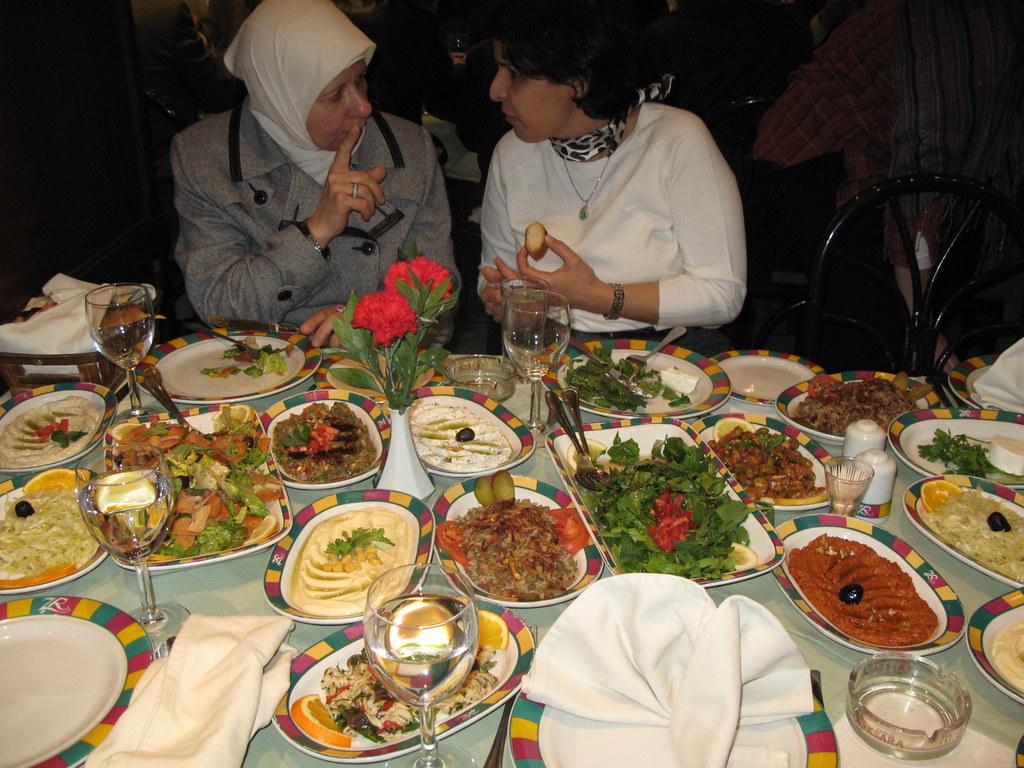
Our first experience of Syrian food culture was when we lived in Cairo, Egypt, for a few years. Our friend Amal, a Syrian-American, often hosted us in her home. She and her husband reflected their culture of gathering and generous hosting of friends and family. Egyptians also have that wonderful hospitality as well..and their own yummy food. Still, being in Amal’s home and at her table was unique. So much food! So much preparation…chopping, blending, baking. Distinct flavors. Beautiful colors. Healthy and satisfying. Dessert, too…not healthy always (unless it was the huge bowl of fruit) but incredibly memory-making. Can you say baklava?
I took lots of food pictures in those days but couldn’t find them for this blog. The image below will have to do. This gives a good idea about Amal’s table. Beautiful and bountiful. Full of love.Photo Credit: Flickr
There is much we can learn from peoples and cultures through their food. Syria has been so traumatized by war. Still, I’m completely positive, that if anyone had an opportunity to sit at a Syrian table, whatever their hosts had would be presented sumptuously for the guest. That’s a lesson for us all.
2) The Punisher on Classical Guitar – Nathan Mills arranges another beautifully haunting piece – the theme Frank’s Choicefrom the TV show The Punisher. In the show (which I’ve never seen – too violent for me), Frank Castle has the horrific experience of watching his family be murdered. He then becomes a vigilante, hunting down those responsible. Then he seems not to be able to escape that life, going after other evil criminal types. Nathan (Beyond the Guitar) takes composer Tyler Bates‘ tortured theme (pointing to the “dead man walking” Frank Castle character) to a different place. A quieter, sad longing of a place. Beautiful.
3) Pastimes – The stuff of life outside of work. Hobbies, shopping, classes, volunteering, family/friend time, and desultoryactivities – being lost in the moment, wanderings.
With social distancing thanks to COVID, our pastimes may be altered somewhat. Before March, I spent a lot of time gone from the house. Now, not so much. Dave also presently works from home.
So when work is done, what do we do? What do you do?
We’re slow adopters. The Mandalorian, the web series on Disney+, wasn’t on our watch-list although we’re huge Star Wars fans. In fact, we didn’t know much about it except for the hype. Oh, and the piece Nathan arranged and performed, of the show theme.
This week we signed up for Disney+ and are “bingeing” The Mandalorian. It’s a first, the whole binge thing. Such is some of the strangeness that COVID has brought to our socially distanced lives.
Now, watching movies is definitely a favorite pastime. This past week (including the weekend), we saw three “small” films (small in that they weren’t huge boxoffice hits).
I loved them all and recommend them. Lots of heart in these films. Heart and humor.
A few weeks back, I watched the 2020 Netflix documentary 13th (about the abolition of slavery) and I hope to watch another 2020 documentary Uncle Tom soon. Anybody seen either of these?
During COVID, Dave and I have taken up playing Bananagrams after supper. It’s a quick game – he wins usually.
Just being outside in the back yard with a book, my camera, or a friend is also even more special with the press of COVID.
One favorite verse of mine in the Bible is: “Love one another deeply as brothers and sisters. Outdo one another in showing honor.“ – Romans 12:10 It’s not about competing with one another for God’s favor (He loves His children purely and freely). It’s just an encouragement to be as generous as we can loving and showing honor to each other. out of the love we already enjoy from God. This “outdoing” a pastime worthy of making a skill/habit.
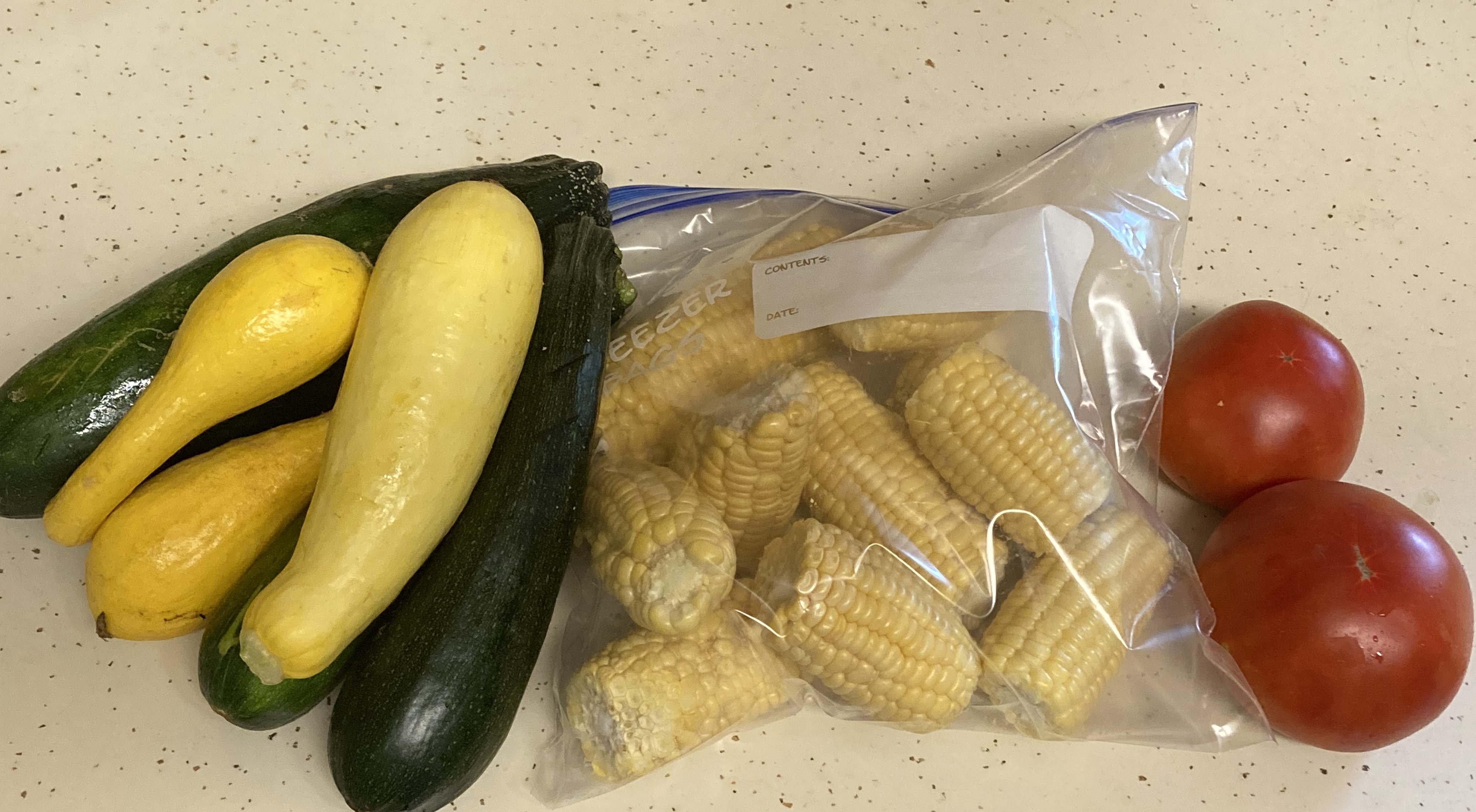
A dear friend dropped off some of her summer bounty for us this week…so for days, we enjoyed that sweet gift.
Then another friend dropped off a card from her little girl to our little granddaughter (these little ones are missing their friends, too). So special.
Finally, I got to be on the dessert delivery list of this amazing baker friend. She just drove pieces of cake around to different fortunate ones of us. Lemon pound cake. Yum! Right?
On the flip side – another friend has a birthday this week but was also heading to the beach…so no opportunity to gather. She is amazing at reaching out to people, always and also during COVID. For one time, I got a jump on her with some beach reading. Happy birthday, Karen!
What pastimes do you enjoy lately? Especially those that lift your heart or others.
4) Life Has Purpose – A friend of mine introduced Ryan and Bethany Bomberger to me via her Facebook post. They are pro-life adoptive parents. They are Christians. Give them a listen whatever your worldview…you’ll be drawn in to their hearts. They are not mush-minded (as some think of those with descriptions like this). Rock-solid people. Their podcast is Life Has Purpose.Photo Credit: Life Has Purpose
They are authors, and Ryan is a songwriter. He wrote Meant to Be as a tribute to his birth mother who conceived him in rape. He was adopted by parents who would adopt 9 other multi-ethnic kiddos.
Part of what make finds favorites is that often there’s a beautiful ripple effect – finding favorites of the finds. Neil and Christina Shenvi came along with “Life Has Purpose”. Check them out. Fascinating.
5) Community – This comes up in my Faves from time to time, because it continues to just boggle the mind how essential it is and how deep it can be…even with COVID. [Our community group – so dear]
However…and there is a big HOWEVER here…social distancing can really do a number on community. When we think of how it has affected us as adults, we need to think also how it can affect our children (littles and bigs).
Earlier this week, this short film by 15-year-old Liv McNeil came to my attention and it surprised me with emotion – what it can be like for teens who are isolated by the COVID experience.
Here’s to weekends…and Faves of the week. Five of mine follow:
1) John Lewis’ Funeral – Shortly before he died of pancreatic cancer (on July 17, 2020), civil rights activitistCongressman John Lewis, D-Ga., wrote an essay for the New York Times. He asked for the piece to be published on the day of his funeral.Photo Credit: Wikimedia
“Though I may not be here with you, I urge you to answer the highest calling of your heart and stand up for what you truly believe. In my life I have done all I can to demonstrate that the way of peace, the way of love and nonviolence is the more excellent way. Now it is your turn to let freedom ring.
When historians pick up their pens to write the story of the 21st century, let them say that it was your generation who laid down the heavy burdens of hate at last and that peace finally triumphed over violence, aggression and war. So I say to you, walk with the wind, brothers and sisters, and let the spirit of peace and the power of everlasting love be your guide.”
I was glad to have watched Representative Lewis’ funeral, seeing him honored by old friends, sweet family, and loyal staff. Then fellow politicians, including three past US presidents. Of the politicians, my favorite tribute came from President George W. Bush. No agenda. No barbs. Just all John Lewis.
2) Resistance – When George Floyd was killed, we heard, experienced and even shared in the national outcry. As the protests have turned into riots and looting, some of us are beginning to wonder when will it be enough…or too much. Not the cries for reforms in law enforcement or other changes needed to address those hurting in our country…but taking the protests to a whole different place – that of disrupting and destroying what is good and decent as well.
This Friday night after midnight, on the streets of Portland, Oregon, a group of protestors kindled a fire with Bibles. This city, like many around the US, has been the site of protests for over 60 days. Here and elsewhere, the body count rises of people killed in the riots. Personal properties destroyed. People divided…all in the wake of George Floyd’s death.
Left-wing activists bring a stack of Bibles to burn in front of the federal courthouse in Portland. https://t.co/lYWY0x8n8P
This isn’t right. Resistance to a corrupt system is appropriate, but violence just for violence’s sake is not the “good trouble”John Lewis encouraged.
When the Bibles were burned, it stirred a different kind of mad. There is a place for resistance, but there is also a place for resistance against resistance that hurts people…that hurts our country…that impunes whole groups of people.
I read the following article this week. It is definitely partisan in ways and is a hard read, given we all have people we care about on both sides of our political aisles. However, it delivers a critical, and thought-provoking exposé of modern-day Marxism. The YouTube video also linked is a longer, more comprehensive treatment of the subject by the same author/speaker Larry Alex Taunton (13 points instead of the 8 in the article).
“Evil will not have the last word. Good will ultimately triumph. God is sovereign. As St Thomas Aquinas put it, ‘God is so powerful that he can direct any evil to a good end.’” – Resisting Evil, Bible in One Year
3) Viola Davis – When you think of someone as beautiful, elegant, and articulate as actress, producer Viola Davis, you might be a bit starstruck. I know I am. You may not be aware of the incongruence also present in her life – a childhood of poverty and abuse. This exquisite woman should give hope to all of us.
Today, she is using her fame and professional platform to give back. One way is the documentary she narrated, “A Touch of Sugar”. She is a spokesperson for prevention and treatment of Type 2 Diabetes Mellitus.
4) Neighborhoods – We all have favorite places and spaces …Richmond, Virginia, is one of those favorite places of mine. It is a patchwork quilt of very different neighborhoods. Once upon a time, Monument Ave., in the Museum District of Richmond, was considered one of the most beautiful streets in the world. Those who thought so were probably not negatively affected by the several monuments of Confederate military generals.
Now the monuments are coming down. The houses on Monument are still beautiful and historic. We’ll see what happens next, after the monuments are gone.
Like in other cities, we continue to have protests, riots, and destruction/defacing of properties. Recently, I made an unfounded comment, “Those rioting probably aren’t even from here, and do they even visit the neighborhoods beyond this one? The neighborhoods where Blacks should hear up-close that their lives do matter.” Again, like I said, it was not a fair statement.
[I wrote here previously the monuments including a local teen’s take on what would help more than monuments coming down here. Original piece by Matt Chaneyhere.]
Still, I felt compelled to take a trip to some of the neighborhoods of Richmond beyond the Museum District. It had been awhile since my last visit…more beautiful, resourceful, and peaceful than I had remembered.
My own neighborhood is tucked in the near suburbs of Richmond. 10 minutes to downtown. Quiet, safe, middle-class.
When I heard the news of a Tweet that our President made toward suburban home owners not needing to worry about subsidized housing coming our way, I was surprised and saddened. He is known for his tweeting, but this seemed more caustic than usual. Or was it?
In an election year, what would motivate an incumbent to say such a thing unless there was something deeper…something the casual reader might miss?
Pondering this, I came across an article by columnist Eric Levitz which birthed one of those “Aha!” moments.
Those of us Twitter readers who were aghast at our President’s comment would never outwardly show should exclusion of the poor…and yet…
Our city and county schools are in the process of a redistricting campaign (county school redistricting and city school redistricting). As far as I know the decisions have been postponed because of COVID. Still the battle-lines are drawn based on what redistricting will mean more for those homeowners who bought houses to be in a school districts with high ratings. The re-districting, in order to change up the student body percentages in predominantly black schools and predominantly white school, could alter that for them.
Really fascinating. That tweet then takes on a whole new meaning – exposing our not-so-generous motives. Politics can be so twisted it is hard to know what legislation is actually good for the citizenry at large and what is totally related to special interests.
By the way, our neighborhood, as much as I love it, has property values negatively affected by schools with low ratings. We are in the throes of the above school redistricting decision. I, for one, would be glad to see our schools improve in whatever ways seem feasible. Not for my property value’s sake, but for the sake of the children. Also, bring on affordable housing for all…where people can own their own homes and be our neighbors.
Thoughts?
If Trump has an intuitive grasp of white suburbia’s id, he has no feel for its superego. NIMBY liberals want their exclusionary zoning policies packaged in appeals to historical preservation, not contempt for the poor. https://t.co/5tDC2rf1Wa
5) Wedding Vows – Let’s happily end on this. Dave and I were married over 35 years ago. As our anniversary comes up again, thinking back over our vows is good for us. We didn’t write them from scratch, but they are totally what we believe…they are our own and we mean to keep them…with God’s help.
This week I came across this sweet little video of last year’s wedding between American Idol finalists Gabby Barrett and Cade Foehner. In this wedding season, with COVID changing young couples’ plans and dates…the most important part of the day is that they make their vows to each other – whether in front of 3 people or 125. You’ll love this. <3
That’s it for me…please share your own favorite finds in the Comments. Thanks for pausing here awhile.
Bonuses:
"Do not waste time bothering whether you "love" your neighbor; act as if you did. As soon as we do this we find one of the great secrets. When you are behaving as if you loved someone, you will presently come to love them." -C.S. Lewis
Happy weekend, y’all! This week was another one of those steep learning curve weeks for me. So much to think about and then to figure out how to apply practically to life. Step by step. My faves of the week follow:
1) School Re-openings – Where we live, the final decisions have come down on this Fall’s school re-openings. Finally, we have the answer. What makes this a Friday Fave for me is that NOW we know what is before us – as parents and friends/family of you parents.
For those parents who need to keep working with small ones at home, it will be a continuing challenge. Our city school system and 2 out of the 3 county systems will have on-line instruction (at least for the first quarter of the school year). Photo Credit: Wallpaper Flare
The 3rd county has choice for the parents to pick either all in-school instruction or all on-line. Nice when parents have a choice. There will be health guidelines (masks, social distancing, etc.), but the risk is there for the in-school option should COVID cases start ramping up within the school population (teachers, staff, students, families).Photo Credit: Pixabay
This has been a hot topic since the start of COVID-19 this Spring. Which is better – in-school instruction or online learning? What is considered safer for the short-term may be detrimental in the long run. Brown University economist Emily Oster‘s article “Parents Can’t Wait Around Forever” supports the data that returning to school may not present a great risk. So many stands on this topic in the U.S…
Private schools in our area are opening with in-school instruction. Daycare centers and preschools continue to provide support for little ones, but what do working parents do with their school-aged children? It is a conundrum for many.Photo Credit: Pikrepo
Homeschooling is becoming more the norm – whether it’s parental (or other adult) supervision of students with on-line instruction or the exit from public schools to all-out homeschooling. Fortunately, for parents new to homeschooling, resources abound. Almost to a dizzying level.
I feel for the parents and children (especially those families most vulnerable – single-parent, poor, non-native-English speaking, etc.). On the flip-side, I can also understand the trepidation school systems trying to provide a safe space for learning on-campus. Getting students back in school as soon as can be well-managed seems best for long-term learning, social and mental (maybe even physical) health, and (unpopular opinion, but essential) for the sake of the economy.
What are your thoughts?
2) Restraint – My husband is an introvert; I am not. He commended my every day early-morning restraint in holding onto my thoughts until he had his first cup of coffee. I’m glad, after all these years, he still notices. Restraint is a good thing. It is defined as “the act of holding something back”.Photo Credit: Flickr, Raphael Love
Restraining ourselves is way different than being restrained or restraining others (in case, that word gives a negative connotation). Our culture these days seems not so into restraint. Social media as well as the streets of our cities are ablaze with the activity of “casting off restraint”.
Some actions and ideologies demand intervention on the part of those most affected and those standing with them. Still, restraint has its place in honoring one another. We are not so far down the path of mean-spirited self-expression and group-think that we can’t change the course of culture. That is my hope anyway.
My voice doesn’t always have to be heard. What we do with our thinking is exponentially more impacting than what we say. Especially if we are tempted to “speak” with bricks and lasers… [I get that it feels like a last-ditch effort in some cases.]
Practicing some measure of restraint gives space to hear others and to treat them with dignity if not yet understanding.
For many in our country, we will speak with our vote in the November elections. For every day, we can use restraint as a demonstration of true caring for those around us, provided the action energized by the restraint is well and rightfully aimed.
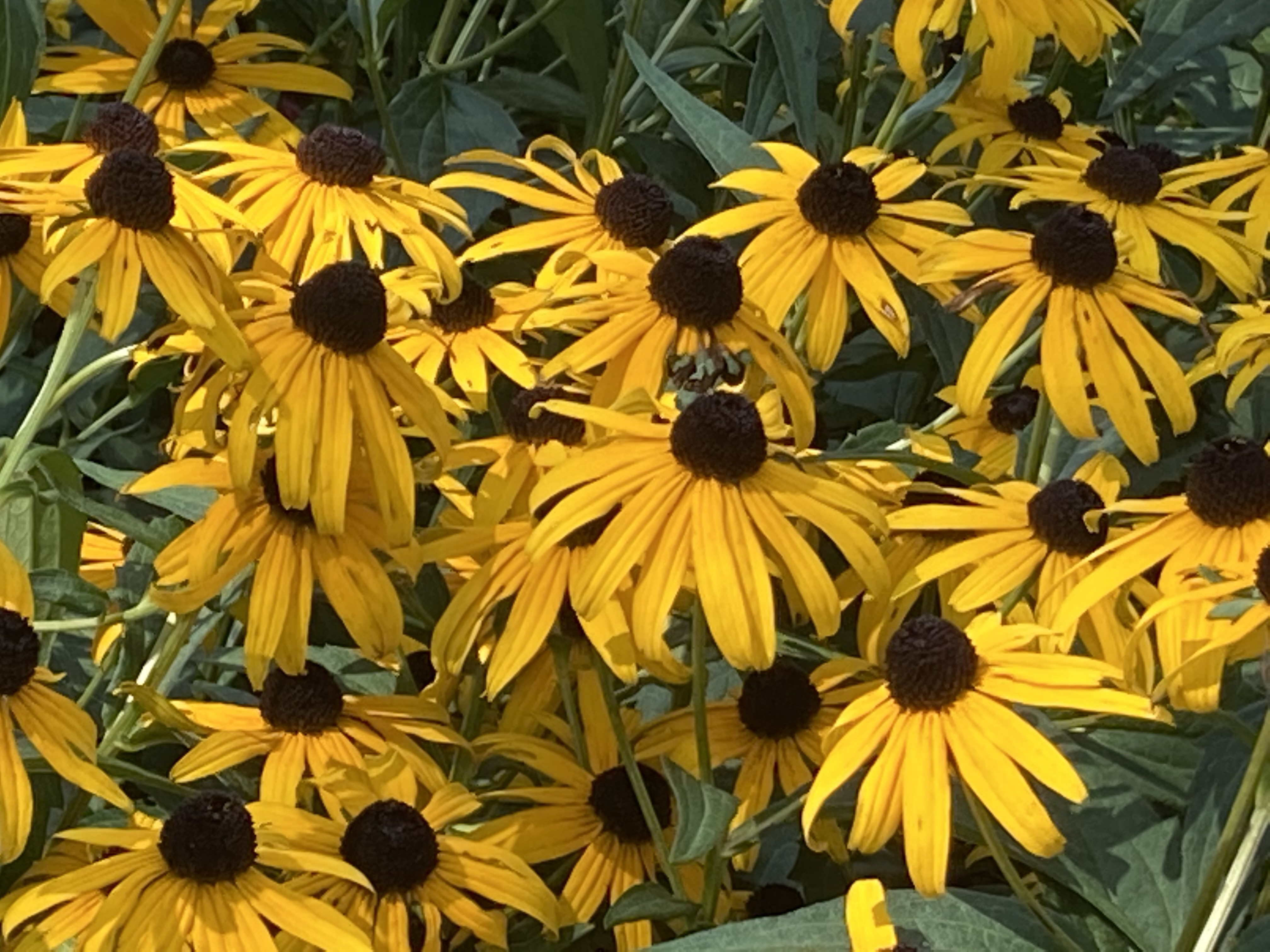
3) Tiny Harvests – This is the time of summer when we are gathering the harvest of tomatoes and peppers. It’s the time for many of our flowers to pass from previous glory into the magnificent “going to seed”. We have many little visitors in our garden these days. I especially love how the goldfinches harvest the seeds of the coneflowers.Photo Credit: Piqsels
They are joined by all kinds of other little feeders and harvesters. Have a look with me.
4) Your Next Job – In 2015, I read a Jon Acuff book, during a season of huge change. It had a huge impact on my thinking regarding career moves. The book was Do Over. It inspired me to actually do a blog series on the book; it was that good.
Dave and I read the book. On a mini-vacation that summer, we took Acuff’s book along and, together, we did his exercise on using index cards to help us look at our strengths and passions. In the pursuit of either a different career or recognizing our fit for our current one. It was very instructive and affirming.
In these days, we have friends who were furloughed because of the COVID-19 impact on the economy. You might find this exercise helpful. Jon Acuff has given us a 14-minute how-to YouTube video. As he guides the viewer through this exercise, he encourages us to think big through our strengths. “This is the hero’s slow walk from the explosion moment. What’s something you’re good, dare I say amazing, at?” Consider doing this exercise whether you’re looking at a job change or you are just fine with your job. It’s a revealing and elevating experience.
5) Communication During Covid – Communication happens. Badly at times. However, we keep at it. Visits in the yard. Drive-bys. Social media. Email. Video calls. We want and need that touch with others.
We are either more consuming or more creating. Sending or receiving or, hopefully, a combination of the two.
I’m so thankful to those creating content. Podcasts and written media. We may not know these creators, but they resonate with us. Many give us something to consider, even to shake up our thinking. Others just give us a touch into the lives of others. They draw us in and help us feel our own humanity more. We feel kindred.
Feeling kin is a precious commodity. Like in families, we don’t always agree but we belong with each other. Organizations and individuals who are innovating in this whole area of communication will help us stay engaged with each other.
Please share in Comments about communication innovators in your COVID experience – whether it’s a fairy godmother-type neighbor (we have one of those) or a team of folks who keep communication fresh and interesting – drawing a circle around everyone in the organization.
Nathan Mills, of Beyond the Guitar, is a classical guitarist who arranges covers of TV, film, and videogame themes. During COVID, he began a podcast. What?! It’s honestly been a lot of fun listening to him and cohost Jeremiah Dias, both musicians and friends since high school. They talk music, career, family, and pop culture. It has the feel of a comfortable hang-out or a family gathering listening to the young people talk. It draws the listeners close – to Nathan and Jeremiah – and, in a way, to each other.Photo Credit: Beyond the Guitar Podcast
I also listen to an array of podcasts under the umbrella of Blogging Heads. In particular, I listen to The Glenn Show. Economist Glenn Loury describes his show as “Glenn Loury invites guests from the worlds of academia, journalism and public affairs to share insights on economic, political and social issues.” It sounds pretty heady, right? It can be but it is so engaging we can all learn from these guys. My favorite episodes are when he and linguistics professor John McWhorter dialog. They are not always in agreement but their respect for each other and their complete focus in the conversation teach us as much about communication as about their subject matter. So good!Photo Credit: YouTube, The Glenn Show
Confession: I consume communication more than I create. However, if anybody out there wants to create communication and wants some ideas, I have some. In the meantime, it’s drivebys, phone calls, and yard visits.
Hope you get some rest in this weekend. Thanks for stopping by. It means a lot.
Rep. John Lewis’ casket travels over the Edmund Pettus Bridge in Selma, Alabama, where he was beaten while marching for voting rights 55 years ago. pic.twitter.com/Gyk2lEN9dh
I once met a community of nuns. They were all disabled in some way. I told mother superior, “I am so sorry.” She said, “oh no. The blind helps the deaf. The deaf helps the one who can’t walk. Our disabilities are our gifts that remind us that we need each other.” #HolyGoals#tb
“We hold these truths to be self-evident, that all men are created equal, that they are endowed, by their Creator, with certain unalienable Rights, that among these are Life, Liberty, and the pursuit of Happiness. That to secure these rights, Governments are instituted among Men, deriving their just powers from the consent of the governed, That whenever any Form of Government becomes destructive of these ends, it is the Right of the People to alter or abolish it…” – from The Declaration of Independence, Thomas Jefferson
We are coming off a very different 4th of July (Independence Day) weekend here in the US. Protests are continuing into a second month following the killing of George Floyd. Violence erupting, in cities like Atlanta and Chicago, has taken more lives.
Confederate monuments in our city are coming down, but until they do, they are the focal points of what is going on here. Public reaction to George Floyd’s death and the racial injustices of decades past.
What can we do? What can be done in our country to right these wrongs or, at the very least, prevent future wrongs? With more than sad and angry words spray-painted on signs and statues. [Please don’t hear me say anything other than that…the change may need to start right here…right here on Monument Avenue…but it has to continue from here to wherever we all live, work, and go to school…]
I quote heavily from his article below, but if you can tackle the whole of his scholarly piece, please do. If you don’t have the time or choose not to take time to read the quotes below, then please read my own bullet points on his take (and that of Dr. Glenn Loury). Dr. Loury, by the way, is an esteemed educator, a professor of social sciences and economics at Brown University. He writes prolifically on both economy and on race. I am thankful to have found his voice recently.Photo Credit: Dr. Glenn Loury, Wikimedia Commons
My takeaways from Ben Peterson’s article:
Violent crime is a serious social problem, but punishment alone (especially through mass incarceration) will not alter our course as a country…or keep all our communities safer. In fact, such punishment with no other provision/recourse is damaging to those communities who bear the brunt of mass incarceration.
We must hold people accountable for criminal behavior, but with dignity and humanity. We have responsibility in this to assure laws and punishments are fair, and to search out any elements of racism in our laws and punishment.
We can strive for the perspective of “we, us, and our” in thinking of persons and communities, instead of “they, them, and their”. In so doing, we press for laws and punishments that we can morally support for our own brothers, husbands, and sons…and that of our neighbors.
If a community is struggling, we must treat it as our own, not seeking only punishment for crime, but also developing pathways for restoring those previously incarcerated fully back into their families and neighborhoods. Listening to the leaders in these communities is priority. They live there; they know the strengths; they know the needs.
We put reforms in place for law enforcement and education, such that we all benefit from the best our country has to offer. No matter how vulnerable our community is.
Racial indifference is not an option for us, if we truly care for our neighbors and this country.
Those were my takeaways. Below you will find some of the powerful and salient quotes from Ben Peterson’s article. I hope I get to vote for him some day.
“…young black men commit a disproportionate amount of the violent crime that persists in this country. That fact surely helps explain why police disproportionately apply force against black men and interact with black men. It also helps explain why our prisons disproportionately house black men. That’s a critical point, but I don’t think we can stop there.”
“…we as a society have chosen to deal, or perhaps not deal, with the persistence of crime in poor black communities.”
“…violent crime is a much greater threat to black lives than police violence, by the numbers.”
“[Loury] argues that our method of social control has damaging effects on many of our communities and the people whose lives the criminal justice system touches, effects disparately borne in poor black communities. These effects are such to make the method of social control we have adopted a systemic injustice that demands the attention of policymakers and leaders around the country. Loury’s analysis is distinguished from others in that he insists on applying moral categories and acknowledging personal agency. He sees the problem in its multidimensional entirety: not simply as a crime or mass incarceration problem, but a problem of social control and ultimately human development. He calls us to a greater sense of social responsibility than our policy since the 1970s has exhibited. We should heed his message.“
“…part of treating people with respect and dignity is to hold them accountable for their behavior. One theme in [Loury’s] analysis of race and inequality is that black people have agency and are not mere victims of systemic racism. This is a deeply humane argument, for to deny a person’s agency is to deny his humanity. Loury argues that black leaders and communities have to exercise this agency and find a way to effectively condemn and control immoral behavior in their own communities.”
“While he insists on personal agency and accountability for behavior in black communities, he does not absolve the larger polity of responsibility for the ills of high-crime black communities. He insists that Americans need to shift our thinking, so that we don’t treat the problems of poor black communities as the problems of “those people.” He argues that racism played a role in the development of our policy of social control.”
“…systemic injustice, or a social injustice, [is] a legal and accepted social practice that fails, on a wide scale, to render to each person his or her due…our incarceration system and treatment of people formerly incarcerated, fails to adequately respect the human dignity of prisoners, former prisoners, and their families and communities.“
“The charge of injustice is based not on the fact of punishment, but on the reality that the total result of our method of social control is a failure to prevent crime in many communities, a failure to rehabilitate offenders and integrate them back into society, and a failure to leave poor minority communities better off…That argument is certainly debatable, but I would at least submit that many white people don’t see struggling black communities as our own communities.“
“Racial indifference…The problem is not so much with what we do as what we fail to do, which is to allow for the human development of many people and communities, overly relying on a punitive justice system to control the results of social dysfunction.”
“First, we need reforms in the justice system to encourage more dignified treatment of suspects, prisoners, and the communities who the system affects.”
“…find and amplify what’s working well in high-crime communities, offer models for consideration. We may need public funding and more involvement on the part of community members, especially churches and other institutions, in similar efforts aimed at strengthening those bedrock institutions in struggling communities.”
“We need to give more attention to our educational institutions and finding real solutions for lagging academic performance.”
“While we cannot ignore the behavioral problems of the so-called black underclass, we should discuss and react to those problems as if we were talking about our own children, neighbors, and friends. It will require adjusting ways of thinking on both sides of the racial divide. Achieving a well-ordered society, where all members are embraced as being among us, should be the goal. Our failure to do so is an American tragedy. It is a national, not merely a communal, disgrace. Changing the definition of the American “we” is a first step toward rectifying the relational discrimination that afflicts our society, and it is the best path forward in reducing racial inequality.“ – Glenn Loury
Finally, I want to close with a story about a person very dear to me who found himself on the wrong side of the law. As a young man, he got swept up into drug addiction (naive in ways at the recreational use of drugs and then too soon addicted). Without details, he would make some choices, affecting no one but himself, that would lead to him being charged with a felony. Even with the best legal counsel money could afford, he ended up with a felony conviction. He served some jail time, but he never had to go to prison. Again, thanks to financial support that allowed for a drug rehab program rather than incarceration. He benefited greatly from the rehab program where he was treated with dignity and respect. Unless the laws in his state change, he will be considered a felon the rest of his life…not right. There’s too much “not right” in our country, but not so much that “we the people” can’t work toward change.
The Glenn Show – Glenn Loury and John McWhorter and Others – “make space for serious people of all races interested in understanding and discussing problems of race, police, and crime in a holistic way that does not force them to deny obvious facts.”
Embrace Communities – “strengthening and empowering communities from the inside out” – love this organization’s ABCD methodology of community development [What organizations can you recommend to us? Comment please.]
[Below is a short video on anti-racism. I found it helpful.]
[From the Archives, 2017. Today we are going through a raw and painful season, hopefully that will lead to real change in how we extend love to one another and how we work to heal the hurt in our society. I made very few adjustments in the text…because it is as true today as it was then.]
There is neither Jew nor Greek, there is neither slave nor free man, there is neither male nor female; for you are all one in Christ Jesus. – Galatians 3:28
For He Himself is our peace, who made both groups into one and broke down the barrier of the dividing wall. – Ephesians 2:14
Racial segregation in the church must break the very heart of God. How is it that we, who love Jesus and want to live as He modeled and taught us, continue to live and worship apart from one another racially?
We live in a racially complex city. Richmond, Virginia, was once the capital of the Confederacy. Even now, the racial divide is shamefully wide. The church, both black and white congregations, has Christ’s mandate to come together. To be reconciled. To live at peace with one another. To enjoy community together.
My family is part of a church that has a vision to reach Richmond. Our city is ethnically diverse. To reach Richmond includes figuring out how to not just be another white church in the neighborhood.
Erskin Anavitarte is a Christian songwriter. On his website, he also identifies as a diversity spokesman and adoption advocate. He is a Kingdom builder and a reconciler. This is a man who calls us to enlarge our lives and our churches to include one another.Photo Credit: Erskin Music
He wrote a little song Black & White which really touched my heart this week. Simple and yet profound lyrics.
“One song may not make much difference, but my prayer is that we remember that God made us all and perhaps bridging the gap begins by focusing our eyes on Jesus. That’s the message of this song.” – Erskin Anavitarte
After our country’s last election, I was burdened afresh how racially polarized we are as a nation, and even in the church. This can’t be the case, in daily life, for Christ followers. Not in daily life. Not in corporate worship. How do we come together?
As we worship the Lord today, we ask Him for wisdom and for opportunity. We ask for compassion and understanding. We determine to “love beyond the limits of our prejudices…to speak love and embody love” (Rev. Michael Walrond, Jr.).
Today, God loves both the black church and our essentially white church, both in the same neighborhood. Oh God, help us – to join together with each other – with those who love God also…and who love this city in a way that can stretch our own love…Maybe it could go beyond the reach of either of us. Just maybe.
[Let’s close in worship now. Check out the super helpful links below, later.]
[Links below showcase Christian comedians who help us with some of the things that unnecessarily make us uncomfortable with each other’s church cultures…although I couldn’t find one that caricatured white church worship for blacks. Could someone help me?]
What kind of world do we call home where we can actually watch a man die in minutes, in handcuffs, begging to live? George Floyd died May 25, 2020. We hear of such things in other nations – public murders, executions – but to see them in the US awakens us more to the injustice and the utter wrongness of such situations. No wonder there is so much outrage right now. How we respond to that pain and anger matters…moving us either toward needful unity or worsening division.
In Richmond, Virginia, friends on the police force see themselves on the streets, during these protests, there to protect the protesters. So they may be heard.
Whatever turns the protests to violent, destruction raids on businesses and neighborhoods makes the loss of George Floyd and others even more painful.
Atlanta is where I was born. Hear from this city’s police chief:
2) Pleading – As a mom myself, I’m so thankful for other moms who use what platforms they have to cry out against the evil in this world and call us together for the sake of our children. So many are doing this right now. We have to put our politics aside. People matter more. Atlanta Mayor Keisha Lance Bottoms used her office to plead with her fellow Atlantans to “go home”. Don’t miss her impassioned appeal below.
Now, I don’t believe Senator Susan Collins is a mom but she is a fearless advocate for change, standing her ground for what she believes is right. Here she is speaking from the Senate floor on killing of George Floyd:
The horrific death of George Floyd in Minneapolis was reprehensible. It was beyond a tragedy; it was a crime. Today, I spoke on the Senate floor about the need to join together to ensure that the legacy of George Floyd is of progress, not deepening division and hatred. pic.twitter.com/JQrkzpJeLv
— Sen. Susan Collins (@SenatorCollins) June 1, 2020
3) Prayers – The Scripture gives us clear direction in this response to the division in our country right now: “If my people who are called by my name will humble themselves and pray and seek my face and turn from their wicked ways, I will hear from heaven and will forgive their sins and restore their land.” – 2 Chronicles 7:14
We need to take God’s call to prayer seriously. He calls us to come to Him. He will listen. He will act.Photo Credit: Needpix
Songwriters Andy and Rachel Graham, on a visit to our own divided city, wrote this beautiful prayer song in response:
“Oh God, help us to listen. To You. To those in so much pain around us. Help us to listen. Our words take up space that needs to go to others right now. Help us to listen, Lord. Right now, we see in the news the chant “Take the knee” as police and protestors confront each other. Heavenly Father, we would all do well to take the knee, in humility, before a just and loving God. Forgive us our sin toward each other. Forgive our sin toward You. Thank You for the life of George Floyd. Have mercy, Lord. We need You now. We’ve always needed You…in Jesus’ name. Amen.”
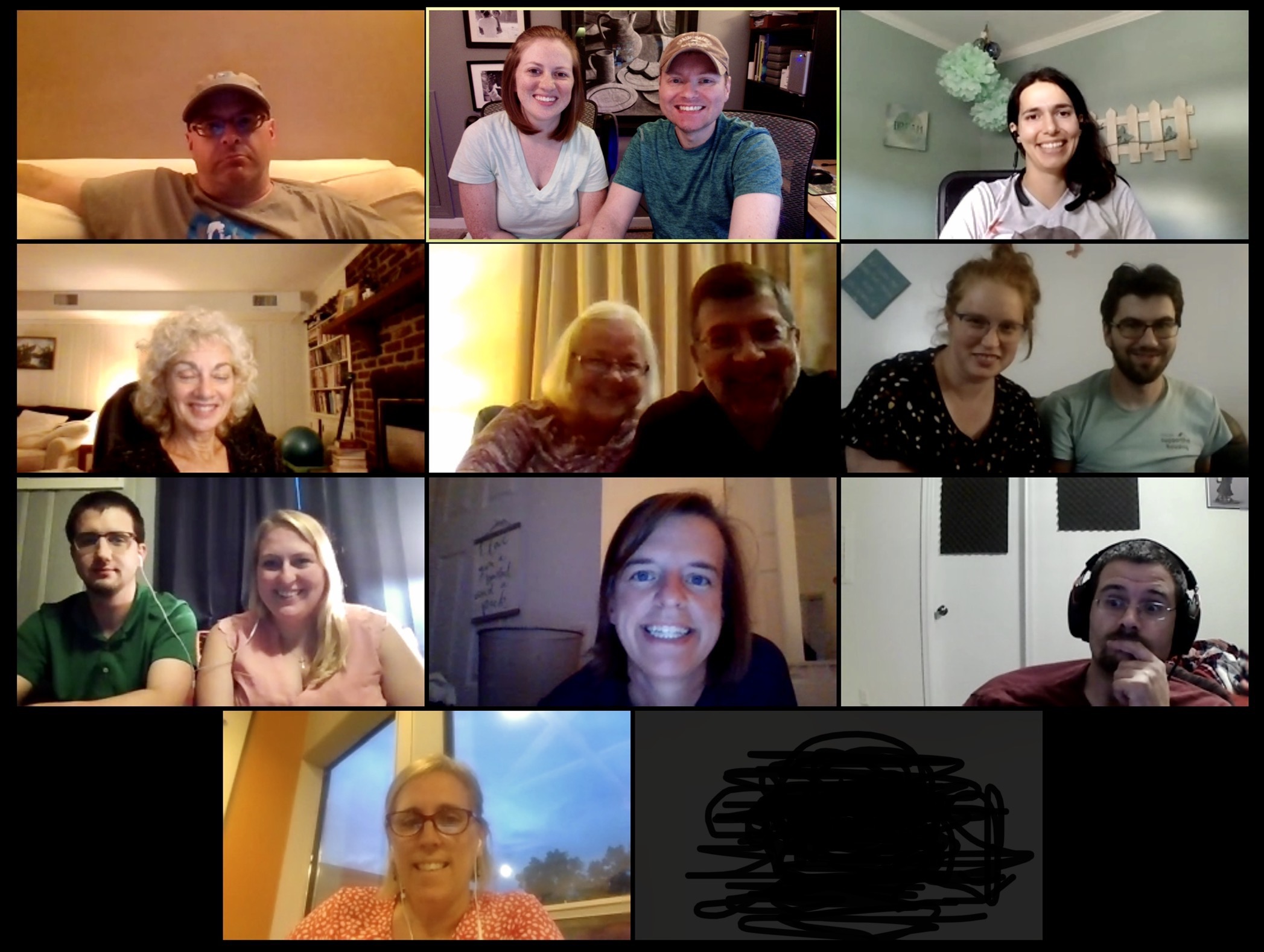
What would we do during these days of COVID-19 without FaceTime, Zoom meetings, Microsoft Teams, or Skype?! Sheltering at home, working from home, and social distancing have all drawn us into more of a solitary work and life. Having these online conversation opportunities keeps our daily lives open to those we wouldn’t otherwise see. Unfortunately just as meetings in real life as well as large family gatherings can exhaust us, so can the electronic facsimiles.
We want the good of them, and we sure don’t want to burnout on them before our stint with the Coronavirus is over.
Thankfully there are clinicians, creatives, and other thought leaders out there who are keeping online meetings fresh and inviting.
Psychologist Steven Hickman has written an incredibly insightful article on Zoom fatigue. Here are some of his observations:
[Related to his various Zoom meetings during COVID-19] “I have felt joy arising to see the faces and hear the voices of people whose faces and voices I first encountered when we were breathing the same air, standing in the same physical space, each (in Dan Siegel’s term) “feeling felt” by the other. And so it was nice to be with them electronically in this age of social distancing and sheltering in place.
And that was it, it was nice. I’ve been so busy lately that I thought perhaps I was just fatigued. But the more it happens, the more I realize that I end up feeling both connected but disconnected to these dear people.”
“…when we start to be over-stimulated by extraneous data that we haven’t had to process in the physical world [all the faces on a Zoom meeting, the pets, the background, our own fiddling with phone or other outside the screen’s view], each new data point pushes us just a little bit farther away from the human-to-human connection that we all crave and appreciate.“
“Italian management professor Gianpiero Petriglieri recently tweeted ‘It’s easier being in each other’s presence, or in each other’s absence, than in the constant presence of each other’s absence.’“
Dr. Hickman then offers 6 interventions to boost the benefit of these online meetings while dissipating their down-side:
Take a few moments before clicking “Start” to settle and ground your attention. [My note: I find this so helpful because otherwise we are rushing into an online meeting, as if we’re running late for an in-person meeting. All the emotions and some of the guilt of being late.]
Take the time to truly greet whoever is in the room with your full attention—offer your attention to each face that appears (if the group is not too big). Give yourself a moment for each person to make an impression on you, and “take in the good” as Rick Hanson would say. Give yourself an opportunity to feel what it feels like to be in the presence of another. [My note: I LOVE his reminder of mindfulness. We struggle with truly being present with people…in the moment. Good word.]
Choose “speaker view.” In Zoom, one can choose Speaker View or Gallery View. [My note: I didn’t notice before that a “speaker view” is available. I love seeing all the faces, but maybe they can be distracting as well. Something to think about, especially for a work or content meeting.]
Resist the urge to multitask. I need to let go of a bit of “efforting” and let my attention rest more lightly and lovingly on what (and who) is before me. [My note: This multitasking adds to our “Zoom fatigue” when we are trying to get more done than is reasonably possible and stay tuned into what’s going on in the online meeting. We may need to look away or focus more lightly on the screen, but multitasking will take away from our experience of those in the meeting.]
Try to take measured breaks between sessions.
And finally, remind yourself periodically that this is a new placebetween presence and absence that we will have to learn how to accommodate as we go forward into the uncertain future. It is both better than absence…and not quite as resonant as presence.
Thank you, Dr. Hickman, for this excellent piece of counsel.
What counsel do you have to keep online meetings engaging and pleasurable for those in attendance? Please comment below.
In my experiences of late with video meetings, we have tried to keep things rolling in terms of content and invite the addition of humor/play if it doesn’t already exist. Game nights came even be planned as online meetings. Family dinners, coffee breaks, teatimes, or happy hours can also be orchestrated via Zoom or one of the other platforms. Time limits are helpful. Chatroom groupings as part of a larger online meeting are helpful. One friend of ours actually added a dressup/costume element to his video meetings.
Online meetings should be just part of our arsenal of tools to stay in touch with each other. It’s way too early in this historical season for us to grow weary of them. I am grateful and will continue to be…let’s help each other to keep them beneficial for all involved…whether it’s two people or a large roomful.[Our son who is an essential worker and therefore unable to visit us because of his potential exposure to COVID-19 at work. So grateful to see him at least this way.]
Hey Everybody! Hope you’re faring well through these days of Coronavirus and social distancing. Many of you may be still going out to work, and we are grateful for all your essential services keeping us supported in our different living situations.
I didn’t post Friday Faves last week. So we have Friday Faves from two weeks today. Hope you’re finding joy in this odd journey of ours right now. We may be physically distanced, but we are together in this (that’s almost become cliche except for it’s still true).
1) Some Good News – We can find it, or create it if need be. Some good news. Actor John Krasinski has done just that. He is scripting and posting a weekly YouTube video entitled appropriately Some Good News. His first post focused on the 15th anniversary of the American TV show The Office. Below you will find Episodes 2 and 3.
Please share in the Comments your own brush with good news this week and any good news you made happen for others. Let’s safely crush this physical distancing experience!
2) Final Fantasy VII on Guitar – If the lilting music of the Final Fantasy videogame franchise has special meaning to you, then Nathan Mills of Beyond the Guitar gets it. The chief composer of the Final Fantasy themes is Nobuo Uematsu. Nathan’s latest arrangement from the franchise is Aerith’s Theme from Final Fantasy VII. Here it is:
3) Sound Thinking – One of my go-to Bible verses in scary situations is 2 Timothy 1:7 where the Apostle Paul states: “For God has not given us a spirit of fearfulness, but one of power, love, and sound judgment.”Some translations use sound mind or self-control for the phrase “sound judgment”.
Either way, there is such a thing as sound thinking, and it is worth determining whether we are pursuing and exercising that level of reason…or not. Otherwise, we will continue to keep passing each other in conversations, even good friends, shaking our heads when we disagree with ideologies. Preferring to discount, blame or revile, rather than understand each other’s take on something that matters to both of us. Especially in today’s super-charged political conversations and in our government’s decision-making.
In this chapter, Levinson offers Ten Blocks to Sound Thinking – with General Semantics “Correctives”. The blocks follow; read the succinct and incredible helpful correctives in this rapid read chapter. I would love an opportunity to sit around a circle with friends and associates of mine who think vastly differently than I do on a range of topics and sort out how we might come more to the center using these helps.
10 Blocks to Sound Thinking (Martin H. Levinson)
Allness Attitudes [communicating as if we know all there is to know about a subject]
“Knee-jerk Reactions
Either-or Thinking
Rigid Evaluations
Projection Problems [stating opinions as if they were facts]
“Useless” and Poorly Structured Questions
Elementalism [assuming there is only one cause of something]
Jumping to Wrong Conclusions
Relying on Common Sense [taking assumptions for granted]
Labeling and Category Errors
So much to consider. I will close this with a quote, measured and sound, from a friend of mine, Helen Phillips, on the topic of our country’s mediation of the Coronavirus pandemic:
“We’ll never know whether these drastic measures have spared us from a fate we cannot fathom with thousand or tens of thousands more people sick and dying, or not. If the stats tempt you to feel indignant, and a false sense of ‘perhaps the whole thing was a big fat overreaction’, how do you claim to know which is which? Who can be certain what’s ‘real’ and what’s successful mitigation through extreme precaution as intended. Everyone is speculating, everyone is claiming someone else is wrong, everyone has an opinion and a conspiracy theory from the cheap seats with no ‘skin in the game’.
At the end of the day, who among us bends under the burden of tremendous responsibility? Who among us truly believes they have solutions for the world’s problems? Who among us rarely sleeps, evaluating the deluge of evolving data? Who among us thinks they know what’s best for an organization, a state or a nation?
Perhaps instead of feeding the dragon of obsession and negativity, maybe we should do a little more soul searching, heart checking, gratitude evaluating, neighbor loving and realize the roots of our faith are growing deeper.”
4) Coronavirus Tips for Survival – Have we exhausted this subject yet? I can’t imagine we have. Fortunately, I have a good friend who is also a cancer nursing specialist. She helped me devise a survivorship plan after my bout with cancer. She is also the source of much of my plan for staying healthy and hopefully surviving COVID-19 should I contract it. First a little musical respite with DJ Brinson and Emily Gardenire:
I have listed several sources below with a wide range of viewpoints on keeping COVID-19 at bay or surviving it should you get hospitalized. The tips are just based on what I’ve read and what conclusions I’ve made. Not scientific, not tested, etc., etc., etc.
Pray, trusting God isn’t finished with me yet…or if my time is done on earth, then trusting Him for grace for me and for my family.
Be aware of what surfaces I’m touching (especially outside of my home environment) and wash my hands often and thoroughly. Hand sanitize regularly.
Keep my hands off my face.
Social distance. Stay 6 feet apart from those not in my “stay at home” environment. Only gather in very small groups with others abiding by same rules (family, close friends, colleagues when necessary).
Although social distancing, be creative and purposeful – serve others and stay in contact. Pray for those around you and far from you.
Learn to sleep on my abdomen and sides (this may be necessary if I end up hospitalized).
If hospitalized, up to being put on a ventilator, I want it all (oxygen, of course; hydroxychloroquine and azithromycin (if available); testing and treatment for cytokine storm syndrome; red blood cell and plasma infusions; whatever else is the latest and greatest.
5) Busting with Bonuses – I couldn’t decide on a fifth favorite so will leave you with these bonuses as the fifth. The Spring here is spectacular and I’m especially grateful having been “staying at home” for over a month now. Hope you’re doing well. Thanks for reading and keeping company with me.
Therefore encourage one another and build up one another, just as you also are doing. – 1 Thessalonians 5:11
Encourage one another day after day, as long as it is still called “Today,” so that none of you will be hardened by the deceitfulness of sin. – Hebrews 3:13
[Today is Mom’s birthday – 18 of them now passed since she died. This blog adapted from the Archives. Using #WorshipWednesday today to showcase how we can share the love of Jesus with those He places in our lives.]
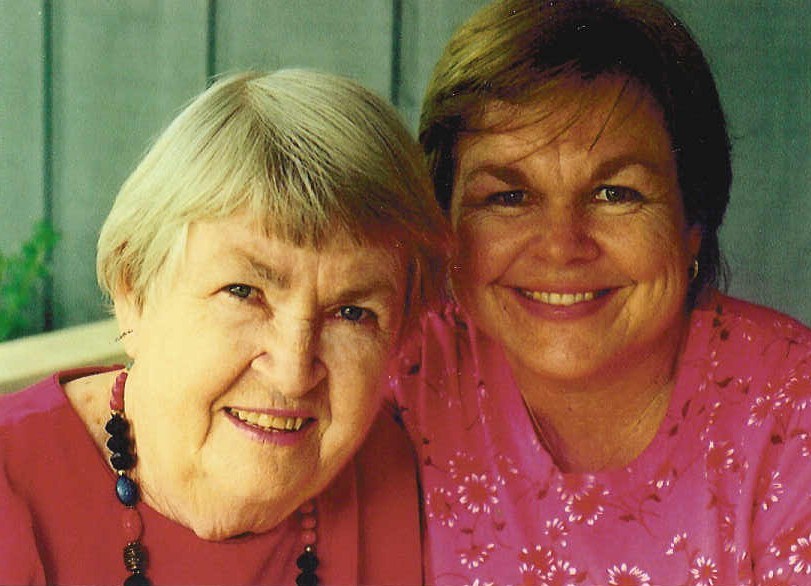
Our little family never lived close to the grandparents. This was not easy…for any of us. Before I married, I did live close to home, and my mom was my best friend. She died several years ago, and I often say to people who knew her that “when I grow up, I want to be just like her.” Still working on that.
Mom and I shared a weakness for words…they are probably excessively important to us, delivering both positive and (sometimes) negative weight. She was an amazing encourager. She rarely missed an opportunity to lift another’s spirit or to speak loving truth to someone desperate for God’s touch.
When I moved away to take a teaching job, she and my dad helped me with the move. New Haven, Connecticut would be a 2-day drive from Georgia. It was the farthest I had ever wandered from home. She stayed a week to help me settle in. While there, she was such great company. We explored the city together and laughed over a new culture and cried at the missing that was ahead for us.
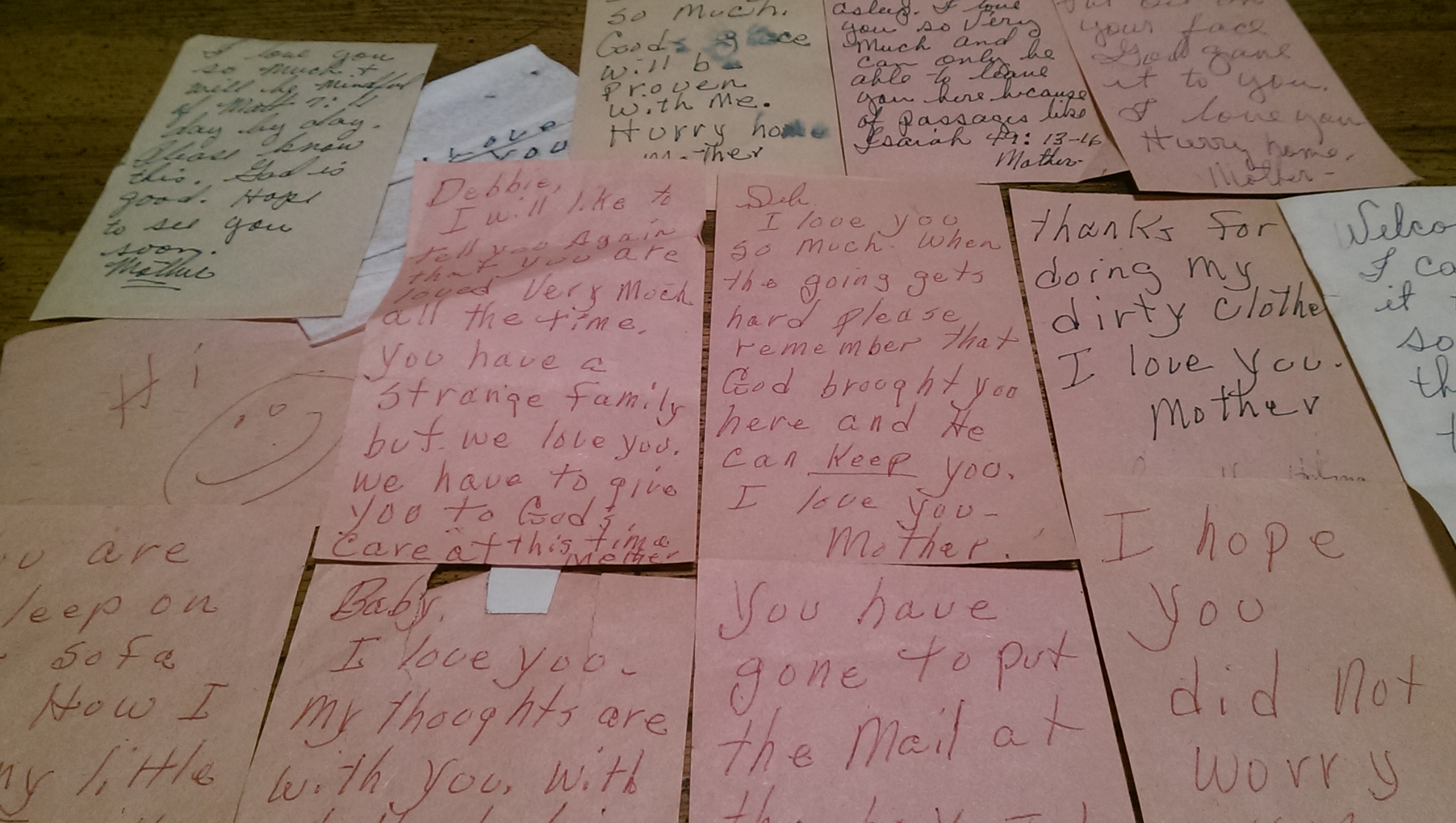
She filled my freezer with her baking, and, while I was at work, she wrote notes. Then she hid them everywhere. After she flew home, I began finding them. In my coffee mug. Under my pillow. In the pocket of my coat. Among my reference books. Behind my music books on the piano. She was with me in the love notes she left, and it made the distance between us…less.
My mom and I also had a weakness for bits of paper. I kept every one of her notes. These from that move over 30 years ago are fading…red ink on pink paper. There is a lifetime of notes between my mom and me. The tradition she started on that first move has become a life-long tradition for our family. Our visits back and forth, across the US and then the globe, have been papered by these little notes.
Our children, from the time they could write, entered into this tradition much to the joy of their grandparents. Before we would leave again from visits with them, these three young ones would write of their affection for their grandparents and hide them all over their houses. I delighted in their cooperation in this conspiracy of love.
Mom always wrote notes…not just to us but to so many. She and her Sunday School Class ladies would send cards every week to the sick ones or the sad ones. She had a special burden for the elderly, for widows (including functional widows, deserted by husbands) and for fatherless children (again including those “orphaned” by still-living fathers). She inspired me by her humble ambition .
Pure and undefiled religion before our God and Father is this: to look after orphans and widows in their distress and to keep oneself unstained by the world. – James 1:27
I am so thankful for my mom’s bits of paper…for her love…and for her perseverance in encouraging and serving others. Her generation is sadly almost gone, and it is for us to pick up these traditions and pass them on somehow to the next generations…Maybe there won’t be bits of paper or love notes like in the past. I do hope we still take the time to write. Definitely, the call to serve and to encourage is as current as ever. My life continues to be rich with those, young and old, who reach out to those around them with words of affirmation and kindness. Written or not, they are love notes to the heart.
 Photo Credit: Paul Sableman, Flickr