Category Archives: Emotions

Monday Morning Moment – Gently Confronting the Conflict Generated by Reductionism (You Want to Know this Word)

Photo Credit: Quote Master

Today, I want to talk about reductionism – how we reduce a whole person into one part – one facet that we take great pleasure in mocking or deriding. Thinking highly of ourselves in the process. Don’t miss this! Here we go.

Pierce Taylor Hibbs is a writer, teacher, and gentle theologian. I came across a piece he wrote this past week, and it has brought such clarity to a murky subject. The piece is “Reductionism: the Disease that Breeds Conflict”.

Don’t let that big word reductionism put you off. Hibbs will define it, but first, let me give you a scenario or two where we have seen this in action (and when we might have added to the fire of such a situation). We’re at a party of peers. We feel comfortable to just say what we think about any number of people, policies, or processes. No filters. What kinds of things pop up in those conversations? Mind you…they all are met with heads nodding (or shaking), laughter, and attitude. Mocking derision even.

Who are we in this conversation? The chief propagator of said comment. The amused and agreeing audience. The one uncomfortably close in character or worldview of the one being mocked. The one not necessarily close to the subject of putdown, but not comfortable with the putdown…or the people enjoying it.

Now…the definition of reductionism before we weigh in on our conversation topics. Hang in there. it’s so worth it. Pierce Taylor Hibbs on reductionism:

“Reductionism is the stepchild of our desire for mastery (complete control), which emerged from the ancient evil of autonomy Autonomy is the idea that you’re completely and utterly independent…You want full control. The thing is, you can’t have that. . . you know, because you’re not God. You’re limited by nature. That’s how you and I were made. But we’re so stubborn that we don’t accept limitation. We refuse to think we can’t master our own lives. So, within what John Frame calls the fantasy world of autonomy, we chase after mastery, and when we can’t get it (again, we never will get it), then we pretend to have it with . . . reductionism…If we can’t master our lives, then we can simplify them and make it seem as if we’re in full control. We can reduce the complexity of our own lives, the people in them, and the problems that surround us. We can take, in other words, an issue or person with a thousand dimensions and pretend that there’s only one dimension. That’s reductionism. Put differently by my friend and teacher, [Vern Poythress], reductionism happens when people “reduce the world to one dimension of the whole. . . . But reductionism is poverty-stricken, not only in its threadbare endpoint consisting of only one dimension, but also in its explanatory power.””

Reductionism, in short, is when people make something a lot simpler than it is. They do this for the sake of convenience, or egoism, or to build their own self-righteousness. There’s no shortage of motives, but I can’t think of any that are wholesome. And note what Poythress ended with: it lacks explanatory power. Read: it doesn’t actually explain much...In our frustration we reduce people, problems, and situations to manageable bits (ignoring swaths of information) in order to convince ourselves of our own mastery. You can start to predict why this is so destructive.”

Reductionism hurts people because it flattens them. It takes a human life (or a situation, political topic, etc.) and crushes it down to a single dimension, ignoring all of the others. That not only fails to align with reality (reality is always more complicated than we could ever dream); it insults people by making judgments based on that single dimension.”

OK…here we go on the topics “reduced”:

Vaxxers/non-vaxxers. Maskers/non-maskers. Cool/Not Cool. Liberals/Conservatives. Republicans/Democratics. Pro-lifers/Pro-Choice/Abortion. Boomers/Ageists. Patriot/Isolationist. Racists. Privileged. Stupid. Misogynist. Hurtful. Offensive. Homophobe. Sexist. Small-minded. Evangelicals. Enneagram or other reductionist labeling.

We can reduce a person into a box of one word or phrase. What is up with that? Nothing good. It’s handy for a laugh at a party or a sympathetic ear who “gets” people “like that”.

It is not reality. It may be entertaining, but it furthers the accepted divide between people. It degrades not only the subject of the derision but the audience, as well as the person speaking. Hibbs suggests a solution for those who want one:

“Reductionism is killing us because it’s killing our conversations. It’s killing open, receptive dialogue. It’s polarizing the nation, even the world. For our part, we have to start identifying and assaulting reductionism whenever it crops up in our conversations…But what are we supposed to do instead?…We need God and other people to understand not just the world, but even ourselves truly. We need two things: humility and a withholding of assumptions.” – Pierce Taylor Hibbs

He goes on in his piece, giving specifics of how humility and withholding assumptions work together to soften the elements of conflict, even to the possible healing of rifts. Hibbs is a Christian theologian and speaks eloquently of the life of Jesus in his people in the call to a ceasing of conflict. Not just avoiding conflict, but confronting reductionism. Whatever your faith, his counsel is sound in acknowledging the sting of our current biting and devouring social culture. And resisting the temptation of engaging in it…but not be just keeping silent and existing the conversation. Definitely worth our consideration.

Photo Credit; Janet Mock, Audi Quotes

Why Do We Have to Make Others Wrong to Be Right? – Lolly Daskal

Personality Tests: Why Are We Obsessed with Labeling Ourselves? – Sara Abdelbarry

[The above video is fascinating. Wow!]

Bullying: Scoffers, Mockers, Ridicule, and Scorn in the Bible and Today – Kelly Ann Christensen

Worship Wednesday – Magnify – We Are Messengers

Photo Credit: Screenshot, YouTube

I will bless the Lord at all times;
His praise shall continually be in my mouth.
My soul will make its boast in the Lord;
The humble will hear it and rejoice.
O magnify the Lord with me,
And let us exalt His name together. – Psalm 34:1-3

Now to the King eternal, immortal, invisible, the only God, be honor and glory forever and ever. Amen. – 1 Timothy 1:17

When I was younger, the phrase “to magnify God” seemed strange. “Magnify” meaning to make something bigger, in size or significance. When we magnify something way small, that encompasses the above meaning. Magnifying God is altogether different.

God is beyond big. We need faith on the order of a telescope to do justice to the immenseness of God.

Telescope vs. microscope faith – As in examining the heavens with a telescope, we capture just a portion of the greatness of the universe. So with God, as we magnify Him, we draw closer to some part of the magnitude of who He is as Creator, Saviour, Provider, Sustainer, Deliverer, and Lover of our souls.

We use microscope faith, as we train our eyes on the small in our lives, focusing on their seeming immensity. Our hearts’ eyes are filled with ourselves. Our pain, struggle, and sin. Even our hopes for the future consume our senses. No room for God. No recollection, in those microscope moments, of how big God is. Yet, a God who still condescends to take residence in us, His children.

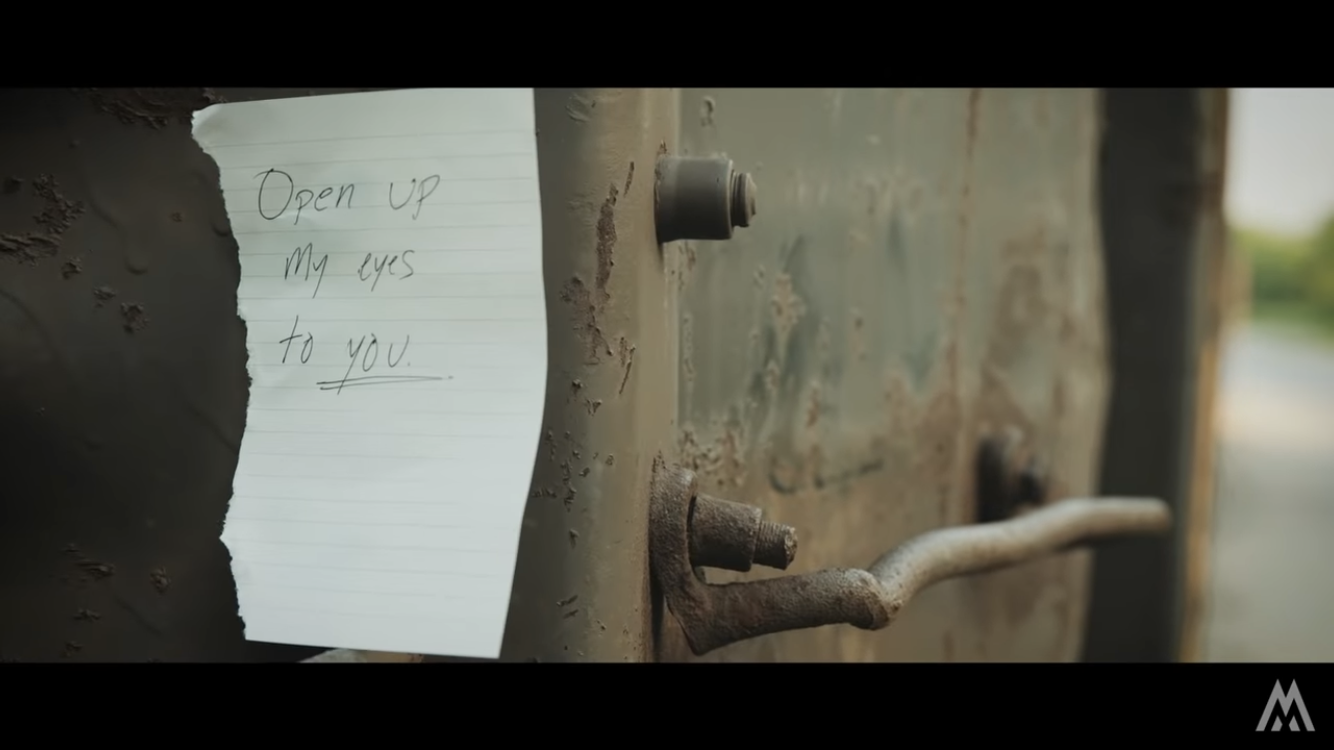
Photo Credit: Screenshots, YouTube

When we turn our eyes upon Jesus, we then are able to exercise the right magnification, so to speak. Regarding the past, our failures, our struggles, we see them small compared to a God who looks to us with all-surpassing love and power. Regarding present sin, we may not see it as small, and rightly so, but God is so much greater than our sin. As we fix our eyes on Him, in confession and repentance, we see the God who is mighty to save. When our desires and longings consume us and crowd our hearts, we lift our eyes to the One True Treasure we have…in this life and the next.

You might think this is too hard. These things matter to you. They are too hard to turn away from. I get that. Our dilemma is because we are looking through a microscope and not a telescope.

To focus on any one facet of who God is will shake us to our knees. His undeserved love, His gentle goodness, His tender mercy, His divine justice, His great salvation, His generous provision, His fierce faithfulness, His forever holiness,  indescribable beauty.

Eyes on Him.

Worship with me to the song “Magnify” sung by Darren Mulligan with We Are Messengers.

I’ve been trying to make sense of the sorrow that I feel
Holding on for life to the only thing that’s real
I’ve only scratched the surface, I’ve barely had a taste
But just a glimpse draws my heart to change
And one sight of You lays my sin to waste
I don’t need to see everything, just more of You

Take it all, take it all away
Magnify no other name
Open up, open up my eyes
To You

Photo Credit: Screenshot, YouTube

Take it all, take it all away
Magnify no other name
Open up, open up my eyes
To You

My sight is incomplete and I’ve made You look small
I’ve been staring at my problems for way too long
Re-align where my hope is set, until You’re all that’s left
But just a glimpse draws my heart to change
And one sight of You lays my sin to waste
I don’t need to see everything, just more of You

Take it all, take it all away
Magnify no other name
Open up, open up my eyes
To You

Take it all, take it all away
Magnify no other name
Open up, open up my eyes
To You

Oh God, be greater, than the worries in my life
Be stronger, than the weakness in my mind
Be louder, let Your Glory come alive
Be magnified

God be greater, than the worries in my life
Be stronger, than the weakness in my mind
Be louder, let Your Glory come alive
Be magnified
Be magnified

Take it all, take it all away
Magnify no other name
Open up, open up my eyes
To You

Take it all, take it all away
Magnify no other name
Open up, open up my eyes
To You, to You*

*Lyrics to Magnify – Songwriters: Casey Brown & Darren Mulligan

YouTube Video – Magnify  (Acoustic) – We Are Messengers – Musicnotes Song Spotlight

35 Bible Verses About Magnifying God

We Are Messengers – Magnify – The Berean Test (Is the song Biblical? The reviewer saw some of the lyrics as vague but overall God-glorifying and Biblically sound.)

Worship Wednesday – Behold Him – Francesca Battistelli – Deb Mills

Worship Wednesday – Is He Worthy? He Is – Andrew Peterson – Deb Mills

5 Friday Faves – Life Without Forgiveness, the Power of Words, the CALM Superpower, COVID Close to Home, and the 20th Anniversary of 9/11

Here we go!

1) Life Without Forgiveness – An article on  life without forgiveness by Dave Burchett got me thinking even more about forgiveness. I’m in a study on Forgiving What You Can’t Forget by Lysa Terkeurst. Writing about it, too.

Life without forgiveness sounds truly awful. We imprison ourselves to the past and drag it into our present day and future with treasured grudges. Grudges we feel we can’t afford to lay down. They become part of our identity and how people relate to us – either protecting, justifying, or, at times, “returning evil for evil”.

Photo Credit: Quote Fancy, William Arthur Ward

We have the power to release ourselves and all these entrapped with us…through forgiveness. We need God to help us, for sure. We however must make the decision to forgive. Pretending to do so while hatred gains strength in our hearts is a delusion. God help us.

Here’s a bit of what Dave Burchett says in his article (read the whole here):

“There is no way I have found to release grudges without the healing power of forgiveness. Author Will Davis wrote this powerful insight.

‘Once you decide to forgive, you initiate the healing process. Forgiveness gives your soul permission to move on to the higher and healthier ground of emotional recovery. Forgiveness is to your soul what antibiotics are to infection. It is the curative agent that will help to fully restore your soul. It doesn’t immediately remove the pain of offense but it does start you on the road to recovery.’

I really like that perspective. The decision to forgive initiates but does not complete our healing. You will, in time, heal. I am asking you to pray that you can begin the healing process of forgiveness knowing that only time and God’s mercy can fully heal. That will start you down that road to forgiveness and empowerment to let go of the grudges that are weighing you down. You won’t get there today or tomorrow. But you will never get there without taking the first step of faith.” – Dave Burchett

Photo Credit: Spark People

Burchett refers to the song “Without Forgiveness” by Jerry Salley. Here’s a sweet cover by Jason Davidson:

2) The Power of Words – Words mean things. In fact, they are more powerful than we can imagine. Author, speaker Jackie Hill Perry has referred to a poem which says “Words make worlds”. Now I haven’t been able to find that poem, BUT I have read Genesis 1-3 with the account of God speaking the world into existence.

Photo Credit: Lidia Yuknavitch, @Seek5, Pinterest

Perry spoke on the power of words at a women’s conference. She used the text of the Apostle James’ epistle. James 3. This passage focuses on the influence of the tongue. She elaborated on three points:

  • The tongue is accountable. [We are responsible for our use of words. When we have torn down instead of building up, we will experience consequences. It does not go unheeded.]
  • The tongue is powerful. [We must control our tongues…what we say. Self-control has a wide reach, especially starting with “restraining our speech”. Words can hurt, but they can also heal.]
  • The tongue is inconsistent. [We say one thing to one person and turn around and say another thing to someone else. We may bless God and then curse a neighbor, made in the image of God. Perry talks about the huge disconnect when we speak with reverence of God but with contempt or disdain toward another human being. Words can be a “restless evil”. Pay attention. Are others’ names and personhoods safe on our lips?]

Listen to this fascinating and charged talk by Jackie Hill Perry.

Words Create Worlds – The Language We Use Shapes the Culture We Lead – Eric Geiger

3) The CALM Superpower – Author, leadership trainer Carey Nieuwhof recently interviewed psychologist Jennifer Kolari on his podcast. She spoke on dealing with irrational people, and, in fact, any situation of conflict. I learned so much.

[I’ve written about the brain, decision-making, and dealing with crisis many times. Such fascinating issues!]

Dr. Kolari introduced her CALM technique of dealing with conflict (including helping children in conflict with you or others). In brief, “the CALM method is a way of deep listening using language, compassion and empathy literally as medicine. It will soothe and calm AND bring both participants in the conversation into brain-heart coherence.”

Here’s a brief outline of the framework:
C – CONNECT – connect before correcting; deeply listen; give the sense that you are “for them”.
A – AFFECT – match the affect of the person in front of you; don’t say how the other person SHOULD feel; show understanding.
L – LISTEN – deeply; take that affect above into what you’re hearing; wonder at it; choose your responses based on what is being said to you, including the emotion. Respond not react.
M – MIRROR – allow what’s going on with the person to “hit you right in the heart”. Be in the moment with them/him/her. We do this with babies intuitively. Communicate with your face and body even more than with words.

Listen to the podcast. Check out the resources below. We too often go to correction, with other adults and definitely with children, when they need connection first…and maybe only.

Connect With Your Kids Using the CALM Technique

YouTube Video – Jennifer Kolari – The CALM Technique and Child Brain Development – really fascinating and informative

YouTube Video – The CALM Technique for Babies and Toddlers

4) COVID Close to Home – I’m not saying much here, but COVID has hit very close to home this week. I have friends and family with COVID. Check your thoughts if you’re going straight to “oh…not vaccinated”. Not so in every situation. People who did everything “right” – vaccination, mitigation, all the preventions – can still get COVID. The graphic below is updated often and is super helpful.

Photo Credit: Wesleyan College

The most important points in this conversation are these:

  • COVID is real and we will have to deal with it for some time (not at a pandemic level forever but definitely as endemic).
  • Everyone has to make personal decisions on how to prevent and treat it. To not make a decision is to make a dangerous decision. I’m not saying what to do (enough people are telling us what to do), BUT I am saying to think through our risks and that of those around us, and make informed decisions.
  • Be prepared. You don’t want to start searching out what to do to lessen the impact of COVID when you are already sick.
  • Test early. Even if it might be something else. Testing early helps you and all those who may come in contact with you (if it turns out you test positive.

The pieces below are actually not in support of one methodology or another. In fact, they expose the hard decision-making needed in determining how to act with the threat of COVID. We can depend on (or react against) mandates from government, or we can make the best possible decision we can, given the information we receive.

By the way, my friends and family members are all on the mend… except for one. On a ventilator, with family called in. We are praying still. This is why we can’t be cavalier with our decisions.

Let’s Stop Pretending About the COVID-19 Vaccines – Buzz Hollander, MD

Impact of Masking – Twitter thread – Buzz Hollander MD

FDA Vaccine Regulators Argue Against COVID-19 Vaccine Boosters in New International Review – Andrew Joseph

5) 20th Anniversary of 9/11 – Part of why Friday Faves is coming out on Monday is because I’ve spent an enormous amount of time this week watching, reading, and listening to stories about 9/11. It’s the 20th anniversary of the bombings.

In the twenty years that have passed since 2001, our country has changed so much. We are divided in really unhealthy ways. On that day…for awhile, we came together. We may have had very conflicted views on what happened after (Iraqi War, immigration issues, and the long engagement in Afghanistan). Whatever our opinions are on these, the stories of that day are so worthy of our time and attention.

Photo Credit: Beth Wayland

One of the most beautiful pieces I read this past week was by writer Jennifer Senior for the Atlantic. It was really long, but she did justice to the loss and grief of just this one family. 27 y/o Bobby McIlvaine died that day at the bottom of the World Trade Center. Son, brother, friend, fiancé. His was just one of thousands of stories that day…it matters and it also reflects the many other stories that we don’t know.

The two videos below speak to the day after September 11, 2001 and to the day 20 years later. Take the time…

“Before you know kindness as the deepest thing inside,
you must know sorrow as the other deepest thing.
You must wake up with sorrow.
You must speak to it till your voice
catches the thread of all sorrows
and you see the size of the cloth.
Then it is only kindness that makes sense anymore,
only kindness that ties your shoes
and sends you out into the day to gaze at bread,
only kindness that raises its head
from the crowd of the world to say
It is I you have been looking for,
and then goes with you everywhere
like a shadow or a friend.” – Naomi Shihab Nye

___________________________________________________________________________

Bonuses:

Community – “Every arrow needs a bow: William Wilberforce” — the power of community. If Wilberforce was the arrow that pierced the heart of the slave trade, the Clapham Fellowship was the bow that propelled him. As Pollock writes, “Wilberforce proves that one man can change his times, but he cannot do it alone.” The Clapham fellowship lived by Wesley’s maxim: “In essentials, unity; in non-essentials, liberty; in all things, charity.” And this was no mere slogan: tensions developed in their relationship that would have splintered most associations, even Christian associations, had they not been so radically centered on Christ.” — “Every Arrow Needs a Bow,” by John Hart, CHRISTIANITY TODAY, July 1998 [This was a quote in my folder of quotes; I can’t find the source online today, but it rings even more true now.]

Photo Credit: Vala Afshar, Twitter

This Is What Happens to Your Brain When You Declutter Your Home – Kelsey Clark

“If we major in criticism, we become polemicists, rather than agents of redemption. Often polemicists excuse their loveless rough edges by the demands of truth. But they lose more than they realize. In fact, when love and the growth of positive truth are lost, truth is also lost. Biblical truth loses its scope, balance, depth, applicability, savor, and growing edge [in this disordered priority]. … Words that are not constructive, timely, and grace-giving are rotten and non-nutritive, whatever their formal likeness to Christian content (Eph 4:29). To lose charity, tenderheartedness, sympathy, and generosity is always to simultaneously pervert the redemptive nature of biblical revelation. Narrowed “truth” may bristle enough to defend one city wall, but it is not good enough to conquer the world.” – David Powlison’s “Cure of Souls” (2007)
Recipe for a Quick and Easy Cherry Cobbler – my husband’s favorite
Photo Credit: Lena Vo, Facebook


8 Ways to Build a Strong Foundation for Your Kids – Frank Sonnenberg

Remembering 9/11 – 20 years Later – and the Day Before – a Story about God and a Girl

Genessa (l) and April, Cairo, Egypt

[From the Archives – “Remember 9/11 – and the Day Before – a Story of God and a Girl”]

Today marks the eve of the 20th anniversary of the 9/11 bombings in the US. We all have our stories of where we were when we heard that terrible news. I heard the news as an elevator door opened in a hospital emergency room in Cairo, Egypt. The surgeon watching for us to deliver the patient, walked into the elevator. His face strained (me thinking it related to the patient with me). Then he said, “I am so, so sorry.” I thought he was referring to the precious one on the stretcher beside me, so small and injured from a terrible bus accident the day before. It turns out he was talking about the news that had traveled instantly from the States about the 9/11 bombings. I’d like to go back to the day before. For us, it would help to go there, before I can ever process the grief of this day that we all share.

It was like any other Monday, that bright, warm September 10th in Cairo, Egypt…until the phone call. Janna was on the other end of the call, telling me that Genessa and April had been in a bus accident on the Sinai. April had called her and relayed their location, at a hospital in Sharm el-Sheikh. These were girls in our Middle Eastern Studies Program, and they were finishing their time with us, taking a vacation together. They would re-trace some of their experiences in Bedouin villages across the Sinai and then enjoy a few days on the Red Sea. They were to return that Monday of 9/10, traveling in on one of the over-night buses across the desert.

Details will have to wait for another time, but with this information, my husband, Dave, left immediately with Janna and a local Egyptian friend who was also one of our language coaches. He took these two women because of their relationship with each other and with all of us. He also understood that there were two injured friends hours away in a hospital who would need women to minister to their needs. I would be praying and on the phone the rest of the day with families, other friends, US Embassy people, and our other young people in the program. I can’t begin to describe the emotional nature of that day…not knowing, hoping, praying.

When Dave and our friends arrived at the hospital, he was directed to April. She had painful, serious injuries, but none life-threatening, praise God. Then he was escorted into the critical care area to see Genessa. To his horror, it wasn’t Genessa. It was another young woman, unconscious – an Italian tourist, who rode in the same ambulance with April. April, lucid and still able to communicate, had tried to comfort her on that long dark ride to the hospital. Personal belongings were all scrambled at the wreck site, and the authorities made the mistakened decision that because April was speaking to her, she was Genessa.

Then Dave went on the search for our dear one…somewhere else in the Sinai. He back-tracked toward the site of the accident, checking other hospitals where other injured were taken. At this point, he was also talking to US Embassy staff, as he drove through the desert. Just shortly before he arrived at the hospital where he would find Genessa, the staff person told him they confirmed her identification from a credit card she had in her pocket…in the morgue of that small village hospital.

Dave, our Egyptian friend, and Janna, that friend who received the first phone call, stood beside this precious girl’s body, to make the formal identification…to know for sure that this was Genessa. And it was…and yet not. She, the luminous, laughing, loving girl we knew, was gone. It was more than any of us who loved her could take in on that Monday evening in Cairo, Egypt…the day before 9/11.

http://debmillswriter.com/wp-content/uploads/2014/09/Genessa-with-team1.jpg

As they left the hospital to return to April, two more friends joined them from Cairo to help. For any of you who have been completely spent in every way by such a day, you can understand what it was for them to look up and see Matt and Richard getting out of a car. God, in His great goodness, alerted them, stirred their hearts to drive all those hours…and then to arrive…just when they were most needed. So many arrangements had to be made…and most importantly, at that moment, to get April back safely and quickly to Cairo for surgery.

She came into Cairo on a plane near the middle of the day of 9/11. By the time we got her from the airport in an ambulance to the specialty hospital to get the further care she needed, a series of horrific events had begun taking place in the US. We would hear of them from this caring Egyptian surgeon…who had no idea how numb we were from losing Genessa and how concerned we were that April got what she needed as soon as possible. We were already so drenched by grief, this unfathomable news about the bombings washed over us without understanding the scope of it…the pain of it…for all the rest of America.

Later in that day, with April receiving the best care possible, and me watching by her side, I could take in some of the loss coming at us on the small t.v. mounted in the hospital room. Egyptians were telling us how so, so sorry they were for us (as Americans). If they only knew, they were our mourners for our loss of Genessa, too. In the din of world-changing news, and a country brought together in grief…we grieved, too, a continent away…for the losses of 9/11 and the day before.

That was 20 years ago…April healed from her injuries (only she and God know what all that took on the inside), the other young people in our program have gone on to careers and families across the US and around the world. We have also gone on…back to the US and to other work.

Two things have not changed…a beautiful girl, who fell asleep by the window of a bus in the Sinai night and woke up in Heaven… and the God who welcomed her Home. There is so much, much, more to this story, but I have to close with this. As her family back in the US were pulling the pieces of their lives back together, and going through Genessa’s things, they found a little cassette player on her bed…there left by her, two years before, as she left for Cairo. In it was a cassette where she’d made a tape of her singing one of her favorite songs, I Long for the Day, by singer/songwriter Dennis Jernigan. Toward the end of the song you can hear Genessa’s tears in her voice, singing to the Lord. We would sometimes have the opportunity of being in the room when Genessa led worship in those days. She couldn’t hold the tears back. So in a space just God and her.

If we look at Genessa’s life through the lens of some American dream, then we would think how tragic to die so young, so full of promise. Look through the lens of how much she loved God, and knowing Him was what mattered most to her…and all who knew her knew His love through her.

This God…and this girl.  Genessa

I Long for the Day by Dennis Jernigan

I long for the day when the Lord comes and takes me away!

Whether by death or if You come for me on a horse so white

And anyway You come will be alright with me

I long to just hear You said, “Now is the time. Won’t you come away?”

And I’ll take Your hand, surrendering completely to You that day!

And no, I can’t contain the joy that day will bring!

Chorus:

When I get to see You face to face

When I can finally put sight to the Voice I’ve embraced

It will be worth all the waiting for that one moment I’ll be celebrating You!

When I get to feel Your hand in mine

When I can finally be free from this prison called time

When You say, “Child, I’ve been waiting for this one moment of celebrating, too!

For this one moment of celebrating you!”

O Lord, while I wait, I will cling to each word that You say.

So speak to my heart; Your voice is life to me, be it night or day.

And anything You say will be alright with me.

You see my heart’s greatest need

You and me, walking intimately.

You’re my only love, and I am waiting patiently for Your call.

When You call me to Your side eternally.

(Chorus Repeat)

Lord, I celebrate You!

Forever with You! No crying there.

Forever with You! No burden; no more worldly cares.

My heart is anticipating eternally with you celebrating You!

Forever with You I long to be;

Forever worshipping, knowing You intimately!

When You say, “Child, no more waiting” [No more waiting, children]

I’ll spend forever just celebrating You.

I’ll see all my loved ones gone before

I’ll get to be with them, laugh with them, hold them once more

There’ll be no more separating! [No separating]

Together we will be celebrating You!

Together we’ll worship You and sing.

Forever praising Lord Jesus, our Savior and King.

When You say, “Child, no more waiting” [No more waiting, children]

Enter your rest, and start celebrating, too.

Forever Lord, I’ll be celebrating You.

Chorus Repeat:

When I get to see You face to face

When I can finally put sight to the Voice I’ve embraced

It will be worth all the waiting for that one moment of celebrating You!

When I get to feel Your hand in mine

When I can finally be free from this prison called time

When You say, “Child, I’ve been waiting for this one moment of celebrating, too!

For this one moment of celebrating you!”

Dennis Jernigan, from the album I Belong to Jesus (Volume 2)

Worship Wednesday – His Eye Is On the Sparrow, and I Know He’s Watching Me – Civilla Martin

Photo Credit: Heartlight

My heart is suffering, withered like grass; I even forget to eat my food. Because of the sound of my groaning, my flesh sticks to my bones. I am like an eagle owl, like a little owl among the ruins.
I stay awake; I am like a solitary bird on a roof.Psalm 102:4-7

“Aren’t two sparrows sold for a penny? Yet not one of them falls to the ground without your Father’s consent. But even the hairs of your head have all been counted.  So don’t be afraid; you are worth more than many sparrows.”Matthew 10:29-31

I have a friend who is sad.

She has reason. A series of losses and almost-wins have knocked the breath out of her. She loves God and trusts His goodness, but she still struggles with why life has gone the way it has…at this moment.

In praying for her and searching the Scripture to encourage her, it didn’t surprise me that even in my down time, the Lord spoke through an ordinary passing moment. A scene in a little-known TV movie. Settled on the couch, during a rain shower, I watched a film where one of the characters quoted part of Civilla Martin‘s poem “His Eye Is On the Sparrow”.

Wonder shot through me (once more) at the beauty of this truth and the song inspired by it. I searched out “His Eye Is On the Sparrow” online. So many lovely renditions of the old hymn on YouTube (see a few of the links below).

In my search, I came across author Gail Johnson‘s blog (written during the COVID summer of 2020) on the same song. Ironically, she had just seen a film which inspired her post as well (I’m pretty sure it is the same one). It was another gift from the Lord as I prayed and sought His face on behalf of my sweet grieving friend.

Johnson’s blog is wonderful, and you can read hers…or just stay here briefly, to worship with me, on this page. The quote below is from her blog, and it’s so to the point on today’s dilemma…how to deal with loss and our sadness over it.

The person who has the habit of hope also has the habit of remembering. Hope needs memories the way a writer needs notes. This is partly because hope depends so much on imagination. Our images of the future are sweepings from our remembrances of things past. If we expect to keep hope alive, we need to keep memory alive. Happy memories of good things we hoped for that were fulfilled, and grateful memories of bad things survived.Lewis Smedes

Photo Credit: Tonkin’s Growing Around Grief Model

I really have no doubt that my sad young friend will find her way through this dark tunnel to the glorious light at the end. Watching her persevere through this time of suffering is to see the radiance of the crucified AND risen Savior in the life of His child. Grief is an unwanted gift which can grow us up in Him…and with each other.

Worship with me.

Why should I feel discouraged, why should the shadows come,
Why should my heart be lonely, and long for heav’n and home,
When Jesus is my portion? My constant Friend is He:
His eye is on the sparrow, and I know He watches me;
His eye is on the sparrow, and I know He watches me.

Refrain:
I sing because I’m happy, I sing because I’m free,
For His eye is on the sparrow, and I know He watches me.

“Let not your heart be troubled,” His tender word I hear,
And resting on His goodness, I lose my doubts and fears;
Though by the path He leadeth, but one step I may see;
His eye is on the sparrow, and I know He watches me;
His eye is on the sparrow, and I know He watches me.

Whenever I am tempted, whenever clouds arise,
When songs give place to sighing, when hope within me dies,
I draw the closer to Him, from care He sets me free;
His eye is on the sparrow, and I know He watches me;
His eye is on the sparrow, and I know He watches me.*

Photo Credit: YouTube

Postscript: A member of my family told me recently that she wasn’t going to have a funeral. She didn’t want her family to suffer through one and she didn’t want all that sad music. I’ve thought about that a lot since. First, funeral gatherings can be amazing times of healing. They are a strange mix of sadness AND joy. We’ve lost some dear family members, colleagues, and friends in recent years. The times of the visitation, “wakes”, and even the funeral service have brought both tears of joy and sadness. With actual laughter in the halls as old friends and distant family reunited, honoring and celebrating a life too soon passed. So…a funeral can be a very good thing. Then the sad music. Sure some of the old hymns are sad…heartbreakingly so. I’ve played through this particular song several times this week. Turns out it is a favorite funeral song (in fact, it’s in this top 100 list of Southern Gospel funeral songs). The words are not at all sad to me. They are triumphant, glorious, even defiant, in the face of loss, suffering, and grief.

“When songs give place to sighing, when hope within me dies,
I draw the closer to Him, from care He sets me free;
His eye is on the sparrow, and I know He watches me;
His eye is on the sparrow, and I know He watches me.

I sing because I’m [defiantly] happy, I sing because I’m [gloriously] free,
For His eye is on the sparrow, and I know He watches me.”

*Lyrics to His Eye Is On the Sparrow – Civilla D. Martin, 1905

History of Hymns – His Eye Is On the Sparrow – Dr. Hawn

Story Behind the Song: ‘His Eye Is on the Sparrow’ – Lindsay Taylor

Lyrics to God Will Take Care of You – Civilla D. Martin, 1904

YouTube Video – Ethel Waters – His Eye Is On the Sparrow

YouTube Video – His Eye On the Sparrow – Lauryn Hill and Tanya Blount

YouTube Video – Larnelle Harris – His Eye Is On the Sparrow

YouTube Video – Whitney Houston – His Eye Is On the Sparrow

YouTube Video – Why We Sing (w/ lyrics) – Kirk Franklin & Family

Monday Morning Moment – Indistractable…What?!

Photo Credit: Pixabay

Being distractable is one of my character flaws…I guess. For awhile, I had decided it was a super-power. In that, I could jump from activity to activity or person to person, and still somehow be fully present…at least for the moment. Sigh… Interruptions or a busy schedule were not problems for me. In fact, they made for a fun and energizing day. Or so I thought.

There was a time in my life, before marriage, that my closest friends even did an intervention on me. Seriously. Maybe it was because I over-scheduled life like a crazy person (meaning that I actually believed people wouldn’t be put off by my having three different activities, with three different groups of people, in one evening).

So now I’m older and wiser. Chuckle, chuckle. I have the time but not the energy for over-packing my schedule. Nor do I have the mental capacity for deep focus in the face of all the “pings, dings, and rings” of life.

Enter tech-savvy, habits guy Nir Eyal. I caught a 25-minute podcast with him speaking on how to become indistractable. It was illuminating.

In Eyal’s book Indistractable: How to Control Your Attention and Choose Your Life, he removes technology as the distractor in our lives and points to the emotional states that actually drive us. Those uncomfortable emotions (boredom, loneliness, uncertainty) that we hope to silence by simply exiting whatever we’re doing at the moment and take up a different, potentially mind-numbing activity. Like scrolling through social media.

Distractability may make us feel better for the moment, but it doesn’t help us become the persons we want to be. It is a soother but not a life-sorter. It is a behavior, and what needs changing is less the behavior than what’s behind it – identifying the triggers that move us to be distractable and applying new habits to help us stay focused. . We want to be people others can trust to do what we say we will do…to have genuine integrity. How we grow in this area is the point of his book.

Being indistractable means striving to do what you say you will do. Indistractable people are as honest with themselves as they are with others. If you care about your work, your family, and your physical and mental well-being, you must learn how to become indistractable.” – Nir Eyal

Photo Credit: Pixabay

“LOOK FOR THE DISCOMFORT THAT PRECEDES THE DISTRACTION, FOCUSING IN ON THE INTERNAL TRIGGER”.Nir Eyal
Eyal talks about time management as being pain management. When we understand the discomfort which triggers us to try to escape, we can then build in a tripwire to short-circuit the distraction.
Photo Credit: Pixabay
“Ten-minute rule.” If I find myself wanting to check my phone as a pacification device when I can’t think of anything better to do, I tell myself it’s fine to give in, but not right now. I have to wait just ten minutes.” – Nir Eyal
Two of the many tools Eyal encourages are 1) effort pacts and 2) identity pacts. With the effort pact, he uses an app (the Forest app, for one) to help him keep commitments to himself. He also prescribes having coworkers, friends, or family members come alongside and help you press into a project or task until you’re finished. Accountability helps.
“Effort pacts make us less likely to abandon the task at hand. Whether we make them with friends and colleagues, or via tools like Forest, SelfControl, Focusmate, or kSafe, effort pacts are a simple yet highly effective way to keep us from getting distracted.”Nir Eyal

Eyal’s identity pact is an intentional reflecting on the person you want to be, and then using that identity as its own motivator. For me to say, “I’m a writer” requires a certain measure of discipline, with habits in place to help me actually write. If we begin using the language of identity, an accountability is applied that helps us be the person we say we’re becoming. “I am not as distractable as I once was”. “I am not side-lined by negative emotions anymore.” “My values include majoring on family, so I focus on my work at work, in order to be all there at home”.

“Only by setting aside specific time in our schedules for traction (the actions that draw us toward what we want in life) can we turn our backs on distraction. Without planning ahead, it’s impossible to tell the difference between traction and distraction.” – Nir Eyal

Lastly, I’ll mention Eyal’s use of time-boxing over a to-do list. He doesn’t deny that a to-do list is helpful, but it has its own fails built in. We default to finishing what’s easy or urgent, and, in fact, rarely are as productive as we might think we should be with a to-do list. Also, there is always this guilting about what we didn’t complete.

He actually fills a time-box calendar with what he wants to accomplish in a day. He includes things we might not consider in a to-do list like prayer, fitness, reflection, time with family, etc.

Photo Credit: Pixabay

When we have a time allotment (not just how much time something should take but when we will work on it), we are more apt to focus on just that. Eyal does encourage multi-tasking, but only if it is done using “different sensory channels”. By this, he means bundling activities that can actually be done together without diminishing either. An example is watching TV (or listening to a podcast) while on a treadmill. We have a neighbor who reads while walking. That has always impressed me, but it can be done.

Fitness coach David Rosales does a great service (to those of us who haven’t yet tackled all of Eyal’s prescriptions) by giving his own takeaways from Indistractable (including a few I mentioned above):

  1. Don’t rely on willpower – put systems in place to help you succeed.
  2. Timeboxing – rather than a to-do list, block out time on your calendar for specific tasks.
  3. Do Not Disturb as Default –put in place practices that keep you from being distracted by your phone.
  4. Batch everything – batch actions (and distractions) to avoid having your flow disrupted. [From email to Instagram]
  5. Ulysses pact – set up an app or timer or work out an arrangement with someone to help you be accountable.
  6. Take a growth mindset – bit by bit, you are learning how not to be foiled by distractions. It is a process.
  7. Identify pacts – start identifying yourself in ways that communicate you are not distractable. Make the decision of what kind of person you are determined to be, and decision fatigue is removed. You learn to just say “no”.

What do you think about all this? Maybe you are a person of focus. Please, if you are, comment below on how you make that happen.

Nir Eyal Website

Nir Eyal: Mastering Indistraction

Nir Eyal on Taking Control of Technology to Become “Indistractable”    [25-minute video]

Working Parents? Here’s How to Raise Indistractable Kids with Nir Eyal – Nir Eyal and Vanessa Van Edwards – excellent resource

Read James Williams’ excellent review and critique of Nir Eyal’s book Indistractable.

How to Do Timeboxing Right – David Sherwin

How Timeboxing Works and Why It Will Make You More Productive – Marc Zao-Sanders

The Tail End – Wait But Why – Tim Urban

Quotes from Nir Eyal’s Indistractable

PDF Summary – Indistractable – Nir Eyal

Monday Morning Moment – We pray…and We Don’t Give Up.

Photo Credit: David Sanabria, Flickr

I really don’t have words this morning.

Scott Sauls gave me the words below.

The blaming takes us nowhere. The hating definitely diminishes all.

Some think of prayer as a soft and impotent action. Not so! The God who hears our prayers is mighty to save. His purposes are not thwarted. He calls us to prayer and we, and those of the this broken world, are best served when we obey.

Do we do other things? Like sending our resources and opening our communities to those no longer with a home. Absolutely. However… if we don’t pray, we neglect the greatest salvation…and the greatest Savior in these seemingly hopeless situations.

The blaming and hating change nothing and care for no one. It is a dreadful waste and dishonors both God and humankind.

So…we pray.

…and we don’t give up.

Photo Credit: The Fellowship Site

5 Friday Faves – Who Is Jesus?, Procrastinators, the Silent To-Do List, On-line Study Opportunities, and Summer

Weekend! Here you go: my favorite finds of the week. One long and four super short. Hope you are encouraged!

1) Who Is Jesus? – If you read my posts, then you know The Chosen TV series has had a huge impact on my life recently. [You can find it here and on The Chosen app. Dave and I just finished Season 2, watching Episode 8 this weekend. The story of this episode is Jesus’ preparation of his Sermon on the Mount. It is a very intimate time, very critical turn in his public ministry. All his apostles, his mom,  and some other close followers are featured in the episode, in deep relationship with Jesus. Then there are those who oppose or are watchful of his growing influence – the religious leaders of the day and the Roman military charged with keeping order…keeping the peace.

In this episode, the story shows dialog between Jesus and his apostle Matthew (again, not taking the place of Scripture, The Chosen writers repeat, but fleshing out what might have happened around the accounts found in Scripture). The Sermon on the Mount is found in full in the Gospel of Matthew and it would make sense he shared it with Matthew before he faced the crowds, for Matthew to capture it for all the rest of us who would read it…hear it in the years following.

If you know nothing about Jesus, you would discover him in his teaching in this sermon.Photo Credit: Press, The Chosen

Jesus knew this pivotal and powerful teaching would set in motion his becoming widely known…and what would come out of that – those who would love and follow him and those who would seek to destroy him. In this episode, he expressed to Matthew his desire for In the introduction to the sermon, also known as the Beatitudes, to be a “map…directions where people should look to find me”.  Then as Jesus shares with Matthew “the blesseds” of the Beatitudes, we find those directions. Again, in the show, Jesus “If someone wants to find me, those are the groups they should look for”.

This may not make sense if you haven’t read Jesus’ words in the Beatitudes (you can find the scene on YouTube maybe, or read them here and be blessed by them).

Photo Credit: Pref-Tech; Leadership Lessons from the Beatitudes

[The following section is from Marty Solomon’s piece “Blessed”]

Writer, theologian Dallas Willard “once suggested that the Beatitudes are, in fact, pronouncements of God’s blessing on all the people the world thinks are missing out. In essence, this would mean Jesus starts His teaching with pronouncements that look like the following:

God is for those who are spiritually bankrupt.
God’s favor in on those who mourn.
God is for those who are meek.

…the Beatitudes might be a list of pronouncements; Jesus might be announcing to the crowds — full of Jews, Gentiles, Herodians, Pharisees, and Romans alike — that God is for the ones they think He has abandoned.

Jesus will continue teaching that we would pray for those that persecute us and love our enemies…This Jewish rabbi is serious about loving people. So buckle up, because this ministry of Jesus is just getting started… Marty Solomon

Willard and the Sermon on the Mount – Joe Skillen

Judas, Matthew, and the Sermon on the Mount – Kevin Keating

YouTube Video – The Most Beautiful Words That Jesus Ever Said – The Chosen (Behind the Scenes of Season 2, Episode 8)

There is so much to know and experience in the person of Jesus Christ. You will not be the same if you truly examine his life and teaching. In closing this, you’ll find a Facebook post below from a friend of mine on:

Who is Jesus?

[John 2]

A son
A brother
Part of a community
An attender of weddings

It’s no wonder that after He made a whip and drove the profiteers out of the temple, the Jews asked Him for a SIGN to show that He had the authority to do such a thing.

He answered, “Destroy this temple, and I will raise it up in three days.” They didn’t understand and thought He was talking about a building, but He was talking about His own body. He knew exactly what was going to happen to Him!

He didn’t come to be popular. He came to be a SIGN. He was THE SIGN they were asking for. He came to show us the character, nature, and heart of God. He came to make a God who is beyond understanding, someone we could see and touch and know.

Wow.

I REFLECT JESUS WHEN MY ACTIONS POINT TO GOD AND NOT TO MYSELF.  Marlo Huber Salamy

2) Procrastinators – This is a struggle for me. If you want to explore this more, there are tons of resources on the web and your public library on this topic. I just want to quickly post Tim Urban’s humorous and telling TED Talk (which I found this week) and a few thought-provoking quotes, links, and “actionable ideas”.

Photo Credit: Pinterest, Bishop Rosie O’Neal

Photo Credit: Flickr

Why Procrastinators Procrastinate – Tim Urban

5 Things Tim Urban Taught Me About Procrastination – Andrew McDonald

Photo Credit: Flickr

8 Procrastination TED Talks to Stop Killing Time

3) The Silent To-Do List – In last week’s Friday Faves, I mention Dawn of The Minimal Mom. She really got me thinking more about decluttering again. Her manner is much more gentle and humane than other writers and bloggers so I’m going with her. In some of her videos, she mentions “the silent to-do list” that accompanies clutter.

Stress and the Silent To-Do List

She attributes this phrase to the Japanese author Fumio Sasaki who writes on minimalism. In his book Goodbye, Things, he writes about how the stuff in his life was causing him stress because it was as if all the clutter was calling out to him for attention, putting themselves on his to-do list. I actually get that. Stuff management can put a weight on us. Even if we’re doing nothing to deal with the clutter, it is there, beckoning to us with memories and the need to either store away or attend to something derived from the memory. A weight.

Here’s an example. I’m a photographer. Even in the digital age, pictures accumulate. Every time I go to and from bed, there’s a picture of a beloved aunt and cousin whom I haven’t seen in years. It’s being “left out” for a reason. I want to be back in touch with them but it might require a hard conversation. Something painful happened in our family years ago, and although it wasn’t between us, it could be the reason we have not stayed in touch. I don’t know for sure. This picture has become part of my silent to-do list. Sigh…

I’m not ready to embrace minimalism, but it is something I’m continuing to think about…and moving [ever so] slowly toward.

Photo Credit: The Heart’s Way Imagery and Insights

Goodbye, Things Quotes from Goodreads

4) Forgiving What You Can’t Forget, etc. – OK…here’s a quick one. In the US, kids are starting back to school and change is in the air. Along with that, it seems a myriad of online studies are popping up. Three below are Bible studies. I’m in the middle of a quick study with Levi Lusko on “Winning Your Inner Battles”, then this coming week will tackle the Francis Chan study on Until Unity as well as Lysa Terkeurst‘s Forgiving What You Can’t Forget”. The latter two are a few weeks long, and I’m ready for some stretching in the Word.

May be an image of 1 person and text that says 'FORGIVING WHAT YOU CAN'T FORGET FORGIVING WHAT YOU CAN'T FORGET Online Bible Study Community by Lysa TerKeurst August September 19 faithgateway.com/obs'Photo Credit: Facebook, Lysa Terkeurst

What are you doing to grow these days? Please comment below any studies (any…we are life-long learners here, right?) we might enjoy as well.

5) Summer – Just some images from this week to close. All taken on a day out and about, celebrating our anniversary. Hope you’re having a sweet summer (and for you in the Southern Hemisphere, a gentle winter). Beauty abounds.

Thanks for stopping by. It means so much to me. Blessings!

Worship Wednesday – Nathanael, Philip, and Jesus – Time Under the Fig Tree

Photo Credit: Howard Carter

The next day Jesus decided to go to Galilee. He found Philip and said to him, “Follow me.” Now Philip was from Bethsaida, the city of Andrew and Peter. Philip found Nathanael and said to him, “We have found him of whom Moses in the Law and also the prophets wrote, Jesus of Nazareth, the son of Joseph.” Nathanael said to him, “Can anything good come out of Nazareth?” Philip said to him, “Come and see.” Jesus saw Nathanael coming toward him and said of him, “Behold, an Israelite indeed, in whom there is no deceit!” Nathanael said to him, “How do you know me?” Jesus answered him, “Before Philip called you, when you were under the fig tree, I saw you.” Nathanael answered him, “Rabbi, you are the Son of God! You are the King of Israel!” Jesus answered him, “Because I said to you, ‘I saw you under the fig tree,’ do you believe? You will see greater things than these.” And he said to him, “Truly, truly, I say to you, you will see heaven opened, and the angels of God ascending and descending on the Son of Man.”John 1:43-51

Philip found Jesus. The One. The Messiah. He followed Him…and he sought out his friend Nathanael to tell him the good news. Even as Nathanael mocked the news, Philip persevered.

“Come and see”.

As they approached, Jesus called out identifying Nathanael. It was shocking for Nathanael (also known as Bartholomew) because they had not met before. Jesus called him “an Israelite in whom there is no deceit.  Something about what and how Jesus spoke to him caused Nathanael to wonder aloud how Jesus knew him.

Then Jesus answered, “Before Philip called you, when you were under the fig tree, I saw you.” What?! Of course, we remember this is God, this Jesus. Still, something in His seeing Nathanael under the fig tree meant everything to Nathanael…it meant that He was the One. The Messiah. Nathanael believed.

“Rabbi, you are the Son of God! You are the King of Israel!”

Now, there are a lot of fig trees in Israel. Most probably, Nathanael sat under them from time to time. Something happened specifically under one of those fig trees that made it hugely significant that Jesus recalled it to him…and told him, “I saw you”.

In the TV series, The Chosen, we watch a story about Jesus, His followers, and His public ministry. We are reminded by the director and others that The Chosen is faithful to the truth of Scripture, but it also tells a story. We don’t know from the Word what was going on in Nathanael’s life “under the fig tree”, but that Jesus saw him was crucial.

The writers of the series have Nathanael wrestling with God over a failed hope. Nathanael had wanted to design buildings that would honor God, and he failed. Under the fig tree, he cried out to God in the words of Psalm 102:1-2:

“Hear my prayer, O LORD; let my cry for help come before You. Do not hide Your face from me in my day of distress. Incline Your ear to me; answer me…”

In reality, we do not know from Scripture what happened under the fig tree, but when Jesus told him that He saw him there…Nathanael believed. In the Son of God. The King of Israel.

[The scene below is 11 minutes in length. If you haven’t seen it, it is well worth your time. Beautiful. Remember some is story, BUT the passage in John above is faithfully represented…and the emotion is there. The grand emotion of discovering that we are seen…we are known.]

We have all had those moments under the fig tree. Times we thought we were all alone. Times of anguish or fear. Times of feeling completely undone. To be reminded that Jesus sees us changes everything. It is similar, in a God way, to the pronouncement the Samaritan woman made after encountering Jesus at the well. “He told me everything I ever did!” So different from Nathanael but similar in that she met the Messiah who knew her…and still loved her completely.

Worship with me to Jeremy Camp‘s He Knows:

All the bitter weary ways
endless striving day by day
you barely have the strength to pray
in the valley low

how hard your fight has been
how deep the pain within
wounds that no one else has seen
hurts too much to show

all the doubt you’re standing in between
And all the weight that brings you to your knees

HE KNOWS, HE KNOWS
EVERY HURT AND EVERY STING
HE HAS WALKED THE SUFFERING
HE KNOWS, HE KNOWS
LET YOUR BURDENS COME UNDONE
LIFT YOUR EYES UP TO THE ONE
WHO KNOWS
HE KNOWS

we may faint and we may sink
feel the pain and near the brink
but the dark begins to shrink
when you find the one who knows

the chains of doubt that held you in between
one by one are starting to break free

every time that you feel forsaken
every time that you feel alone
He is near to the broken hearted
every tear
He knows…*

As you get back to your day, you might want to bookmark the links below. Nathanael is a lesser known apostle, BUT we can learn so much in his conversion story…about Jesus…about the friend Philip who brought Nathanael to Christ…and about Nathanael, this righteous Jew, overcoming his prejudice and coming to Christ.

*Lyrics from He Knows – KLove

YouTube Video – He Knows (Lyric Video)

Worship Wednesday – He Knows – Jeremy Camp – Deb Mills

Jesus and Nathanael – D. Young

Snowballs and Bowling Balls – Jesus and Nathanael – Brian Rosner

Nathanael and the Fig TreeCharles H. Spurgeon

Under the Fig Tree…Jesus Meets Us Where We Are and Calls Us to Follow Him – Howard Carter

Under the Fig-Tree – How to Live a Holy Life – C. E. Orr

5 Friday Faves – Loki Theme on Classical Guitar, Farm to Table, The Color of Law, Good Trouble, and LOTR Memes

https://debmillswriter.com/wp-content/uploads/2019/02/Blog-Friday-Faves-006-2.jpg

Weekend. Friday Faves. Go.

1) Loki Theme on Classical Guitar – Twice a month a video. Nathan Mills  (Beyond the Guitar) drops two classical guitar arrangements every month. Twice a month. It’s a happy time when that happens. Here’s his arrangement of the main theme from Marvel Studio’s Loki. Enjoy.

2) Farm to Table – Summer in this part of the world is a feast of flavors and colors as farm harvests come in. Markets abound and we reap all the good.


3) The Color of Law – Much of my adult life, I’ve lived in cities – Atlanta, New Haven, Cairo, Tunis, Casablanca, and now, Richmond, Virginia. Cities are where our children grew up. Amazing experiences for us all. Now we, who own homes, live in the suburbs. Last week I had the great privilege of hearing educator Sara Kennedy talk about the history of Richmond, Virginia. Particularly the history of the last 150 years or so. In just over an hour, she talked through the many laws, ordinances, and covenants put in place to seemingly protect the growth of the white middle class. Also to stifle or curtail the socioeconomic flourishing of African Americans in our country. In particular home ownership. How in the world? Through federal, state, and local laws. Kennedy explored all of this without shaming or judging those in the room…just talked about the laws, the impact on urban quality of life, and…”the color of law”.

Last year, I watched the 13th documentary about the abolition of slavery. It was hard to watch because, over and over, I had to take a breath, shake my head, and acknowledged to myself, “I didn’t know.”

Kennedy focused much of her talk on the huge impact of home ownership on the racial wealth gap…and how that wealth gap came to be through the laws of our land.

She referred often to a book by economist Richard Rothstein entitled The Color of Law: A Forgotten History of How Our Government Segregated America. I am just now reading this book, but below are quotes from the text.

“The core argument of this book is that African Americans were unconstitutionally denied the means and the right to integration in middle-class neighborhoods, and because this denial was state-sponsored, the nation is obligated to remedy it.”

“If government had declined to build racially separate public housing in cities where segregation hadn’t previously taken root, and instead had scattered integrated developments throughout the community, those cities might have developed in a less racially toxic fashion, with fewer desperate ghettos and more diverse suburbs. If the federal government had not urged suburbs to adopt exclusionary zoning laws, white flight would have been minimized because there would have been fewer racially exclusive suburbs to which frightened homeowners could flee.”

“We have created a caste system in this country, with African Americans kept exploited and geographically separate by racially explicit government policies. Although most of these policies are now off the books, they have never been remedied and their effects endure.”

Read the book. Until you are able to do so, start, as I did, with Goodreads quotes of The Color of Law. Mind-blowing.

I’m learning. Not taking responsibility for the wrong of previous generations, but taking in the why’s that such division (in our city, in particular) still exists. Change is difficult but not impossible.

“Heard” – PBS Documentary – “HEARD captures the inspiring stories of five people who grew up in ‘the projects’ (Richmond, Va.), surviving and thriving in spite of, and often because of, the challenges they’ve had to overcome. Now they’re giving back to their home communities, trying to make a better life for those who come behind.”

‘Less Than Human’: The Psychology of Cruelty – NPR – David Livingstone Smith – includes a 30-minute listen along with article. It is shocking, though not surprising anymore, to think of how we as humans can treat each other…important to remember and not repeat…ever.

4) Good Trouble – This phrase has been made famous by the late Congressman John Lewis.

“Speak up, speak out, get in the way. Get in good trouble, necessary trouble, and help redeem the soul of America.”

If there was ever a person who turned our world upside down with something that could be termed “good trouble”, it was Jesus of Nazareth. In fact, the recent multi-season TV series The Chosen on the life of Christ has as its theme song “Trouble”.

Photo Credit: The Chosen, Season 2 Trailer, Christian Film Blog

Below is a video (and the lyrics) of the song Trouble.  It was written for the series above by Matthew S. Nelson and Dan Haseltine.

I was one way when you found me

I was not the one you see

And the only thing that happened

Was the stranger in between

You can say your eyes are open

You might think your hands are clean

Til the wind blows

in the dirt kicks up

In ways you’ve never seen

Yeah, trouble

Trouble ain’t bad

If the bad is good

You’d make a little trouble if you understood.

Worship Wednesday – Trouble – From ‘The Chosen’ – Deb Mills

5) LOTR Memes – A meme is defined as “an idea, behavior, style, or usage that spreads from person to person within a culture”. The many dialogs woven into the Lord of the Rings (LOTR) film trilogy come from the magnificent J. R. R. Tolkien novel of the same name.

Because of the many weighty words of these stories, it’s no wonder that we would remember them, use them in conversations, and turn them into memes.

One Cannot Simply Separate the Lord of the RIngs Movies From Meme Immortality

Below are a couple of my favorite memes (with the Youtube links of those scenes from the films). Do you have a favorite LOTR meme?

Photo Credit: Know Your Memes

Photo Credit: Esmemes

Return of the King Screenwriter Philippa Boyens Reflects on Éowyn’s ‘I Am No Man!’ – Karen Han

YouTube – Eowyn Meets the Witch King of Angmar

Photo Credit: Know Your Memes

___________________________________________________________________________

That’s it. Hope you have a refreshing weekend. Thanks for stopping by. Blessings.

Bonuses:

Photo Credit: Hilary Jacobs Hendel, From Confusion to Clarity

From Confusion to Clarity – Hilary Jacobs Hendel

The Change TrianglePhoto Credit: HilaryJacobs Hendel, What Is The Change Triangle?

A Prayer for a Wanderer – Tim Challies

Stand-Up International – Let’s Fight Against Street Harassment

https://twitter.com/JackieHillPerry/status/1416759845869395972