Category Archives: Fear

5 Friday Faves – Beyond the Guitar on a Lava Me 3, Christmas Poems, Overcoming Anxiety, and Which Is It? Christmas or XMas?

The countdown is done. Christmas Day looms. For those with an Eastern Christmas, there is still a week to go. We loved celebrating two Christmases when we lived in Egypt. Then there are the 12 days of Christmas still ahead until Epiphany (or Three Kings Day). So we continue to celebrate. Sweet especially for those of us dealing with COVID interruptions or other struggles (loss, holiday work,etc.). Here are my faves this week. Please share some of yours as well …and Happy Christmas!

1) Beyond the Guitar on a Lava Me 3Nathan Mills‘ most recent piece is an original composition entitled “Dreams”. He plays it on this amazing smart guitar – the Lava Me 3 guitar. Check it out below:

2) Christmas Poems – Christmas is the kind of holy day that inspires poetry. This week, I had the opportunity of catching the online program A Christmas Celebration: Theater, Song, & Scripture. Created and produced by the Fellowship of Performing Arts, it was a lovely mix of classic Christmas songs, poems, and monologues. Some surprisingly humorous and some deeply spiritual. Two poems, both by Scottish poet George MacDonald, were powerfully performed.

Photo Credit: Poem Hunter

Photo Credit: Poem Hunter

My absolute favorite Christmas poem is “Little Jesus” written by English poet Francis Thompson. It’s a bit long but such a treasure.

LITTLE JESUS

by Francis Thompson (1859 – 1907)

Little Jesus, wast Thou shy

Once, and just so small as I?

And what did it feel like to be

Out of Heaven, and just like me?

Didst Thou sometimes think of there,

And ask where all the angels were?

I should think that I would cry

For my house all made of sky;

I would look about the air,

And wonder where my angels were;

And at waking ’twould distress me–

Not an angel there to dress me!

Hadst thou ever any toys,

Like us little girls and boys?

And dist Thou play in Heaven with all

The angels that were not too tall,

With stars for marbles? Did the things

Play Can you see me? through their wings?

And did Thy Mother let Thee spoil

Thy robes, with playing on our soil?

How nice to have them always new

In Heaven, because ‘twas quite clean blue!

Thou canst not have forgotten all

That it feels like to be small:

And Thou know’st I cannot pray

To Thee in my father’s way–

When Thou was so little, say,

Couldst Thou talk Thy Father’s way?–

So, as a little child, come down

And hear a child’s tongue like Thy own;

Take me by the hand and walk,

And listen to my baby-talk.

To Thy Father show my prayer

(He will look, Thou art so fair),

And say: “O Father, I Thy Son,

Bring the prayer of a little one.”

And He will smile, that childrens’ tongue

Hast not changed since Thou was young!

3) Overcoming Anxiety – Even as lovely and magical a time as Christmas can be, we can experience anxiety. Over family gatherings, or under-performing on gift buying, or just a creeping loneliness. Whatever our anxiety, the 4-step approach for overcoming anxiety is a healthy practice. Thanks to NICABM.

Infographic: A 4-Step Approach for Overcoming Anxiety – NICABM

4) Healing From Harm – We hope as parents that we do no major harm to our children. Unfortunately, there are relationships between parents and children that can go terribly wrong. Counselor Adam Young tackles this topic (and others) really well in his podcast . I listened to Episode 23 this week where he interviewed a woman named Autumn, on her relationship with an abusive mother. The title of this episode is “How to Engage a Parent Who Has Harmed You”. Her story gives hope. The dialog between her and Young is both instructive and prescriptive. To be able to get actual help from a podcast is a blessing. Especially in a time when counselors are hard to find (not enough of them or over-scheduled in these days of heightened mental health issues thanks to COVID).

One of Young’s free resources is “How to Write a Story”. I’m excited about this assist, because writing the story of my life since my earliest memories is actually on my list for 2022. Not that my parenting was harmful – I had a wonderful mom and step-dad, but my biological father was neglectful and then eventually just disappeared from our lives. I know the wounds of that have had impact, and actively recalling my growing-up years seems a way to take hold of anything that has harmed and can still be having impact on my family. By the way, this is not an exercise in blaming parents. We all have failings in this area. It’s an exercise to reframe memory such that it doesn’t control us.

Words That Harm, Words That Heal: A Short Guide for Parents – Justin Coulson

Any resources you recommend for healing from harm? Please comment below.

5) Which Is It? Christmas or XMas? – The great thinker and writer C. S. Lewis became a Christ-follower at the age of 33 (in 1931). He did not come to this decision lightly having first rejected God altogether, as a public and punishing atheist, and then a theist, and finally a Christian…the most reluctant convert. He never looked back. His writing and teaching since then have greatly influenced generations to follow. Even the most uncertain have been riveted by his works on the beauty and reality of God, and Jesus, the Son and Savior.

Again, in watching A Christmas Celebration: Theater, Song, & Scripture, I heard, for the first time, Lewis’ essay Xmas and Christmas: A Lost Chapter From Herodotus. He writes of the irony of Christmas celebrated in the two ways done in the West – the sacred and secular – and how we as Christians blend the two. It is a rich narrative, short and very much worth the read. He targets the United Kingdom but it could be about the US as well. We rush around buying, buying, buying, and then partying, partying, partying. To the point, we end up in a heap on Christmas Day with the children wondering aloud “Is there anything else?” As they are practically covered over with wrapping paper and presents. Our little grands said themselves, so wise for so small, “It’s Jesus’ birthday, but we get all the presents”.

I don’t mean this as a rant…just wanted to point to the brilliant, short piece by Lewis…and maybe to call for a pause in the rush. I’m almost past caring that I get equally amazing gifts for the grands. It’s ok for the other grandparents to shine. I’m just thankful to have them all in my life.

So…have a happy Christmas, Dear Ones. For those who get caught up in the maddening rush without the transforming experience of Christ in it, watch for the Hound of Heaven …In the flurry of activity to make Xmas happen, you might chance to notice, like C. S. Lewis did finally, that persistent wooing of God to draw us to Himself…out of His deep love for each of His created ones.

‘Rise, clasp My hand, and come!’

Shade of His hand, outstretched caressingly,

‘Ah, fondest, blindest, weakest, I am He Whom thou seekest!” – Francis Thompson (1859–1907)

Bonuses:

Labor to Give (Or Take) No Offense – Jon Bloom

5 Keys to a Great Apology (and Why Leaders Need to Apologize First) – Carey Nieuwhof

Photo Credit: Greg Mathias, Twitter

One of my favorite “Christmas songs”:

The most beautiful and powerful Christmas cantata I’ve ever heard: “Saviour – The Story Of God’s Passion For His People” – written by Greg Nelson and Bob Farrell – the cantata itself begins 9:45 minutes into the video. 

[Product description: Saviour is a pop-classical oratorio created by Bob Farrell and Greg Nelson, in performance around the world since 1994. Recorded live at Gateway Church, this spectacular performance features full orchestra and choir with standout solo performances by Steve Green, Twila Paris, Wayne Watson, Larnelle Harris, and Keron Jackson. – Available on DVD.]

Funny pic captured by our daughter – vultures at Voter Registration – must have gotten wind of the rumored registering dead voters:

Pic below from my dear friend Marc Merlin who captures the most fascinating images at a favorite cemetery – Oakland in Atlanta:Photo Credit: Marc Merlin, Instagram

A favorite Christmas tradition – canstruction for the food bank:

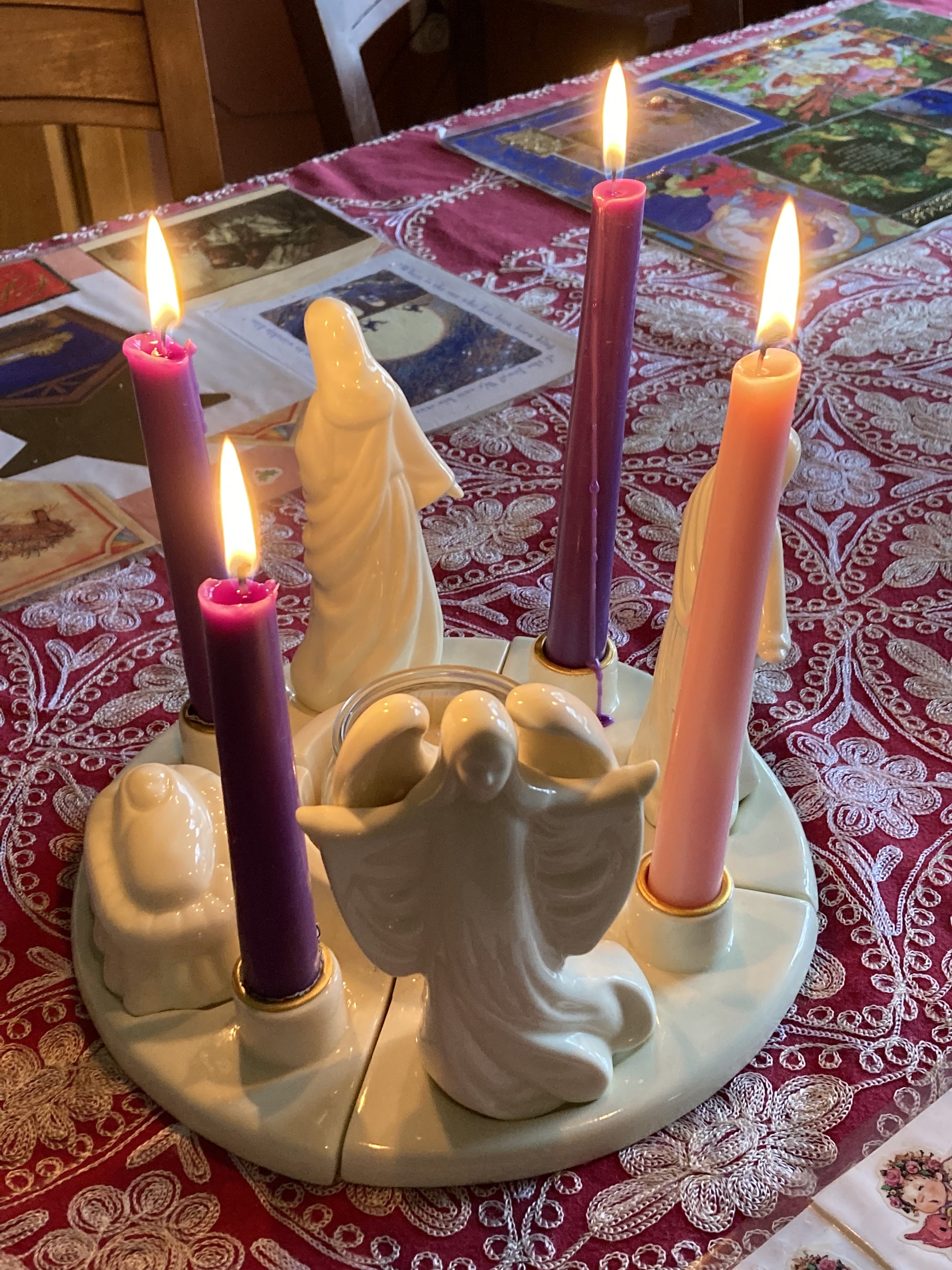
All the candles lit – focused on the coming Christ:

The Christmas cactus – somehow it knows – just days ago, nothing, no buds, nothing – and then…it blooms.

5 Friday Faves – Epic Spanish Romance Guitar Cover, Languishing, From Sad to Mad, Christmas Events, and I.O.U.S Acronym on a Divided Heart

Christmas week is upon us! This past week’s Friday Faves finally:

1) Epic Spanish Romance Cover– Get ready for one of the most beautiful pieces ever written for classical guitar. The composer is unknown. The arranger for this piece is  Nathan Mills, at Beyond the Guitar. Enjoy.

[One of his subscribers on YouTube asked him to do for Niel Gow’s Lament what he did to the Spanish Romance. Here in his college days, Nathan plays that piece. Hope he does put his own touch to it again…all these years later. A funny sidebar to the piece below: Nathan’s sister wanted him to play this for her wedding. He said something to the effect that the whole title of the piece is “Niel Gow’s Lament For the Death of His Second Wife” so Nathan played other pieces instead. Didn’t seem a good fit for a wedding day. ]

2) Languishing– Who even knows what this is?! Well, author and organizational psychologist  Adam Grant does. He defines it as:

“Languishing is a sense of stagnation and emptiness. It feels as if you’re looking at your life through a foggy windshield. And it may be the dominant emotion of 2021.

As scientists and physicians work to treat and cure the physical symptoms of long-haul COVID-19, many people are struggling with the emotional long haul of the pandemic. It hit some of us unprepared as the intense fear and grief of last year faded.

In psychology, we think about mental health on a spectrum from depression to flourishing. Flourishing is the peak of well-being: You have a strong sense of meaning, mastery and mattering to others. Depression is the valley of ill-being: You feel despondent, drained and worthless.
Languishing is the neglected middle child of mental health. It’s the void between depression and flourishing — the absence of well-being. You don’t have symptoms of mental illness, but you’re not the picture of mental health either. You’re not functioning at full capacity. Languishing dulls your motivation, disrupts your ability to focus and triples the odds that you’ll cut back on work. It appears to be more common than major depression, and in some ways it may be a bigger risk factor for mental illness.

So what can we do about it? A concept called flow may be an antidote. Flow is that elusive state of absorption in a meaningful challenge or a momentary bond, where your sense of time, place and self melts away. During the early days of the pandemic, the best predictor of well-being wasn’t optimism or mindfulness. It was flow. People who became more immersed in their projects managed to avoid languishing and maintained their pre-pandemic happiness.” – Adam Grant

There’s a Name for the Blah You’re Feeling: It’s Called Languishing – Adam Grant

I’m very thankful to come across this article by Dr. Grant. He has much more to say both in the above piece and in his TED talk below. We can learn how to move from languishing back to flourishing.

The links below point to a varied and fascinating reach into languishing. Worth your time.

The Neglected Child of Mental Health – Bruce Isdale

The Neglected Child of Mental Health – Caron Leid

The High Cost of Calm – Why Relaxing Is So Much Work

I’m a Short Afternoon Walk and you’re putting way to much pressure on me – Emily Delany

How to Describe Our Pandemic State(s) of Mind – WNYC Podcast

Why You Need to Address Languishing to Retain Your Talent

3) From Sad to Mad – In the midst of a sweet time of year for some of us folks, I have found my capacity for sadness stretched super far. With a background in cancer nursing where loss was always part of life, and with all the hello-goodbyes in our overseas season as a family, and finally having lost very significant people in the last few years…sad is stretched. What has surprised me of late is how fast my “sad” goes to “mad”. I get angry at the losses – deaths to COVID, marriages broken, families estranged from each other, moral failures…and more. Mad is not where I want to be. “Righteous indignation” never stays righteous. It gets mean way too quickly.

Photo Credit: Pexels, Serkan Goktay

From Sad to Mad: How Suppressing Your Sadness Invites Anger – Joshua Nash

The piece above helped me immensely. Therapist Joshua Nash offers helpful steps (go there if this has become an issue for you as well). The main take-away for me is that I shift from sadness at a loss to anger at the injustice of it. What is better for my emotions, body, and relationships is to stay in the sadness. Feel it, examine its impact, mourn the cause. Sadness will subside. Moving into anger (as natural as it is in grieving a loss) mucks up the sadness. Anger is punishing (to yourself and others). As hard as staying in the sadness is, we (and our relationships) will be better for it.

Christmas Bitter and Christmas Sweet – Tim Challies

4) Christmas Events – December is practically glutted with events to celebrate Christmas. In a month when meditating on the mystery of a virgin birth and the long-anticipated coming of a Savior King, quiet is hard to come by. We make room for it…alongside all the fun of this month. Below is a photo array of just some of this past week for us.

  • Christmas Cookie & Ornament Exchange (us women):
  • Old-fashioned Carol Sing (mostly in our own basement):
  • VCU Holiday Gala with our favorite alum and his little son: 
  • Tacky Lights RVA:
  • Ethnic lunch out (#Mezeh) with our youngest:
  • Quiet times in front of the fire (quiet on the schedule AND with cookies & coffee):
  • Christmas with The Chosen:

[If the recording of Christmas With the Chosen: The Global Live Event becomes inaccessible, you can find it on The Chosen app.]

5) I.O.U.S Acronym on a Divided Heart – This morning I was struck afresh how little undivided attention is exercised in my day. Even my introverted husband will spill out all sorts of wise and wonderful words – when I am wholly there. Fixed. Not leaving the room mentally. These moments are more rare than I’d like to confess…all because of the struggle to focus.

Author theologian John Piper tackles this issue with our heart toward God. We struggle with all sorts of noise and clatter pulling us in directions that leave off the wonder of deeply knowing Him.

Photo Credit: John Piper, Quote Fancy

Piper uses an acronym that is hugely helpful in this (setting us in a positive direction for the New Year):

I.O.U.S. – [From John Piper’s Divided Heart article linked below]

“The embattled heart is typical of the Christian life. None of us has a consistently united heart in longing for God.”

  • “The letter I stands for incline. “Incline my heart to your testimonies,” we pray with Psalm 119:36. We ask God to take away resistance. We ask God to incline us toward God and his Word instead of away from God. And so we admit all our inclination toward God is a work of God. The psalmist would not be praying like this if the inclination was ultimately within our own power. If it were, he wouldn’t be asking God to incline his heart. We plead with God to take our hearts in his hands and to incline them, bend them, toward his Word.
  • Then the letter O stands for open. Psalm 119:18 says, “Open my eyes, that I may behold wondrous things out of your law.” We need God to work a miracle on the eyes of our heart so that we can see the truth, beauty, value of who he is right there in his word. If we are left to ourselves while meditating on God’s word, we will see nothing of his spiritual beauty and worth.
  • Then comes the third letter, U. It stands for unite. Psalm 86:11 says, “Unite my heart to fear Your name.” What an amazing prayer: “Unite my heart.” So what’s the problem that this psalmist is praying to solve? The problem is a divided heart.”

Plead Psalm 86:11 in prayer: ‘O God, unite my heart to fear your name.’Is It Normal to Have a Divided Heart? – John Piper

___________________________________________________________________________

Bonuses:

The Last Word – A one-minute video speaks volumes about our country, the media’s impact on us all, and one decision to step away. 62 y/o news commentator Brian Williams stepped away from a 28-year career with NBC/MSNBC. His last show was December 9, and he announced his resignation in this powerful short statement. We can all take something away from this, whatever our politics or nationality. There comes a time…

How to Engage a Parent Who Has Harmed You with Autumn – Podcast 23 – Adam Young Counseling

Photo Credit: Instagram, Adam Young Counseling

Women & Work Book Club – The Common Rule by Justin Whitmel Earley – Check out previous books reviewed and discussed with the authors.

Did Chevrolet Have to Make America Cry With Its New Christmas Ad? – Joe Cunningham

The Great Challenge of Every Marriage

9 Habits that the World’s Healthiest and Longest Lived People Share – Dan Buettner

Photo Credit: Pinterest

Photo Credit: Contemplative Monk, Facebook

Worship Wednesday – Our Christmas Hope – Jesus Is Alive – Josh Wilson

Photo Credit: Wikipedia; Adoration of the Shepherds by Gerard van Honthorst, 1622

[Adapted from the Archives]

Angels appeared to shepherds on the Bethlehem hillside:

And an angel of the Lord appeared to them, and the glory of the Lord shone around them, and they were filled with great fear. And the angel said to them, “Fear not, for behold, I bring you good news of great joy that will be for all the people. For unto you is born this day in the city of David a Savior, who is Christ the Lord.” Luke 2:9-11

When the angels had left them and gone into heaven, the shepherds said to one another, “Let us go to Bethlehem and see this thing that has happened, which the Lord has made known to us.” So they hurried off and found Mary and Joseph and the Baby, who was lying in the manger. After they had seen the Child, they spread the message they had received about Him...The shepherds returned, glorifying and praising God for all they had heard and seen, which was just as the angel had told them.Luke 15-17, 20

Shepherds appeared again, years later, to three women, visiting the tomb of their Lord:

Do not be afraid. You are looking for Jesus the Nazarene, who was crucified. He has risen! He is not here! See the place where they laid Him. But go, tell His disciples and Peter, ‘He is going ahead of you into Galilee. There you will see Him, just as He told you.”Mark 16:7

Ordinary people. The God of the universe delivered the best news ever…to ordinary people. So startled by the messenger angels, they had to be settled by the words, “Fear not!” This sort of thing doesn’t usually happen to ordinary people…but God.

What hope we have in the coming of Christ…then on that starry night in Bethlehem, His coming into our hearts as we receive all He is, and His coming again…in the not so distant future.

That hope sends us, like the shepherds, in search of that tiny obscure family. In a town so full of people that night, they could not even secure proper lodging. Yet, by miraculous means, the shepherds found Him.

That hope sends u, also like the shepherds to tell others the good news. The news that Jesus has come!

The women at the empty tomb did not find Him…there! He had gloriously “left the building”. That rekindled their hope. Their Lord was risen, and they must run and tell that good news, as well.

In thinking about these accounts, I’m reminded of camp songs. You remember those songs we learned as a child or teen? Those songs that stuck with us all through the years…either because of the message or how we felt singing them. Over and over, night after night at camp, and then over again with our friends after.Photo Credit: Flickr

Josh Wilson‘s Christmas song Jesus Is Alive is like telling a story around a campfire. It causes me to wonder at how the shepherds must have recounted the story of that wondrous night. How the women talked around their own fires in the evenings after that trip to the tomb. I can just see the fire, large before us, warming our faces, popping and crackling, brightening those in the circle and casting shadows beyond. Sparks flying up to the sky.

Josh’s song celebrates that baby born for us, and his song also points us to a blessed redeemer, a risen Savior. As I write, there’s a little figure of the Christ child on my work desk. Wrapped in swaddling clothes as recorded in Scripture (Luke 2:7). Something about this figure reminds me of Jesus’ death also (John 19:40). Jesus, as an infant, was briefly swaddled before he grew up and became a man like no other. After the briefest of glorious ministry, he died a horrific death…for us. Let that soak in again. His body would be wrapped in grave clothes but would not be bound by them.  He rose to life again, right out of those burial cloths. Hallelujah, Jesus is alive!

Worship with me as we tell this great story again in sweet song. Let’s warm ourselves by the shepherds’ fire. Let’s glory in the Savior as he brings the Kingdom of God to us ordinary people. Let’s run into the tomb to find it emptied, and, without delay, take the message to those who need to hear. There’s hope, People. Jesus Is Alive!!!

Wish that I was there,
On that silent night,
When your tiny heart started beating for mine,

I wish I could have seen,
The star in David’s town,
When you turned a stable into Holy ground.
I sing along, the angels song.

(Chorus)

Noel, Noel, Jesus is alive.
Emanuel, hope is here tonight.
So go, and tell, the world that death has died.
‘Cause Jesus is alive. Yea Jesus is alive.

The God who made us all,
With these two little hands,
Is bringing us his kingdom quiet as a lamb.
Oh such Amazing Grace!
A divine conspiracy.
This Savior in a manger changes everything.
That’s why we sing.

CHORUS

Sin you have no sting.
Hell you have no power. (Jesus is alive)
Curse you are no more.
This is your final hour. (Jesus is alive)
Because the son of God
Has not left us alone. (Jesus is alive)
He’ll live and die and rise again, and then he’ll bring us home. (Jesus is alive)
The old will pass away
And we will become new. (Jesus is alive)
This baby boy is making all sad things untrue.

CHORUS (X2)

Jesus is Alive!!*

*Lyrics to Jesus Is Alive – Josh Wilson

Worship Wednesday – That Was Then, This Is Now – Josh Wilson’s Song of Jubilation – Deb Mills Writer

#PeopleMustKnow

Monday Morning Moment – As Adults We Still Need to Feel Safe, Seen, Soothed, and Secure

Photo Credit: Nicole Michalou, Pexels

[Adapted from previous posts on parenting here and here.]

American Thanksgiving brings families and friends together for a big day of food, football, and (hopefully) fun. Social media this week will be crammed (at least in the US) with images of smiling people leaning in to pack the frame. What we don’t see is those sadly missing from the frivolity. Maybe it’s too far to travel. Or work claims too large a chunk of the day. Or another family’s turn this year. Or possibly, unfortunately, Thanksgiving is too complicated a day to spend all together.

By its very name, Thanksgiving is about being grateful for what we have – the food, good health, the other bounties of life, but most especially, our relationships. How thankful we are to be in the land of the living with those we love.

How do we communicate our love? How do we experience love from each other? Is it complete joy behind those smiles or is it also courage. Showing up even when it’s hard sometimes.

I’ve been learning more about this whole brain and relationship thing from two brilliant psychiatrists Dr. Dan Siegel and Dr. Curt Thompson.

Dr. Thompson has written a trilogy of powerful, ground-breaking books – Anatomy of the Soul, The Soul of Shame, and The Soul of Desire.  He describes these books as exploring “how neuroscience relates to the ways we experience relationships, deep emotions like shame and joy and especially our own stories — and how we can process our longings and desire for spiritual connection with God and each other to live more fully integrated, connected lives.”

Such good books!

Thompson refers often to Dr. Siegel’s “4 S’s of Attachment-Based Parenting“. Those S’s relate to what we communicate to our children even as infants but throughout life. We want them to know they are “safe and seen” and to experience being “soothed and secure”. This is especially poignant when we introduce the word “No” into the great adventure of their lives. No…and discipline as they get bigger.

Now…fast forward to adulthood. OK…maybe your childhood (or parenting) had some tough spots or (for parents) regret. We can’t go back…we can’t fix what got broken. We can still learn to love well today. Siegel’s 4 S’s, referenced in his book The Power of Showing Up, primarily relate to parenting. However, he and Thompson both talk about these 4 experiences being needed throughout our lives. Take a look at the briefest explanations of them below:

Photo Credit: Dr. Dan Siegel & Dr. Tina Payne Bryson

As adults, we want the same things – to be safe (no “bracing for impact” in relationships), to be seen (truly known by those most significant in our lives), to be soothed (our emotions understood and acknowledged, without judgment, even when they are big and out of proportion), and secure (that no matter what, we are loved. Our persons are NOT leaving the room).

Whatever we may have experienced as children, we can alter our present. Whatever we did as young and overwhelmed parents, we can move, with love and insight, to a better situation with our kids. The past is just that…the past. We can be truly with each other, in the here and now…if we are brave and willing to be humble.

Something to think about during Thanksgiving week. Let’s don’t miss those people across the table or room from us. The ones we are missing…because for whatever reason, they are not there…let’s figure out how to show up in their lives, in meaningful, redeeming, and healing ways.

Have a blessed Thanksgiving Day with those you love…whether it’s your holiday or not. Thanks for showing up here.

The 4 S’s of Attachment-Based Parenting – Daniel J. Siegel – Podcast

The Power of Showing Up – Daniel J. Siegel, MD & Tina Payne Bryson, PhD

Mindful Parenting: 4 S’s of Secure Attachment – Esther Goldstein

The Neurobiology of Attachment to Nurturing and Abusive Caregivers – Regina M. Sullivan, PhD

Worship Wednesday – My Father’s World – God Is the Ruler Yet – Maltbie Babcock

[Adapted from the Archives]

Ask the animals, and they will instruct you; [ask] the birds of the sky, and they will tell you. Or speak to the earth, and it will instruct you; let the fish of the sea inform you. Which of all these does not know that the hand of the Lord has done this? The life of every living thing is in His hand, as well as the breath of all mankind.Job 12:7-10
On our walk through the neighborhood this morning, we talked of things heavy on our hearts…of family members struggling financially, of conflict, of the condition of our country, of transitions coming in older age.
As we talked and walked, we were surrounded and comforted by the beautiful of Fall.


Consider how the wildflowers grow: They don’t labor or spin thread. Yet I tell you, not even Solomon in all his splendor was adorned like one of these. If that’s how God clothes the grass, which is in the field today and is thrown into the furnace tomorrow, how much more will he do for you?Luke 12:27-28

Whatever is happening in our lives, glorious in its beauty or fearful in the hard…God is present at every turn of life.

Walking through our backyard gate, His creative wonder captured my attention. Changes leaves everywhere, splashed with morning light, shouting God’s glory. Reminded all over again, that whatever is happening in our lives…God’s got this.

“Oh, Lord GOD! You have made the heavens and earth by Your great power and outstretched arm. Nothing is too difficult for You!Jeremiah 32:17

Jesus looked at them and said, “With man this is impossible, but with God all things are possible.” –  Matthew 19:26

Photo Credit: GodTube

Worship with me to this great old hymn “This Is My Father’s World” as performed by Fernando Ortega. I’m reminded today to keep my eyes open to God and what He wants to do – and what He is doing – in us and all around us.

  1. This is my Father’s world,
    And to my list’ning ears
    All nature sings, and round me rings
    The music of the spheres.
    This is my Father’s world:
    I rest me in the thought
    Of rocks and trees, of skies and seas—
    His hand the wonders wrought.
  2. This is my Father’s world:
    The birds their carols raise,
    The morning light, the lily white,
    Declare their Maker’s praise.
    This is my Father’s world:
    He shines in all that’s fair;
    In the rustling grass I hear Him pass,
    He speaks to me everywhere.
  3. This is my Father’s world:
    Oh, let me ne’er forget
    That though the wrong seems oft so strong,
    God is the ruler yet.
    This is my Father’s world,
    The battle is not done:
    Jesus who died shall be satisfied,
    And earth and Heav’n be one.*

___________________________________________________________________________

These words…

This is my Father’s world:
Oh, let me ne’er forget
That though the wrong seems oft so strong,
God is the ruler yet.
This is my Father’s world,
The battle is not done:
Jesus who died shall be satisfied,
And earth and Heav’n be one.

We have options in the ways we engage with God and each other.

  • Look up.
  • Reach down.
  • Draw near.
  • Bring it in.

So…thanks to this beautiful Fall speaking the might and glory of God, my mind is cleared. Look outside…walk outside if you can…there’s so much more to our lives than fear, worry, anxiety – there is God: still Ruler of this world, and the battle is not yet done. When it is, it will be won.

We are not here to play, to dream, to drift,
We have hard work to do, and loads to lift,
Shun not the struggle; face it;
’Tis God’s gift.
Maltbie D. Babcock

*Lyrics to This Is My Father’s World – Songwriter: Maltbie D. Babcock

History of Hymns: “This Is My Father’s World”

The Story Behind This Is My Father’s World – GodTube

Thoughts for Every-Day Living – Maltbie Davenport Babcock (read book online here)

Worship Wednesday – Being Known by God Himself – “Find You Here” – Ellie Holcomb

Photo Credit: Knowing Jesus

The Lord is good, a stronghold in the day of trouble,
and He knows those who take refuge in Him.Nahum 1:7

“I am the good shepherd, and I know My own and My own know MeMy sheep hear My voice, and I know them, and they follow Me.” – Jesus – John 10:14; John 10:27

We know that “All of us possess knowledge”. This “knowledge” puffs up, but love builds up. If anyone imagines that he knows something, he does not yet know as he ought to know, but if anyone loves God, he is known by God.1 Corinthians 8:1b-3

Nevertheless, the firm foundation of God stands, having this seal, “The Lord knows those who are His.”2 Timothy 2:19

We long to be known. Truly known. Sought after. Pursued. Loved. I’m pretty sure this longing originated from God Himself, placed in our minds from the beginning. When God created Adam and Eve, they were both “naked and unashamed”. Before God and each other. When sin entered the picture, so did shame. They tried to hide but could not. God came looking for them. He knew them, and He knew they could choose sin, rebellion, at any time. He knew them, and He loved them still. Completely. He covered their nakedness, dealt with their sin, and made a way for them to be restored back to Him.

Photo Credit: St. Augustine, Slideplayer

We are filled with gratitude for the saving knowledge of Jesus Christ. What a profound experience not just to know God but to be known by Him. The God of the universe. The Creator and Sustainer of all of life. This “being known” and loved still…amazing grace!

One of the most frightening passages in the Bible is found in Matthew. Jesus is preaching and he describes some who are would-be believers. People who are attracted to God, who even serve God and others as if they were believers, but have never truly received His salvation and lordship through Jesus Christ. They do not know Him, and therefore are not known by Him. Terrifying.

“Many will say to Me on that day, ‘Lord, Lord, did we not prophesy in Your name, and in Your name drive out demons and perform many miracles?’  Then I will tell them plainly, ‘I never knew you; depart from Me, you workers of lawlessness!’ ” – Jesus – Matthew 7:22-23

To be known by God is to experience His love in every circumstance of our lives. No matter how hard or hurtful our situation may be, we will find God there…with us. If this is not your experience, then wrestle out what that means. Is it the mean deceit of the Evil One that makes us think we know God when we only know of Him? Or is there some sense of entitlement we might have toward sin or an unrighteous relationship, elevating that above God? Or is it an arrogance on our part that we view ourselves as “good enough” while God sees us either dead in sin [rather than righteous and a new creation through His Son’s redeeming work on our behalf]?

If you’re struggling right now to walk with God, sort out what’s going on. Is it a spiritual attack of some kind that you’re meant to endure as you bring it to God, or is it possibly the fact that you do not truly know God…and are not known by Him? Because you choose being separate from Him. God will not impose Himself on us, yet He ever draws us to Him.

Three times in my life I felt compelled to seek God’s face on the question of whether I truly knew Him. Once as a 15 y/o, another time in my mid-20s and, a final time, in my mid-30s. All three times, I questioned my salvation. He comforted me and gave me peace all three of those times. Especially the last time. I have not questioned knowing Him or being known by Him since then.

Do not be lulled to sleep by a false sense of belonging to God when you have never fully given your life to Him. Remember His words:

“I am the good shepherd, and I know My own and My own know Me.” – Jesus…My sheep hear My voice, and I know them, and they follow Me.John 10:14; John 10:27

Singer/songwriter Ellie Holcomb wrote the beautiful “Find You Here” in response to hearing her dad (Brown Bannister) had been diagnosed with cancer.

Worship with me (lyrics in link).

It’s not the news that any of us hoped that we would hear
It’s not the road we would have chosen, no
The only thing that we can see is darkness up ahead
But You’re asking us to lay our worry down and sing a song instead

And I didn’t know I’d find You here
In the middle of my deepest fear, but
You are drawing near
You are overwhelming me, with peace
So I’ll lift my voice and sing
You’re gonna carry us through everything
You are drawing near
You’re overwhelming all my fears, with peace

You say that I should come to You with everything I need
You’re asking me to thank You even when the pain is deep
You promise that You’ll come and meet us on the road ahead
And no matter what the fear says, You give me a reason to be glad

And I didn’t know I’d find You here
In the middle of my deepest fear, but
You are drawing near
You are overwhelming me, with peace
So I’ll lift my voice and sing
You’re gonna carry me through everything
You are drawing near
You’re overwhelming all my fear

Here in the middle of the lonely night
Here in the middle of the losing fight, You’re
Here in the middle of the deep regret
Here when the healing hasn’t happened yet
Here in the middle of the desert place
Here in the middle when I cannot see Your face
Here in the middle with Your outstretched arms
You can see my pain and it breaks Your heart

And I didn’t know I’d find You here
In the middle of my deepest fear, but
You are drawing near
You are overwhelming me with, peace
So I’ll lift my voice and sing
You’re gonna carry me through everything
You are drawing near
You’re overwhelming all my fear with peace

Rejoice, rejoice
Don’t have to worry ’bout a single thing, ’cause
You are overwhelming me with, peace!
Don’t have to worry ’bout a single thing
You’re gonna carry us through everything
Overwhelming peace*

This beautiful God who knows us – our longings, our fears, our struggles, our tears. He knows us and loves us deeply…and we have the incomprehensible privilege of knowing and loving Him back.

*Lyrics to “Find You Here” by Songwriters Benji Cowart, Ellie Holcomb, and Rusty Varenkamp

Being Known Podcast with Curt Thompson MD

Worship Wednesday – I Surrender All – Robin Mark – Deb Mills

Photo Credit: Knowing Jesus

Monday Morning Moment – Confessional Communities – What Are They? You’ll Wish You Were In One If You Aren’t Already

Photo Credit: Group Therapy Central

[As I was preparing my own take on confessional communities, I came across Aimee Byrd‘s piece on the same, as part of her analysis of Curt Thompson‘s latest book The Soul of Desire. Byrd’s blog is a quick read and very helpful.]

Confessional communities – probably sounds like some sort of monastery life. Or a group with all kinds of touchy-feely exercises framed by unintelligible psycho-babble, right? Oh no! So much more and so much better!

I’ve been awakened to the presence and possibilities of confessional communities since recently reading of the Thompson trilogy below.

What rung intuitively right for me throughout my adult life has actually been tested and found true in something called Interpersonal Neurobiology (IPNB). No time to go deeply into this now, but, in short, our brains are wired for connection, and that is connection inside the brain/mind itself as well as with others (and God).

Confessional communities are used by Dr. Curt Thompson and others as ways to help clients get in touch with shame, trauma, fear, anxiety, etc. in the company of others struggling with some of the same. Shame, for instance, drives us to isolate from God and others. It compounds interest over time, if left to itself in our own minds, and muffles our desires and longings, as it condemns and flattens us.

“We need to create confessional communities where people are confessing the truth about their life – some of which includes confessing sin or doing things that show my brokenness. Some of it is just things that have happened to me, or things that I feel; things that I sense; things that I dream; things that I long for; things that I’m conflicted about. But I’m trying to tell the whole truth about my life – but not so that anybody can just hear it and then move on.…In confession, what I’m really looking for – in your eyes, in your body language, in your voice – is for you to be able to say, “You’re right, Curt; you were wrong to do that. You’re forgiven. I’m not leaving.” I need to know you can bear the weight of what I know to be really wrong [with me], and that you will still stay. If it’s minimized, it will continue to linger with me…Shame always requires outside help for healing. My shame needs you. If it’s a small thing, I might need only one conversation with you. But, if it’s much bigger than a very, very small thing, I’m going to need multiple conversations with multiple people, because shame will come through multiple different doors into my head when I’m left by myself…”Curt Thompson

Photo Credit: Curt Thompson, Twitter

“…in order for me to be liberated from the shame I carry, …I need to hear that my behavior was really as bad as I think, if not worse, while simultaneously sensing that the person I am confessing to is not leaving. Shame has the effect of coaxing us into pretending that sin is not as bad as it seems; for if it really is that bad, and I have to face it, it would be too much and I fear I would be overwhelmed. When someone seeks forgiveness for the wrong they have committed, we who have been wounded must be able to acknowledge the reality of the pain inflicted if forgiveness is to be real, and if the offender’s shame is to be effectively healed.” – Curt Thompson, The Soul of Shame

Confessional communities are spelled out in Thompson’s writing, teaching (found on YouTube), and podcasts (his own and as guest on many others). The common factors include:

  • small group meetings over weeks or months.
  • willingness to tell our stories as truly as we can.
  • intentional leaning in to the stories of other group members such that “being known” is part of the outcome for all.
  • commitment to stay with each other; to “not leave the room”.
  • imagine beauty together – learning to explore and create beauty, to see what is good, true, and beautiful in each other’s personhoods.Photo Credit: Curt Thompson, Twitter

I have a friend who for several months was part of what I would now call a confessional community. She called it “Vegas”. Remember the adage “What happens in Vegas stays in Vegas”? It was a Bible study/house church. A group of people who committed to care for each other with masks off (not the COVID kind, but the masks we don in shame or fear). A group of people who would stay in the hard and love no matter what.

My Mom modeled this for our family. She died way too soon. My prayer is that our (birth) family will model it for each other, and my children will learn from their Dad and me how to love like this…To have the joy of being fully known and deeply loved. No matter what.

Trauma, Healing, and Side Effects with Dr. Curt Thompson – Jamie Ivey’s Podcast, The Happy Hour

Shining Light on Shame – Curt Thompson, Angulus Wilson, Steve Beers, and Morgan C. Feddes

Curt Thompson – 51 Podcast Episodes

5 Friday Faves – Shame Revisited, Classical Guitar & Squid Game, Cartoons & Classical Music, Left Brain/Right Brain, and Beach Food

Friday Faves! Go!

1) Shame Revisited – [Posted here previously] Author Andy Crouch has written an essay on how our culture has changed. For most of our history as a country, we have been a guilt-based culture. By that, I mean we measured ourselves and others as being “right or wrong” in our thinking, choosing to do right or wrong.

This is how we raised our children. We determined not to measure our children up against (compared with) other people, but to raise them up with a standard of right living and making right choices (for us, it was based on the Bible…on the teachings and life of Jesus). “Right” was not legalistic or moralistic; “right” was loving, kind, serving, non-judgmental.

Only in recent years has our culture been moving toward more of a shame-based view on life. Here the difference is how our character and behavior reflects on a larger community (“how others see us”). This is somewhat different from the traditional shame-honor culture. In that culture, honoring your family, country, religion was all-important. If your behavior did not comply with those values, you were shamed, even ostracized.Photo Credit: The Rise of Shame in America, Honor Shame

Today’s American culture has definitely moved away from a guilt orientation. We hear it all the time in statements like “Well, that may be OK for you.” “You have the right to believe that way.” “Don’t try to put that guilt on me.” However, our culture is not moving toward the traditional shame society, but more a shame-fame culture. Fame over honor. Social media has driven this in recent years. We want to be “seen” a certain way. In fact, a young colleague of ours once said, “It’s my job to make you look good.” I was shocked at that. One, “looking good” was not even on my radar. Either I was “good” (competent, responsible, dependable, etc) or I wasn’t. It demonstrated the culture shift and generational disconnect.

Shaming continues to happen in our culture. Children can be shamed for not behaving in ways that make their parents “look good”. Public shaming of people who don’t agree with each other can be as brutal as real ostracism. And so it goes.

I miss the guilt culture. Where, whatever your religion or political ideology, you could tell the good guys from the bad guys. Or maybe we were naive, but I hope not. Today, it seems all about how we portray ourselves…how we are received by those that matter to us.

Sigh…any thoughts? Please.

[Don’t forget to return and read Andy’s essay and David Brooks’ review of Crouch’s essay and this whole social phenomenon.]

__________________________________________________________________________

Postscript: I’m just today beginning to dig into Curt Thompson‘s book The Soul of Shame. So excited really to glean from his wisdom on the subject.

The Return of Shame – Andy Crouch

The Shame Culture – David Brooks

The Rise of Shame in America – HonorShame

When Shame Shapes Our Stories: Five Tips for Rewiring Negative Neural Pathways – Tricia McCary Rhodes

2) Classical Guitar & Squid Game – So whether you’re a fan of Korean cinema or creepy TV shows (insert Netflix’s popular Squid Game), you’re going to love the latest arrangement by Nathan Mills at Beyond the Guitar. It’s a medley of Squid Game themes, including the classic melody “Fly Me to the Moon”. So gorgeous.

3) Classical Music in Cartoons – Recently I was reading (again in Curt Thompson book – this time the recently published The Soul of Desire. He encouraged an intentional pursuit of beauty (a right brain renewing). He mentioned Dvorak’s 9th Symphony. I’m not a big fan of classical music, although every single time I attend a symphony performance, it slays me. So…I searched out thia particular piece on YouTube and clicked on this performance of the second movement of the symphony. Profoundly beautiful. Then…oddly familiar.

The first time I ever heard this symphony was on Saturday morning cartoons. In those days (late ’50s, early ’60s), cartoons had classical music as their soundtracks! In fact, this practice goes all the way back to the cartoons of the 1930s. Ingenious.

Cartoons and Classical Music – Bring Bach the Good Stuff – Nuriyah Johar

Classical Music in Cartoons

I’m learning later in life how the beauty of music, tucked in the background, can actually enrich what the eye sees on the many screens of our childhood and now that of our children’s children.

15 Pieces of Classical Music That Showed up in Looney Tunes – Mark Mancini [Some of the links are broken in the article but the information is preserved.]

YouTube Video – 10 Classical Music Pieces in Cartoons

YouTube Video – Most Iconic Classical Music Masterpieces Everyone Knows in One Single Video

4) Rain Brain/Left Brain I’ve written on the brain several times (as a learning layperson).

Again, thanks to Curt Thompson‘s recently published book The Soul of Desire, I’ve been learning about these two very different but inter-connected hemispheres in our brain. Thompson talks about how God made our brain for connection, but with trauma and shame, the two hemispheres become less integrated. Neural pathways are hijacked. [Talking very simply here because that’s about the level of my understanding.]

He delineates the two in many ways, but one that really spoke to me was how the right brain (the seat of our emotions and the space where we create and appreciate beauty) is very much focused on “here and with”. Being in the moment and preferably with others we care about. The left brain (our center for reasoning, analysis, and logic) favors more a “separate from” state. Standing back, evaluating, referring to the past and imagining the future.

Photo Credit: Janice Tarleton

Trauma and shame steal the easy flow of having fear and anxiety that is checked by rational reasoning. We can become stuck. Isolated from the healthy thinking we were made to have…and from each other. Thompson gives some excellent helps in his book on how to strengthen pathways between each side of the brain. Much of this is in community. Also upping our intentional appreciation of what is beautiful around us. Left brain activity is rewarded in our culture, to the detriment of right brain activity. We need both…and the beauty and community that comes with such integration.

Want to Sync the 2 Hemispheres of Your Brain? Neuroscience Says to Do This Daily (It Only Takes 4 Minutes) – Melanie Curtin

I Met Jesus in My Right Brain – Janice Tarleton

Photo Credit: Custom Writing

5) Beach Food– A long weekend in Virginia Beach this past week was lovely. Much-needed. Rain and a gusty wind kept us from as much walking as we would have liked, but it did not deter us from eating from favorite restaurants. Every year, we change that list up a bit. 19th Street Italian Bistro has been our #1 go-to restaurant every year and it is not budging from that position of honor.

Two new favorites for the year are (in the #2 spot for beach favorites) C. P. Shucker’s Cafe & Raw Bar

and (#3) Ray Ray’s at the Mayflower.

[Chef Ray is Filipino and adds all sorts of yummy island touches to the menu.]

And dessert? Always Dairy Queen Butterfinger Blizzard.

You don’t want to miss these if Virginia Beach is your destination.

How about you? What is your favorite beach food restaurant? Tell us in the Comments.

___________________________________________________________________________

That’s it for this week. Hope you’re able to get some time with those you love in the days ahead. Never take time together for granted. Life is such a gift. Thanks for stopping by. It means a lot.

Worship Wednesday – Shame Faced – O Come to the Altar – Elevation Worship

Photo Credit: Heartlight

We have renounced secret and shameful things, not acting deceitfully or distorting the word of God, but commending ourselves before God to everyone’s conscience by an open display of the truth. – 2 Corinthians 4:2

Instead of shame, My people will have a double portion, and instead of humiliation, they will rejoice in their share; and so they will inherit a double portion in their land, and everlasting joy will be theirs.
 – Isaiah 61:7

For the Scripture says, Everyone who believes on him will not be put to shame.Romans 10:11

No wait. Don’t scroll by.

No shaming here. In fact, we may have stuffed our shame so deep inside ourselves, we are pretty sure it is ever someone else’s problem and not our own.

Wait though. We can know the beauty and freedom in life that comes from wrestling with shame…until it has no power over us. We may think it has no power over us when we tamp it down so effectively that others don’t see it…but we know it’s there.

Shame faced can be defused…and freedom follows. Beauty and fullness of life and relationships as well. Worth the vulnerability.

Until recently I didn’t think much about shame. I was more a guilt-driven person (rather than shame-driven), or so I thought. Guilt is more about doing bad, rather than “being bad” (which defines shame). However, now I see how we hide our shame and hope no one sees.

Canadian pastor Darryl Dash wrote this incredible piece on shame (linked below), taking us right from the beginning. You remember how Adam and Eve were described originally as being “naked but unashamed”? Can you imagine the beauty and freedom in that?

The Beginning of Shame (Genesis 2:24-3:10, 21) – Darryl Dash

Once sin entered, their eyes were opened…to what is now their reality. Naked and ashamed. Fearful. Wanting to hide. They were never meant to experience this darkness…this isolation from God or one another.

Dash reveals the impact of sin:

  • Shame is a result of sin — either ours, or someone else’s.
  • Shame isolates us. It makes us think that if others knew the truth about us, that they couldn’t possibly love us. It keeps us from being known and loved.
  • Shame damages us. Ultimately it can kill us.

Dash also writes about how our strategies to deal with shame only cause us to hide or avoid or attack (ourselves or others) – see graphic below from another source.

Photo Credit: The Compass of Shame, D. L. Nathanson, IIRP

Lastly, Dash reminds us of God’s glorious response to our shame – He pursues us and He clothes us.

Christian psychiatrist Dr. Curt Thompson has written an important, hugely insightful book on shame. The Soul of Shame. The quotes that follow are from this book and help put the pieces of our shame together in ways we can then open ourselves up to healing. Giving those pieces to God.

“When we experience shame, we tend to turn away from others because the prospect of being seen or known by another carries the anticipation of shame being intensified or reactivated. However, the very act of turning away, while temporarily protecting and relieving us from our feeling (and the gaze of the ‘other’), ironically simultaneously reinforces the very shame we are attempting to avoid…Indeed this dance between hiding and feeling shame itself becomes a tightening of the noose.  We feel shame, and then feel shame for feeling shame. It begets itself.”

“The defining relational motif for humankind is not that we need to work as hard as we can, or at least harder than we are. It is not to do our best or to guarantee that our children will have a better life than we had. It is not about being right or the acquisition of power. Each of those (and other versions like them) play into the hand of shame’s anxiety. No – rather, we were created for joy. Not a weak and watery concept of joy that merely dilutes our sadness and pain. Rather it is the hard deck on which all of life finds its legs, a byproduct of deeply connected relationships in which each member is constantly known.

“To relationally confront our shame requires that we risk feeling it on the way to its healing. This is no easy task. This is the common undercurrent of virtually all of our relational brokenness. We sense, image, feel and think all sorts of things that we never say, because we’re far too frightened to be that honest, that vulnerable. But honest vulnerability is the key to both healing shame -and its inevitably anticipated hellish outcome of abandonment -and preventing it from taking further root in our relationships and culture.

“Shame positions itself in such a way so as to keep borders tightly closed and vulnerability at a minimum.”

“In reality, vulnerability is not something we choose or that is true in a given moment, while the rest of time it is not. Rather, it is something we are. That is why we wear clothes, live in houses and have speed limits. So much of what we do in life is designed, among other things, to protect us from the fact that we are vulnerable at all times. To be human is to be vulnerable… Vulnerability is not a question of if but rather to what degree….in seeing the place of vulnerability in the pages of the Bible we cannot but help be amazed at its place and purpose. It begins in the beginning, where we are introduced to a vulnerable God. Vulnerable in the sense that he is open to wounding. Open to pain. Open to rejection. Open to death.

We deeply long for connection, to be seen and known for who we are without rejection. But we are terrified of the vulnerability that is required for that very contact...God does not leave. The loving relationship shared between Father, Son and Spirit is the ground on which all other models of life and creativity rest. In this relationship of constant self-giving, vulnerable and joyful love, shame has no oxygen to breathe.

 We have in Jesus one who was willing to put his naked vulnerability on full display, opening himself to all that we in evil’s employ could throw at him. He was the first to trust us with himself, revealing himself, risking abandonment in the process.” – Curt Thompson, The Soul of Shame

We all have shame and can keep ourselves tightly hidden in the comfort of this small group or that…or we can follow Jesus in His naked vulnerability. Recognizing (again) that we all have shame and we all need God and each other. What comes after is the life He means for us to have…not the smaller, hidden life we think is the only one possible. Oh, Dear One…it is meant to be so much more.

Worship with me. [Lyrics in the link]

Are you hurting and broken within
Overwhelmed by the weight of your sin
Jesus is calling
Have you come to the end of yourself
Do you thirst for a drink from the well
Jesus is calling

O come to the altar
The Father’s arms are open wide
Forgiveness was bought with
The precious blood of Jesus Christ

Leave behind your regrets and mistakes
Come today there’s no reason to wait
Jesus is calling
Bring your sorrows and trade them for joy
From the ashes a new life is born
Jesus is calling

O come to the altar
The Father’s arms are open wide
Forgiveness was bought with
The precious blood of Jesus Christ

O come to the altar
The Father’s arms are open wide
Forgiveness was bought with
The precious blood of Jesus Christ

Oh what a Savior
Isn’t He wonderful
Sing alleluia, Christ is risen
Bow down before Him
For He is Lord of all
Sing alleluia, Christ is risen

Oh what a Savior
Isn’t He wonderful
Sing alleluia, Christ is risen
Bow down before Him
For He is Lord of all
Sing alleluia, Christ is risen

O come to the altar
The Father’s arms are open wide
Forgiveness was bought with
The precious blood of Jesus Christ

O come to the altar
The Father’s arms are open wide
Forgiveness was bought with
The precious blood of Jesus Christ

Bear your cross as you wait for the crown
Tell the world of the treasure you’ve found*

[I love the whole of this song in dealing with shame. We hide our shame because we don’t want to confront the pain – either of our own sin or that of another. Following Jesus, receiving all He has for us, includes a cross. However, we never have to carry the cross – whatever it is – alone. He is with us all the way.]

*Lyrics to O Come to the Altar – Elevation Worship – Songwriters: Steven Furtick, Christopher Joel Brown, Mack Donald Iii Brock, Wade Joye

Breaking the Power of Shame – Jon Bloom, Desiring God

What Does It Mean to Be Approved of God? – Ed Elliott

20 Quotes from Curt Thompson’s The Soul of Shame

Monday Morning Moment – How Shame Affects Our Thinking and How We Can Break Free – Deb Mills

Shame is More Common Than You Think with Dr. Curt Thompson – Jennie Allen podcast

Monday Morning Moment – Gently Confronting the Conflict Generated by Reductionism (You Want to Know this Word)

Photo Credit: Quote Master

Today, I want to talk about reductionism – how we reduce a whole person into one part – one facet that we take great pleasure in mocking or deriding. Thinking highly of ourselves in the process. Don’t miss this! Here we go.

Pierce Taylor Hibbs is a writer, teacher, and gentle theologian. I came across a piece he wrote this past week, and it has brought such clarity to a murky subject. The piece is “Reductionism: the Disease that Breeds Conflict”.

Don’t let that big word reductionism put you off. Hibbs will define it, but first, let me give you a scenario or two where we have seen this in action (and when we might have added to the fire of such a situation). We’re at a party of peers. We feel comfortable to just say what we think about any number of people, policies, or processes. No filters. What kinds of things pop up in those conversations? Mind you…they all are met with heads nodding (or shaking), laughter, and attitude. Mocking derision even.

Who are we in this conversation? The chief propagator of said comment. The amused and agreeing audience. The one uncomfortably close in character or worldview of the one being mocked. The one not necessarily close to the subject of putdown, but not comfortable with the putdown…or the people enjoying it.

Now…the definition of reductionism before we weigh in on our conversation topics. Hang in there. it’s so worth it. Pierce Taylor Hibbs on reductionism:

“Reductionism is the stepchild of our desire for mastery (complete control), which emerged from the ancient evil of autonomy Autonomy is the idea that you’re completely and utterly independent…You want full control. The thing is, you can’t have that. . . you know, because you’re not God. You’re limited by nature. That’s how you and I were made. But we’re so stubborn that we don’t accept limitation. We refuse to think we can’t master our own lives. So, within what John Frame calls the fantasy world of autonomy, we chase after mastery, and when we can’t get it (again, we never will get it), then we pretend to have it with . . . reductionism…If we can’t master our lives, then we can simplify them and make it seem as if we’re in full control. We can reduce the complexity of our own lives, the people in them, and the problems that surround us. We can take, in other words, an issue or person with a thousand dimensions and pretend that there’s only one dimension. That’s reductionism. Put differently by my friend and teacher, [Vern Poythress], reductionism happens when people “reduce the world to one dimension of the whole. . . . But reductionism is poverty-stricken, not only in its threadbare endpoint consisting of only one dimension, but also in its explanatory power.””

Reductionism, in short, is when people make something a lot simpler than it is. They do this for the sake of convenience, or egoism, or to build their own self-righteousness. There’s no shortage of motives, but I can’t think of any that are wholesome. And note what Poythress ended with: it lacks explanatory power. Read: it doesn’t actually explain much...In our frustration we reduce people, problems, and situations to manageable bits (ignoring swaths of information) in order to convince ourselves of our own mastery. You can start to predict why this is so destructive.”

Reductionism hurts people because it flattens them. It takes a human life (or a situation, political topic, etc.) and crushes it down to a single dimension, ignoring all of the others. That not only fails to align with reality (reality is always more complicated than we could ever dream); it insults people by making judgments based on that single dimension.”

OK…here we go on the topics “reduced”:

Vaxxers/non-vaxxers. Maskers/non-maskers. Cool/Not Cool. Liberals/Conservatives. Republicans/Democratics. Pro-lifers/Pro-Choice/Abortion. Boomers/Ageists. Patriot/Isolationist. Racists. Privileged. Stupid. Misogynist. Hurtful. Offensive. Homophobe. Sexist. Small-minded. Evangelicals. Enneagram or other reductionist labeling.

We can reduce a person into a box of one word or phrase. What is up with that? Nothing good. It’s handy for a laugh at a party or a sympathetic ear who “gets” people “like that”.

It is not reality. It may be entertaining, but it furthers the accepted divide between people. It degrades not only the subject of the derision but the audience, as well as the person speaking. Hibbs suggests a solution for those who want one:

“Reductionism is killing us because it’s killing our conversations. It’s killing open, receptive dialogue. It’s polarizing the nation, even the world. For our part, we have to start identifying and assaulting reductionism whenever it crops up in our conversations…But what are we supposed to do instead?…We need God and other people to understand not just the world, but even ourselves truly. We need two things: humility and a withholding of assumptions.” – Pierce Taylor Hibbs

He goes on in his piece, giving specifics of how humility and withholding assumptions work together to soften the elements of conflict, even to the possible healing of rifts. Hibbs is a Christian theologian and speaks eloquently of the life of Jesus in his people in the call to a ceasing of conflict. Not just avoiding conflict, but confronting reductionism. Whatever your faith, his counsel is sound in acknowledging the sting of our current biting and devouring social culture. And resisting the temptation of engaging in it…but not be just keeping silent and existing the conversation. Definitely worth our consideration.

Photo Credit; Janet Mock, Audi Quotes

Why Do We Have to Make Others Wrong to Be Right? – Lolly Daskal

Personality Tests: Why Are We Obsessed with Labeling Ourselves? – Sara Abdelbarry

[The above video is fascinating. Wow!]

Bullying: Scoffers, Mockers, Ridicule, and Scorn in the Bible and Today – Kelly Ann Christensen