Tag Archives: leadership

Is Our Yes Still on the Table? Re-Visiting What It Means for Us to Follow God

Blog - Yes on the Table“Then I heard the voice of the Lord, saying, “Whom shall I send, and who will go for Us? Then I said, “Here am I. Send me!” Isaiah 6:8

Over two decades ago, my husband and I put our “Yes” on the table. We have been praying and thinking a lot about this lately – is our “yes” still on the table?

As a teenager, I thrilled to the words of Isaiah’s response to God’s inquiry. “Here am I. Send me!” Sitting around a campfire with other teens, challenged about our life direction, and singing “I Surrender All“…I first put my all-in “yes” on the table. At 15, tears of joyful release washing down my cheeks, it seemed the only response possible to a God who loved me so much. Today, “all” seems different, more complicated. Or is it my heart that’s changed?

We’re revisiting our “yes”. All I can think of is Jesus’ response to His Father’s will. Hours before He would give His life for us on a cross, He wrestled with the meaning of that “yes”. Jesus, this One who was from before the beginning, part of the Triune God, sinless, and perfect, poured out His human heart to His Father:

He withdrew from them about a stone’s throw, and He knelt down and began to pray, saying, “Father, if You are willing, remove this cup from Me; yet not My will, but Yours be done.”Luke 22:41-42

In that moment, He revealed two huge truths to us who follow Him. 1) No matter what God’s will is, (fill in your own blanks here), He is worthy of following. How glorious to spend our lives in His redemptive will – so much larger and full of love and purpose than we might, on our own, choose for ourselves.

2) Because of how big God is and how small we feel in our human frames, there will be times  we bend toward a different road, a cleaner path, with plenty of shade (Jonah 4:5-6). Jesus is kind to show us that struggle…yet without sinning in it.

This “yes” on the table has also been described as giving God a blank check. Essentially telling Him we acknowledge His Lordship in our lives. There are some reading this who may chafe at that. He has given us minds to make thoughtful, impactful decisions. For me, the idea of signing my name to a “blank check” and giving the checkbook back to Him is a test of my heart, and the affections and motivations of that heart.Blog - Blank Check

I love how Simon Peter responded to Jesus during a point in their journey when others left them, having second thoughts:

So Jesus said to the twelve, “You do not want to go away also, do you?” Simon Peter answered Him, “Lord, to whom shall we go? You have words of eternal life. “We have believed and have come to know that You are the Holy One of God.”John 6:67-69

“Lord, to whom shall we go?” – There is no other life I want apart from knowing and following the God who pursued me through Jesus . No. Other. Life.

Still, we revisit our “yes”, our “blank check” when God confronts us with a possible course change – a turn in the road that could take us away (again) from family and friends we cherish, colleagues we choose, and work we have loved. Blog - Yes on the Table (2)

We have been in this place before…and we receive it again. I may be at this desk in this place, clicking keys a year from now…or more. Or we may be in a very different place. Wherever we are, there is grace for us (and for you), and glory for God…and all will be well.

Today, again, with trembling hands and resolute hearts, we lay the “yes” on the table. Whatever, wherever, God, we are trusting You, as we’ve trusted You before (even just minutes before this) to do what only You can do with our lives when they are wholly Yours. With wet-palmed excitement, deep joy…and peace…our “yes” is Yours.

For I am confident of this very thing, that He who began a good work in you will perfect it until the day of Christ Jesus. – Philippians 1:6

[P.S. There will still be times that peace is shaken…it could be today…but I know from God’s Word, an old hymn, and experience that perfect peace can be ours as we keep our hearts fixed on Him. Fixed.]

A Blank Check – Randall D. Kittle

A Blank Check – A Devotion by Chris Hendrix

8 Reasons for Leaders to Give God a Blank Check – Chuck Lawless

Remembering 9/11 – and the Day Before – A Story of God and a Girl – a girl whose “Yes” was always on the table, a life gloriously lived.

TGIM – What Can We Do to Make a “Thank God It’s Monday” Work Culture?

Blog - Thank God It's Monday - bridgepointconnections.org

Photo Credit: BridgeportConnections.org

Don’t hate me, but I’ve always loved Mondays. Mondays read a fresh start for me…a clean slate. New possibilities. Sunday nights would sometimes mean a bout of anxiety or a bit of depression in my questioning of being mentally prepared for whatever Monday brought. All that cleared by the time I stepped outside, into my car, and headed for work.

TGIF (“Thank God/Goodness, it’s Friday!”) was never something I understood. It was hard for me to fathom grinding through a work week, longing for Friday. There’s a rhythm in work, requiring a certain number of days at it, and by Friday, I was ready for a break, but “living for the weekend” wasn’t my thinking on work.

This past Friday was an exception. Pressures at work did spill out over the purpose and pleasure of work such that Friday came just in time. So…I do understand TGIF. Still, it’s clear that God created work for us and I usually take joy in it. Hopefully this resonates with some of you…with others, maybe you might consider how TGIF could make room for TGIM as well.

Tim Hoerr, author of Risking It: An Intersection of Faith and Work, wrote an excellent piece on Building a “Thank God It’s Monday”. It’s a quick read and I strongly recommend it for anyone who struggles with taking joy in their work. It is possible to change your culture.

How does Tim Hoerr define a TGIM Culture?

  • TGIM culture: each team member engaging in challenging, meaningful work – each knowing that their individual contribution is a significant, integral part of the larger whole.
  • Second, each person has ample opportunity for growth and advancement. God has wired each of us to grow and desire new, richer experiences. Entrepreneurial environments are greenhouses for human growth.
  • Another feature of TGIM culture is that each team member and his or her efforts and contributions are being recognized by the company’s leadership. It doesn’t have to be terribly formal or fancy – but each of us want to know we matter and our work is making a difference.
  • TGIM culture means that the fruits of success are being shared by each of those making a contribution to that success. Although surveys show that compensation ranks relatively far down the list of what makes one satisfied, it is essential that the rewards be fairly shared amongst the team.

After defining a TGIM work culture, Hoerr gives a historic example, completely relevant to today’s workplace.

“If you examine the ‘work environment’ Jesus created with his ordinary band of followers, you’d have to say it was a template for our organizations today.”  Then Hoerr lists those components:

  • There was a common mission.
  • A series of challenging assignments.
  • Regular dialogue and interaction amongst the team.
  • Teaching and training in order to replicate the mission on a broader scale.
  • And, importantly, Jesus as the leader facilitating the larger purpose amidst his team’s diverse personalities and all-too-human tendencies.

Don’t miss the rest of Tim Hoerr’s piece on TGIM Culture.

Is the TGIM culture cultivated in your workplace? How might you see the components above implemented where you are – whether top-down or bottom-up? You can be part of making your work and workplace one where you look forward to Monday rather than just longing for Friday.

Tim Hoerr Website and original blog – Building a “Thank God It’s Monday” Culture

Building a “Thank God It’s Monday” Culture – featured at Institute for Faith, Work, & Economics Blog

Bridgeport Connections – Connecting Professional and Spiritual Life

All the “One Another” Commands in the NT (Infographic)

12 Ways to Glorify God at Work

Risking It: An Intersection of Faith and Work by Tim Hoerr

Blog - Thank God It's Monday - Risking It by Tim Hoerr

Photo Credit: Amazon.com

Organizational Culture – 5 Questions – Notes on a Podcast with Barnabas Piper, Todd Adkins, and Eric Geiger

Blog - 5 Leadership Questions - Organizational CultureMy latest favorite podcast (one of my 5 Friday Faves last week) was this conversation between Barnabas Piper (co-host), Eric Geiger, and Todd Adkins (co-host). On Lifeway’s 5 Leadership Questions, they tackled the topic of creating a healthy organizational culture.

Image processed by CodeCarvings Piczard ### FREE Community Edition ### on 2015-05-18 23:11:32Z | http://piczard.com | http://codecarvings.comBlog - eric Geiger - 5 Leadership QuestionsBlog - Todd Adkins - 5 Leadership Questions

In the podcast, they ask and answer 5 questions about organizational culture. I took notes. Listen to the if you can, but if you don’t, read on. These guys have captured something we all need to consider in thinking about our workplaces and have our values speak to how healthy we are…or are not.

1) What is an organizational culture? – Culture is defined as those values or beliefs that undergird who we are and what we’re about in our organization. Culture is “everything beneath the surface that drives behavior”. Whether we are in tune to our work culture or not, we share values as a group and those values drive our behavior. There are two types of values within a culture – aspirational and actual. Aspirational values – what’s on the wall. Actual values – what takes place in the hall. Values are so embedded in culture that we take them for granted. They include philosophies and strategies and can be both good and bad for the health of our organization. What is the personality of your organization?  Psychologist Alfred Adler wrote, in 1920s, that to be healthy, three things need to be in alignment: 1) how you perceive yourself, 2) how others perceive you, and 3) how you want to be perceived. Apply that to your organization: does who you say you are match with who you actually are? This will give you a diagnosis of how healthy your organization is…if you’re willing to take a hard, honest look. How did you get the culture you have?Piper, Adkins, and Geiger then talked about how the leader of an organization will shape culture. Leaders shape culture and after three years, it will be the culture they have shaped.  If leaders don’t intentionally shape the culture, it will evolve on its own [somewhat in reaction to that leader – my take on that].

2) What are the consequences if you don’t build and shape a culture (if you let it passively happen)? “If you don’t actively cultivate the culture, whoever has the loudest voice or the clearest vision wins.” There is formal and informal authority as well as formal and informal influence with impact on an organization’s culture.  The informal influence/authority of a long-time trusted employee is important and should be respected. Culture, healthy or unhealthy, can “trump” a new leader’s ideas or strategy. “A healthy culture won’t tolerate an unwise move or won’t tolerate someone being treated inappropriately. A healthy staff culture will call people out – “We don’t talk to people that way here/we don’t treat people that way here. That’s sacred for us here.” Wise leaders will give the culture its voice as new, healthier culture is built.

3) What is the starting point for a leader to create culture? 1) Assess the culture of your organization. “It’s a mistake to say everything is broken, ruined, messed-up in this culture and we need to rebuild a whole new culture. You’re wrong. There are things that are affirmable in that culture.” [Eric Geiger on not loathing the culture you lead]  2) Find what is affirmable in your culture and affirm them. 3) Then deal with what is not present that needs to be. “For every 2 actual values, you can have one aspirational value.” If you are a new leader of an organization, resist the temptation to shake it down entirely and rebuild the culture reflecting your values. “Actual values are the foundation upon which you build culture. Affirm over and over. Then work to implement [that other value that’s only present in aspiration form].”

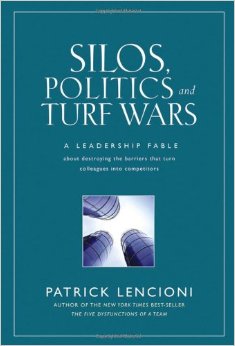
Blog - Organizational CUlture - Lencioni book Silos, Politics & Turf Wars

Everybody needs to read Lencioni’s Politics, Silos, Turf Wars. “What is Bucket 1? – core DNA – values we do not change. Don’t even ask. Bucket 2? – Maybe. Wasn’t our Core DNA but goes against what we want. Bucket 3? – Do whatever you want.” The core values of a culture are those that are bedrock for your organization to continue. “Ask what of your culture is not going to change. When those things come up, address them immediately. What is counter-culture? Kill them. [Examine] what we pay attention to; how we react to crisis; the role models that we raise up; the stories we tell; the heroes we create.” Plato once said: “What is celebrated is cultivated.”  You are able to influence culture by telling new stories. What does your culture celebrate? What do you see that kills culture?

4) What are culture-killers in an organization that need to be abolished? What are signs of culture that needs to be celebrated? What are the culture killers not to be tolerated?A culture-killer would be the continued allowance of violative behavior of those values. If among a staff team the cultural value is we treat each other with respect; we’re a family; we do ministry together – and you have a lone ranger who gets promoted?…that’s a culture-killer.” Anything that violates the organization’s culture is a no-go. Disrespect. Passive-Aggressive behavior. Lying. You can’t tolerate such things. Then what in culture should be celebrated? As team members exhibit organizational values in their work and demeanor, you hold them up for everyone to celebrate. “Point out and celebrate when your culture’s values are fleshed out. Give a story; mention the value; celebrate a specific value of the organization lived out; from each campus/department. Remind each other that all these things are going on in different places/departments and the impact we’re having together.”

5) What does it look like to hire and fire strategically to create the kind of culture an organization needs. People create culture.  1) Hire on the values. Look for displayed commitment to the values before the person is on the team. You ask questions. Look for history. You see if they have to sacrifice something to be on your team. Do they have to become someone they’re not to be a part of the team? 2) Removing people – a strong culture is going to make it very uncomfortable for someone to stay who doesn’t have the same values. They will self-select out of a culture not like them. They’re saying, “This isn’t really me.” The organization says, “Here’s who we are.” “If they’re not going to help the culture stay healthy, you don’t want them on that team. You want them to be a fish out of water if this isn’t the culture for them. It’s about fit not worth. There is a culture for them somewhere that matches their values.”

I love these guys – Barnabas Piper, Todd Adkins, and Eric Geiger. This podcast was very timely in my own cultural experience. I am watching an organization dear to me go through a painful downsizing – through a voluntary retirement incentive to start. This organization (both aspirationally and actually) values longevity, experience, perseverance, and history. You can imagine the struggle within of how to come to grips with this direction – necessary but heart-wrenching for them as an organization. Organizational culture is important to understand. It is how we help our culture through a crisis to get back to a healthy place. Culture cannot be disregarded.

Don’t Loathe the Culture You Lead by Eric Geiger

How Not to Loathe the Culture You Are Leading – Eric Geiger

Silos, Politics and Turf Wars: A Leadership Fable About Destroying the Barriers That Turn Colleagues Into Competitors by Patrick Lencioni

Silos, Politics and Turf Wars – PDF – Executive Book Summaries

SlideShare – Organization Culture and Climate

Organizational Structure and Culture – Principles of Management – New Charter University

Mission Drift: The Unspoken Crisis Facing Leaders, Charities, and Churches by Peter Greer and Chris Horst

Photo Credits: 5 Leadership Questions Header. Barnabas Piper, Eric Geiger, and Todd Adkins


5 Friday Faves – One Podcast on Organizational Culture, 3 Great Reads (Self-Medicating, Hard Decisions, Affliction) & a Sing-along

Blog - Friday Faves

1) A Podcast –  – This is a great conversation between Barnabas Piper, Todd Adkins, and Eric Geiger on organizational culture. They define culture as “shared values beneath the surface that drive behavior”. Aspirational values (what takes place on the wall) are distinguished from actual values (what takes place in the hall). What is your workplace culture? “We don’t treat people like that here”. Like what? What culture do you have or hope to build?Blog - Organizational Culture - slideshare.netPhoto Credit: Slideshare.net

Also see Organizational Culture and Climate – SlideShare.

2) On Self-Medication5 Socially Acceptable Ways Church Leaders Self-Medicate  – Carey Nieuwhof, a Canadian pastor and thinker on leadership, writes about how leaders can get caught up in “socially acceptable” self-medicating as a way to manage their stress. Important read for anyone in leadership.Blog - Self-medicating with Carey NieuwhofPhoto Credit: CareyNieuwhof.com

3) On Hard DecisionsBuilding the Courage to Make Changes  by Dr. Danita Johnson Hughes. Quick read on steps in making difficult workplace decisions. I have dear friends going through a tough downsizing which has to happen for their organization to survive. It took huge courage, faith, and forward-thinking on the part of the leaders to make that hard decision. .A Bible study along these lines can be found in a Slideshare on the Gospel of Mark (chapter 14).Blog - hard Decisions

Photo Credit: GreatLeadersServe.com – also a good resource.

4) On Affliction in the Lives of 3 Men – The Hidden Smile of God: The Fruit of Affliction in the Lives of John Bunyan, William Cowper, and David Brainerd (The Swans Are Not Silent, Book 2) by John Piper. The Swans Are Not Silent series by John Piper is a collection of biographies, grouped in such a way as to point to a particular character, situation, or gift from God. This volume is particularly fascinating to me because of how these men demonstrate the nearness of God in lives torn by trouble.

Blog - The Hidden Smile of God - John Piper on Affliction

Photo Credit: DesiringGod.org

5) A Sing-Along – YouTube videos of classic songs done in a bit different way. Enjoy and have a restful weekend.

YouTube Video – I Will Follow Him with André Rieu

YouTube Video – U.S. Navy Band – Selections from Jersey Boys

World-Class Customer Service – The Key Is Caring – Horst Schulze on a Culture of Service

Blog - Horst SchulzePhoto Credit: Arnezzy.tumblr.com

Just the expression “5-Star Hotels” summons delicious images of ocean views and chic, comfortable rooms and all those tiny touches to insure your return. Though never a guest in such a hotel, I have enjoyed 4-star treatment, and I have been a customer of Chick-fil-A  and Southwest Airlines. All through our days, we are administering and receiving some sort of customer service.

A couple of weeks ago, I had the privilege of learning about customer service from Horst Schulze, a world-renowned leader in the field of luxury hotels. He gained his wisdom and expertise, up through the ranks, and his counsel is applicable to any peopled workplace or organization. Schulze puts caring at the foundation for world class excellence – not just caring about the customer or client (albeit extremely important) but caring for all people (the employees and all who interface with each other in his industry).

Mr. Schulze talks about the service process as three parts: delivering an excellent product (without defect), in a timely manner, with genuine caring. Genuine caring. Not silly over-friendliness, or with casual sloppiness. Genuinely caring for the customer’s personage, time, and purpose for that interaction.

Since his presentation, I have intentionally looked at service very differently. Whether we’re talking about a small business or a large franchise, a school or university, or even such a thing as a church connection team. We can enhance customer satisfaction and loyalty by intentionally and comprehensively setting our culture.

Mr. Schulze is people-oriented – with his employees, vendors, and customers. He manages this in his hiring and training practices and through a vigilant daily (industry-wide) practice of his canon of customer service standards* (definitely worth a read- click on the link below to read the 24 standards). As I listened to him speak, his whole demeanor was that of one who joyfully delights in excellence and bringing it to bear in improving the lives of those around him.

No matter how well we think we’re doing in providing services or responding to the needs of our clients/customers, we would do well to look at the practices of such businesses as the Capella Hotel Group, Chick-fil-A, and Southwest Airlines. You will see this common thread of caring in their philosophies, culture, and standards.

“I dreamed of hotels where every employee comes to work not just to work but to create excellence, where every employee is committed, and where it’s not about creating rules but about every customer being taken care of the way they want to be taken care of.” – Horst Schulze**

“Focus on creating an organization of excellence and have processes where you can transfer excellence. That starts by finding out what is excellent in the eyes of the customer – what the guest really wants from us – based not just on what they said they wanted but what they were really thinking.” – Horst Schulze**

“It’s my responsibility to set standards. I have no right to accept mediocrity or limitation. If you don’t point out flaws, mediocrity will set in. It’s my business to do what is right and not make excuses for mediocrity. I agonize when I make a decision that it is good for all concerned; if it’s not, I don’t do it.” – Horst Schulze**

[Leading by Culture] “Southwest was the first to create a position entitled “Vice President of Customers.” For many years Colleen Barrett held the position. She understood that Customers always come first, and that in order to have a Customer service mindset you cannot separate the importance of the internal Customer (Employees) from the external Customers (passengers). If the internal Customer is happy, it will naturally flow to the external Customer in the form of good service.” – Lessons in Loyalty, Ian BrooksBlog - Southwest Airlines - Customer Service Culture - leapq.orgPhoto Credit: leapQ.org

 “Every life has a story, and often our customers and our employees, need a little grace and a little space when you deal with them because they are either experiencing a problem, just finished having a problem, or are about to have one. The word ‘restaurant’ means place of restoration. We think of Chick-fil-A as an oasis where people can be restored.  We’re all people with a lot of emotional things going on that don’t necessarily show on the surface, so we try to offer amenities and kindness that minister to the heart.” – Dan Cathy, President, Chick-fil-A***

Blog - Customer Service - Chick-fil-APhoto Credit: jyontheroad.blogspot.com

“Forty years ago, exceptional was a glass elevator in the lobby; then it became real paintings and fine marble and so on. Now it’s coming back to doing what the individual guest really wants: personalized and individualized service geared not to the market, but to the individual. True luxury today is about responding to each individual guest.” – Horst Schulze**

*Capella Hotel Group’s Canon service standards conceived by chairman and founder Horst Schulze

**Defining Luxury – LEADERS Interview with Horst Schulze

YouTube Video – Horst Schulze- Presentation on Customer Service

Global Leadership Summit – 6 Take-Aways from Day 2 of #GLS15

Summaries on All Speakers of Global Leadership Summit 2015 by David M. Arnold

Notes from the GLS15 – Creating World Cass Service – Horst Schulze

****A Lesson in Customer Service from Chick-fil-A President Dan Cathy

The Chick-fil-A Difference: Why Customer Lingo Matters

Thank you. My pleasure.

What You Can Learn from Southwest Airlines’ Culture

***Lessons in Loyalty: How Southwest Airlines Does It – An Insider’s Point of View

Southwest Airlines – the Airlines with Heart – and One Heart I Know Well

Worship Wednesday – To Live is Christ; To Die is Gain – Youth Alive

Uncle Bob & Dave at Chance, Maryland

“…according to my earnest expectation and hope, that I will not be put to shame in anything, but that with all boldness, Christ will even now, as always, be exalted in my body, whether by life or by death. For to me, to live is Christ and to die is gain.”Philippians 1:20-21

Don’t we have this idea that some day we’ll retire and gently ease into those sunset years of our lives? Maybe not. We definitely don’t think about dying younger than then…and for sure, we don’t think about dying suddenly. People say, “I want to go in my sleep.” Or “I want to go fast.” Maybe so…but that means living life in such a way you can die at any time. You are ready to die whenever that moment comes.

We have a dear friend who did just that. Mike died suddenly. Breathtakingly fast, his life was finished. We are still reeling.

You see, our friend Mike lived life full to busting every single day. He was a great leader, a faithful mentor of students, and a good friend…a friend who stuck “closer than a brother” (Proverbs 18:24). He was always that reliable “iron sharpening iron” (Proverbs 27:17) person in the room.

When the sparks flew, something amazing happened. Worthy ideas were born. We were drawn out of our comfort and into a conversation that mattered. Whatever the cause at the moment, with Mike in the room, it radically moved forward.

Now he won’t be in the room. The quiet of that reality is … well… impossible to frame words around.

What I can find the words for is a life lived as large as possible for God and His purposes. Mike was still teaching, writing, leading, but more than that he was following a God who gave him the huge life he had. As unimaginable as it is for us that he’s gone, all I can think is that he finished this life…and he finished it well.

We will continue to learn from Mike, remembering his life, our conversations, his writing, and the ventures still ongoing which he helped launch. He was a force for excellence and for pushing forward to take hold of what God would do, if we believed in Him and not just our own meager efforts.

Mike lived in such a way that he could die at any time. He died a man still in the middle of life, having lived, in earnestness and purpose, a longer life than many will ever live. For what? For God…for his family…for all of us whom he touched.

This song, performed by Youth Alive, speaks to his life. We can all live such a life – with courage, boldness, faith, and confidence…like our friend Mike…when “to live is Christ”.

Worship with me.  Pray for his family.

For me to live is Christ and to die is gain.

No matter what price I pay, I choose to give this life away.

I make a vow. My life will always honor You, Christ.

Whether I live or die I belong to Him.

He bore my sin; I owe this life to my saving King.

I make a vow; My life will always honor you, Christ.

Whether I live or die I belong to Him.

He bore my sin; I owe this life to my saving King.

Hallelujah, I am not my own. You are in control; Hallelujah!

For me to live is Christ And to die is gain; No matter what price I pay, I choose to give this life away.

I make a vow; my life will always honor You, Christ.

Whether I live or die I belong to Him.

He bore my sin; I owe this life to my saving King

I make a vow; my life will always honor You, Christ.

Whether I live or die, I belong to Him

He bore my sin; I owe this life to my saving King.

Hallelujah, I am not my own. You are in control, Hallelujah!

For me to live is Christ and to die is gain.

No matter what price I pay, I choose to give this life away (X2)

Only by the cross I am saved.

Hallelujah, I am not my own. You are in control. Hallelujah!

For me to live is Christ and to die is gain.

No matter what price I pay, I choose to give this life away. (X2)

Only by the cross I am saved. (X3)

YouTube Video – To Live is Christ – Youth Alive NSW

Lyrics to Youth Alive’s To Live is Christ

Worship Wednesday – Breathing In Your Grace, Breathing Out Your Praise – Your Grace Finds Me by Matt Redman

Global Leadership Summit – 6 Take-Aways from Day 2 of #GLS15

Blog - Global Leadership Summit - thecrossingchurchnj.orgPhoto Credit: thecrossingchurchnj.org

Below are my take-aways from Day 2 of the Global Leadership Summit. Register now for 2016. Life-transforming.

Horst Schulze (Chairman/CEO, Capella Hotel Group; Founding President & Former COO, The Ritz-Carlton Group):

Mr. Schulze gave the Summit audience a primer on how to create and lead in world class service.  Foundational to his philosophy is that people matter – ” we are to care about people (our employees and our customers) and we work with excellence”.

He has a canon and  24 Standards of service* that all the Capella Hotel Group employees are expected to execute.  Not just as part of the function of their job, but because they matter – the people and the service.

In terms of service, we want 3 things:

  • No defect – You want the product to be defect-free (subconscious expectation).
  • Timeliness – You want timeliness. [In old days, check-in was 4 minutes to be good; today it’s 20 seconds.]
  • Caring – You want the people who give you the product to be nice to you (that’s why we call it service).

“The #1 driver of service and therefore customer loyalty is being nice.”

Service starts at the first contact.

Welcome

Comply with caring [give the customer what he wants]

Farewell

You can move a customer very quickly from satisfaction to loyalty.Blog - Global Leadership Summit -2 - Horst Schulze - liberty.eduPhoto Credit: liberty.edu

Sheila Heen (Founder, Triad Consulting Group; Faculty, Harvard Law School; Co-Author with Douglas Stone of Thanks for the Feedback: The Science & Art of Receiving Feedback Well):

Ms. Heen talked about feedback and the skill of receiving feedback well. A Harvard Law School professor, she also speaks/consults internationally on negotiation and conflict resolution. With this background, she gave the Summit audience helps on how important feedback is and not to miss it, even in the tension of a difficult or unfair situation.Blog - Global Leadership Summit - Sheila Heen

Photo Credit: triadconsultinggroup.com

“Feedback is my relationship with the world and the world’s relationship with me. Part of the problem with feedback is that it sits at the junction of two core human needs. On the one hand, we do want to learn to grow. On the other hand, we need to feel accepted, respected and loved the way we are now.”

“3 Different Kinds of Feedback with Very Different Purposes (we need all three kinds to learn and grow).

Evaluation – rates or ranks you against a set of criteria or against your peers. Defining the relationship. Cholesterol. Performance review.

Coaching – Anything that helps you get better or learn. Mentoring. Advice. Suggestions. Correction.

Appreciation – says ‘I see you.’ ‘I get you.’ ‘You matter around here.’”

“The [feedback] model for us is Jesus Christ. He accepts us just the way we are right now, in all our brokenness, and at the same time, he challenges us to learn and grow.”

Brian Houston (Founder & Global Senior Pastor, Hillsong Church; Author of Live, Love, Lead: Your Best Is Yet to Come):

Pastor Houston was my biggest surprise of the day. As a mega-church pastor with campuses not just all across Australia but all across the world, I thought he would be a polished, fine-tuned speaking machine. [Forgive me that, Brother Brian.] There was a gentleness and humility in him birthed out of hard times, struggle, and loss…filled in by God’s matchless grace. He shared some of his life story through a Q & A with Bill Hybels. It was a beautiful tribute to the love and power of God reflected in a life fully surrendered to Him. We will be buying his book Live, Love, Lead.

“I love what I do. I love the Lord and I love the church. I love people ultimately. That motivation has never left me. Even on the darkest days. In the biggest challenges. If you keep showing up, even when you get knocked down, God will be with you. Longevity is the greatest thing you can have for the glory of the Lord.

Sam Adeyemi (Founder & Senior Pastor, Daystar Christian Centre in Nigeria):

Pastor Adeyemi talked about growing up in a culture of leaders and followers where a hierarchical (or power) distance was common. Then He spoke of Jesus’ leadership and how God means for us to lead, including closing the gap between people.

“You will not find the definition of success for your ministry or organization until you help the people [God] sent to you to succeed. The object of leadership for many leaders is their own success, but the object of Christ’s leadership was the success of His followers.”

“Following you, [as a leader], should hold the promise of life change for those who follow you.”

“God calls us to create new power structures where power is used appropriately. Jesus gave his disciples authority and power. He gave power away.”BLog - Global Leadership Summit - Sam AdeyemiPhoto Credit: preachit.com.ng

Liz Wiseman (President, The Wiseman Group; Author of Rookie Smarts: Why Learning Beats Knowing in the New Game of Work):

Liz talked about the upside of being a rookie in the workplace.

“As Rookies – We operate in simple, small, gritty and powerful ways.

With experience comes knowledge, responsibility. Once we have knowledge, we tend to make assumptions, and we can make bad assumptions. Our minds sometimes fill in what is not actually there.”

“Leaders who master the art of pivot – as leader and learner (regaining your rookie smarts). Experiment – Throw away your notes. Ask the Questions (shift from knowing and operate from a place of inquiry). Operate from a mode of curiosity. Admit what you don’t know. Let someone else lead. Disqualify yourself (put yourself at the bottom of a new learning curve). Lead your team into the unknown. Set the stretch. As you grow as a leader, don’t forget to be a learner.”

Craig Groeschel (Founder & Senior Pastor, LifeChurch.tv):

Late on a Friday afternoon, full of words from all these other great leaders, Craig Groeschel powerfully and graciously took the stage. He encouraged us on how to build capacity. [This is actually a recent favorite topic of mine with the Lord and those I love.] Taking his text from Ephesians 3:20-21, Pastor Groeschel spoke from experience of how God will work in lives available to Him in ways we can’t even imagine. With that introduction, he dug into some exquisitely practical counsel on how to increase our leadership capacity.

5 Different C’s to Expand Your Leadership Capacity – Choose one to work on.

  1. Build your confidence.
  2. Expand your connections.
  3. Improve your competence.
  4. Strengthen your character.
  5. Increase your commitment.

Groeschel gave plenty of examples from his own life of what these might look like, and honestly, his teaching was so clear, we knew right away which one’s we would be working on, in the days ahead.

The Global Leadership Summit was also punctuated with videos of “Grander Vision” stories – people from all over the world who took seriously what they’d learned at previous Summits and went out and changed their worlds. We also enjoyed stirring worship moments, including a song set that Bill Hybels introduced as music soothing to our leader souls. Sometimes when nothing else seems to help, Hybels said, music can remind us of the nearness of God. Blog - Global Leadership Summit - SongSetListPhoto Credit: Twitter.com/wcagls

All this….and Michael Jr.

Thank you, Bill Hybels, and the Willow Creek Association, and all those leaders – who help make the many host sites possible and who demonstrate how possibilities can become realities when we lead well.

Blog - Global Leadership Summit - Carl & Bill HybelsPhoto Credit: twitter.com/michaeljrcomedy

*Capella Hotel Group’s Canon & 24 Service Standards – established by the founder and chairman Horst Schulze

Slideshare – How to Give and Receive Feedback – The Triad Consulting Group – Sheila Heen & Douglas Stone (authors of Thanks for the Feedback)

Global Leadership Summit – Register for 2016

Grander Vision Stories & Videos – Follow the GLS – Willow Creek Association

Twitter Account for Willow Creek Association – for #GLS15 comments and quotes and links to videos, articles, resources

Global Leadership Summit – 7 Take-Aways from Day One of #GLS15

Blog - Global Leadership Summit - thecrossingchurchnj.orgPhoto Credit: thecrossingchurchnj.org

Today I participated in the Global Leadership Summit at a satellite site near Richmond, Virginia. It was my first time, but I hope not to miss another. It is best described on the website- “a world-class experience designed to help you get better and embrace your grander vision—the reason God called you to lead. Broadcast LIVE in HD from Willow’s campus near Chicago to over 375 Premier Host Sites in North America and later around the world, you are invited to join an expected 260,000 leaders in 2015.”

7 great leaders spoke today, and 6 others will speak tomorrow. The experience was so meaningful and beneficial to me where I am currently in life, but I would recommend it to anyone whatever your situations.

Following are the briefest of 7 take-aways that are still buzzing around in my head. So much to process. Here’s a start.

Bill Hybels (founder/senior pastor of Willow Creek Community Church; chairman of the Willow Creek Association which launched the Global Leadership Summit in 1995):

“Leadership is [simply] moving people from here to there.”

“Armed with enough humility we can learn from anyone.” 

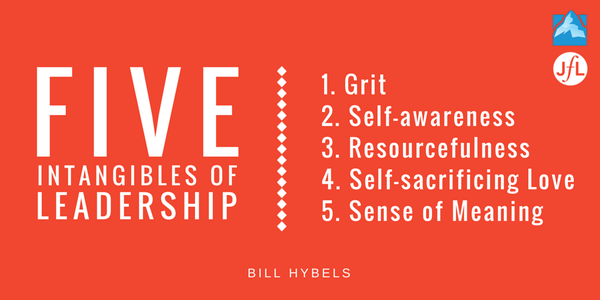
Hybels reflected on Richard Davis’ book The Intangibles of Leadership – and developed his own list of 5 intangibles for leaders:Blog - Global Leadership Summit - 5 Intangibles of LeadershipPhoto Credit: jobsforlife.org

He challenged us to discover the “white-hot why” of our lives – the why of what we do – what really matters for us. For Hybels, it’s “transforming lives”. He is a living example of being faithful to that “why”.

Jim Collins (best-selling author of Good to Great):

Jim Collins talked about what he learned as the recent Chair (2012-2013) for the Study of Leadership at the United States Military Academy at West Point. He reported that: creating a culture out of which great leaders are developed must include

  1. Serving a cause we can be passionate about and for which we would be willing to suffer;
  2. Growing through difficulty; and
  3. Succeeding by helping those around us.

“We succeed at our very best only when we help others succeed. We respond to our own difficulties by reaching out and saying ‘Let me help you.’ To communicate to others: ‘You are never alone.'”

“The greatest leaders find a way to make a contribution, a distinctive impact, on people, on real-live flesh and blood people.”

Ed Catmull (Co-Founder of Pixar Animation Studios; President of Walt Disney Animation Studios; Author of Creativity, Inc.):

Catmull wanted to be an animator from the time he was a child but couldn’t see a path to follow that dream. He ended up studying physics in college.Blog - GLobal Leadership Summit - Ed Catmull by brainpickings.orgPhoto Credit: brainpickings.org

“Science and art are not incongruous. Art isn’t about drawing; it’s about learning to see. Which business or professions do you not want to have enhanced ability to see?”

He talked further about 3 processes in film-making, all relating to accountability:

  1. Teams working together (using a Brain Trust – a group of colleagues all acting as peers, with vested interest, giving feedback;
  2. When failures happen in production – embracing [failure] but at the same time dealing with it with both total candor and kindness; and
  3. Operating within constraints (a budget) – actually pushes creativity higher and delivers better outcomes.

“Stories influence the world. We want to use story-telling for good.”

Adam Grant (Professor, Wharton School of Business; Author of Give and Take: A Revolutionary Approach to Success)

Grant talked about the three kinds of persons you find in the workplace…well, anywhere really:  1) Givers, 2) Takers, and 3) Matchers. After defining each of these and how they interact with each other in the workplace (buy the book), he prescribed ways to build a work culture. A work culture of generosity – the work culture that especially develops the givers, which brings the others along as well.

His three challenges were:

  1. Keep the wrong people off the bus. Get rid of the takers.
  2. Redefine giving. [He talked about the 5-minute favor and the 100 hours of volunteering across a year – these micro-lessons of generosity.]
  3.  Encourage help-seekers. – Developing the givers will nurture a culture of “How can I be the rising tide that lifts all boats?” – a Reciprocity Ring.

Dr. Brené Brown (Research Professor, University of Houston Graduate College of Social Work; Author of Rising Strong):

“Our brain is neuro-biologically hard-wired in the instant of a [hard time; difficult conversation] to make up a story as to what happened. If we can give our brain a story when something hard happens, we are rewarded by our brain (dopamine). Our brain rewards us whether the story is accurate or not. Our worthiness as people lives inside these stories. When we pretend or deny the story, it owns us. When we own the story, we get to write the ending.”

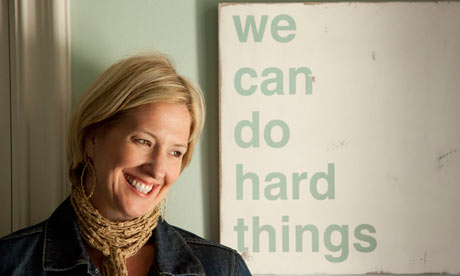
Brene BrownPhoto Credit: TheGuardian.com

Transformational leaders: 1. Do discomfort.  2.They have absolute emotional awareness about their own life, and about the people around them.

“We can’t ignore emotion. We are emotional people who sometimes think. Emotion dictates behavior. If you speak to the way they think or their behaviors, without speaking to their emotions, they will not change. Speak to their emotions. Curiosity and lines of inquiry are the greatest tools of leaders. ‘Help me understand’. “

Sallie Krawcheck (Chair of Ellevate Network; Former President, Bank of America’s Global Wealth & Investment Management):

“The retirement savings crisis is a women’s crisis – we retire with 2/3 the retirement income as men and live 6-8 years longer than men. I love men. I’m married to a man. But you guys are going to die, and we as women will be living with this crisis.”

“My “‘white-hot why’ is advancing women, elevating women. “

“I work every day as though my children are watching me.”

Albert Tate (Founder/Senior Pastor of Fellowship Monrovia, Southern California):

Pastor Tate preached (and I mean preached) on the miracle of Jesus’ feeding of the 5000 (John 6:1-13), using the five loaves of bread and two fish brought to Him from a boy in the crowd.

Tate renounced the leadership lie of “leaving it all on the field”.

“One of the most key things we can do as leaders as to bring what we have, give it to Jesus, and then get out of the way.”

Leaders, you don’t have to go home on empty. You don’t have to leave it all on the field. Christ left it all on the Cross. Bring what you have. Whatever you have, give it back to Him. Then get out of the way, and watch in awe and wonder at what He does.”

These are just 7 take-aways of the 20 pages of notes I took during today’s Summit. Such great teaching – inspiring, empowering, mystifying, really.

Download the Global Leadership Summit app. Read what you can (in these authors’ books and via all the online resources – articles, blogs, video). Take down the dates for the Global Leadership Summit of 2016 and plan to register early.

Being the leader we hope to be is within our reach.

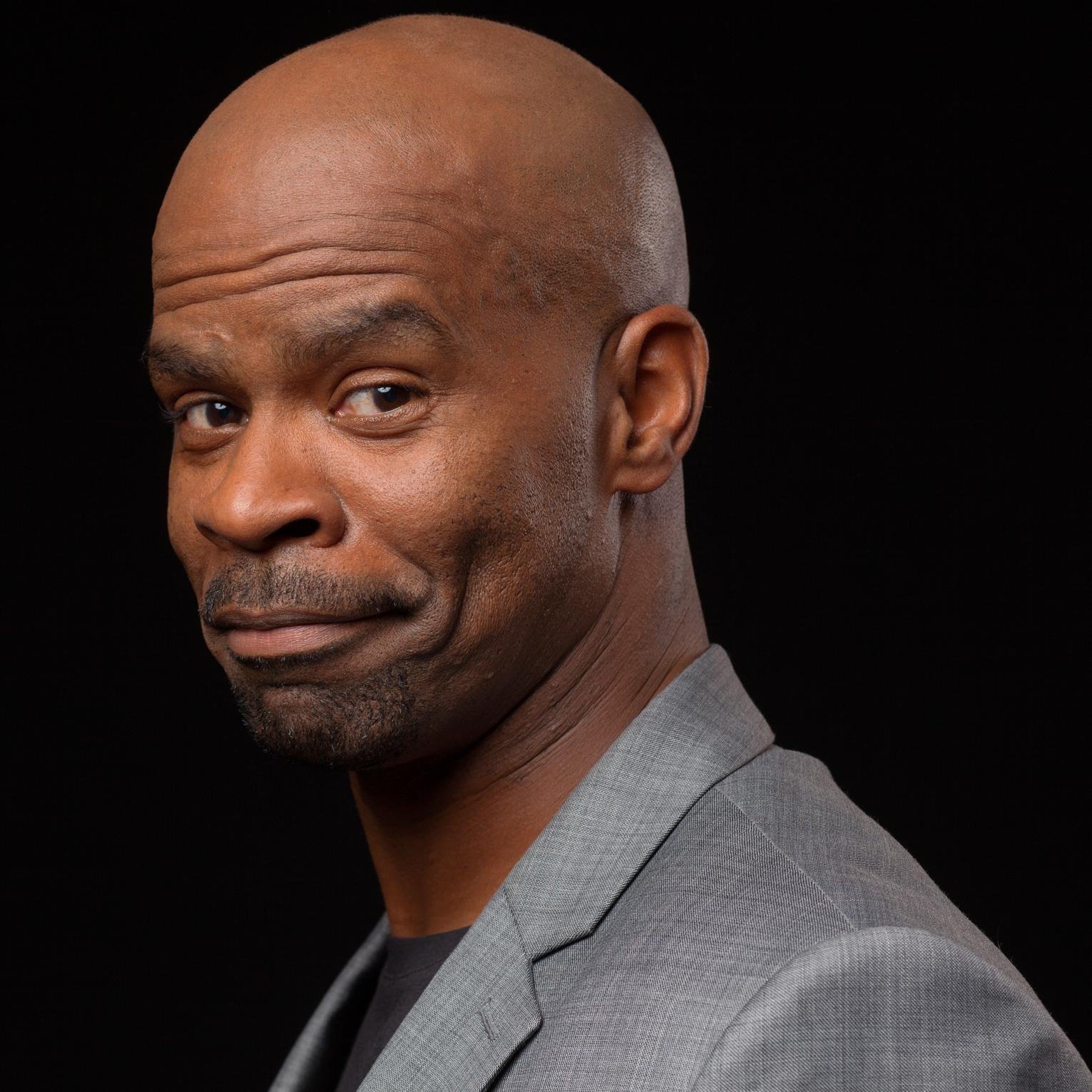
Post-Script: Michael Jr. was on and off stage to make us laugh and to look at life from just a bit of a different angle. Love him!

Blog - Global Leadership Summit - Michael Jr

Photo Credit: MichaelJrComedy

Global Leadership Summit – Willow Creek Association

Global Leadership Summit App

Collaborative Conversations – Quotes to Stir Your Thinking on Leadership and Language in Workplace Decision-making

Blog - Collaborative ConversationsPhoto Credit: AJCarlisle.files.wordpress.com

Change is normal, and resisting change is normal as well. You may be part of an organization or company where sweeping changes are being implemented, even this week. Or maybe you are not on the inside loop of these decisions, so you are not privy to the change coming. Whether you are part of that process or not, consider how you might have a role in making change work, in your sphere of influence, among your colleagues.

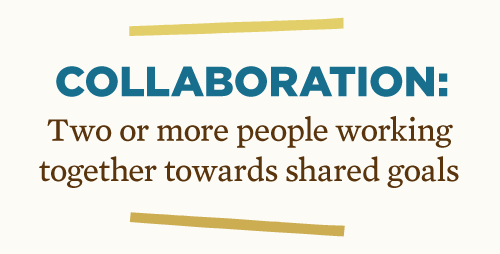
You may already have read and profited from the book Crucial Conversations. Now consider collaborative conversations. Collaboration, simply defined, is “working together towards shared goals”. Collaborative conversations bring a collective intelligence to bear on the problem to be solved, vision to be defined, or direction to be changed.Blog - Collaborative ConversationsPhoto Credit: ThoughtFarmer.com

David Perkins, a Harvard professor, wrote about collaborative conversations in the workplace, using the metaphor of King Arthur’s round table. He described the beneficial nature of bringing several principal players (or stakeholders) to the table and treating each one with an equal or autonomous voice.

“A round table makes it a little easier to pool mental effort. A round table makes a group a little more intelligent…For a group to display intelligence in a sustained way, the members have to value their exchanges and stick together to keep making them. This depends on positive symbolic conduct [side messages sent by our words and behavior]…and collaboration… It’s not ideas, but people with ideas that make things happen.” – David Perkins

“One of the simplest ways to immunize a culture against broken trust, corruption, and animosity is to build a common vision.” – David Perkins

Perkins’ book King Arthur’s Round Table: How Collaborative Conversations Create Smart Organizations is a tremendous resource in developing this kind of decision-making work environment. An Executive Book Summary* can help you get started.

I personally thrive in such a setting and intuitively understand the value-adding nature of collaborative conversations. In researching this workplace topic, and choosing the links below, I came across a fascinating paper** by Heather Davis, a professor of RMIT University Australia.

Davis presented her paper at the 14th International Conference on Thinking (2009, Malaysia). She discussed how workplace leaders often choose “languages of war” in making and communicating decisions and creating change. Her paper is heady stuff but if you read her thoughts below you will want to read the whole paper. It gives huge support to the role of collaborative conversations.

“In [leadership’s] ‘language of zealous allegiance’, there are expectations of allegiance [in the workplace] that lay a path for uncritical acceptance and passivity. This manifests in an expectation that followers be conscripted wholly to the cause. There is little room for questioning. [Davis quotes Hage]: “Conscription means one important thing: there is no questioning of orders, one only executes them; ‘either you’re with us or you’re against us’. “ (Hage, 2004, p. 3).””

“Rhetoric plays out in the workplace too and can be tested by how well leaders:

  • hear and acknowledge the ‘other’ point of view,
  • see the ‘other’ as people rather than pawns or simply abstractions,
  • manage the distance, materially and metaphorically, between themselves and the people and sites affected by their decisions.”

“In the corporate world there are many examples of executives living and working in gated communities or otherwise removed by dint of corporate hierarchy or geography from the people and conditions affected by their decisions. Often, these leaders are also surrounded by people who can only agree, leading to little opportunity for double loop learning or deeply reasoned decision making processes. Whether our leaders live in gated communities is their business, but if they think, work and take refuge within a ‘gated’ mindset then we all need to be concerned. These conditions lead to hubris and have been the undoing of many leaders and corporations.”

“[Leadership’s] language of regrettable necessity translates directly to the “There Is No Alternative”. [This strategy] is used to always move the focus of discussion away from any big picture ‘why’ questions. This is done by shifting the focus to discussions only about the budget pie or, more particularly, the piece of the budget pie that is contestable. People find themselves fighting for a slice of the budget pie and energies focus only on the ‘pie’ and getting the biggest piece of it. This shifts the focus from larger issues such as whether the budget is set correctly, what has been included and what has been excluded. Thinking about alternatives is never an option.”

The role of the organisation is ‘to know its purpose and not be diverted from it’ (Drucker, 1993). This is a timely reminder here – easier said than done in times of flux, complexity and discontinuous change.”

“Language is the visible tip of the cultural iceberg that largely remains hidden.”

“Perkins (2007) used two metaphors in his presentation and so far I have only privileged the five languages of war metaphor in this discussion. The other metaphor used was the “five languages of peace”. The main difference between Perkins’ languages of war and peace are that the war metaphor is founded on exclusivity and a preference for limiting discourse to its [leadership’s] own narrowly defined boundaries. Perkins’s peace metaphor is founded on inclusivity and opening up the space for conversations and conflicting views [i.e., collaborative conversations].”

“Oppositional language and the pitting of one deeply held worldview against another will not lead to resolving the underlying problems of the workplace. Rather, space for conversations to surface underlying assumptions is required. Perkins’ language of peace metaphor confirms that that there are always other lenses to view the world through, not just the one that [leadership] prefers.”

Provocative reading from this Australian educator. Bottom line: Those of us in leadership carry a great burden of responsibility. We at times must make difficult and sometimes painful decisions. Adding voices to that decision-making can generate even more challenging processes to negotiate. Still, we will make more sustainable decisions for “better futures” if we bring those most affected (or most experienced or insightful) to the table. Whenever possible. That’s the gain of collaborative conversations – working together toward shared vision and shared ownership.

Stay engaged in your workplace. You can make a difference.

*King Arthur’s Round TableHow Collaborative Conversations Create Smart Organizations by David Perkins – an Executive Book Summary

Leadership Lessons from King Arthur – a Review of Harvard Professor David Perkins’ book King Arthur’s Round Table

How to Lead When Change is the New Normal

The Art of Collaboration (Collaborative Behaviors) – by Steve Dale (includes a SlideShare)

Collaboration: What Does It Really Mean?

**Troubling Invisible Barriers to Better Futures: Surfacing the “Five Languages of War” in the Workplace – a scholarly paper by Heather Davis, presented at the 14th International Conference on Thinking

The Five Literacies of Global Leadership – What Authentic Leaders Know and You Need to Find Out – by David Hames – Business Book Summary

What Is a Coaching Conversation? from Opening the Door to Coaching Conversations by Linda Gross Cheliotes and Marceta Fleming Reilly 

The Perils of Indifference – a Speech by Elie Wiesel

Cutting Through the Hype – What “Collaboration” Really Means – ThoughtFarmer.com

Making the Workforce Work! The Collaborative Workforce Initiative

Worship Wednesday – There is No One Else For Me – None But Jesus*

Blog - Sunrise by Alicia Bowman

Then Jesus said to the twelve, “Do you also want to go away?” But Simon Peter answered Him, “Lord, to whom shall we go? You have the words of eternal life.  Also we have come to believe and know that You are the Christ, the Son of the living God.” – John 6:67-69

I love the pink glow of the sky at sunrise…for me, it’s the reward of the early morning wake-up. Getting up before the birds begin their singing, and it’s still dark. That quiet, with my first cup of coffee, and only God and my thoughts. This morning it gave me pause to remember last night’s late conversation with a friend.

We were lamenting, brooding even, about the larger-than-life influence of college professors (on our children) and the sometimes narrow arrogance of higher education. How extraordinary that in a liberal arts education supposedly training the thinkers of the next tomorrow, the example of the life and leadership of Jesus is so often minimized, as to not even exist in history.

There was a time earlier in my life, during college actually, that I stepped away from my faith. If you knew me then, you might not have noticed. I was involved in church, more or less, and the goodness of God was still imprinted on many of my life choices…but not all, for sure. I stepped away…desiring the approval of my intellectual agnostic classmates (and colleagues, later) and the acceptance of my Friday night Happy Hour crowd. That was the peer group that drew me in like a child gazing up at a department store window filled with Christmas toys.

The problem with that is the toys break and they’re never quite enough fun. The search for more toys always follows. We are never satisfied.

During an amazing time in the life of Jesus, after He demonstrated Himself to have such power that He could only be God, even then, He had disciples to walk away from him…never to return. It was at that time He asked one of His closest disciples, Peter, if he would leave. Peter answered in a way that I would now, having regained my senses after my post-college wanderings.

“To whom would [I] go?” There is “none but Jesus.”

I have my own advanced degree, and decades of keeping company with highly educated, extraordinarily competent and accomplished people. We talk about all sorts of issues and we work to make a better world. When all is said and done, if I bring anything at all to the table, it’s because of knowing Jesus. He has changed me, my thinking and way of living, in profound and deeply satisfying ways.

What a great deceit and injustice to society that our culture has been swayed to disregard the wisdom, goodness, justice, mercy, and love of God as displayed through His Son. May we see the day that this turns…may we be part of the turning.

Worship with me…None But Jesus*

In the quiet, in the stillness
I know that You are God
In the secret of Your presence
I know there I am restored

When You call I won’t refuse
Each new day again I’ll choose

[Chorus] There is no one else for me
None but Jesus
Crucified to set me free
Now I live to bring Him praise

In the chaos, in confusion
I know You’re Sovereign still
In the moment of my weakness
You give me grace to do Your will

When You call I won’t delay
This my song through all my days

[Chorus]

I am Yours and You are Mine (x4)

All my delight is in You Lord
All of my hope, all of my strength
All my delight is in You Lord Forevermore (x2)

[Chorus]**

*YouTube Video of None But Jesus with Lyrics – Sung by composer Brooke Fraser

**Lyrics to None But Jesus

YouTube Video of None But Jesus – worship led by Hillsong

Brooke Fraser website

Chart of Religious Views of Jesus – Jesus is so much more than religion.

I Will Follow Him – Andre Rieu – Under the Stars, Maastricht V, the Netherlands – just for fun and the joy of thinking of Jesus while watching/singing with it

Photo Credit – Alicia Bowman