Tag Archives: Adam Grant

Monday Morning Moment – People You Love Working With – and Becoming One of Them

blog-likable-guys-at-work-askmenPhoto Credit: AskMen

It’s Monday morning and whatever you’re facing today, these folks help to bring down your stress and lighten your load…just by being in your path. You can name them easily. They are the ones who make you laugh and see a different side to your situation. They are the ones who give you second thoughts when considering a job change. They are the ones who add value to you, not just as a colleague but as a real in-the-skin human being. These are the folks who can turn the course of your day with just a few minutes conversation…or even a wave from across the parking lot. It’s just that simple.blog-likeable-cowoers-muffy-bennettPhoto Credit: Mashable

For you guys in a dark place…and not one person comes to mind…maybe, it’s good to think back…to people in your past who helped set you on a positive course in your career…think of those people. If you are in a hole in your workplace right now, and many of us have been there at some point in our professional lives, could you rally and become one of these people who light up the place?

blog-likeable-coworkers

Photo Credit: Friendship.about

Here’s the challenge for today. I read an article by content strategist Scott Tousley recently which got me thinking about this.  Is it possible to become “a rising tide that lifts all boats”? If you’ve read this far, you probably are already that kind of person. However, if somehow you struggle with keeping fellow employees in your view while dealing with large-scale problem-solving, you might want to consider a personal assessment and do-over. It’s never too late.

Scott Tousley – who has the longest eyelashes and most infectious smile – also gets to live and work in San Diego, California. Besides all that, he writes really insightful articles about the workplace. His article, The 9 Habits of Insanely Likable and Charismatic People, is so good, I’m not going to write my own commentary on this topic, because you HAVE to go read his article. It lists the 9 habits (included below) with real-life anecdotes, brilliant support data, and links to read more. So don’t miss it – lightning-fast read for us visual learners.

Tousley’s 9 habits of insanely likable & charismatic people: 

1. They are empathetic

2. They are humble

3. They are vulnerable

4. They have a sense of humor

5. They are present

6. They are genuinely interested in EVERYONE

7. They avoid social narcissism

8. They are generous and altruistic

9. They reciprocate praise (and take blame)

Being likable and charismatic isn’t about being popular or climbing the career ladder as much as it’s about making a huge chunk of our lives just more enjoyable… We have choices here.


blog-likable-coworkers-the-question-academyblog-likeable-coworkers-amanda-gorePhoto Credit: The Question Academy; LinkedIn

If you had trouble calling to mind people you really like at work, then you’ve probably fallen down but you can get up! Don’t let that snarky, seemingly self-important coworker or boss mess with your head and steal your joy. Refocus to those in your workspace who you can’t help but be encouraged around them. Don’t miss them in that cloud of bother over the less likable ones around you. So what if they don’t seem to care about you or others at work. You be one who cares…and it can make a big difference. Take Scott Tousley’s excellent counsel in noting and affirming those likable ones around you…and set your course to return to being one yourself.

The 9 Habits of Insanely Likable and Charismatic People – Scott Tousley

4 Simple Questions That Will Instantly Make You More Likable at Work – Sara McCord

Being More Likable at Work – Cherie Burbach

10 Traits of Likeable People – Evan West

13 Habits of Exceptionally Likeable People – Travis Bradberry

How to Develop Your Charisma and Become More Likable – WATCH the Olivia Fox Cabane Video – Patrick Allan

How To Be More Likeable at Work – 10 Things To Do Today – G. L. Hoffman

YouTube Video – Amanda Gore – Stress Busters and Mood Management and Turning on the Joy Switch

Saturday Short – A Space and a Place on the Team

Blog - Space and a place - gtrinityPhoto Credit: Gtrinity

Work space is always a premium in companies. Whether you work in a cubicle or a full-fledged office with a door, a space of some sort that belongs to you (shared or not) is vital. Yesterday, I had the opportunity to pour over a department’s new office space design. It was a fascinating experience.

Some of the team members work remotely, and I noticed there wasn’t a space designated for those who are not regularly in the office. Showing this to the person on point for working out the space assignments yielded an “Aha!” moment. She was kind to listen to a relative outsider, initially explaining how that probably happened because they are rarely in the office. Could it be that they are rarely there because there is no space for them? Something to think about if you want to rub shoulders and share ideas with team members that could prove very valuable…if space is made for them.

Along with space comes the idea of a place on the team. Do you know your place on your work team? What you bring to the table? What unique role you play in the mission of your organization? C-suite leaders and department heads, of course, define some of that through a title, vision, and job description. They made a place for you on the team organizationally. Your role is to carve that place out…to add value to the work of the team through your own applied competencies, but also to add value to the team members by your care for them – by being “the rising tide that lifts all boats”Adam Grant.

Blog - team a place for you - the brand bankPhoto Credit: The Brand Bank

How exhilarating it is when our bosses communicate to us and the larger team how relevant we are to them and the work! However, that can’t be our motivation. We must set in our own minds, that if we’re employed, we have that grand opportunity to make a difference. Whether obvious to leadership or not, we can apply our best selves to the vision, to the outcome, and to the people we work with and for. Business leader John Maxwell spoke recently at the Global Leadership Summit on this very topic.

Maxwell’s book Intentional Living: Choosing a Life that Matters focuses on this idea of “adding value” to others. At first, I thought that an odd idea because people have value. Period. Then, the more I listened to him and the more I read about healthy teams, there is wisdom in this. We can get absorbed in the task and the goals, and miss the people within the tasks. It is part of the whole “space and place” component of team. Give a listen to Maxwell in this brief but packed 3:40 minute video on “adding value to people”.

In the course of busy work and personal lives, we are not even thinking sometimes of the need for “space and place”. On this Saturday, during gardening, and errands, and family outings, spend a quiet minute maybe on the people you call team and what space and place you’ve made for them to thrive and grow. It will always come back, like Adam Grant says, to benefit you as well.

Monday Morning Moment – On Silos and Tribalism – Taking “Us” and “Them” to a Better “We”

Blog - Silos & TribalismPhoto Credit: Slideshare.net

“Silos”, as a workplace term, is such a fitting description for what we do to distinguish ourselves from each other. It means compartmentalization based on specialization. Now the term “silos” is less used, replaced by the cooler term “tribes”. Unfortunately, because the workplace woes of old are still in operation, “tribes” have deteriorated into “tribalism” or…[Hello] “silos”.

I began thinking about this again this weekend when a retweet came up in my Twitter feed featuring Gianpiero Petriglieri. So much organizational resource – money and time – is spent on specialization and grooming leaders. It’s a pity when the outcome actually draws down the organization ( to small pockets of “tribal buddies”) instead of honing expertise and relationships across departments, across disciplines.Blog - Silos and Tribalism

What if we could break down silos, and reorient and reenergize tribes? What if workplace tribes incorporated a grand plan that nurtured inclusion – creating “a rising tide that lifts all boats” (Adam Grant)?

Years ago, when I was a young instructor at Yale University, I experienced workplace silos. There were bottlenecks through which I had to maneuver, until I figured out how to win those beyond the bottlenecks. Since then silos have been a part of life for me, as I’m sure they are for us all. Oncology nursing had a different prestige than critical care nursing. Was one better than the other? No.

Working in the Middle East had its own set of challenges different from working in Europe. Does that mean one elicits greater respect or benefits than another? Of course not. Right? Communication between those in the field and those in the home office can also become very much an “us” and “them” transaction.  Even within the home office, one department may seem more the “flavor of the month” than another. What are your silo/tribe challenges?

Brilliant business writers can give us great tools and insight with breaking down silos (see fast reads in the links below). If you are anticipating a major change in your organization (buy-out, down-sizing, shift in focus/product line), it makes for a perfect storm to deal with silos. Of course, if management across the organization leads out with a unifying goal (a “battle-cry”), the possibility for success is heightened. I don’t think, however, that this is the only hope for success.

What if one department, a single silo or tribe, decided to tackle the problem? What would that look like? From my work experience and from learning from great leaders, both celebrity and colleague, here’s a bare-bones minimum how-to-get-started list:

  • What is your common goal as an organization? What is the clear unified rallying cry around which you can collaborate?
  • What are your own silo biases? Do you communicate that you think your department, location, specialization should have some sort of favor? Deal with that. It’s the first barrier that has to come down.
  • If trust has been disrupted or destroyed, who can you partner with to begin to rebuild trust? Name them, and begin the process (if you pray, you might begin praying for their success as a department/division – make it NOT about you).
  • What objectives can you establish as a department to guide you in staying focused on high-value collaboration across-specialties?
  • How will you measure the course of your action toward becoming a non-silo, less tribal department? Set a time. 6 months or across whatever acute crisis you see coming. Be as intentional and broad-reaching as you are able, given your own workload. Remember that silos alter the math in a workplace – 1 + 1 + 1 = 2 when teams aren’t sharing information and working at cross-hairs. We can make the math work better, as we work, against the flow, toward creative collaboration. 

My professional life has had various silo experiences, from teaching in an Ivy League university to working on a highly innovative team (recklessly creating its own brilliant unintentional silo, later with personal regret). Silos and workplace tribes never get us where we want to go collectively. Bring ’em down.

I would love to hear about your work experiences…any struggles, breakthroughs, or victories in this area of breaking down silos and building a culture of “Yes, WE can…together.”

Blog - Organizational CUlture - Lencioni book Silos, Politics & Turf WarsPhoto Credit: Amazon.com

Silos, Politics and Turf Wars – A Leadership Fable about Destroying the Barriers that Turn Colleagues into Competitors

Silos and Tribes – Think Different

http://www.slideshare.net/JDDillon/breaking-down-silos-how-social-learning-changed-everything-for-kaplan-atdtk

17 Strategies for Improving Collaboration – from the Freiberg’s – Do Not Miss This One.

How to Build Trust and Fight Tribalism to Stimulate Innovation

Breaking Bad – Squash Silos & Tribalism – Breakthrough Personal Branding

Leadership Axioms: Powerful Leadership Proverbs by Bill Hybels

5 Friday Faves – Workplace Friendship, a Book on Opposites, All Things Pumpkin, Story-telling, and a Chamber Choir

Blog - Friday Faves

Happy Friday! We’re expecting a rainy weekend here. With Fall weather upon us, the pull to be outdoors is even more heightened. If the rain keeps you in, here are five favorites to enjoy.

  1. Workplace Friendships – Adam Grant writes for New York Times about how friendship culture has changed in the workplace. I have life-long friendships which originated at work. Same passions, same seasons of life. Read his piece here. What is your experience?Blog - Friends at work - Friday FavesPhoto Credit: NYTimes.com

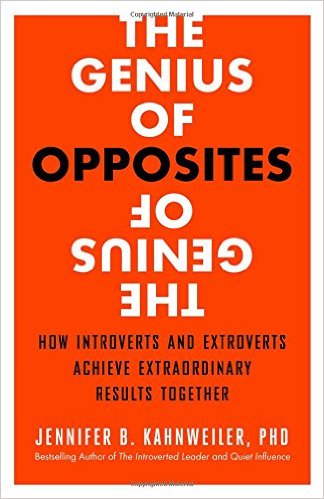
2. Book of Opposites – Jennifer Kahnweiler has written a fascinating book on Introversion-Extroversion. The Genius of Opposites: How Introverts and Extroverts Achieve Extraordinary Results Together. My  husband is a  introvert  and I am an extrovert. We have been married over 30 years and have worked together many of those years. We have learned a lot of Kahnweiler’s wisdom on our own…and after many years of struggle. This book is very helpful and empowering for any partnership between introverts and extroverts.

Blog - Friday Faves - Genius of Opposites

Photo Credit: Amazon.com

Skip Pritchard wrote a great review here.Genius-card-front-1Photo Credit: SkipPritchard.com

3) All Things Pumpkin – O.K. I’m not wild about Pumpkin Spice Latte, but as soon as September comes, I’m in love again with all things pumpkin. My favorites are pumpkin pie and pumpkin bread. When we lived overseas, pumpkin was solely treated as a vegetable. It is amazing in 7-vegetable couscous. What is your favorite pumpkin recipe? Please share in comments.2015 September Flowers & Fall Pumpkin Spice Blog 014Photo Credit: Weather.com

Fall Pumpkins by Carol Davis2015 July Phone Pics - Flowers, Blog, Stella, Shyndigz, Christie 001 (147)Photo Credit: Pumpkins by Carol Davis

4. Story-Telling – Chase Neinken wrote a piece for NewsCred.com on what is critical to story-telling – Conflict, Authenticity, and the Audience. Read 3 Crucial Principles Of Storytelling You Can Learn From Kevin Spacey + House Of Cards, and watch Kevin Spacey talk about story-telling.

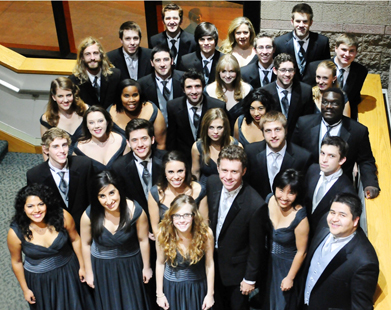
5) A Chamber Choir – Azusa Pacific University Chamber Singers were recently on tour in Italy. On Facebook, I came across a video of them singing “Give Me Jesus” by Larry Fleming at the prison where the Apostle Paul was kept. Wow!Blog - Friday Faves - APU Chamber_Singers

Photo Credit: apu.edu

That video hasn’t made it to YouTube yet, but here they are singing at a concert in Italy.

Do you have a favorite group? Please share. Enjoy your weekend…and your pumpkin of choice.

Givers, Takers, or Matchers in the Workplace – Which One Are You? – with Adam Grant

Blog - Givers, Takers, Matchers - Adam GrantPhoto Credit: Chuck Scoggins.com

A smart and gifted friend of mine is going through a taxing time on her new job. Long hours, piling up responsibilities, with no end in sight. She lamented that maybe the problem is that she’s a people-pleaser. That expression seems to communicate a character weakness, and I don’t see that operating so much with this friend of mine. What seems more her dilemma is that she’s what Adam Grant calls a “giver”…which is a good thing. The dilemma for my friend and her workplace is to establish a culture where she, and other givers, can thrive.

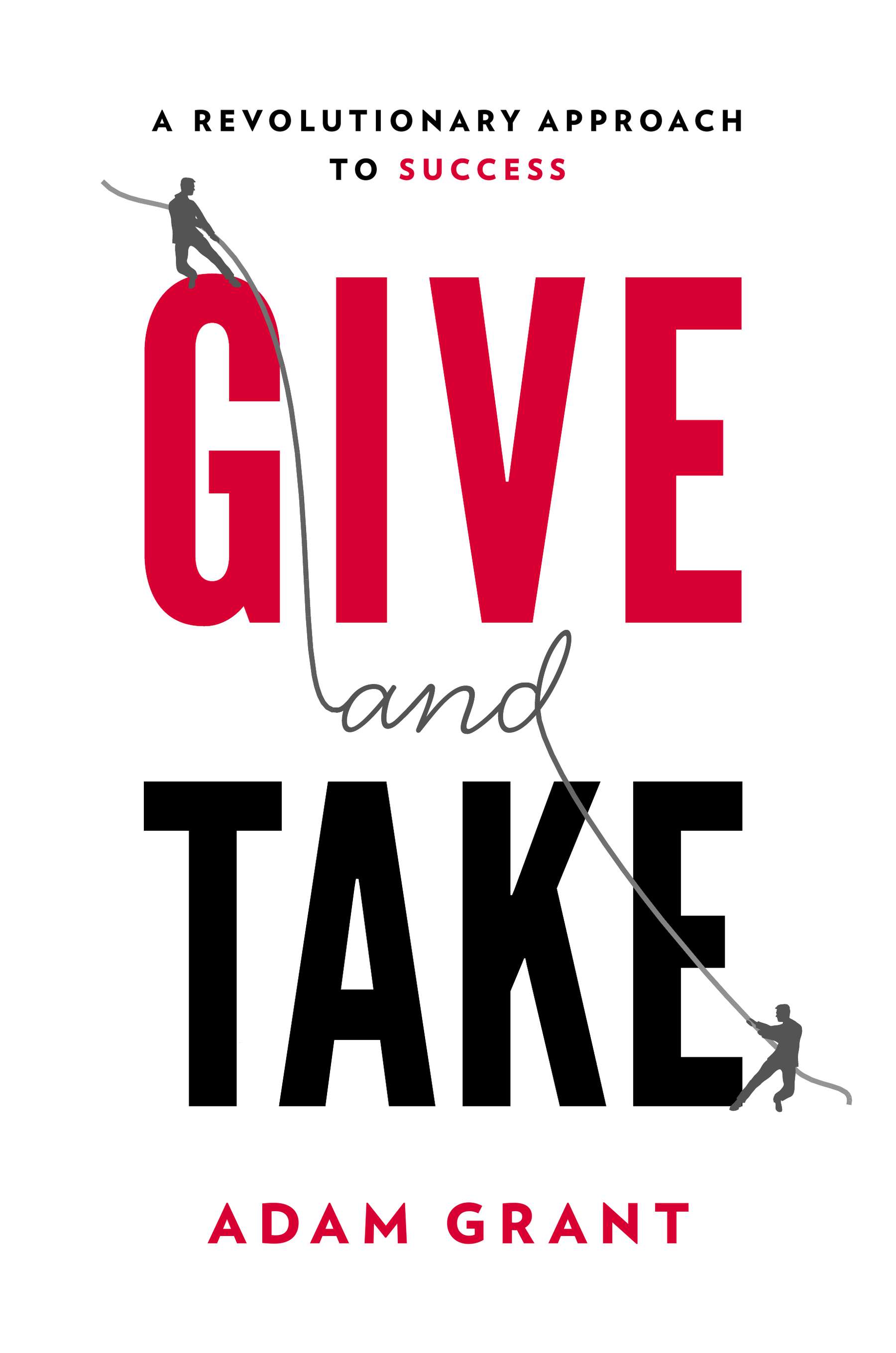
Adam Grant is a professor at the Wharton School of the University of Pennsylvania. He has also written this great book – Give and Take: Why Helping Others Drives Our Success. I heard him speak at the Global Leadership Summit and bought his book. His take on the three tops of people who make up our work culture was both fascinating and practical.Blog - Give and Take by Adam Grant - cminds.netPhoto Credit: Amazon.com

Grant sees us all as either givers, takers, or matchers. “It’s very hard to judge our own style. What values you live each day is in the eye of the beholder.” We may not necessarily see ourselves in these categories, but our colleagues will. Ask them, if you have the courage. Then you might consider taking what you learn and thinking through how you might use that information to become a more effective employee and valued colleague.

Takers are those who often manage to do the least amount of work yet gaining the most notice. They manage to get “the lion’s share of credit for collective achievements”, notes Grant. The Takers are the shirkers in the workplace. They are not at their desks because they are off schmoozing (oops, I meant networking, right?) in another department. They somehow get their jobs done partly by leaning on the strong work ethic of the Givers.

Givers are the people who simply enjoy helping others – “no strings attached”. They get to work early and stay late, if necessary. Their core values resonate in the quantity and quality of their work.

Matchers are most of us, really, doing our part in the workplace. Matchers can be counted on to keep things “fair” at work. “I’ll do something for you if you do something for me” is their mantra. They believe in “an eye for an eye” and “just worlds”.  They are the “fairness” or “Karma” police in the workplace.

Grant readily admits that we may operate out of all three styles from time to time, but we each have a dominant style at work.

How do givers, takers, and matchers fare in the workplace? Which of these sinks to the bottom in terms of performance and impact?

Givers are the worst performers (but keep reading). “The ones who get the least work done are the ones who help the others and never get their own jobs done”, reports Grant.  “I love helping others” is not the one on top of the heap of performers. “The lowest revenue accrues to the most generous salespeople.”

It’s sad news that givers sink to the bottom. If you want to boost your organization, have more givers….unfortunately the givers do it at their own expense – unless the organization builds a culture that helps the givers to thrive.

Who rises to the top?

If givers are the worst performers, who are the best performers? You think it’s takers? Takers rise quickly, and fall quickly. They often fall at the hands of the Matchers who can use gossip (or, said another way, workplace channels of influence) to call out the abuse of the Takers. Beware, Takers, of the Matchers in the shadows. Also, other Takers can also take down those more abusive, or less-well-liked Takers.

Are the Matchers the best performers? Not usually. The best results belong to the Givers. Wait! How can they also be the best performers? It’s a both/and situation.

Grant encourages: “Helping others can sink your career but it can also accelerate your careers. Hang in there.”

It takes a while for Givers to learn and build connections, but when they do, it’s a win-win for the organization.

How can we build cultures to help Givers be successful?

3 Things We Can Do:

  1. Keep the wrong people off the bus. – Get the right people on the bus. If possible, keep Takers off the bus. “One Taker on the team and paranoia starts to spread.” Put one Giver on the team, and you don’t necessarily have an explosion of generosity. It’s not bringing in the Givers; it’s weeding out the Takers. Matchers follow the norm. Matchers will follow the example of the Givers.
  2. Redefine Giving.   Wisdom is to know who is who in the workplace. Or at least not be thrown off by behaviors vs. motives. Then we can shape our work culture to empower Givers, influence Matchers, and avoid enabling Takers. In an interview with Adam Grant, Thinkers50 spelled this process out very well. For instance, consider Agreeableness vs. Disagreeableness – in Takers, Givers, and Matchers. We usually think Takers are disagreeable, but not necessarily so. Givers aren’t always agreeable either. Just because someone is nice to you (an agreeable Taker) doesn’t mean they care about you (Givers, in general, really care). Adam Grant also talks about the importance of kindness in the workplace. This is a strength of Givers, but it can also push them to over-work and exhaustion. Grant prescribes “5-minute favors (a microloan of your time, skills, or connections). Volunteering – 100 hours a year – is the sweet spot. Greater than 100 hours a year is too much. 2 hours a week.”
  3. Encourage Help-Seekers – A work culture of Help-Seekers will take silos down. “People step up when others say ‘I’m stuck; I need some help’. If no one asks for help, you have a lot of frustrated Givers in your organization.” Grant recommends an exercise called the Reciprocity Ring – Gathering teams together and having each person state a request of something they want or need and then everyone else in the room tries to use their expertise and networks to make it happen. “People are often unbelievably generous if you ask for help. Givers step up. The Takers become more generous. All the offers of help are visible. Takers don’t want to get outed. The Matchers realize that matching is useful, but it’s an inefficient way to run an organization. If you have given help to others without getting back, then you can increase your productivity because you don’t have to just ask those you’ve helped.”

Givers ask the question “How can I be the rising tide that lifts all boats?” We can move our organizations in this direction of maximum impact and satisfaction, by nurturing a Giver culture.  Instead of workplace paranoia, imagine a culture distinguished by a “Pro-noia” – the “delusion” that other people are plotting your wellbeing.  May it not be a delusion but a daily reality.

Give and Take – An Interview with Adam Grant by Thinkers50

Give and Take – A Revolutionary Approach to Success by Adam Grant

Outward Focused Lives // Givers, Takers, Matchers

Give and Take – An introduction

YouTube Video – Adam Grant, Professor – Givers, Takers, and Matchers

YouTube Video – Adam Grant’s Give and Take Talk at Google

Global Leadership Summit 2015

The Reciprocity Ring

Live Blog: 2015 Leadership Summit – 30 Leadership Quotes from Adam Grant – Brian Dodd on Leadership

The Global Leadership Summit Session Three – Adam Grant – Notes by Chuck Scoggins

Global Leadership Summit – 7 Take-Aways from Day One of #GLS15

Blog - Global Leadership Summit - thecrossingchurchnj.orgPhoto Credit: thecrossingchurchnj.org

Today I participated in the Global Leadership Summit at a satellite site near Richmond, Virginia. It was my first time, but I hope not to miss another. It is best described on the website- “a world-class experience designed to help you get better and embrace your grander vision—the reason God called you to lead. Broadcast LIVE in HD from Willow’s campus near Chicago to over 375 Premier Host Sites in North America and later around the world, you are invited to join an expected 260,000 leaders in 2015.”

7 great leaders spoke today, and 6 others will speak tomorrow. The experience was so meaningful and beneficial to me where I am currently in life, but I would recommend it to anyone whatever your situations.

Following are the briefest of 7 take-aways that are still buzzing around in my head. So much to process. Here’s a start.

Bill Hybels (founder/senior pastor of Willow Creek Community Church; chairman of the Willow Creek Association which launched the Global Leadership Summit in 1995):

“Leadership is [simply] moving people from here to there.”

“Armed with enough humility we can learn from anyone.” 

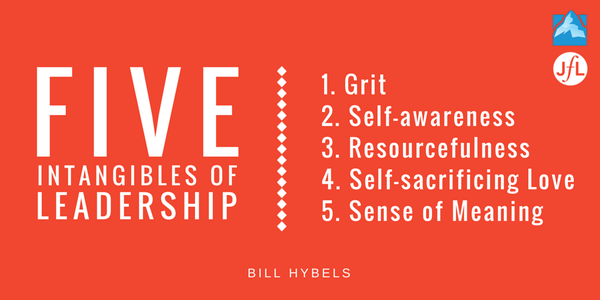
Hybels reflected on Richard Davis’ book The Intangibles of Leadership – and developed his own list of 5 intangibles for leaders:Blog - Global Leadership Summit - 5 Intangibles of LeadershipPhoto Credit: jobsforlife.org

He challenged us to discover the “white-hot why” of our lives – the why of what we do – what really matters for us. For Hybels, it’s “transforming lives”. He is a living example of being faithful to that “why”.

Jim Collins (best-selling author of Good to Great):

Jim Collins talked about what he learned as the recent Chair (2012-2013) for the Study of Leadership at the United States Military Academy at West Point. He reported that: creating a culture out of which great leaders are developed must include

  1. Serving a cause we can be passionate about and for which we would be willing to suffer;
  2. Growing through difficulty; and
  3. Succeeding by helping those around us.

“We succeed at our very best only when we help others succeed. We respond to our own difficulties by reaching out and saying ‘Let me help you.’ To communicate to others: ‘You are never alone.'”

“The greatest leaders find a way to make a contribution, a distinctive impact, on people, on real-live flesh and blood people.”

Ed Catmull (Co-Founder of Pixar Animation Studios; President of Walt Disney Animation Studios; Author of Creativity, Inc.):

Catmull wanted to be an animator from the time he was a child but couldn’t see a path to follow that dream. He ended up studying physics in college.Blog - GLobal Leadership Summit - Ed Catmull by brainpickings.orgPhoto Credit: brainpickings.org

“Science and art are not incongruous. Art isn’t about drawing; it’s about learning to see. Which business or professions do you not want to have enhanced ability to see?”

He talked further about 3 processes in film-making, all relating to accountability:

  1. Teams working together (using a Brain Trust – a group of colleagues all acting as peers, with vested interest, giving feedback;
  2. When failures happen in production – embracing [failure] but at the same time dealing with it with both total candor and kindness; and
  3. Operating within constraints (a budget) – actually pushes creativity higher and delivers better outcomes.

“Stories influence the world. We want to use story-telling for good.”

Adam Grant (Professor, Wharton School of Business; Author of Give and Take: A Revolutionary Approach to Success)

Grant talked about the three kinds of persons you find in the workplace…well, anywhere really:  1) Givers, 2) Takers, and 3) Matchers. After defining each of these and how they interact with each other in the workplace (buy the book), he prescribed ways to build a work culture. A work culture of generosity – the work culture that especially develops the givers, which brings the others along as well.

His three challenges were:

  1. Keep the wrong people off the bus. Get rid of the takers.
  2. Redefine giving. [He talked about the 5-minute favor and the 100 hours of volunteering across a year – these micro-lessons of generosity.]
  3.  Encourage help-seekers. – Developing the givers will nurture a culture of “How can I be the rising tide that lifts all boats?” – a Reciprocity Ring.

Dr. Brené Brown (Research Professor, University of Houston Graduate College of Social Work; Author of Rising Strong):

“Our brain is neuro-biologically hard-wired in the instant of a [hard time; difficult conversation] to make up a story as to what happened. If we can give our brain a story when something hard happens, we are rewarded by our brain (dopamine). Our brain rewards us whether the story is accurate or not. Our worthiness as people lives inside these stories. When we pretend or deny the story, it owns us. When we own the story, we get to write the ending.”

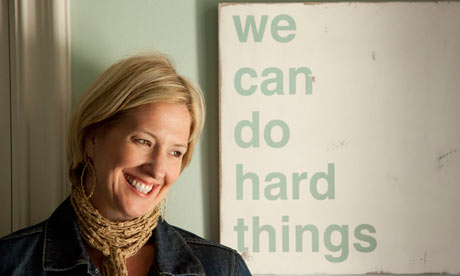
Brene BrownPhoto Credit: TheGuardian.com

Transformational leaders: 1. Do discomfort.  2.They have absolute emotional awareness about their own life, and about the people around them.

“We can’t ignore emotion. We are emotional people who sometimes think. Emotion dictates behavior. If you speak to the way they think or their behaviors, without speaking to their emotions, they will not change. Speak to their emotions. Curiosity and lines of inquiry are the greatest tools of leaders. ‘Help me understand’. “

Sallie Krawcheck (Chair of Ellevate Network; Former President, Bank of America’s Global Wealth & Investment Management):

“The retirement savings crisis is a women’s crisis – we retire with 2/3 the retirement income as men and live 6-8 years longer than men. I love men. I’m married to a man. But you guys are going to die, and we as women will be living with this crisis.”

“My “‘white-hot why’ is advancing women, elevating women. “

“I work every day as though my children are watching me.”

Albert Tate (Founder/Senior Pastor of Fellowship Monrovia, Southern California):

Pastor Tate preached (and I mean preached) on the miracle of Jesus’ feeding of the 5000 (John 6:1-13), using the five loaves of bread and two fish brought to Him from a boy in the crowd.

Tate renounced the leadership lie of “leaving it all on the field”.

“One of the most key things we can do as leaders as to bring what we have, give it to Jesus, and then get out of the way.”

Leaders, you don’t have to go home on empty. You don’t have to leave it all on the field. Christ left it all on the Cross. Bring what you have. Whatever you have, give it back to Him. Then get out of the way, and watch in awe and wonder at what He does.”

These are just 7 take-aways of the 20 pages of notes I took during today’s Summit. Such great teaching – inspiring, empowering, mystifying, really.

Download the Global Leadership Summit app. Read what you can (in these authors’ books and via all the online resources – articles, blogs, video). Take down the dates for the Global Leadership Summit of 2016 and plan to register early.

Being the leader we hope to be is within our reach.

Post-Script: Michael Jr. was on and off stage to make us laugh and to look at life from just a bit of a different angle. Love him!

Blog - Global Leadership Summit - Michael Jr

Photo Credit: MichaelJrComedy

Global Leadership Summit – Willow Creek Association

Global Leadership Summit App