
Category Archives: Critical Thinking

Global Leadership Summit – 7 Take-Aways from Day One of #GLS15

Blog - Global Leadership Summit - thecrossingchurchnj.orgPhoto Credit: thecrossingchurchnj.org

Today I participated in the Global Leadership Summit at a satellite site near Richmond, Virginia. It was my first time, but I hope not to miss another. It is best described on the website- “a world-class experience designed to help you get better and embrace your grander vision—the reason God called you to lead. Broadcast LIVE in HD from Willow’s campus near Chicago to over 375 Premier Host Sites in North America and later around the world, you are invited to join an expected 260,000 leaders in 2015.”

7 great leaders spoke today, and 6 others will speak tomorrow. The experience was so meaningful and beneficial to me where I am currently in life, but I would recommend it to anyone whatever your situations.

Following are the briefest of 7 take-aways that are still buzzing around in my head. So much to process. Here’s a start.

Bill Hybels (founder/senior pastor of Willow Creek Community Church; chairman of the Willow Creek Association which launched the Global Leadership Summit in 1995):

“Leadership is [simply] moving people from here to there.”

“Armed with enough humility we can learn from anyone.” 

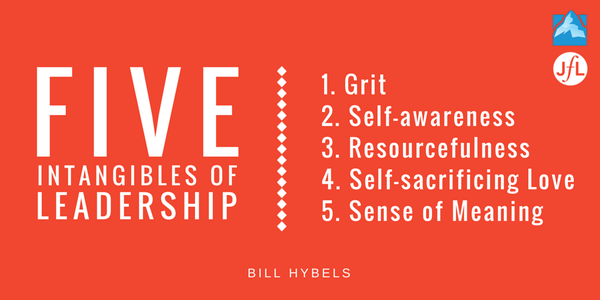
Hybels reflected on Richard Davis’ book The Intangibles of Leadership – and developed his own list of 5 intangibles for leaders:Blog - Global Leadership Summit - 5 Intangibles of LeadershipPhoto Credit: jobsforlife.org
He challenged us to discover the “white-hot why” of our lives – the why of what we do – what really matters for us. For Hybels, it’s “transforming lives”. He is a living example of being faithful to that “why”.

Jim Collins (best-selling author of Good to Great):

Jim Collins talked about what he learned as the recent Chair (2012-2013) for the Study of Leadership at the United States Military Academy at West Point. He reported that: creating a culture out of which great leaders are developed must include

  1. Serving a cause we can be passionate about and for which we would be willing to suffer;
  2. Growing through difficulty; and
  3. Succeeding by helping those around us.

“We succeed at our very best only when we help others succeed. We respond to our own difficulties by reaching out and saying ‘Let me help you.’ To communicate to others: ‘You are never alone.'”

“The greatest leaders find a way to make a contribution, a distinctive impact, on people, on real-live flesh and blood people.”

Ed Catmull (Co-Founder of Pixar Animation Studios; President of Walt Disney Animation Studios; Author of Creativity, Inc.):

Catmull wanted to be an animator from the time he was a child but couldn’t see a path to follow that dream. He ended up studying physics in college.Blog - GLobal Leadership Summit - Ed Catmull by brainpickings.orgPhoto Credit: brainpickings.org

“Science and art are not incongruous. Art isn’t about drawing; it’s about learning to see. Which business or professions do you not want to have enhanced ability to see?”

He talked further about 3 processes in film-making, all relating to accountability:

  1. Teams working together (using a Brain Trust – a group of colleagues all acting as peers, with vested interest, giving feedback;
  2. When failures happen in production – embracing [failure] but at the same time dealing with it with both total candor and kindness; and
  3. Operating within constraints (a budget) – actually pushes creativity higher and delivers better outcomes.

“Stories influence the world. We want to use story-telling for good.”

Adam Grant (Professor, Wharton School of Business; Author of Give and Take: A Revolutionary Approach to Success)

Grant talked about the three kinds of persons you find in the workplace…well, anywhere really:  1) Givers, 2) Takers, and 3) Matchers. After defining each of these and how they interact with each other in the workplace (buy the book), he prescribed ways to build a work culture. A work culture of generosity – the work culture that especially develops the givers, which brings the others along as well.

His three challenges were:

  1. Keep the wrong people off the bus. Get rid of the takers.
  2. Redefine giving. [He talked about the 5-minute favor and the 100 hours of volunteering across a year – these micro-lessons of generosity.]
  3.  Encourage help-seekers. – Developing the givers will nurture a culture of “How can I be the rising tide that lifts all boats?” – a Reciprocity Ring.

Dr. Brené Brown (Research Professor, University of Houston Graduate College of Social Work; Author of Rising Strong):

“Our brain is neuro-biologically hard-wired in the instant of a [hard time; difficult conversation] to make up a story as to what happened. If we can give our brain a story when something hard happens, we are rewarded by our brain (dopamine). Our brain rewards us whether the story is accurate or not. Our worthiness as people lives inside these stories. When we pretend or deny the story, it owns us. When we own the story, we get to write the ending.”
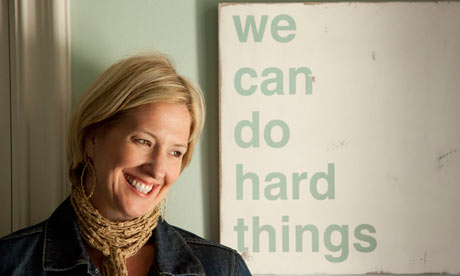
Brene BrownPhoto Credit: TheGuardian.com

Transformational leaders: 1. Do discomfort.  2.They have absolute emotional awareness about their own life, and about the people around them.

“We can’t ignore emotion. We are emotional people who sometimes think. Emotion dictates behavior. If you speak to the way they think or their behaviors, without speaking to their emotions, they will not change. Speak to their emotions. Curiosity and lines of inquiry are the greatest tools of leaders. ‘Help me understand’. “

Sallie Krawcheck (Chair of Ellevate Network; Former President, Bank of America’s Global Wealth & Investment Management):

“The retirement savings crisis is a women’s crisis – we retire with 2/3 the retirement income as men and live 6-8 years longer than men. I love men. I’m married to a man. But you guys are going to die, and we as women will be living with this crisis.”

“My “‘white-hot why’ is advancing women, elevating women. “

“I work every day as though my children are watching me.”

Albert Tate (Founder/Senior Pastor of Fellowship Monrovia, Southern California):

Pastor Tate preached (and I mean preached) on the miracle of Jesus’ feeding of the 5000 (John 6:1-13), using the five loaves of bread and two fish brought to Him from a boy in the crowd.

Tate renounced the leadership lie of “leaving it all on the field”.

“One of the most key things we can do as leaders as to bring what we have, give it to Jesus, and then get out of the way.”

Leaders, you don’t have to go home on empty. You don’t have to leave it all on the field. Christ left it all on the Cross. Bring what you have. Whatever you have, give it back to Him. Then get out of the way, and watch in awe and wonder at what He does.”

These are just 7 take-aways of the 20 pages of notes I took during today’s Summit. Such great teaching – inspiring, empowering, mystifying, really.

Download the Global Leadership Summit app. Read what you can (in these authors’ books and via all the online resources – articles, blogs, video). Take down the dates for the Global Leadership Summit of 2016 and plan to register early.

Being the leader we hope to be is within our reach.

Post-Script: Michael Jr. was on and off stage to make us laugh and to look at life from just a bit of a different angle. Love him!
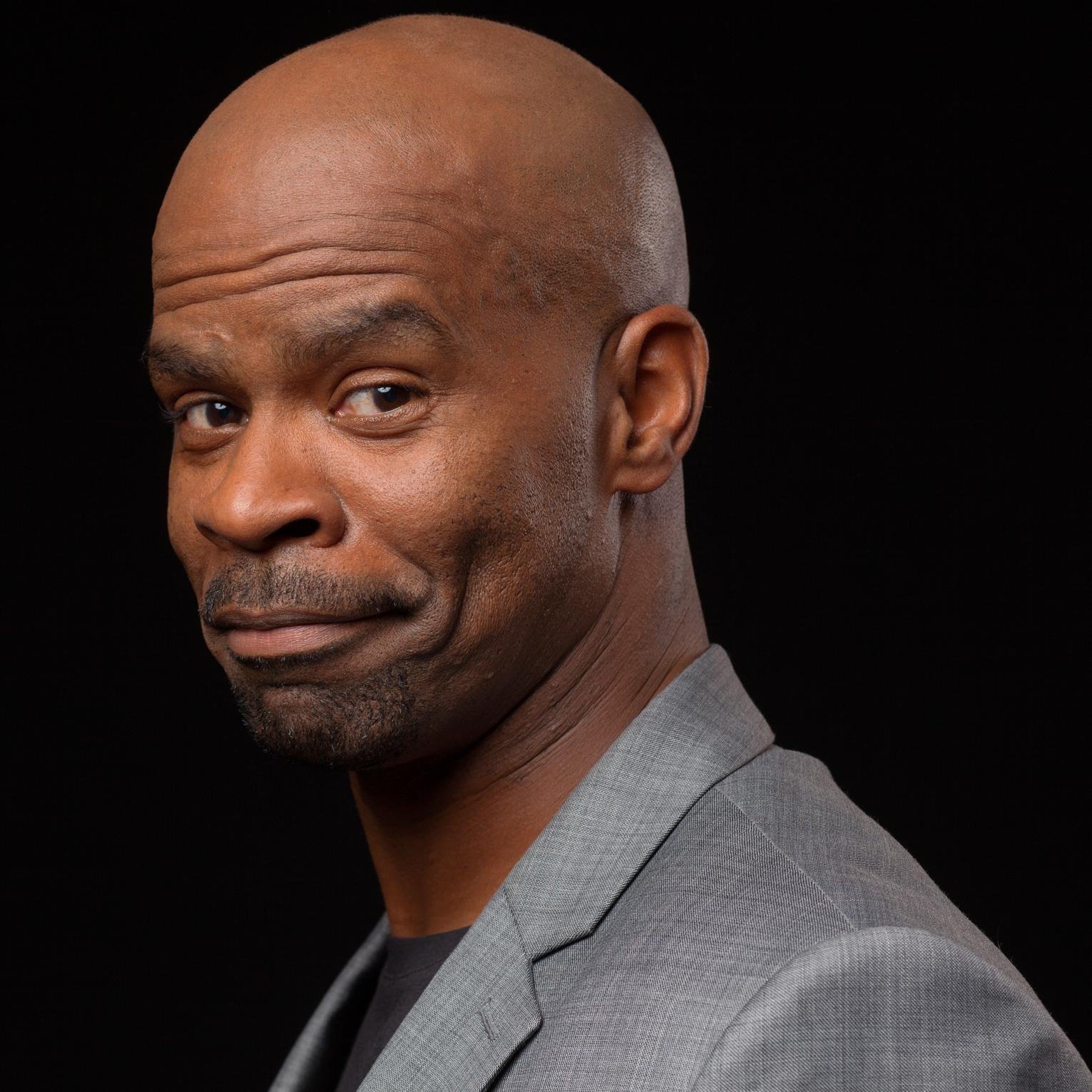
Blog - Global Leadership Summit - Michael Jr

Photo Credit: MichaelJrComedy

Global Leadership Summit – Willow Creek Association

Global Leadership Summit App

Collaborative Conversations – Quotes to Stir Your Thinking on Leadership and Language in Workplace Decision-making

Blog - Collaborative ConversationsPhoto Credit: AJCarlisle.files.wordpress.com

Change is normal, and resisting change is normal as well. You may be part of an organization or company where sweeping changes are being implemented, even this week. Or maybe you are not on the inside loop of these decisions, so you are not privy to the change coming. Whether you are part of that process or not, consider how you might have a role in making change work, in your sphere of influence, among your colleagues.

You may already have read and profited from the book Crucial Conversations. Now consider collaborative conversations. Collaboration, simply defined, is “working together towards shared goals”. Collaborative conversations bring a collective intelligence to bear on the problem to be solved, vision to be defined, or direction to be changed.Blog - Collaborative ConversationsPhoto Credit: ThoughtFarmer.com

David Perkins, a Harvard professor, wrote about collaborative conversations in the workplace, using the metaphor of King Arthur’s round table. He described the beneficial nature of bringing several principal players (or stakeholders) to the table and treating each one with an equal or autonomous voice.

“A round table makes it a little easier to pool mental effort. A round table makes a group a little more intelligent…For a group to display intelligence in a sustained way, the members have to value their exchanges and stick together to keep making them. This depends on positive symbolic conduct [side messages sent by our words and behavior]…and collaboration… It’s not ideas, but people with ideas that make things happen.” – David Perkins

“One of the simplest ways to immunize a culture against broken trust, corruption, and animosity is to build a common vision.” – David Perkins

Perkins’ book King Arthur’s Round Table: How Collaborative Conversations Create Smart Organizations is a tremendous resource in developing this kind of decision-making work environment. An Executive Book Summary* can help you get started.

I personally thrive in such a setting and intuitively understand the value-adding nature of collaborative conversations. In researching this workplace topic, and choosing the links below, I came across a fascinating paper** by Heather Davis, a professor of RMIT University Australia.

Davis presented her paper at the 14th International Conference on Thinking (2009, Malaysia). She discussed how workplace leaders often choose “languages of war” in making and communicating decisions and creating change. Her paper is heady stuff but if you read her thoughts below you will want to read the whole paper. It gives huge support to the role of collaborative conversations.

“In [leadership’s] ‘language of zealous allegiance’, there are expectations of allegiance [in the workplace] that lay a path for uncritical acceptance and passivity. This manifests in an expectation that followers be conscripted wholly to the cause. There is little room for questioning. [Davis quotes Hage]: “Conscription means one important thing: there is no questioning of orders, one only executes them; ‘either you’re with us or you’re against us’. “ (Hage, 2004, p. 3).””

“Rhetoric plays out in the workplace too and can be tested by how well leaders:

  • hear and acknowledge the ‘other’ point of view,
  • see the ‘other’ as people rather than pawns or simply abstractions,
  • manage the distance, materially and metaphorically, between themselves and the people and sites affected by their decisions.”

“In the corporate world there are many examples of executives living and working in gated communities or otherwise removed by dint of corporate hierarchy or geography from the people and conditions affected by their decisions. Often, these leaders are also surrounded by people who can only agree, leading to little opportunity for double loop learning or deeply reasoned decision making processes. Whether our leaders live in gated communities is their business, but if they think, work and take refuge within a ‘gated’ mindset then we all need to be concerned. These conditions lead to hubris and have been the undoing of many leaders and corporations.”

“[Leadership’s] language of regrettable necessity translates directly to the “There Is No Alternative”. [This strategy] is used to always move the focus of discussion away from any big picture ‘why’ questions. This is done by shifting the focus to discussions only about the budget pie or, more particularly, the piece of the budget pie that is contestable. People find themselves fighting for a slice of the budget pie and energies focus only on the ‘pie’ and getting the biggest piece of it. This shifts the focus from larger issues such as whether the budget is set correctly, what has been included and what has been excluded. Thinking about alternatives is never an option.”

The role of the organisation is ‘to know its purpose and not be diverted from it’ (Drucker, 1993). This is a timely reminder here – easier said than done in times of flux, complexity and discontinuous change.”

“Language is the visible tip of the cultural iceberg that largely remains hidden.”

“Perkins (2007) used two metaphors in his presentation and so far I have only privileged the five languages of war metaphor in this discussion. The other metaphor used was the “five languages of peace”. The main difference between Perkins’ languages of war and peace are that the war metaphor is founded on exclusivity and a preference for limiting discourse to its [leadership’s] own narrowly defined boundaries. Perkins’s peace metaphor is founded on inclusivity and opening up the space for conversations and conflicting views [i.e., collaborative conversations].”

“Oppositional language and the pitting of one deeply held worldview against another will not lead to resolving the underlying problems of the workplace. Rather, space for conversations to surface underlying assumptions is required. Perkins’ language of peace metaphor confirms that that there are always other lenses to view the world through, not just the one that [leadership] prefers.”

Provocative reading from this Australian educator. Bottom line: Those of us in leadership carry a great burden of responsibility. We at times must make difficult and sometimes painful decisions. Adding voices to that decision-making can generate even more challenging processes to negotiate. Still, we will make more sustainable decisions for “better futures” if we bring those most affected (or most experienced or insightful) to the table. Whenever possible. That’s the gain of collaborative conversations – working together toward shared vision and shared ownership.

Stay engaged in your workplace. You can make a difference.

*King Arthur’s Round TableHow Collaborative Conversations Create Smart Organizations by David Perkins – an Executive Book Summary

Leadership Lessons from King Arthur – a Review of Harvard Professor David Perkins’ book King Arthur’s Round Table

How to Lead When Change is the New Normal

The Art of Collaboration (Collaborative Behaviors) – by Steve Dale (includes a SlideShare)

Collaboration: What Does It Really Mean?

**Troubling Invisible Barriers to Better Futures: Surfacing the “Five Languages of War” in the Workplace – a scholarly paper by Heather Davis, presented at the 14th International Conference on Thinking

The Five Literacies of Global Leadership – What Authentic Leaders Know and You Need to Find Out – by David Hames – Business Book Summary

What Is a Coaching Conversation? from Opening the Door to Coaching Conversations by Linda Gross Cheliotes and Marceta Fleming Reilly 

The Perils of Indifference – a Speech by Elie Wiesel

Cutting Through the Hype – What “Collaboration” Really Means – ThoughtFarmer.com

Making the Workforce Work! The Collaborative Workforce Initiative

Courage – Putting Off Cynicism and Giving Up Control

Blog - Courage from bpnews.net photosPhoto Credit: bpnews.net

Be strong and courageous! Do not fear or tremble before them, for the LORD your God is the one who is going with you. He will not fail you or abandon you! – Deuteronomy 31:6

When I am afraid, I will trust in You. In God, whose word I praise, in God I trust; I will not fear. What can man do to me? – Psalm 56:3-4

Couragethe strength of mind to carry on in spite of danger or difficulty; old French meaning: “from the heart

Courage comes with time or necessity. When I was a child, Chicken Little (from the children’s story Henny Penny) could have been my modus operandi in dealing with life. The world seemed a scary place. If there was any way I could control it, I would (people-pleasing, saying what I thought people wanted to hear instead of the truth sometimes, circling up with friends who preferred me). Me, me, I, I. Being afraid centers on self…it keeps truth out and generates a “reality” that keeps walls up. To break out of that, courage was a necessity. With time and growing up, the world become smaller (and God bigger), and courage was born.

In my twenties, I read a little book shared with a me by a brave friend who had herself broken out of her own self-imposed walls. The book was Hannah Hunnard’s Hinds’ Feet on High Places*. The heroine was called Much Afraid. It is an allegory of a Christ-followers who struggled with fear and yet desired to know God in the high mountains of joy. The book tells a story of how she lost her fear over her journey of faith and devotion.

Courage comes with focus, focusing up and out. It won’t come with focusing on self and being in control. It comes with turning our focus on God and others. Simple as that. If we want to control our situation, we can rein in our circumstances and relationships such that we are not threatened. Occasionally someone or something may break through our fortress, but with determination, we can quickly rebuild. Circling tightly around our own selves, and only those people and things that matter most to us. Trumping any reality we choose to ignore or avoid. Or so we think…Blog - Courage 2 from bpnews.net photosPhoto Credit: bpnews.net

Courage takes risks and lets go of control. As I got older, I realized that life is so much more precious than the bits that I try to control. A long time ago, a little saying, “Let go, and let God” settled into the hard drive of my mind. I don’t always surrender myself to fullness of life and depth of relationship that God has for us…but when I do…well, worth the risk. Worth giving up my paltry control. Worth it.

Courage keeps me from cynicism. Paul Coughlin said it best: “Cynicism drains our lives of hope, optimism and creativity—raw material that help build our foundation of courage. Men are especially seduced by cynicism’s ability to look like you are on the playing field of life, committing deeds that are useful and powerful. But in reality the cynic is comfortably anchored on the cushy sidelines of life, lifting no burdens, creating no light & being no salt. This ability to always see the worst in people and situations is often a hiding place for fear, timidity and indifference. It allows us to be invulnerable observers rather than participants at risk and of sacrifice. Worse, the cynic often justifies his lack of redemptive and courageous action. Ultimately, cynicism is the language of self-preservation, which drains us of courage and shrivels our souls.”**

Take courage, Dear Ones. Leave off cynicism. Give up control. See what God will do when you show up, ready (in Him) for whatever comes your way today.

Blog - Courage 4 from bpnews.netPhoto Credit: bpnews.net

What Does the Bible Say About Courage?

Bible Verses About Courage

*Hinds’ Feet on High Places Quotes

** What Drains Us of Courageous Faith?

YouTube Video – Courageous – final scene

Blog - Courage 6 - film CourageousPhoto Credit: CourageoustheMovie


10 Quotes by Jon Acuff on Developing New Skills & Sharpening Old Ones – Part 3 of Do Over Series

Nathan at guitarPhoto Credit: Nathan Mills Guitar

There’s this guitarist I know. His music is a work in progress. Not his music itself, because he hones his craft daily. Still, his career in music is a study in skill development. No industry stands still. The ability to silence a room with the sound you bring out of a guitar does not a living make. Usually.

There are so many other skills called to bear in a successful career in music today. Composing, arranging, teaching, performing, collaborating, marketing, production, diversifying style or instrument. Whew!

Then there’s your day job (by necessity, or for other reasons). Wisdom is to bring the same disciplines and desire, of that skilled musician, to work every day. To be the best asset you can be for your employer or your company. Shirking entitlement and nurturing an attitude of graciousness and gratitude.

Who is this person?!

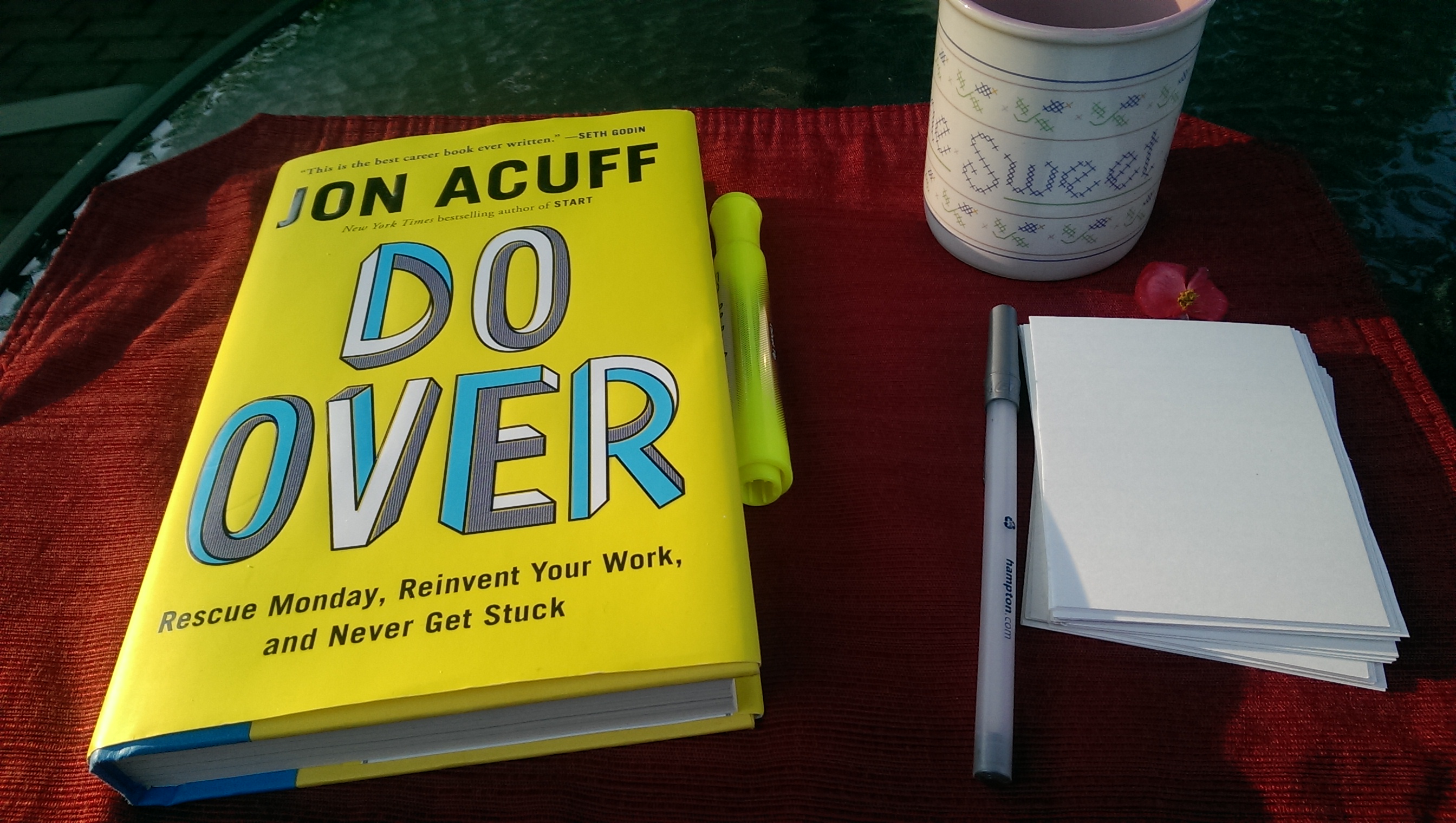
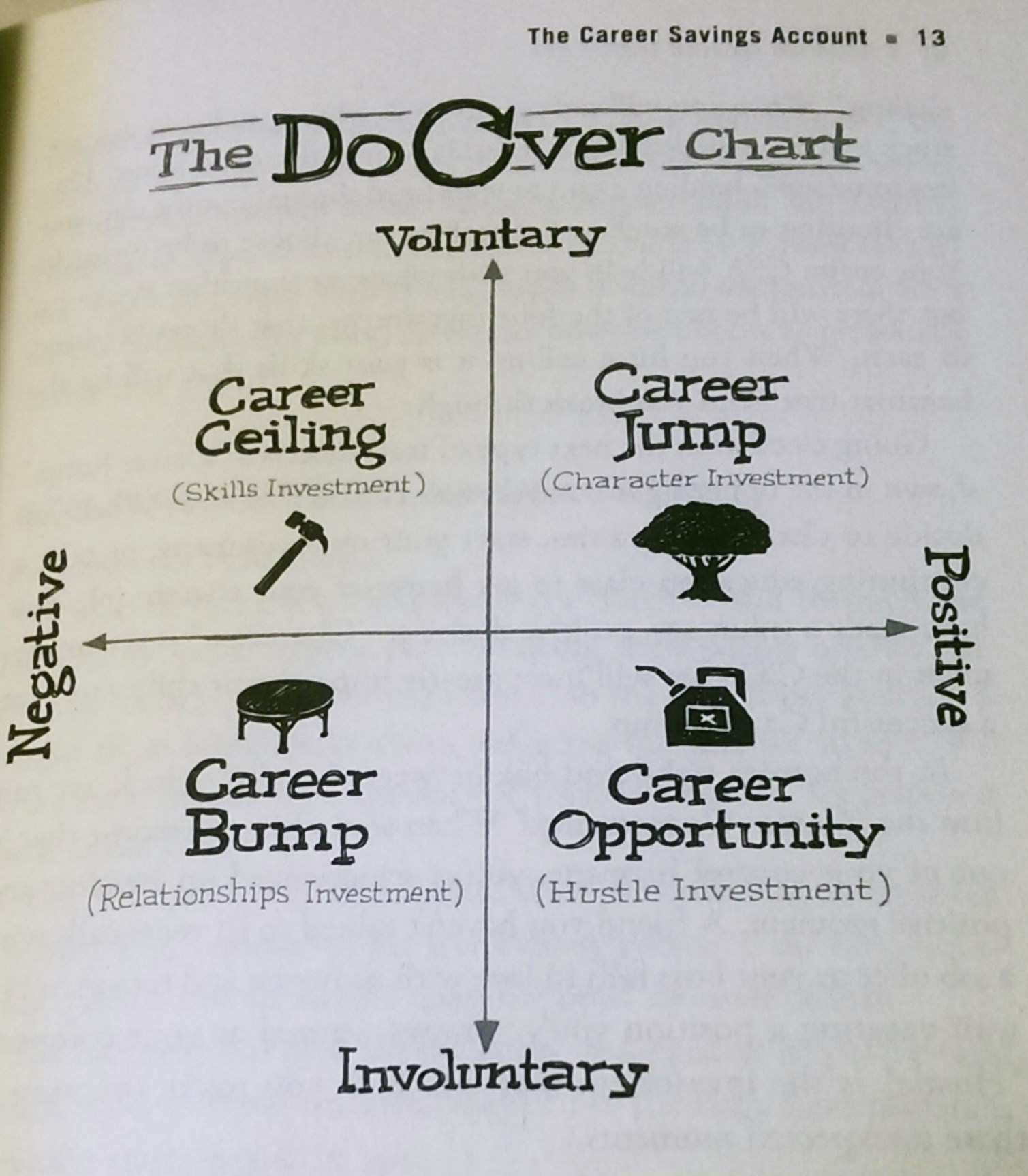
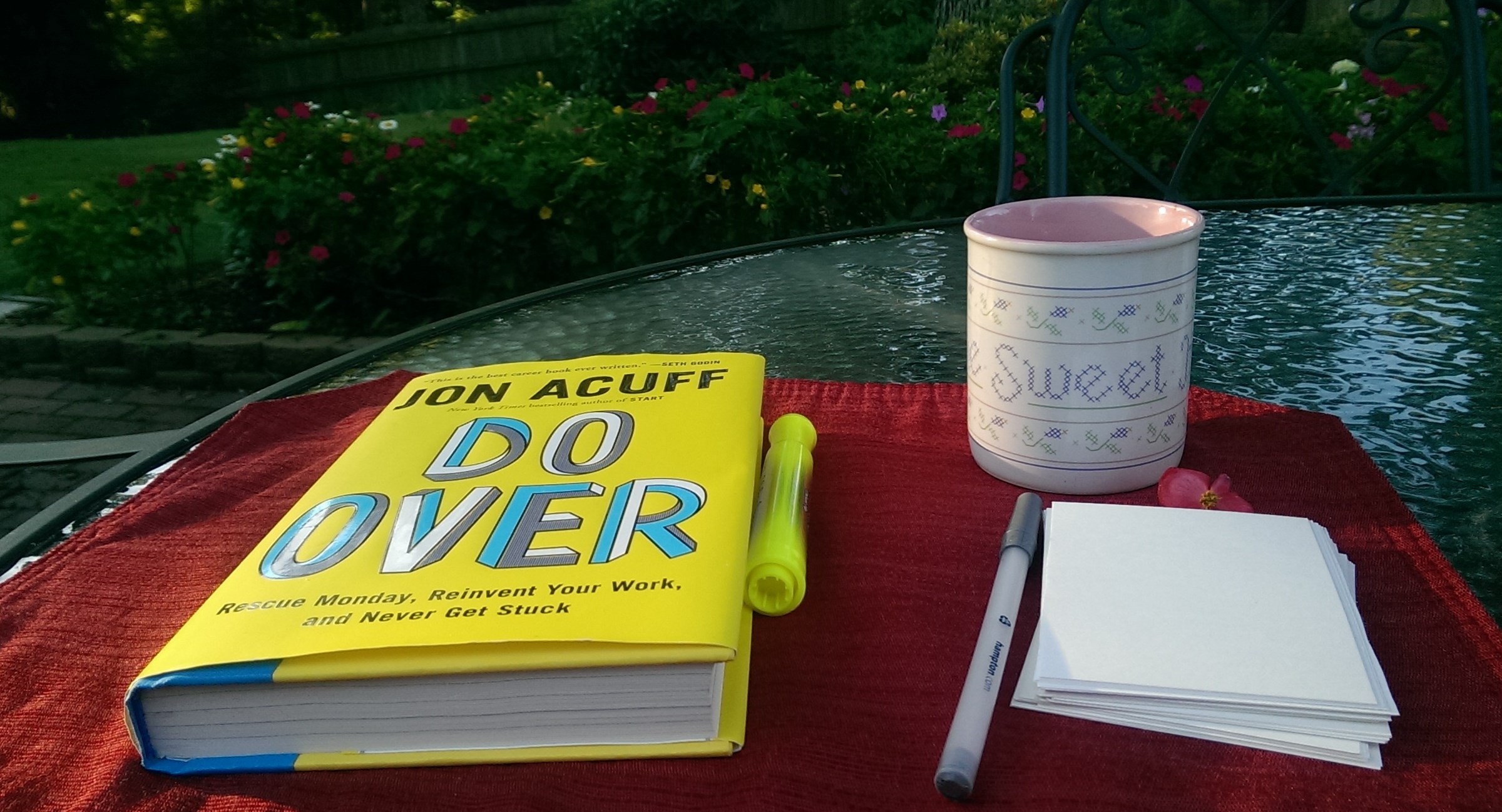
Jon Acuff talks about becoming such a person in his book Do Over. He tackles the subject of sharpening and developing skills as imperative to any career, and especially to break through a Career Ceiling.

Have you ever gotten stuck in a job? No, I’m not talking about being ungrateful or feeling entitled to a better situation. I’m talking stuck – as in getting to a place in your job where you can’t see being able to ever advance or be more creative or grow professionally?

Acuff invites us readers to take a good look at our skills to see what exactly we uniquely bring to your job. This would include skills we might have discounted or even forgotten we had.

Below are 10 bits of wisdom from Jon’s section on skills:

  • Relationships get you the first gig, skills get you the second.
  • When you hit a Career Ceiling, skills will be the hammer you use to break through.
  • Don’t let fear hide a skill you’ve always had or wanted to pursue. Just because you’re afraid of doing something doesn’t mean you shouldn’t.
  • Small skills have the tendency to add up to big careers.
  • Master the invisible skills – Go to work; add value; own your attitude.
  • When you have a bad attitude it flavors every part of your performance.
  • If you want to get better at something, it always costs time. If you don’t have any, steal some from…Facebook or any number of things that are requesting that resource without paying you anything in return.
  • I’m convinced that fear beats the “You don’t have enough time” drum because it never wants you to invest in your career. This is a lie.
  • Your willingness to discipline one part of your life creates freedom in another.
  • You will need skills most when you find yourself stuck. The ceilings are designed to filter out the lazy and uncommitted. Every skill can be a hammer. Start banging. Career Ceilings were meant to be broken.

Like with looking at our relationships, he calls for us to use note cards and list (one per card) all the skills we can think of – whether currently using them or only in the past; whether work-related or not so much. Once we’ve exhausted our ideas on skills then, he says to look for patterns.* It’s so easy to settle into a rut of doing the same thing every day. Going after new skills and sharpening old ones help us to be good at our jobs and, at the same time, love our work.

Whether you are a musician, a teacher, an I.T. guy or a caregiver, you have skills and you can build on those skills. Determining to be diligent to grow your skills and grateful for the opportunities to learn will take you farther than you know. Right through that career ceiling.

“You know who we should fire, that guy who keeps learning how to do his job even better,” said no one ever. – Jon AcuffBlog - Do Over - Jon Acuff

Photo Credit: Forbes.com

*A Simple Two-Step Exercise for Figuring Out What You’re Really Good At – Jon Acuff, Business Insider Start Your Do Over Today

Start Your Do Over Today! – Jon Acuff

Jon Acuff: Why Most People Don’t Reach Their Full Potential And How You Can

Nathan Mills on Vine

Crosstrain at Habitat for Humanity - Aug 30 2014Learning new skills on-site with Habitat for Humanity

On the Passing of Elisabeth Elliot – Love is a Laid Down Life

Blog - Elisabeth Elliot - Love is a Laid Down LifeLord, I give up all my own plans and purposes, all my own desires and hopes, and accept Thy will for my life. I give myself, my life, my all utterly to Thee to be Thine forever, fill me and seal me with Thy Holy Spirit, use me as Thou wilt, send me where Thou wilt and work out Thy will in my life at any cost now and forever.”* – Betty Howard’s prayer which her daughter Elisabeth took as her own at the age of 12

To the right of my desk is a bookcase filled with some of my favorite books. These authors inspire me to live a very different life. Among them are Charles Spurgeon, John Piper, Tom Elliff, Bertha Smith, Patricia St. John, and Elisabeth Elliot.Blog - Elisabeth Elliot - 2

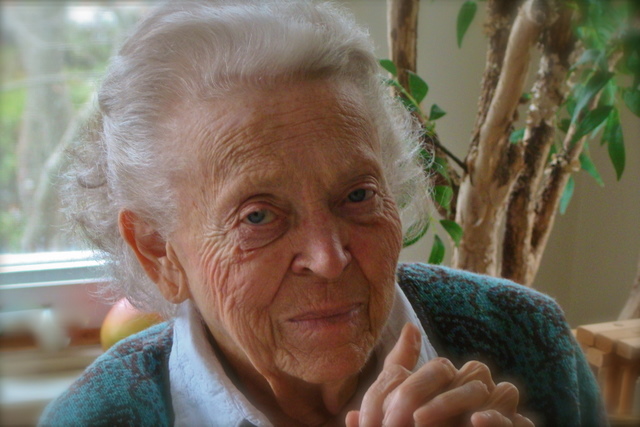
Elisabeth Elliot has died. Rather, she has gloriously entered into the very presence of the God whom she loved and served faithfully all her life. I am so thankful to have lived in the generation of her writing. For over a decade she has quietly lived in the shadow of Alzheimer’s, yet her writing and speaking have continued to leave their mark on generations who desire to know God as she knew Him.

I was five years old when Jim Elliot was killed along the Curaray River, in Ecuador. He left a young widow, Elisabeth Elliot, and a tiny daughter named Valerie. Elisabeth began writing to preserve Jim’s diaries and his memory for Valerie to know her dad as she grew up. Fortunately for all the rest of us, Elisabeth kept writing.

Sometime in my early teens, I first became aware of Jim and Elisabeth Elliot. She published his journals in 1958 and I still have a copy of that first printing – Shadow of the Almighty – The Life and Testament of Jim Elliot. I devoured Jim’s writing of his complete devotion for God and his passion for others to know Him. Elisabeth’s own burning love for God drew Jim’s heart to hers.  Their marriage would be brief, but what Elisabeth learned of God in that time set a course for her to touch lives beyond her imagining.

Elisabeth Elliot was a no-nonsense kind of woman. She was consummately honest and frank in dealing with God and the culture of our day. These days, there seems to be little tolerance for spiritualizing or moralizing. I wonder if those who pick up her books today, in the stir of publicity at her passing, will be refreshed or shocked at her writing. She wastes no words, cutting through to what it truly is to be a follower of Christ…not of someone we made up…but the One who laid down His life for us all…that One.

Her bluntness, her disciplines, and her love of God have many times, over the years, shaken me out of dullness and loss of resolve…for which I will always be thankful.

I’ve been encouraged by all the young men and women who have commented about Elisabeth Elliot on social media since she died. To put her on some sort of pedestal would be wrong; to say her life pointed us to God and to a life only possible walking with Him, would be more accurate and right.

If you don’t know Elisabeth Elliot’s writing/speaking, begin here with the quotes below. Don’t stop with them, though. The links will help you on a journey you will never regret.

“He is no fool who gives what he cannot keep to gain that which he cannot lose.” Jim Elliot, missionary to Auca indians in Ecuador”
Elisabeth Elliot, The Journals of Jim Elliot

“Faith does not eliminate questions. But faith knows where to take them.”  ― Elisabeth Elliot, A Chance to Die: The Life and Legacy of Amy Carmichael

“Stand true to your calling to be a man. Real women will always be relieved and grateful when men are willing to be men”
Elisabeth Elliot, The Mark of a Man

“The life of faith is lived one day at a time, and it has to be lived – not always looked forward to as though the “real” living were around the next corner. It is today for which we are responsible. God still owns tomorrow.”  ― Elisabeth Elliot, Let Me Be a Woman

“One reason we are so harried and hurried is that we make yesterday and tomorrow our business, when all that legitimately concerns us is today. If we really have too much to do, there are some items on the agenda which God did not put there. Let us submit the list to Him and ask Him to indicate which items we must delete. There is always time to do the will of God. If we are too busy to do that, we are too busy.”
Elisabeth Elliot, Secure in the Everlasting Arms

“Think of the self that God has given as an acorn. It is a marvelous little thing, a perfect shape, perfectly designed for its purpose, perfectly functional. Think of the grand glory of an oak tree. God’s intention when He made the acorn was the oak tree. His intention for us is ‘… the measure of the stature of the fullness of Christ.’ Many deaths must go into our reaching that measure, many letting-goes. When you look at the oak tree, you don’t feel that the loss’ of the acorn is a very great loss. The more you perceive God’s purpose in your life, the less terrible the losses seem.”  ― Elisabeth Elliot

Perhaps some future day, Lord,
Thy strong hand will lead me to the place
Where I must stand utterly alone;
Alone, Oh gracious Lover, but for Thee.

I shall be satisfied if I can see Jesus only.
I do not know Thy plan for years to come.
My spirit finds in Thee its perfect home: sufficiency.
Lord, all my desire is before Thee now.
Lead on no matter where, no matter how,
I trust in Thee. – by Elisabeth Elliot, in her college years**

“You are loved with an everlasting love. And underneath are the everlasting arms.” – Thank you, Elisabeth Elliot. You’ve made it Home.

Blog - Elisabeth Elliot - photo

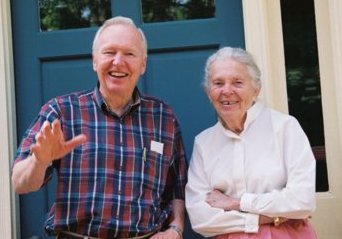
Blog - Elisabeth Elliot and Lars GrenThank you, Lars Gren, for loving and caring for this wife of yours. What a journey you two must have had together.

*Elisabeth Elliot 1926 – [a fast read on Elisabeth’s life by Adsideo Church]

**Elisabeth Elliot – 1926-2015 – a tribute by Justin Taylor, Gospel Coalition

Peaches in Paradise – Why I Loved Elisabeth Elliot by John Piper

Goodreads.com – 164 Quotes of Elisabeth Elliot

Marriage: A Revolution & A Revelation – A Supreme Earthly Test of Discipleship (a manuscript draft by Elisabeth Elliot)

On the Subject of Forgiveness – Leaving Self Behind – Elisabeth Elliot

How to Simplify Your Life – an article by Elisabeth Elliot

30 Years Married – a Walk with God as Much as With Each Other – from the archives, on the impact of Elisabeth Elliot’s counsel on living life married

The Journals of Jim Elliot compiled by Elisabeth Elliot

End of the Spear – a biopic on the lives of Elisabeth & Jim Elliot among the Auca people of Ecuador

Photo Credits: Image of Elisabeth Elliot from elisabethelliot.org


Worship Wednesday – Lay Down Your Burdens – David Crowder

Blog - Lay Down Your Burdens CrowderJesus said, “Come to Me, all who are weary and heavy-laden, and I will give you rest. Take My yoke upon you and learn from Me, for I am gentle and humble in heart, and you will find rest for your souls.” – Matthew 11:28-29

The decade of my 20s is littered with the debris of a searching, self-centered life. Even as a follower of Christ, the world drew me like a powerful magnet. I was lured by the arguments of those critical of God, the church, and Christianity. After years of standing one foot in the world and one foot in the church, I woke up.

The world’s promises of belonging, significance, and security shattered, but not without sending shards of painful memories and regret deep into my heart. The arguments against God turned hollow, emptied of their logic. Those very arguments denied our own personal responsibility for many of the world’s woes. For a season, believing man over God, my course in life was deflected from the very redemptive purposes of God. Even to this day, it is a challenge not to look away, not to believe that God can use me for the sake of another. Even me.

David Crowder’s song “Lay Down Your Burdens” ministers to my heart at every listening. There is nothing so wonderful in my life as God and His love and forgiveness. I can’t look back at that prodigal decade without remorse. Yet, because of God, and the truth of His Word, I can lay all that down (again). There is a verse, recorded by the Old Testament prophet Joel, that always encourages me: [God speaking]: “I will make up to you for the years that the swarming locust has eaten” (Joel 2:25). He has kept that promise in my life, and I am grateful.

How God restored me to Himself was through a couple of friends: one, an older believer, and the other, a close friend who had had a similar wilderness wandering, breaking out of it ahead of me. They always come to mind in remembering how God worked in my life back then. David Crowder speaks so clearly about his own journey of restoration:

“As it goes with hypocrisy, judgement, dogmatism, and all the rest of it that Jesus put to death, it’s hard to see in yourself what you readily see in others. And into my cynicism and anger my friend began to dream aloud, “What if church really was like family. What if we pretended the, ‘brother and sister, son and daughter,’ stuff was real. What if relationships were thought to be rare and valuable things. What if it was just a bunch of people that loved each other and were simply trying their best to follow this Jesus we read of in scripture. What if we pretended, the ‘love your neighbor as yourself,’ thing was a better way to live…What if we pretended we are all sinners. What if we pretended grace is real. What if the word ‘pretend’ felt less powerful than the word ‘believe’ because we did actually believe. What if…”David Crowder

Blog - Lay Down Your Burdens 8 - bpnews.net

Rioters throw bricks and bottles at the police on Clarence Road in the Hackney area of London.

Blog - Lay Down Your Burdens 4 - bpnews.net

MEXICO CITYÕS HOMELESS Ð IMB missionaries and national believers serving among the masses of Mexico City regularly encounter homelessness, prostitution and substance abuse on city streets. Mexico CityÕs parks and city squares are often scattered with homeless men and women sleeping on sidewalks and park benches. (IMB) PHOTO

“The meta-narrative of scripture is about innocence lost, it is about displacement, about things not being right and a search for belonging and home and forgiveness and reconciliation, the tension of death and life, what it means to be alive. The story is not about making bad people good, it is about making dead people alive. The story sold is rarely that…What if we started believing?”David Crowder

There are those in the world who look at followers of Christ as pretenders. Honestly, there are “church folks” that do more to distract than draw others to God. Then there are those whose lives have truly been transformed. True Christ-followers know how far He has brought them from their broken, burdened selves. This world of ours needs a voice of hope – real hope that comes close, as God came close to us through Jesus. In this global wilderness of ours, He calls us to live small and love large, to extend His love as far as He extended it to us. This is the purpose of God’s church – to love Him and to reflect His glory in a true hands-on witness of His love for all around us.

Worship with me:

Come out of sadness from wherever you’ve been
Come broken hearted let rescue begin
Come find your mercy, Oh sinner come kneel

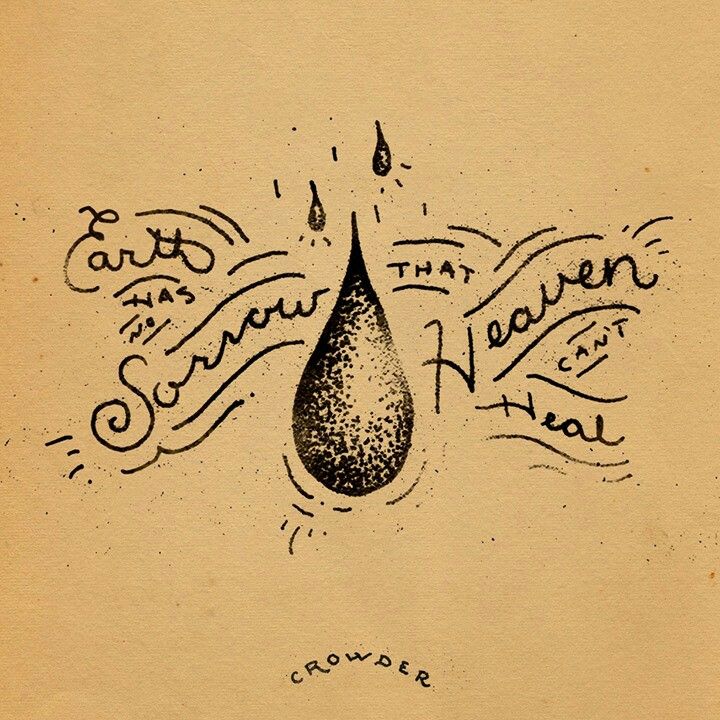
Earth has no sorrow that Heaven can’t heal

So lay down your burdens, lay down your shame
All who are broken, lift up your face
Oh wanderer come home, You’re not too far
So lay down your hurt, lay down your heart
Come as you are

There’s hope for the hopeless
And all those who’ve strayed
Come sit at the table
Come taste the grace
There’s rest for the weary
Rest that endures
Earth has no sorrow
That Heaven can’t cure

Come as you are
Fall in His arms, come as you are

There’s joy for the morning, Oh sinner be still
Earth has no sorrow that Heaven can’t heal
Earth has no sorrow that Heaven can’t heal.

– Written by David Crowder, Matt Maher, & Ben Glover (Lyrics)

Blog - Lay Down Your Burdens 9 - bpnews.net

Blog - Lay Down Your Burdens 7 - bpnews.net

YouTube Video – Crowder – Come As You Are (Lyric Video)

YouTube Video – Come As You Are by Crowder Lyric Video

YouTube Video – Crowder – Come As You Are (Music Video)

YouTube Video – Crowder – Come As You Are (Behind the Scenes)

David Crowder Website – Read the Family History – Riveting and Real

Photo Credits: Crowdermusic.com and BPNews.net

Nepal Earthquake – Disaster Response, Faith-based Organizations, & Love in Action

Blog - Nepal

Jesus teaching: “Then the King will say to those on His right, ‘Come, you who are blessed of My Father, inherit the kingdom prepared for you from the foundation of the world. For I was hungry, and you gave Me something to eat; I was thirsty, and you gave Me something to drink; I was a stranger, and you invited Me in;  naked, and you clothed Me; I was sick, and you visited Me; I was in prison, and you came to Me.” – Matthew 25:34-36

The news this weekend of Nepal’s devastating earthquake was heartbreaking. Thousands dead; tens of thousands losing family and friends, many injured, without shelter. Nearly a million children affected. Just hearing the news and seeing the images, in the aftermath, we are compelled to pray for the Nepali people and to give toward care of the survivors. Many will even travel internationally to add hands to the on-the-ground efforts.Blog - Nepal 3

In the face of tremendous need, I am thankful for the resilience of the Nepali people as they respond to the needs of their neighbors so woefully impacted by this natural disaster. It is also gratifying to see all the governments and non-governmental organizations (NGOs) cooperating together for the sake of these people reeling from their losses.  They are the ones that matter right now. These survivors.

This is why I was dumbfounded by the venomous attacks on faith-based organizations that started shortly after the earthquake. Twitter and other social media were peppered with angry charges against relief agencies whose motives were questioned by these individuals. I won’t mention the hash-tagged slur not wanting to fuel this fire any further. After such a catastrophic event, any who really care for the Nepali people would want help coming from any source possible.

We were living in Morocco  when a 6.4 magnitude earthquake shook the northern coast on February 24, 2004. It was my first close-up experience of such a disaster.  We didn’t live close but we had friends with families in that area. There were over 600 killed, over 1000 injured, 2500+ families were displaced when their homes were destroyed, and over 10,000 more homes in the area were damaged. Although not as severe in terms of the losses Nepal has experienced thus far, for a rural area of Morocco, this was overwhelming.

We watched the rapid responses of international agencies coupled with local government and charities. The school our children attended became very involved, as families and faculty traveled to the area to help in whatever way we could (assessing damage, delivering goods, translation). We were encouraged to see how others showed their care for these Moroccans, so unknown to the world at large until hit by this earthquake. When you are trying to get tents, blankets, food and water to families left with nothing, you don’t deem one helping agency more preferable than other. The need is too great for such concerns.

When I wade through the hash-tagged outcries against faith-based organizations helping the Nepali survivors, I marvel at such insensitivity. On many levels. First, we must, all of us who believe in a God who loves humanity, respond to such agonizing human need. We must respond. Second, to imagine a government or people accepting aid from one group over another in such a crisis is incomprehensible. Wisdom is to cooperate and mobilize resources as much as possible early on, because the recovery period will be a long one. Third, to encourage rejecting aid from faith-based organizations for fear of conversions is such a disservice to those hurting – 1) it takes away their voice in accepting what help they need for their own families, and 2) it presumes they would trade their beliefs for aid. Such madness – to think this way about people.

We do support both faith-based organizations and other humanitarian aid organizations. Our preferred disaster relief agency is Baptist Global Response  (because of their judicious use of funds, their cooperation with local agencies, and their faith foundation of wise compassion-driven aid and education) . BGR is not just there when disaster strikes. In fact, a BGR training for local agencies was held just weeks ago in Kathmandu, Nepal for just such a time as this. Hopefully the fruit of that training will mean a more collaborative response acutely and, in the long-term, a more stable recovery for the Nepali people.

Blog - Nepal 2I pray we can take the boxing gloves off and put the work gloves on – serving together to alleviate the suffering of these people whom God loves.  It is a mandate from Jesus Himself for those of us who are His followers.

Jesus said, “A new commandment I give to you, that you love one another, even as I have loved you, that you also love one another. ” – John 13:34

By this we know love, that He laid down His life for us, and we ought to lay down our lives for the brothers. But if anyone has the world’s goods and sees his brother in need, yet closes his heart against him, how does God’s love abide in him? Little children, let us not love in word or talk but in deed and in truth. – 1 John 3:16-18

Donate: Nepal Earthquake & Baptist Global Response

50 Amazing Facts About Nepal

Amid the Destruction of the Nepal Earthquake, Grace and Hope are Found

2004 Al Hoceima Earthquake in the Rif Mountains, Morocco

In Pictures – Morocco Quake Aftermath

Losses in the 2004 Earthquake, Al Hoceima, Morocco

Jesus Sayings About the Poor

Photo Credits: Baptist Global Response and IMB Resources

Palm Sunday – Jesus’ Triumphant Entry into Jerusalem on the Way to the Cross – Day 1 of Holy Week

Blog - Palm Sunday & Cross

For anyone who considers herself a critical thinker, this week in the life of Jesus of Nazareth is one worthy of analysis. No matter your religion or non-religion, this Jesus, in these days, warrants examination, related to anything you may think of God. You will better understand the core beliefs of a Christ-follower, not just a person known to you as Christian. For in the study of Jesus’ life and his followers, in just this one week, you will see a deep distinction between “the religious” and “the redeemed”.

{Sidebar: I taught a World Religions course some time ago in a Moroccan high school. In that course, we studied all the major religions. The students were challenged to think critically of each religion. I encouraged them to study each one, 1) trying to put themselves in the perspective of one who believes (i.e., a true follower, using eye witness/historical accounts and Scriptures when available), and then 2) to break down each belief/tenet of faith critically. You will benefit thinking through Holy Week this way; you will not come away the same by examining the life of Jesus.]

Palm Sunday is celebrated as the “triumphal entry” of Jesus into Jerusalem, just days before he would endure a mock trial and then be crucified. He and his closest followers (disciples) came to Jerusalem for the celebration of Passover. Passover was an annual remembrance of God’s protection and deliverance of Israel during a time of slavery (Exodus 12:26-28). Jesus would celebrate Passover on Thursday of that coming week, but he did not come to Jerusalem for that reason alone.

He knew from his Father God why he came to Jerusalem, and he tried to prepare his disciples for what was coming.

From that time Jesus began to show His disciples that He must go to Jerusalem, and suffer many things from the elders and chief priests and scribes, and be killed, and be raised up on the third day.Matthew 16:21

And while they were gathering together in Galilee, Jesus said to them, “The Son of Man is going to be delivered into the hands of men; and they will kill Him, and He will be raised on the third day.” And they were deeply grieved. – Matthew 17:22-23

As Jesus was about to go up to Jerusalem, He took the twelve disciples aside by themselves, and on the way He said to them, “Behold, we are going up to Jerusalem; and the Son of Man will be delivered to the chief priests and scribes, and they will condemn Him to death,  and will hand Him over to the Gentiles to mock and scourge and crucify Him, and on the third day He will be raised up.”Matthew 20:17-19

I can’t even imagine what those disciples must have felt as Jesus predicted his own death. They loved him and all pledged their lives to him, even to death. They believed him to be the conquering king, sent by God, to deliver the Jews from Roman rule and to restore the nation of Israel. Although they had soaked up three years of his teaching, this “end of the story” was more than they could bear. Just a week later, they would gloriously understand that it would not be the end of the story of Jesus’ life.

On this Sunday, before the Passover, Jesus would enter the great city of Jerusalem, teeming with crowds there to celebrate. He entered, riding a donkey*, as was foretold by the Jewish prophet Zechariah:

Rejoice greatly, O daughter of Zion! Shout in triumph, O daughter of Jerusalem! Behold, your king is coming to you; He is just and endowed with salvation, Humble, and mounted on a donkey, Even on a colt, the foal of a donkey. Zechariah 9:9

Imagine the scene as Jesus entered Jerusalem. Some in the crowds did recognize him, and then the word spread of the arrival of this great teacher, this healer, this man whose teaching was like none before him. Palm branches were pulled to wave in tribute to him, as others flung their cloaks on the dust before him welcoming him:

Most of the crowd spread their coats in the road, and others were cutting branches from the trees and spreading them in the road. The crowds going ahead of Him, and those who followed, were shouting, “Hosanna** to the Son of David; BLESSED IS HE WHO COMES IN THE NAME OF THE LORD; Hosanna in the highest!” When He had entered Jerusalem, all the city was stirred, saying, “Who is this?”Matthew 21:8-10

“Who is this?” For those who did not know him, the wild welcome for him must have been confusing and captivating. For the religious authorities in Jerusalem, who knew him and were unwilling to welcome this “king of the Jews”, his popularity was infuriating.

The clock began ticking as they plotted against this man Jesus.

Over that bright hopeful day of palms hung the shadow of the Cross – the Cross that would bring even greater hope to all people. The “Hosanna” of Palm Sunday

*Matthew 21:1-11 & Commentary

**”Hosanna” means “God saves”.  YouTube lyric video of Hosanna – Hillsong

Holy Week Timeline

The Significance of Palm Sunday in Relation to Passover

Kings Riding on Donkeys? What?

Photo Gallery: Egypt’s Coptic Christians Celebrate Palm Sunday – When our children were young, we lived in Cairo, and bought palm fronds to make some of these crafts, as well as buying them ready-made.

Photo Credit – inexplores.com