Category Archives: Friends

Monday Morning Moment – Reflecting on the Story of a Girl and Friendship

[School Days, Cairo, Egypt – a couple of decades ago]

[From the Archives]

This delightful girl has a birthday tomorrow.

I want to celebrate her here. The girl and the understanding of friendship she has brought to her mom and to those who have known her best.

She was born on a windy March morning. Our first-born. I have brothers, and my Mom had all brothers. Having a daughter as our first was a complete joy and wonder to me, as my Mom tells me I was for her in the midst of all boys.

She would be my sidekick for many of our early adventures together. Welcoming two brothers during her preschool years. Enjoying the friendship of neighbors and church family. Homeschooling in East Tennessee.  

I will never forget the Spring when she came home from Jack and Barbara Lavender’s Sunday School class with two tiny cups of growing seedlings. We planted them in her daddy’s garden and they grew an enormous bed of Cushaw squash. From those two little seeds. Sweet memories of friends who invested in our girl’s life.

Then there was the terrible time when she got desperately ill with what we would, over too many days, finally discover to be a ruptured appendix. This girl has always had a high threshold of pain, and it took four trips to the pediatrician’s office before I was taken seriously. She ended up with big surgery and 10 days on IV nutrition. This image shows her having her first meal over a week after her surgery (pillowcase from our friend, Kay – she still has this pillowcase).

Then our travels outside East Tennessee began.

For this quiet girl, having her life, and childhood friendships, disrupted was hard. Despite the incredible experiences of many moves across four countries, she learned resilience the hard way.

In those days, before smartphones, we carried our memories of people and places in tangible ways. Photo albums. This girl would often go deeper with new people in her life by introducing them to her previous life…through these cherished photo albums.

Everywhere we went, everywhere we lived, we have the photo memories of the sweet parts of those years. They are a treasure.

Friendships were not always easy for this girl…most probably related to adjusting to all the changes imposed on her by her parents’ many work moves. She was not the life-of-the-party, center-of-attention, making things happen, people magnet sort of girl. She loved books and they were often her friend -in the reality of multiple moves and too many goodbyes.

She did have two constant friends who went through all those moves with her. Her two brothers. They are still close. Remembering all the good, all the tears, and all the big sister times with her [calling her “Auntie” when she observed and advised where they preferred to be left to their own devices].

As this girl grew up, she learned how to recognize mean girls and not to take them personally nor to become one…which can easily happen for any of us in strained situations. She learned to embrace the new and sift for where she belonged in the different. And could even make a difference.[Her tiny Senior class, 2005, Casablanca, Morocco]

[Noor, a dear friend from high school, knowing the experience and also understanding what it’s like to move places and countries with your family]

[Maria, a fellow student and enduring friend as they both tackled teaching together. Different schools but similar challenges.]

Besides her brothers, this girl had two men she knew she could count on. Her Dad…and in time, her beloved whom she would marry. I love to catch snippets of conversations she and her Dad have on visits home. For two introverts, their words pour out with each other…safe people, safe places.

[This girl and her boy who would capture her heart and parent two little ones by her side – no pics of the littles – this girl’s preference and I honor it]

In this season of making a home and family, she has grown into this beautiful woman (OK…if you’re still reading, you either love her or the idea of her or you have such a her in your own lives). I am in awe of this girl. Not because she is anything of celebrity but because of how she handles today’s bumps. Also how she has taken both the bad and the beautiful of her growing up years and turned them into her own story.

Two Christmases ago she gave me a book by Sarah, Sally, and Joy Clarkson. Girls’ Club – Cultivating Lasting Friendship in a Lonely World.

This sweet girl has recommended Sally Clarkson to me often in the last years as a mom and mentor in life. In the book above, Sally’s daughter Sarah writes a chapter entitled Saturday Mornings: The Girls’ Club Prototype. In this chapter, she describes “five progressive actions…central to the powerful cultivation of friendship”. They are:

  • Invite – Reach out and bring in a new someone to an adventure and your life.
  • Plan – Work out the logistics of an event, a meetup, an outing. Make it a welcome ritual or routine.
  • Provide – Show love, Sarah says, by preparing the table, so to speak. Whether it is the physical space itself (your home, for instance) or your own “mind and heart” to wholly receive the new friend.
  • Stay – This is huge! Whether distance or circumstance separate you, be a continual presence in the life of a friend. Be there. Show up. This takes effort and intentionality, and it’s not easy. It requires both forgiveness and faithfulness…no matter what.
  • Pray – When we remember that every single person we meet is an image-bearer of God, we are reminded of the value there. Even those “mean girls” in our lives didn’t get mean in a vacuum. “Hurt people hurt people”. They have God’s imprint like every other imperfect person… When we recognize our own frailty and that of others, we are drawn to pray. For our own hearts to love like Jesus. For eyes to see how God sees people…and to reach out in love…as only He has made us to do so.

I’ve watched this girl executing all the above. She has commented that making (and nurturing) friendships as an adult has had its own challenges, maybe because of all the other pieces of life that need our attention. However, I rejoice with her that she has settled into a life fairly full of friends with littles and some without (including me).

I’ll close this “Happy Birthday” piece on this note: our girl has a fierce faith in God that brought her through the hard so far in her life. I’m confident that whatever lies ahead – joys and sorrows – she will lean into God to sustain her. She will be there for those whom God has placed in her life – family, friends, and friends-to-be.

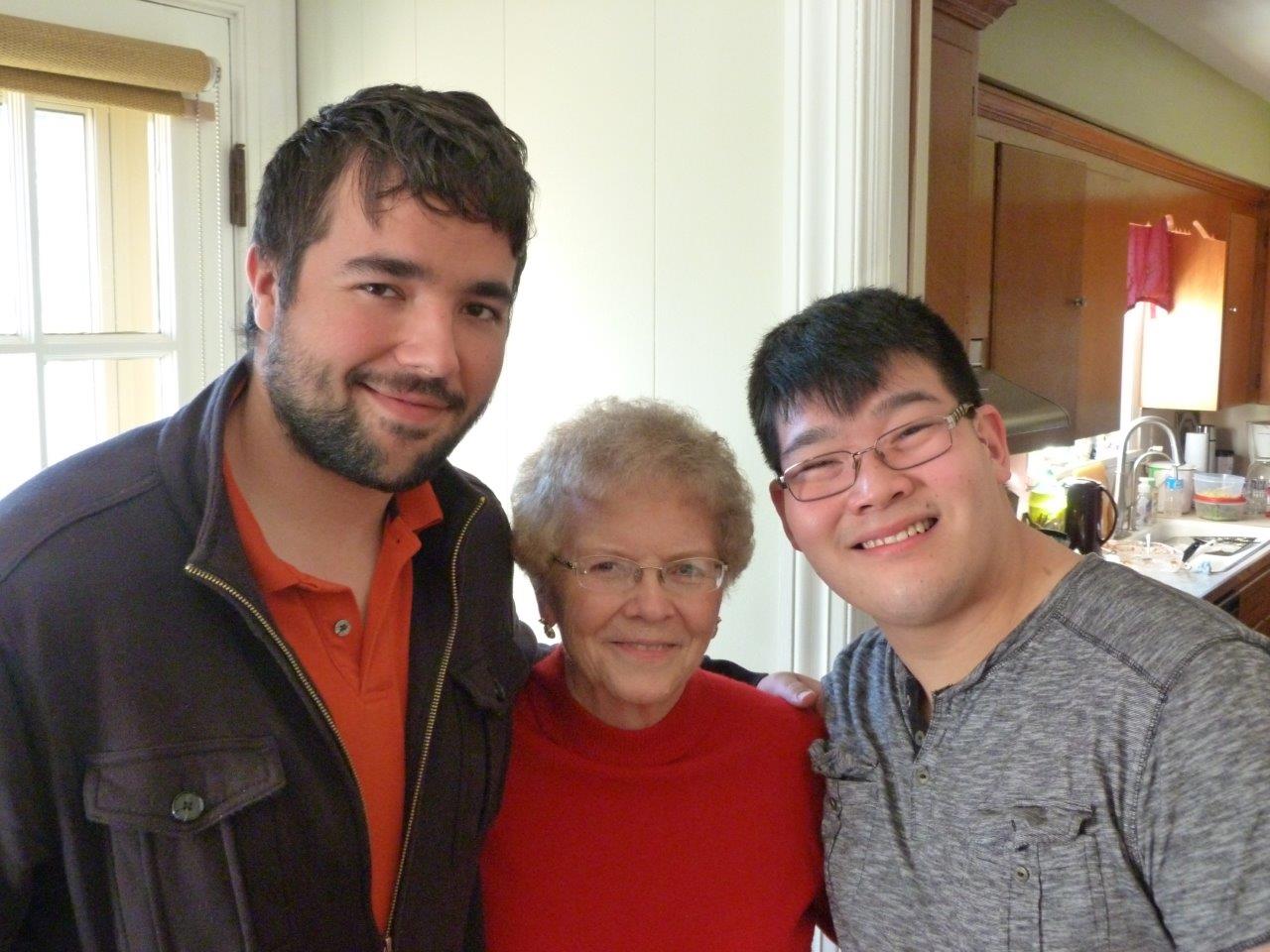
Like her, I will leave you with a few last images of life we’ve enjoyed together. Hope your day is filled with joys familiar and joys anew. Happy Birthday, Sweet Girl.[Learning to make biscuits with Memaw – my Mom, the master cook]
5 Friday Faves – New Year’s Resolutions, Habit Planner, Year-End Review, Word for the Year, and the Last Days of 2021

2021 is rapidly winding down. Whew! Here are my Friday Faves to get us ready for the new year…hopefully a joyful one!

1) New Year’s Resolutions – 2021…the end is in sight. What do we do with this new year ahead? Do we revisit those habits we thought about changing up in this tumultuous year? Maybe so. Or maybe we didn’t alter course so much for good reason. Let’s give pause a moment and consider…

Photo Credit: David Lose

Monday Morning Moment  – 2021 Come On! – New Year’s Resolutions

Are We Doing New Year’s Resolutions After a Year as Lousy as 2020? There’s One I think We Need More Than Ever – Heidi Stevens

How to Make Healthy, Attainable New Year’s Resolutions During COVID-19 – Ashley Welch, Healthline

Are You Making a New Year’s Resolution This Year? Readers Weigh In – Sarah Fielding

I take New Year’s resolutions very seriously. They have served me well through the years in shaking up troublesome habits as well as galvanizing better ones. New (or restored) habits that nurture the body, the spirit….and, when possible, family and community.

New Year’s resolutions are not always exercises in futility. They can be excellent pathways to help us get off to a strong start into the next year. Some of my family and friends treat resolutions with disdain…they never work; they never last. Oh, but not always!

They are really very energizing. Whether we meet our goals or not, there is great promise within the resolution for resetting our thinking. A keen sense of self, or self-awareness, aids in our understanding of habits and true habit change.

Without knowing it, I have actually used a practice of habit change that Ken Sande writes about on his blog, Relational Wisdom 360. He first influenced my life years ago with his work on conflict resolution through his Peacemaker Ministries. He is a gentle guide in many of the issues that complicate our lives.

His article on Seven Principles of Habit Change came at a great time. Sande talks quite kindly about how we develop habits and what it takes to change them. His first principle of habit change gives us a look at the cycle of habits – the cue, the routine (or response), and the reward. I actually followed Ken Sande’s principles below (without knowing the wisdom of it).

  1. Every habit has three parts: a cue, a routine, and a reward.
  2. You can change an undesirable habit by keeping the cue and reward but learning a new routine.
  3. The best way to overcome the temptation to revert to old routines is to have a detailed action plan.
  4. Habit change builds momentum if you can change a single “keystone habit” and then continue to build on consecutive “small wins”.
  5. Will power is like a muscle: it can be strengthened and yet needs to be exerted strategically.
  6. Faith is an essential part of changing habits.
  7. Habit change is more likely to occur within a community (even if it’s just two people).Ken Sande

Self-awareness is a huge factor relating to habit change. I can see that more now having come through seasons of looking at my own habits.

“Self-awareness is defined as conscious knowledge of oneself; it’s a stepping stone to reinventing oneself, learning to make wiser decisions, and helps you tune into your thoughts and feelings. So often we place blame on externalities because it’s the easiest excuse, when in fact we should be thinking about our thinking, reflecting, trying on different perspectives, and learning from our mistakes.”Paul Jun

It is possible to affect true habit change if we are willing to take a studied look at ourselves – our awareness and our engagement with making choices/decisions and within relationship. I used to think that self-awareness was morally charged, i.e., it drove us to become more self-centered. That doesn’t have to be the case. When we take time to really examine where our minds go, through the day, we can train our thinking toward what matters most – related to people, resources, and life purpose.

New Year’s Resolutions and Reality Checks – Wally Bock

When we are willing to do that, New Year’s resolutions can become much more transformative than just a few weeks of good intentions. These habit change principles can apply to anger issues, pornography, other addictions, and pretty much any habitual process that negatively affects your work, relationships or general peace of mind.

Consider these questions as you think on resolutions for 2022:

  1. What do I want to keep from the changes I made to cope with the pandemic?
  2. What do I want to reclaim from the pre-pandemic time?
  3. How would I “build back better” if I were in charge of the world or my neighborhood?Katherine Arbuthnott

Four years back, our pastor Cliff at Movement Church challenged us to commit to some resolutions to the Lord…together [podcast of 12/31/2017 here].  I have kept the resolutions made that day in a visible place, to be reminded of the good change in life, and the struggle… I still have them in view…four years out. Still relevant to now. For 2022, on it again…plus prayer for wisdom how to be creative and intentional, given COVID’s continued intrusion. And also added this year: writing my life’s story (capturing the memories and maybe restoring/refining some as I write).

Jonathan Edwards, the great 18th century preacher and theologian, definitely understood the importance of praying through and writing out resolutions that would inform his daily life. Over the course of several months, he composed seventy resolutions for life. You can read them here. The five resolutions I made during church on a New Year’s Eve are weighty enough for me…can’t imagine 70! Edwards just gives an example of a man who, even as deeply devoted as he already was, did not want to miss God in a busy life of ministry. Nor did he want to miss the people God placed in his life.

Resolutions help us to keep the main thing the main thing. Sure, we may struggle to keep our bodies and houses in order. Those are temporary situations. Where we hope most to be successful is in keeping our hearts tuned to what matters most. Going deep with God and others. Even in the face of a continuing pandemic...if we are ruthless and wise, and don’t give in to another year of listlessness and waiting.

We’ve already enough of that…coming up on two years.

I am resolved…

Photo Credit: Reformed Outfitters

Resolved – The Resolutions of Jonathan Edwards

Do You Want to Change Your Habits? – Relational Wisdom – Ken Sande

Habit Change is a Team Project – Ken Sande

Seven Principles of Habit Change – Relational Wisdom – Ken Sande

Make Habits, Not Resolutions – Justin Whitmel Earley

Why Self-Awareness Is the Secret Weapon for Habit Change– Paul Jun

RW Acrostics in Action– Relational Wisdom – Ken Sande

Ten Questions for a New Year – Don Whitney – Desiring God

Need Help With Your New Year’s Resolutions? – David Lose

Understanding True Habit Change and Rocking Your New Year’s Resolutions – Deb Mills Writer

2) Habit Planner –Anyone who knows the writing of Justin Whitmel Earley knows his commitment to a life well-lived. He is determined to live intentionally, not leaving the substance of his life to outside powers or sloppy habits.

Unlike resolutions, we actually become our habits. There are no changed lives outside of changed habits. And if we want to actually change, we need to take a sober look at where our habits are leading us.”Justin Whitmel Earley

Habits are the little things we do over and over without thinking about them. And the tiny and subconscious nature of habits makes them powerful. Why? Because they create our “normal.” Normal life is what stays with you from January through December. Normal life is what shapes your kids, your body, your schedule, and your heart.”Justin Whitmel Earley

His two books – The Common Rule and Habits of the Household – lay out a simple path for examining our current lives and then setting strategy for habit change. So accessible and engaging whatever our preferences for methods are. If spreadsheets help, he has one for you. If you need a more fuzzy-boundaried approach (that would be me), you can glean from his wisdom, and alter course accordingly.

Below are his own examples of the habit planner. I appreciate his heart so much. He helps us all he can (in his books and free resources):

Photo Credit: Justin Whitmel Earley, Screenshots

Habits of the Household – Habit Planner – pdf – Justin Whitmel Earley

Make Habits, Not Resolutions – Justin Whitmel Earley

Unlock the Power of Family Habits in 2022 – Justin Whitmel Earley

3) Year-End Review – Business writer Stephen Jones shares author Tim Ferriss’ practice of doing a quick past year review. Ferriss prefers this over new year’s resolutions, and Jones gives a quick snapshot of his 5 steps.

Below is Tim Ferriss’ guide for a past year review from his own blog (and podcast):

  1. Grab a notepad and create two columns: POSITIVE and NEGATIVE.
  2. Go through your calendar from the last year, looking at every week.
  3. For each week, jot down on the pad any people or activities or commitments that triggered peak positive or negative emotions for that month. Put them in their respective columns.
  4. Once you’ve gone through the past year, look at your notepad list and ask, “What 20% of each column produced the most reliable or powerful peaks?”
  5. Based on the answers, take your “positive” leaders and schedule more of them in the new year. Get them on the calendar now! Book things with friends and prepay for activities/events/commitments that you know work. It’s not real until it’s in the calendar. That’s step one. Step two is to take your “negative” leaders, put “NOT-TO-DO LIST” at the top, and put them somewhere you can see them each morning for the first few weeks of 2022. These are the people and things you *know* make you miserable, so don’t put them on your calendar out of obligation, guilt, FOMO, or other nonsense.

We do a year-end review but not in order to plan out the next year. Mostly to celebrate the year rapidly coming to an end and to reflect on how we might reorder the course of the next year (re the negatives).

A creative friend of ours put his “year-end review” into a cool video:

Photo (Video) Credit: Todd AO, Facebook

4) Word for the Year –A year ago, I read Debbie Macomber‘s book One Perfect Word. She tells fascinating stories of persons’ choosing a word to guide their year. Finishing her book and praying a bit, the word compassion became my focus. 2021 was a good year for that as we dealt with so many divisions over COVID, race, politics, etc. Compassion for all on both sides of each issue.

At first I wasn’t going to do “a word” for 2022, and then a rapid series of “coincidences” drew me to the word: joy. As this year ends, I’ve become negative and even a bit cynical. Still having faith in God but not so much in humans, including myself. Even after a year of compassion!!

It dawned on me that I haven’t been “counting it all joy”. Or remembering that “the joy of the Lord is my strength”. Now my heart is resolved to be set on joy in 2022…no matter what.

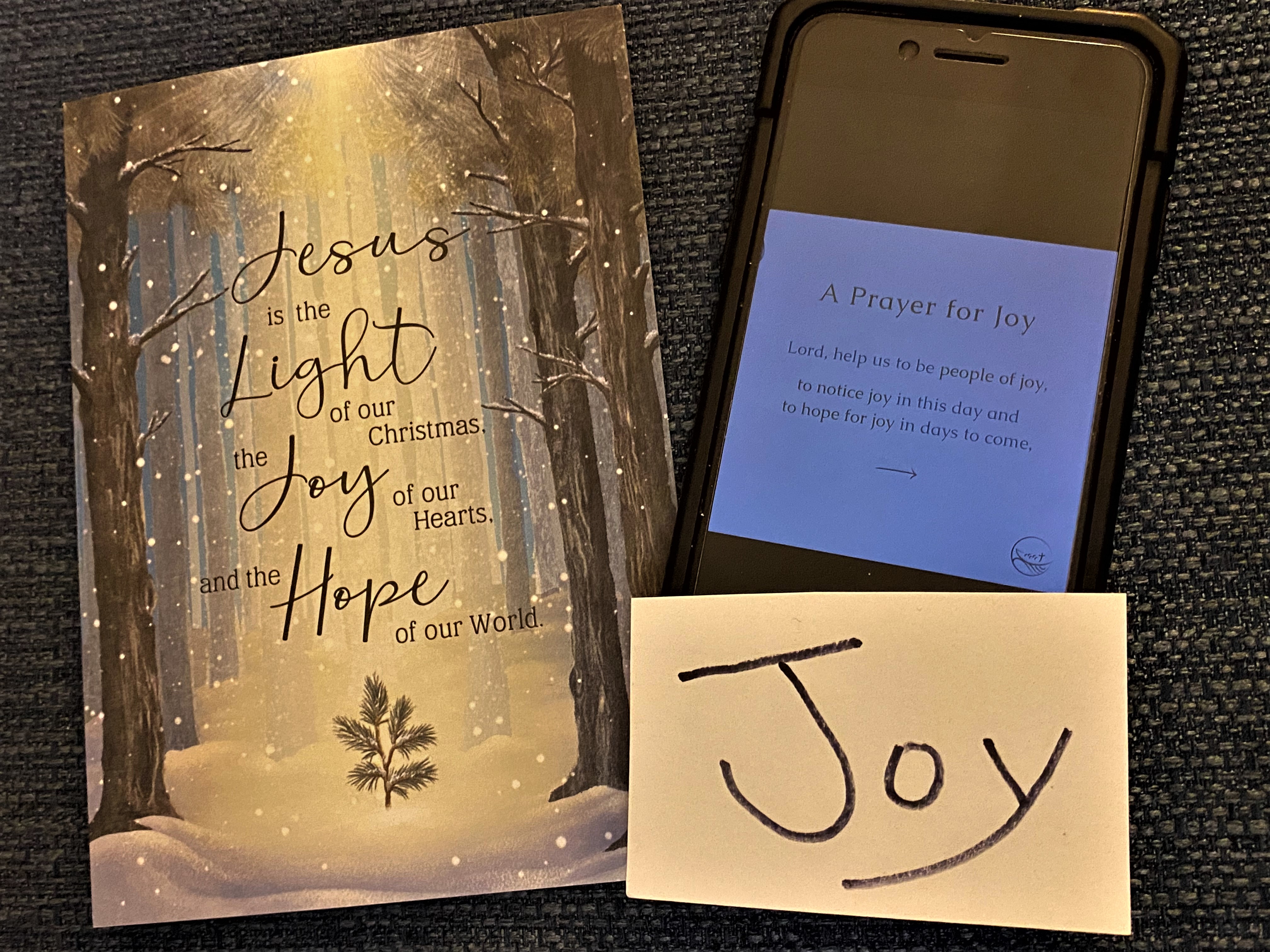
Lord, help us to be people of joy,

to notice joy in this day and to hope for joy in days to come,

to look for light and share it with others this Advent season,

to see beauty in creation and the people we encounter,

to laugh heartily with childlike glee,

to feel true joy in your presence.     Amen.

Photo Credit: Prayer @inthecoracle, Instagram

5) The Last Days of 2021 – As may have been many of your experiences, we had people we know and love dealing with COVID in this last week of 2021. Still managed a sweet end-of-year. Hope yours was as well.


Now on to 2022!! Thanks for stopping by. It means a lot to me.

Bonuses:

Vimeo Video by Rodrigo Souza – Heart – with Nathan Mills, Beyond the Guitar

How to Stop All Procrastination: Dear You Trying to Do that Hard Thing in the New Year – Ann Voskamp (great piece on procrastination and perfectionism – both keeping us from presenting the gifts God’s given us)

Photo Credit: Samantha Reynolds, @Bentlily, Instagram (w/ permission)

52 Week Bible Reading Plan – Michael Coley

What is an Accessory Dwelling Unit (ADU) and Tips for Building One

Photo Credit: Facebook

Worship Wednesday – I Know that My Redeemer Lives – Handel’s Messiah & Nicole C. Mullen

Photo Credit: Heartlight

For I know that my Redeemer lives,
And He shall stand at last on the earth;
And after my skin is destroyed, this I know,
That in my flesh I shall see God,
Whom I shall see for myself,
And my eyes shall behold, and not another.
How my heart yearns within me! Job 19:25-27

We are in the third week of Advent. On Sunday the joy candle was lit, and Pastor Cliff preached on “Hope Deferred”.

“We live in a period of already but not yet, a time of deferred hope. With the Holy Spirit active in our lives, we can take part in God’s kingdom here on earth. However, the kingdom will not reach its fullest expression until Jesus’ return.” – Erin Franklin, Our Hope Has Come

Sometimes we have to wait on answered prayer…on someone’s forgiveness…on a cure…on peace to be restored to our hearts. Hope deferred. Yet, in every situation of life, we have His Word to remind us that waiting (and suffering) is but for a season, and with it comes great gain.

Therefore, since we have been justified by faith, we have peace with God through our Lord Jesus Christ. Through him we have also obtained access by faith into this grace in which we stand, and we rejoice in hope of the glory of God. Not only that, but we rejoice in our sufferings, knowing that suffering produces endurance, and endurance produces character, and character produces hope, and hope does not put us to shame, because God’s love has been poured into our hearts through the Holy Spirit who has been given to us. For while we were still weak, at the right time Christ died for the ungodly. For one will scarcely die for a righteous person—though perhaps for a good person one would dare even to die—but God shows his love for us in that while we were still sinners, Christ died for us. – Romans 5:1-8

“While we were still sinners…” Not after we’d cleaned up our act, but while we were in the muck and mire of our lives. What a Savior!

In our small group tonight, we processed Cliff’s sermon and the whole concept of hope deferred. Our group leader asked us what Scripture verses encourage us when our hope is weakened. We all had our favorites…Romans 8 has several treasures.

I wish I could transport you to that moment…friends gathered in our living room, warm inside on a cold December night, Christmas lights aglow, recalling Scripture after Scripture on the hope we have in Christ. It recalled still another account in Scripture when grief-stricken followers of Christ (journeying home after his crucifixion) encountered him after his resurrection.

They asked each other, “Were not our hearts burning within us as He spoke with us on the road and opened the Scriptures to us?” And they got up that very hour and returned to Jerusalem. There they found the Eleven and those with them, gathered together and saying, “The Lord has indeed risen”…!Luke 24:32-34a

Finally, one of our friends reminded us of Job…that Old Testament saint who lost so much and yet clung to his God. What a huge testament of the goodness of God even in the midst of suffering and hope deferred. Job 19:25-27 tells us that Job knew his Redeemer lived and he would see him one day.

As we read the passage in Job, a song bit came to mind. It was “I Know that My Redeemer Liveth” from Handel’s Messiah.

Glory! How thankful I am that Jesus died for me…to take the penalty for the awful sin in my life. He was my substitute, and now He is my Savior.

Worship with me to Nicole Mullen’s “My Redeemer Lives”. Not as difficult to sing as Handel’s Messiah but every bit as true.

Who taught the sun
Where to stand in the morning?
And who told the ocean
“You can only come this far”?
And who showed the moon
Where to hide till evening
Whose words alone can
Catch a falling star?

I know my redeemer lives
All of creation testify
This life within me cries
I know my redeemer lives
(yeah)

The very same God
That spins things in orbit
Runs to the weary, the worn and the weak
And the same gentle hands
That hold me when I’m broken
They conquer death to
Bring me victory

Now I know my redeemer lives
I know my redeemer lives
Let all creation testify
Let this life within me cry
I know my redeemer

He lives to take away my sins
And He lives forever, I proclaim
That the payment or my sins
Was the precious life He gave
But now He’s alive and
There’s an empty grave

(repeat chorus over and over)*

Advent: The Journey to Christmas – Redemption for Deferred Hope – Rod Lindemann

Photo Credit: River Valley Mission

*Lyrics to My Redeemer Lives – Songwriter: Nicole Coleman Mullen

A Little Preview! (Job 19:25-27) – The Bereans Blog

YouTube Video – Nicole C. Mullen: “Call on Jesus” (33rd Dove Awards) – more goosebumps at this reminder of the presence and power of Jesus

YouTube Video – The God Who Sees – Kathie Lee Gifford & Nicole C. Mullen

Monday Morning Moment – As Adults We Still Need to Feel Safe, Seen, Soothed, and Secure

Photo Credit: Nicole Michalou, Pexels

[Adapted from previous posts on parenting here and here.]

American Thanksgiving brings families and friends together for a big day of food, football, and (hopefully) fun. Social media this week will be crammed (at least in the US) with images of smiling people leaning in to pack the frame. What we don’t see is those sadly missing from the frivolity. Maybe it’s too far to travel. Or work claims too large a chunk of the day. Or another family’s turn this year. Or possibly, unfortunately, Thanksgiving is too complicated a day to spend all together.

By its very name, Thanksgiving is about being grateful for what we have – the food, good health, the other bounties of life, but most especially, our relationships. How thankful we are to be in the land of the living with those we love.

How do we communicate our love? How do we experience love from each other? Is it complete joy behind those smiles or is it also courage. Showing up even when it’s hard sometimes.

I’ve been learning more about this whole brain and relationship thing from two brilliant psychiatrists Dr. Dan Siegel and Dr. Curt Thompson.

Dr. Thompson has written a trilogy of powerful, ground-breaking books – Anatomy of the Soul, The Soul of Shame, and The Soul of Desire.  He describes these books as exploring “how neuroscience relates to the ways we experience relationships, deep emotions like shame and joy and especially our own stories — and how we can process our longings and desire for spiritual connection with God and each other to live more fully integrated, connected lives.”

Such good books!

Thompson refers often to Dr. Siegel’s “4 S’s of Attachment-Based Parenting“. Those S’s relate to what we communicate to our children even as infants but throughout life. We want them to know they are “safe and seen” and to experience being “soothed and secure”. This is especially poignant when we introduce the word “No” into the great adventure of their lives. No…and discipline as they get bigger.

Now…fast forward to adulthood. OK…maybe your childhood (or parenting) had some tough spots or (for parents) regret. We can’t go back…we can’t fix what got broken. We can still learn to love well today. Siegel’s 4 S’s, referenced in his book The Power of Showing Up, primarily relate to parenting. However, he and Thompson both talk about these 4 experiences being needed throughout our lives. Take a look at the briefest explanations of them below:

Photo Credit: Dr. Dan Siegel & Dr. Tina Payne Bryson

As adults, we want the same things – to be safe (no “bracing for impact” in relationships), to be seen (truly known by those most significant in our lives), to be soothed (our emotions understood and acknowledged, without judgment, even when they are big and out of proportion), and secure (that no matter what, we are loved. Our persons are NOT leaving the room).

Whatever we may have experienced as children, we can alter our present. Whatever we did as young and overwhelmed parents, we can move, with love and insight, to a better situation with our kids. The past is just that…the past. We can be truly with each other, in the here and now…if we are brave and willing to be humble.

Something to think about during Thanksgiving week. Let’s don’t miss those people across the table or room from us. The ones we are missing…because for whatever reason, they are not there…let’s figure out how to show up in their lives, in meaningful, redeeming, and healing ways.

Have a blessed Thanksgiving Day with those you love…whether it’s your holiday or not. Thanks for showing up here.

The 4 S’s of Attachment-Based Parenting – Daniel J. Siegel – Podcast

The Power of Showing Up – Daniel J. Siegel, MD & Tina Payne Bryson, PhD

Mindful Parenting: 4 S’s of Secure Attachment – Esther Goldstein

The Neurobiology of Attachment to Nurturing and Abusive Caregivers – Regina M. Sullivan, PhD

Monday Morning Moment – Living Between Adult Kids and Older Parents

God put us in families. All of us.

God put me in the middle of boys with a mom who loved us completely and a father of whom I have little memory. His relationship with us was not one of outright abuse but neglect and eventual abandonment. When I was five, my exhausted mom divorced this never-working man. She  would later explain that action as simply “just one less mouth to feed”. She soon after came back to faith in Christ and brought us with her (unchurched until then). Our dad had long since disappeared from our lives.

Fast forward to the present: married to a man who deeply loves the Lord and loves us well also. We have three adult children and two added by marriage, and now four precious grandchildren.

All our parents (including a beloved step-dad) are gone except for Dave’s exquisite praying mom.

Sandwiched between adult kids and older parents is where we are, and I’m grateful. In fact, I think about our kids and their littles (and some of you) now in this same season, just a different generation. 

The room is delightfully crowded (not without challenge) with multiple generations – each bringing extended families of their own. So many faces and so many voices.

Every family member (and each of us in that family) has great value to God. His desire for us is to bear  the fruit of His love (Galatians 5:22-23) – making it beautifully tangible to others. He is with us in this.

What if our parents made life hard for us either by trauma or, as adults, by intrusion or neglect? Or what if we find ourselves in awkward places in our adult children’s lives? These “what if’s” make us want to pull ourselves out of obedience to God, as we feel justified by our pain to distance ourselves from some in our family. The ripple effect of pulling away is wide-reaching in a family. Wider than we can imagine.

Even when relationships are healthy, the heavy responsibility of parenting young children puts its strain on our precious adult children. We feel the pull – torn between kiddos and our olders or others (sibling families, too). We also model for next generations what family looks like. How we handle the hard is quite probably how they will handle the hard.

We all choose, consciously or not, from among four ways to engage with or disengage from our families.

  1. Embrace. We can trust God with the families He has given us. We can love them well. We forgive and seek forgiveness. We spend time with each other and attune to how God sees them. We who share adult space try to find the balance of loving each other well without our own preferences getting in the way. The older ones will only be with us for a moment. They have stories and history and lives that matter. Our younger ones also grow up and have their own families and life pressures. We extend ourselves in both directions – up and down.
  2. Debase/Disgrace. Sometimes members of our family wrong us or another beloved family member. We “triangle” talking about them with others, without them being present. Their behavior may warrant our disdain. We are tempted to debase them privately or disgrace them publicly. However, God is not finished with them or they wouldn’t still be here. Wisdom is to take our sorrows to God and appeal for Him to help us love these hard-to-love ones. He is able. It helps to remember we may also be the ones not so easy to love. [I forget that sometimes.]
  3. Replace. We are tempted to completely replace hard family members with friends. Adult friendships are such a gift from God. They fill in empty places in our hearts. They can actually help empower us to love and live like Jesus with these family members. Or they can usurp their place in our lives. Friends, help bolster our resolve, as we choose to “stay in the room” with family members. Let’s be that one who is not going anywhere – that picture of Christ for these.
  4. Give Grace. This is similar to “Embrace” but with God-guided boundaries in place. The Word is full of instruction, like Colossians 3:12-14. Living between olders and youngers, I want to be that one who gives grace both ways. Speaking love often and always. Not judging or applying pressure. We can choose to honor one another, which, in turn, honors God. Giving grace includes giving grace to ourselves.

Photo Credit: Facebook, Gods Armour

 Do I get this wrong? All the time. We are works in progress. God’s door of healing is always open to us.

Photo Credit: Samantha Reynolds, Bent Lily (w/ permission)

[One last pic – my mom, our youngest son, and me sandwiched between them & behind the camera – wishing I could roll back the years to when she was still here. Embrace & give grace. The years rush by.]

Monday Morning Moment – Holding Space for the Generations in Our Lives

We have a moment.

Everyone talks about how the weeks fly by, and I can tell you it does not slow down…at least it hasn’t for me. The wise live like there’s no tomorrow. That’s not to say we don’t plan for the tomorrows of life but we should never presume upon them.

My Mom (pic above) had cancer for three years. A very treatable cancer. She should have been cured of it…but she wasn’t, at least on this side of Heaven she wasn’t. I miss her every single day and she’s been gone almost 20 years.

I wish we would have had more time. More time with her and our kiddos with her as well. They gained so much from her…and would have gained so much more. From her and also from my Dad who’s now in Heaven as well.

In the extended family on my mom’s side, I am now the oldest. So weird. Especially living states away from siblings and their families. In reality we find our relationships shrink down to a couple of visits a year…and in those visits just a few hours of face-to-face time.

I long for more and attempt to open that window a bit. Phone calls and an occasional card. Social media contact. They have busy lives (we all do, for sure)…and we live far apart. And so it goes.

These young ones receive well my small communications and treat me as a cherished member of their family. It means the world…because my world without my folks, my older brother, and others in that generation past…is emptier. Yours?

We have a heritage. Our parents instilled values – deep, enduring, life-transforming values. We shook up and sifted those values in our own young adult lives, and held on (and passed on) those most treasured. As children grow up, marry, and have adult friendships, values are influenced and reshaped.  It is the way of generations folding one into another. Some values we may ourselves have mislaid and have been reinvigorated thanks to our children, spouses, and young friends.

All that to say…

Our parents’ impact in our lives continues. Their own love and struggles translated into their parenting and into the hard wiring of our own brains. Love and struggle. We pass it on. Fortunately, as we see in our children’s lives, some of the best of their grandparents remains in them (and us hopefully).

A much-loved 91y/o father and grandfather in our extended family died this weekend. Unexpectedly. As we grieve, we are comforted in the knowledge that he knew the Lord and was prepared for the inevitable last day of his life. We are also comforted that he knew well how much he was loved and honored, not just by his children, but by his grandchildren as well.

This is huge.

We have a moment with these old ones. These grandparents of ours. Spend it well. Draw strength and wisdom from them in these final years of their lives and ours with them. Communicate love for them. Allow yourselves the treasure of drawn-out visits with them. There is time. There won’t always be time, but there is time today.

In our little family, our kids only have one grandparent remaining. MomMom. She prays for them every single day and through the day. She is not a polite, check-the-box  pray-er for them. She fearlessly storms the throne-room of the King of the universe. She wrestles against the evil in this world on their behalf and she dreams big for these grandchildren of hers. What a blessing she is! So thankful she is still in the crowded rooms of our lives.

Saving space for you, MomMom. Thank you for reflecting the beauty of generations…the beauty of God Himself. Thank you for being so real and so human. We see Jesus in you. So grateful for you and these moments with you…

Monday Morning Moment – Confessional Communities – What Are They? You’ll Wish You Were In One If You Aren’t Already

Photo Credit: Group Therapy Central

[As I was preparing my own take on confessional communities, I came across Aimee Byrd‘s piece on the same, as part of her analysis of Curt Thompson‘s latest book The Soul of Desire. Byrd’s blog is a quick read and very helpful.]

Confessional communities – probably sounds like some sort of monastery life. Or a group with all kinds of touchy-feely exercises framed by unintelligible psycho-babble, right? Oh no! So much more and so much better!

I’ve been awakened to the presence and possibilities of confessional communities since recently reading of the Thompson trilogy below.

What rung intuitively right for me throughout my adult life has actually been tested and found true in something called Interpersonal Neurobiology (IPNB). No time to go deeply into this now, but, in short, our brains are wired for connection, and that is connection inside the brain/mind itself as well as with others (and God).

Confessional communities are used by Dr. Curt Thompson and others as ways to help clients get in touch with shame, trauma, fear, anxiety, etc. in the company of others struggling with some of the same. Shame, for instance, drives us to isolate from God and others. It compounds interest over time, if left to itself in our own minds, and muffles our desires and longings, as it condemns and flattens us.

“We need to create confessional communities where people are confessing the truth about their life – some of which includes confessing sin or doing things that show my brokenness. Some of it is just things that have happened to me, or things that I feel; things that I sense; things that I dream; things that I long for; things that I’m conflicted about. But I’m trying to tell the whole truth about my life – but not so that anybody can just hear it and then move on.…In confession, what I’m really looking for – in your eyes, in your body language, in your voice – is for you to be able to say, “You’re right, Curt; you were wrong to do that. You’re forgiven. I’m not leaving.” I need to know you can bear the weight of what I know to be really wrong [with me], and that you will still stay. If it’s minimized, it will continue to linger with me…Shame always requires outside help for healing. My shame needs you. If it’s a small thing, I might need only one conversation with you. But, if it’s much bigger than a very, very small thing, I’m going to need multiple conversations with multiple people, because shame will come through multiple different doors into my head when I’m left by myself…”Curt Thompson

Photo Credit: Curt Thompson, Twitter

“…in order for me to be liberated from the shame I carry, …I need to hear that my behavior was really as bad as I think, if not worse, while simultaneously sensing that the person I am confessing to is not leaving. Shame has the effect of coaxing us into pretending that sin is not as bad as it seems; for if it really is that bad, and I have to face it, it would be too much and I fear I would be overwhelmed. When someone seeks forgiveness for the wrong they have committed, we who have been wounded must be able to acknowledge the reality of the pain inflicted if forgiveness is to be real, and if the offender’s shame is to be effectively healed.” – Curt Thompson, The Soul of Shame

Confessional communities are spelled out in Thompson’s writing, teaching (found on YouTube), and podcasts (his own and as guest on many others). The common factors include:

  • small group meetings over weeks or months.
  • willingness to tell our stories as truly as we can.
  • intentional leaning in to the stories of other group members such that “being known” is part of the outcome for all.
  • commitment to stay with each other; to “not leave the room”.
  • imagine beauty together – learning to explore and create beauty, to see what is good, true, and beautiful in each other’s personhoods.Photo Credit: Curt Thompson, Twitter

I have a friend who for several months was part of what I would now call a confessional community. She called it “Vegas”. Remember the adage “What happens in Vegas stays in Vegas”? It was a Bible study/house church. A group of people who committed to care for each other with masks off (not the COVID kind, but the masks we don in shame or fear). A group of people who would stay in the hard and love no matter what.

My Mom modeled this for our family. She died way too soon. My prayer is that our (birth) family will model it for each other, and my children will learn from their Dad and me how to love like this…To have the joy of being fully known and deeply loved. No matter what.

Trauma, Healing, and Side Effects with Dr. Curt Thompson – Jamie Ivey’s Podcast, The Happy Hour

Shining Light on Shame – Curt Thompson, Angulus Wilson, Steve Beers, and Morgan C. Feddes

Curt Thompson – 51 Podcast Episodes

Monday Morning Moment – Isolation and Community

Photo Credit: Jackie Hill Perry, Art of It

After one-and-a-half years in COVID, we all have grappled with a need for social distancing and isolation. What happens then when the diligent pursuit of physical safety causes a loss of community?

None of us want to get COVID or its latest variant. However, we also desperately need community. It is on each of us to make creative and persistent decisions toward going after community. Especially the most vulnerable of us, or we will suffer more than the health impact of COVID [see links below].

The dilemma with isolation is somehow it has brought a social lethargy with it. We are becoming more solitary and our community has shrunk to the lowest and tightest we can manage.

Not necessarily out of fear of COVID, but out of a growing incapacity for community. Real community. “Iron sharpening iron” relationships.

I know I am not alone in the need for such community. We have probably all thought of how altered our relationships have become over the last several months. Not the closest maybe, but especially those that spurred us toward a higher accountability, responsibility or integrity. Those relationships where we are helped to make better decisions or extend kindnesses (especially toward those outside our inner circles).

[Whether introvert or extrovert, we can easily sink down into a solitary life of less. And less is not always more. This less can breed a sort of self-serving life where we gauge our relationships by our own gains and extend ourselves by our own comfort levels. Been there, done that. Ugh! ]

COVID or not, we still need other people, and they need us. Whether on a work project better served with team problem-solving or a family crisis that could use “all hands on deck”. Death and divorce are still happening, but life celebrations are also still with us – all calling for the touch of our community.

In the Wiki fandom Mary Shelley article, we read a fascinating take on the impact or lack of community on the characters of Shelley‘s novel Frankenstein.

In the novel, Victor Frankenstein is a brilliant scientist. He is overwhelmed by a series of losses and the grief, as well as his increasingly unhinged genius, drive him into isolation. He decides to make a human-like creature who would be like a son to him.

It did not turn out well. The creature, because of the rejection and isolation he himself felt, was determined to be a monster.

Both Victor and the creature Frankenstein, throughout the story, are plagued with isolation and a terrible lack of caring community.Photo Credit: Pixabay

The theme of isolation in Frankenstein raises many questions about the role of community and its importance. Many characters in the novel find themselves in isolated positions, and a few suffer grave consequences because of it. Characters suffer from both physical and emotional isolation, although, as in the case of the monster, the isolation is not always self-inflicted. Victor Frankenstein, on the other hand, chooses to isolate himself from his family, his peers, and even the monster he created.

In Frankenstein, horrible things happen when a character is isolated from the others. When Victor’s knowledge and ambition are unchecked by his peers, a monster is created…the destructive power lies not in the monster or his creator, but in solitude. Shelley uses this theme and its manifestation in her characters to pose questions about community, knowledge, and its role in society. Is unbridled knowledge always dangerous, or is there a middle ground? Should one abandon his or her pursuits if they are driving him or her away from a community? 

Shelley makes it clear that there are two different types of isolation: self-inflicted and societal. We see self-inflicted isolation manifested in Victor; he detaches from his world and the people he loves and as a result, everyone suffers tremendously. Rejection from society is demonstrated in the monster’s life. Again and again, he is turned away from love and companionship, which what he has longed for since he was first brought to life.” – Wiki-Fandom Analysis of Frankenstein – Mary Shelley, an Academic Wiki

Of course, this is a novel, but incredibly insightful as a tale of human nature. We need community…we are made for community.

Somehow we must rally during this protracted social experience of COVID. What is your mindset on this and what are your intentional actions toward community and away from isolation? The kind of isolation that eventually diminishes us and our relationships. Please comment below.

In closing, I do want to affirm an Isolation in Community. We may have to deal with social distancing for sometime still. Especially those most vulnerable to severe illness from COVID. For some isolation can’t be avoided, but there is an isolation in community. Where we take steps toward and lean in to deeper community. Even if it isn’t always in person. This takes a different sort of effort, but we know it is possible. Fortunately. For me, it’s actually using the phone for conversations (including Facetime). It’s not stepping out of responsibilities (work or community service) because of a need for social distancing, but figuring out alternate ways to serve, or get a job done. I have also experienced the fruit of it, thanks to your efforts. Our mail is less junk mail and more actual real connections through cards/letters. Thanks for that. Again, please comment below what your experience has been here.

Photo Credit: Heartlight

Isolation – Good Therapy

Isolation and Community – Helen Thorne – Biblical Counseling UK

Loneliness and Social Isolation Linked to Serious Health Conditions – CDC

Creative Communities Are Addressing Social Isolation – Maryjoan Ladden

Worship Wednesday – Nathanael, Philip, and Jesus – Time Under the Fig Tree

Photo Credit: Howard Carter

The next day Jesus decided to go to Galilee. He found Philip and said to him, “Follow me.” Now Philip was from Bethsaida, the city of Andrew and Peter. Philip found Nathanael and said to him, “We have found him of whom Moses in the Law and also the prophets wrote, Jesus of Nazareth, the son of Joseph.” Nathanael said to him, “Can anything good come out of Nazareth?” Philip said to him, “Come and see.” Jesus saw Nathanael coming toward him and said of him, “Behold, an Israelite indeed, in whom there is no deceit!” Nathanael said to him, “How do you know me?” Jesus answered him, “Before Philip called you, when you were under the fig tree, I saw you.” Nathanael answered him, “Rabbi, you are the Son of God! You are the King of Israel!” Jesus answered him, “Because I said to you, ‘I saw you under the fig tree,’ do you believe? You will see greater things than these.” And he said to him, “Truly, truly, I say to you, you will see heaven opened, and the angels of God ascending and descending on the Son of Man.”John 1:43-51

Philip found Jesus. The One. The Messiah. He followed Him…and he sought out his friend Nathanael to tell him the good news. Even as Nathanael mocked the news, Philip persevered.

“Come and see”.

As they approached, Jesus called out identifying Nathanael. It was shocking for Nathanael (also known as Bartholomew) because they had not met before. Jesus called him “an Israelite in whom there is no deceit.  Something about what and how Jesus spoke to him caused Nathanael to wonder aloud how Jesus knew him.

Then Jesus answered, “Before Philip called you, when you were under the fig tree, I saw you.” What?! Of course, we remember this is God, this Jesus. Still, something in His seeing Nathanael under the fig tree meant everything to Nathanael…it meant that He was the One. The Messiah. Nathanael believed.

“Rabbi, you are the Son of God! You are the King of Israel!”

Now, there are a lot of fig trees in Israel. Most probably, Nathanael sat under them from time to time. Something happened specifically under one of those fig trees that made it hugely significant that Jesus recalled it to him…and told him, “I saw you”.

In the TV series, The Chosen, we watch a story about Jesus, His followers, and His public ministry. We are reminded by the director and others that The Chosen is faithful to the truth of Scripture, but it also tells a story. We don’t know from the Word what was going on in Nathanael’s life “under the fig tree”, but that Jesus saw him was crucial.

The writers of the series have Nathanael wrestling with God over a failed hope. Nathanael had wanted to design buildings that would honor God, and he failed. Under the fig tree, he cried out to God in the words of Psalm 102:1-2:

“Hear my prayer, O LORD; let my cry for help come before You. Do not hide Your face from me in my day of distress. Incline Your ear to me; answer me…”

In reality, we do not know from Scripture what happened under the fig tree, but when Jesus told him that He saw him there…Nathanael believed. In the Son of God. The King of Israel.

[The scene below is 11 minutes in length. If you haven’t seen it, it is well worth your time. Beautiful. Remember some is story, BUT the passage in John above is faithfully represented…and the emotion is there. The grand emotion of discovering that we are seen…we are known.]

We have all had those moments under the fig tree. Times we thought we were all alone. Times of anguish or fear. Times of feeling completely undone. To be reminded that Jesus sees us changes everything. It is similar, in a God way, to the pronouncement the Samaritan woman made after encountering Jesus at the well. “He told me everything I ever did!” So different from Nathanael but similar in that she met the Messiah who knew her…and still loved her completely.

Worship with me to Jeremy Camp‘s He Knows:

All the bitter weary ways
endless striving day by day
you barely have the strength to pray
in the valley low

how hard your fight has been
how deep the pain within
wounds that no one else has seen
hurts too much to show

all the doubt you’re standing in between
And all the weight that brings you to your knees

HE KNOWS, HE KNOWS
EVERY HURT AND EVERY STING
HE HAS WALKED THE SUFFERING
HE KNOWS, HE KNOWS
LET YOUR BURDENS COME UNDONE
LIFT YOUR EYES UP TO THE ONE
WHO KNOWS
HE KNOWS

we may faint and we may sink
feel the pain and near the brink
but the dark begins to shrink
when you find the one who knows

the chains of doubt that held you in between
one by one are starting to break free

every time that you feel forsaken
every time that you feel alone
He is near to the broken hearted
every tear
He knows…*

As you get back to your day, you might want to bookmark the links below. Nathanael is a lesser known apostle, BUT we can learn so much in his conversion story…about Jesus…about the friend Philip who brought Nathanael to Christ…and about Nathanael, this righteous Jew, overcoming his prejudice and coming to Christ.

*Lyrics from He Knows – KLove

YouTube Video – He Knows (Lyric Video)

Worship Wednesday – He Knows – Jeremy Camp – Deb Mills

Jesus and Nathanael – D. Young

Snowballs and Bowling Balls – Jesus and Nathanael – Brian Rosner

Nathanael and the Fig TreeCharles H. Spurgeon

Under the Fig Tree…Jesus Meets Us Where We Are and Calls Us to Follow Him – Howard Carter

Under the Fig-Tree – How to Live a Holy Life – C. E. Orr

5 Friday Faves – Beyond the Guitar’s “Take On Me”, the Woman Slowly Fading, Mama’s Table, Relationship Hacks, and Voices of Influence

Happy weekend! Here are my five faves of this week – rapid-fire.

1) Beyond the Guitar’s “Take On Me”Nathan Mills does it again.  He takes Norwegian band A-Ha‘s 1985 hit “Take On Me” to a whole new level on classical guitar. So beautiful that lyrics aren’t needed; the nostalgia is already there. This song is featured in the video game The Last of Us Part II. Whether you loved it or hated it in the soundtrack of that game (or not a gamer)…its melody is “all the feels” under the deft fingers of Beyond the Guitar. Enjoy!

2) To The Woman Slowly Fading – I didn’t know the work of Scottish poet Donna Ashworth until my great-niece posted the poem below on her social media. She (my great-niece) is mum to three little ones; in fact, three under the age of three at the time.

She is tired and pulled. Yet in the tired, she is full of joy.

I’m grateful she shared this poem because it told me something about her and it also illuminated something I had been feeling from a very different place. My niece is nearer the beginning of her life’s journey, and I am closer to the ending. Nothing sad here; just what is.

At our latest family dinner, I had that strange thought of fading. A moment of poignancy taking in the lovely scene of adult children and wee ones around the table. Ashworth describes this sense of fading so well. Read for yourself the lines below.

To the woman who has lost her spark.
To the woman whose get up and go, has well and truly gone.
This is for you.
This is to remind you whose daughter you are.
This is to remind you, that you don’t have to be everything to everyone, every day.
You didn’t sign up for that.
Remember when you used to laugh? Sing? Throw caution to the wind?
Remember when you used to forgive yourself more quickly for not always being perfect.
You can get that back again.
You really can.
And that doesn’t have to mean letting people down or walking away.
It just means being kinder to you, feeling brave enough to say no sometimes.
Being brave enough to stop sometimes.
And rest.
It starts the moment you realise that you’re not quite who you used to be. Some of that is good, some of that is not.

There are parts of you that need to be brought back.

And if anyone in your life is not okay with that… they are not your people. Your people will be glad to see that spark starting to light up again.

So, if you have been slowly fading away my friend, this is the time to start saying yes to things that bring you joy and no to things that don’t.

It’s really pretty simple. – Donna Ashworth, To the Women

I do take exception to the one line: “Saying yes to things that bring you joy and no to things that don’t.” Fortunately for my young niece’s children, she is not going to ignore their cries in the middle of the night, or their tears after a fall, or their fears of the unknown. These things do not bring her joy, but they are part of the journey.

Difficult family members, friends in crisis, health issues, mounting drama in the world’s press…we can’t always say no, but we can measure ourselves out in wise and thoughtful ways. There is sacrifice in life, and, with it, joy.

So if we are fading…may it be for good reasons. Squeezing all we can out of life and relationships…even the hard ones. Not leaving anything left on the field when the clock runs out (was that phrase from Vince Lombardi?). No slow fade. Intentional. Deliberate. Owning it.

For believers of Jesus, there is a call reflective of this: On the return of the Messiah one day, we are reminded of the joy of that great day when “He must increase, and I must decrease”. (John 3:30) As on a wedding day, we take in that glorious arrival of the bridegroom for his bride.

Fading may be how we feel, but the reality is we all have various seasons in our life’s journey. Each with its own glory, joy, and exhaustion.

Life…taking it all in.

“You may begin to notice that you’re invisible. Especially if you’re short and gray-haired. But I say to whom? And so what?”Grace Paley on the Art of Growing Older

Donna Ashworth – poetry website

“History Will Remember” – a Pandemic Poem – Donna Ashworth

3) Mama’s Table – Our youngest child, Dan, has been affectionately referred to as a food snob. He loves all kinds of food but can be hyper-critical of what he considers bland food or just the wrong mix of flavors or textures. Fortunately he is a good cook and he has been since middle school. On bake sale days back then, he would take his cupcakes into school and brought empty platters back home. His yeast rolls, from a favorite teacher’s recipe, were amazing. He and a small cadre of high school friends who loved to cook (well, to eat, for sure) even started a cooking club.

They had a great time together, and we enjoyed their feasts with them. Nothing like a kitchen full of friends and all good things – loud laughter, strong opinions, and the yummiest blend of fragrances.

Food has its own culture and anthropology. In fact, Dan has moved on from just cookbooks focused on recipes to thick volumes covering not just the food of Persia, Malaysia, or Russia but the culture that goes along with the food.

The article below reads like some of those texts.

The Economics Behind Grandma’s Tuna Casseroles – Megan McArdle

McArdle tells the story of how decisions were made in homes across America from the 1890s right through present-day. The quote below resonates deeply with the food experience I knew growing up.

“The great blessing of my life is that my mother did not let me become a food snob. She was from a small town in middle America, and she did not view this as any great handicap. Nor did she look down on the culinary tradition she inherited from her mother, a “good plain cook” of the miracle-whip-and-white-bread Midwestern persuasion whose pie crust was infallible. We did not mess around with limp chicken breasts and cans of Campbell’s Soup, but I have eaten plenty of Jell-O salad, and liked it. (On summer days, I still occasionally crave shredded carrots and crushed pineapple embedded in orange jello made with ginger ale. Don’t sneer; it is delightful and refreshing.) Apples, bananas and raisins, dripping with Miracle Whip, were served as a salad in my house, and one of my favorite dishes from my grandmother was ground meat and pasta shells in Ragu. I still bake out of the Betty Crocker 1950 cookbook, and have never found a better guide to the classic American layer cake.”

We got a Betty Crocker cookbook as a wedding present and I still use it. I remember growing up with Campbell soup and Jello salads. Money was always tight so Mom would use pork brains (??) from a can to add to eggs to make them stretch far enough for us four kids. My first pizza was from a Chef Boyardee box. We never ate out at a restaurant, but I remember when a McDonald’s opened up near us (the first one in our area), and Mom took us for burgers and fries as a reward for behaving ourselves at the grocery store. That was a big deal. Church suppers were a big deal as we sampled what our friends enjoyed at their homes. Food was (and is) much more than just nourishment.

How about you? What is your food culture? Or rather the culture you knew as a child. For many of us these days, our food cultures are diverse and delicious…but we still remember the culture of Mama’s table.

4) Relationship Hacks – Just a few finds on how we treat each other, and sometimes ourselves.

Photo Credit: C. S. Lewis, AZ Quotes

“Every day, we have the opportunity to be more thoughtful, respectful, supportive toward people living with ‘invisible’ challenges.”Ian Kremer

Someone Needs Your Encouragement – Marshall Segal

5 Phrases that Make People Discount What You’re Saying – Gwen Moran

Use the Magic 5:1 Ratio to Improve All Your Relationships – Jessica Stillman

5 Indicators of an Evil Heart – Signs of a Narcissistic Partner – Lesli White

Jacqueline Woodson’s Lovely Letter to Children About Kindness, Presence, and How Books Transform Us – Maria Popova

5) Voices of Influence – Amidst all the voices gracing our lives and in the news media, we have some truly stellar influencers. Below are just a few:

73-17 In the Making – Sho Baraka, Jackie Hill Perry, Propaganda

Rapper’s Twitter Thread About Human Behavior During Pandemic Goes Viral: People Will ‘Demand’ Authoritarianism ‘When Sufficiently Frightened’ – Zuby – Charlotte Pence Bond

YouTube Video – Black Self-Making – Glenn Loury & John McWhorter

YouTube Video – Breaking the Silence – 2021 Documentary on psychosis and psychotic disorders. Written, directed, and produced by Dara Sanandaji.

___________________________________________________________________________
Have a safe weekend filled with sweet times with people you love.
Bonuses:
Photo Credit: Twitter, Ian Kremer
Photo taken at the Jefferson Memorial, Three Panel