Category Archives: Character

Heath Has Finished His Race…

Praying for Heath 4Blog - Grace - Brandi & HeathHowever, I consider my life worth nothing to me; my only aim is to finish the race and complete the task the Lord Jesus has given me–the task of testifying to the good news of God’s grace.  – Acts 20:24

We all assume we will live long on this earth…but it doesn’t always work that way. For this reason, we are inspired to live as if our years will be short here. Heath did that…

Our friend Heath had the kind of disease that kills people. Don’t even Google it. The thing is…Heath had too much to live for to stop living because of a horrific diagnosis. He lived hard and with all his heart until the day he would come to the end of his earthly life…which was today.

It’s almost impossible to find a picture of him without his family. I decided not to post images of his sweet kids but you will see them in the video below. If ever there was one identified as a family man it was/is Heath. You just always clumped them together…what a joy that was for all of us…and for him.

Fight the good fight of the faith. Take hold of the eternal life to which you were called when you made your good confession in the presence of many witnesses.  – 1 Timothy 6:12

Heath

Because of the service by which you have proved yourselves, others will praise God for the obedience that accompanies your confession of the gospel of Christ, and for your generosity in sharing with them and with everyone else. – 1 Corinthians 9:13

It’s just been a couple of hours since we heard of his Homegoing so I really don’t have many words…except to say thank you, Heath. For your life of faithfulness. For your enduring love for God, your family, friends, and the people with whom you worked and neighbored here in the US and overseas. Thank you, for the kindness of your heart and your fierce courage. Thank you, for staying fully in this life for as long as you could. You will be missed something awful. Your legacy has only begun.

A very close friend of Heath and his family posted this video on YouTube. Thanks, Wray, for this.

For I am already being poured out as a drink offering, and the time of my departure has come. I have fought the good fight, I have finished the course, I have kept the faith; in the future there is laid up for me the crown of righteousness, which the Lord, the righteous Judge, will award to me on that day; and not only to me, but also to all who have loved His appearing. – 2 Timothy 4:6-8

Heath fought a good fight; he finished his course; he kept the faith… for us there is still a race to be run…and to finish.

Let us hold unswervingly to the hope we profess, for he who promised is faithful. – Hebrews 10:23

YouTube Video – When It’s All Been Said and Done – Robin Mark

Postscript – We do not fight our battles or run our races alone…how thankful I am for a loving and all-powerful God who draws near in our distresses. He is perfect in how He saves and gives us aid. Heath did not live as long as we would have desired, but he lived so well. God healed him on the other side…I don’t understand that and won’t until Heaven, but I trust God in this. He gives His children what we need always. What God gave Heath was Himself and a wife, parents, children, physicians, and friends who fought hard for him and with him as he battled this cancer. May they know the tenderness of God’s presence now as before…and may they know, as Heath knows now, the “Well done” in the knowledge that they did all they could do.

Monday Morning Moment – How Our Expectations at Work Shape Our Successes

Blog - Expectations - slidesharePhoto Credit: SlideShare

A blog title intrigued me recently – Almost Everyone Who Is Unhappy with Life Is Unhappy for the Same Reasons. It was a re-post of a LinkedIn blog written by Dr. Travis Bradberry (author of Emotional Intelligence 2.0). He writes about the role of expectations (of ourselves and others) and the impact those expectations have on our work life and relationships.

I see this so much in myself and in relationships both at work and in community. On one end of the spectrum, there are the expectations that undermine our successes – we don’t think we have what it takes to realize our dreams or goals. [This can also include our expectations of others, in the same way, especially if our expectations influence those colleagues’ view of reality.] On the other end of the spectrum, we may have expectations that are so unreasonably and unrealistically positive that we don’t do the work of realizing those same dreams or goals. [Again, this works against relationships when we have these expectations of others.]

In his article, Bradberry lists 8 common expectations that impact our work life and work relationships. He lists them and talks about them. Here I have written my own observations related to these expectations.

As you read and reflect, Dr. Bradberry is not saying get rid of expectations, nor am I. Expectations when honest, thoughtful, and kind are great motivators toward success. The adage “Keep your expectations low and you will never be disappointed” doesn’t really get us where we want to go.

After you consider the following expectations and thoughts, I would love to hear some of yours (in the comments below).

  1. Life should be fair. I have never understood the lament “That’s not fair!” It really reveals the heart of “That’s not fair for me!” How do we even make life fair? Our children, growing up, were never rewarded when they cried foul on fairness. We tried to raise them to practice kindness and generosity. That usually led to better than fair. In fact, if we flipped fairness on its head, our western work situations and family lifestyles would be quite altered, if what was usual for other parts of the world became our usual. That would be fair, right?
  2.  Opportunities will fall into my lap. There are times that opportunities “fall” into our laps. I call it “a God thing”. Whatever you might call that, it is rare and wonderful. In the day-to-day, we are to go after opportunities. Sometimes our very expectations of entitlement or pessimism keep us from even seeing opportunities right in front of us). Continue working hard, build your skill-set, learn from mentors, help your colleagues, practice thinking well of your boss, and seek out challenging assignments – these are fields where opportunities grow.
  3. Everyone should like me. I have tripped over this expectation. We think our own foibles are so much less annoying than those of others. If I consider myself congenial, you should comply, right? [The fairness problem nudges in here, for sure.] Bradberry summarizes this workplace problem well: “When you assume that people are going to like you, you take shortcuts; you start making requests and demands before you’ve laid the groundwork to really understand what the other person is thinking and feeling.” Rather than expecting others to be won by our personality, expertise, and past experience, we should discipline ourselves to practice winning the trust of a colleague, boss or customer… every time, as if it were the first time. This is a game-changer.
  4. People should agree with me. We honestly don’t want to have to work for people to agree with us. In the workplace, whenever possible, our default is to hang with those who do agree with us. This temptation sets us up for failure because we don’t gain from the critique of those who see things differently. Put your vision or project before those in other departments and see with their eyes what you might have missed with your own. Granted, be wise with whose counsel you seek, but do the work of seeking that counsel. Then share credit as appropriate.
  5. People know what I’m trying to say. Emails and text messages are almost communication. In corporate culture, even meetings don’t always cultivate clear communication. Be as clear and succinct as possible. Don’t lose the message in a jumble of clarifiers, justification, or story-telling. I’m not saying story-telling isn’t valuable; it is. The problem with story-telling is it can be contrived to emotionally engage when it actually takes away from the message. Again Bradberry wrote: “Communication isn’t anything if it isn’t clear, and your communication won’t be clear until you take the time to understand the other person’s perspective.”Blog - Communication at work - cbbainsealcareersPhoto Credit: CB Bain Seal Careers

Having lived overseas, we discovered the importance of learning the local “heart language”. In a work situation, the same holds true. How you communicate is colored by the focus of the one you’re addressing – whether it’s about ROI/ROV, employee engagement, product development….or fill in the blank. You can learn to balance between being true to your own style or values and adapting somewhat to the person in front of you (as a chameleon communicator).

6. I’m going to fail. “If you pursue an endeavor, believe with all your being that you’re going to succeed in that endeavor.” – Bradberry    We all fail sometimes; having that perspective is healthy. The problem is when we are so insecure or self-deprecating, our colleagues, boss, or customers lose confidence in us, based on our own assessment of our abilities. Not something you want to ensure by your own hand. [Read the whole of Bradberry’s article to get at the heart of this.]

7. Things will make me happy. If you’re not happy at work today, there’s not one thing beyond yourself that can change that. Not a different boss, not a better team, not more vacation, not a higher salary. This is a work on the inside that has to change your experience of work on the outside. We all know this. We all know…this.

8. I can change him/her. Okay, if you’re married, you already know the futility of this statement (and your spouse can say the same thing, by the way). When we get our focus on that boss we don’t understand or that colleague who makes us nuts, we aren’t able to focus on our work or the relationships that encourage and empower us. So what if you can’t change that coworker or boss? Can you be successful in your work if he/she doesn’t change? Most probably, the answer is yes…whether it feels like it or not. We lose enormous time and emotional energy on colleagues with whom we struggle. If changing jobs isn’t plausible or desirable, then figure out how to compartmentalize the distractions, and get on with your work. You can be a rock star even with difficult work relationships. I don’t want to issue a bunch of platitudes…but it is disturbing how much is lost from our workday in ruminating over (or talking about) stuff we can’t change…when there is still so much we can accomplish. Don’t sideline yourself with brain clutter – negative thoughts that negatively affect your work and relationships.

Blog - expectations - missworkerbeePhoto Credit: MissWorkerBee

Keep those expectations high (for yourself) and hopeful (for others)! Happy Monday!

Unrealistic Expectations That Do You Harm – LinkedIn article by Travis Bradberry

Emotional Intelligence 2.0 by Travis Bradberry and Jean Greaves

Emotional Intelligence 2.0 Quotes from GoodReads

Manage Expectations So They Don’t Manage You – Alli Worthington

The Key to Being More Attractive – Business Insider Video with Tony Robbins [Quote: “Trade your expectations for appreciation.”]

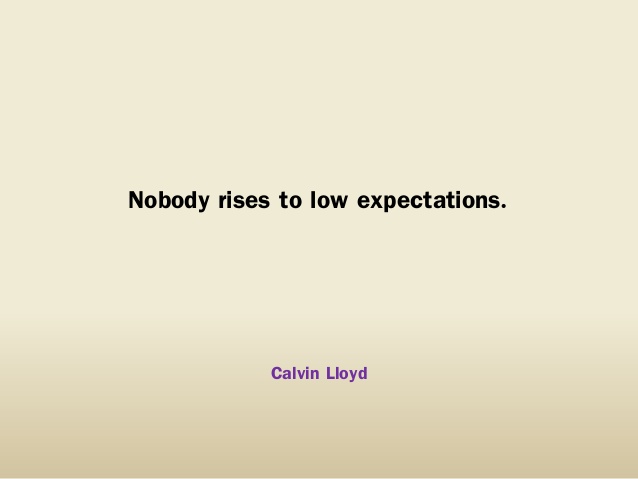
Set High Expectations Because Nobody Rises to Low Expectations – Barry Canada

The Expectation Effect – (in the classroom) – SlideShare

Blog - Emotional Intelligence - amazon

Photo Credit: Amazon

5 Friday Faves – Compassionate Baristas, a Foster Child, Joey Feek’s Legacy, a Daredevil Guitar Arrangement, and a John Piper Sermon Jam

Blog - Friday Faves

How is it that Friday arrives every week with lightening speed?! Okay, maybe not for everyone…but be glad about that. I am left wondering again: where did the week go? Fortunately it did not pass by without leaving me with some treasures I’ll share with you.

1) Compassionate Baristas – You may have seen the story this week of Dutch Bros. Coffee baristas Pierce Dunn and Evan Freeman. They discovered that a woman in the car line waiting for her order was crying [her husband had died the night before]. They quickly reached out to her, and in a moment of grace-filled spontaneity prayed for her at the window. Her coffee was on the house. Sweet story and video.Blog - Friday Faves - Dutch Brothers pray for customer - March 2016Photo Credit: Daily Mail

2) A Foster Child – The circumstances that force children into foster care can be devastating and tragic. Nathaniel Matanick produced a magnificent short film,  entitled “ReMoved“, about the journey of a foster child (through her eyes). I watched it on Facebook this week and was so moved by the story – the heart-break and the hope. You can watch it here. Also, I just discovered Matanick has finished “ReMoved – Part 2“.Blog - Foster Child - childadvocatesPhoto Credit: Child Advocates

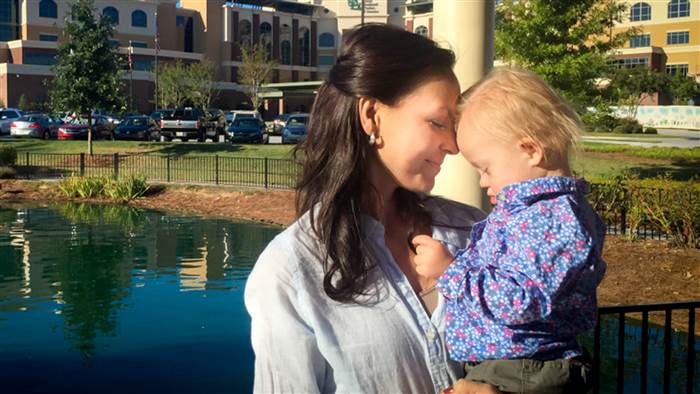
3) Joey Feek’s Legacy – When country singer Joey Feek died, she left behind her husband, Rory, and a darling 2 y/o daughter named Indy (Indiana). Indy has Down’s Syndrome…although the fact seemed irrelevant to their story. Last Fall, Joey realized she probably wouldn’t not survive the cancer and she quite deliberately began a self-less, loving process for Indy’s sake. This little girl who wanted to be with her all the time. This little girl who Joey loved more than anything. Joey began the painful process of intentionally becoming less in Indy’s life and opened up opportunity for Indy’s daddy, Rory, to become more to her. He writes magnificently about it in his blog. What a picture of great love! What a loss! What a legacy!Blog - Joey Feek - legacy - todayPhoto Credit: Today

4)  A Daredevil Guitar Arrangement – Nathan Mills of Beyond the Guitar just posted a new guitar arrangement of the theme from the Netflix TV show Daredevil. It is beautiful.

5) John Piper Sermon Jam – 3 minutes of powerful preaching about the perfect love of God for us and the deep cost of that love. Don’t miss it.

Hope you have a weekend ahead full of friends, family, and fun (which could mean just a few hours all by yourself). For those of you who celebrate Eastern/Orthodox Easter this weekend, Happy Easter!

“He is risen! He is risen indeed!”

P.S. I know a few men who have a man cave and are still wise (and possibly even great), but I loved this graphic all the same.Blog - Man CavePhoto Credit: Facebook

Would love to hear about your favorite finds of this week. In Comments. Thanks!

60 Years Married – Mom & Dad – a Tribute & Photo Montage

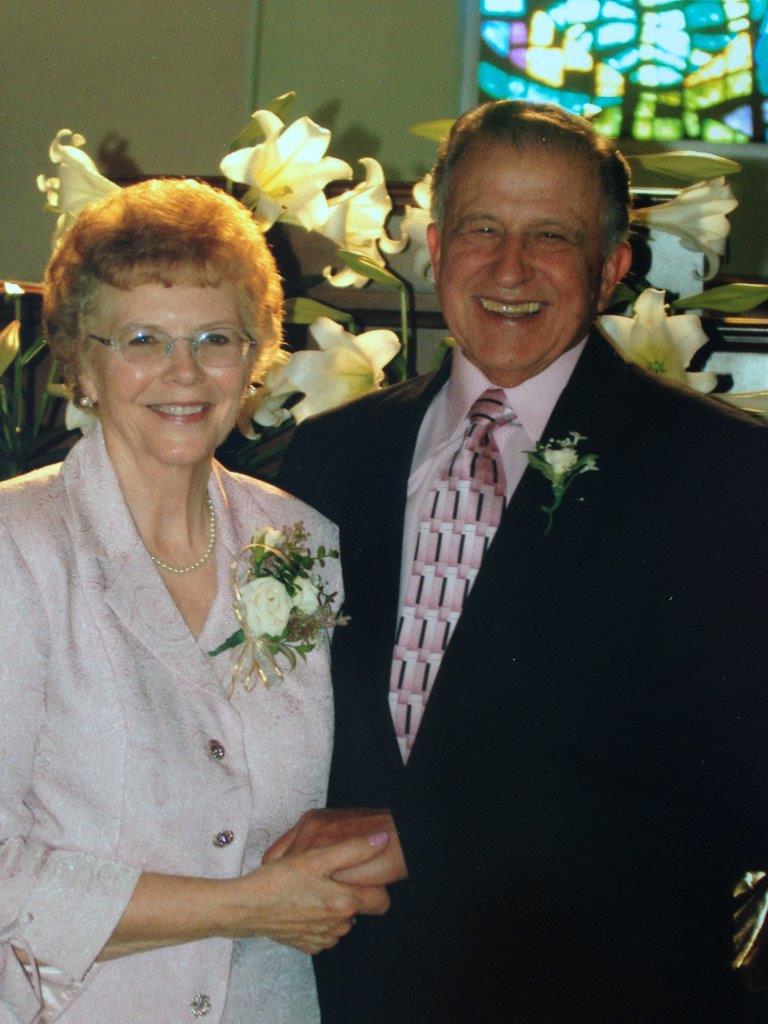
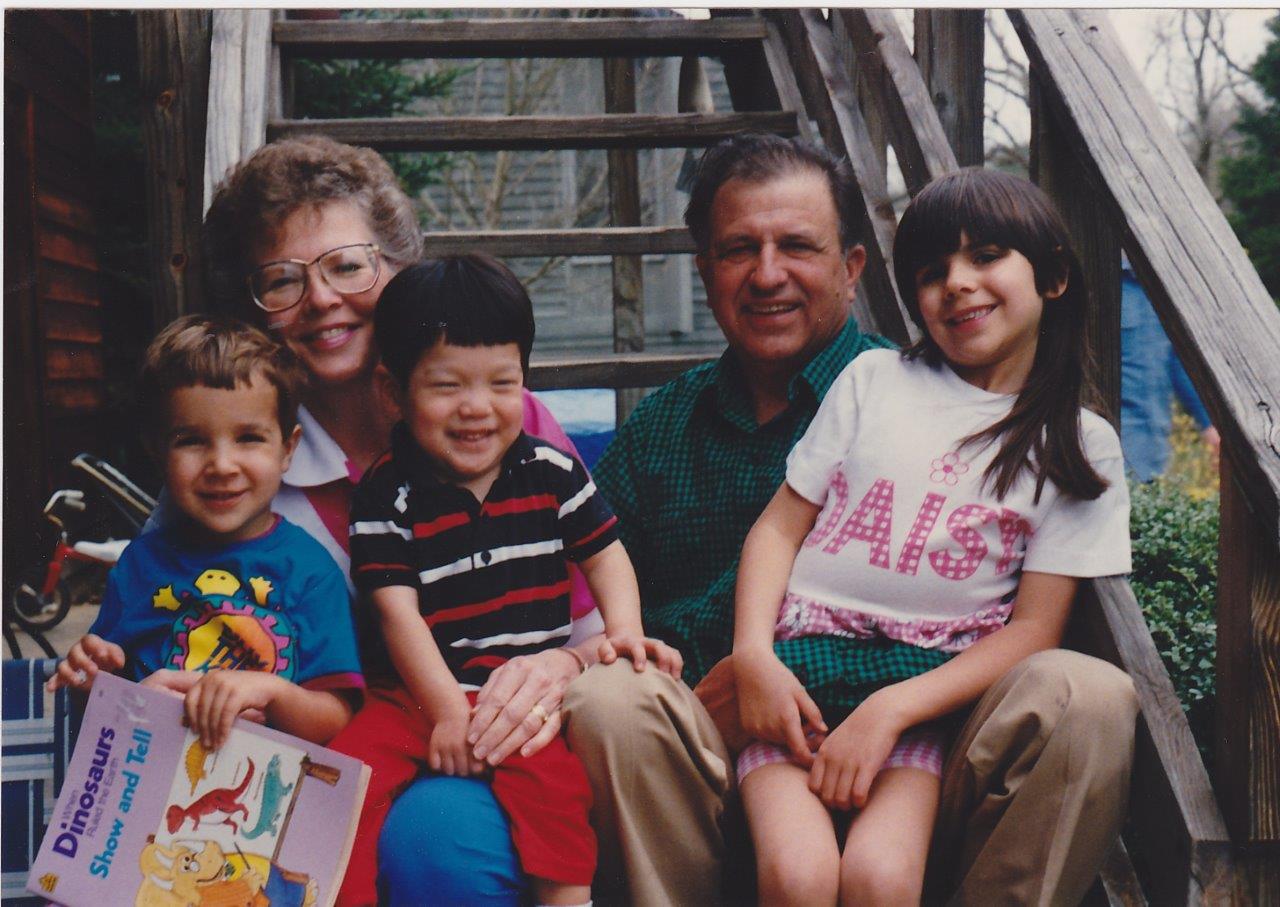
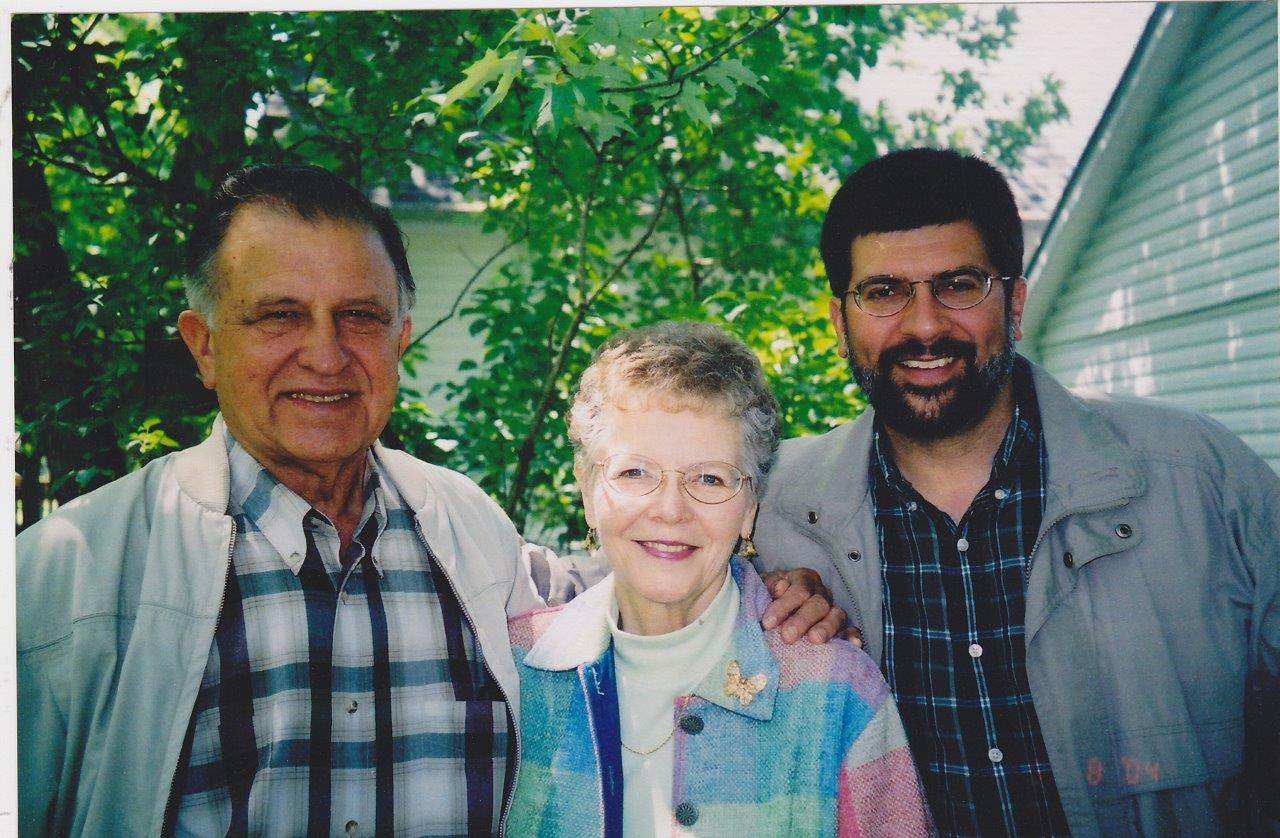
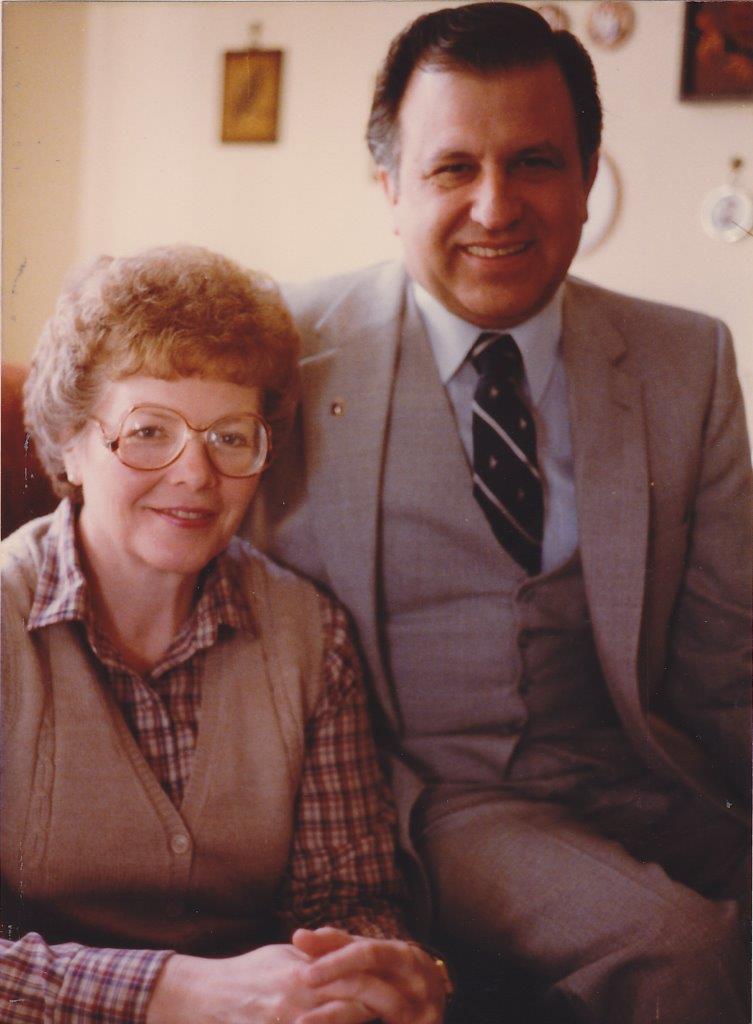
MomMom PopPop - Wedding Day - Anniversary (2)MomMom PopPop - 50th wedding anniversary (2)John & Julia – on their wedding day and their 50th anniversary

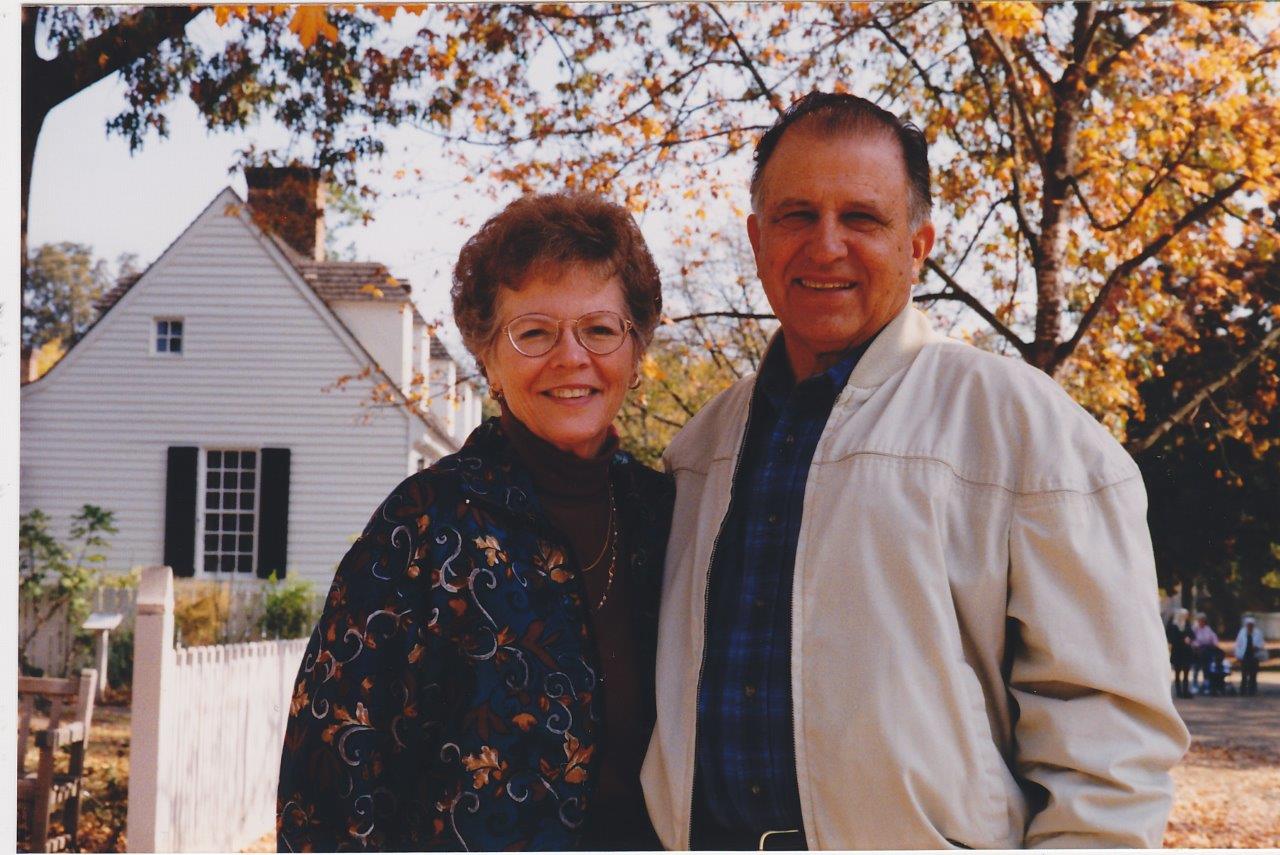
This week we celebrate Dave’s parents’ 60th wedding anniversary. 60 years! How thankful I am to have been part of their lives for a bit over 30 years thus far. Living in the embrace of their love for God, us and each other has been a journey of constancy and intentionality.

Julia and John have been another set of parents to me. My own mom raised us four children pretty much alone, finally leaving my biological father, without looking back. She later came close to God again and wondered if she’d stayed what might have happened. After a couple of visits, right after their divorce, that dad never came again…and we grew up knowing he didn’t love us.

[I’m very, very thankful for a step-dad, who I write about, who loved us as his own. So I do know the love of both a devoted mom and dad.]

With my own mom with the Lord, and my dad dealing with Alzheimer’s, I am grateful for all the years with my mom and the years still with Dad, wherever his mind will wander.

That being said, what a joy to also have Julia and John, my “in-loves” still together, hanging in there with each other and with us. Growing older is not an easy thing. All the vows we make in our weddings become all the more vital in the days when mind and body wear down. To see the kindnesses between these two, and their enduring love, patience, and regard for each other is such a witness to what marriage is meant to be…

They teach us and our children so much through how they have both celebrated and weathered life together – the weddings, the divorces of loved ones, the births, the deaths, the distances between us, and the seasons of all our lives. All the stamps in their passports to be with us overseas…so grateful for that. They have spent long days apart because of work in the early years, and long days together in a different work in the latter years. The interruptions of illnesses and accidents. The great grace they’ve known and lavished on us. Their faith in a God who never left them; never forsook them…ever.

Pictures will tell you more than my words…let them speak for me:

John - PopPop - Dave & MarkMomMom home with us in tennesseeMomMom, MamaLu, Dave, & Christie - 4 Generations4 GenerationsMomMom, PopPop, ChristieMomMom, PopPop, Aunt nancy & Uncle BobJulia & John w/ her sister, Nancy & husband Bob – four close  friends

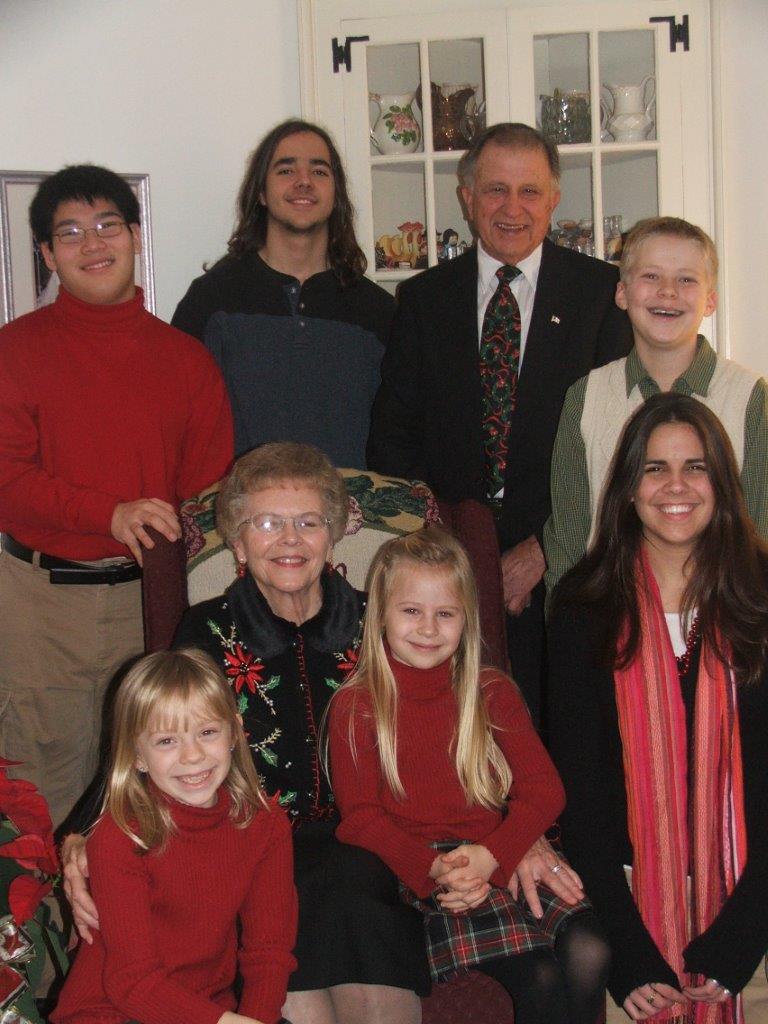
MomMom & PopPop - WilliamsburgMomMom, PopPop, Christie, Nathan, DanielMomMom & PopPop youngerMomMom, PopPop, DaveMomMom & PopPop earlierMomMom & PopPop 2014 (2)PopPop & ChristieMomMom, Nathan, Daniel 2015PopPop Stacie 2011 (2)MomMom & PopPop with grandkids2015 June - Mills Family PictureThe Mills Family, 2015

60 years…of faithfulness, and honoring, and loving through sweet times and hard times. So glad to be part of this journey with them…to be family with them.MomMom PopPop Nancy BobMomMom & PopPop - 60th wedding annviersary - with Dave and Mark, Stacie, and meHappy 60th Anniversary, Dear Ones. You show us what love is and how it’s done across a lifetime.MomMom & PopPop - 60th wedding anniversary

Monday Morning Moment – Contempt is Cancer in the Workplace…and Any Other Place

Blog - Contempt - ArmstrongeconomicsPhoto Credit: Armstrong Economics

In a culture that clamors for political correction, how is it that contempt can be so freely expressed? Even rewarded, at times? This is an enigma for me. Contempt at home or in the workplace divides people, often against one another. Like cancer, it can spread if left unchecked…changing people and impacting product.

Having a certain measure of confidence is positive for all of us on a team. It’s freeing to be in relationships with people who have a strong sense of what they bring to the table as well as what others bring. Confidence and humility actually partner well together. When we have an honest understanding of our strengths, we also extend humility as we defer to the strengths of our colleagues.

The problem comes for all of us when confidence shifts into arrogance. Worse yet, when arrogance darkens into contempt. Arrogance is an attitude of thinking so highly of oneself that we tend to put down the thinking and efforts of others. Contempt is similar except the emotions are stronger and more mean-spirited.

Blog - Contempt 3 - slidesharePhoto Credit: SlideShare

What makes contempt so cancerous in our relationships is that it tends to spread, both internally and externally. When we allow ourselves the luxury of contempt, we grow in our justification of it. It may have started with an unappreciative boss or demanding client, but contempt, unchecked, will inject its poison indiscriminately.  We become comfortable with our disdainful opinions of others…at work, in our families, and pretty much toward anyone who crosses or annoys us.Blog - Contempt 2 - liveforchristresourcesPhoto Credit: LiveforChristResources

Chris Johnson, CEO, Simplifilm Inc. of Portland, Oregon, wrote a piece confronting contempt as a cancer in the workplace. He offers 5 steps to preventing contempt from shattering our work and our work relationships:

1. Don’t Vindicate Yourself. A customer had an experience they didn’t like. You don’t need to prove if you are right or wrong. That’s not relevant. What’s important is making a judgement: is this worth fixing?

2. Look At The Opportunity. Some people are surly, disrespectful, ungrateful and wrong. Some of them have big jobs. Some people like that have power. Learning to work with these people — without getting drawn in — is a skill that you should have.

3. Always Err on the side of empathy. What are the consequences of being nicer to someone than they deserved? What are the consequences of being meaner? Will too nice of a response to a human ever ruin a career?

4. Cultivate Improvement Bias. When something goes wrong at Simplifilm, there are two components: what do we do with our transaction, and what do we do with our system. For the transaction, we try and fix it with empathy. We believe that we caused it. Because if we caused it we can improve our system.

5. Rethink your filter. Most people say “block out everyone, make customers prove themselves to you.” Being available can be hard. Many filters are vanity in disguise. If you knew the people that answered their personal emails… – Chris Johnson

Contempt like cancer can be smoldering without our awareness. I am generally a positive and empathetic person, but, if I’m honest with myself, there are those in the workplace who don’t experience much compassion from me. It’s an uncomfortable confession to have to make.

As we practice mindfulness in our relationships at work, we hopefully will remember to respond instead of react. We can rein in contempt by refusing to think ill of others, by staying engaged, and by acknowledging none of us get it right every time (exercising humility).

On the old TV sitcom, Everybody Loves Raymond, Frank, Ray’s father would often make observations that sizzled with sarcasm. One comment remains a part of our family’s lexicon: “People are idiots!” It’s so easy for any of us to look at actions or decisions made by others and shake our heads…until we remember that we all have it in us to do the same. Contempt can be diagnosed…and treated…

…with empathy, compassion, and humility. Not necessarily the coolest or trendiest work (or relationship) processes in our culture…but… What a difference they can make in the tone of our meetings, the depth of our relationships, and the measure of our own character.

So let’s get after it!

How Contempt Breeds Business Cancer (& 5 Ways to Kill It) by Chris Johnson

Contempt or Compassion by Brian Fletcher

Detecting Deception by David Berglund – SlideShare [Slide 76ff]

Confidence vs. Arrogance – and Knowing the Difference by Michele Cushatt

10 Ways to Tell if You’re Confident or Arrogant by Carmine Gallo

How Contempt Destroys Relationships by Susan Heitler

Addicted to Distraction and the Possibility of Restoring a Longer Attention Span

Blog - Addicted to distraction - diygeniusPhoto Credit: DIY Genius

Recently I was at a training event in a remote area where I had no cell phone service and limited internet. It meant I went through stressful training and at the same time experienced a forced exile from screen time. I don’t even have to tell you which was more challenging.

Growing up in my generation was very different than now – playing outside until dark, talking for hours on the phone with friends, falling asleep to the comforting drone of Mom and Dad talking and laughing in their bedroom down the hall. If you’ve ever seen the 1999 film October Sky, it makes me think of Dave’s growing up also – playing in the woods, biking everywhere, building rockets, hunting and fishing.Blog - Playing Outside - jeffs60sPhoto Credit: Jeffs60s

We are enjoying different advantages now for sure…I wonder how our grandchildren will one day describe their childhood. Having computers and the internet have been amazing assets to our lives. The dilemma is when our screen life becomes more engaging that our real life. When “Facetime” replaces face-to-face time.

Don’t get me wrong, I love the opportunity to see people via phone. For instance, friends of ours who got married recently had a small wedding, BUT they had a friend live-stream the wedding and all the rest of us got to “be there” via Periscope. Saw the kiss and everything. 2016 March 5 - Megan & Brian Wedding Kiss

There is something to be said about all the electronic capabilities we have today. For sure.BLog - Addicted to Distraction - littleredfrenchPhoto Credit: LittleRedFrench

The problem is when objects take command of our lives. These screens (phones, TV, computers) eat up so much of our day. Also, what about when we start exchanging real time relationships with the barest minimum associations via Facebook, Instagram, or Twitter? When a friend decided to go off Facebook, I was bummed… At that time, she lived 6 minutes from me. Not like my friends in Morocco or Egypt where I depend most on Facebook to keep up with them. She lives right here in town. We can have real coffee’s and real talks on the phone. Sigh… I had pretty much relegated keeping up with her to social media. Now we’re back affiliated only in real life where I might need to call her. Imagine.

I’ve written about this before (here) and want to manage my life better in this area. Multi-tasking was always something I thought was a strength, but now, getting older, it hasn’t helped me develop much of an attention span (see Charlie Munger’s thoughts on this here). It makes sense that thinking long and hard on something would have a powerful impact on our success or decision-making. Focus. Concentration. These are the things that have suffered in my life with all the distractions.

Kyle Pearce wrote a small piece on being distracted and introduced me to the work of Nicholas Carr (who wrote The Shallows: What the Internet is Doing to Our Brains and The Glass Cage: How Our Computers Are Changing Us). The 4-minute YouTube video below describes some of what he writes about:

Besides managing the distractedness in thinking, memory, and processing information, I want to nurture a habit of deep conversation. Sherry Turkle (author of Alone Together: Why We Expect More from Technology and Less from Each Other and Reclaiming Conversation: The Power of Talk in a Digital Age) writes about this and gives me hope.

Blog - Distracted - conversations - quotesgramPhoto Credit: QuotesGram

Turkle admits she loves computers because they have helped her make tremendous strides in writing, but they are not people. She writes as if she’s reading my heart. This disconnected connection we experience with one another is so illusory.

“Networked, we are together, but so lessened are our expectations of each other that we can feel utterly alone. And there is the risk that we come to see others as objects to be accessed—and only for the parts we find useful, comforting, or amusing.” – Sherry Turkle
Here’s my hope and vision – to re-learn how to really be connected with people, including myself. To practice solitude. To quit living the excuse of being distractible. To learn how to think and work deeply, and to remember how to have deep, thoughtful conversations again.
I’m not prepared to stop using my phone for information, nor am I able to quit using the internet as a resource for work and life, but it’s entirely possible to restrict connection time.  Also, it’s exciting to think of how I might use that time I waste on the internet to actually be with friends and loved ones…to read more books…to rediscover what is right in front of me in real life…to know what it’s like to have (and enjoy) a quiet mind.

“The good news is that the process of withdrawal is simple and the healing is spontaneous; because it is only the continuous high volume consumption of mass media that is keeping us sick. So, at root, the detox programme is merely a matter of Just. Say. No.” – Bruce G. Charlton

What might the next generation be like if our grandchildren are nurtured in this way? How can we help them have such mental muscle and true sociability that they could avoid being addicted to distraction?

It’s something to think about…off-line. Gone to find a real face and give that face my full attention.

Distracted? This is How the Internet is Changing Your Brain by Kyle Pearce

Multitasking – Giving the World an Advantage It Shouldn’t Have – Farnam Street Blog

Are We Addicted to Distraction? by Sophie at LittleRedFrench

The Distraction Addiction: Getting the Information You Need and the Communication You Want, Without Enraging Your Family, Annoying Your Colleagues, and Destroying Your Soul by Alex Soojung-Kim Pang

The Shallows: What the Internet is Doing to Our Brains by Nicholas Carr

The Glass Cage: How Our Computers Are Changing Us by Nicholas Carr

Alone Together: Why We Expect More from Technology and Less from Each Other by Sherry Turkle

Reclaiming Conversation: The Power of Talk in a Digital Age by Sherry Turkle

Deep Work: Rules for Focused Success in a Distracted World by Cal Newport

Amusing Ourselves to Death: Public Discourse in the Age of Show Business by Neil Postman – originally written in 1985, brilliantly prophetic of the future (updated in 2015)

Monday Morning Moment – Kindness Over Cleverness – Work Culture Where Employee Satisfaction Impacts Marketing

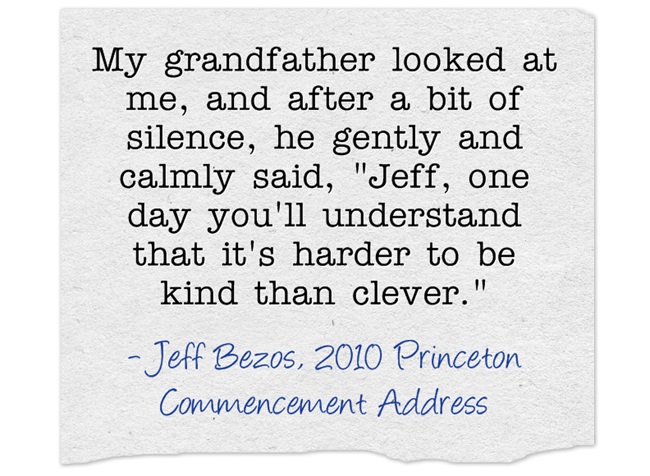
Blog - Kind over Clever - Jeff Bezos - scoopnestPhoto Credit: Scoopnest

Quite remarkably, I recently came across several articles on kindness, of all things, in the Harvard Business Review. It was thrilling for me to see it commended as a business process in such a prestigious journal. I have loved the idea of kindness since early childhood. It seemed such a reasonable choice in dealing with others, much more pleasing than cleverness. [Now, if I were more clever, then it might have proved a harder choice.]

Although we were not in church as young children, my mom taught us the Disney form of kindness: “If you can’t say something nice, don’t say nothing at all.” – from the film Bambi.

When we, later in my childhood, became involved in a church community, I discovered the great teachings of God about kindness, which further stoked my resolve. Whenever possible, acting in kindness was the right choice…in personal relationships and in the workplace.

These days, in tight-knit tribal leadership and competitive companies, kindness is too often sacrificed for the bottom-line. You can imagine how refreshing it is for me to see that business thinkers and strategists are taking note of the profitability of kindness as a process – both internally (organizational human relations) and externally (marketing). A work culture of strategic, intentional kindness – just think of that!

If you go to Harvard Business Review’s website and search the word kindness, all sorts of articles pop up. I was most intrigued by Bill Taylor’s pieces on “kindness over cleverness”. He is the founder of Fast Company magazine and author of Practically Radical. He tells stories of companies who have been successful in practicing kindness strategically. He is inspired by Jeff Bezos’ experience growing up with a wise grandfather who taught him to choose kindness over cleverness. That story is told by Bezos himself in the TED Talk (linked below).Blog - Kind Over Clever - Jeff Bezzos - nepc.colorado.eduPhoto Credit: National Education Policy Center

Ted Talk Video – Jeff Bezos, Founder of Amazon – Princeton Commencement Address on What Matters More Than Talents – Gifts vs. Choices

If we wanted to take individual (and corporate) kindness up several notches in our workplace and workforce, what would those processes be? What would we have to give up  in order to raise employee satisfaction to such a level that it extends to product excellence and customer service? For leadership, it might be giving up some control and extending a kinder and wiser empowerment, For employees, it might be giving up a timid fatalism and risking a kinder boldness (less of “the great Oz” scenario). I would love to hear what business processes you have in place that celebrate kindness over cleverness. What kind of work culture does your leadership model and cultivate? What can you do yourself, whatever your leadership culture is? See Matt Monge’s article on leading without a title.  [Please share in Comments section below.]

We have a choice, after all.

I hope to write more about this because it is intriguing to me how our own delight in our work and product can pour over into our profitability and success.

For today, I close with some of my favorite quotes from these Harvard Business Review articles:Blog - What Can I Do Right Now - Heres-the-question-Id-q57pgs - larry ferlazzoPhoto Credit: Larry Ferlazzo

“Kindness has a strategic role to play, especially when it comes to winning over customers in an intensely competitive and slowly recovering economy.” – Jeffrey F. Rayport

“Success today is about so much more than just price, quality, reliability – pure economic value. It is about passion, emotion, identity – sharing your values.” – Bill Taylor

Success is not just about marketing differently from other companies…It is also, and perhaps more important, about caring more than other companies — about customers, about colleagues, about how the organization conducts itself in a world with endless opportunities to cut corners and compromise on values…You can’t be special, distinctive, and compelling in the marketplace unless you create something special, distinctive, and compelling in the workplace. How does your brand shape your culture? How does your culture bring your brand to life? – Bill Taylor

“What is it about business that makes it so hard to be kind?” I asked at the time. And what kind of businesspeople have we become when small acts of kindness feel so rare? …By all means, encourage your people to embrace technology, get great at business analytics, and otherwise ramp up the efficiency of everything they do. But just make sure all their efficiency doesn’t come at the expense of their humanity. Small gestures can send big signals about who we are, what we care about, and why people should want to affiliate with us. It’s harder (and more important) to be kind than clever.” – Bill Taylor

“Compassion is a great equalizer. When you approach others with genuine concern for their well-being, your standing in the organizational hierarchy is less of a barrier to a productive conversation…Kindness, in other words, is rarely inappropriate.“ – Allison Rimm

Is Kindness a Strategy? – Jeffrey F. Rayport

Brand Is Culture, Culture is Brand – William C. Taylor

It’s More Important to Be Kind Than Clever – William C. Taylor

Why Is It So Hard to Be Kind? – William C. Taylor

10 Ways You Can Show Leadership Without a Title – Matt Monge – The Mojo Company

To Guide Difficult Conversations, Try Using Compassion – Allison Rimm

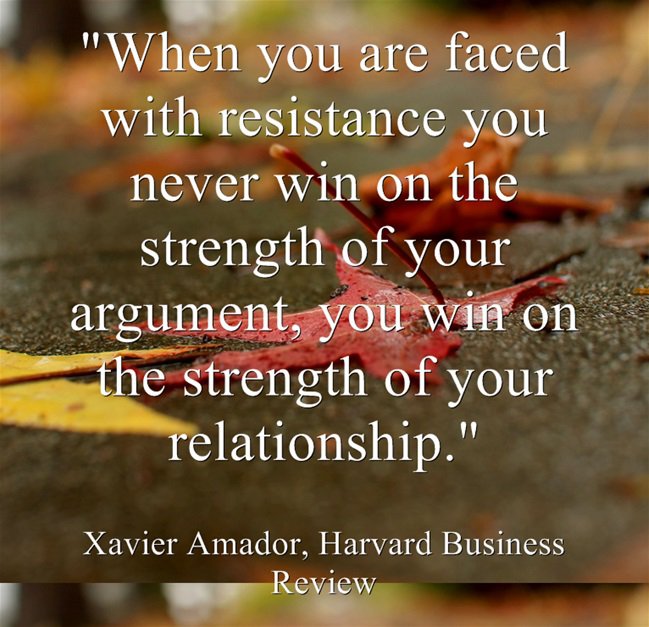
Blog - Relationships vs. Resistance - Leadership - Larry FerlazzoPhoto Credit: Larry Ferlazzo

Love Notes – A Family Tradition – Started by Our Mom

IMAG2718 (2)

From the Archives

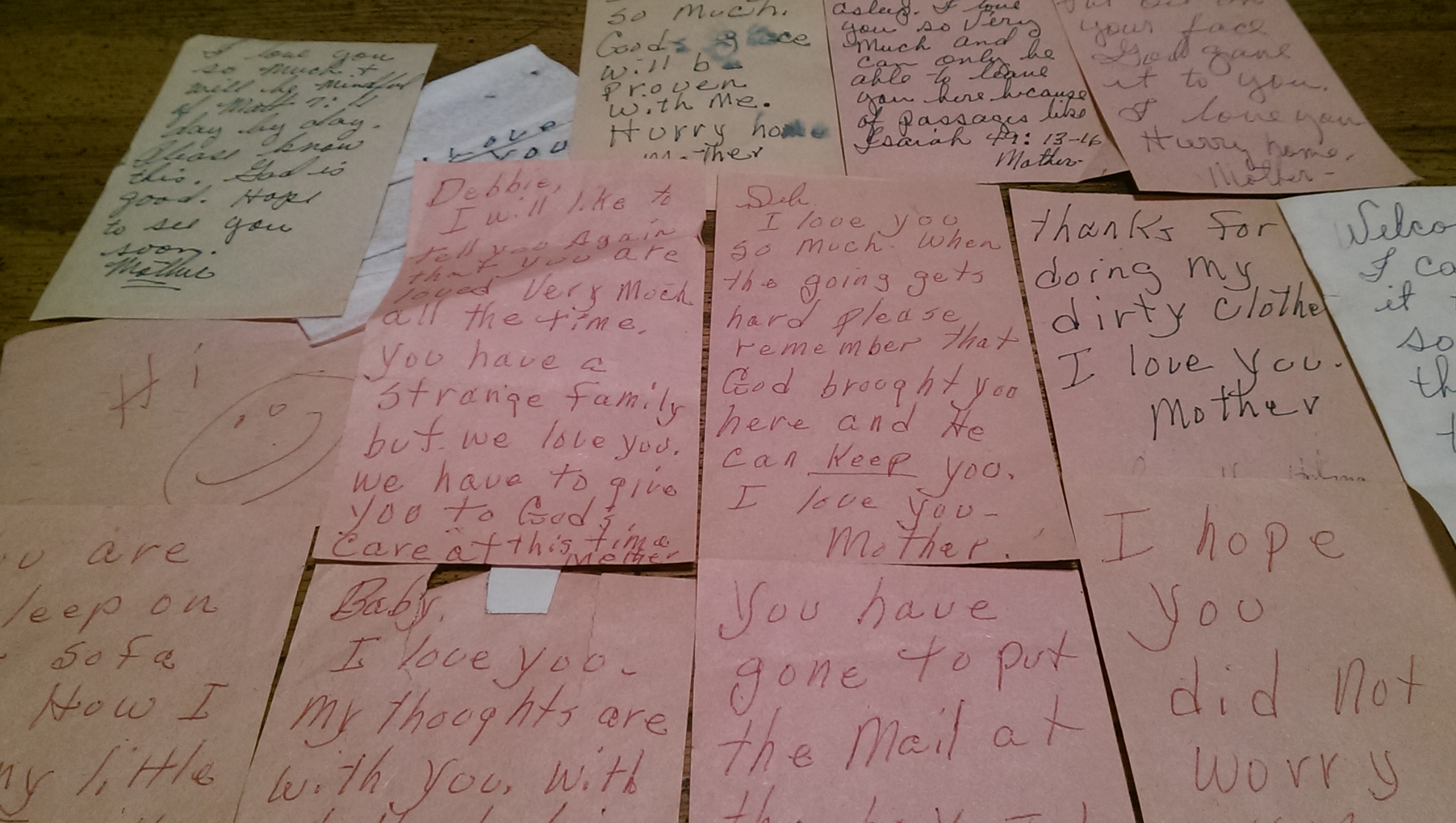
[On the eve of what would have been my Mom’s 89th birthday, I want to look back a bit to one of the sweetest customs she had – leaving love notes hidden to encourage us in her absence. She still encourages us…even in her absence. Love you, Mom.]Blog - Mom

Therefore encourage one another and build up one another, just as you also are doing. – 1 Thessalonians 5:11

Encourage one another day after day, as long as it is still called “Today,” so that none of you will be hardened by the deceitfulness of sin. – Hebrews 3:13

Our family has never lived close to the grandparents. This was never easy…for any of us. Before I married, I did live close to home, and my mom was my best friend. She died several years ago, and I often say to people who knew her that “when I grow up, I want to be just like her.” Still working on that.

Mom and I shared a weakness for words…they are probably excessively important to us, delivering both positive and (sometimes) negative weight. She was an amazing encourager. She rarely missed an opportunity to lift another’s spirit or to speak loving truth to someone desperate for God’s touch.

When I moved away to take a teaching job, she and my dad helped me move. New Haven, Connecticut was a 2-day drive from Georgia. It’s the farthest I had ever wandered from home. She stayed a week to help me settle in.  While there, she was such great company. We explored the city together and laughed over a new culture and cried at the missing that was ahead for us.

She filled my freezer with her baking, and, while I was at work, she wrote notes. Then she hid them everywhere. After she flew home, I began finding them. In my coffee mug. Under my pillow. In the pocket of my coat. Among my reference books. Behind my music on the piano. She was with me in the love notes she left, and it made the distance between us…less.

IMAG2720 (2)

My mom and I also had a weakness for bits of paper. I kept every one of her notes. These from that move over 30 years ago are fading…red ink on pink paper. There are a lifetime of notes between my mom and me. The tradition she started on that first move has become a life-long tradition for our family. Our visits back and forth, across the US and then the globe, have been papered by these little notes.

Our children, from the time they could write, entered into this tradition much to the joy of their grandparents. Before we would leave again, these three young ones would write of their affection for their grandparents and hide them all over their houses. I delighted in their cooperation in this conspiracy of love.

Mom always wrote notes…not just to us but to so many. She and her Sunday School Class ladies would send cards every week to the sick ones or the sad ones. She had a special burden for the elderly, for widows (including functional widows, deserted by husbands) and for fatherless children (again including those “orphaned” by still-living fathers). She inspired me by her humble ambition .

Pure and undefiled religion before our God and Father is this: to look after orphans and widows in their distress and to keep oneself unstained by the world. – James 1:27

I am so thankful for my mom’s bits of paper…for her love…and for her perseverance in encouraging and serving others. Her generation is aging, and it is for us to pick up these traditions and pass them on somehow to the next generations…Maybe there won’t be bits of paper or love notes like in the past. I do hope we still take the time to write. Definitely, the call to serve and to encourage is as current as today. My life continues to be rich with those, young and old, who reach out to those around them with words of affirmation and kindness. Written or not, they are love notes to my heart.

Thanks, Mom. Thank God for you.

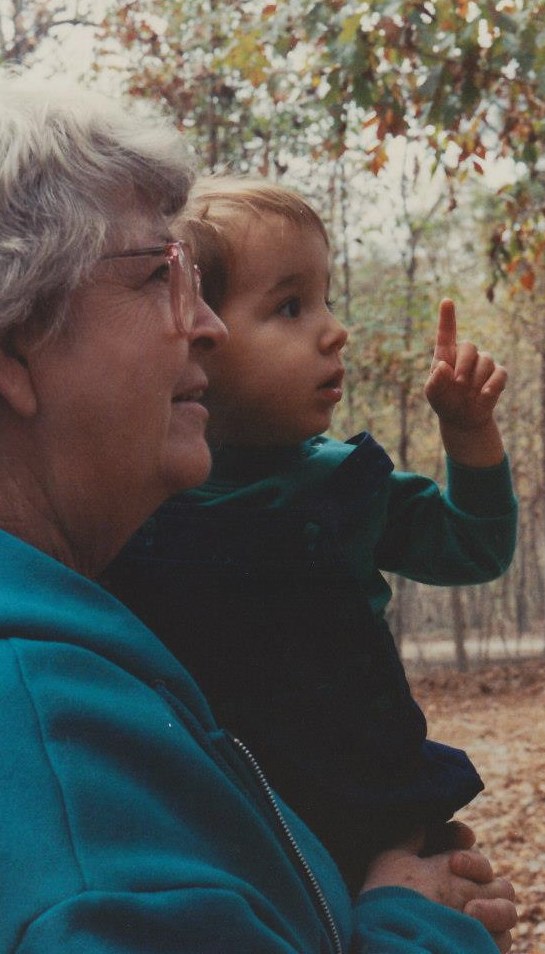
Mom pictures for website 012

The 59 “One Anothers” of the New Testament

Blog - Mom and nathan

Monday Morning Moment – Notes on Chris Bailey’s Life of Productivity

Blog - Productivity - Chris bailey - by Lewis HowesPhoto Credit: Lewis Howes, The School of Greatness

Where does the time go? How do I get so tired before the day is done? I just can’t stay focused…too distracted, I guess. You know what I’m talking about. Then there are the reactions of those friends and family. The ones (who treat us with kindness) tell us sympathetically “You are just so busy”. Then others, more in our faces, say, “The things you want to do, you do. You just don’t want time with me enough.” I get the logic of those statements, but I’ve been perplexed as to how to improve my life choices, such that I get more accomplished…more of the important things.

Until recently…when I experienced the convergence of making New Year’s resolutions, having a big birthday, and hearing Chris Bailey talk productivity.

Blog - Chris Bailey - ProductivityPhoto Credit: Unmistakable Creative

Chris Bailey is the age of my children. Although he had job offers, he took the year after graduating university to go deep into a study of productivity.  During that year, he wrote about his experiments in his blog – A Life of Productivity. Then, he designed a roadmap of 25 tactics to greater productivity in his book The Productivity Project: Accomplishing More by Managing Your Time, Attention, and Energy .

You may be tempted to yawn at another book on productivity, but this is clearly one not like the others. I listened to a couple of podcasts on Unmistakable Creative where host Srini Rao talks with Chris Bailey. They pour over what Chris discovered about productivity during that year of experiments. [Disclaimer: I haven’t read the book yet but plan to. My takeaways are from these podcasts and the other sources linked below. Can’t wait to read his roadmap on productivity.]

As Chris talks with Srini (and we get to listen in – love these podcast opportunities), he talks about what he’s learned from others regarding productivity. His tipping point was reading David Allen’s book Getting Things Done. Srini also refers to Cal Newport’s writing on deep work (you can listen to him on Unmistakable Creative here and here). They also mentioned Charles Duhigg’s book The Power of Habit: Why We Do What We Do in Life and Business. Chris Bailey’s year of productivity experiments included studying what was already in the literature – a big help to us less-read hopefuls.

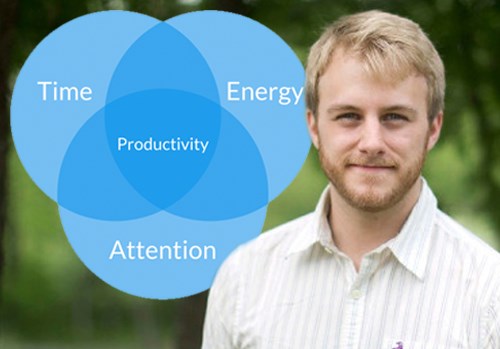
Chris defines productivity not as getting more things done but getting more accomplished. The difference is huge. It’s not just the “to-do list” but the view toward the “done list”. “Productivity is time, energy, and attention, and where the three meet in the middle is where you are in being productive. It is achieving what you intend to accomplish. It’s not about doing more things faster, but doing the right things deliberately and with intention.”

Here are the takeaways from my first-look into Chris Bailey’s “life of productivity”.

  • Take a step back from your life and ask the questions: What do I care about? What motivates me? When was I most inspired, driven, or felt the most meaning or passion for what I was doing?
  • The three commodities we all bring to the table are time, energy, and attention. It’s not just about time management, but also increasing our capacity for work (energy) and focus (attention).
  • Start every day with intentionality. Make your to-do lists to manage the minutia of life, but then do something more. Take a step back. Execute what he calls the Rule of 3. At the start of the day, mentally fast-forward to the end of the day and ask: “When the day is done, what three main things do I want to accomplish?” From this you form your intentions on what you want to accomplish.
  • Being busy, even in ticking off the things on your to-do list, doesn’t mean you’re being productive. This gives an illusion to productivity, but only when you step back do you discover whether you have accomplished what you thought you did in the busy-ness.
  • Start small in working toward productivity. Real change takes time and intentionality. “Write down everything in your job and personal life that you’re responsible for. Then ask, if I can only do one of these things every day, which adds value/meaning to my life (I would add or to that of another who matters deeply to me)? Ask again of the remaining tasks. And a third time.”
  • We all have limitations and constraints in our life. Bear those in mind as you plan and execute and evaluate. Being hard on ourselves won’t get us to greater productivity. Small, incremental steps toward change should be celebrated.
  • Work on one thing at a time. Single-tasking. Working mindfully.  “Multi-tasking holds people back from accomplishing more over the course of the day. It stimulates your mind; it’s like being busy. However, it actually makes you less productive, increases your errors, decreases your memory,  and takes longer to do everything” [in reality]. “You can only focus on one thing at one time. You then dedicate 100% of your time, energy, and attention to one thing – it will yield the highest productivity.” Counter-intuitive, I know, but I’m beginning to believe the wisdom of this.
  • Procrastination involves 7 triggers that cause your mind to resist certain tasks: when they are boring, frustrating, difficult, ambiguous, unstructured, lacking intrinsic reward or personal meaning. We put off doing those types of tasks (which often are ones we actually need to attack to be truly productive) and instead while away our time on social media or marathoning Netflix. Chris Bailey gives a way out: “Once you step back from the task, noticing you’re procrastinating, trick the triggers – reward yourself, set time limits, structure it, etc.”
  • Mindfulness is continually bringing your attention back to the work that’s in front of you. Chris Bailey uses meditation to build “attentional muscle”. Taking mental breaks (however you do) is important to make attentional space which we need for creativity. Our mind goes back and forth from “the essential executive mode (constantly thinking of something, like when on a smartphone), and the mind-wandering mode (like when you’re in the shower). You often have those brilliant ideas while in the shower.” Make space for building attention and creativity. Take breaks and disconnect a bit from the internet or Netflix (you knew that was coming, right?).

I am so encouraged by the possibilities of building capacity in my time, energy, and attention. Chris gets us started with his 100 Time, Energy, and Attention Hacks to Be More Productive. Remember, he urges us to start small. Change one thing, maybe, in each area. It’s a process but one we can master toward gaining a life of greater meaning and capacity, accomplishing what we have hoped for…not just waiting for the future self to do it. We can be more that person beginning today.

Blog - Chris Bailey - Productivity Experiment

Photo Credit: Amazon.com

Chris Bailey – A Life of Productivity – Website

The Productivity Project: Accomplishing More by Managing Your Time, Attention, and Energy by Chris Bailey

Unmistakably Creative – Podcast with Chris Bailey – Bridging the Gaps in Our Productivity

The Top 10 Lessons I Learned From a Year of Productivity by Chris Bailey

100 Time, Energy, and Attention Hacks to Be More Productive by Chris Bailey

YouTube Video – The Path to Meaningful Work: Chris Bailey at TEDxGatineau

Five Habits that Help Chris Bailey Stay Productive

From 90-hour Work Week to Rising Before Dawn, Author Experiments with Productivity – CTV News

Chris Bailey on Twitter

Friendly Fire in the Family of God – How to Go Forward When You Are Hit by Surprise

Blog - Friendly Fire - thecripplegate

Photo Credit: The CrippleGate

We expect attacks from those we know don’t care for us or, in fact, want us gone. They want our jobs or view us as threats, or they can’t stomach our beliefs or ideologies. These confrontations are a part of life and work and we take them in stride; hurtful as they may be, they are expected.

It’s the surprise attacks that catch us off-guard, especially when we come under-fire by those who should have our backs. “Friendly fire” is a phrase coined from military situations when something goes very wrong in battle, and a fellow soldier is wounded or killed by a comrade in arms. Too often, we have experienced the sting of friendly fire.

We may endure long periods of hardship at the hands of difficult bosses or through relentless attacks by acquaintances or colleagues who think very differently than we do. What happens, though, when those who believe as we do (in this case, fellow Christ-followers or true believers) fire on us…sometimes over and over again?  Here is where the breath is knocked out of us and we straighten up again, bewildered, disoriented, and hurt deeply.

This isn’t supposed to happen. As Christians, we know to love one another, even our enemies, to forgive without exception, and to bear with one another and be deferent toward each other. This is not the stuff of doormats or deer “in the headlights”. This is living life in community (whether, work, family, or church) as Jesus calls us to live. I think that’s why we’re caught off-balance when someone who identifies with Christ fires away at us…and especially if there’s no repentance of that “friendly fire”.

How are we to respond in those situations? In fact, how are we to live with our eyes wide open, knowing friendly fire happens, and understanding that we might be the perpetrator the same as anyone else.

Michael Milton wrote an excellent piece on this entitled Hit By Friendly Fire: What To Do When Christians Hurt You. If you are right now dressing the wounds of such an attack, his counsel may be hard to bear. The truth is, though, that the wounds you have right now will never really heal until you do what is necessary for a full recovery. In fact, as we follow Jesus’ example of enduring such attacks, then we can recover much quicker and refuse to retaliate ourselves. We also restrain from launching such barbs ourselves in the heat of some battle.

Milton offers 3 steps in responding when someone hurts you – and this someone can be a family member, friend, colleague or one in authority over you (a Christian boss or pastor).

Step 1 – Take up Your Cross – Followers of Christ are not kept from pain; it is part of our lives as much as it was part of the life of Christ Himself. Even looking back to Old Testament accounts, we see betrayal, deceit, and hurt of every kind. The story of Joseph (Genesis 50:15-21) sold by his brothers into slavery, and then falsely accused and placed in prison for years is a great example. Joseph would finally end up in a position of influence where he was able to save his whole family from famine. He told his terrified and repentant brothers, “You meant evil against me, but God meant it for good.” (Genesis 50:15-21).

Milton points out the lesson of taking up our cross in the face of friendly fire: “Every sorrow, every act of treachery, every act of betrayal [becomes] a point of identification with Christ.” He calls us to deny ourselves and take up our cross daily (Luke 9:23). Even when we are hurt or offended or betrayed. “You and I are called to take up our cross in every way, including our relationships. It is true that you may be hurt, but you are a disciple of One who was betrayed, who was hurt, and you are no better than Jesus.” (Milton) As we wrestle with this truth, we actually move from being victims to victors in Christ.

Step 2 – Take Off Your Crown – When we are injured by another, we want that person to pay for it. We want to be in control of determining the punishment that person deserves. The truth is we are not sovereign, not in control; only God is. The crown of sovereign rule belongs to Him, and we really wouldn’t want it any other way. In the Genesis account, Joseph “escaped being a victim and became a victor by naming God, not as the author of evil, but the One who caused it to work together for good…The crucial step in coming to terms with any pain that has come against us, including getting hurt by someone close to us, is to say, “God, You are in control. What do You want me to learn?” (Milton)

Step 3 – Go to Your Gethsemane – The Apostle Paul trusted God through his many hardships and imprisonments to use that suffering, sometimes at the hands of people who knew him well, to make him more like Jesus.

“I count all things to be loss in view of the surpassing value of knowing Christ Jesus my Lord, for whom I have suffered the loss of all things, and count them but rubbish so that I may gain Christ..that I may know Him and the power of His resurrection and the fellowship of His sufferings, being conformed to His death.” – Paul (Philippians 3:8, 10)

Milton urged: “Gethsemane is the place where, like Jesus, like Paul, like Joseph, you come face-to-face with your crucifixion and with the fact that God is in control. If there is to be resurrection – a new life to emerge from the pain, the betrayal, the hurtful words – there must be a crucifixion, and if there is to be a crucifixion – by the Father for the good of many – there must be a Gethsemane moment when you say, ‘Not my will but yours.’ There must be a moment when you say, even when the shadow of pain is falling over you, ‘They meant it for evil, but God meant it for good.’”

God loves us so much. He knows very intimately the pain of the cross. He knows the weight of sovereignty. He knows the deep surrender of a Gethsemane moment. He calls us to a life gloriously beyond being victims, or “walking wounded”. Milton closes his piece with this proclamation of truth: “He will transform you who have been hurt, wounded, abandoned, sinned against, betrayed, from a victim to a victor by trusting in the One who was hurt, wounded, abandoned, sinned against, betrayed, but who pronounced forgiveness from the cross. In Him there can be no more victims – only victors.”

I pray for us all who have come under friendly fire, for months or a moment, to trust God to bring us through victoriously…for His glory and our good…for the good of all of us.

Hit By Friendly Fire: What To Do When Christians Hurt You by Michael Milton

Christian Friendly Fire: With “Friendly-Enemies” Like These Who Needs Christianity? by Kevin Benton

8 Responses to Friendly Fire by Jim Stitzinger

My Story by Jenny – Surviving Friendly Fire by Ronald Dunn

Surviving Friendly Fire – How to Respond When You’re Hurt by Someone You Trust by Ronald Dunn

Blog - Friendly Fire

Photo Credit: Amazon.com