“Come,” said Jesus. Then Peter got down out of the boat, walked on the water, and came toward Jesus. – Matthew 14:29
About midnight Paul and Silas were praying and singing hymns to God [in prison], and the other prisoners were listening to them. Suddenly a strong earthquake shook the foundations of the prison. At once all the doors flew open and everyone’s chains came loose. – Acts 16:25-26
“Truly I tell you, the one who believes in me will also do the works that I do. And he will do even greater works than these, because I am going to the Father.” – Jesus – John 14:12
Our frail human imaginations can’t often grasp the reality of a God as glorious as ours. That He would entrust us with “even greater works” than what Jesus displayed. What does that mean?
I’m no theologian, but maybe a bit means that in small hearts and faith, God can still work His mighty works in ways we can’t fully understand…as we live the day-to-day. Ours is to be attentive to His voice and to be ready to obey. How ever mundane we think our lives or common our circumstances, God must see things very differently.
“Without having seen the Sistine Chapel, it is not possible to form an idea of what one man is capable of obtaining.” – Johann Wolfgang von Goethe
We know from the longer account of Peter’s leaving the boat and walking on water that he got distracted by the fierce wind whipping up the waves around him, and he faltered. Actually, beginning to sink, Jesus pulled him up and returned him to the boat…to safety.
That’s how we see it sometimes. The boat is what feels safe…rather than the safety of our eyes on Him wherever He takes us. Our temptation is to linger on the fact that Peter “failed”. His faith got him out on the water and he walked on top of those stormy waves toward his savior! Full stop! What encouragement to all of us! The event – both Peter walking on water and Jesus saving him and the rest of the apostles in the boat by calming the storm – grew their faith to the point of deep belief in Him as the Son of God.
I am guilty of thinking my life is small…and maybe insignificant. That my sin and poor choices set me up repeatedly for failure. Even writing this, the Spirit of God presses in to remind me (again!) that it is not so.
God is with us to always. The God of this whole universe. Beyond comprehension that He leans in to each one of His children. Ready to pull us out of the ditch and set us back on course…with a larger faith. Righting ourselves as we fix our attention back on Him. This God is the One who so thrilled the hearts of Paul and Silas that they should be worthy of the persecution that threw them into prison (Acts 16:25-26). Did they despair? Maybe…but not such that it kept them from praising the living God.
And an earthquake shook the prison such that all the doors opened.
We’ve all experienced shakings in our lives and water so deep we thought we’d drown. Rather than focusing on our own weaknesses and felt failings, we have it in our small faith (in a giant God) to grab hold of Him and to see doors open.
I am praying for this for you and me this morning.
You look around It’s staring back at you Another wave of doubt Will it pull you under? You wonder: What if I am overtaken? What if I never make it? What if no one’s there? Will You hear my prayer?
[Pre-Chorus] When you take that first step Into the unknown You know that He won’t let you go
[Chorus] So what are you waiting for? What do you have to lose? Your insecurities try to alter you You know you’re made for more So don’t be afraid to move Your faith is all it takes And you can walk on the water too
[Verse 2] So get out and let your fear fall to the ground No time to waste, don’t wait And don’t you turn around and miss out On everything you were made for (gotta be) I know you’re not sure So you play it safe, you try to run away
[Pre-Chorus] If you take that first step Into the unknown He won’t let you go
[Chorus] So what are you waiting for? What do you have to lose? Your insecurities try to alter you You know you’re made for more So don’t be afraid to move Your faith is all it takes And you can walk on the water too
[Bridge] (Step out) Even when it’s storming (Step out) Even when you’re broken (Step out) Even when your heart is tellin’ you Tellin’ you to give up (Step out) When your hope is stolen (Step out) You can’t see where you’re going You don’t have to be afraid So what are you waiting, what are you waiting for?
[Chorus] So what are you waiting for? What do you have to lose? Your insecurities try to alter you You know you’re made for more So don’t be afraid to move Your faith is all it takes And you can walk on the water Walk on the water too*
Now, betrayal is not something I have thought much about. Then a few minutes into this TED talk, and a light goes off for me. Therapist Holli Kenley brilliantly describes betrayal, its terrible impact on our lives, and how it affects our sense of self. Different from grief where our loss is another person or thing. Betrayal initiates a loss of self – what we believed about ourselves, in relationship with another person or persons. It can be devastating, and yet, there is a way forward. Always, a way forward.
Often we think of betrayal as applying to infidelity in marriage, but betrayal can include many more situations. Kenley offers 4 definitions of betrayal:
an investment into someone or something that is met with rejection or abandonment
a profound trust that is profoundly violated
a belief that is shattered or a truth that becomes a lie
when someone who is important to us but is unable, unwilling, or incapable of showing up in the role they have been given and to carry out the responsibilities of that role (parent, spouse, mentor)
Betrayal is a broken trust. When trust is violated, it brings waves of shame and guilt. Why?
We don’t expect it. We especially aren’t prepared by the assault betrayal perpetrates on who we are as people.
Kenley describes 3 states of being that occur with betrayal:
Confusion – we lose our balance. “Why did this happen?” “I didn’t deserve this.” “It’s not supposed to be this way.”
Worthlessness – The confusion then spirals into a sense of worthlessness. “It must be me.” We question our own worth [which is a terrible consequence of betrayal].
Powerlessness – Lastly, as we try to correct the situation by pushing for someone else to make it right or fix it, we find no path forward…or more pain than healing.
Healing is possible, but it won’t be from the outside. We have to right ourselves, Kenley observes. I love how she points us toward the opportunity for healing within the betrayal…through the betrayal.
With the confusion, we reinstate what we know to be true.
When worthlessness washes over us, we redefine who we are.
When powerlessness paralyzes us, we do what we need to do to reclaim our voice and recover our power.
I get that all this sounds too simple when it is extremely complicated…but doesn’t it resonate?! For me, it was a huge encouragement.
If we were having coffee together, we would be able to recall betrayals. Some may not have capsized us. Praise God for that. However, there are those betrayals that require us to right ourselves. To choose not to live under the cover of shame (or denial if it’s too painful) when someone rejects us or destroys our dreams. If we believe the only way we can have healing is if that person makes things right, we put way too much power into their hands. Also, it is a mindset that keeps us powerless.
I’m very thankful for Karen Swallow Prior’s own handling of her life betrayals. If you read her story, she takes a wrong and works something beautiful out of it. The healing isn’t complete but it gives me great hope. As for Holli Kenley’s helps, it’s like being in a wise and kind therapist’s office. It’s a beginning.
Don’t let betrayal have the last word. You matter. Your life. Your worth. Your legacy to next generations. Generational trauma in the family, in the workplace, and in culture can be confronted and stopped…with us. We may not be able to correct betrayals in our past, but we can right ourselves…and demonstrate to our children and grandchildren how beauty can indeed come out of ashes.
[Many of the notes above were captured from the Holli Kenley TED Talk above and the video below.]
Even though I suffer as I do, I am not ashamed; for I know whom I have believed, and I am convinced that He is able to guard what I have entrusted to Him for that day. Hold on to the pattern of sound teaching you have heard from me, with the faith and love that are in Christ Jesus. – 2 Timothy 1:12-13
Beloved, do not be surprised at the fiery trial that has come upon you, as though something strange were happening to you. But rejoice that you share in the sufferings of Christ, so that you may be overjoyed at the revelation of His glory. – 1 Peter 4:12-13
The verses above are just a few representing many in Scripture, walking us through the experience of suffering. The Apostle Paul was writing to Timothy from a Roman prison. Facing a death sentence yet his understanding of and love for God were not dampened. The Apostle Peter wrote his letter to the persecuted believers scattered across the Roman provinces in Asia Minor. He encouraged them to persevere and remain faithful to a God who also experienced suffering. Peter would also die for his faith and would know the great joy of seeing Christ in all his glory.
Suffering is something we struggle to understand. We want to have an answer, a reason…to explain it to our own hearts or to someone else hurting. Why is there suffering, especially if God is all-powerful and wholly good? This question is a common objection held by those who reject Christianity.
Going through Keller’s study, I was reminded that it is not for me to offer up explanations or reasons. This is not a cop-out but a real and straight-up “I just don’t know why”. Because my walk with God through suffering has only caused me to cling to Him all the more.
Now, I haven’t lost a child (twins in utero but not a child whose face I knew and heart I loved). Nor have I lost a husband, or home, or my health. However, through all the losses across this life, God was there. Sometimes quieter than I would prefer…but there. Present. Through a peace beyond understanding, through verses in the Bible illuminated for me, through the company of friends and families who keep showing up, and through the strength to keep going by His grace alone.
The Apostle Paul speaks about joy in suffering (Romans 5:3-6) and the hope we can know because of God’s love revealed to us through the death and resurrection of Christ.
The Lord has his reasons…and I can wait to know them. What matters more is I know Him. The comfort He has given on so many occasions of loss is that of One who not only knows our wounds but bore wounds for us Himself.
If we have never sought, we seek Thee now; Thine eyes burn through the dark, our only stars; We must have sight of thorn-pricks on Thy brow, We must have Thee, O Jesus of the Scars. The heavens frighten us; they are too calm; In all the universe we have no place. Our wounds are hurting us; where is the balm? Lord Jesus, by Thy Scars, we claim Thy grace. If, when the doors are shut, Thou drawest near, Only reveal those hands, that side of Thine; We know today what wounds are, have no fear, Show us Thy Scars, we know the countersign. The other gods were strong; but Thou wast weak; They rode, but Thou didst stumble to a throne; But to our wounds only God’s wounds can speak, And not a god has wounds, but Thou alone. – Edward Shillito
Postscript: I want to return again to Horatio Spafford, writer of the poem “It is Well with My Soul”. This poem, turned into a much beloved hymn, focuses on the cross of Christ. Written after Spafford lost all four of his daughters in an oceanliner accident. In the poem, he clings to the cross of Christ. For many reasons, I’m sure, but he must have drawn great comfort from a God who drew near to us through suffering, and a God who knew the pain of losing a child to death.
Foster mom Jamie Finn posted on the first year of a baby’s life and how vital it is to build that foundation of secure attachment:
“Baby has a need, baby cries, attuned caregiver meets need, baby learns to trust. This is the basic foundation of the attachment cycle.
And it’s the foundation for every relationship and interaction a person has with the surrounding world from that point forward. Secure attachment teaches the child’s brain & body & beliefs: I am safe, people are trustworthy, the world makes sense.
The first year of life is the most developmentally significant, formative time of a child’s life.
The moments of motherhood that make up the first few months of a baby’s life go far beyond the present and profoundly impact the future of that little person. Every cry that’s responded to, need that’s met, and discomfort that’s soothed actually changes the brain’s chemistry and structure, the body’s ability to regulate and feel safe—the complete trajectory of a child’s life.
I don’t know how long this little one will be with me, and I don’t know if he’ll have memories of me. But I know that his brain and body will remember my nurturing care, and it will change his life forever.” – Jamie Finn
3) Unexpected Wisdom – We have a subscription to The Richmond Forum. It’s a lecture series with world-renowned speakers. Some are politicians, some actors, some writers, some private and public sector leaders, and all influencers. Two of my favorite speakers this year were actor and arts education advocate John Lithgow and a dialog between Dr. Cornel West and Thomas Chatterton Williams. The West and Williams dialog centered on “the absolute condemnation of no one”. Brilliant and redemptive!
Below are samples of their work including a longer version of the West/Williams conversation on another platform. Don’t miss it.
4) Confessional Communities – My absolute favorite podcast is Dr. Curt Thompson‘s Being Known. I’ve been listening (watching on YouTube) ever since Dr. Curt Thompson’s books changed my understanding of the mind/brain and community.
This season’s podcast focuses on confessional communities and if you only listen to one before you will want to listen to them all, here‘s the one.
“We need others to bear witness to our deepest longings, our greatest joys, our most painful shame, and all the rest in order to have any sense at all of ourselves.”— Curt Thompson, MD
Confessional communities are not therapeutic groups as we have traditionally known as group therapy. However, they are also more than a Bible-study oriented small group, the kind we might experience as part of a church curriculum. Confessional communities require commitment of a deeper nature from participants who are willing to explore attachment, attunement, presence, and vulnerability – extending welcome and experiencing welcome, all seeking to be known and truly know and affirm each other.
Read Thompson’s books and listen/watch his podcasts for an excellent introduction to this process. I would love to be part of a confessional community…it will happen.
5) Funerals – Why a fave? Well…it comes after watching a British series involving an undertaker (the show had a great story-line but very adult-themed so will leave it at that). The funeral conversations, preparation, and executions were both poignant, sometimes oddly funny, and beautiful.
I was reminded of the funerals of people close to me – young nephew, parents, brother, father-in-law, uncles, aunts, friends and colleagues. It was a privilege to be present for many of these. Some we had to watch via live-stream which itself was a blessing…a perk that came out of the COVID era.
Looking back at images from our mom’s funeral and then our dad’s some 15 years later, memories washed over me. How honored they were by those officiating, how healing the conversations with family and friends (some whom we hadn’t seen in too many years). The care given to detail. The time given to both grieve their passing and celebrate their lives. Such a mix of emotions. Completely thankful for the gathering and strengthening of community that funerals facilitate.
Cremation is replacing burial more these days. We are rethinking our own choices on this. However, having a funeral is something I want for our children and grandchildren, in particular. Not for my sake but for theirs. They may not want this, and I get it, but my hope is they have helps to reflect, remember, and reorient. A funeral, or celebration of life, or memorial service – whatever it’s called makes a difference.
Well…it’s been a minute since I’ve pulled together a Friday Faves. Hope it was fun to read. Thanks for stopping by…it’s means more than you know. Have a restful weekend.
A phrase I would like retired from our cultural lexicon: “without further ado” I just hate it, especially when someone really fancies up the “ado” (i.e. ad-you) What’s a term or phrase you would like to see put to rest?
[Here’s the full quote found in his forthcoming book, “All God’s Children” “Everyone is welcome” is drastically different from “we built this with you in mind.” People don’t want to go where they are merely tolerated, they want to go where they are included.”]
Restore to me the joy of Your salvation, and sustain me with a willing spirit. – Psalm 51:12
There is now no condemnation for those who are in Christ Jesus. For in Christ Jesus the law of the Spirit of life set you free from the law of sin and death…[We] do not walk according to the flesh but according to the Spirit. Those who live according to the flesh set their minds on the things of the flesh; but those who live according to the Spirit set their minds on the things of the Spirit. – Romans 8:1-2, 4-5
Last night I was spent…not because the day was exceptionally full or tiring. More spent from overthinking and troubled by the usual. Checking my heart…not with the truth of Scripture, but with that emotional judgy part of my brain that insists that: I don’t do enough or love well enough. Of course, my thoughts rarely go so far as “I’m not enough”, because that is actually true. I know, with all my being, that God has to be in every equation. God and community.
A couple of nights ago, after a day that was full and exhausting, I got a phone call from a young Afghan friend of ours. A middle schooler whose little family our church helped resettle over a year ago. He was so excited that a friend of his (who he knew from their first refugee experience entering the US) was visiting in town. He had this one night to see him before this friend returned to his home. Our young friend, his Afghan friend from school, and this visiting friend had the opportunity to spend the evening together. He just needed a ride.
My response was less than loving. He must have known about this opportunity before the moment that he called needing a ride. I was not going to be engaged. Sounds pretty cold, right? Especially because I know this middle schooler very well and care deeply for him and his family. Or do I really?
As we talked about possible other options, my husband came through and communicated for me not to get drawn in. He knew my day had been long and wasn’t over, with a meeting still in front of me. Then… in seconds, he said, “I’ll drive him.”
I was shocked. And immediately pulled out of my spiritual dullness about this situation. I told our young friend that he had a ride, and then sent an alert to our church refugee resettlement team. Help! Could anyone give him a ride back home later this evening? Within minutes, one of the team said she could do it. Later when she reported on their ride back home, she wrote how happy and talkative he was (unusual for this sometimes unengaged 14 y/o). Having grown up overseas herself, she completely understood what a joy it was to meet up with friends from other places, and she was glad she could help him with that.
God and community. My chilly reception of this need from someone I love was met by God’s answer within the Body. I am so thankful, actually, that He moved in where I was tempted to distance myself.
So why am I sharing all this? There are days…weeks…months that struggle draws us away from the heart of God. Too many losses. Too much responsibility. Too little encouragement. Whatever it is…we can lose our joy. The Psalmist writer of Psalm 51 recognized his sinful heart and cried out to God. His confession and repentance led to restoration.
We know because of the finished work of the resurrected Christ, that our salvation is secure. It is the “joy of our salvation” that is sometimes lost along the way. We lose our fire…we forget the distance He came and the death He died to bring us back to Himself.
In Revelation, the apostle John wrote about the vision God gave him for the churches. He warns against the danger of being lukewarm – of doing the work in our own flesh, out of obligation, or in fear of man, whatever the motivation. He warns the Laodicean church not to shame them or even judge them but to remind them of what they are missing. Choosing a life of self-sufficiency (stunningly deceptive at best) rather than the all-sufficiency of Christ. “Christ in us. The hope of glory!”
“Write to the angel of the church in Laodicea: Thus says the Amen, the faithful and true witness, the originator of God’s creation:I know your works, that you are neither cold nor hot. I wish that you were cold or hot. So, because you are lukewarm, and neither hot nor cold, I am going to vomit you out of my mouth. For you say, ‘I’m rich; I have become wealthy and need nothing,’ and you don’t realize that you are wretched, pitiful, poor, blind, and naked. I advise you to buy from me gold refined in the fire so that you may be rich, white clothes so that you may be dressed and your shameful nakedness not be exposed, and ointment to spread on your eyes so that you may see.As many as I love, I rebuke and discipline. So be zealous and repent. See! I stand at the door and knock. If anyone hears my voice and opens the door, I will come in to him and eat with him, and he with me.
To the one who conquers I will give the right to sit with me on my throne, just as I also conquered and sat down with my Father on his throne.
Let anyone who has ears to hear listen to what the Spirit says to the churches.” – Revelation 3:14-22
The love of God is like nothing else in this world. He warns us not to condemn but to compel. For us to see and hear how life is meant to be for us…and for our community. We are not alone. Nor do we have to obey God out of obligation…we are free to operate out of a willing spirit knowing that He will sustain us – both in the power of His Holy Spirit and within the community He draws around us.
May our lives ever be an altar that burns brightly to the glory of a God who loves us and provides all we need.
Restore to me the joy of my salvation
Take me back to where it all began
Where all I ever wanted was Your presence
How I long to be there once again

Light a fire that the world can't burn out
Fan the flame till nothing between us remains
Oh, my life is an altar to You
Breathe again on the embers that burn In my heart
A love taken back to the start

Oh, my life is an altar to You
Renew in me a pure and willing spirit
Take me back to where it all began
Before it all became so complicated
How I long to be there once again

God, I'm sorry
Please forgive me
For when I've gone cold
Lord, I need You
How I need You
To awake my soul*
Mary stood outside the tomb, crying…she turned around and saw Jesus standing there, but she did not know it was Jesus. “Woman,” Jesus said to her, “why are you crying? Who is it that you’re seeking?”
Supposing he was the gardener, she replied, “Sir, if you’ve carried him away, tell me where you’ve put him, and I will take him away.”
Jesus said to her, “Mary.”
Turning around, she said to him in Aramaic, “Rabboni!”—which means “Teacher.” – John 20:11-18
Exhausted from grief and bleary-eyed from crying, she was expecting to have a bad day. When she found the tomb empty, and not remembering what Jesus had said before (about his own resurrection that would come)…she grew even more inconsolable.
At first, still consumed by her “bad day”, she hadn’t recognized him. This One who had restored her mind and redeemed her life. This One who knew her perfectly and loved her completely. She thought him a gardener.
He spoke to her but she turned away, in grief, thoughts clouded, blinding her awareness.
Until…He called her by name.
Then, she knew! She came back to her senses. The expectation of a bad day vanished as she refocused on the living Lord rather than the dead one.
We all struggle when a day looms full of dark possibilities, dread, or even deepening disappointment. Some of us have a bent toward being pessimistic,contrarian, or a diminisher. These bring a realism that has its own usefulness at times (well, not the diminisher…no, not ever useful in any positive way), but we don’t have to set up camp there.
If a day is beginning with a downward spiral (even if it’s only in our minds), we can (as my husband sometimes reminds me) “pull up”. Our perspective, our focus, is totally within our control. The same friend above also told a story about recently taking back her Saturday, so to speak. A bad storm had passed through and left trees leaning and branches littering her woodland yard. As she sat on her deck, looking at all the devastation, she was troubled at what it would take to restore order. It wasn’t going to happen that morning and no amount of thinking about it was going to make it better. So what did she do? She turned her chair…such that a different, more lovely view was in front of her.
[Thanks, Kathy, for that good word.]
Sometimes, we have to turn our chair…or as Mary Magdalene did, turn back around to the one speaking to her. What we think should be but may not be could just be in our perspective…how we’re looking at things. It also could be remembering that we are never truly alone in the prospect of a bad day. Look for helpers…it’s good advice.
That bad day we were anticipating may just turn out to be a bad few minutes in an otherwise good day. We can make it happen…by tuning into a familiar voice or turning our chair…for a clearing the head moment.
This is the morning of exhausted grief. Jesus, the Messiah, God’s Sent One; His Only Son lay dead in a tomb. Dead. How is this possible?
The disciples, his family, those followers whose lives were transformed must have been numb with the stark reality that he was not with them…not on that Saturday. What would they do without him? What would happen to them? What? What? What?
There is only one scriptural reference to this day and it related to the threat of Jesus’ power and influence, even in death:
The next day, that is, after the day of Preparation, the chief priests and the Pharisees gathered before Pilate and said, “Sir, we remember how that impostor said, while he was still alive, ‘After three days I will rise.’ Therefore order the tomb to be made secure until the third day, lest his disciples go and steal him away and tell the people, ‘He has risen from the dead,’ and the last fraud will be worse than the first.” Pilate said to them, “You have a guard of soldiers. Go, make it as secure as you can.” So they went and made the tomb secure by sealing the stone and setting a guard. – Matthew 27:62-66
Because for the Jews, days begin and end at sundown, most probably this visit with Pilate occurred Friday night. At his command, guards were placed. The tomb was sealed. Jesus would be no more trouble….
He is dead: this man from Nazareth, the Messiah of Israel, the Lord of the world.
With His dying breaths, He spoke words of forgiveness, finality, and faith.
But now the breathing has ceased, and the lungs that exhaled forgiveness are deflated. My Jesus – dead.* – Trevin Wax
[Inserting here a talk done on Good Friday by a friend of ours – on the cross – fitting for today – then after her talk, I will close on Black Saturday.]
“What does the cross change?
“Everything” is perhaps our knee jerk reaction. The cross changes everything. But that can’t be right when we worship an unchanging God. God did not change at the cross. He was perfectly just before the cross and remains perfectly just today and will be perfectly just forever. He was perfectly loving before the cross, he remains perfectly loving, and he will be perfectly loving forever. He was sovereign, is sovereign, and will be sovereign forever. God did not change at the cross.
I think to see what changed we have to go back much earlier than Jesus’ lifetime. We have to go back to Eden. God created a perfect garden with a man and a woman and plants and animals. It was an oasis, idyllic, peaceful. And by peaceful I don’t mean free from worry or stress. I mean the hearts of Adam and Eve were at peace with God. It’s hard to imagine that. Hard to imagine no shame, fear, uncertainty. Hard to imagine walking and talking with God, completely vulnerable, knowing you were free from any sort of culpability. Adam and Eve were at peace with God, each other, and themselves.
Then they went to war with God. And each of us makes that same decision, to go to war with God, to sin against him and against our nature as image-bearers. We do not choose peace or freedom, we choose war and shame, darkness and loneliness. When I say war I mean we declare that there must be bloodshed. There must be death. Sin is a declaration that we will not live as God intended. God intended perfect peace. He intended that we all walk with Him, unashamed, in the light. We sin and we disrupt that plan. We may not desire the outcome of that sin, which is death, but the outcome is unavoidable.
So Adam and Eve sinned and that perfect peace was shattered and the cross became inevitable. As we read through the Old Testament, the cross feels like it’s in every story. We see God using men and women to foreshadow what is to come, the perfect prophet, priest, judge, shepherd, and king. We read the Old Testament and we see all the plans God set in motion to reach the cross. What we see also is imperfection. Imperfect prophets, judges, shepherds, and kings. Imperfect sacrifices leading to imperfect relationships. God is with His people but they cannot be at peace with him like they were in the Garden.
So, does the cross take us backward, to Eden? No. There’s no going back to Eden. That’s not the plan.
The cross is the culmination of the battle that started in Eden. We declared war in the garden and Jesus Christ declared victory at the cross. Oh death, where is your sting? We can ask that because the battle is over. Jesus Christ conquered death and we who believe have the promise of eternal life, starting today.
It’s strange though. It doesn’t feel over. I don’t feel at peace. Not with God, or others, or myself. It feels like the battle is very much ongoing and it often feels like I’m losing. So, what has the cross really changed?
I’m reminded of my favorite passage in the Bible, which is where Jesus is walking on water and Peter calls out to Him and Jesus says come. It’s an amazing story in so many ways but I’m always struck by the fact that Peter sinks and, it seems, is going to drown. Even with Jesus standing right there, standing on water exhibiting power over nature, declaring he is God, Peter is sinking under the waves. Jesus saves him, of course. But I imagine Peter, while grateful, was a bit unnerved by the sinking part. I’m reminded of this story because the reality of this Earth is that, while God is sovereign and He has won the battle over death, we do not live in Eden. We do not live in the new heaven and new Earth. We are waiting for Jesus Christ to return and while we wait, we will struggle. We’ll perhaps almost drown as we try to walk with God. But because of the cross, we will walk as freely as Adam and Eve walked with God. Death no longer has a hold on us.
So, we have victory over death because of the cross, which is our hope for the future. But what do we cling to in this daily battle? What else does the cross give us today?
I’d like to talk about just one thing.
When God looked at His Son, He was pleased. It’s such an amazing thought. That God looked from heaven at a man and was pleased. Picture it. Jesus is a man on Earth and God looks at him and addresses him and says He is pleased with him. That’s what the cross changes for us. When God looks at you who believe, He does not see your sin, He sees Christ’s holiness. He sees you, an individual He created in your mother’s womb whom He has loved from the beginning of time. But instead of your sin, He sees Christ’s holinesses. And He says, this is my daughter, in whom I am well pleased. This is my son, in whom I am well pleased. Imagine it. The sight of you pleases God. The cross means that we no longer have a broken and distorted relationship with God because we, unlike any person living before the cross, are holy in God’s eyes. No matter how putrid our sin is, no matter how many times we have declared war with God, for those who believe and repent, we can walk in the light, free from the burden of our sin. Like Adam and Eve, we walk with God in peace. Like Jesus, God looks at us and is pleased. I pray you can feel that today. Feel that God knows you, knows your name and your face and sees you and is as pleased to see you as He is to see His own Son. Not because you’re obedient or you are bursting with the fruit of the spirit. To believe that your good deeds can make up for putting Jesus Christ on the cross with your sin is folly. Our sin led to the death of God’s one and only begotten Son. We cannot make up for that with our good behavior. To try and do so is to deny Christ’s sacrifice.
The cross takes that burden away and replaces it with freedom. We are free to walk in peace with God and to know and feel that God is pleased with us because of the cross.
So what does the cross change? Us.” – Amanda, Good Friday reading, Sideris Church
We have the great knowledge of the risen Christ, but his followers, on that Saturday, only had dim recollection of his words of promise. Shrouded in grief, they found themselves quite “in between” – in between the death of their Savior and the life of his glorious promises.
Another dear friend of ours, Beth, shared this message by John Ortberg from a conference where he spoke on Black Saturday, well, “Saturdays” in general. He describes so well this day in between.
“Saturday – the day between the crucifixion and the resurrection. What do you think the disciples were doing on Saturday? Here they have seen their friend and their Master killed the day before but also have this vague promise, which probably seemed ludicrous at the time that he would rise again. Most of life is Saturday…It`s waiting in faith and hanging onto the promise that God is going to come through for us in spite of how bad things look. Most of life is Saturday. — I don`t know where you are this Holy Week. Maybe you`re in a Palm Sunday kind of mood wanting God to get on board with an agenda and maybe he will, but if he doesn’t, know that his plans are always good…Maundy Thursday means that God loves us no matter how dirty our uniform gets from the game of life. Maybe you`re in a Saturday kind of place – between a hard time and a promise you only half believe. Know this for sure that God`s Easter irony is still at work, and he can use even the worst tragedies for good, and he always has at least one more move left. No matter how bleak and dark Saturday gets, Sunday`s coming, and it`s coming sooner than you think. “ – John Ortberg
Saturday is the “in between day”. Did those who loved Jesus most remember this? Was their grief so consuming, so deafening to His promises, so numbing there was no room for hope? We have the great experience of knowing, for sure, that Sunday is coming!
Today is the waiting day.
We wait like schoolchildren for the final bell.
We wait with tapping foot, huffing breath, rolling eyes.
We wait like a mother for the gushing of birth water.
We wait like branches holding pink petaled secrets.
We wait with tears of frustration or eyes filled with anger.
We wait with tears of joy or eyes wide with wonder.
In the waiting rooms of life, our hope is mixed, our longings more so. But still, we wait. Forgive us for our impatience, Lord. We believe, help our unbelief.
We carry the sorrow of loss even as we hold on to hope of gain. We watch and we wait for your resurrection life. Even though we may not see the evidence, we wait with hope.
What does the mommy say to the little one, screaming, angry tears, head flung back, and arms swinging?
“Use your words.”
Great counsel for all ages.
Words are not always easy to come by. In fact, they can become all jumbled in response to the large emotions that demand an answer. This is the right brain/left brain challenge. Our emotions come just ahead of our determination of what they mean…and our “putting into words” that meaning.
As adults, we have also used silence in place of words, either intentionally to punish or unintentionally because we just did not know what to say.
Using our words is a healthy habit in relationships because it forces us to think through our emotions and process how they apply to any action we take in dealing with them. For example, someone significant to me says I hurt them or didn’t value their effort. I can respond in so many ways. Yet, what if I decided to “take the criticism” as a gift (this is graduate level relationship stuff) and use it to enhance my understanding of that significant other? What if I determined then to hear their pain or disappointment as true? It was definitely true for them.
Is it possible for me to humble myself and first respond to their hurt? Maybe seeking more clarification as to just what happened? Even if it means I sort out my part in that breach between us, confess my part, and offer an apology. Possibly even some sort of restitution. Would that open a path forward? It may very well be that we didn’t intend to hurt but a sincere acknowledgement of their pain (even an apology) is exactly what is needed for the moment.
Whew! A lot to process. If you’re still with me…
Use your words. What matters more than being right? Being in relationship…in community.
““Saint Augustine once counseled that the top three virtues of Christianity are ‘Humility, humility, and humility.’ One suspects he said this because when humility is intact, all other fruit of the Spirit fall into place. What Gavin Ortlund has given us in this wonderful book is not only a description of humility but also a pathway that makes the reader desire more of it, for the smaller we become in our own eyes, the bigger Christ becomes to us. I can’t recommend this book highly enough.” – Scott Sauls
Below are 10 practices that Dr. Ortlund presents as means to both grow and express humility in our relationships. In his book, you’ll find commentary on how to work these out in our lives – helping us to use our words well]:
These 10 practices are far from a trite handling of relationship woes. This is the foundation of using our words well.
Words can injure or heal. We all know this. If we want some sort of vindication or revenge, maybe using our words needs schooling. Silence isn’t the answer…it can last far too long. Too long.
If we truly want to restore a relationship or mend a fence with another, taking steps toward that person with true humility and a sincere desire to understand is where we start.
Coming to terms with our own story helps us use our words for healing. Perspective can lessen the sting from painful encounters. When we do the work of sorting out our own emotions related to conflict, then we can hear the other without triggering our own emotions from the past.
In Tyler Staton‘s book, Praying Like Monks, Living Like Fools, he talks about the role of confession in relationship building and rebuilding. Taking responsibility for our part in the conflict, saying it out loud, and asking forgiveness. When we keep silent or we don’t use our words in positive ways, we hide ourselves from the very exposure and vulnerability that confession frees us from. Again, this requires enormous humility…or, at the very least, a willingness to humble ourselves.
Confession is “to excavate down into the layers of your own life, uncovering not just what’s obvious on the surface but the layers of personal history underneath that continue to inform your present.” – Tyler Staton, Praying Like Monks, Living Like Fools
None of this is for the frail of heart…we can keep hiding behind pride, entitlement, hurt, and offense. Our various screens (social media, computers, phones, TVs) have taken our voice. We have, too often, become spectators of relationships, rather than deep in the beauty of being known by and truly knowing the people across the room from us.
Put your phone down, and use your words. Or…pick up that phone, and make the call…begin the process of reconnecting…which could lead to healing.
[Pet peeves are not anything we want to cultivate or nurture…I get to a more positive place at the end so hang in there with me.]
US culture has changed – especially related to encounters with strangers or those we consider insignificant or irrelevant – as shown by turned down or away faces, looking beyond people, or not engaging with those we don’t know or don’t care to know.
People passing in hallways as if a living human being isn’t within their visual field. Charting a course from Point A to Point B, maneuvering around people without words. Stepping aside, disengaging, when someone else enters the space and greets one of the two in conversation. Disinterested.
I don’t understand this lack of desire in connection. This avoidance of engagement.
Where does it start? I occasionally teach elementary school-aged children, and even at this early age, there are kiddos who seem to easily engage across groups and with authority figures, others who are shy to engage or are awkward in social interactions, and, finally, those who only engage with their buddies (unless pressed to engage with others). Is it a personality thing? A social anxiety? Is there an environment (classroom or home) that sets a pattern for the children who see and engage with those around them and the ones who refuse to see beyond their friend group? It’s probably complicated, right?
We have grandchildren that look, gaze, see others…and refuse not to be seen. I hope it never changes as they grow older. How did they get where they are as children? I need to ask this question of their parents.
Eye contact as a behavior of connection can occur on a spectrum. No one wants the gift of creepy, penetrating stare-downs. A more subtle or passing gaze could communicate a desire for engagement but accompanied by a further desire not to intrude. Or at the opposing end of the spectrum, the total lack of eye contact as if there is no one there…or the hope, with social anxiety, that if I don’t look, you don’t see me. However, somewhere in the middle of all this, is the one who makes steady and engaging eye contact. That one that says with their eyes and facial expressions, “I see you”. Conversation may or may not follow…but to be seen and acknowledged is a small and precious gift we can present to another.
A life habit easily developed is to determine to see those around us. To make meaningful eye contact. To honor those in front of us (whether a store clerk, fellow employee, or guy in the gym). Lock eyes, a head nod, a smile, a greeting – communicating “I see you”.
This comes to play in all sorts of situations. It is a humanizing practice. A situational awareness that goes beyond keeping ourselves and others safe. It communicates that we matter in the spaces we share.
In our city, as one for instance, we see people with signs at many of the intersections. Beggars. Homeless. Not really sure. The very least we can give them is our eyes…acknowledging them whether we give money or not.
Remember, I spoke earlier of a pet peeve not being something I want to indulge, right? So…
A pet peeve is a button pushed. Long ago, I made it an aim to get rid of the buttons in my life. They divide us and there’s enough division out there already.
This is one I’m still wrestling with…and not to my credit. It becomes easy for me to intentionally ignore, or see past those who see past me…or those who “refuse to see” ones who matter to me. Yet…am I not doing the same thing then? By faulting those in my small opinion are “refusing to see”? When we fault people, without understanding them, we don’t really see them either.
Is it writer’s block? Words have always been a friend to me, but they are hard-won in writing these days.
Christmas is a time of tremendous joy for me…deeper than happiness. Much deeper. For in the joy are such things as longing, grief, disappointment, anxiety. Most of the time, I can shake those off so as not to miss Christmas. Most of the time.
Here’s a tiny example. You may think it frivolous but it is reminiscent of something more. Our children grew up doing the nativity story as part of our Christmas traditions.
(Mills Christmas, December ’94)
It was fun and chaotic – never sure how it would turn out, but for several years, the kids just acquiesced to the direction of the grownups in their lives. Some of it, I’m pretty sure they even enjoyed. Fast forward to them now being adults who bring their children – our grandchildren – into the picture.
For a year or two, our grands have also been caught up in the wonder of the Baby, donning costumes, and waiting patiently (sorta kinda) for the narration to move them to the next point of action. Not all of them wanted to participate but they were close at hand to add to the drama of the moment. It was sweet.
This year…it didn’t happen. In an attempt to do the play earlier (taking some stress out of a Christmas time together), we experienced a great divide – two eager and willing older grandchildren dressed in Middle Eastern garb, and, at the same time, being brilliantly silly with their parts. So…looking the part but definitely not in character. The other two younger grands…just not interested; not even present in the room. Now, Christmas weekend is still a few days away with another family occasion planned, but I have no inclination to revisit this tradition. Maybe next year.
After giving up on the play, and rejoining the rest of the family, I asked the kids to pray for me. Somehow longings and expectations had clouded my mind, and joy was left trembling at the edges of my heart. Such a small thing (right?)…it revealed more than just a family tradition in transition. It revealed an idol of some sort – so small but effective, distorting the reality of this beautiful time of the year.
This morning, in front of the fire, I had the last Christmas cookie (there will probably be more, but I savored it as if it was my last), while reading Scott Sauls‘ great book Beautiful People Don’t Just Happen.
In the chapter “Honest Songs”, Sauls proposed the ordinariness of distressed feelings. He wrote how some of the Scripture writers laid out these “negative” emotions, along with their praises, before a God who understands and loves us through them, not in spite of them.
In referencing Ecclesiastes, Sauls writes: “Like a skilled songwriter or poet, Solomon made sure that was was genuinely inside of him also came out of him. [Herman] Melville likened Solomon to Jesus, whom the Bible also describes as a man of sorrows, acquainted with grief…The Suffering Servant [Jesus] fully embraces, and is careful not to diminish, dystopian stories as well as the happily-ever-after ones…He refuses to whitewash the darker parts of our history.” – Scott Sauls, Beautiful People Don’t Just Happen
He goes on: “The Suffering Servant invites us, in our pain, to wipe disingenuous smiles off our faces and start living honestly concerning how damaged and hurt we feel…Jesus loves humans, and when the humans you love become injured or threatened, the natural and godlike response is to get angry and feel the swell of energy directed toward righting a wrong…There is a solidarity to suffering that we are meant to embrace, so that no one might suffer alone. Sharing in one another’s suffering binds us together in the deepest form of fellowship.” – Scott Sauls, Beautiful People Don’t Just Happen
So what’s the connection between a situation of no Christmas play this year and the suffering of a grander scale? You probably already know. The play is not the point. It wasn’t about our darling grands meeting any expectations I might have…it was the larger story. How the play reminded me of sweet memories, and sad ones. Of parents no longer with us who I miss terribly. Of grown up children I want to pull in and keep close (they are close…but a mother’s heart seems never full…again a larger story). Of the account of Christ’s birth that is so magnificent and miraculous…and how He laid down his life, just a few years later, through death on a cross…for us. How do we communicate such grandeur to our little ones?
Our kids will figure it out…and we will support them.
So…how about you? My example probably seems so mundane. I could have shared heartache over a painful family rift. Or about a friend in a terribly troubled marriage, or one who lost both parents within weeks of each other, or another struggling with mental illness, or another praying her heart out for a grandson white-knuckling through early sobriety.
Distress messes with our joy. Let’s not let it isolate us…drawing us away from each other to suffer alone. Being real with people is complicated. “Real is unsettling, scary, even traumatic. Take the risk anyway and lean in. Leaning into lament is a necessary skill in the art of rejoicing…Almost every person is insecure and underencouraged. Almost no person wants to admit it…There is no shortcut past Good Friday to get to Easter. There is no joy without a sorrow, no rejoicing without mourning, no comfort without distress, no rest without weariness, no gain without loss, no songs of joy without songs of lament, no rejoicing from Philippians without the vapor from Ecclesiastes.” [Scott Sauls, Beautiful People Don’t Just Happen]
That day this weekend, when the Christmas play didn’t come together, my kids prayed for me. I don’t even think it seemed silly to them. [Dave was grilling our supper or he would have been right there in all that struggle with me.] Distress happens, and when it does, call on those who care for you to come alongside…for comfort and for joy.



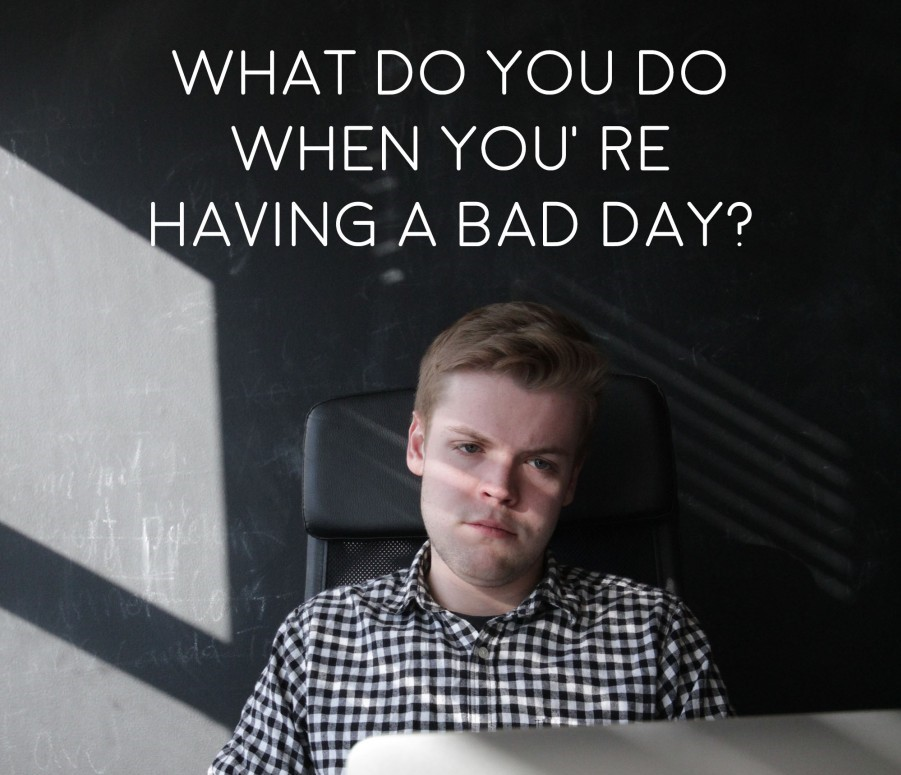


 Photo Credit: