We want to be good listeners, right? To hear what is truly being communicated. To stay with the person’s story. With its meaning to that person. Maybe even, as we listen deeply, to actually elevate that person’s comfort and capability to tell their story more truly… moving toward possible revelation, and, where needed, healing.
Over the last several months, I’ve been deep into studying about the brain/mind and how we process experience, memory, emotions, and trauma. “Deep” as defined, not by graduate study but, by reading and learning from seriously brilliant and practical therapists – the main one being Dr. Curt Thompson (you can find the blogs I’ve written on his content here).
When we are able to tell some part of our story, without fear of judgement, within a community and context of genuine care, transformation can result. How do we make this happen? By truly, deeply listening. Attuned. Without agenda.
Being attuned to a person sending us a message [telling us their story] means that we offer the other person our total attention and listen to them on a deeper level. We seek to understand rather than just making our own point, and this helps to reduce noise in the communication channel between us.
Attuning or ‘tuning in’ means refining your attention to the source of the information — just like you would do to a radio signal…Give them your complete attention and be open to what they are sending you in order to fully receive it.
Deep listening is a way of hearing in which we are fully present with what is happening at that moment without trying to control it or manipulate it. When we reduce our own internal psychological noise and allow the other person to communicate what they need to, we can receive the message as it is, without colouring it in with additional noise and without creating a judgement of it — thereby distorting it — before we fully understand it. We need to hear precisely what is being said to us so we know how to respond appropriately. – Zahara Chetty
Too often of late, we give ourselves permission to tune out. To be almost present with each other. To multi-task until no task is done well…including listening.Photo Credit: Charlotte May, Pexels
Attuned listening is a discipline…it is ours with practice, care, and intentionality. A few helps follow:
What else would you add to the list above for a listener to be gifted with the story you long to tell? That story of childhood (or adult) trauma, regret, disappointment, loss…or that story of joy, gratitude, love, or beauty.
Attune to another…and listen. Both your lives will be enriched.
Once a month I volunteer to teach in the children’s program at church. Second through fifth graders. They happily burn through a lot of activities in a short amount of time, for sure. When I opened the supply cabinet to retrieve colored pencils for them, the image above is what I discovered. Now, to be sure, we still had enough colored pencils, but it struck me with the thought of how life itself renders us in need of sharpening.
We lose our edge sometimes with the press and pressures of daily responsibilities and relationships. We get dull, and we don’t even see it in ourselves. What a blessing to have people in our lives who not only know and love us enough to speak truth to us, but who also lean in and help us out of the ditches or ruts in our lives…before we decide just to stay camped there.
Recognize our need for help. This may come from another’s assessment or our own awareness of a growing fatigue and disengagement.
Lean in to sharpening with someone you trust. Once our quality of life or relationships gives notice that we have gotten ourselves into a rut, ditch, or dull place, we may be able to turn it around without help. However, having a partner in “sharpening” our lives speeds and enhances the whole process.
Beware of how the past shapes our responses (and dulls our edge – these can be past inclinations, besetting sins, defaults – the ruts and ditches we’re prone to fall into). Pearman asks what is our true north and where are we on that thinking compass.
Keep accountable within community. Seek out a small group of like-minded and like-focused individuals who practice iron sharpening ironwith each other. “Sharpening the saw”, as Covey calls it, will make sparks fly. We need people who are committed to each other in such a way they just don’t leave the room.
If you got a bit tired reading these 5 points, you may need sharpening. Not to improve productivity necessarily (that’s not what we’re talking about here), but to improve your well-being. Your joy in life. Your relationships. No judging here, by the way. We all need sharpening as part of life. We can’t always see it ourselves…but once recognized, we can act on restoring beauty and balance in our lives.
Would you consider it? Talk to someone you trust. As for the problem of pencils above? I actually think some of them were still usable. For the others? I ordered a best-of-the-best electric pencil sharpener…we’ll see how long it lasts. [Comment below if you want to recommend one…for the next time our sharpener dies. Fortunately for us, when we need sharpening…no purchase is necessary.
1) Beyond the Guitar Does Batman – Nathan‘s latest. Enjoy the music below and all his other sweet pieces at Beyond the Guitar‘s YouTube channel.
…and this one.
2) The Hard-won Wisdom of Erik Weihenmayer – We had the great joy of hearing Erik Weihenmayer speak at The Richmond Forum this past week. He is a climber, kayaker, and biker, among other sports, AND he is blind. That distinctive is huge, but even so he doesn’t talk about his adventuring life as executing one impossible stunt after another. He speaks from a deeper place that we can all understand. He talks about the meaning of struggle and the advantage of adversity (even has a book with that title). His persuasive take on how one uses struggle to grow and reach beyond where we are at the moment is both inspiring and emboldening.
Below please note just a few of his wise words, and then find and watch the films, and read his books, where he discovers and fleshes out this wisdom.
There is a very blurry line between the things we can’t do and the things that we can.
You don’t just deal with adversity. You use it to propel you forward.
I found climbing to be a very tactile sport. There’s no ball that is zipping through the air ready to crack you in the head. It is just you and the rock base.
I have a variety of friends I climb with. But the common thing is I trust all of them. They’re solid climbers, the sort of people I trust to know what they’re doing.
You can’t always get out on the mountain, so I’ll put rubber on the end of my ice tools and climb the tread wall, a rotating rock wall I have in my backyard.
I’ve been lucky to have lots and lots of mentors. I think that is incredibly important in anyone’s life to encourage and inspire them, let them understand that their own potential is a reality that they can strive for.
What a thrill to be able to say that you had a contribution in the life of someone – a young person, perhaps, who is trying to take a look at the possibility of their own lives and find out what they are good at and you can help steer their career.
The key is to really have tremendously high expectations and to teach kids how to be self sufficient and confident and give them the skills that they need to succeed. – Erik Weihenmayer
3) Without Grumbling – Which comes first – anger or grumbling? Or is it a more subtle but growing discontent? When does occasional complaining settle into a set habit of grumbling? What does grumbling communicate to our own minds and to others within hearing?
I’ve written plenty on complaining, grumbling, and negative thinking, in general (see links below). It can absolutely change the wiring in our brains. In my younger years, I always looking for the good and the beautiful in a person/situation…and I found it. Now, as an older person, my temptation is more toward darker thinking. This is NOT where I want to stay.Photo Credit: QuoteFancy
Below is a beautiful bit of writer Trevin Wax‘s post on grumbling and joy (it is geared toward Christians but there is wisdom for all of life here).
In Philippians 2:6–11, Paul commands the church to adopt the same mind of our risen Lord. And his first command is, “Don’t grumble.”
“Do all things without grumbling or disputing, that you may be blameless and innocent, children of God without blemish in the midst of a crooked and twisted generation, among whom you shine as lights in the world.” (Philippians 2:14–15)
Why start with grumbling? We might expect an exhortation to spiritual disciplines, or strategies for thriving as pure and faultless people in a sinful world. And yes, Paul does speak about blamelessness and purity and holding firm to the word of life (Philippians 2:16). But this purity in action is somehow connected to the first command to do everything without grumbling. Somehow, grumbling will keep us from faithfulness.
Why start here? Because Paul knows the story of Israel.
Remember the children of Israel? They chose grumbling over gratitude. Grumbling stalled their journey and led to actions that were anything but “blameless and innocent.”
Whether we are given suffering, chains, imprisonment, or worse (Hebrews 11:36–38), or whether we conquer kingdoms, stop the mouths of lions, escape the sword, and put armies to flight (Hebrews 11:33–34), we must know that only joy in and gratitude to Jesus will win the war for our culture…Yes, we may face obstacles, setbacks, and tough days ahead. But in it all, and under it all, we are also joyful. And this cheerful courage comes not from ignoring darkness or looking only for the bright side, but from believing that the Light will overcome the dark.
Do you want to shine like stars? Then do everything without grumbling.
4) Parenting & Grandparenting – Who are the adults in your home? Usually we think of them as parents, but maybe they are grandparents, aunts/uncles, older siblings, or some other configuration of guardian. When our daughter taught elementary school, she never presumed her students’ parents would be the ones showing up at the parent-teacher conference. The most important issue is that there is one or more adult in the home who is doing the parenting.
Writer Vikki Claflin contrasts parents and grandparents this way:
“Parenting is hard. It’s basically 18 years of schooling an often-recalcitrant young human into how to be a socially acceptable, productive member of the community.
Grandparenting, however, is less goal-oriented. We are not actually raising the future of our country…Simply put, we are not responsible for the way they turn out. That’s the parents’ job, and we’ve already done it. Now it’s just fun.”
Imagine how your children (or you, as a child) didn’t have those adults who took the responsibility for the way we/our children turned out. Claflin lists 14 lessons that might be missed without parenting. Check those out and think about the many others that could be missed…including resolving conflict and a reasonable bedtime.
I love being a grandparent, making fun memories and lavishing love on our grands. However, I’m thankful that they have parents holding the hard line on the things they especially need from their mom and dad. For you grandparents acting in the role of parents, you are doing a huge work. Whatever circumstance foisted this work on you, you will never regret fully embracing it. Kids need raisin’. By someone.
Do you have families in your lives where although adults are in the home, they struggle to stay on top of the growing up of their children? Leaning in as loving mentors of both the adults and children (if you’re allowed) can make a huge difference.
5) Urban Farming – In our years in Casablanca, Morocco, we were able to participate in an urban gardening venture. The weather and seasons were perfect for growing vegetables and herbs in containers on apartment balconies. We lived in a house and had a compost bin in our backyard in support of this food venture.
[A funny story attached to this: Months into composting, I was concerned that rats were devouring the vegetable and fruit peelings tossed into the bin every night. The next morning, those peelings were gone. Then one night, I was late putting the last of the day’s vegetable leavings into the bin. Coming close, I heard sounds coming from atop the compost. Going back into the house, I brought out a flashlight. The top of the bin was shiny black with what must have been hundreds of African beetles. At the light, they scurried, burying themselves below the surface. I couldn’t deal…so we dismantled the compost bin the next day. Sigh…]Photo Credit: Bug Spray
However, we have an excellent compost bin now and use its rich product in our garden every year.
Urban agriculturist and farm manager Allison Hurst showcases the work of Church Hill Activities & Tutoring (C.H.A.T.) and Legacy Farm in the video below. The efforts of these two organizations is changing the culture of what has been a food desert in our city. Exciting and enlightening.
1) Beyond the Guitar’s Spider-man Theme Mashup on Classical Guitar – Nathan Mills of Beyond the Guitar arranged and performed the three big themes of the three Spider-Man franchises of the last 20 years. So much to love in these movies, in particular the ones starring Tom Holland, Andrew Garfield, and Tobey Maguire. You’ll welcome the nostalgia and the heart-filling beauty of what Nathan does with the classical guitar.
Which did you love the most? Share in Comments.
2) Engaging a Person Who Has Harmed You – Who is this person? A parent…a spouse…a child…an employer…a supposed friend? We have a way forward toward healing.
I discovered Adam Young Counseling a few weeks back and have dived in to many of his podcasts. His 5-part series above on engaging with someone who’s harmed you was like sitting in a therapist’s office…a GREAT therapist’s office. We have all been harmed by someone, and we ourselves have harmed others, often without knowing or without intending. Still, to have counsel on how to take positive steps toward healing in such a scary situation is amazing. Adam Young has experienced trauma himself, and he has redeemed that trauma in so many ways, in particular his love and help for others.
In these podcasts, Adam Young distinguishes between the garden variety sinner, a wicked person*, and an evil person. I appreciated that he said we do well not to judge people as permanently in those states because God can move to transform any of us. He did however encourage those of us who have been harmed to determine if we are dealing with a wicked or evil person…and act accordingly. His helps are empowering and transformative if we have the courage to walk through them.Photo Credit: Alistair Begg, Truth For Life
*Dr. Young spends much counsel on engaging a wicked person who has harmed us. It helped me to be reminded that a person who is behaving wickedly can, on the whole, be a decent person. What causes a person to act despicably toward us could be generational sin – not to discount that person’s responsibility in harming us, but to strive for understanding and grace (which multiplies toward us, not just to the one who harmed us). Thoughts?
When we have been harmed by someone, we need safe people to counsel with in order to be wise in our engaging others with whom we don’t feel safe. Walling ourselves off from them, trying to just put the harm behind us, or claiming forgiveness when we haven’t – none of these things get us to healing. If you have been harmed by someone, spend some time in these podcasts. Seriously. It will make a difference.
3) True Community – We desperately need real or true community. Whatever the problem loneliness and isolation were for us before COVID has been severely compounded. We need one anther…not in a surfacy, thin-veneered way, but in a deep well of fellowship with each other. Jennie Allen has written a hopeful and provocative book about this in Find Your People.
The need for true community is neither new nor specific to our culture. It’s been written about, researched, and explored for decades. Two great thinkers and authors Jerry Bridges and M. Scott Peck (both now deceased) are quoted below.
“If we are to master the scriptural principles of true biblical community, we must master this one: True greatness in the kingdom of heaven involves serving one another. Jesus said, “Whoever wants to become great among you must be your servant” (Matthew 20:26)…Fellowship is much, much more than food and fun and even more than reading and studying the Scriptures with another believer. Fellowship at times may involve blood, sweat, and tears as we stand side by side with our persecuted brothers and sisters…It implies a responsibility to fulfill our function in the body. We usually don’t think of fellowship in terms of fulfilling a responsibility, but that is because we have lost sight of the biblical meaning of fellowship. Fellowship is not just a social privilege to enjoy; it is more basically a responsibility to assume...But this is what servant-hood within the fellowship of believers is all about: being alert to the little things that need to be done and then doing them.” – Jerry Bridges
“In genuine community there are no sides. It is not always easy, but by the time they reach community the members have learned how to give up cliques and factions. They have learned how to listen to each other and how not to reject each other. Sometimes consensus in community is reached with miraculous rapidity. But at other times it is arrived at only after lengthy struggle. Just because it is a safe place does not mean community is a place without conflict. It is, however, a place where conflict can be resolved without physical or emotional bloodshed and with wisdom as well as grace. A community is a group that can fight gracefully.”~ M. Scott Peck
Do you experienced true community – where you are willing to serve sacrificially and receive that kind of care as well? We need to go after it for ourselves and one another.
4) Cleaning Closets- I’m not a spring cleaning kind of person, although, these days, we are so often called on to declutter, let go, and be free in the area of stuff management. Still we have two closets (among others) where things just get randomly tossed up onto the shelf. I decided to clear them out to know exactly what is stored there. One closet now contains my journals of the last 30 years!! Whew!
Haven’t re-read any of them but lined them up by date and found this little note from my sweet mama in the front of one of them (from many years ago). A treasure…
5) Spring Flowers – The month of March is bringing Spring along here in the US. With temperatures warming, trips to the park are becoming more regular. The glory of Spring is not lost on the kiddos.
I just want to share a few flower pics of recent days. Hope Spring is coming your way (of course, I get that’s only for the Northern Hemisphere…for you Southern Hem. folks, Happy Fall!
Thanks for a quick stop-by. It means a lot to me. Hope you’re surrounded by and creating beauty wherever you are…we sure need it in this world today…really every day.
Quick take on favorites of mine over the last couple of weeks:
1) Beyond the Guitar’s Latest – Enjoy!
2) Parenting Pearls – So thankful for wisdom of others…especially in parenting and raising children to be mentally healthy and resilient. How other cultures parent is also intriguing. Below are some of both.
Mom blogger Becky Mansfield wrote a great piece on things we don’t want our kiddos to forget. Please share in the Comments what you hope your children don’t forget.
The situation with my mom (cancer and heart) and my dad’s (Parkinson’s and dementia) health has been making me so sad. I wish I could be with them right now. 😥 So my sister sent a video of them together tonight, dancing to Neil Young. 💙 Take a moment to love your loved ones. pic.twitter.com/y2fBu26NlP
4) Words – As much as I love words this quote from Jesus’ teaching gives pause: “But I say unto you, that every idle word that men shall speak, they shall give account thereof in the day of judgment. For by your words you shall be justified, and by your words you shall be condemned.” – Matthew 12:36-37
Words matter. Words mean things. We should be generous with life-giving words and sparing with words that destroy. Silence and restraint have their place.
Then, on a lighter note: there’s this sweet game that is all the rage right now. Wordle created by Josh Wardle (launched in October 2021). I love it because it is not time-consuming. You get one word puzzle a day that is challenging but doable. So fun.
5) War – We have all read and watched about the current invasion of Ukraine by Russia. How to respond? Who to respond? I won’t pose an opinion here because we have so many, and they don’t help really. Praying is the most important thing we can do. Below are some links I found interesting this week (well, links that weren’t behind a paywall). Praying…
“Think Little. Nearly every one of us, nearly every day of his life, is contributing directly to the ruin of this planet.” Berry went on to say that he was “ashamed and deeply distressed that American government should have become the chief cause of disillusionment with American principles.”
In a Jefferson Lecture in 2012, he quoted Stegner’s description of Americans as one of two basic types, “boomers” and “stickers.” Boomers are “those who pillage and run,” who “make a killing and end up on Easy Street.” Stickers are “those who settle, and love the life they have made and the place they have made it in.” They are “placed people,” in Berry’s term—forever attached to the look of the sky, the smell of native plants, and the vernacular of home.
He told the crowd that, as a member of the human race, he was “in the worst possible company: communists, fascists and totalitarians of all sorts, militarists and tyrants, exploiters, vandals, gluttons, ignoramuses, murderers.” But, he insisted, he was given hope by people “who through all the sad destructive centuries of our history have kept alive the vision of peace and kindness and generosity and humility and freedom.”
“A properly educated conservative, who has neither approved of abortion nor supported a tax or a regulation, can destroy a mountain or poison a river and sleep like a baby,” he writes. “A well-instructed liberal, who has behaved with the prescribed delicacy toward women and people of color, can consent to the plunder of the land and people of rural America and sleep like a conservative.”
“If two neighbors know that they may seriously disagree, but that either of them, given even a small change of circumstances, may desperately need the other, should they not keep between them a sort of pre-paid forgiveness? They ought to keep it ready to hand, like a fire extinguisher.”
“Jesus said, ‘Take no thought for the morrow,’ which I take to mean that if we do the right things today, we’ll have done all we really can for tomorrow. OK. So I hope to do the right things today.”
A pastor friend of mine, Dave Lyle, posted about an encounter he recently had with a homeless man. The man did not ask for money. He just wanted Dave’s opinion on something. As Dave came closer, he noticed a large kitchen knife on the bench near the man, so he kept some distance. It turns out the man was once a chef, thus his knife, and had come on hard times. Homeless for the last 10 years. In Dave’s post, he had noted several other people who passed the man without looking his way, treating him as if he wasn’t really there.
“To acknowledge another person costs you nothing” was Dave’s observation.
Pastor Dave’s story reminded me of a man who “begs” on a busy corner in our city. I put the word “begs” in quotes because he doesn’t really ask for anything. He stands there with a cardboard placard with words of encouragement and affirmation on it for those waiting at the traffic light or driving by. His words are the substance of “a rising tide lifts all boats”. I wonder if, given another set of circumstances, he wouldn’t be a department head or even a CEO. He has given me more impetus to always have food in my car to give to people, like him…especially him. He is a great example of how acknowledgement can affect mindset and action.
The world is full of people who deserve to be acknowledged…start by practicing your acknowledgment skills on people you don’t know very well, or even know at all. [Acknowledging those you most care about will follow easily.]
Acknowledgment builds intimacy and creates powerful interactions. Acknowledge the people around you directly and fully, especially those with whom you are in an intimate relationship. Look for ways to say how much you value them, and then be prepared for miracles!
Acknowledgment neutralizes, defuses, deactivates and reduces the effect of jealousy and envy! Acknowledge those you are jealous of, for the very attributes you envy.
Recognizing good work leads to high energy, great feelings, high-quality performance and terrific results. Not acknowledging good work causes lethargy, resentment, sorrow and withdrawal. Recognize and acknowledge good work, wherever you find it.
Truthful, heartfelt and deserved acknowledgment always makes a difference, sometimes a profound one, in a person’s life and work.
It is likely that acknowledgment can improve the emotional and physical health of both the giver and the receiver.
Practice different ways of getting through to the people you want to acknowledge. Develop an acknowledgment repertoire that will give you the tools to reach out to the people in your life in the different ways that will be the most meaningful to each situation and each person.
Acknowledgement is more than a compliment or positive feedback. It also has much greater impact that “criticism, finding fault, or saying nothing at all” (see links below). Acknowledgement demonstrates, whether talking to someone you know or a stranger, that you see the person. You truly see them and you see something they are doing that has meaning and gives meaning. You acknowledge, whether it is small thing or large, how that person, in that moment, had influence in your life…or that of others.
Acknowledgement communicates a genuine felt experience. To truly acknowledge someone, we must step into their space. We must pause our agenda. We must search for words to express what just happened for us. Finally, we engage bodily with our words (by this I mean our non-verbal communication aligns with what we are saying). We lean in, give eye contact, and tune our facial expression to what we want to express.
Acknowledgement then is best given in person. However…it can be done via other communication mediums. We can be creative, but the main point of all this is to go the extra mile and not let opportunities for acknowledging others pass us by. [The social distancing foisted on us by COVID has kicked to the corner much of the practice of acknowledgement. We are wise to shake off our doldrums and reestablish these practices.]
Is it your practice to regularly (honestly and in a timely fashion) acknowledge those in your lives who have made a difference? These may be close colleagues, near family, or even essential workers we see regularly and the occasional stranger we may meet only once.
To close, I want to give a shout-out to this one guy I know. He is an off-the-chart introvert, but he regularly and without hesitation uses his voice to give acknowledgement to folks in his work (and life). Often, it comes on the heels of praise he is receiving for some innovation or decision made at a point of crisis. He passes that praise on to those who, in his reckoning, made possible the culmination of an excellent work. I have actually counseled with him to take the acknowledgement himself from time to time, but he is unmoved. In a culture where we are elevated because of ownership of ideas and our confidence in ourselves, he and others like him give the most relatable picture of “it takes a village”.
So…are you the glad recipient of acknowledgements in your workplace or home space? How do you practice acknowledgement in these challenging days – when eyes meet less, heads are down, and we have too often insulated ourselves to task, tribe, or timetable? Please comment below.
We find ourselves in a cultural climate of power dictating more than it should. “Should”…well…who am I to judge, but I’m still saying it. For sustained change to happen, we are meant to wrestle together in the arena of conversations within community. This is where real and lasting influence lies.
“Moral suasion is when we convince people to do what we see as a moral good because they see that moral good as good…Moral suasion is best done working with someone to do the right thing instead of forcing that person to do what we want because of our power. Research has shown that the best way to engage in moral suasion is through relationships. In those relationships, we can build rapport, find areas of agreement, and clearly understand the other person’s perspectives. If we want people to change at the intrinsic level and not simply conform to pressure, then we should use the techniques of moral suasion instead of just overpowering that person.” – George Yancey
[Is there a difference between persuasion and suasion? In the simplest terms, they are considered the same, but I do sense a difference. Persuasion is more an action of influencing another party to come to your reasoning or way of thinking. Suasion, especially moral suasion, is more a consideration that two or more parties have a sense of rightness about an issue/subject but differ in their opinion. Moral suasion works through dialog to seek and hopefully find common ground – a way forward together to do a right thing.]
Yancey’s article appears just ahead of his latest book (March 2022) – Beyond Racial Division: A Unifying Alternative to Colorblindness and Antiracism. The publisher offers a brief summary of Dr. Yancey’s book: “an alternative approach to racial relations where all parties contribute and are mutually accountable to one another for societal well-being. He provides empirical rationale for how collaborative conversations in a mutual accountability model can reduce racial division. History and societal complexity mean that different participants may have different kinds of responsibility, but all are involved in seeking the common good for all to thrive.”
“There are times when power is necessary. But the temptation to use power to consistently solve our racial problems brings with it power struggles and the need to build up our own ability to force conformity. Different groups have contrasting ideas about what we should do. The temptation is to try to force others to accept the solutions we want to promote.But this power-driven approach is short-sighted and will not produce intrinsic changes. Those changes will not happen until we engage in moral suasion consistently rather than seeking power to force compliance.
That effort would be time-consuming. It is easier to just use power. Easier but not lasting…We must sit down with those with whom we disagree and try to understand their perspectives. We must seek out answers that meet their felt needs and show them respect. I find that few in the racial conversation want to do this. Until we are willing to have those conversations, we will continue to foster greater racial polarization in our society.”
It’s easier to just use power…but not so effectual.
Are you as tired as I am of the power plays in motion around us? …Not just regarding race relations, but in so many other areas of human experiences together. Life together.
Laws are laid out. Mandates put forward. Rules and regulations abound.
I miss conversations on the stuff of life. The stuff that matters most. That’s why I’m often one of the ones who raises their hand, offers a space, takes a corner of the table if given opportunity. Not to just say my piece but to hear yours.
Today is the day in 2022 when we commemorate Martin Luther King, Jr.’s life and legacy. Certainly Dr. King was a man who exercised the great power of influence…not elected to a public office but commanding in his pursuit of a passion he believed possible.
We know him most from his speeches and some from his sermons. I wonder what his conversations were like. My hope is they were of moral suasion. In the last couple of years, we have gone through a huge transformation as a nation…to what end? Some change has come (for better and for worse). More positive, enduring change will come if we choose to reason together…across the lines that seemingly divide us but do not have to forever.
What’s your situation? How’s your heart? What is your body holding onto? Remember when you were so full of the possibilities of life, so fresh with anticipation of what was ahead, what you could accomplish?
Then life happens, and it doesn’t always work out like you thought it would. Running turned into slogging. Your passion got sucker-punched. The opportunities and advancements kept coming in, but at some point, bewilderment set in. You just got tired…just plain weary.
Some call this burnout, and it may be. What if it is more than that? What if it is a bloody battlefield where, if not our very lives, our joy is under full attack. What if those God-given strengths, those life-honed skills, and serendipitous accomplishments seem not to be at play. Maybe you’re overthinking, or maybe…just maybe…the way through is surprisingly simple.
We all have an important place to occupy in this world. Every single one of us. Fight for it. Walls may seem high, bottlenecks too narrow, and, at times, adversaries hammering around us. Nevertheless…We can find a way to bring the walls down (or just go around them), squeeze through the bottlenecks, and shake off the idea that we can’t win…just. too. tired.
Circumstances in life and work can drain us. Especially over time. Oddly we can still be effective in life but the emotional, mental, and physical toll adds up. The body remembers…and keeps score.
Jesus gives us a beautiful and intimate picture of the “nevertheless”. The night before he would die on a Roman cross, he appealed to the Father, as his painful and humiliating death loomed ahead of him.
Nevertheless…here was the Messiah, the Christ, in all the sinless perfection of his life, coming to the very end of himself. Exhausted, emotionally overwrought, yet clear-minded, understanding exactly what would be required from him. Nevertheless…he stayed the course. He was not giving up. He knew what was at stake. He trusted the Father, and he persisted in what he was called to finish.
For us, we have choices. We can resign ourselves to a life and work not what we anticipated…or we can clear our heads and remember our own callings. No walls are too high nor adversaries too strong.
We each bring something to the table. If we withdraw from the table or accept a perceived exclusion, we can miss the fullness of life we were meant to have. Others will miss us as well. Believe that. It’s true.
When fatigue and discouragement set in, and our bodies are drained of response, we need to take hold of the “nevertheless”. It’s reminiscent of the many “but God’s” in Scripture and in life. We may be up against a Red Sea like Moses, or a Goliath like young David, or a corrupting culture like Jesus. We lament “but God”…we are too inadequate. Too small. Too aware of risk. Nevertheless, our “but God’s” can change to what is truth. The meaning of the protest changes into the “but God” miracles when He shows up and does what only He can do…in us. Through us.
God put me in the middle of boys with a mom who loved us completely and a father of whom I have little memory. His relationship with us was not one of outright abuse but neglect and eventual abandonment. When I was five, my exhausted mom divorced this never-working man. She would later explain that action as simply “just one less mouth to feed”. She soon after came back to faith in Christ and brought us with her (unchurched until then). Our dad had long since disappeared from our lives.
Fast forward to the present: married to a man who deeply loves the Lord and loves us well also. We have three adult children and two added by marriage, and now four precious grandchildren.
All our parents (including a beloved step-dad) are gone except for Dave’s exquisite praying mom.
Sandwiched between adult kids and older parents is where we are, and I’m grateful. In fact, I think about our kids and their littles (and some of you) now in this same season, just a different generation.
The room is delightfully crowded (not without challenge) with multiple generations – each bringing extended families of their own. So many faces and so many voices.
Every family member (and each of us in that family) has great value to God. His desire for us is to bear the fruit of His love (Galatians 5:22-23) – making it beautifully tangible to others. He is with us in this.
What if our parents made life hard for us either by trauma or, as adults, by intrusion or neglect? Or what if we find ourselves in awkward places in our adult children’s lives? These “what if’s” make us want to pull ourselves out of obedience to God, as we feel justified by our pain to distance ourselves from some in our family. The ripple effect of pulling away is wide-reaching in a family. Wider than we can imagine.
Even when relationships are healthy, the heavy responsibility of parenting young children puts its strain on our precious adult children. We feel the pull – torn between kiddos and our olders or others (sibling families, too). We also model for next generations what family looks like. How we handle the hard is quite probably how they will handle the hard.
We all choose, consciously or not, from among four ways to engage with or disengage from our families.
Embrace. We can trust God with the families He has given us. We can love them well. We forgive and seek forgiveness. We spend time with each other and attune to how God sees them. We who share adult space try to find the balance of loving each other well without our own preferences getting in the way. The older ones will only be with us for a moment. They have stories and history and lives that matter. Our younger ones also grow up and have their own families and life pressures. We extend ourselves in both directions – up and down.
Debase/Disgrace. Sometimes members of our family wrong us or another beloved family member. We “triangle” talking about them with others, without them being present. Their behavior may warrant our disdain. We are tempted to debase them privately or disgrace them publicly. However, God is not finished with them or they wouldn’t still be here. Wisdom is to take our sorrows to God and appeal for Him to help us love these hard-to-love ones. He is able. It helps to remember we may also be the ones not so easy to love. [I forget that sometimes.]
Replace. We are tempted to completely replace hard family members with friends. Adult friendships are such a gift from God. They fill in empty places in our hearts. They can actually help empower us to love and live like Jesus with these family members. Or they can usurp their place in our lives. Friends, help bolster our resolve, as we choose to “stay in the room” with family members. Let’s be that one who is not going anywhere – that picture of Christ for these.
Give Grace. This is similar to “Embrace” but with God-guided boundaries in place. The Word is full of instruction, like Colossians 3:12-14. Living between olders and youngers, I want to be that one who gives grace both ways. Speaking love often and always. Not judging or applying pressure. We can choose to honor one another, which, in turn, honors God. Giving grace includes giving grace to ourselves.
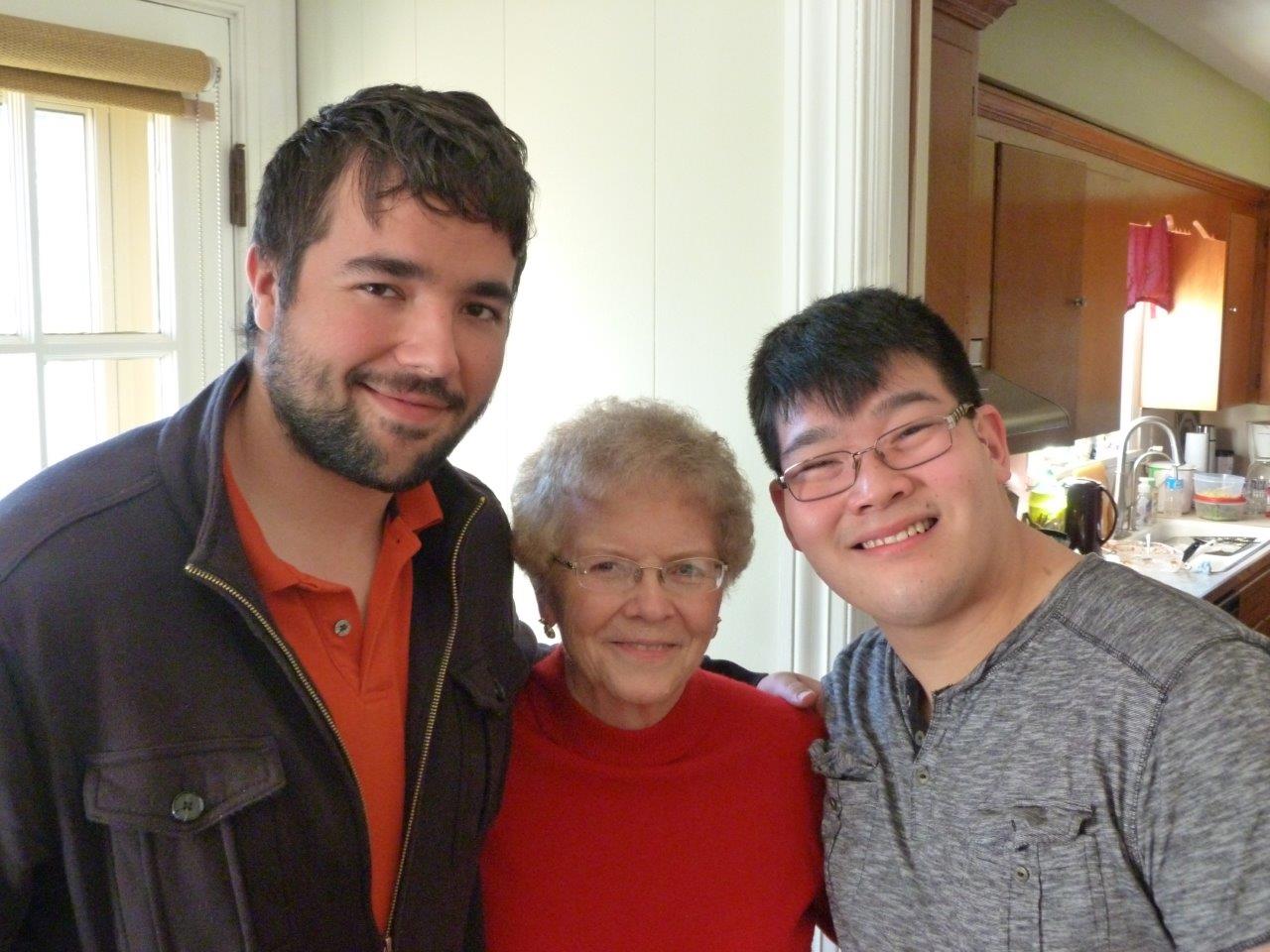
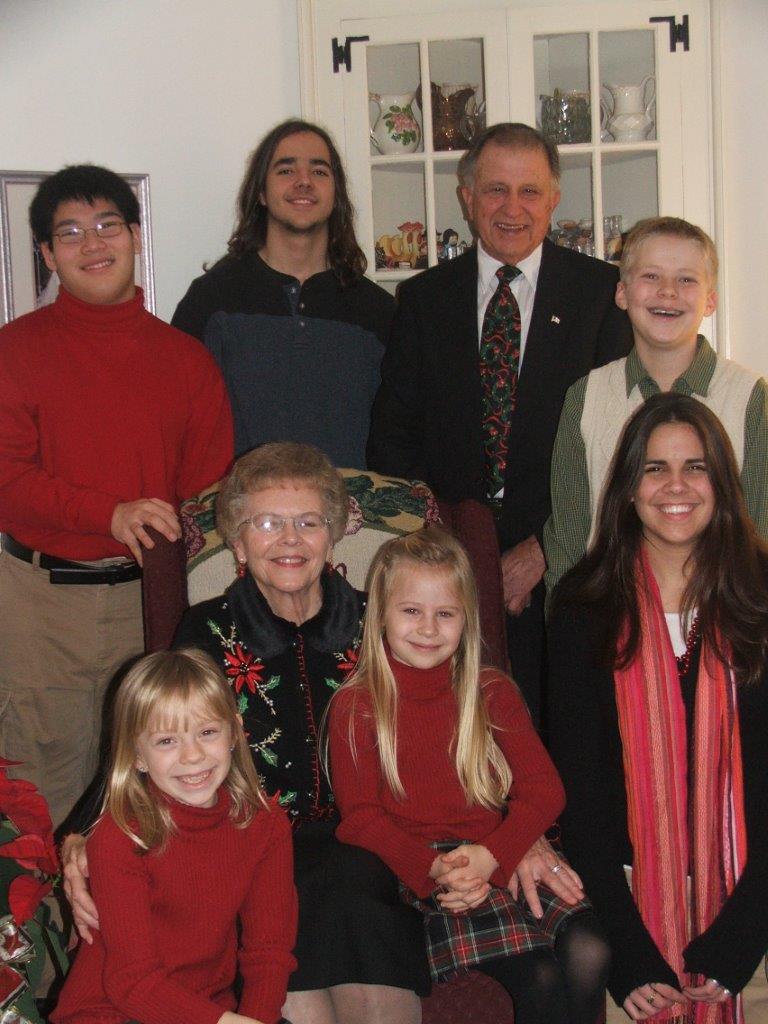
[One last pic – my mom, our youngest son, and me sandwiched between them & behind the camera – wishing I could roll back the years to when she was still here. Embrace & give grace. The years rush by.]
Hi All! Friday Faves on a Monday after a busy Friday-Sunday weekend. Go!
1) “Fly Me to the Moon” Finger-style – After Nathan posted his Squid Game medley, he was asked to do a stand-alone “Fly Me to the Moon”. Here it is! The jazzy, up-beat rendition is so fun!
2) Costly Grudges – Is there someone you struggle to like or be in their company? Would you say it’s a grudge, either originating from you or that person? Grudges rupture relationships. They have a negative impact not just on that relationship, but potentially on others as well. Not to mention, their impact on your own health.
“Happy people live longer. Improve your happiness by practicing “epistemic humility,” an intellectual virtue predicated on the idea that one can’t ever know something for sure. It’s meant to help us admit our imperfections and forgive others. Sounds too good to be true in the 2020s? All the more reason to give it a try.”
When we start to feel a grudge brewing, or we make the first strike and cause the rift with another person, the situation is greatly helped by some measure of humility. We don’t know everything about what just happened. In the midst of a quarrel, assessments are feverishly being made and the tendency is that they favor one over the other. If we treat a disagreement with humility, with the understanding that we can’t fully know what is going on with the other person in the argument, then we stand a better chance of some sort of resolution.
Worth the effort…including the perk of adding to one’s longevity.
3) Building Focus – Focus is like muscle; it has to be built through exercise. I struggle with attending issues. To come across some simple tasks to add to life and aid focus is a happy occurrence.
“We can learn to focus better, but we need to think about attention differently. It is not something we can just choose to do. We have to train the brain like a muscle. Specifically, with short bursts of daily exercises.” – Eleanor Morgan
Morgan posts some of the mental exercises that Dr. Jha prescribes, including the 5 tips below:
Pay attention to your breath, and where on your body you feel it most: direct your focus like a beam of light. Do this for three minutes a day, for a week.
Integrate this technique into everyday life – for example, brushing your teeth. If you’re thinking about your to-do list as you’re scrubbing, bring the light back. Focus on the sensations.
A lot of people report that their mind is “too busy.” Your job is not to stop it – your job is to exist with it, and to place your attention back where you want it.
Ignore “mindfulness myths”: you are not “clearing your mind.” This is an active mental workout.
There is no “blissed-out” state you are aiming to experience; in fact, the whole point is to be more present to the moment. – Eleanor Morgan
I love the idea of being present in the moment…rather than the angst of the past or the unknown of the future. Sure, we have to plan, but the present is a much-neglected experience, and it’s really the only one we truly have. Right this very minute.
4) “Don’t Leave Crumbs” – So crumbs aren’t anything we want to leave behind (unless you are the fairy tale pair, Hansel and Gretel. The wildly successful actor and author Matthew McConaughey talked about “crumbs” in a university commencement speech he gave in 2015.
“Don’t leave crumbs,” he says. “What are crumbs? The crumbs I’m talking about are the choices we make that make us have to look over our shoulder in the future….They come in the form of regret, guilt, and remorse – you leave ’em today, they will cause you more stress tomorrow, and they disallow you from creating a customized future in which you do not have to look over your shoulder.” – Matthew McConaughey
Relationally, this reminds me of an adage “Keep your accounts short”. This means that your name is safe on my lips, and that I will make a practice of refusing to think ill of you. Keeping accounts short. Leaving no uncomfortable crumbs behind us in relationships or work/play practices.
In McConaughey’s speech he also gave 5 pieces of wisdom:
Don’t fall into the entitlement trap.
Never say anything is “unbelievable”.
Seek joy, not happiness.
Define success for yourself.
Make decisions you’ll be happy about tomorrow.
He gives more rationale and commentary in the larger speech (linked above). He also used these same points in another talk, incorporating his faith as well. The messages of both seem blended in an artful (10 minute) video. Below.
5) Fall & All – It is my favorite season – Fall or autumn. I just want to close with some images of this brief and beautiful repose between Summer and Winter. It goes so fast and I am savoring it every way possible (except for adding anything pumpkin-flavored to coffee. I just can’t).
For me, Fall ushers in Christmas (American Thanksgiving sitting right in between), so I’m completely ok with the mix of all this beauty.
.
That’s the Faves for this week. Thanks so much for stopping by. You encourage me…put your own Faves in the Comments below. Until next time.